Hastings, England
June 2026
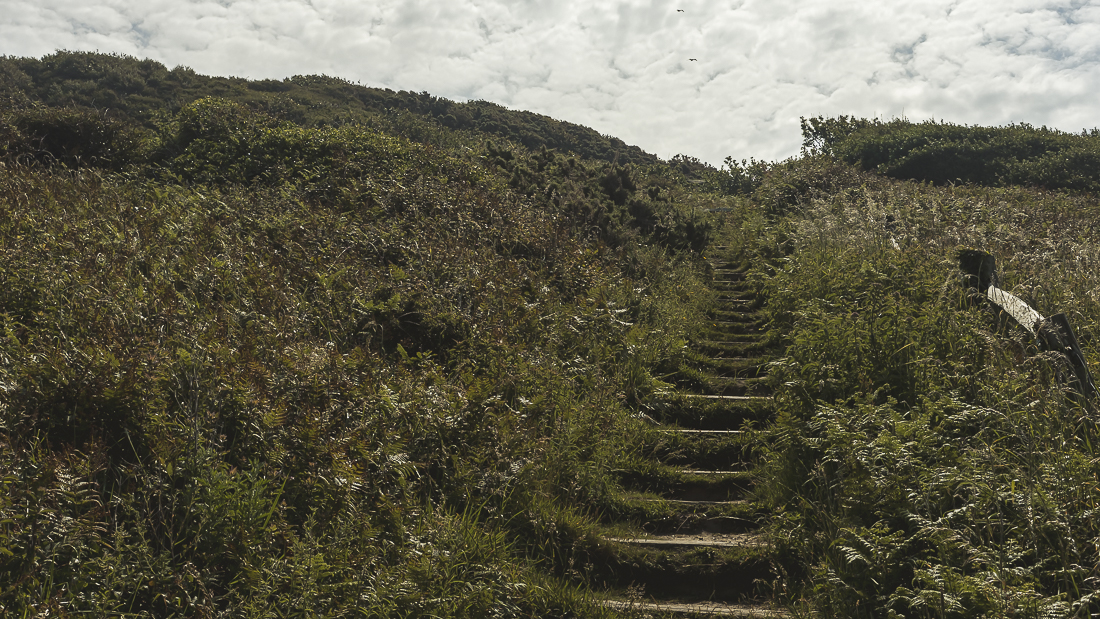
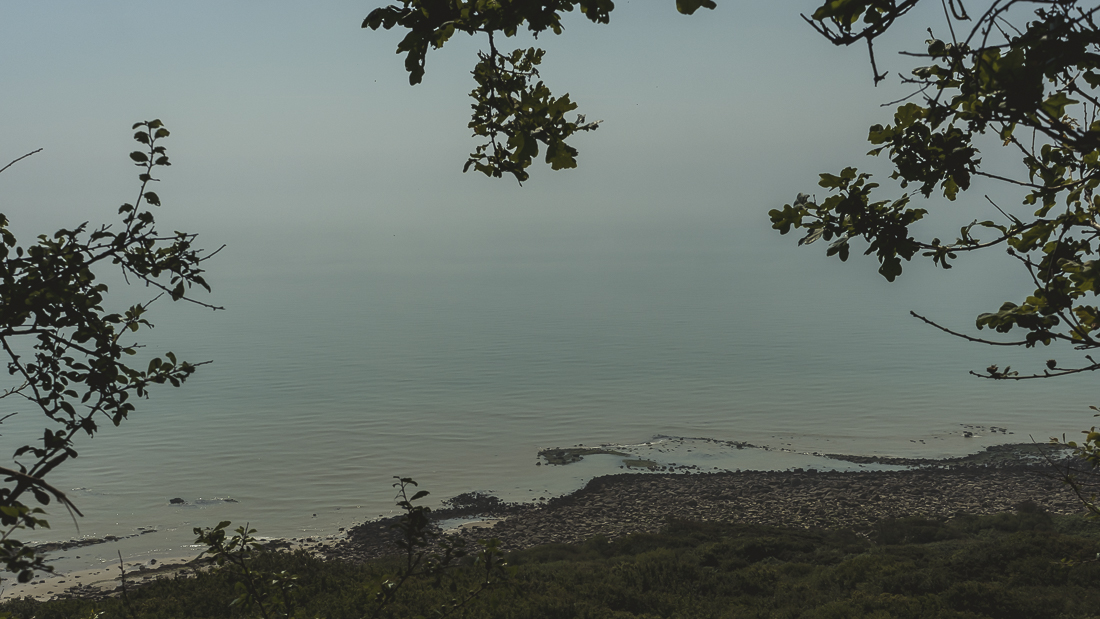
I tell myself I’m stopping to take a photo of the small yacht bobbing gently a hundred yards offshore, between the headlands either side of this deep gully, or glen as they’re known here; the balance of the image appeals. In reality, I’ve stopped because I’m knackered and the idea of the dozens more steps of the ascent fills my tired legs with dread. God, how did I get this unfit? I kid myself it’s unexpectedly hot and the past few days have been filled with bad diet and too much booze; I mean, England did win their opening game of the World Cup 36 hours ago, and I’d been working away from home which meant eating out. I need something to blame; it can’t possibly be me and my lifestyle. Reluctantly, it’s onward and upward.

This is the third and final glen I’ve descended into and then climbed out of. None of the climbs are long, this is a coastal cliff walk after all, but they’re steep, mostly stepped, and my right knee hates steps. I’ve huffed and puffed up all of them, at least my knee stopped hurting at the top of the first climb.
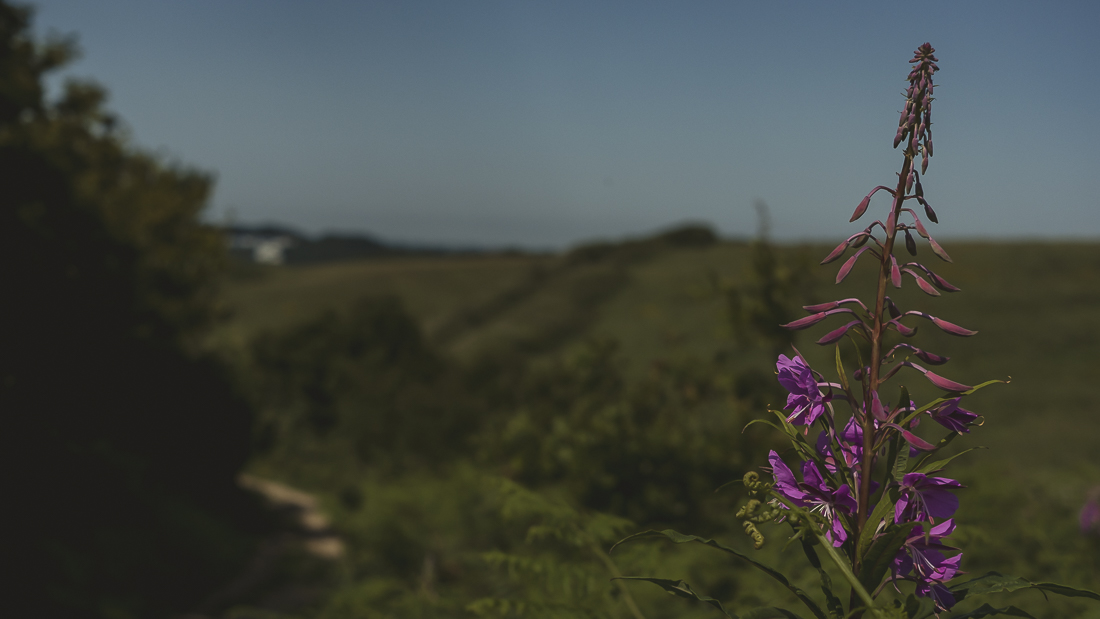
Halfway up the hill I see mist drifting in off the sea and stop for a few more photos. While it had been mostly cloudless over land, the horizon towards France has been obscured since I left home a couple of hours earlier. I’ve been hearing a regular long, low groan of an offshore foghorn since leaving the constant drone of city traffic behind and now it makes much more sense.
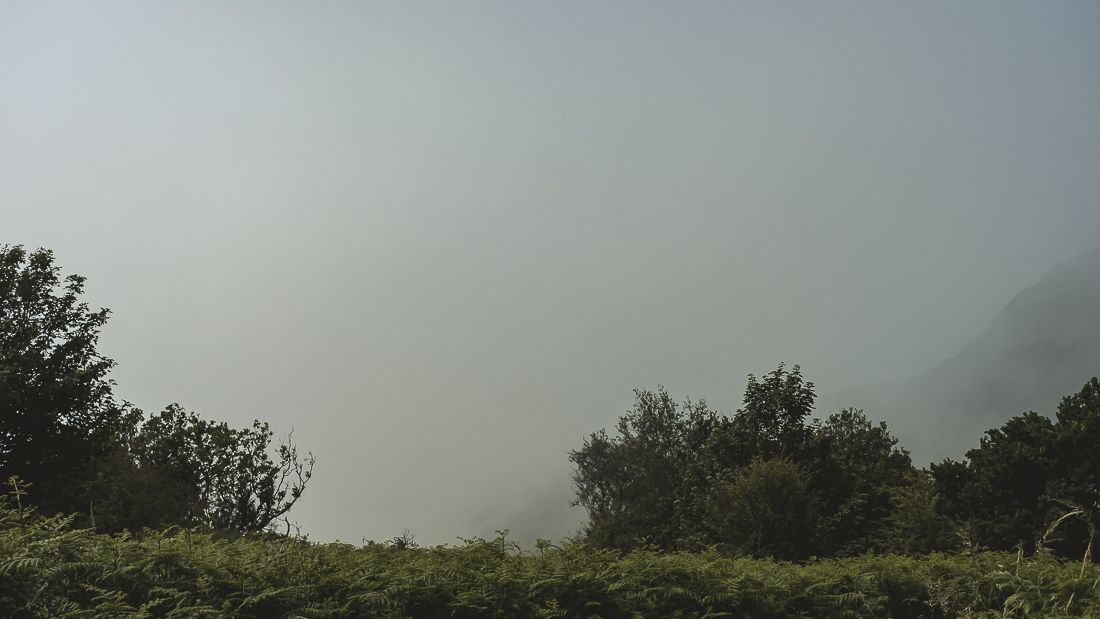
I’m constantly amazed at how even a narrow band of densely packed shrubs and trees can block a city’s noise, freeing birdsong and the hum of insects to rise above the shuffle of my feet on the dusty path. Other than the occasional aeroplane overhead and the penetrating foghorn there is very little sound; the sea is quiet and there’s barely any wind to disturb the leaves of the magnificent oaks that dot this walk. My brain starts to unwind with the peace.
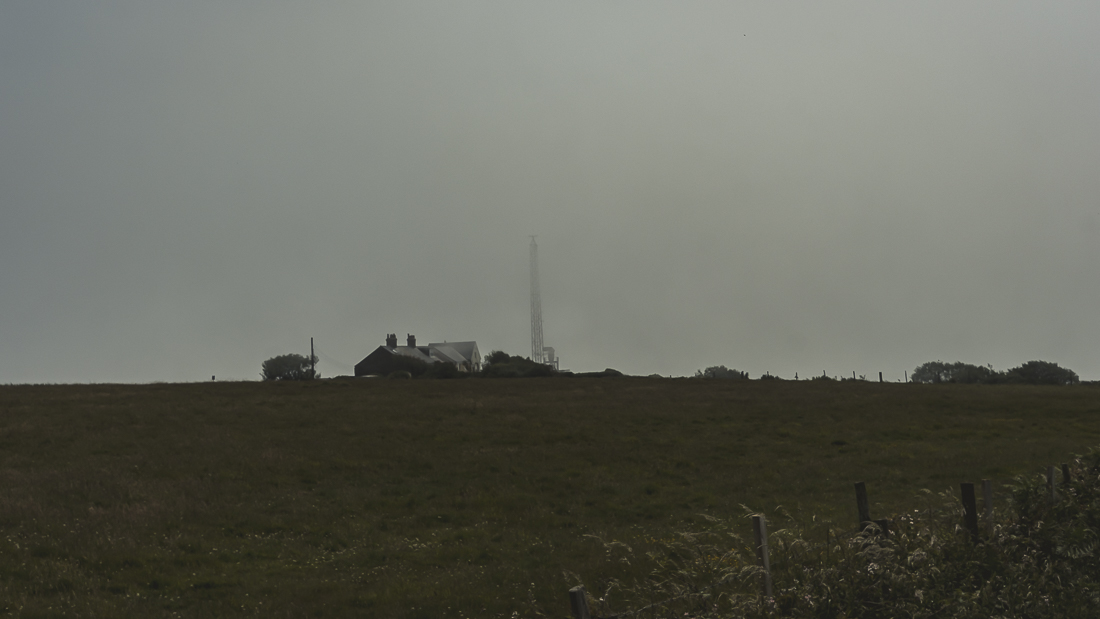
I hadn’t expected fog when I left home; the break from the sun is welcome, brief as it is. I take another photo, slow my ragged breath, and further regret that full English in the hotel a couple of days ago. Onwards.
Having not checked the weather for days, it’s significantly hotter than I expected and, while I am, by my usual slack standards, well prepared with water, a hat and sunscreen, the heat is getting to me on these climbs. I’m dripping sweat and starting to think I need to ration my water. I take a long draught, still cold, and feel it settle in my stomach. I wish I’d bought a snack.
We live in St Leonards-on-Sea, a suburb of Hastings (think 1066 and the Battle of) on England’s southern coast. Hastings Country Park is a 40-minute walk from home and I’ve been meaning to visit for ages. After a few sluggish days away and the need to shake off a malaise that started to settle last night it felt right to do it today. The walk can be done as a loop back to Hastings, or you can drop down to Fairlight on the far side of the park and hope to catch one of the theoretical hourly buses back. It’s a mix of open field and narrow, twisting, rooty trail, mostly under tree cover. The shade is welcome.
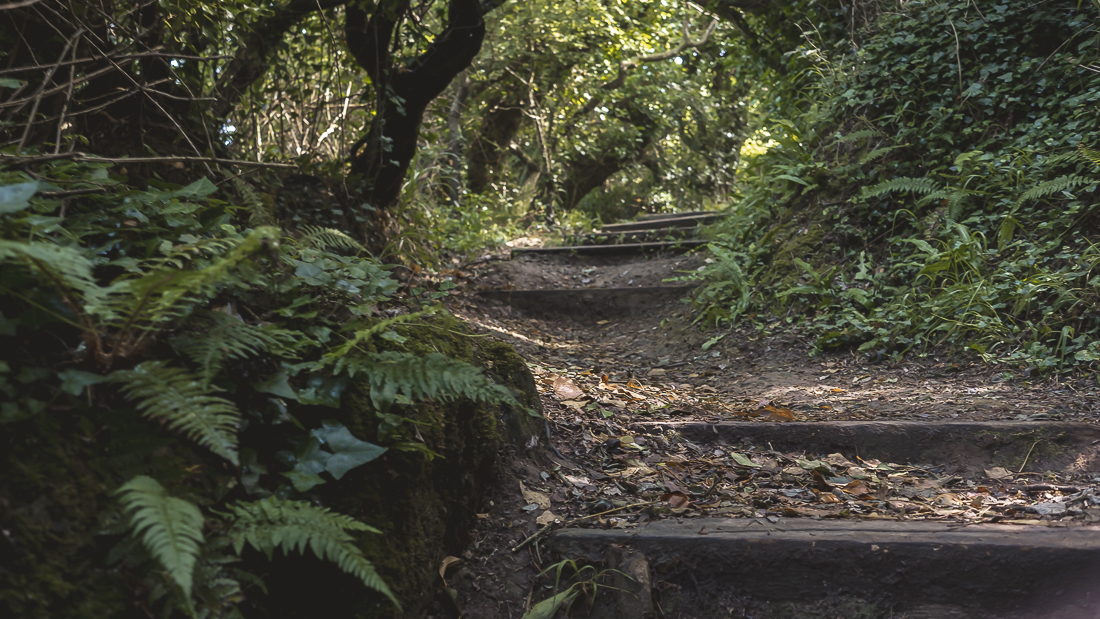
My plan, did I have a plan? takes a diversion when I see a sign for a disused quarry. I can’t resist a disused anything. I’d been heading towards Fairlight, but this route would take me back up to the visitor centre at the top of the cliff; both options promised food, drink and a shaded seat, hopefully with a breeze. That the climb was shorter was not a factor. Honest.

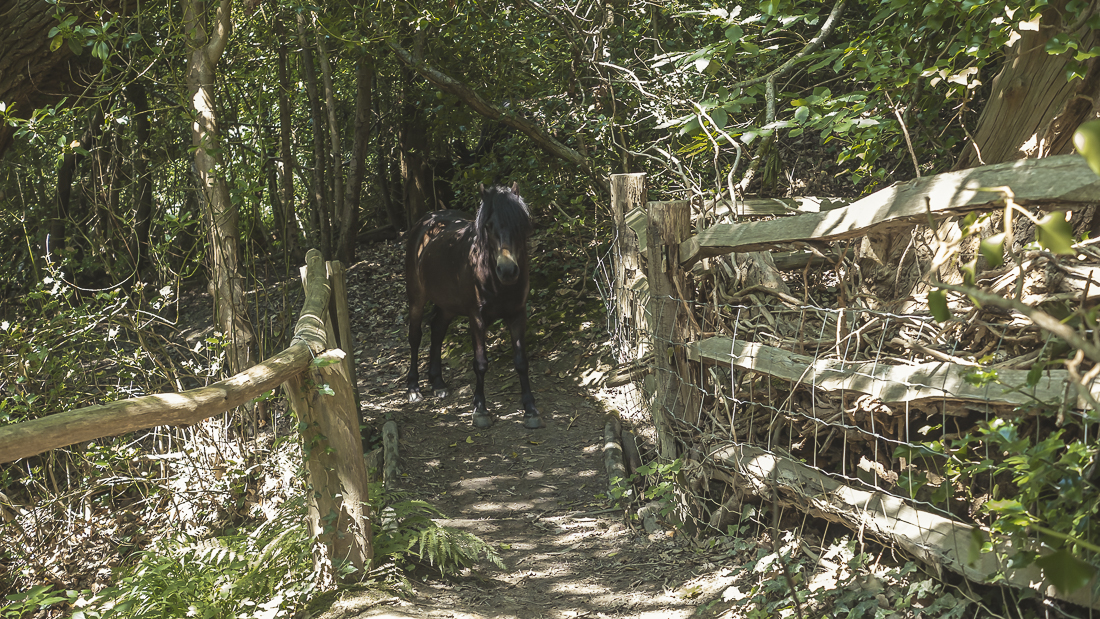
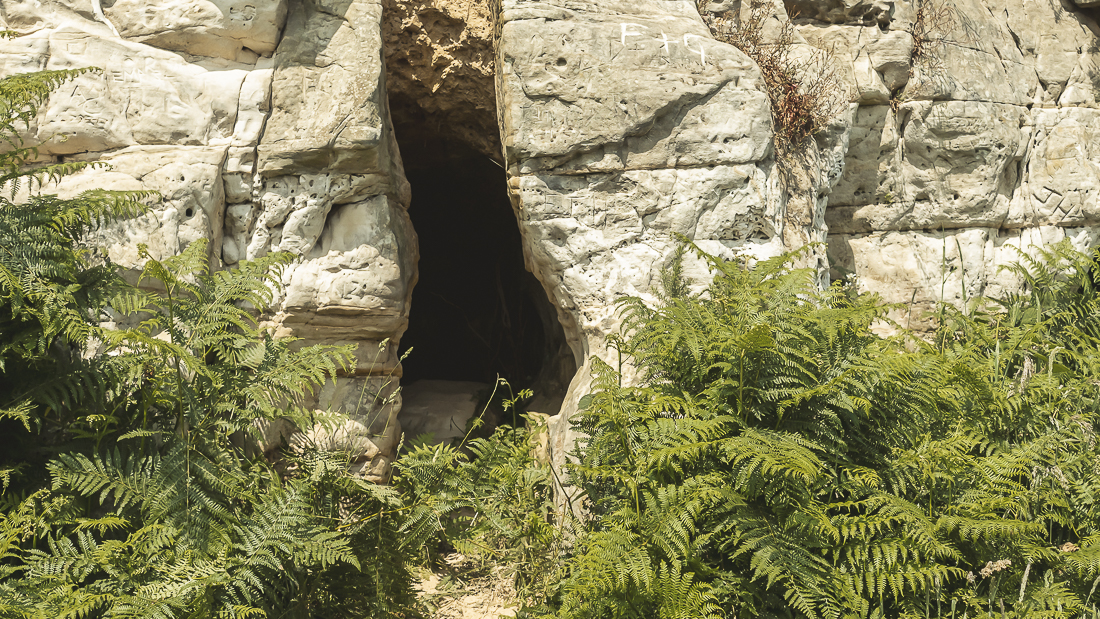
Soon after the turn-off I pass through a gate and start seeing fresh horse shit on the trail, which surprises me; this isn’t a path I’d expect horses on. This stretch of coast, close to France, with its porous sandstone cliffs and within 50 miles of London, was a smuggling hotspot in the 19th century. Booze, spices, tobacco, silk; everything came across the Channel on boats large and small, landing on accessible beaches and avoiding the taxman. Caves and hideouts dotted the glens, and horses hauled barrels up these steep paths. That was 150 years ago; surely even now no one is rowing contraband into a cove and horsebacking it up to a waiting white van?
Of course not. But the horse shit has to come from somewhere, and I soon find the source.
At the top I come across a sign explaining that Exmoor ponies were released into the park in 2013 as a natural vegetation management system. A very nice surprise. One of the joys of walking, of travel, is stumbling across something unexpected and, in this case, joyful. They’re wild, comfortable with me at a distance, but not close enough to touch.
The forest is denser here, and the trail the most overgrown so far. I’m glad I chose long trousers; bramble and nettle encroach across the path and I’m constantly ducking under holly, my cap doubling as protection. I enjoy this. I like a bit of ugly on a walk; a gnarly trail beats suburban streets every time.
The thicker tree cover brings near silence; birdsong dominates. The heavy whump of wood pigeons launching overhead is remarkable; dense, weighty, full of action compared to the light flutter of smaller birds.
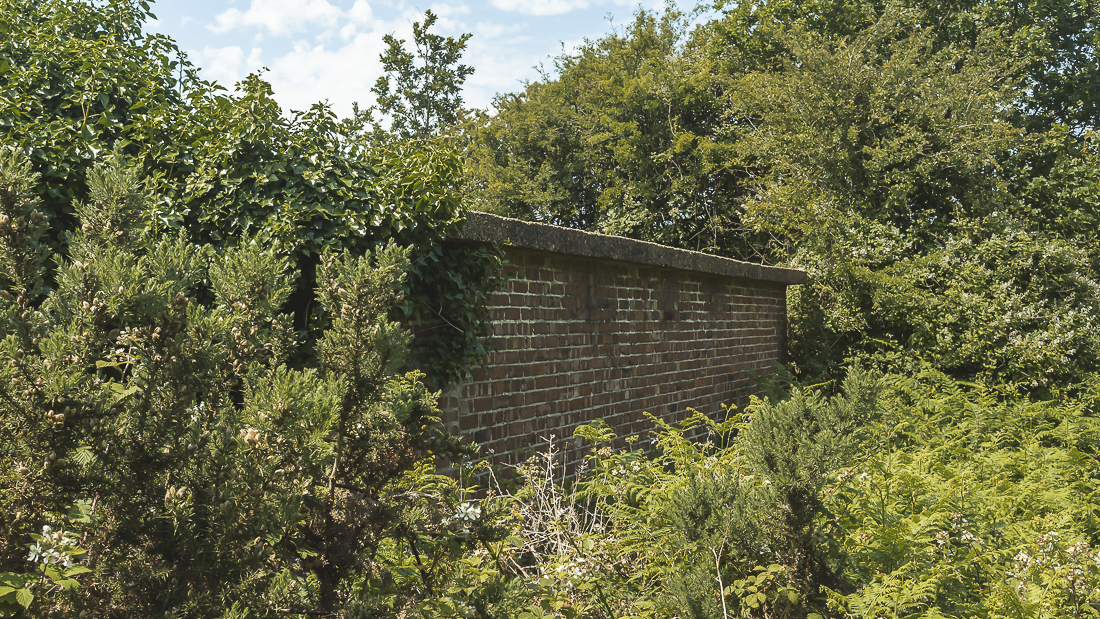
I reach the ‘disused quarry’ and it is, as expected, disappointing. I poke around, but beyond low scraped sandstone bluffs and a small brick bunker with a blocked entrance there’s little to see. Still, it gets me closer to the visitor centre, a cold can of lemonade, and an excellent cheese and onion pasty; enough to sustain me for the shorter walk home.
I don’t subscribe to forest bathing or the healing power of nature; I’m old and cynical. But there is something in walking alone under trees on a warm day, with only birdsong in your ear. It is, undeniably, relaxing.


You must be logged in to post a comment.