Xelardo 2

Xelardo, Valencia, Spain
18-21 March 2026.

Friday
After the excitement of Fallas and a full day in Valencia Paul and I decided to keep it ‘local’ and stay in the Lliria area. I like it here. Good coffee, decent food and fantastic cheap wine are key draws, but the town has a decent vibe. It’s a workers’ town, though, like everywhere in the sunny parts of Europe there are plenty of Brits, Germans and Dutch, and quite a few out-of-town Spanish who are not working locally, or even here that often. People seem to get along and there are no overt signs of foreign influence.

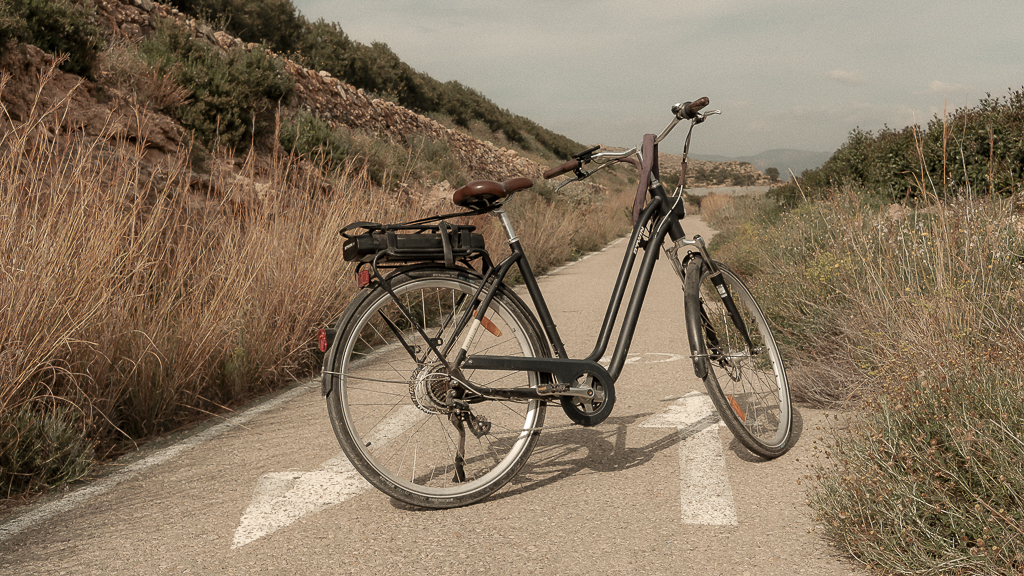
After the walk around the edge of Xelardo I wrote about previously, and with lunch time pending and rumbling tummies, we mounted the electric bikes again and set off for the even smaller town of Vilamarxant, 15km away.

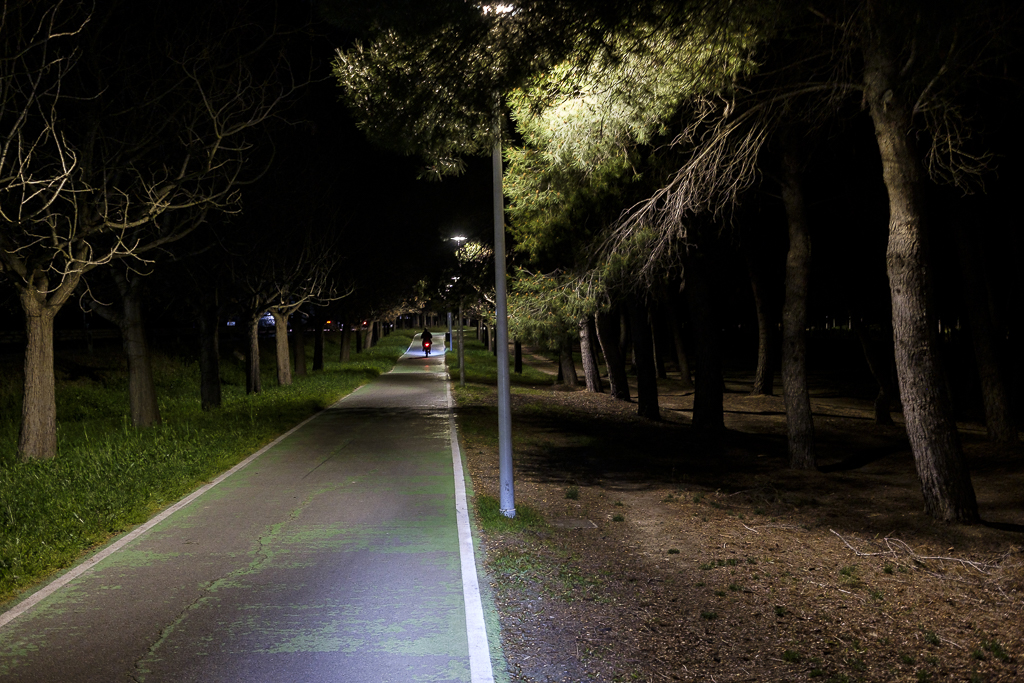
We follow the usual route to Lliria, through the mostly deserted suburban streets, across the highway and then bike path all the way to the other side of the town, passing through the Parc Municipal de Sant Vicent, a large quiet park with a church as its centrepiece.

For the first time I’m riding beyond the train station on the opposite edge of Lliria to where I’m staying. The train station is the second to service the town; the original station now sits at the start of an old national railway line that has been converted into a cycling and walking path and part of a circuit that crosses Spain.
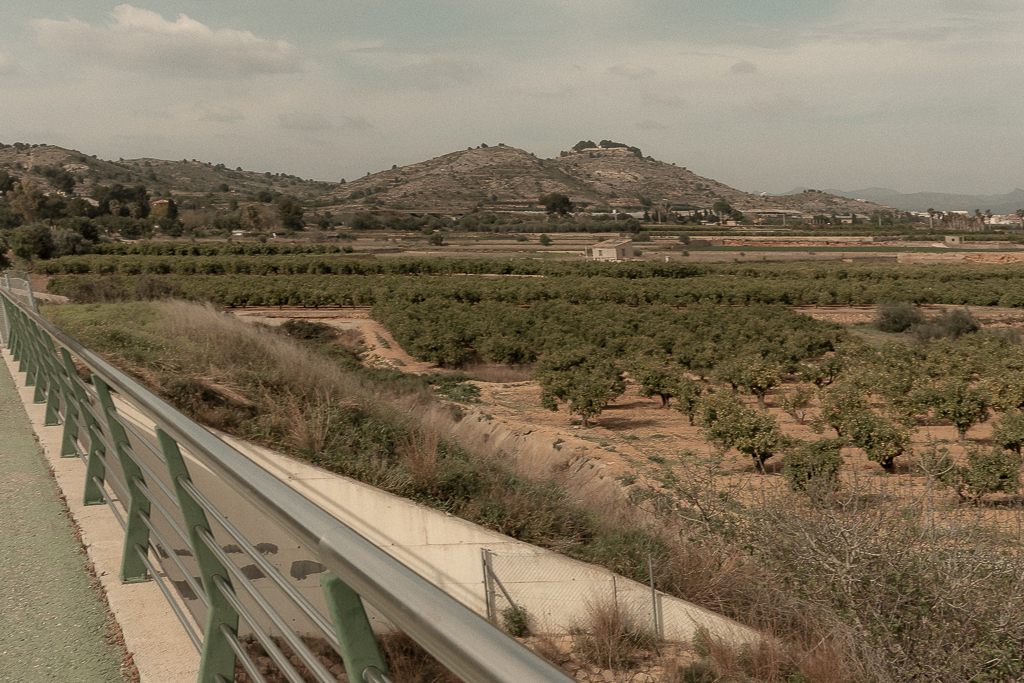
Leaving the southern side of Lliria is a reminder that this is a working-class agricultural service town on the edge of a vast valley full of orange and olive groves and vineyards. As we pedal past decaying infrastructure, closely followed by the modern infrastructure that replaced it I was expecting the gentle waft of orange to tantalise my nostrils; instead, it’s the most urban of smells, weed, from a group of lads having a not so sneaky spliff on a bench beside the path. It is the final Friday of the school holidays after all.

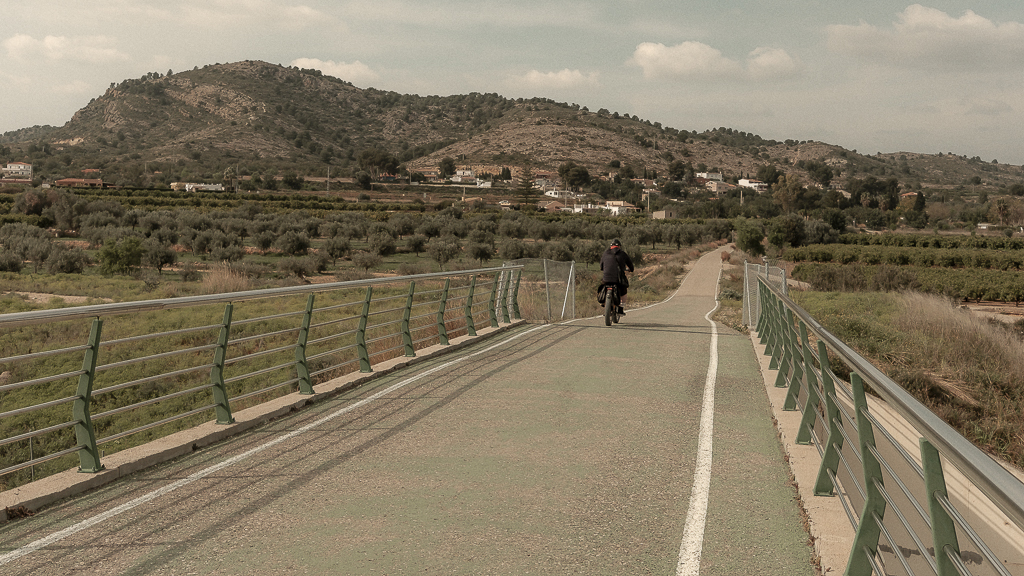
The path is sealed for most of the ride to Vilamarxant, a small town on the banks of a subsidiary of the Turia River. The normally placid river that feeds the vast irrigation system watering the groves all over this valley was on the front page of newspapers all over the world when nine months of rain fell in one day on 29 October 2024 when Storm Dana hit the region. The river flooded with devastating effect resulting in the deaths of 223 people across the Valencia region. Vilamarxant was ‘lucky’ as the centre of the town is uphill from the river, however, the main bridge across it was washed away and the town was cut-off for two days. It was hard to equate this peaceful early spring day with a storm that fierce, or that the river below was capable of such horrific damage.

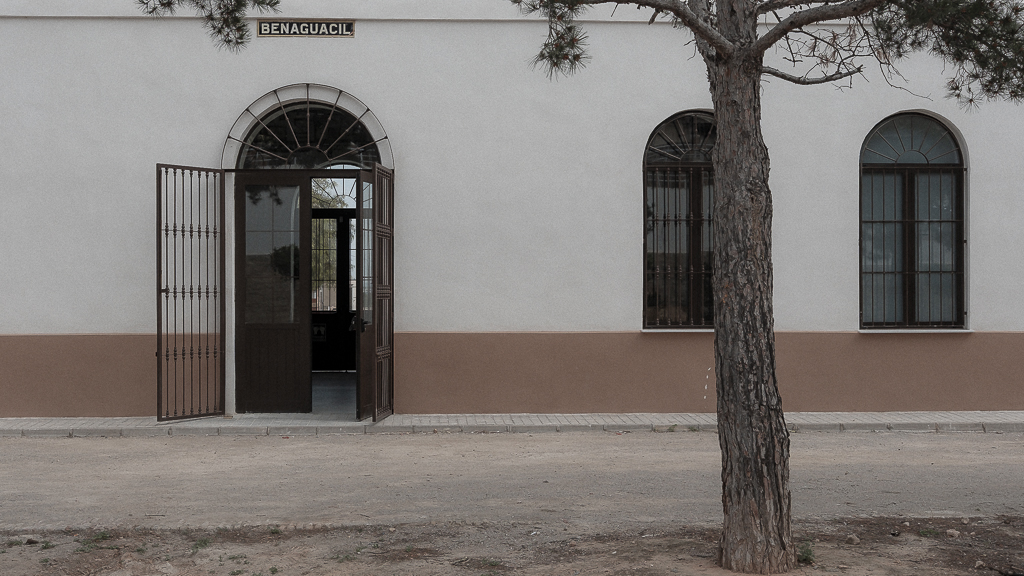
The ride there and back again is a joy, especially when the electric bike is put to use on the unexpected ‘hill’ on the return. We pass through Benaguasil and I stopped to take photos of the station, and to catch my breath. I was preserving battery on the way out as I had no idea how long it lasted and wanted to use my legs while they still worked. Not having done a lot of riding in the past few years I don’t have the same legs I used to 15 years ago when a four- or five-hour ride on a single speed was the norm. I must get on the bike again when we move back to London later in the year.

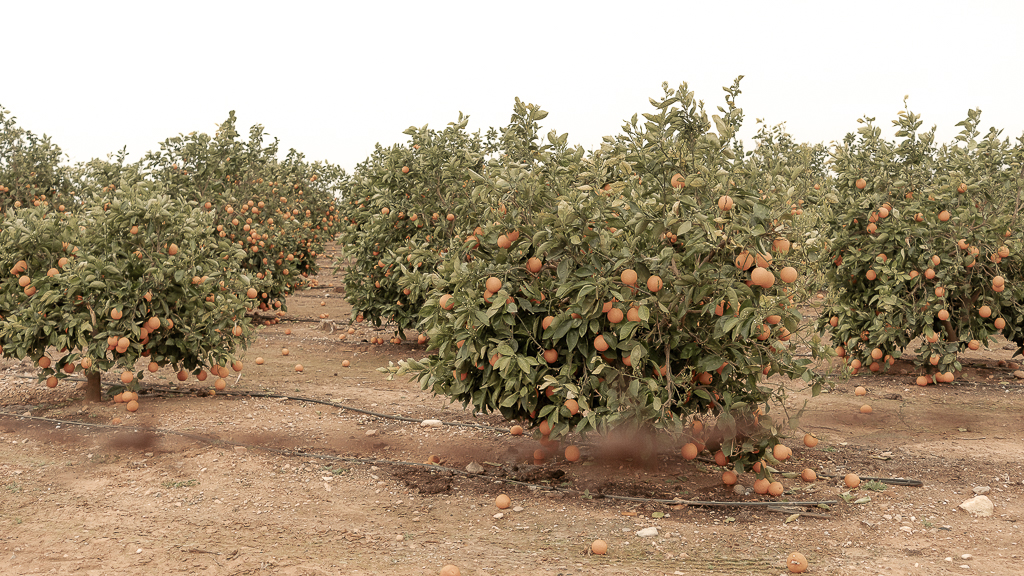
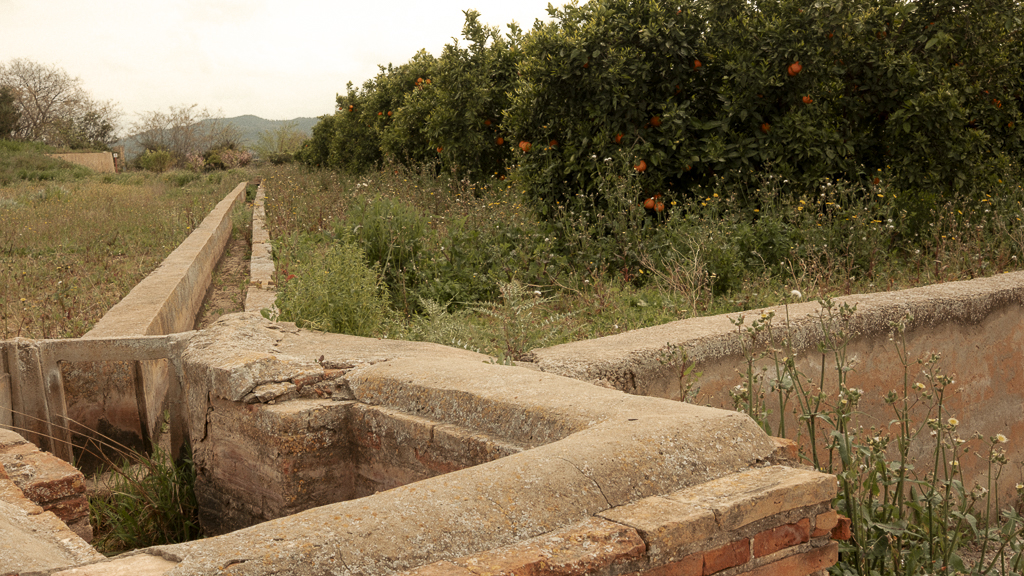
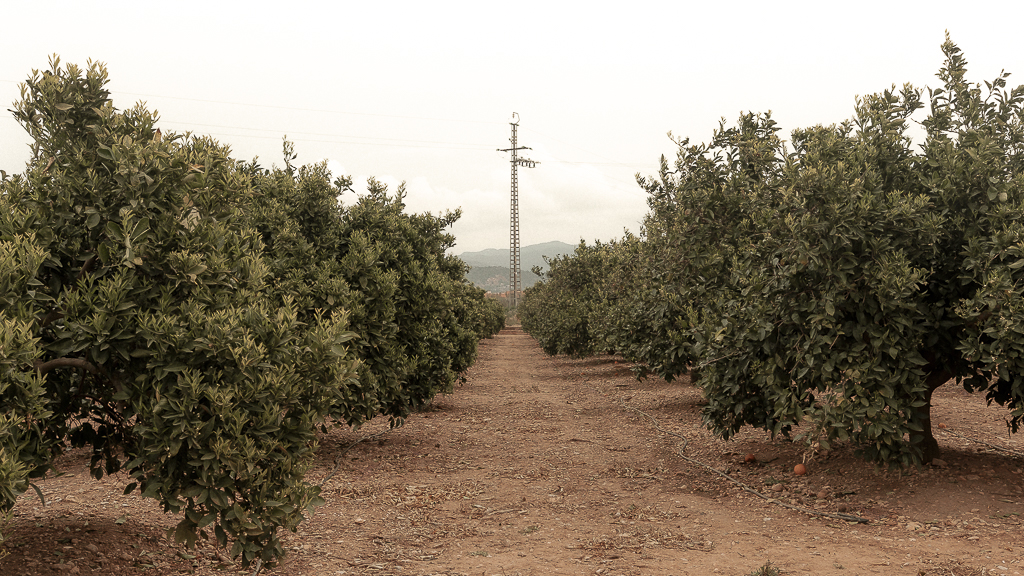
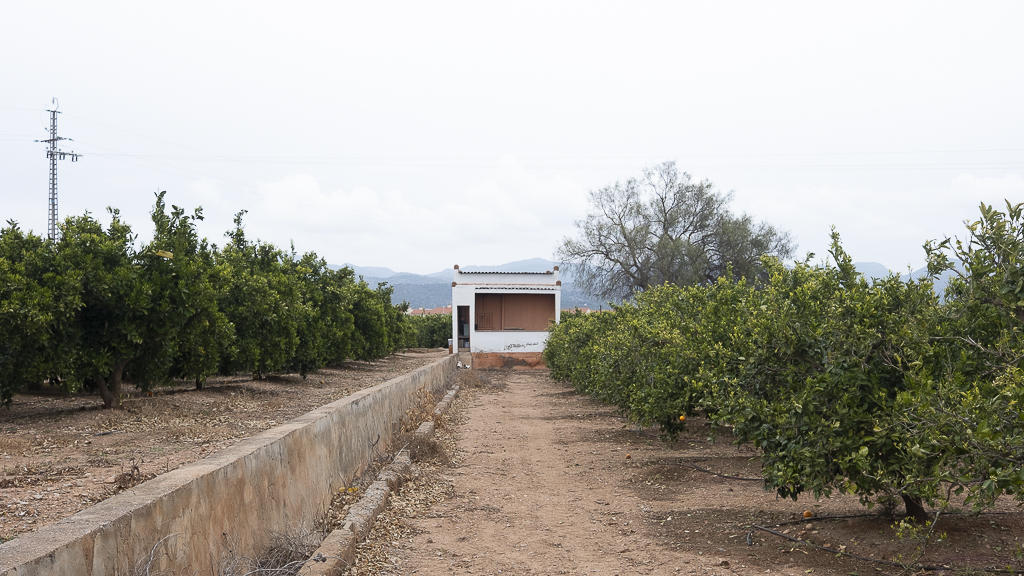
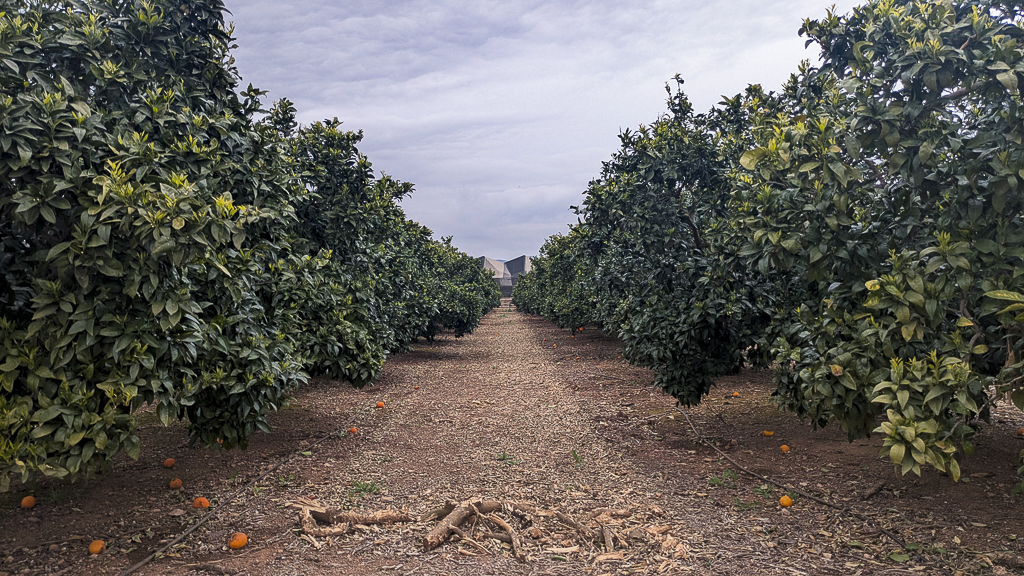
The surroundings are interesting. We are in Valencia orange country, so there are orange groves all around, there is a lot of olive-growing here as well. I’m guessing picking season is over, most of the trees were denuded of fruit, and there are plenty of oranges rotting on the ground under trees – one of the reasons why I was expecting a gentle orangey aroma as we pedalled through.
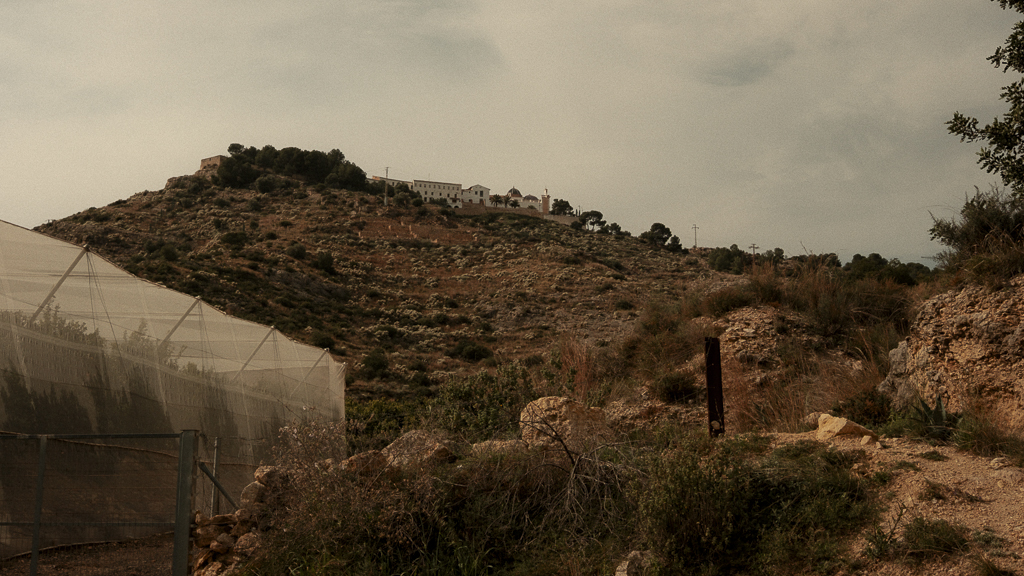
The Valencia region sort of sits in a big valley between some low slung hills – be hard pressed to call them mountains – though unlike some valleys there are plenty of ups and downs between the edges. A monastery and a convent each adorn a barren rocky hill we ride past.

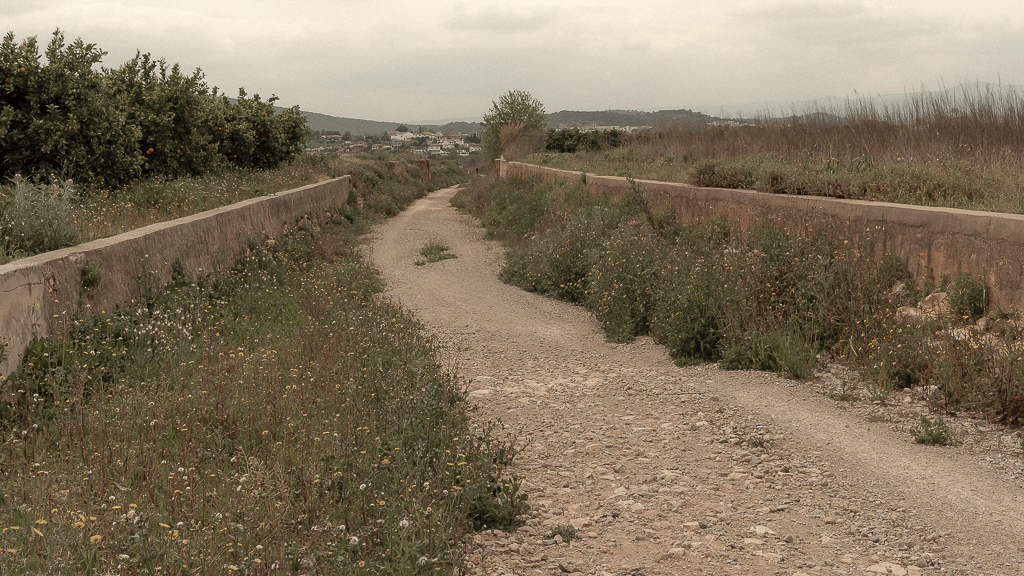
The ground is very dry; the earth is a reddy-brown and there are few old growth trees to hold things together. There is a vast network of manmade stone and concrete irrigation systems. These are all dry, though it had been raining before I arrived and it is due to rain after I leave; a rare holiday for me without getting drenched.

Crossing the river on a purpose-built bike/pedestrian bridge we leave the bike path and ride up the side of the busy highway on a narrow path. This is cycling territory so none of the cars that whizzed past come to close and us old blokes on our electrically assisted bikes were never in any danger.

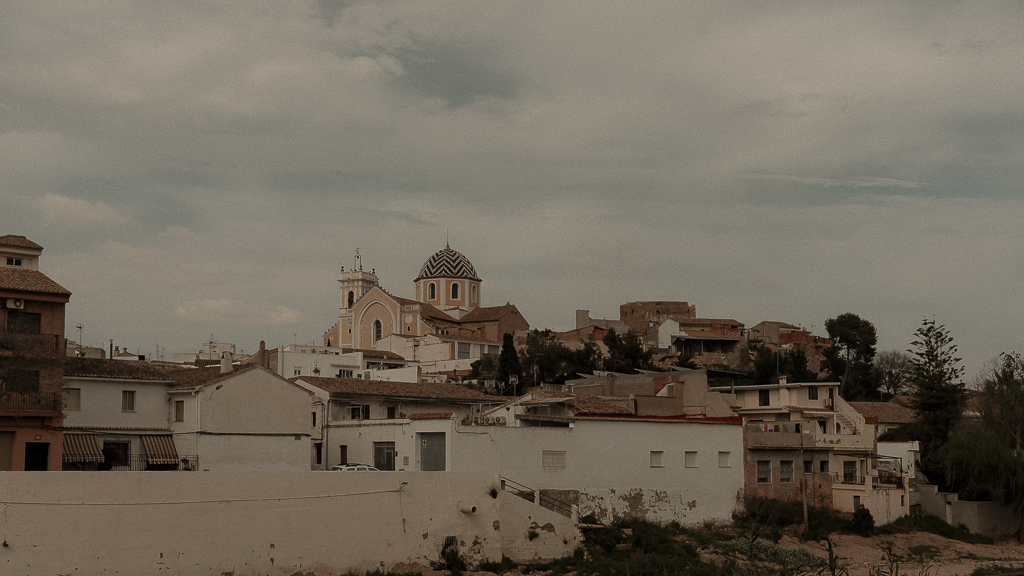
I stop on the far side of the river to take a photo of Vilamarxant before we cross the remaining narrow road bridge into town.

Other than for the journey itself, I can’t remember why we came here for lunch, though it was superb. A workers’ Friday lunch: three courses, a drink and a coffee. I had a small beer and squid ink paella for a starter and it was delicious, not the sort of food I’ve come to expect from a workers’ caff in England. We were there quite early, Paul had booked a table which seemed silly as it was almost empty when we arrived, however, by mid-service it was rammed, primarily by regulars, though there was a small group of road cyclists in their Lycra as well. There was a real hubbub as the staff rushed between tables, taking orders, refreshing drinks and handing out plate after plate of food. It was great.

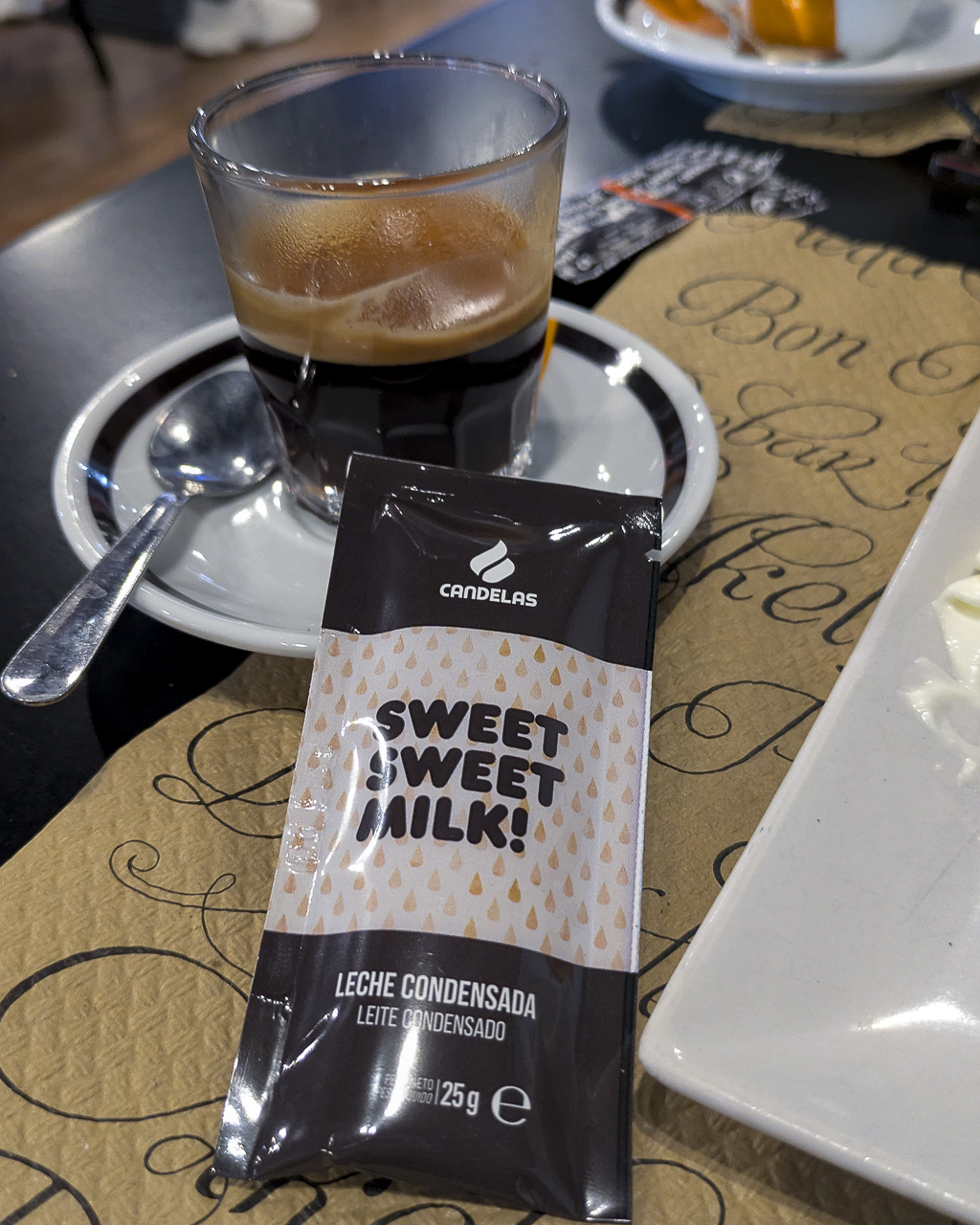
I finished my meal with a café bonbon, my new favourite coffee.

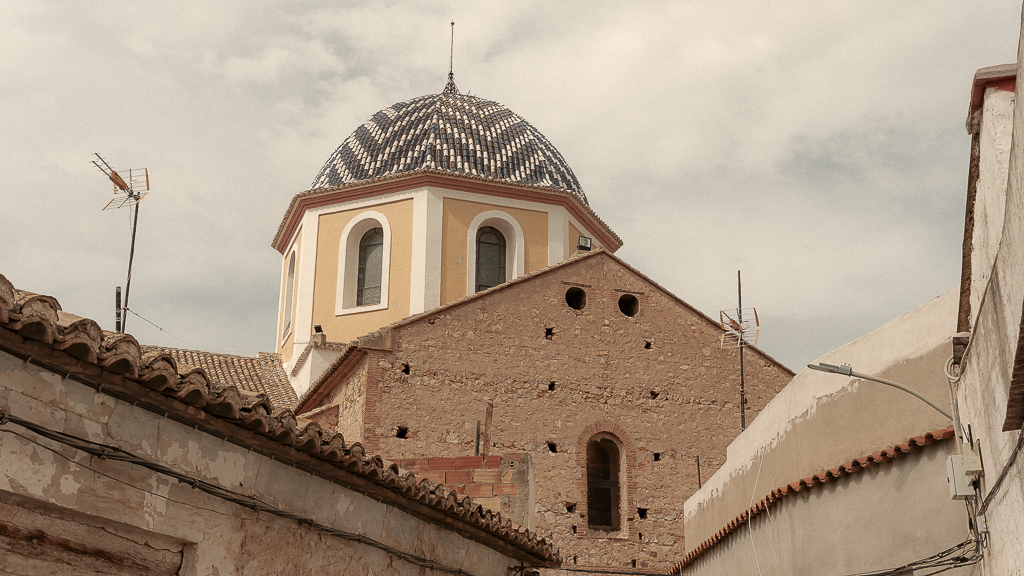
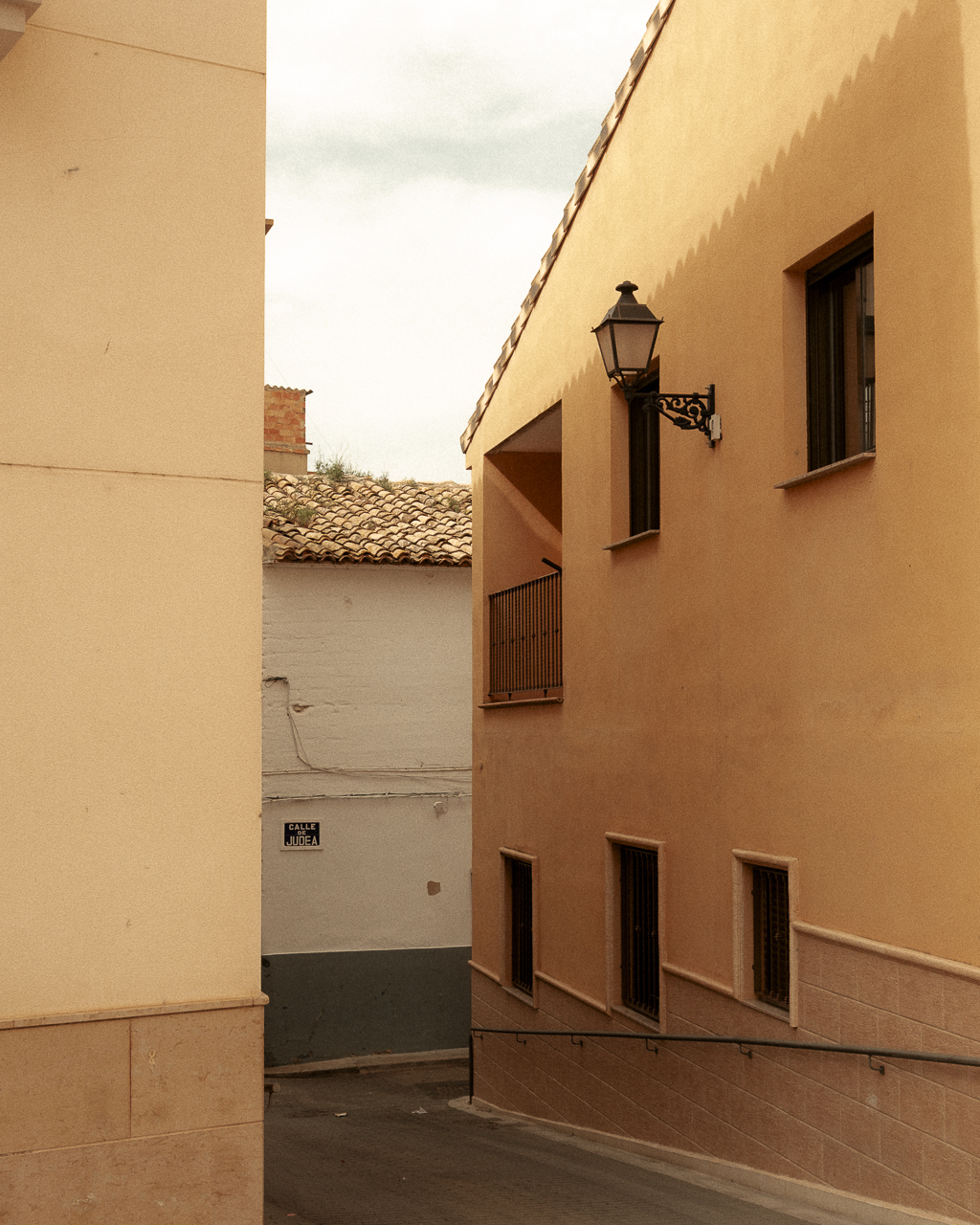
After lunch I wobbled off up the very short hill to take a photo of Santa Catalina Parish Church which sits at the top of the small peak that is the middle of the town. It’s a small village, but this is Spain and there is always room for a narrow street or two, and the old town lanes gently lead you up the church. It was late lunch, drifting into siesta time and the streets are deserted except for a tired woman pushing a pram up a steep hill before entering the top most house, followed closely by a second chid and a hunched over older woman.

I wandered back down to join Paul at the bikes and we took a slow ride back to Xelardo. I must say I was most thankful for the power boost provided by the battery on the gentle climbs and the short sharp shock climb at the end of the park. I mean it’s really short and really sharp.

I needed that ride, it felt good to be back out on a bike again, especially as I didn’t need to pedal that hard!

Saturday

My final day in Spain for a while and the best way to end my trip was with the workers’ breakfast at a café whose name I never knew in the nearby town of Marines. Paul’s son had joined us overnight and as there are only two bikes I elected to walk the 40 minutes to the café. I’d walked there with friends about 10 years ago and was interested to see if the area had remained the same. I also had a sneaky sub-reason for going and I will cover that in the next post.

I always think of Spain as hot, but of course it gets as cold here, and while it wasn’t as nippy as at home in St Leonards it was still cool enough to head out the door in a jersey and a light jacket. The sky was smothered in a light grey blanket, which suited me perfectly.

The first surprise is one of the roads is now sealed, and there seem to be more houses than I remembered. The second surprise is that according to my map app and my memory the two roads I’m using joined up, but the reality is they don’t. I had to walk across a small field, then an adjoining small field and down the driveway of a, fortunately empty, home. A farm worker ploughing another field nearby ignored me, so I assumed it was OK. I returned the same way, and no-one got upset then either.

I enjoyed the walk, it was peaceful; other than the bark of dogs and the buzzing of propeller-driven planes taking off and landing from a small airport nearby. Barely any cars passed me and, other than the man on the tractor, I only saw a young couple walking a dog; it was a solitary and reflective time among the dirt and orange groves.

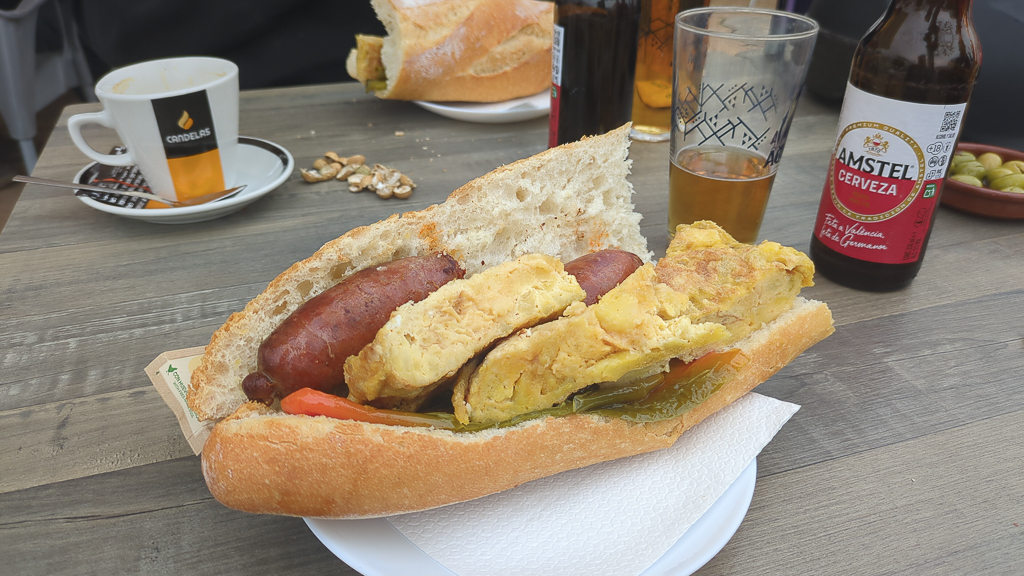
The others arrived just before I did and I saw them locking up bikes as I got to the main street of Marines. The café is busy, this is a popular place for the people of the village and its surrounds as well as road cyclists from who knows where. There seems to be a cycling theme to the cafes around here. There is a breakfast deal on Saturday morning, a drink of your choice; including beer, a coffee and a bocadillo – half a baguette with three fillings of your choice from a list of about 20 items. I went for red sausage (chorizo), tortilla and red pepper. I expected the fillings to be sliced thinly, but this is Spain so that was a silly idea. It is HUGE, rustic and perfect; though I was unable to finish it all.

After lunch I’m introduced to what is now my even newer favourite coffee by our young English-speaking waiter, a carajillo. A single shot espresso, a nip of rum and a touch of honey. A perfect heart starter on a cool Saturday morning.
I meander back to the house and after packing up my stuff I’m off to the airport and the flight back to London. A shame to be leaving so soon after arriving.
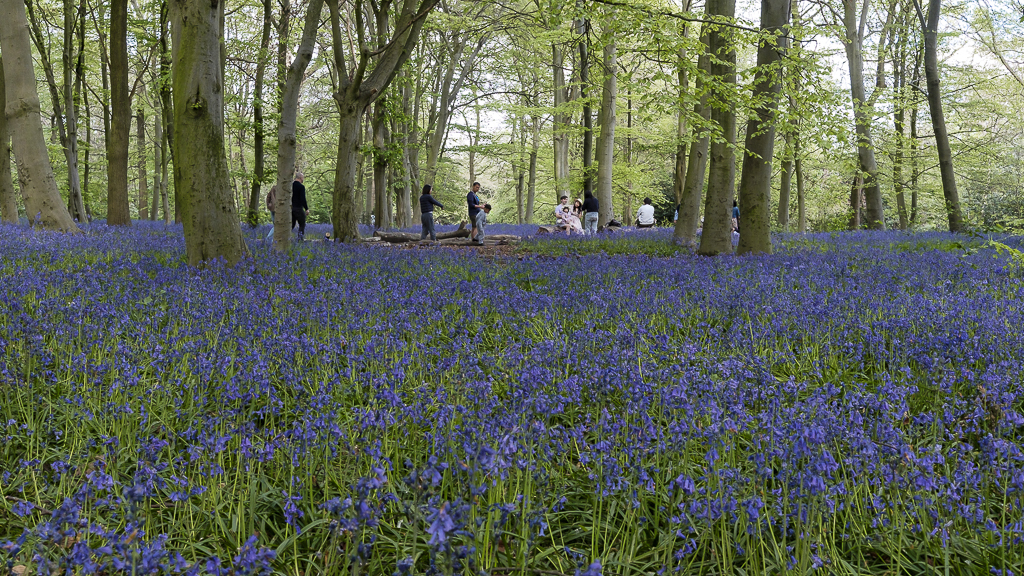
Valencia – Fallas

Valencia
18-21 March 2026

Every March, Valencia loses its mind in the best possible way. For 10 days and nights the Fallas festival, culminating on the feast of Saint Joseph on the 19th, fills the city with towering satirical sculptures, relentless fireworks, and the kind of noise that just doesn’t stop. Not for anyone, just ask Morrissey. I have zero sympathy.

The origins go back to medieval carpenters, who’d burn off scraps of wood and their wooden candle-holders (parots) at the end of winter as a nod to the longer days ahead. Over centuries it evolved into something spectacular: over 700 enormous Fallas sculptures, months in the making, and built by community and neighbourhood groups from all over the city, are all burned to the ground on the final night, La Cremà.

In 2016 it earned UNESCO Intangible Cultural Heritage status and nearly two million visitors turn up for the five main days. It’s loud, chaotic, and utterly fabulous, and the purpose of this visit to Valencia.

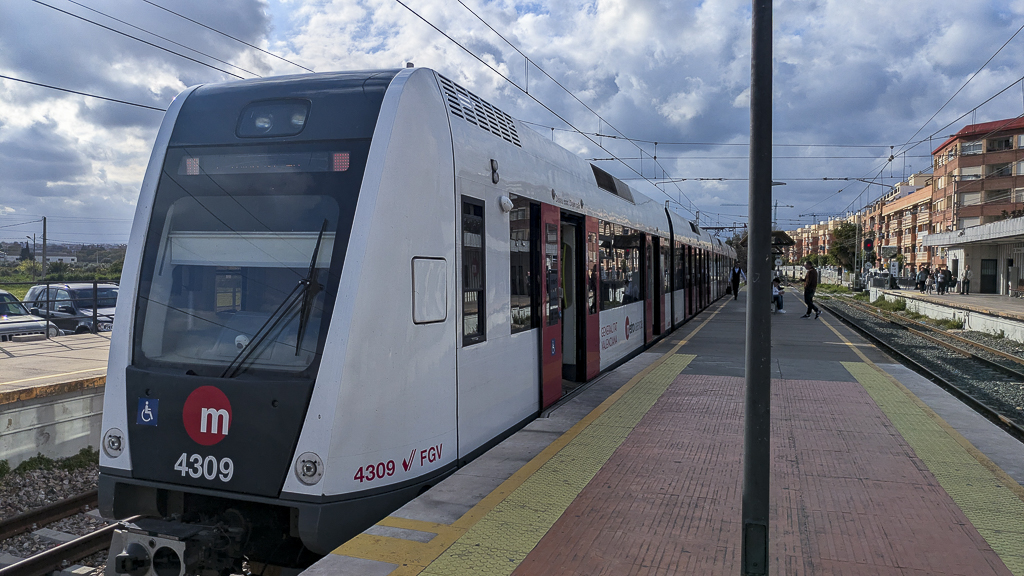
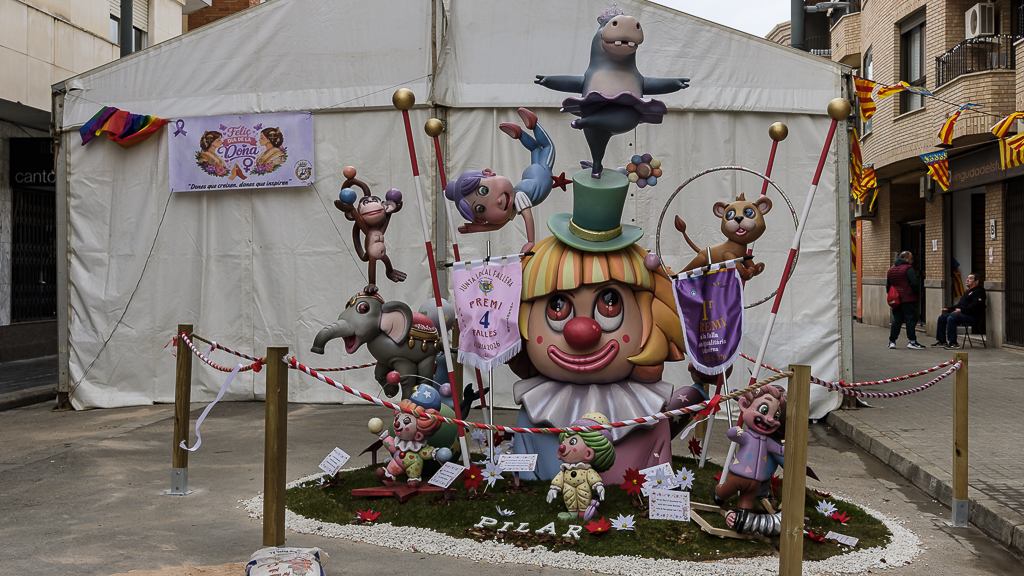
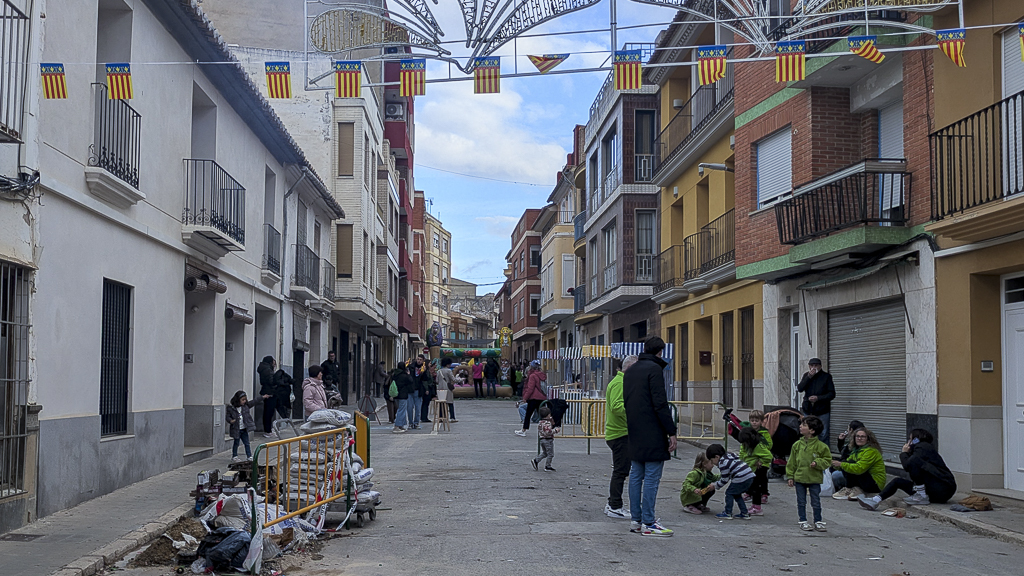
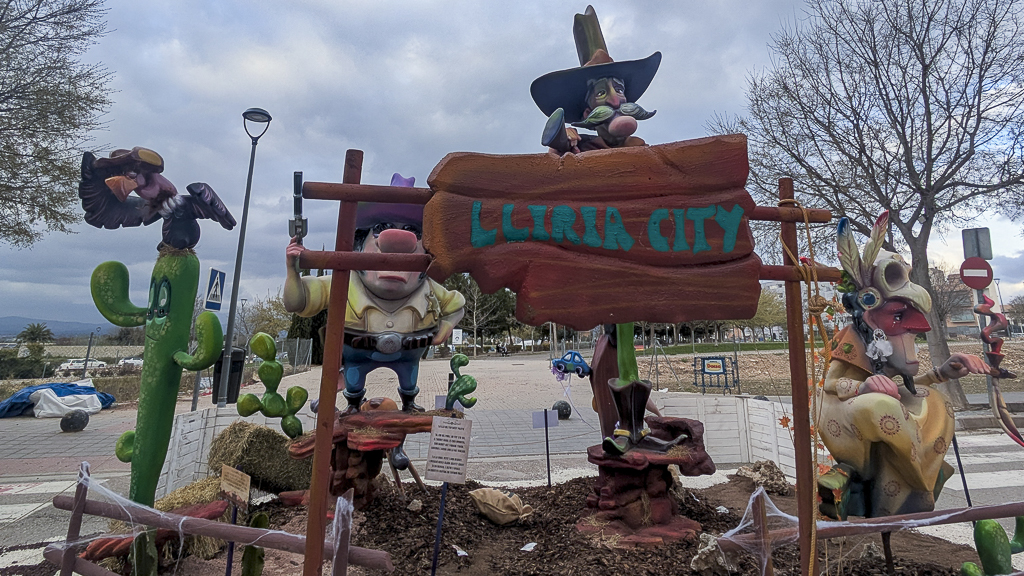
Paul and I cycled into LLiria where we rode around the centre looking for some of the local Fallas before heading down to the station, where we missed a train by a matter of seconds.

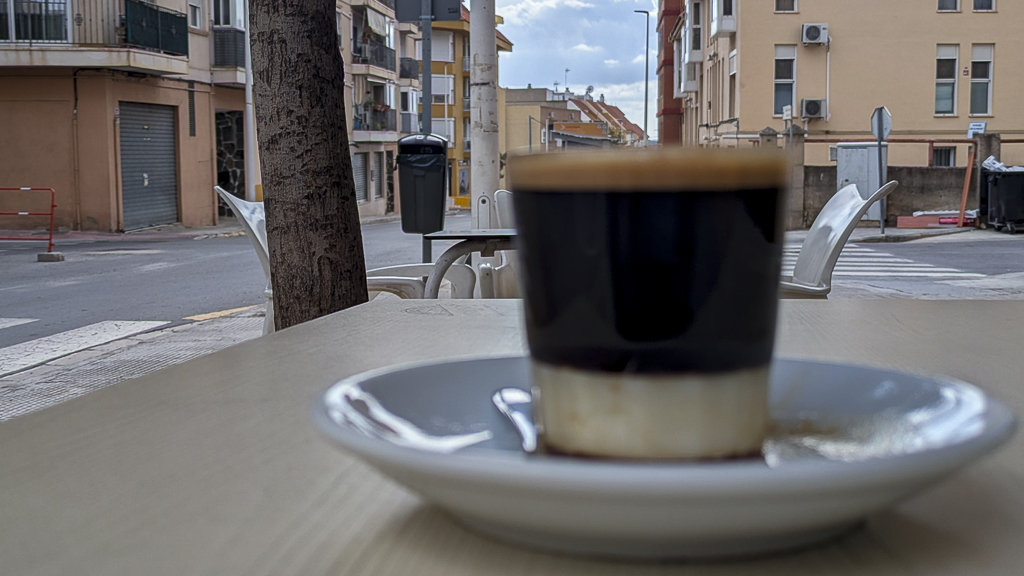
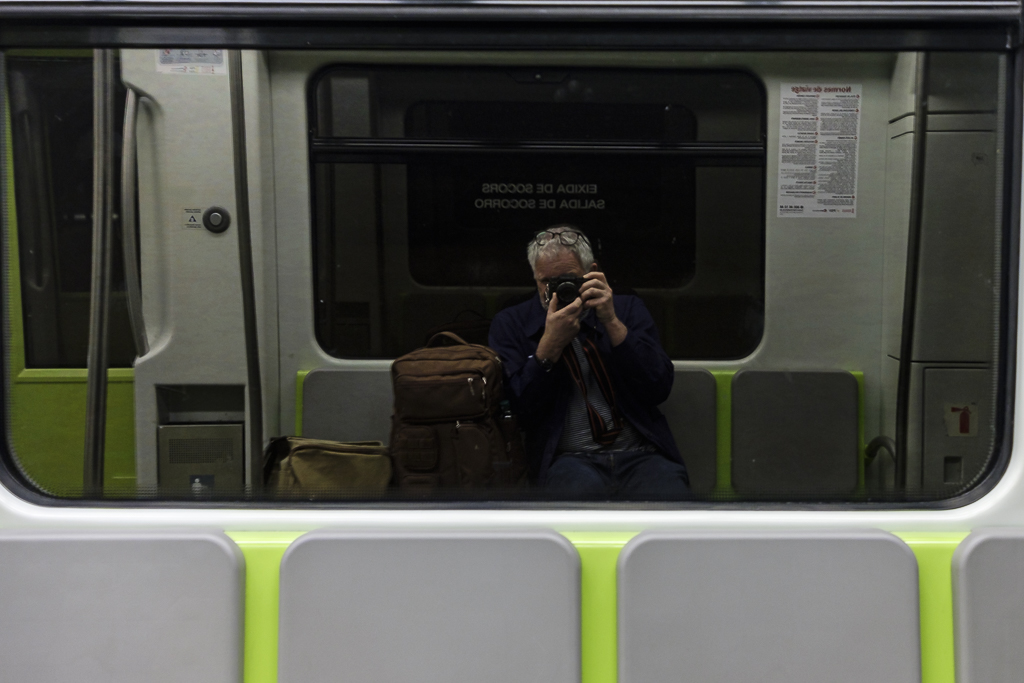
A good excuse to grab a café bonbon from the coffee shop near the station. I love bonbon; double espresso shot with sweetened condensed milk. My phone decided to focus on anything but the coffee cup.

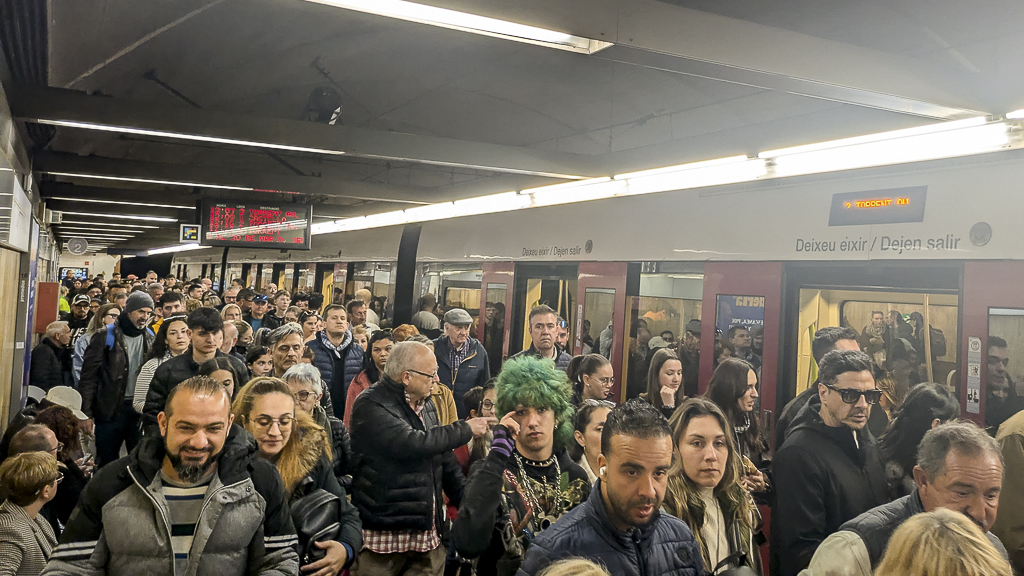
By the time the train arrived in central Valencia it was absolutely rammed, seemingly busier than the busiest commute. We let people exit the station before attempting to make our way out, though to be fair it’s not that we needed to consult a map to work out where to go, everyone was going in the same direction.

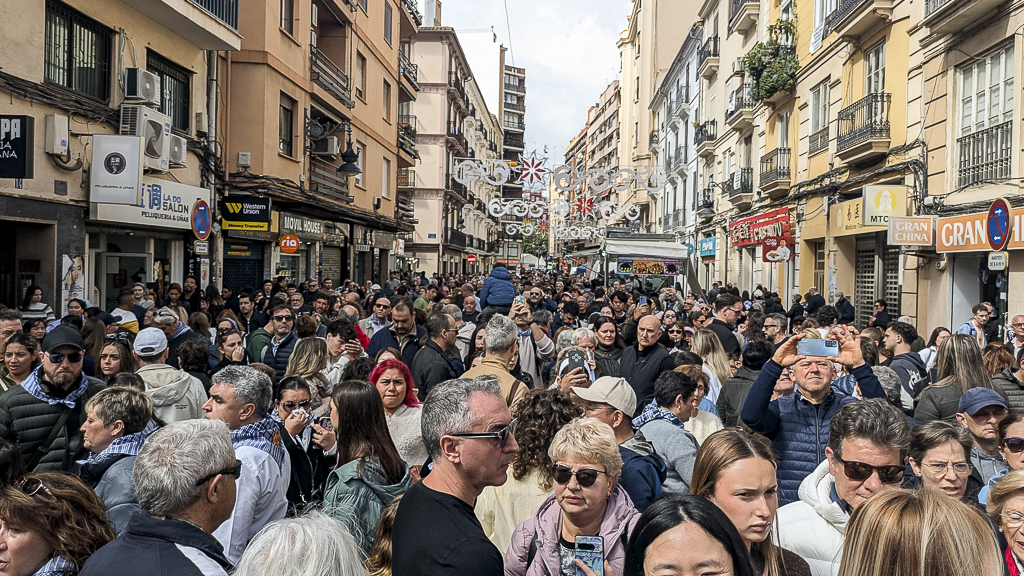
Fallas is a big festival for Valencia, and the local authorities take the number of visitors and the income they bring seriously. It was fantastic to see the entire centre of the city was closed to vehicles, there weren’t even bicycles; though in some places there would just be no point in trying to move anywhere other than at the speed of a slow-moving mass of humanity. Luckily the atmosphere was very much one of celebration. I saw police here and there, but my experience was they were unnecessary; even though many people were walking around with cans of beer and wine in their hands. I usually hate crowded events but this was an exception.

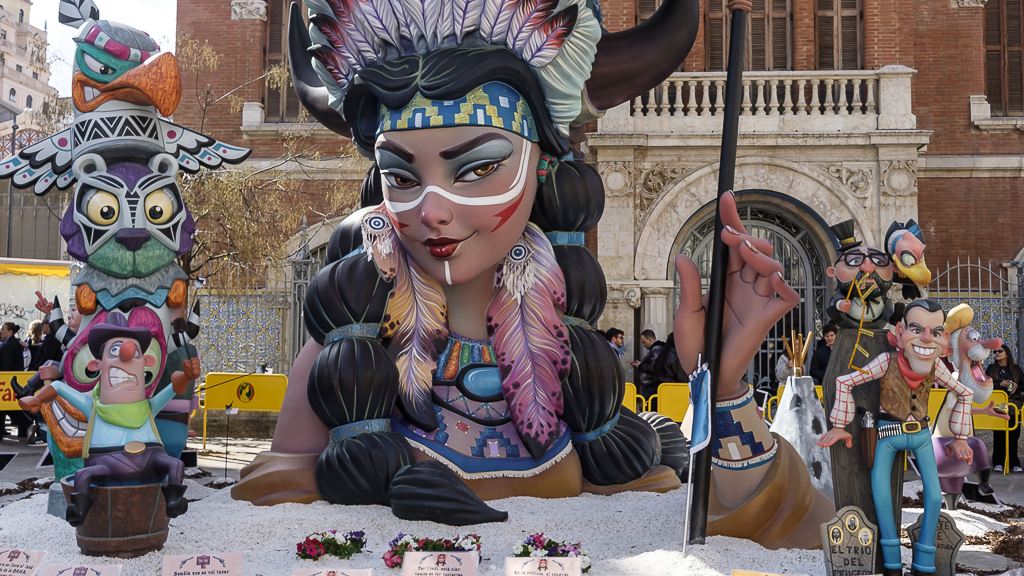
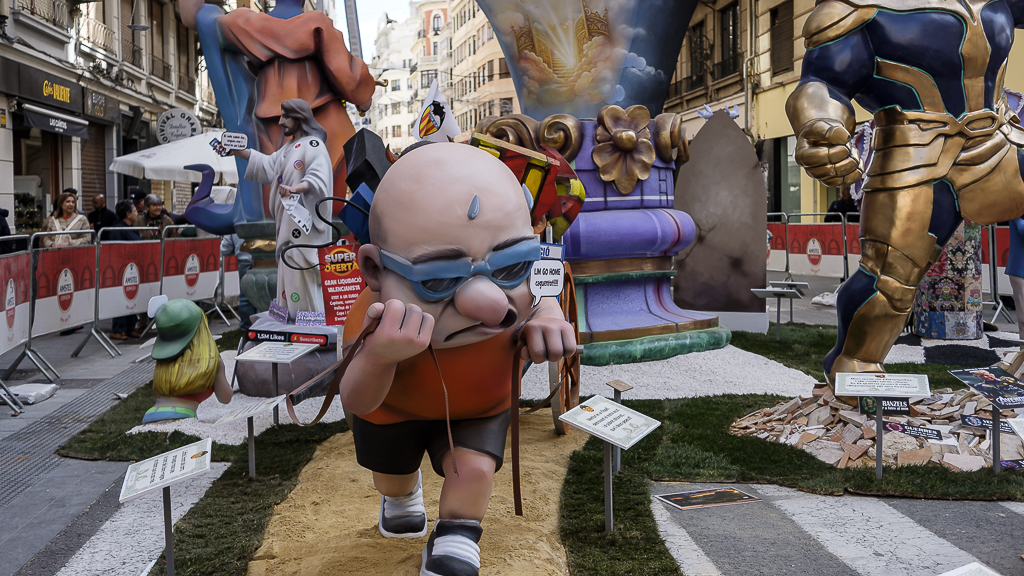
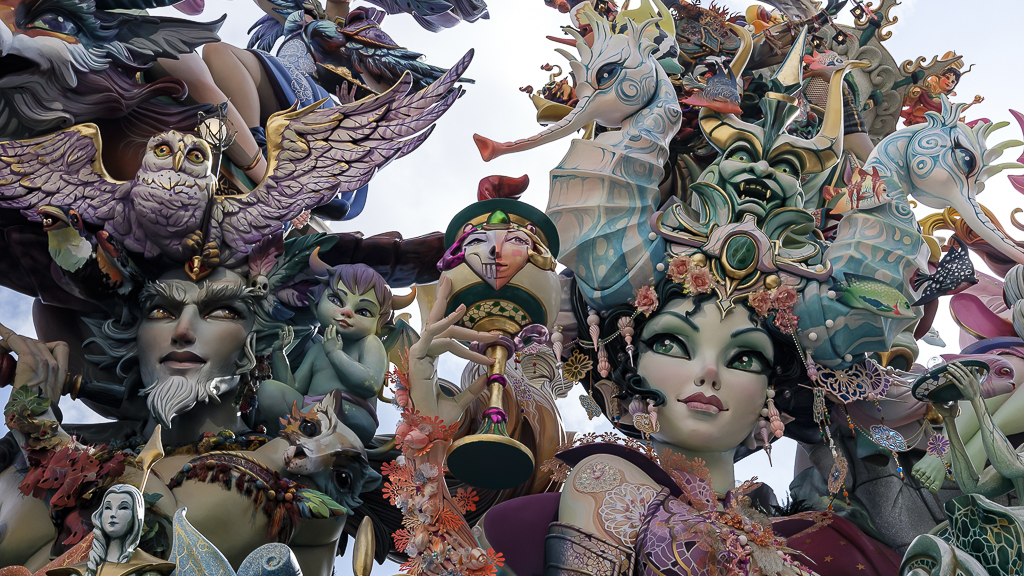
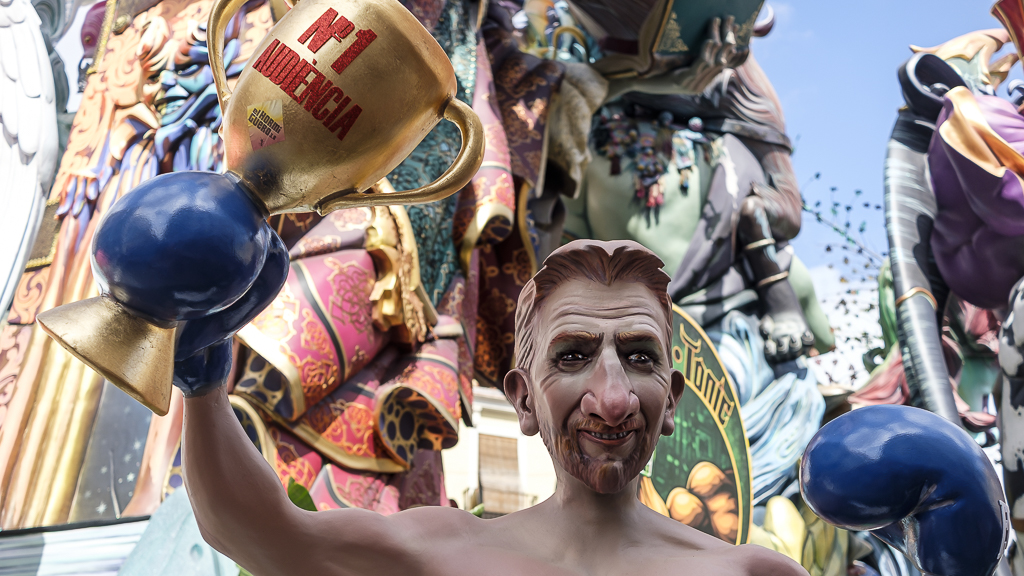
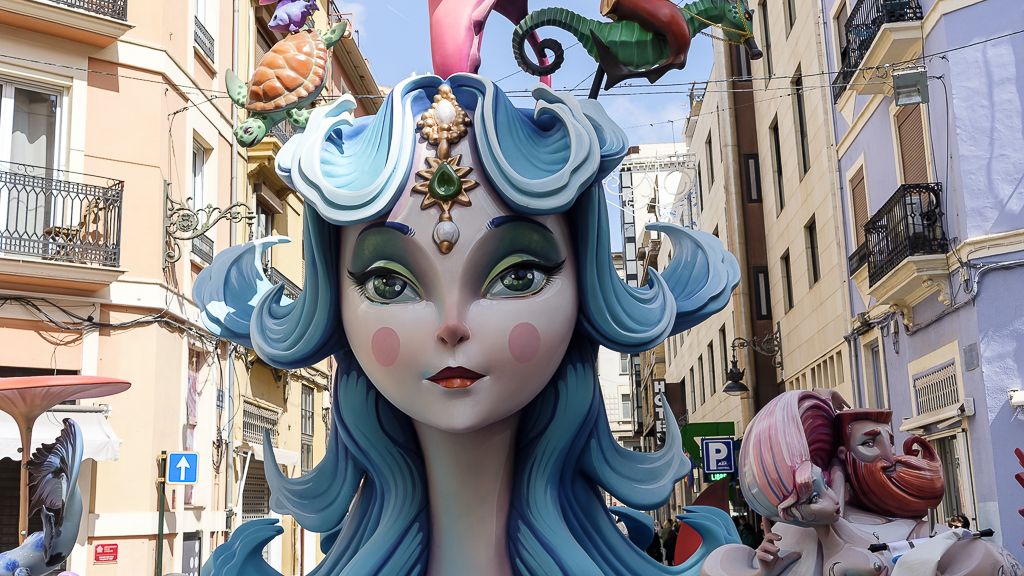
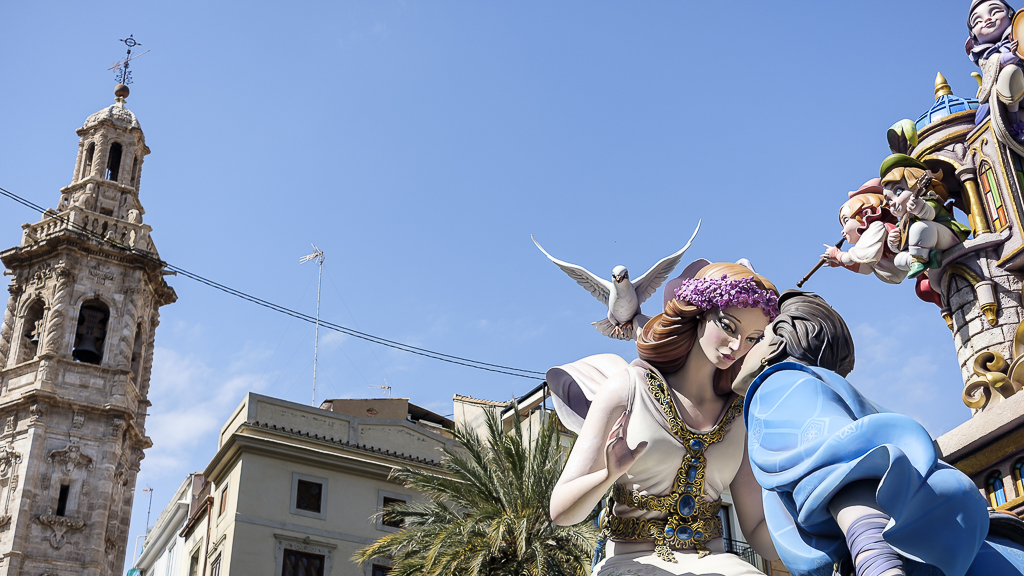
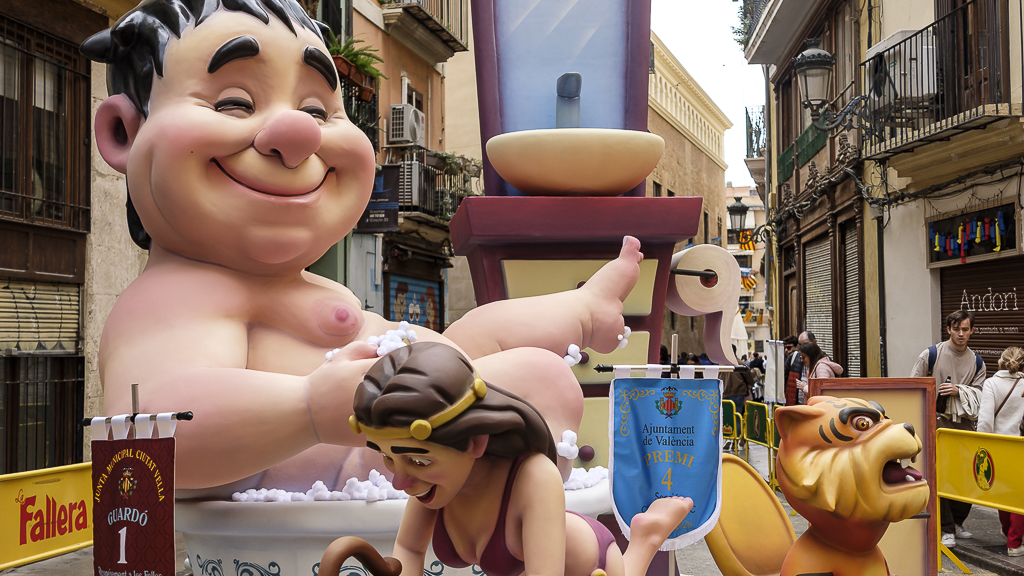
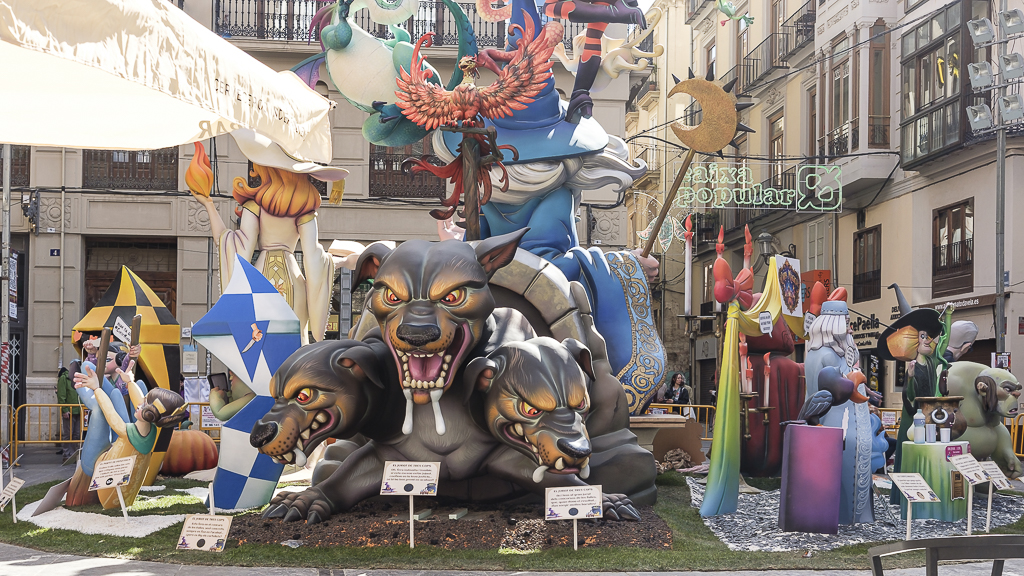
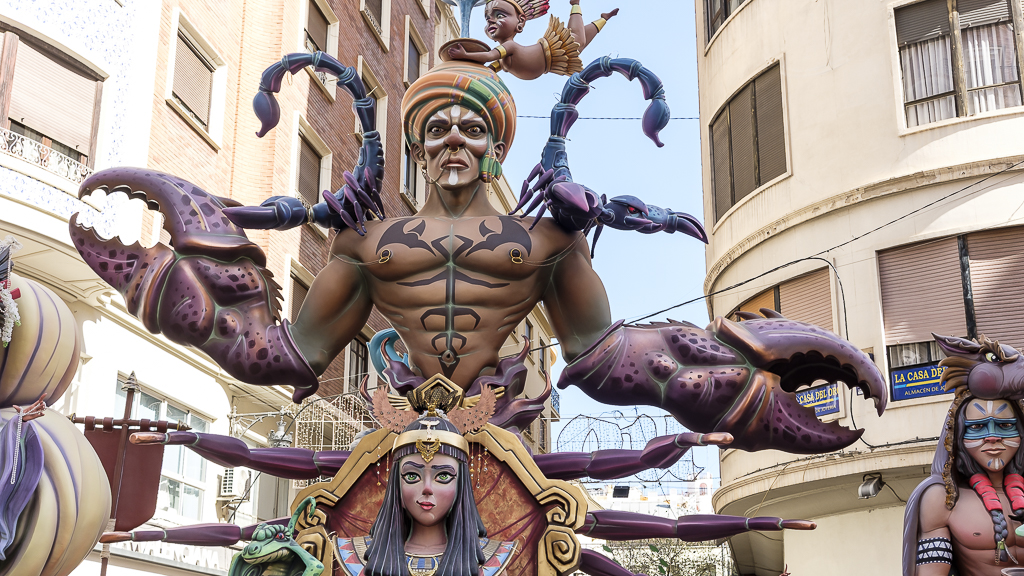
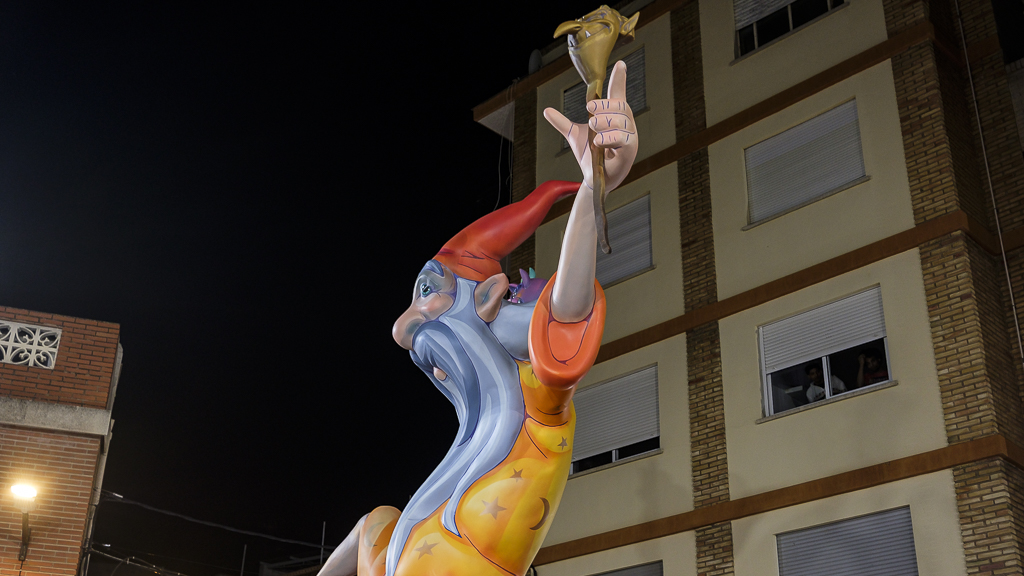
I was blown away by the quality, and quantity, of the Fallas, the biggest we saw, and this was from a distance as the street was so packed would have been about five stories high. It was huge. Most were about 40 or 50 feet tall, and most were stunning to look at. The amount of work that goes into them is inspiring, and they all get burned….

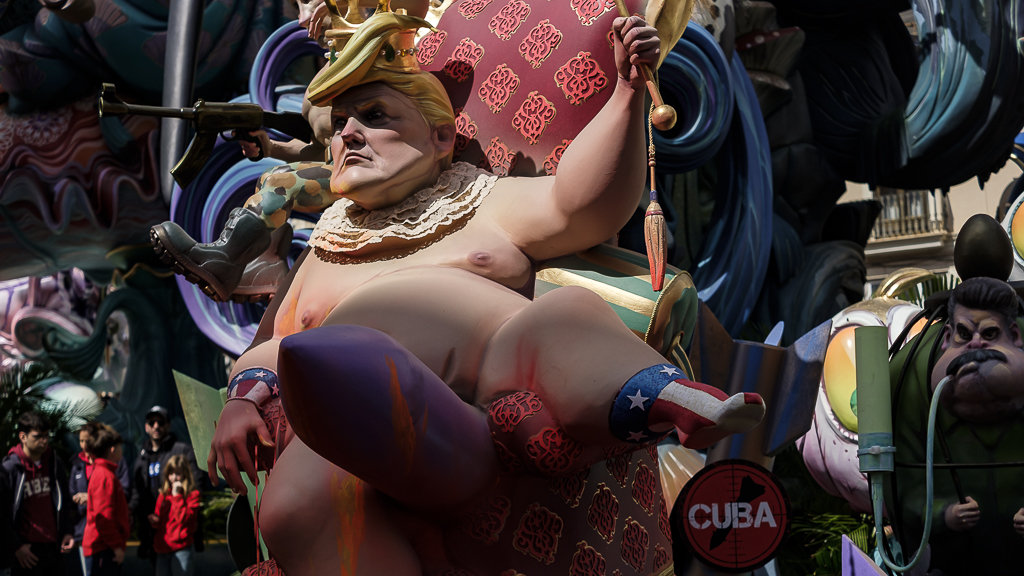
The first one we came across was one of the bigger ones. Many of them have some political context, a lot of the political commentary is local so I was out of the joke, but the Trump with a missile for a penis, was one of the least subtle ones.

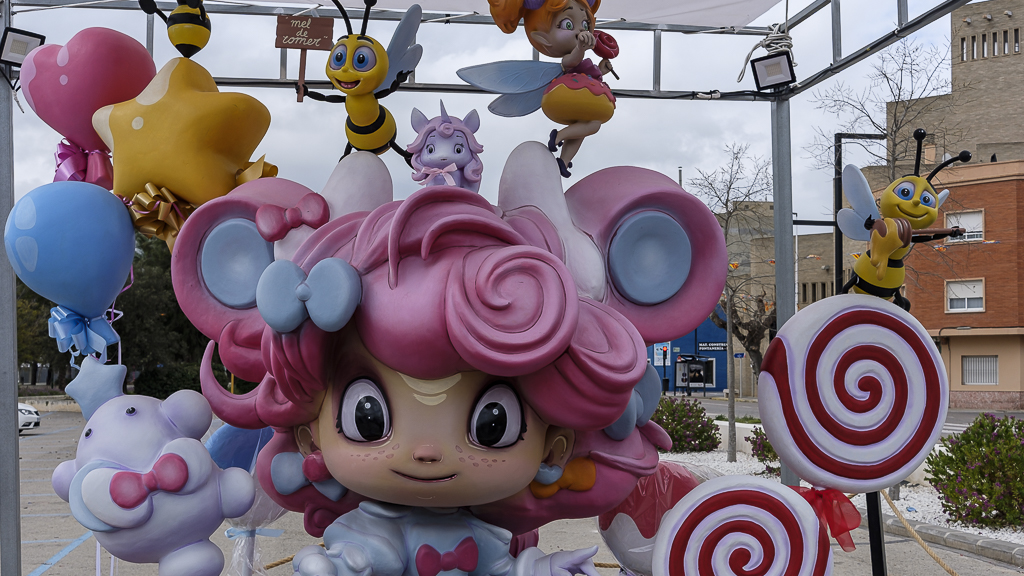
I took a lot of pictures, so this is just a collection of the best. By the time we left I’d stopped taking photos, there were just so many to see! The work that has gone into them is just awe inspiring, there is so much detail, so much colour and so much more than I exptected.

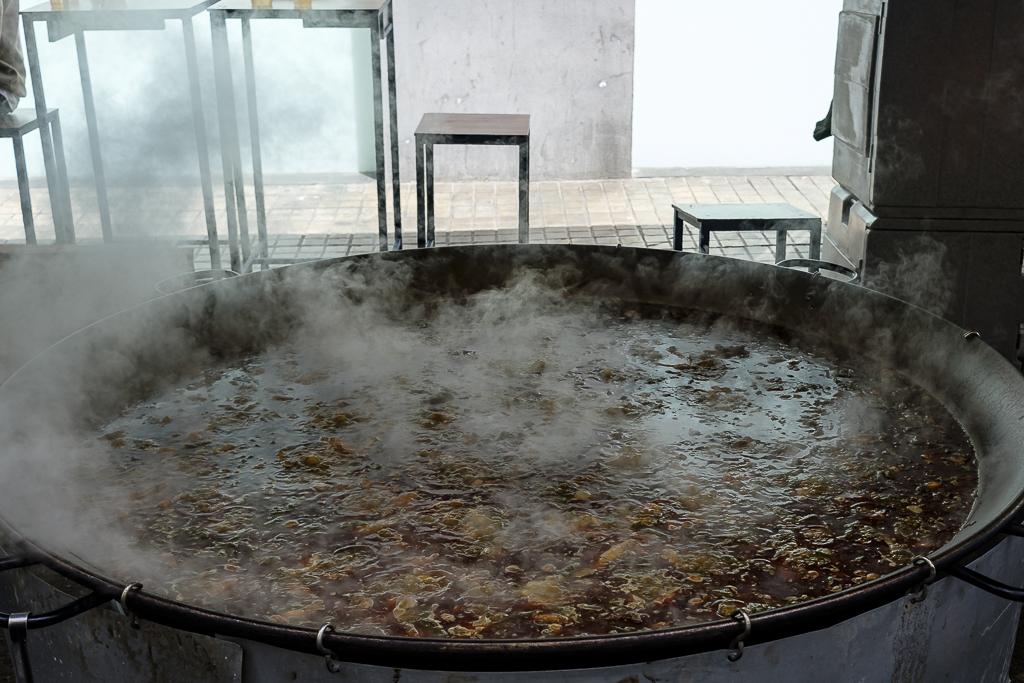
Fallas is a time of celebration, with family and community and church. Celebration comes with food and of course, as the home of paella, the was a lot of paella on the go, in huge pans all over the city though sadly just for the friends and families of those who made the Fallas their group was representing.
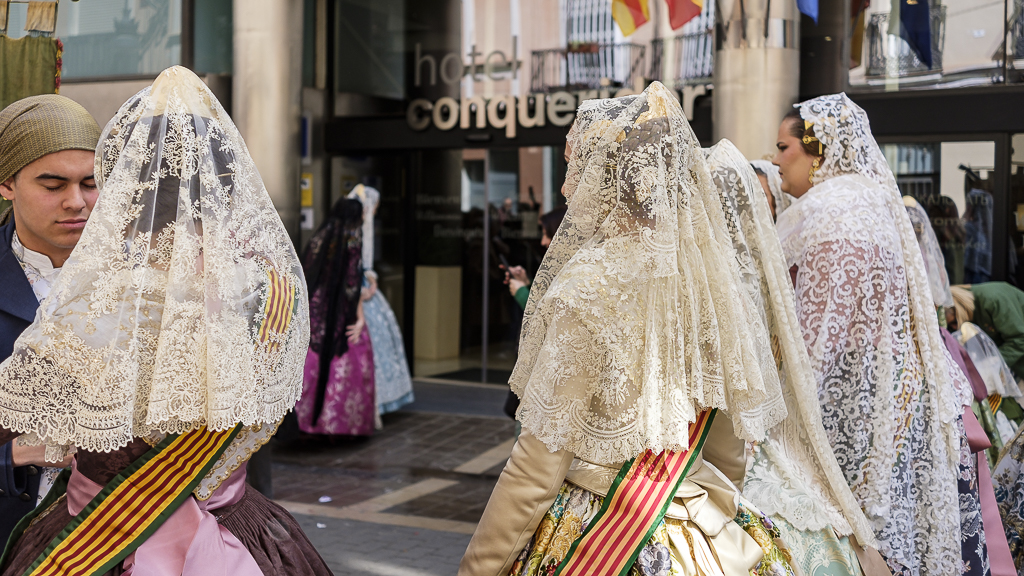
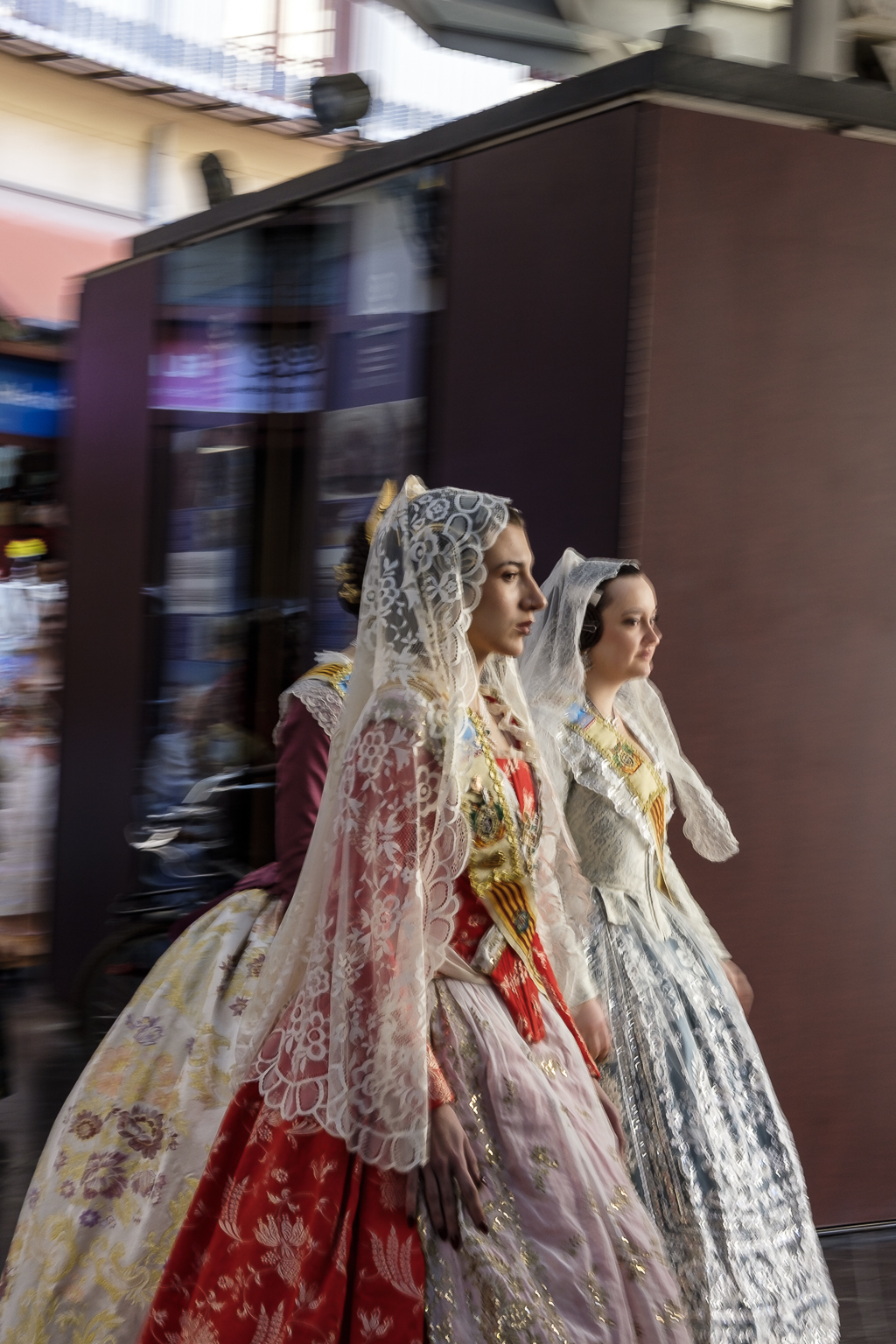
There are a lot of people in local dress, many walking in front with marching bands, if they can find space to march, and it’s a riot of noise, smell and visuals. Like I said, it was a lot of fun. This group walked past as Paul and I took a few moments over an iced vermouth and patatas bravas.

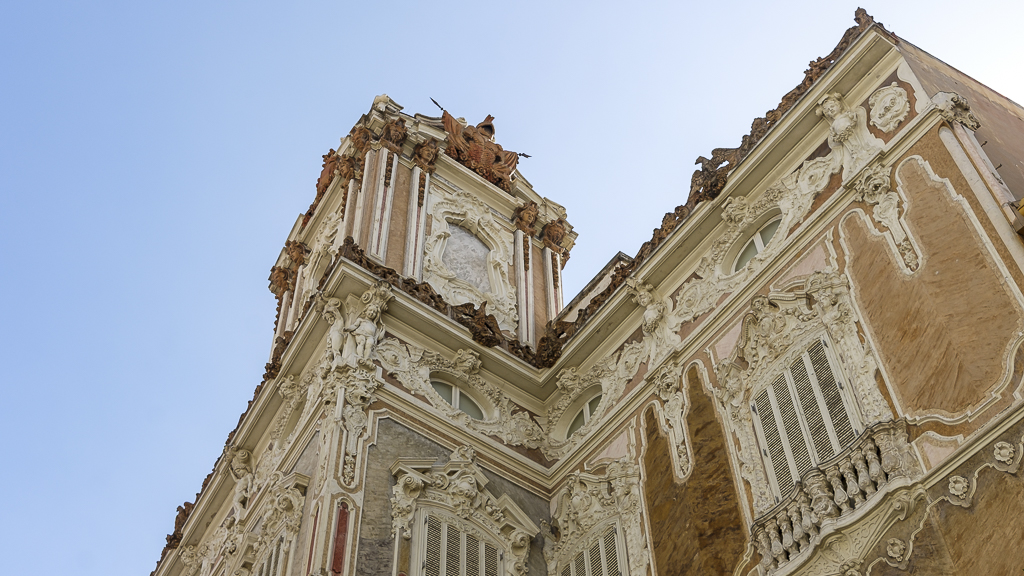
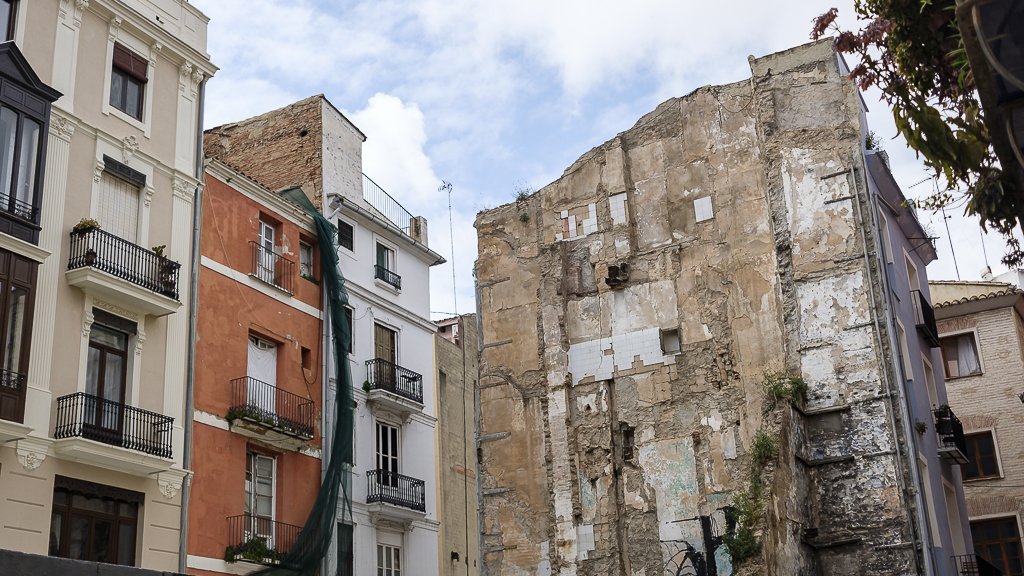
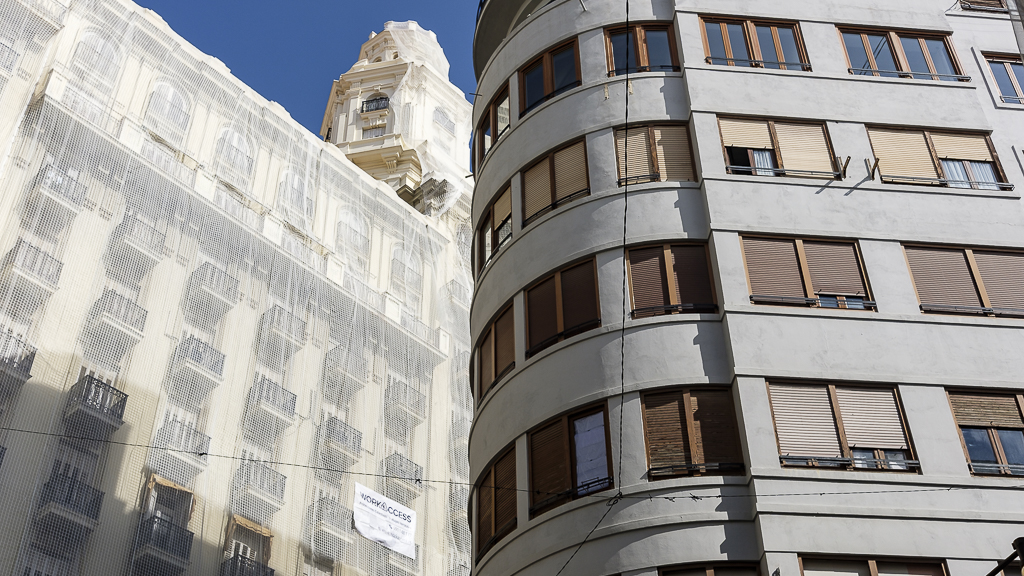
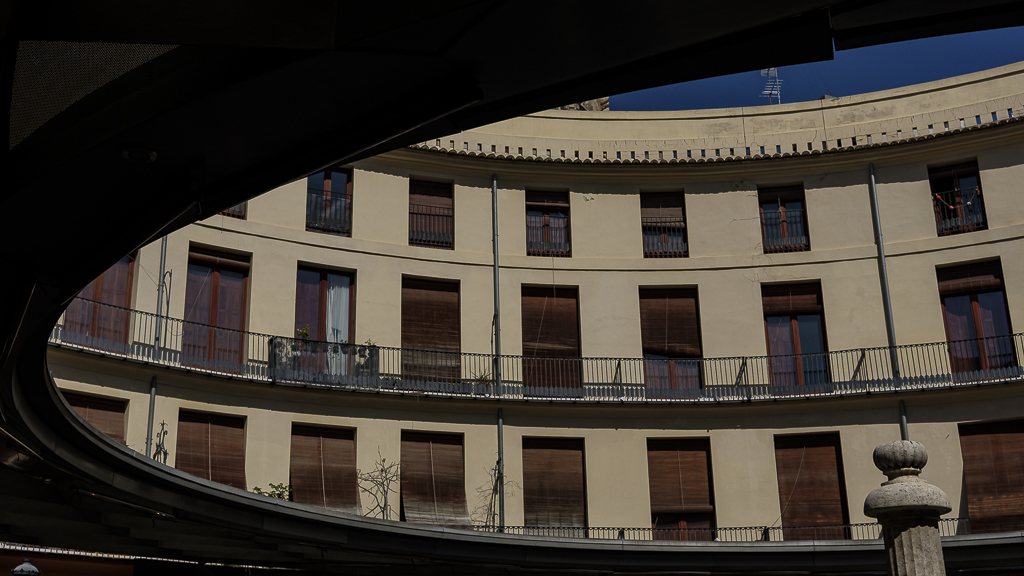
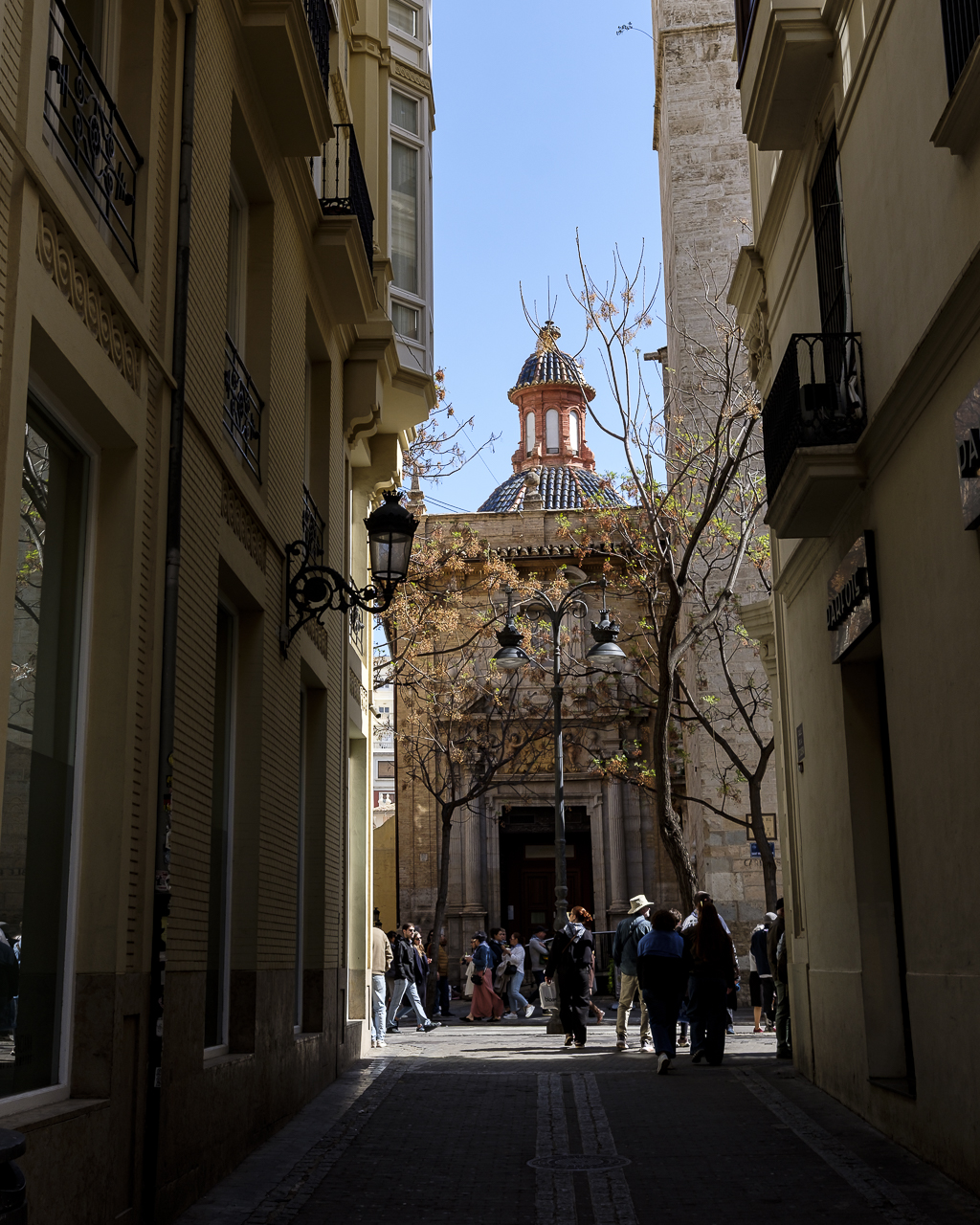
I like Valencia, this must be the fourth or fifth time I’ve visited. I like the mix of wide boulevards in the ‘new’ town and the narrow cobbled lanes in the old. On our first visit in 2016 (oh man, we look so young!) Eleanor and I loved roaming the graffiti covered narrow lanes with the occasional boutique or bar. Now it’s all boutiques and bars and the graffiti has mostly gone. At least the narrow cobbled lanes are still there. It remains a very attractive and very walkable city centre, one of my favourites, and especially so on a cloudless early spring day.

After stopping for a slice of pizza and glass of red we looked at trains back to Lliria. Annoyingly there were regular trains up to 10.30 and nothing until 1am. With the burning of the Fallas not starting until 10 we decided we should head back to Lliria early. There were so many people around that if we missed a 1am train we would be stuck. We’re not 20 any more!

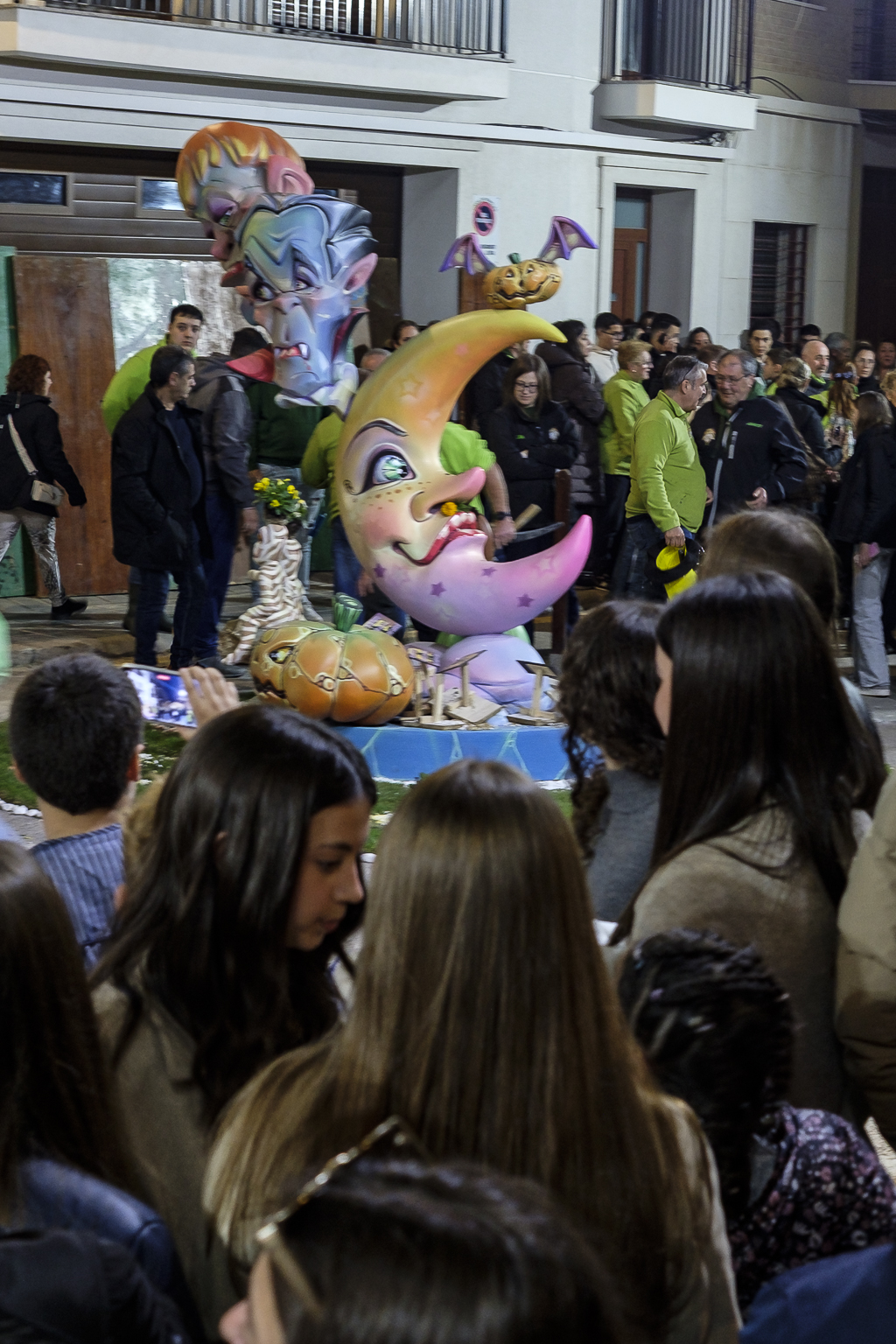
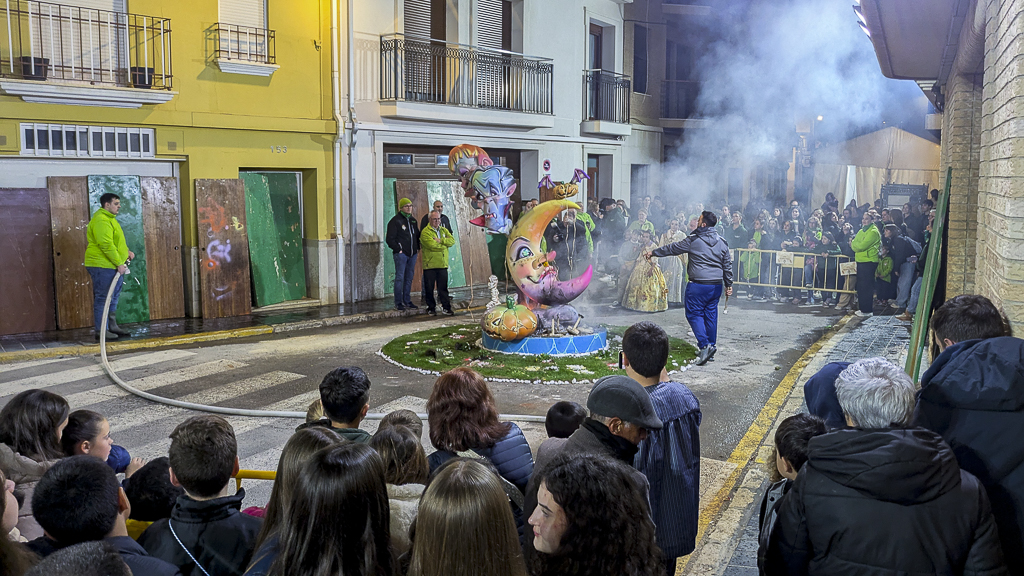
Taking the cautious option meant we were back in Lliria in time for the local, albeit it smaller, burnings. We walked about some of the Fallas in Lliria, watching more young children throwing fireworks about, then stopped for a beer and a snack in a local bar to wait until dark.

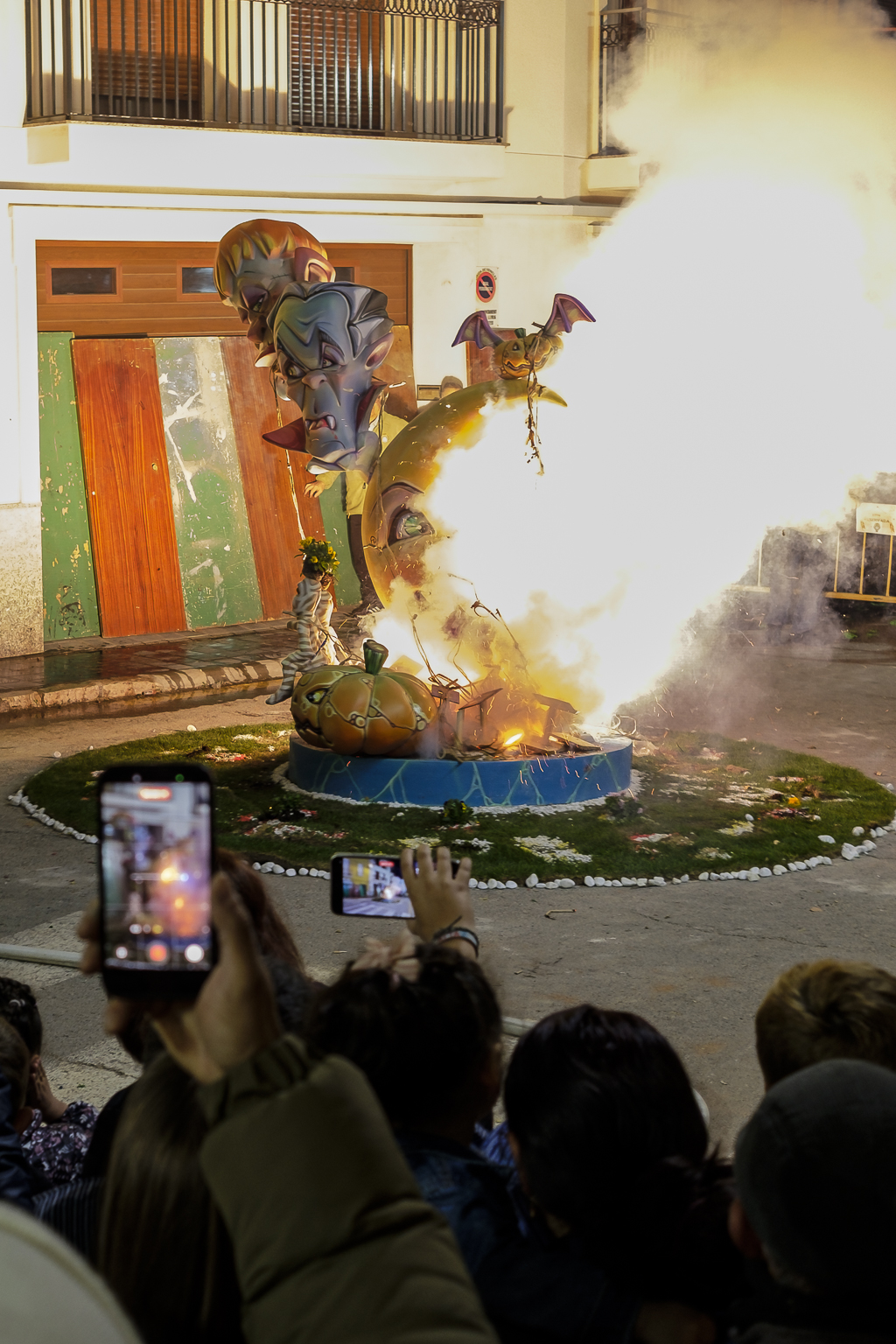
It was an excited local family crowd that gathered around, getting bigger and bigger (not compared to the city centre mind!) waiting for the countdown to the firing. Excited kids, and a few excited adults, firecracker bangs echoing from the walls of the buildings around us and bursts of colour in the darkened sky as rockets popped overhead as the tension built. Then the man with the flame arrived….
With a bright flash the fireworks draped over the Fallas ignited, burning bright and then the fire went out and nothing happened. A team of Fallas builders came out to try and get thing to burn and slowly people drifted away. Including Paul and I.

Back to the bikes and the ride to Xerlado and home.

It had been a great day; Valencia does this festival really well. I’d like to return in the future, but will get a hotel room in the city so I can stay for the bigger burnings, I can imagine they’re a load of fun.

Xelardo

Valencia 1
18-21 March 2026

Our friends Paul and Paula have a holiday home on the northern edge of Xelardo, a small urbanisation (I guess this could be described as a distant suburb) to the north of the town of Lliria, which is about 30 km from central Valencia. It’s the final stop on the number 2 Metro line.

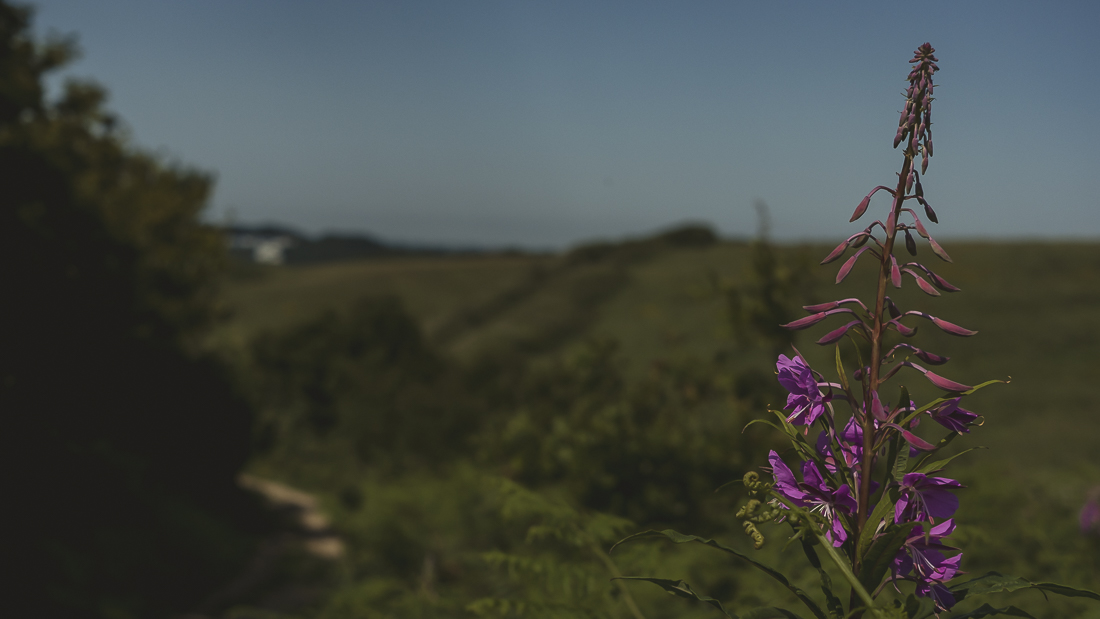
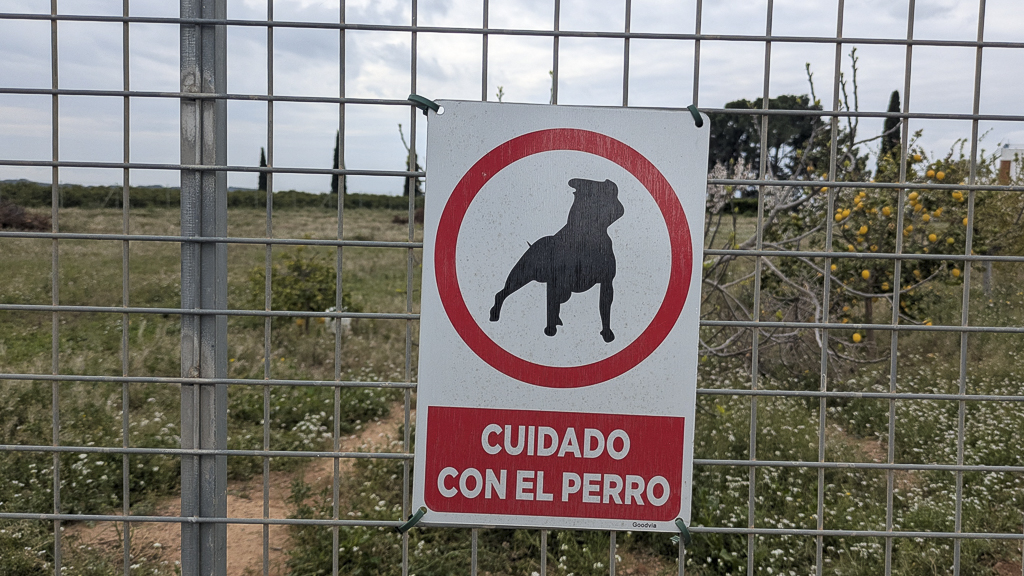
Xelardo is a residential area that seems to be predominately populated by dogs, especially the edgeland where our friends’ house is. The area has changed little over the last few years, though they have two new neighbours since I was there in 2018 and the view out the back over scrubland has been disrupted by a new house.

When I booked the flight, I was looking forward to getting out of grey, windy, rainy and cold England. We’ve been living at my flat in St Leonards On Sea since January and the weather has just started to perk up. It’s still cold, but the sun had been out on more than one occasion and we did have an afternoon on the seafront with a glass of wine in the sun; though we’re still wearing the big coats.

I’m flying out of Gatwick as its the nearest airport to St Leonards and there is a direct train; which naturally was cancelled at the last minute. Fortunately, there was an indirect train thirty minutes later and as I’m me, I was still at the airport early. I was through security and in the bar for a pre-flight G&T within 15 minutes of the train arriving.

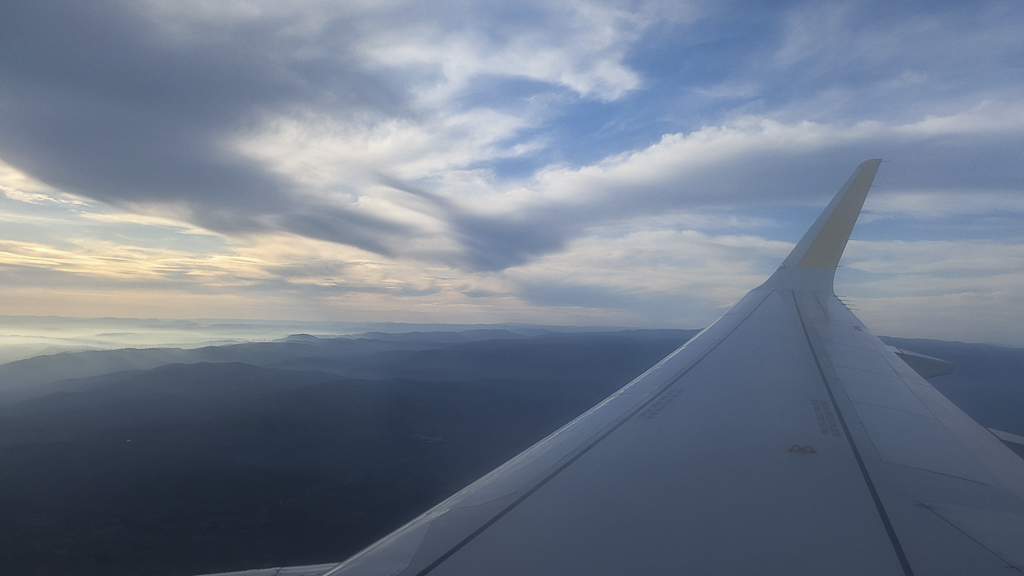
I landed at Valencia airport early after a fabulously smooth flight, the new EU arrival regulations for us Brits recently started and I was photographed and fingerprinted on arrival, though there were plenty of machines to do this and it didn’t cause the delay I expected. I was soon on the train into Valencia, then on the next train out to Lliria. It’s the penultimate day of Fallas (more on that in another post) and the platform in Valencia and the train to Lliria were very busy.

Paul met me at Lliria station, with a bike helmet in his hand and two electric-bikes by his side. We were riding back to his place but our first stop was dinner in one of the local restaurants. It was dark, I’d had two G&Ts at the airport and two red wines on the plane. I’ve not ridden an e-bike before and had barely ridden a bike in months. It was fun.

Dinner was good, typical tapas washed down with more red wine. I was decidedly unsober when we finally rode the 15 minutes to Xelardo, luckily most of it was on bike paths as I’m sure I was wobbling around a bit as we rode. We made good use of those paths and bikes over the next few days.

The next day, Thursday, we went into Valencia to join tens of thousands of others for the final day of Fallas celebrations, and like I said up front I will write about that soon.

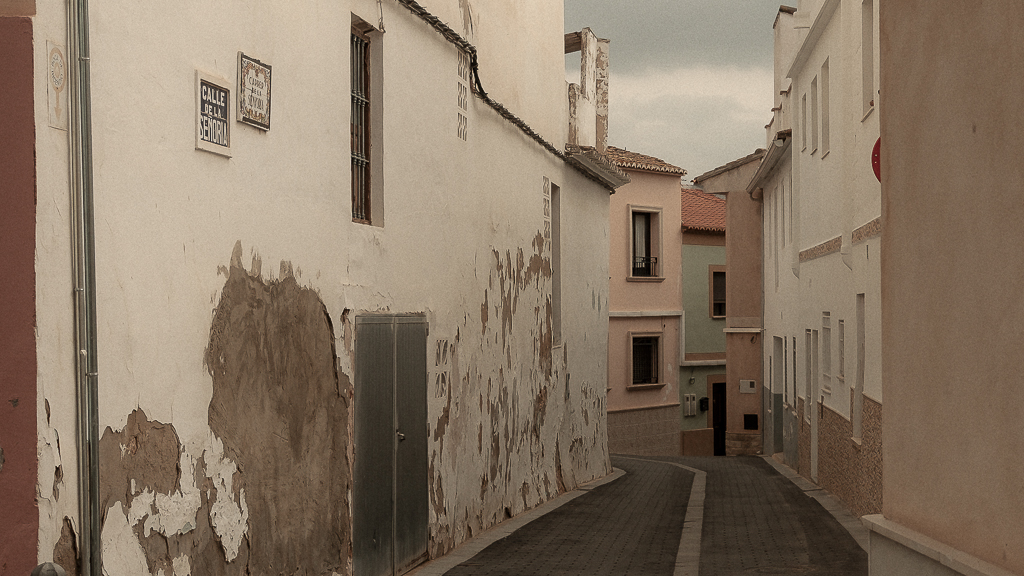
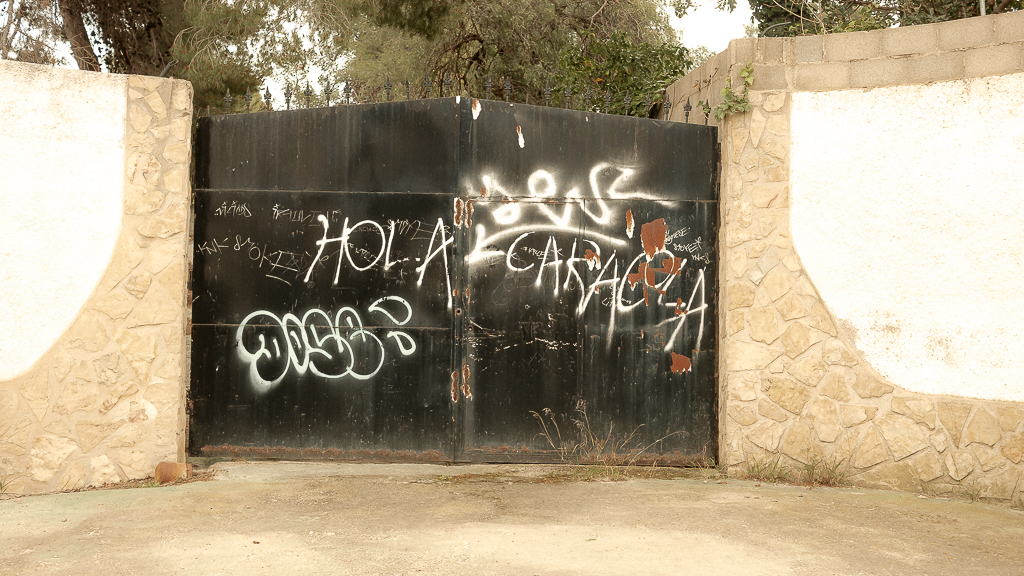
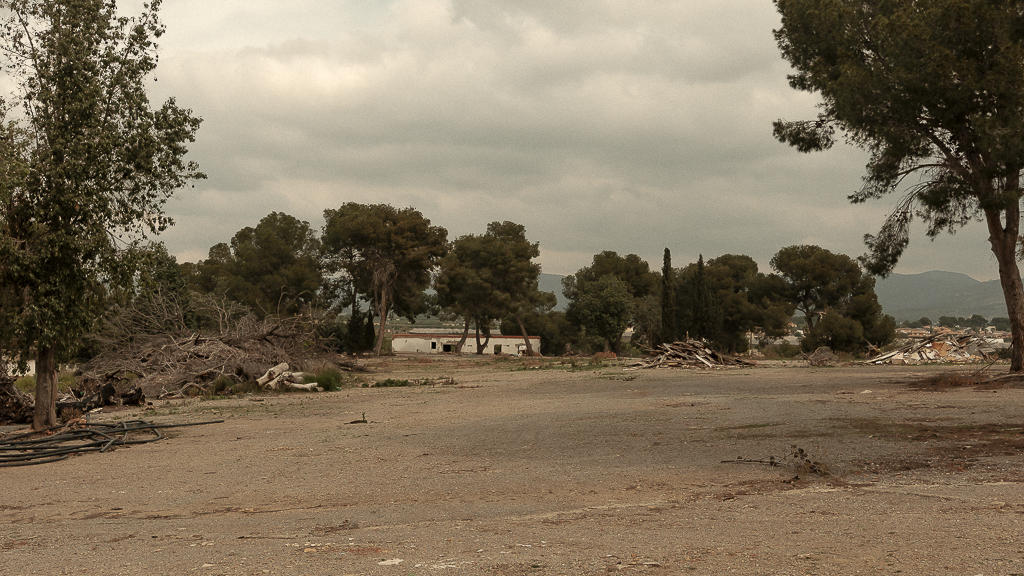
On Friday we took a walk around the bit of Xelardo where Paul and Paula’s house is. Xelardo is a residential area, I don’t think there is even a shop. It’s very quiet, a lot of the houses are second homes, and I guess most people who are here full time keep to themselves. There are a lot of dogs. A LOT of dogs, and they bark as soon as we get close to their homes. Fortunately, the dogs are behind high fences and big gates.

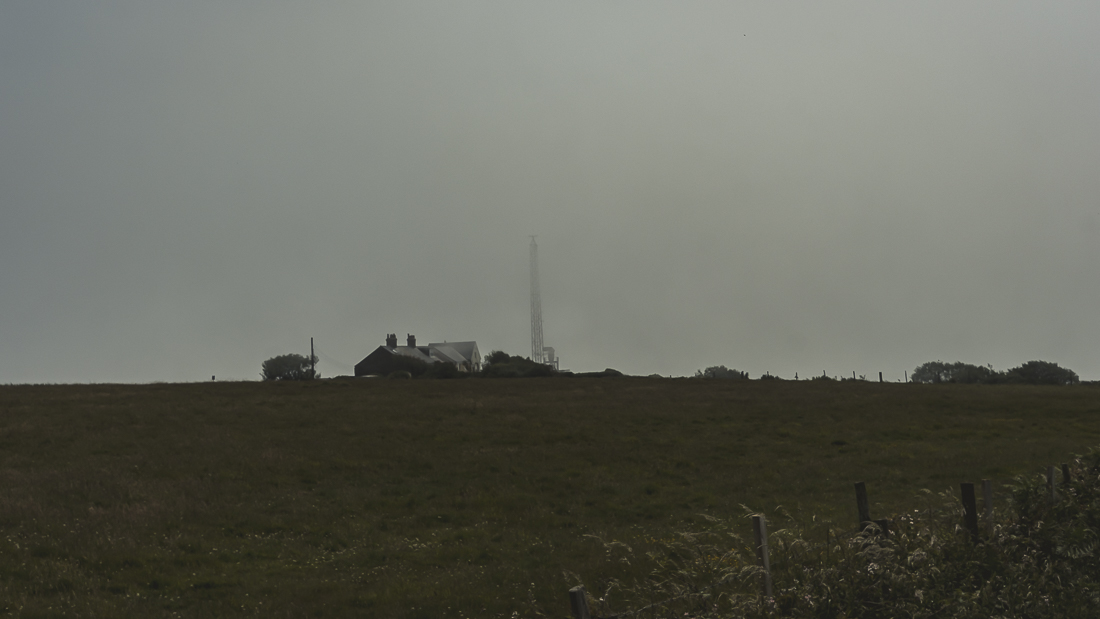
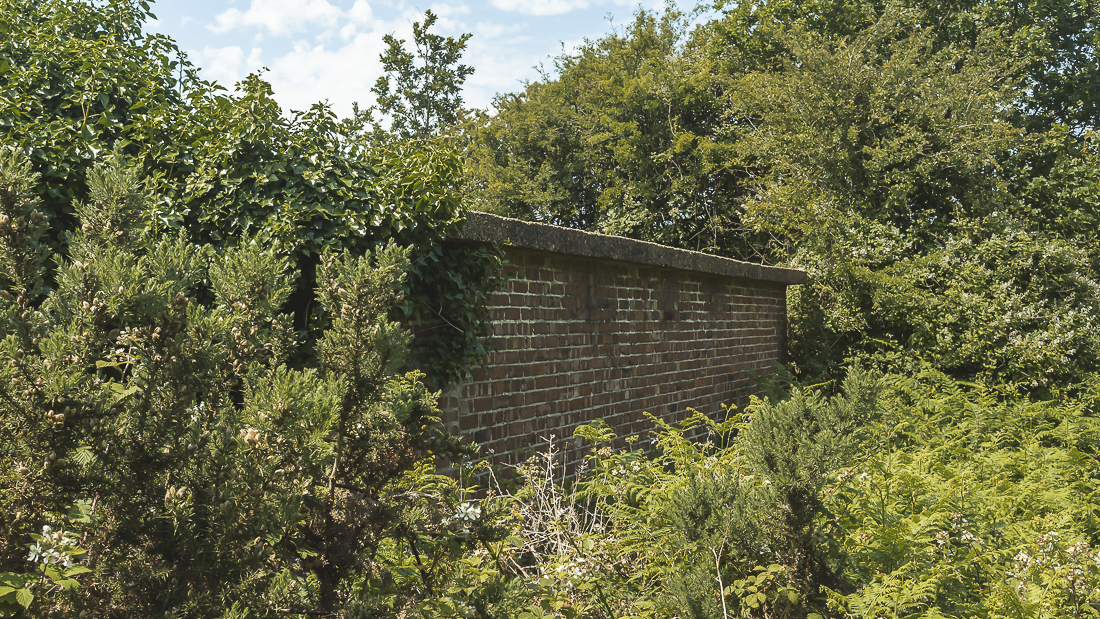
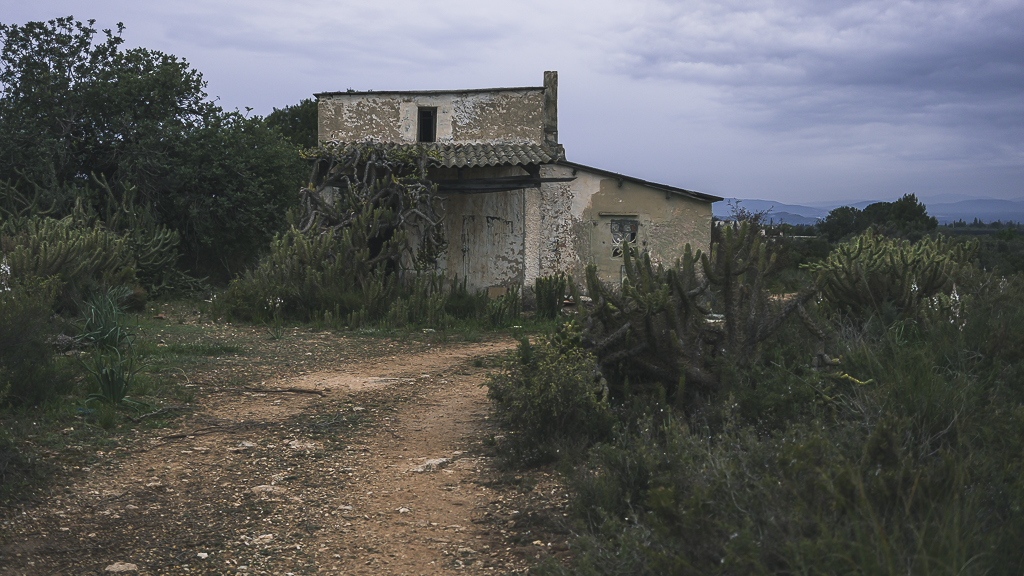
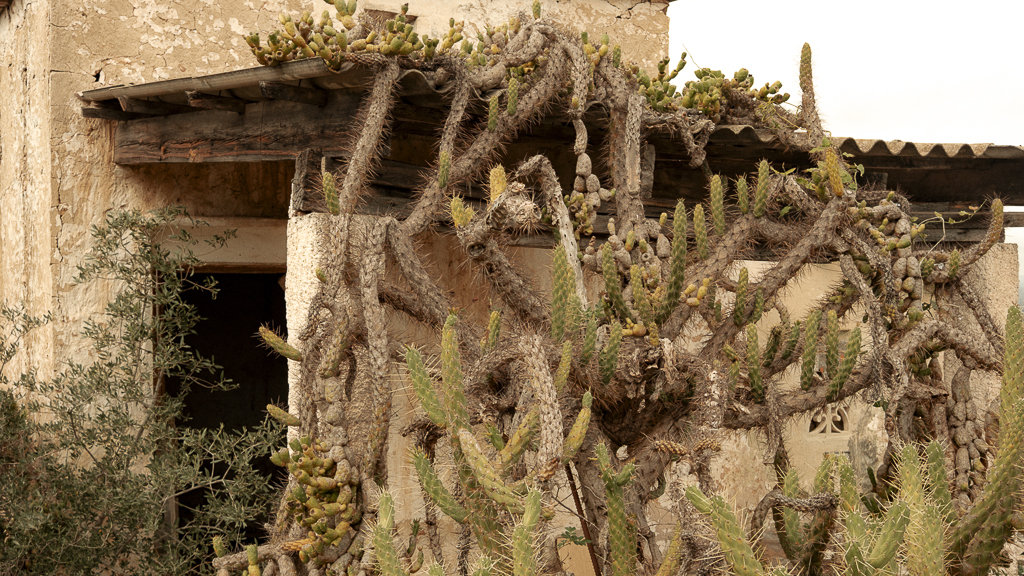
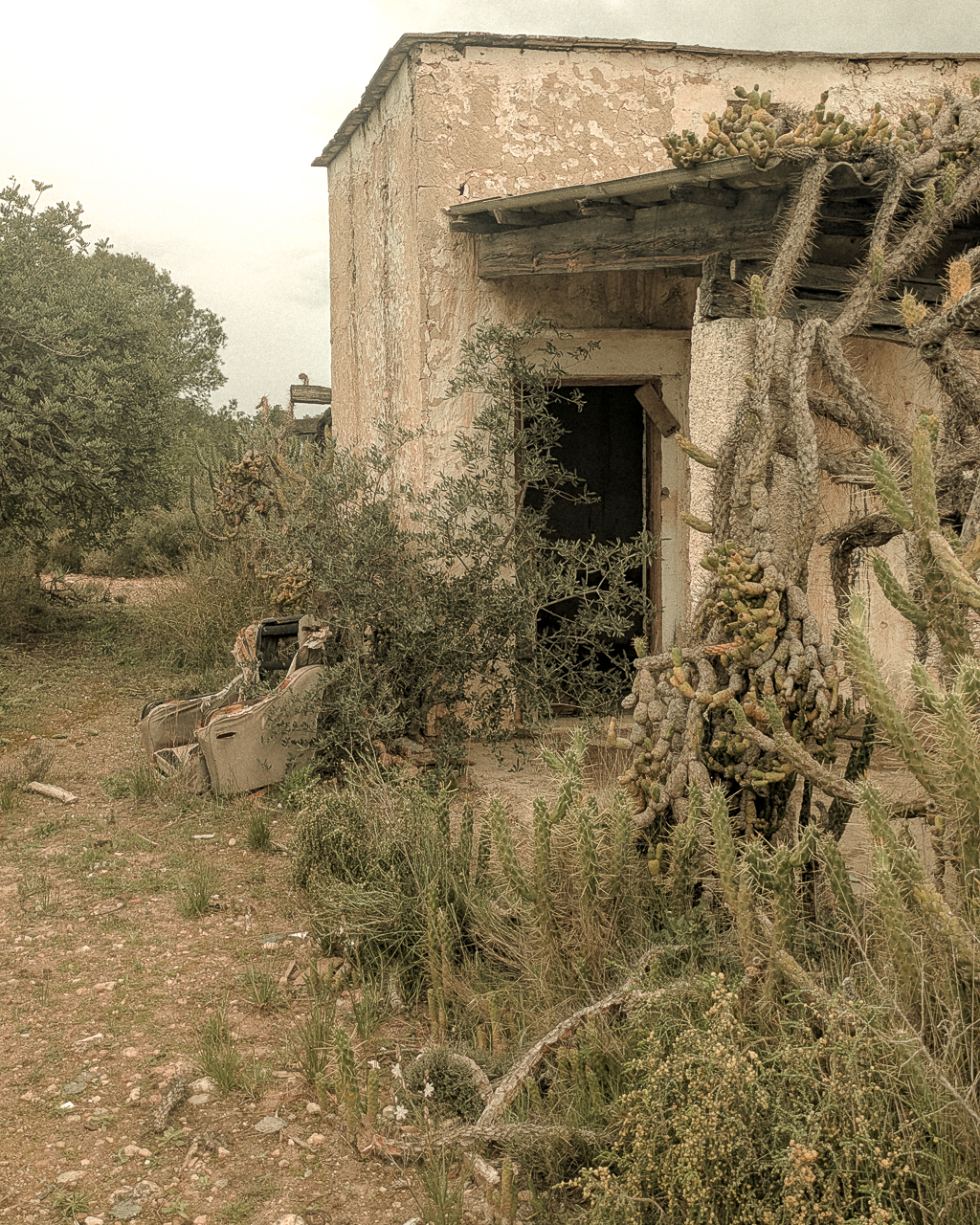
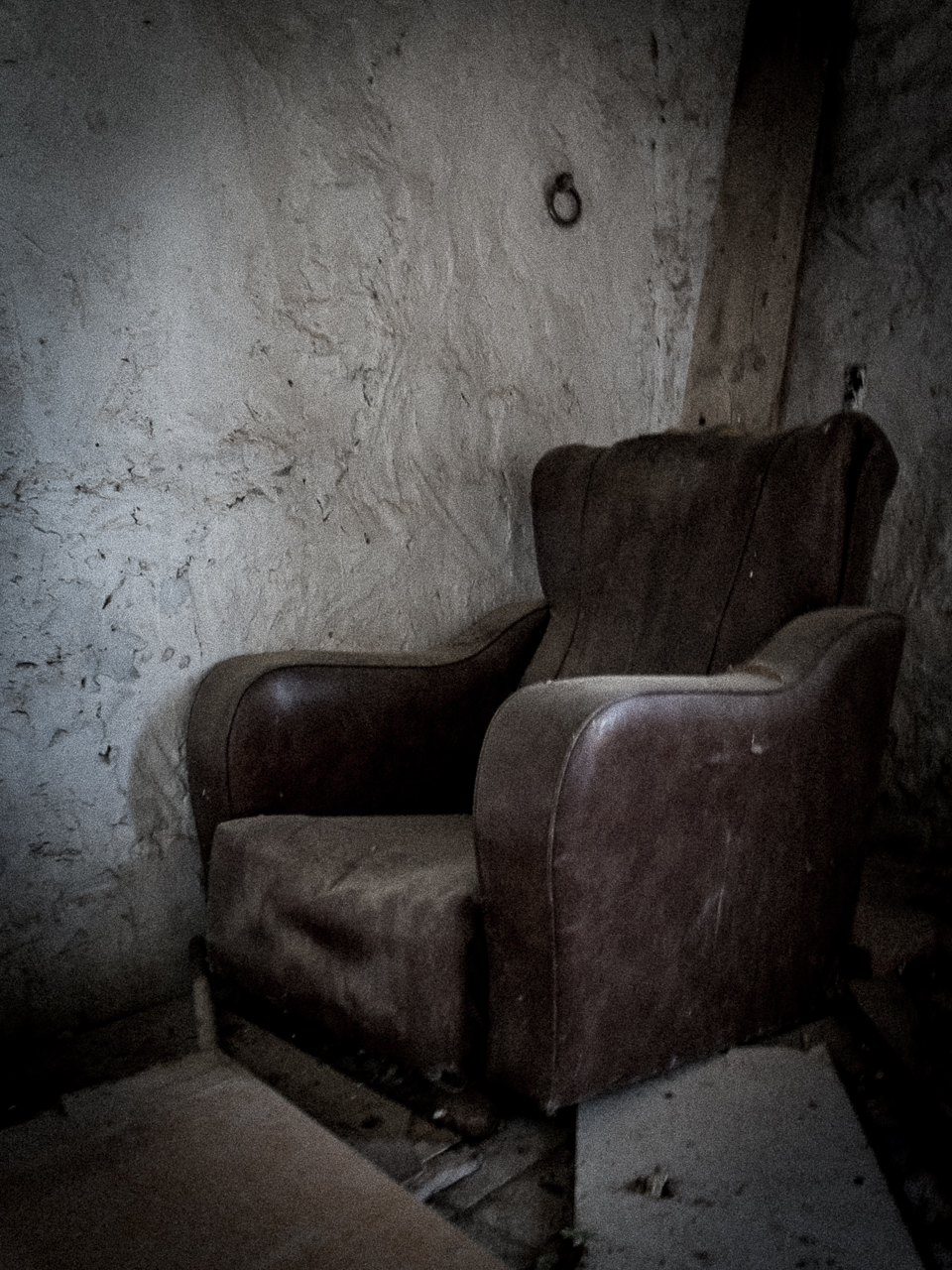
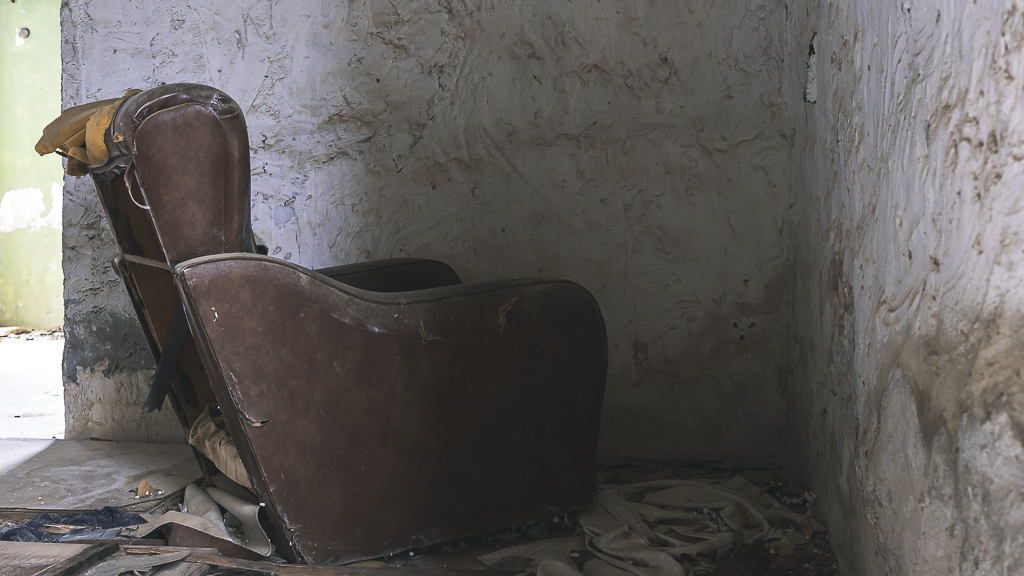
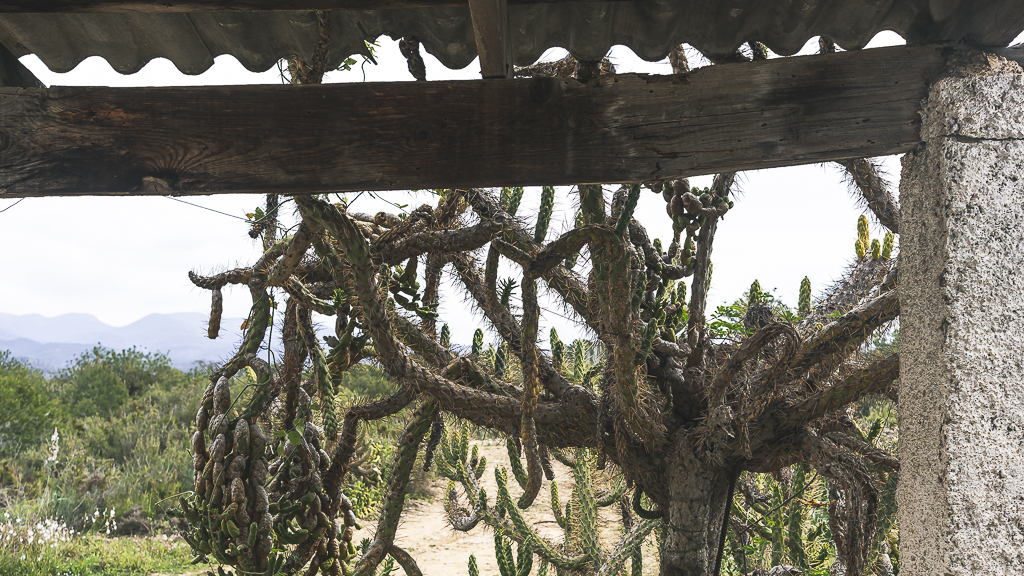
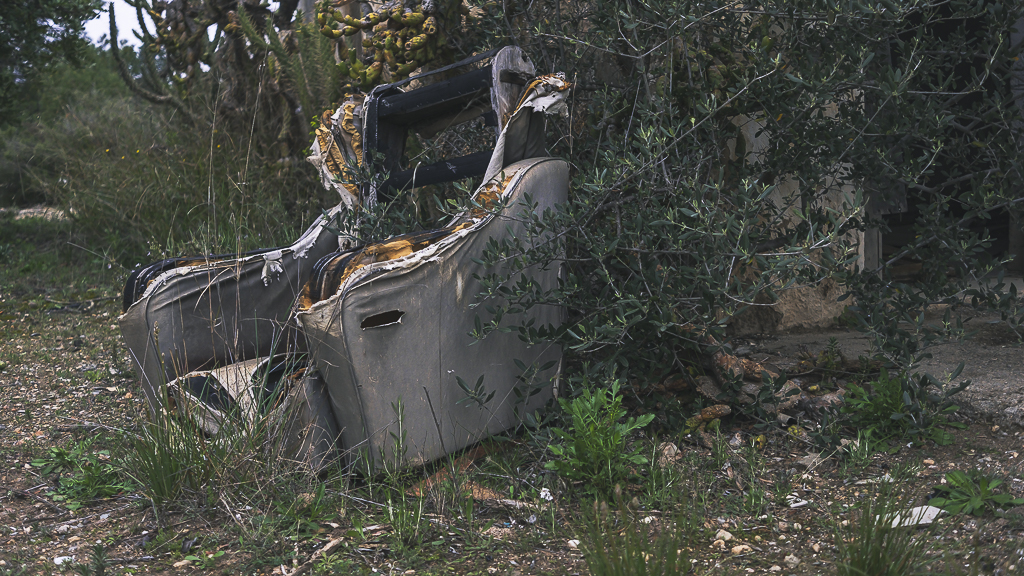
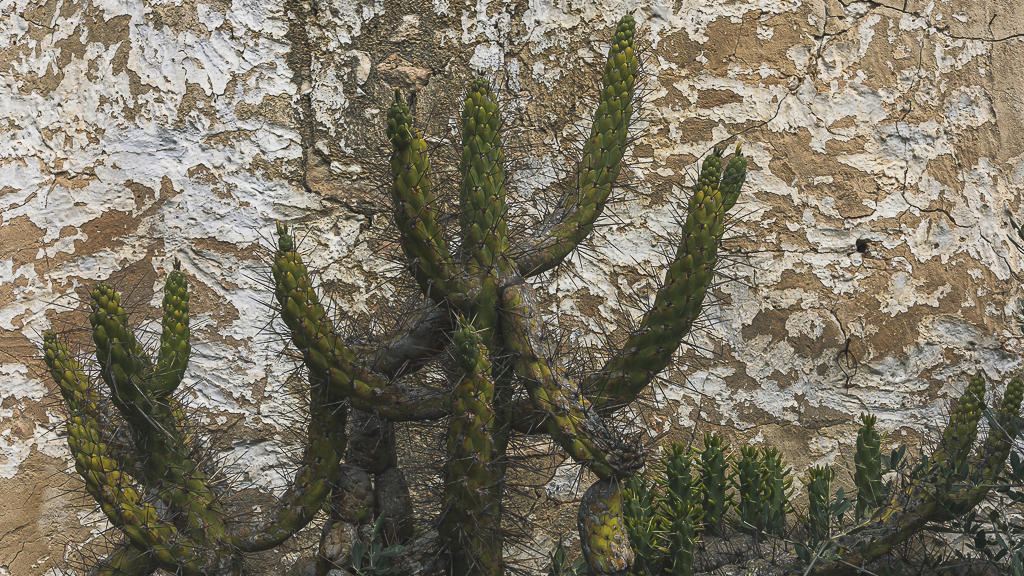
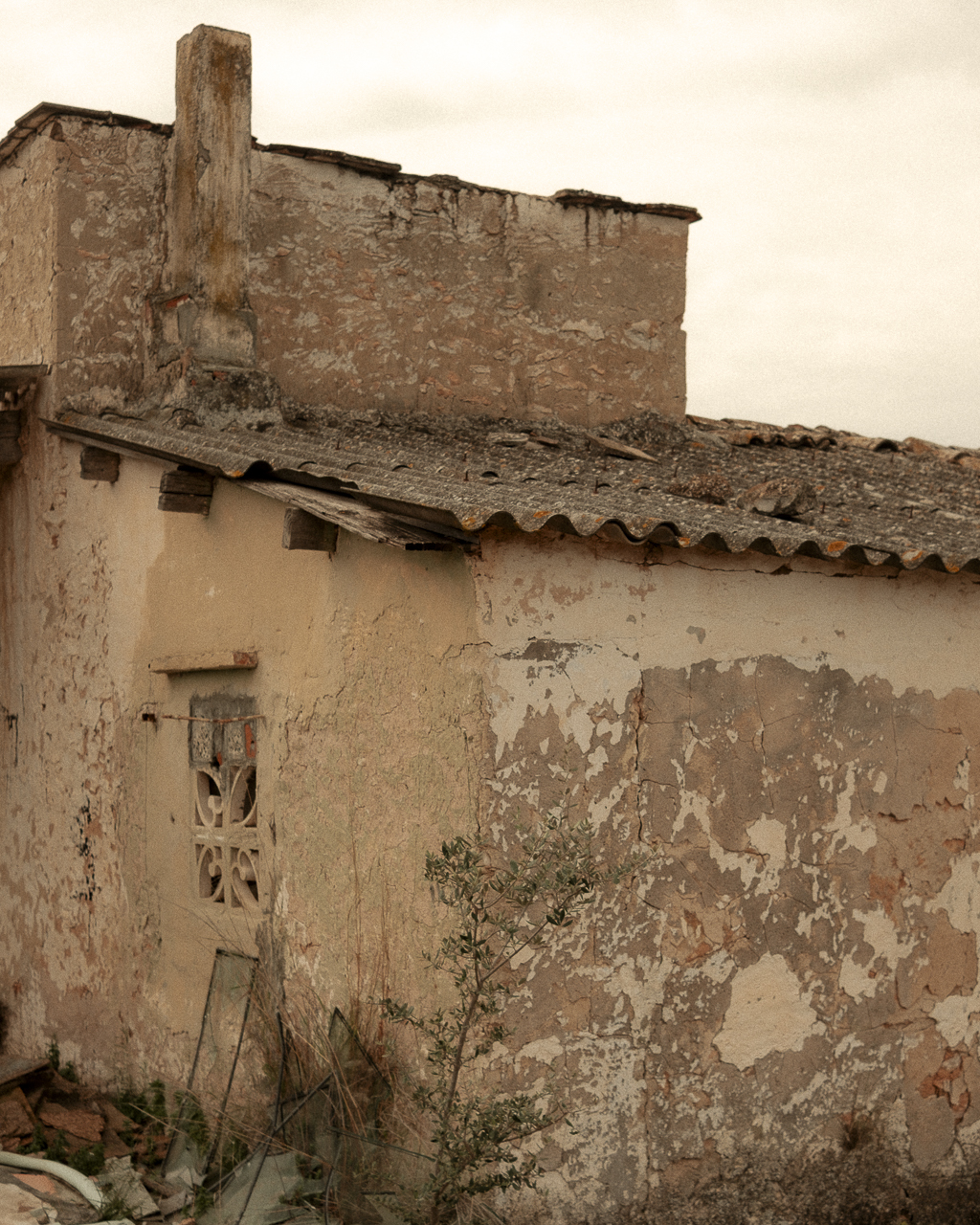
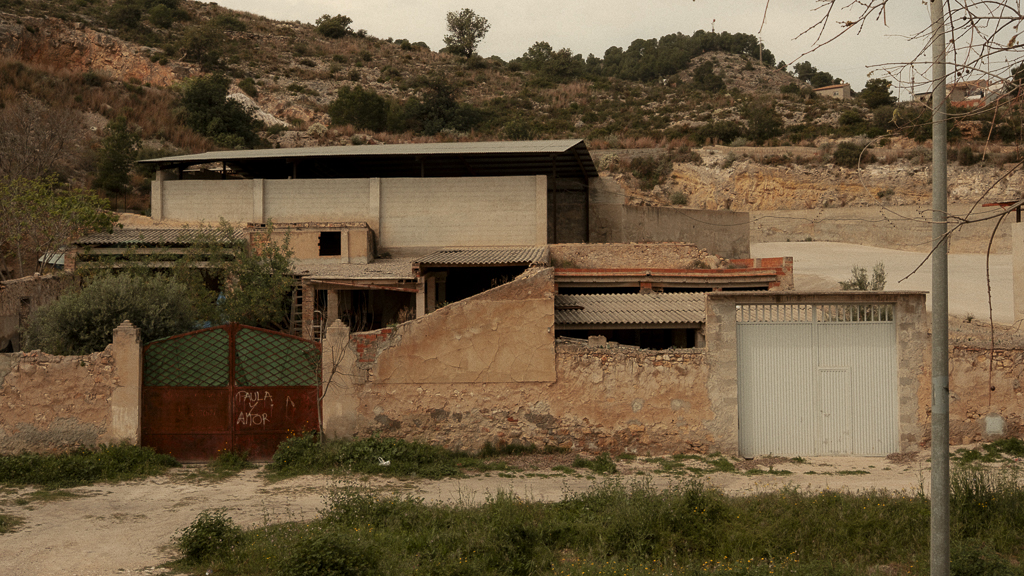
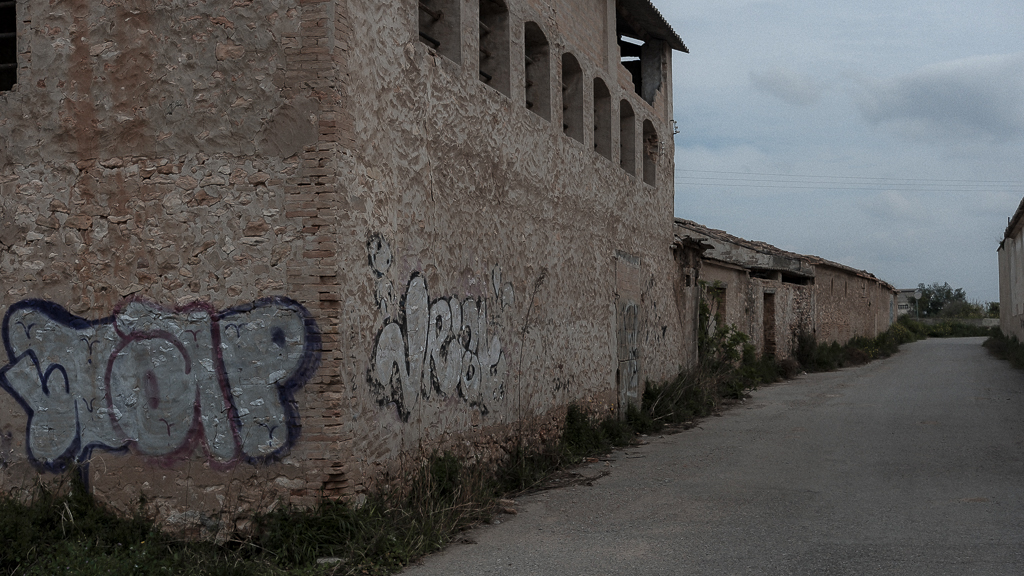
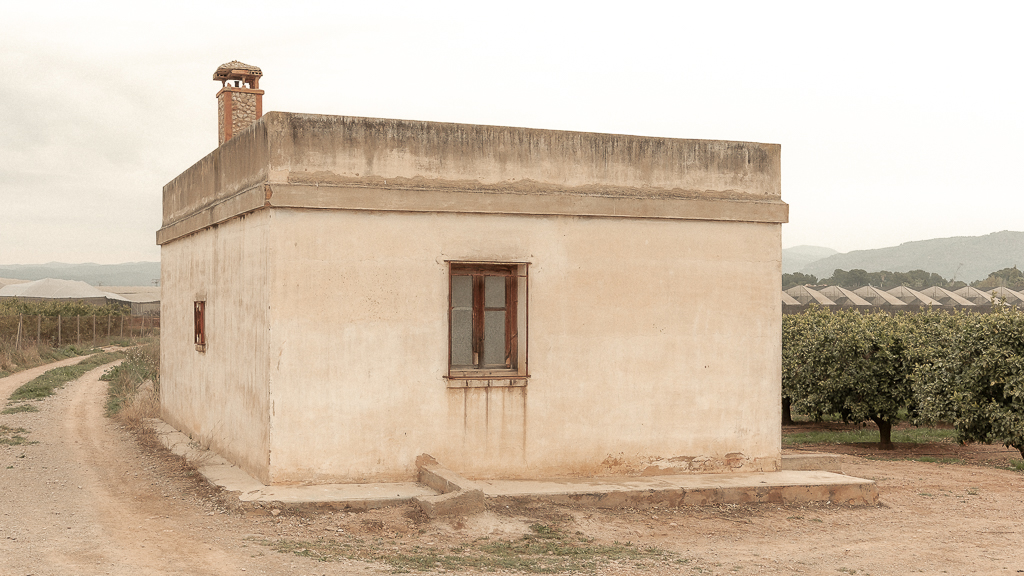
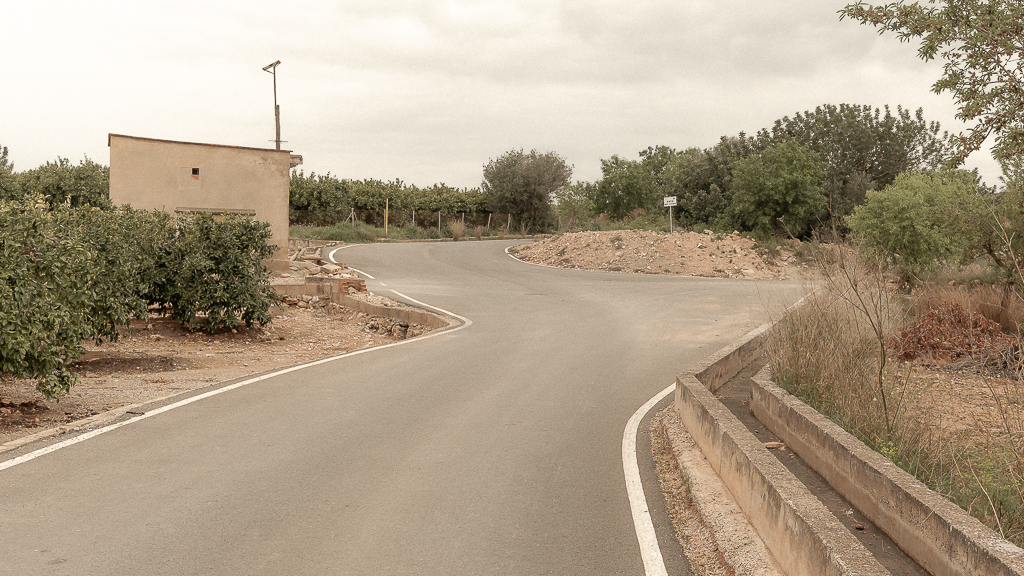
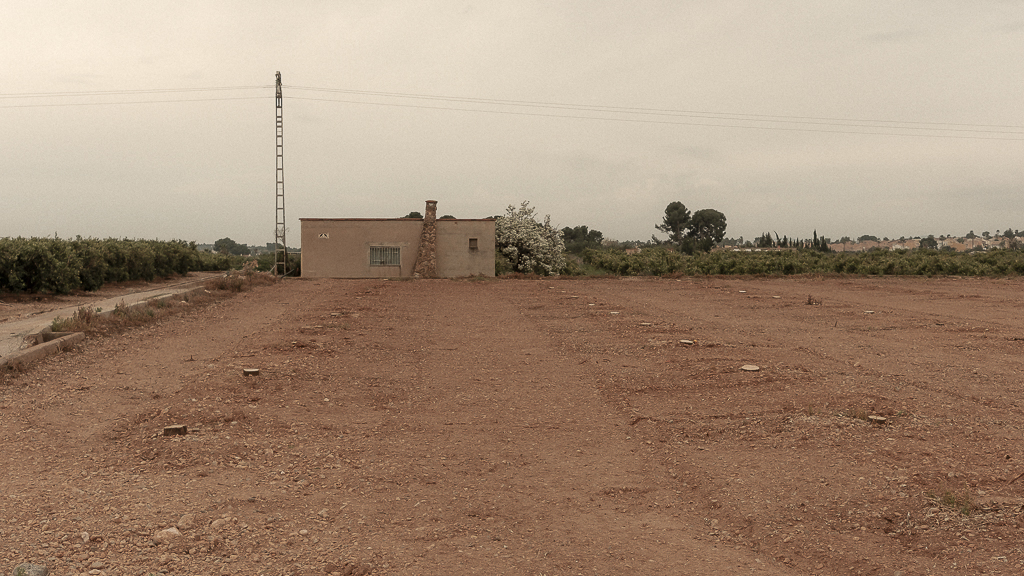
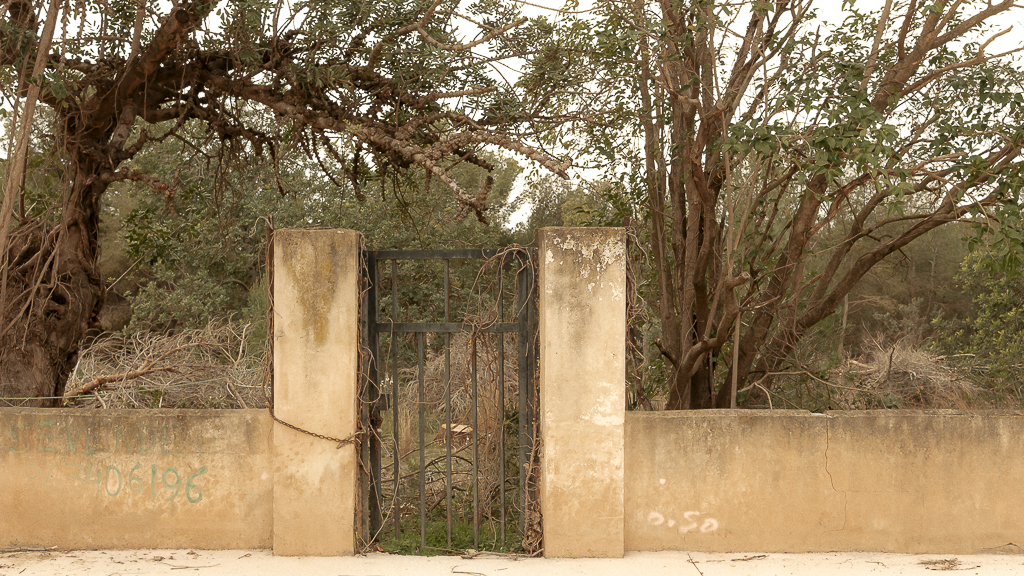
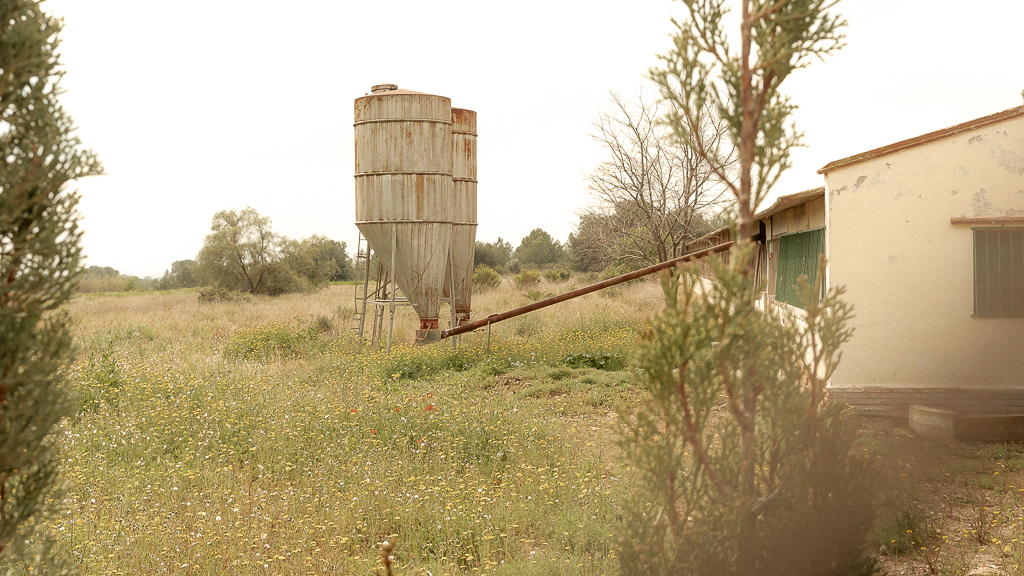
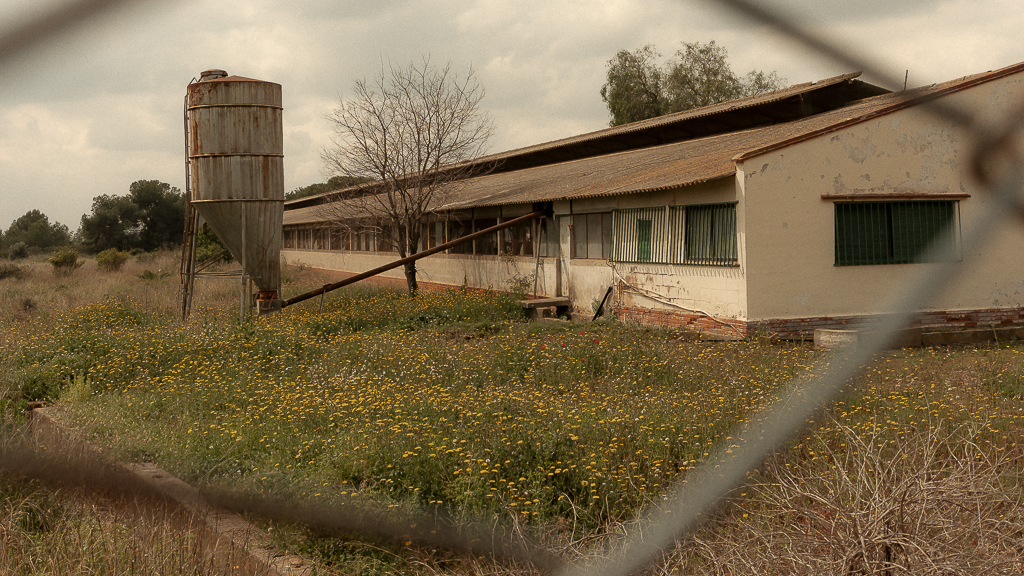
It’s strange on the edge of towns, especially quiet agricultural towns like this, where beyond the back fence lie empty scrubland or small orange or olive farms when picking season has passed. There are a few abandoned farm buildings beyond the fence, and these add to the eeriness of the place. It’s so quiet.


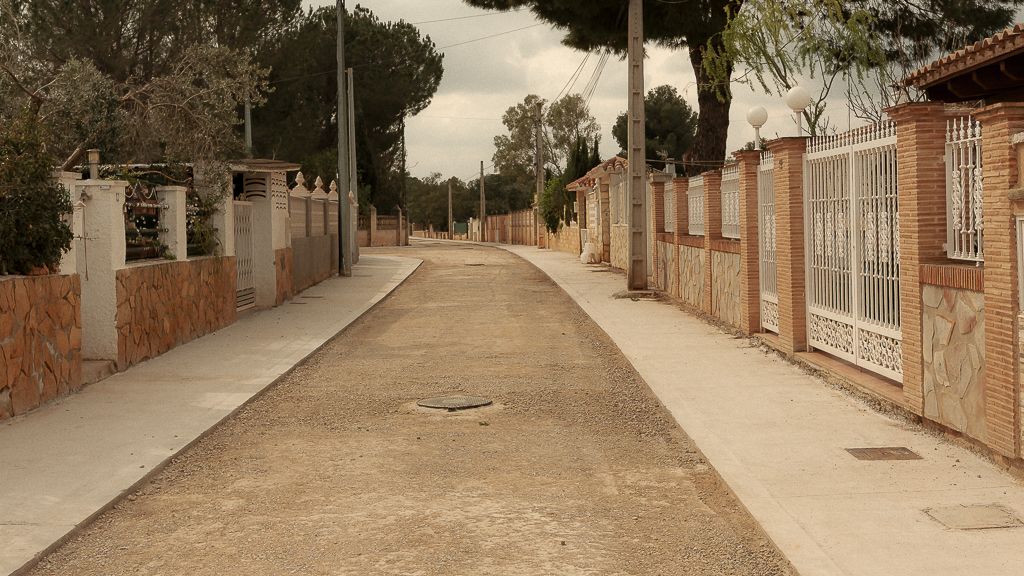
The streets we walked were largely deserted, not even parked cars to get in the way of photos. The ‘roads’ on the edge of town are still not much more than dirt tracks, perhaps flattened every few years.

Inside from the edge there has been road maintenance over the last few years, footpaths and sewage has been installed and some of the roads look like they’re about to be sealed.

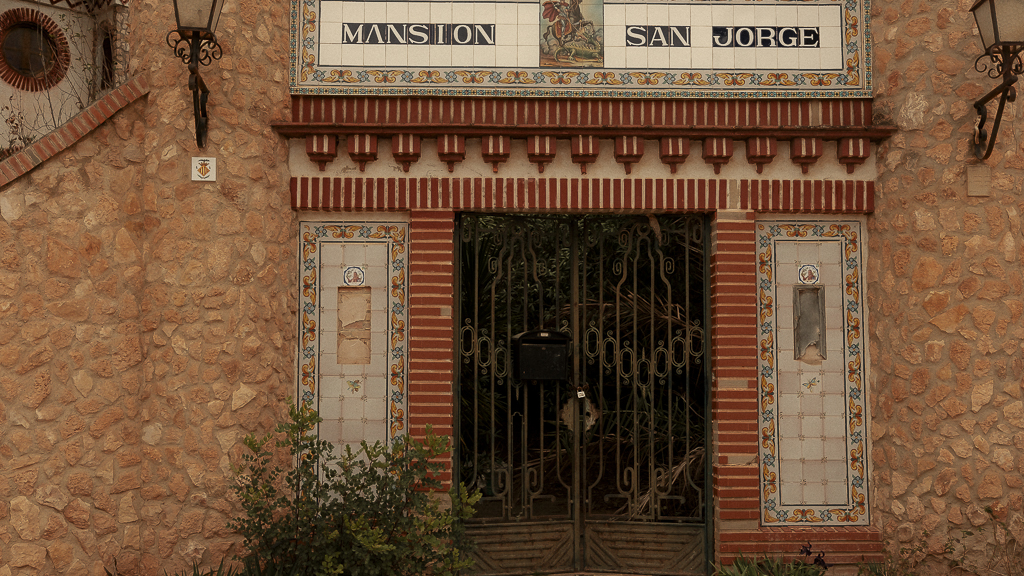
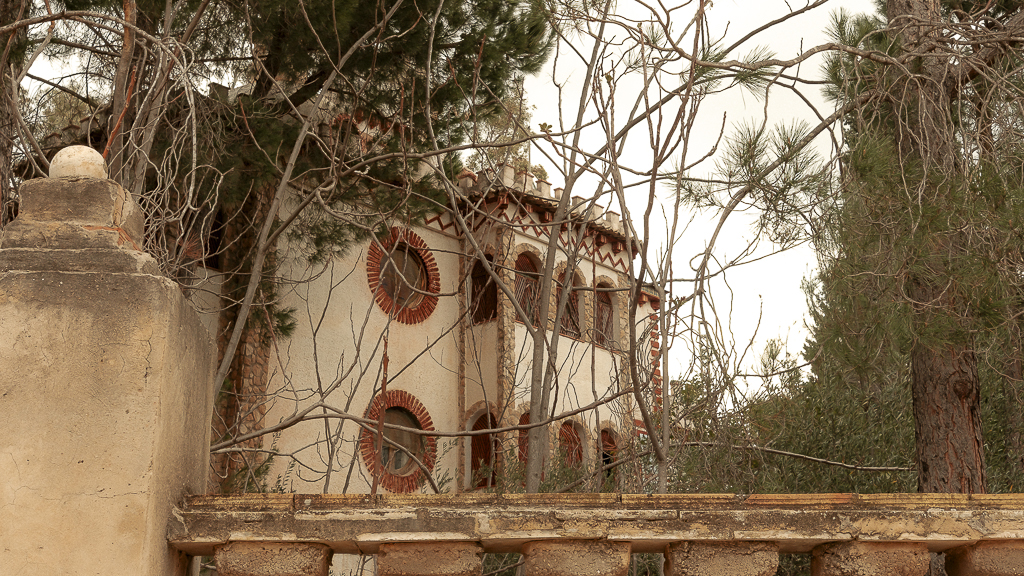
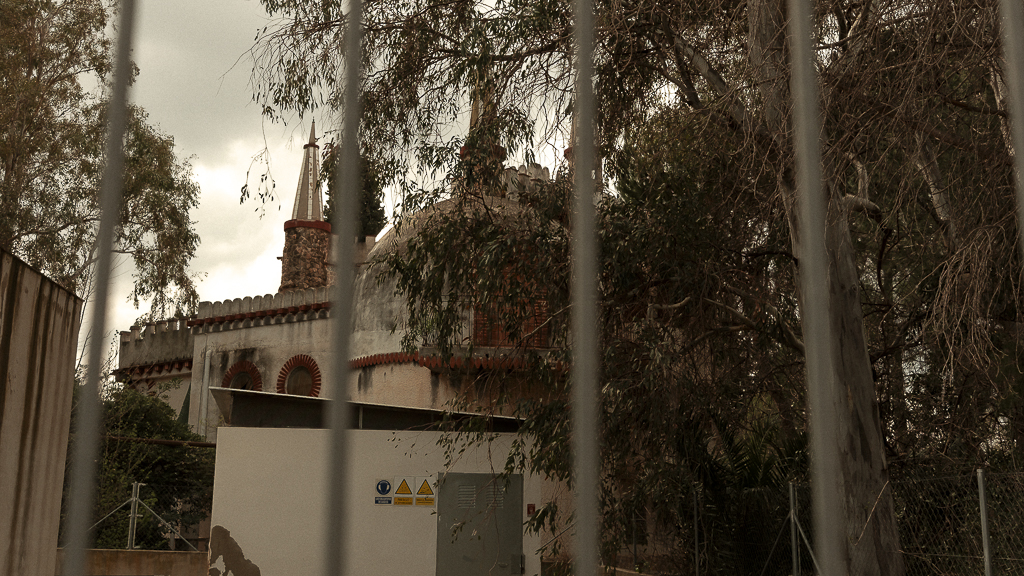
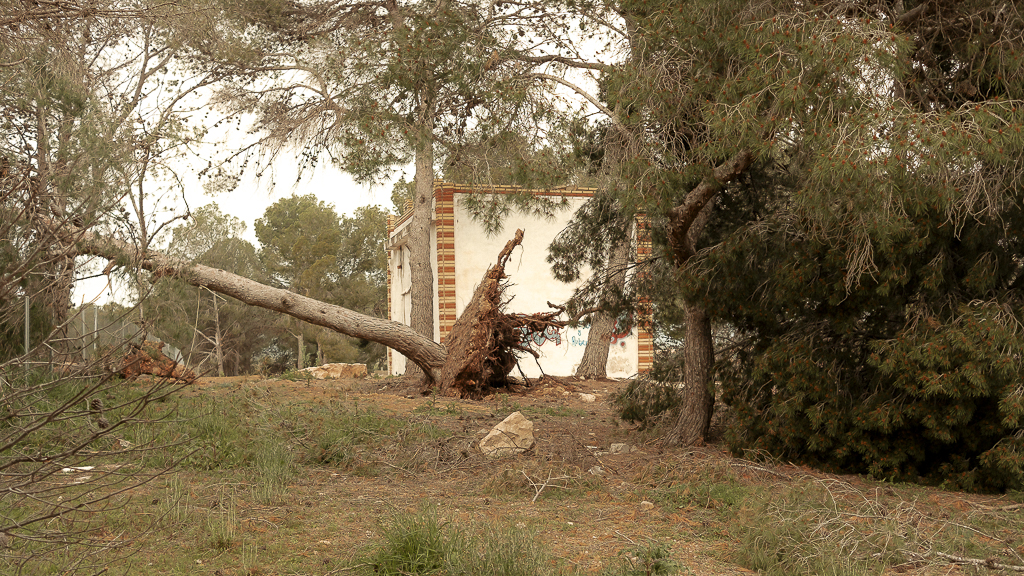
On one of these streets a man came out his gate and stared at us for a while as I took photos of an abandoned ‘mansion’ over the road. His dog barked incessantly from behind the gate as he stood. We didn’t feel like we were welcome in ‘his’ street, even though it was five minutes on foot from Paul’s. Maybe he is worried someone will buy the old mansion and convert into a hotel?


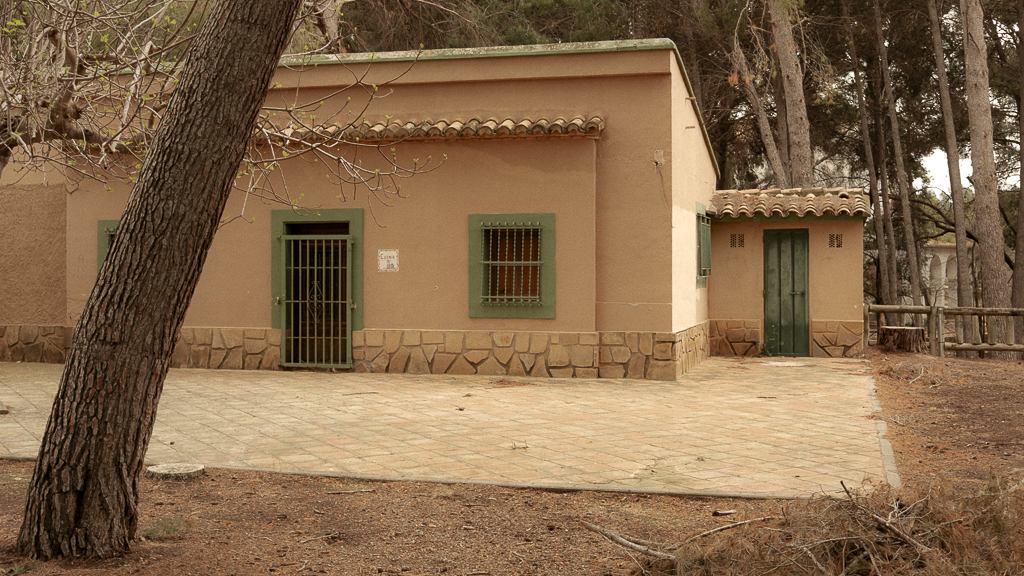
There was an abandoned campground nearby that I found a way into back in 2018 and I was keen to see what it was like now. Sadly, it was devasted by a huge fire in the Covid years, and the site has largely been cleared now. I was going to sneak in again through the solitary hole in the fence, but I heard someone working in one of the buildings so chose caution instead. I was a bit disappointed to be honest as I was hoping see what 8 years had done to the place.

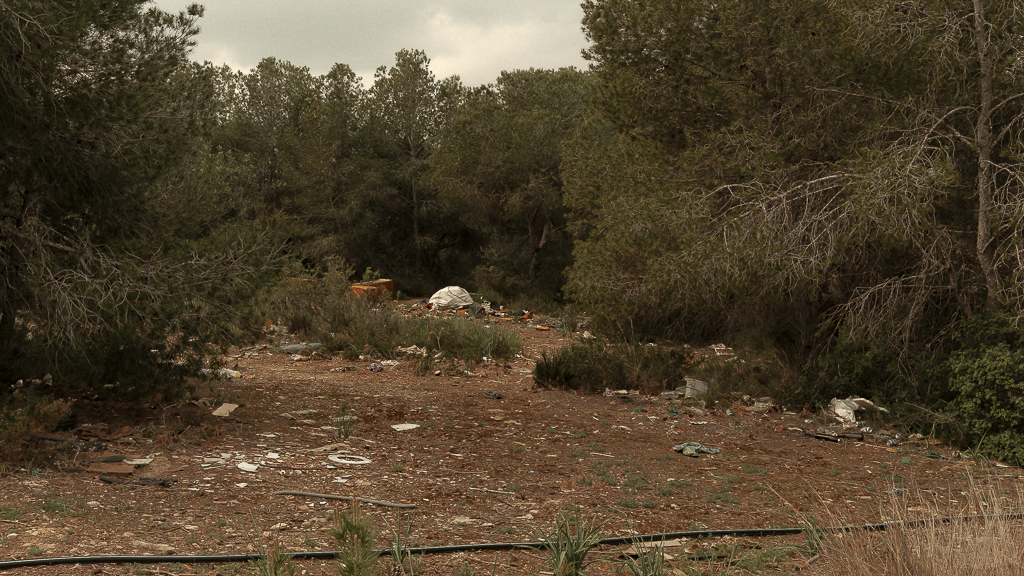
Next to the campsite is a small, forested area, I suspect this is used on the quiet as a firewood source by the locals. Since the campsite was cleared it’s become a bit of a dumping ground and is strewn with household rubbish.  The newly laid sewage lines run to the campground and the forest so I suspect these will soon be subdivided so more empty houses can be built.

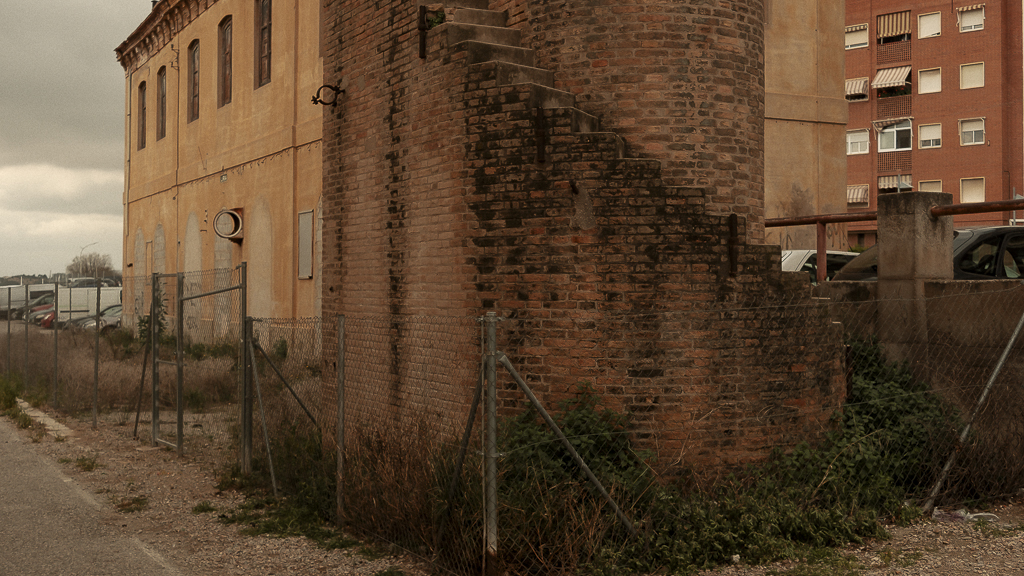
A derelict pig farm sits on one side of a sealed road on the northern edge of town, houses line the other. I can’t imagine what it was like living over the road from a pig farm, though I guess it was a local employer that hasn’t been replaced.

We loop back through the older streets, lined with houses on both sides, the barking of dogs still following us as we go. Drawing close to home we share a nod and a ‘hola’ with a woman walking a dog, the only human interaction in an hour of walking.

Living on the edge of town is weird.

P.S. I like Xerlado and it’s not weird, the people we do see are always friendly and welcoming, other than the guy outside the mansion.  I wrote this slightly satirically; definitely for effect and to complement the images.

Paris 4

Paris 4, January 2026

Our final day in this lovely part of a lovely city (sad face). The rain we experienced yesterday morning had blown over and though it was cloudy and more was forecast, we entered the day with hope for a walk before heading to Gare du Nord for the train back to London and on to St Leonards.

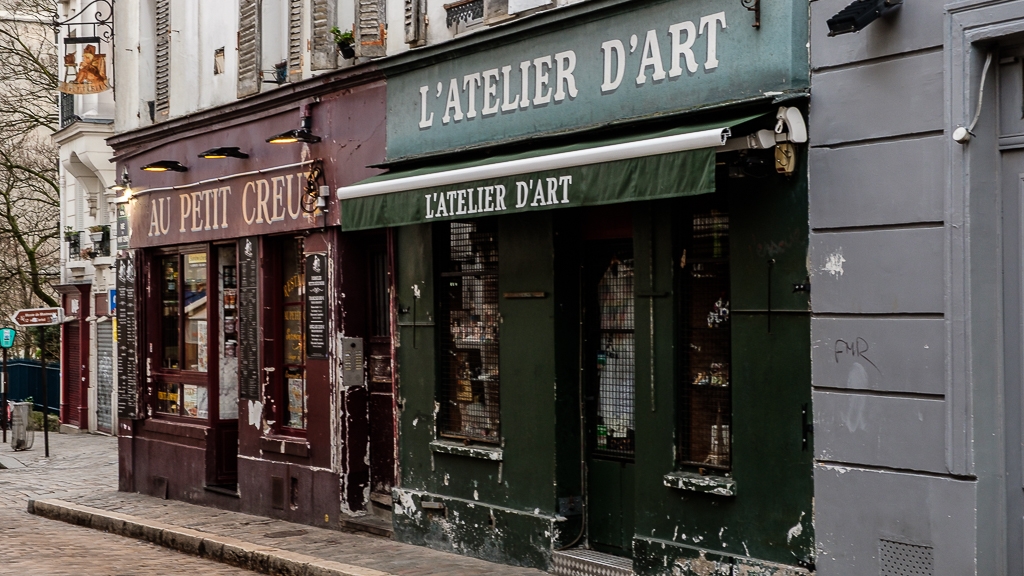
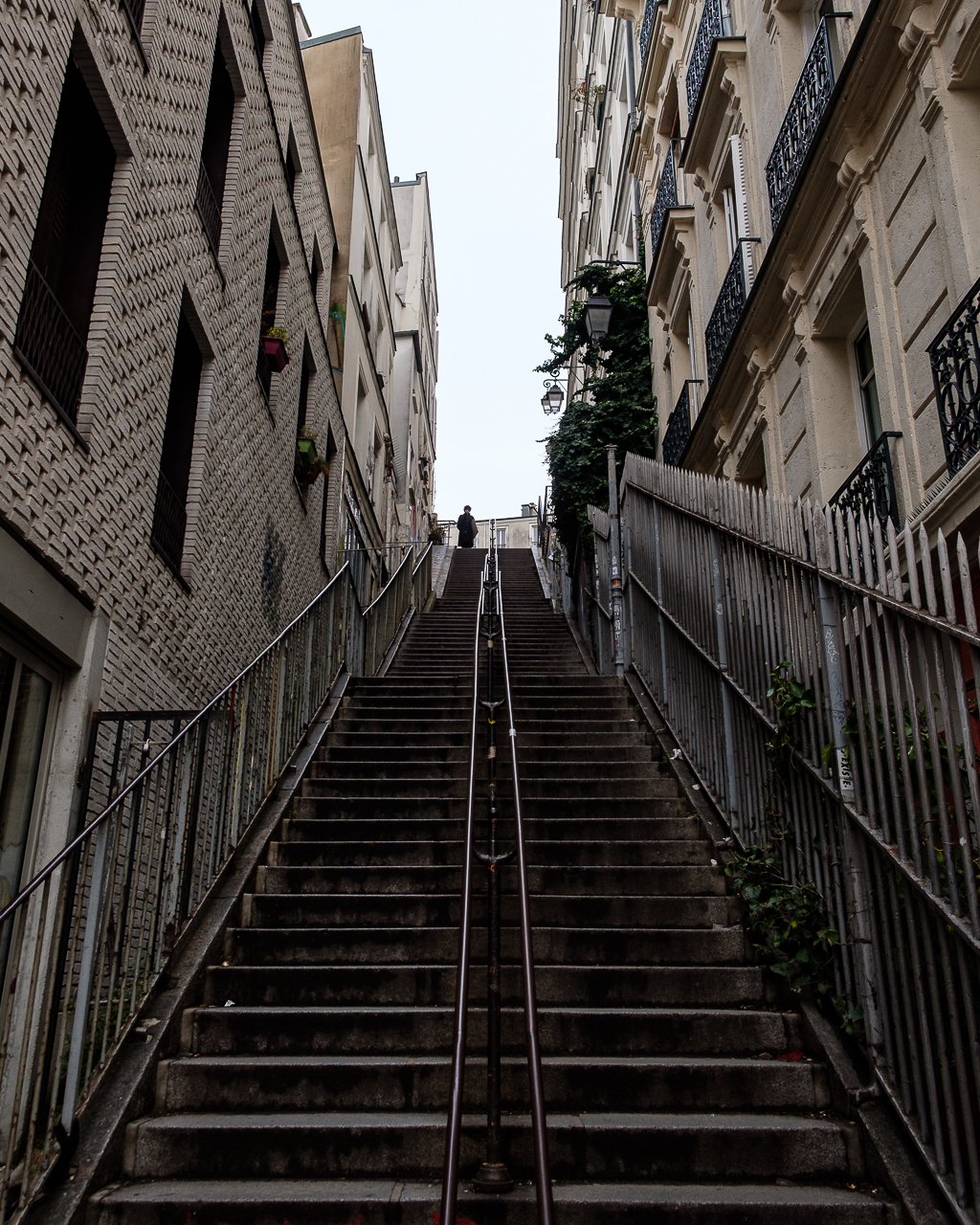
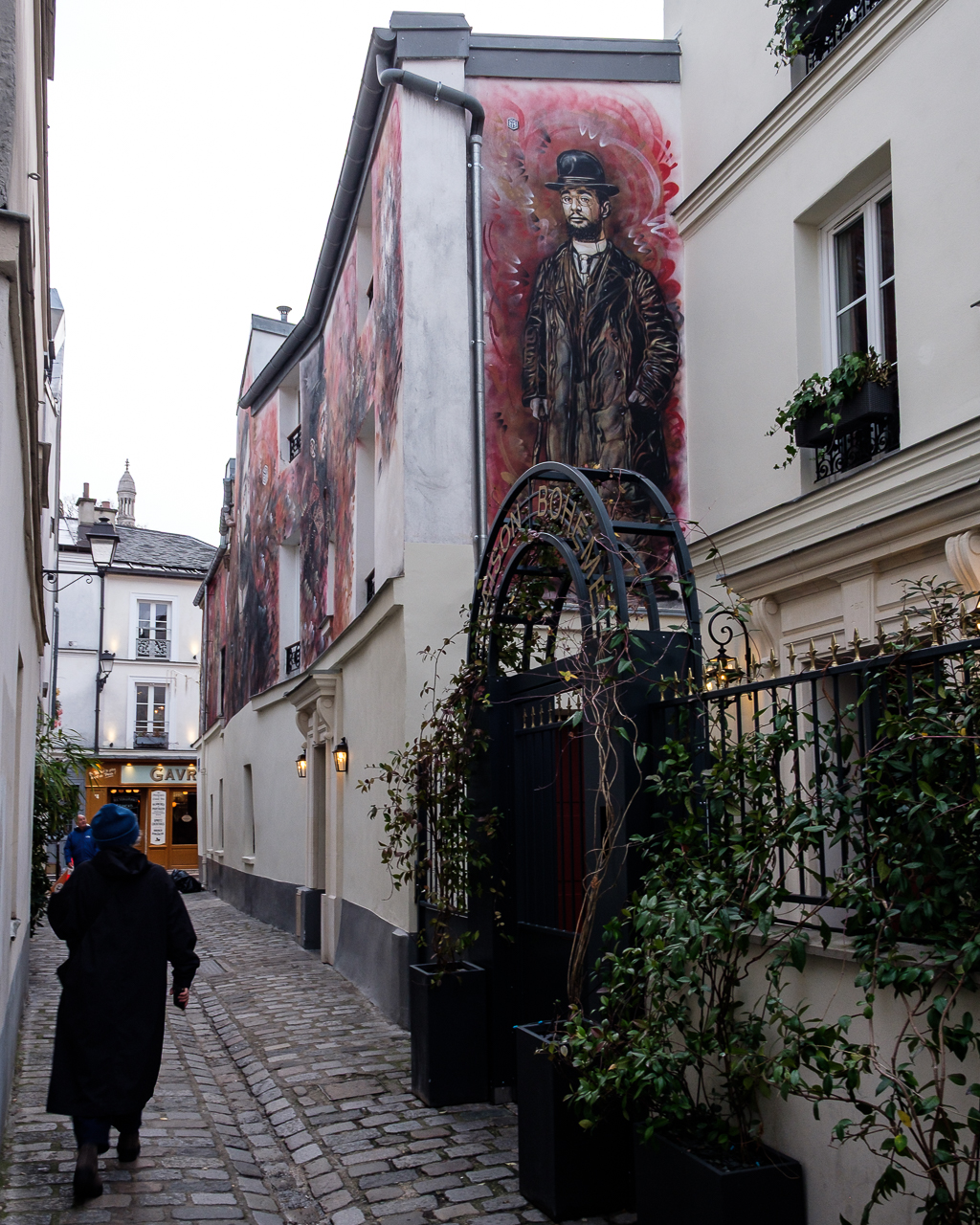
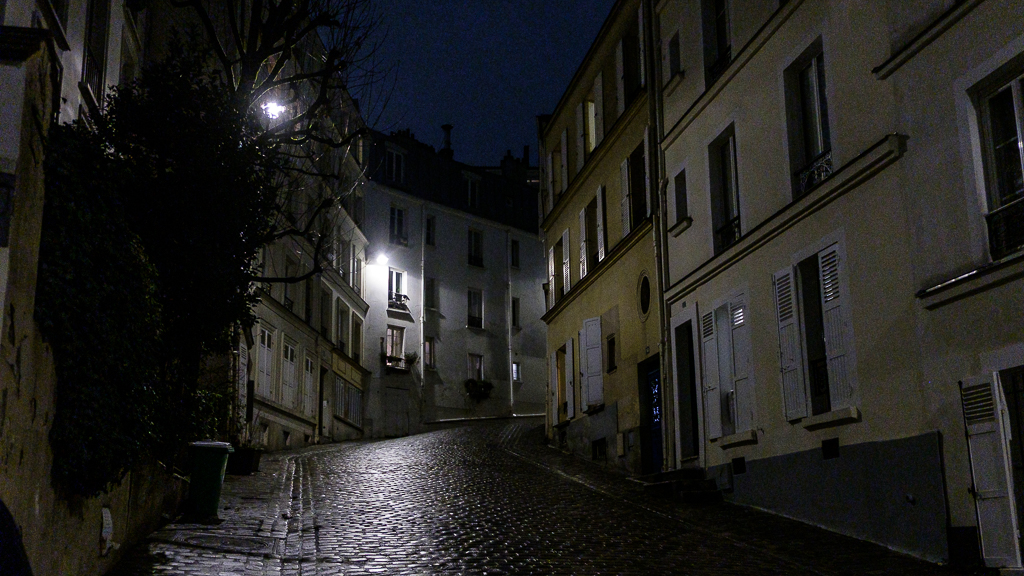
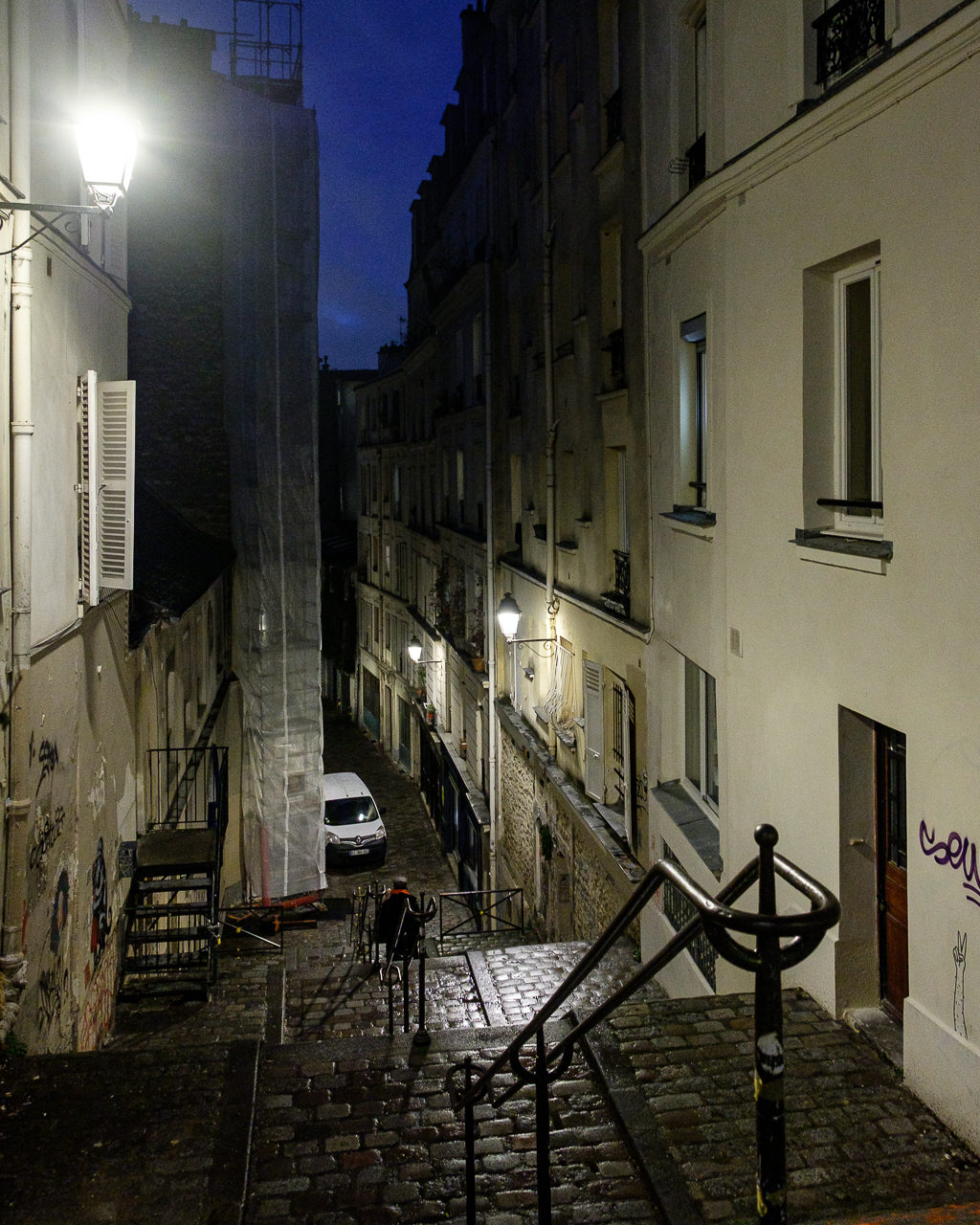
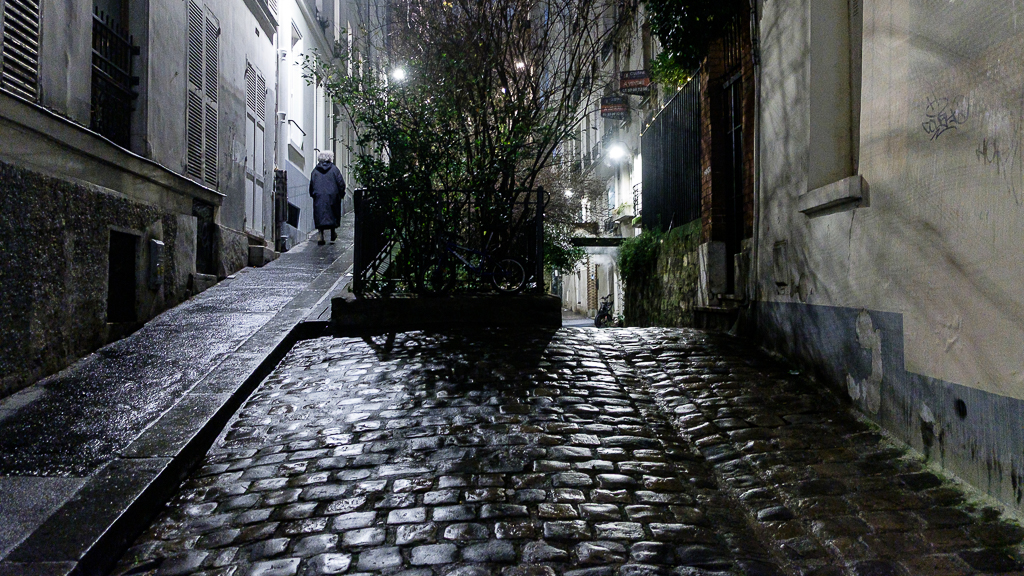
After breakfasting in the hotel, packing up and farewelling our small but perfectly formed room we headed out the door for our final stroll up and down the hill that is Montmartre. There are so many different options to take, narrow cobbled streets and steep steps are everywhere, there is almost no need to repeat a previous walk. I just love a steep narrow cobbled street, or any combination of two of those things, especially when nestled in between tall houses that have seen a lot more history than I have.

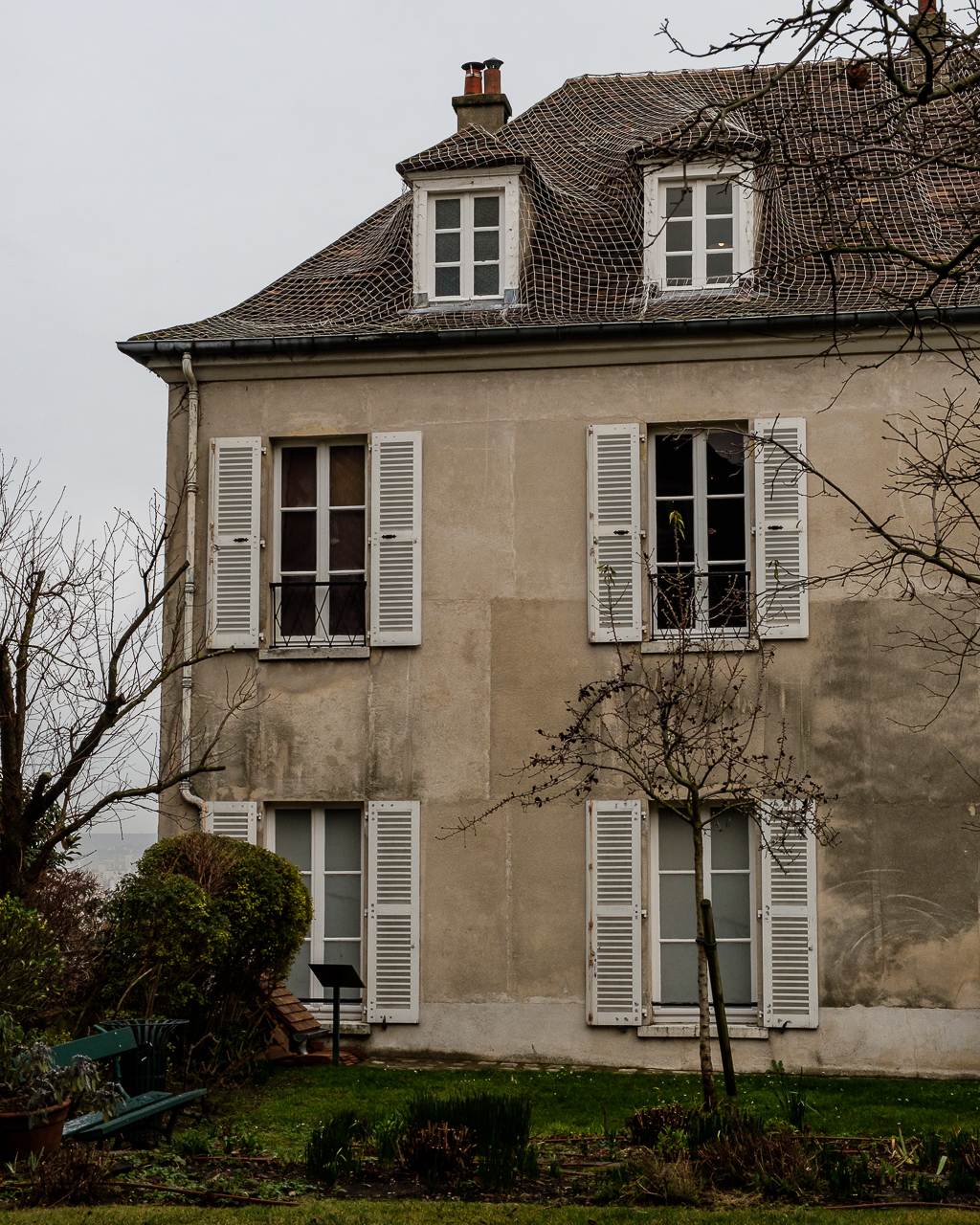
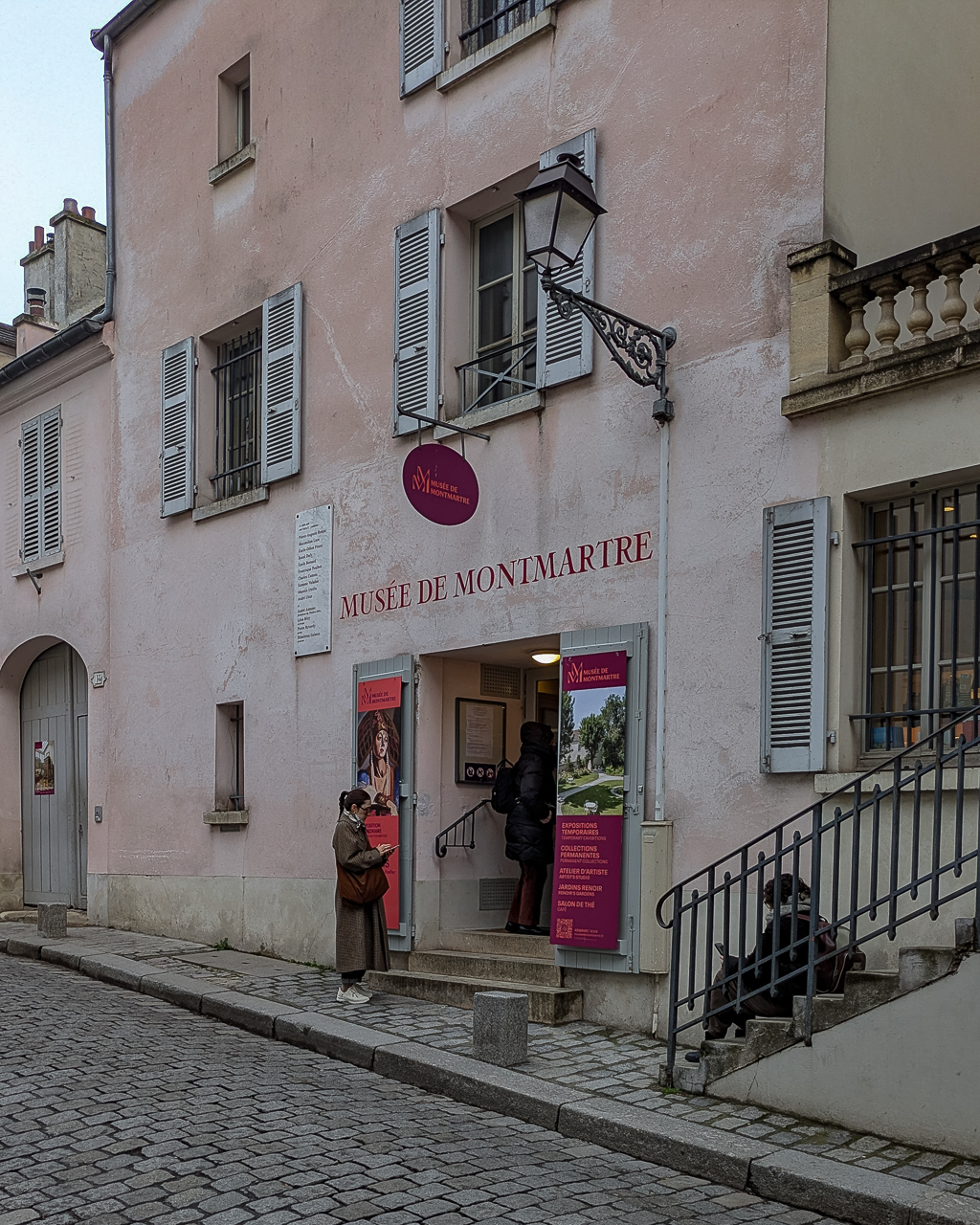
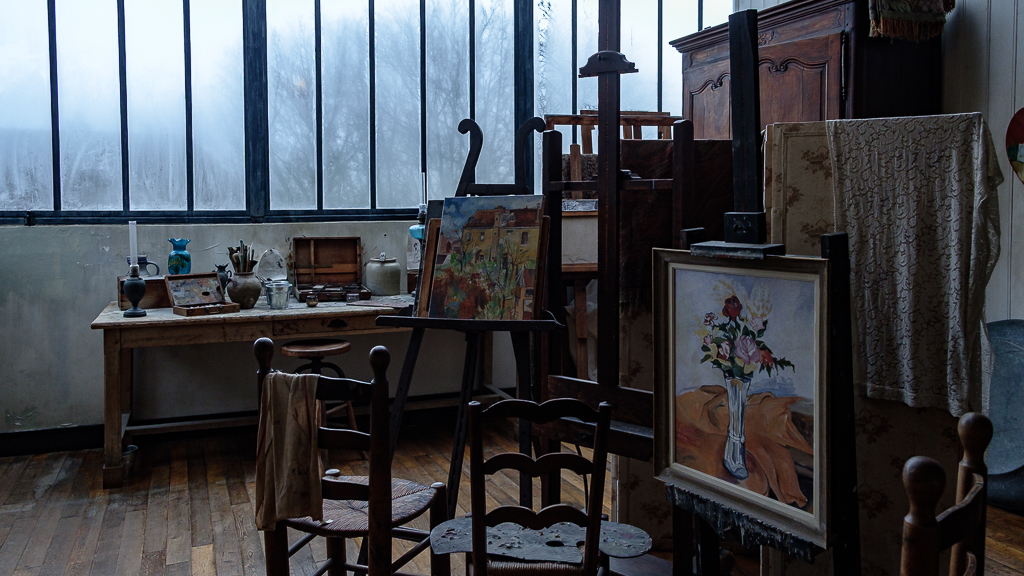
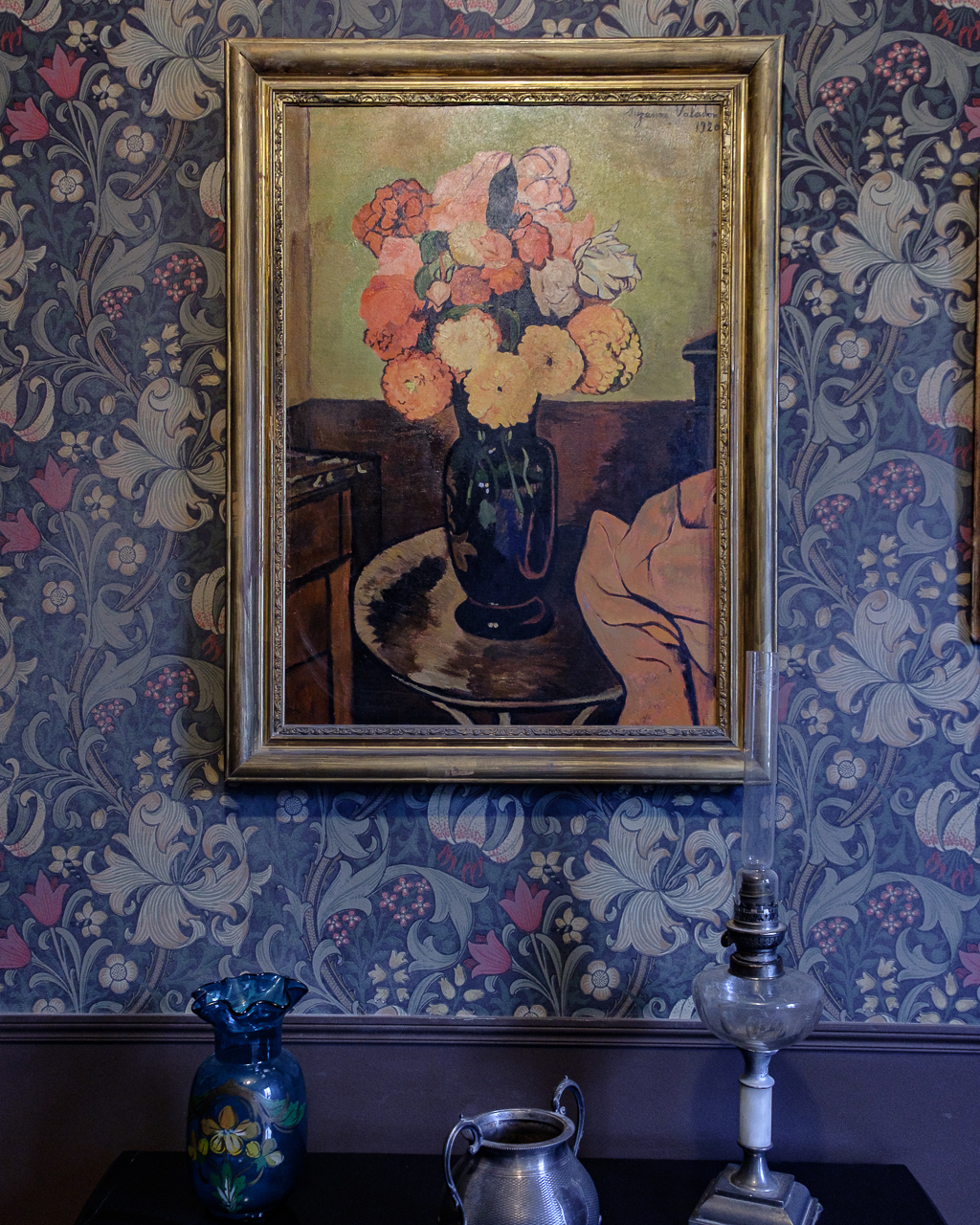
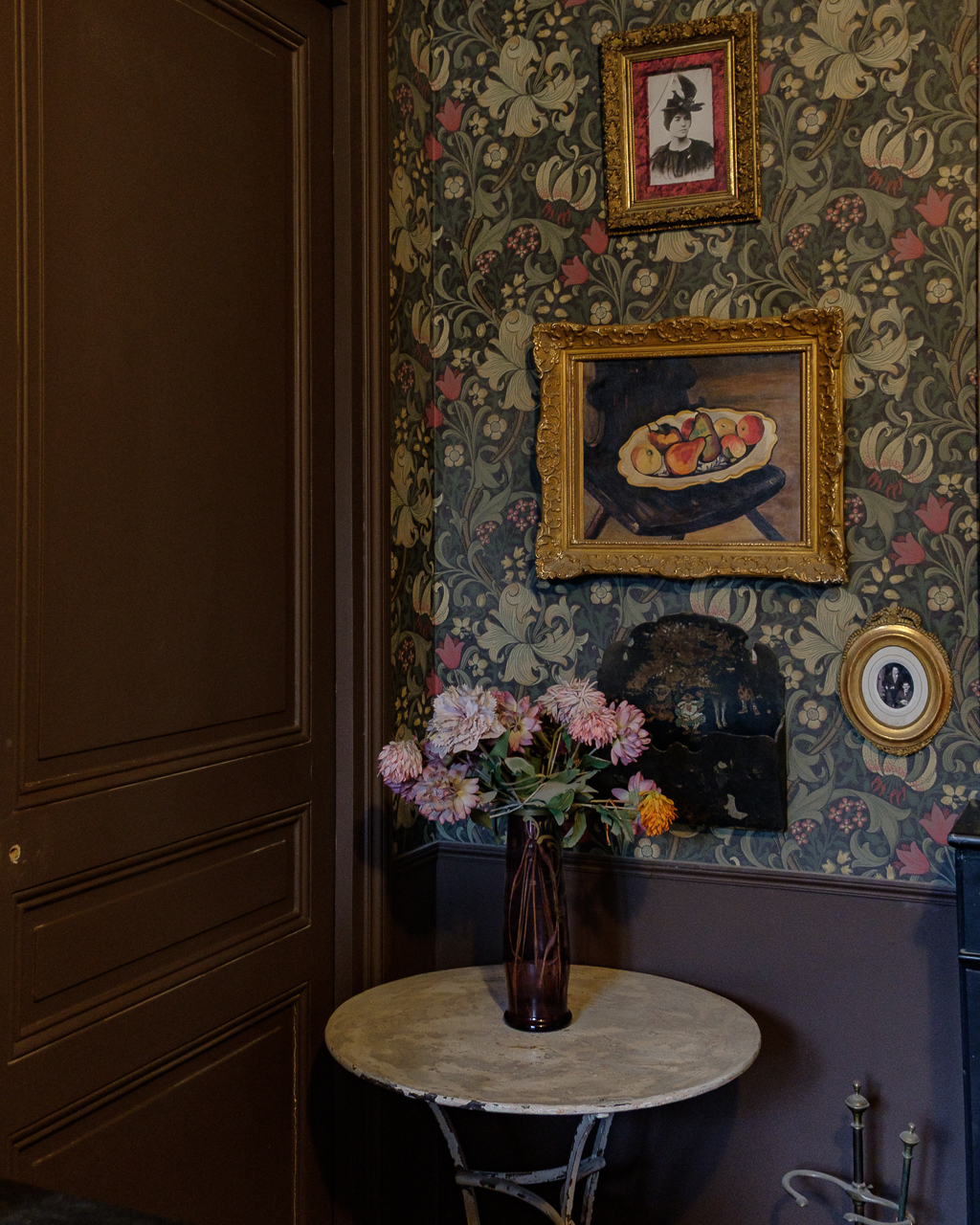
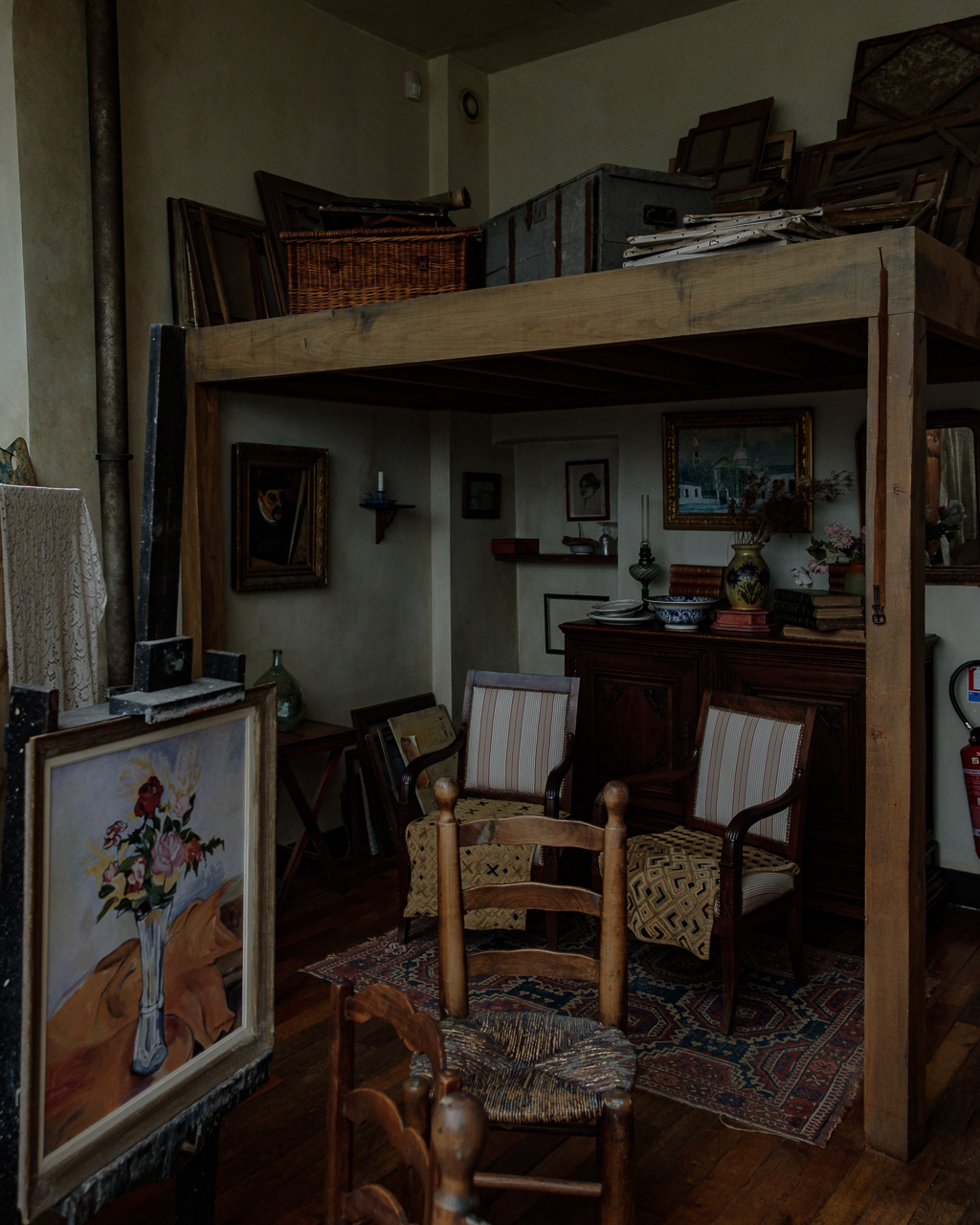
Our main objective today was to visit the Musée de Montmartre. On the second floor is a recreation of the studio and home of the artist Suzanne Valadon, who lived in the building with her husband and son from 1912.

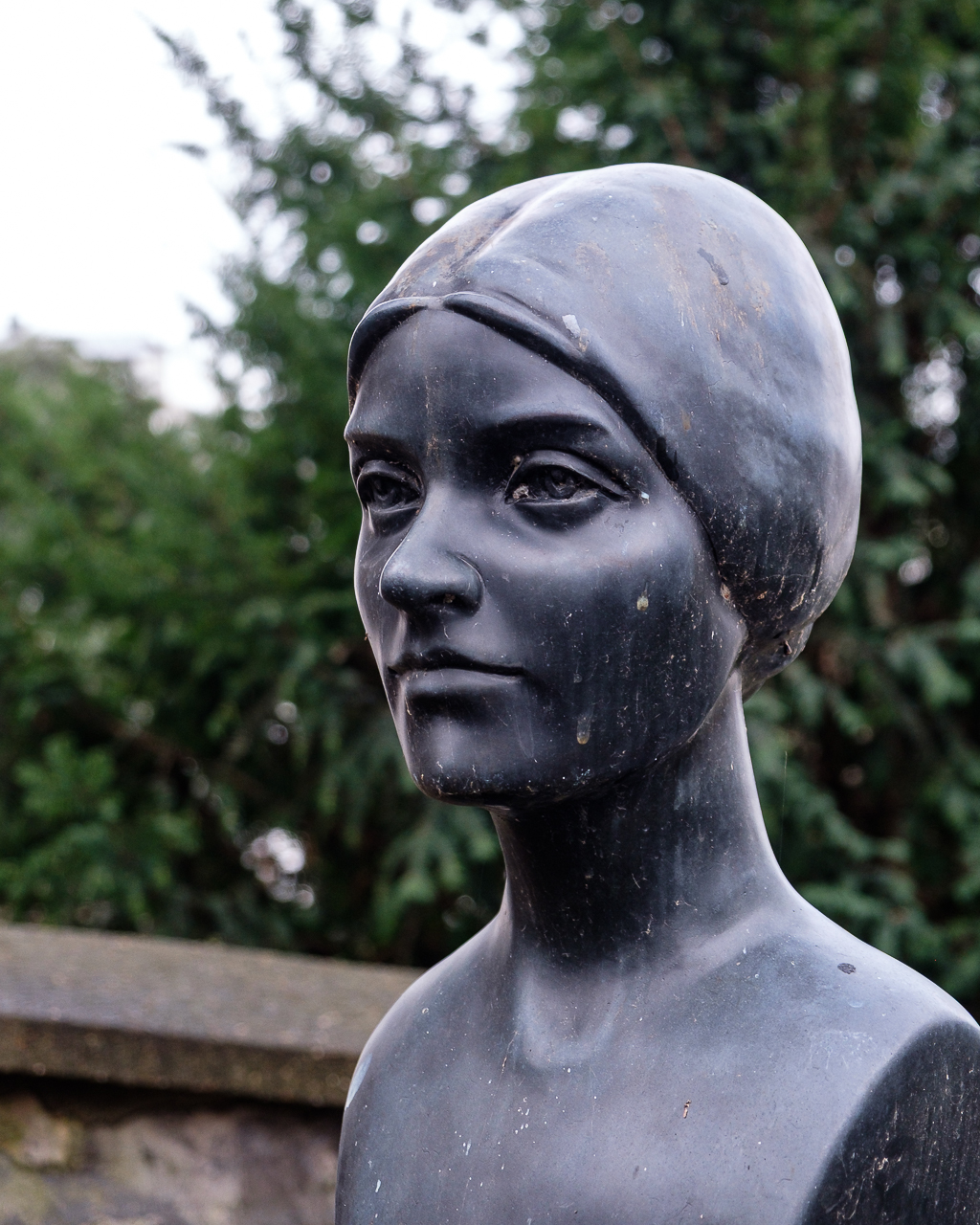
Valadon was well known in Montmartre, as a model (for Renoir among others), a muse, a lover and eventually as the great artist she was.

We didn’t know too much about her life or art until I read a Substack essay just before we came here. After a tough childhood in the late 1890s, from early life in rural France to desperate poverty in Paris, she lived an amazing and full life. Starting as an acrobat and street performer and then artist’s model when Montmartre was almost the centre of the artistic world, with so many (today anyway) well known artists living in this small enclave. Artists like Renoir, Toulouse-Lautrec (who named her Suzanne), Van Gough, Degas, Utrillo (her husband) and Picasso all lived in the area at the same time.

We were interested to see some of her work.

We arrived at the museum a little early and were bemused at the couple of people waiting outside to go in, especially after the size of the queue at the LVF On Monday which had hundreds of people. I preferred this one to be fair.

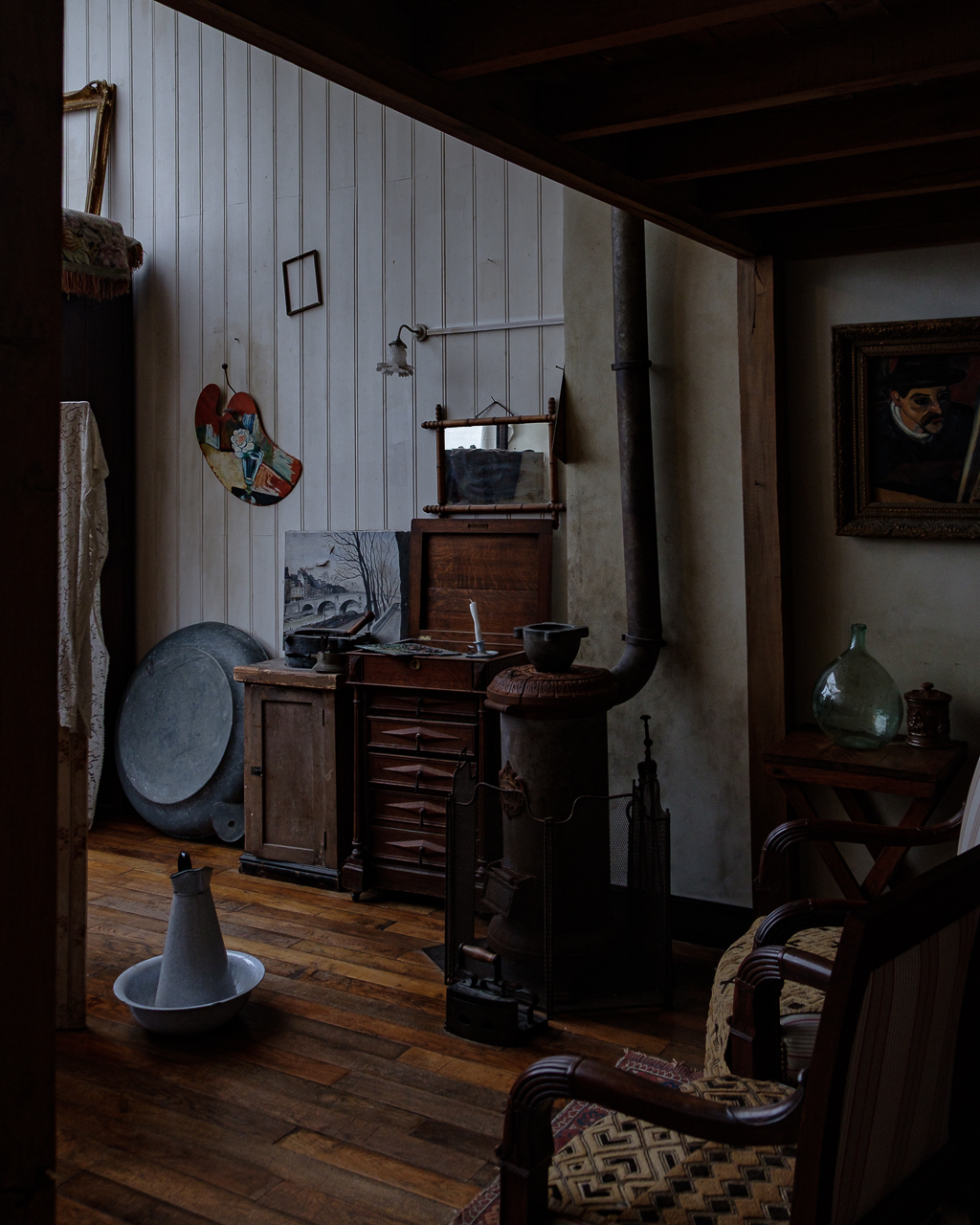
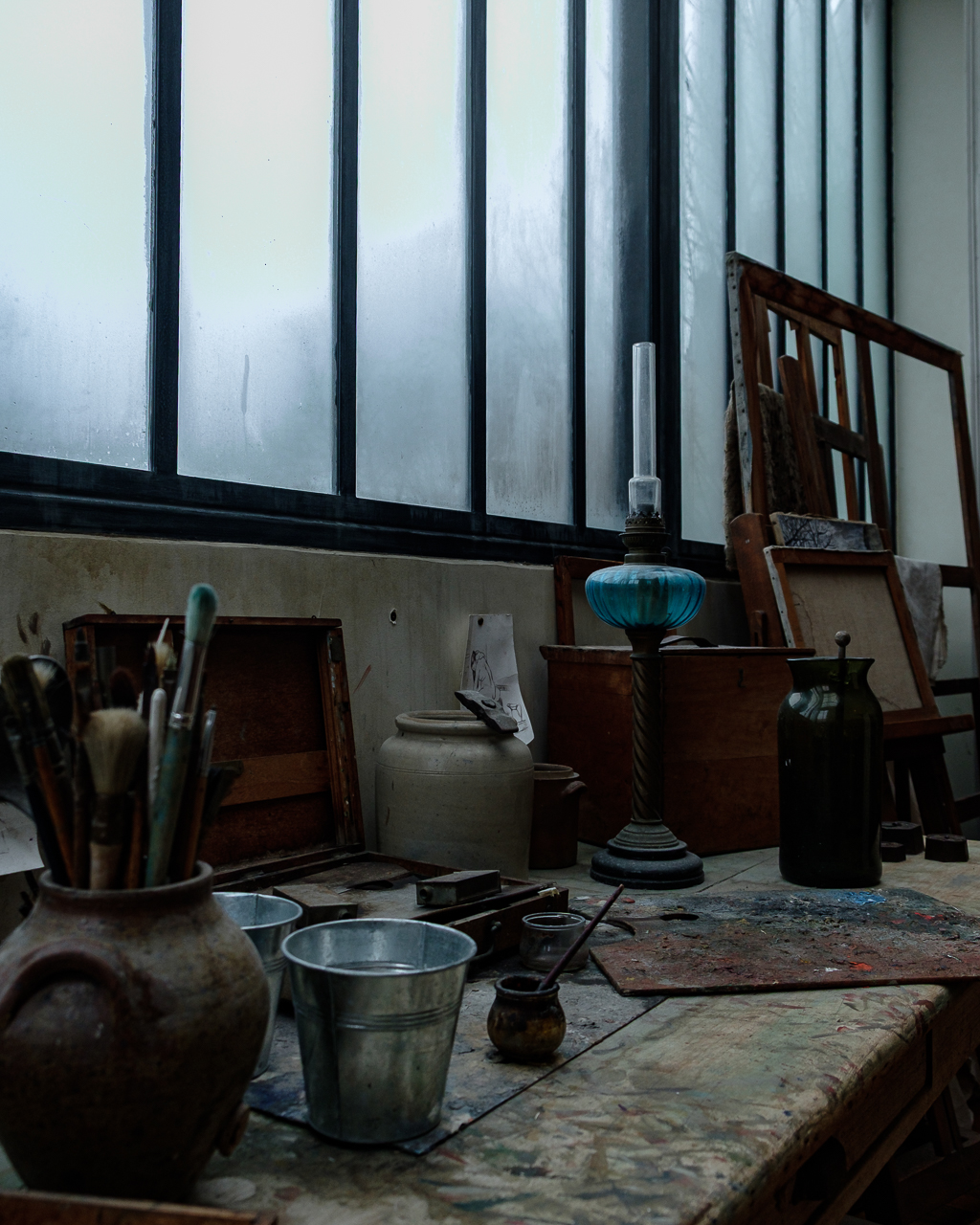
The museum was OK, there wasn’t a lot to see that particularly interested me until we got to the Valadon rooms. These few small rooms have been designed to represent what life was like for her one hundred or so years ago.

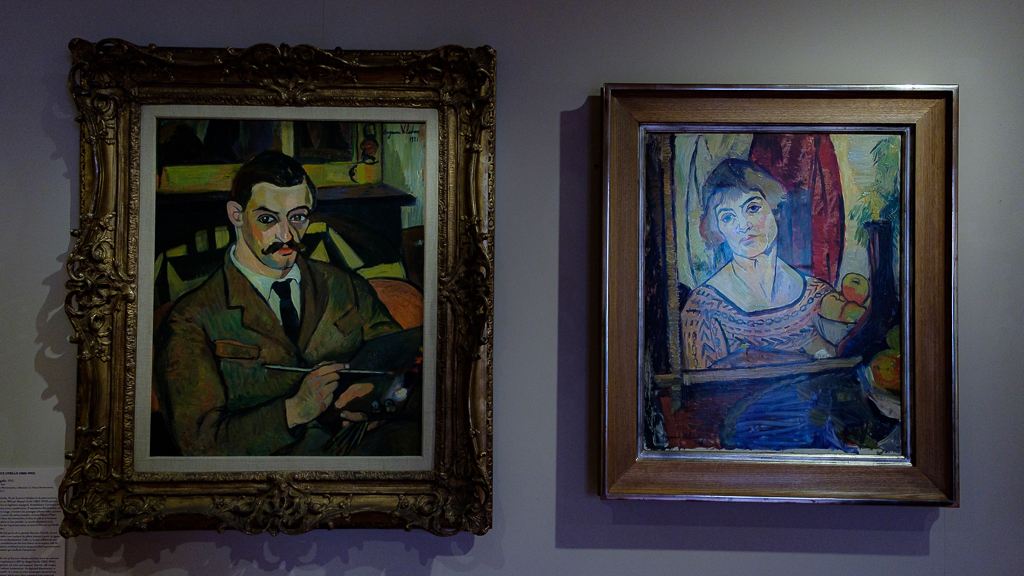
Her paintings adorn some of the walls in this tiny apartment.

The studio was fabulous, with wonderful light and deep shadows. I love looking at how creative people work(ed), it’s slightly less interesting now, with so much work done on computers; often with ginormous monitors. Perhaps I should recreate a classic ‘creative’ space and that would inspire me to be a better writer, photographer or something else. Maybe not, I’m not so big on clutter.

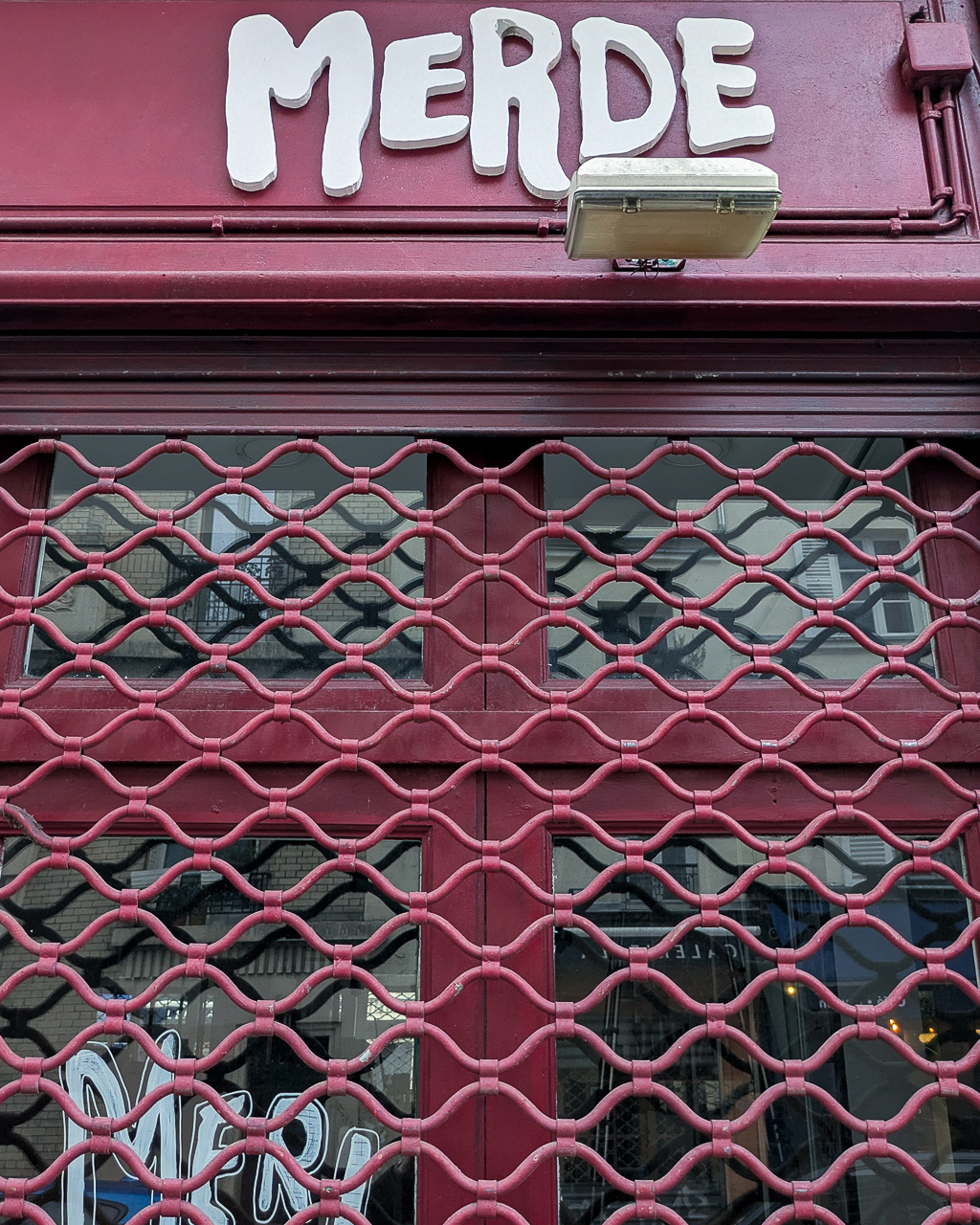
Then, merde!

It was time to collect our bags and walk back down the hill of Montmartre to get the metro to Gare du Nord, the Eurostar to St Pancras, the Northern Line Tube to London Bridge and the train back to St Leonards and home.

I LOVED Montmartre 🙂

Paris 3

Paris 3, January 2026

As expected, the day dawned with rain outside the window, not too heavy but not too light either. Enough to dampen the sound of the street outside our first-floor window waking up and obscure the window of the yet to be open record shop opposite. There was no pre-breakfast walk this morning, or even a particular rush to get out of the door.

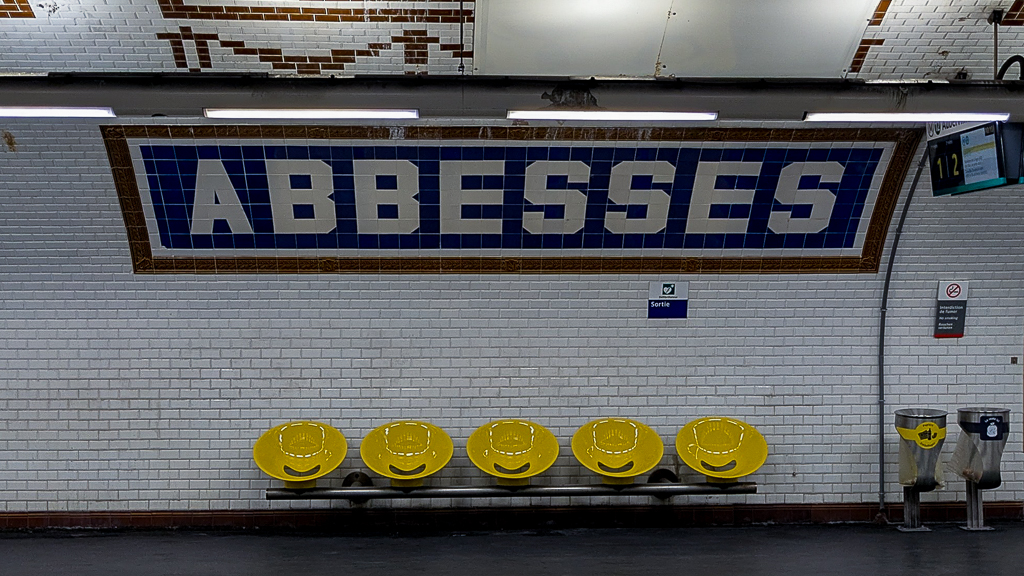
We had tickets booked for 11am at the Musée des Arts Décoratifs to visit the ‘100 years of art deco’ exhibition. We walked in the rain to the nearby Abbesses Metro station, taking in cobbled streets of Montmartre we hadn’t set on before.  The seats on the platform of Abbesses station, and some of the others we had seen on the green line, were very chic. So Paris, some might say. The Metro has been very easy to use, other than the very narrow barriers making life difficult for someone with a wide backpack – like me.

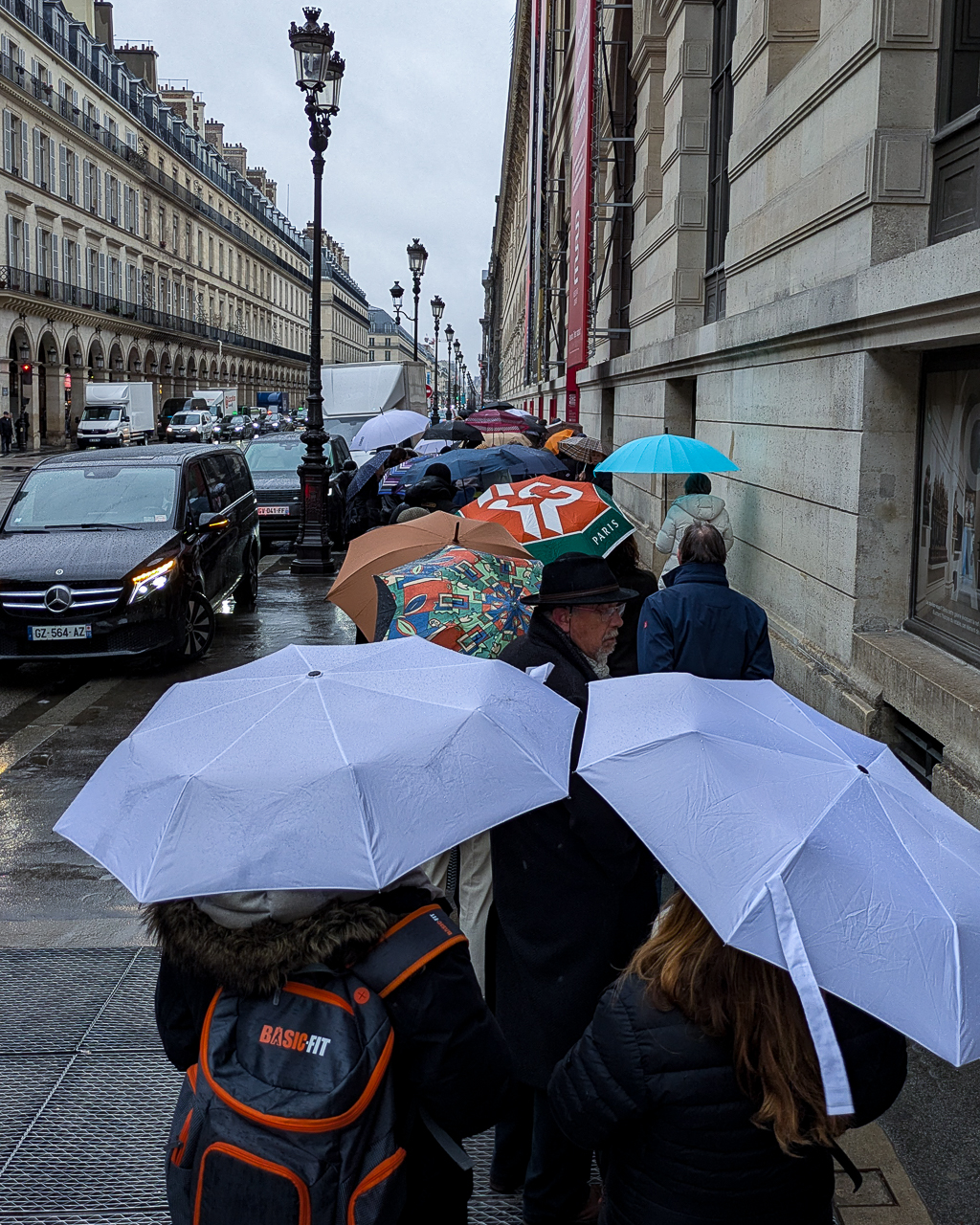
We arrived before the museum opened and sheltered for a while over coffee in a Starbucks over the road. Their coffee is still too milky for my more austere taste. With a couple of minutes before opening, we crossed back over and joined the short, but growing queue.

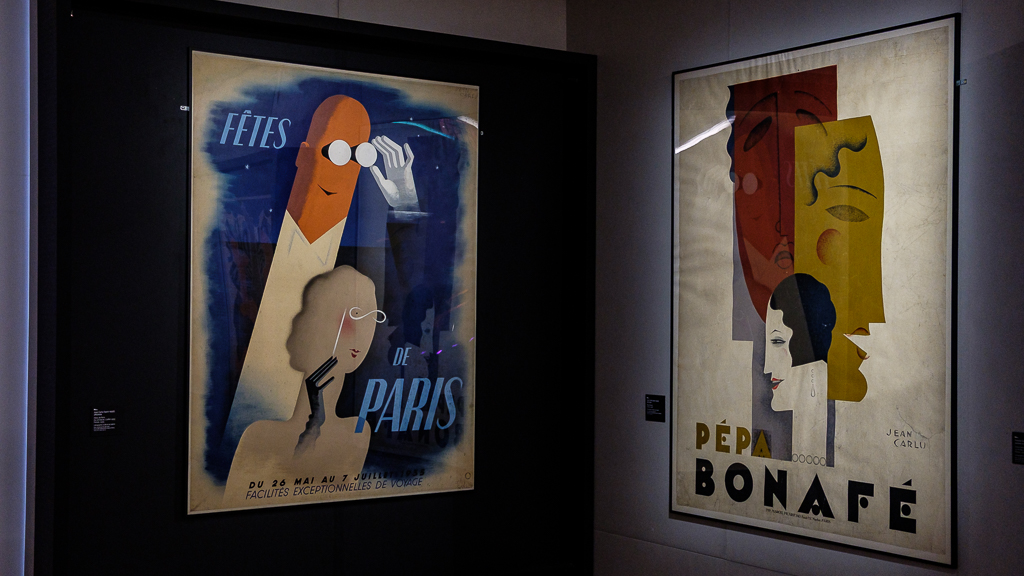
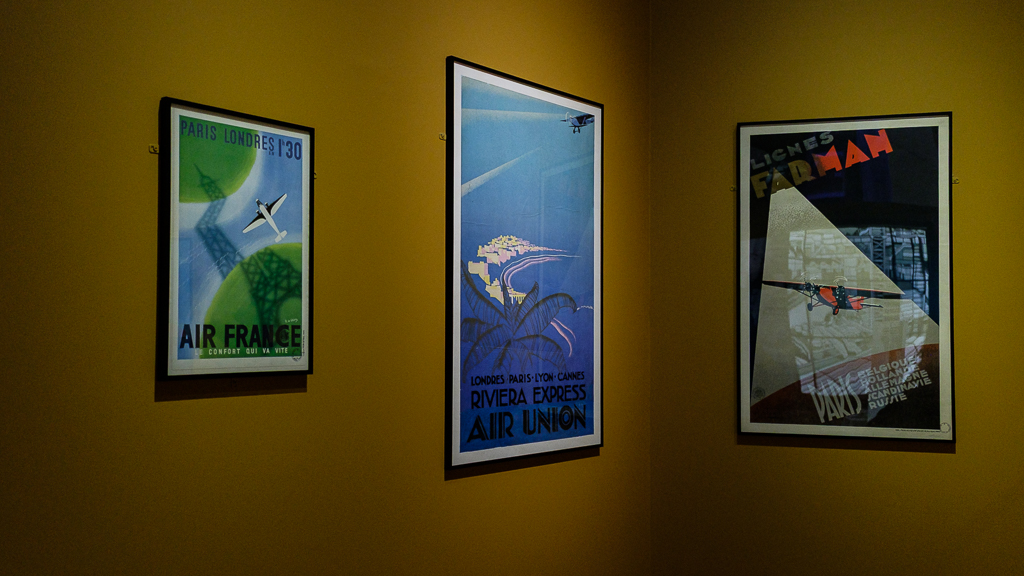
The exhibition was interesting, I was hoping for more architecture, and it was quite small, the focus being more on art deco era jewellery and homeware rather than buildings. The clue was in the name of the museum ‘decorative arts’. I enjoyed it nonetheless, especially the travel posters, some of which would look great on my wall.

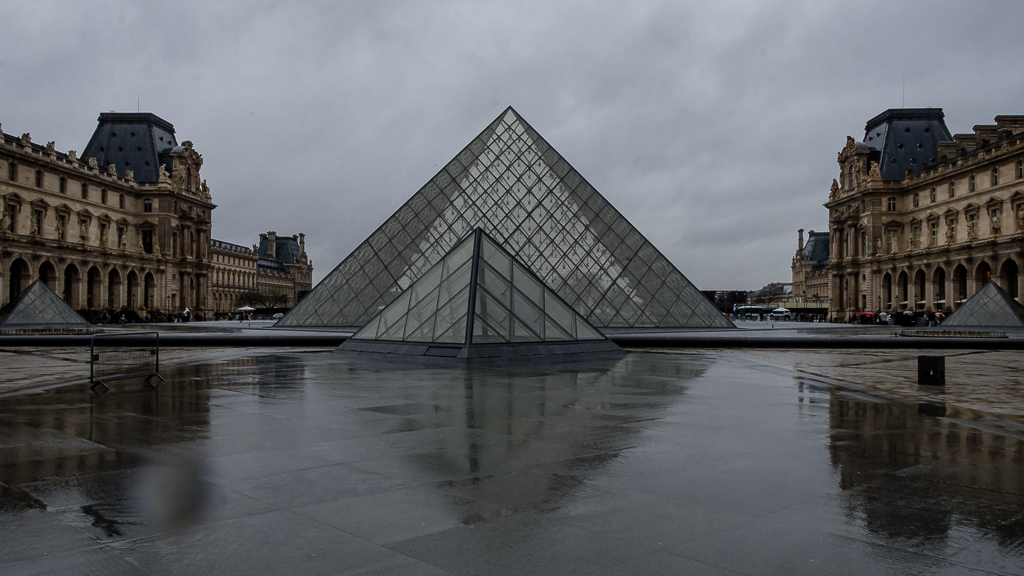
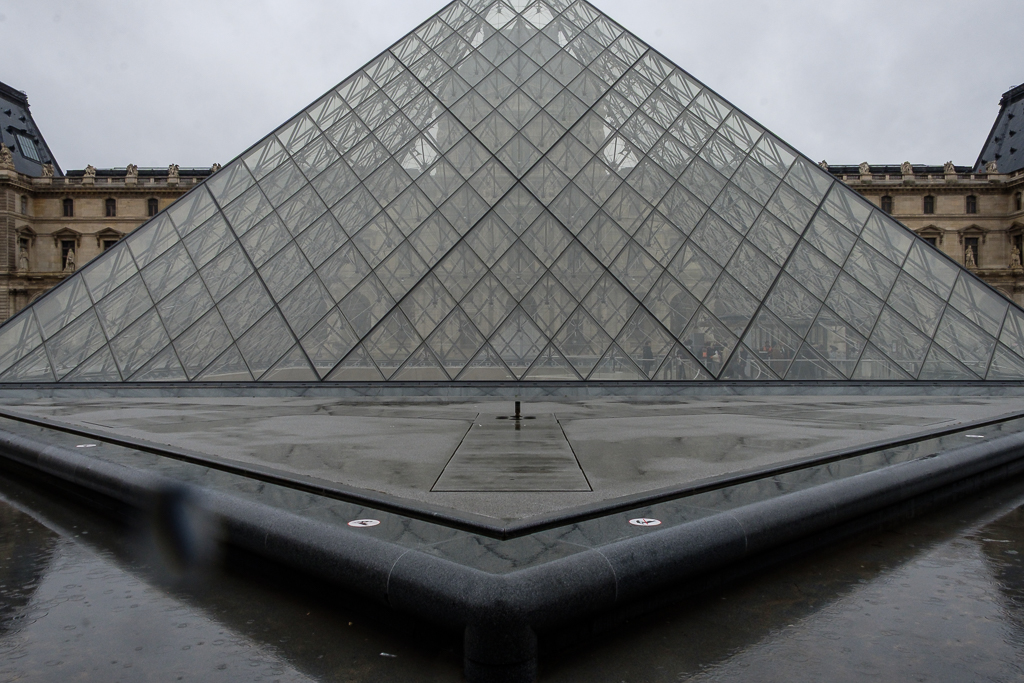
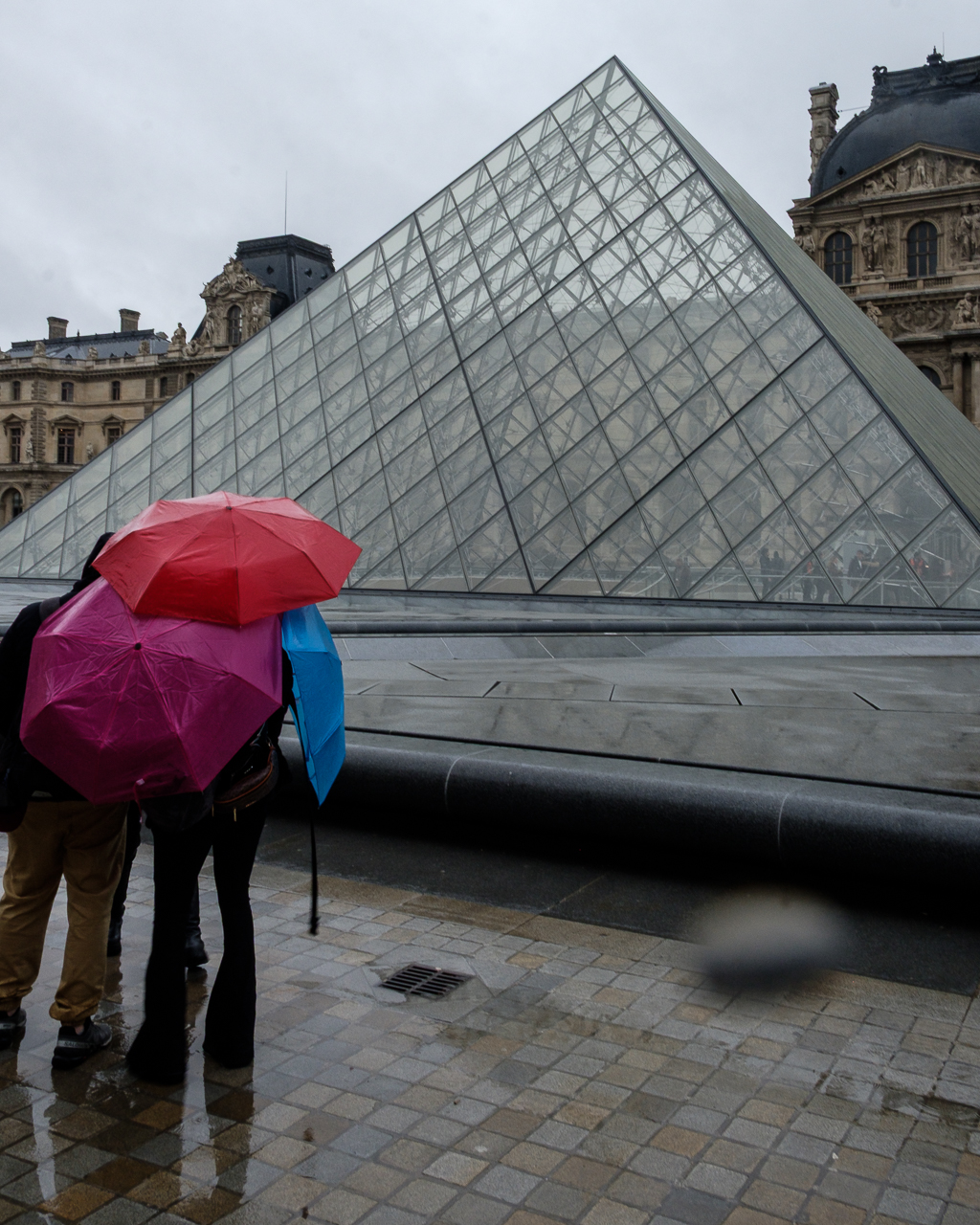
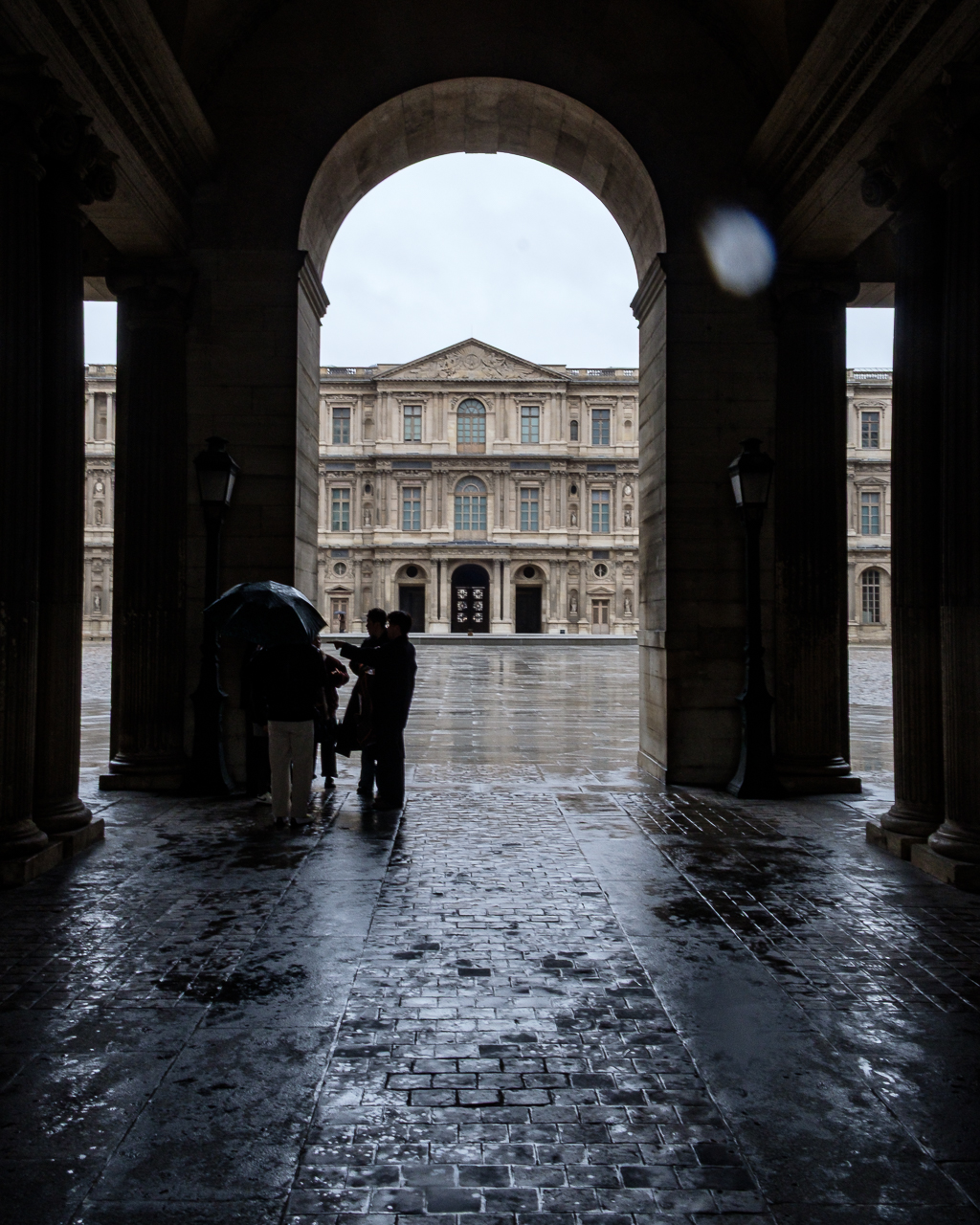
The museum was next door to the much better known Louvre. Last time I was in in Paris we queued for ages to get in and it was very busy. I think it’s even busier now, but not on a rainy Tuesday in March.  While there were a few people about, and there has been plenty of selective photography and cropping in the edit, I was surprised (pleasantly) how deserted it all was at not far off midday. Pro tip; go to Paris in the rain.

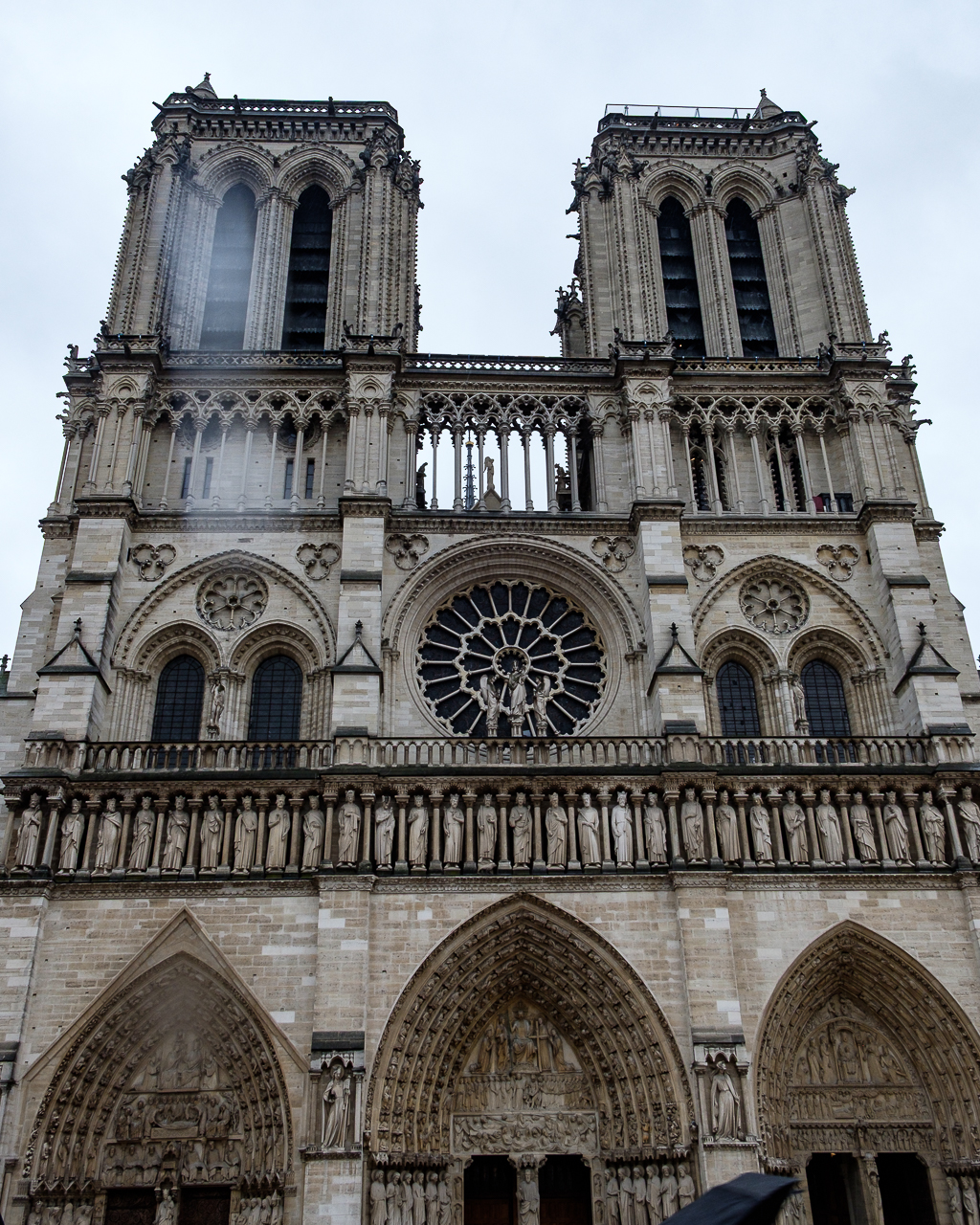
We had no intention of going into the Louvre, we’ve both been before, and nor did we have any intention of going into Notre-Dame either, though that was our next destination.

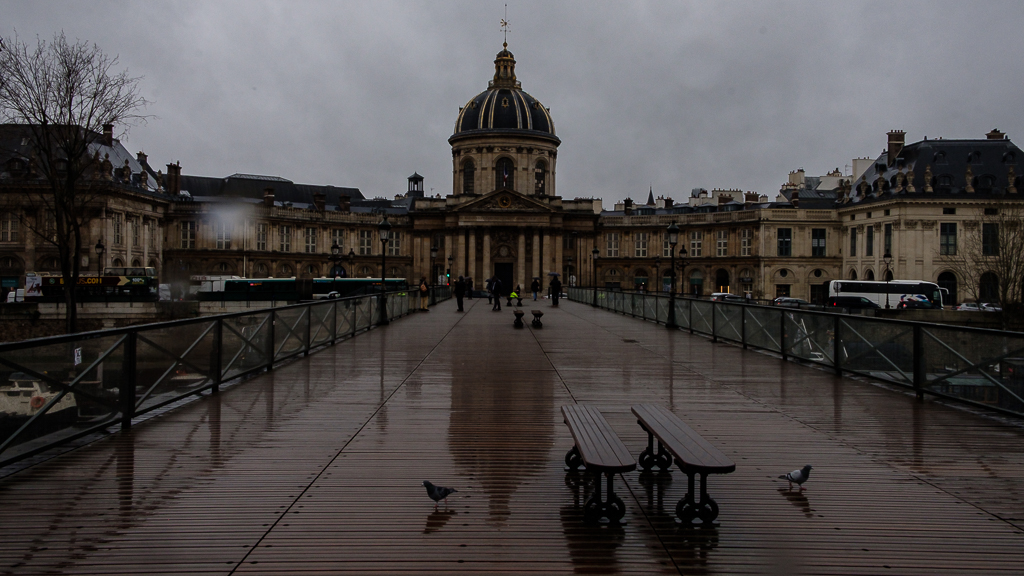
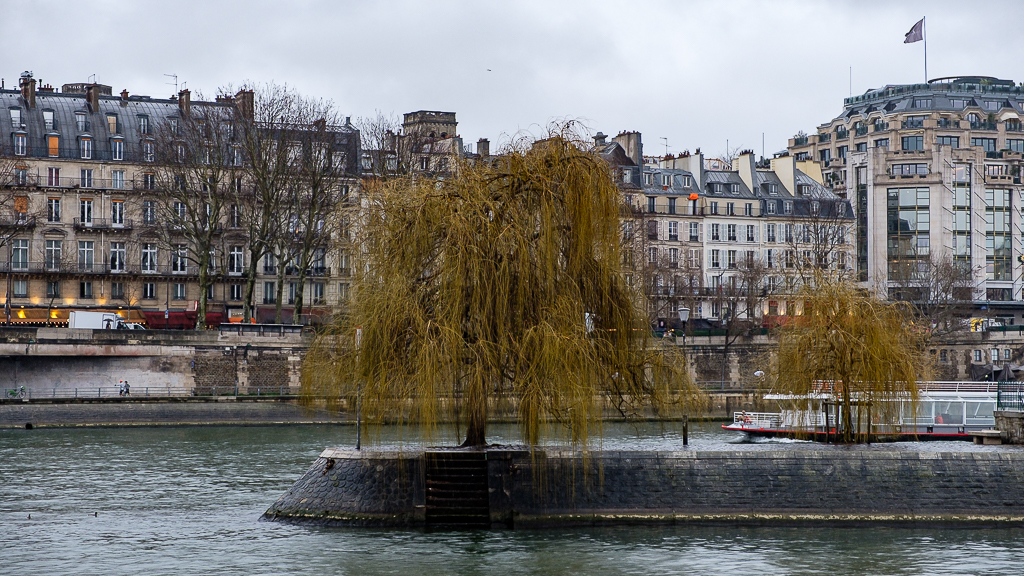
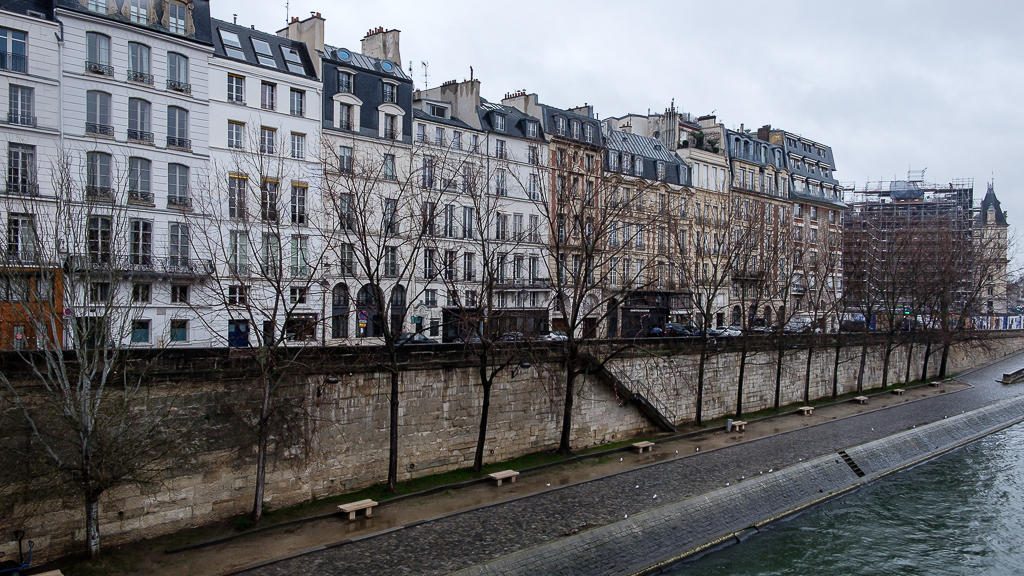
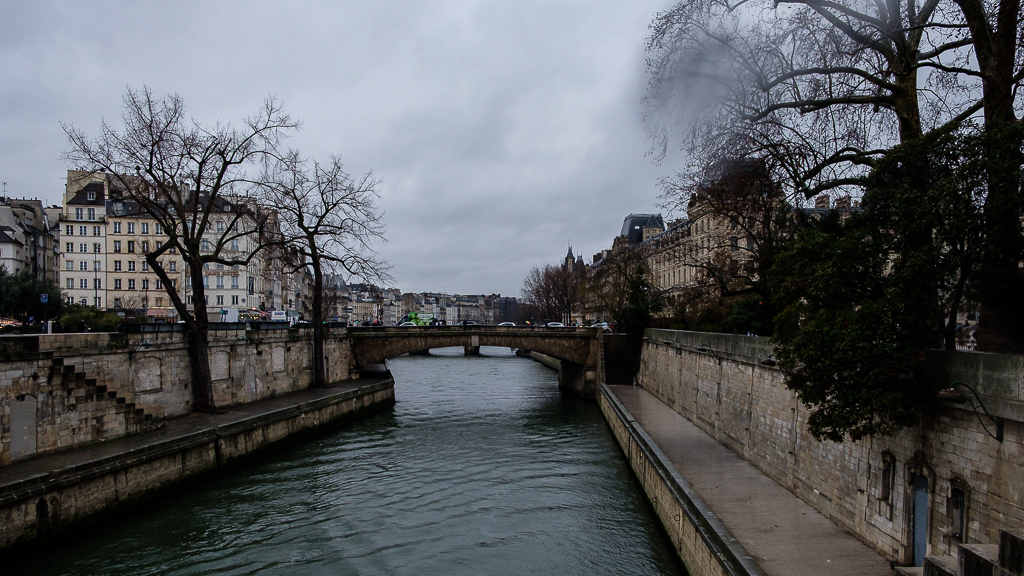
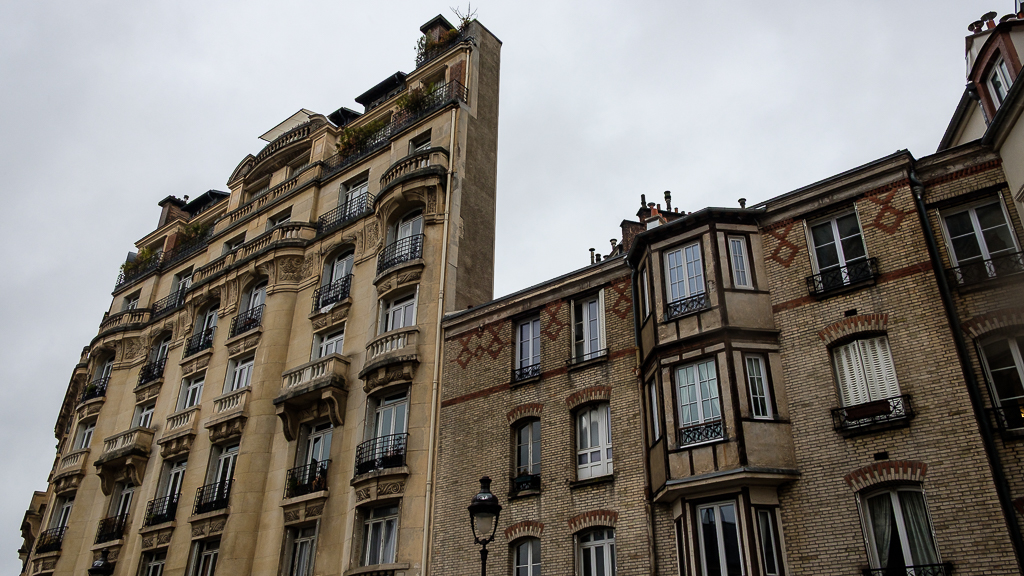
Walking along an almost deserted Seine riverbank in the rain was very enjoyable, Paris, as so many people have said, is a beautiful city. As it wasn’t bombed in the Second World War, the city wasn’t subjected to the random building work that has plagued London ever since. Central Paris has largely retained its mid-1800s Hausmann design to great effect.

The rain started to fall more heavily as we walked over Pont Neuf to Île de la Cité, one of two islands in the River Seine and the location of Notre-Dame. In need of a wee, a sit down, a drink and some lunch we found a café to take shelter in just off the main square by that most famous cathedral.

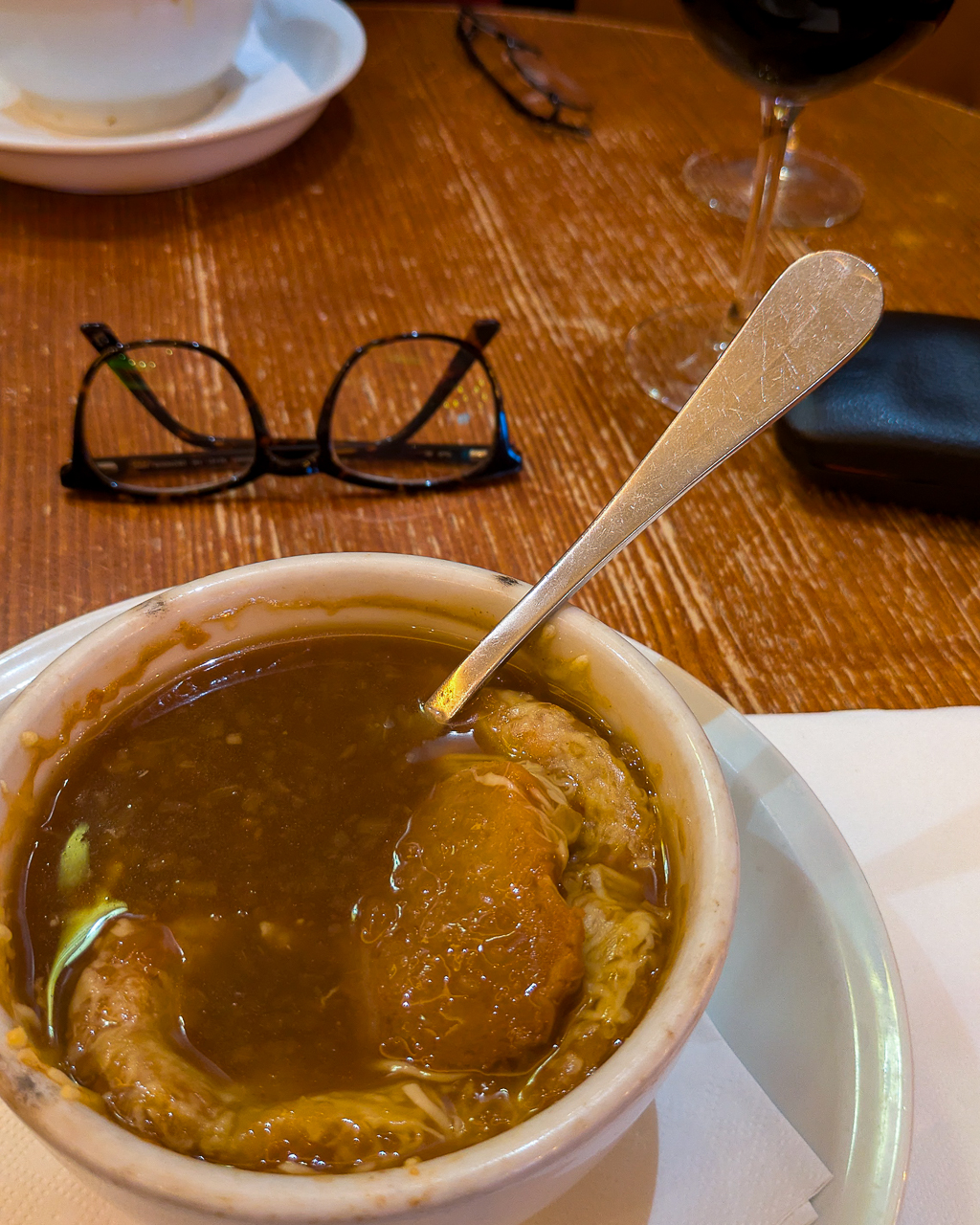
We both had French onion soup (or onion soup as they call it in France), loaded with cheese and bread – perfect wet weather food and delicious. Sometimes the tourist places deliver exactly what you want.

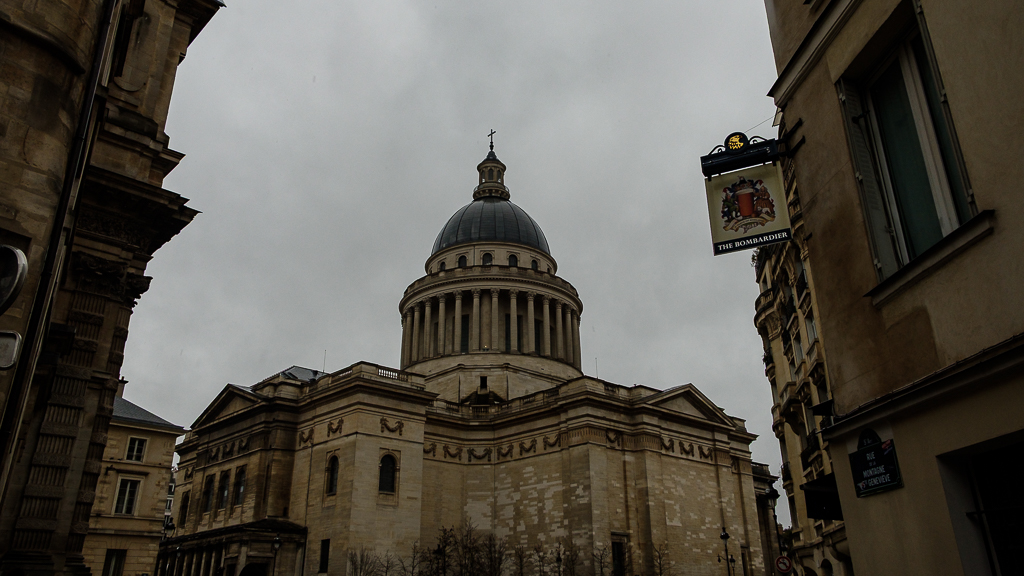
The weather hadn’t improved while we ate so we decided to cross back to the ‘mainland’, walk through the Latin Quarter to the Pantheon and then get the Metro back to the hotel.

I had fond memories of the Latin Quarter from 2012 but was disappointed today. It was possibly the weather, possibly tiredness, but it seemed to be less interesting than I recalled.

The Pantheon was great under a dark grey sky.

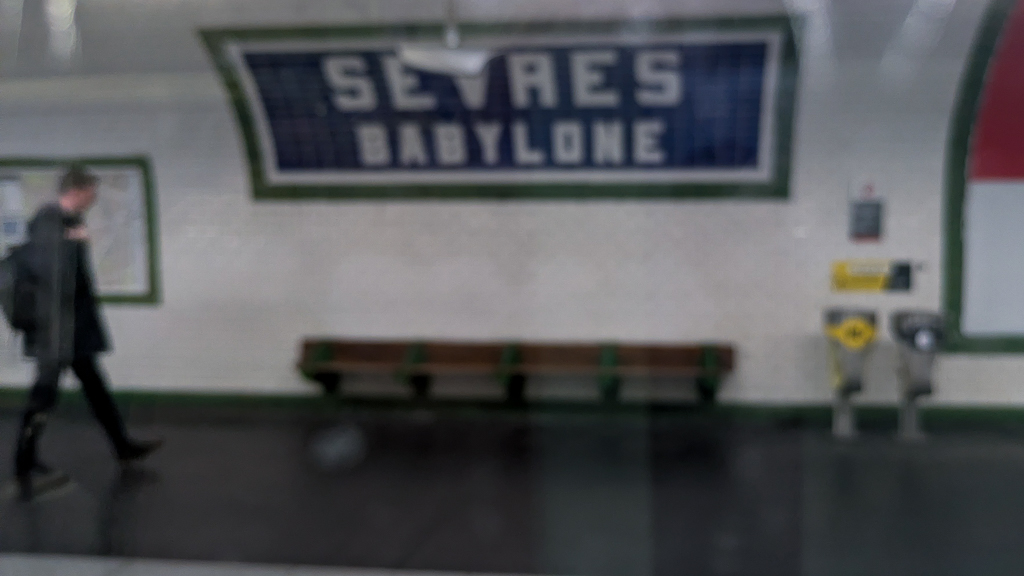
On the way back to the hotel we had one of those classic train moments that just never seem to actually happen in real life. At Sèvres – Babylone station Eleanor had got on the train and I waited to allow an old couple to get on first; they took so long the doors closed and I was left standing on the platform!

Luckily, there is decent mobile connectivity on the Metro so we arranged to meet at the station where we needed to change lines. We both found it quite amusing, fortunately.

After an afternoon rest we walked around Montmartre, I had a date with a record shop which was loosely on the way to where we planned to go for dinner ( It wasn’t really). It was a great shop with a good collection of second-hand records and a friendly vibe; I bought a couple of LPs as I couldn’t help myself, I will go back next time we stay here and spend a bit more time.

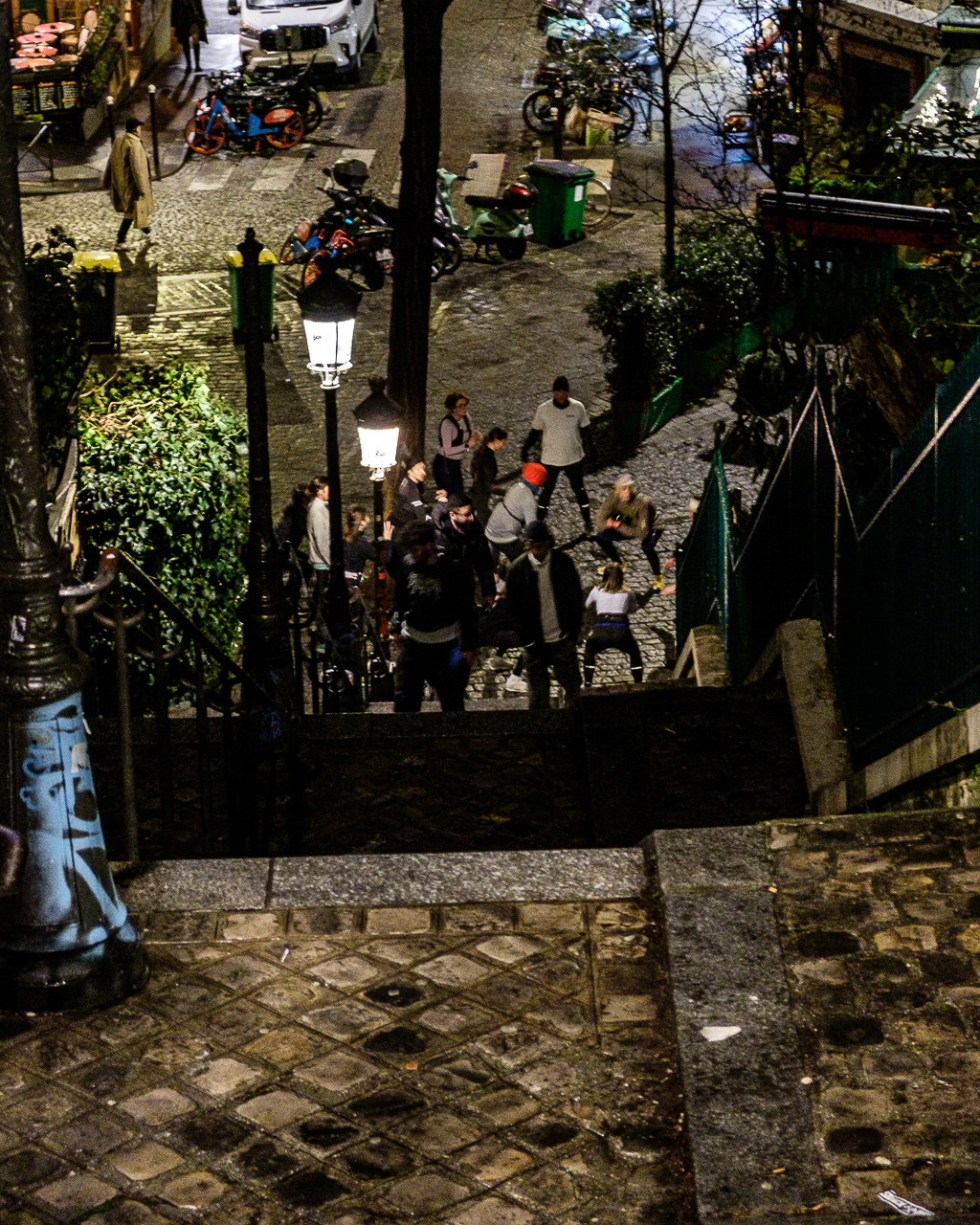
We’d found a vegan restaurant online and while we were the only customers during the time we were there the food and wine were fantastic; another great evening meal.  Amusingly, Tuesday night seemed to be local running club night on the hills and steps of Montmartre; as we ate our food, we watched groups and individual runners pounding up the hill to Sacre Coeur and back down again. We decided to join them in a slow walk after our meal. There are plenty if hills to walk off that lovely dinner.

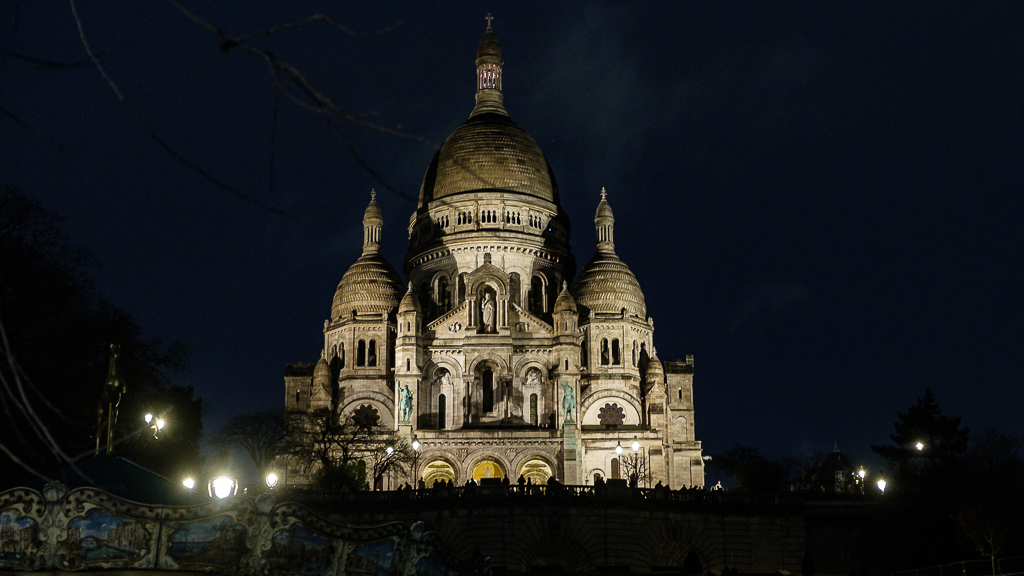
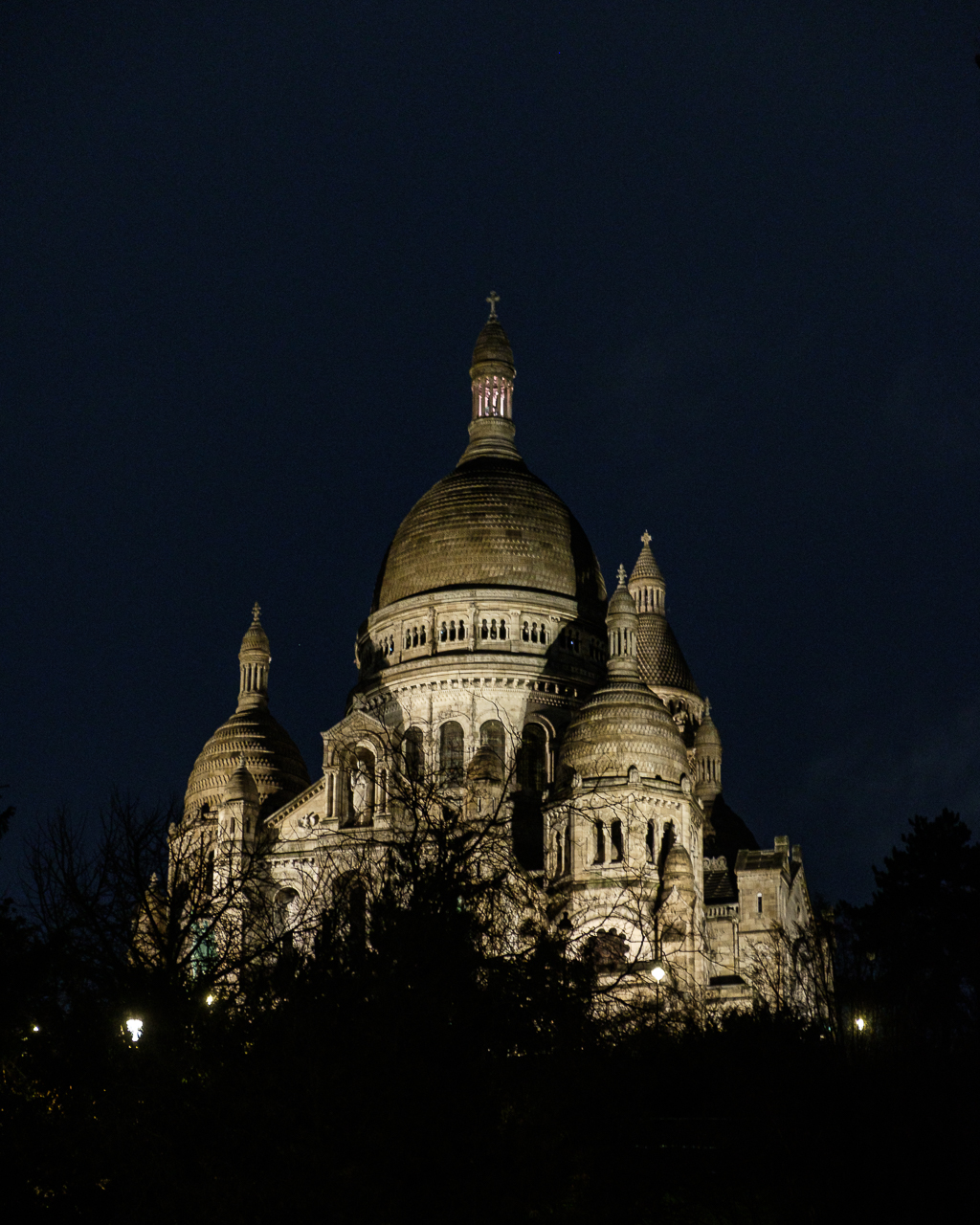
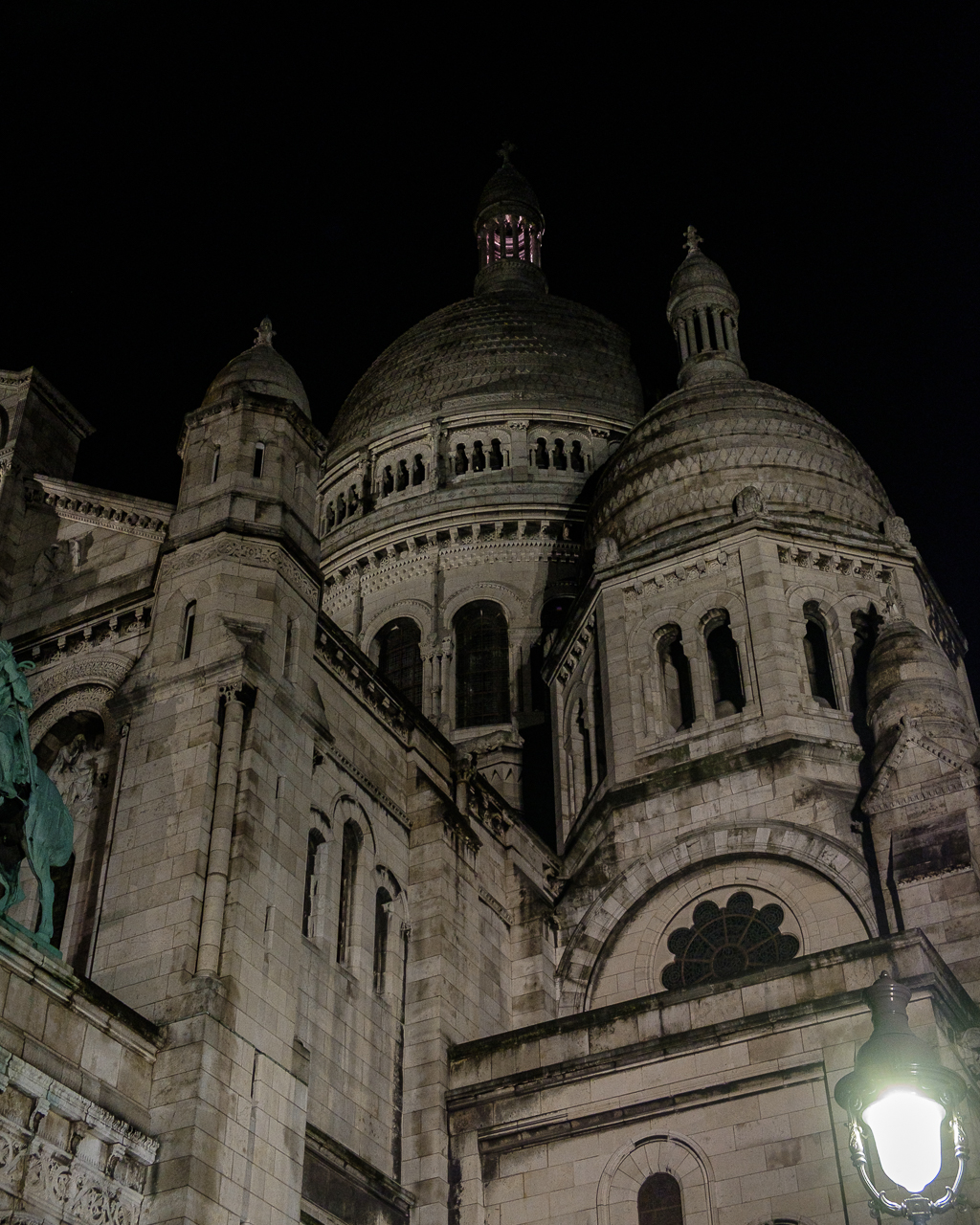
Sacre Coeur was magnificent all lit up with white spotlights and the zipping and zapping of the runners, many with headlights, made for an enjoyable time on the top of the hill.

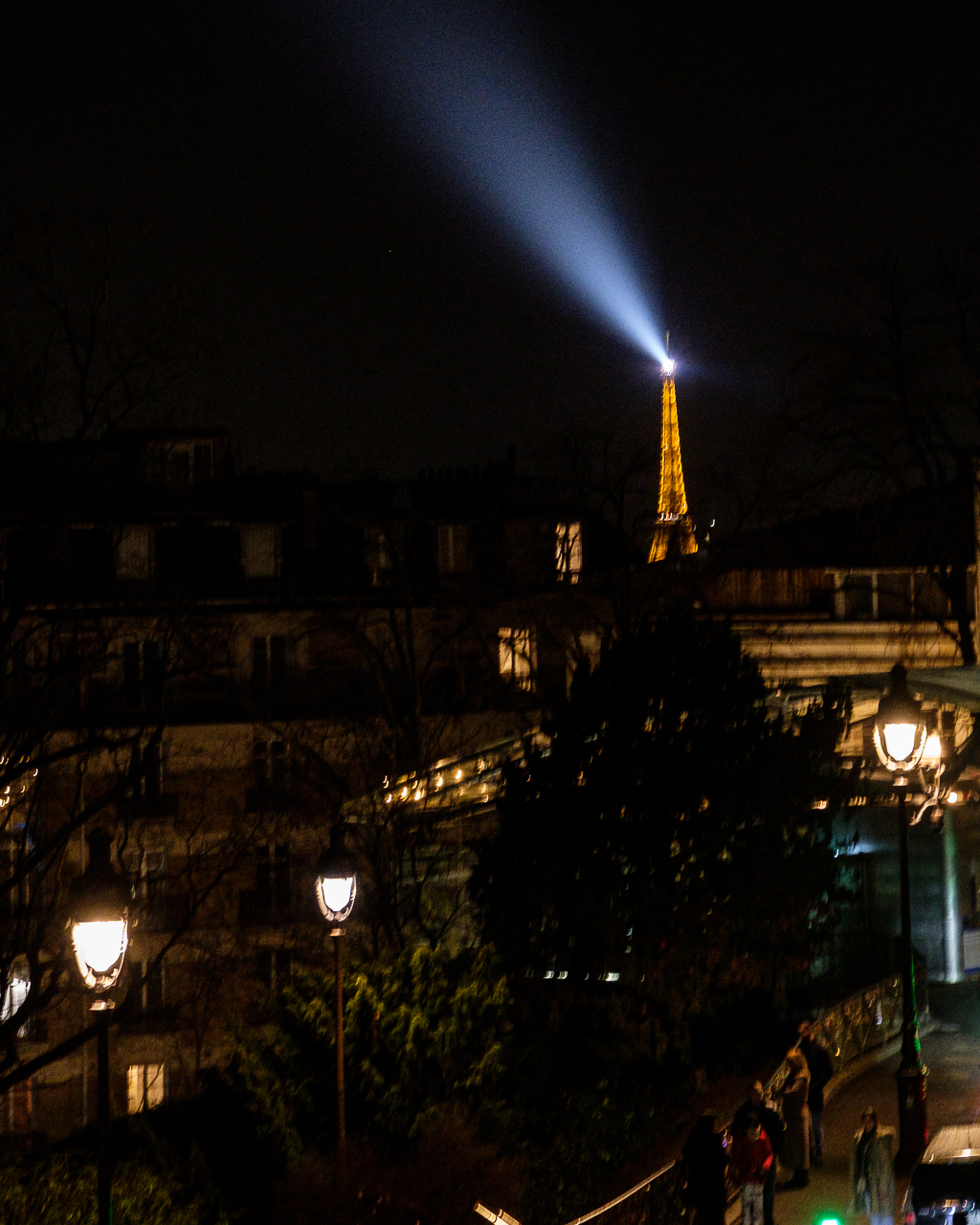
Walking back towards our hotel we spotted the Eiffel Tower in the distance.

Another fabulous, albeit wet, day in this fabulous city.

Paris 2

Paris, January 2026
First things first. The French, or at least the Parisians, do say ‘Voilà’, and they seem to say it a lot. I liked that. Secondly, all those stories about Parisians being rude to tourists, particularly the English, are, of course, complete pants, admittedly, these seem to be old stories. Everyone was very friendly.


We stayed in a hotel named after the writer Marcel Aymé. To be perfectly honest, prior to Eleanor booking the hotel I’d never heard of him. He was a prolific writer, though English translations are rare. He was born in Burgundy in 1902, moving to Paris in 1923 where he discovered a love and talent for writing, publishing his first novel in 1926. He lived most of his life in Montmartre. His most famous short story is Le passe-muraille or “The Walker-Through-Walls”. He died in 1967. He was also very cool.


We had a lot planned for today, the only day of the three days we have in Paris where rain isn’t forecast, so walking these lovely historic streets was in order. We started early, squeezing 40 minutes around Montmartre before breakfast in the hotel. The sculpture of ‘The walker through walls’ just round the corner was our first stop.


We had a lovely walk around the area. We/I should do more morning-before-breakfast walks when on holiday; it was so peaceful and as everyone who does photography knows, the light at the beginning and end of the day is usually the best.


One of the things I like about Montmartre, a location typical to the ones we try to stay in, is the mix of residential and tourist places. Seeing the residents going about their early morning, kids to school, walking to the station, grabbing coffee and breakfast on the way, just enhances the feel of a place. It’s as close to living somewhere as can be experienced in a few days.


We also got a great view towards the Eifel Tower, something that was impossible with the low cloud last night. I get an absolute thrill out of seeing such iconic things. I know it’s a cliché to love the view of the tower over Parisian rooftops, but hey. It’s fucking cool.


Way back when we first discussed coming to Paris, we timed the trip so we could see the Gerhard Richter exhibition at the Louis Vuitton Foundation (LVF). We used the metro to get as close to the gallery as possible, though were surprised to find that the map’s recommended way took us through a bit of forest.


I was expecting to be walking through something open and grassy, like a London royal park. It was a little creepy walking through straggly trees not really knowing where we were going; especially to something as fancy as the LVF; which is an amazing building, and coming from the direction we did, completely out of place.


Gerhard Richter was born in Germany in 1932 and has been called ‘the world’s best living painter’. He is constantly changing, moving through a wide range of abstract styles over his career and this exhibition was vast, with so many impressive works, some of them huge; like ‘The Stroke (on red)’. Up close, this 20-metre long painting made from tiny individual brush strokes is stunning. It must have taken weeks to paint.


He had a period of very clinical, clean and brightly coloured works as well a ‘grey’ period.


I took a lot of photos in the exhibition; Richter was prolific and an artistic shapeshifter and with such a variety of work there was a lot I liked and a lot that didn’t appeal at all. I particularly liked his photo-realistic paintings, both from an early and late in his career.


I can’t say it was my favourite work, but a special mention has to go to his 1983 work ‘Candle’ which is best known as the cover of Sonic Youth’s 1988 album ‘Daydream Nation’, one of my favourite records.


We left the LVF after a tasty lunch in the (expensive) restaurant and walked to the Arc de Triumph. We’d both been up it before so decided to keep on going down towards the river Seine and the Eiffel Tower.


There is nothing I can say that will add to the many thousands (millions?) of references made to this wonderful piece of late 19th century engineering. It is impressive, I and the hundreds of people queuing to make their way up to the viewing platform, will attest to that.


We took a slow meander back to a metro station before heading back to the hotel. It had been a good day.

Paris 1

Paris, January 2026
Ah Paris, how much do I love thee? Quite a lot, it seems. We’d planned this trip a few months ago when Eleanor spotted that there was a Gerhard Richter exhibition at the Louis Vuitton Foundation that coincided with the 13th anniversary of our first date. I can’t believe we’ve been together that long; the time has passed in a blur.

We’d been talking about visiting Paris for ages. We’ve both been before, but not since we’ve been together. I have a bit of a fascination with the 1968 student uprisings, and the many others that have taken place here, as well as the city’s long association with art and writing. And, well, it’s just a cool place to visit. Mid‑January seemed like a decent time to go too, as I’m not really a peak‑tourist‑season kind of guy.

We decided to stay in Montmartre, one of the old centres with fantastic steep, narrow cobbled streets – always a favourite of mine, as well as its historic artistic links. Eleanor found a great hotel named after the writer Marcel Aymé; more on him in the next post.

We took the Eurostar from St Pancras (I wish it would run from Stratford International – it was supposed to, as it’s only 15 minutes from home) at a reasonable time in the morning, arriving in Paris in the early afternoon. As I’d booked early enough, the Economy Plus option wasn’t much more than basic economy, and I’m sure we easily ate and drank the difference. Eurostar terminates at Gare du Nord, and it’s not the station I remember; it was clean, not madly busy, and much easier to navigate than I expected. Paris was the first European city I visited on my 2012 travels, and I felt much more confident than I did back then. Perhaps it was just confidence that made things seem easier? Anyway, we used the Metro and found our hotel with no hassle at all.


The ‘fantastic, steep cobbled streets’ didn’t disappoint. It’s Sunday and there are quite a few tourists about, especially at the top of the ‘Mont’, where the fabulous Sacré‑Cœur Basilica (Sacred Heart) towers over its surroundings.


We had a gentle (as gentle as is possible on steep cobbled streets) stroll with no plan in mind other than absorbing the atmosphere and spotting places we might want to check out when it’s less busy.


Surrounded by eating establishments mainly frequented by tourists, the former abbey square, the Place du Tertre, was opened to the public as Montmartre’s village square in 1635. From the late 18th century, it became a renowned hangout for painters and other artists, with many famous names setting up their easels here over the years. Many of the major figures in the French and European art world in the late 1800s and early 1900s lived or worked around here: Picasso, Dalí, Renoir, Degas, Valadon (more on her later), van Gogh, and Matisse among the big names. You can still get your portrait painted here, even on a rainy Sunday afternoon.


As expected, the area around Sacré‑Cœur and the steps down from the church entrance was very busy, even on a damp Sunday afternoon. We had no intention of going into the church on this trip, so we just stopped to take the obligatory photo from the top of the steps, looking south over the city of Paris. Which reminds me: I was geographically discombobulated on this trip. Eleanor may say that this is my usual state, but it’s embedded in my head that the view over the city is to the north, and this really messed me up the whole time we were away.


We walked down the steps and on to Boulevard de Clichy, where we passed the famous Moulin Rouge. I knew that historically this was Paris’s red‑light district, and part of the reason it attracted so many bohemian and artistic types in its heyday a hundred or so years ago. I’d walked past the Moulin Rouge when I was here in 2012. What I wasn’t expecting was that it’s still very much the red‑light district: sex shop after strip club after sex shop all along Boulevard de Clichy, all brightly lit in the early evening gloom.


As the light disappeared we headed back up the hill and stopped for a negroni (then another) in a small bar that seemed the least touristy – though of course there is no such thing in this corner of Paris. We’ve really got into negronis recently, moving on from our previous favourite, the Old Fashioned. These were good ones; hence staying for a second.


Later that evening we had a fabulous meal at Le Maître, a small modern French restaurant that we’d booked a while back. The food was very good, as was the vibe of the place. We always research and book one meal before leaving home – not always on the first night, but tonight was our 13th anniversary, and a special meal to celebrate was in order.

It wasn’t raining when we wobbled out of the restaurant with full bellies, so we took a slow walk back to the hotel; taking in a few more of those lovely cobbled streets. Roll on tomorrow!

Capitol Complex, Chandigarh

Chandigarh, India
02 April 2025

There is no one specific reason why it has taken the best part of 11 months to finish writing about Chandigarh, or of my time in Delhi. I guess I just ran out of capacity to do either place the justice they deserved. To be honest, I never expected to pick this back again, but there you go. I started a new job in September and this one isn’t as mentally draining and that has helped in so many ways. So here we are with words and images on a page, almost 11 months after the event.

In his famous speech at Rajendra Park in Chandigarh on 9 November 1957, Jawaharlal Nehru shared his vision for the city with its people, saying, “It was felt that to build a new city to be the capital of Punjab would give people something new to look forward to. We wanted them to look to the future with new hope after the trauma they had been through. We felt the new capital would be a symbol of new hope.”

It was only ten or so years ago that I started to understand the impact of the 1947 partition of India. I knew that it had happened, and I knew that it split India into two; and later three when Bangladesh became its own entity in 1971, but I didn’t know much more. I’m not going to go into any detail on the cause of partition, though Britain and colonisation must carry its share of the burden of responsibility for the deaths of hundreds of thousands of innocent people and the displacement of millions more.

One of the outcomes was the splitting of the state of Punjab into two, with the state capital, Lahore, ending up on the Pakistan side of the new border, leaving Indian Punjab in need of a new capital. As noted above, Prime minister Nehru wanted to build a city for the future of the now smaller state, not one that reflected the recent architectural past of the British Raj.

There was not much to Chandigarh before Nehru hired the American architect Albert Mayer. He, working with Polish architect Matthew Nowicki, developed a plan based on a curving, organic layout. However, Nowicki was killed in a plane crash in 1950, and Mayer withdrew from the project shortly after. It was at this point, in 1951, that the Swiss-French architect Le Corbusier was brought in to take over…

Le Corbusier brought in a number of other European architects to help with the design of the city centre and, equally importantly, a set of new government buildings: the Capitol Complex. He called on his cousin Pierre Jeanneret and the English couple Maxwell Fry and Jane Drew, who had experience designing modernist European buildings in West Africa and understood how concrete could be used in heat and humidity. Le Corb focused on the design of the Capitol Complex while the others developed plans for the residential and commercial parts of town.

In today’s Chandigarh there isn’t a lot of accommodation choice for a solo traveller on foot who wants to stay not too far from the concrete action. The hotel I chose wasn’t great and I was the only westerner there. As I found on this India trip, most of the other western tourists were on guided tours and had drivers and organised schedules. I didn’t meet many who were solo travelling like me.

A photo of me taken by one of the ‘Americans’ inside the Secretariat – it had an amazing internal ramp. The other person is the excellent local guide the Americans had.

As usual I decided to walk to the Capitol Complex, though it was much further than I’d anticipated. The sector blocks are 1.2km long and I had two to cover, plus some meandering and then walking to the complex itself. A taxi driver I met in Christchurch went to university in Chandigarh and said that Christchurch reminded him of home, I could see what he meant. The residential streets are pleasant, something I can’t say about Delhi. Chandigarh is only 70 years old mind, not 3000.

The city was designed to be cool and light and make humans more comfortable in their surroundings. Buildings are mainly low rise; there are plenty of trees and it was pleasant walking on the shady side of the road. There are also footpaths, and surprisingly, cycle lanes, which were well used. The walk to visit an object of interest was the nicest of all my days in India, though the roads at rush hour were as busy and noisy as Delhi.

I didn’t know I had to join a guided tour to visit the Capitol Complex, though it makes sense given it is the centre of government for two Indian states (Punjab and Haryana). The tours are free, though.

I lucked in with arriving at the tourist centre just before the 10am tour was about to leave. I generally hate tours but this one, run by the complex itself, was excellent. The guide was knowledgeable and friendly, and we benefited from having a local architecture tour guide with an American couple who added local colour and history; his father was an architect on the original build. I enjoyed the company of the Americans too. My years of solo travelling are over I guess.

The tourist centre was a good introduction to this fantastic site.

The Capitol Complex was completed in the late 1950s and is a modernist/brutalist masterpiece; it’s now a UNESCO world heritage site. As it’s a government centre and security is very tight there are no cars and, other than lots of blokes with guns, there are relatively few people. It’s a large site and the concrete reflects the bright sun, it was very hot and I’m glad I had two bottles of water with me, though I gave one to the Americans as they hadn’t planned for the heat.

There are three key buildings: the High Court, the Secretariat and the Palace of the Assembly, along with a number of other features, the Open Hand Monument, the Tower of Shadows, the Martyrs Memorial and Geometric Hill.

The tour started at the High Court, though we weren’t allowed within 100 metres of the building as court was in session. That was a shame as it is a cool building with some interesting, classic Le Corbusier features that were hard to pick out from distance. Another time maybe.

The Open Hand Monument was much more impressive than I expected it to be; photos I’d seen just hadn’t captured its size and the environment it’s located in. It’s properly monumental and only having half a dozen visitors made for an enjoyable visit. The tour is time restricted, so I didn’t have as much time as I would’ve liked. I’m the glad the American couple were as interested as me as the three of us were the ones lingering and looking at all the architectural delights the most out of our small group. 

In some ways the Tower of Shadows impressed me the most. It doesn’t look like much, it’s more of an experiment than anything else. Le Corbusier designed it so that not a single ray of sun enters it from any angle, with the north side remaining open because the sun never shines from that direction. It was built to prove that concrete design could be made to beat the heat in hot places and it’s remarkably effective and much cooler in the shade than it was in the sun, or other shady parts of the site.

The swastika, as seen on the side of the Martyrs Memorial, is a Hindu symbol, predating the Nazi regime by thousands of years. From the ancient Sanskrit language, it can be translated as ‘conducive to wellbeing’. They are everywhere in India, though for (some of) us westerners it can be quite jarring the first time you see one.

The Geometric Hill was created out of the rubble from the Palace of the Assembly build, fronted with a wall of concrete detailed with the movement of the sun across the sky over the 24 hours of the day. It also hides the Palace from the road.

The Palace of the Assembly is my favourite building in the complex, with the wonderful curved concrete form over the entrance and the cooling tower on the roof and the water feature at the front. It’s such a cool structure, and bigger than I expected too. 

Unlike the High Court which was in operation, we were very fortunate to be visiting on a day when the governments of Punjab and Haryana were not sitting, and were allowed into the assembly chamber itself. Apparently, this is quite rare. We had to go through a vigorous security check, handing over passport, phone, camera, anything in our pockets, in fact everything other than clothes and shoes and spectacles. I have no visual record of the inside of the building which is a shame as there are some quite nice little concrete features in the atrium and halls. The assembly room itself was not too dissimilar to that of the UK government.

The final stop, and we were definitely getting a nudge along by the guides at the stage, was the Secretariat building. The tour takes you inside the building, but straight to the roof from the reception area, so this time we could bring all our stuff with us. The camera being the most important for me.

The Secretariat is a massive eight-storey slab block stretching about 250 metres. It’s essentially a giant office block housing the administrative departments for both the Punjab and Haryana state governments.

The façade is dominated by Le Corbusier’s brise-soleil (sun-breaker) system, those geometric concrete grids you can see covering the building. They’re designed to shade the interior from the harsh sun while still allowing air circulation.

The view from the roof is fantastic, I managed to sneak the gun of one of the snipers who observe the site from the roof into one of my images.  There are a lot of guns about, though the mostly the atmosphere is friendly. I suspect they don’t have a lot to do, but I imagine the serious security work is performed well out of sight of us tourists.

I really liked the structures on the roof too.

And that was the end of the tour, we were shuffled back to the tour office and sent on our merry, though hot and dehydrated, way. Me, to walk back to my hotel under the mid-day sun. It was the best tour I’ve ever done, made even better by spending a couple of hours with some friendly folk and their chatty and informative guide.

In hindsight I should have found a guide to take me around. There is a lot more to Chandigarh than the Capitol Complex, and not just from a brutalist/modernist perspective; though there are some fabulous modernist residences. Having a guide with a vehicle would have made viewing those a lot easier to do.

Modern Chandigarh is nothing like anything else I’ve seen in my (albeit, limited) time in India, it’s very much a modern city. I think Nehru would approve.

Barbican and St Barts the Great

London,
January 2026.

There is something about a sunny winter’s day in London. Maybe you feel the same thing in any other large European city at this time of year, who knows. The air is crisp and clear, the sky is blue, the sun is low all day and casts great deep shadows that contrast sharply with its harsh bright glow. It’s almost monochromatic, but it’s in colour.

On the downside there is a sharp wind blowing and it’s cold, making my mid-morning walk around the Barbican Centre a reasonably solitary one. In the main the only other people I see are also solitary photographers. I shared a nod with some, though not all respond. Photographers can be weird, maybe it’s just me that is weird.

Even though I was wrapped up tight I didn’t stay too long.

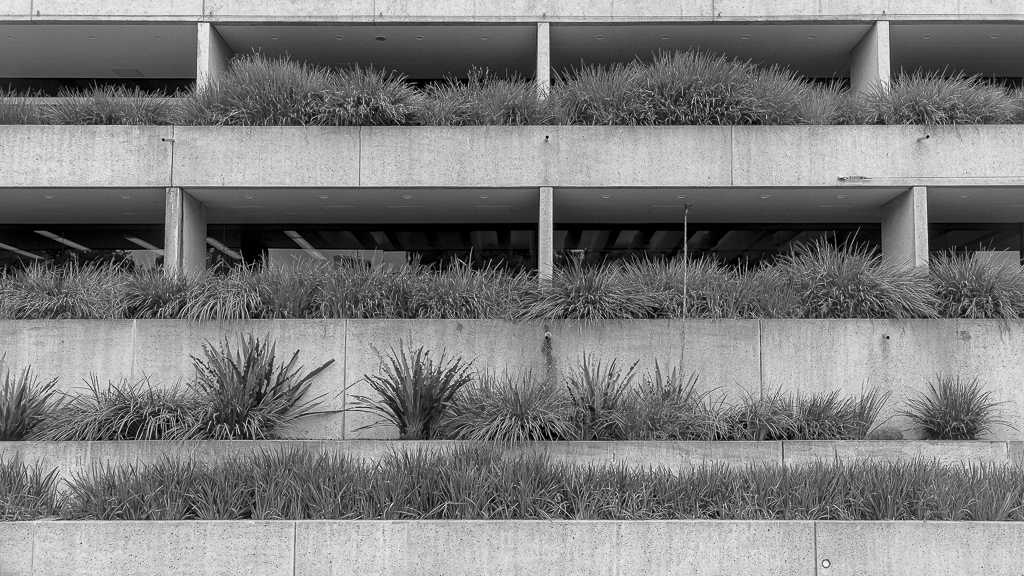
I had hoped to get a last-minute ticket to the Barbican Conservatory, a fabulous indoor garden over and around the concrete terraces that are, for me, the draw of the Barbican. It’s all very dystopian, and fabulous. Sadly, the conservatory was closed the day I visit, a not uncommon occurrence.

I was looking for a certain shot, but couldn’t find anything that worked, though overall I was happy with the images I took. I will never be disappointed by the Barbican to be fair.

The secondary objective today was to visit the Priory Church of St Bartholomew the Great near St Bartholomew Hospital, a 20-minute walk from the Barbican and almost a polar opposite architecturally.

St Bartholomew the Great is one of London’s oldest churches, dating back to 1123 when it was founded by Rahere, a court follower who had a fever dream about building a priory. Part of it survived Henry VIII’s dissolution of the monasteries between 1536 and 1541, though most of the priory was demolished and what remained became a parish church.

Over the years it’s been used as a stable, a blacksmith’s forge, and even a printing works; Benjamin Franklin worked here as a printer. The building retains some remarkable Norman architecture which is quite unusual for London and it’s a fabulous off-the-tourist-trail place to visit.  There is a some great art work here.

In 2006 Damien Hirst installed a life size bronze and gold leaf statue (Exquisite Pain) of St Bartholomew, a disciple of Jesus who was martyred in Armenia soon after the crucifixion. The story was Bartholomew was flayed (skinned) alive; he is the patron saint of surgeons.

Vancouver, Canada

Vancouver, Canada
December 2025.

Visiting family in New Zealand for Christmas was decided fairly last minute and flying halfway around the world from London to New Zealand at Christmas is a very expensive affair. I spent quite some time trying to find a route that wasn’t going to break the bank, force us to spend nine hours lurking in a Chinese airport* or have us make more than one layover stop on the way there and back. We normally fly via an Asian city, but for a change the cheaper option was to transit Vancouver in Canada. There was a slightly cheaper option to take a 9-hour layover, which we elected to do with a plan to leave the airport and briefly visit the city as neither of us have been to Canada.

13 hours after leaving Auckland we arrived at Vancouver Airport. With visa waivers already procured and our suitcase theoretically being loaded onto the flight to London (it was) we whisked through Canada immigration and out of the airport. We had planned on taking five hours in the city, not wanting to put pressure on getting back into the airport for the onward journey, and had sort of looked up a couple of things to do.

The timing wasn’t perfect as it’s winter and the sun sets quite early, so we didn’t have a huge amount of daylight hours to wander about, it wasn’t exactly warm either, not compared to those balmy 25 degree days in Auckland. Luckily, we had planned and dressed for the cold. To be fair it wasn’t a lot colder than London.

Once we’d negotiated the ticket machine (We’d been awake for 24 hours by that time) we took the 25-minute train journey to Waterfront on the edge of Gastown. Gastown is the oldest part of Vancouver, originating in the 1870s and the main area we wanted to walk around. It’s a kinda funky, hipster area, loads of bars and cafes, and a big record shop that I managed to ignore.

It also had the Steam Clock, a seemingly Victorian era relic. However, it was actually built in 1997 to resemble something from the old days. It is powered from steam pipes that run under the  Gastown streets to provide heating to the buildings. It’s not huge but is quite cool and there were a lot of people taking photos.

I was surprised to find quite a few good examples of brutalist architecture, I’d not done any research before we left home, so this was a bonus find and a good reason to come back on some future New Zealand trip; and stay a bit longer than a few hours.

We walked down to the waterfront and took some photos of the snow-capped mountains on the far side of the harbour. As darkness was approaching and the city was lighting up it was a pretty sight; albeit one with large ships and portside infrastructure in the foreground.

With daylight running down and exhaustion setting in we decided to take time out and sit in a bar and drink a cocktail or two. This was a good choice, and the final thing we did before heading back to the airport for the final nine hours back home.

Canada is the 65th country I’ve visited, by my rules at least. leaving the airport and spending a minimum four hours counts as a visit. I’m keen to explore much more of this vast nation and had plans when I was touring the world in 2012 to train-trip from one side to the other. Maybe I will save that for retirement now.

*I have no issue with China or Chinese airports, not that I’ve been to either, I wanted to book tickets as fast as possible as the price was rising daily and just didn’t have time to spend applying for a Chinese visa. If we had an 11-hour layover in Beijing like my son did last time he visited, then I would be wanting to leave the airport for a walk around.