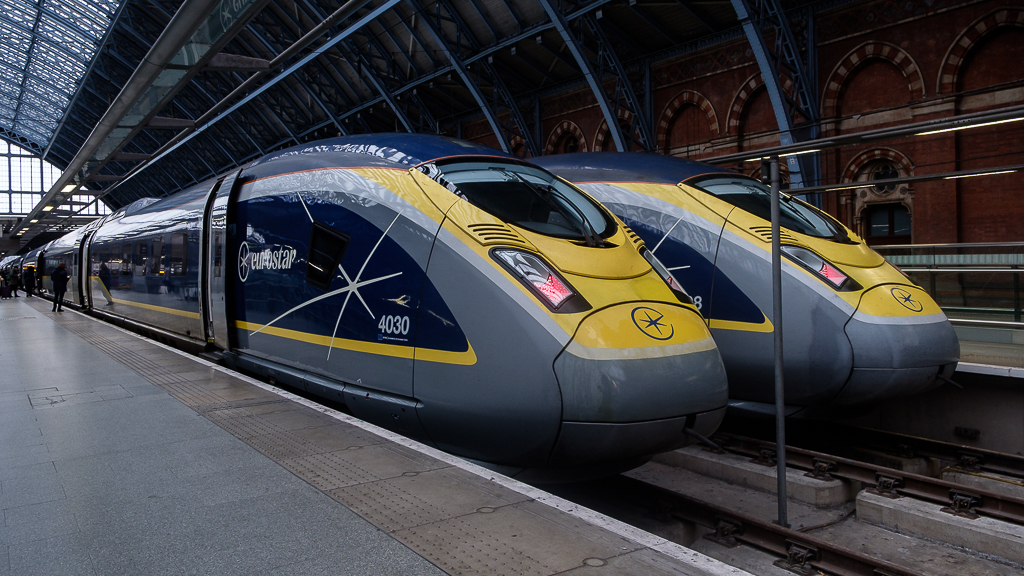
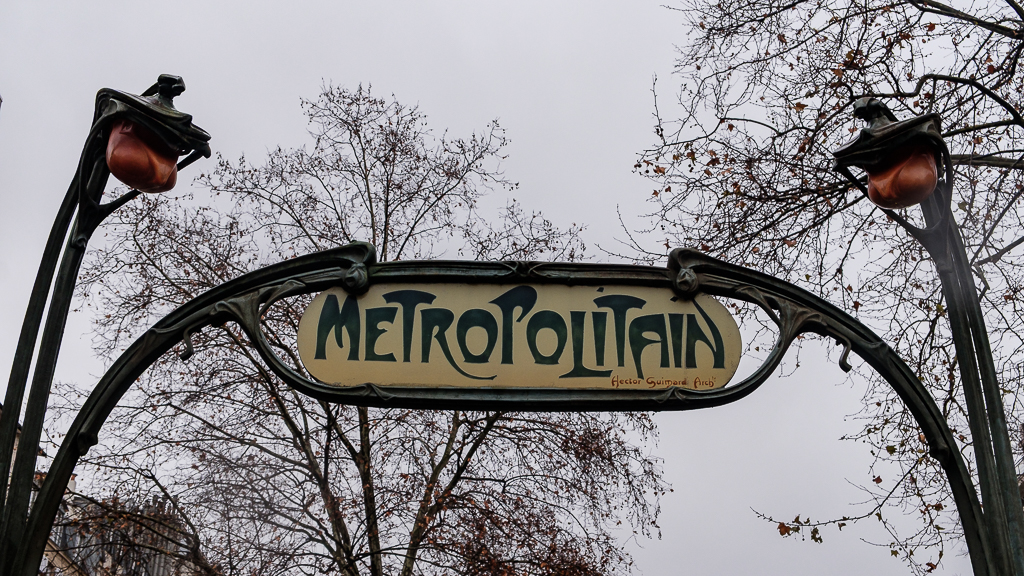
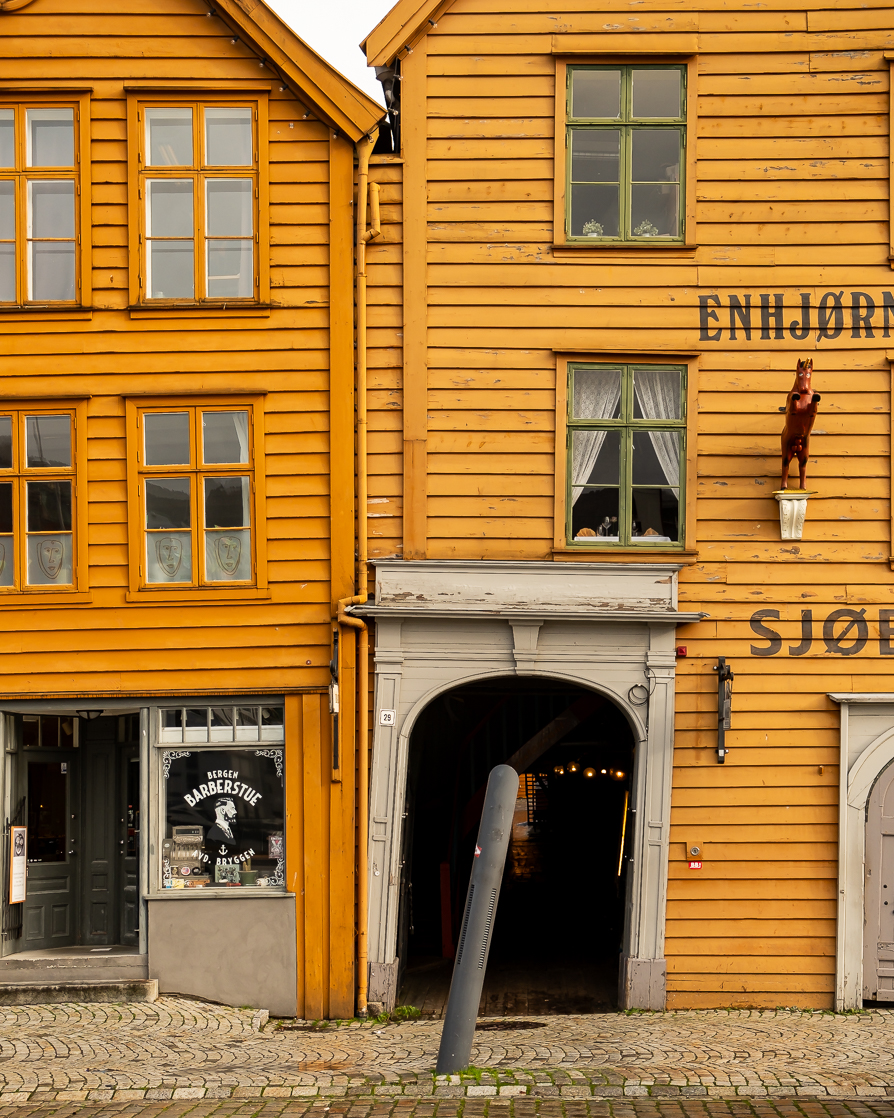
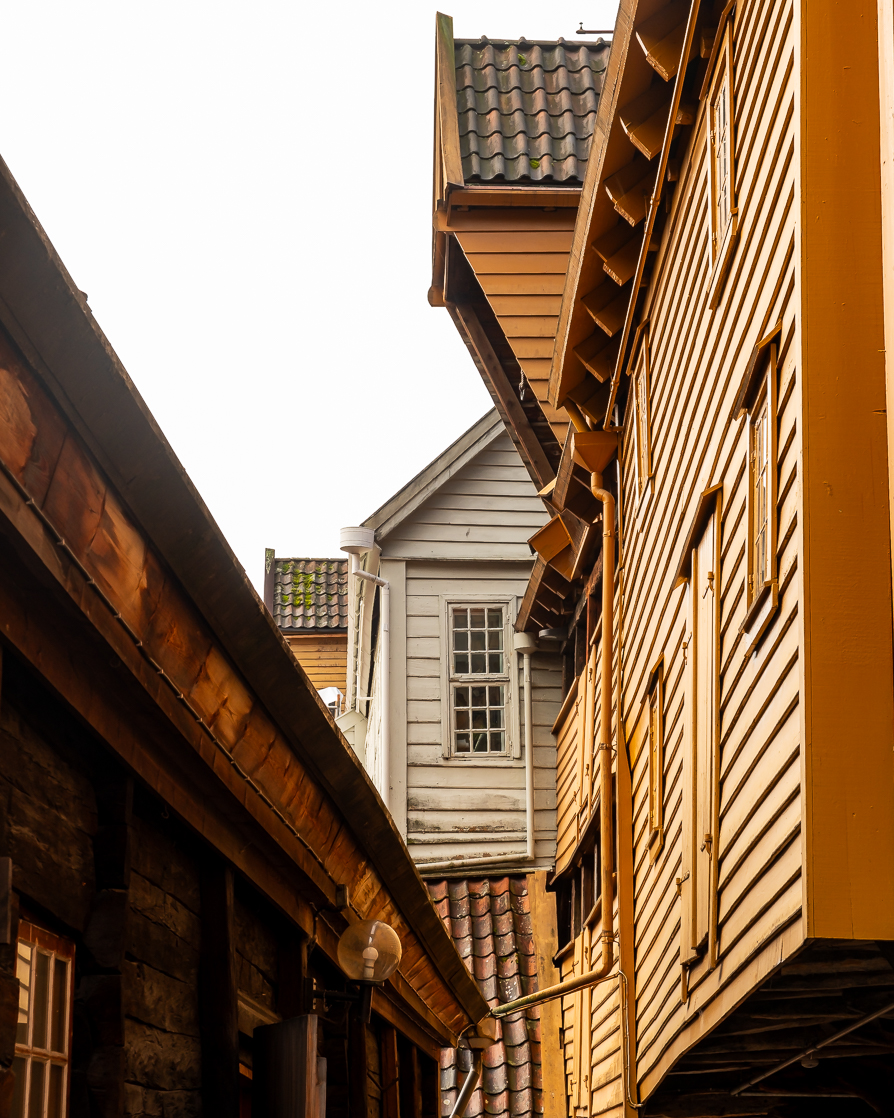
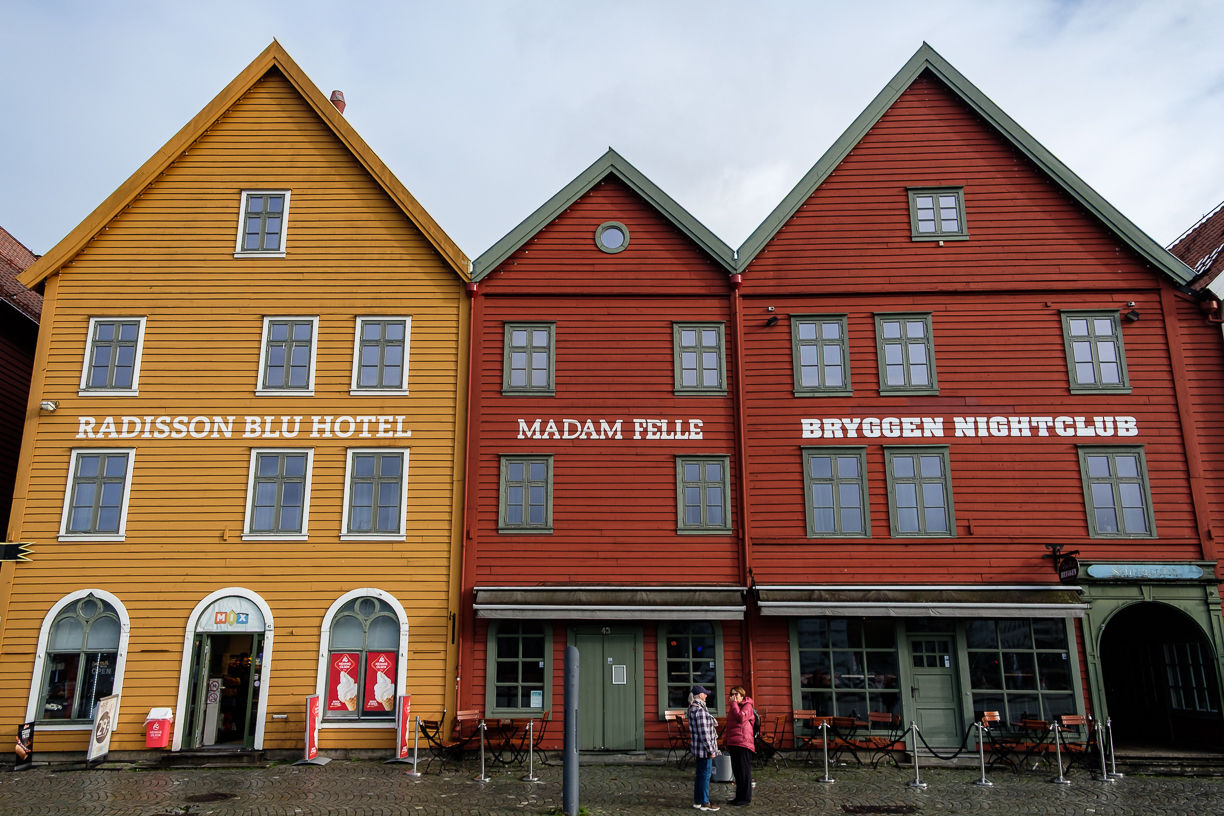
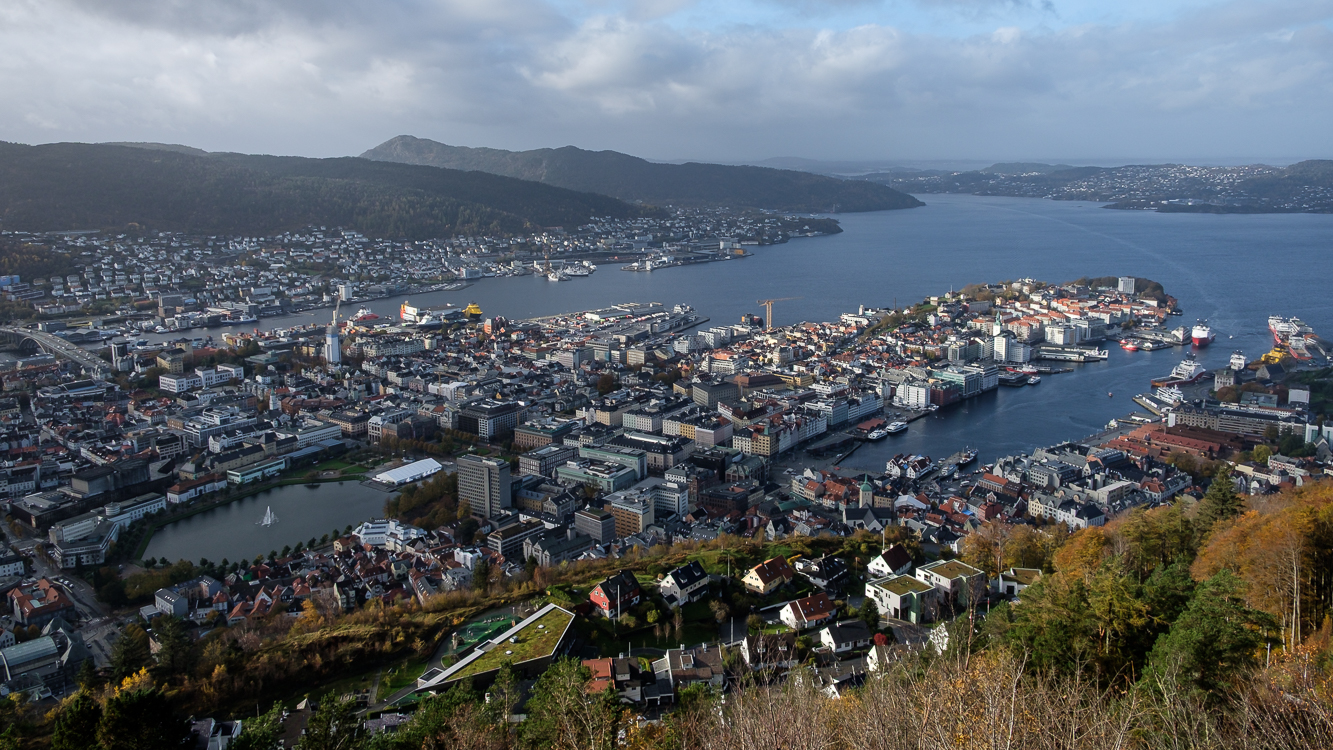
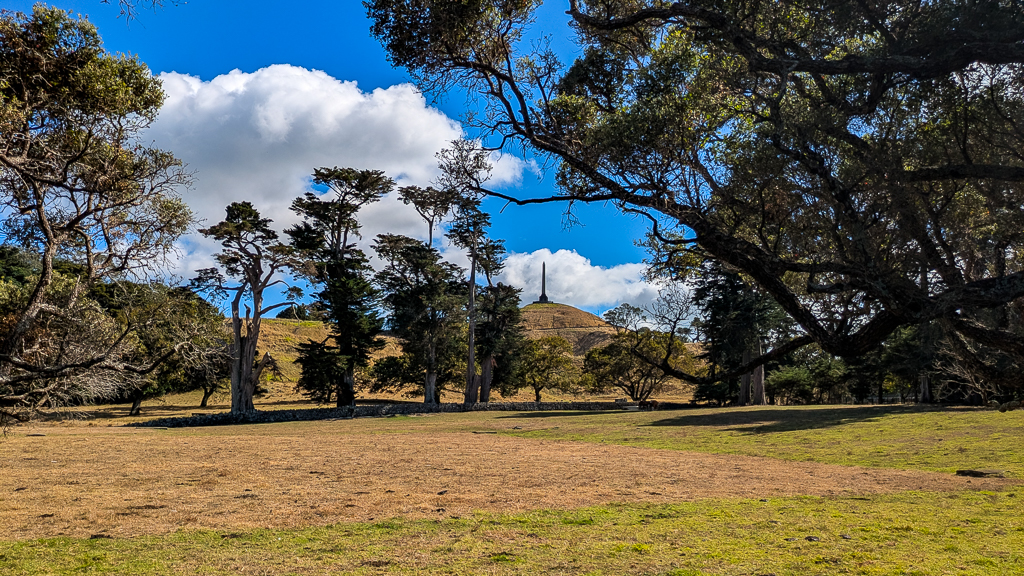
This was our first visit to Bergen, and hopefully it will not be our last. There are so many places on my ‘must visit’ list it seems such a shame to add repeats, but we loved the one full day we spent in Bergen and I’m keen to repeat the train journey that comes next, though in reverse, so we end rather than start in this nice little city.
We arrived late last night, and even though our journey from plane door to the terminal exit was a remarkable ten minutes; made even more impressive as neither of us have EU passports, it was still midnight when we arrived in the central city hotel we’d booked.
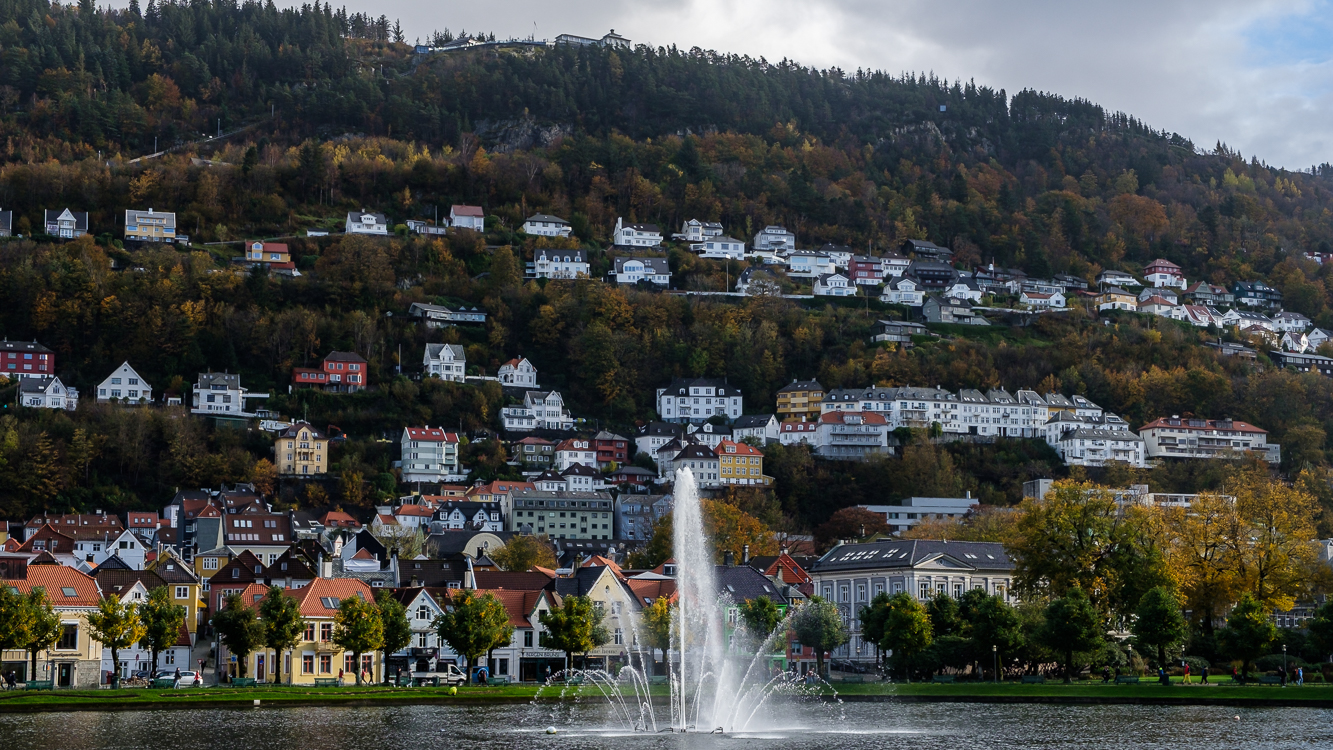
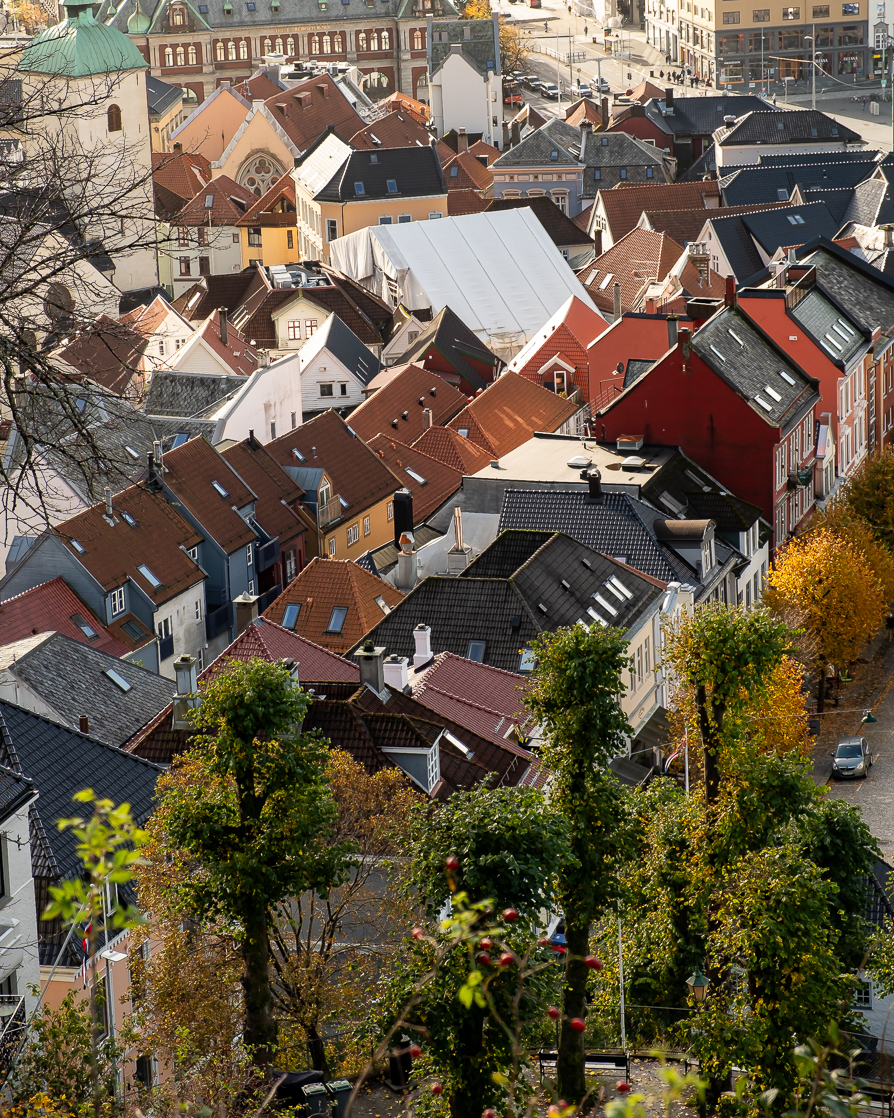
Bergen is a small, narrow city, surrounded by large hills on three sides and a fjord on the fourth. It was sunny when we there, which made it all rather beautiful, especially with the autumnal trees on the hills. The old town’s old buildings make it all very ‘cute’. If a city could ever be cute then Bergen is it.
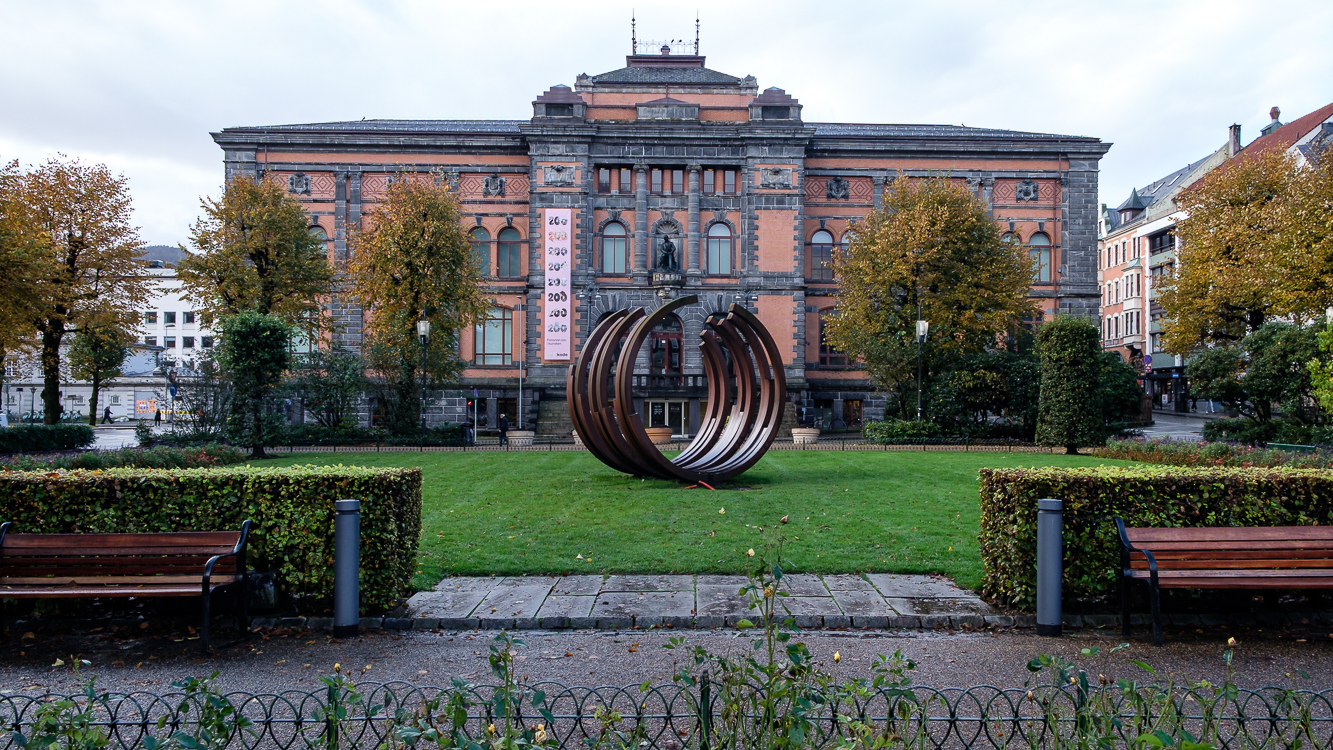
We started our day late and mostly missed the hotel breakfast, which ended remarkably early, don’t stay in business hotels if you want a lie in was the learned lesson. After a rushed half breakfast we went for a mostly aimless walk around the town, making sure we took in the famous port-side Bryggen and its lovely 18th century wooden buildings; old port buildings and homes, now shops and galleries and, as we discovered, at least one very good coffee shop.
After coffee we caught the funicular up the hill to Floyen, we bought a one-way ticket with a plan to walk back down again, one of the best decisions we made on the holiday; and we made some good decisions. The view from the top, over the city and out into the fjord was pretty spectacular. There are also goats and these were very popular with the tourists, I will say that this included me.
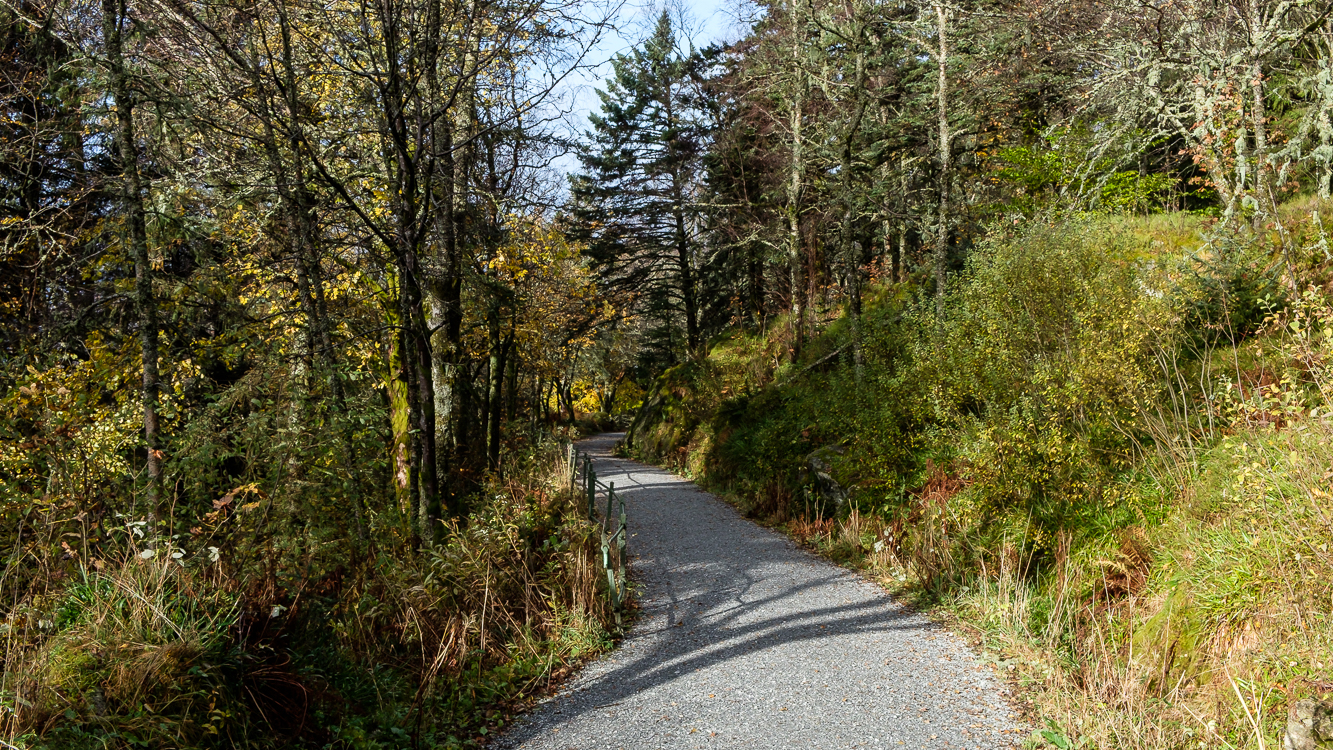
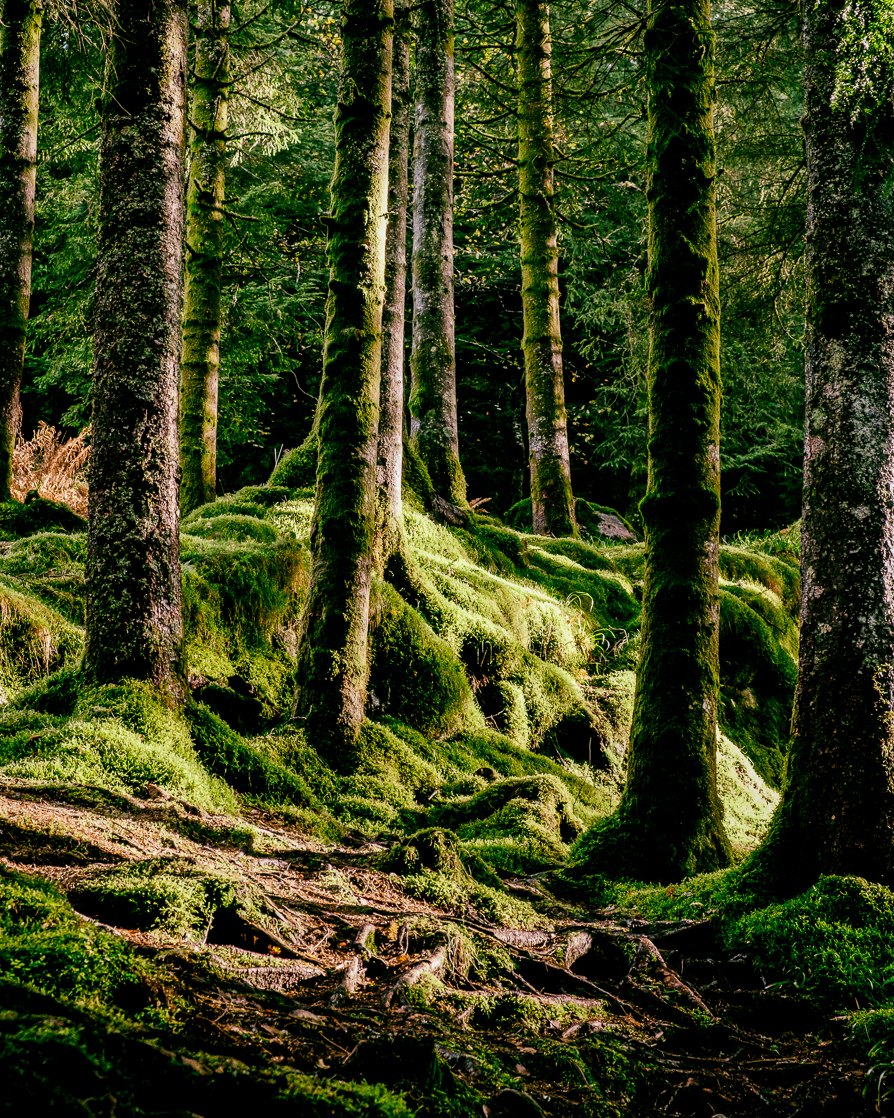
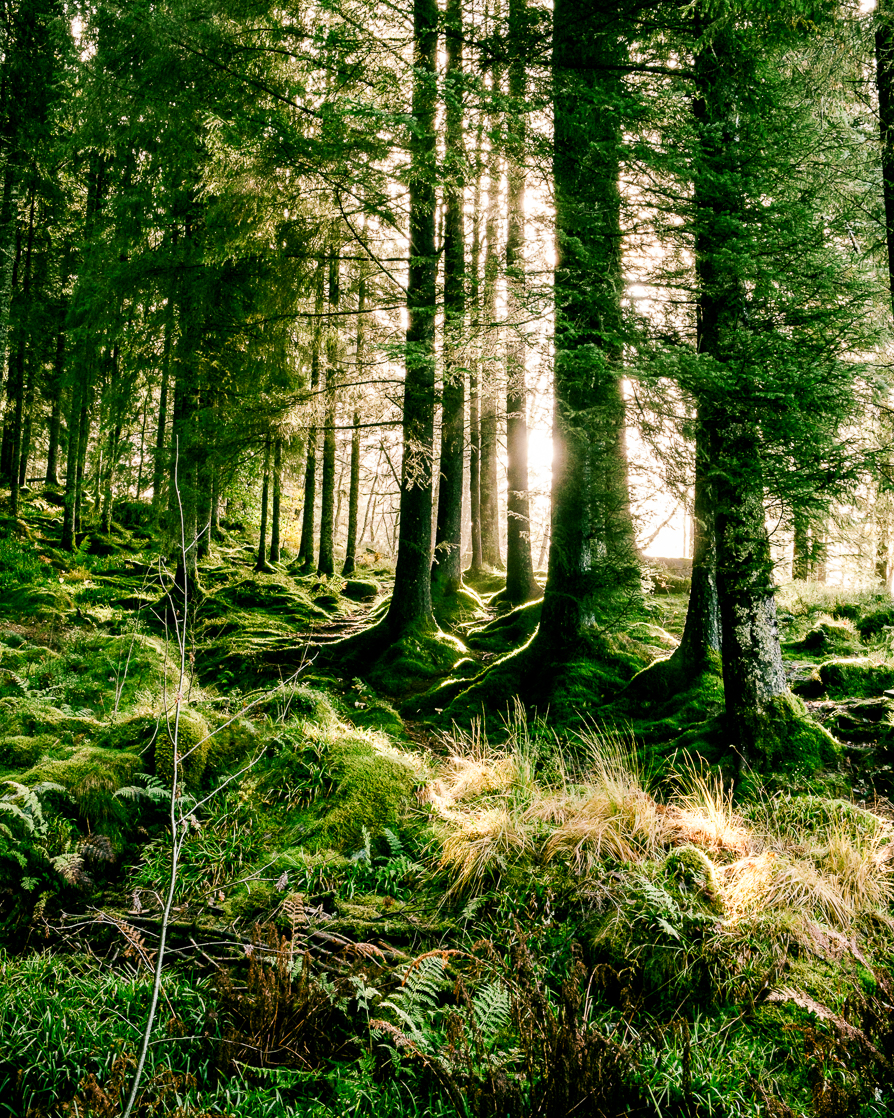
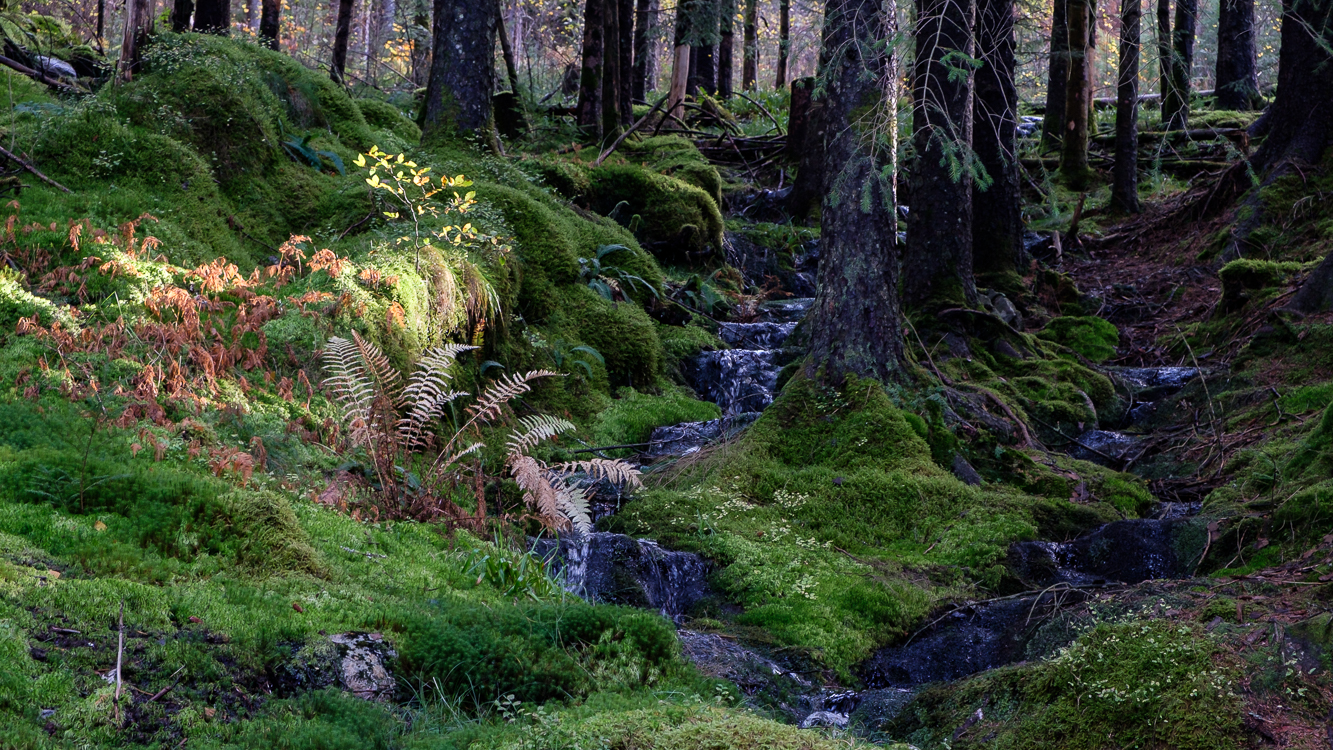
However, the walk back down the meandering footpath was stunning; the trees and the light and the wild range of green, it was a lot to take in, and it was beautiful and if the 3km walk had been twice as long it still would been too short. I took a lot of photos, only some captured just how lovely the walk was.
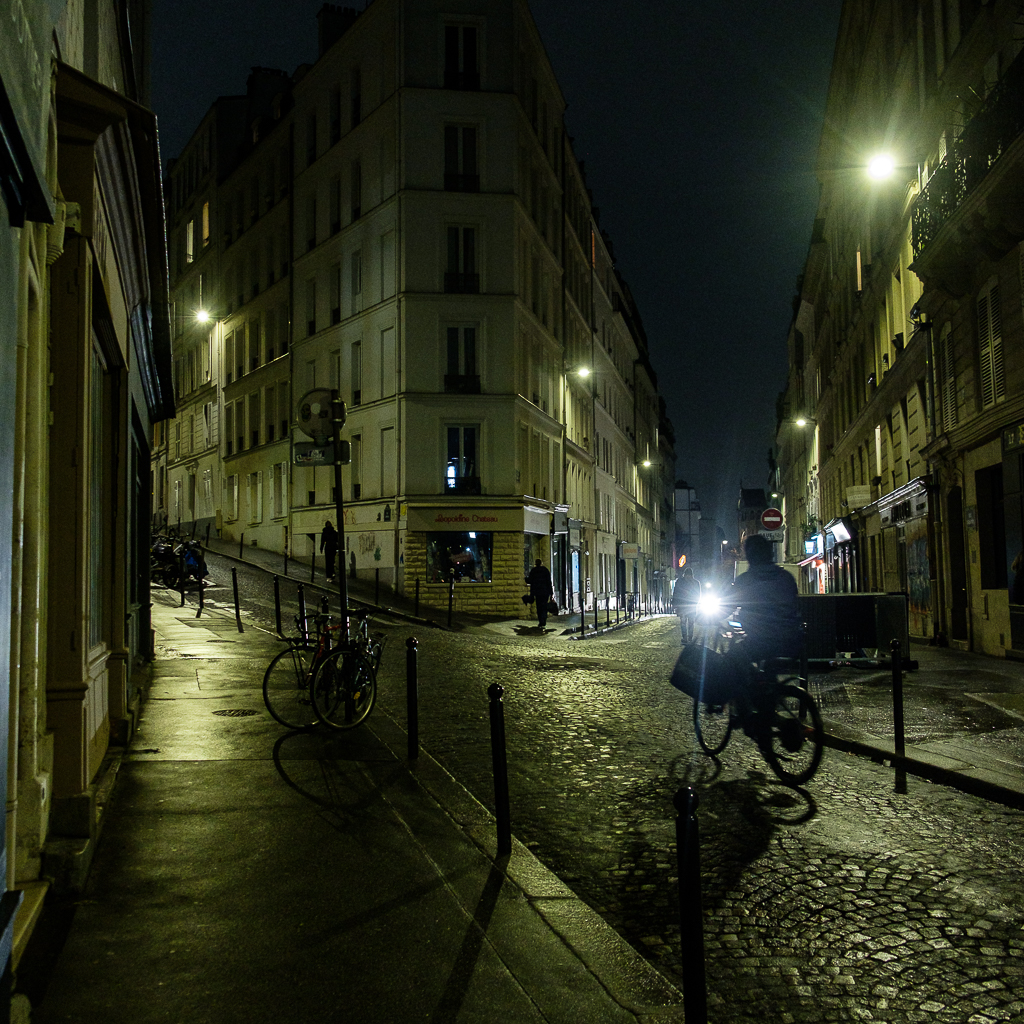
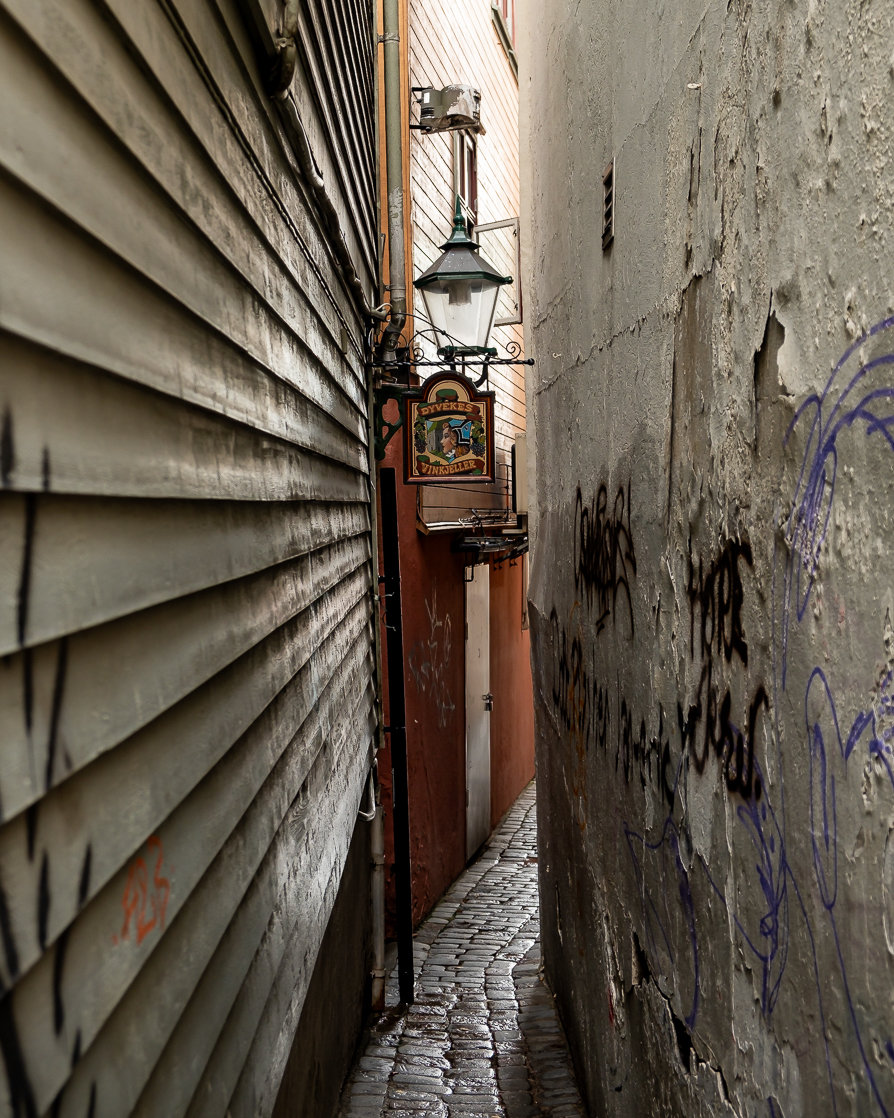
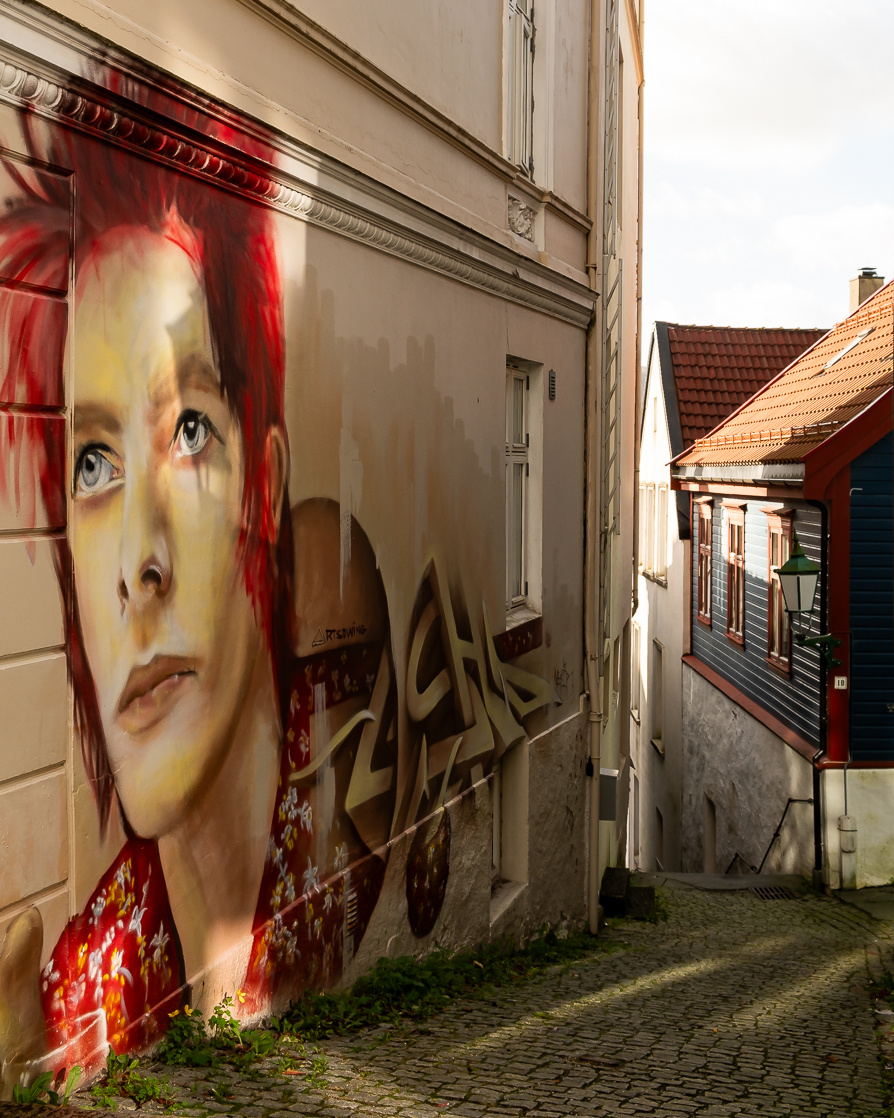
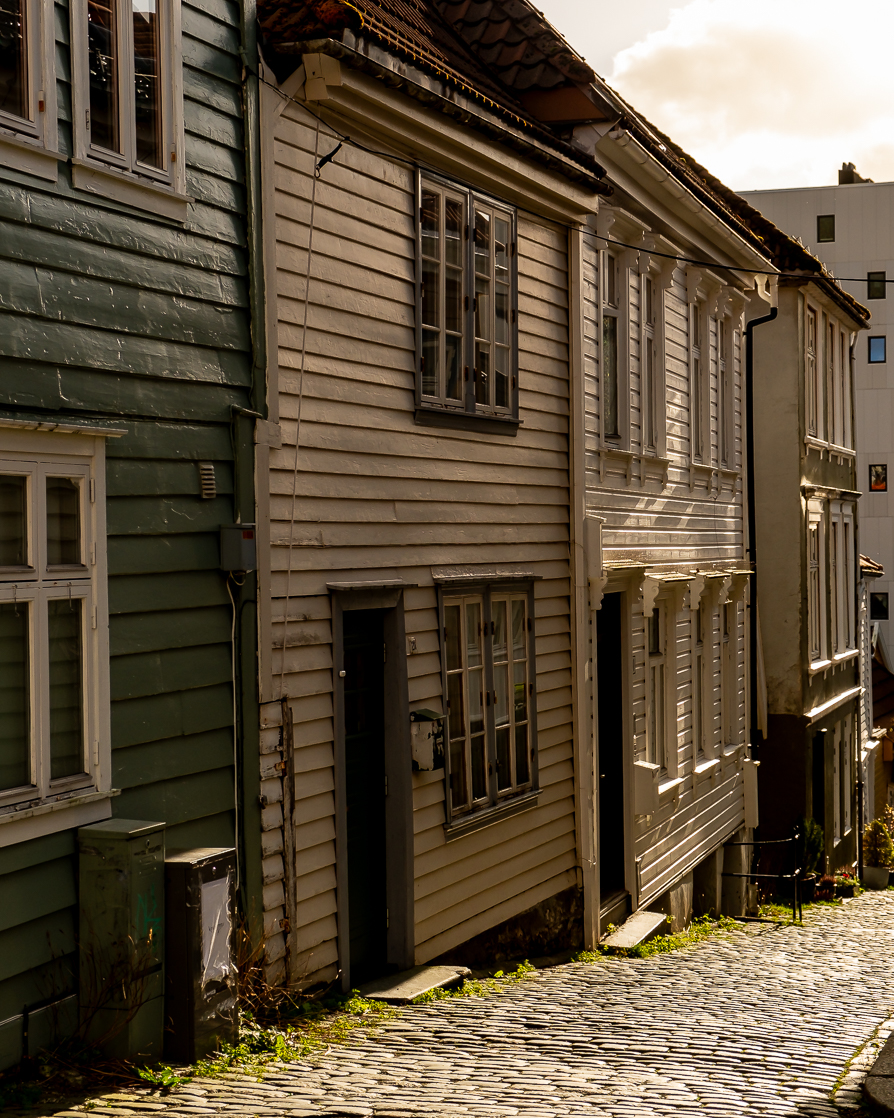
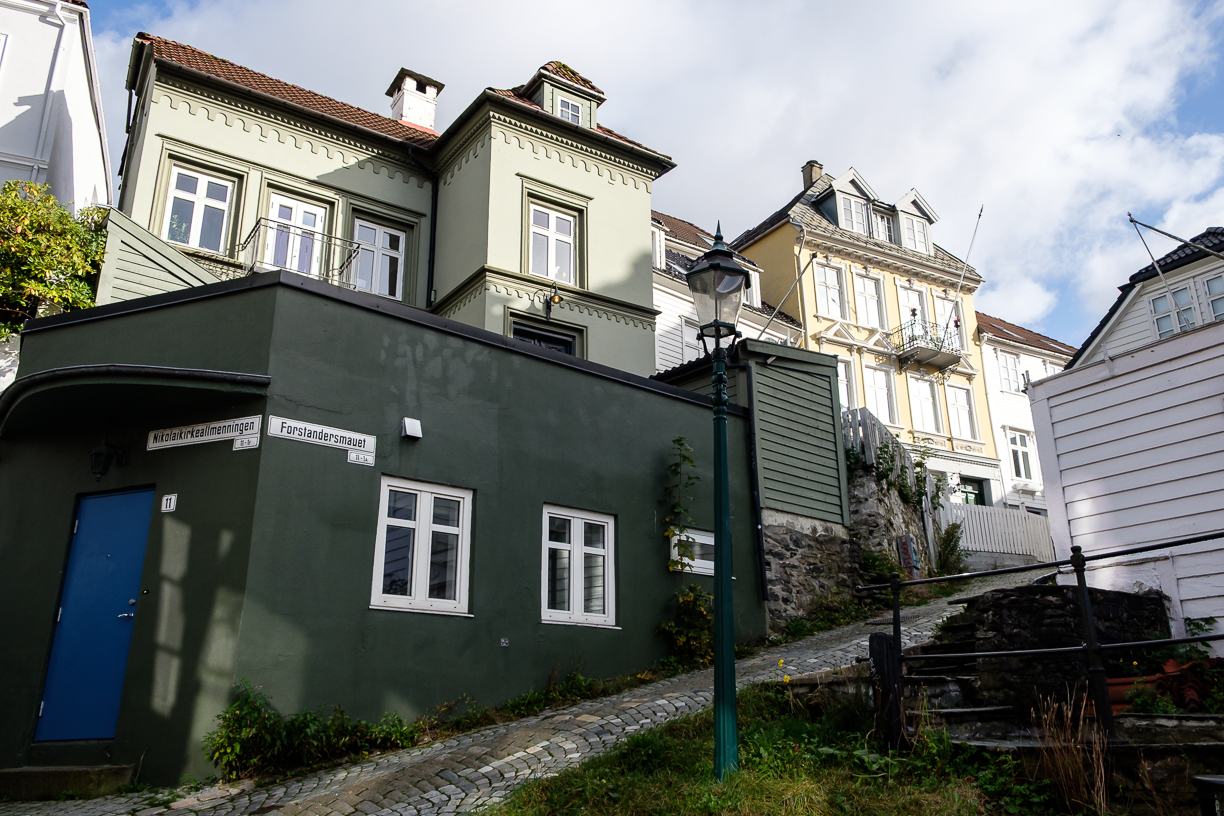
We were snackish by the time we got down the hill and meandered through some steep and narrow cobbled streets, past the old wooden housesat the edge of town. This would have been the highlight if not for the forest walk. I love steep cobbled streets.
Obligatory David Bowie street art
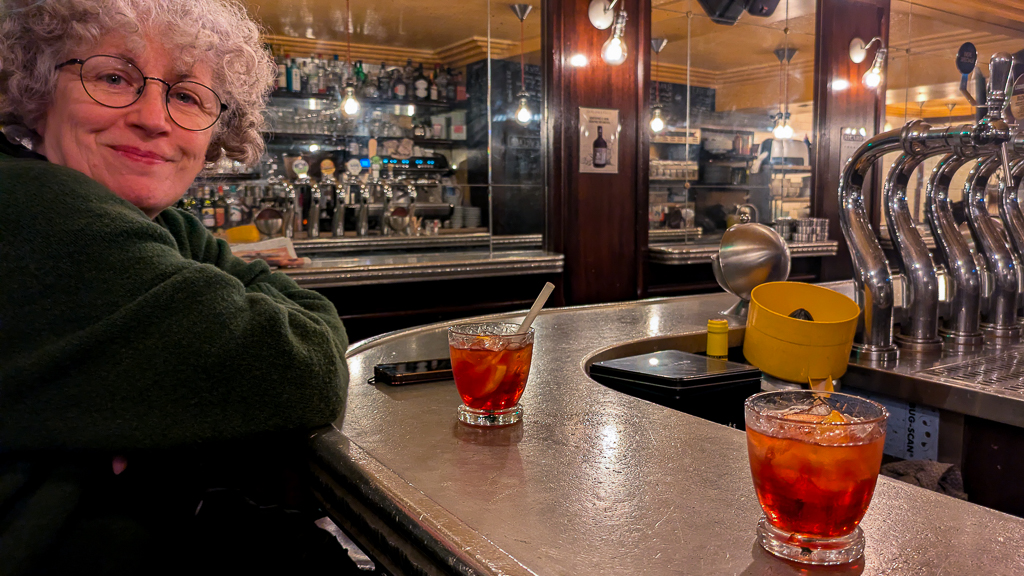
After walking past a few uninspiring looking, extremely touristy, eating establishments I took to the internet and found a small café/bar – Jest, not too far from where we were standing and feeling peckish. Jest was fab. We had a nice lunch, the vibe was friendly, the music was just up our 80s indie alley, and the cocktails we had were superb. Lunch time cocktails are a good thing.
After lunch we walked around the city for another hour, telling ourselves we must come back.
When I was looking for a flight to get me from Brisbane to Delhi, one of the first options that popped up on the flight aggregator I was using (I use three as there are deals to be found) was a 31-hour journey on Cathay Pacific via Hong Kong. Even though it was one of the best price options, short of flying via two or three (other) Chinese cities, I discarded it as the layover in HK was 11 hours. I like to get to my destination as fast as possible. I eventually circled back to that option and when I discovered I can leave HK airport for the duration of the layover, which was almost entirely during daylight hours, I booked the flight.
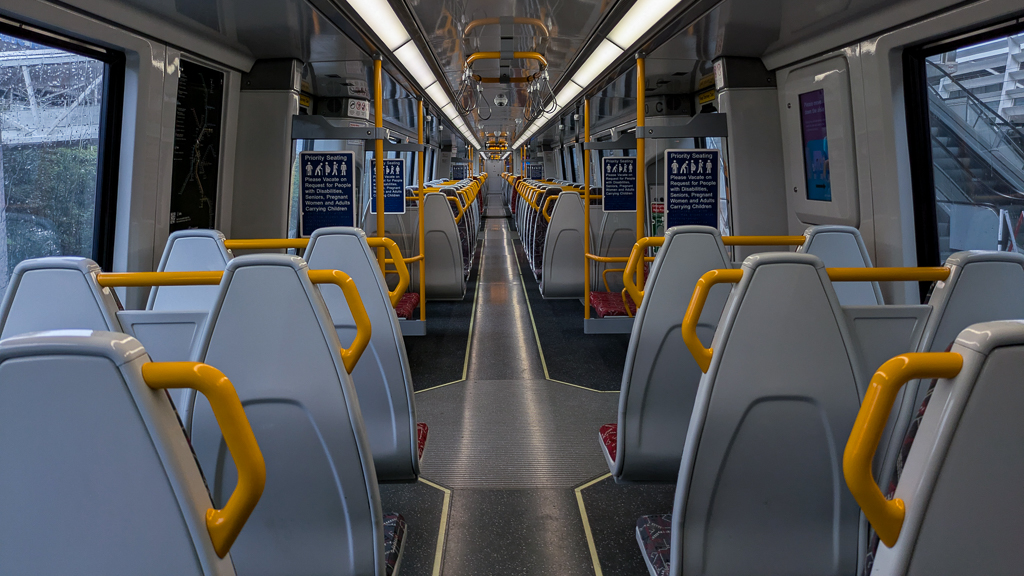
I don’t sleep well on planes and this was a midnight flight out of Brisbane after a full day of family, and all the emotions attached to that. So I was tired when I finally made it through HK immigration into the public side of the airport. It took me a while to find the left luggage counter where I could dump a small bag with a change of clothes, and then I was on the train to the city centre.
I ‘d tried to work out a bit of an itinerary to make the best use of the day I had, taking in a couple of HK’s limited number of brutalist buildings, but it all seemed too difficult. I ended up with no plan, which kind of worked. At least there was no stress with trying to do everything.
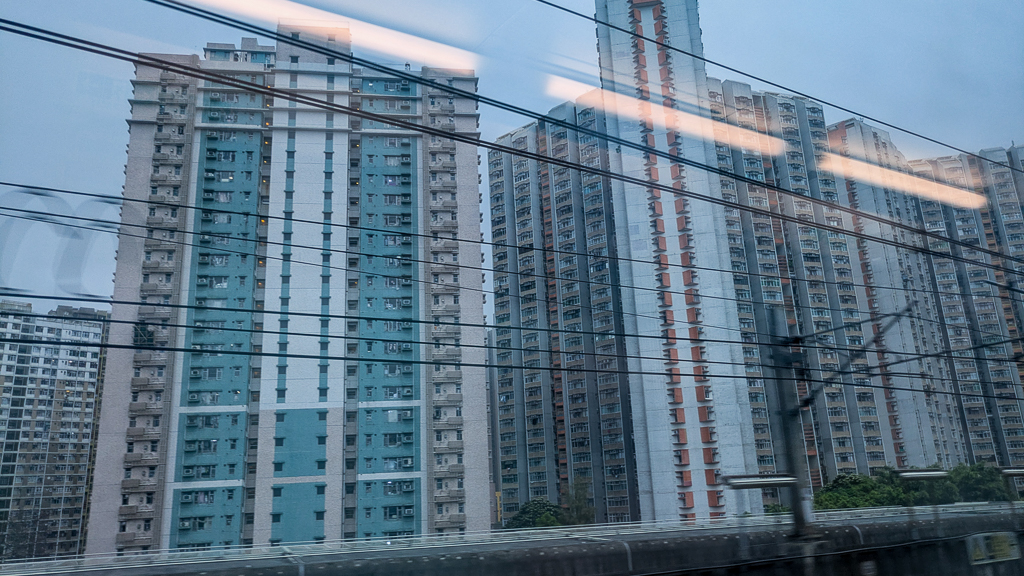
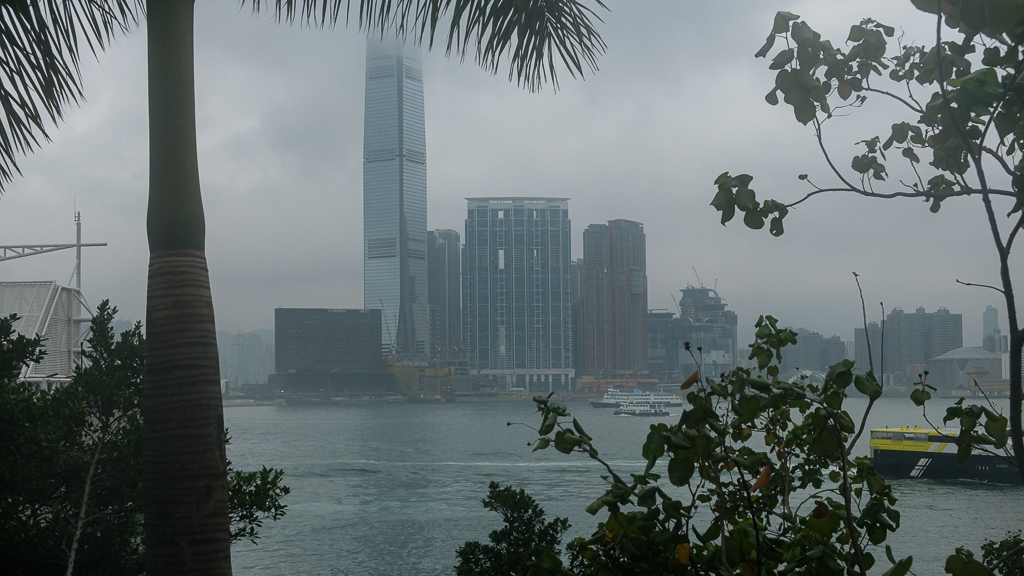
I love travelling from the airport on a train, especially in modern Asian cities, the high rises are just so BIG and so everywhere, so alien.
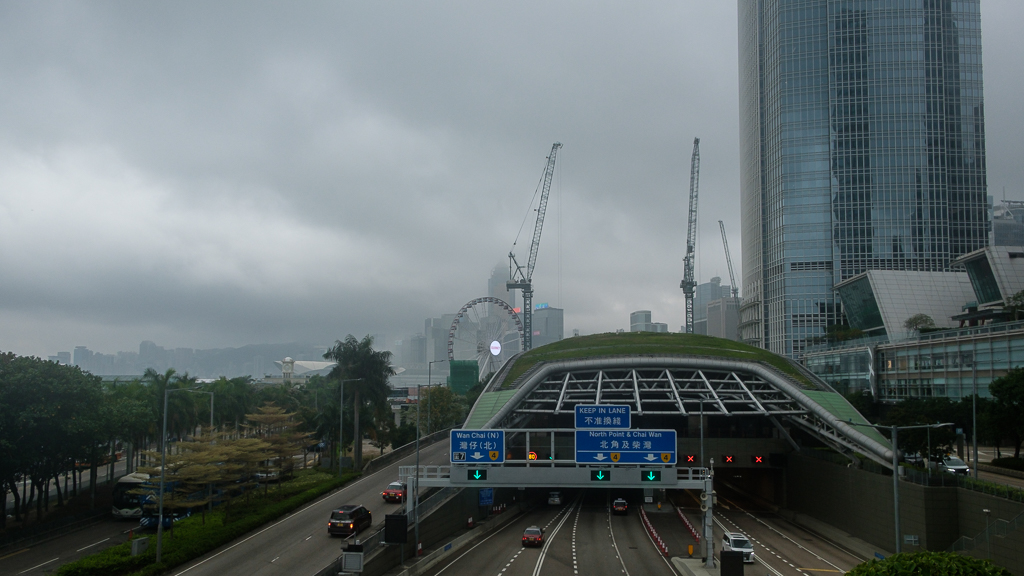
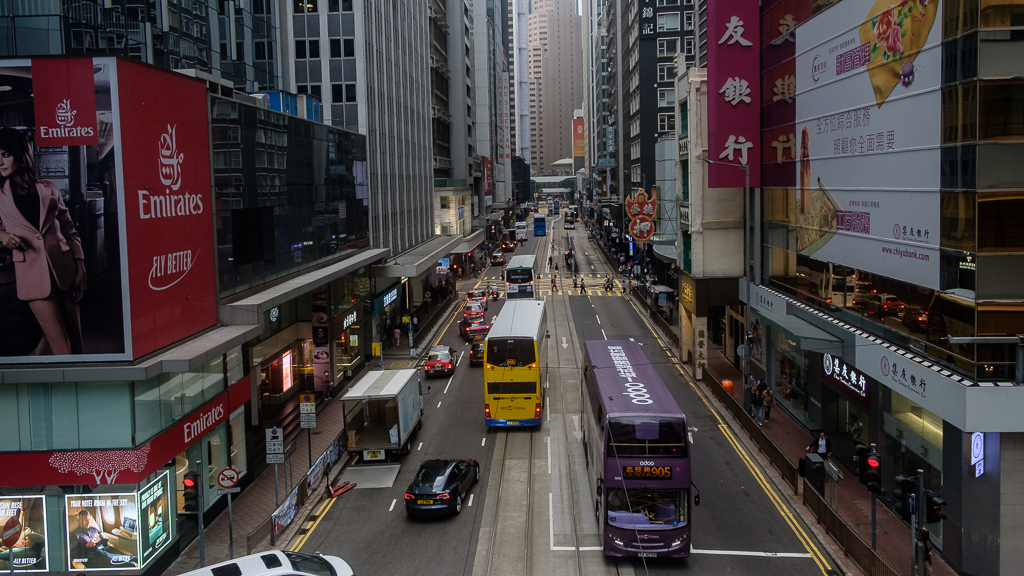
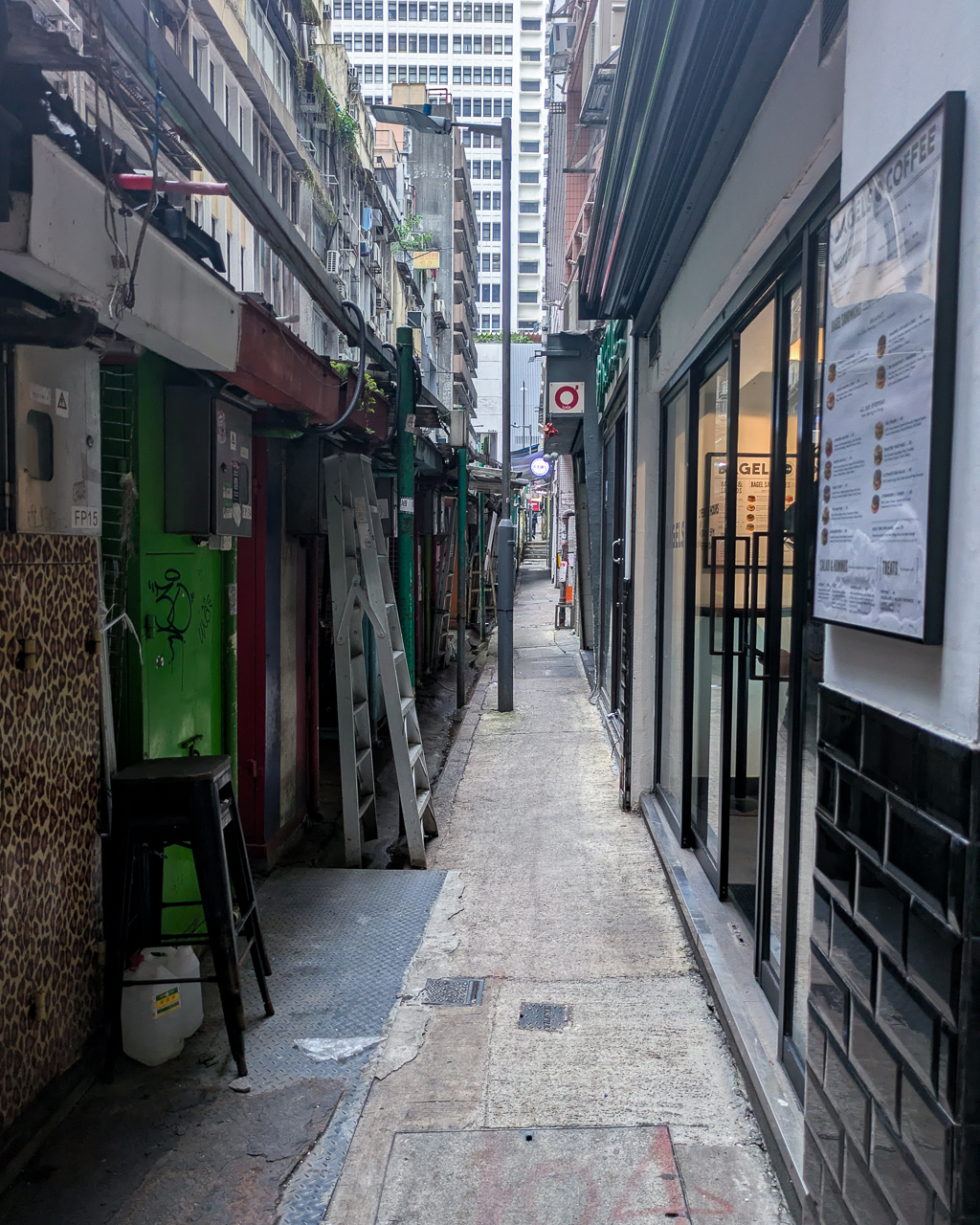
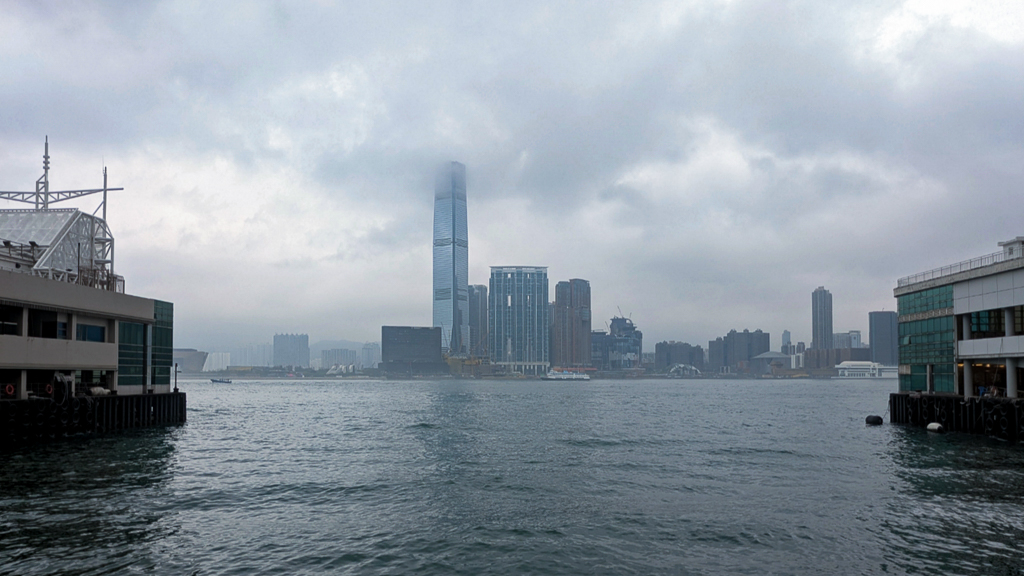
I took the train to Central and walked around there for a bit. It was just coming into morning rush hour, though it was reasonably quiet, certainly not as manic as I expected. I ended up in some form of mega mall/office block complex and spent way too much time walking in circles trying to find somewhere to have coffee and kick my sleep-and-wine-addled brain into focus while I planned what to do with the day.
Google Maps wasn’t helpful at all, Hong Kong is built on layers and the maps app is flat. Just because Starbucks appears a hundred yards away on the map it may, in reality, be three flights up or 20 down. As I said, my brain was addled. I hate Starbucks, but it was where I ended up as it was all I could find.
I was hit by a monster wave of humidity when I finally made it out of the mega mall/office complex. I was expecting it, and had been slightly prepared after the warm and damp day in Brisbane yesterday. Still, it wasn’t nice. As soon as I was outside, the sweat just poured out of me. Locals were wearing suits and looking cool and relaxed. I looked exactly like what I was – a middle aged, saggy, pallid tourist who’d had little sleep.
I had expected to see fewer westerners than previous visits after the clampdown on dissent and a firmer grasp on affairs by the Chinese government over the last few years. I thought that many would have returned home, but that didn’t seem to be the case. It was very cosmopolitan in the areas of the city centre I roamed. It’s an economic powerhouse I guess, and I imagine there are some good jobs here.
Back in the mall I grabbed some brunch (I’ve no idea how I had room for food after two good meals on the plane) then caught the train out to Tung Chung to see the Big Buddha at Ngong Ping. I had to buy something because the ticket machine for the train only took cash, and only small bills. The ATM only provided 100 dollar bills so I had to get food to have change to buy a ticket. Hong Kong isn’t as modern as it appears on the surface.
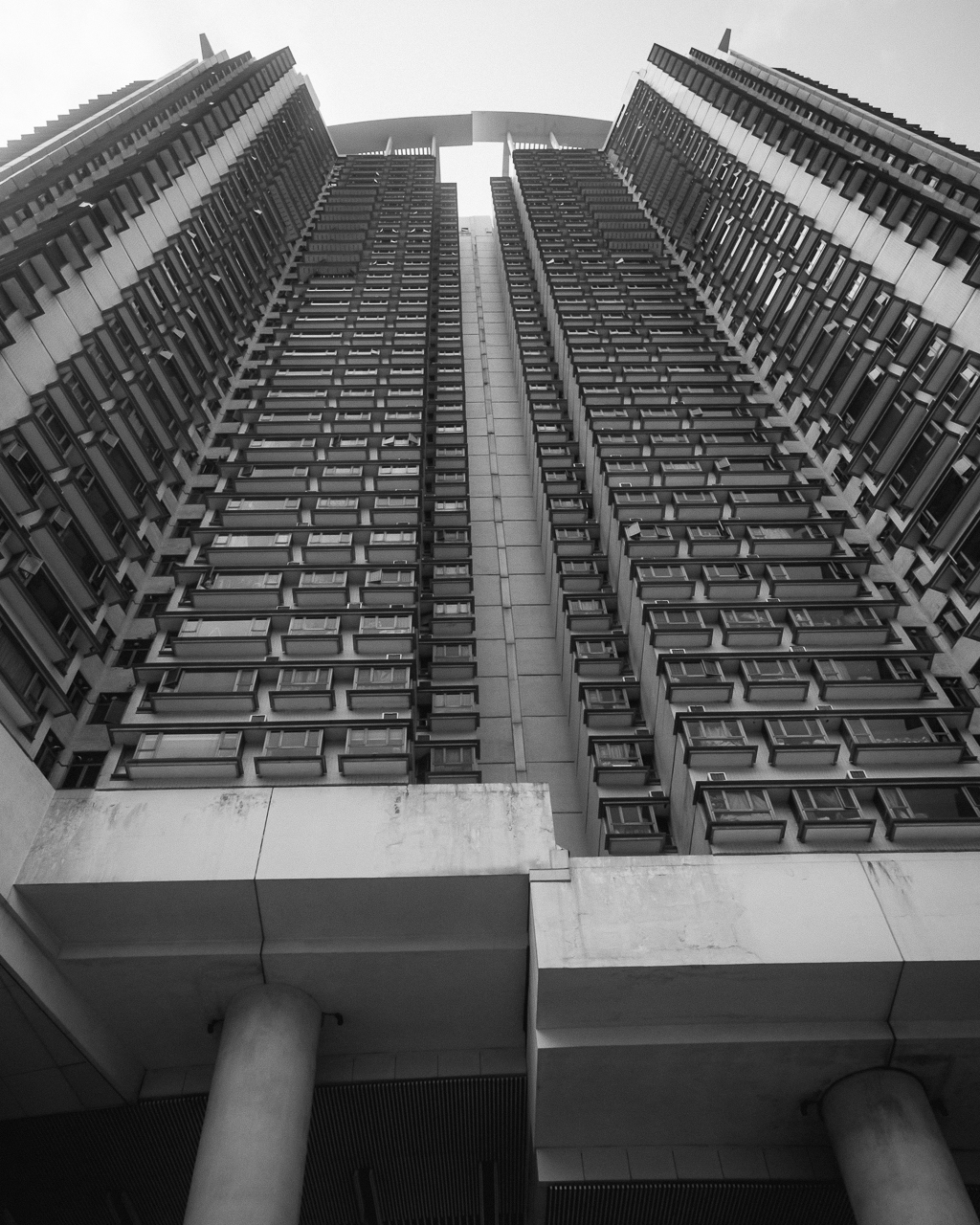
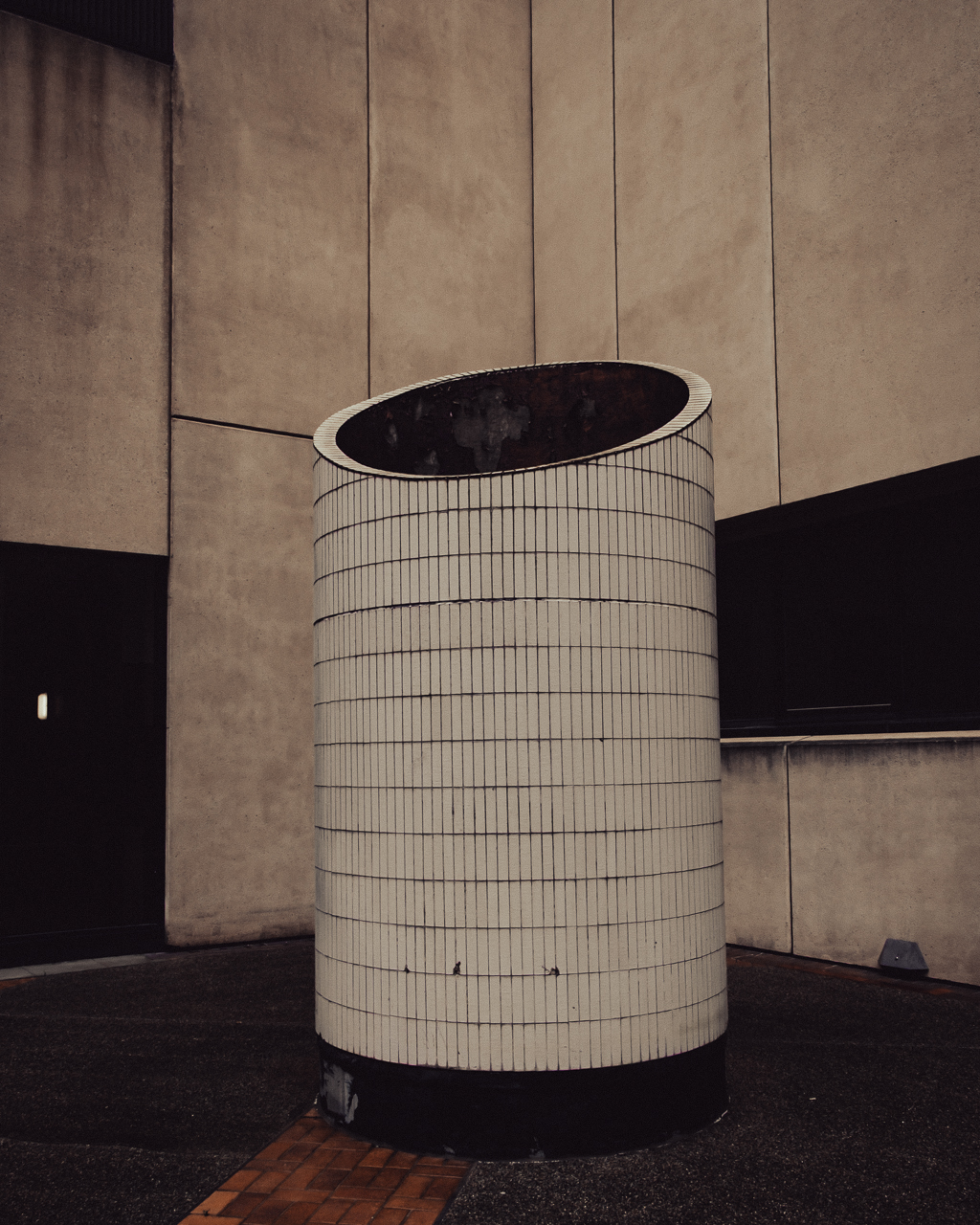
There was an example of HK modernist architecture right outside the station in Tung Chung.
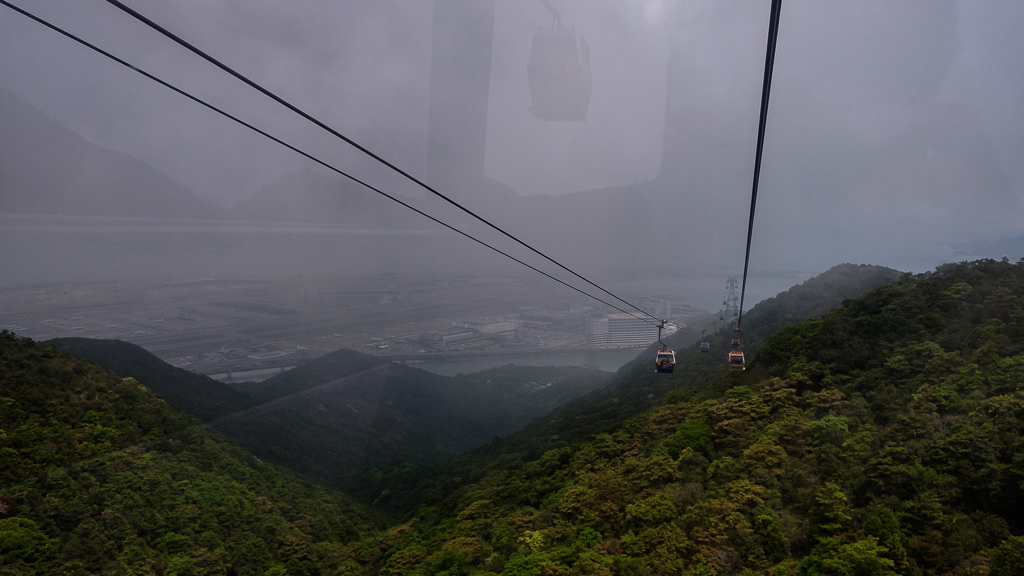
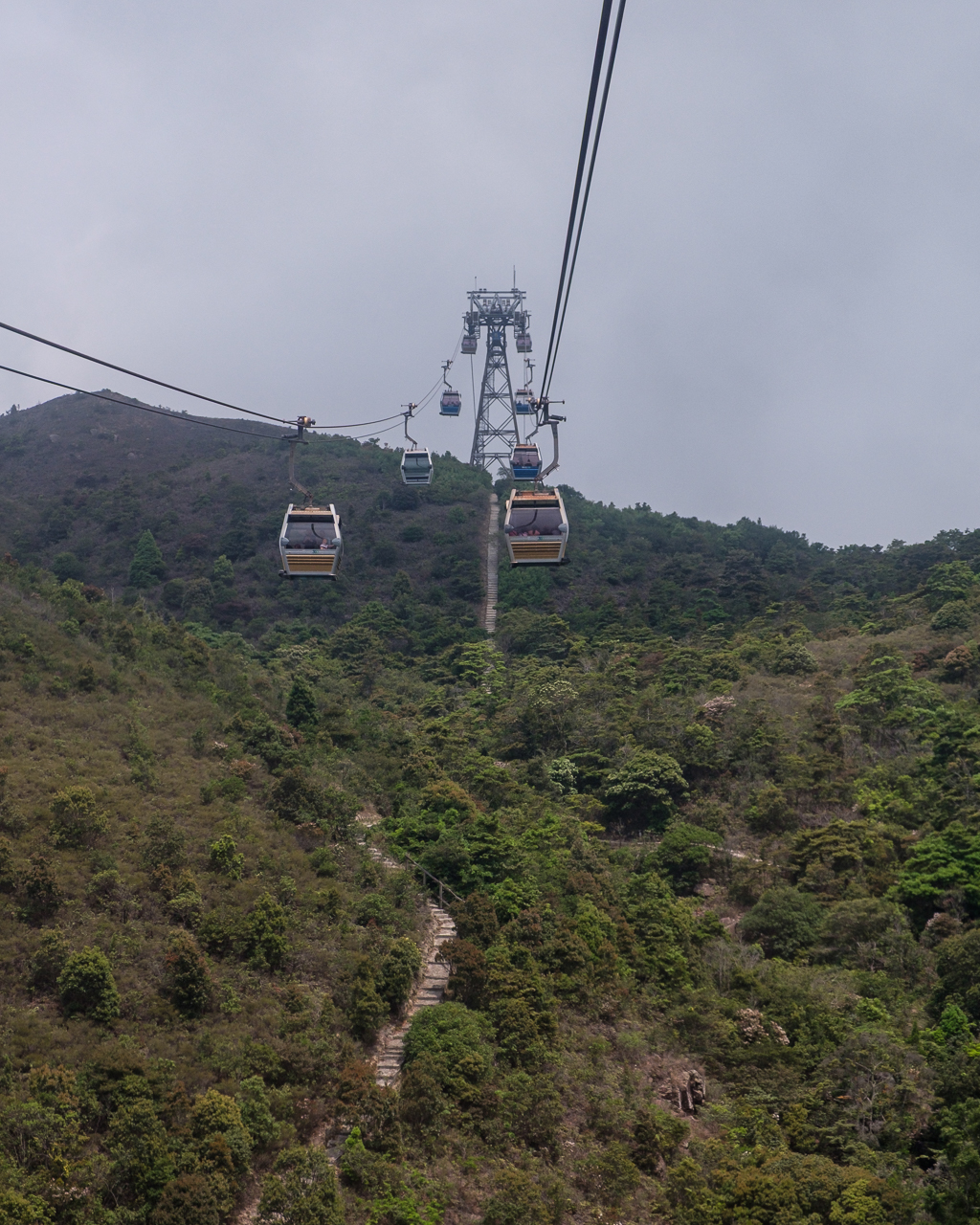
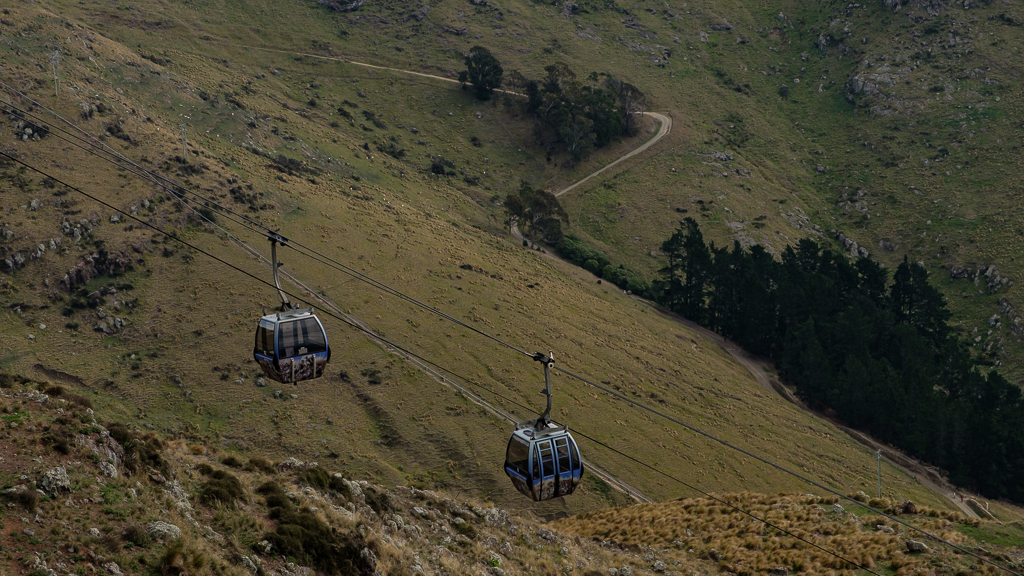
To get to Ngong Ping, in the middle of the Lantau Island hills, from Tung Chung you can get a very long and mostly pleasant cable car. What I had stupidly failed to think about was that hundreds of others would want to take a long and enjoyable cable car ride as well. There was a long queue and I was getting a little anxious as it slowly dragged itself towards the cable cars. I ended up having to rush a bit when I did get to the top to ensure I got back to the airport in time for my flight.
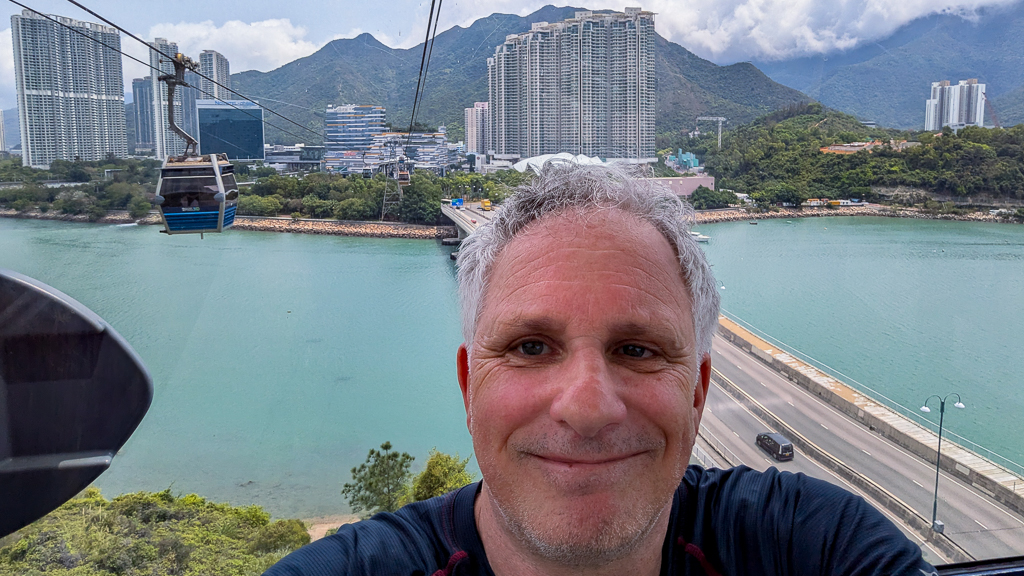
On the cable car ride up I shared the car with a family group with a very busy dad who just didn’t stay still for more than five minutes. This didn’t help with the anxiety I had about being hundreds of feet above jungle in a small swaying glass container. Though he is in my favourite photo from the day, so I shouldn’t complain.
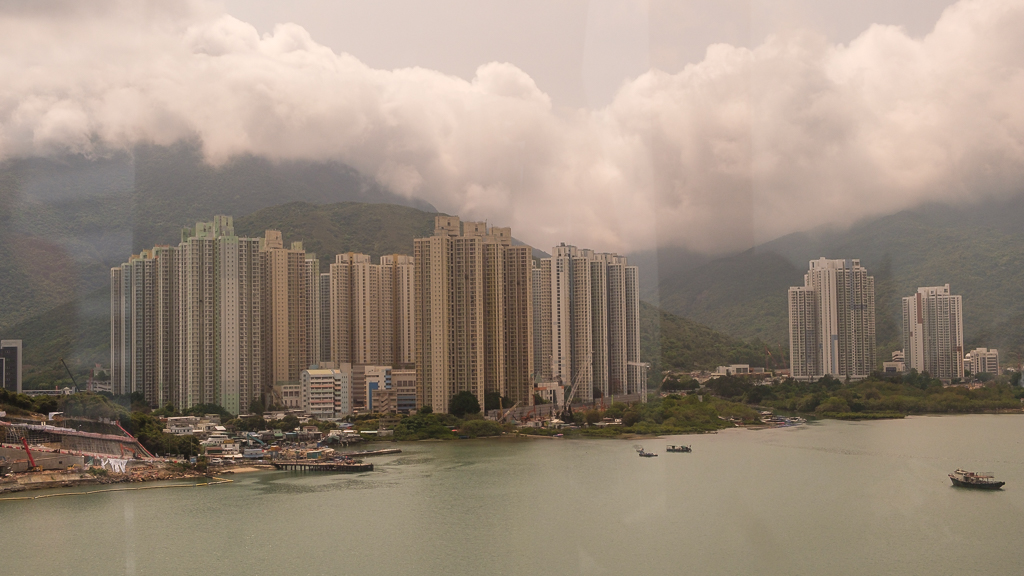
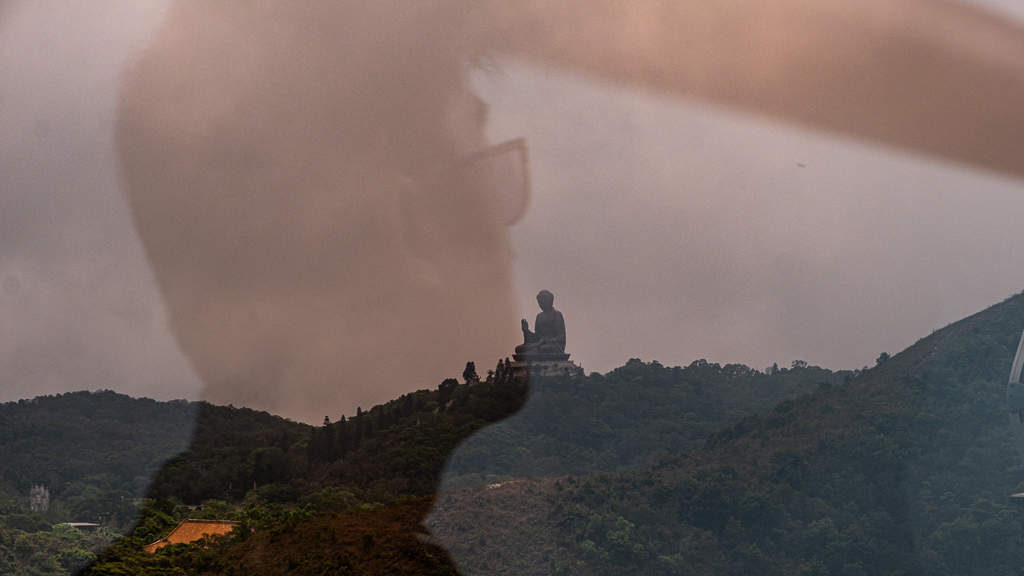
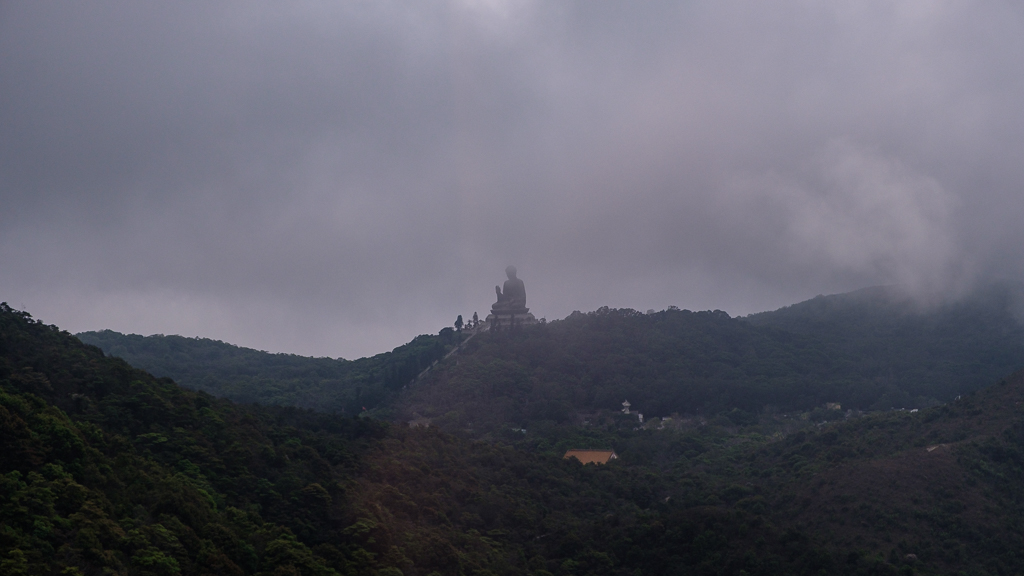
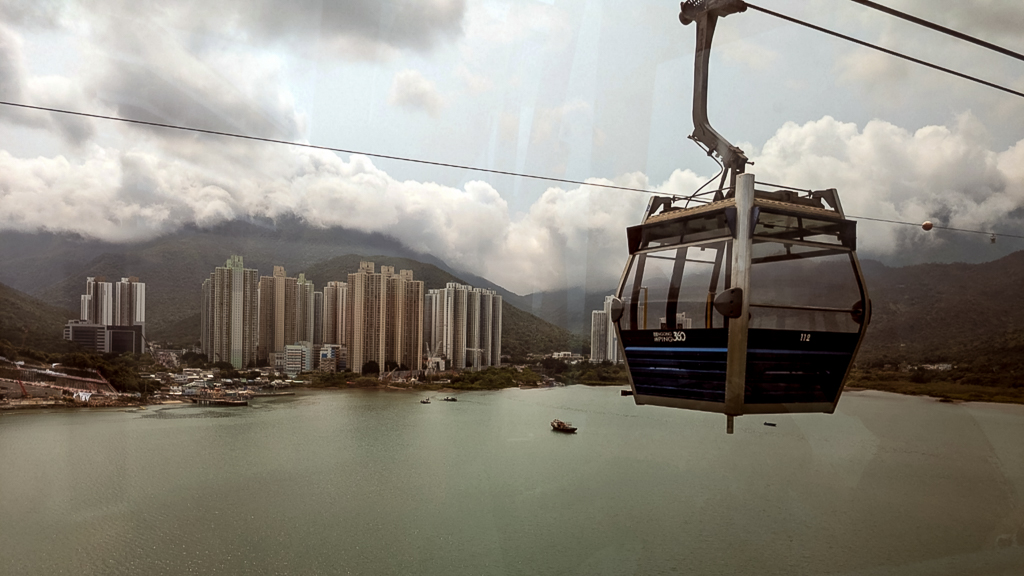
The journey takes about 20 minutes and we pass over a small harbour and up and down some quite steep jungle-covered hills. At times it was quite misty and everyone in my cab was trying to be first to see the Buddha through the murk.
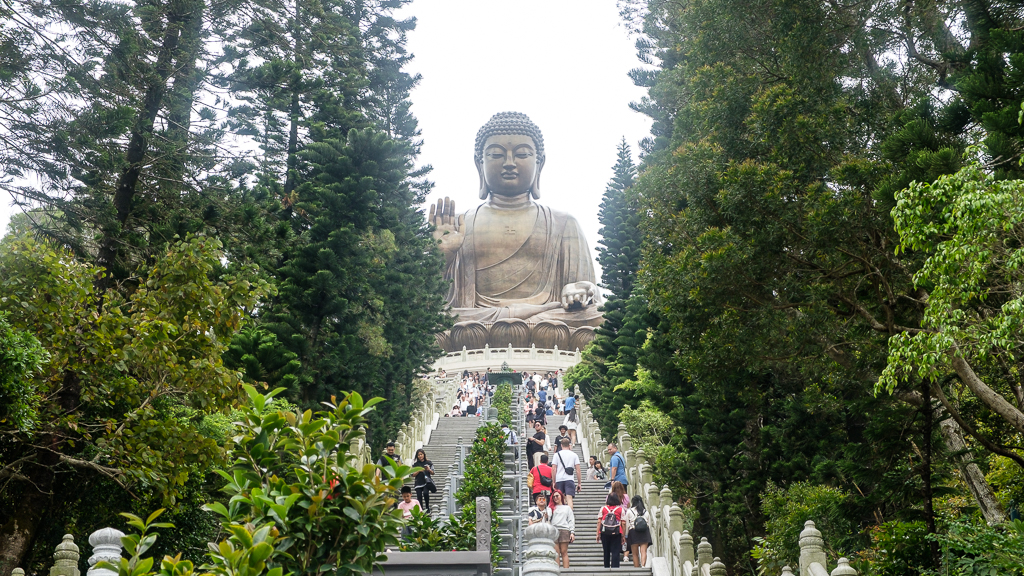
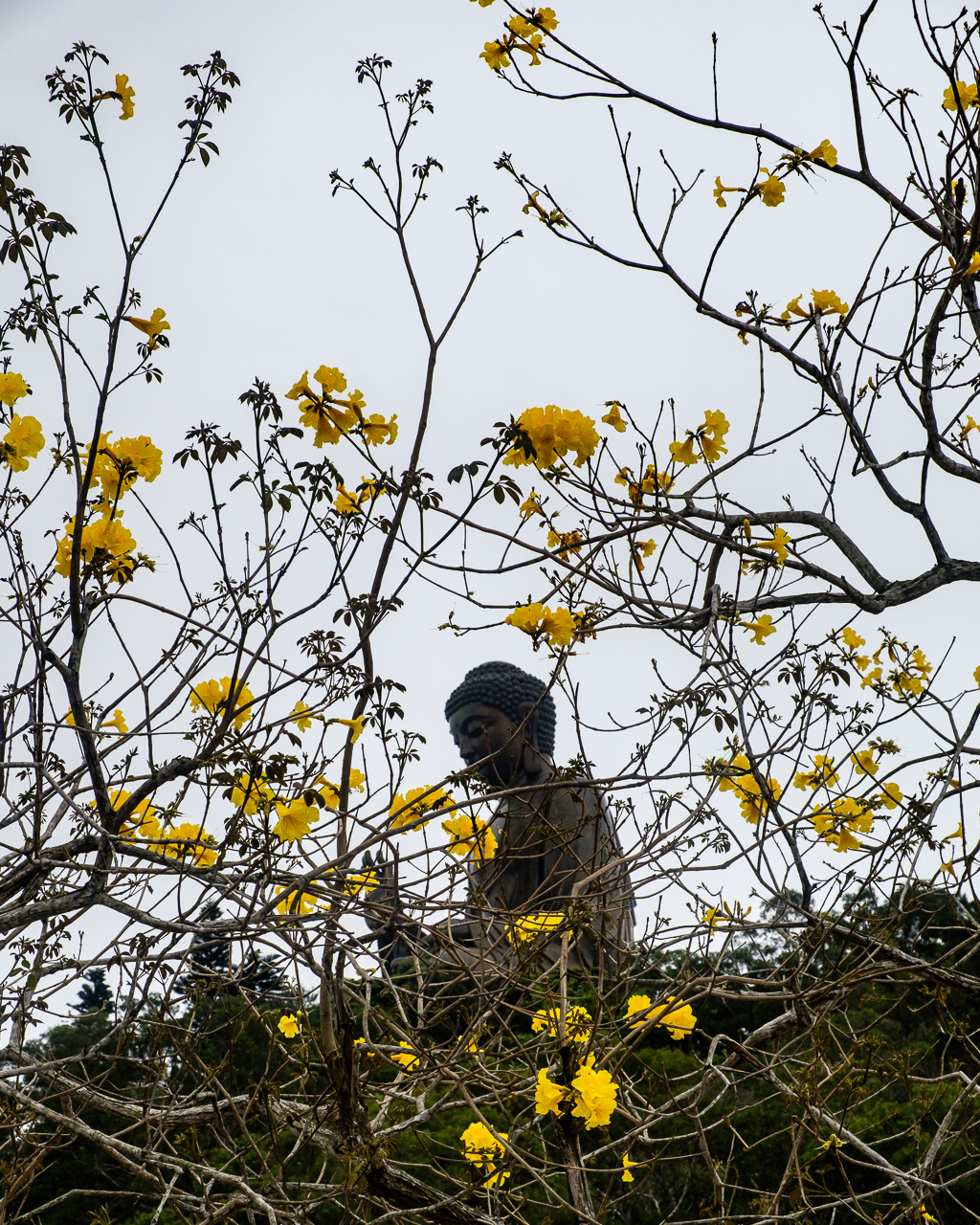
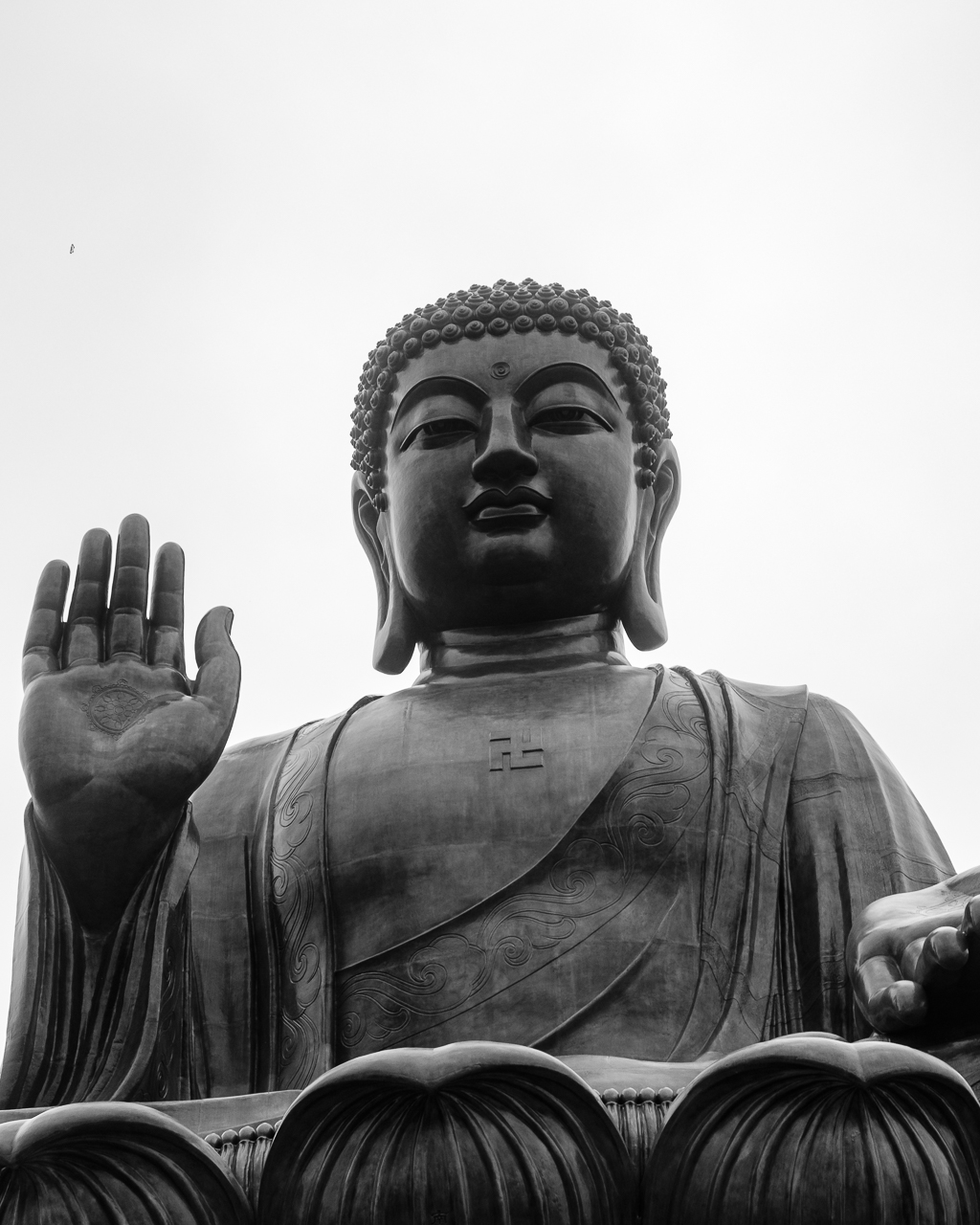
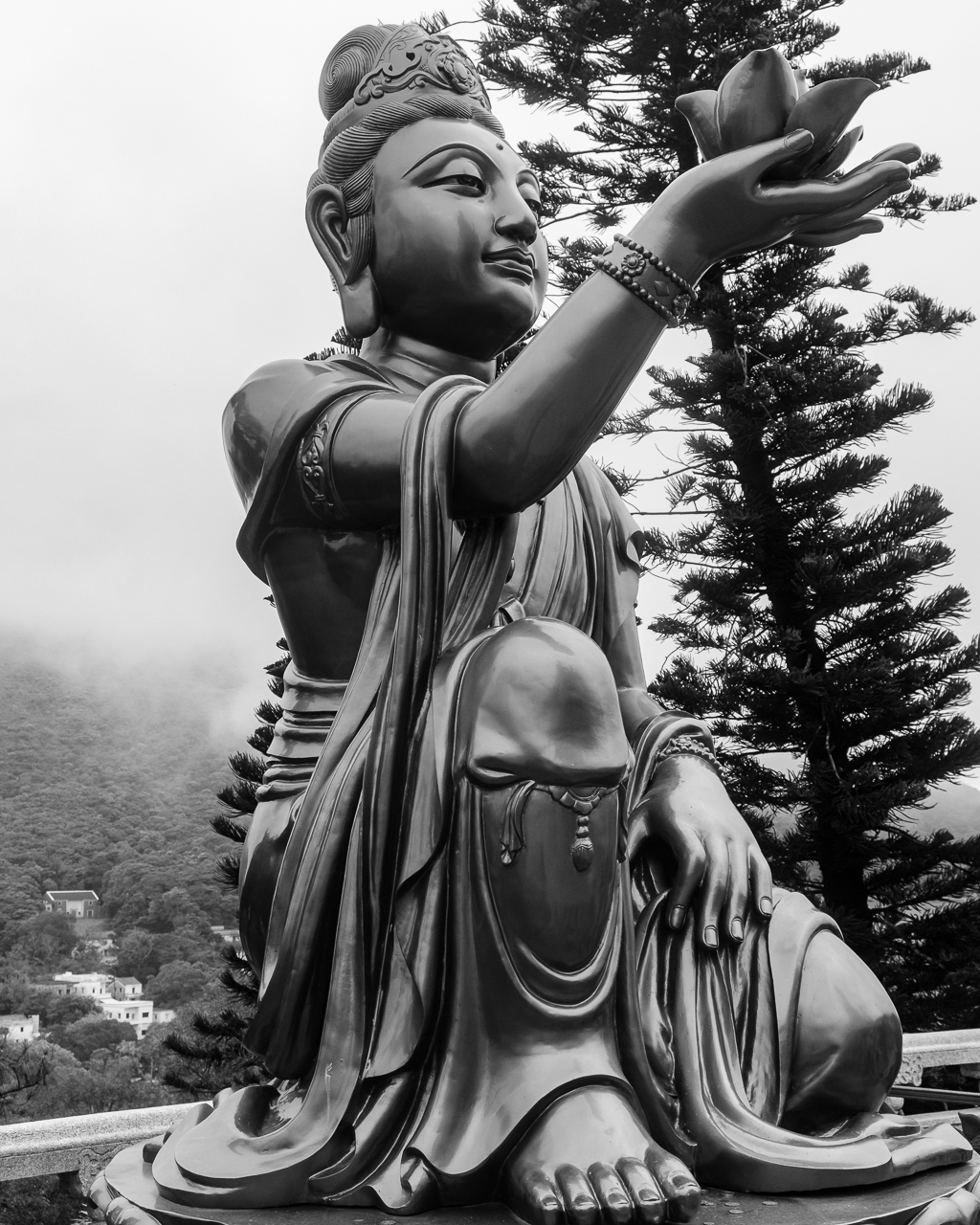
The Big Buddha is, by Buddhist standards, relatively new, with construction finishing in 1993. It sits on the top of a hill on the outskirts of Ngong Ping village and near Po Lin Monastery.
There are 268 steps to climb to reach the base of the 34-metre statute. There was some serious puffing going on from my fellow visitors and I must admit I didn’t stop half way up JUST to take a photo…
The view from top was great, clearer than I expected, and as busy as I expected from the queue at the base. I was pushing time a bit so didn’t linger too long.
There was a little bit of wind on the cable car ride back down to the train and I found myself pointlessly hanging on to the seat as the occasional gust rocked the cab. I was on my own, which was good, but also a little unnerving. I did get to take pictures from wherever I wanted, without being ‘the dad’ and getting in others’ way.
I took a train straight back to the airport and after retrieving my bag from left luggage, passed back though security and immigration to await my flight onto Delhi. I used a discount offer from my credit card to access an executive lounge, with the expectation of using the advertised shower to rinse off the sweat of the last 36 or so hours. Of course it was out of order, and I ended up having a sink wash in the bathroom to what I imagine was the distaste of some of my fellow ‘executives’. I did eat and drink enough to make up the fee, though, and was feeling pleasantly relaxed for the next leg of the journey. India here I come!
I enjoyed my day in Hong Kong, I wish I’d used the time more constructively, though I loved the trip to Big Buddha. I kind of had plans in my head to do stuff with the day and not just be a tourist, but a tourist is what I am.
Doing a long layover to break up a long flight is exhausting, but worthwhile and I will do it again sometime.
I arrived in Brisbane late Wednesday afternoon, with a mix of trepidation and excitement swirling in my head. This was potentially the most problematic leg of the entire holiday and I had no idea how it would go.
Australia isn’t high up on my ‘favourite country’ lists, and Brisbane is my least favourite city in Australia. Growing up, and spending most of my adult life in New Zealand, and most of my working life working for Australian companies I have an unhealthy, and probably undeserved, antipathy for the country. For a lot of New Zealanders it’s an almost gene level dislike, though I’m English by birth so I guess it’s just seeped into my psyche by some form of osmosis. The Aussies just think us Kiwis don’t like them because we’re jealous of their superiority; though that doesn’t seem to help the situation much. Plus they keep stealing our stuff; pavlova, for example.
My ex-wife lives near Brisbane and my two oldest children live in Australia, one in North Queensland and one in Darwin in the Northern Territory. Brisbane is their closest big city. My youngest lives in Auckland and has flown over with my grandson and the theory is we were all going to get together tomorrow. It will be the first time in 10 years since all three children have been in the same place at the same time and 16 years since them, my ex and I have been together. Who knows who will turn up and how the day would go.
I landed in a storm, an auspicious start; it was only late afternoon but it was almost dark when I exited the airport and took a taxi in the pouring rain to my hotel which was just down the road. I unpacked and got in contact with my eldest son who had come down from Darwin the day before. We agreed that he would drive to the hotel with his girlfriend and we would find somewhere to eat.
I was loathe to go far as I was tired and he’s not exactly a conversationalist and it could be a long night, I wanted a quick escape if need be. We ended up in a bar in the mall next to the hotel as the hotel restaurant was really expensive and we just wanted to eat. The burger was decent and exactly what I wanted and a couple of glasses of wine eased me into the evening and prepared me for tomorrow. It was lovely to see him and get some time together.
I’d arranged to meet the family on Brisbane’s South Bank late morning, time to hang out for a few hours, share a meal and then do our own thing. We’re not a close family, 10 years is a long time to not be together. There is no animosity and we get on fine, but I was expecting the day to be hard work, and it was, but at least everyone turned up, which was sort of a surprise and it was properly nice to see everyone after such a long time.
I had a bit of sorting out to do, repacking and getting organised for a day in Hong Kong tomorrow. I’d booked a flight from Brisbane to Delhi that gave me an 11 hour layover and I was keen to get out of the airport and see a bit of the city. I’d researched left luggage at Hong Kong airport so I could leave my small pack while I walked. I wanted to have a change of clothes for the onward flight to Delhi. Hong Kong was going to be hot and humid and I would have been three days in the same clothes if I didn’t change, and no one would want to sit next to me on the Delhi flight.
After breakfast in the same mall as last night I checked out of the hotel and headed to the left luggage lockers at Brisbane airport via a free shuttle from the mall.
I’d planned this part of the trip reasonably well, I had to do something after waking up at 4am. After dumping my bags I took the train from the Airport into Brisbane city centre; for a while I was almost the only person on the train. It was weird.
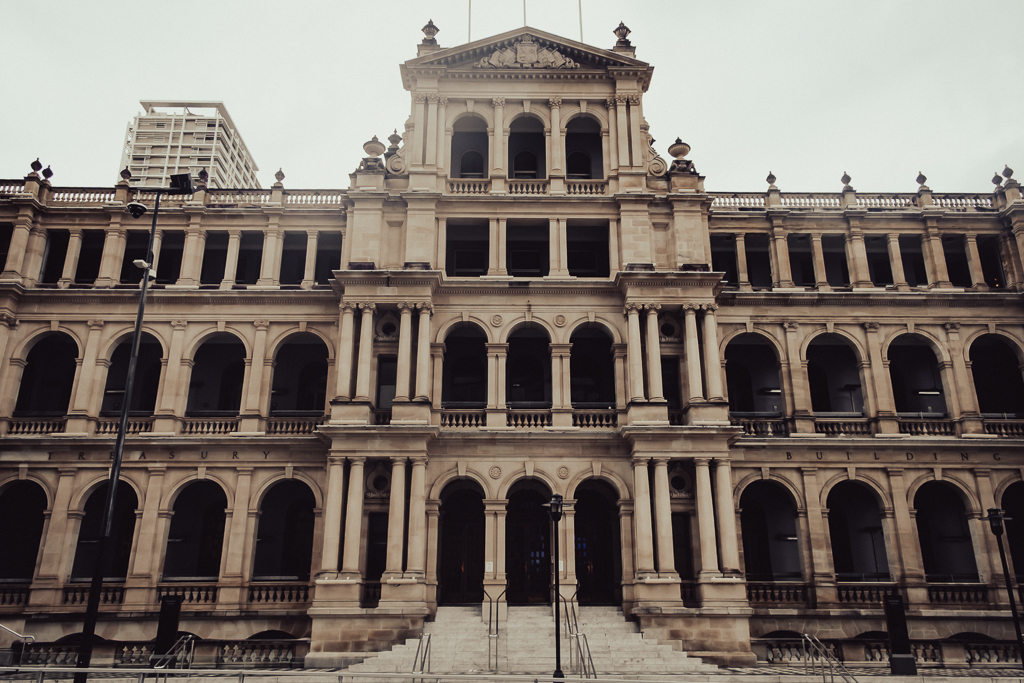
And here is where the story takes an (un)dramatic twist. I got off the train at Central station and left at the nearest exit, which was right outside the Queensland Railways building; an unexpected piece of Queensland brutalism.
I’d unexpectedly stumbled into the capital of Australian brutalism and the city is littered with lovely 60s and 70s concrete masterpieces, especially on the South Bank, fully deserving of their own post, which I will do next. I’m starting to like this place, and a return visit sounds very plausible now.
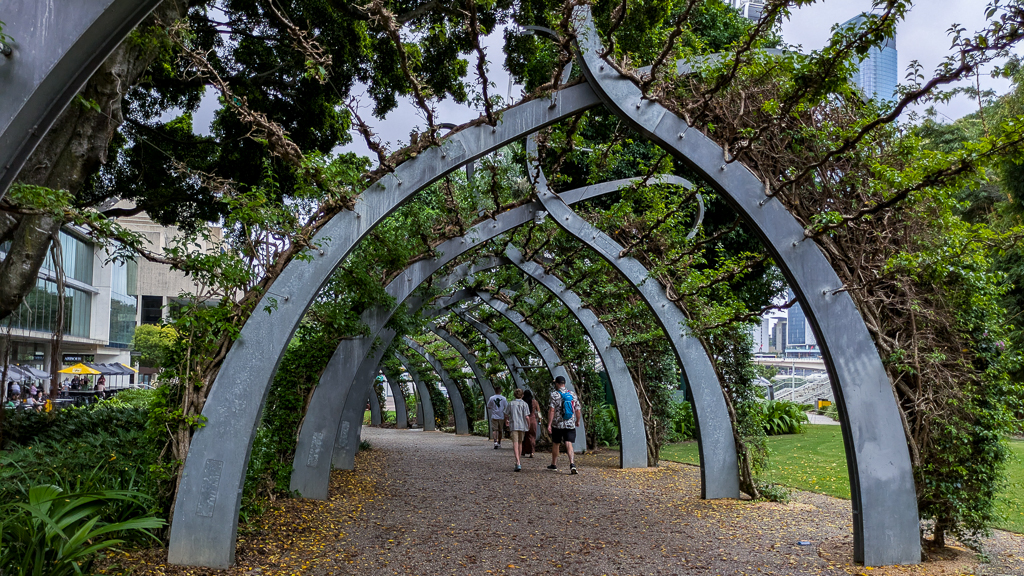
I didn’t have a huge amount of time before seeing the family so walked through some late morning drizzle down through the centre and across the Brisbane River to the South Bank. Brisbane is an interesting city to walk through, though warm and muggy on this damp day.
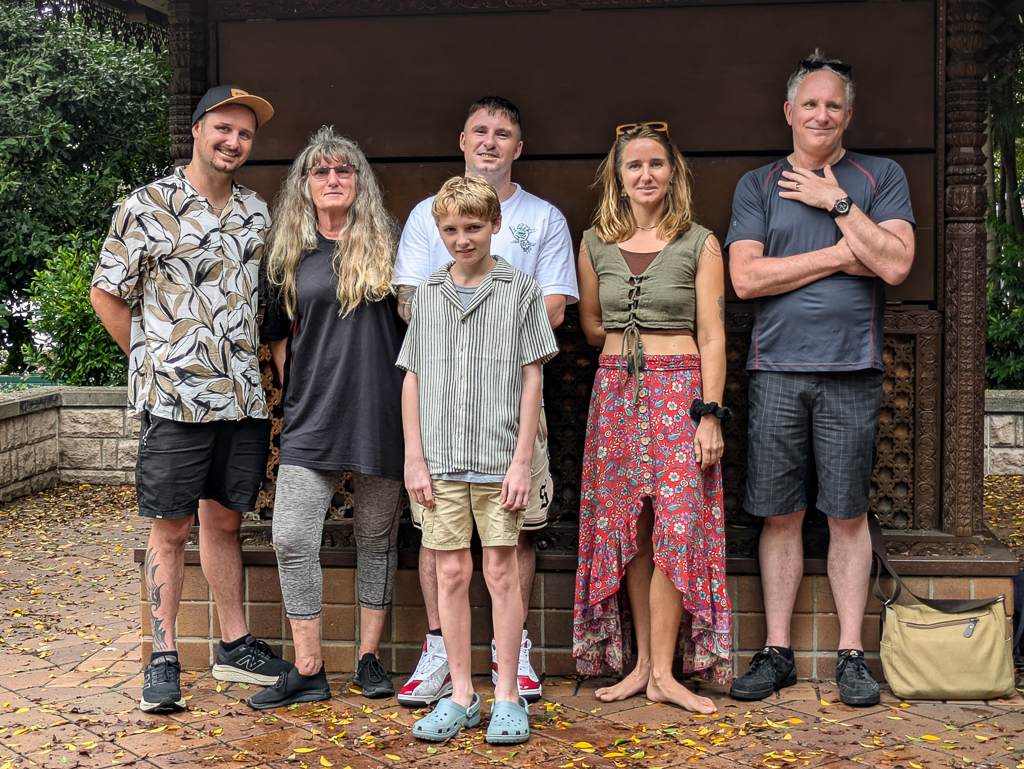
I waited over a coffee near our proposed meeting place and surprisingly everyone turned up, and pretty much all on time, and at the same time. We caught up over coffee and it was lovely to see everyone together, strained as it was. We are all very different people with vastly different adult experiences, expectations and aspirations. It was difficult at times, but still we’re family and it was good.
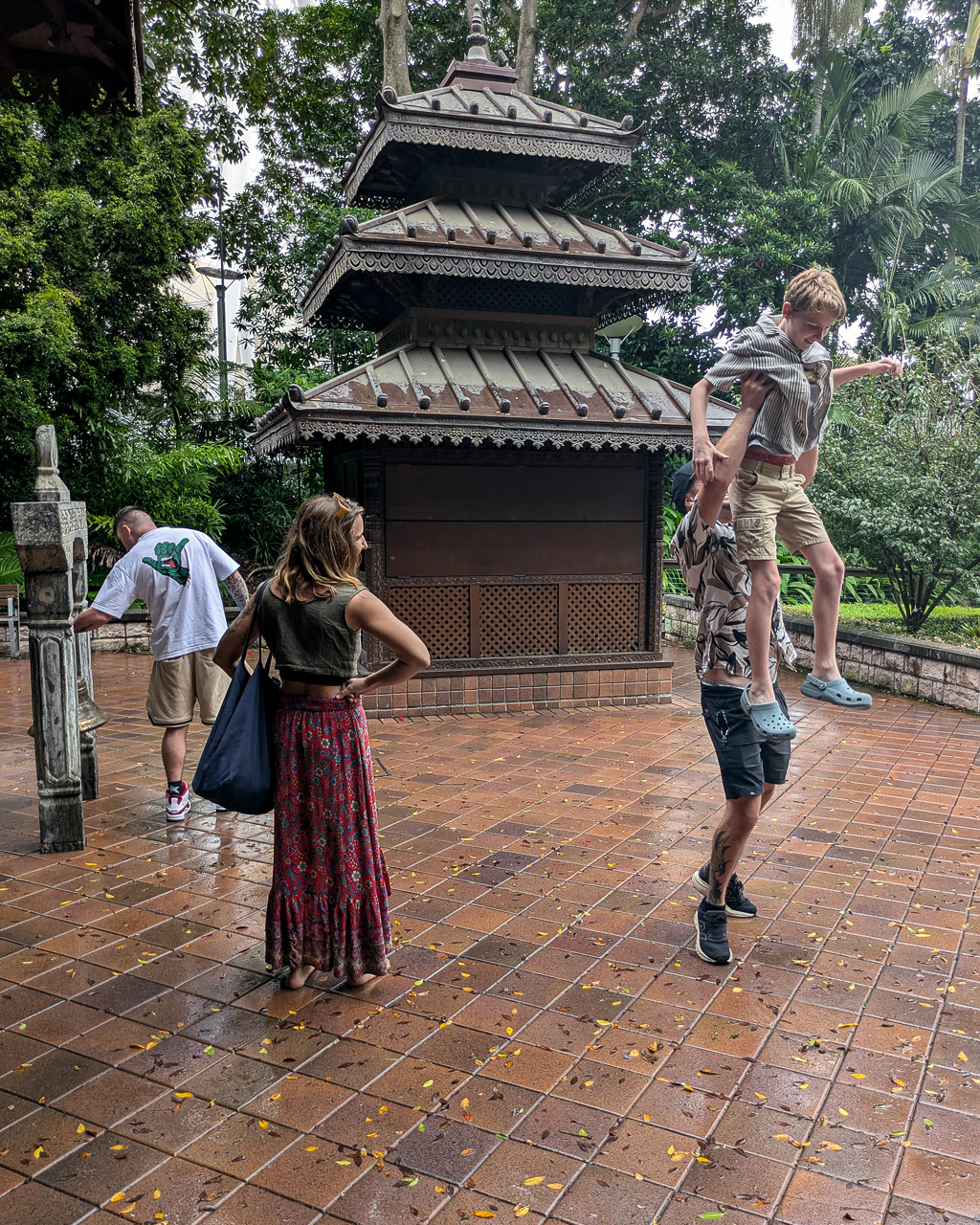
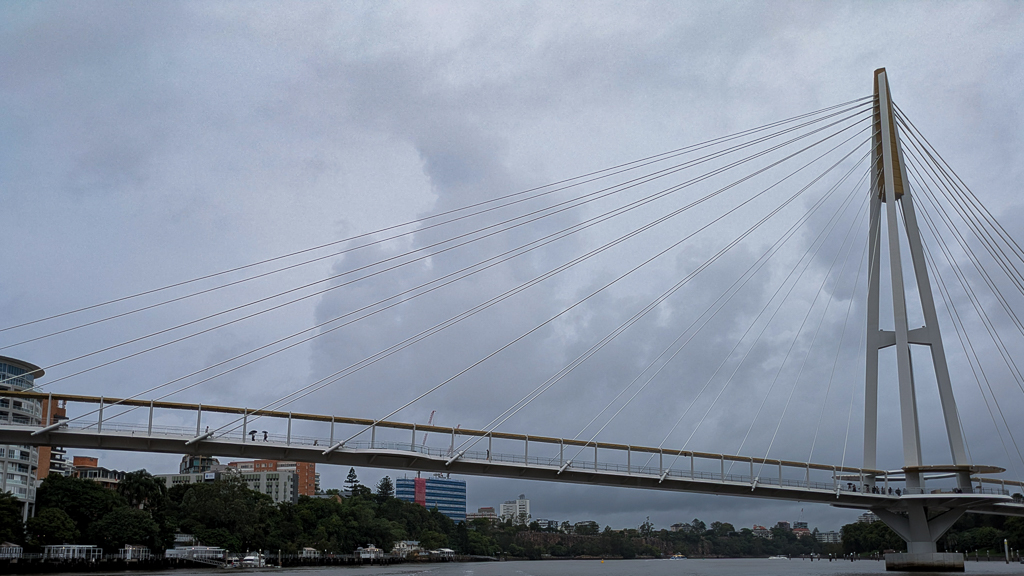
We walked for a bit, the weather didn’t really help and we had my 10 year old grandson with us, so though we were near the museum and art gallery we didn’t venture in, it didn’t really interest my ‘kids’ either. Though to be fair art galleries are only a recent interest of mine, so there is time for them to show an interest. We stopped for some photos at the Nepalese Peace Pagoda.
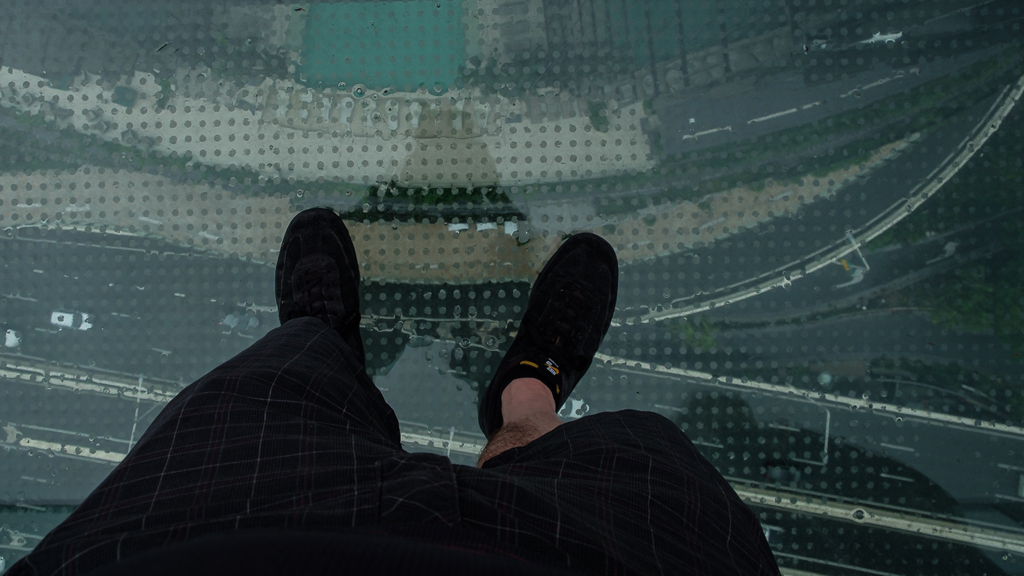
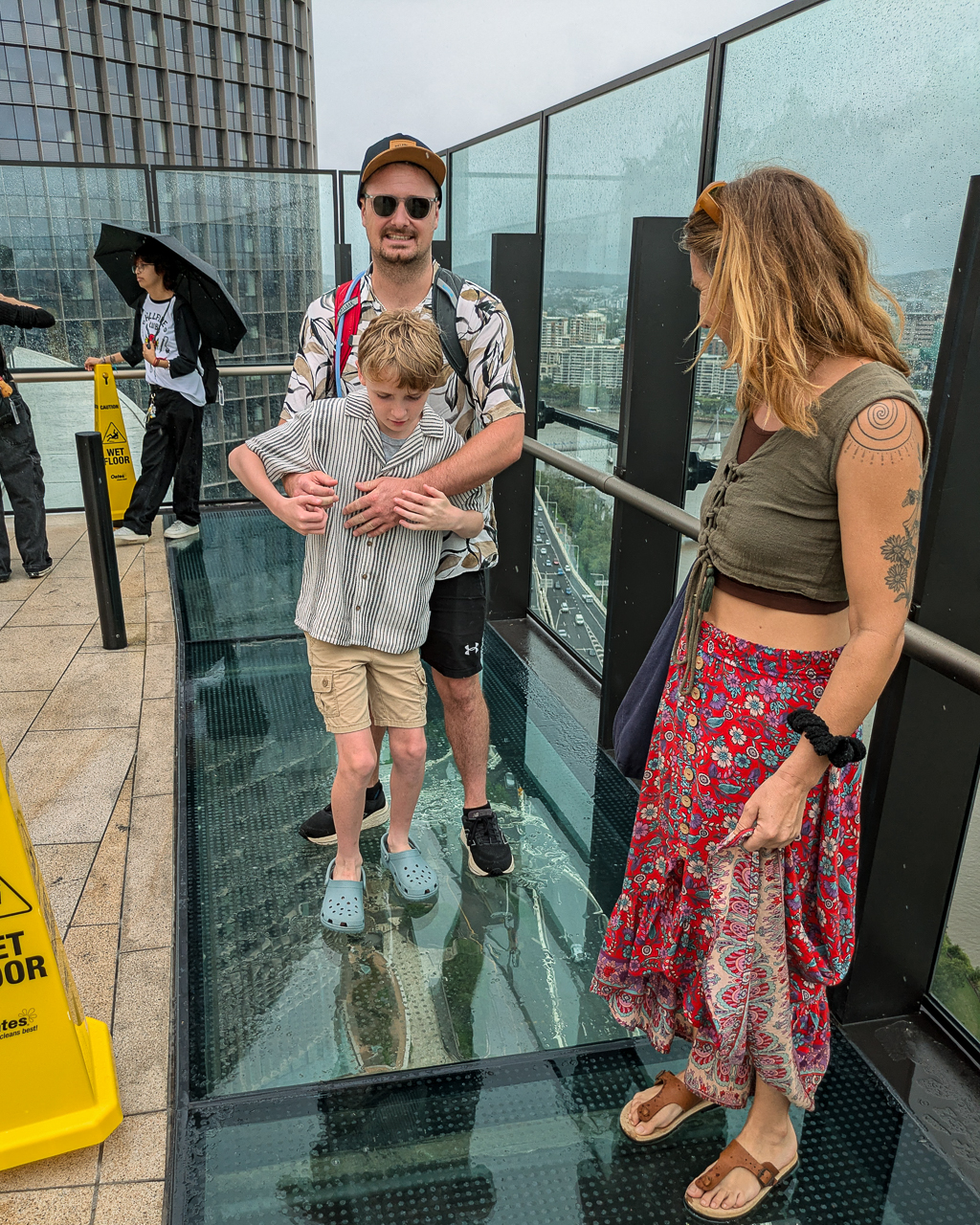
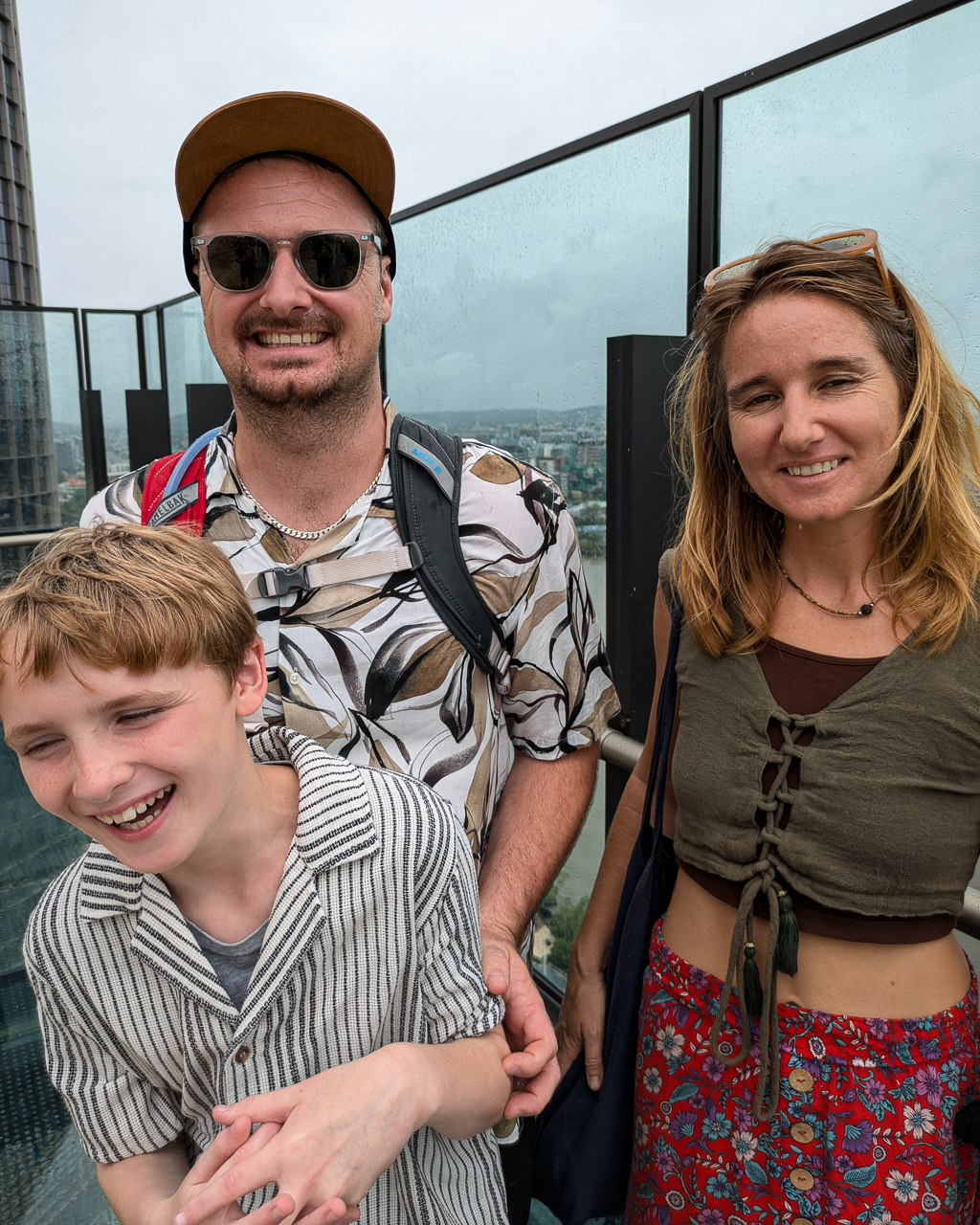
My grandson had been promised a visit to an amusement arcade in the city so we crossed over the bridge and went up to a viewing deck on what I think was The Star building, ultra modern and attractive in its way. It did have a very ‘cool’ glass floor overhanging the motorway a lot of floors below. I tip-toed slowly onto the glass, and then had a good laugh when I realised everyone else was doing the same. My grandson was a little nervous getting on there.
When the kids went off to the amusement arcade, I took a sneaky side trip to the nearby Queensland Parliament building, which had the look of being the best, most brutal building in Brisbane, but sadly there weren’t any good quickly gained angles, and of course being parliament I couldn’t just wander in for a nosey.
I joined up with everyone for bao buns for lunch which was nice, a good opportunity to sit around a table and chat and catch up a bit on the last few years. After lunch we all walked back to the South Bank and went our separate ways. I took a few photos of the brutalist buildings on the South Bank (which will be in the next post) before taking a short river boat ride to an area of the north bank with a bunch of bars where I had a beer to kill some time before heading back to the airport on the train.
We have two nights in the same place for the first time in five nights and, as we’re staying with old friends of mine, it’s a good opportunity to unwind, unpack and throw some clothes into their washing machine.
As I will be moving around via public transport a bit more than Eleanor and Paula will be, I’m using my trusty travelling back pack, the one I started my travels with 13 years ago. The backpack means I’m carrying fewer clothes than they are and the next time I have more than one night in the same place is in three countries and five days’ time, in Delhi.
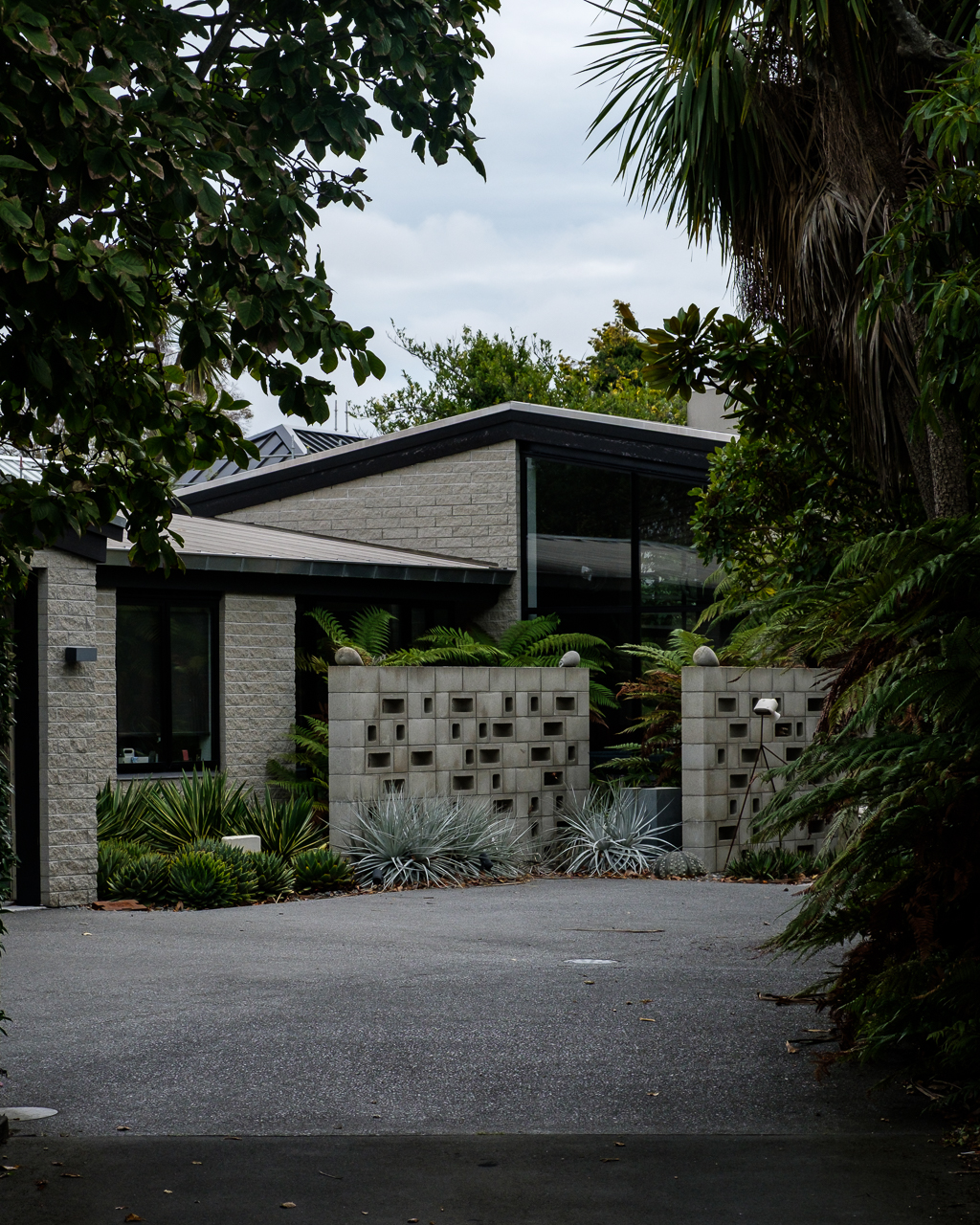
My friends lost their house to the tragic 2011 earthquake (earthquakes seem to becoming a trend on this trip, which I’ve just noticed, and is completely accidental) and it wasn’t rebuilt until 2016. It was rebuilt almost exactly as it had been, and has been decorated wonderfully. It’s such a funky place and I’m so glad they could rebuild back to how it used to be and so glad they had room for the three of us to stay.
I only visited Christchurch once after the earthquake, before I left New Zealand at the end of the same year. That was with work for a quick trip from the airport out to the production centre for the printing company I worked for and then back to the airport and home to Auckland. I haven’t seen the inner city in the 14 years since then. A lot of the centre has been completely rebuilt, though there is still work to be done. The city looks pretty good, though of course that has come at a huge cost; financially, politically, socially and emotionally.
We started our day at the new art gallery (free parking for us). We drove past a very nice bit of brutalist architecture that I promised myself I would come back to when I return to Christchurch on Wednesday after separating from Eleanor and Paula in Dunedin. Annoyingly I couldn’t find it!
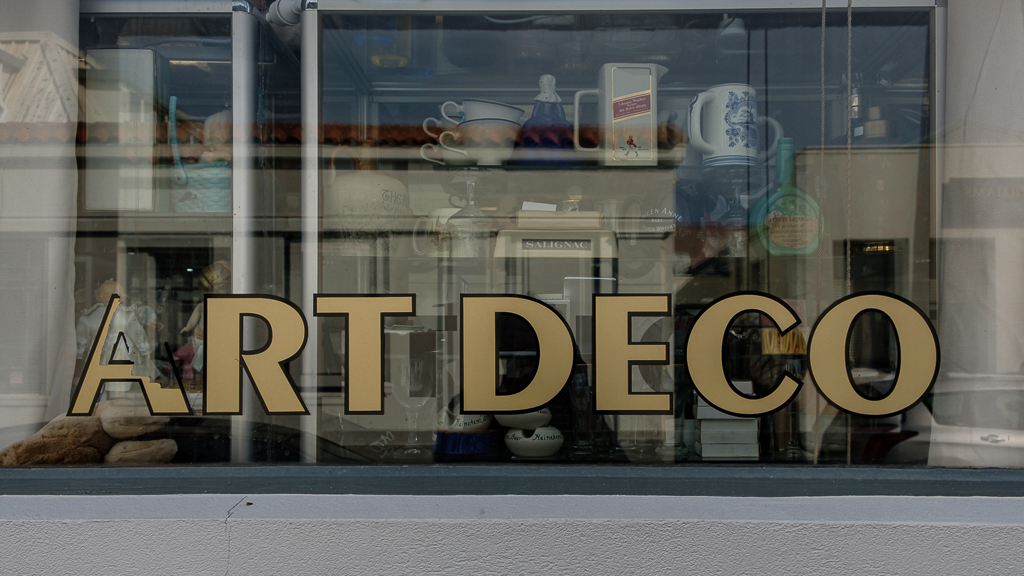
I liked the gallery, it’s modern and bright and the rooms are well spaced and paced and there were some good pieces. I particularly liked ‘The Civil Servant’ (at least I think that is what it was called, I can’t find anything on the internet).
We left the gallery and walked around the new centre of the city. So much of the area was destroyed in the earthquake that there are still buildings waiting to be safely demolished and numerous building sites and blank spaces where buildings once stood.
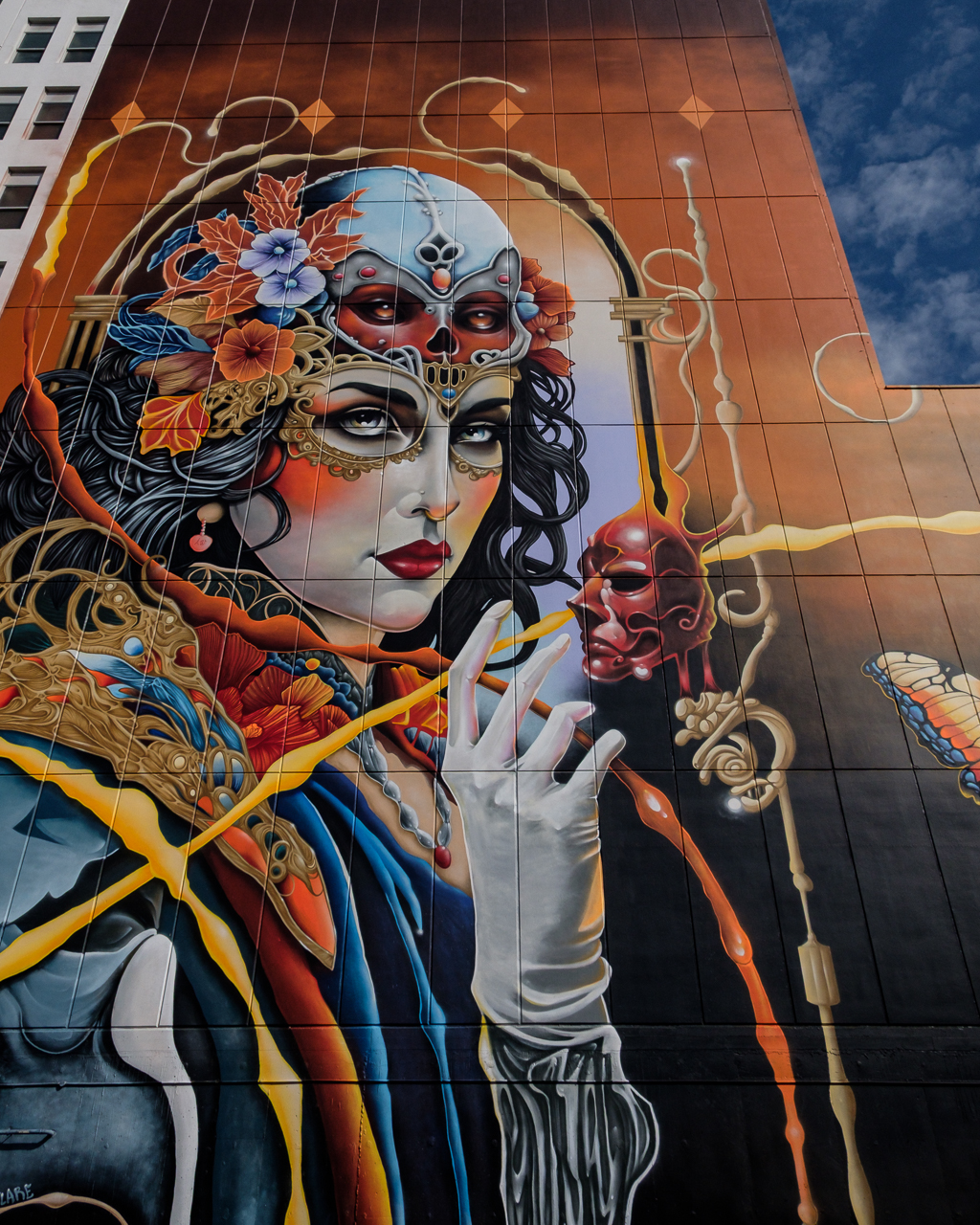
The city has supported some fantastic murals, some of them massive, as part of the rebuild. It’s really pleasing to see authorities embrace the value that high quality large works of art on buildings can bring. When I go back, which I will, I will do a proper street art and brutalist building photo walk.
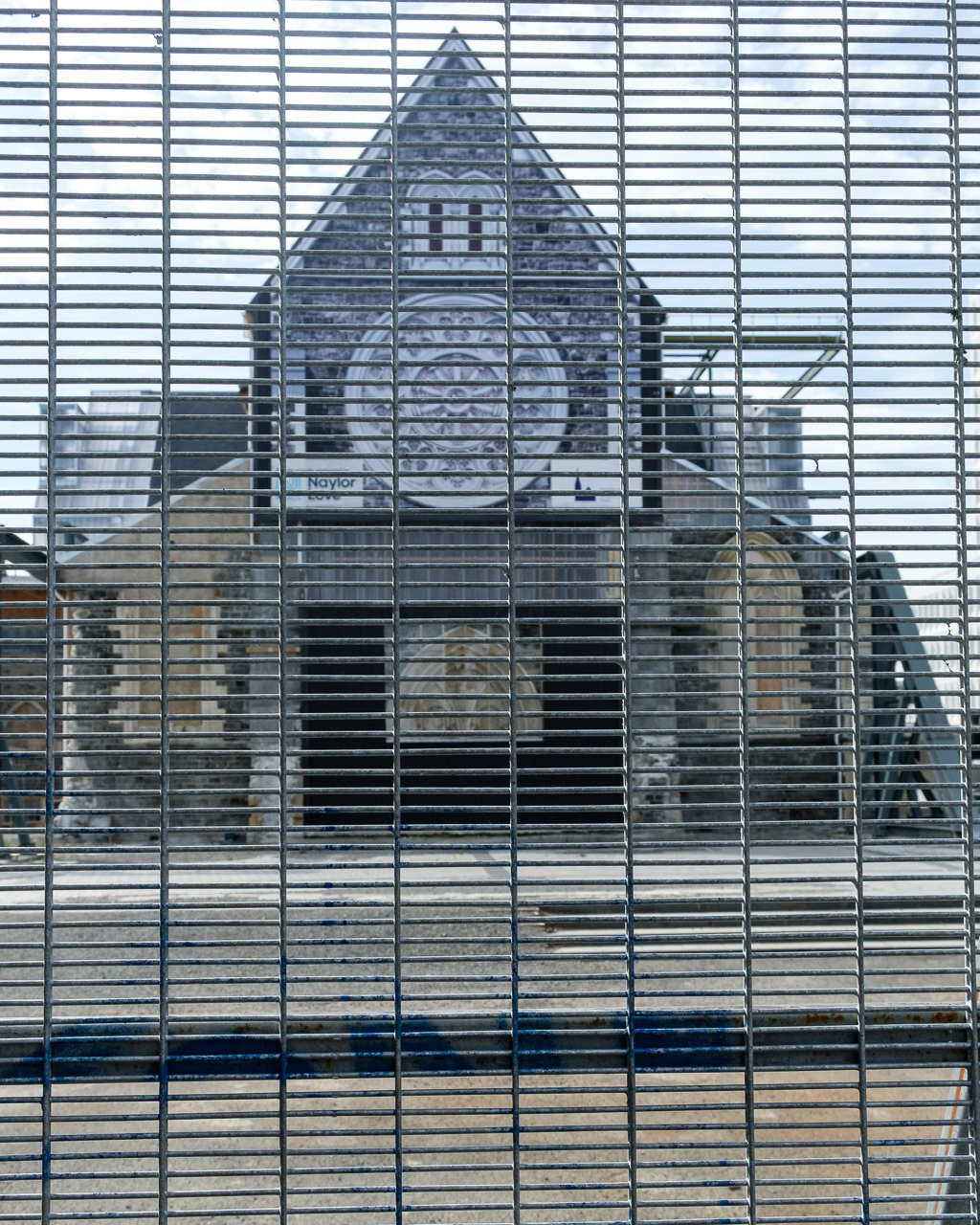
The spire of the cathedral collapsed in the quake. It was the spiritual centre of the city and a well loved building. There have been discussions and plans and court cases and challenges of court case results for years, and there has not yet been an agreed plan as to what to do with the cathedral and the land it sits on. Sadly it’s still fenced off as the remaining structure is deemed unsafe.
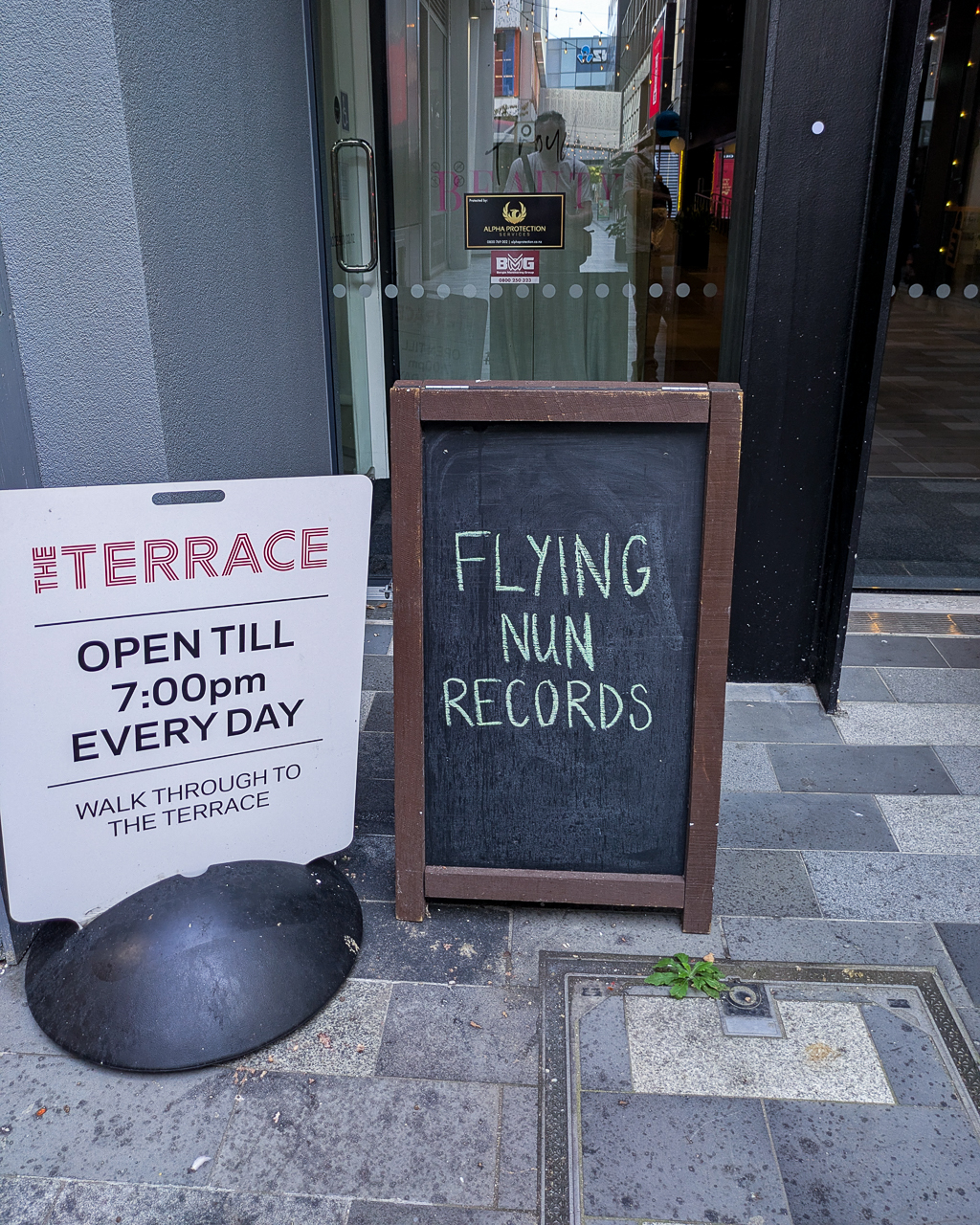
We walked through the new shopping precinct so I could visit the bookshop as I’m trying to find a couple of New Zealand music books: Boodle, Boodle, Boodle (the making of the EP by The Clean) and Peter Jefferies’ The Other Side of Reason, neither of which I found anywhere in NZ. I also wanted to visit the new Flying Nun Records shop. Tempted as I was, I didn’t buy anything.
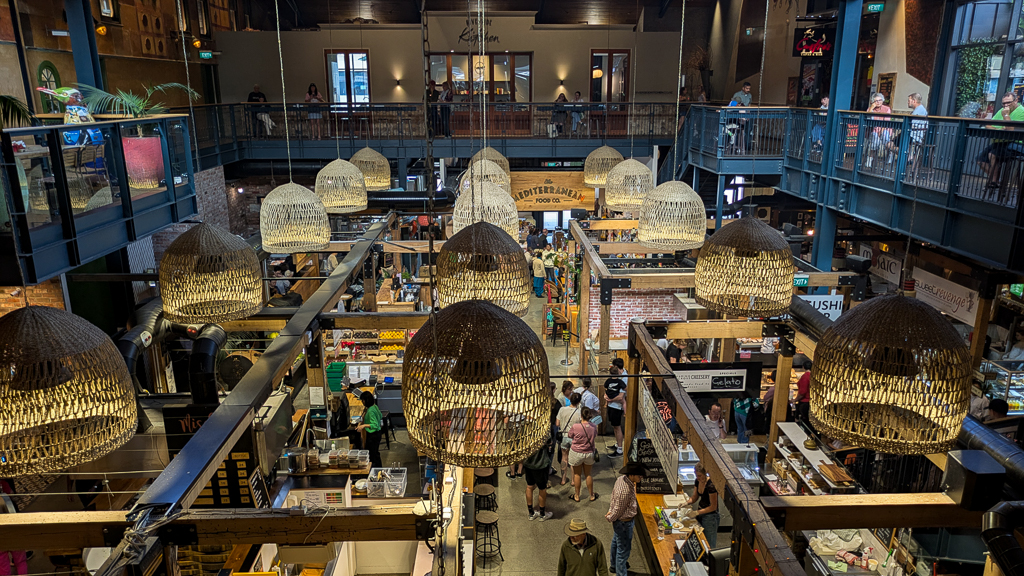
We lunched in the new Riverside food court, which was not dissimilar to any of the modern, independent food courts we have visited in other countries or parts of the UK. There was a wide range of interesting choices, with all the usual international flavours represented. I had a Thai dish and it was very nice, as was the local ale I washed the food down with.
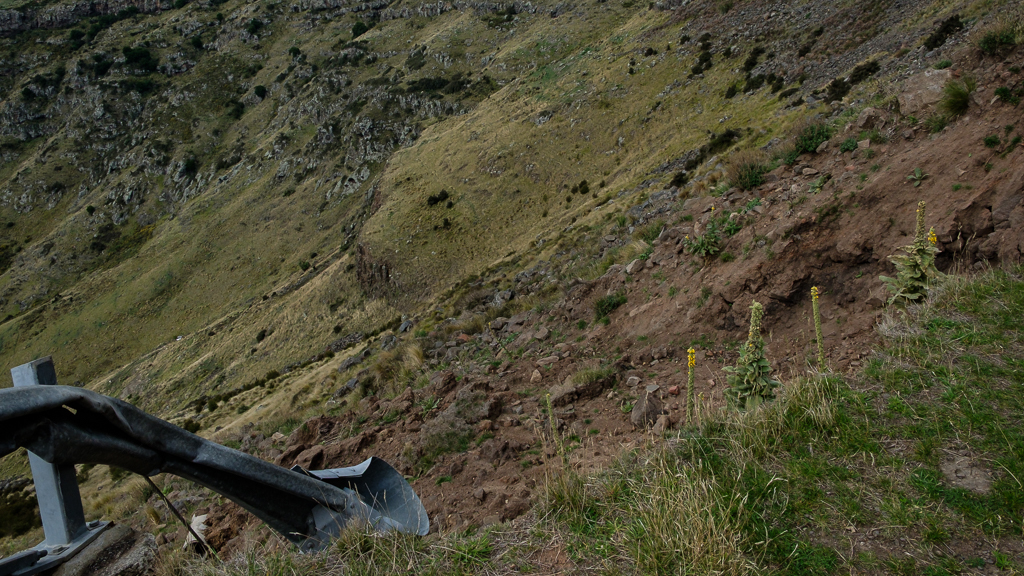
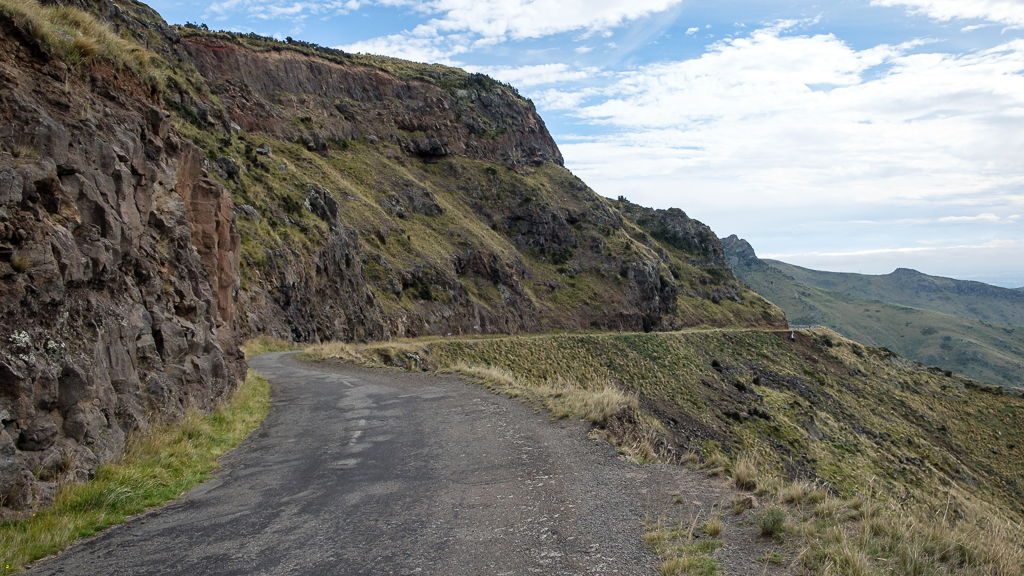
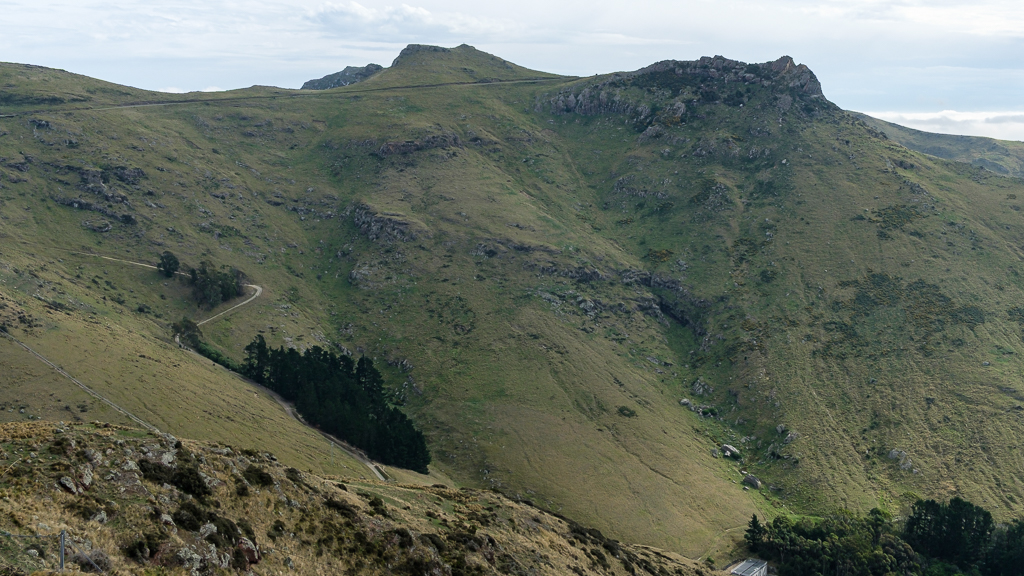
After lunch we were driven to the airport where Paula collected the rental car she will drive us around in for the next few days. We returned to our friends’ house and then were driven up into the Port Hills that overlook the city and separate it from its harbour at Lyttleton. The Port Hill road was badly damaged in the earthquake and sections of the road remain closed, and will never be reopened to cars. It made for a nice walk, and there is a good view down to Lyttleton, where we visited next.
Up here you can still see the damage that the quake caused, with bits of road just hanging off the cliff.
It was nice to see the famous cable car is back in operation.
Lyttleton is a small town, part bohemian and part port worker. It’s a nice town and after a very short walk to see the sights we stopped for a drink in a very nice little bar with a decent soundtrack going.
On the way back to our friends’ house we drove through the eastern part of Christchurch where a number of suburbs had stood alongside the River Avon before the earthquake. All that is there now are a few trees and the drop sections of footpaths that used to be the start of a driveway. The entire suburbs has been bulldozed and will never be rebuilt as the ground is just too unstable. All those people moved from their homes. So sad. It was a stark reminder of the recent history of this city, and the work that has been done to repair the damage and the soul of the place.
Christchurch, New Zealand – Saturday 22 March 2025
The cost of picking up a rental car in one location and dropping it off in another is just sheer lunacy, at least it is in New Zealand, I’ve not done it anywhere else. When I was planning this holiday I discovered the cost of renting a car in Picton, where we got off the ferry from the North Island, and leaving it in Christchurch where we all flew out from, was five times the price of just renting and dropping in Christchurch itself.
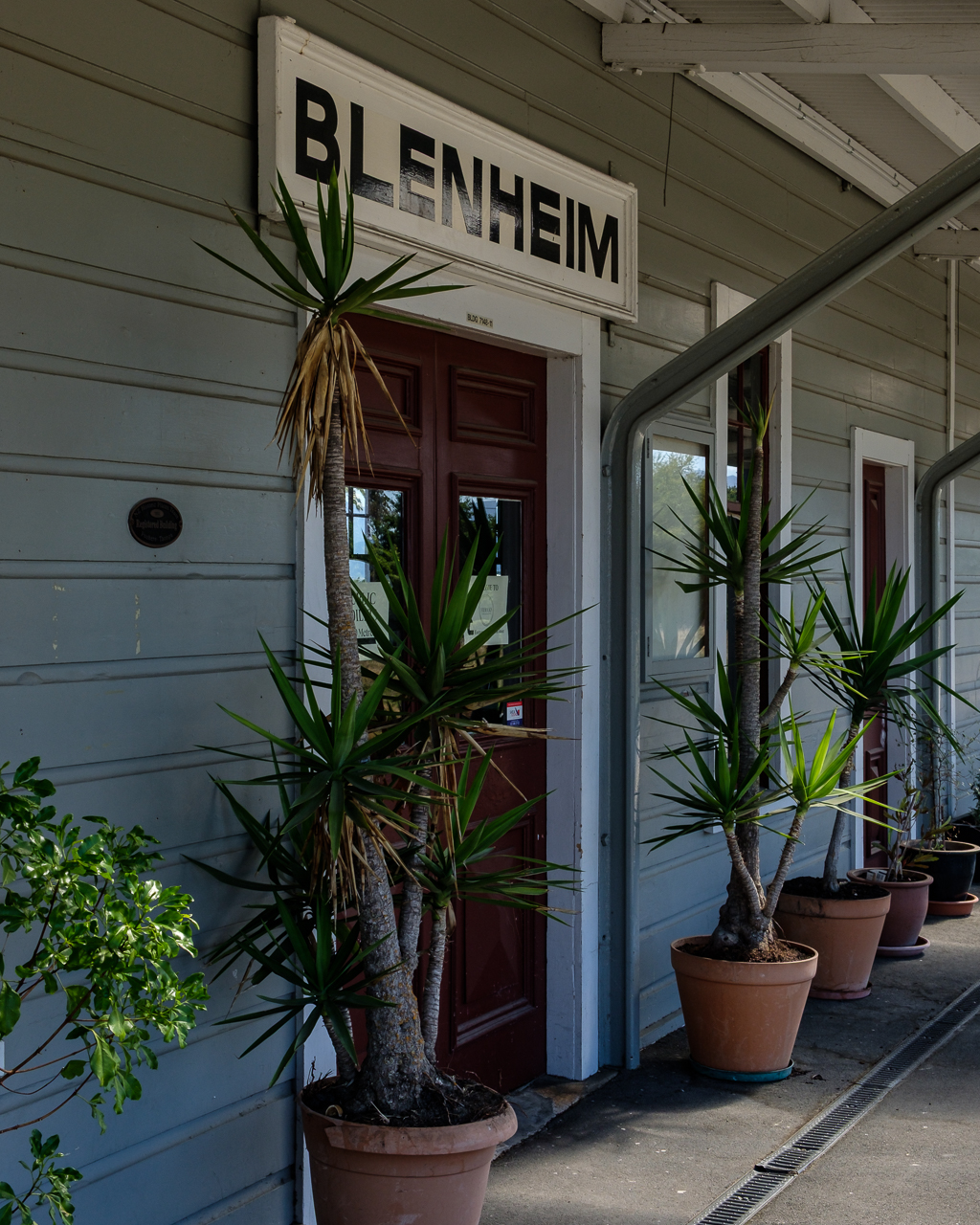
Luckily, there is a fantastic train between Blenheim, where we stayed last night, and Christchurch. The train is a scenic tourist train and is therefore not cheap, but even for the three of us it was still less than half the difference in the car rental. It was a no brainer really.
There is only one train a day, in the early afternoon, so we killed the morning over a leisurely breakfast in a café not too far from the motel. There isn’t much to Blenheim town centre and I think we saw most of it when we walked there for dinner last night. We did a quick circuit of the town centre then waited for the train over a glass of local pinot gris in the station.
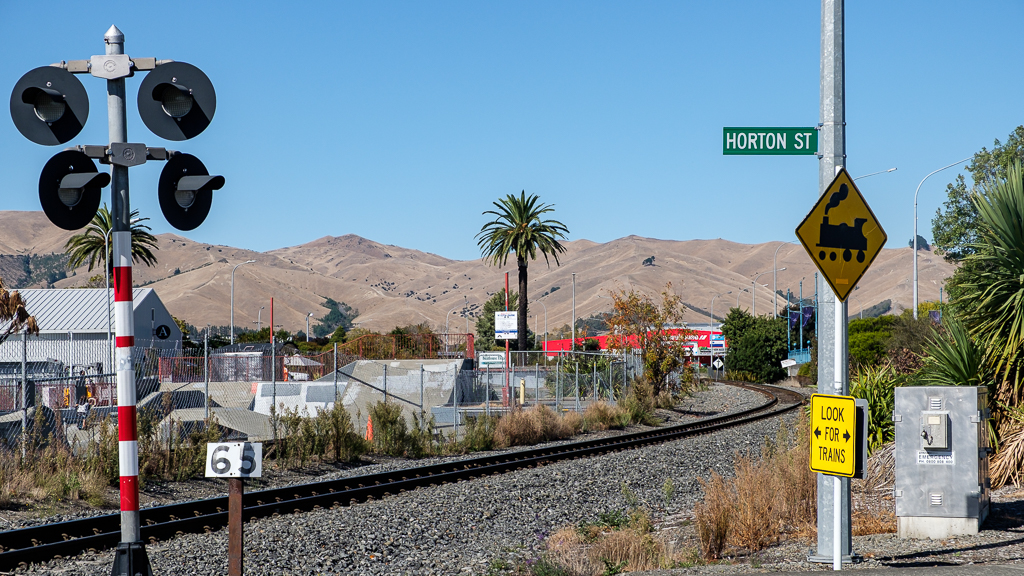
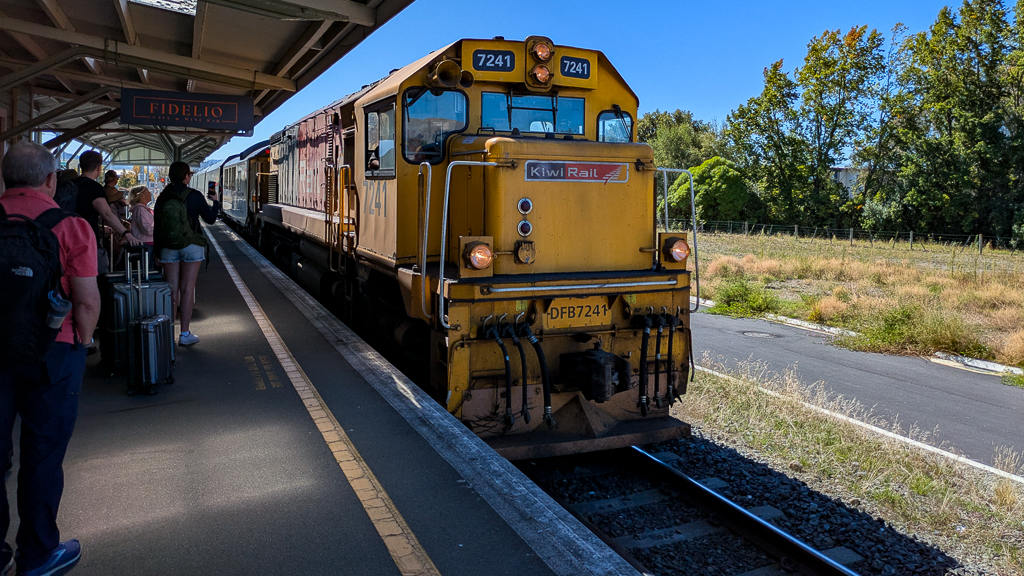
The train arrived a few minutes late and was, surprisingly, but not surprisingly, pulled by a big old diesel engine. Which did make sense when we started slowly grinding up through hills towards the coast on the single train line that runs from Picton down towards Christchurch.
The train was full and I would guess that we were almost the youngest people on the train, which was mostly full of foreign tourists like us. There were definitely some Americans, we could hear them.
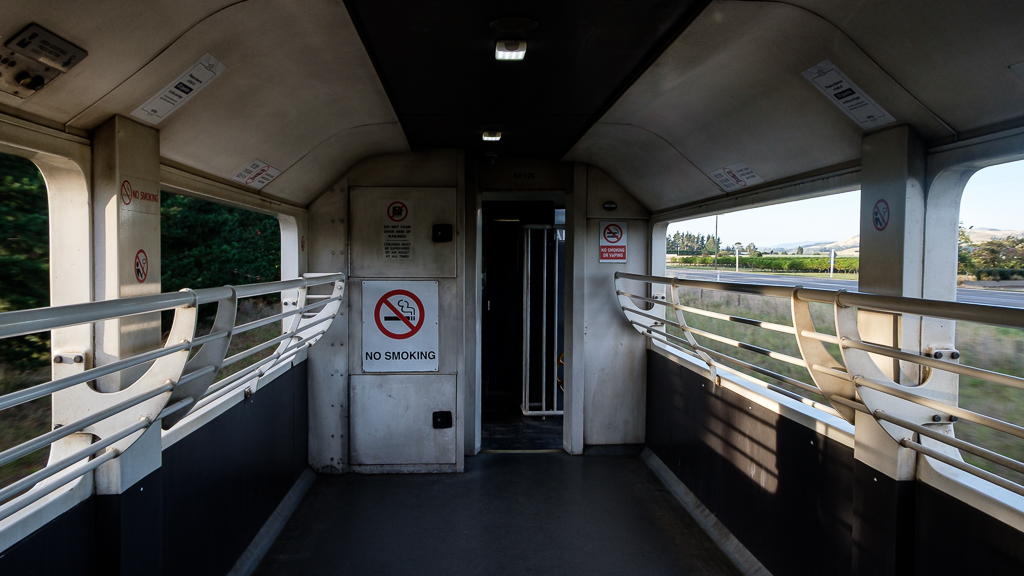
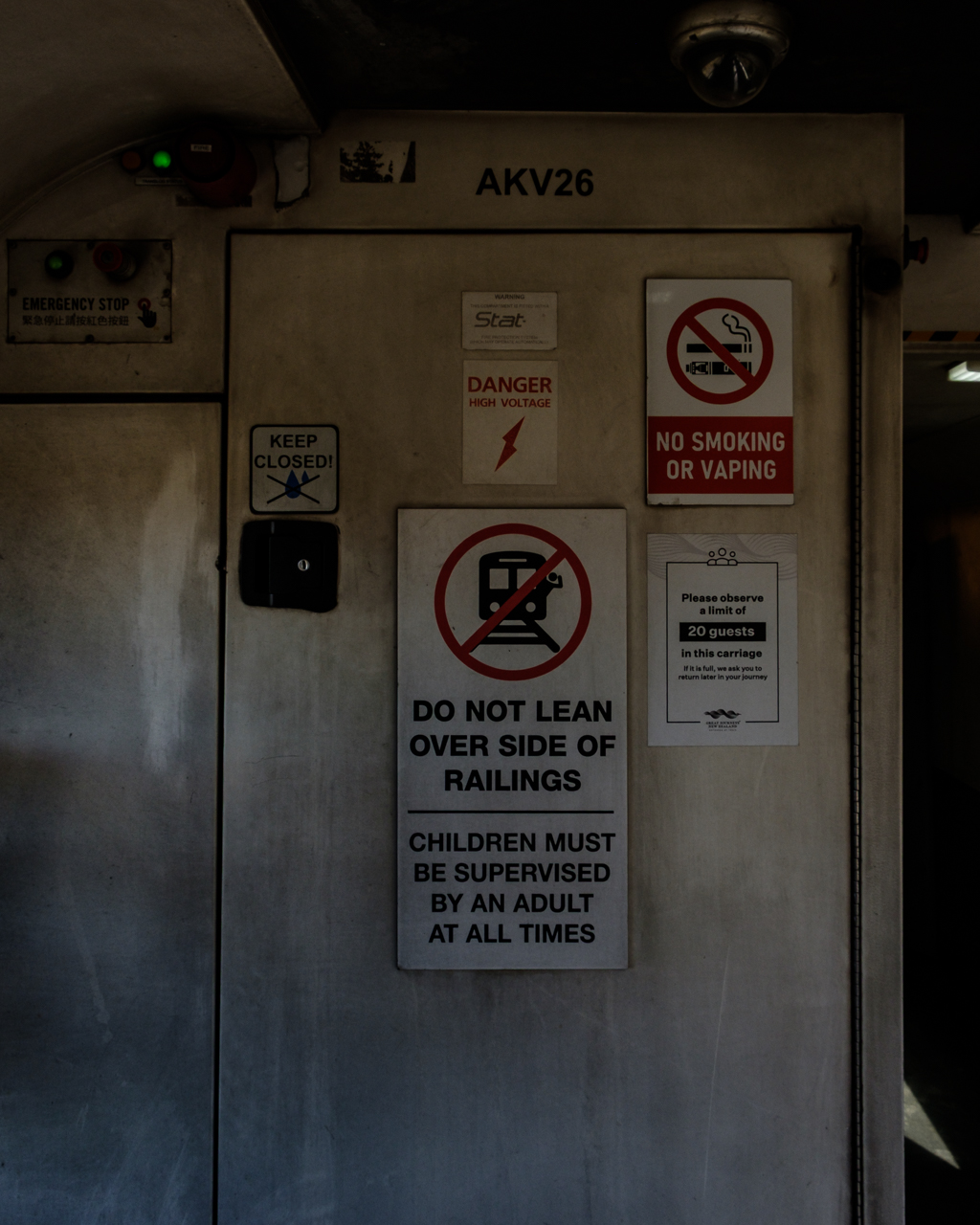
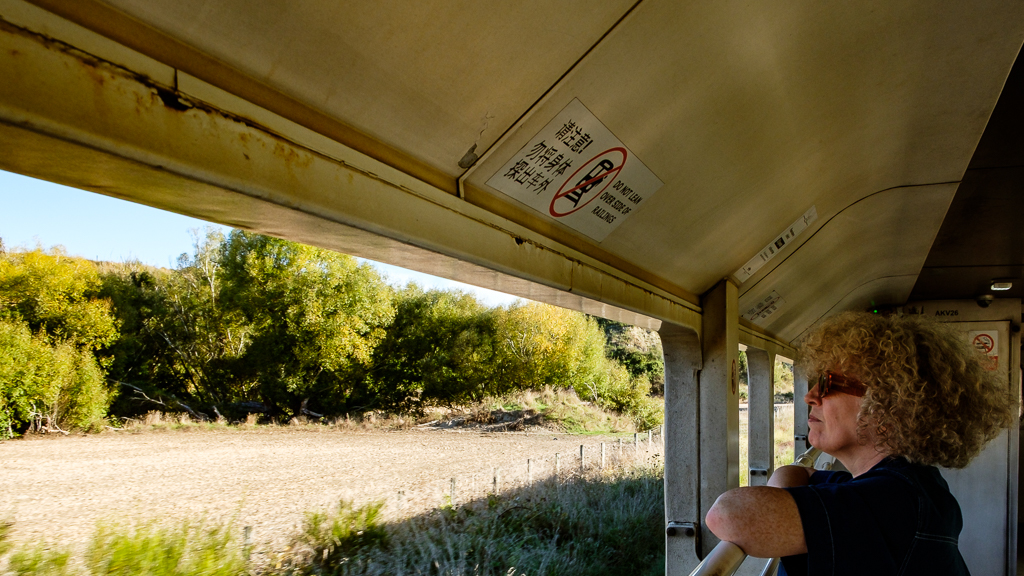
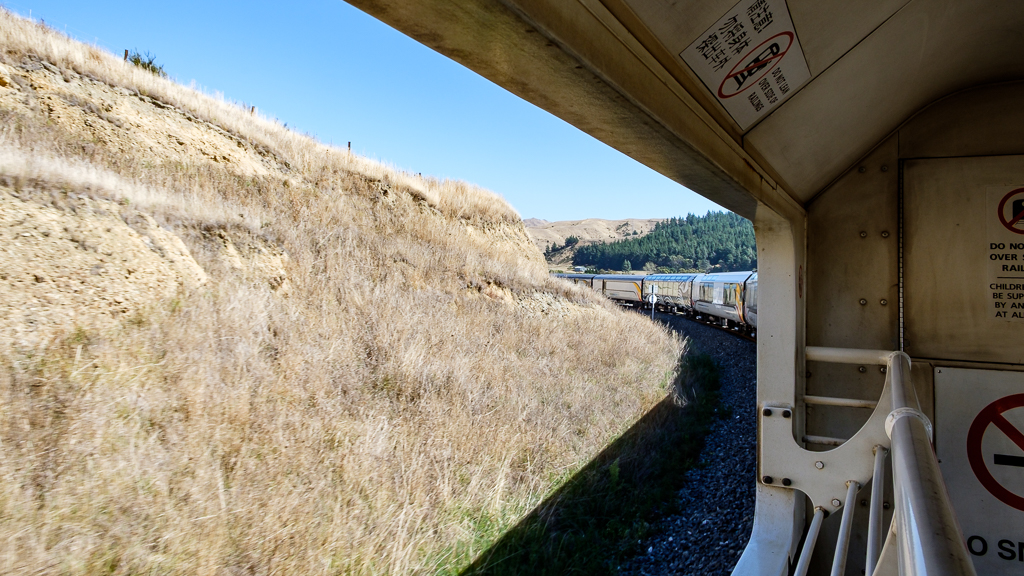
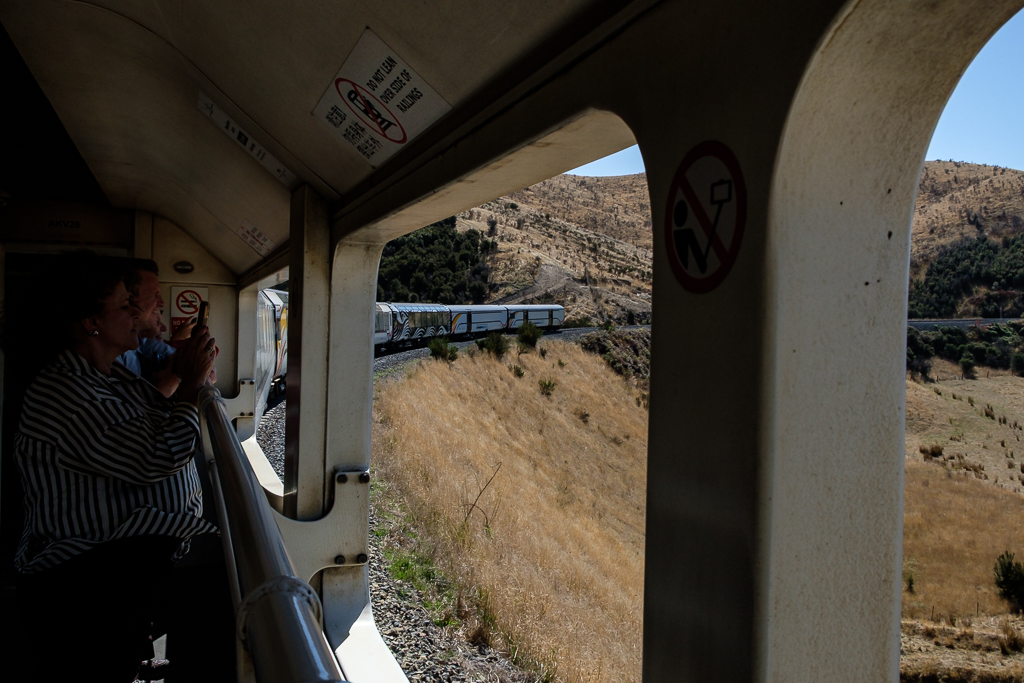
As this is a scenic train, the main carriages had larger windows than normal, but the best feature for me was an open carriage which meant no window reflection.
The one downside to the open air carriage was that it was right behind the engine and the diesel fumes got quite oppressive when the train was slowly winding up hills or through speed restricted tunnels. When the train was at full pace there was plenty of wind-blown hair action going on.
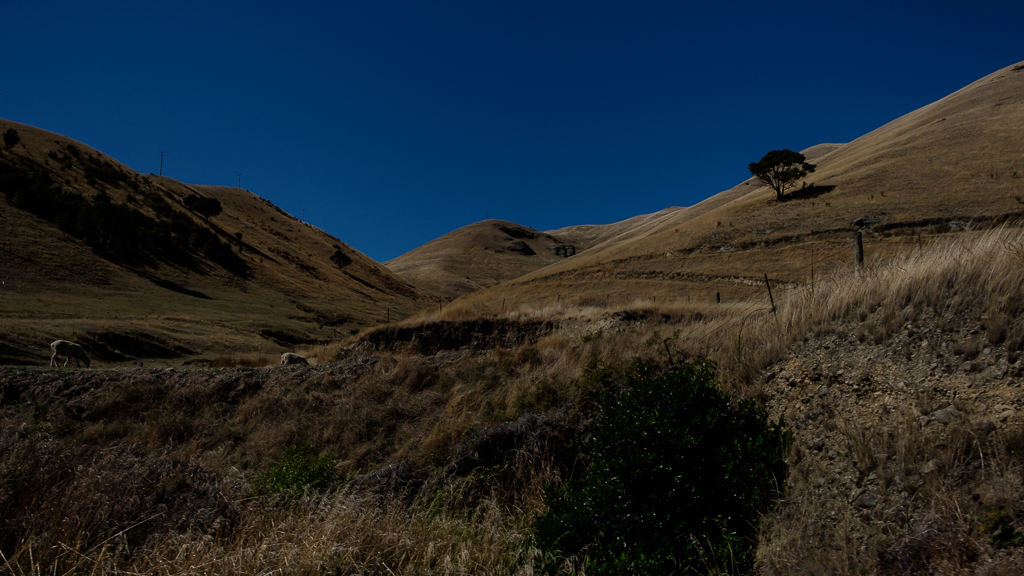
The train line mostly follows State Highway 1 all the way from Blenheim to Christchurch, and we were soon grinding our way very slowly up and over the bone-dry Wither Hills. It was a spectacular start to the journey.
I spent a lot of time standing in the outside carriage, occasionally with a glass of wine in hand. I was shocked to see so many other passengers sleeping, or reading or worse – staring into their phones. The early stages of the journey were spectacular, I couldn’t keep my eyes off the countryside.
Admittedly it is a five and a half hour journey and there were some dull bits as we worked our way through the farmland of North Canterbury, but crikey – how could you not be looking out the window at the start!
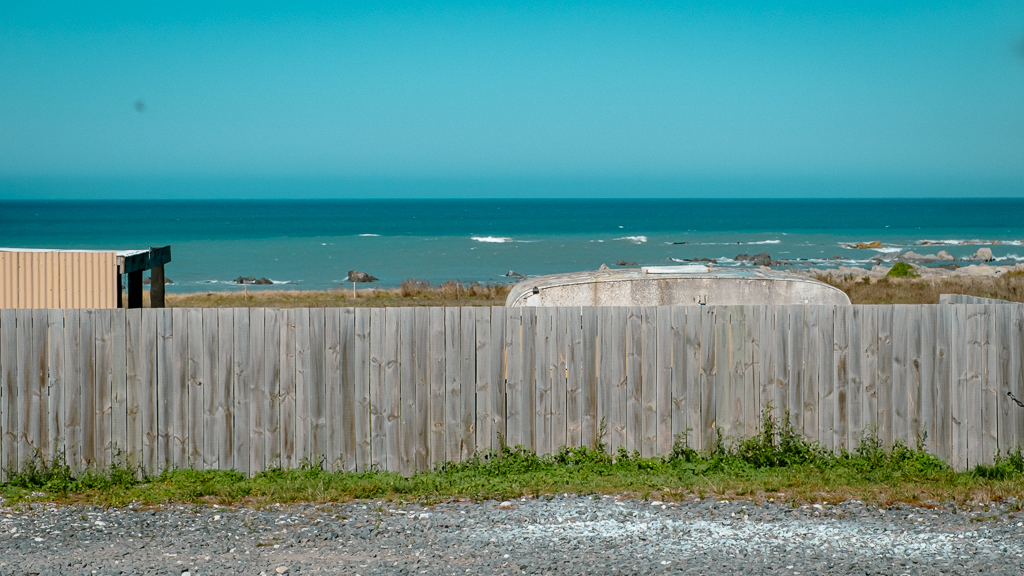
Once through the hills and passing through the small town of Seddon, we were on the coast which we followed the rest of the way, criss-crossing with the highway all the way south. This was taken through the window from inside the carriage.
It’s remarkable that this train journey exists. A 7.8 magnitude earthquake near the coast devastated the land, the road and rail line in 2016. Fortunately this is a fairly rural area and the earthquake occurred in the middle of the night, meaning only two people lost their lives; tragic as that still is. The rail line was closed for two years and though the highway has been fully open for some time, there is still significant work to be done. I’m glad we weren’t in a car.
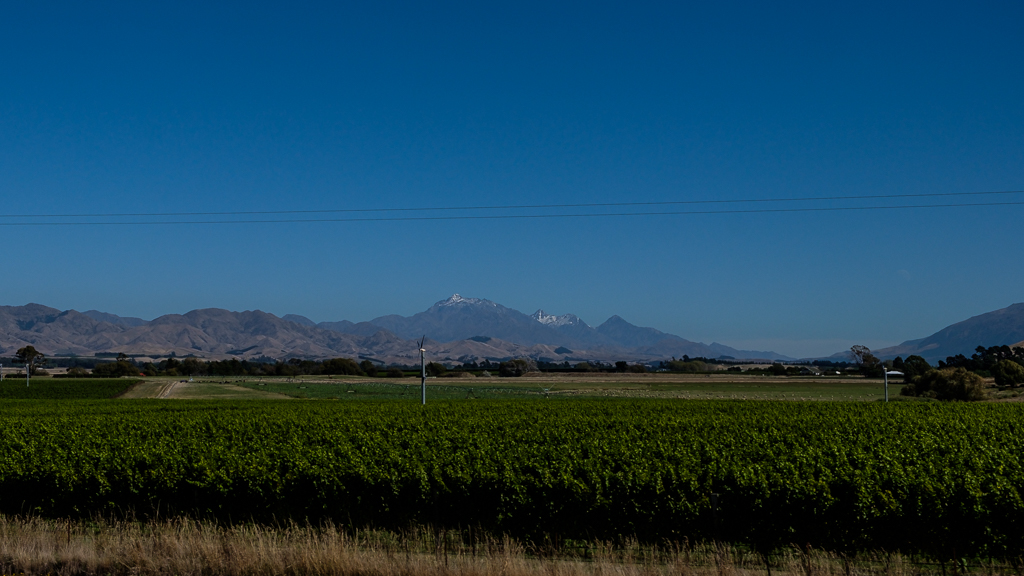
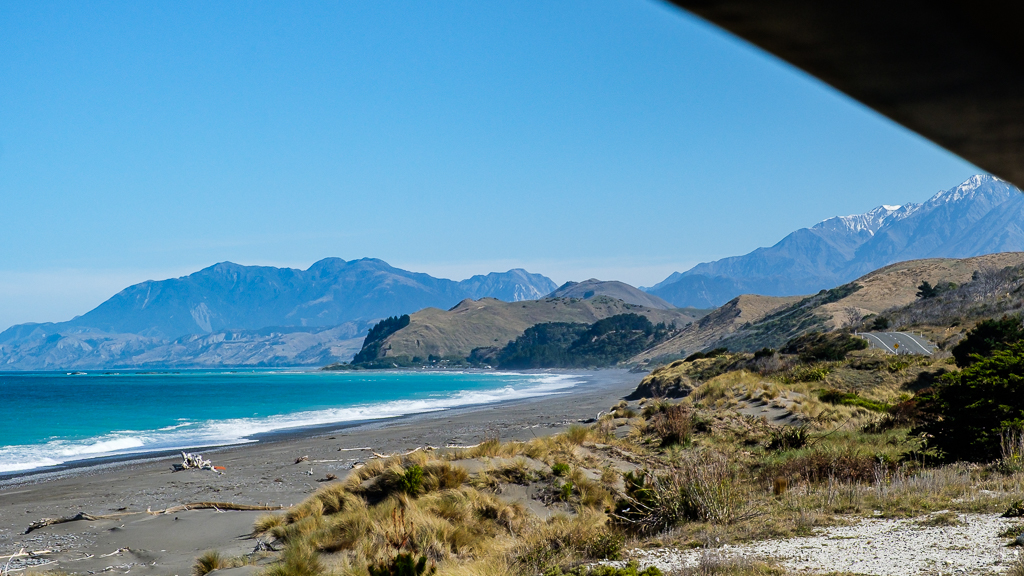
Past Kaikoura the view settles into the sea on the left hand side, flat farmland with snow capped mountains popping in and out of sight on the right. Small towns ‘flash’ past as the not particularly fast train rumbles on through.
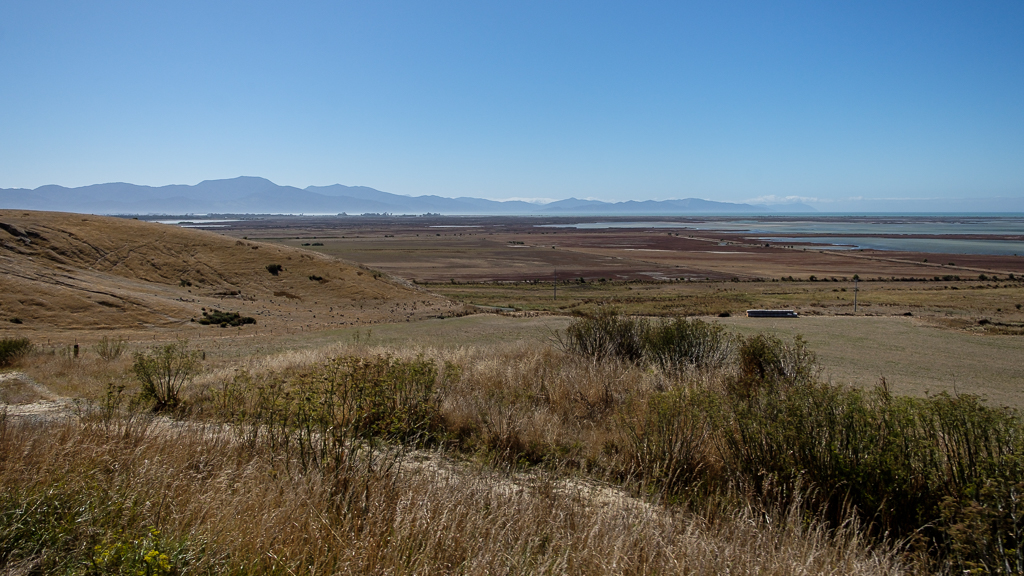
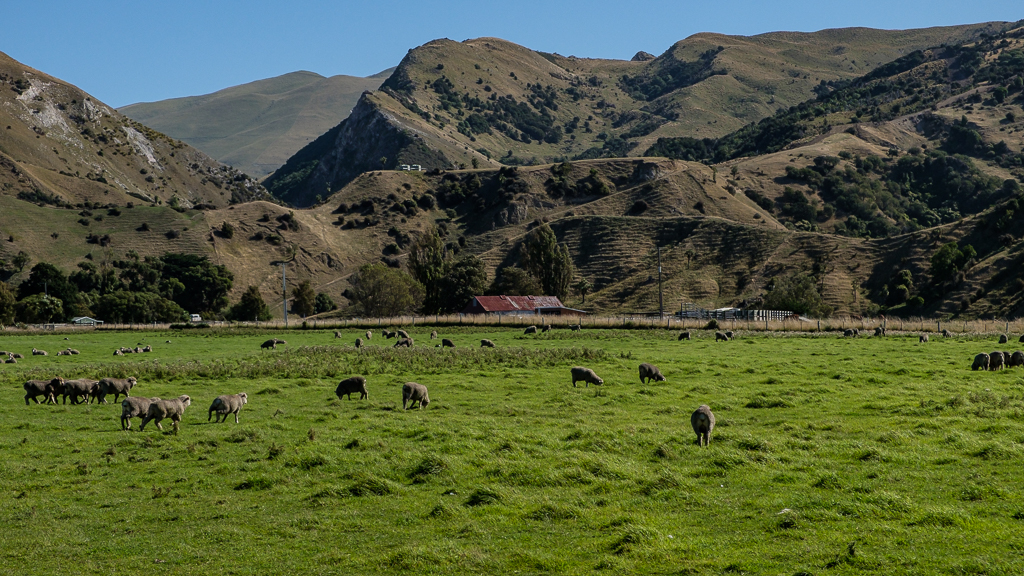
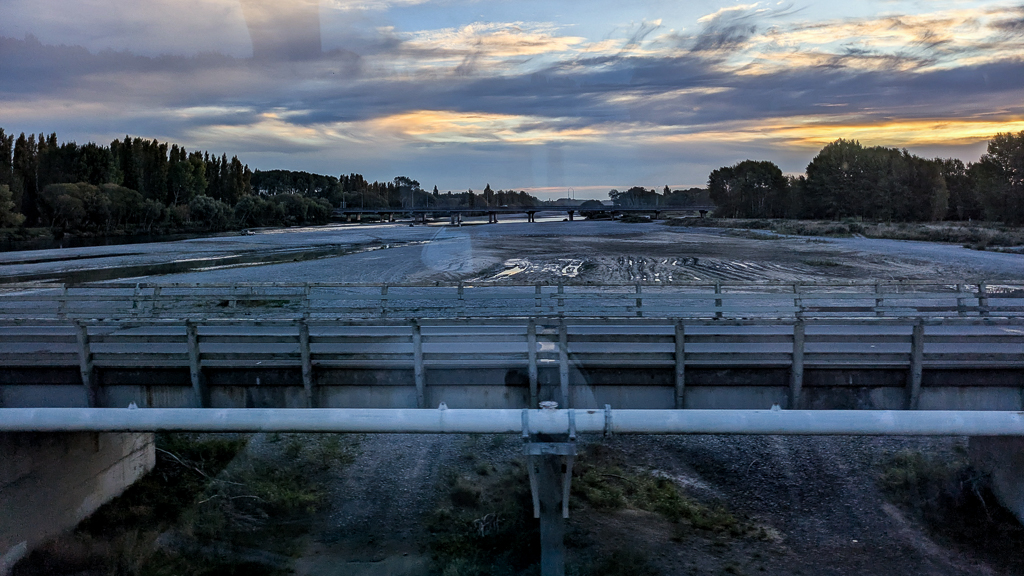
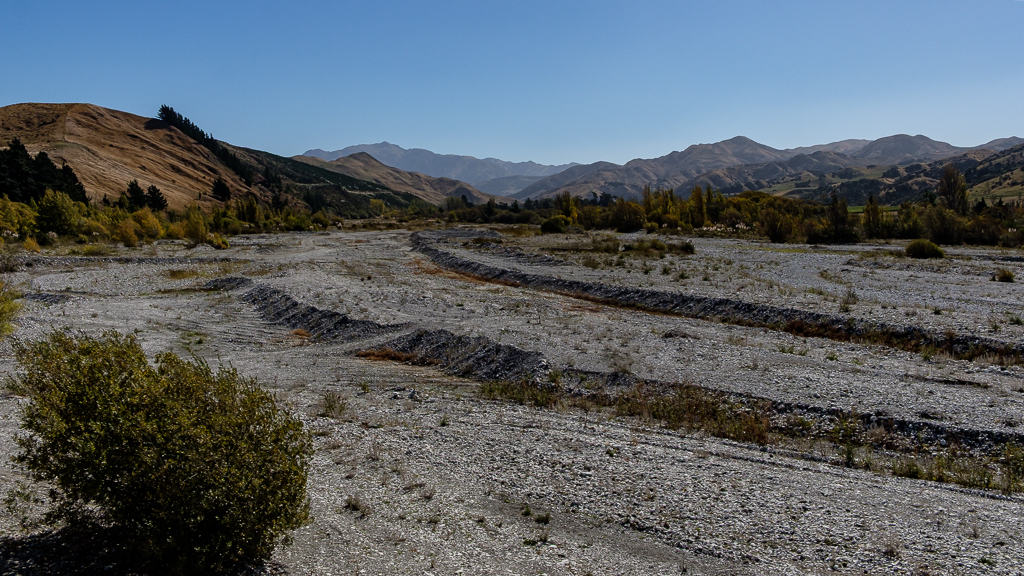
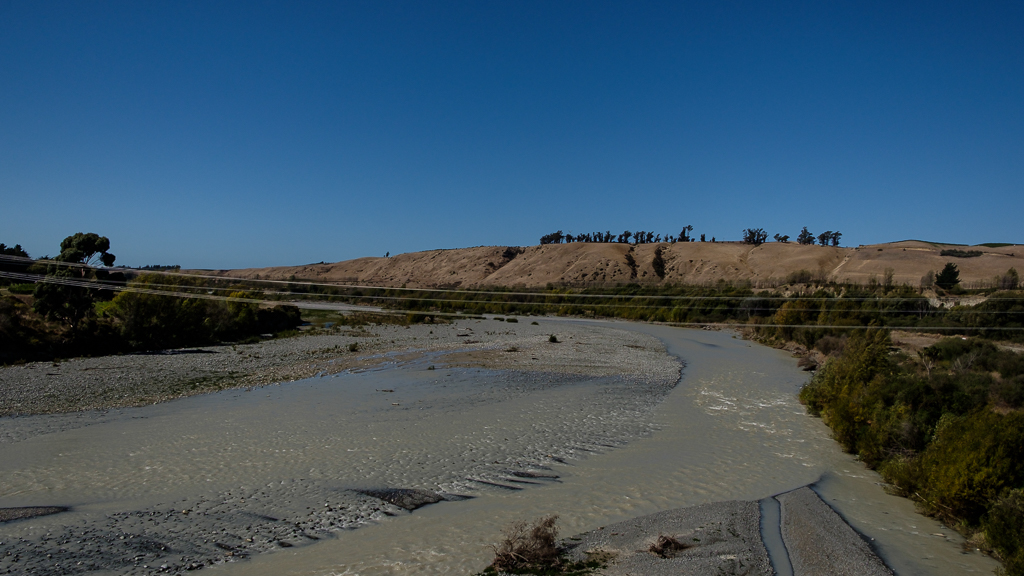
We cross some spectacular riverbed/flood plains on extremely long bridges. I was sitting in the cabin when I took this one through the window.
Soon enough we were pulling into Christchurch Station, slightly late as the train in front was on the single platform. Hard to believe this is the second biggest city in New Zealand! We were met on the platform by an old friend, who we are staying with for the two nights we’re in town.
The journey is fantastic and highly recommended if you’re looking for an alternative way of travelling from Picton to Christchurch or one of the stops in-between.
The Interislander Ferry left it’s berth in Wellington Harbour on time, at 8:45am. We’d arrived as requested at 7:45 for an airline style check-in and the big bags were taken off our hands and stowed somewhere on the ship where they store big bags. It was great not having to lug them around. The ferry is pretty big, it’s a vehicle ferry and it was full of all sorts of vehicles and all sorts of people.
We had an average breakfast and a terrible coffee as soon as we got on board, then discovered the proper café and got a much nicer coffee once we were settled and on the way out of the harbour. We wanted to beat the rush for food, but patience should have been exercised instead. I was desperate for a caffeine fix mind as the machine in the ‘departure lounge’ wasn’t working.
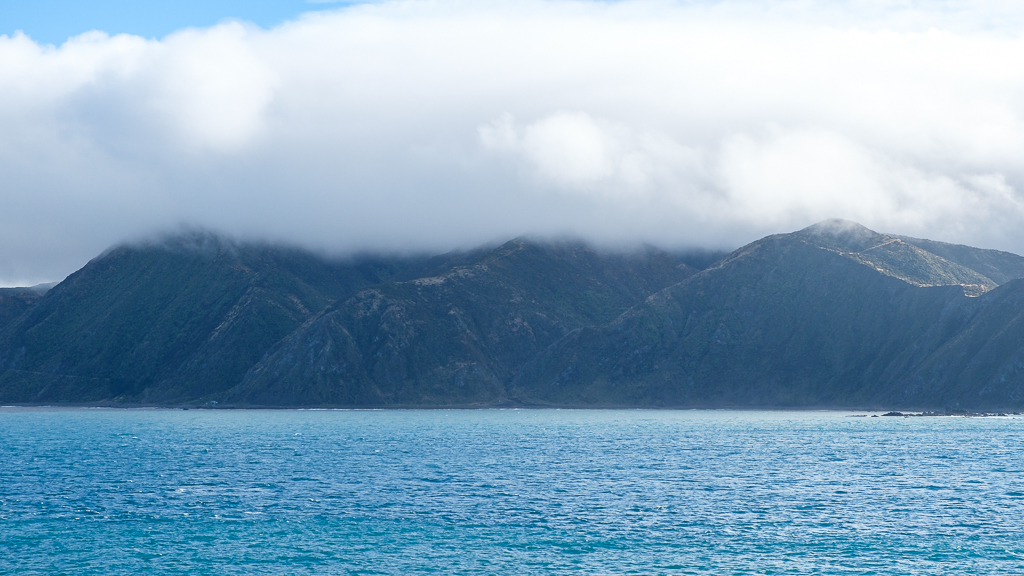
We were lucky with the weather; it was a stunner of a day, warm, calm and clear. Everything you want for a crossing of the Cook Strait, the band of water between New Zealand’s North and South Islands. We were heading south, across the strait and down through the Marlborough Sounds to Picton; about 3 hours and 30 minutes away. It’s about 93 kilometres in total, with two thirds being inside the sounds.
Eleanor and I have done the journey before, but I was keen to share it with Paula, as on a good day like today, it’s a stunner of a trip. It lived up to the reputation I’d given it as well.
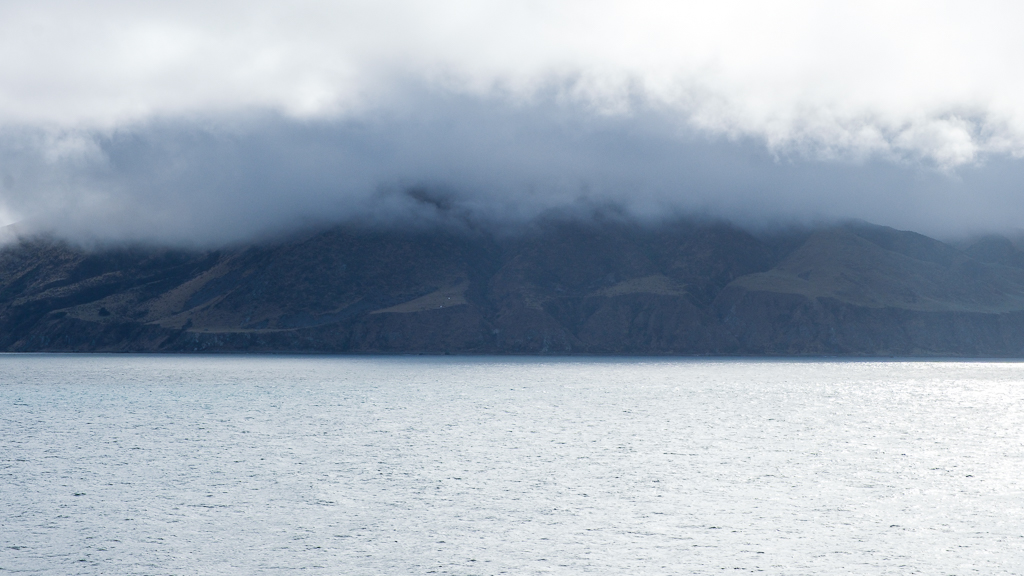
The ferry sort of hugs the southern coast of the North Island for a while, providing some great views of the rugged coast line. I spent a lot of time on this part of the journey trying to spot dolphin pods, or even better whales; but sadly, other than a few seagulls, there was no other wildlife to see today.
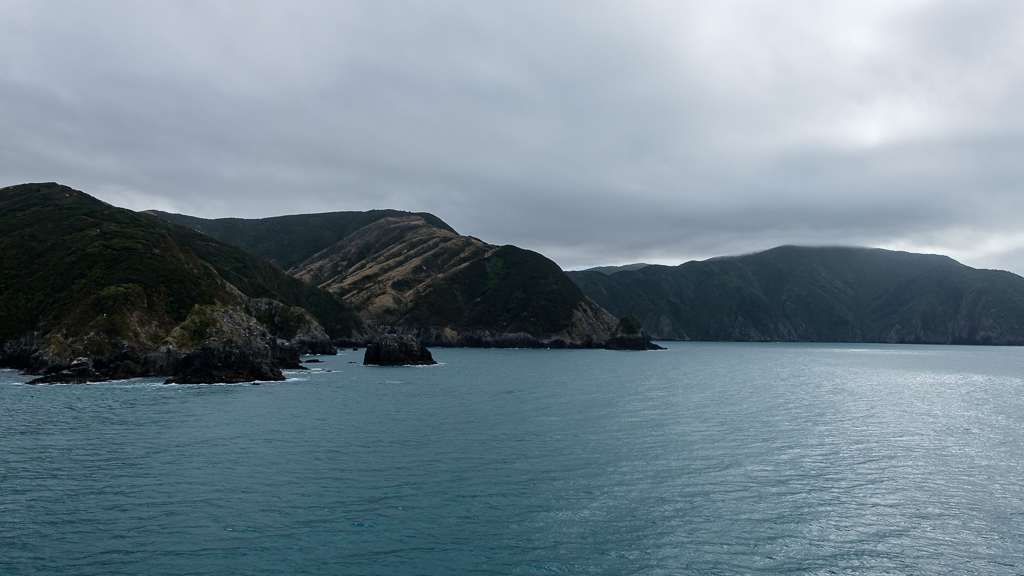
As we approach the top of the South Island it is almost impossible to see the narrow entrance to the sounds from the strait and it sort of pops into view at the last minute.
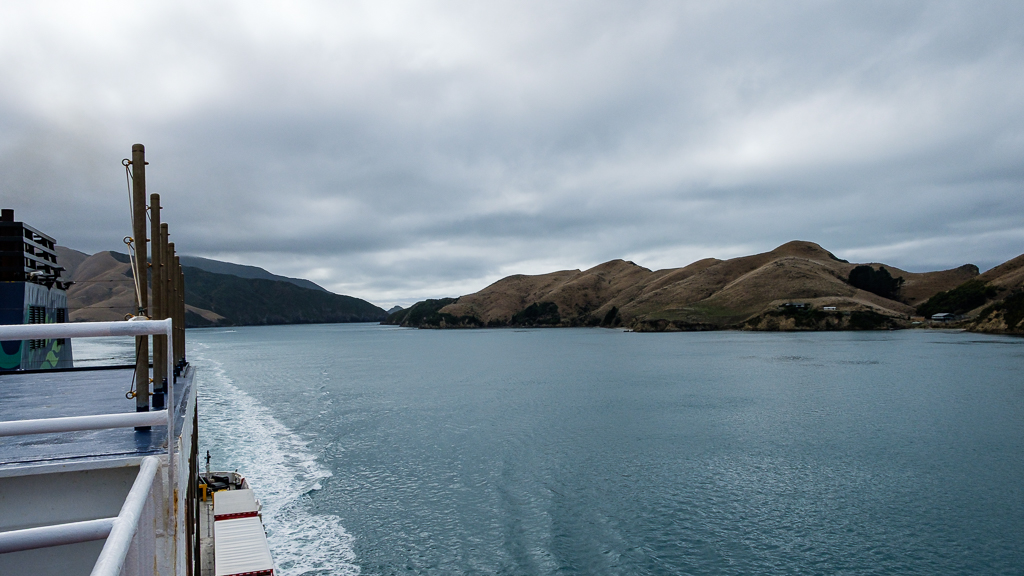
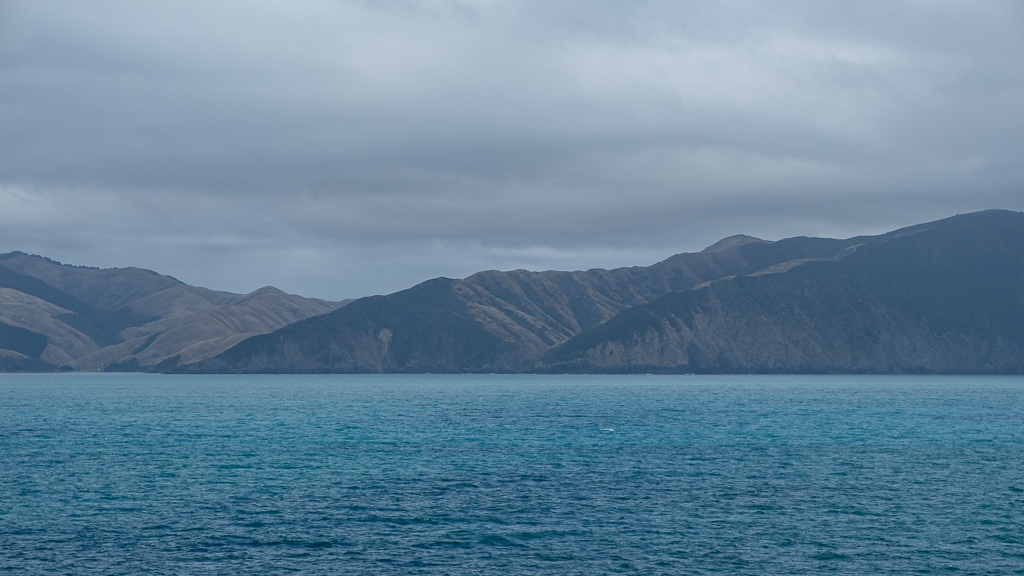
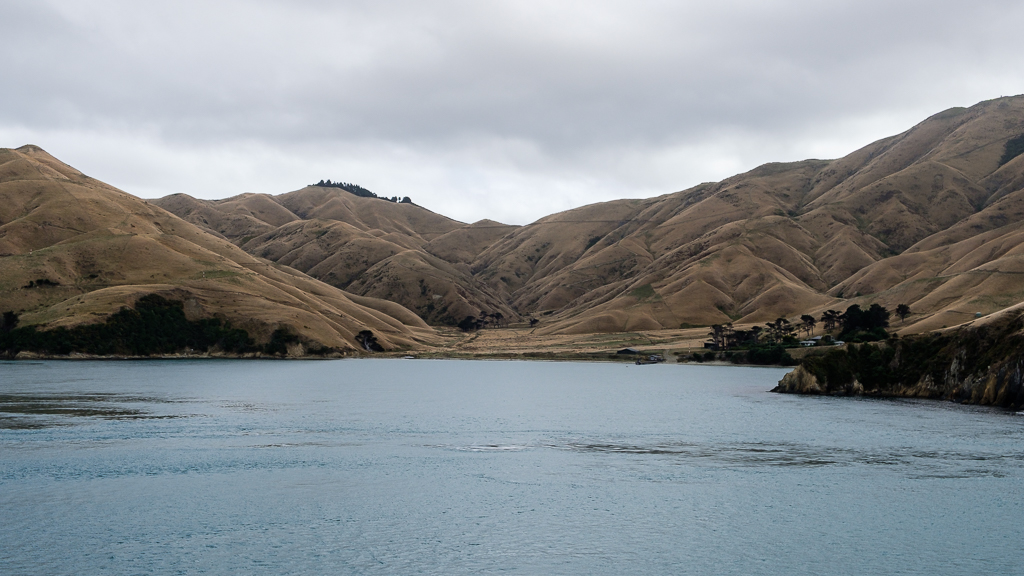
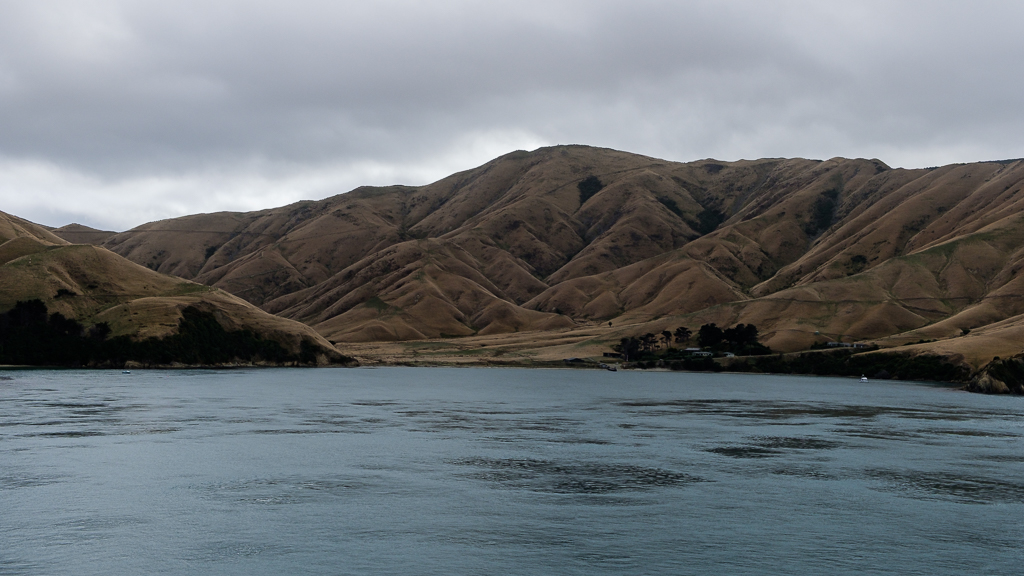
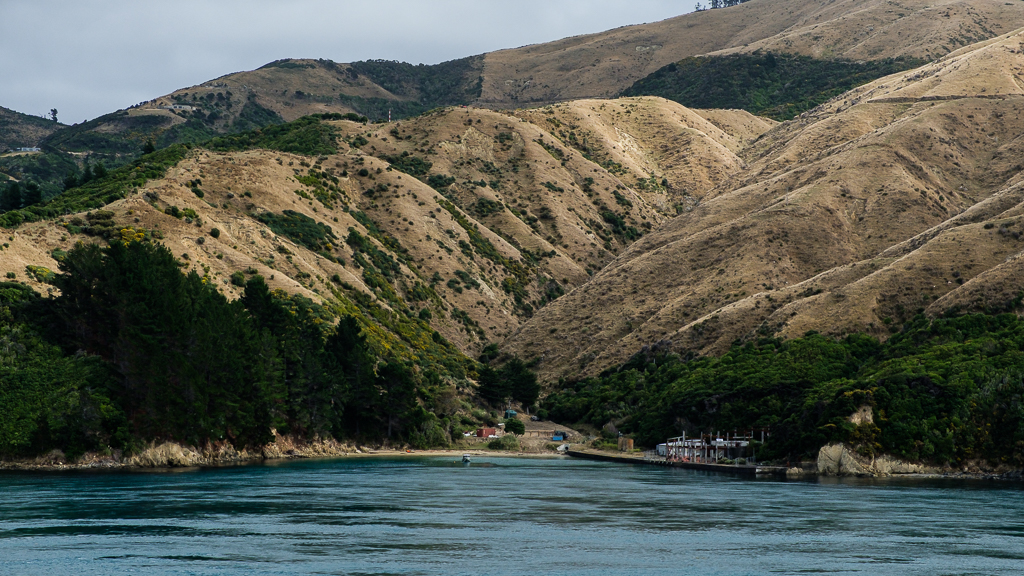
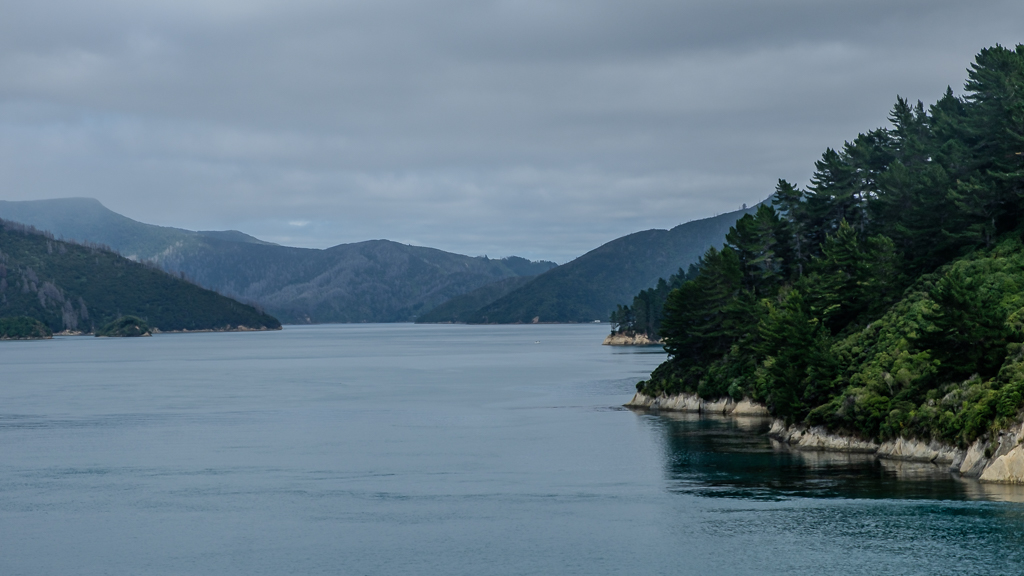
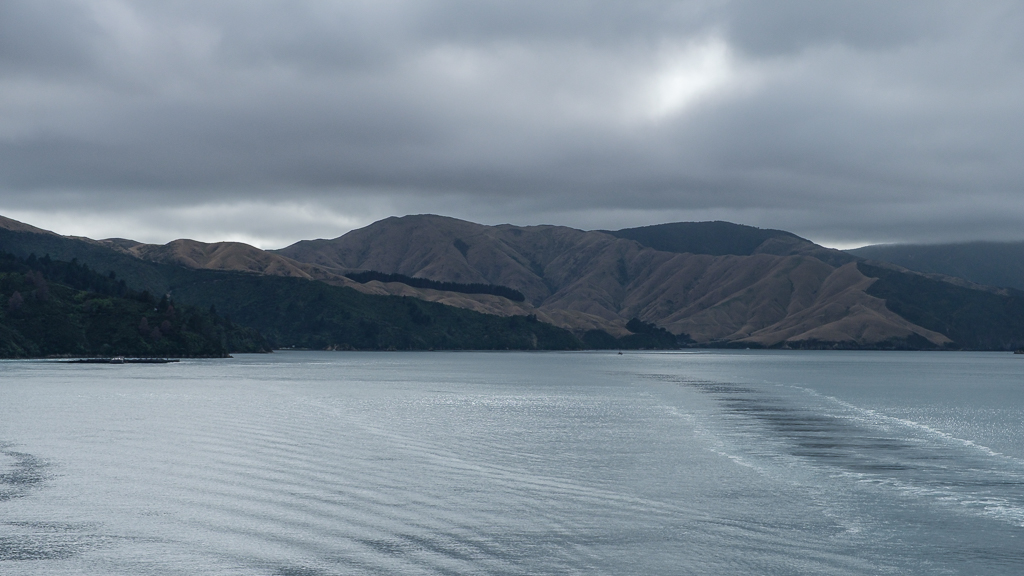
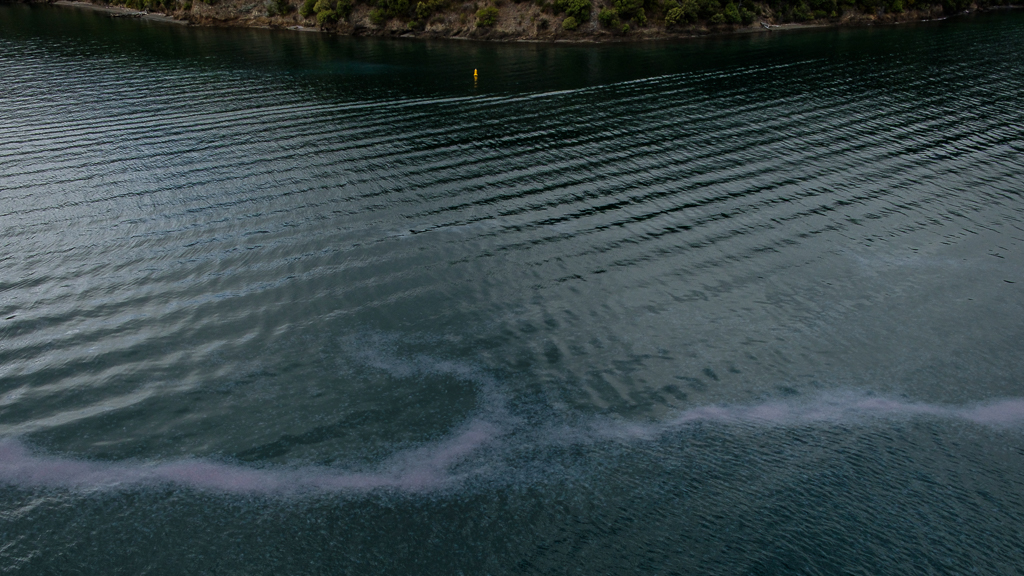
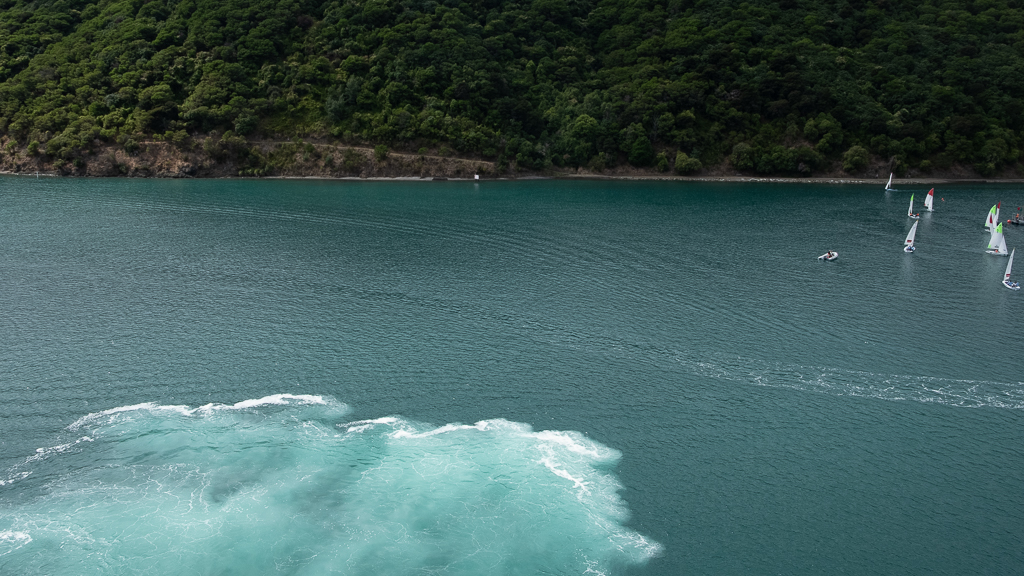
The highlight was undoubtedly the final hour navigating through the stunning Marlborough Sounds. The water turned a deep turquoise as we weaved between the hills that plunged dramatically into the sea. Small isolated homes appeared occasionally along the shoreline, accessible only by boat.
As we approached Picton we carved through a monstrous pod (swarm? herd?) of jellyfish.
I’d tried to arrange a shuttle ride from the port in Picton the thirty or so kilometres to Blenheim, where I’d booked us into a motel for the night. I thought the booking had failed, but the driver was waiting for us with a sign with my name on it as we got off the ferry and collected our bags. It was an expensive ride.
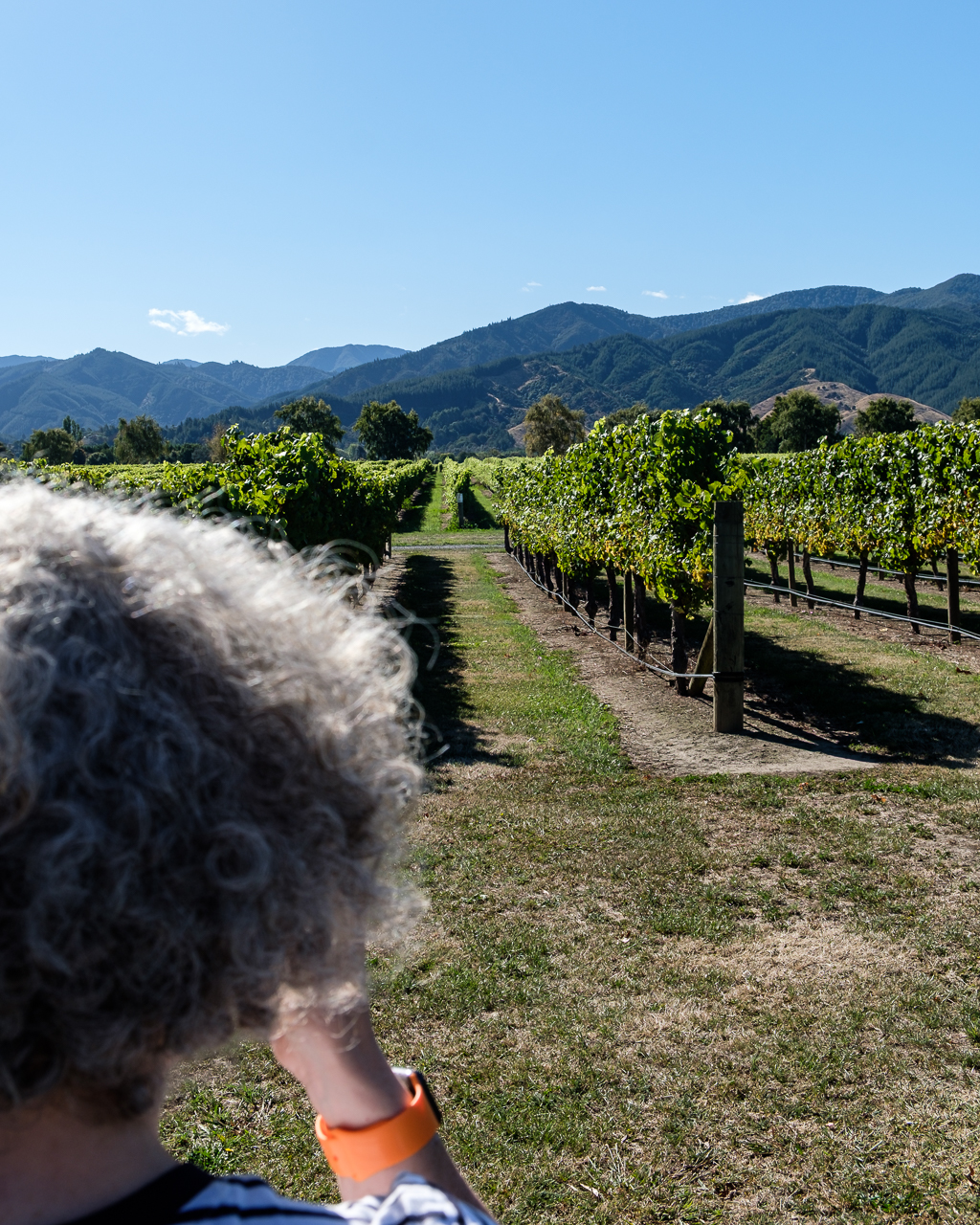
We had a fairly simple motel, it was comfortable, quiet and perfectly fine. We weren’t planning on spending a lot of time in the rooms. The shuttle driver had recommended the St Clair Vineyard for lunch so we took a taxi there and were lucky to get a table – only because we’d booked ahead just before leaving the motel. It was very busy.
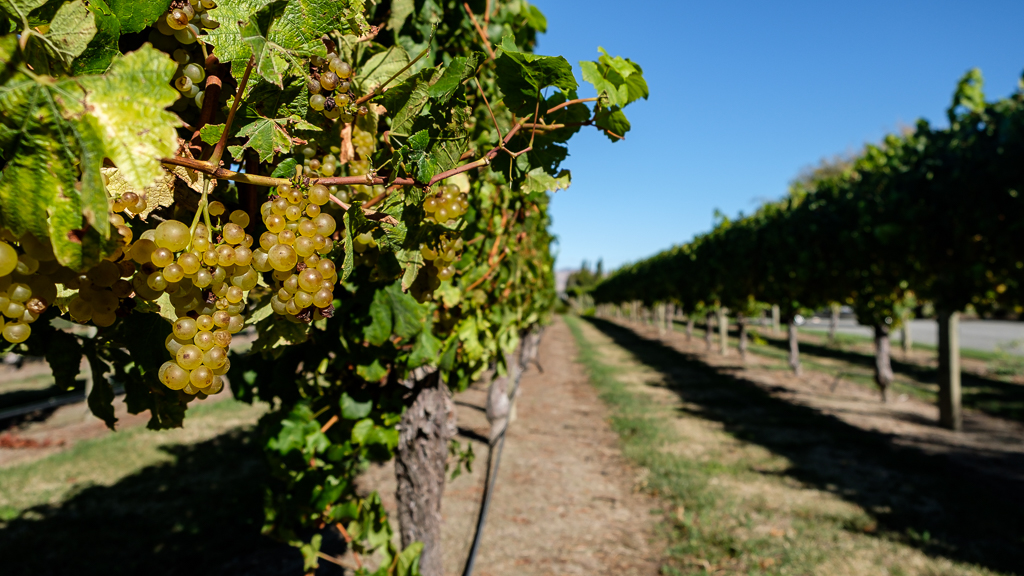
Marlborough is wine country and there are a significant number of vineyards in the surrounding area. Some brands, like Cloudy Bay, are very well known in the UK. I think it would be fair to say that sauvignon blanc is the primary grape variety grown here. Marlborough sauv blanc is available in most places in the world that sell wine.
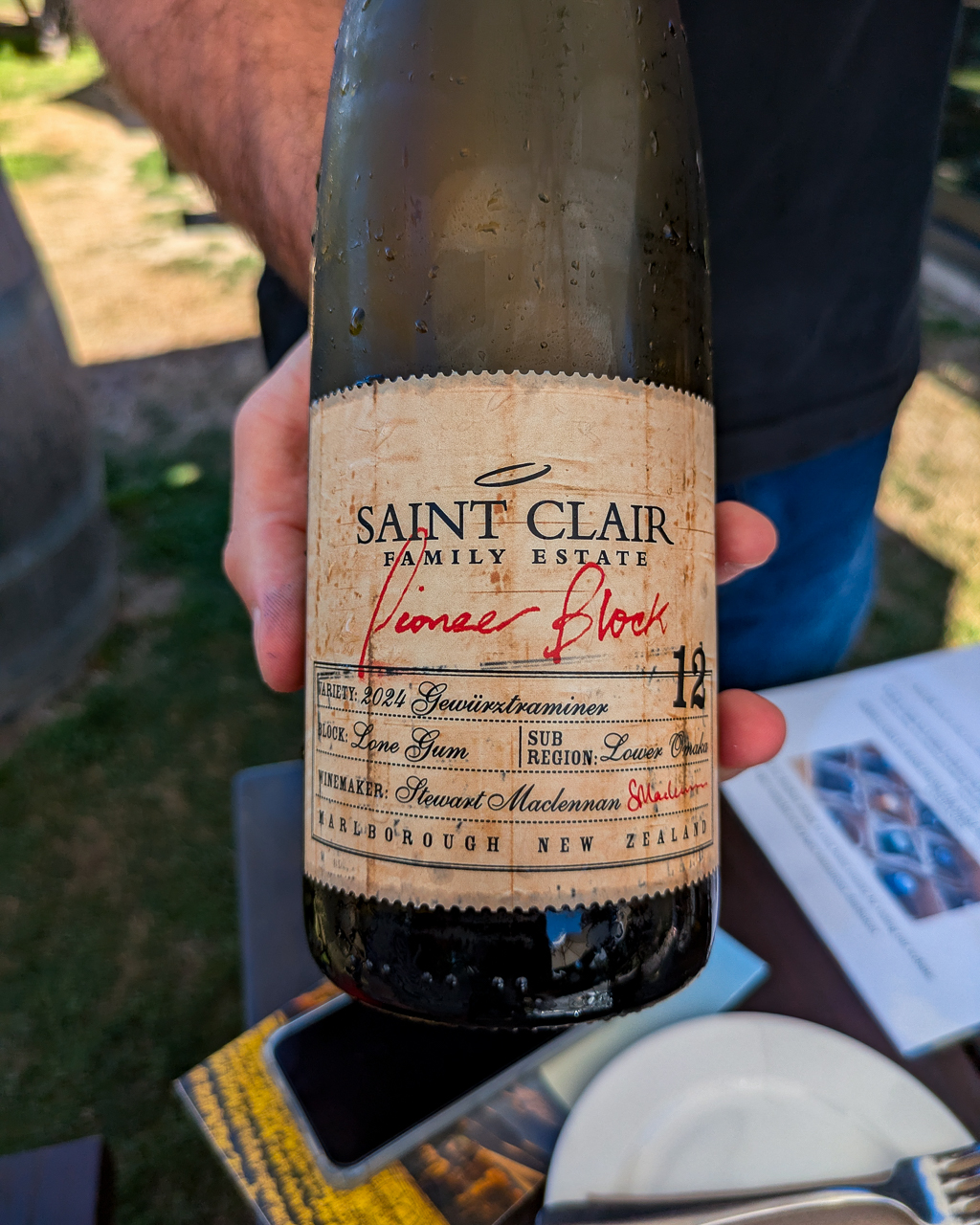
St Clair wasn’t a wine producer I’d heard of before so I was keen to sample some of their product. We’re not huge fans of sauvignon blanc, much preferring the pinot gris variety of white wine. We also like a gewürztraminer, which is less well known in New Zealand, though St Clair had a very nice one.
Fortunately the vineyard only allows bookings for a couple of hours so we were turfed out nice and early. I could have sat there in the sun drinking cold wine and eating cheese for hours; though would have been broke and a bit ‘under the weather’ if that had happened.
Our South Island adventure was off to a cracking good start.
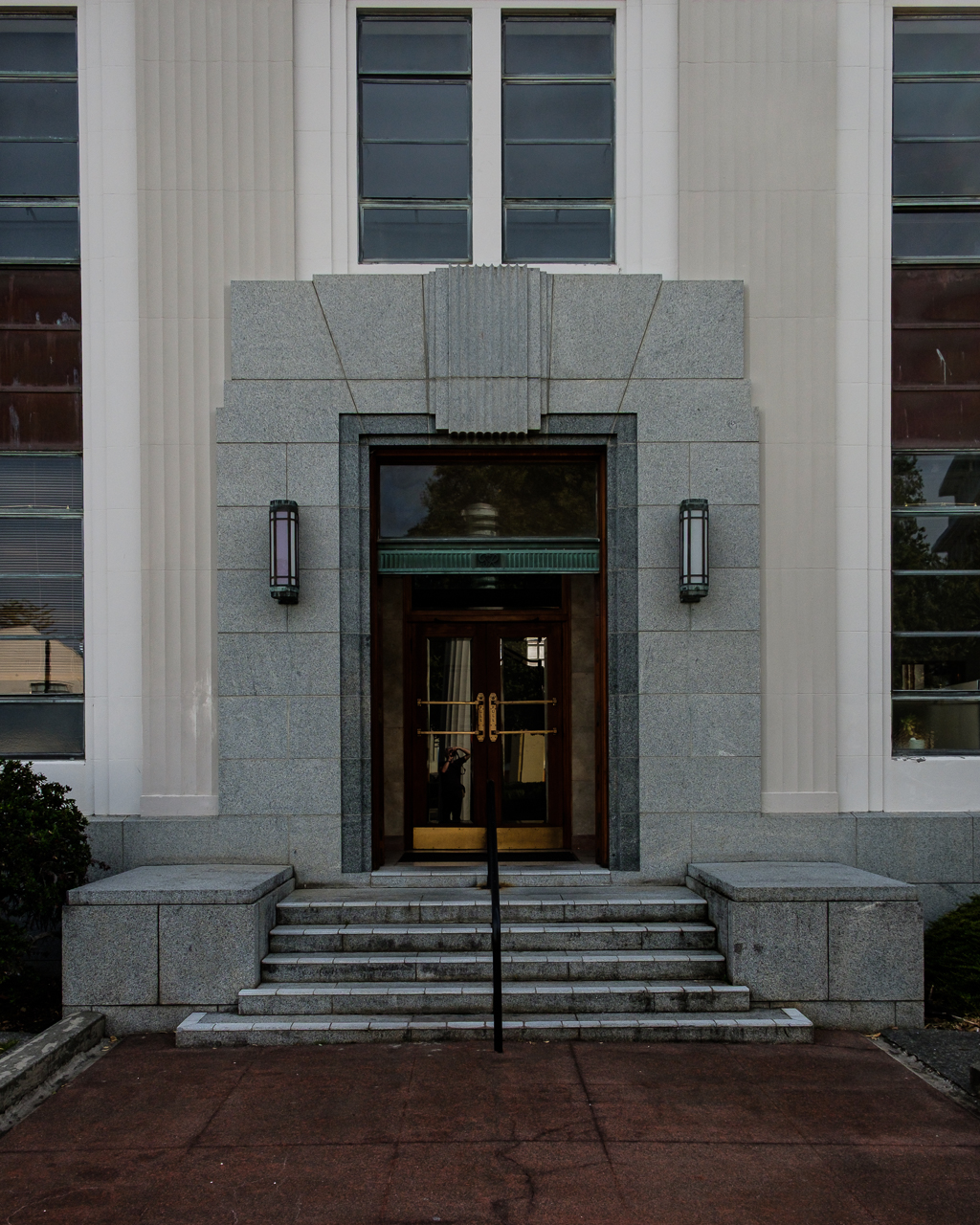
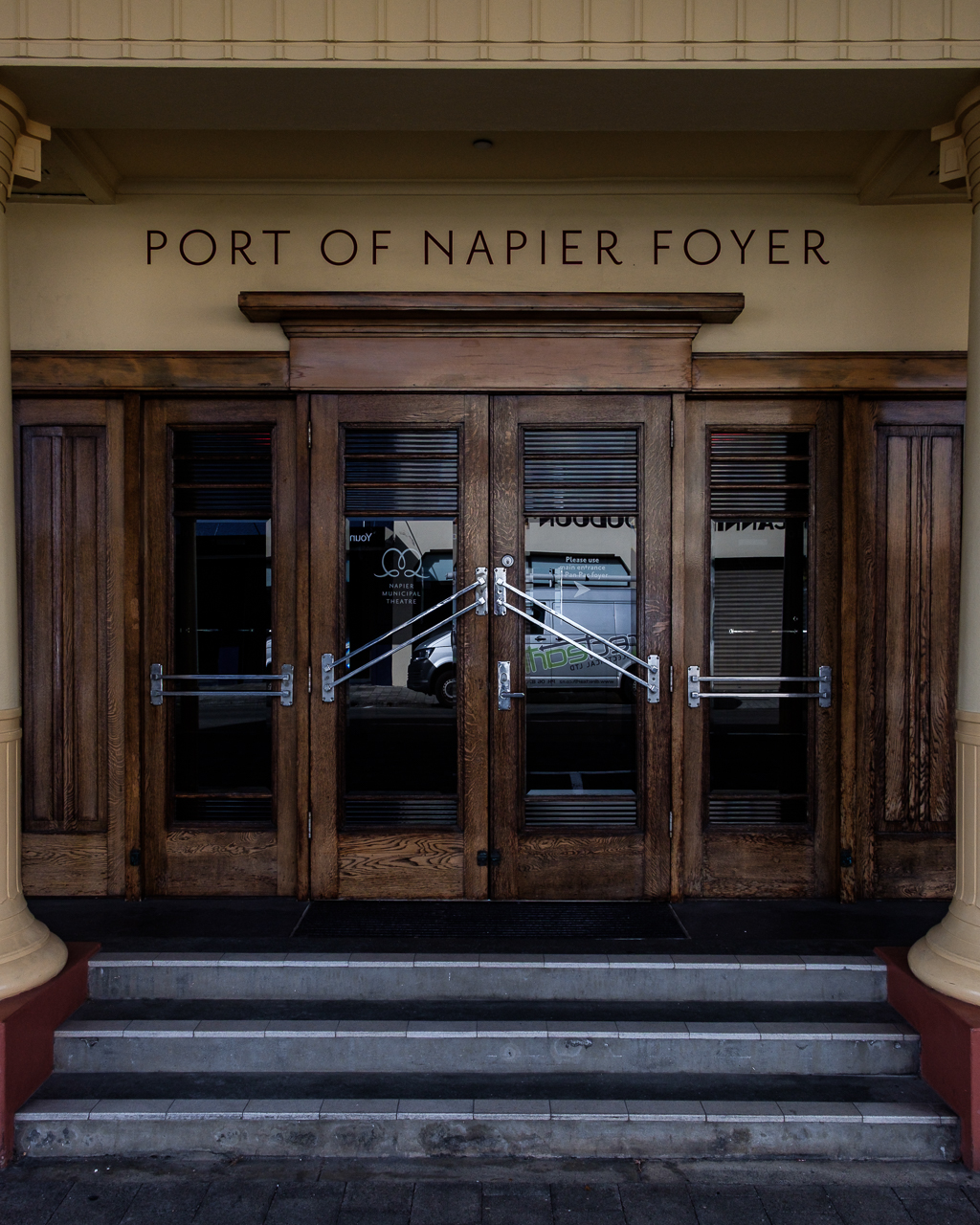
When planning our New Zealand travels, Napier was high on the list – especially after missing it on our previous trip due to Covid restrictions. What makes this city particularly fascinating for me is its remarkable architectural story, born from a terrible (and probably terrifying) event.
On 3 February 1931, Napier experienced a catastrophic 7.8 magnitude earthquake that lasted just 2.5 minutes but completely transformed the city. The earthquake tragically killed 256 people and almost totally destroyed the city centre, as well as causing severe damage to residential areas and the surrounding countryside.
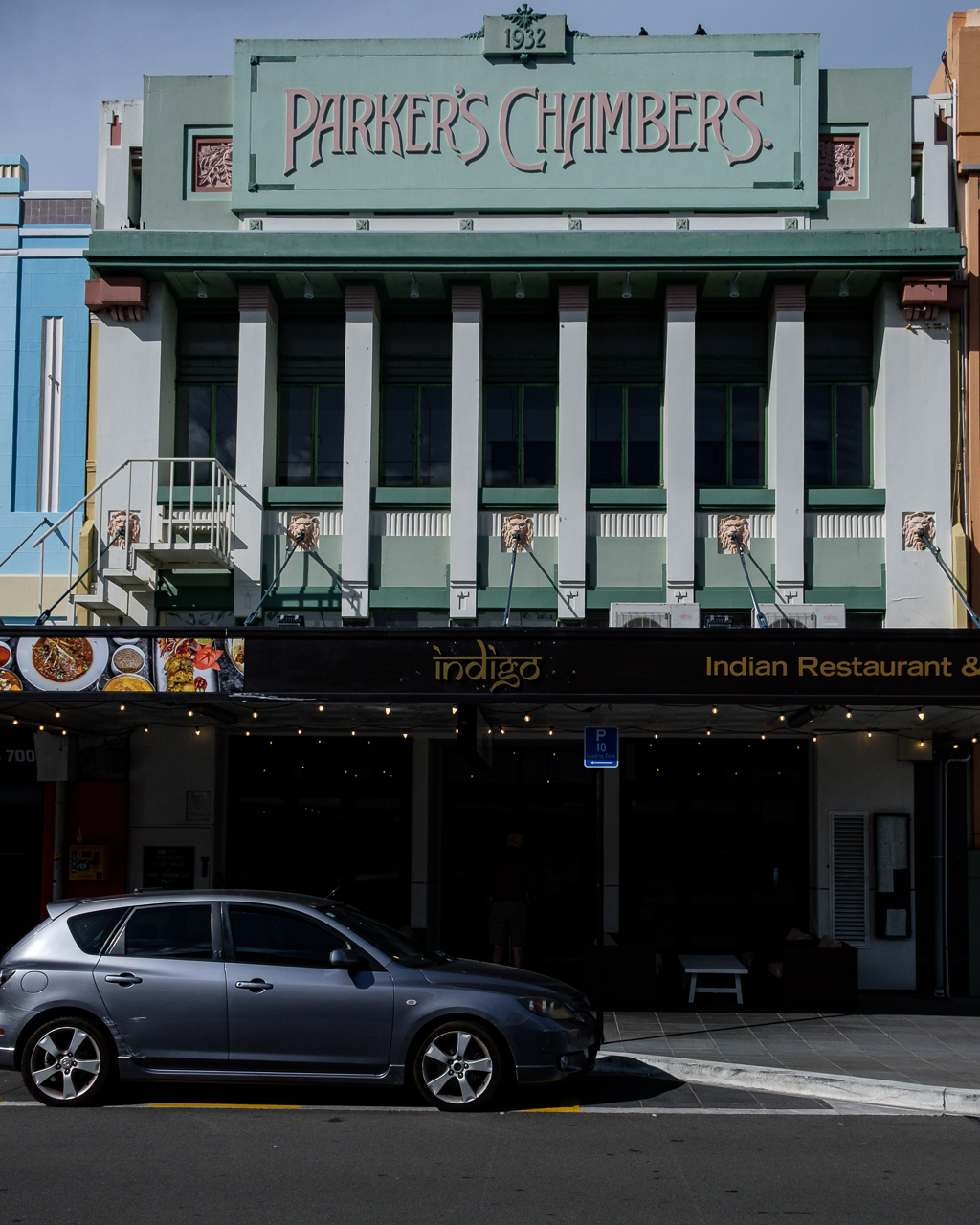
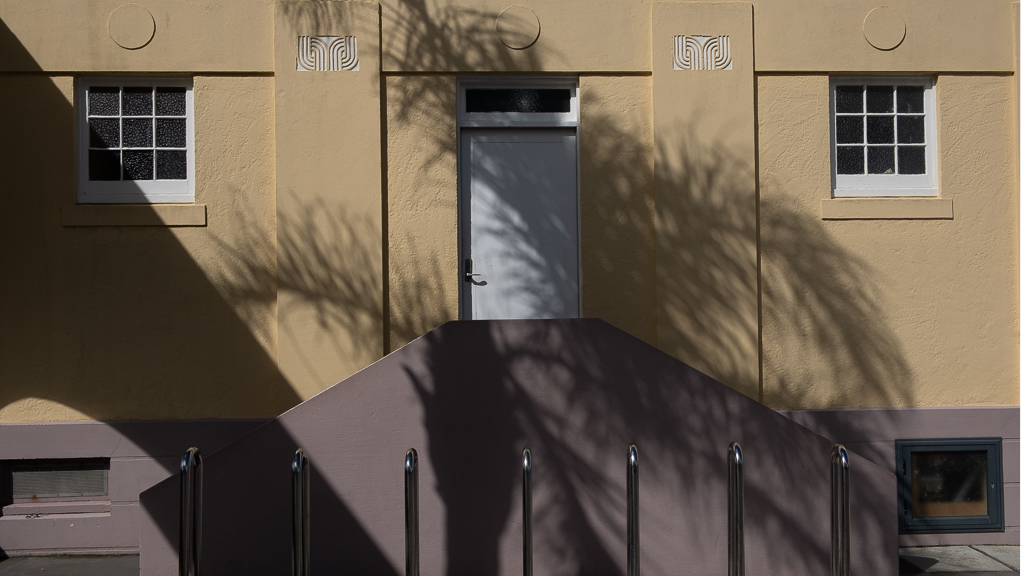
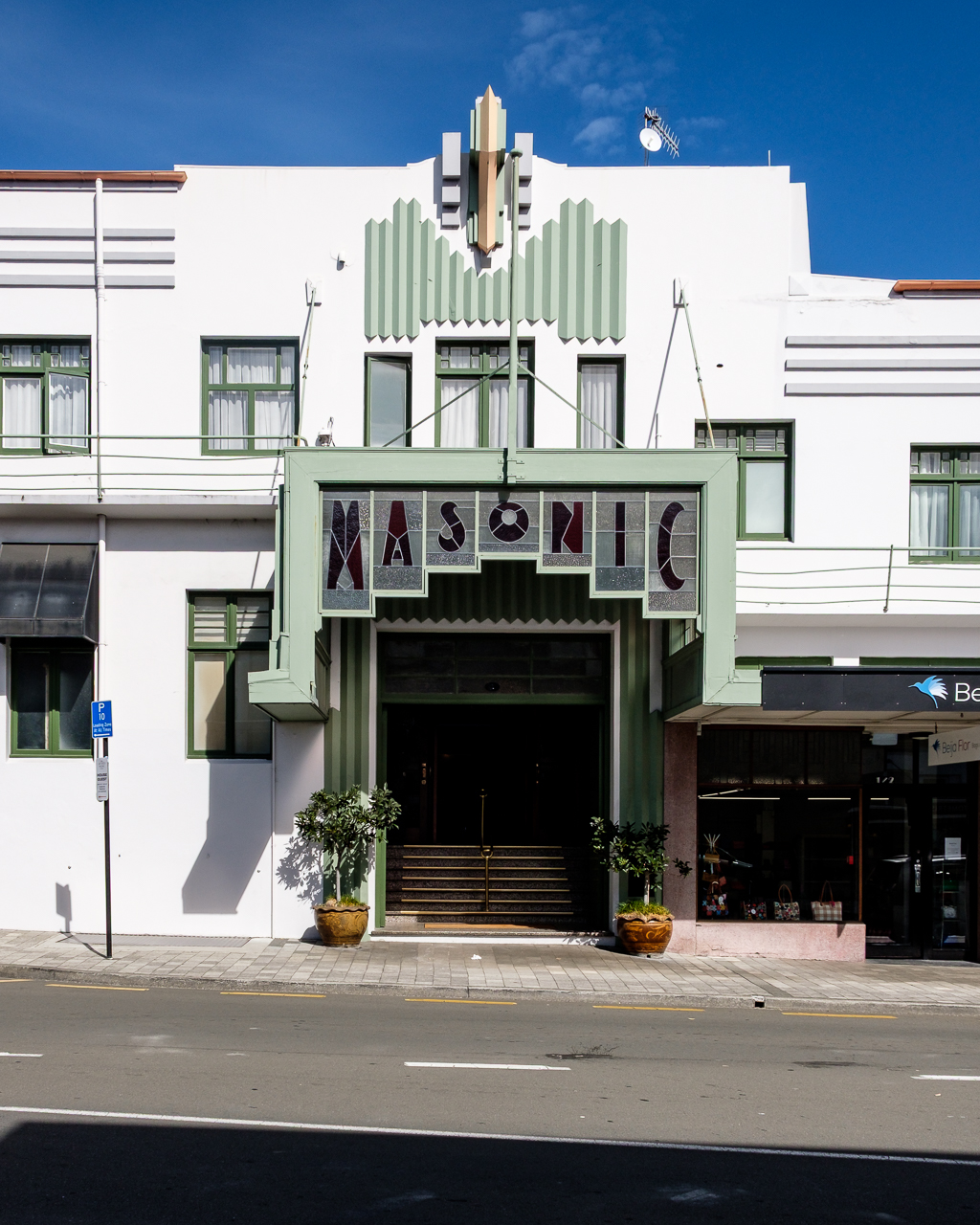
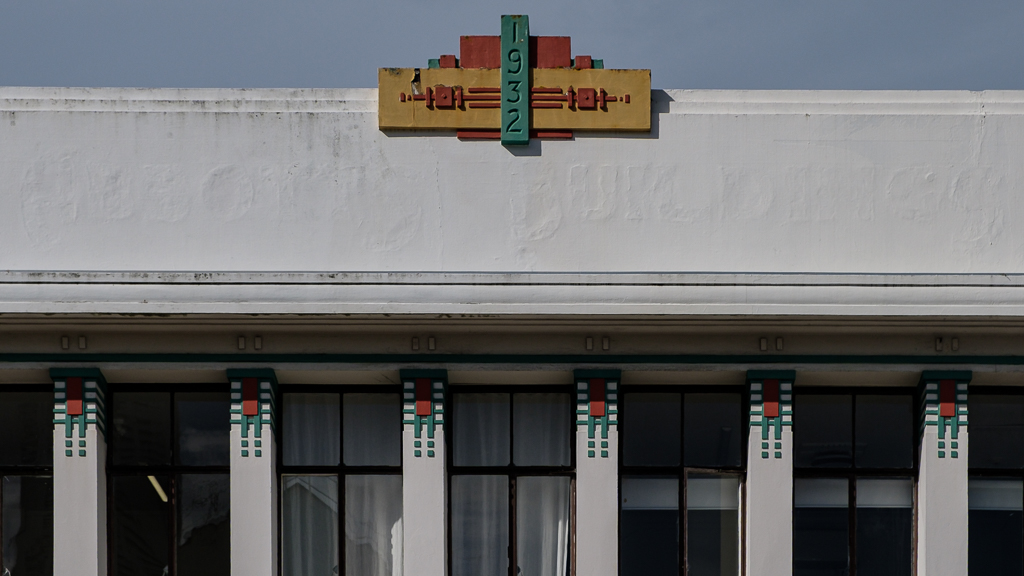
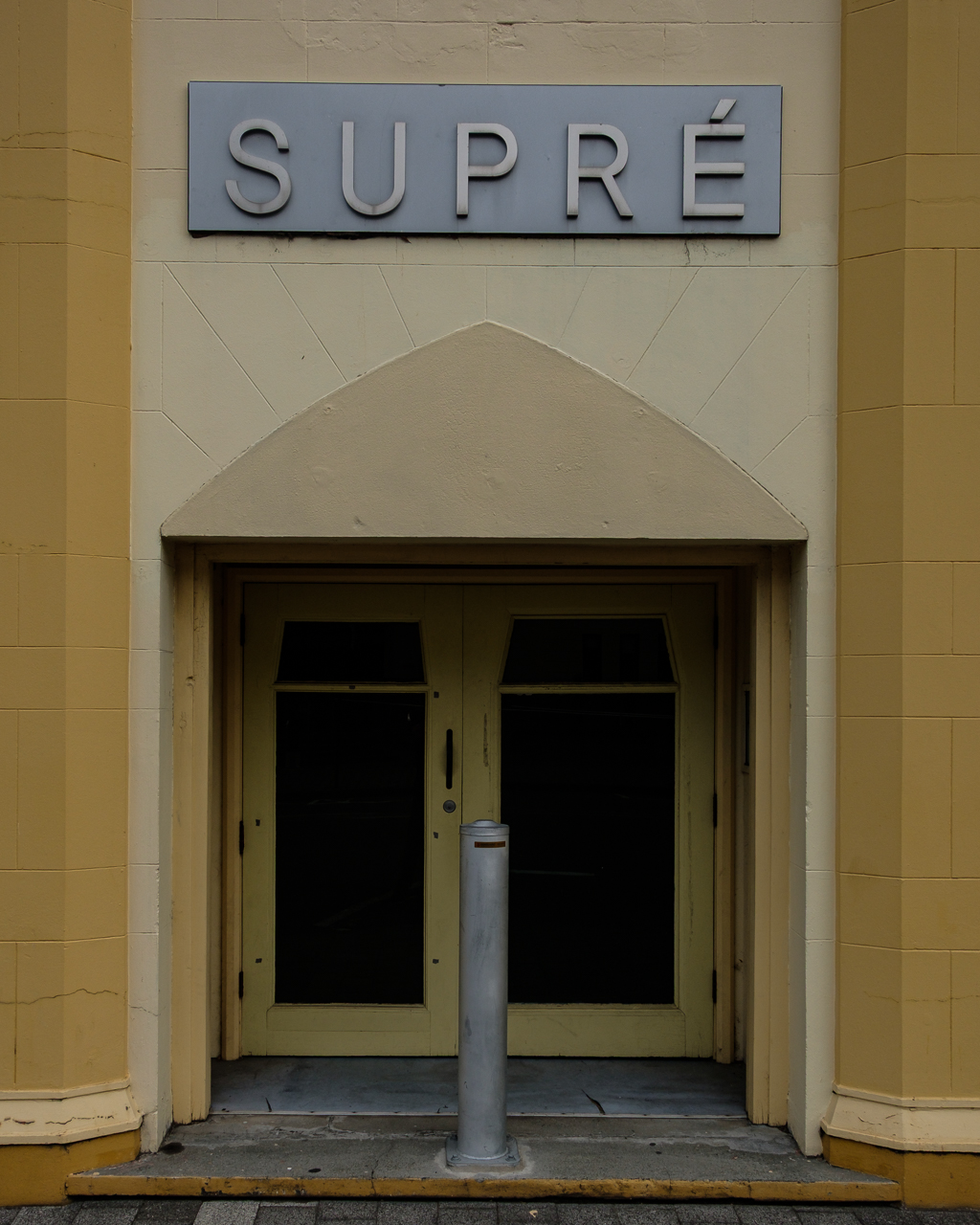
By 1933, Napier had completely reinvented itself as an art deco city. Embracing current design trends, with a local flavour, the city was rebuilt from the ground up. Remarkably, much of that 1930s rebuild remains behind and walking through the city centre today feels like stepping into a perfectly preserved 1930s film set.
With over 140 well preserved art deco buildings, the city now markets itself as the “Art Deco Capital of the World.” I would love to visit when they properly celebrate this and ban all those pesky modern cars that park in front of all the interesting bits.
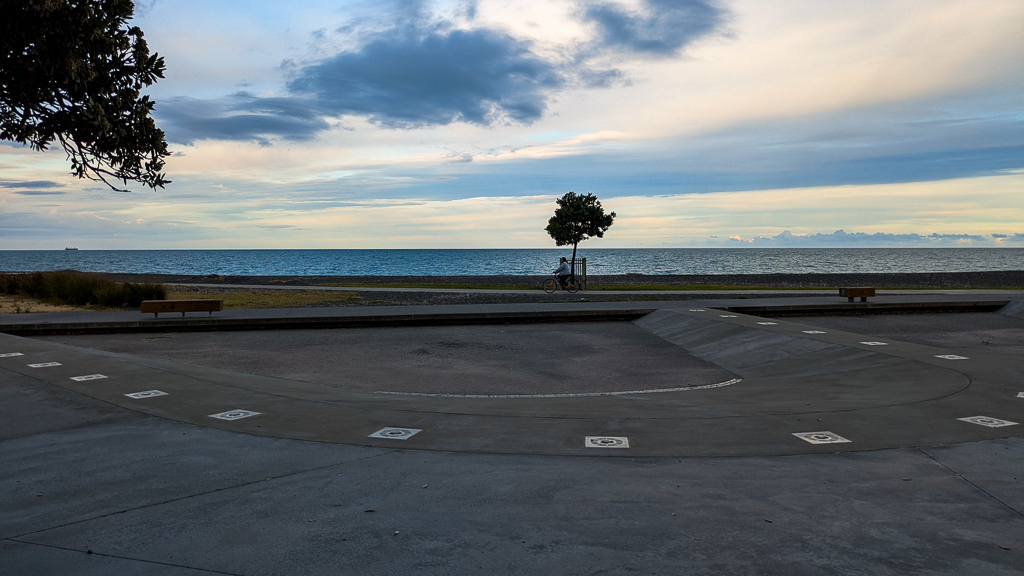
We arrived in Napier after a 5 hour drive from Rotorua, and with only an afternoon in town we were out looking at buildings soon after dropping our bags in the motel, which was directly over the road from the beach. It’s always relaxing being near the sea.
We loved Napier, and I wish we’d had more time to just walk around the city centre and admire the beautifully maintained buildings under a nice blue sky. There is a (mostly) friendly vibe here.
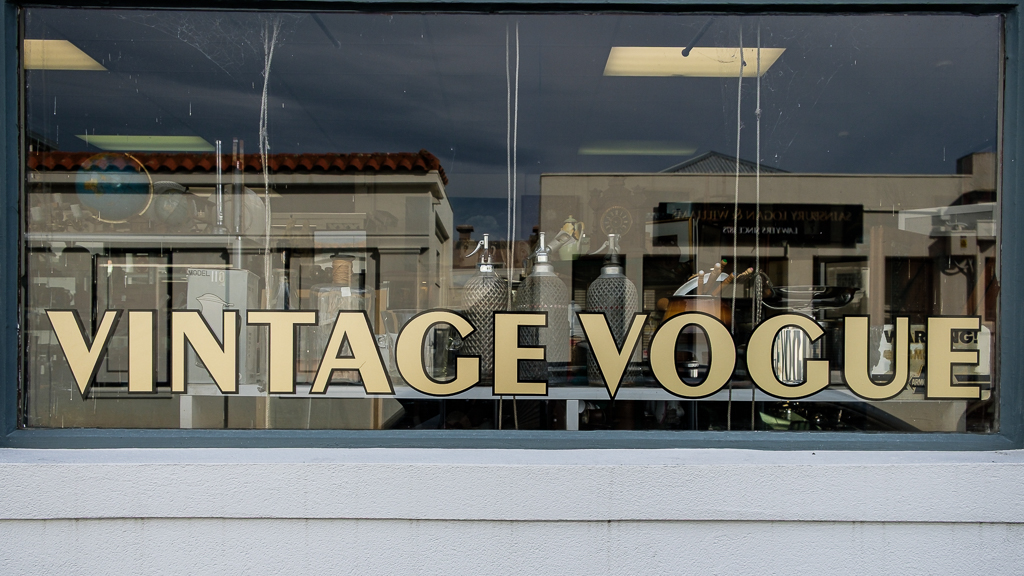
I took a lot of photos as we walked.
It’s a small city centre and with little time we focused on the central streets. There are a couple of locations away from the business and commercial centre, though we didn’t really have time to visit them. I would have liked to have seen some of the residential properties. I’ve saved those for next time.
Late afternoon we stopped for a drink and a sit down at Community Burgers, a really nice little bar that I would’ve been very content spending more time in if I hadn’t had a burger for dinner last night. A rare bar playing decent music.
Walking back to the motel for a break before convening again for dinner, we had the only unpleasant moment of the entire trip. We got engaged in a random conversation with an oldish man, who stopped us on the street. He was clearly drunk or on something, and it started off being just a bit weird but moved on to him making an extremely racist comment, at which point we left the conversation. This resulted in him telling us to ‘F off’ and us returning the compliment, before heading off in different directions.
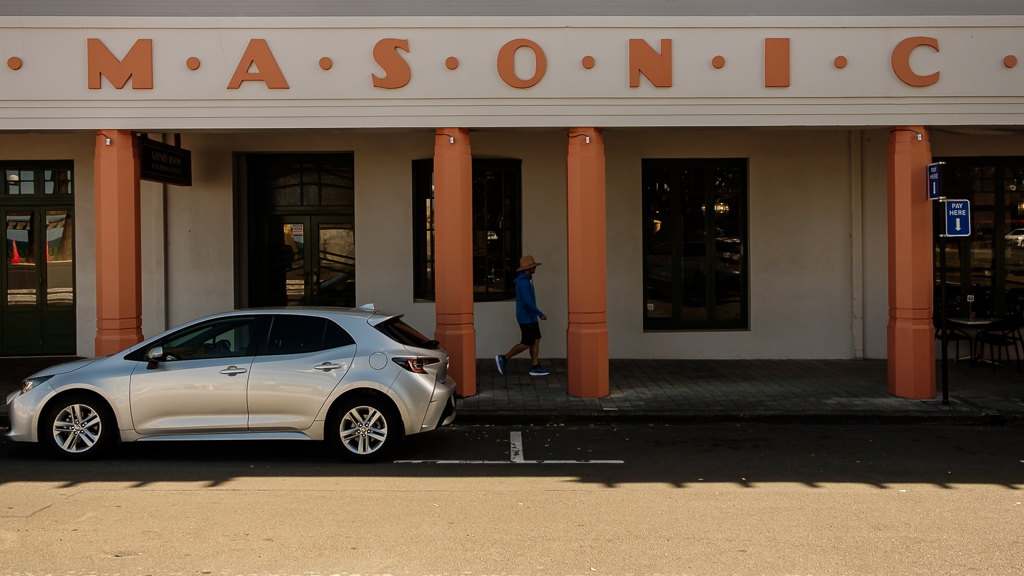
Luckily, we only let it ruin our day for a few minutes, and after a planned rest, we walked to the beautiful Masonic Hotel for a very nice dinner and a settling glass of wine, or three.
Our trip to New Zealand was always going to be a short one, with not enough time to do all the things we want to do. Naturally, any time spent in New Zealand has a family focus, but I also want to show Eleanor, and on this visit, Paula, some of the good bits, which are mainly outside of city centres. When Eleanor and I were here last time we had numerous plans to see the country, all of which were thwarted by lockdowns, or in the end when we were due to fly back to the UK, Covid-related nervousness. This time there were no such restrictions, self imposed or otherwise, though now, time time itself is the restriction.
Paula hasn’t been to New Zealand before, so it was important that we dropped Rotorua into the road trip. We also wanted to visit Napier, a place we had to drop last time. There wasn’t much else in the north that I wanted to show off, and with limited time, the South Island is where visitors should go. So that was where I focused my planning energies; not that I would get to many of the best places myself.
I split the road trip into two sections; with me renting a car for the North Island leg and Paula renting a car for the south. Car rental in New Zealand is not terribly expensive, unless you want to return the car to a city different to the one you collect it from. Then it’s madly expensive. I broke the trip into two to save us some money, and Paula could collect and drop off the car from Christchurch airport, saving hundreds of pounds, which we could spend on getting the scenic train from Blenheim.
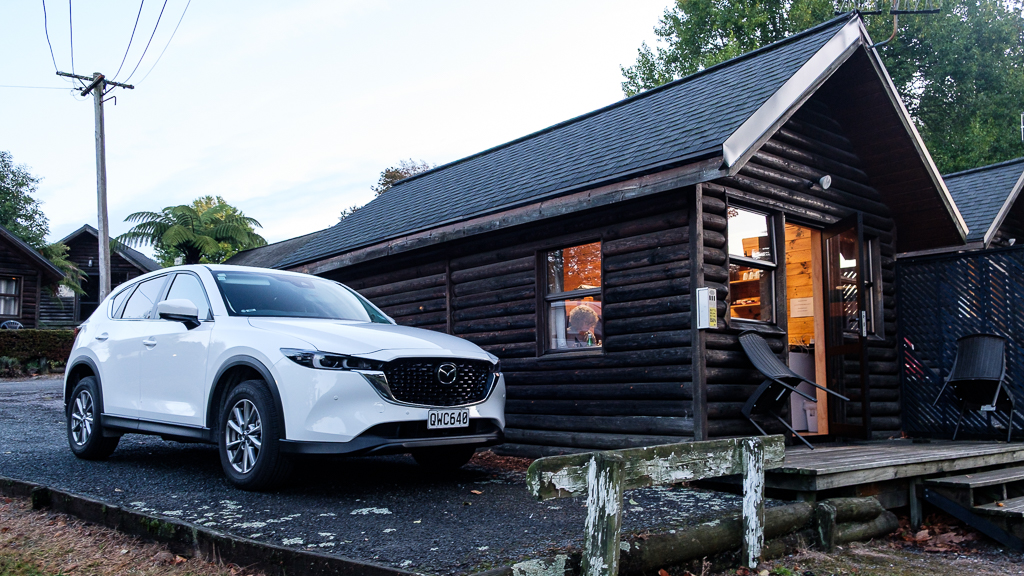
We waited at Mum’s until the morning rush hour was over before saying farewell and thanks, and then set off for day one of our less than grand tour of New Zealand. The rental car is huge by my standards, yet still only a medium-size SUV, a Mazda something or other. I’m not a car person. It was white and everything worked perfectly well and it ‘seemed’ reasonably economical. At least it was comfortable to drive, other than being comparatively huge. Here it is, parked outside our cabin in Rotorua.
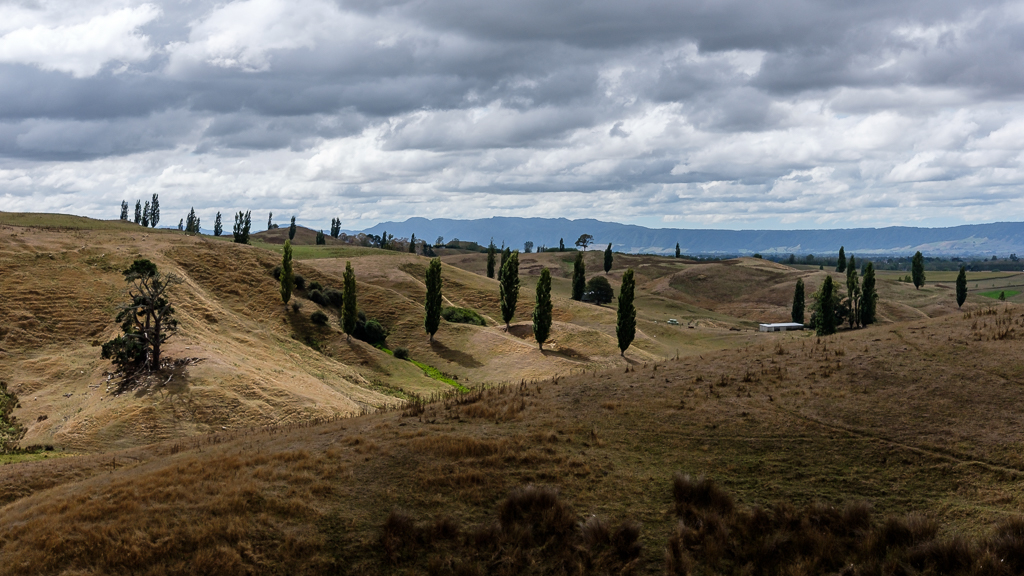
Our first stop was at Hobbiton, something that Paula specifically wanted to do. We had tried to book tickets a couple of weeks ago, but it was sold out. We arrived with the faint hope there would’ve been cancellations. We were wrong, it was packed. Oh well. It was sort of on the way and at least it was a nice day (so far) and the countryside is pretty.
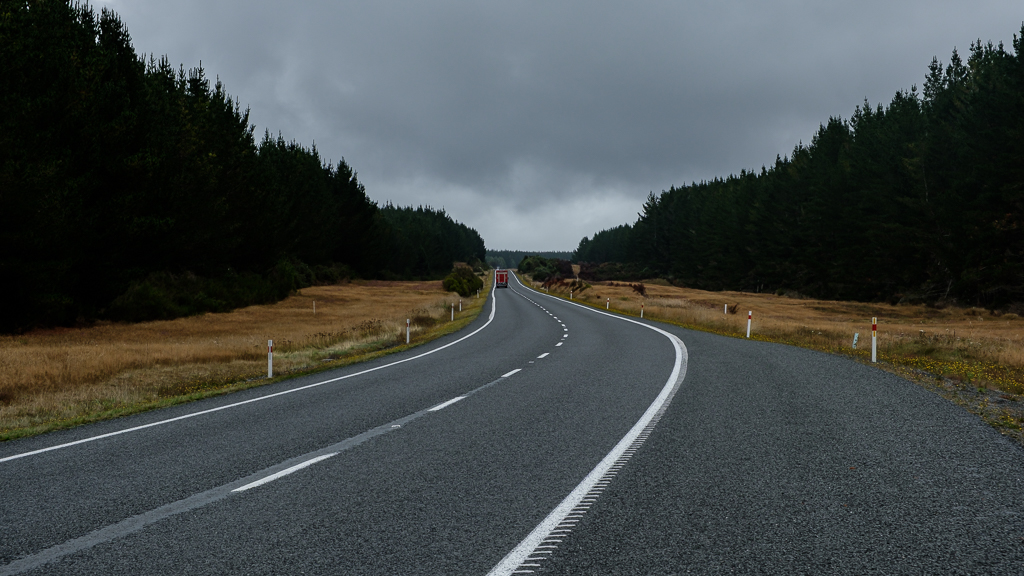
I was really surprised at how good the roads were, and that the motorway out of Auckland, and later in the trip, into Wellington had been massively extended while I’ve been away. I’m not an advocate for building more roads in most instances, but there was a real need to improve on what existed and it has made a huge improvement to journey time, and to road safety and emissions.
We spent the first night in cabins in a tourist park in Rotorua. Accommodation anywhere is expensive and with a lot of nights away we are staying in a mix of cheap and (hopefully) cheerful and mid-market places. This was definitely at the cheap and cheerful end of the scale.
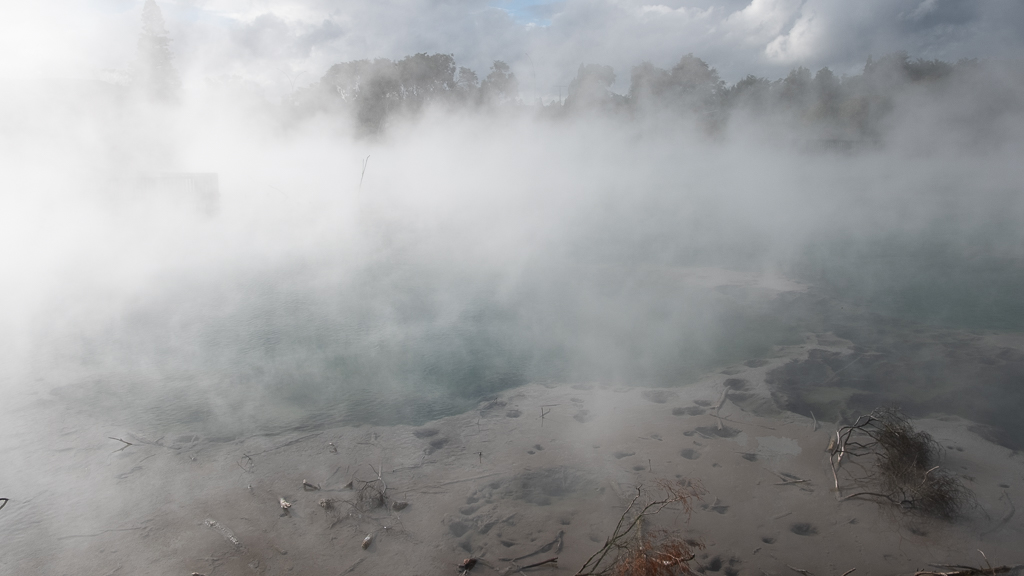
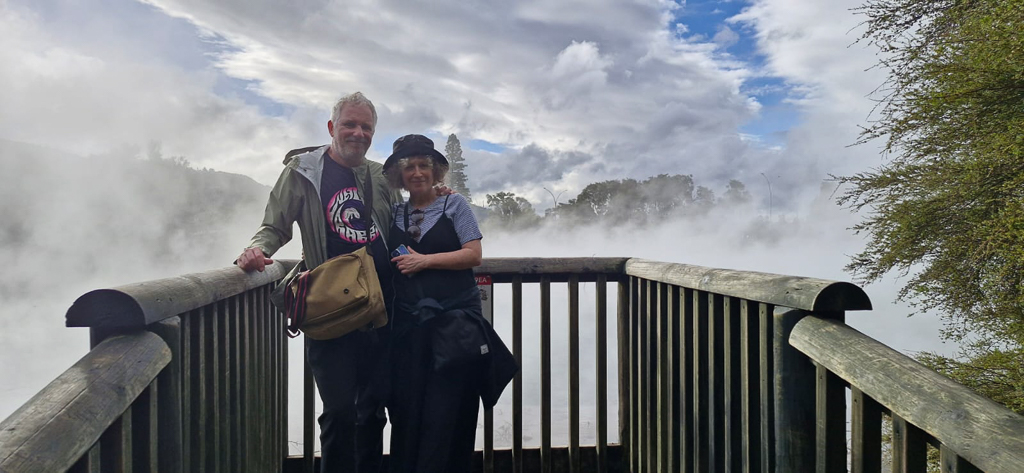
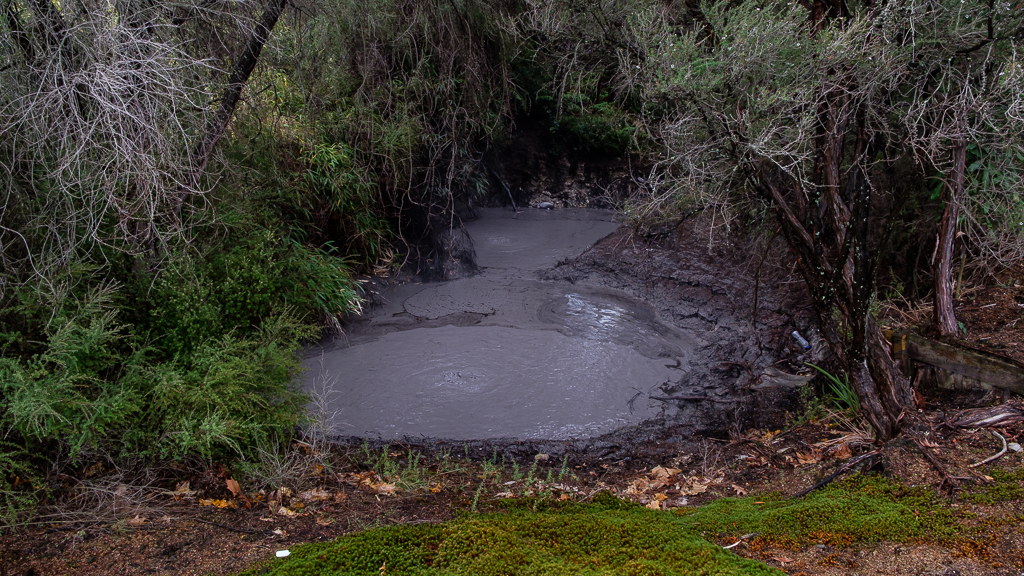
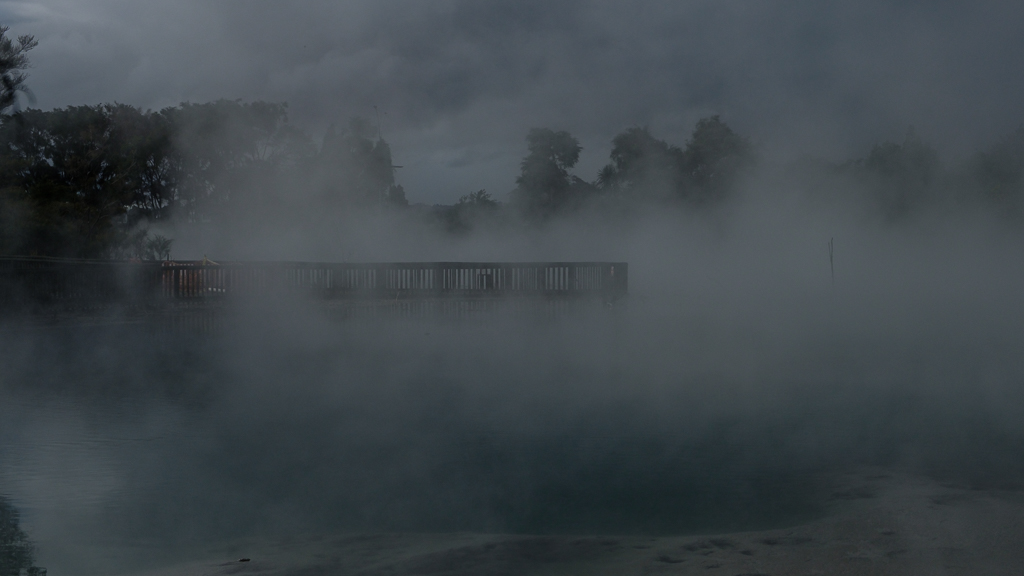
After dumping bags, we drove to Kuirau Park in the centre of the small city. Rotorua’s claim to fame is thermal activity, it’s a hot bed of activity (apologies for the pun). Boiling, steaming pools, geysers, it’s all here, there and everywhere in Rotorua, often popping up in residents’ gardens. There are some fantastic thermal parks here, but most require time and money and we were short of time. Kuirau Park has a few free examples of thermal activity and is worth a visit and we saw some quite cool stuff, well I think there was something cool here; hard to tell with all the steam!
We timed the visit to perfection. Heading back into town it absolutely poured with rain, the heaviest rain I’ve experienced in a long time. Luckily the downpour was short lived and we did park right outside the café we went to for dinner.
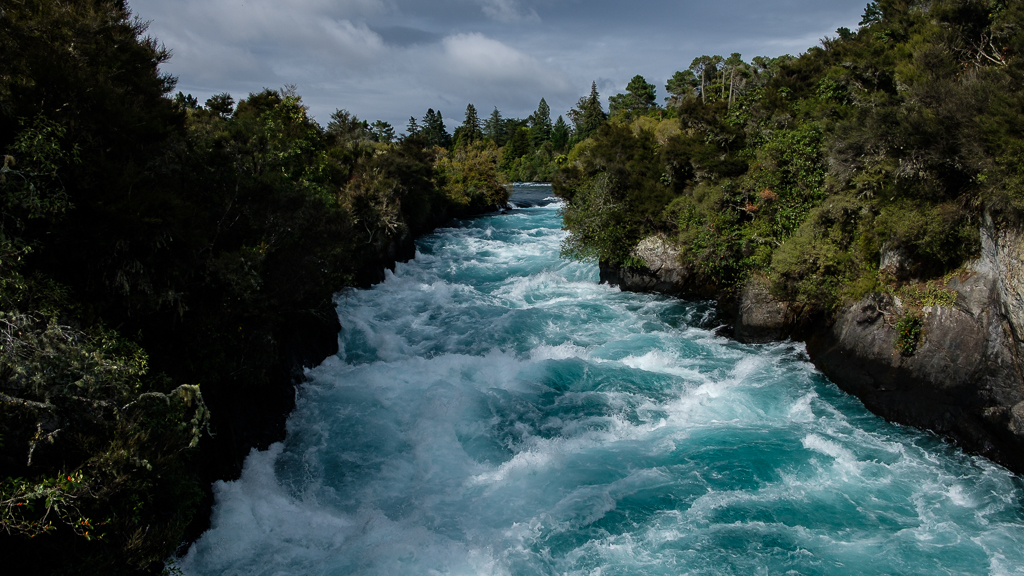
The next day, Wednesday, we were back in the car early for the five hour drive to Napier, stopping at the spectacular Huka Falls for a look and a walk before taking breakfast and a much needed coffee in Taupo.
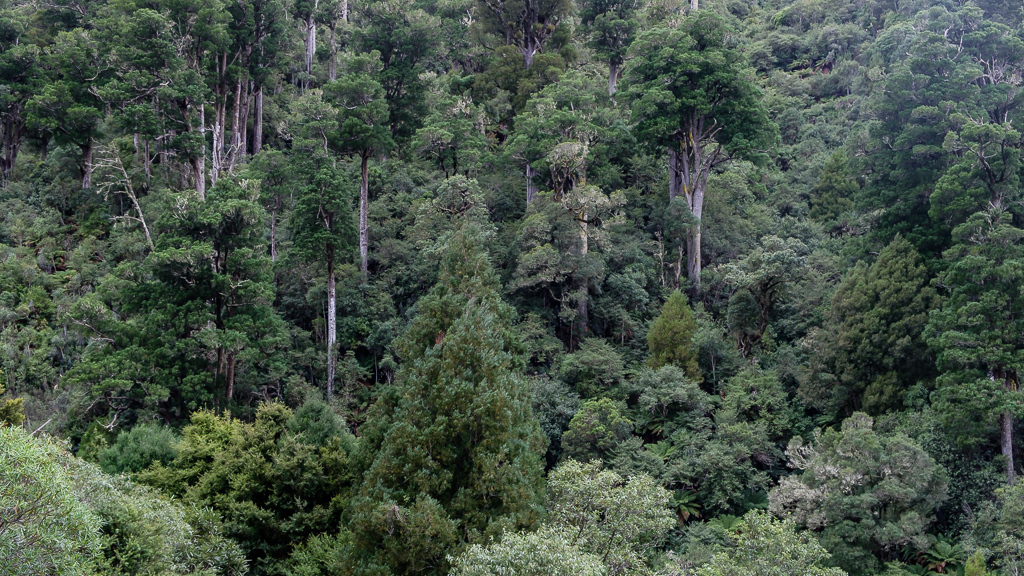
The drive to Napier was lovely, especially the winding Mohaka Gorge section through beautiful native forest with the river running below and alongside the road.
We were really looking forward to visiting Napier, it is the most preserved art deco city in the world and was going to be our main holiday when we lived here, before Covid ruined it for us. Napier deserves its own post and that will come next.
Paula finally got to drive on New Zealand roads the following day, I know she’d been dying to get behind the wheel, but country roads in New Zealand are not the best, or they never used to be. They are much better now and I was just being stupid. Paula drove us all the way to Wellington, our final stop on this leg of the road trip.
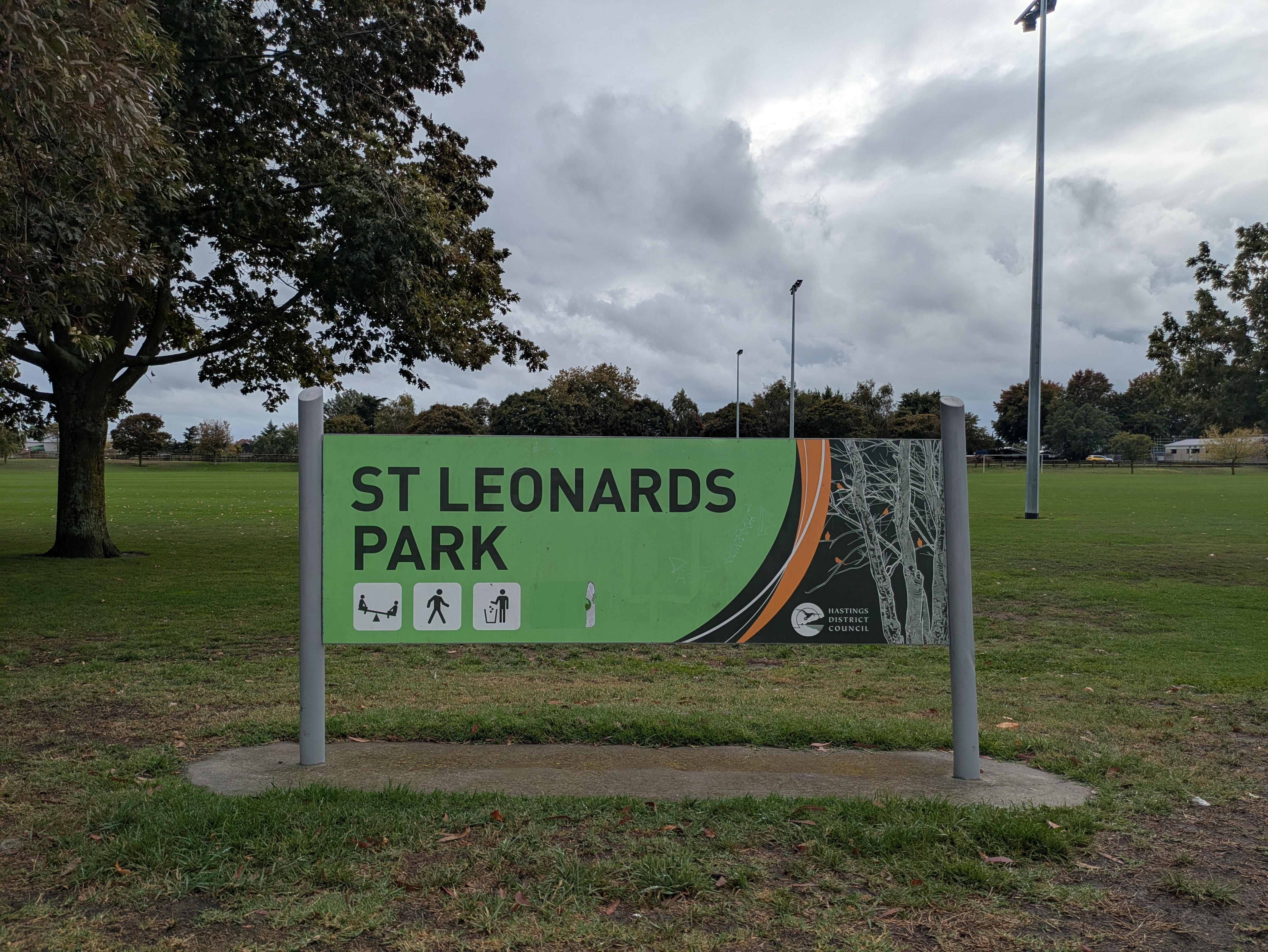
We stopped in Hastings for breakfast and took a short detour to the Hastings suburb of St Leonards, just because my flat is in St Leonards on England’s south coast; next to Hastings, and we found it all quite amusing. I like my St Leonards more.
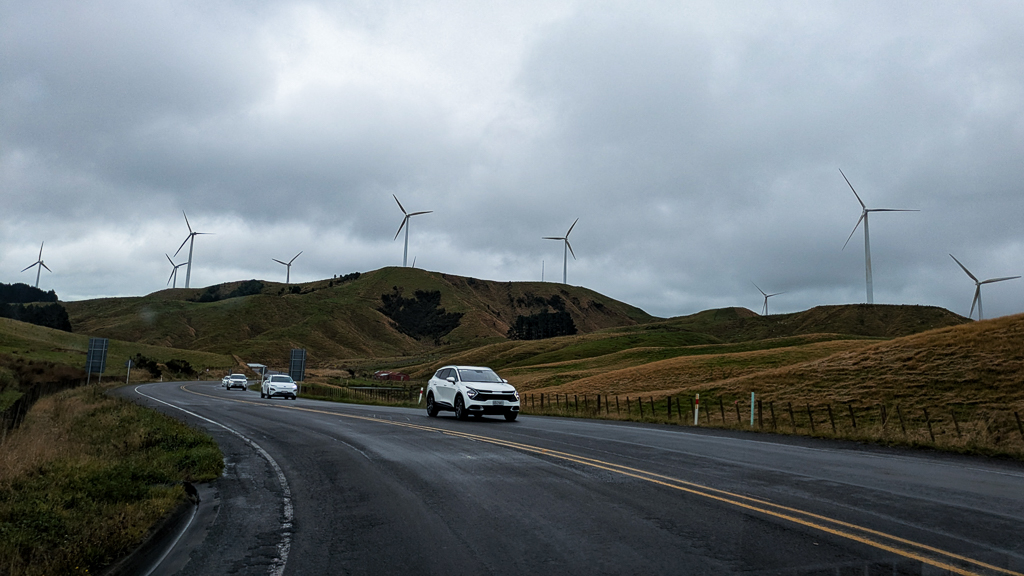
The drive to Wellington was great, especially from the passenger seat. We arrived late afternoon and had a bit of ‘fun’ finding our hotel, and somewhere to stop in the very busy street. We did a quick bag dump and then I took the car back to the rental company and that was the end of road trip one; only three days, but we saw a lot and enjoyed ourselves.
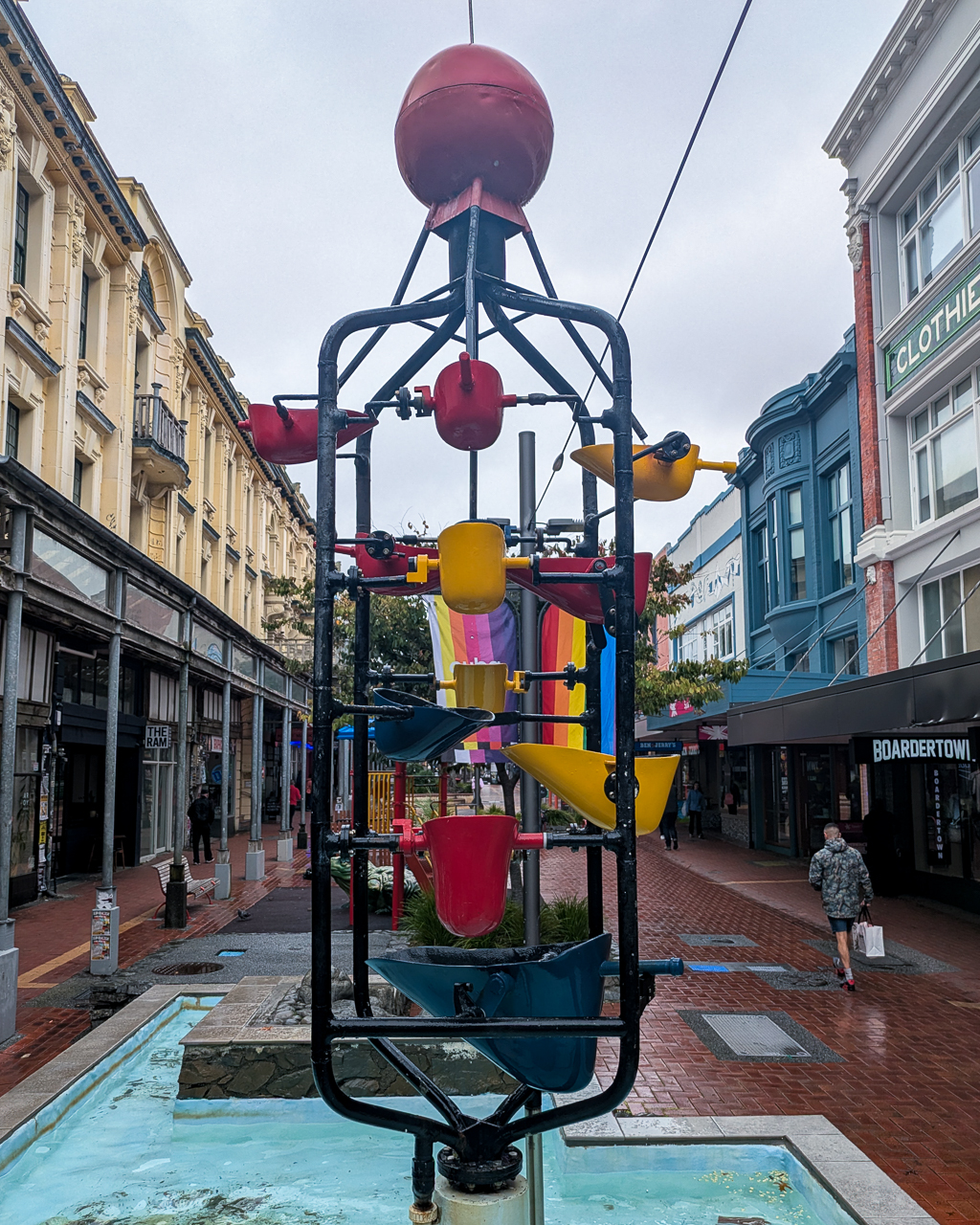
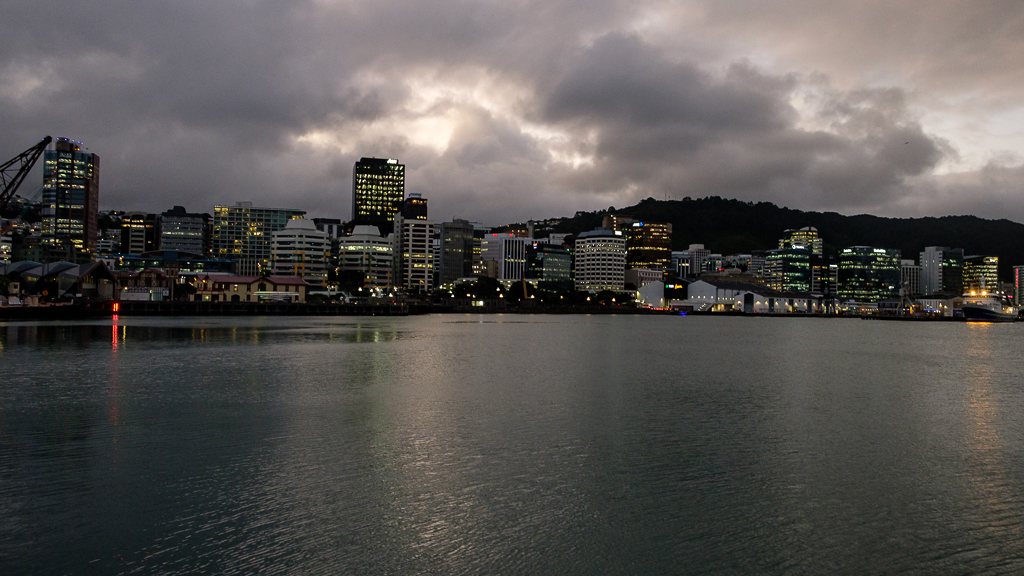
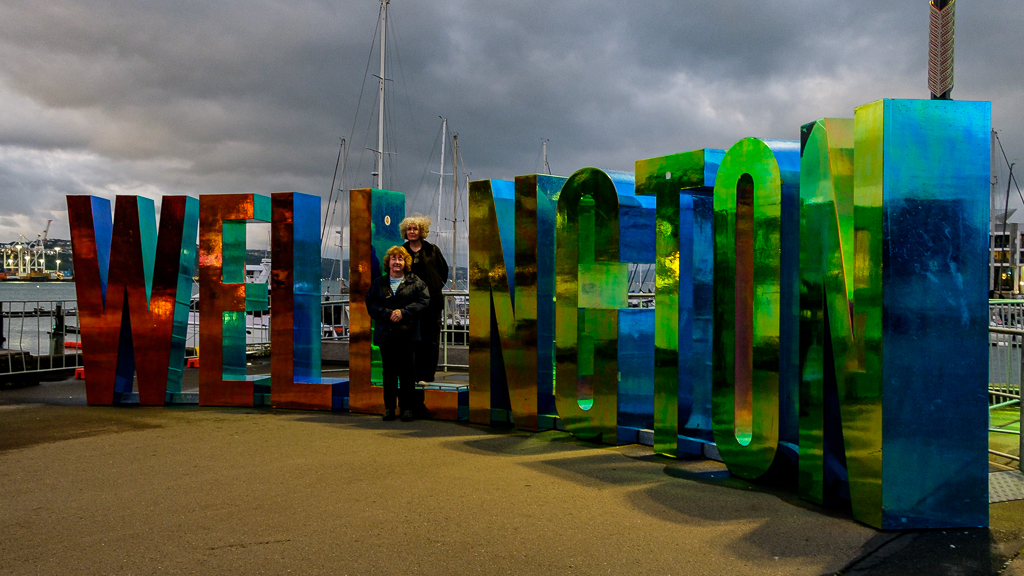
With an early ferry booked in the morning we only had the one evening in Wellington so didn’t linger in the hotel once I returned. We took a roundabout walk catching the harbour, and the (in) famous Bucket Sculpture, the Beehive – New Zealand’s parliament building – before stopping for a decent curry in Cuba St.
After dinner we walked back around the harbour, stopping for the worst glass of wine we had in New Zealand at a waterfront bar. With this being the second disappointment at a harbourside venue, we have definitely learned the lesson, this time.
It’s an early start tomorrow for the ferry to Picton, but before that we go back in time to yesterday when we visit Napier.
I’m back in London, and have been for a couple of days. I’m still joining all my India thoughts up, and depending on where I’m at in the sleep/wake cycle those thoughts tend to vary. I’m really glad I wrote lose notes on most of the days I was away so I at least have some record of events to refer to as it was all a bit of a blur. A very slow moving blur as nothing happens at pace in India.
I’ve surprised myself by not yet editing many of the photos I took over the month I was away in New Zealand, Brisbane, Hong Kong, Delhi and Chandigarh. In the past I’ve been disciplined (or interested enough) to edit and write most days. This trip I’ve barely done any at all. I’ve (hopefully only temporarily) lost the enthusiasm I had for photography, writing and editing those photos and words. It was inevitable really, I’ve been doing this for a long time.
Before we left I’d been thinking that this month long break, the first long break in three years, was perhaps going to be a transition period and my interests would lie somewhere else once I’m back home. I’ve been thinking more about aging and what that means, I’m only four and half years away from the UK retirement age of 67, I ache and my pension(s) are not going to keep me in the lifestyle I’ve become accustomed to, so it’s time rethink how I live. This was something I planned to do while I was away on my own, though I never really got around to it; my brain is full. Something to do now I’m home.
What did I think of Delhi? I almost said ‘What did I think of India?’, but Delhi is as much as a reflection on India as London is on England so it would be a terrible crime to cast of all India into the one Delhi shaped pot. Overall, my view of Delhi is probably no different to the view held by most people who don’t hate it; though I can certainly understand any westerners who dislike it that much. It’s a deeply frustrating, and occasionally annoying city, it’s also (reasonably) welcoming, a lot cleaner than expected, less polluted, easy to get around and overall I enjoyed it. Though it isn’t necessarily ‘fun’.
Would I go back? Probably not, though I’ve seen most of what I wanted to see, so there isn’t any reason to go back, other than to transit to somewhere else in India. I would go back to India; though I won’t travel solo again as I found it too hard this time. It’s not just age that has caught up with me, I’m not as adventurous as I used to be, and to be honest with myself, I was never THAT adventurous in the first place.
What did I like about Delhi?
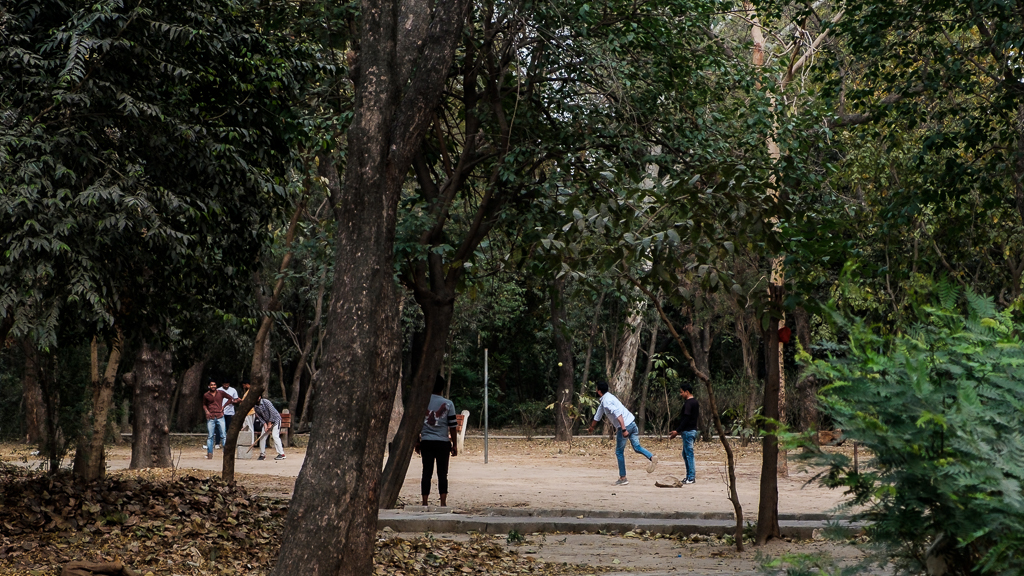
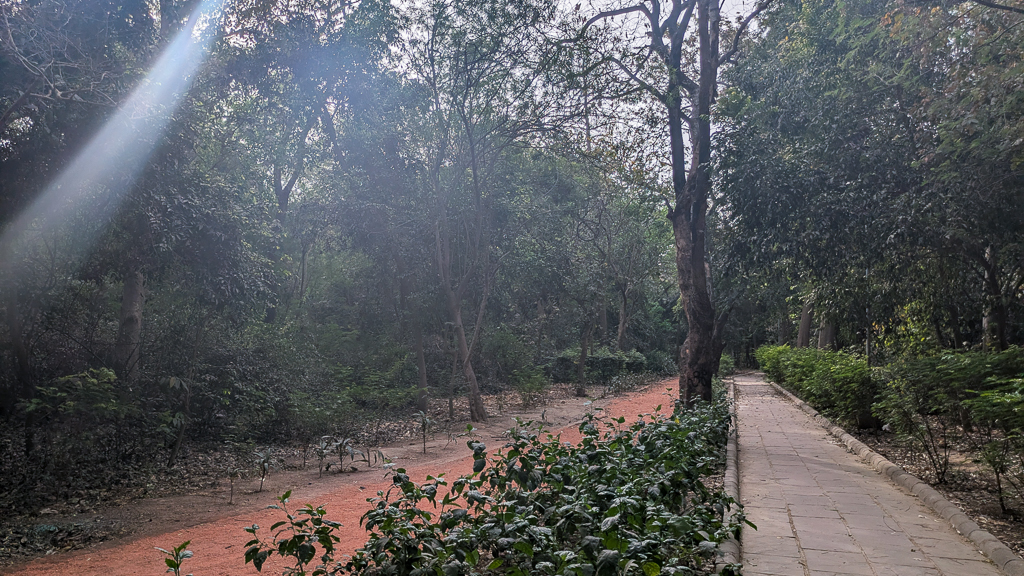
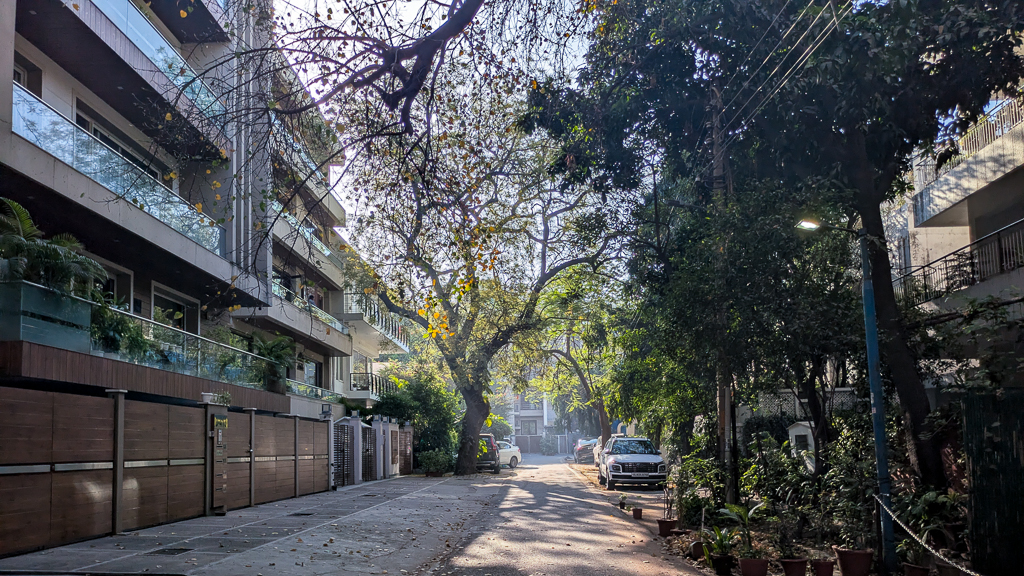
It’s a surprisingly green city, especially the New Delhi and South Delhi areas where I was staying and sightseeing. There are a lot of trees and some lovely parks. Yes, it’s dusty and a little grubby, but you can’t help that when you’re not that far from a desert. There is also a ‘no burn’ policy; which means there are piles of leaves everywhere, which amused me as every morning near my hotel the house keepers would sweep the leaves into piles, and overnight those piles would redistribute themselves back over their driveways, just to be swept back into piles. Rinse and repeat as the young folk say. There are quite a few electric buses and even electric auto rickshaws. It will take a long time for everything to change, but it will.
Other than the first day I wasn’t bothered by pollution, I occasionally wore a mask, but it wasn’t as bad as expected.
At no point did I feel unsafe, or even uncomfortable, admittedly I’m a white man and the experience of female travellers will be very different. I walked a lot and not always just on the main tourist routes and at no time did I feel like I was in any danger, other than possibly falling into a sewer.
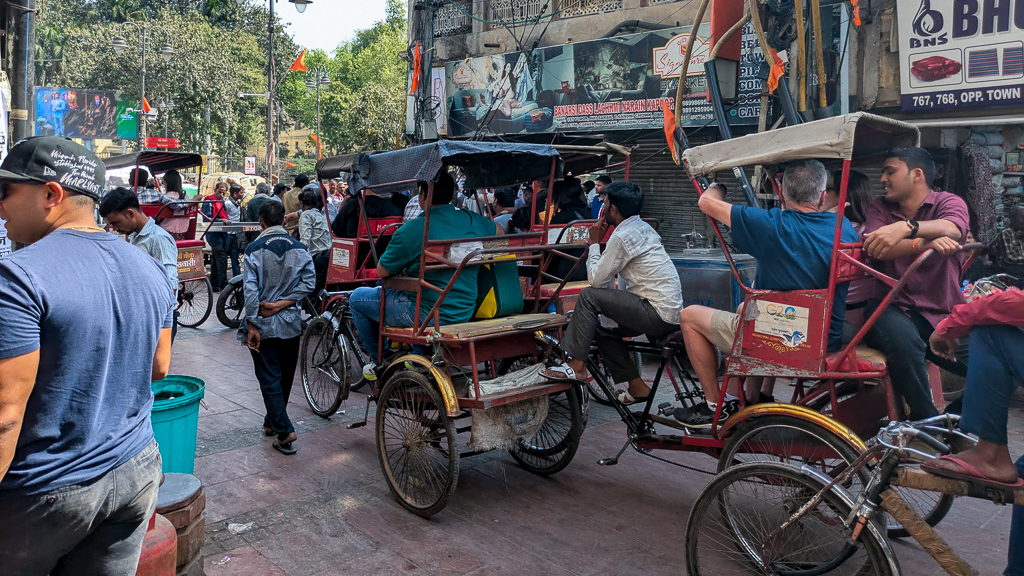
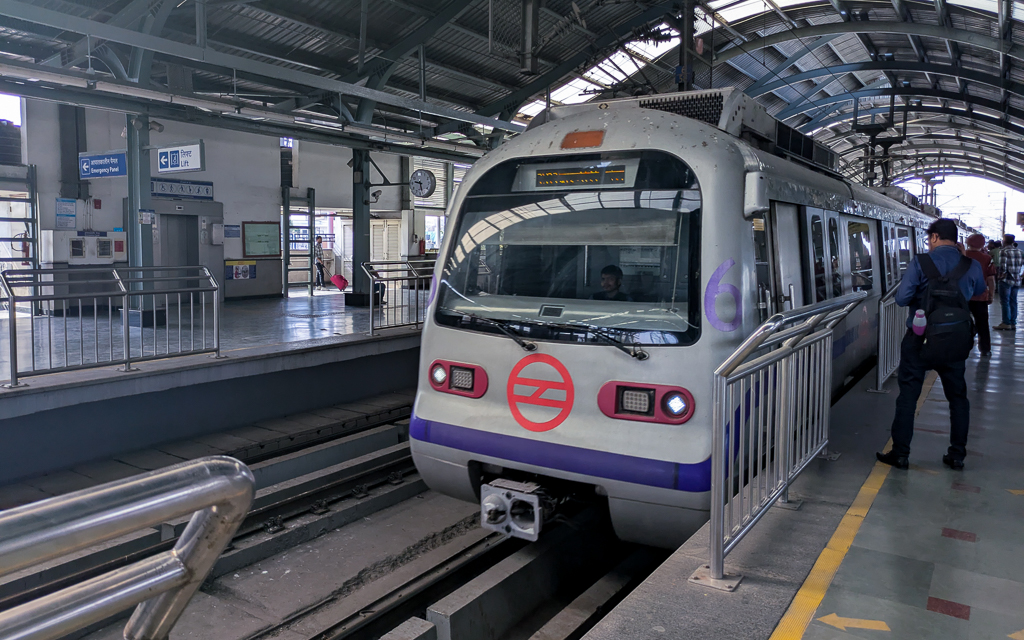
Other than a couple of occasions I was generally left alone, the Delhi-ites didn’t care about me. I used the Metro a lot and other than the last day I didn’t see another westerner on any of the trains; I was occasionally included (not overly subtly) in some selfies, but mostly it was like the London Underground, everyone ignored everyone else. I was expecting constant hassle from drivers, guides, shoe shine boys and beggars, this just didn’t happen outside of places like stations and the big tourist attractions. I walked a lot and other than being hot and the occasion sewer stench it was fine and hassle free.
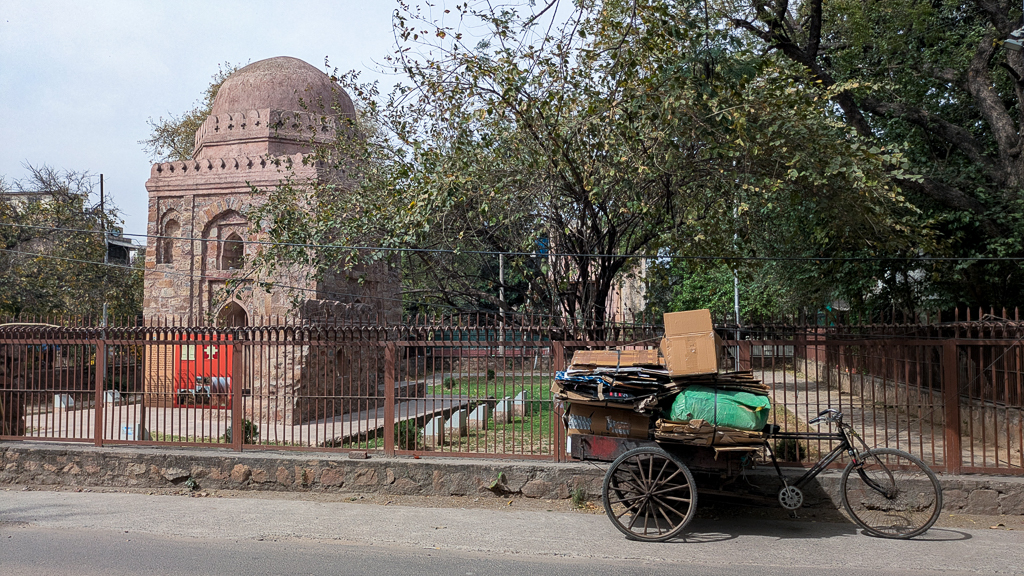
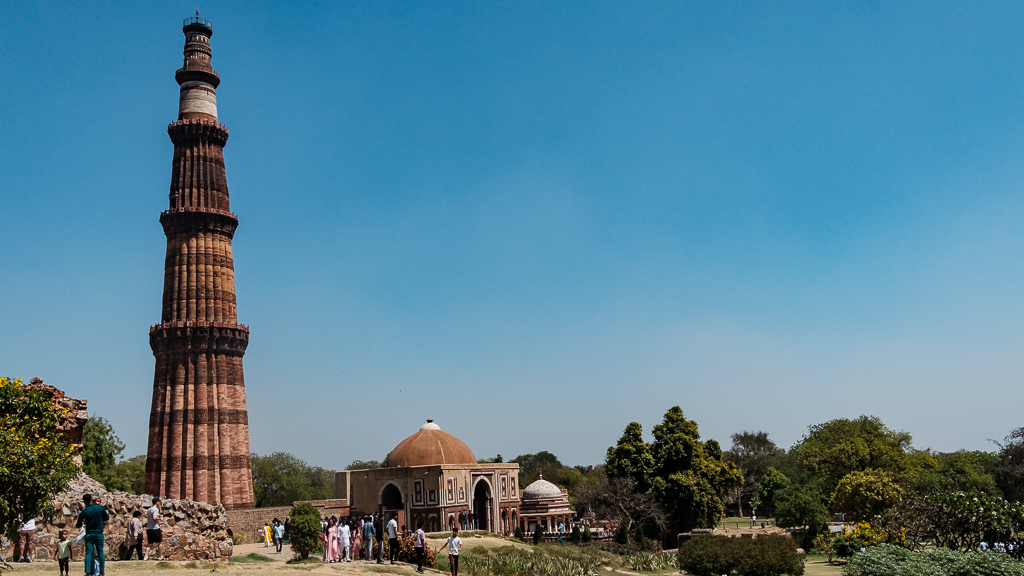
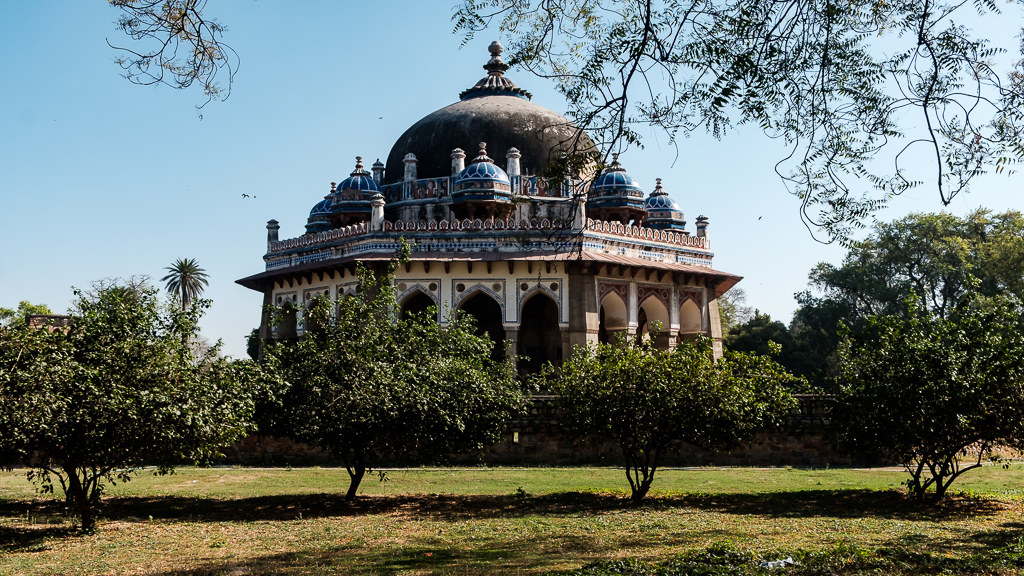
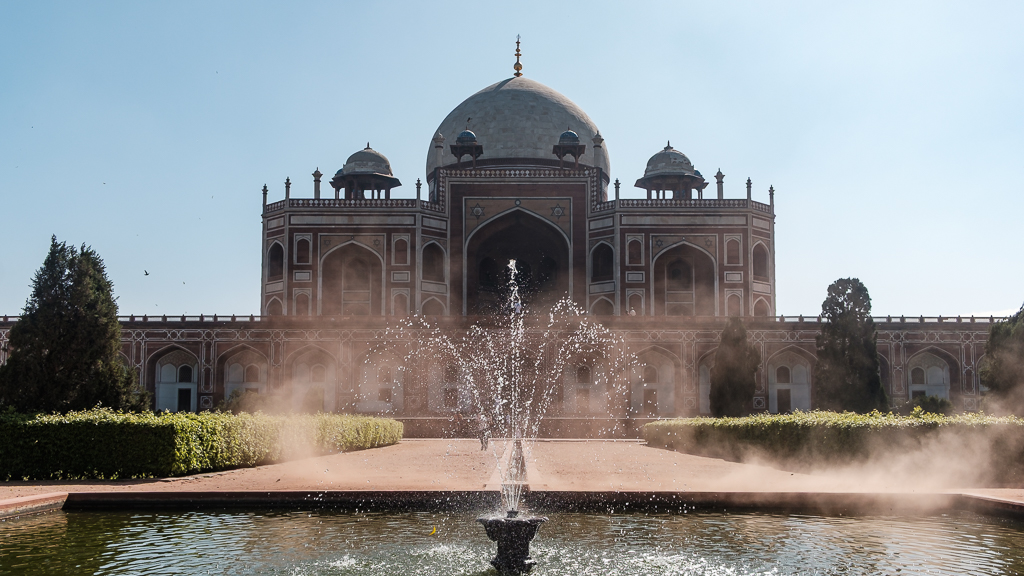
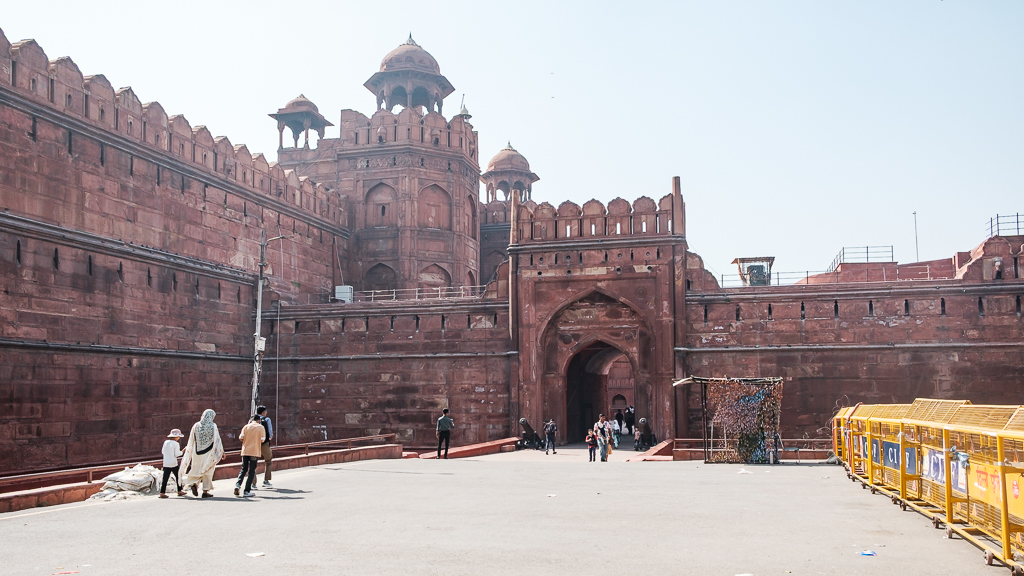
Delhi has (surprise, surprise) an amazing history and there are some fabulous old buildings, in various states of repair. There are the big attractions (Red Fort, Qutub Minar, Humayun Tomb) that are fabulous, but just walking around I stumbled across a number of ancient structures just in residential streets.
My hotel was fine; it was in a ‘posh’ suburb, with quiet tree lined streets and not far from a Metro station. It served decent, it limited food, had a nice roof terrace and had beer and gin – but only from 5pm. I liked staying there, and had two evenings where I spoke to other guests.
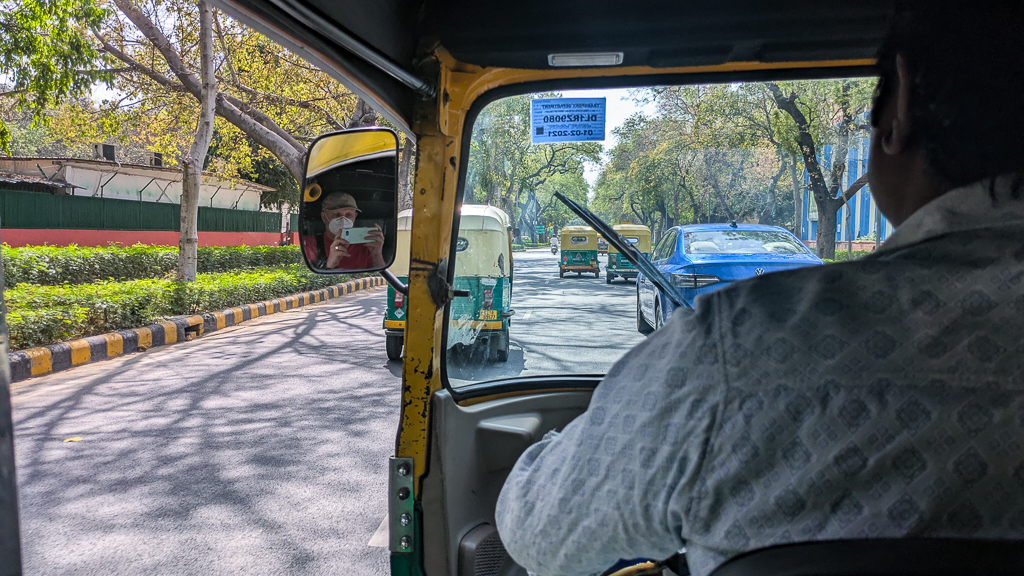
Uber. I don’t use it in London, but Uber saved my holiday, as I’m sure I will detail in a future post.
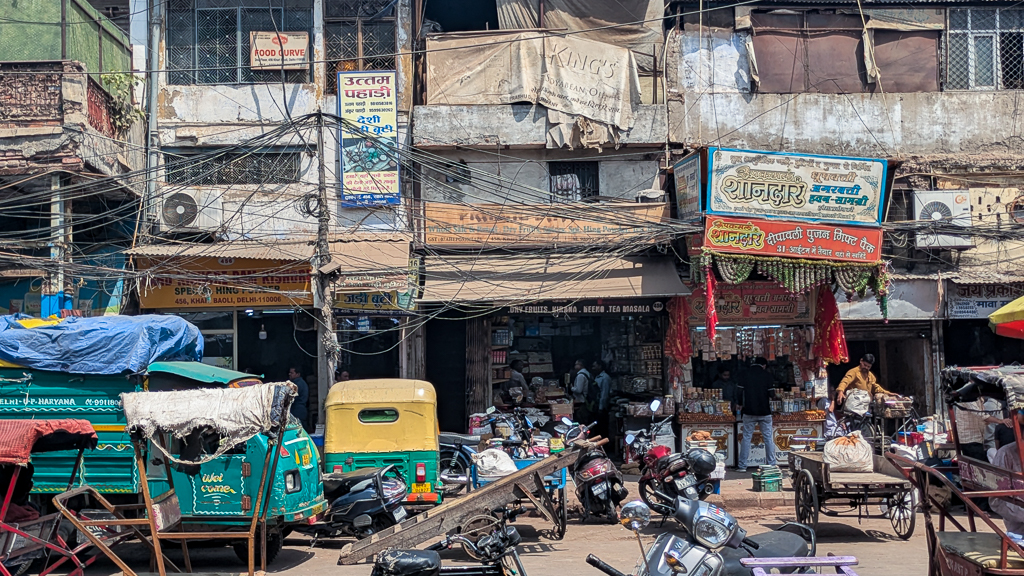
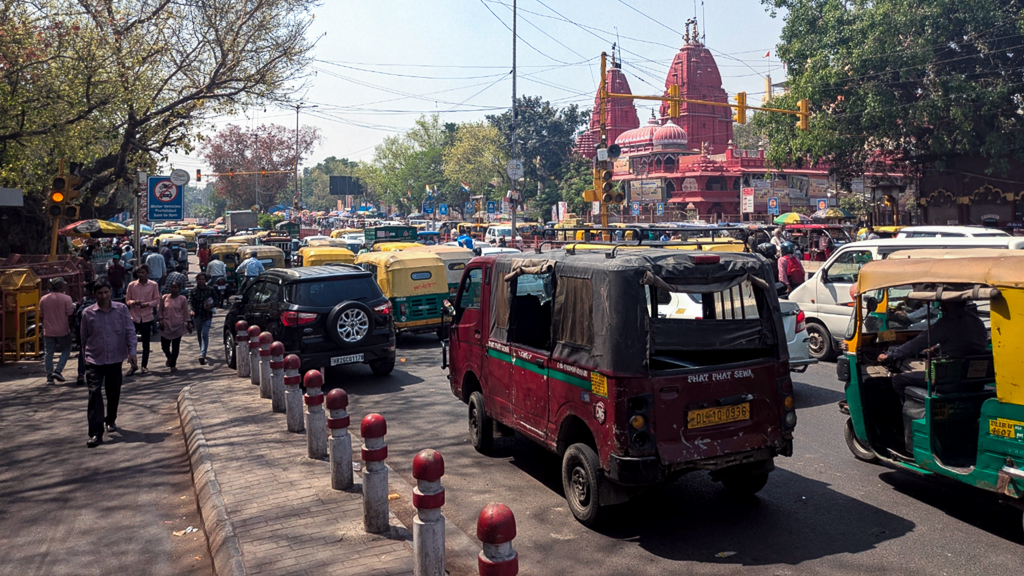
Once you get used to walking in, or crossing roads, and understand that the honking is often advisory (for instance I’m coming up behind you and know you are there), it’s actually not too bad. There are few footpaths, and where there are they often more hazardous than the road, getting used to walking with vehicles around is a must.
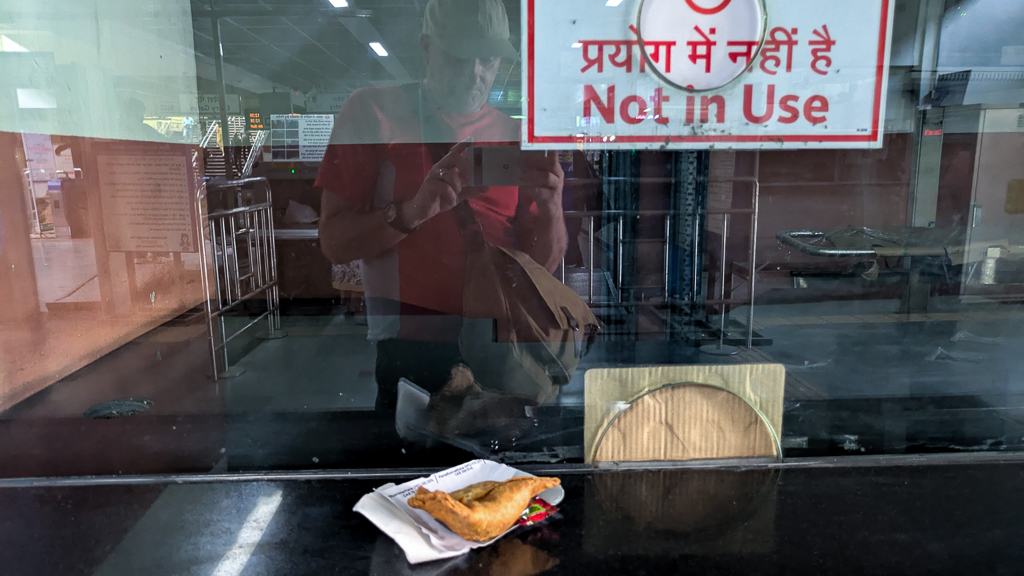
Food. I ate a lot of food, 90% of what I ate was local food, I did eat western food twice; once in Delhi and once in Chandigarh. I practiced as well as I could good food hygiene, particularly hand sanitising before eating and other than a couple of tummy rumbles early on I was fine, I didn’t get ‘Delhi Belly’.
Metro station samosa, I had a few of these.
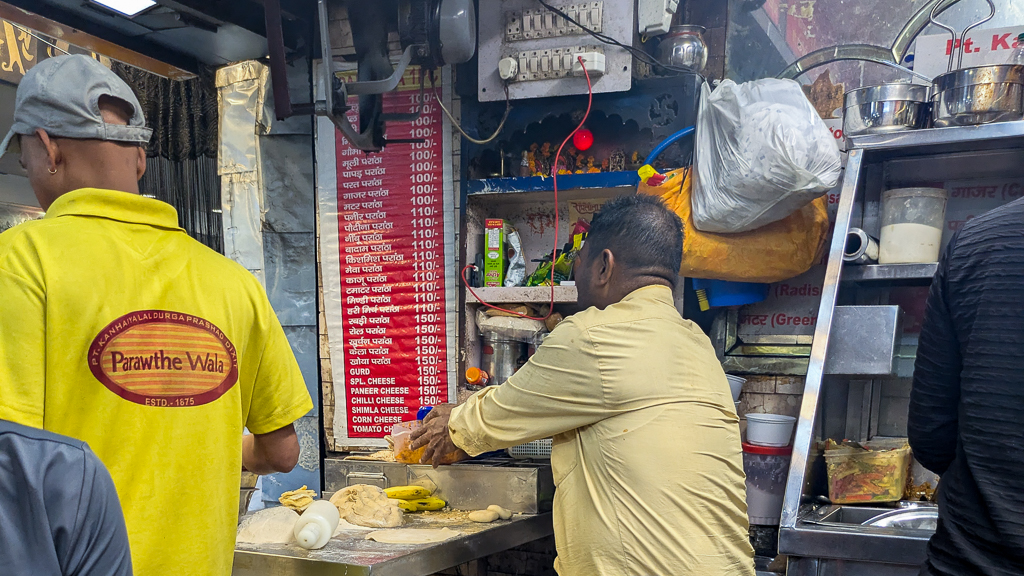
Making my banana paratha as part of the old Delhi Food Tour I joined.
What didn’t I like?
Signage is poor, there are few signs showing the direction to places of interest. For instance; on the London Underground you will be told to ‘exit here for the British Museum’ for example. While the Delhi Metro is fabulous and cheap and reasonably simple to work out, and announcements are in English as well as Hindi, it would be good to hear ‘please exit here for Red Fort’ or something. I guess a lot of western tourists (there is significant internal tourism) use guides and cars rather than walk or use the Metro.
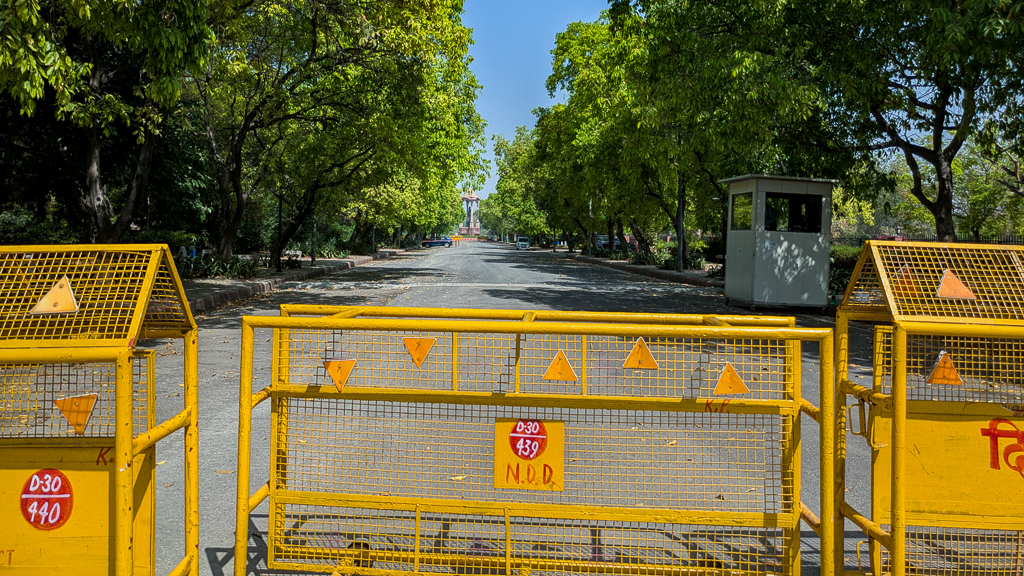
There are lots of government buildings in central Delhi, near a lot of the tourist areas, this means there are lots (and lots and lots) of armed police and they are remarkably unfriendly and on occasion intimidating. There are lots of police barriers.
Scams. Yes, I got scammed. Twice in hindsight, though once wasn’t really a scam per se and didn’t cost me anything. This guy…
The ATM provides 500 rupee bills, which are about 5 pounds. Lots of things cost significantly less than 500 rupees and no-one has change and it’s really hard to get smaller value notes.
Not Delhi’s fault, but in the end I felt quite lonely. The other guests in the main stuck to their groups, which is fair enough, and I didn’t meet other people as I travelled about. Other than the food walk tour I took on my second to last day there was zero engagement with other tourists and I found this tiring in the end.
I mistook people saying things in English with ‘they understand English’, when often they only know a few phrases and any questions outside of their knowledge sometimes resulted in an agreeable ‘yes’, which I thought meant they understood what I asked, when clearly they didn’t and results could be unexpected. This was not their problem. This was my problem. I don’t understand Hindi, at all.
So overall, if you have any interest in different cultures, in food and in history, then Delhi is absolutely worth visiting. It’s safe and easy (ish) to get around and it’s a big step away from your everyday western life.
I took over 1800 photos while I was in New Zealand, Brisbane, Hong Kong, Delhi and Chandigarh and it’s going to take time to go through them all and write up posts. I plan on doing this over the next few weeks, starting at the beginning (as it’s a very good place to start) of the holiday, with New Zealand.
After a sustained period of talking, followed by an equally long period of procrastination and then a short period of faff I’ve finally booked flights back to New Zealand in March 2025, stopping for eight days in Delhi and Chandigarh on the return to London. I will be away a month, which is all I can really take as annual leave. Eleanor is coming with me to New Zealand, where a London friend will join us for a few days before I go to India and they return to London via Sydney and Tokyo. With today being the shortest day of year and constant grey skies, drizzling rain and cold it is properly nice to have something to look forward to.
Ever since the aborted trip to India in 2016 I’ve been determined to go back and see some more of that fabulous, maddening country. When starting to think about this trip I’d planned on spending some time in Delhi before heading south-west, returning to the state of Rajasthan to visit some of the historic towns I didn’t get to in 2016. However, I recently discovered the town of Chandigarh in the Punjab to the north of Delhi. Chandigarh was planned in the 50s as a new town to replace Delhi as India’s capital city and move the country on from British rule after independence in 1947. Renowned French architect le Corbusier was engaged to draft a plan for the entire town and the delivery of that plan was eventually entrusted to English and Indian architects (more on this when I visit). It didn’t become the capital, much as Prime Minister Nehru wanted it to, but it is, apparently, a wonderful modernist town and I’m very much looking forward to visiting.
Conveniently, soon after I decided on Chandigarh as a place to visit, the V&A Museum had a small, though perfectly formed, exhibition – ‘Tropical Modernism’, which addressed the idea behind the building of Chandigarh and the city of Accra in Ghana and the importance of modernist architecture to the story of both India and Ghana’s independence from Britain. I bought the book.
The Barbican is currently holding an exhibition of Indian art from 1977-1998, ‘The Imaginary Institution of India’ which I went to visit today, a non-working Friday. I took the camera with the intention of doing a walk around the Barbican estate before my 3:00 o’clock booking at the gallery. It was drizzly and cold out and I wasn’t in the photography mood so after a desultory and largely uninspired wander I had a glass of wine while I waited instead.
I enjoyed the exhibition, particularly the photographic works, though some of the paintings were fabulous, with my favourite being the second piece you see when you walk in. The space is fabulous, it’s my first visit to the Barbican Gallery, so wasn’t sure what to expect from the venue; I will be going back.
Gieve Patel – Two men with a hand cart.
Gulammohammed Sheikh – Speechless City (my favourite).
The exhibition documents one of the many periods of upheaval in Indian history, between 1977 and 1998, a period of massive social change in the country with a burgeoning middle class and rapid urbanisation as rural incomes dropped and people flooded into the cities. Heightened awareness of social issues and demands for fairness and equal rights for women and the LGBTQ+ community are out in the open and these were captured in the art of the time and well represented here. I loved the photos on show, particularly a series from Delhi in the 1970s of members of the artistic community. It isn’t how I saw India in those days. One of the things I love about art and travel is having my perceptions challenged and changed.
It was also a time of political unrest (again) with violent clashes between Muslim and Hindu communities in the north of the country and the unlawful killing of political activists including Safdar Hashmi in 1989, painted by the artist M. F. Husain, who had to flee the country in 2006 after threats on his life.
Ending on that happy note and with a date with Eleanor and some friends ahead I left the Barbican and walked the hour to Soho where we had a quick early dinner before going to see comedian Stewart Lee in Leicester Square, something that is becoming an enjoyable annual event.
It was a lovely day and evening out and something I should do more of, more often.
You must be logged in to post a comment.