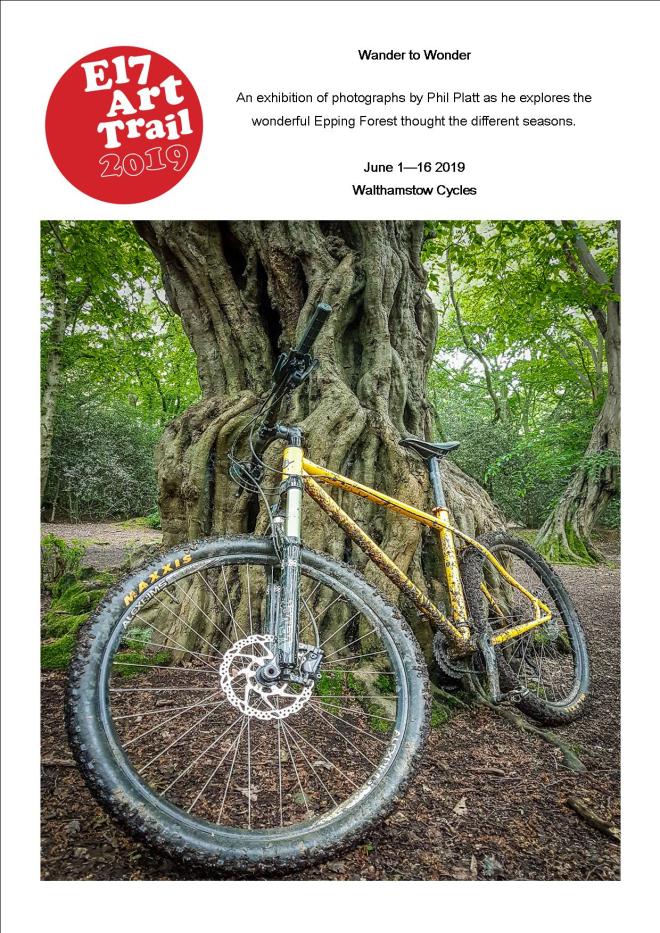
E17 Art Trail Exhibition. Wander to Wonder.

June 2019 – Walthamstow.

Around a year ago I discussed the idea of exhibiting some of my photography as part of the  biannual e17 Art Trail, which was due to happen in June 2019. I approached my local cafe at the time but they already had an artist lined up. I learned at this point that venues for the art trail are booked two years in advance. It is a very popular time.

I next approached Tony who owns the Walthamstow Cycles bike shop, and discussed the idea of displaying some photos of Epping Forest in the shop. Tony introduced me to the forest a few years back and I have bought both my bikes from him. Not that I use them anymore. Lazy or time poor. I am going with lazy.

Tony was very keen on the idea, and we both let it lie for ages. Around the start of March we had to do a few administrative things, and I had to get an advert written for the trail guide. I then let it lie again until May when I had a holy crap moment as I realised I had to print and frame a whole load of photos, then hang then. By the end of the month.

The art trail has been running for a number of years now and is hugely popular. There were around 250 exhibitors in a number of venues all over the borough, there were a couple of really good photography exhibitions so I was in quite good company! The theme this year was ‘Wonder’.

There were a couple of tense weeks as I trolled through hundreds of images of the forest to try and come up with a theme. I also had to decide on a number of images I could print and frame without breaking the bank. I chose to use some cheap A4 size frames from Ikea as well as use a couple of the large frames I had in the exhibition last year. I would have loved to have used all the frames, but printing 11 images at A1 is not cheap, and these were to displayed in a working bike shop, large sheets of glass hanging on walls was not going to be practical.

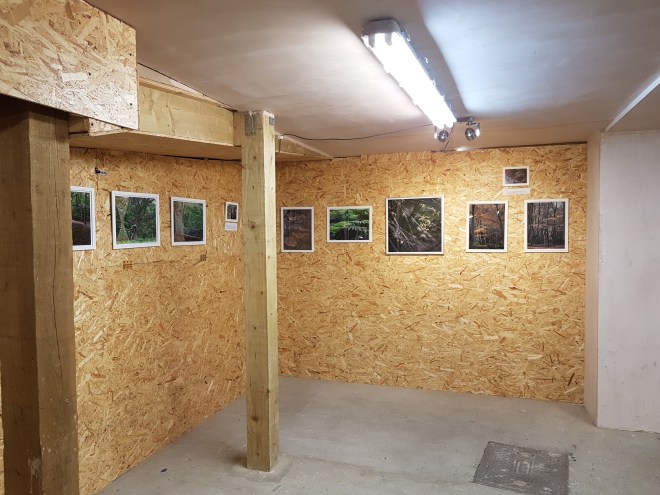
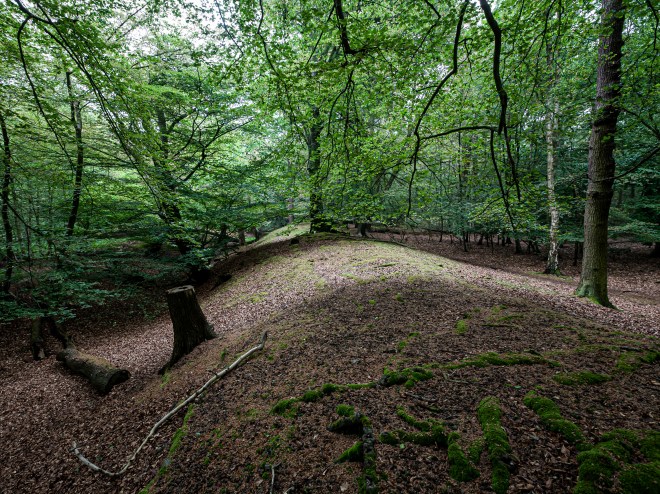
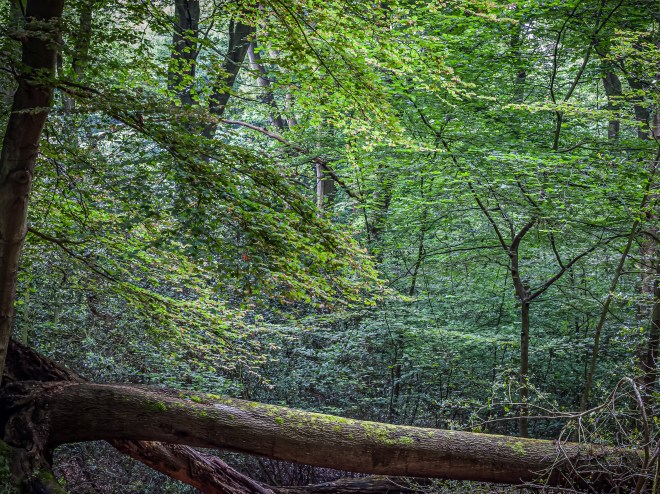
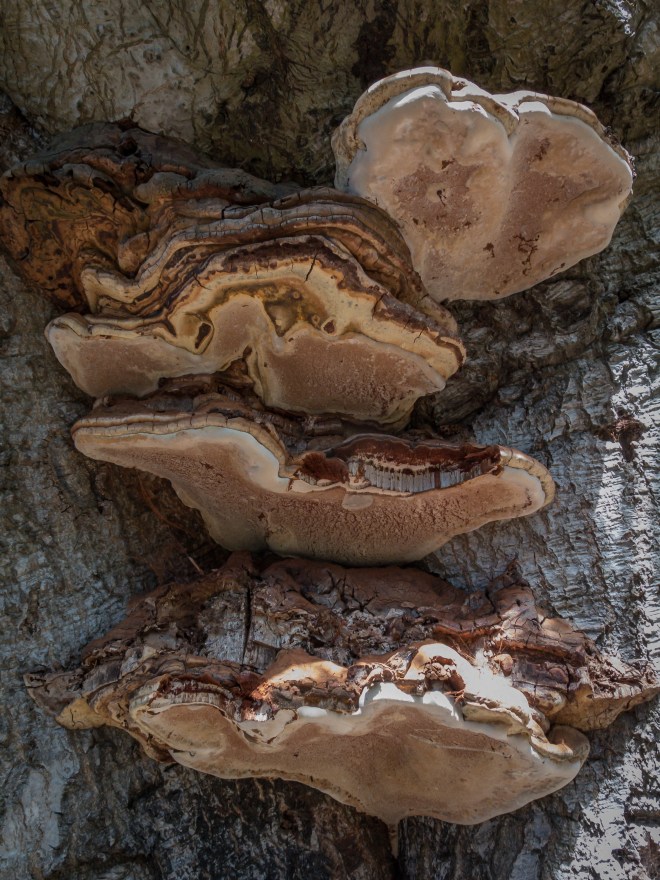
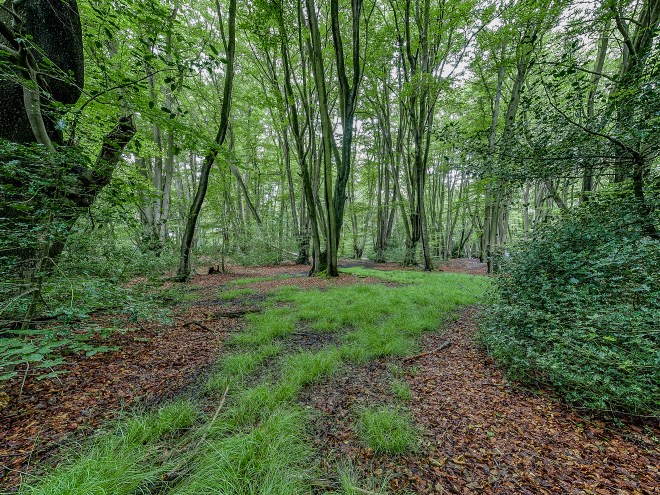
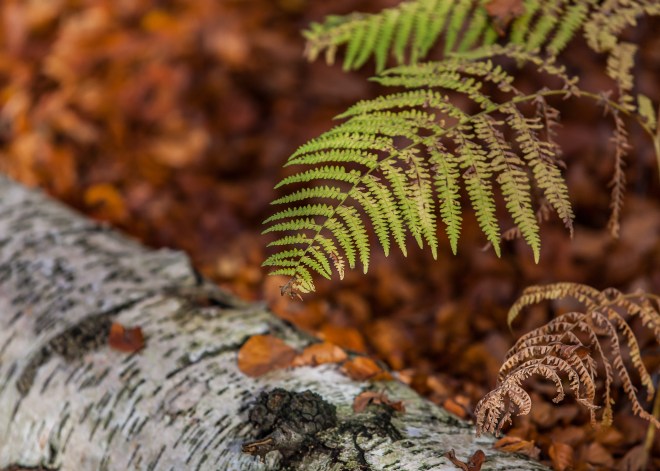
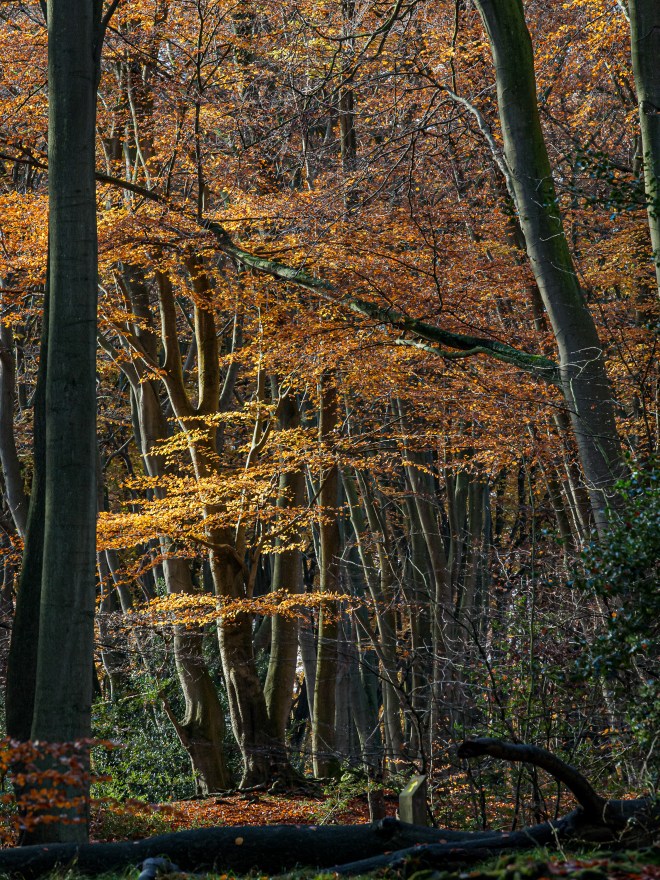
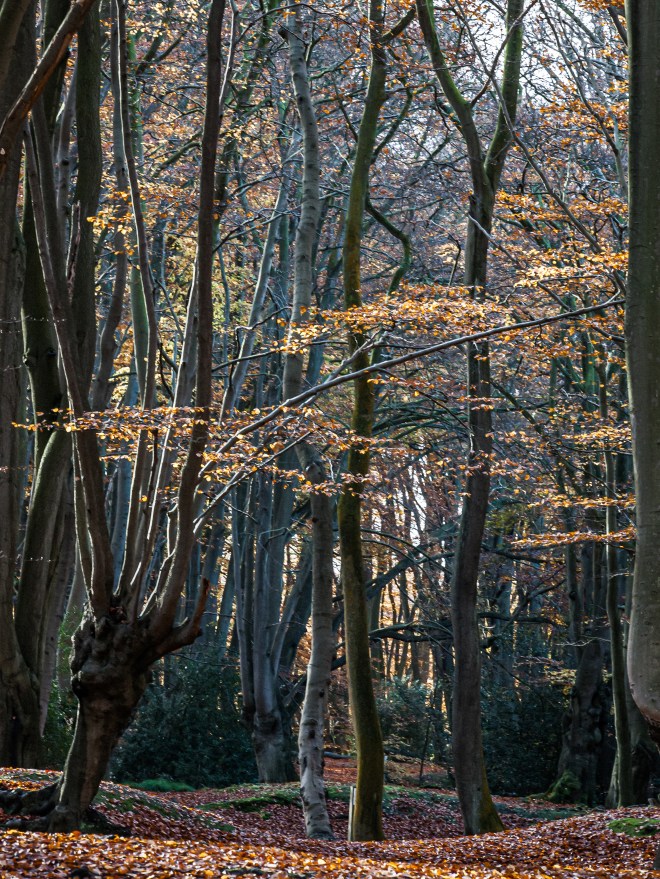
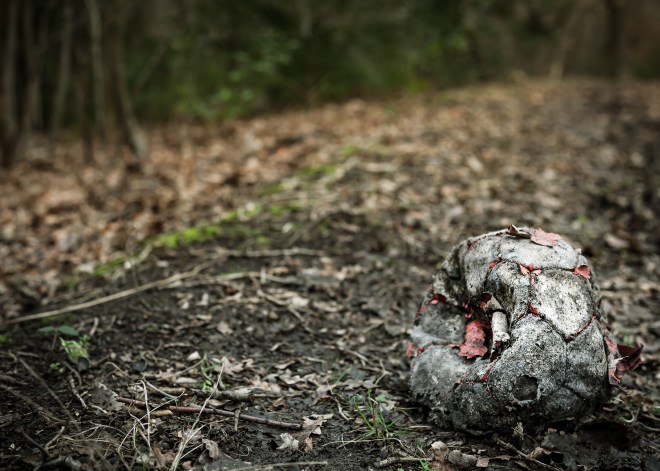
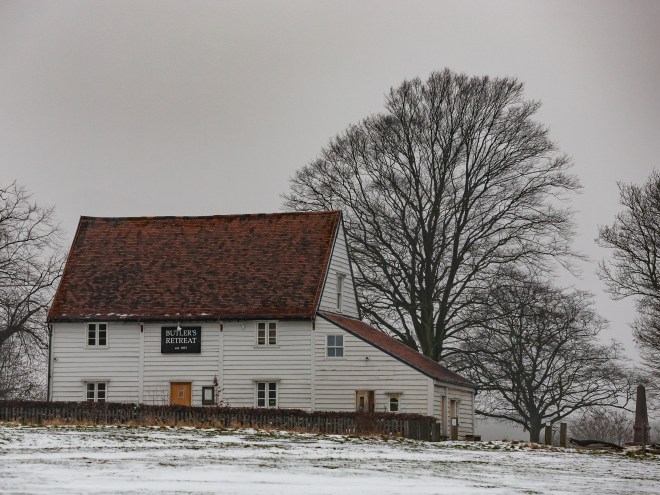
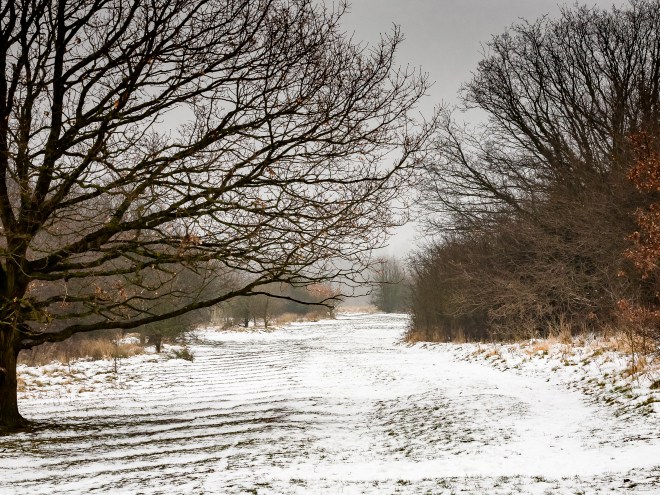
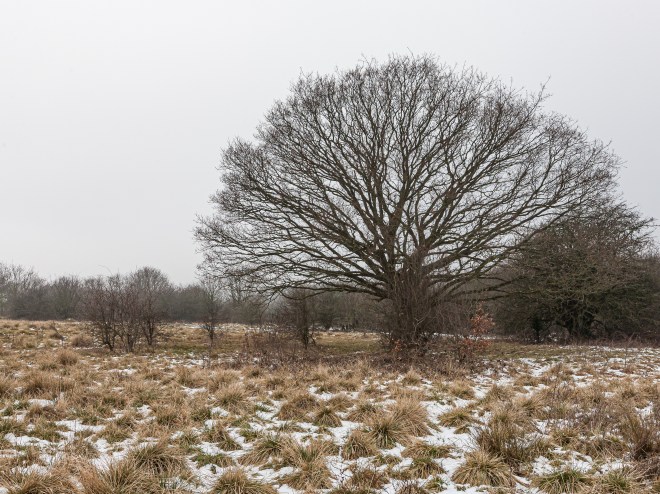
I chose the seasons as a theme and displayed three or four images of each season round the various walls. Each season also represented a different location in the forest. There are some may interesting places in the forest, often with their own unique micro-environment.

The photos I displayed are below.

I hung the photos two days before the Art Trail started on a Saturday though we did not have the opening until the following Thursday. The basement of the shop was not this tidy and organised when I started.

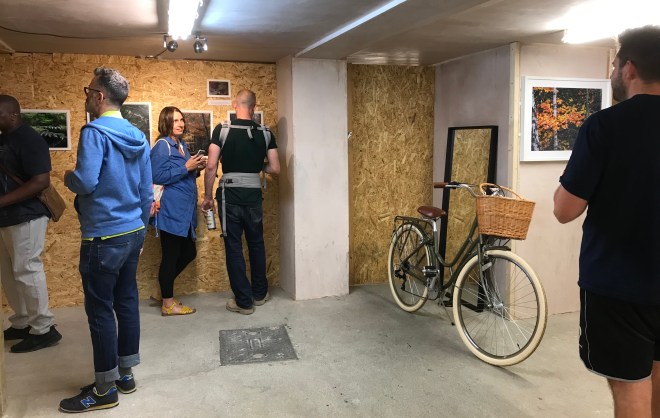
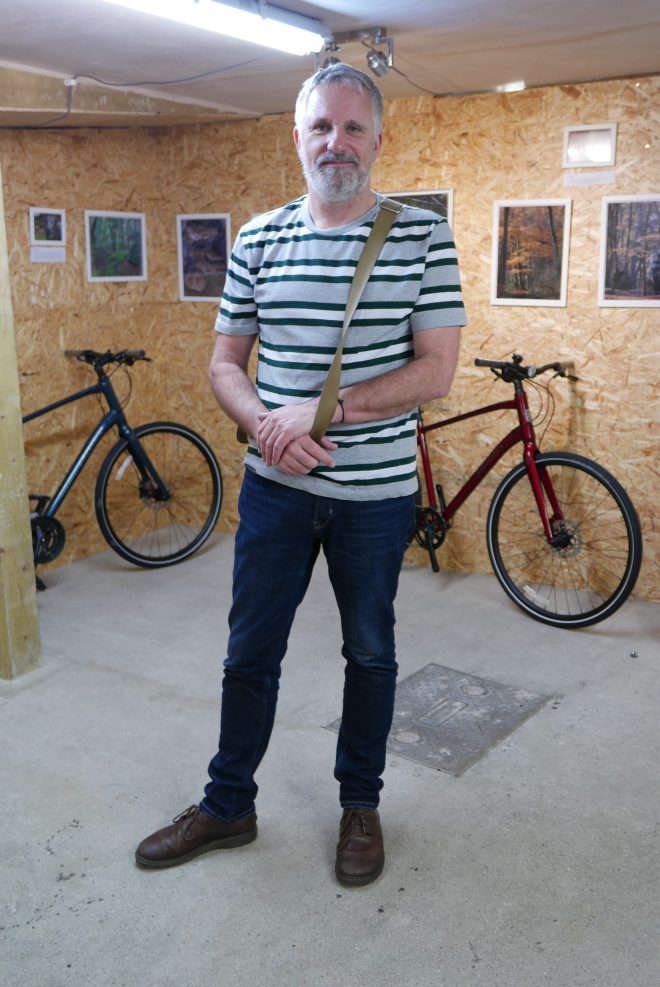
The opening went well, a few people turned up and I hung around drinking beer with some of the attendees and the bike shop guys until about 9:00. I had some good feedback and very much enjoyed myself.

I must go and pick the photos up now, the Art Trail finished in June and it is now August ! The displayed images are below. The top image in each section was printed as a 4″ * 5″ along with a brief introduction to the prints.

Spring

Summer

Autumn

Winter.

Photosketch. Part Two, the instant film photos.

May 6 2019 – near Settle, North Yorkshire.

Photosketch Part Two.

Yesterday’s post was all about the Photosketch day, what it was about and how the day went. This one will, hopefully, be much less verbose. 

The objective of this, the second of two walks, was to experiment with instant film cameras; both Polaroid and Fujifilm Instax in a variety of Yorkshire Dales environments. I have never used an instant camera, and I don’t recall any of my friends having them back when they were more common. Everyone else on the walk had used them, and some brought their own along for the session.

When Polaroid stopped making the film in 2008 there was an outcry from the millions of fans around the world, with many buying bulk and hoarding. In 2010 the Impossible Project started manufacturing film for the Polaroid and the world took a long sigh of relief, and things carried on as normal. Fujifilm has been making their Instax cameras for almost as long, and never ceased production like Polaroid. The Instax films are smaller and a more traditional photo shape than the good old, almost square, Polaroid.

There were six different camera models to choose from, some quite old, and most not being used in a long time. Though all had been cleaned, there were still a lot of artifacting and strange marks from the rollers. I loved them.

I started with one of the Polaroid cameras. I liked it, so simple. Point it. Press the button. Wait a few seconds for the photos to emerge, then stick the photo in a pocket to develop somewhere warm. There is nothing fancy with these plastic cameras, no focusing, no setting aperture or ISO, fixing shutter speeds. Nothing. just point, then click.

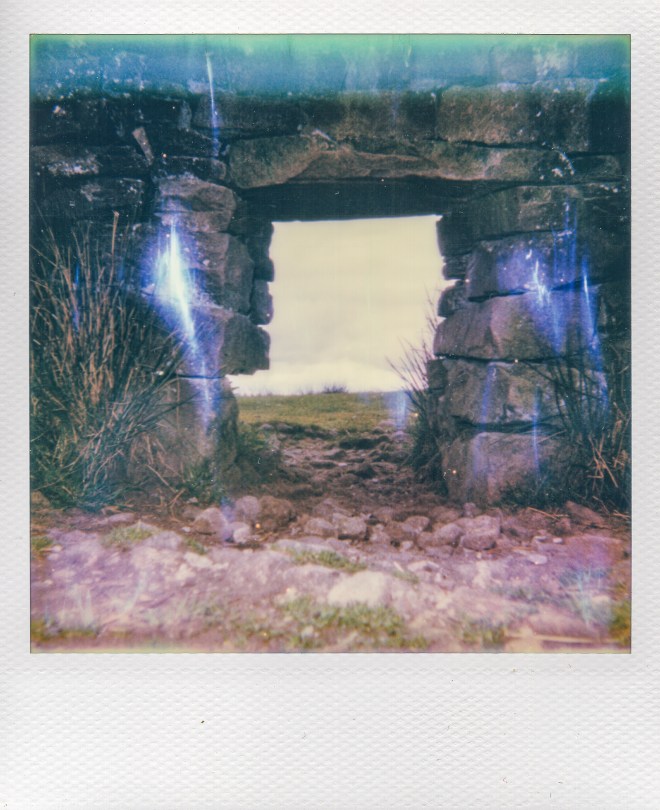
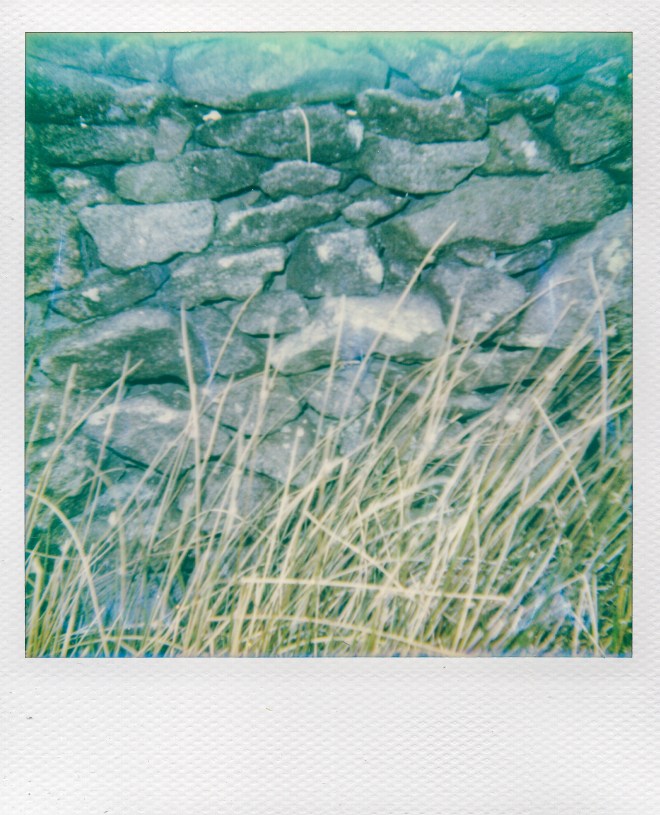
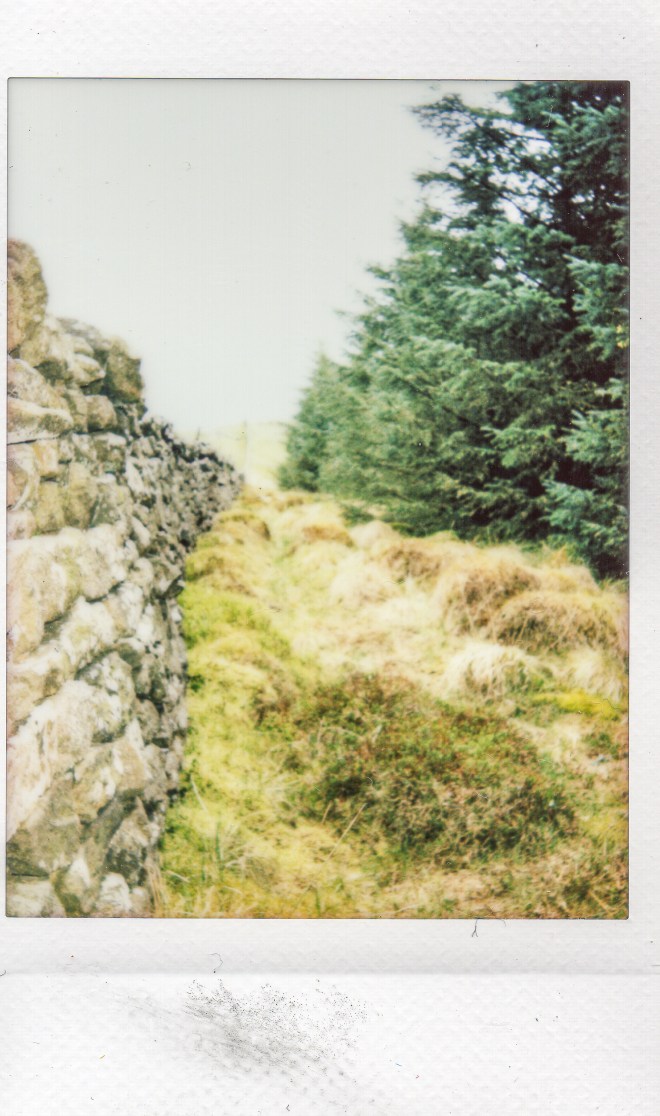
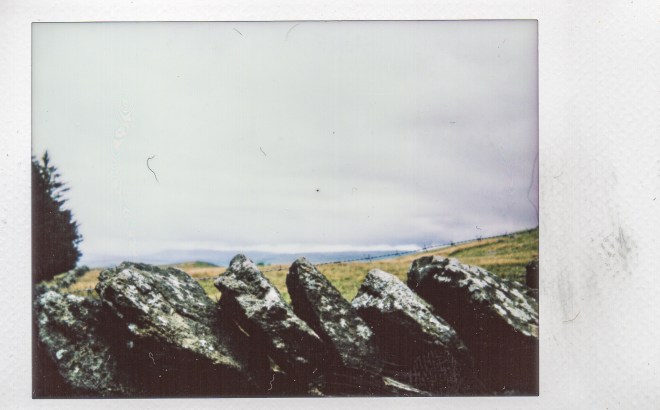
For my first image I wanted to test the tonal range of the camera to see what it could actually do with contrasting light. I am still reflecting on Robert Macfarlane’s new book ‘Underland’ as it has challanged me to think more about my environment, and think a little about what is below my feet.  Not that I was moving in to an underground system, I just took a photo of a hole in one of the dry stone walls. I am assuming this was to allow small beasts out of a paddock, it is too small for a sheep and a farm dog would just jump over. I cannot think of any other reason for it to exist. It was a view into a place I had never been, and one that was not accessible. OK, it was just another field, but hey, I wanted to create some sort of drama!

The photo did require me to lie down on the damp stony ground, and get up quite close to the wall. Point. Click. Done. New experience.

It was cold and windy up on the hill. I was advised by those wiser than me in the ways of instant film to stick the print under my jacket and into my armpit as the chemicals on the paper require warmth to do their magic. It would happen, but it would take some time. And here is the first image.

I was quite pleased. I love the light leakage at the top and bottom, though I really like the roller flashing a lot more.. They do add to the image. It is all slightly out of focus, but that does not bother me at all.

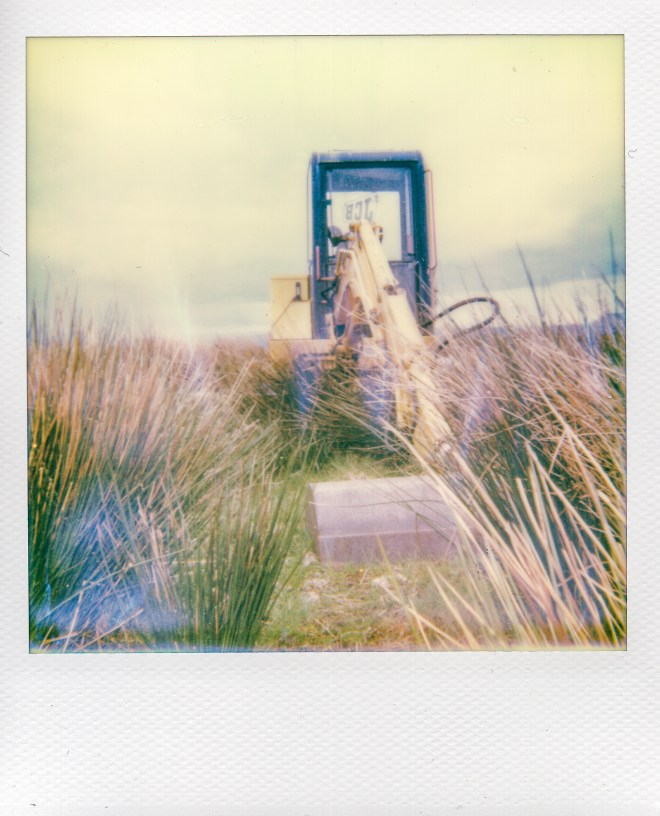
My second attempt was out in the open, with quite even light. I had no idea what this digger was doing up in this field. It was in good condition, so didn’t appear to have been here for long, but there were no tracks or other sign as to how it got there. I am wondering if it is used to bury carcasses ?

I was pleasantly surprised to find that even though this was taken only a few minutes after the first one the light artifacts and leakage were slightly different. There was no predicting what was going to come out of this camera, and I really liked that.

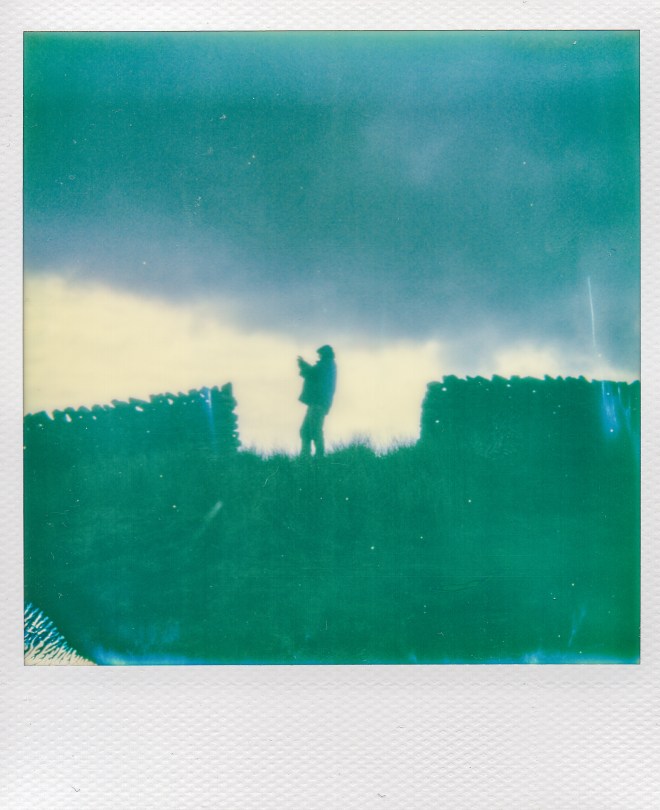
As we were walking up the field to enter into the next section of the walk the heavens just opened and dumped a whole load of very cold rain on us, it was very brief, but quite heavy. I snapped this image of Steve taking a photo on his phone as the clouds sat just over his head. I have no idea what the bright thing in the bottom corner is…

I like that these images, just look old, and slightly degraded; the loss of focus and the the flat light as a result of time and poor technology. Not that they were taken an hour ago.

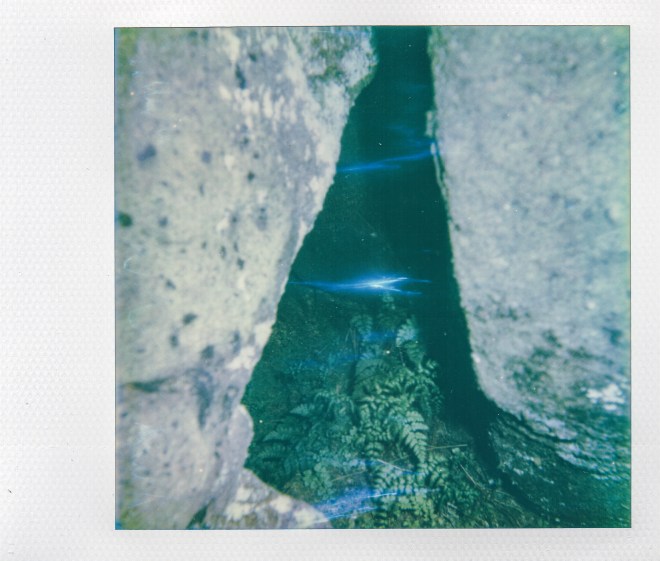
At the highest point of the walk there was a collection of rocks overlooking a low bluff. I was working my around the edges and saw this small entrance point. I have no idea if it was short or long, it was small, it made me wonder what was there. Was it an entrance into the underland, to the below/ Who knows.  I took a photo, triggering the flash this time. Different artifacts.

By the time we reached the next area to explore I had used up the film in the Polaroid and it was time to swap to an Instax. The camera I was given was a lot newer than the Polaroid and had significantly less noise and light leakage, but I could not work out how to turn the flash off, it just refused to not fire. It had one more function than the Polaroid, light or dark. Otherwise it functioned the same. Point. Click.

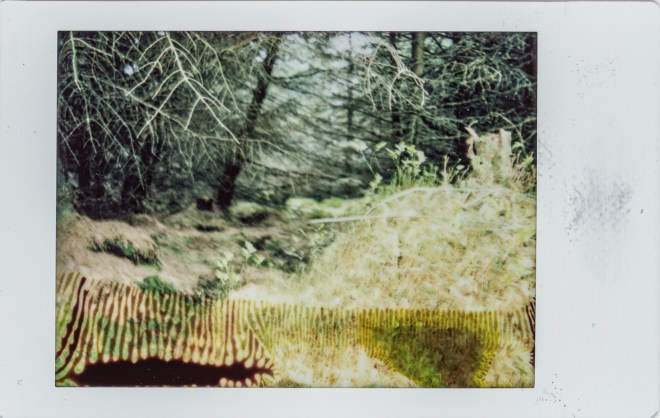
My first play with this camera was in a small section of pine forest.  I literally crawled in to the very dense low-hanging trees for the first couple of shots. Before I knew about the always-on flash, I was trying to capture the very low foilage, the very high moss and tree litter, and the thin gap of light working its way in between. I just got a lot of very bright flash.

Similar to one of the photos I took with the Polaroid I ended up with this strange thing in the foreground, in this case, right across it. No idea what it is, nor why it is there. it did ruin it for me, and it was the worst photo of the day. Things got better once I was not close to anything.

I really like the colour palette in the Instax, it has the yellows and grey that I really like, and the green is quite muted. If only they made a version bigger than 2.5 inches.

Crossing the wall we started down a gradual slope back towards our start point at Fleur’s house. The light was just wonderful as we walked and I took a number of photos on both the instant and the normal camera as we walked.

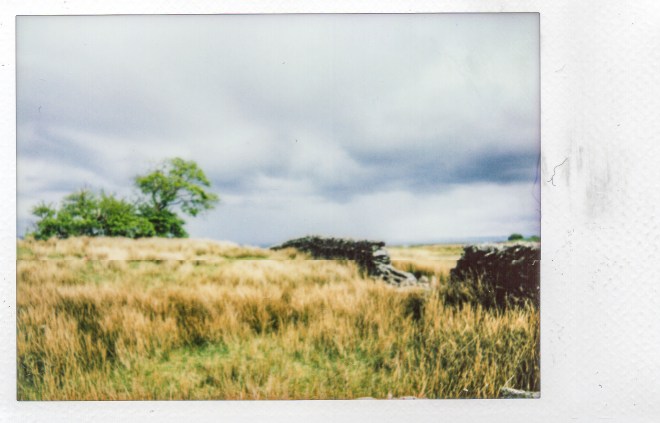
We stopped for a while at these two trees, native trees are so rare in the dalesl it was an interesting place to take some photos. This is, I think, my favourite of the Instanx photos.

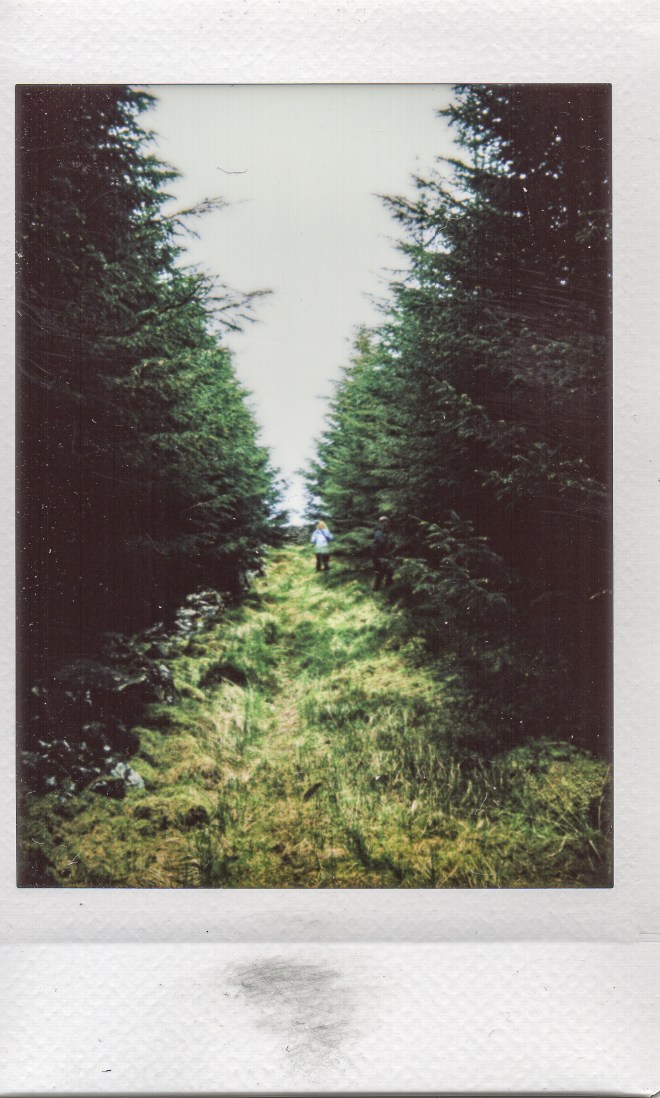
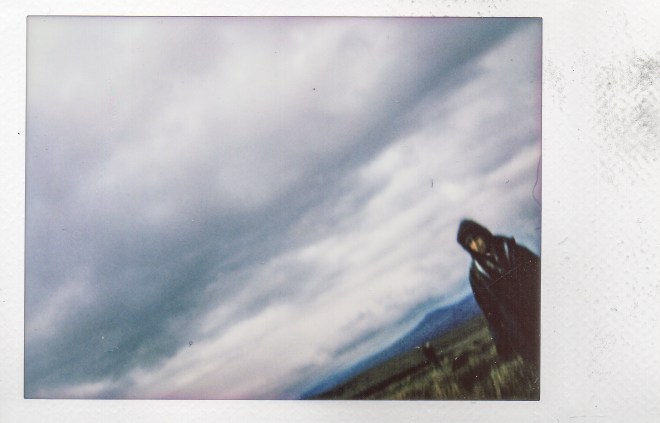
Somehow I managed to accidently take two photos (It is now three months later and I am typing this in the pub, and I have no recall as to what button I was trying to press). However, I like both photos. They break so many rules of photography; the horizon is not straight, nothing is in focus and there is what looks like hair on the lens; and I rarely take photos of people, so a personal ‘rule’ also broken. Fleur and Rachel.

That was the last of the images I took over the course of the day. I very much enjoyed working with this group of people, and with the instant cameras. Back at Fleur’s place we had a very enjoyable session reviewing the range of images we all took. No-one took the same thing, we all have a different eye and different ideas. The important lesson I learned from the people and the day was they are all valid. 

The next Photosketch is in the Peak District on the 8th September. I recommend it. Check it out here.

Photosketch. Part one, the day.

May 6 2019 – near Settle, North Yorkshire.

Photosketch Part One.

This will be a two part post, primarily due to a large number of photos to show. This first post will be all about the day and the images taken on my camera. The next post will be all about the Polaroid and Instax images I took as the day progressed.

The reason for this trip to the North Yorkshire Dales was to attend today’s Photosketch walk. It was the excuse I needed to come north, get out of my comfort zone and share a day with some very talented, exciting and experienced photographers.

The event was advertised on the Twitter feed of Al Brydon, a photographer I follow and whose work I greatly admire, I have made a number of images that Al has directly influenced. Al and fellow photographer Fleur Olby organised Photosketch, a photography based walk by Fleur’s home near Rathmell, a village even smaller than the nearby Settle. The village had a car park, and that was about it, no shops, no pub.

The concept behind Photosketch was for a diverse group  to get together to create photographic art while walking, taking to time to think about and reconnect with nature and the outdoors. It sounded like just the sort of thing I needed to drag me out of a long photographic slump. I liked that this was about making art.  I needed to be reminded that photography is art, and I do it to be creative, not for Instagram followers.

I was a bit pensive going into this event, Al and Fleur are great photographers and I knew there were others coming, they were probably good as well.  I felt a bit of fraud coming along. What if I sucked? We were supposed to show some photos as part of the introduction, my images, my style, my lack of a ‘body of work’, would those be held against me? Would there be sneery looks at my ineptness? Breaking my main camera on Saturday didn’t help much either, cannot even look after my equipment!

As you would expect these were ridiculous thoughts.

Fleur picked me and a couple of others up from the train station in Settle, and we set off in her Land Rover (so much more appropriate here than in London) to Rathmell, where we met Al and the rest of the participants in the towns only highlight, the car park. There were five participants in all. Most of them seemed to know each other, either by reputation or through working together previously. I was not intimidated by this at all, oh no, not at all.

The day started with an introduction session in Fleur’s office/studio/barn. She lives a long way from nowhere, it is very remote and very beautiful. Pretty much all of my event mates were professional photographers or ex degree/masters students; all had exhibited before. In galleries, not in cafes like me. I felt inadequate to start with, however they are all lovely people and once we got talking things all balanced out. We are all human, and all love what we do. We are all equal, just different.

The day was split into two, a short walk to a small ancient swamp forest near the end of Fleur’s property, followed by lunch and then a longer walk into the moorland above. For the first session we took our own cameras, the afternoon was all about playing with instant cameras; both Polaroid and Instax.

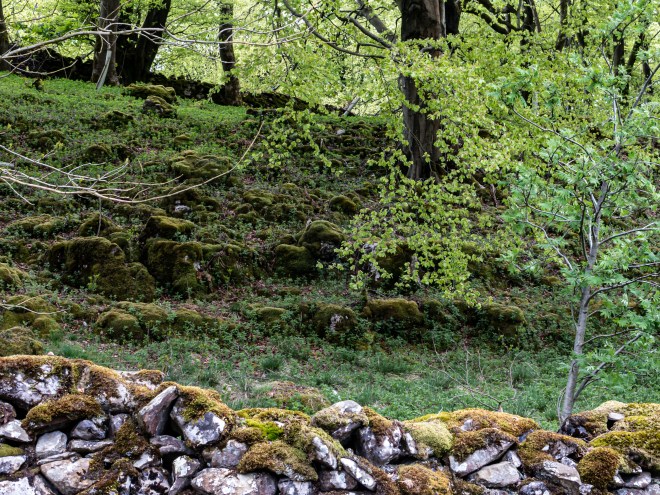
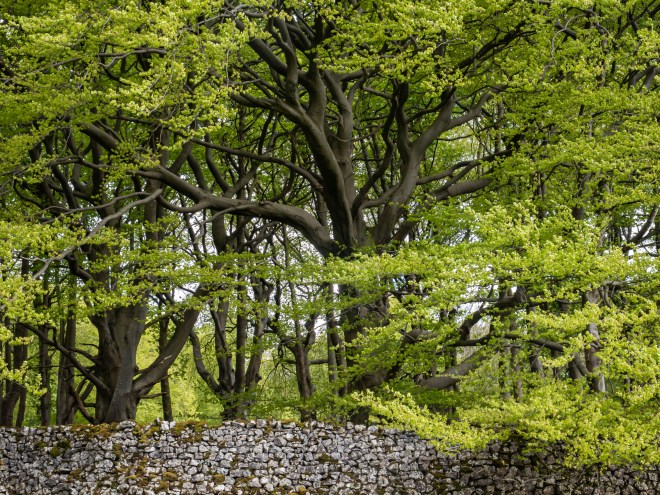
The forest was beautiful, very small, very quiet, verging on eerie. It would have been magical to spend some time here alone, absorbing.  There is an interesting mix of light marsh grass and twisted beech amongst rock and fern. There was a very brief moment as we arrived were the light was stunning, though it did not last long enough to get cameras into action.

I was trying to think about my photography in different ways, take things slowly, looking at the details, watching the others; trying to get the feel of the place and get that onto the sensor in the back of my camera.
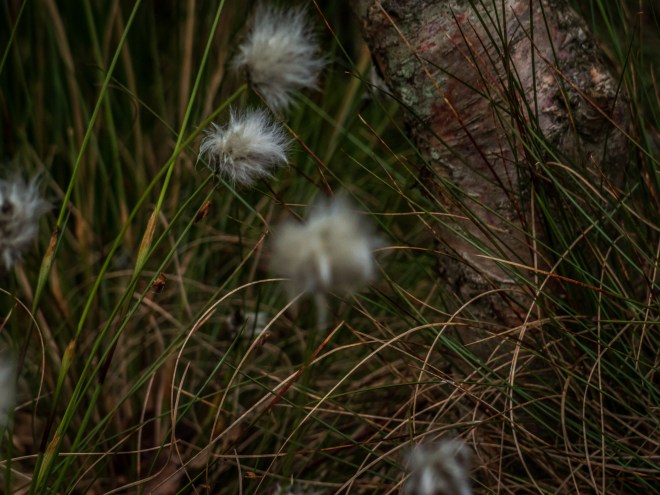
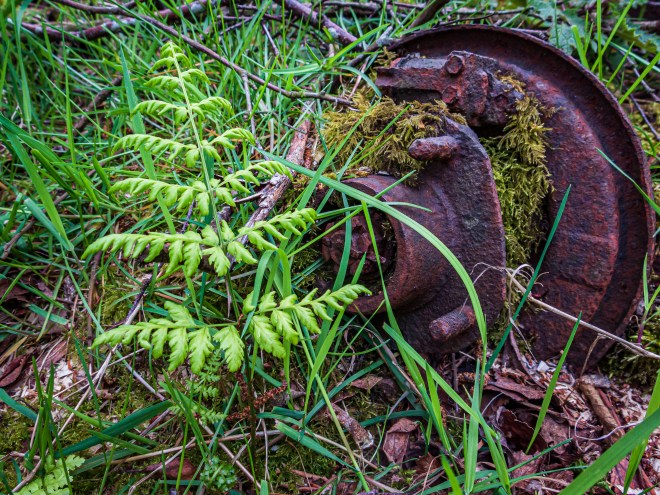
I wanted to think a bit like Al in the short period of time we had., time when I was largely on my own and able to think and focus.  A lot of Al’s work is underexposed, dark and very moody, allowing the viewer to interpret more from the things that cannot quite be seen than what can be seen.
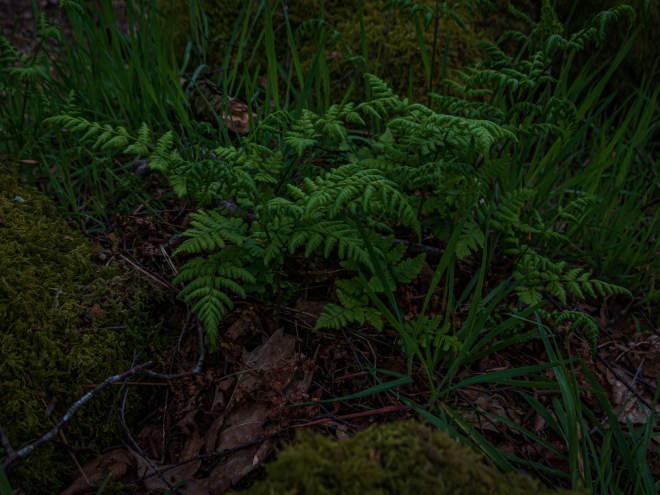
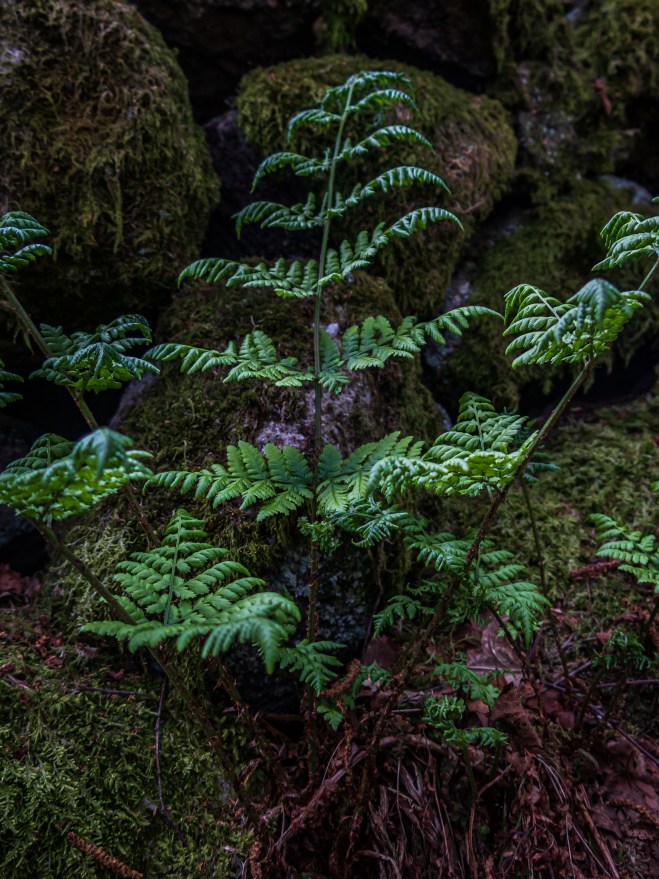
I had to take a couple of my more usual impressionist photos though 🙂
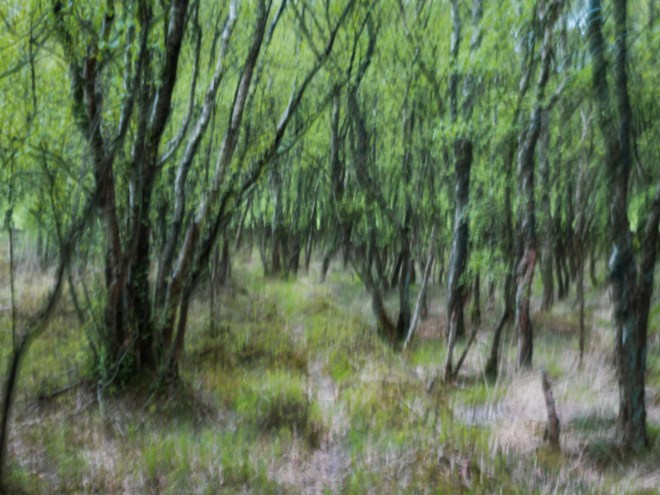
After a very big lunch and a long discussion covering art, photography, books, nature, place and a wide range of other vaguely related subjects we all donned boots, coats, woolly hats and headed off up the hill and onto the moorland above Fleur’s house.

We were all given an instant camera, with a pack of film. I started with an old Polaroid, others had a range of different Polaroids and Instax cameras. The idea behind this longer walk was to play with this different technology, look and think about what we were going to take images of, not just snap away taking dozens of frames of the same thing with the hope of getting one good image. The instant cameras meant we could review the results today. I have never used an instant camera before, I was the only one who hadn’t, all the others regularly shot film, or used old plate cameras and were ued to thinking about taking images over a longer period of time.  This sort of low tech was what they were used to. I will talk about the instant camera experience in the next post. It was fun.

We passed an old farm house on the way and I got told off for taking photos. The locals do not like the ruin porn thing, displaying the slow decline of the rural way of life. Fair enough I guess.
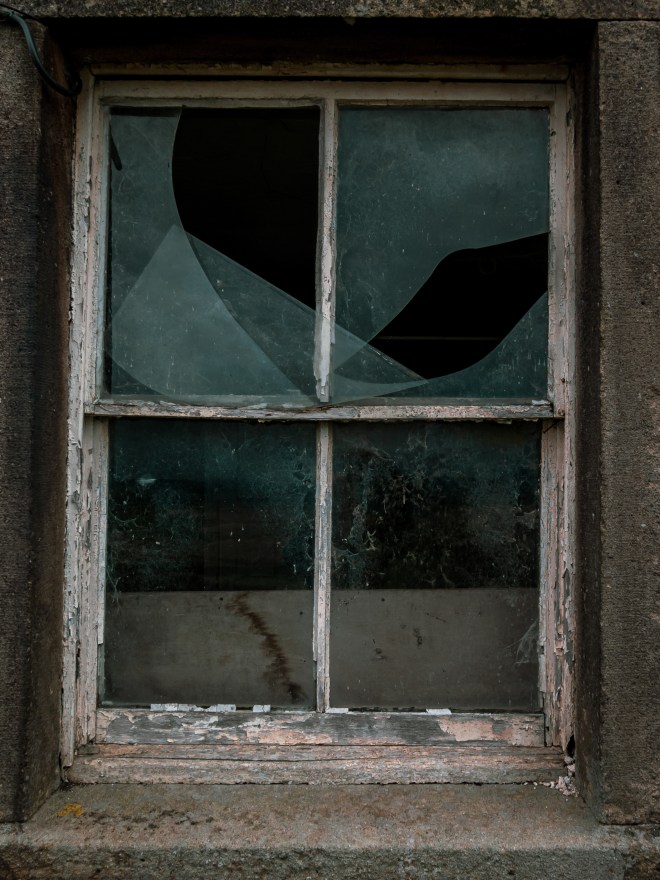
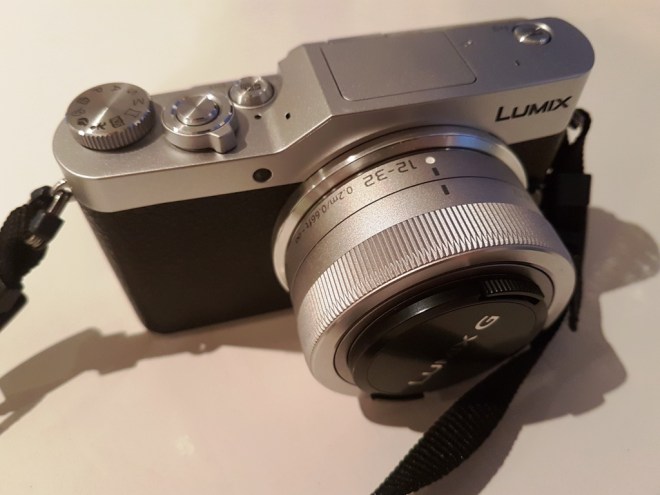
The moorland was amazing, I really liked it up on the hills, we had a few zones to take pictures, with 20 or so minutes in each as we covered the six or so mile walk. It was moody and cold up in the hills and at once point it rained heavily, though fortunately briefly. The clouds were amazing and I was gutted I did not have the big camera as the wide angle was perfect for this environment. The little G16 did OK though.
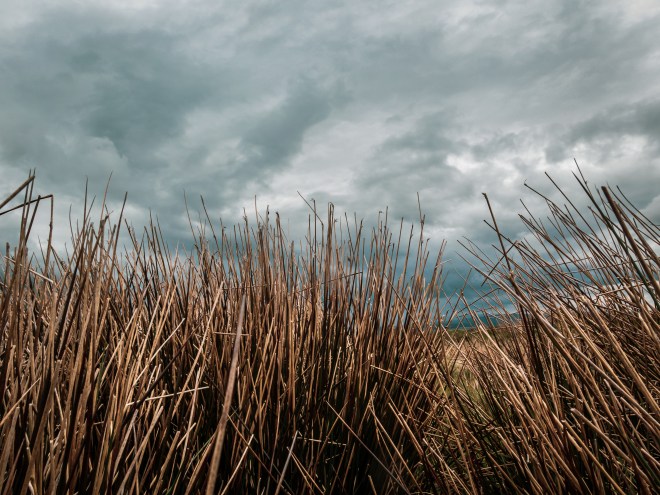
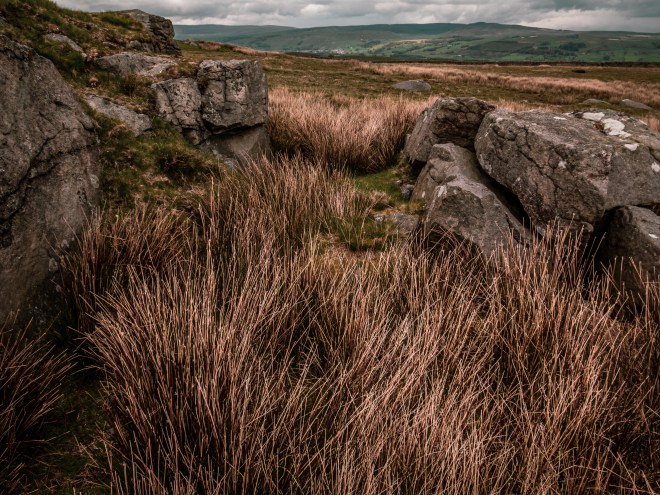
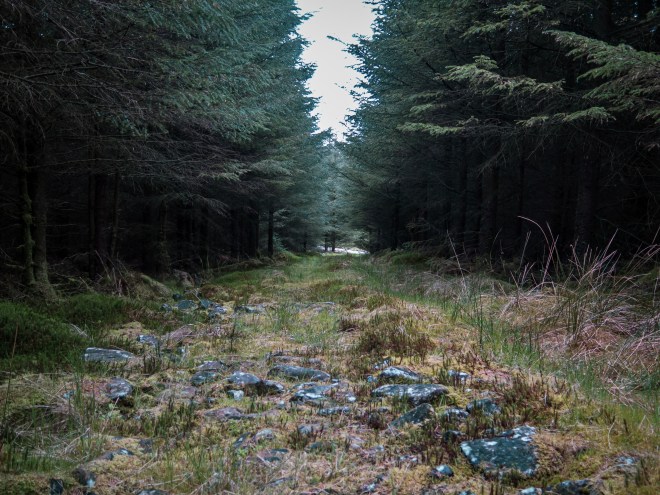
We dropped down into a small section of pine forest, passing a really cool mountain bike loop on the way. The pine forest was an interesting change from the open and mostly treeless moors, and Iiked the closeness and darkness of the trees. We didn’t have long there unfortunately, I think I could have gotten quite ‘lost’ in the depths of this large grove.
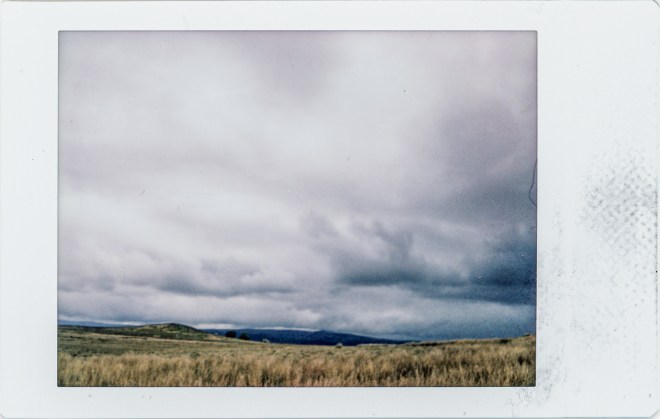
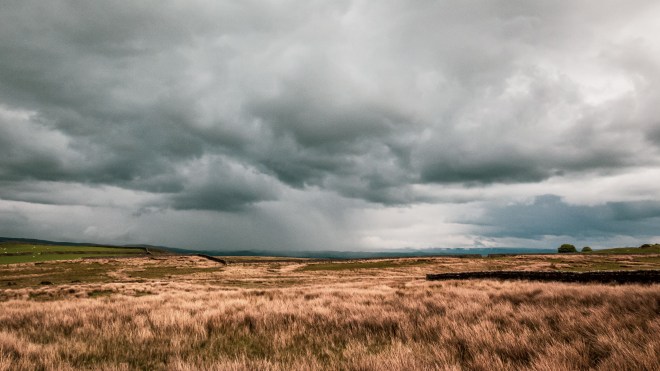
Walking back down from the top we were again exposed to some massive views, with big clouds, big horizons and wonderful contrasts between the yellowy grasses and the grey sky. I took way too many photos. This is my sort of place, though I was supposed to be not taking cliché Phil photos today. I couldn’t help it, and I know I was not the only one…
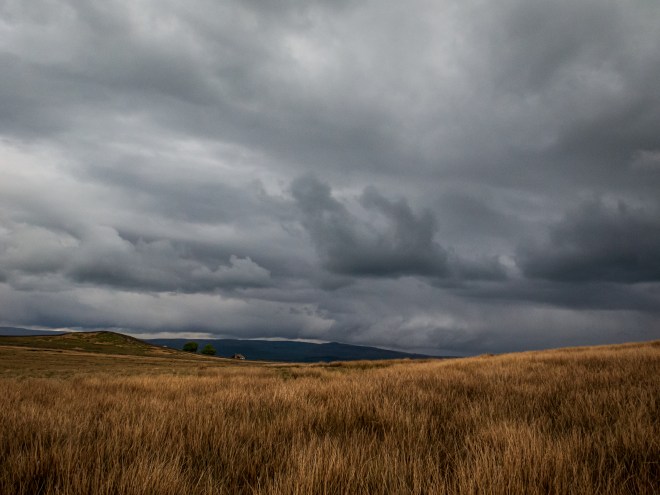
Watching sweeping rain showers batter the horizon from our position of relative dryness was dramatic and inspiring and I wanted to stay longer, however those clouds were not all ‘over there’ and we could see them coming our way, with growing rapidity.
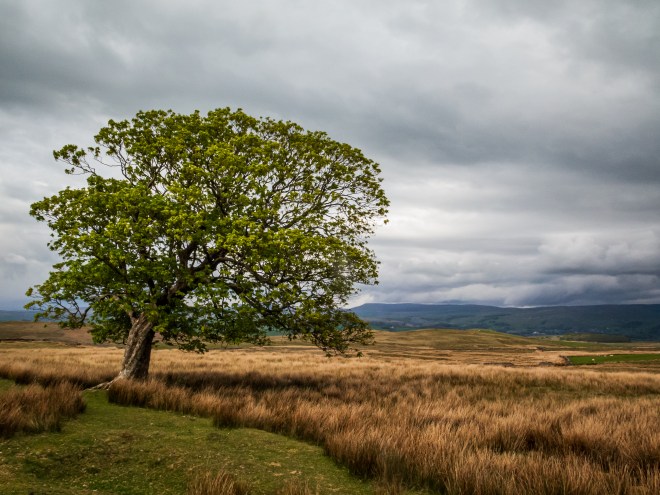
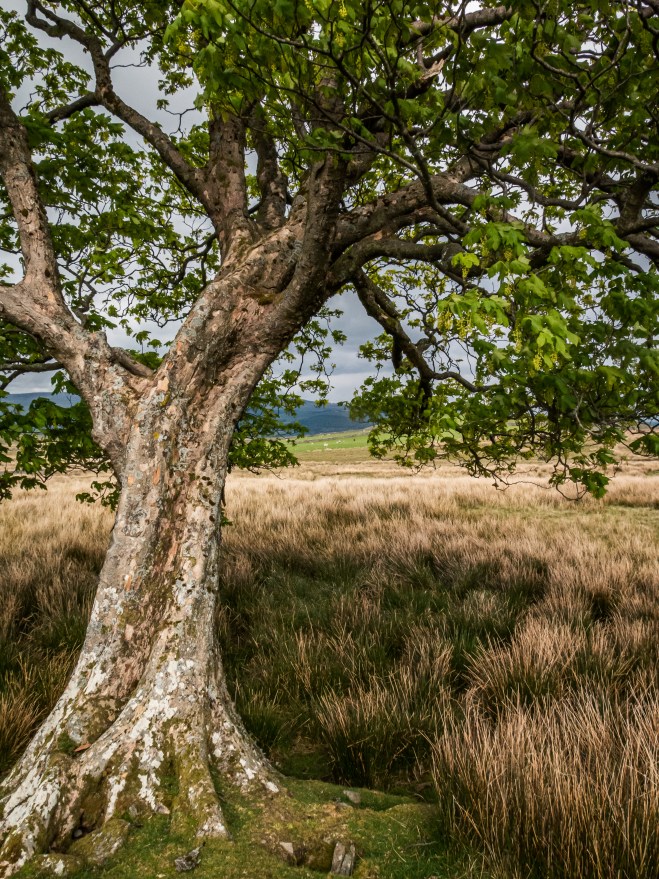
Apart from the pine forest, we saw very few trees, coming across two trees together we stopped to take a few photos, they were almost unique in that environment.
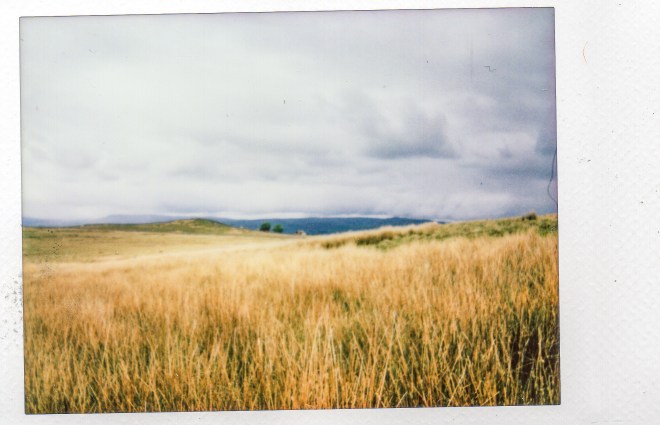
I had a lot of fun with the instant cameras, I had a go with both types and took about 24 photos. All the cameras were old, some hadn’t been used for a while so results were unpredictable, there was a lot of roller noise, but for me this just added to the joy of the images. This was my favourite, a landscape Instax. I will show some of the rest in the nex post, maybe tomorrow.
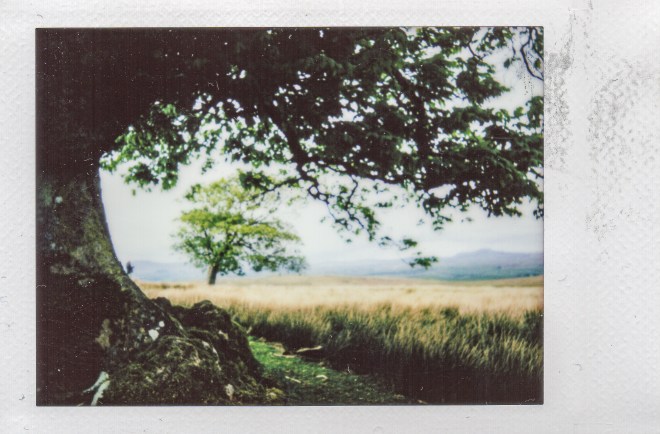
It was cold out, so the instant photos took a while to develop, even stuffed into pockets close to body warmth.  Back at Fleur’s we spent some time looking at all photos we had taken, comparing images and effects from the different cameras and discussing experiences. It was really nice, quite education, and interesting to see the varierty of styles. I very much enjoyed it. adly and all too soon it was time to be dropped back in Settle, the day was done 😦

It was a good day, I learnt some things, met some brilliant people and came away feeling validated that I can make good images. I just need to find my thing, as I don’t have a thing at the moment. It will come !

Big thanks to Fleur and Al for organising, and to Steve, Rachel, Kristell and Phoebe for being great company and good teachers.

The next Photosketch is in the Peak District on the 8th September. Check it out here.
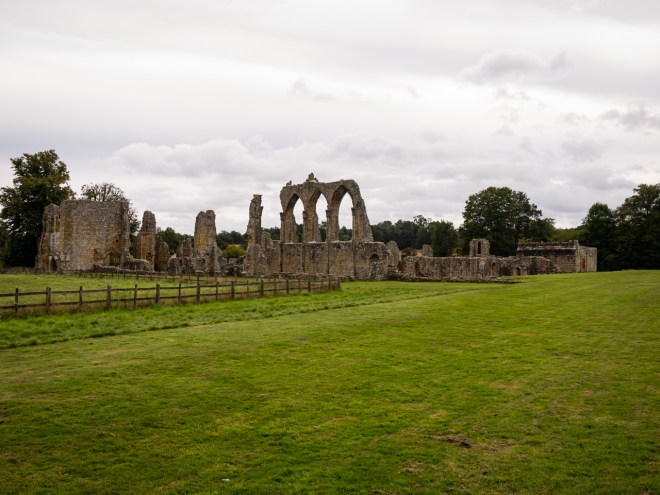
Victoria Caves

May 5 2019 Part 2 – Settle, North Yorkshire.

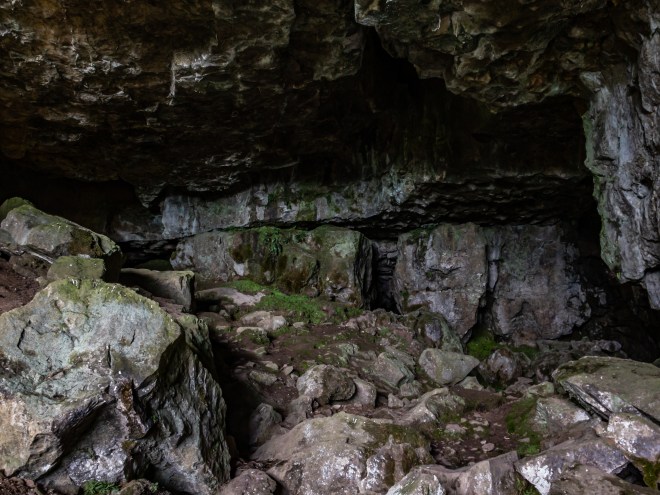
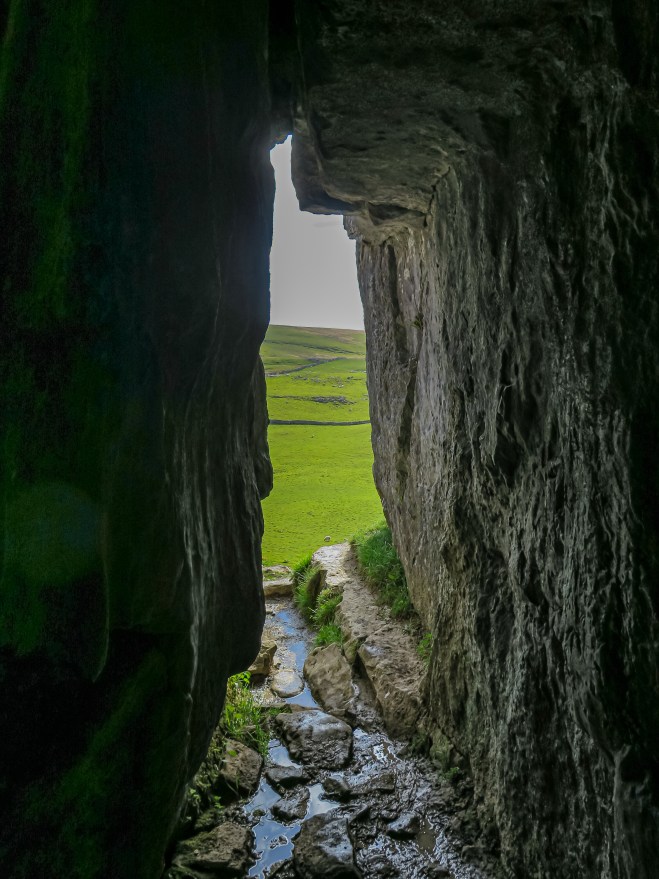
Inside the cave mouth it is near silent; no bird call, no wind. Just the occasional bleat of a ewe calling her lamb, and the steady yet slow drip of water falling from the rock above It feels like the outside world is slowly ceasing to exist. The further I move into this, most shallow of caves, the more the outside disappears. As light slowly reduces so does sound, natural noise cancelling headphones.

Caves terrify me. That is not totally correct, as THIS particular cave doesn’t terrify me. It is quite large and open and at a glance it does not appear too deep and foreboding. Being a law-abiding citizen, I am not going to pass that safety rope, so I don’t have to explore its crannies and tunnels. I can safely ignore any paths into the dark below, into the underland. It is they, and the unknown terrify me.

One person who does know what lies in the dark below is the author Robert Macfarlane, who has just published a new book ‘Underland’. Exploring ancient and future history by looking at what is under our feet and hidden from view. Cave systems, mines and melting ice fields revealing all sorts of things that humans have buried or disappeared. I started reading it in the pub on Friday night, and have been reflecting on the passages I have read over the weekend, I am going to take my time with this book. it intrigues me.

After five hours of job application writing I was finally ready to back out again, it was getting late in the afternoon, though I still decided to take a walk up into the hills and try to find Victoria Cave. It was clearly marked on Google maps and was do-able in the time I had between now and it being too dark to be out wandering alone in strange hills.

The first 40 minutes just seemed to be uphill, with a little bit of flat before going back up hill again. I am not as fit as I used to be, but managed to keep pretty good pace given I didn’t have a lot of time.

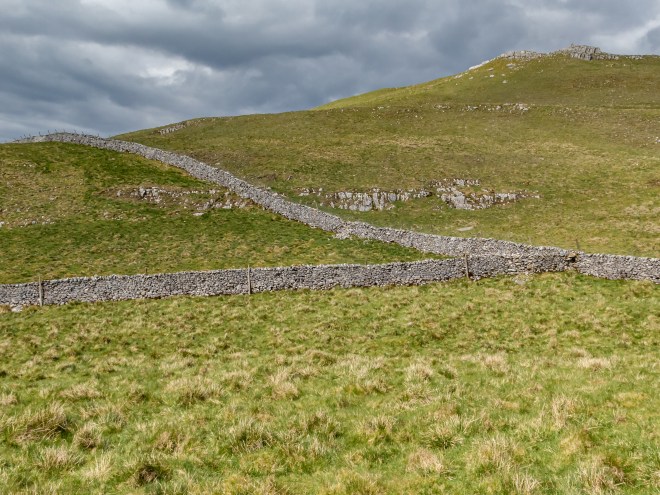
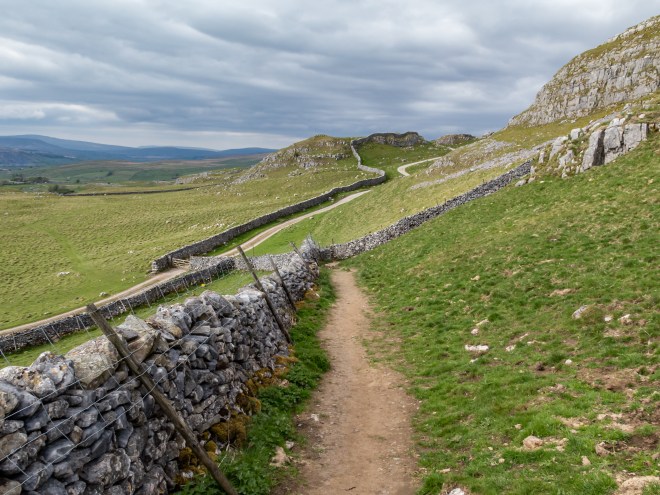
I love the dry stone walls here in Yorkshire. There are very few trees in the hills. Not knowing the old history of the area I am assuming that this was not heavily forested back when these walls were built, some possibly date as far back as the bronze age, though those old stones will be very low down in the walls as remedial work has taken place over the centuries. They are a thing of beauty, and control in this otherwise slightly disordered landscape.

I wish I had taken more time, exploring the bluffs and craggs that surrounded me would have been so much more interesting than writing job applications. Though I guess being in work allows me the time to indulge in walking and photography in places that are a way from home.

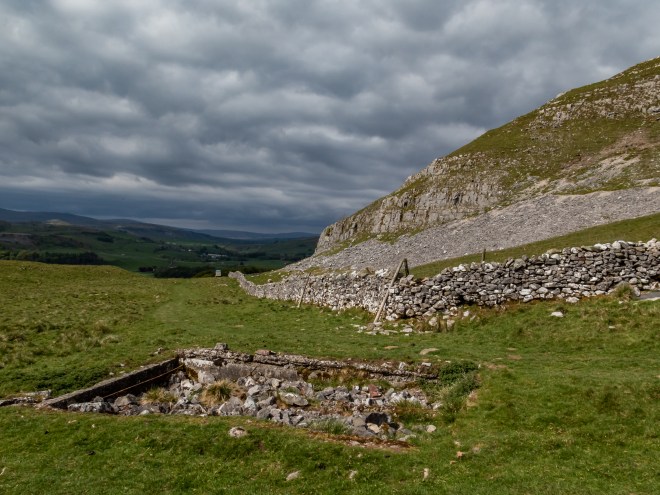
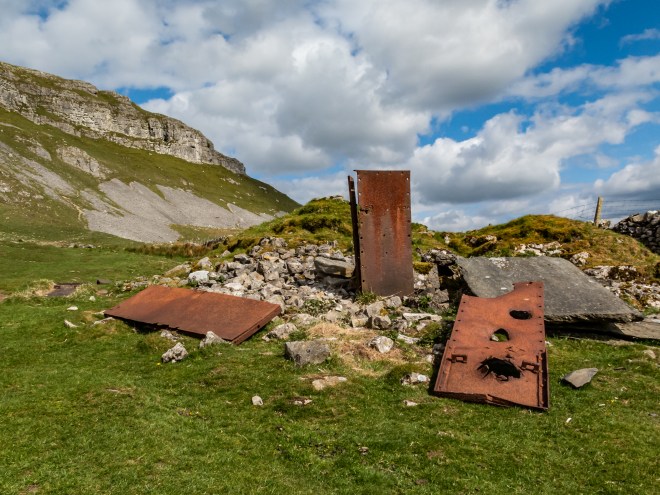
At the top of the first climb I came across this ruin. I have no idea what it was, and do not really want to know as my imagination ran riot trying to work it out. Why are there blast holes in both directions on that panel, what the heck blew holes that size?

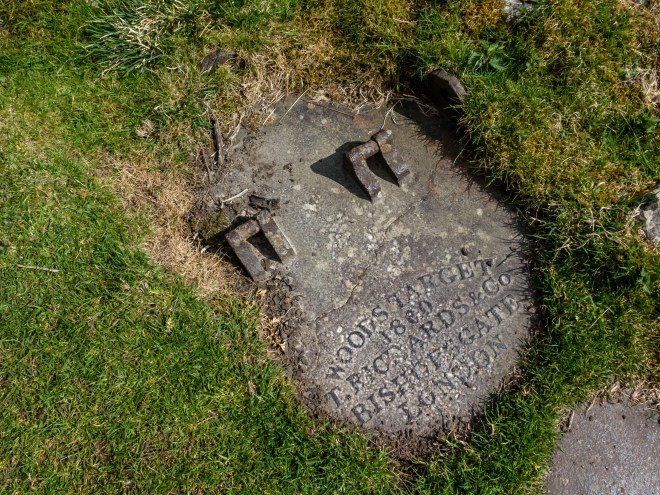
I also want to know if this plate, made in Bishopsgate, in what is the heart of the finance centre of the City of London is covering, is there something under here ? did it blow up ?

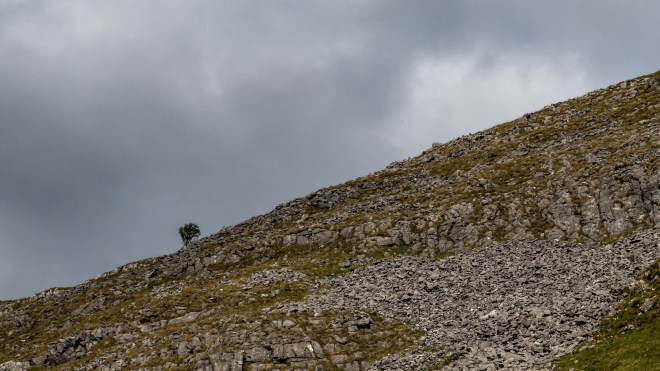
There are not a lot of trees here, the land does not look it would sustain many, and I wanted to photograph each and every one. How old are they? And why one? So many questions.

It is very unusual for me to not be listening to music, I have headphones glued to my head on my commute and as much as possible in the office. I play music when I cook, sometimes it is why I cook. I am playing music as I type. I listen to it a lot. Except when I am walking in the country, when I walk I want to listen to nothing but the countryside and the questions in my head. There are often a lot of questions.

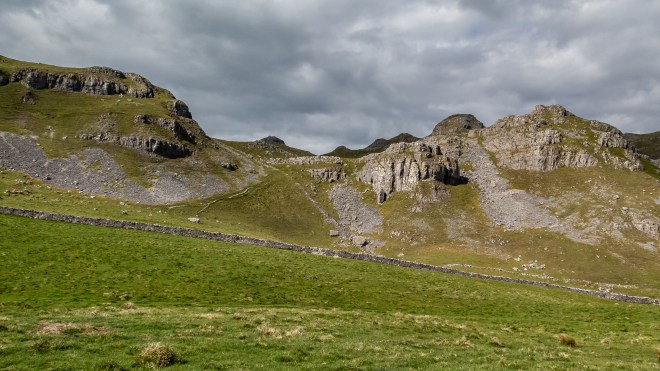
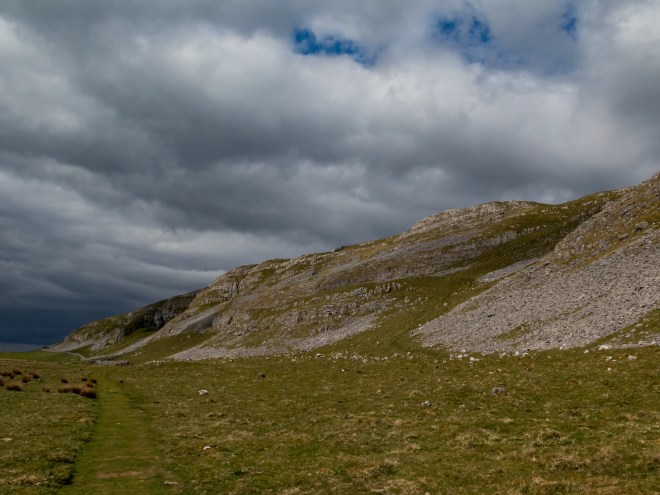
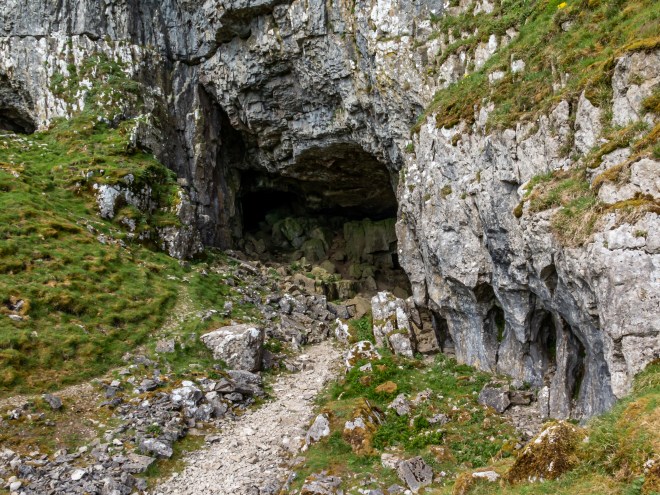
My object for this afternoon’s walk, the Victoria Caves are somewhere in this bluff, the Attemire Scar. There are a lot of cave systems in the Dales, including some managed commercial systems. If I had more time I would have had a look at some, though I doubt they would be as amazing as those mega caves I visited in Malaysian Borneo. I am intrigued by what fears me.

I reached the cave about 5:00pm and had a sit down, a drink of water and a snack bar. I had walked quite quickly up to the cave as I had no idea how long the loop would take to do. The return journey was simpler than the way there. So arrival with plenty of time meant a relaxed walk back.
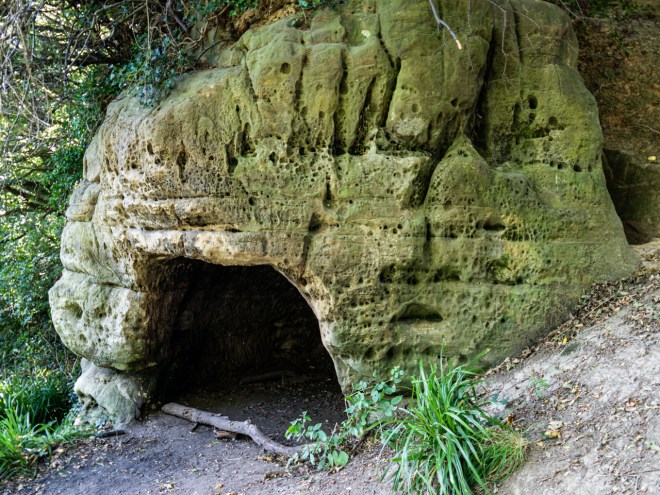
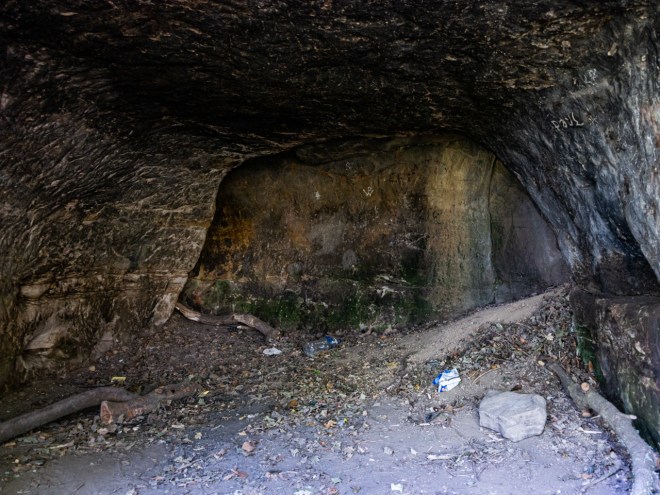
The cave is not deep, or at least access is not deep, there is a lot of rock fall and most of the cave is roped off. I could have gone deeper, there is no-one there to stop you, but I am a chicken so only went as far as the barrier. The darkness, dankness and silence was calling me further in, I really wanted to see and learn more, perhaps find someting so far undiscovered, new bones, a few coins. Something newly revealed by rock fall or fissure. 

The caves were discovered in 1837, the year of Queen Victoria’s coronation, hence the name. They were apparently an archaeologists dream find, with loads of prehistoric bones as well as a collection of Roman and pre-Roman artifacts. The question remains as to what it was used for.

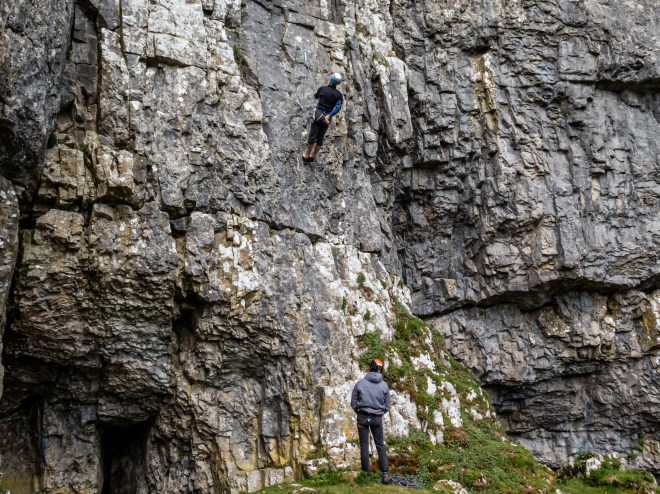
Between the main cave and the much smaller second cave I found two climbers, playing on a wall. The wall was not high, not particularly dangerous looking, though I was terrified just walking up the scree slope to the caves. As well as not doing dark narrow tunnels I also do not do heights, and the older I get the worse the vertigo gets and I really struggled getting back down from the caves to the level grass below.

The path that makes up the second half of the loop was more clearly defined than the one I followed on the way up, which was at the best of times a mown strip in the grass. This path leads to a nearby car-park, and then the road,  following a very wiggly line of dry stone wall.

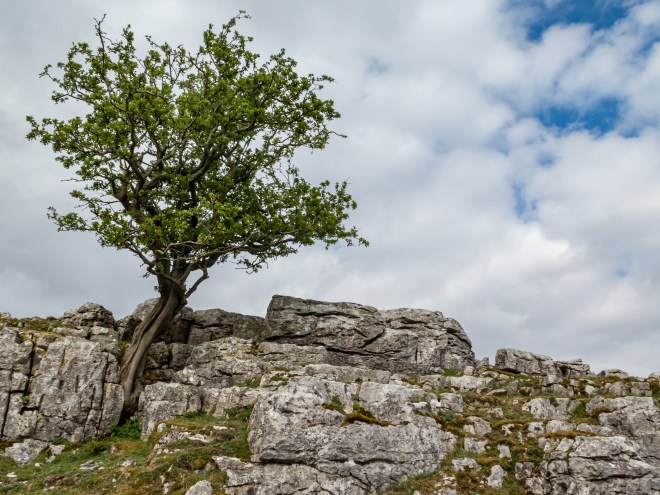
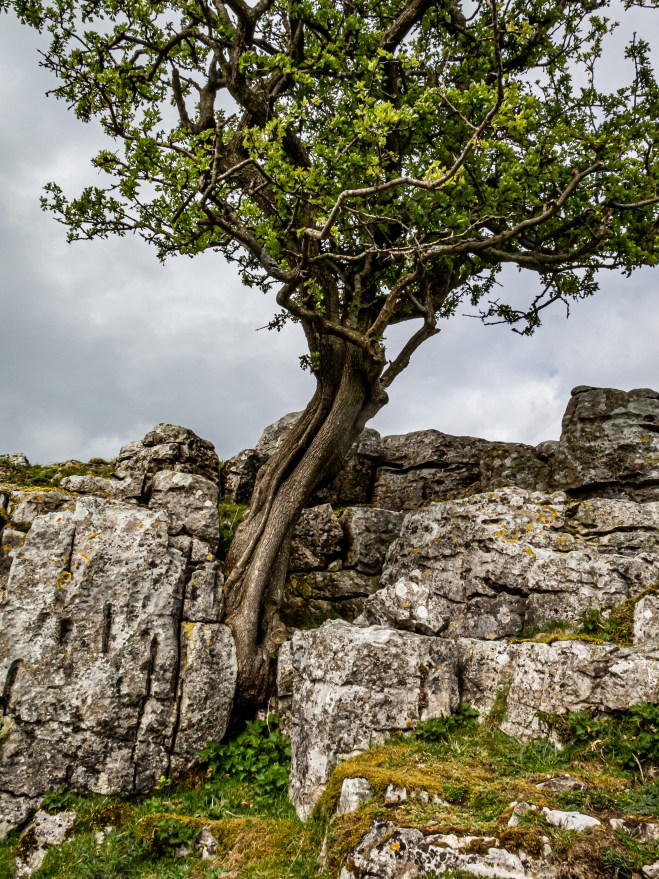
I came across another solitary tree, as this one was in my path I stopped to take a few photos, intrigued as to how and why it was growing on this particular rock outcrop.

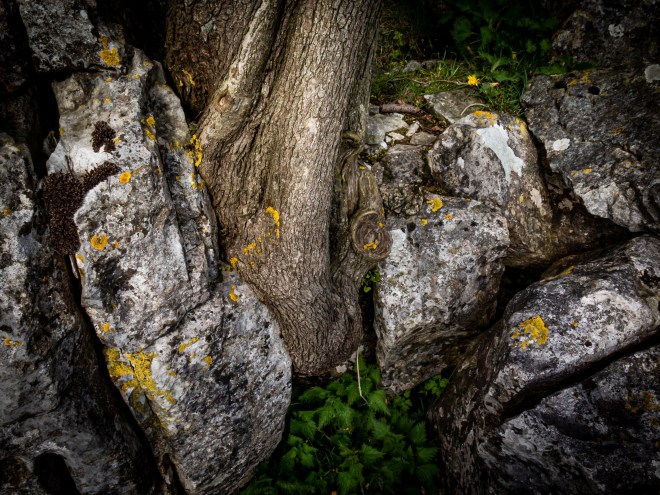
I think this is a hawthorn. I love how nature has allowed a seed to grow between the rocks of this harsh environment, forcing its way up into the light, pushing the rocks apart to allow its growth.

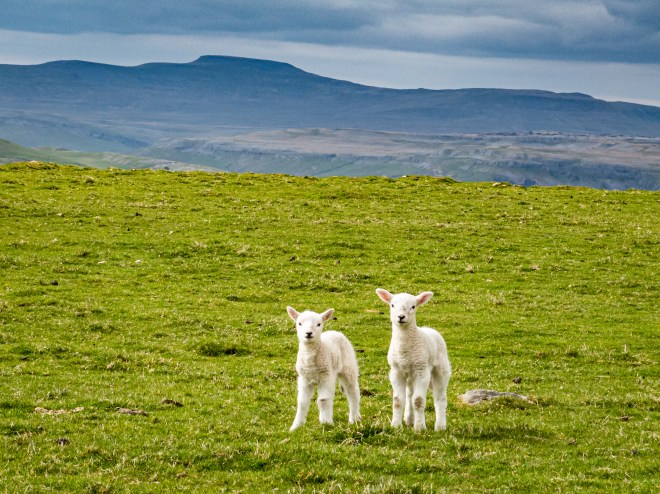
I was soon walking down the road towards Lancliffe, passing these very friendly lambs on the way, I thought they were trying to come with me for a while. Maybe my sheep voice is better than my Scottish accent ?

On the outskirts of Lancliffe I passed what I am assuming is a private forest, possibly surrounding some large manor house. The variety of shades of green in the walls, the moss on the banks and the trees was incredible and I have failed to capture them with any accuracy. The light was low and I had no tripod. After spending so much time with few trees, it was wonderful to be reminded of why we need more, not less of these wonderful things, and that wandering amongst them should not be just the privelidge of the wealthy.

That was pretty much the end of the walk. It was lovely and I wished I had more time to enjoy it. I did deserve the massive meal and couple of pints I had in one of the pubs!

Settle, Yorkshire.

May 5 2019 – Settle, North Yorkshire.

Settle is a small farming community in the Ribble Valley, it used to be a mill town, using the river to connect the mill to the bigger towns and further down the rivers and canals to Manchester and Liverpool. Tourism is the big earner here now, and there is very little cheap accommodation, though there are a number of pubs serving good food at, almost, London prices. It is very attractive and my first thoughts are ‘I like it’.

I am here for Photosketch, a day long photography walk, chat and learning session with two fabulous photographers; Al Brydon and Fleur Olby. The photo walk is on bank holiday Monday, though I am here three days early so I can have a day looking around the area, and visit my daughter in the Lake District, which was the subject of my last post. Photosketch will be the subject of a near future post.

I arrived in Settle late on a Friday afternoon, parking my car in a pay and display car park for the weekend; and constantly forgetting to feed the meter. Austerity cut backs in the council means that no one checks my car for unpaid parking; feeding the ongoing austerity I guess. I did pay when I remembered. I am staying a small Air B n B, the owner is friendly and has loads of maps and suggestions for walks and things to see. She is an ardent advocate for the area.

I have bought both Canon cameras for this trip, the big heavy 5d and the smaller, jacket-pocket sized G16. Grabbing the 5d I head out for a walk to stretch legs tired after being in the car for most of the day, and to have a nose around some of Settle and neighbouring Giggleswick.

Giggleswick is even smaller than Settle and on the opposing side of the river. There was a nice little section of white water and I planned to come back here one night with the tripod and take some moving water shots, something I very much enjoyed though have not done in over 10 years, there is not a lot of white water in London.

Giggleswick is famous for its school chapel, and possibly for its mildly humorous name. Giggleswick School is a public (which means private in this strange country) school established in 1499, though it moved to its current location in Victorian times. A local landowner gifted the chapel to the new school, and construction commenced in 1867.

The chapel is a magnificent building, on the top of a small incline at the back of the school, it is on private land and there a number of signs reminding me of this. I sort of skirted them and finding a gap in a hedge up a lane sneaked on to the land to take a couple of photos. I would have loved to have gone inside.

Back in Settle I had dinner in one of the pubs. It was Ok, the food was good, but it was the least welcoming of the pubs I visited. I am guessing it is the most ‘local’ of the pubs, and I could imagine how some residents hated the fact that everywhere was packed with noisy visitors all the time.

On Saturday morning I took a slow drive to Ambleside to see my daughter. The first hour of the drive I spent in the hills overlooking Settle, trying to find some of the interesting sights and sites. I started looking for Winskill Stones, a series of limestone rocks that looked quite interesting photographically. I didn’t find them J But I did take a photo of my car with Pen-Y-Ghent in the background. Pen-Y-Ghent is one of three fells in this area that make up a well known day walk.

Driving to Ribblehead Viaduct, a slight detour on the way to Ambleside I passed what seemed like hundreds of those day walkers as well as a good number of mountain bikers; with caving, rock climbing and kayaking, this really is an outdoor enthusiast’s paradise, and busy all year round.

Construction on Ribblehead Viaduct began in 1869 and it took five years and a hundred lives to complete. It is part of the Leeds to Carlisle railway and is still used today. It is a glorious construction, and very heavily photographed. I wanted to add to its photographic history, but did not add anything new or interesting to that photographic history.

The rest of Saturday was spent with my daughter.

When I booked this trip I had planned on spending Sunday looking around Settle, visiting some of the ample number of places of interest in the immediate area. However, in the interim I had found a really good job to apply for. Sunday was mostly spent at the dining table in the B n B writing a civil service job application. Not the easiest thing to do if you want to do it well. As I am writing this almost three months later I can say I didn’t get that job, but I did get another one. More on that another day.

Before settling in to write I took a walking tour of Settle, visiting all the bits I didn’t go to on Friday night. It did not take a long time to complete. It is a nice village, sized perfectly for a Sunday morning walk.

Most of Settle and its cross river neighbour, Giggleswick, has been built from local stone. There is not a huge amount of colour in the buildings, nor variation in style. These towns were built a long time ago and no-one really wants to expand them. I really like it. Clean lines, standard colouring, simple design and local stone, lovely. This is my B and B.

Not so sure on the Daily Mail though, I suspect those who drink in the pub I went to on Friday appreciate the hate Mail more than I.

There is a small loop walk through the town part of which runs up one of the original village streets to the farm land that makes up the bulk of the dales.

There is a path through a small section of forest that leads to the top of one of the small craggs, I don’t think it has a name, it was under a hundred metres high, but the view over Settle was great, and looking up the hill there was adventure to be had.

Back down through the grey stone of the town I stopped for coffee and a snack, and then a look around the small and interesting museum before walking back to the B and B, and five hours of constructing a job application.

236 miles to London!

A walk with Meliesha

May 4 2019 – Somewhere near Ambleside, Lake District.

I have come up to Yorkshire to attend a one day photo walk on the bank holiday Monday. After I booked the trip my daughter took a work-away job at a small yoga retreat near Ambleside in the Lake District. I have never been to the Lakes and it has been on my to-do list for ages. This seemed like a perfect opportunity to take an extra day off work, come up to Yorkshire early and drive the extra 60 miles to where Meliesha is staying. Luckily she took the day off work!

The drive from Settle to Ambleside was mostly traffic free, and pretty good, until I arrived on the outskirts of town where I got stuck in a massive queue of barely moving cars, this is the Saturday morning of a bank holiday weekend. I was expecting this; at least the scenery is great, even the town is attractive enough.

I arrived at Meliesha’s work place just after 10:00, she is living on a small farmlet, apart from being a family home it is also a yoga retreat. She has been cooking and teaching yoga. Meliesha teaches yoga in a yurt.

After meeting the family who own the retreat and having a look around the property we set off to Coniston, on the edge of a small lake, Coniston Water. We stopped for coffee and a snack in the town, before starting out on a walk down to, and along side the lake.

The Lake District is one England’s premier tourist locations, an area of outstanding natural beauty and I can see why it is so popular, it is a beautiful area, and good weather made it even better.

Coniston is a much smaller body of water than nearby Lake Windemere, though it is equally nice to walk along, quite peaceful and relaxing on this spring bank holiday weekend. Maybe the crowds I saw in Ambleside had yet to make it this much further.

There was some really nice small sections of forest along the shoreline, old forest by the amount  of blue bells we saw. What I liked most about these small treed sections was the moss and ferns. We have a lot of ferns in Epping Forest, but not much of that deep green old moss, and no old moss growing and living on even older stone walls. Almost tempted to move up here!

On the way back to where Meliesha is staying we passed a sign pointing to Wray Castle, not being one to pass a castle by I turned down the side road and we went for a quick look. The castle is not particularly old, being built as a revival castle about 180 years ago by a wealthy family from Liverpool, it is pretty cool though.

We took a walk down to Lake Windemere from the castle, like the path along Coniston we had lake on one side and trees on the other. Like Coniston it is a lovely, light, cool and airy walk.

There were also a heck of lot of bluebell patches. I have never seen so many before.

Though I was there for less than a day, and saw only a tiny section of the area, not venturing into the hills at all, I really enjoyed my time. I am very much looking forward to coming here again for a proper holiday.

I dropped Meliesha back at her work early in the evening and then drove the hour or so back to Settle and my B and B. It was great seeing Meliesha somewhere different again, apart from when she comes to stay with us in London, I don’t think we have spent time together in the same place for years.

Arriving back in the car park in Settle, I was lugging all my stuff from the car to my room. Bending over to get my room key from my trouser pocket my big camera, the Canon 5d Mk1, fell out of the top of my bag, smashing on to the tar seal. The 50mm lens broke into a number of pieces, probably saving the camera body. The lens is a cheap plastic one, the ‘nifty fifty’, a most beloved lens, but fortunately easily replaceable. What is proving more difficult is getting the battery door fixed, it was the only damage the camera sustained, but it is so old they do not make parts for it any more. A choice has to be made. How do I replace the camera?

Monday I do the photo walk, and not I do not have my main, and, by a long way, best camera. Doh!

Cragg Vale, Yorkshire. The Gallows Pole.

May 3 2019 – Calder Valley, Yorkshire.

I do like a good book. However, they seem to be quite hard to find and I have started many that turn out to not be as good as I hoped. I am sure there are loads of very good books being released right now, though probably not that many that I will like today. I might like them tomorrow, who knows? My emotional need for books changes and what thrills or interests me today may completely bore me next week.

One of the very few good things about being constantly busy and constantly tired is that I have much less time, desire or energy to read. I can make a good book last a long time, thus reducing the need to have a lot of good books to hand.

Earlier this year I read ‘The Gallows Pole’ by Benjamin Myers. It is set in Cragg Vale, Yorkshire as the industrial revolution of the 18th century starts to bite into traditional rural working class lives. It is not a book that I would normally read, but it was highly recommended by people I follow on Twitter and it subsequently won an award for historical fiction. I really enjoyed it, read slowly.

The books foundation is the story of the Cragg Vale Coiners, a group of counterfeiters making new coins by ‘clipping’ the edges of real coins, melting the clippings down and casting new money. It was a very evocative read and very much made me want to visit the area and see it for myself. Times may change, but environments less so.

Cragg Vale is very close to Hebden bridge, a ‘now’ sort of place, a place where lots of bands I like play, that seems to have lots of art and artists and somewhere that sounds like a fairly cool place to live. It was also sort of on the way to Settle in North Yorkshire where I have a photo walk on Monday. The detour seemed like a good option.

It was not the best of days when I left London for the supposed five hour drive north. I elected to follow the recommendation on Google Maps to take the A1 rather than the M1, even though my gut was telling me that was the wrong choice. I followed my gut on the return journey. There were a lot of trucks on the A1.

I arrived in Hebden Bridge in the early afternoon. I was hungry and dying for a wee. It took me ages to find a car park and the public toilets were closed. I think this rather soured my view of Hebden Bridge. I wasn’t overly enthralled by the place, it is extremely commercial, most of the buildings seemed to have been converted into an establishment to suck money out of tourists. It reminded me of Canterbury, another historic town laid ruin by tourism. After weeing and eating a sandwich in that order, I left.

The River Calder and Rochdale Canal that run through the Calder Valley and past Hebden Bridge are glorious, the whole area is beautiful and I have to go back some day and spend a bit more time exploring more slowly.

Leaving town the way I came in, it was a short drive before I turned off the main road and headed up to Cragg Vale. The road is narrow and gently winding and quite fast and there were not a lot of places to stop and take photos. The village is so small that a long blink would blank it out from your journey. I carried on up the valley towards the top, and the burnt black and dry brown of the moor. This is what I wanted to see; bleak and barren open moor land. I was blessed with almost perfect weather, dark low cloud. Lovely.

Cragg Valley with Turvin Clough flowing through to the reservoir below.

I stopped outside St Johns Cragg Vale and took a couple of photos of the church and the stream, before getting back into the car and heading towards Settle and my Air B and B for the next three nights.

I took the most direct route, it may not have been the fastest, but it was a very nice drive, particularly driving up the road from Hebden bridge. There was no where easy to stop, but I can see why the place is so popular, it is a very attractive town when you are not up close and confronted with dozens of shops.

On the way I passed the small, but perfectly formed Lower Laithe Reserve, stopping to take a couple of photos before continuing my journey northward. 

Let me introduce my flat.

May 2019 – St Leonards-on-Sea.

I may have mentioned this in a prior post but I cannot quite remember. I know I have talked about looking for a flat to buy, and I know I talked about the, often fruitless, search. I also know I have mentioned that I offered on a flat, but I am not sure if I mentioned that after seven long, slow months of faff I actually got the keys and as of 14 March I now own a two bedroom flat in St Leonards-on-Sea on the lovely East Sussex coast.

The flat is on the third and fourth floor of a Victorian block that was built for the navy in 1884 to house retired admirals. It was built as six four story houses but was sold and subsequently divided into flats in 1928. In the section I am in there are 4 dwellings. I am in the roof and the floor below in the middle of the building. My kitchen window is under………..↓

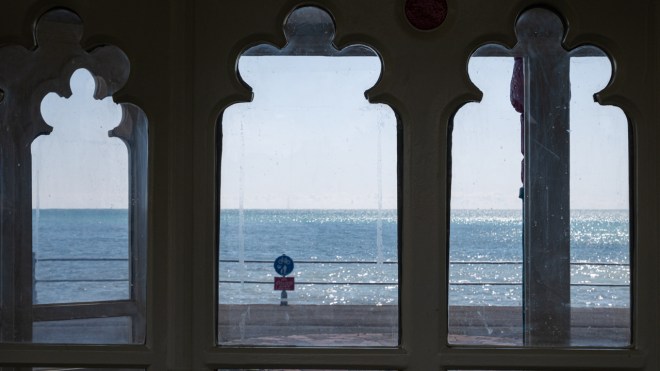
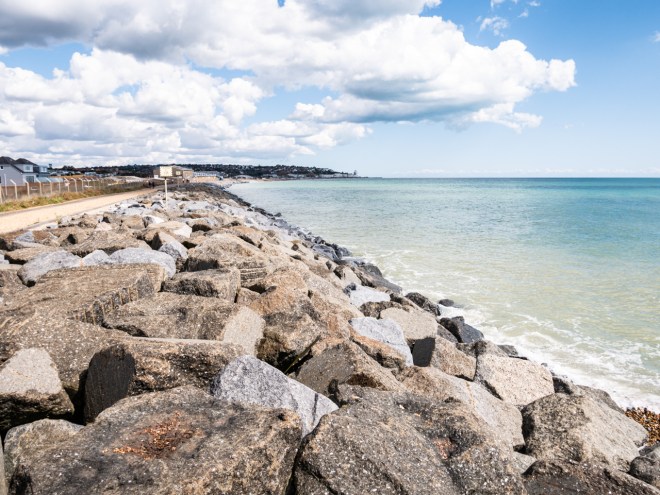
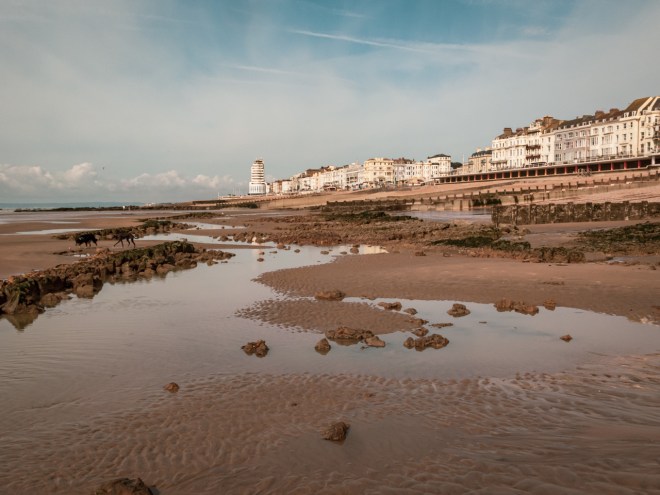
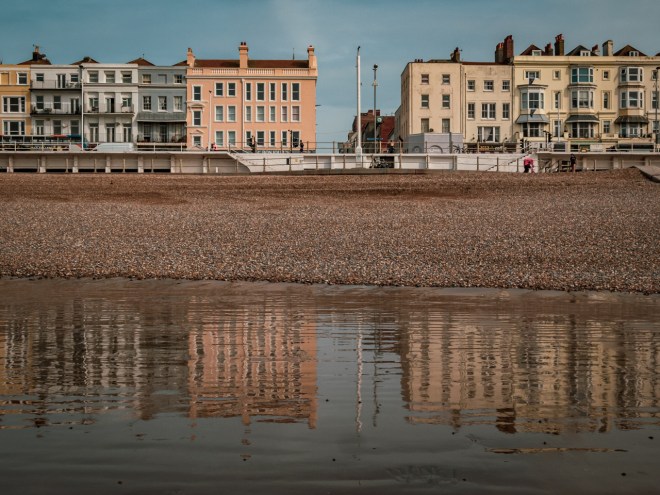
The property is a ten minute walk to the beach and is most of the way up a hill, but I can see the sea from the sitting room and the master bedroom and that is what I wanted the most in a flat. The building looks amazing, it needs some tidying up, but I love it and I love this view even more.

The flat didn’t NEED much work, though it wanted some. When I first put the offer in I was planning on getting a few things done before I moved in, tidying up more than anything else; painting a couple of rooms, moving some of the power points, changing some of the plumbing. Little things. However, not completing the sale until so close to spring meant I have now changed plans somewhat. With so little time before summer I have elected to just get the bathroom and bedroom painted, then worry about the rest come the autumn and winter. Maybe doing the painting myself.

We have stayed a few nights in the flat. I have started buying furniture, so there is a bed and a couple of chairs, and most importantly a TV. I am aiming for a 60s/70s look, so the great choice of vintage and antique shops in the area are a boon. I must admit I never expected to be visiting antique shops. Ever.

I have broadband so can work if I want to, however not having chairs to go with the table means I cannot quite work there yet, soon. The intent will be to work every second Friday and then spend the weekend there. We are very much looking forward to that.
Here is a quick walk through…

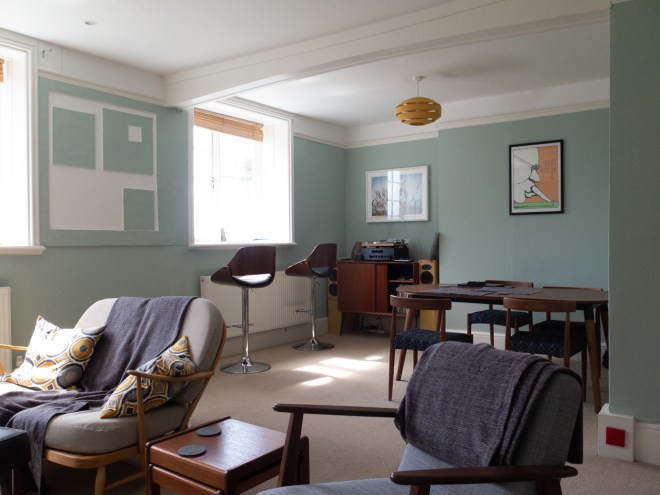
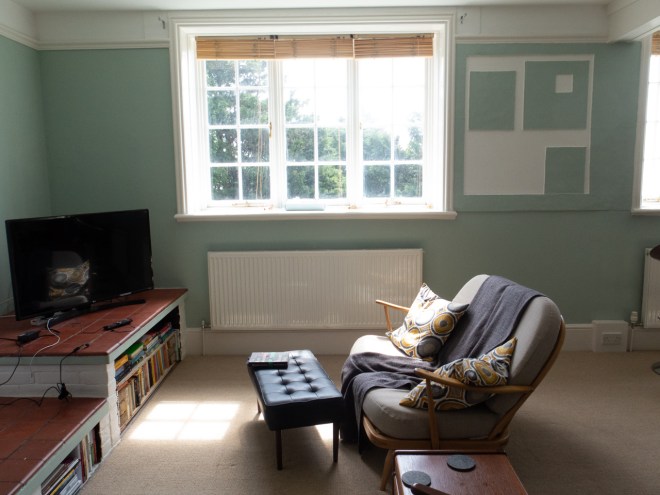
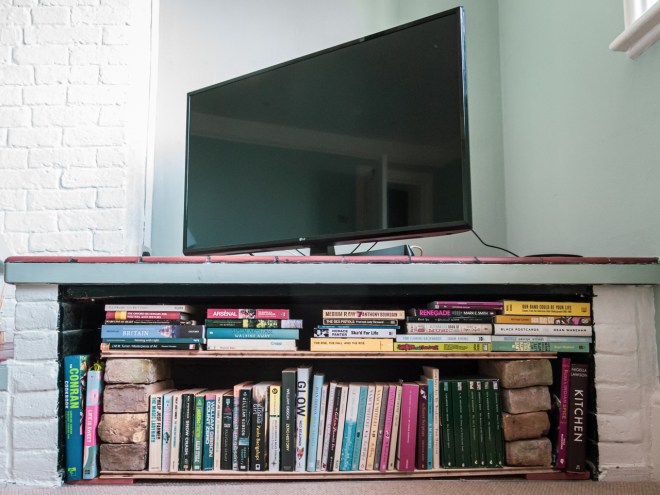
The third floor comprises a small entrance hall, a kitchen and a large sitting room. The sitting room was one of the two things that attracted me to the flat. It is really big. It was also the cause of the  long delay in the purchase process. The room used to be two rooms, and this is how it is shown on the floor plan I was given. I wanted the floor plan to show the single room as it is now, which has now been resolved. The fireplace and surround are unusual I know, but they definitely appealed. I still like them but I am not quite sure what to do with them. Things won’t necessarily stay this way.

The furniture in this image is from when I was looking at the flat.

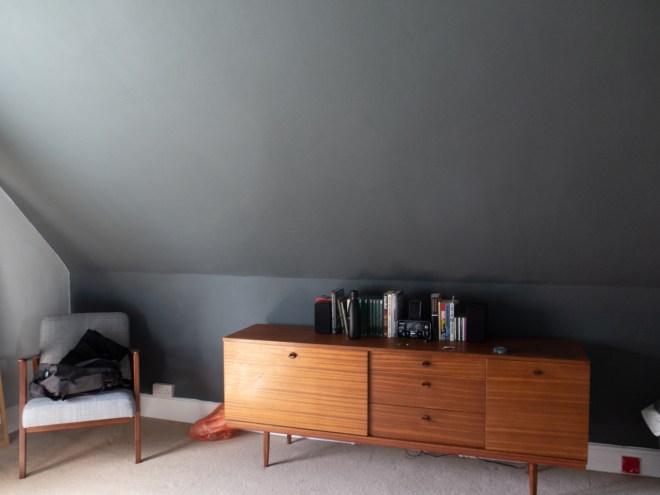
I have bought a couple of pieces of furniture for the room, some chairs and a dining table. At the time of writing I do not have the chairs to go with the table, though I have bought this awesome 1960s sideboard from a local antique shop, and the pair of speakers from one of the charity shops. I am going for a mid-1900s vibe, so will be looking for furniture and fittings from the 60s and 70s. Oh yeah, I also bought a TV, believe it or not this is the first flat screen TV I have ever owned.

This is all my stuff 🙂

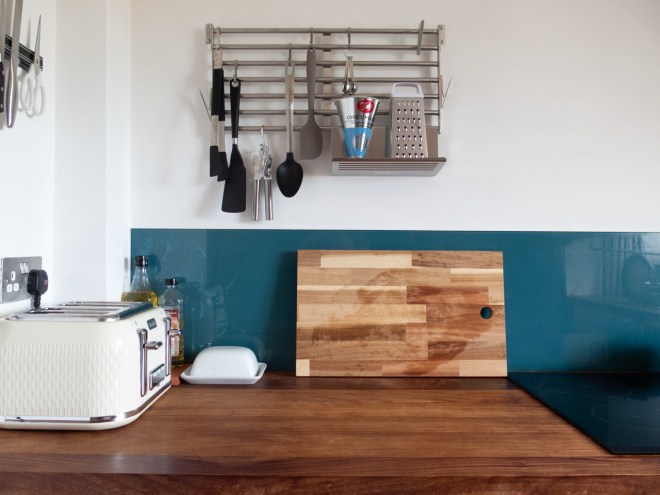
The kitchen is small, El and I struggle working in it together, but I am sure we will get used to it. I haven’t done anything to this space yet apart from buying my own fridge and washing machine. I may paint it one day, but it will the last room I do. I owned a few bits and pieces, the pot on the stove top is from a wedding present from 30 years ago. Everything else in sight is new.

The sticker has now been fully removed from the fridge 🙂

The hall is OK, not desperately in need of a paint, but I will probably do it in the autumn, it is just a little scruffy.

Upstairs, on what is the fourth floor of the building and into the roof space are two bedrooms and the bathroom.

Like the kitchen the bathroom is quite small, unlike the kitchen the bathroom was painted dark blue and was really dim. It also had the only bit of double glazing in the flat, which was a bit grubby and added to the gloom in the room. This was the first room I changed.

As mentioned earlier the intention was to pay people to do a load of the work I wanted done to the flat before I fitted it out with furniture and settled in. Being so close to summer, and not really thinking that I would not be able to just ring a painter and have them start immediately, I have resolved to just getting this and the master bedroom painted now and doing the rest myself later.

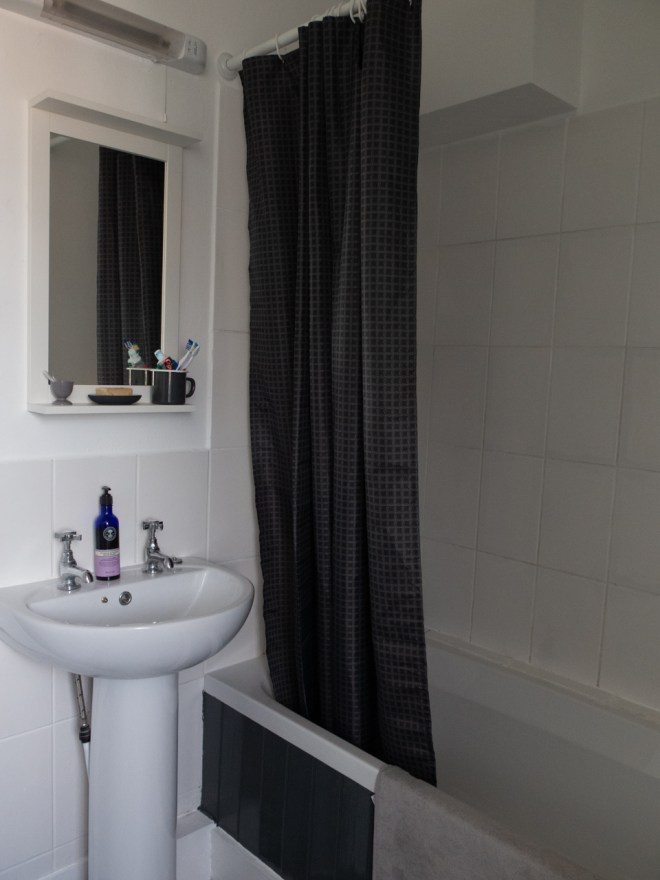
The painter has only been working on Saturdays so this has taken quite a few weeks, but the bathroom is done and the bedroom is well under way. I have had the bathroom painted white, just to make it more useable and give it a bit more space, being in the roof and having a sloped ceiling does close it in.

To increase the amount of light coming into the room I removed the double glazing from the window, the good thing was there was no howling gale coming though the sides of the remaining window. Phew. I also removed a cabinet off a wall and painted the side of the bath a dark grey, a theme I will have throughout the flat.

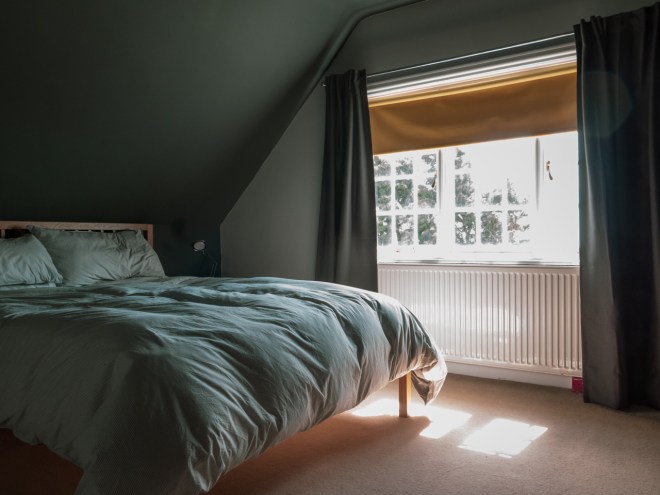
The master bedroom is really big, almost too big. It also has two sloped ceilings, but is large enough for it to cope. I have bought a bed but have not assembled it yet. We are sleeping on the mattress on the floor, which has now been moved to the spare bedroom while the master bedroom is being painted.

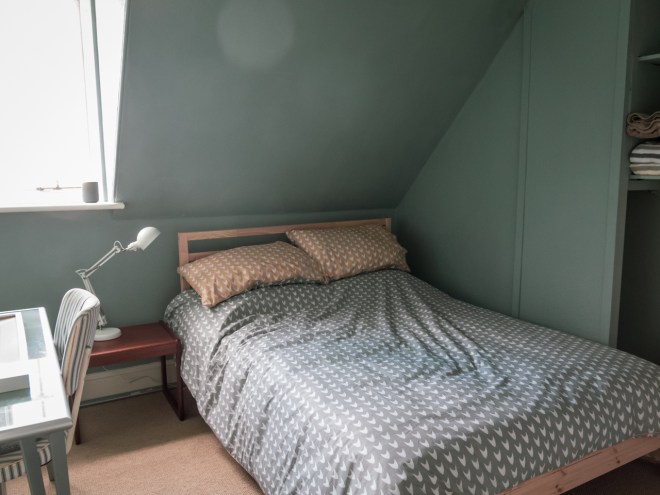
The spare bedroom is smaller, but as you can see below, will easily take a king size bed. It is currently full of stuff while the painter is in. It has the single sloped ceiling which means a little bit more storage space, though apart from the kitchen, storage is not really an issue.

I have a desk for the room, and it will be a second work space for when El and I are both wanting to work there.
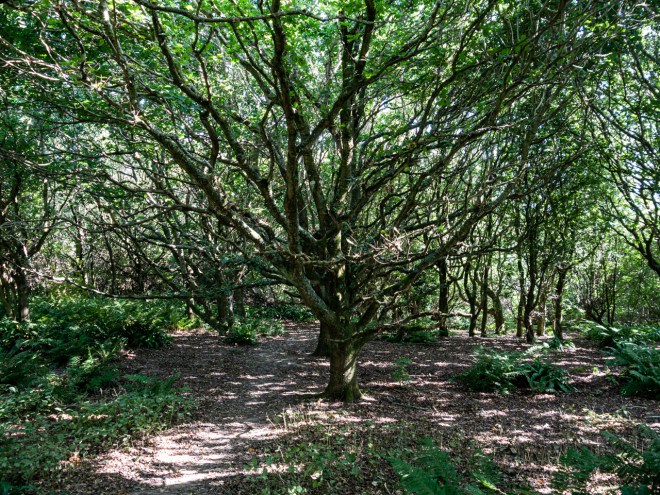
I am loving the flat, really enjoying buying things for it and fitting it out how I want it. For the first time I can buy furniture without having to think of things the kids cannot damage. I can buy adult things, and things that reflect my taste and personality. Yay!
I will post an update in a few weeks, once the bedroom has been completed and we have moved in, and when a few more furnishings have been found.

A quick trip to Aussie.

Tuesday 26 March 2019 – Brisbane, Australia.

It is almost six weeks after the fact and I am sitting in an Air B n B in Settle, North Yorkshire drinking a glass of cheap Australian shiraz, snarfling down chocolate and pondering catching up on a couple of incomplete blog posts; or just staring blankly at Twitter. As always, it has been a busy couple of months; though at least I have got the keys to my flat now, so there has been some good news! More on that in the next post.

in mid-March I made a last minute trip to Australia (with a side visit to NZ) to see my son, Dom. He needed to spend some proper time with his dad, time I did not had on the last couple of trips back to New Zealand. Time well spent.

I flew Cathay Pacific as it was the best value I could get for the flights and times I wanted to make. I have flown with them before, more than once, and they have been pretty good. They were not bad, but I don’t think I will fly with them again, the entertainment was awful. There was one film I wanted to watch, about three I tolerated and no TV shows I had not seen or wanted to see. Not a heck of a lot for 50 or so hours of flight time, thankfully I had books and music, and the ability to zone out for short periods.

I arrived in Brisbane early morning, picked up a rental car, then Domenic, and we headed up to Caloundra on the Sunshine Coast. I had rented a fairly basic beach side apartment for us for three nights. It was pretty perfect, Caloundra is not a bad spot, in fact given my hatred of Queensland it as an amazing spot. The beach is glorious, the apartment was over the road from it, there was decent coffee by the beach and some pretty good beers to be had a ten minute walk away. Things must be looking up.

We did not do a lot for the first couple of days, hung out, watched TV; I got to watch some NRL rugby league for the first time in years, which I very much enjoyed. We spent a bit of time on the beach and in the sea. The water was amazing, so warm compared to my last sea swim when I was scouting flats in St Leonards-on-Sea last summer.

I just loved the beach, golden sand, warm and soft under foot, clear warm water and small but not bad surf. I swam more times in those three days than I have in the last three years.

In an effort to keep cost down, and us out of pubs, we shopped in the local supermarket and ate in for the first two nights, only walking up to a bar near the beach in the later afternoon for one pint.

It is all pretty casual here, this is a beach town with a surfer mentality. Not used to wearing flip flop / jandal / thongs for prolonged periods I got a bit of sand / jandal rash and could not wear them for long periods without pain and bleeding. Walking barefoot on the sea front was not a problem. I liked this. I miss walking barefoot. I was the whitest person for hundreds of miles I suspect.

For our last full day we took a drive a short way inland, into the coastal hills, and the tourist road from Meleny to Mapleton. Our first stop allowed us a view over the Glasshouse Mountains.

These 13 small hills were formed million of years ago by volcanic activity. The cool thing is that these hills were not pushed out of the earth, erosion over million years left these very hard rock hills behind.

We spent half the day cruising around the area visiting a few scenic places. My favourite was the almost dry waterfall at Mapleton Falls. We took a bush walk among the trees and I really liked these massive palm trees. The name of them has long been forgotten unfortunately.

We also discovered this very unafraid lizard down by Lake Baroon.

We arrived back in Caloundra in the evening and went for a walk before heading to the pub for dinner, our one night out.

The following day we drove back to Brisbane, stopping to do some shopping on the way. The following day I flew to Auckland for a couple of days to see mum and the family and then back to London and work.

It was really cool I got to spend some time hanging out with Dom, we mostly had a good time together, talked about a lot of things and I left feeling happier about how things were going in his complicated world. We both really enjoyed the days hanging out by the beach, chilling, swimming, eating with no pressure to do or achieve anything. If only life could be like that all the time. 

This post was finished a further two weeks later! I am not good at this blogging malarky anymore 🙂

A trip to the 60s, under Euston Station.

Sunday 24 February 2019 – Euston Station London.

Wow. That was a pretty cool day!

I wasn’t quite sure what to expect, but this was definitely better than I expected. It was also what I needed to get out of a fairly long photographic malaise. I haven’t been wanting to go out just with the intent of taking photos for months, so paying for an expensive event was a good motivator to get out.

I am not sure how often London Museum/Hidden London run this photographic event, but if you are interested in seeing a very small and normally unseen part of London’s history, have an interest in photography and a good tripod; this event, while not cheap, is very worth investigating. Hidden London run a number of tours into disused London Underground stations, most of these are very busy and are not specialist photography tours. This tour is different, focused on photography, with a maximum of eight people, split into four groups of two and across four zones s no-one gets in anyones way. The visit allows for two hours underground, though I would have liked at least one more. 

Steve and I met outside Euston station and were joined by the other six members of the group along with three staff from Hidden London. Our bags were searched (I guess for hidden bombs) and we donned hi-viz jackets; promptly covering them in camera and tripod bags. We were escorted into the station, through the ticket barriers, down to the Victoria Line platform, and then through one of those locked doors that you see every day and sometimes wonder what lurks behind.

This door took us to a short set of up steps that used to be the end of the platform, and back to the 1960s…

Once inside and the door closed to the normal people we were given a quick safety briefing and then a history of the tunnels, what we were about to see and a quick look at the four locations we would shoot in.

The mainline station at Euston was served by two underground lines. The first stage of the Charing Cross, Euston and Hampstead Railway opened in 1907, and The City and South London Railway, running from Stockwell to the city, was extended north to Euston in the same year.

The two lines, from competing companies, were separate and had stations on either side of Euston mainline station. However, they did agree to building an interconnecting passageway that contained a ticket hall and lifts to the mainline station platform.

The two above ground station buildings for those underground lines were closed in September 1914 after the two railways were taken under the ownership of the Underground Electric Railways of London, though the lifts and the tunnels remained in place. Eventually these two lines turned into the two branches of the Northern Line. Eventually the interconnecting tunnels were closed in 1967 when the Victoria Line was opened.

One of the key attractions for the tours is that tunnel walls are still liberally adorned with posters from the weeks and months before closure. Mostly they are badly damaged, though some are in remarkably good condition given they have been stuck to walls for over 50 years

After the brief history lesson on what we were seeing we were split into four groups of two, Steve and I pairing up. We were given a guide to ensure nothing untoward happened, and I guess to make sure we didn’t scarper into the tunnels for further exploration, though it was tempting…

We were allowed 20 minutes in each of the four zones, there was enough room for two people to take photos without getting in each other’s way. Steve and I have shot together before so know how we work. We are quite different in style and method, which is even better.

Our first 20 minutes was spent in a section with a number of posters as well as one of the old lift shafts. With the advent of the Victoria Line the lift shafts and old tunnels are part of the air conditioning system for the Victoria and Northern Lines. Nothing was wasted. My attempts are capturing the lift shaft failed, for some reason I did not think to bring a flash… I did have a tripod, though shooting vertically was quite difficult.

There were a few old posters here, but none of them were in particularly good condition. Though tatty and old is good.

The airconditioning is all quite modern, and I was surprised at how small the units were, probably explains why the Victoria Line is so hot in summer !

A lot of the old tile work in these stations is from Leslie Green, the man pretty much responsible for all the design and tiling in 50 stations built between 1903 and 1907. His work is iconic, and glorious and you always know when you are in one of his stations.

Section two was also comprised of two shooting areas, the first along one of the vast air venting tunnels. There is nothing pretty in this dark section, just dirt, dust and rusty pipes. It is very dirty here – we were warned before coming to not be wearing our finest. The plates making up the air conditioning ducts are all stamped with their details, size, bolt holes, batch and date manufactured. This one is from 1965. I love that sort of detail!

The second part of this section allowed us to peer down into the Victoria Line and the tops of the trains as they passed. It had been surprisingly quiet so far, but coming through the vents was the sound of a busker playing a bouzouki or similar instrument, it was eerie and appropriate. I have never noticed the vents before, and have yet to see them now I know they are there. I am not entirely sure how they can be some invisible, they are hardly small. It was quite fun watching people move on and off the trains, and seeing the trains whizz by underneath.
Section three was the main passenger link between the platforms of the two lines. It also contained the lovely tiled ticket office, which I managed to take a very poor photo of as I ran out of time due to there being so much to see.

Strangely none of the posters had a year on them, even the ones with dates.
This is my favourite of the posters.

Section four was the most one most used by those who work on our tube system while we sleep. There are stacks of tools, and large metal components, brooms and a bunch of stuff that I did not recognise at all.

There were a number of posters here, a lot had been ripped and damaged over the years and it was really interesting to see the layer on layer on layer of paper that had accrued over the years. Though the famous Psycho poster is still there 🙂

I had a bit of a play with some long exposures at the far end of the tunnel. It was quite dark here so perfect for attempting some ghostly walking, though I ran out of time to get anything I really liked.

Far too soon the visit was over and we had to down cameras, pack bags and head back above ground. I really could have done with another hour or two, and to have been able to explore a little further…..

It was a fabulous experience, and one I would highly recommend. Do the photo tour rather than the general one as you get to take a tripod and spend some proper time.

Thanks Steve for organising, and Hidden London and London Transport Museum for making it available!