Chandigarh, India
02 April 2025
There is no one specific reason why it has taken the best part of 11 months to finish writing about Chandigarh, or of my time in Delhi. I guess I just ran out of capacity to do either place the justice they deserved. To be honest, I never expected to pick this back again, but there you go. I started a new job in September and this one isn’t as mentally draining and that has helped in so many ways. So here we are with words and images on a page, almost 11 months after the event.
In his famous speech at Rajendra Park in Chandigarh on 9 November 1957, Jawaharlal Nehru shared his vision for the city with its people, saying, “It was felt that to build a new city to be the capital of Punjab would give people something new to look forward to. We wanted them to look to the future with new hope after the trauma they had been through. We felt the new capital would be a symbol of new hope.”
It was only ten or so years ago that I started to understand the impact of the 1947 partition of India. I knew that it had happened, and I knew that it split India into two; and later three when Bangladesh became its own entity in 1971, but I didn’t know much more. I’m not going to go into any detail on the cause of partition, though Britain and colonisation must carry its share of the burden of responsibility for the deaths of hundreds of thousands of innocent people and the displacement of millions more.
One of the outcomes was the splitting of the state of Punjab into two, with the state capital, Lahore, ending up on the Pakistan side of the new border, leaving Indian Punjab in need of a new capital. As noted above, Prime minister Nehru wanted to build a city for the future of the now smaller state, not one that reflected the recent architectural past of the British Raj.
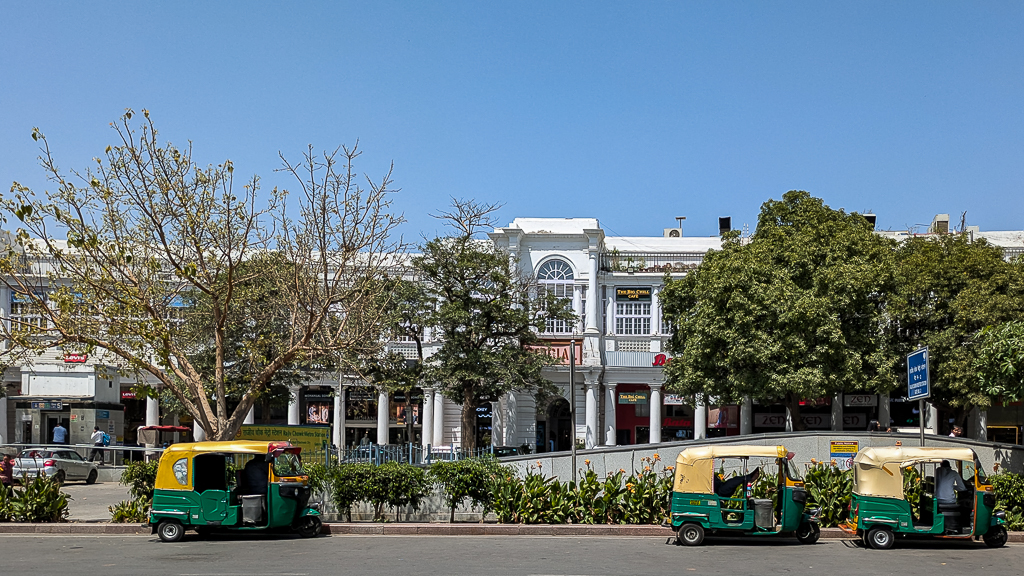
There was not much to Chandigarh before Nehru hired the American architect Albert Mayer. He, working with Polish architect Matthew Nowicki, developed a plan based on a curving, organic layout. However, Nowicki was killed in a plane crash in 1950, and Mayer withdrew from the project shortly after. It was at this point, in 1951, that the Swiss-French architect Le Corbusier was brought in to take over…
Le Corbusier brought in a number of other European architects to help with the design of the city centre and, equally importantly, a set of new government buildings: the Capitol Complex. He called on his cousin Pierre Jeanneret and the English couple Maxwell Fry and Jane Drew, who had experience designing modernist European buildings in West Africa and understood how concrete could be used in heat and humidity. Le Corb focused on the design of the Capitol Complex while the others developed plans for the residential and commercial parts of town.
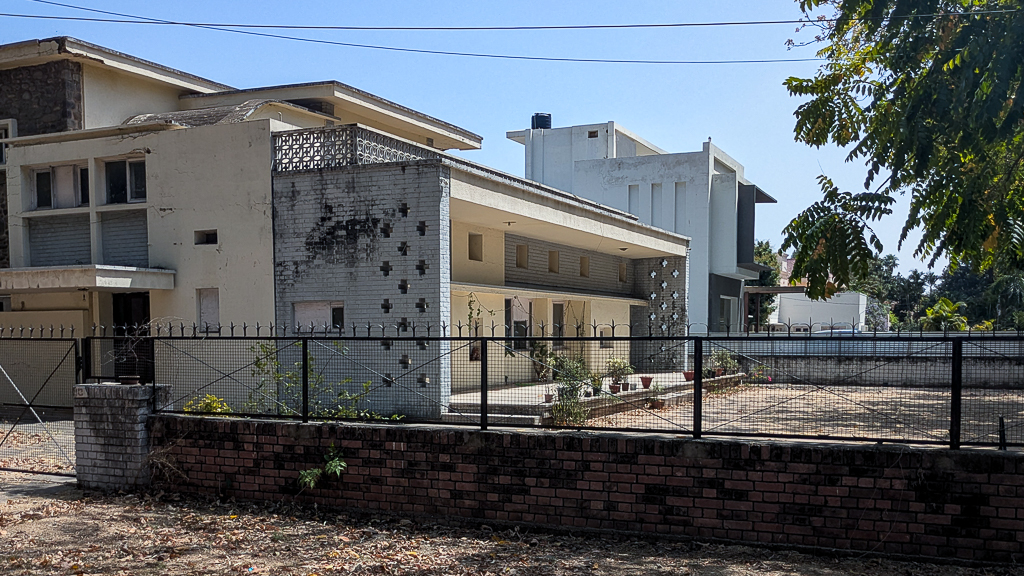
In today’s Chandigarh there isn’t a lot of accommodation choice for a solo traveller on foot who wants to stay not too far from the concrete action. The hotel I chose wasn’t great and I was the only westerner there. As I found on this India trip, most of the other western tourists were on guided tours and had drivers and organised schedules. I didn’t meet many who were solo travelling like me.
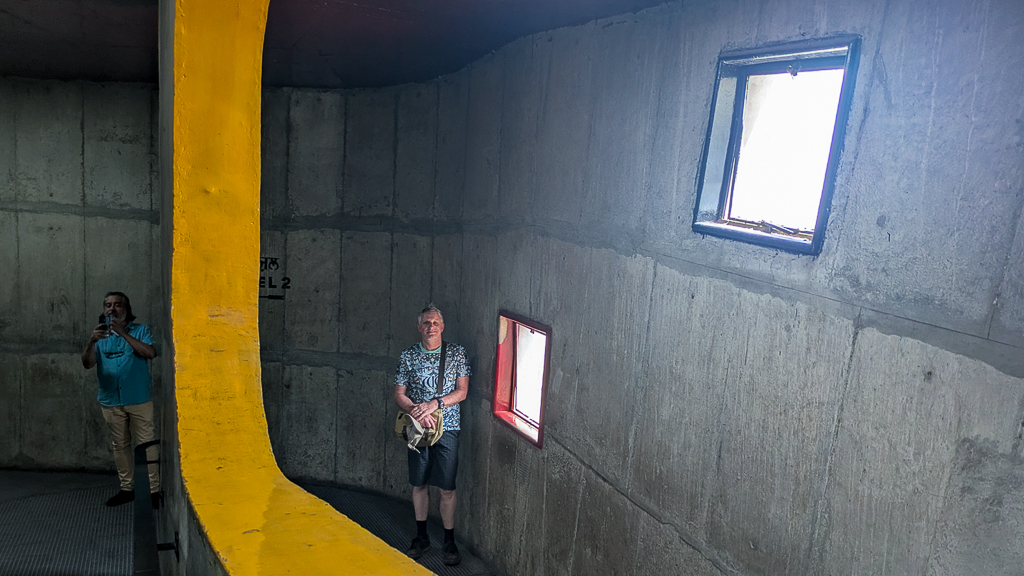
A photo of me taken by one of the ‘Americans’ inside the Secretariat – it had an amazing internal ramp. The other person is the excellent local guide the Americans had.
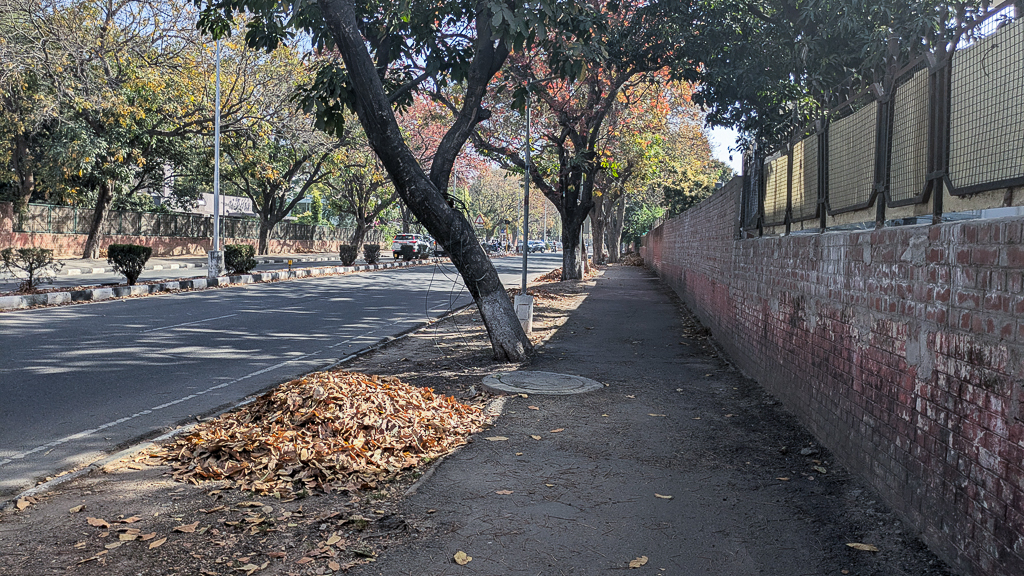
As usual I decided to walk to the Capitol Complex, though it was much further than I’d anticipated. The sector blocks are 1.2km long and I had two to cover, plus some meandering and then walking to the complex itself. A taxi driver I met in Christchurch went to university in Chandigarh and said that Christchurch reminded him of home, I could see what he meant. The residential streets are pleasant, something I can’t say about Delhi. Chandigarh is only 70 years old mind, not 3000.
The city was designed to be cool and light and make humans more comfortable in their surroundings. Buildings are mainly low rise; there are plenty of trees and it was pleasant walking on the shady side of the road. There are also footpaths, and surprisingly, cycle lanes, which were well used. The walk to visit an object of interest was the nicest of all my days in India, though the roads at rush hour were as busy and noisy as Delhi.
I didn’t know I had to join a guided tour to visit the Capitol Complex, though it makes sense given it is the centre of government for two Indian states (Punjab and Haryana). The tours are free, though.
I lucked in with arriving at the tourist centre just before the 10am tour was about to leave. I generally hate tours but this one, run by the complex itself, was excellent. The guide was knowledgeable and friendly, and we benefited from having a local architecture tour guide with an American couple who added local colour and history; his father was an architect on the original build. I enjoyed the company of the Americans too. My years of solo travelling are over I guess.
The tourist centre was a good introduction to this fantastic site.
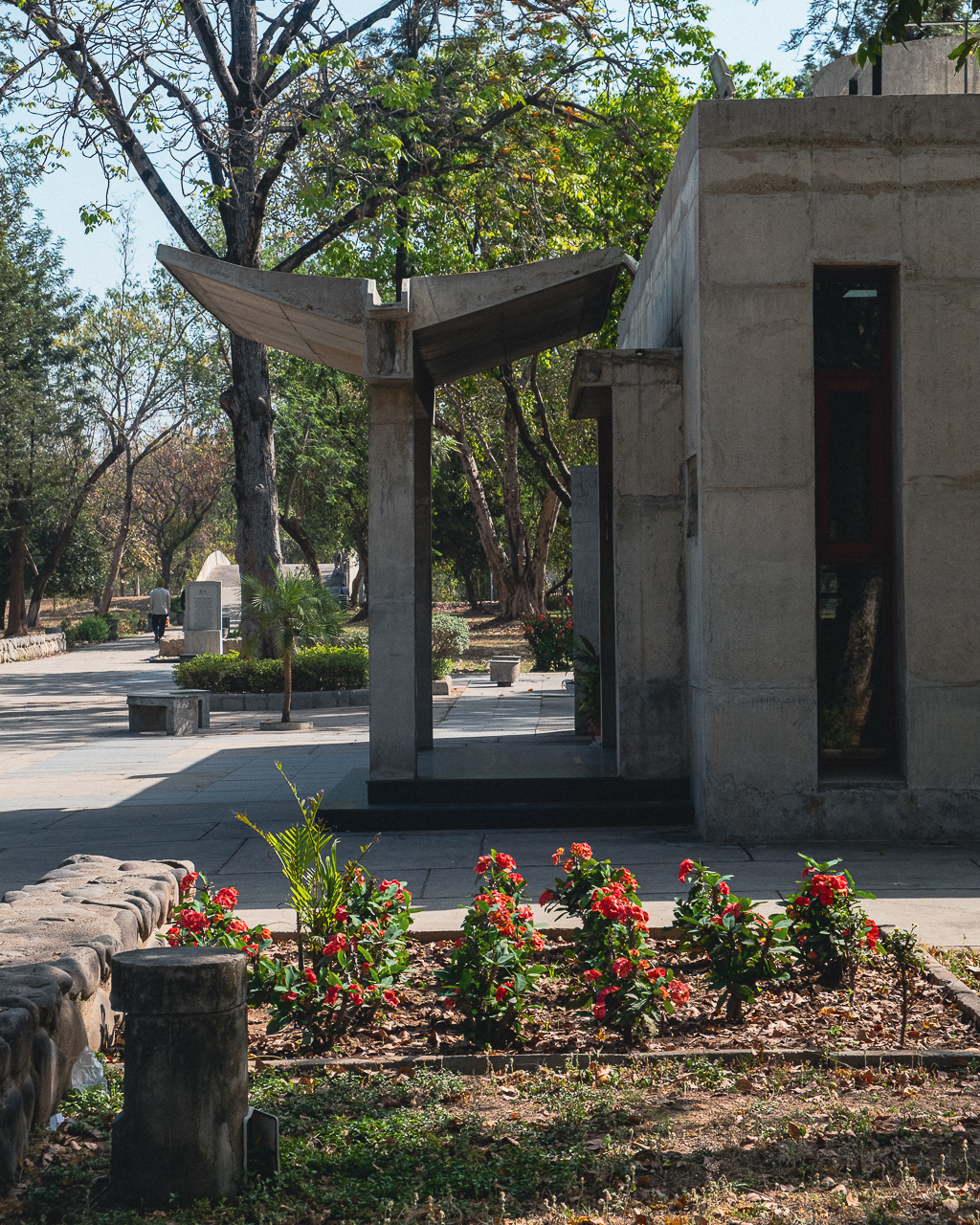
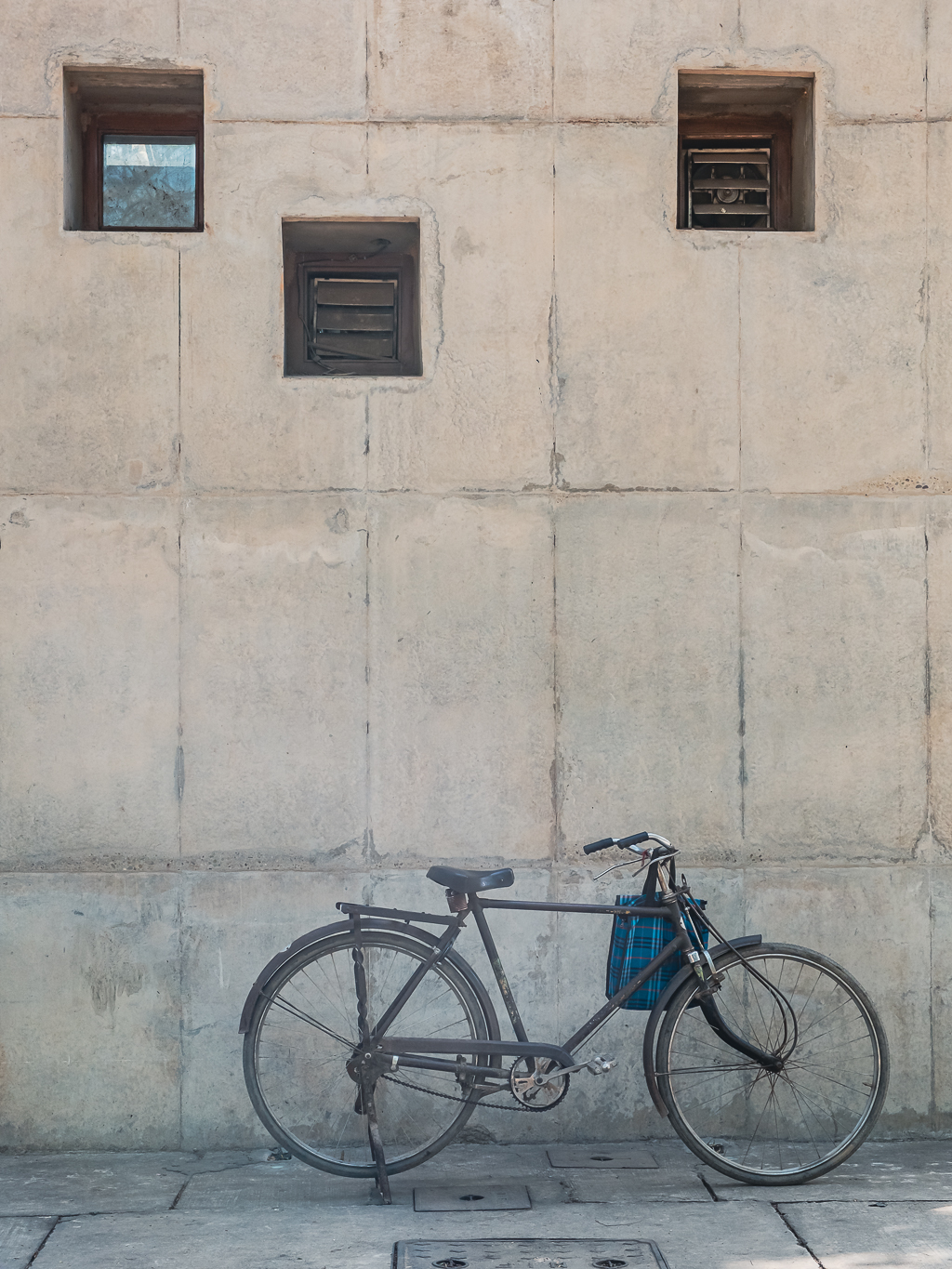
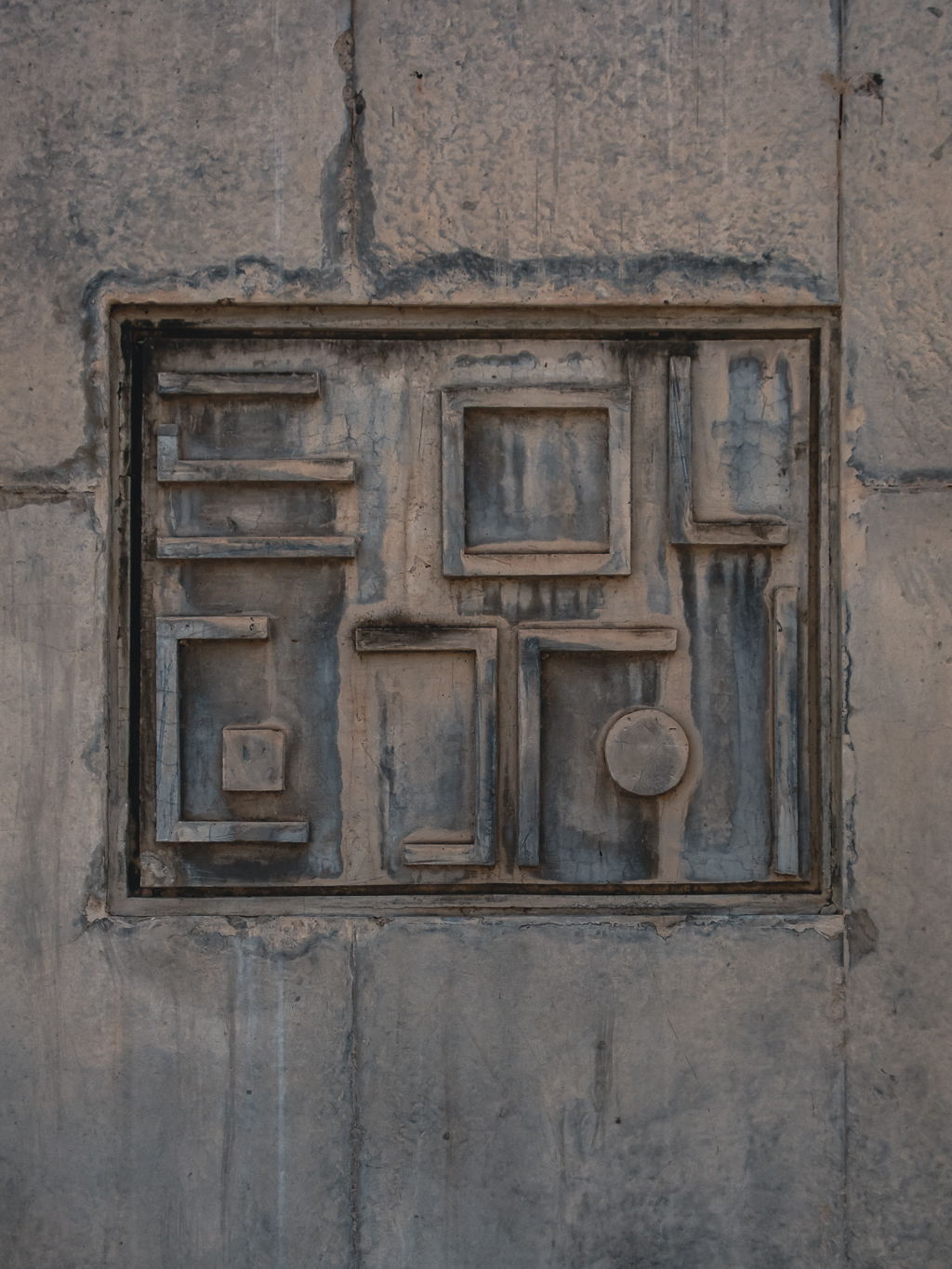
The Capitol Complex was completed in the late 1950s and is a modernist/brutalist masterpiece; it’s now a UNESCO world heritage site. As it’s a government centre and security is very tight there are no cars and, other than lots of blokes with guns, there are relatively few people. It’s a large site and the concrete reflects the bright sun, it was very hot and I’m glad I had two bottles of water with me, though I gave one to the Americans as they hadn’t planned for the heat.
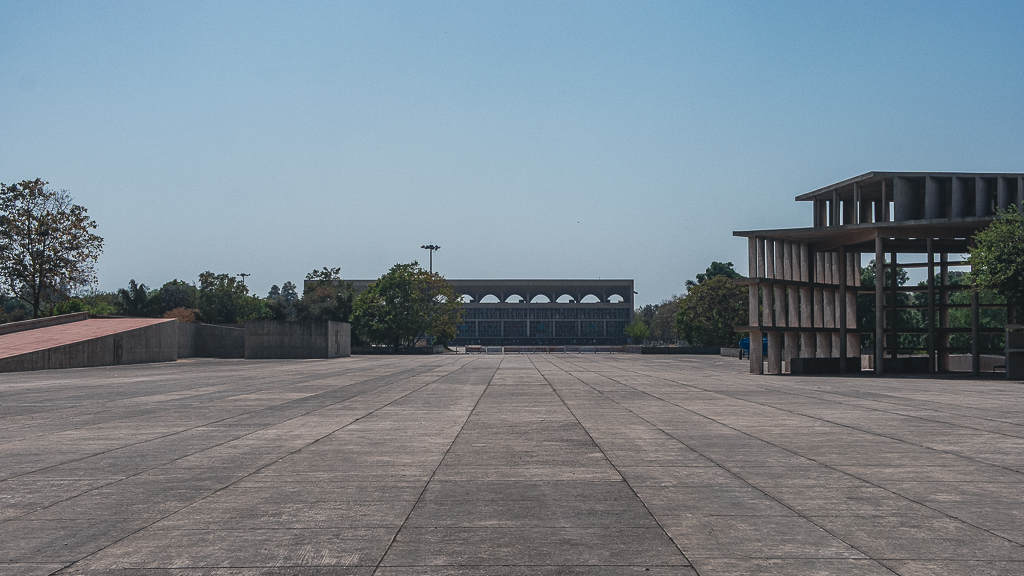
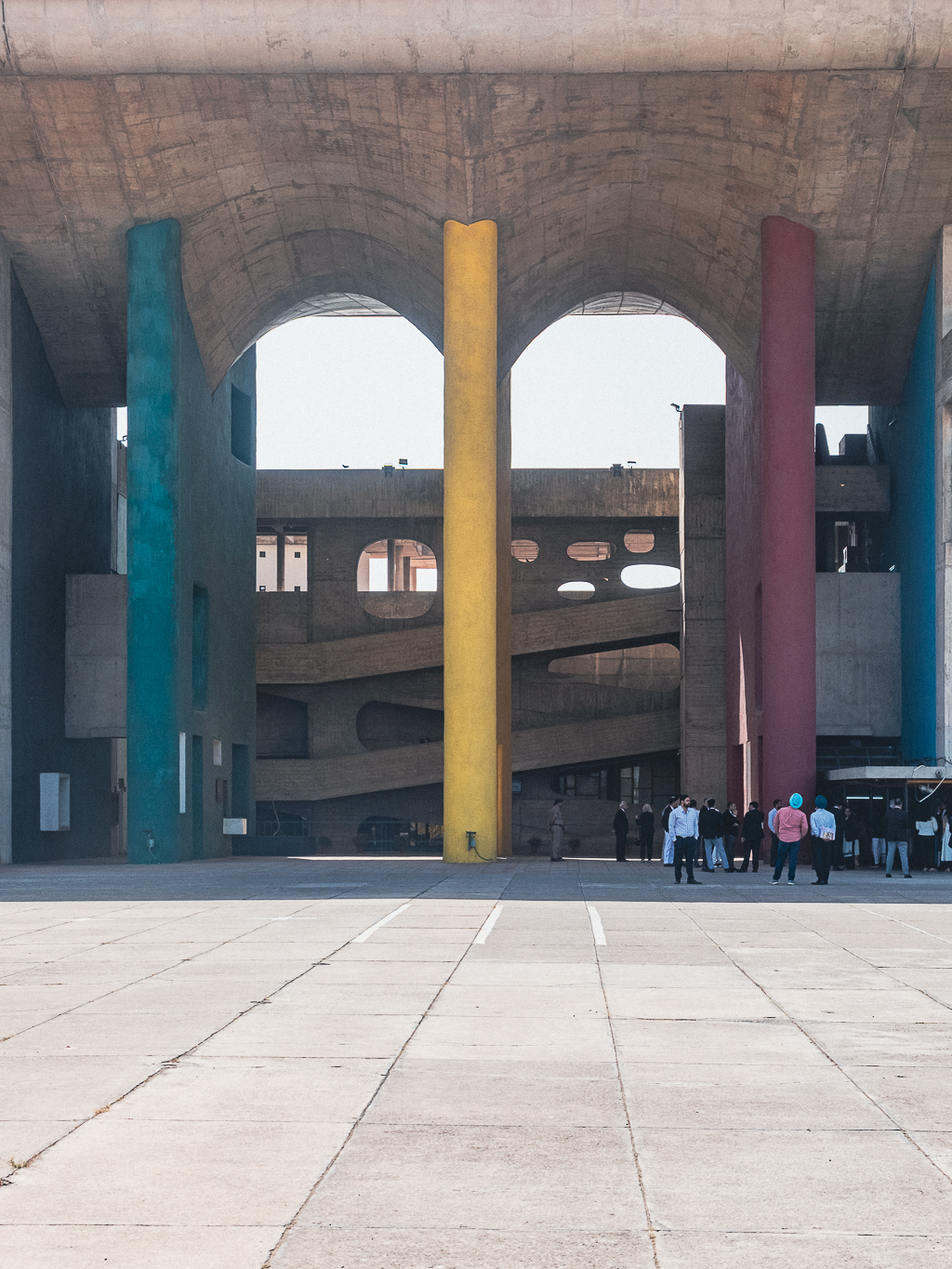
There are three key buildings: the High Court, the Secretariat and the Palace of the Assembly, along with a number of other features, the Open Hand Monument, the Tower of Shadows, the Martyrs Memorial and Geometric Hill.
The tour started at the High Court, though we weren’t allowed within 100 metres of the building as court was in session. That was a shame as it is a cool building with some interesting, classic Le Corbusier features that were hard to pick out from distance. Another time maybe.
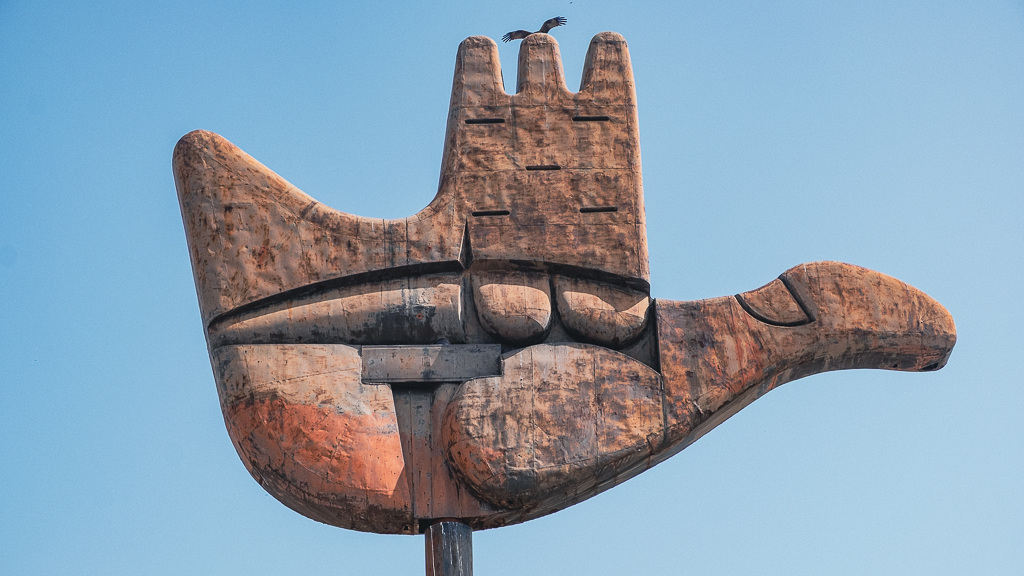
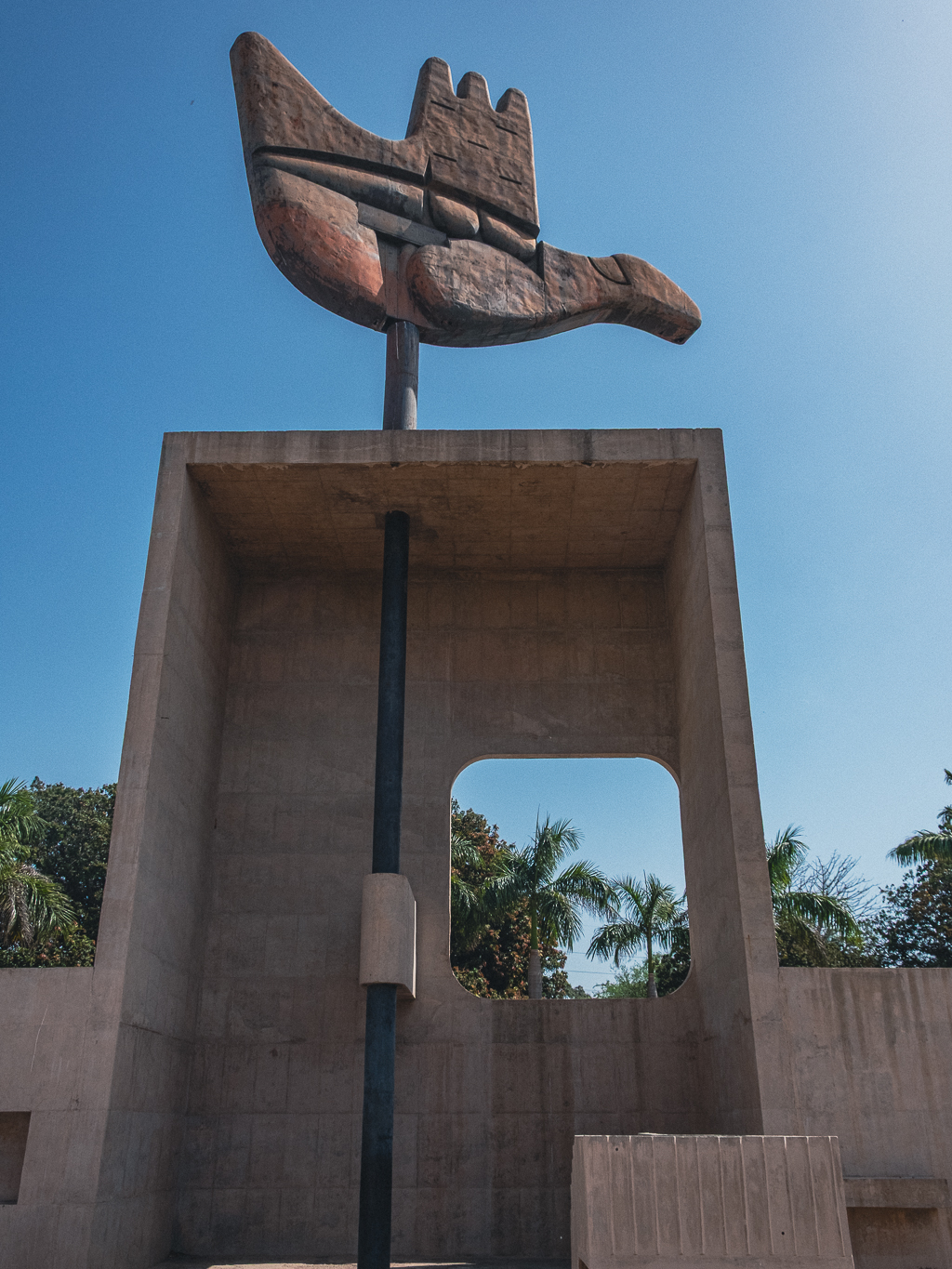
The Open Hand Monument was much more impressive than I expected it to be; photos I’d seen just hadn’t captured its size and the environment it’s located in. It’s properly monumental and only having half a dozen visitors made for an enjoyable visit. The tour is time restricted, so I didn’t have as much time as I would’ve liked. I’m the glad the American couple were as interested as me as the three of us were the ones lingering and looking at all the architectural delights the most out of our small group.
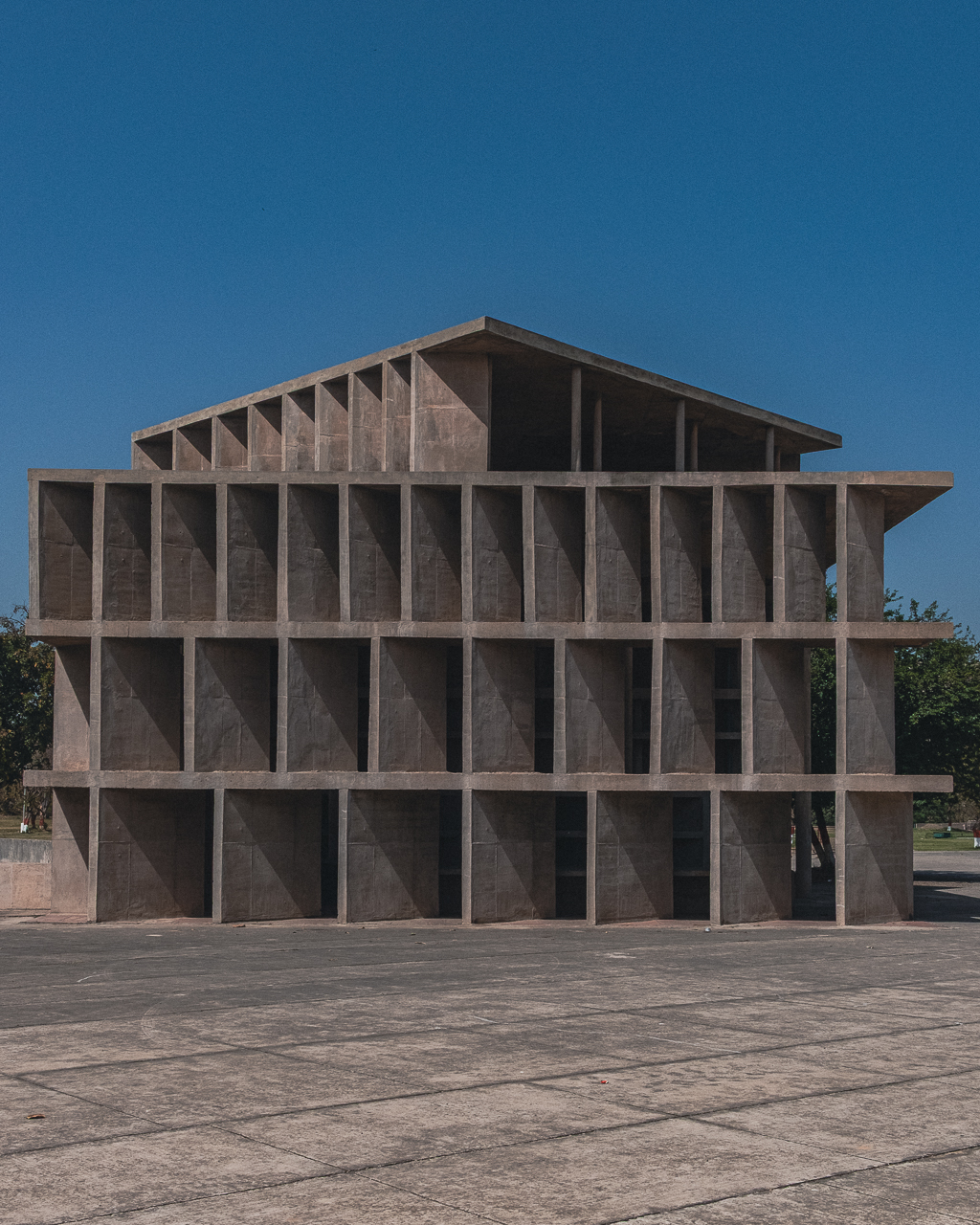
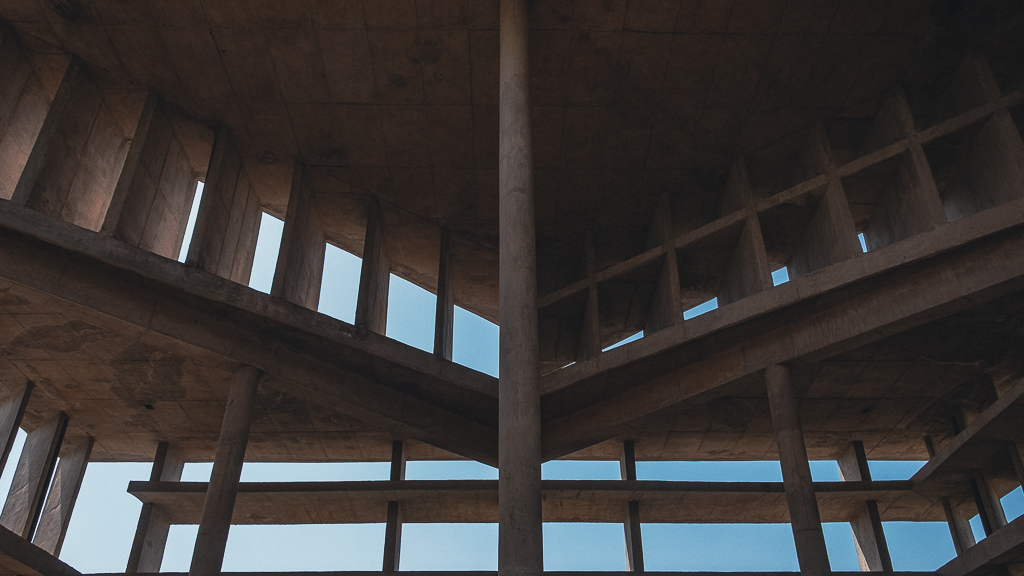
In some ways the Tower of Shadows impressed me the most. It doesn’t look like much, it’s more of an experiment than anything else. Le Corbusier designed it so that not a single ray of sun enters it from any angle, with the north side remaining open because the sun never shines from that direction. It was built to prove that concrete design could be made to beat the heat in hot places and it’s remarkably effective and much cooler in the shade than it was in the sun, or other shady parts of the site.
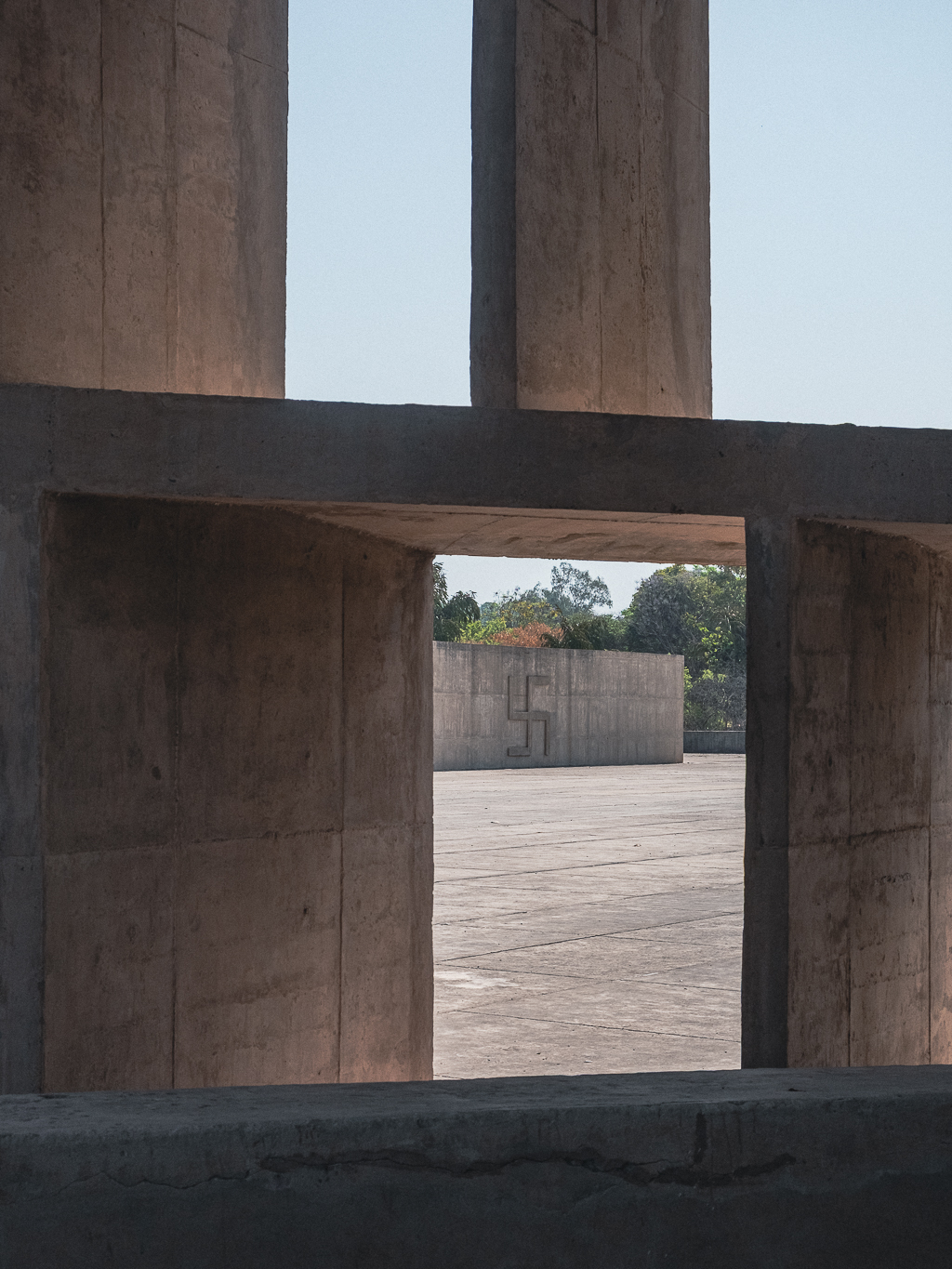
The swastika, as seen on the side of the Martyrs Memorial, is a Hindu symbol, predating the Nazi regime by thousands of years. From the ancient Sanskrit language, it can be translated as ‘conducive to wellbeing’. They are everywhere in India, though for (some of) us westerners it can be quite jarring the first time you see one.
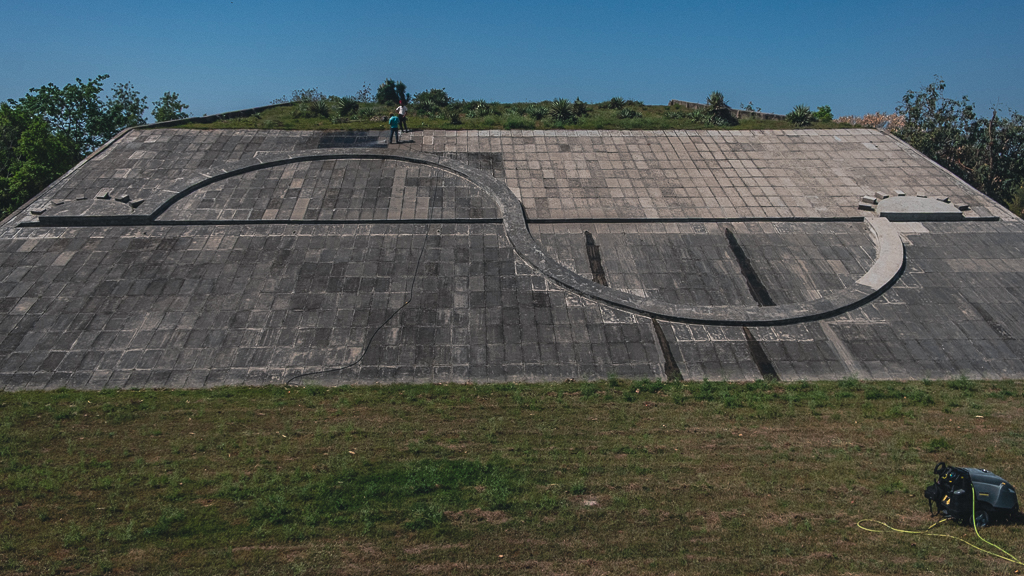
The Geometric Hill was created out of the rubble from the Palace of the Assembly build, fronted with a wall of concrete detailed with the movement of the sun across the sky over the 24 hours of the day. It also hides the Palace from the road.
The Palace of the Assembly is my favourite building in the complex, with the wonderful curved concrete form over the entrance and the cooling tower on the roof and the water feature at the front. It’s such a cool structure, and bigger than I expected too.
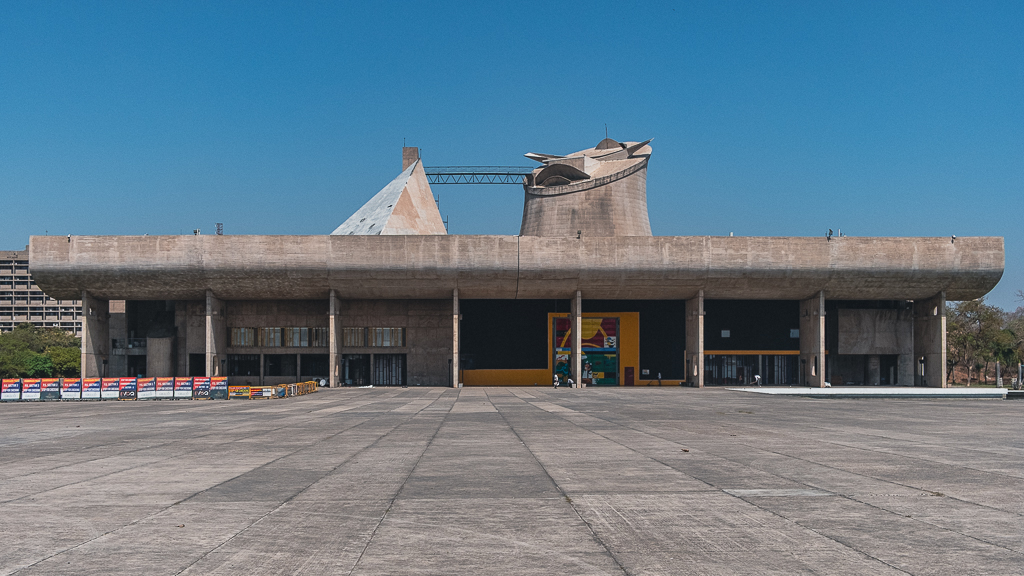
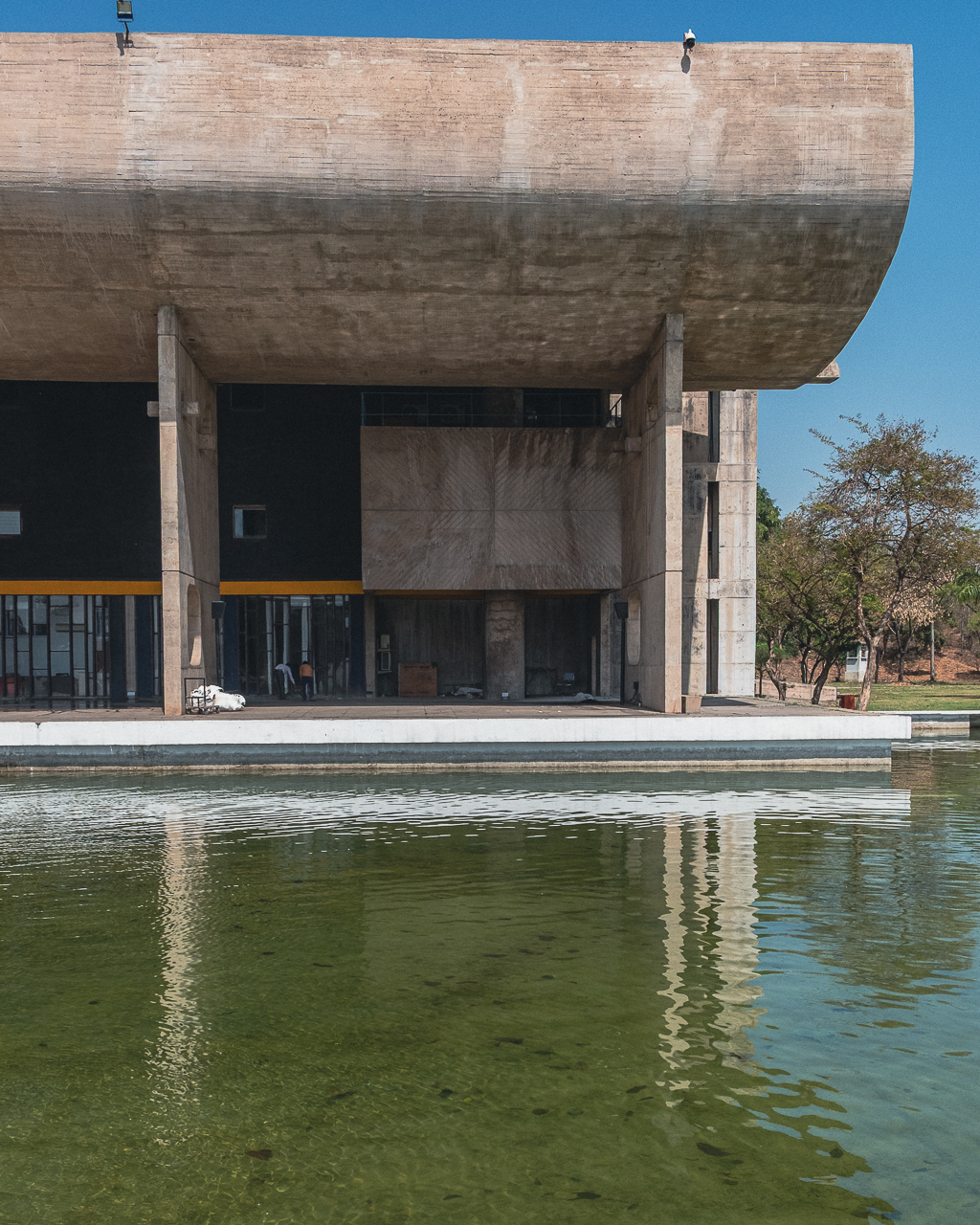
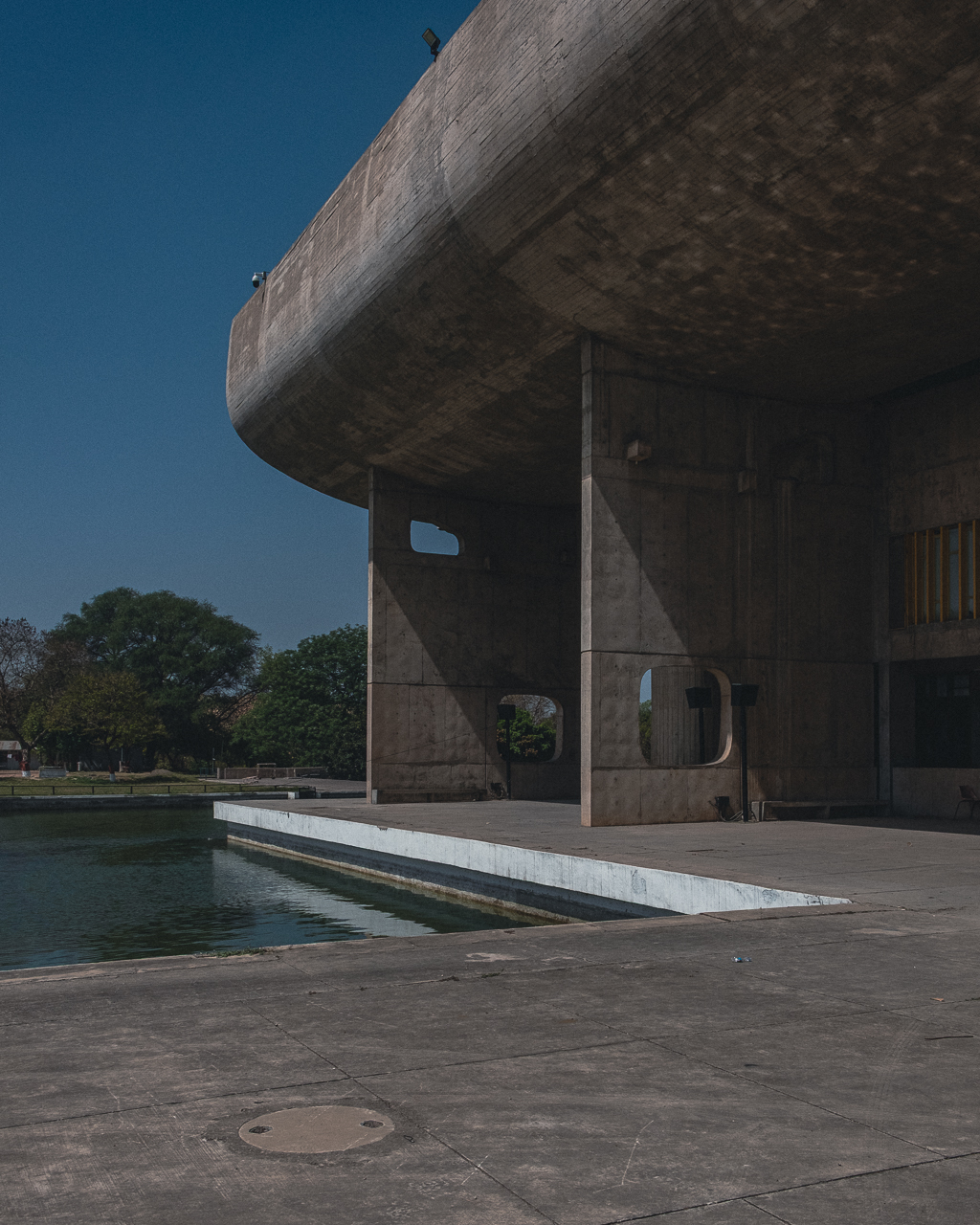
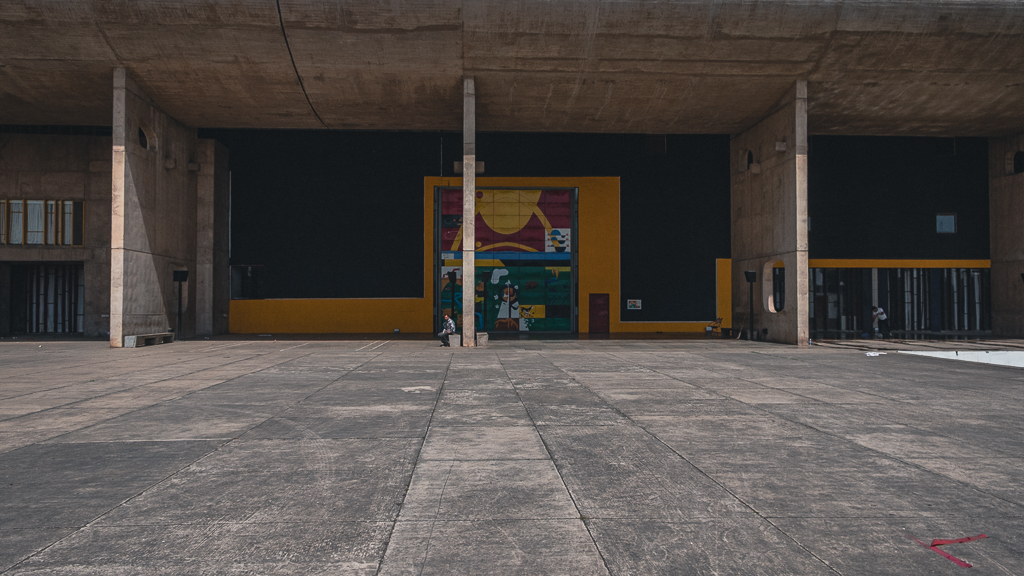
Unlike the High Court which was in operation, we were very fortunate to be visiting on a day when the governments of Punjab and Haryana were not sitting, and were allowed into the assembly chamber itself. Apparently, this is quite rare. We had to go through a vigorous security check, handing over passport, phone, camera, anything in our pockets, in fact everything other than clothes and shoes and spectacles. I have no visual record of the inside of the building which is a shame as there are some quite nice little concrete features in the atrium and halls. The assembly room itself was not too dissimilar to that of the UK government.
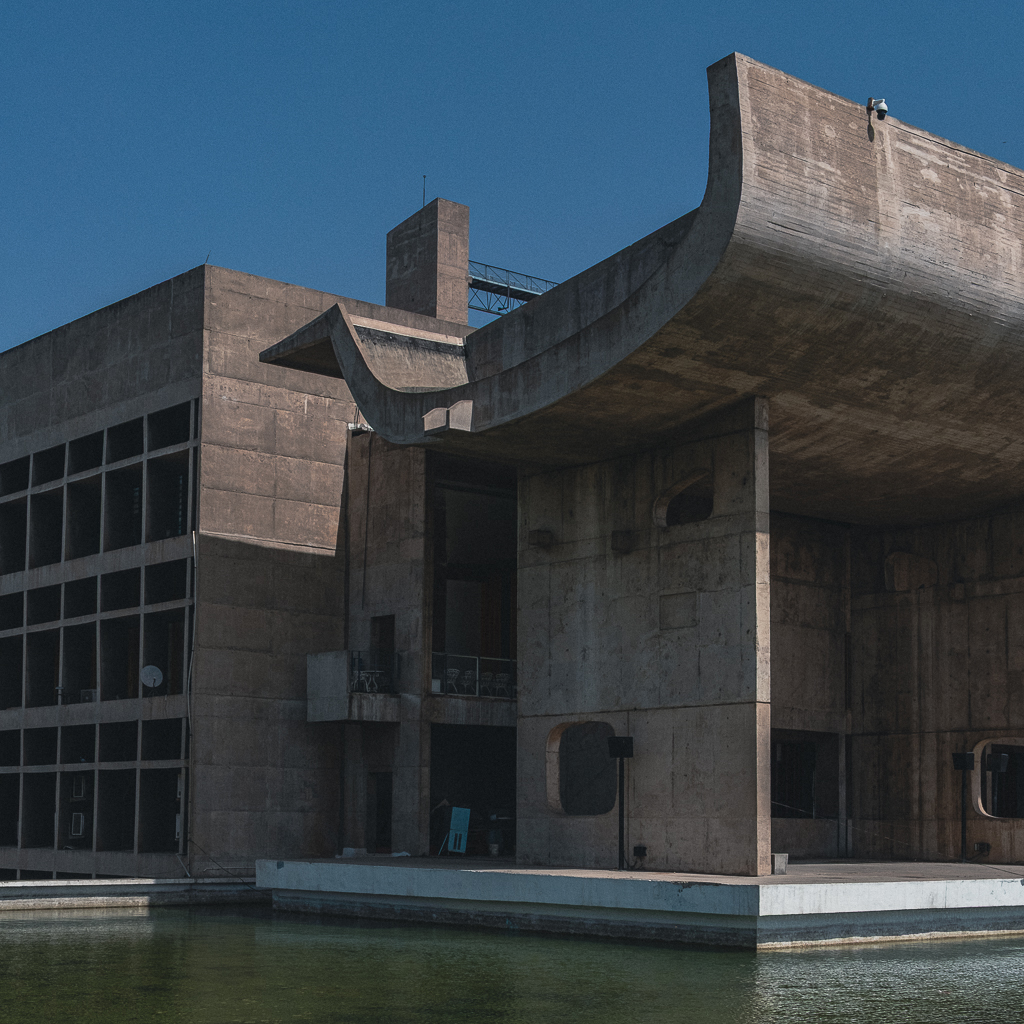
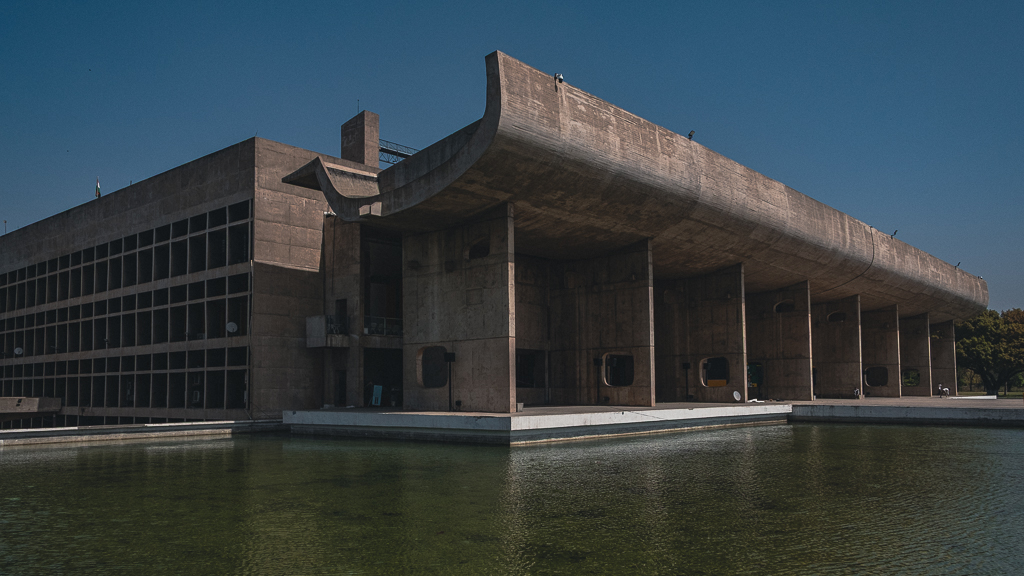
The final stop, and we were definitely getting a nudge along by the guides at the stage, was the Secretariat building. The tour takes you inside the building, but straight to the roof from the reception area, so this time we could bring all our stuff with us. The camera being the most important for me.
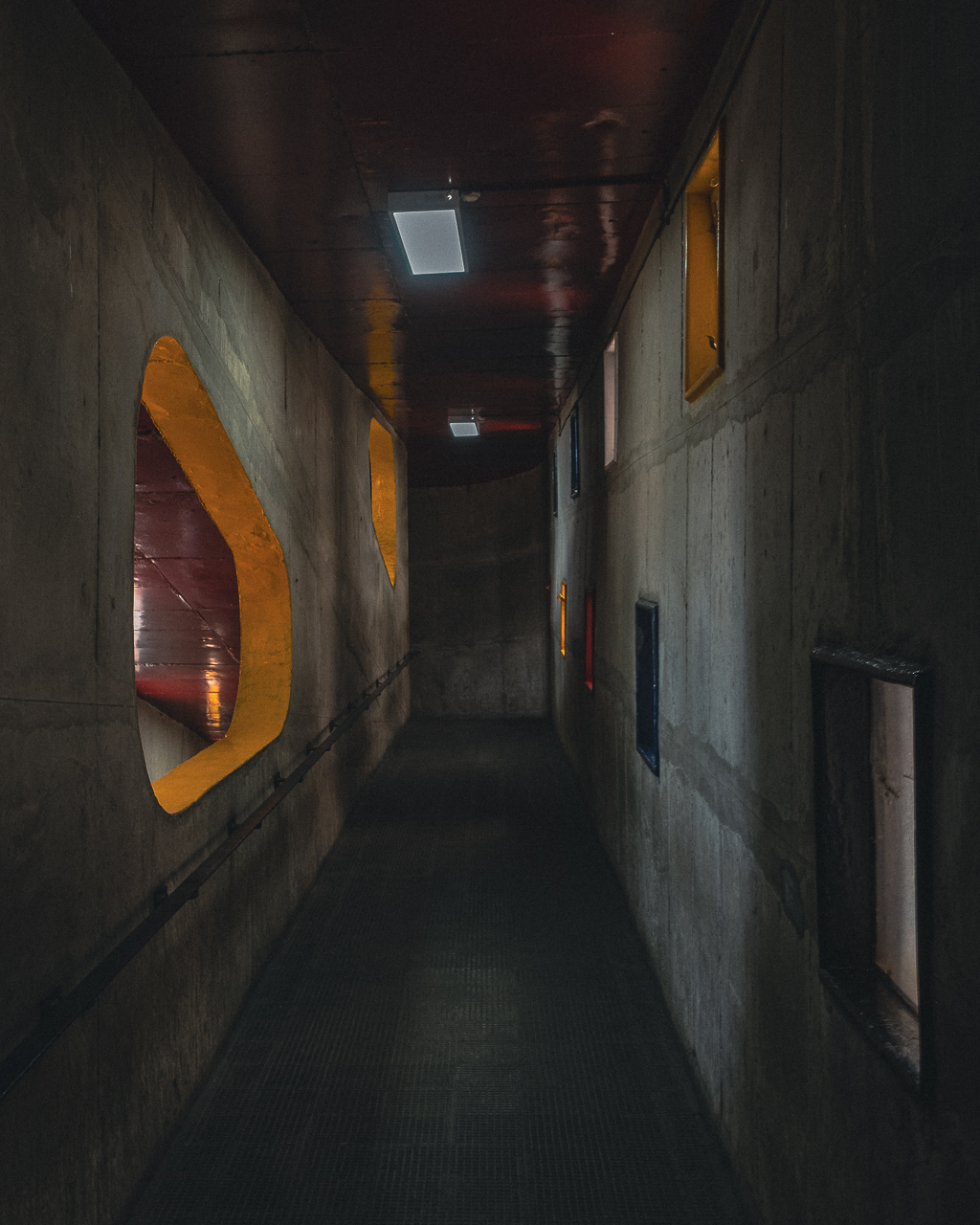
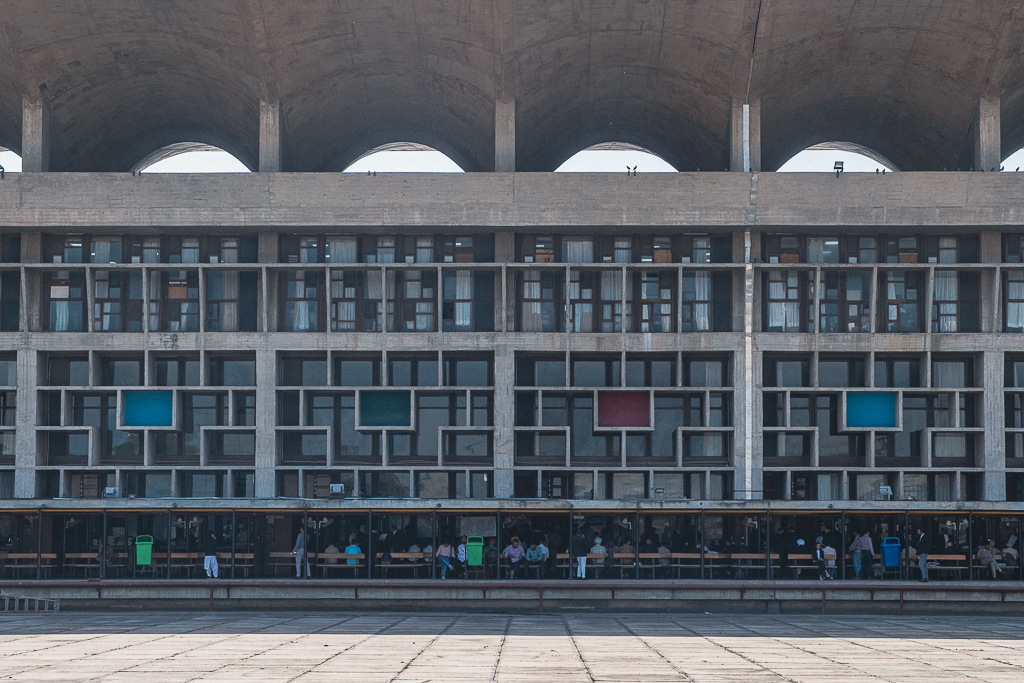
The Secretariat is a massive eight-storey slab block stretching about 250 metres. It’s essentially a giant office block housing the administrative departments for both the Punjab and Haryana state governments.
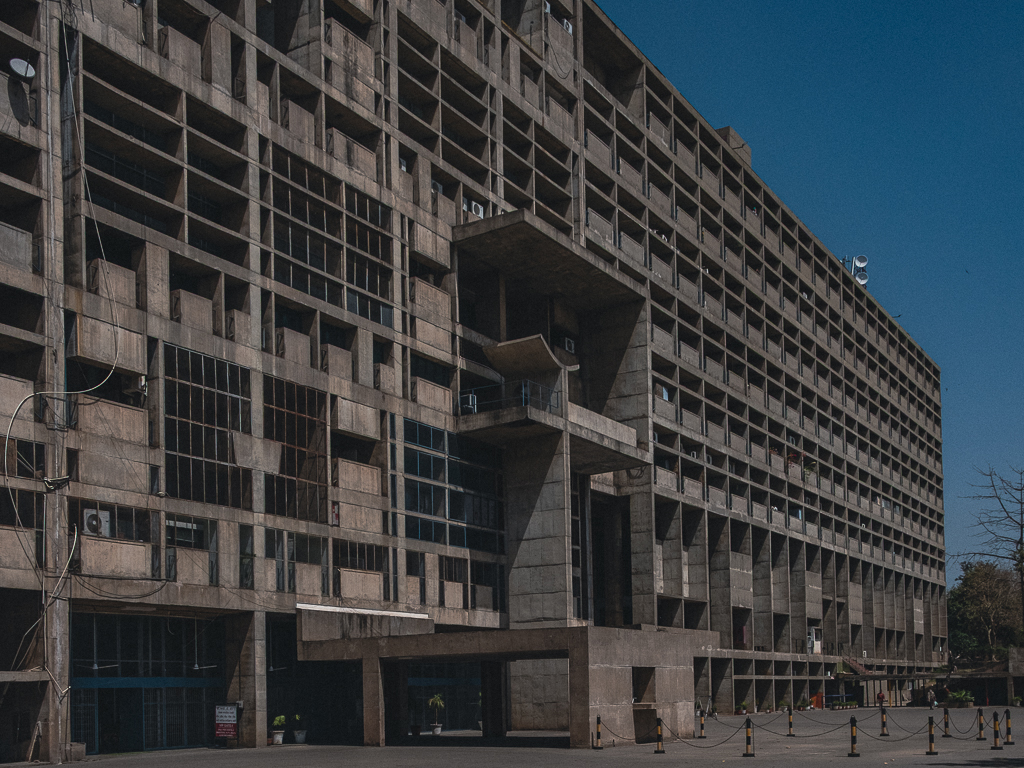
The façade is dominated by Le Corbusier’s brise-soleil (sun-breaker) system, those geometric concrete grids you can see covering the building. They’re designed to shade the interior from the harsh sun while still allowing air circulation.
The view from the roof is fantastic, I managed to sneak the gun of one of the snipers who observe the site from the roof into one of my images. There are a lot of guns about, though the mostly the atmosphere is friendly. I suspect they don’t have a lot to do, but I imagine the serious security work is performed well out of sight of us tourists.
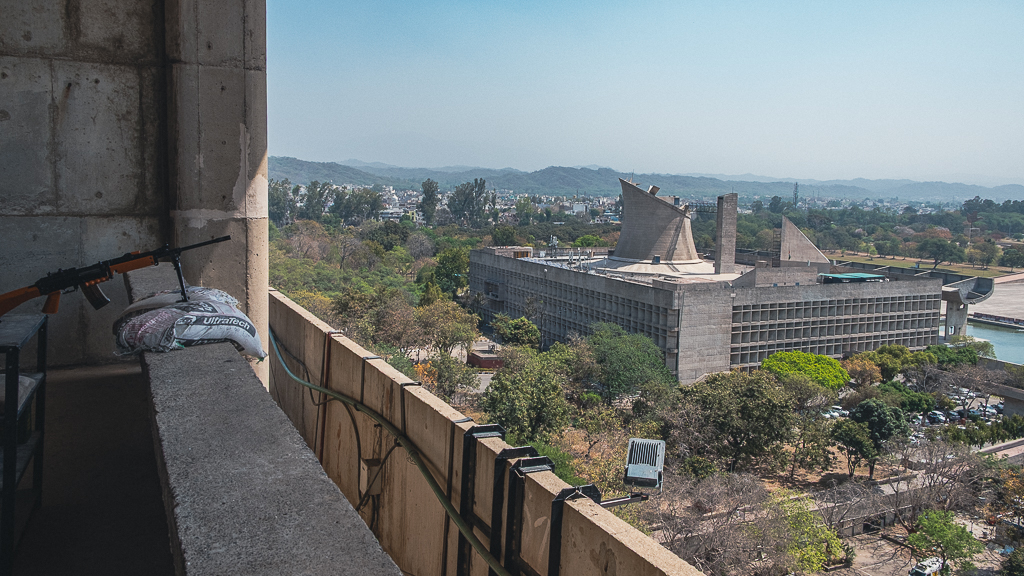
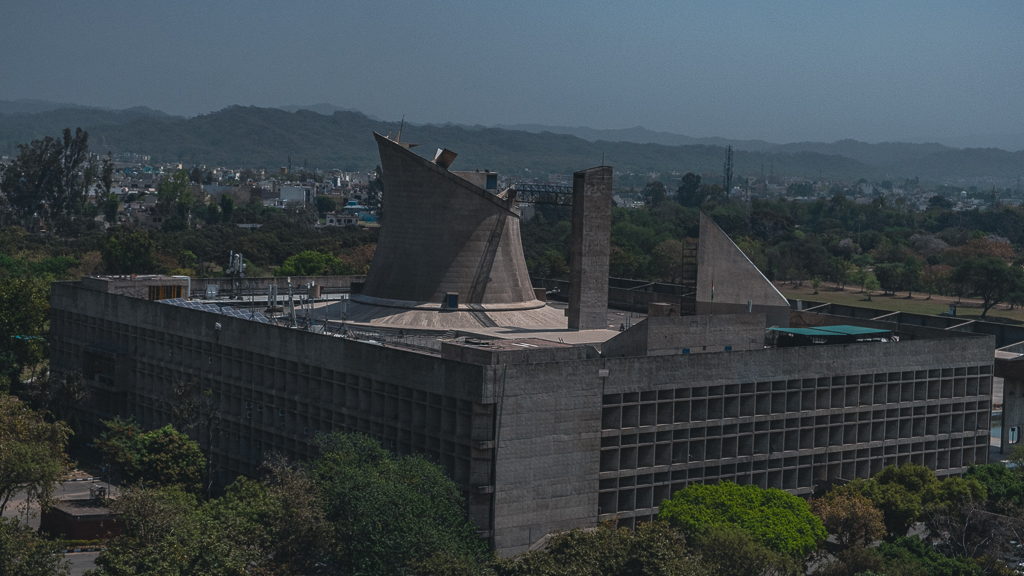
I really liked the structures on the roof too.
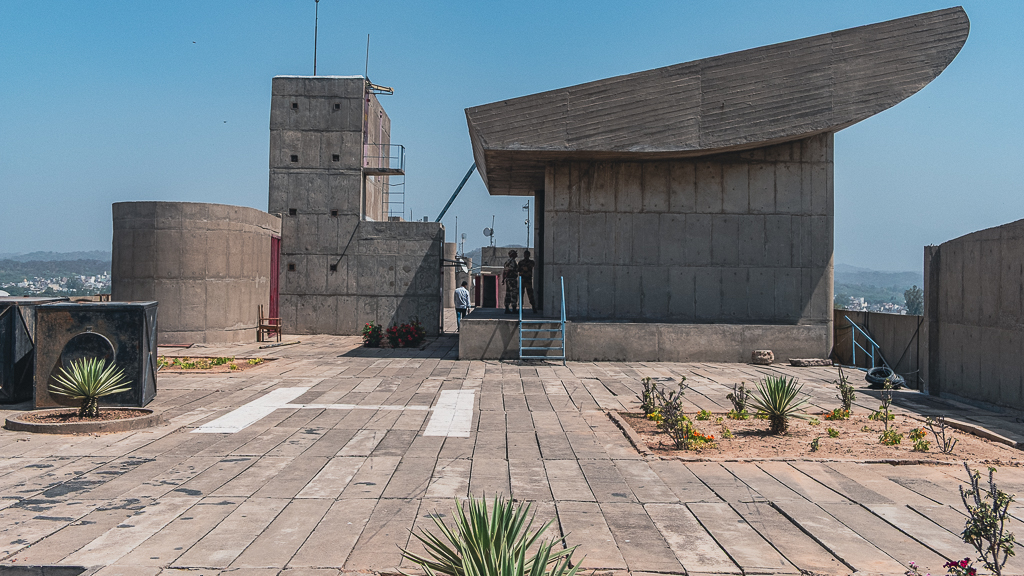
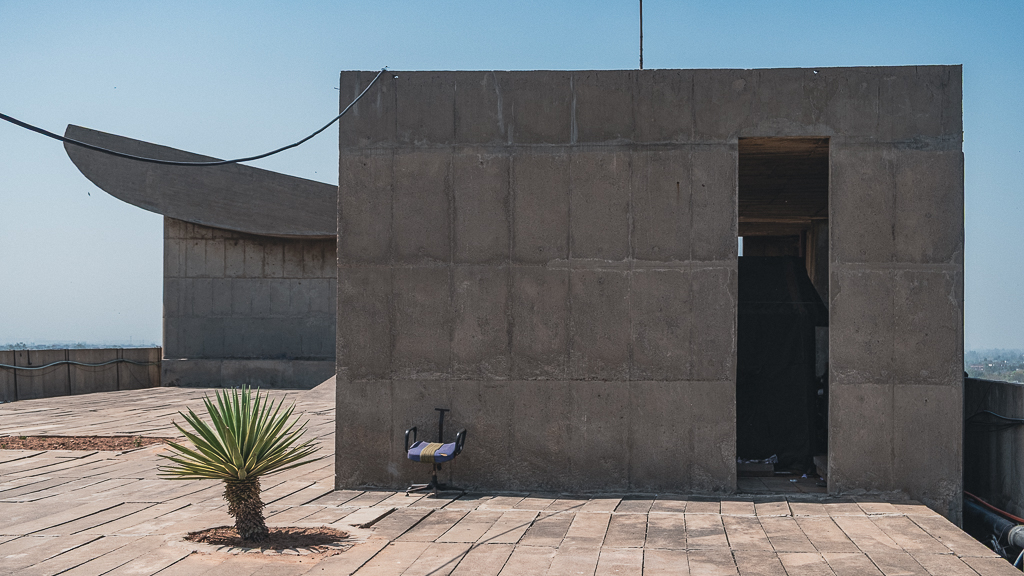
And that was the end of the tour, we were shuffled back to the tour office and sent on our merry, though hot and dehydrated, way. Me, to walk back to my hotel under the mid-day sun. It was the best tour I’ve ever done, made even better by spending a couple of hours with some friendly folk and their chatty and informative guide.
In hindsight I should have found a guide to take me around. There is a lot more to Chandigarh than the Capitol Complex, and not just from a brutalist/modernist perspective; though there are some fabulous modernist residences. Having a guide with a vehicle would have made viewing those a lot easier to do.
Modern Chandigarh is nothing like anything else I’ve seen in my (albeit, limited) time in India, it’s very much a modern city. I think Nehru would approve.
 Where is Phil now?
You must be logged in to post a comment.