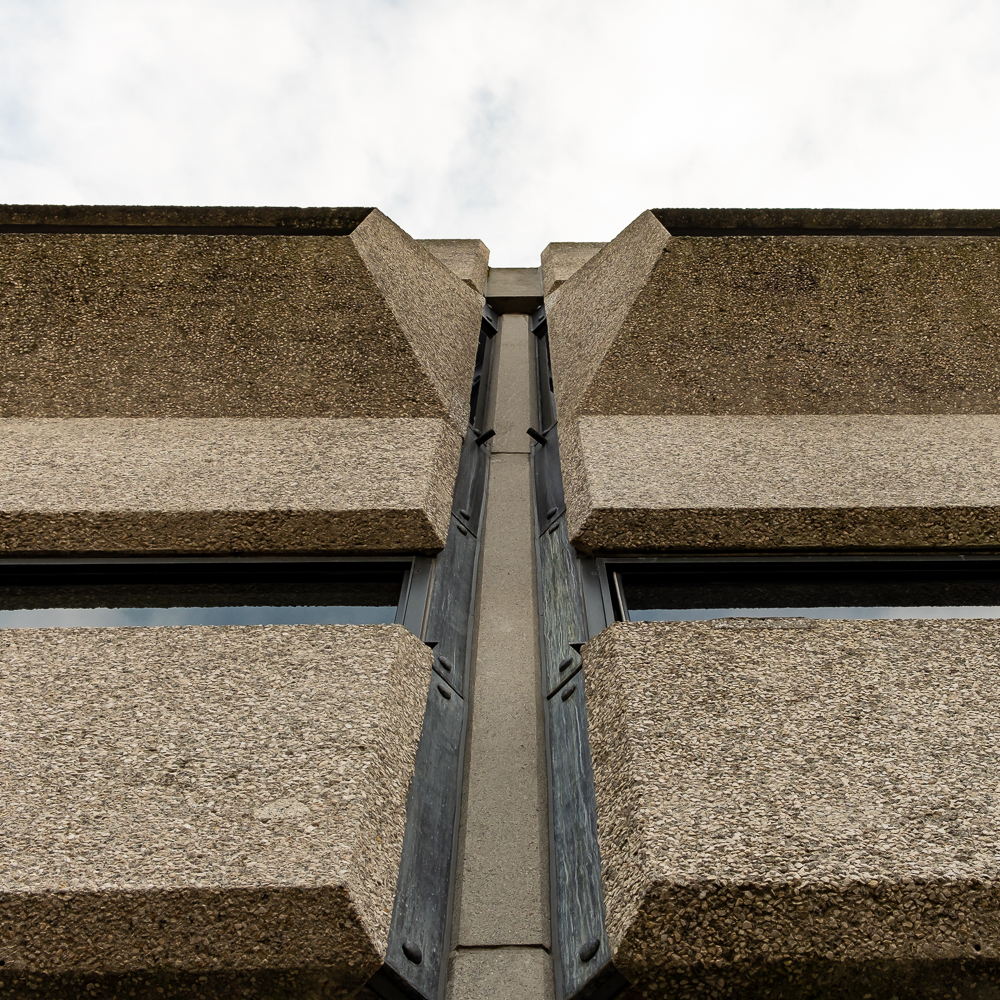
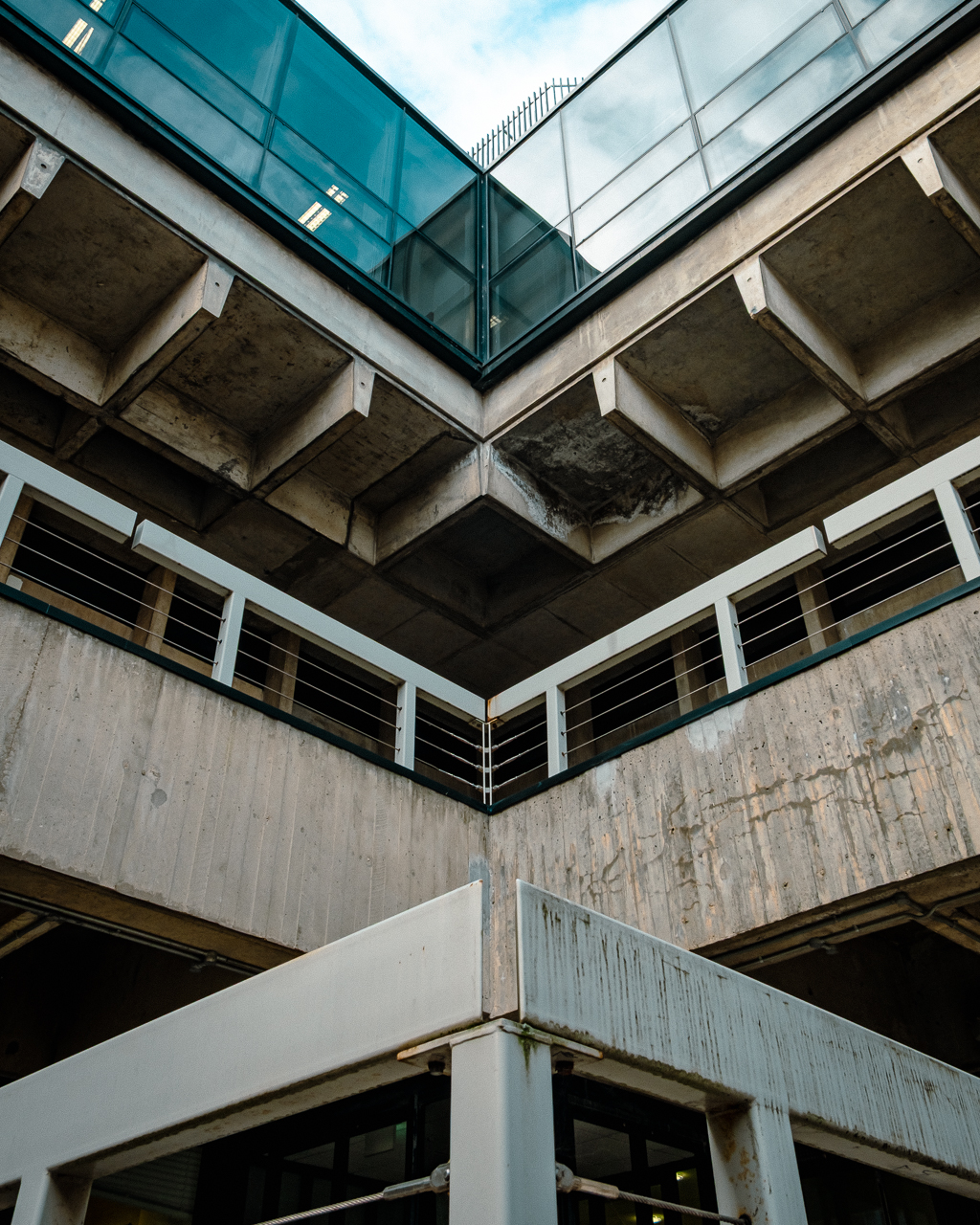
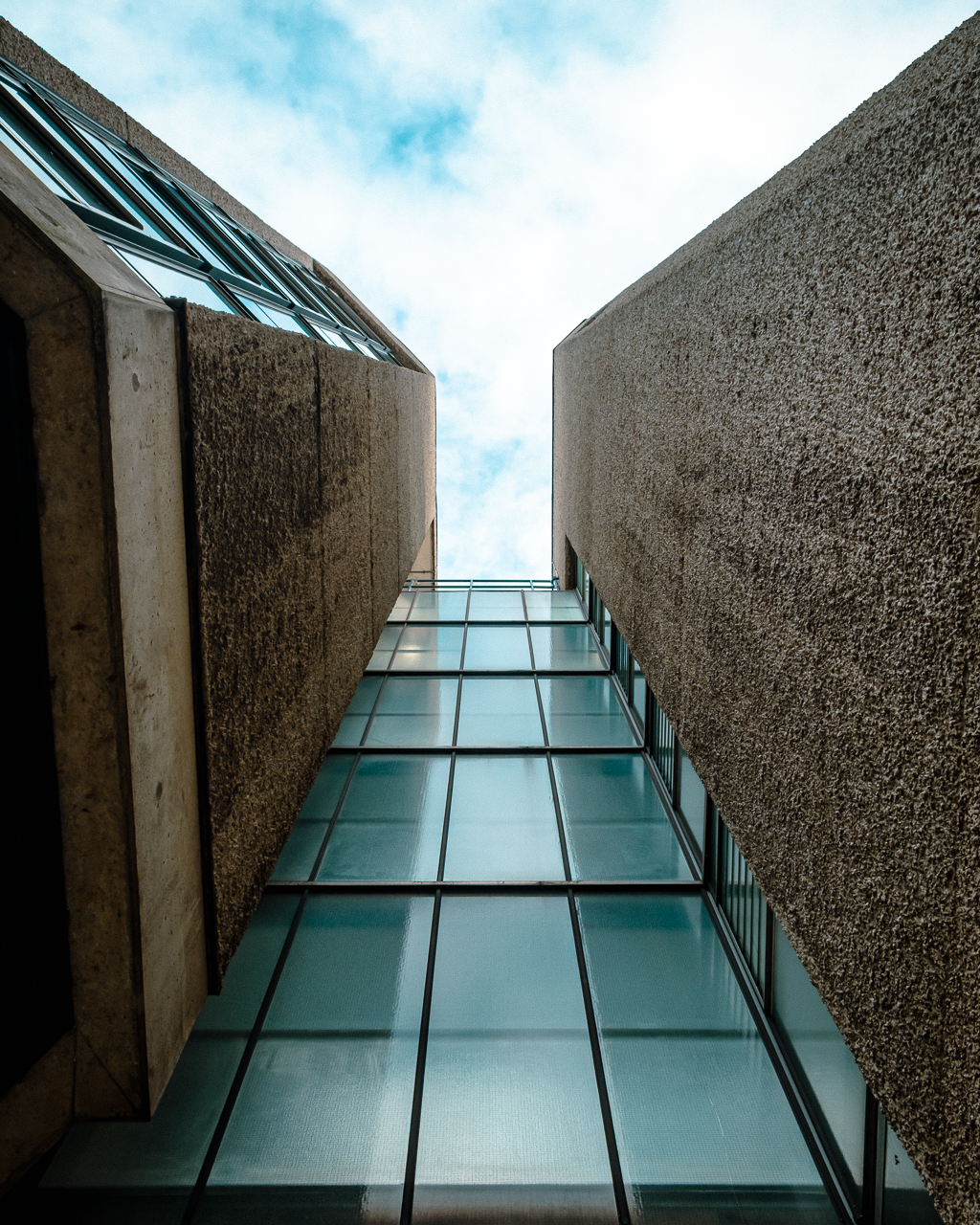
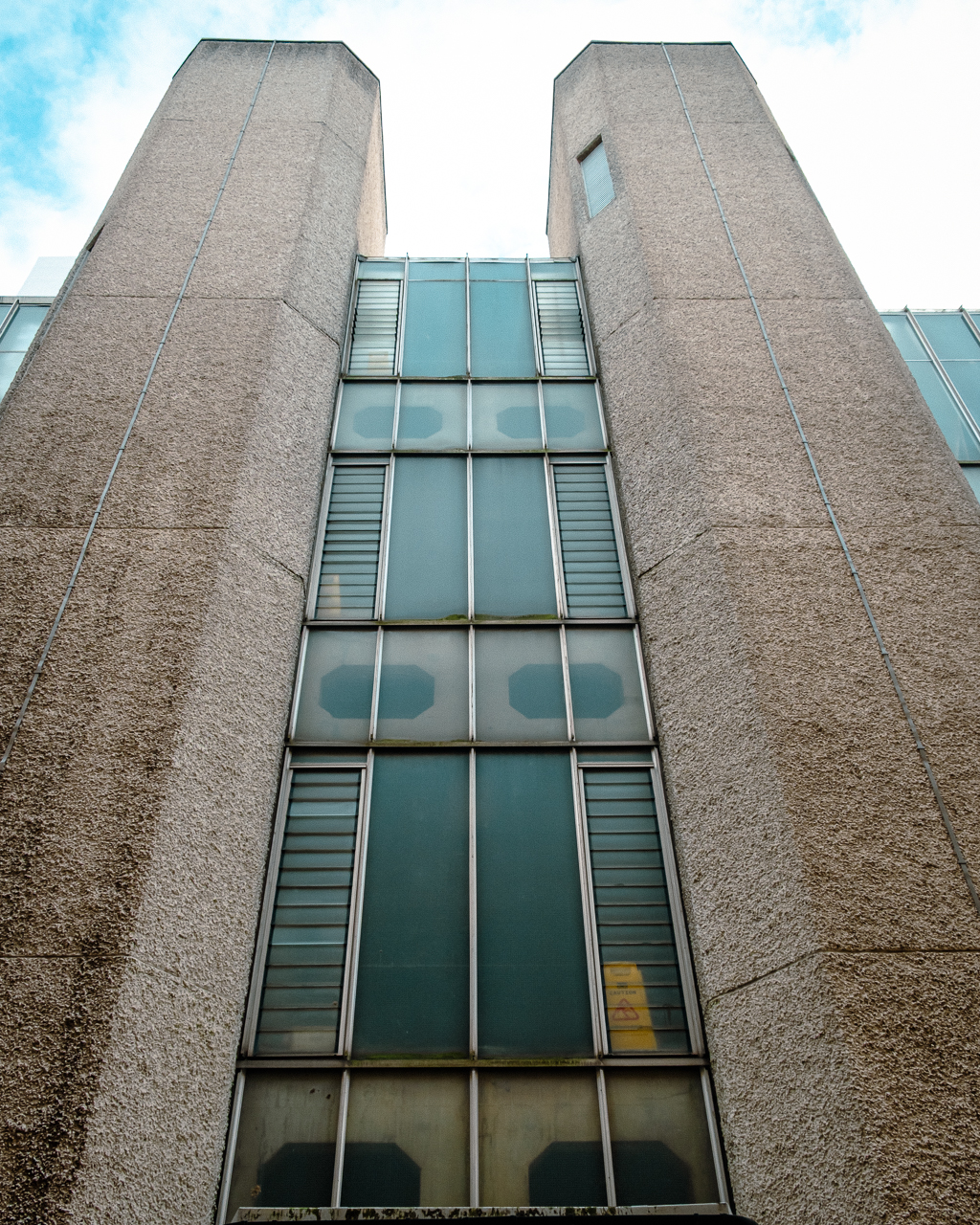
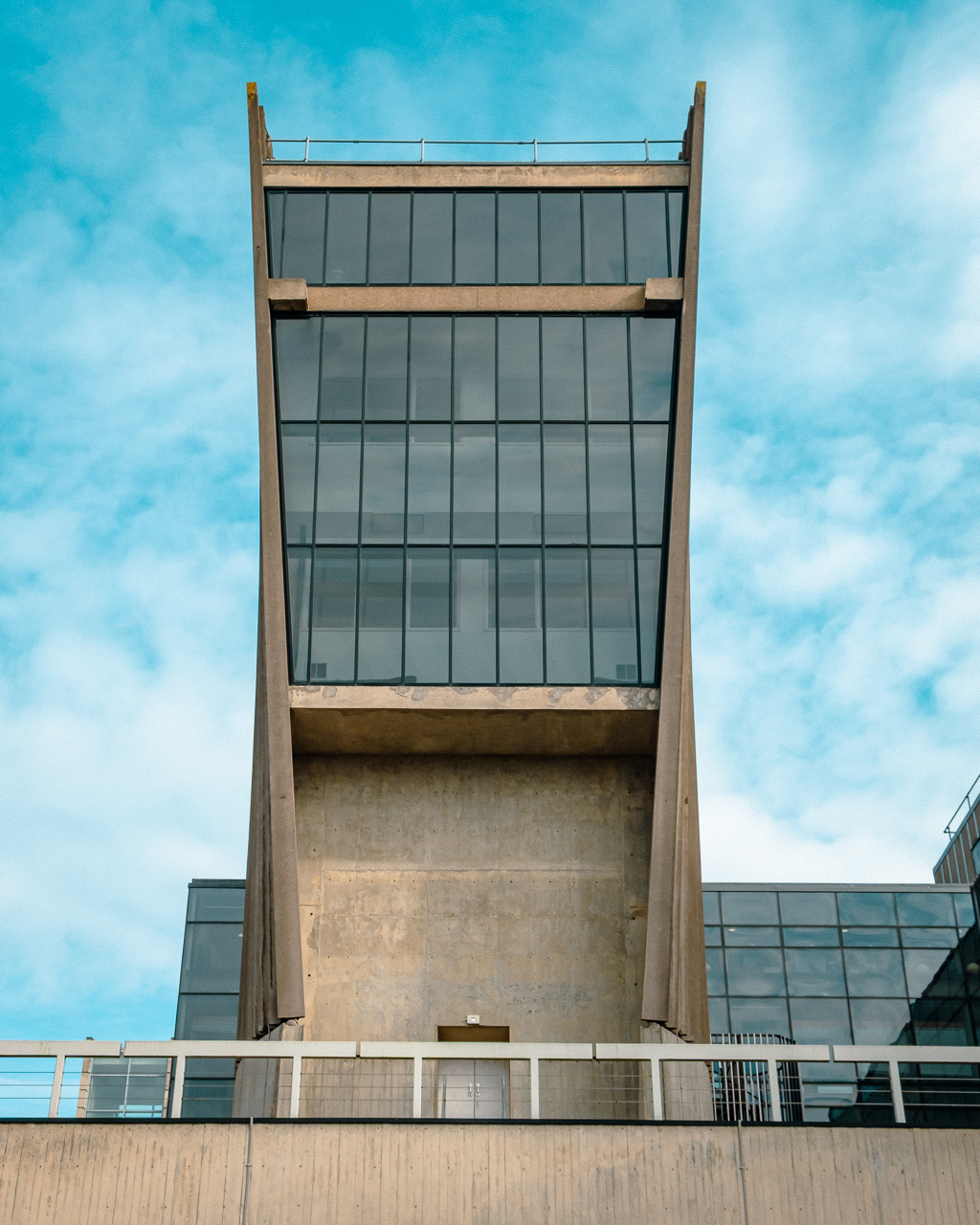
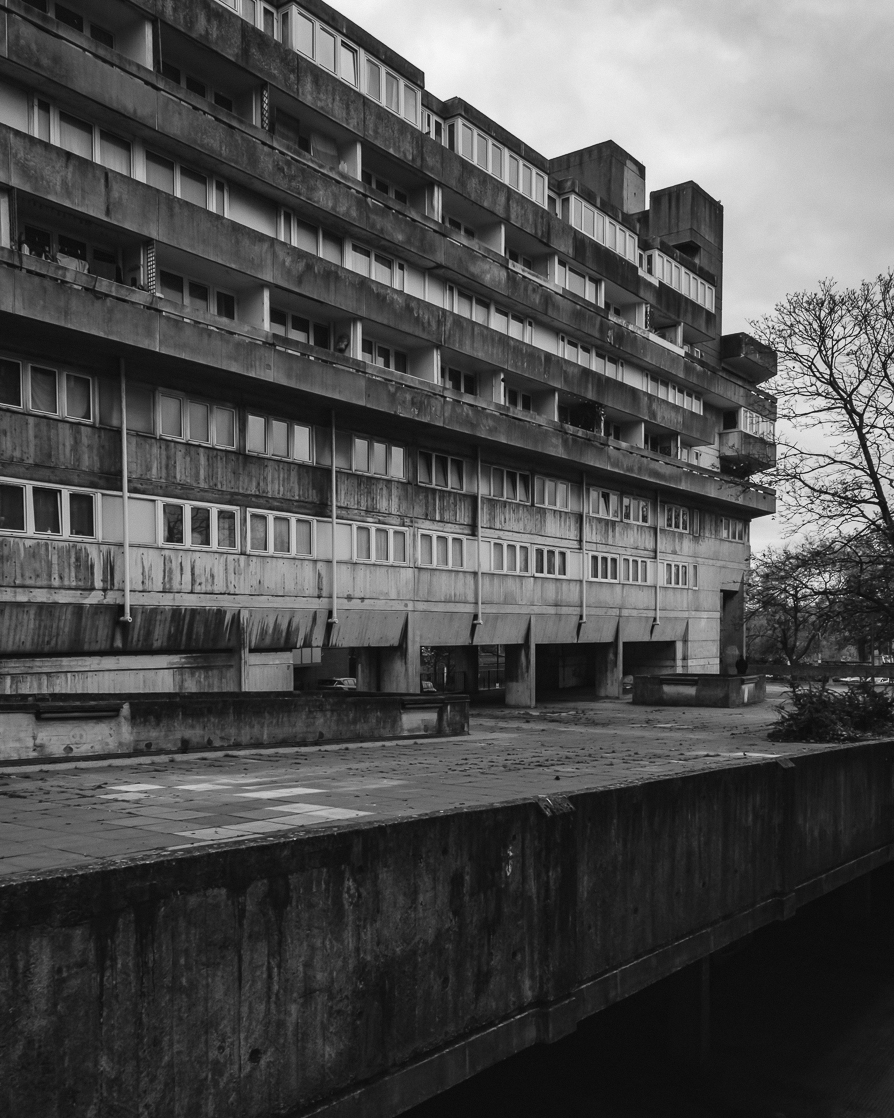
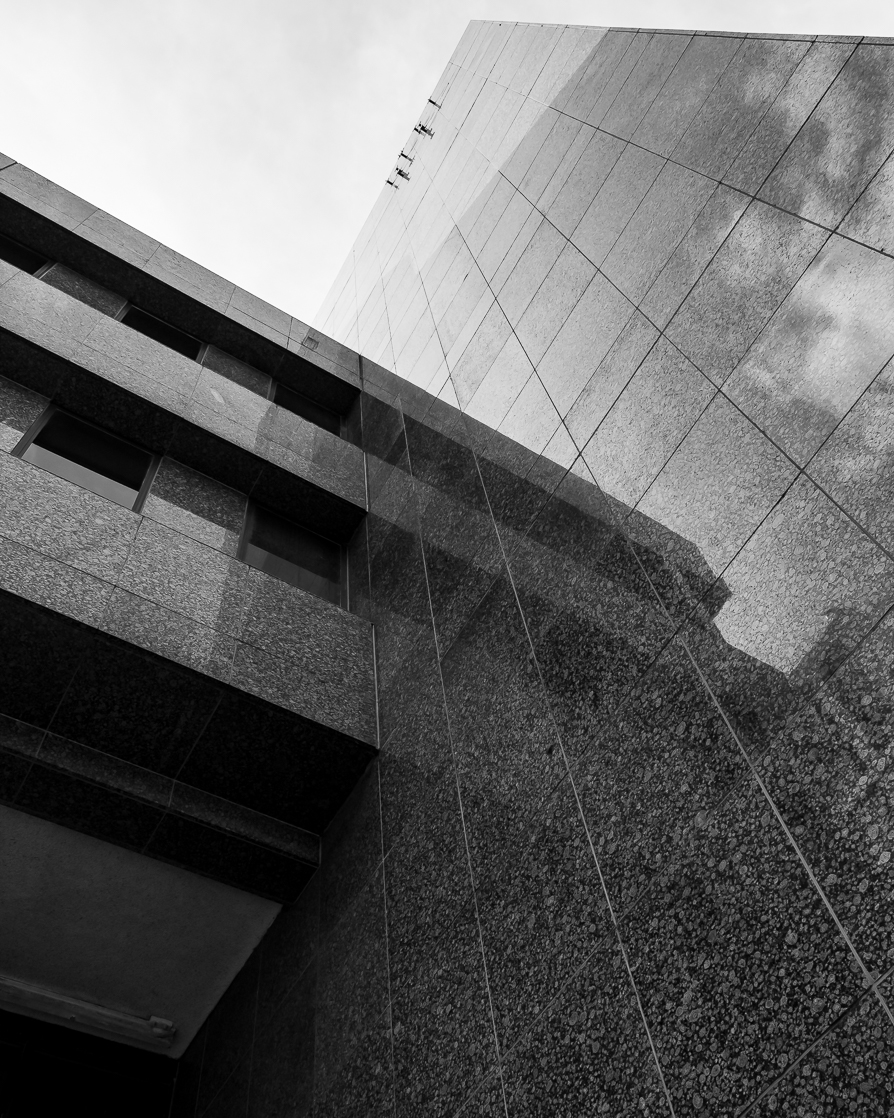
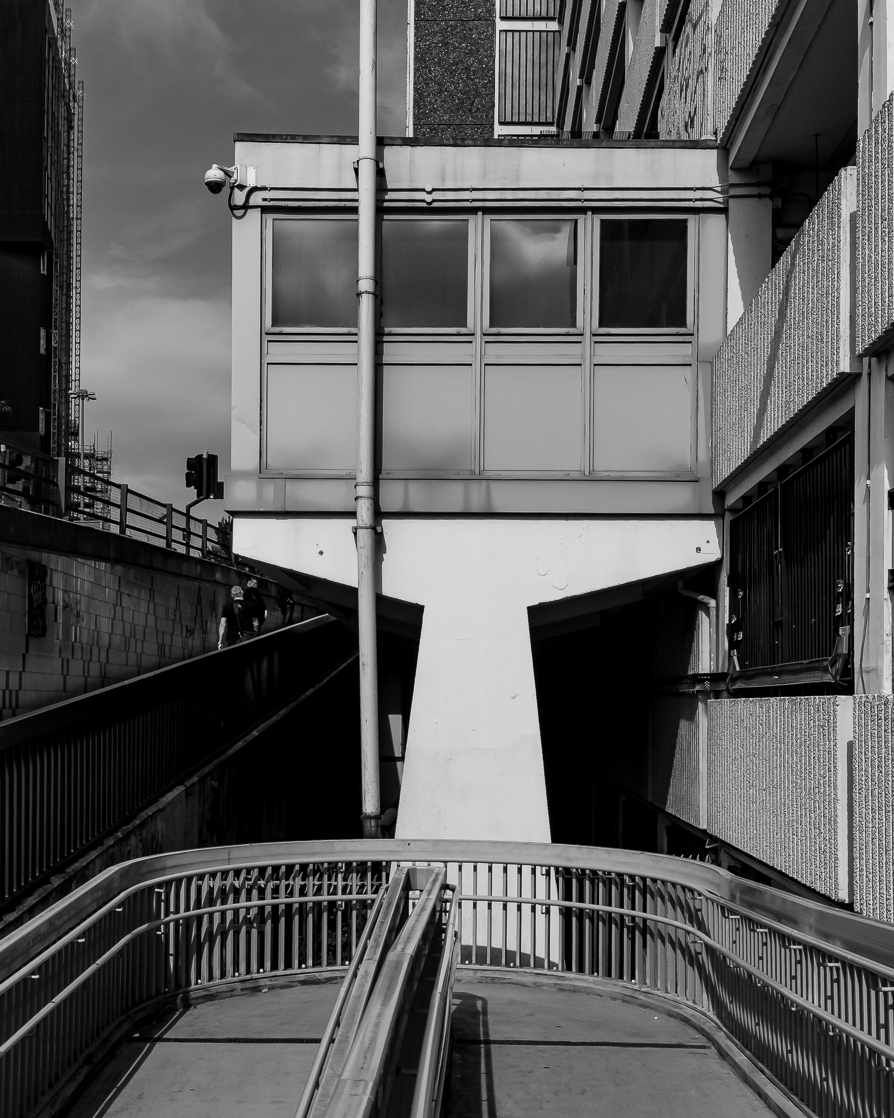
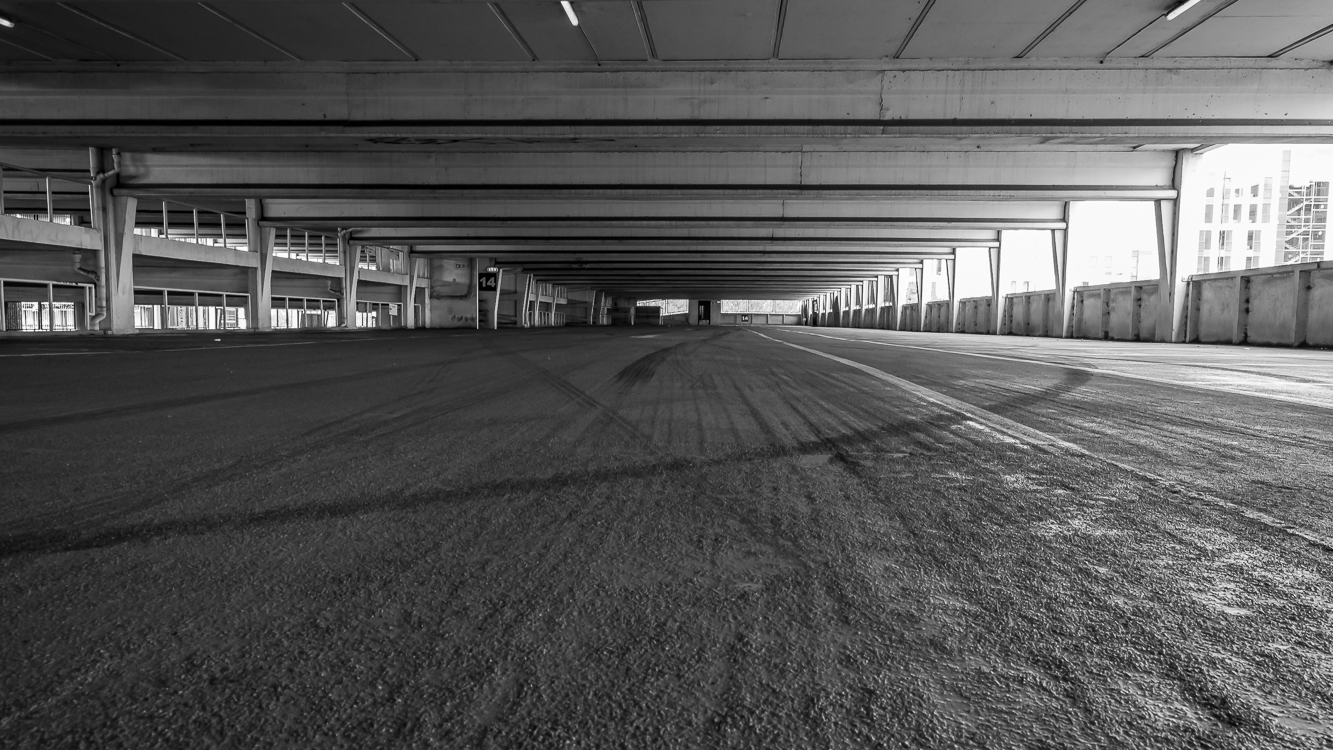
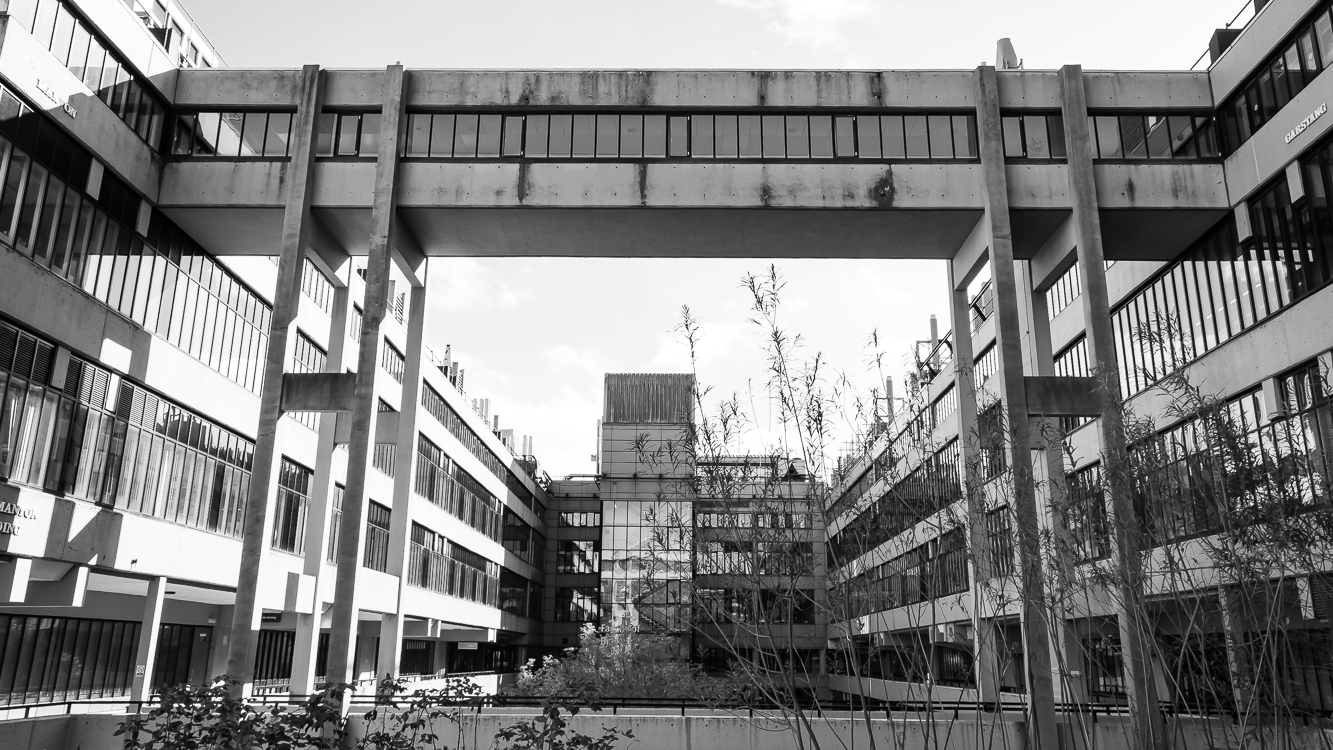
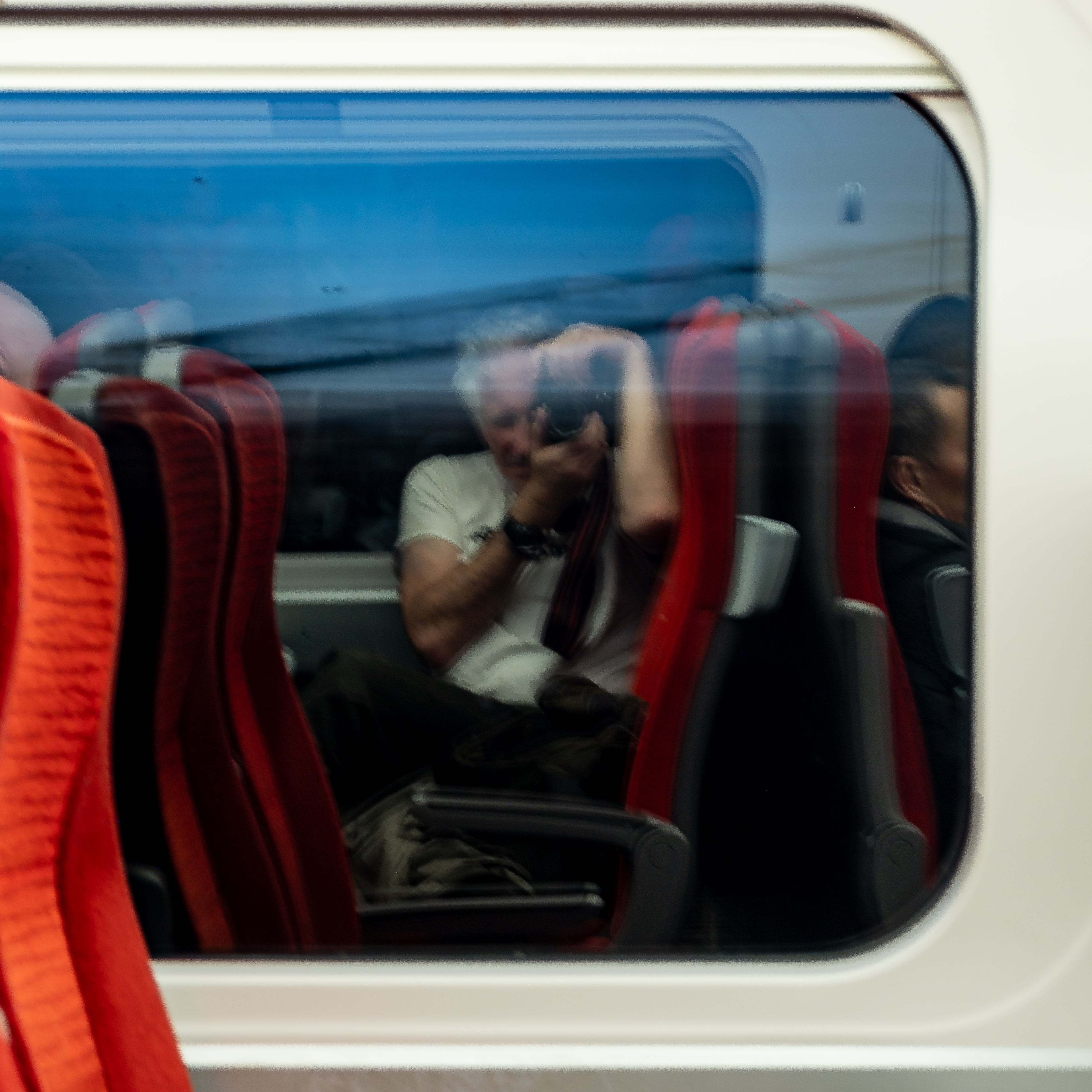
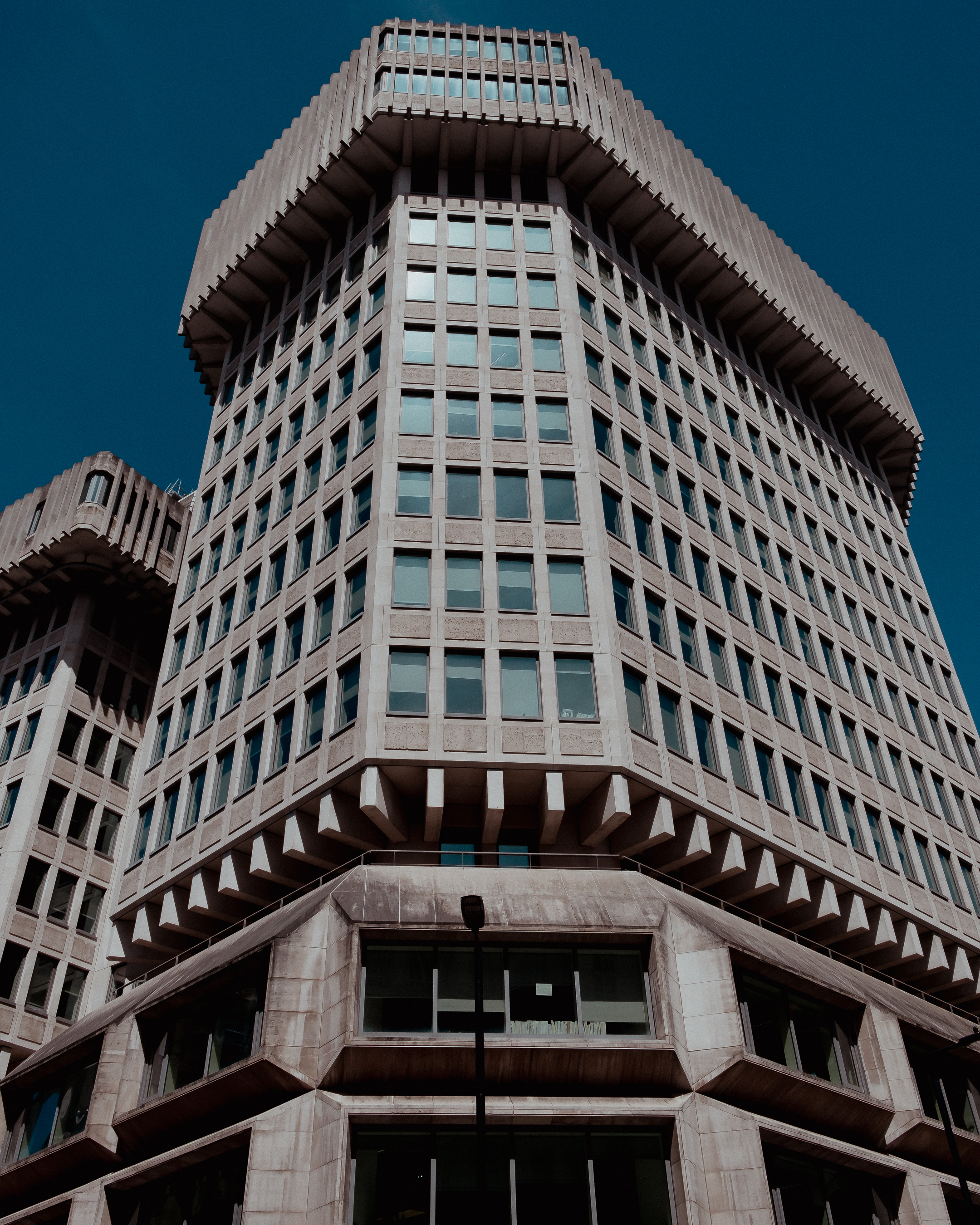
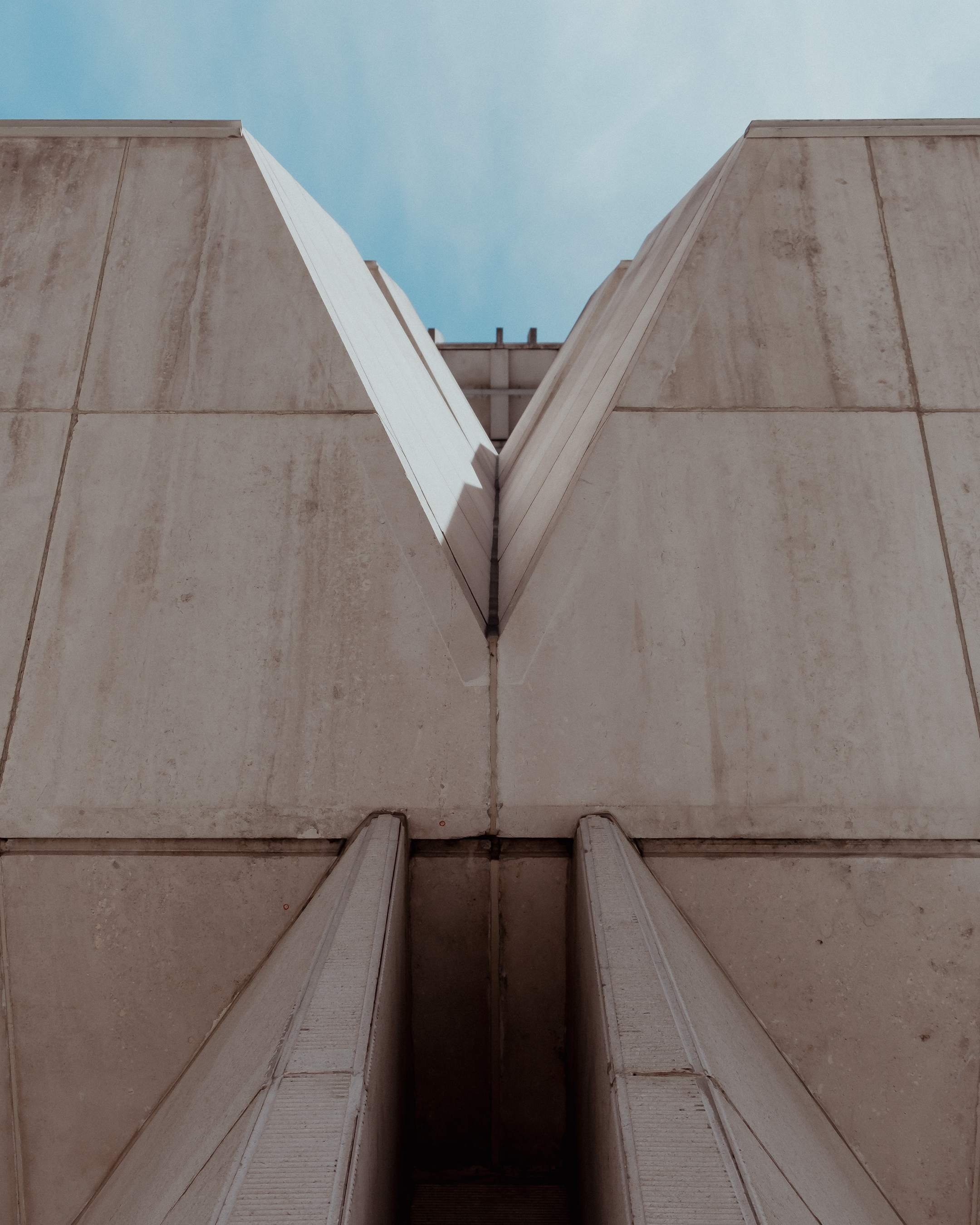
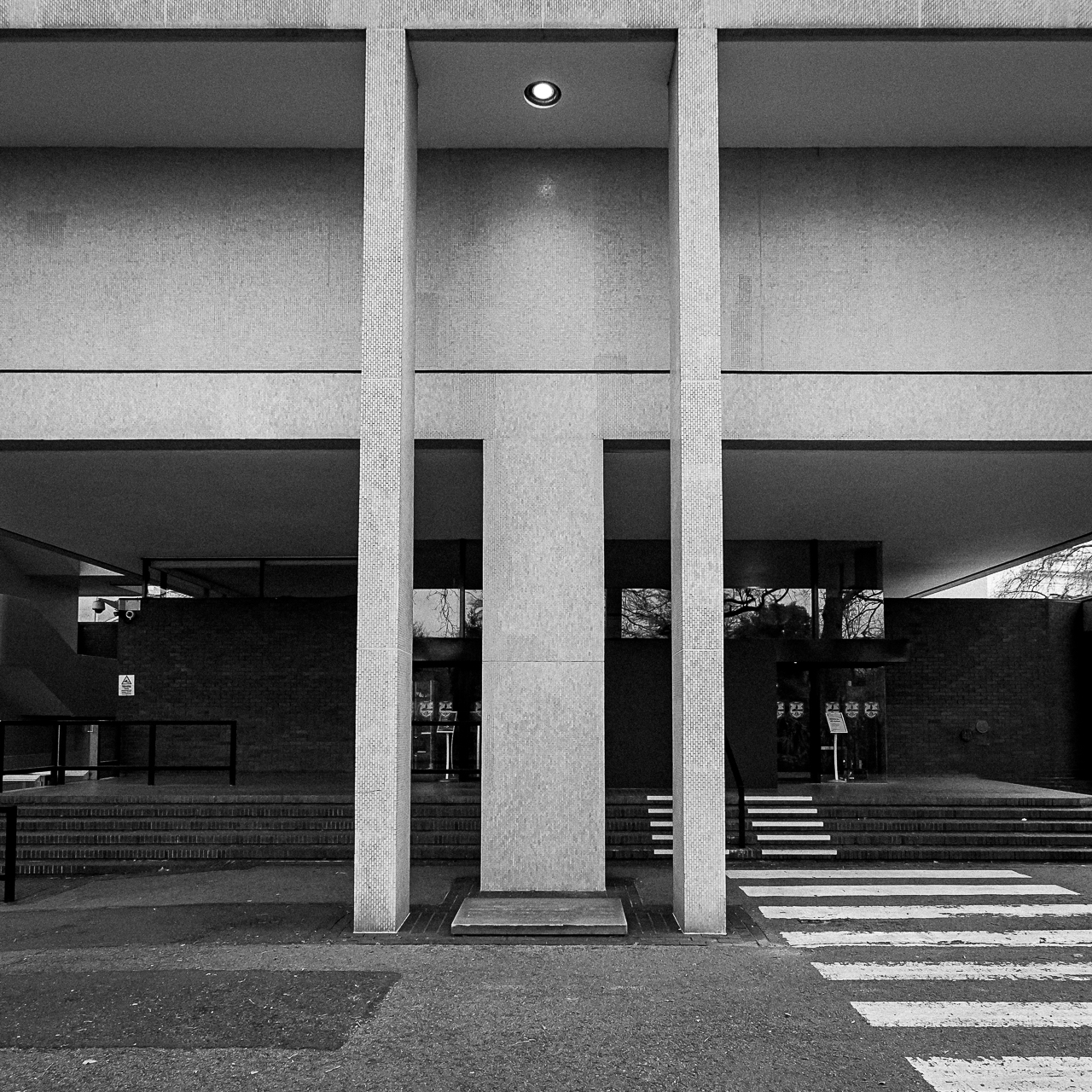
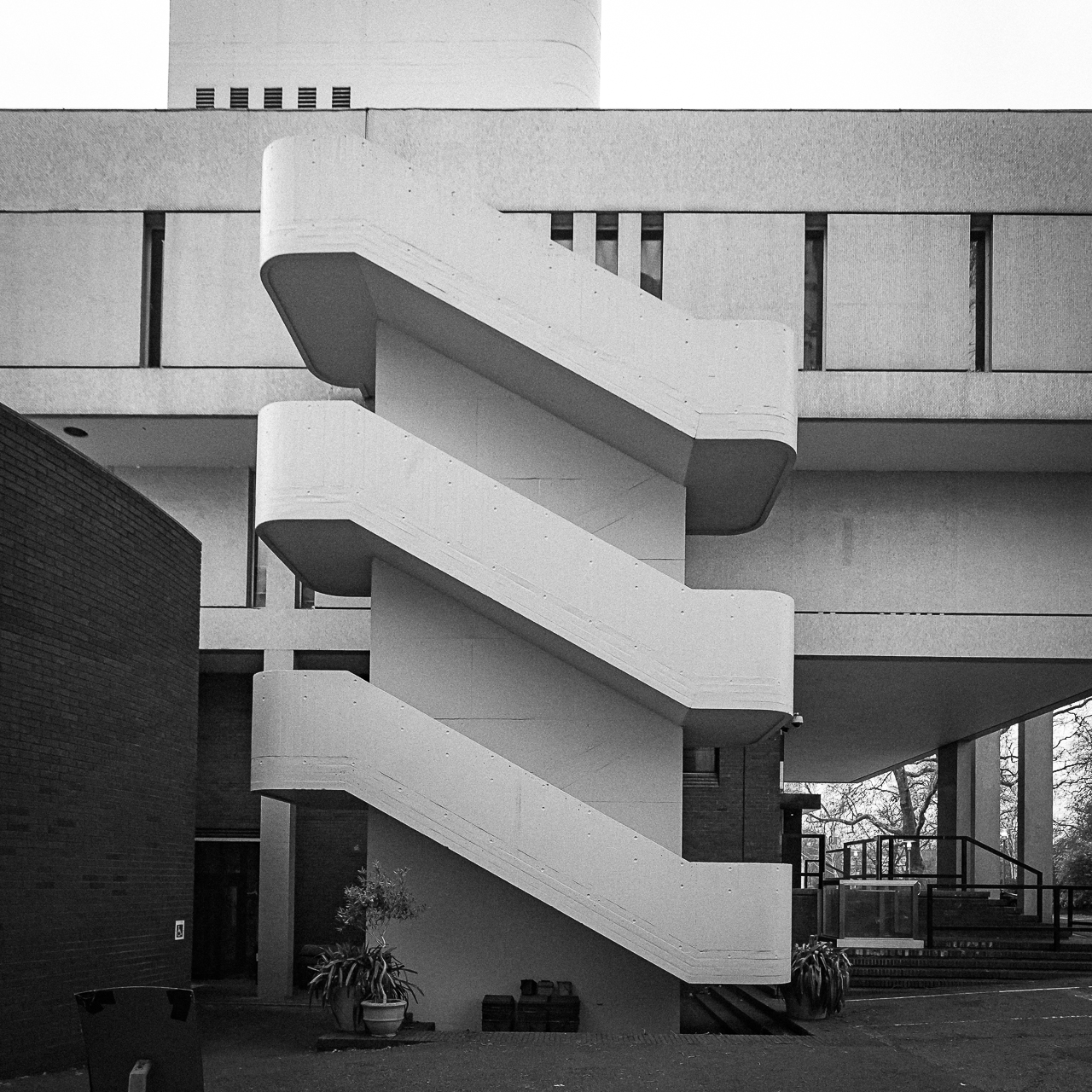
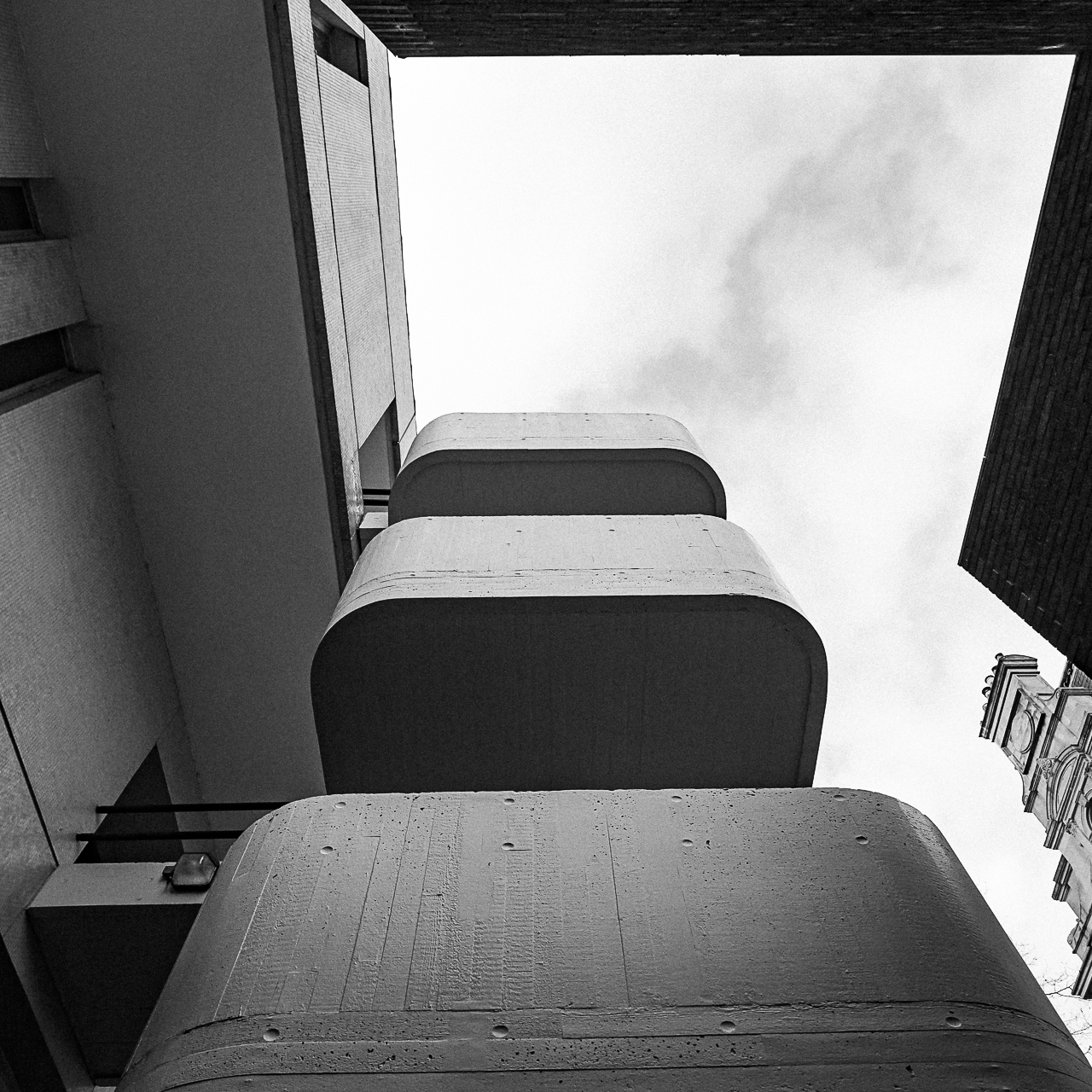
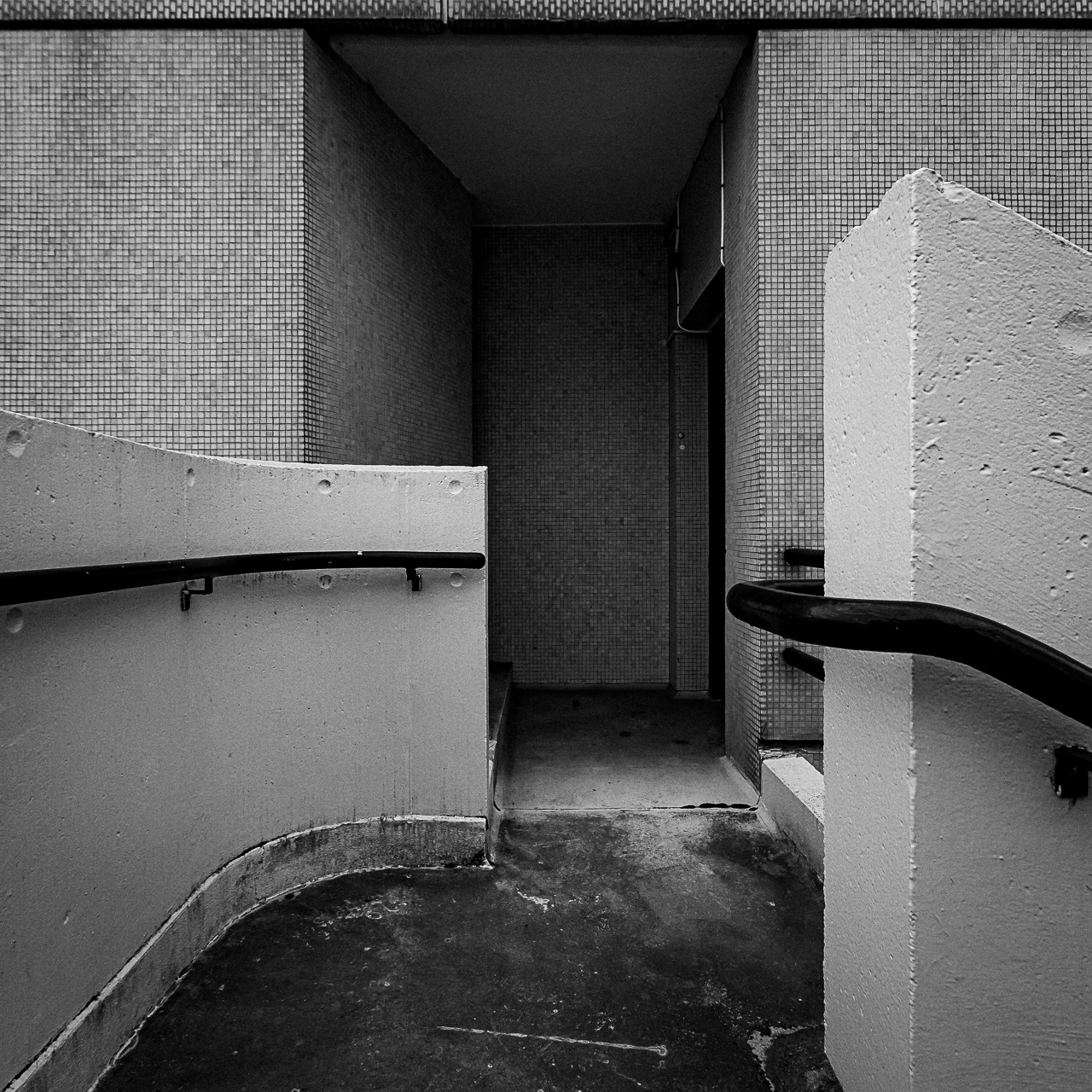
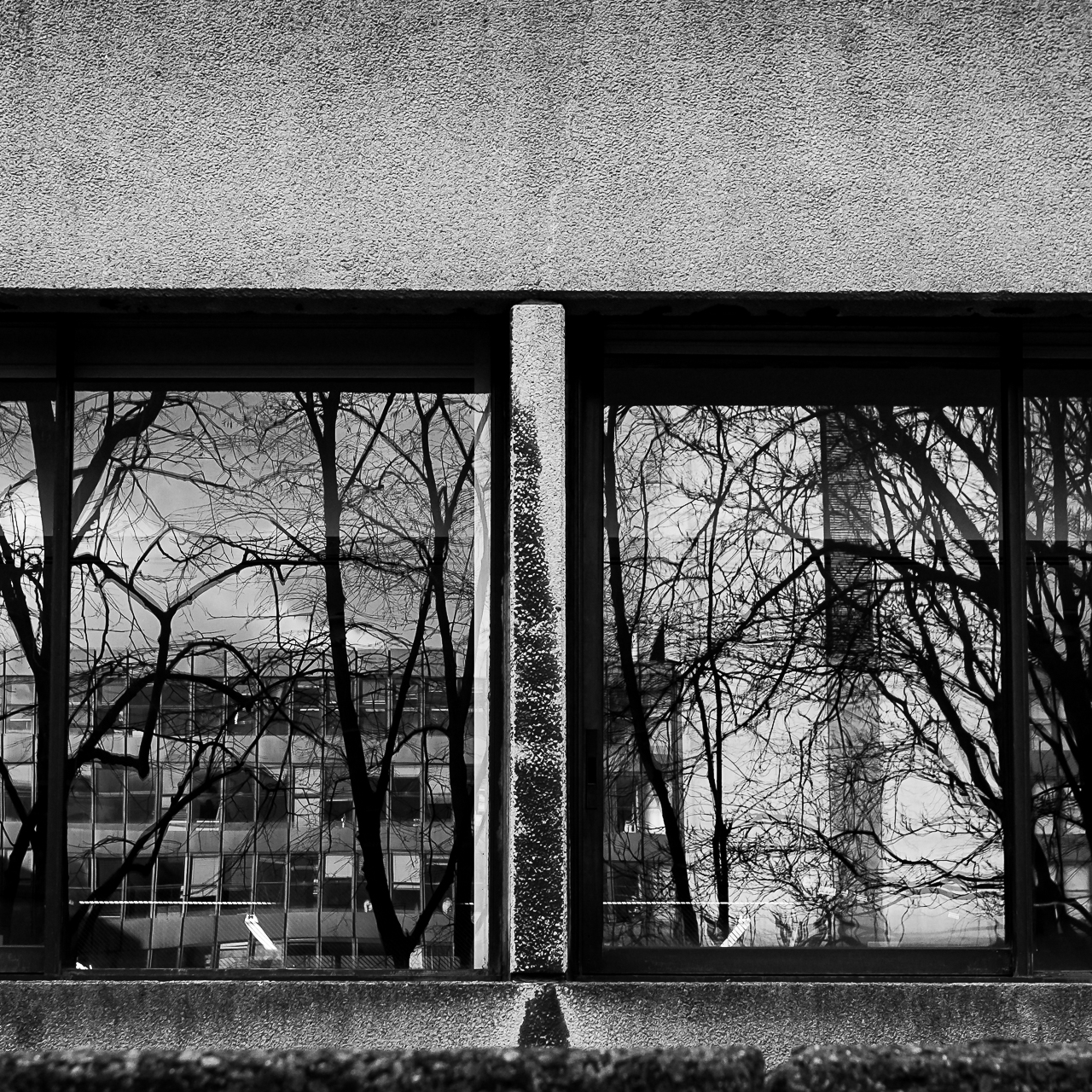
Capitol Complex, Chandigarh

Chandigarh, India
02 April 2025

There is no one specific reason why it has taken the best part of 11 months to finish writing about Chandigarh, or of my time in Delhi. I guess I just ran out of capacity to do either place the justice they deserved. To be honest, I never expected to pick this back again, but there you go. I started a new job in September and this one isn’t as mentally draining and that has helped in so many ways. So here we are with words and images on a page, almost 11 months after the event.

In his famous speech at Rajendra Park in Chandigarh on 9 November 1957, Jawaharlal Nehru shared his vision for the city with its people, saying, “It was felt that to build a new city to be the capital of Punjab would give people something new to look forward to. We wanted them to look to the future with new hope after the trauma they had been through. We felt the new capital would be a symbol of new hope.”

It was only ten or so years ago that I started to understand the impact of the 1947 partition of India. I knew that it had happened, and I knew that it split India into two; and later three when Bangladesh became its own entity in 1971, but I didn’t know much more. I’m not going to go into any detail on the cause of partition, though Britain and colonisation must carry its share of the burden of responsibility for the deaths of hundreds of thousands of innocent people and the displacement of millions more.

One of the outcomes was the splitting of the state of Punjab into two, with the state capital, Lahore, ending up on the Pakistan side of the new border, leaving Indian Punjab in need of a new capital. As noted above, Prime minister Nehru wanted to build a city for the future of the now smaller state, not one that reflected the recent architectural past of the British Raj.
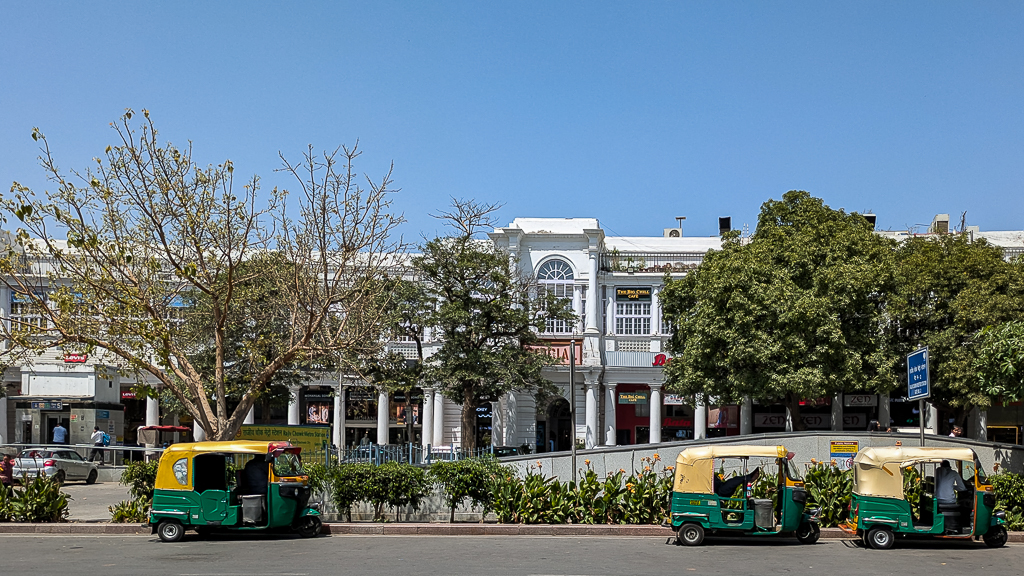
There was not much to Chandigarh before Nehru hired the American architect Albert Mayer. He, working with Polish architect Matthew Nowicki, developed a plan based on a curving, organic layout. However, Nowicki was killed in a plane crash in 1950, and Mayer withdrew from the project shortly after. It was at this point, in 1951, that the Swiss-French architect Le Corbusier was brought in to take over…

Le Corbusier brought in a number of other European architects to help with the design of the city centre and, equally importantly, a set of new government buildings: the Capitol Complex. He called on his cousin Pierre Jeanneret and the English couple Maxwell Fry and Jane Drew, who had experience designing modernist European buildings in West Africa and understood how concrete could be used in heat and humidity. Le Corb focused on the design of the Capitol Complex while the others developed plans for the residential and commercial parts of town.
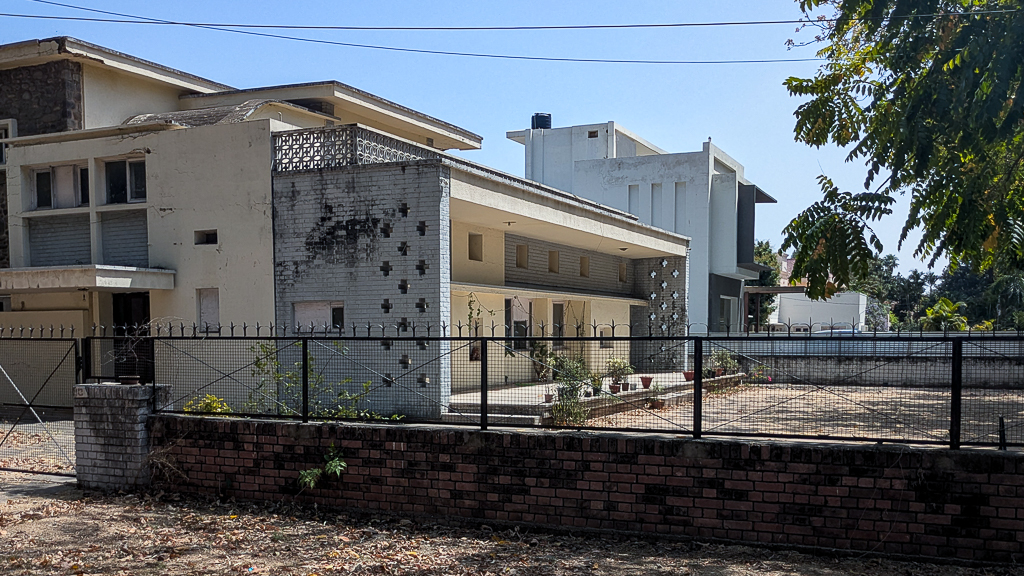
In today’s Chandigarh there isn’t a lot of accommodation choice for a solo traveller on foot who wants to stay not too far from the concrete action. The hotel I chose wasn’t great and I was the only westerner there. As I found on this India trip, most of the other western tourists were on guided tours and had drivers and organised schedules. I didn’t meet many who were solo travelling like me.

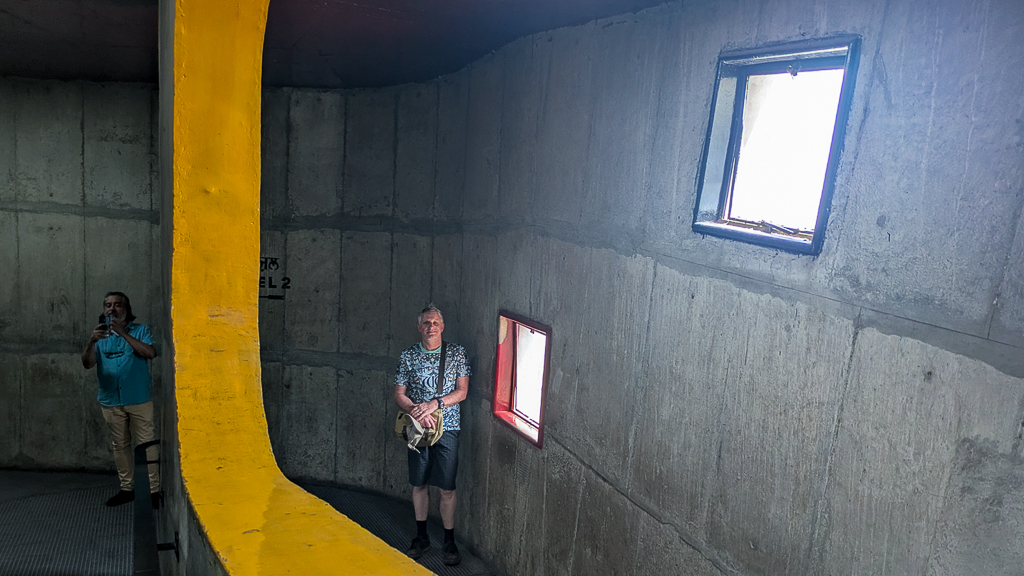
A photo of me taken by one of the ‘Americans’ inside the Secretariat – it had an amazing internal ramp. The other person is the excellent local guide the Americans had.
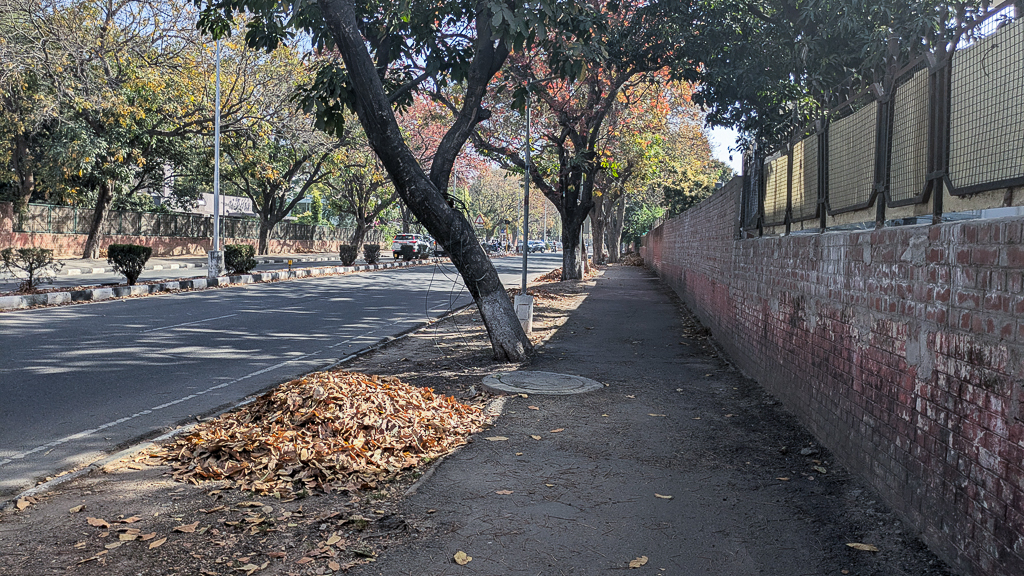
As usual I decided to walk to the Capitol Complex, though it was much further than I’d anticipated. The sector blocks are 1.2km long and I had two to cover, plus some meandering and then walking to the complex itself. A taxi driver I met in Christchurch went to university in Chandigarh and said that Christchurch reminded him of home, I could see what he meant. The residential streets are pleasant, something I can’t say about Delhi. Chandigarh is only 70 years old mind, not 3000.

The city was designed to be cool and light and make humans more comfortable in their surroundings. Buildings are mainly low rise; there are plenty of trees and it was pleasant walking on the shady side of the road. There are also footpaths, and surprisingly, cycle lanes, which were well used. The walk to visit an object of interest was the nicest of all my days in India, though the roads at rush hour were as busy and noisy as Delhi.
I didn’t know I had to join a guided tour to visit the Capitol Complex, though it makes sense given it is the centre of government for two Indian states (Punjab and Haryana). The tours are free, though.

I lucked in with arriving at the tourist centre just before the 10am tour was about to leave. I generally hate tours but this one, run by the complex itself, was excellent. The guide was knowledgeable and friendly, and we benefited from having a local architecture tour guide with an American couple who added local colour and history; his father was an architect on the original build. I enjoyed the company of the Americans too. My years of solo travelling are over I guess.

The tourist centre was a good introduction to this fantastic site.
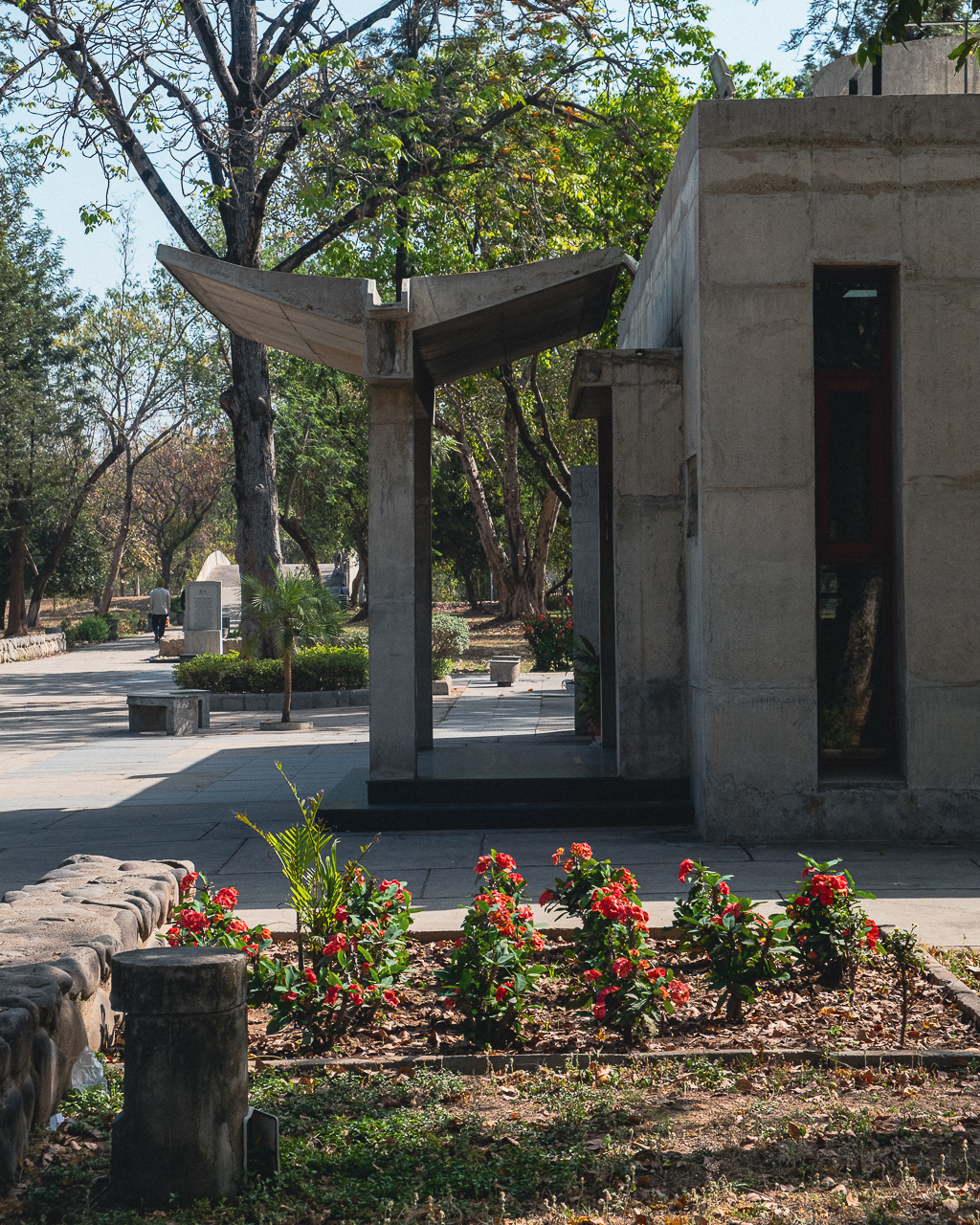
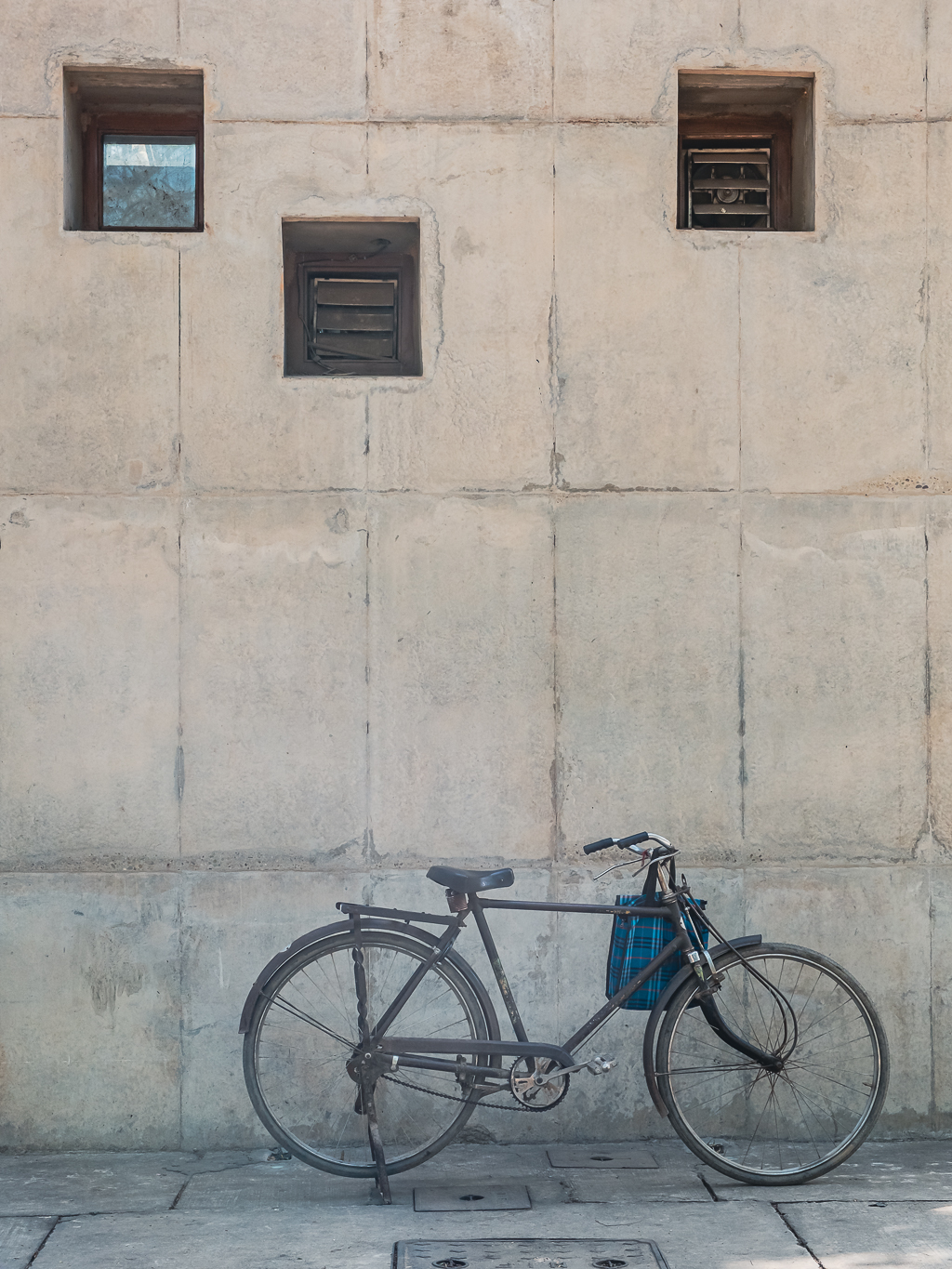
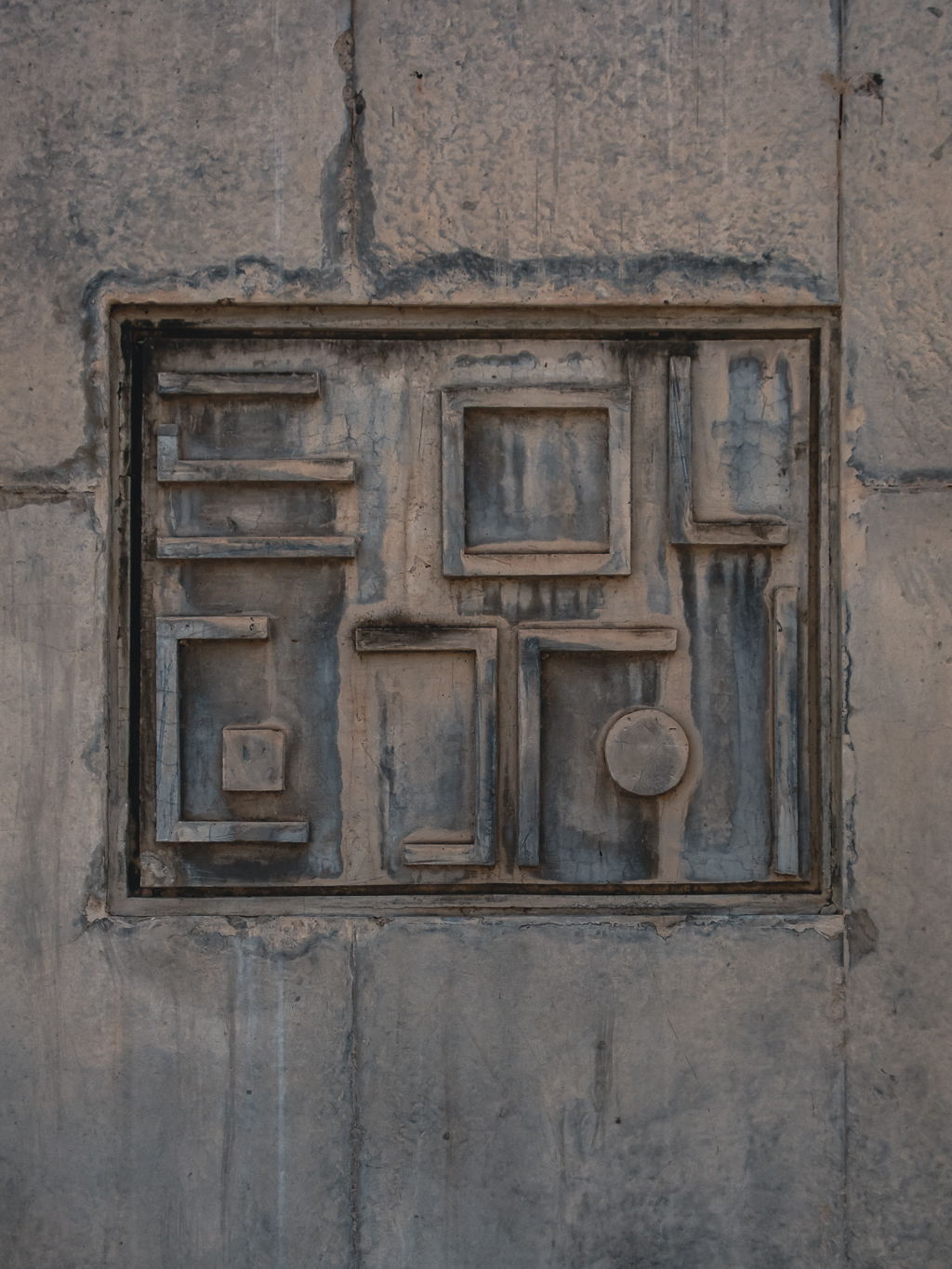
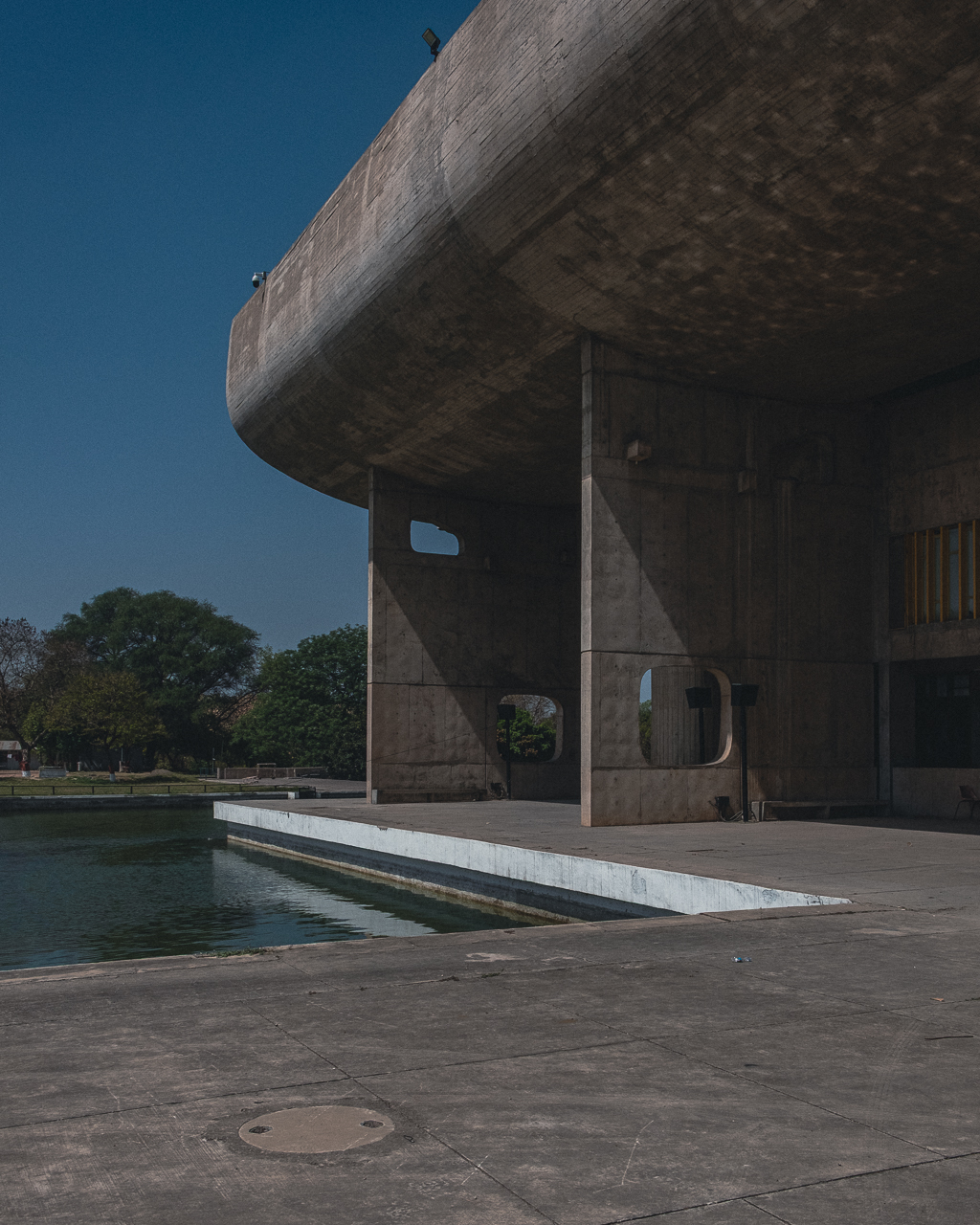
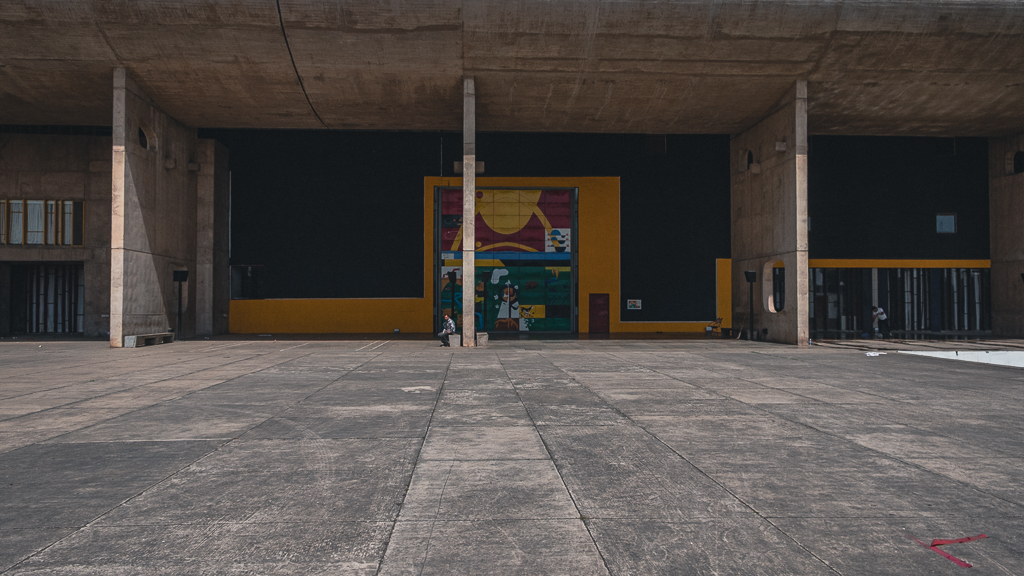
The Capitol Complex was completed in the late 1950s and is a modernist/brutalist masterpiece; it’s now a UNESCO world heritage  site. As it’s a government centre and security is very tight there are no cars and, other than lots of blokes with guns, there are relatively few people. It’s a large site and the concrete reflects the bright sun, it was very hot and I’m glad I had two bottles of water with me, though I gave one to the Americans as they hadn’t planned for the heat.
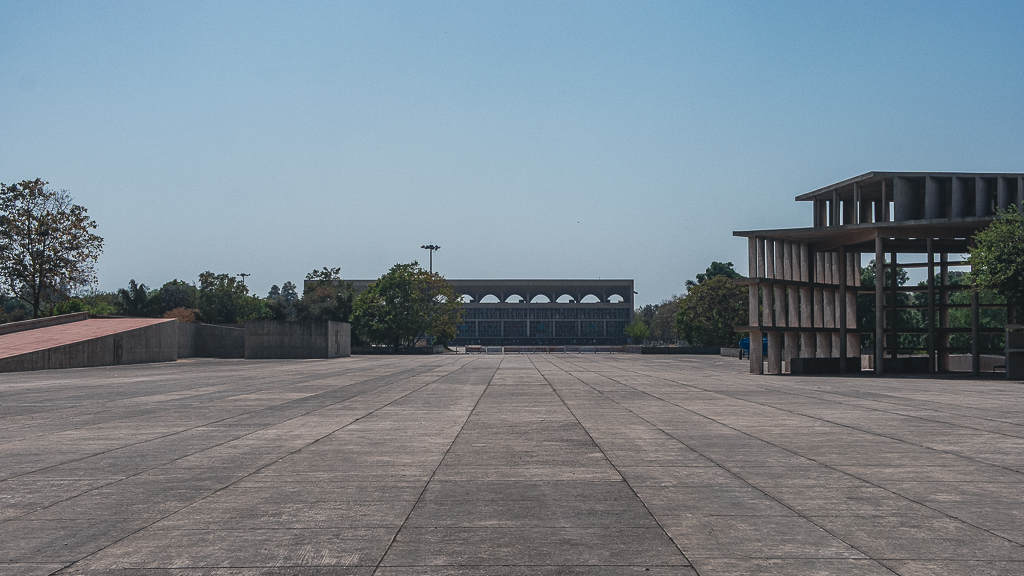
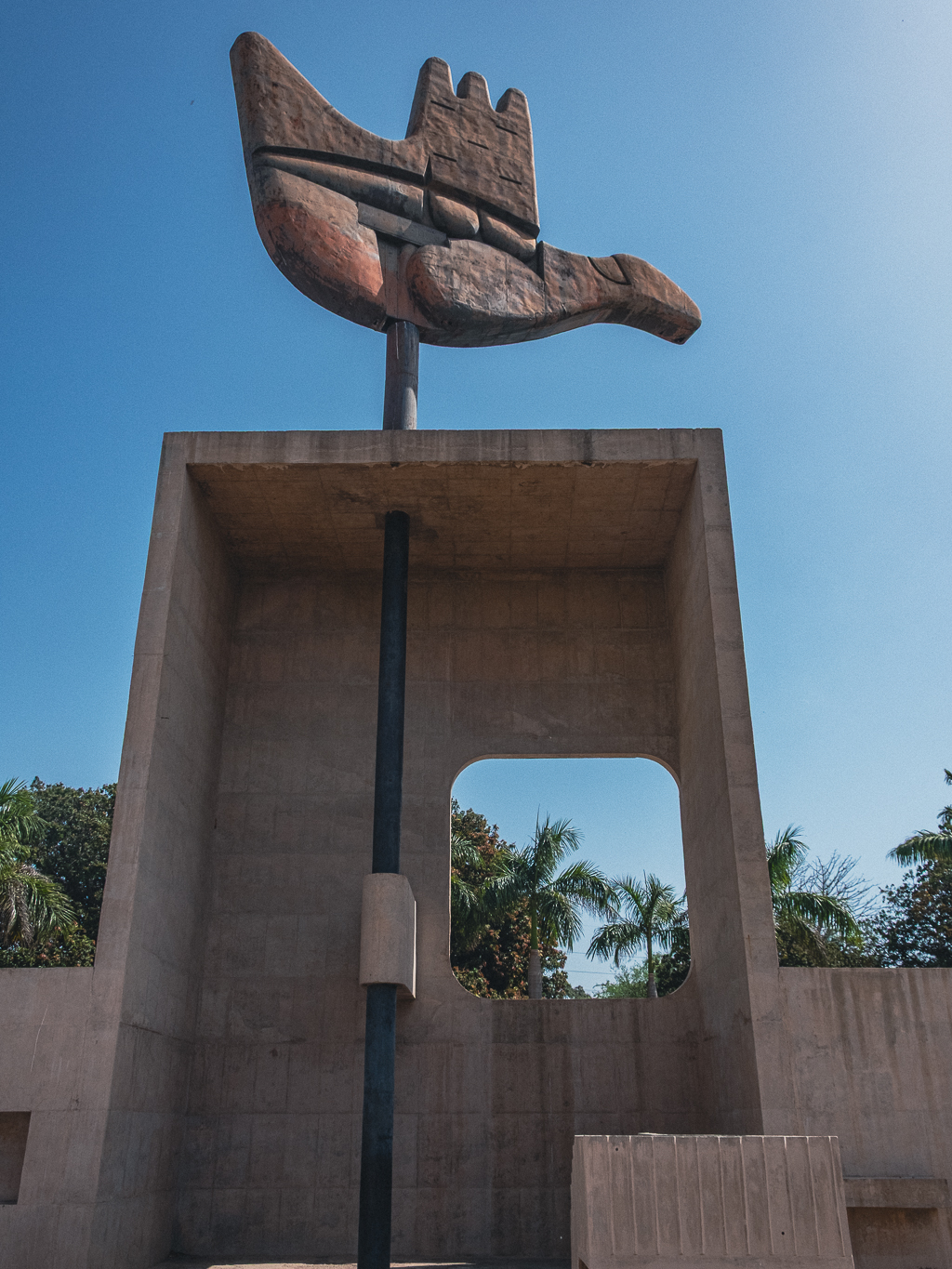
There are three key buildings: the High Court, the Secretariat and the Palace of the Assembly, along with a number of other features, the Open Hand Monument, the Tower of Shadows, the Martyrs Memorial and Geometric Hill.

The tour started at the High Court, though we weren’t allowed within 100 metres of the building as court was in session. That was a shame as it is a cool building with some interesting, classic Le Corbusier features that were hard to pick out from distance. Another time maybe.
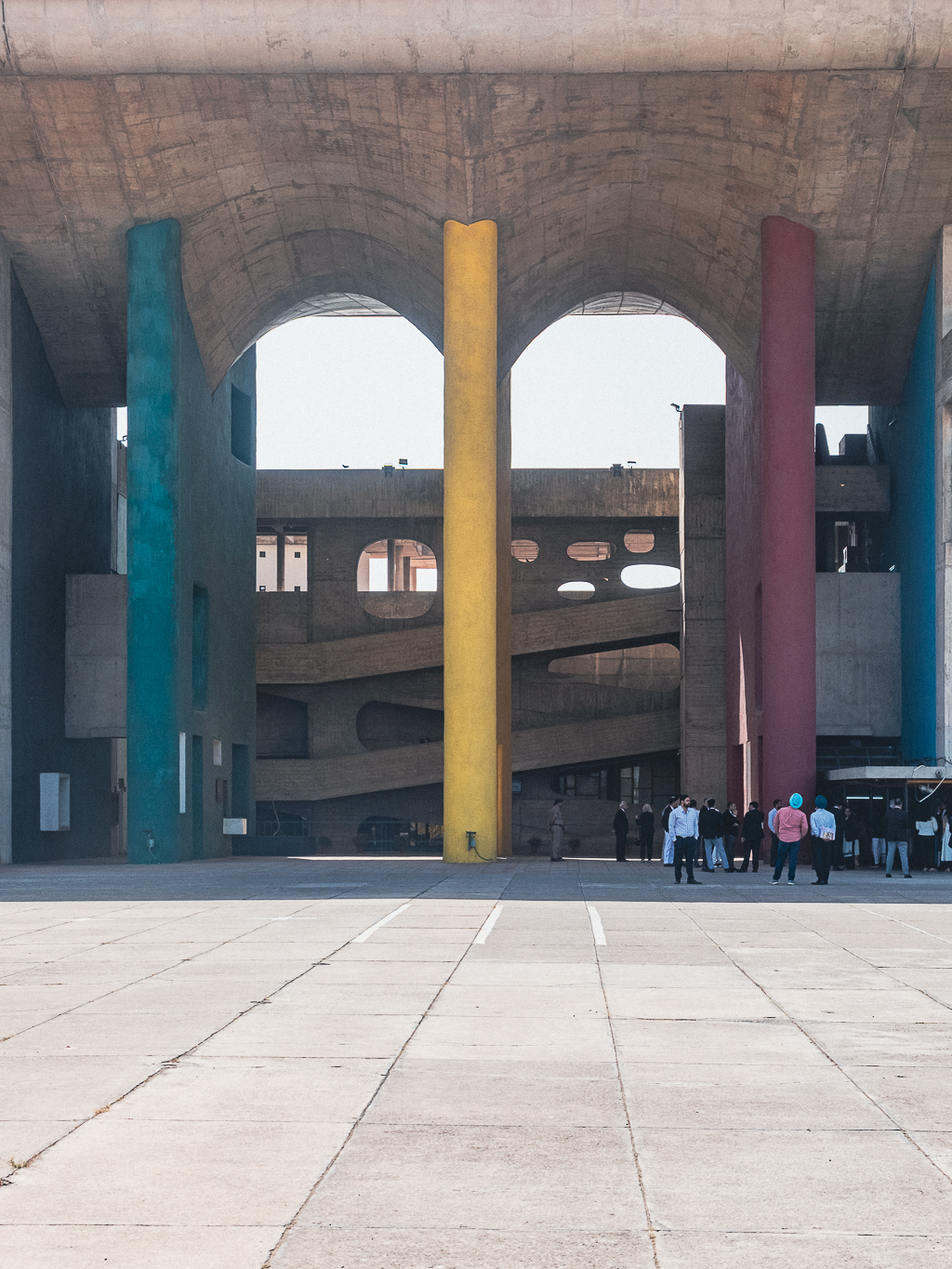
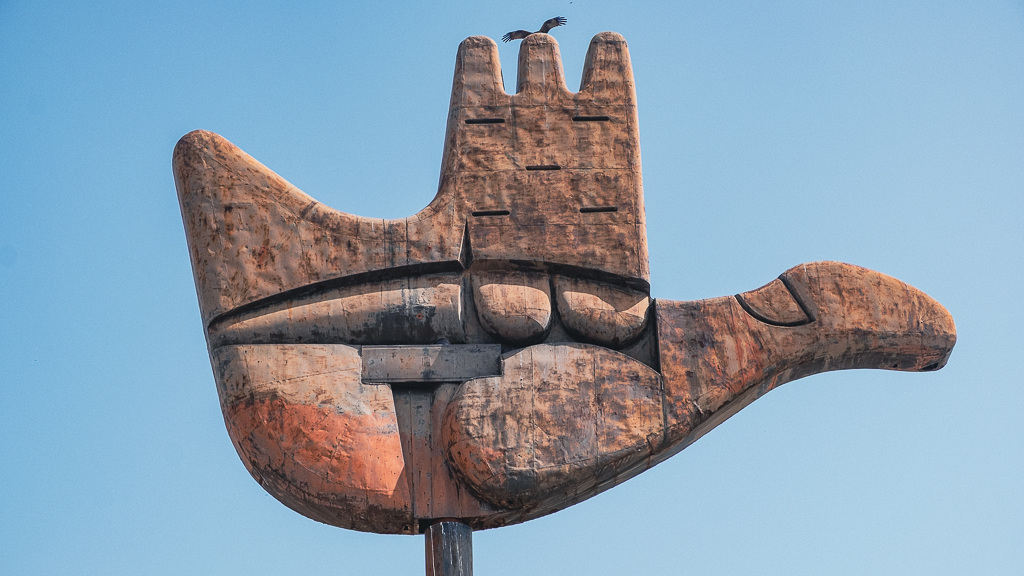
The Open Hand Monument was much more impressive than I expected it to be; photos I’d seen just hadn’t captured its size and the environment it’s located in. It’s properly monumental and only having half a dozen visitors made for an enjoyable visit. The tour is time restricted, so I didn’t have as much time as I would’ve liked. I’m the glad the American couple were as interested as me as the three of us were the ones lingering and looking at all the architectural delights the most out of our small group. 
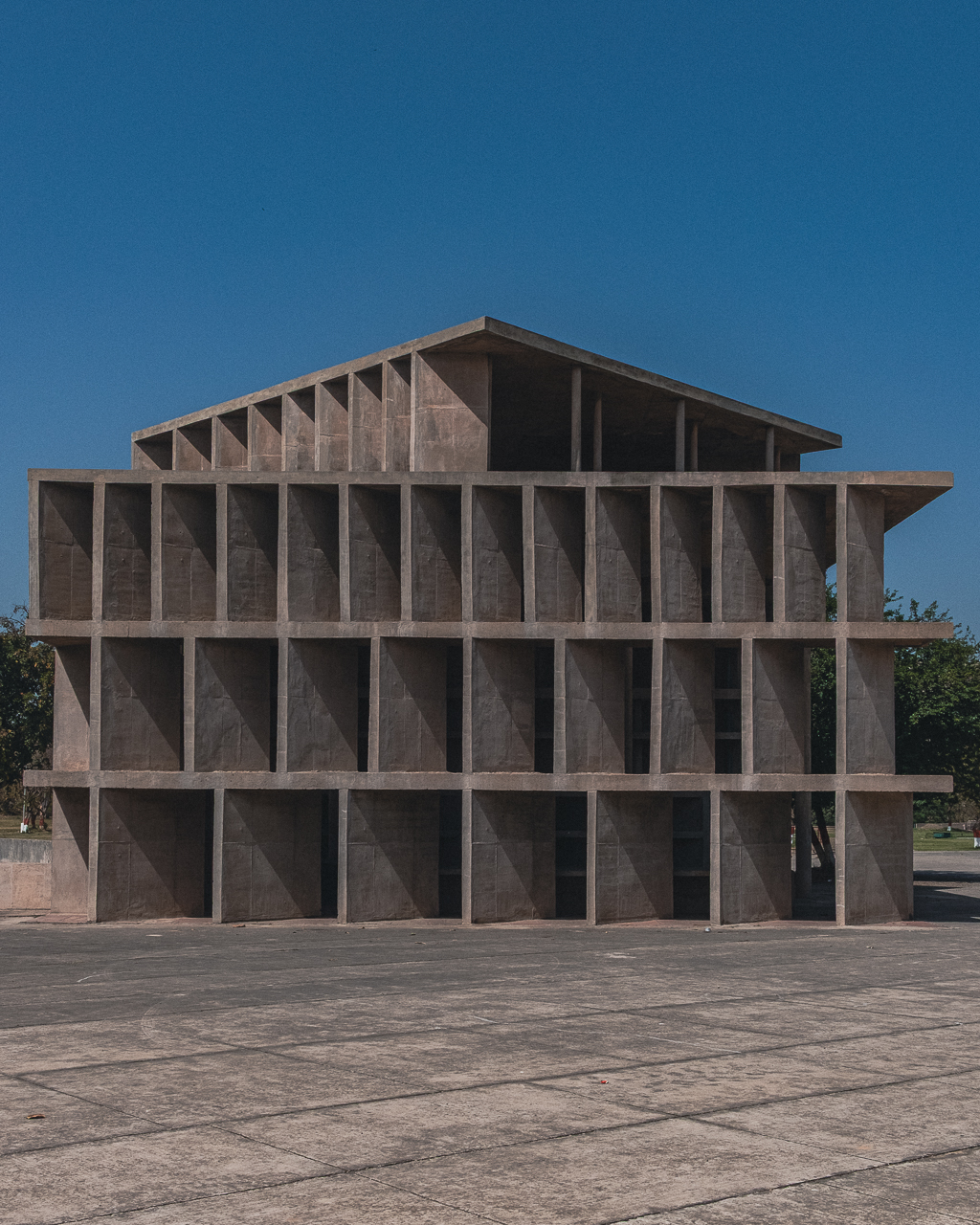
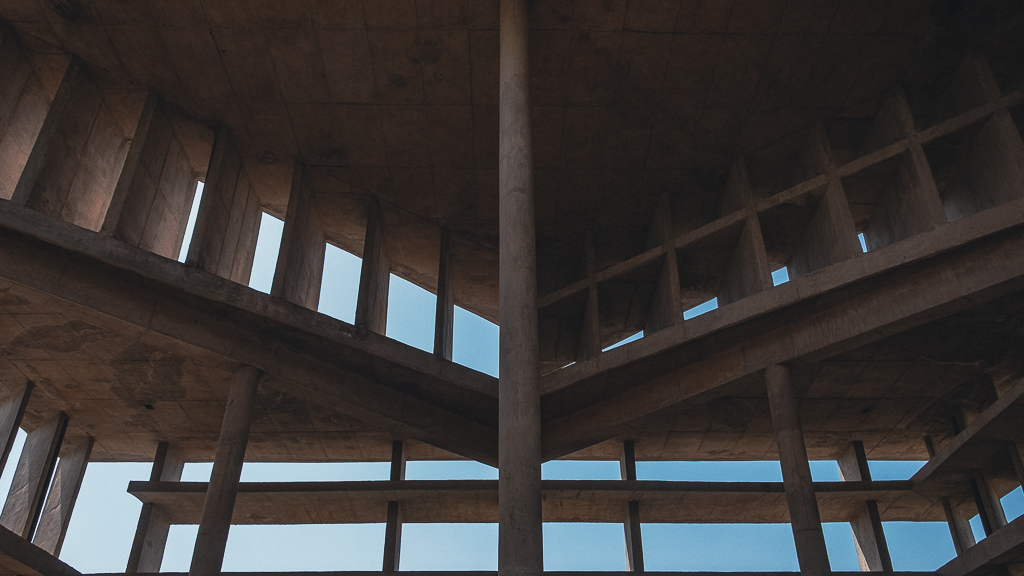
In some ways the Tower of Shadows impressed me the most. It doesn’t look like much, it’s more of an experiment than anything else. Le Corbusier designed it so that not a single ray of sun enters it from any angle, with the north side remaining open because the sun never shines from that direction. It was built to prove that concrete design could be made to beat the heat in hot places and it’s remarkably effective and much cooler in the shade than it was in the sun, or other shady parts of the site.
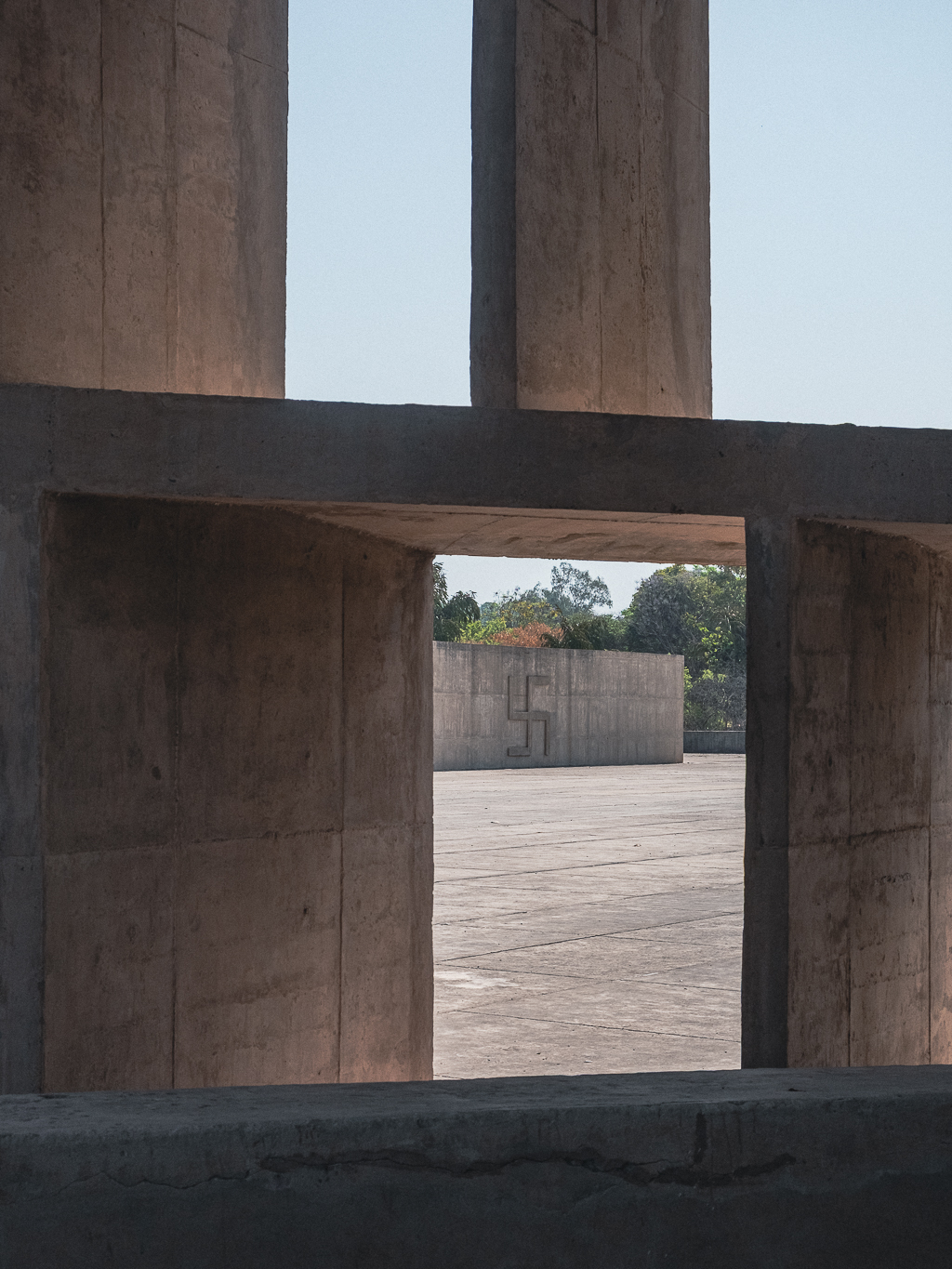
The swastika, as seen on the side of the Martyrs Memorial, is a Hindu symbol, predating the Nazi regime by thousands of years. From the ancient Sanskrit language, it can be translated as ‘conducive to wellbeing’. They are everywhere in India, though for (some of) us westerners it can be quite jarring the first time you see one.
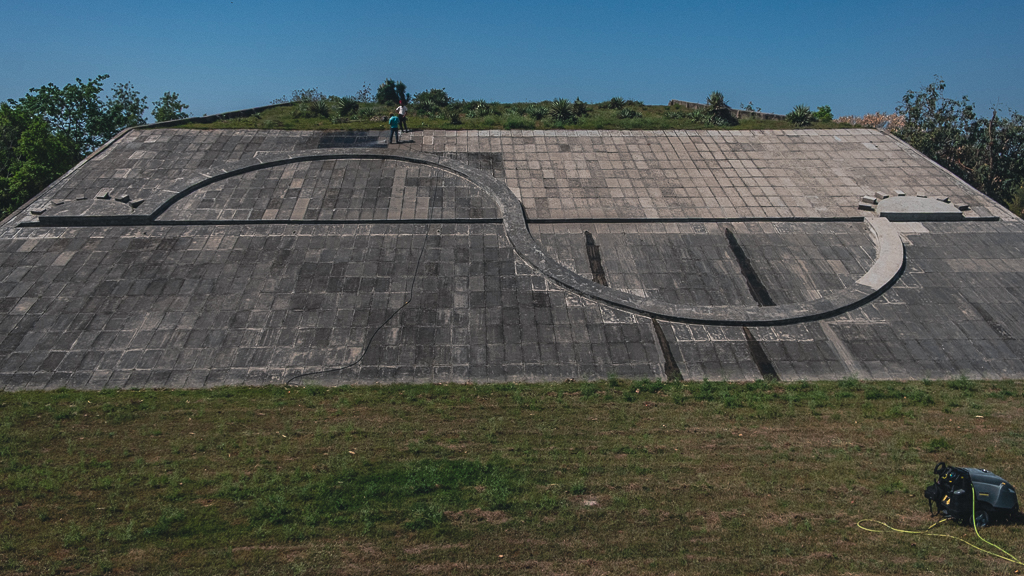
The Geometric Hill was created out of the rubble from the Palace of the Assembly build, fronted with a wall of concrete detailed with the movement of the sun across the sky over the 24 hours of the day. It also hides the Palace from the road.
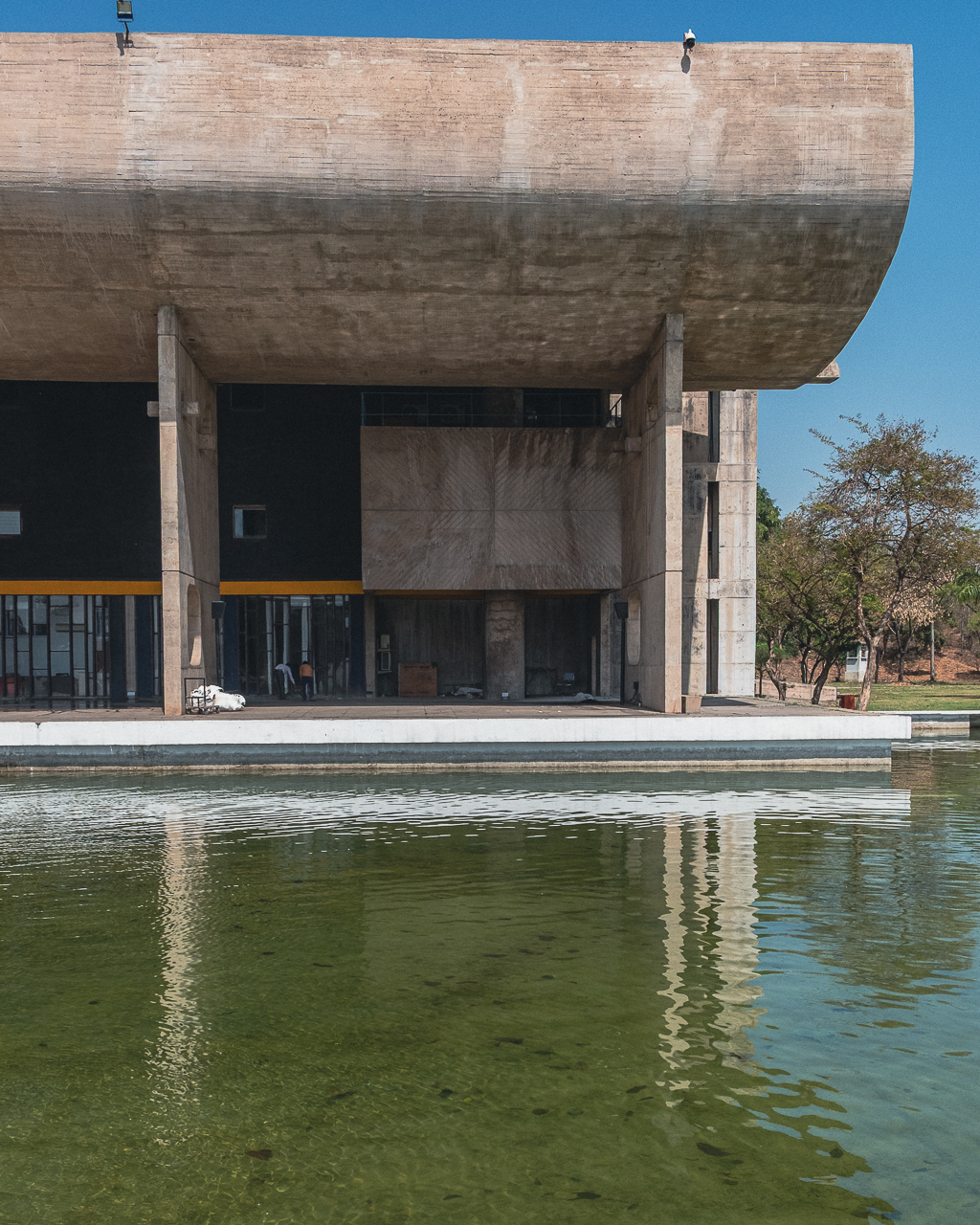
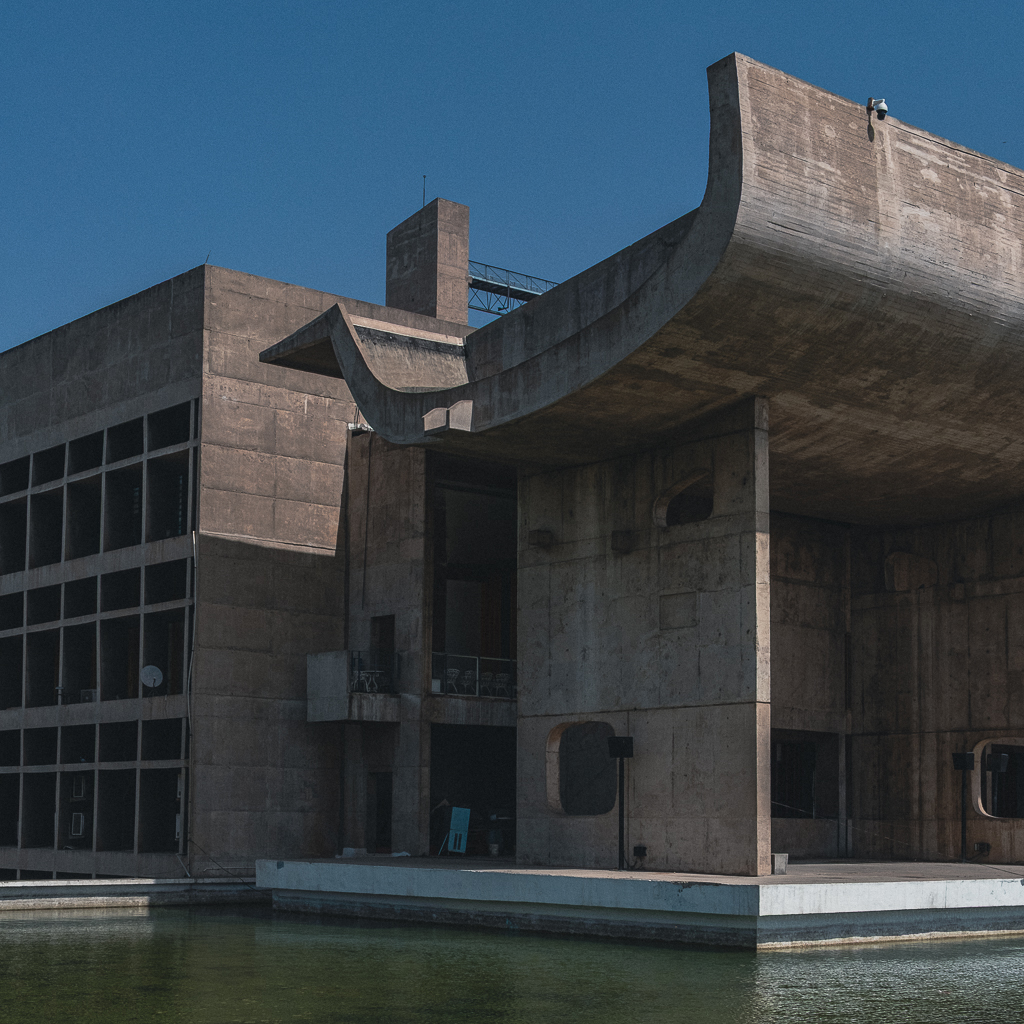
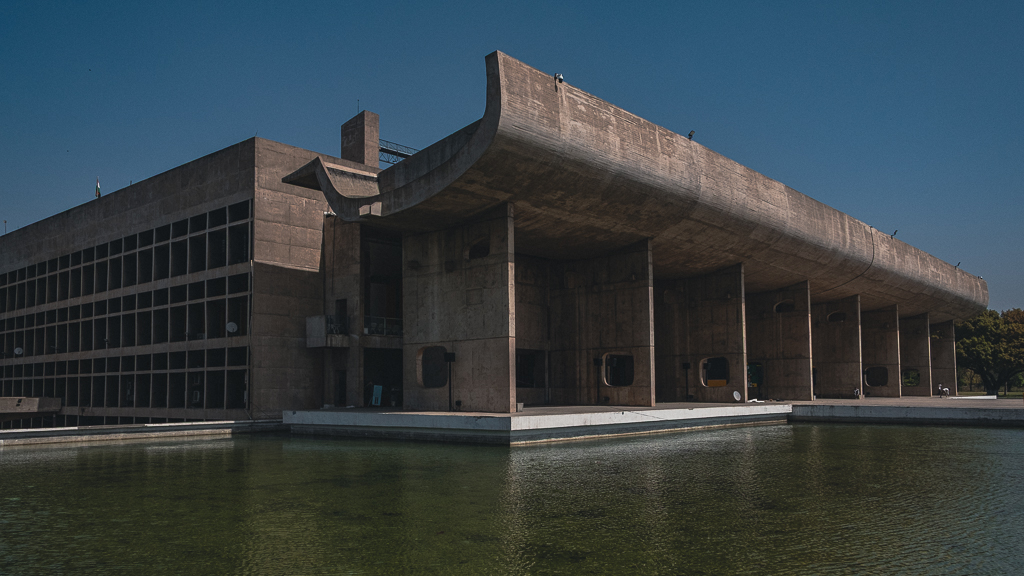
The Palace of the Assembly is my favourite building in the complex, with the wonderful curved concrete form over the entrance and the cooling tower on the roof and the water feature at the front. It’s such a cool structure, and bigger than I expected too. 
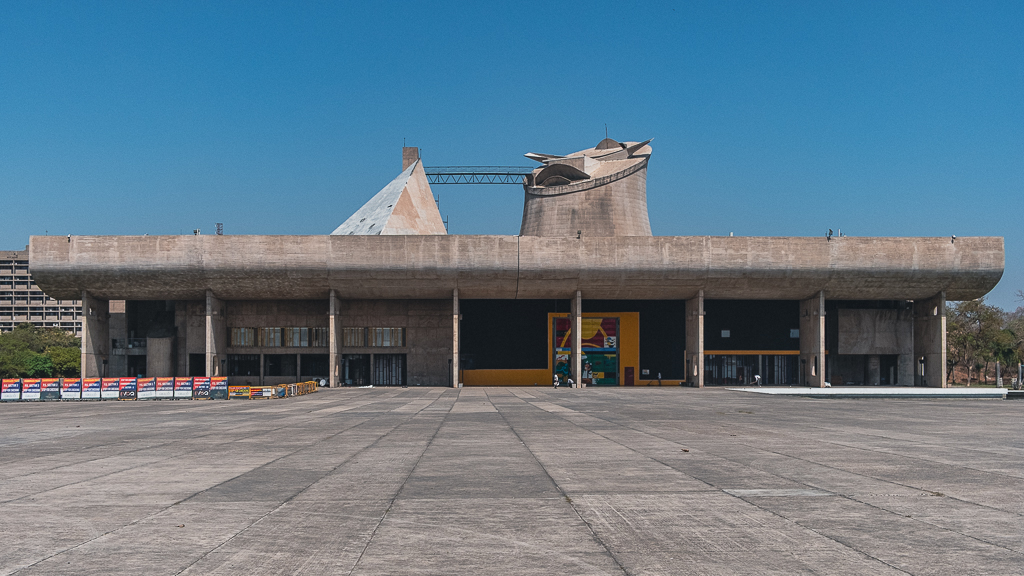
Unlike the High Court which was in operation, we were very fortunate to be visiting on a day when the governments of Punjab and Haryana were not sitting, and were allowed into the assembly chamber itself. Apparently, this is quite rare. We had to go through a vigorous security check, handing over passport, phone, camera, anything in our pockets, in fact everything other than clothes and shoes and spectacles. I have no visual record of the inside of the building which is a shame as there are some quite nice little concrete features in the atrium and halls. The assembly room itself was not too dissimilar to that of the UK government.
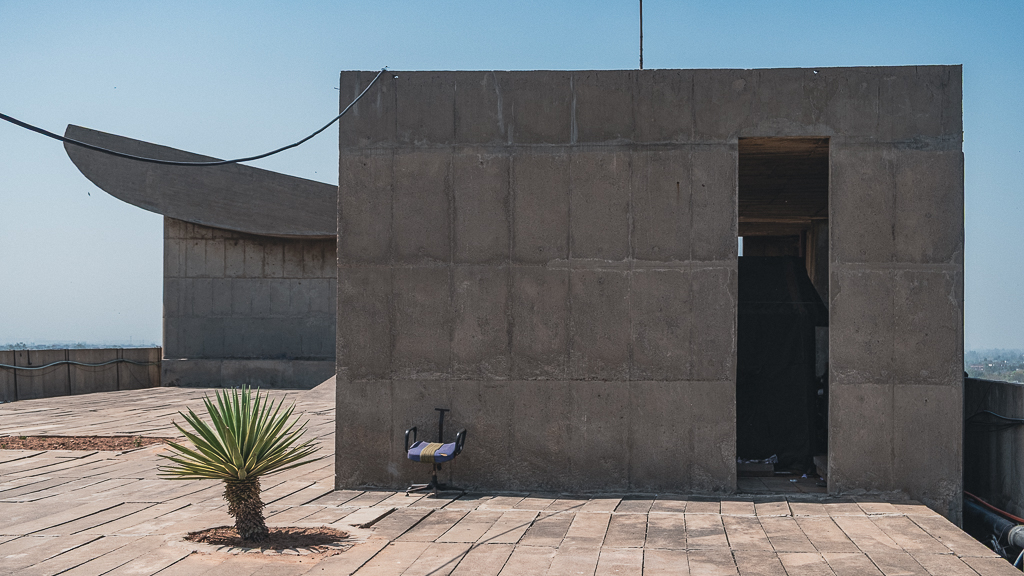
The final stop, and we were definitely getting a nudge along by the guides at the stage, was the Secretariat building. The tour takes you inside the building, but straight to the roof from the reception area, so this time we could bring all our stuff with us. The camera being the most important for me.
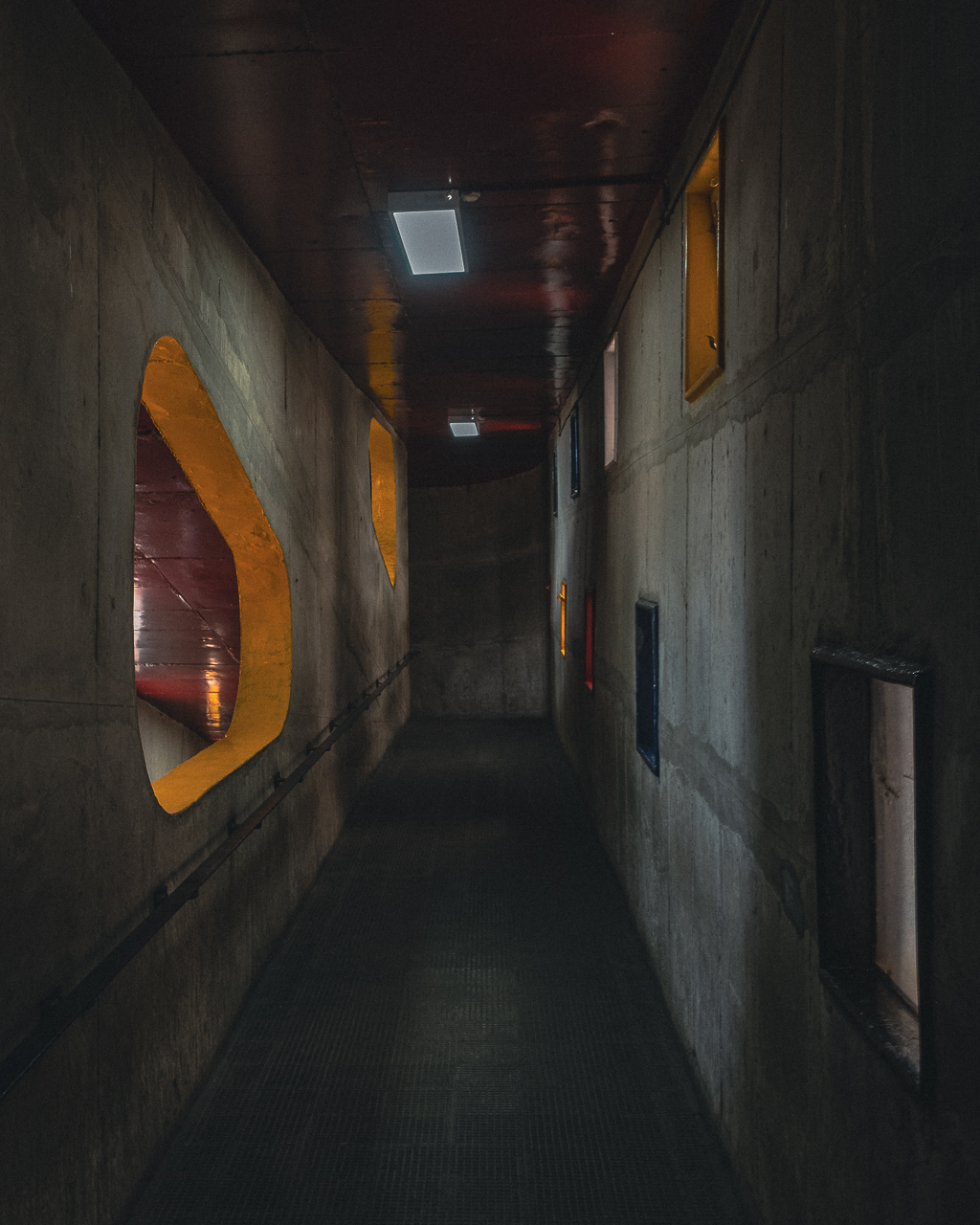
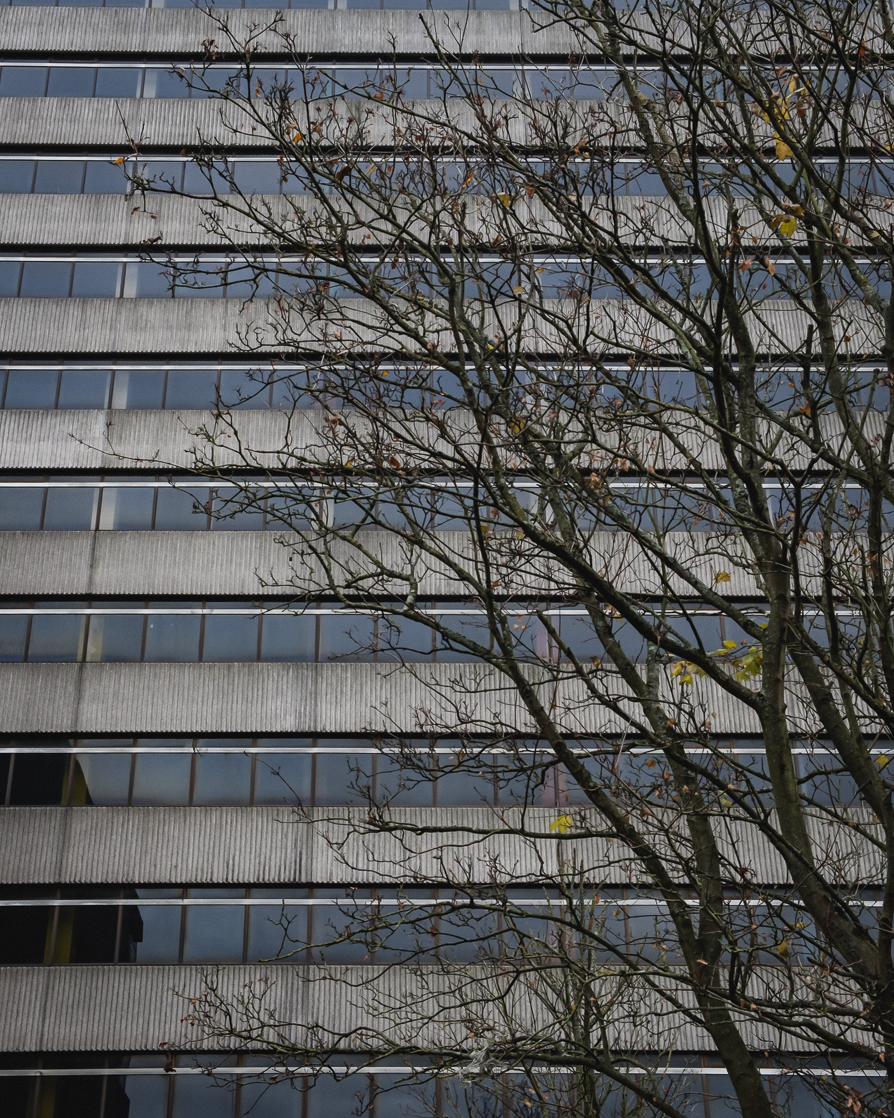
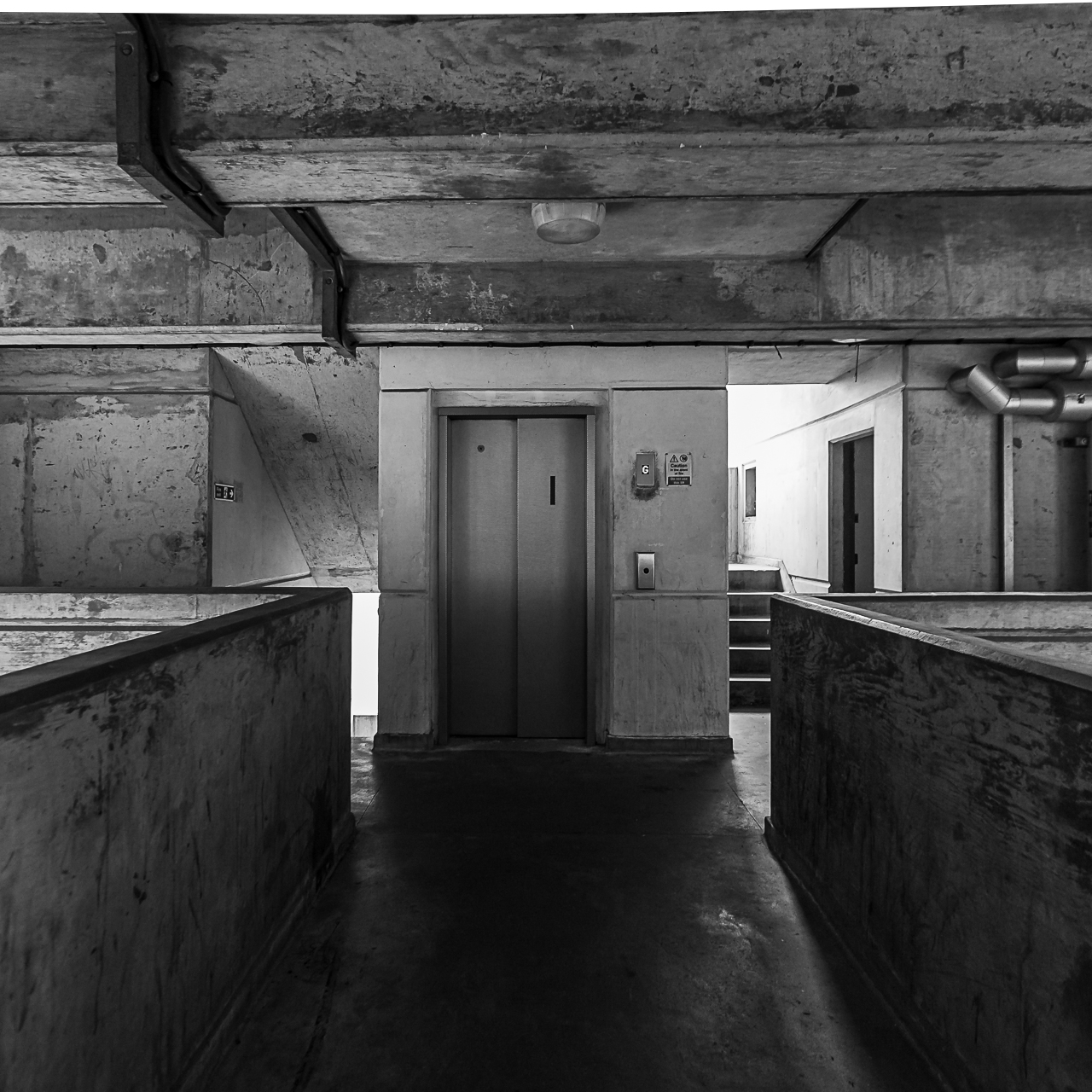
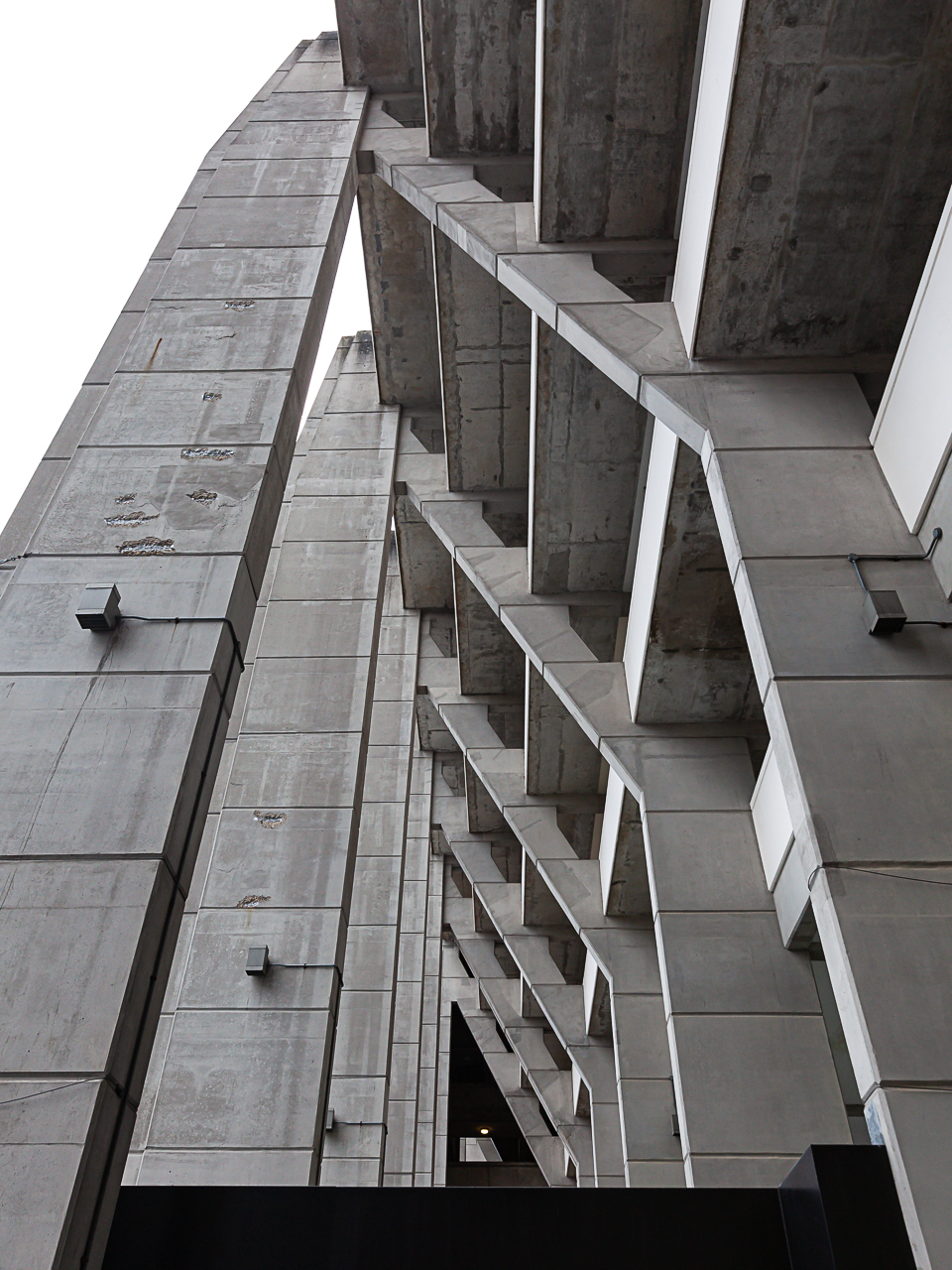
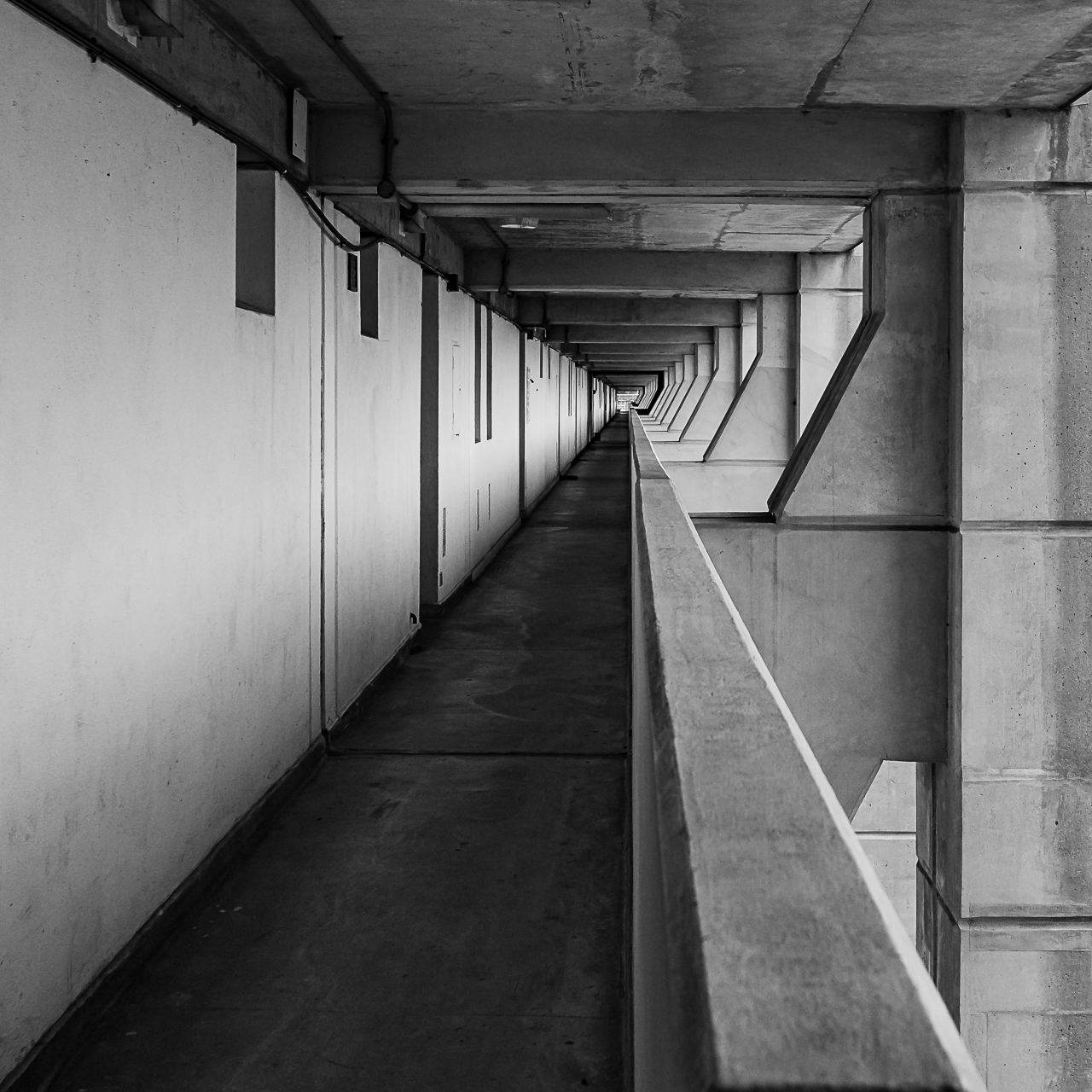
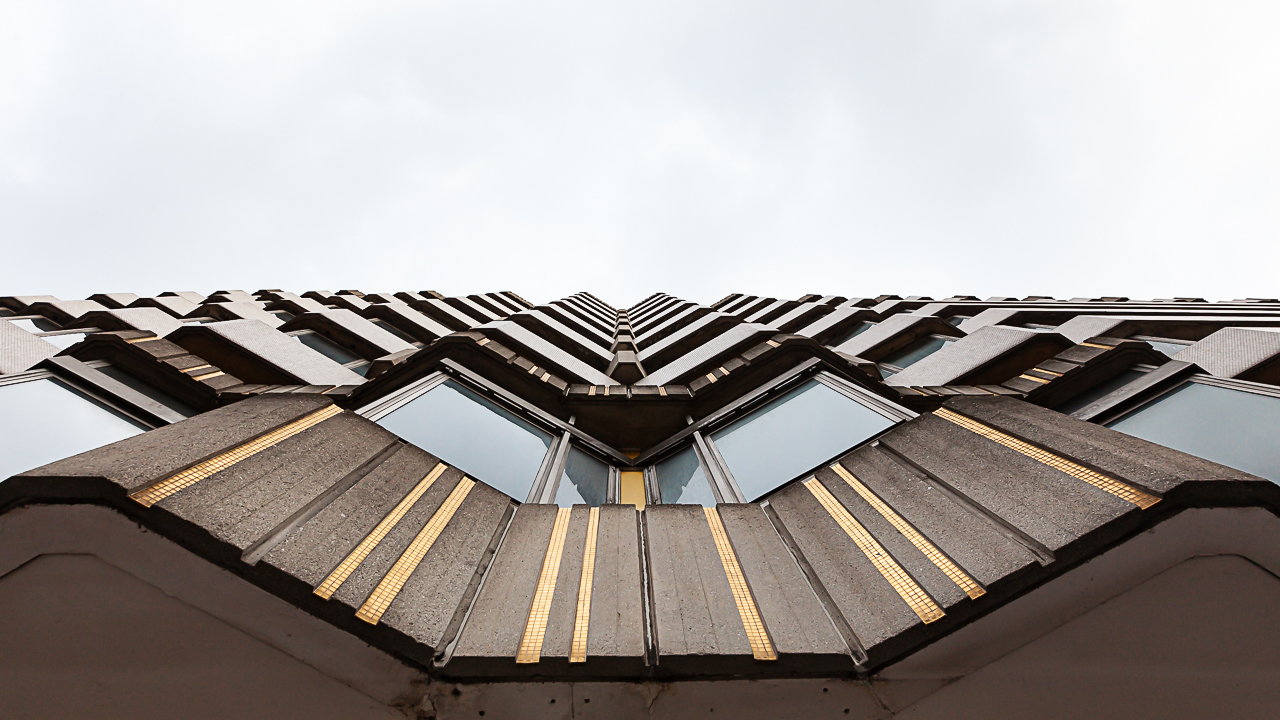
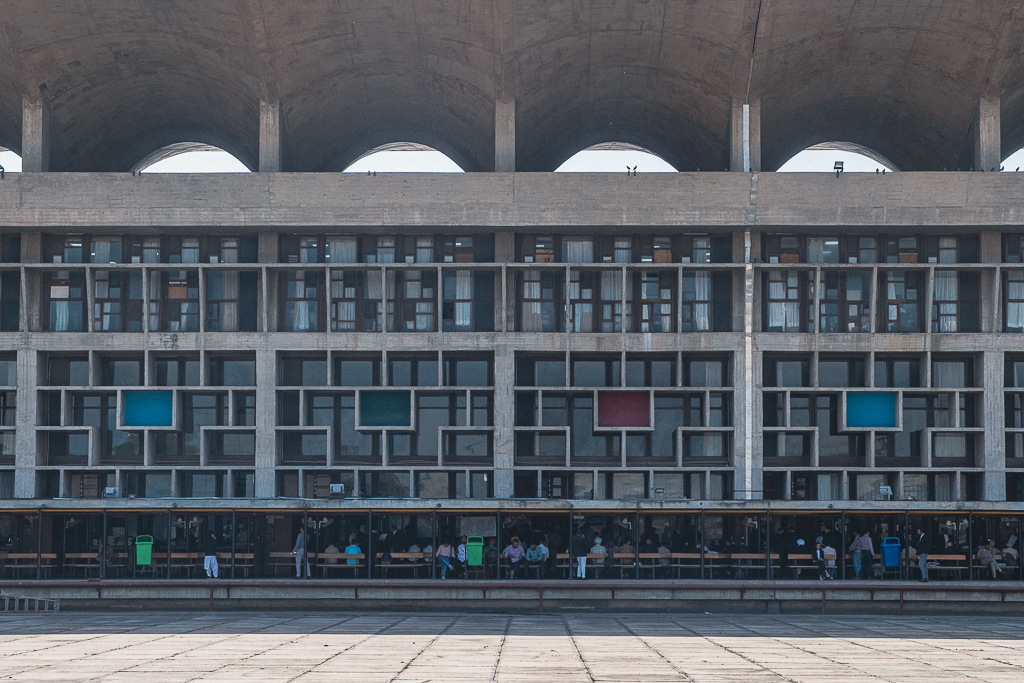
The Secretariat is a massive eight-storey slab block stretching about 250 metres. It’s essentially a giant office block housing the administrative departments for both the Punjab and Haryana state governments.
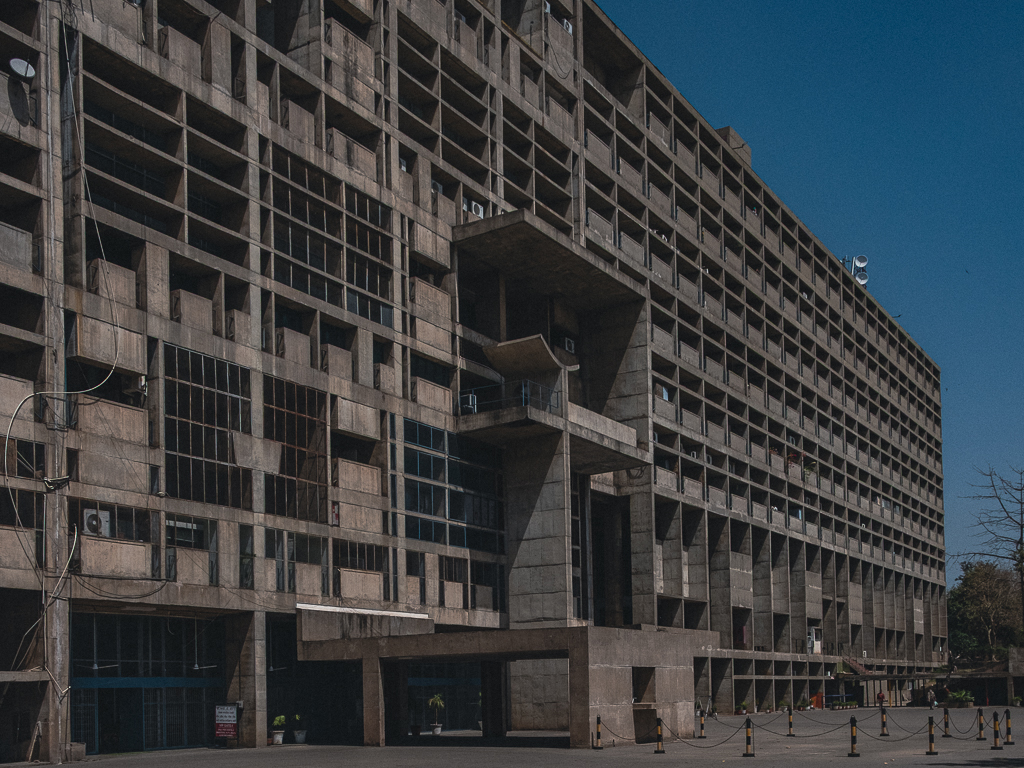
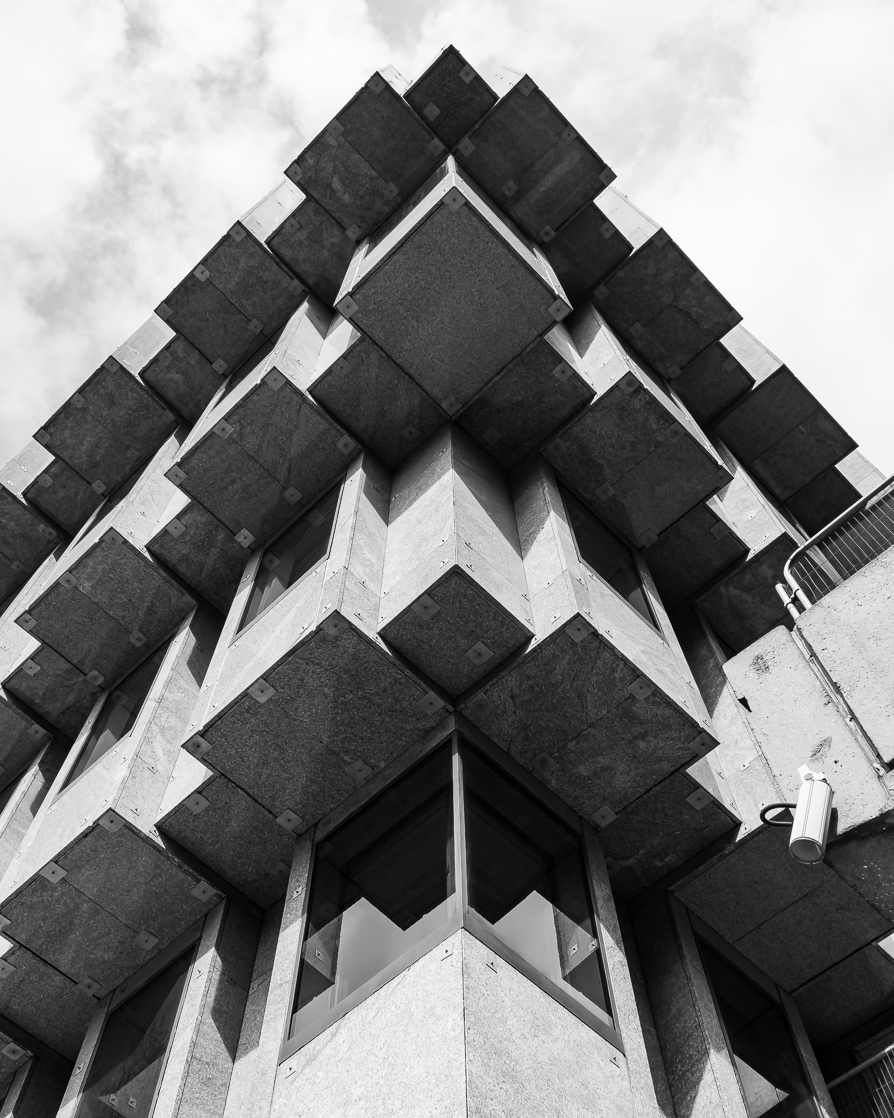
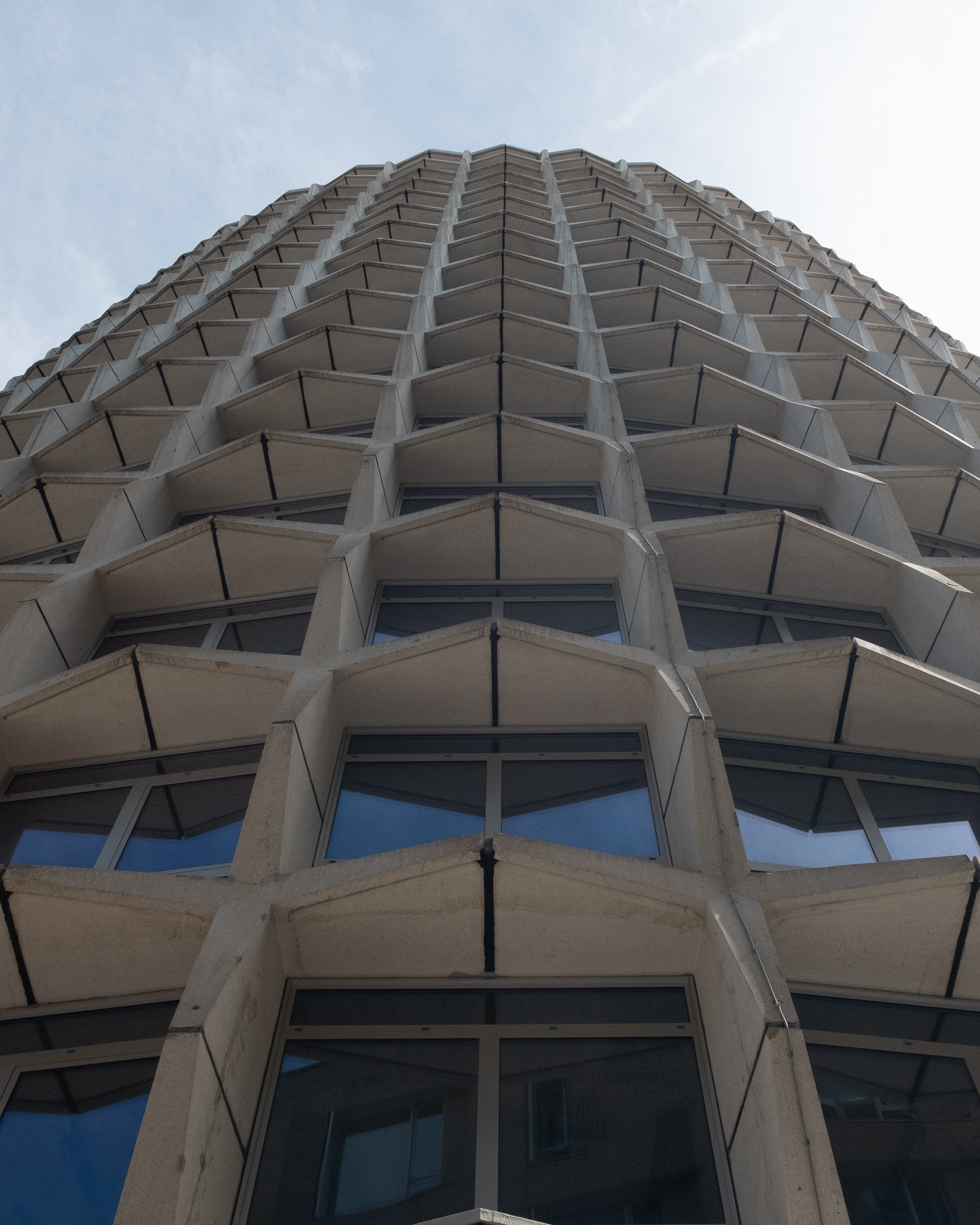
The façade is dominated by Le Corbusier’s brise-soleil (sun-breaker) system, those geometric concrete grids you can see covering the building. They’re designed to shade the interior from the harsh sun while still allowing air circulation.

The view from the roof is fantastic, I managed to sneak the gun of one of the snipers who observe the site from the roof into one of my images.  There are a lot of guns about, though the mostly the atmosphere is friendly. I suspect they don’t have a lot to do, but I imagine the serious security work is performed well out of sight of us tourists.
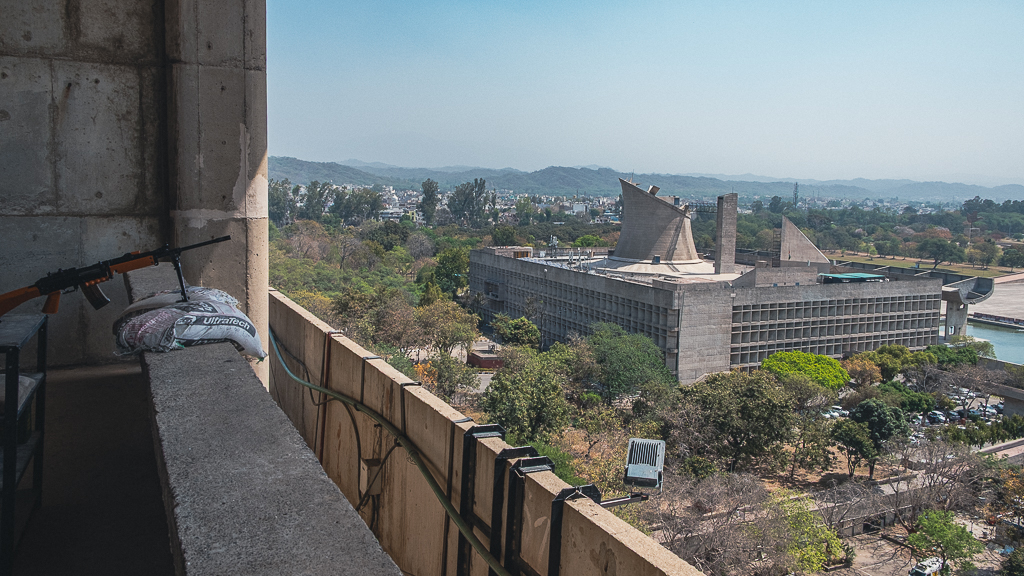
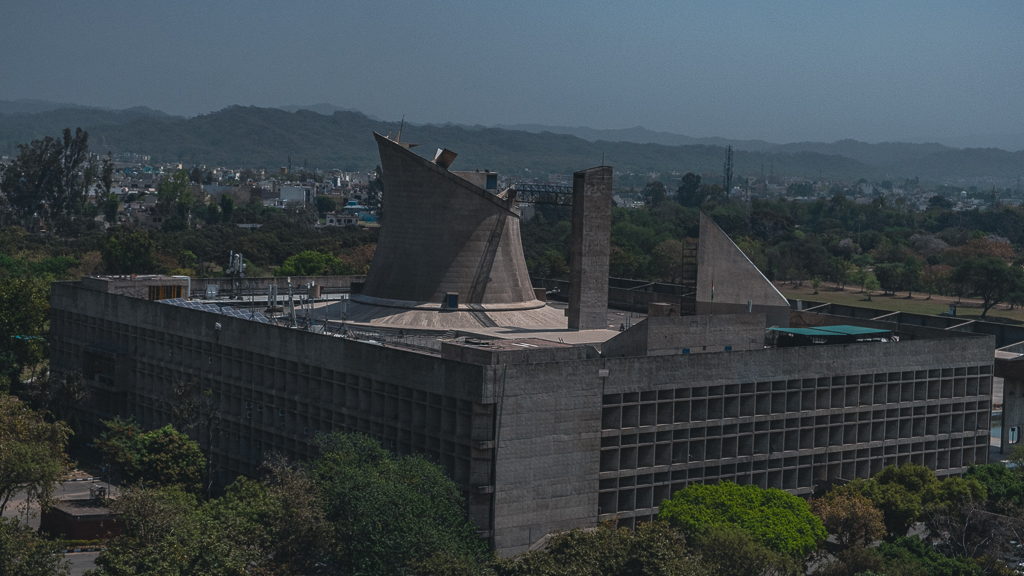
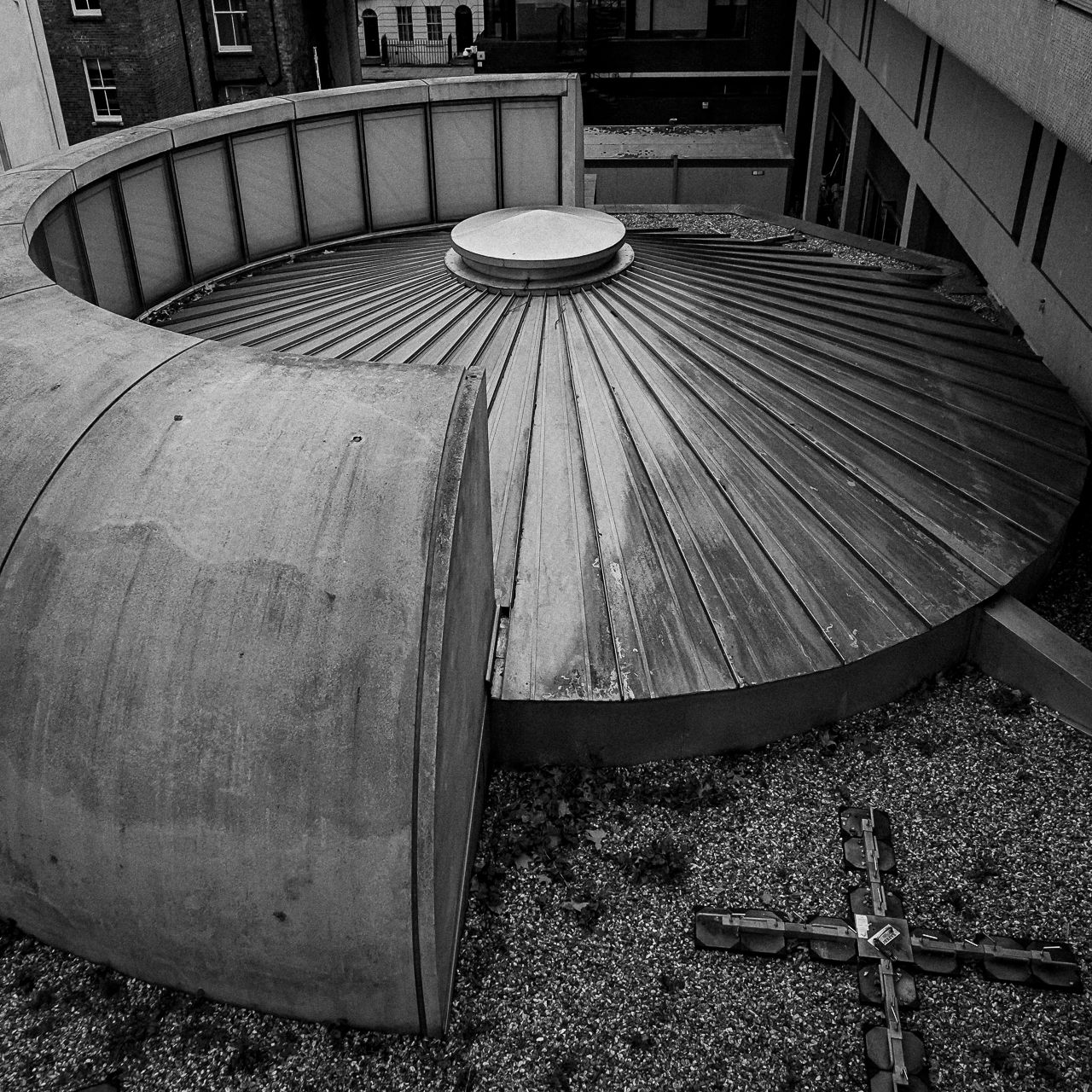
I really liked the structures on the roof too.
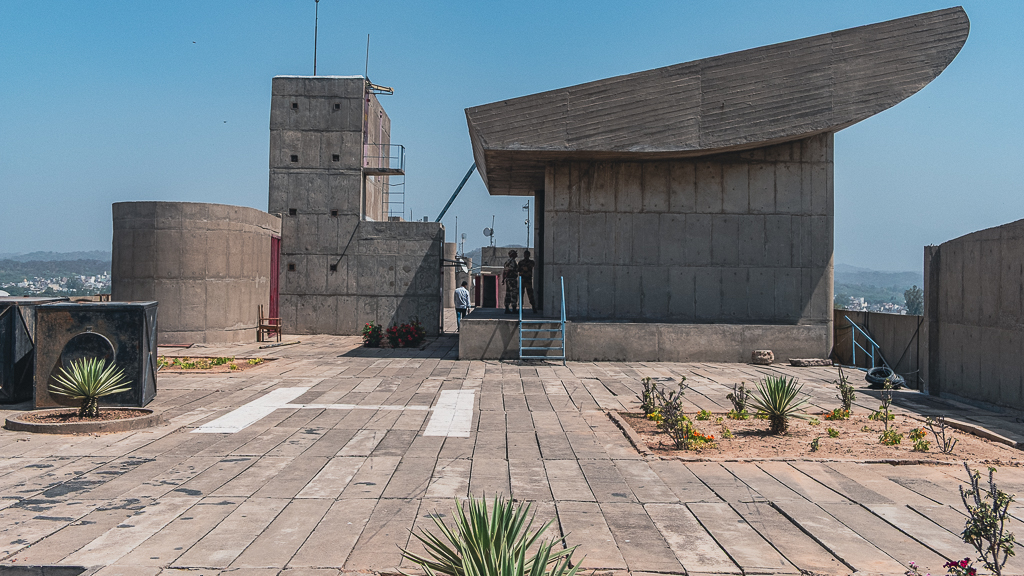
And that was the end of the tour, we were shuffled back to the tour office and sent on our merry, though hot and dehydrated, way. Me, to walk back to my hotel under the mid-day sun. It was the best tour I’ve ever done, made even better by spending a couple of hours with some friendly folk and their chatty and informative guide.

In hindsight I should have found a guide to take me around. There is a lot more to Chandigarh than the Capitol Complex, and not just from a brutalist/modernist perspective; though there are some fabulous modernist residences. Having a guide with a vehicle would have made viewing those a lot easier to do.

Modern Chandigarh is nothing like anything else I’ve seen in my (albeit, limited) time in India, it’s very much a modern city. I think Nehru would approve.
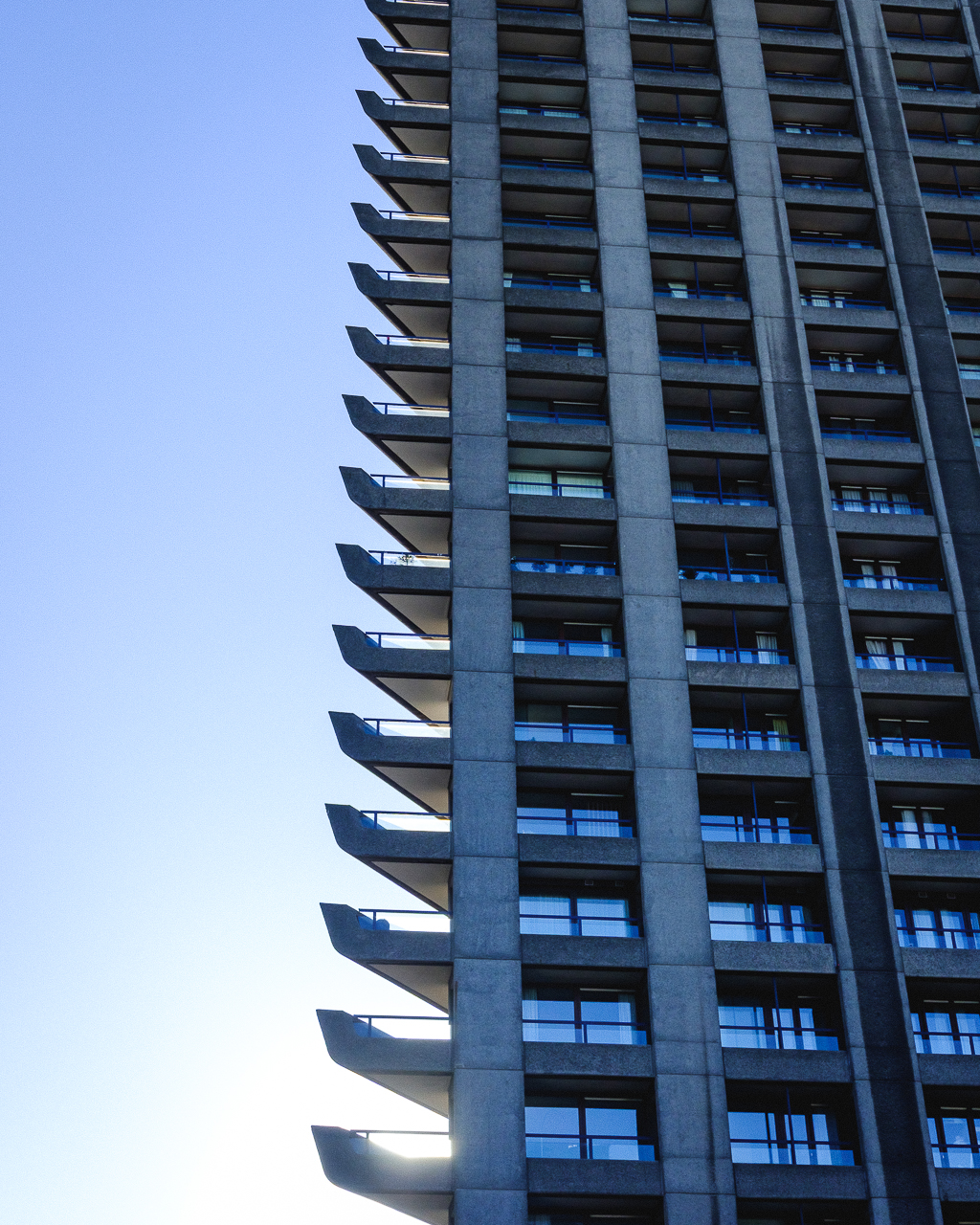
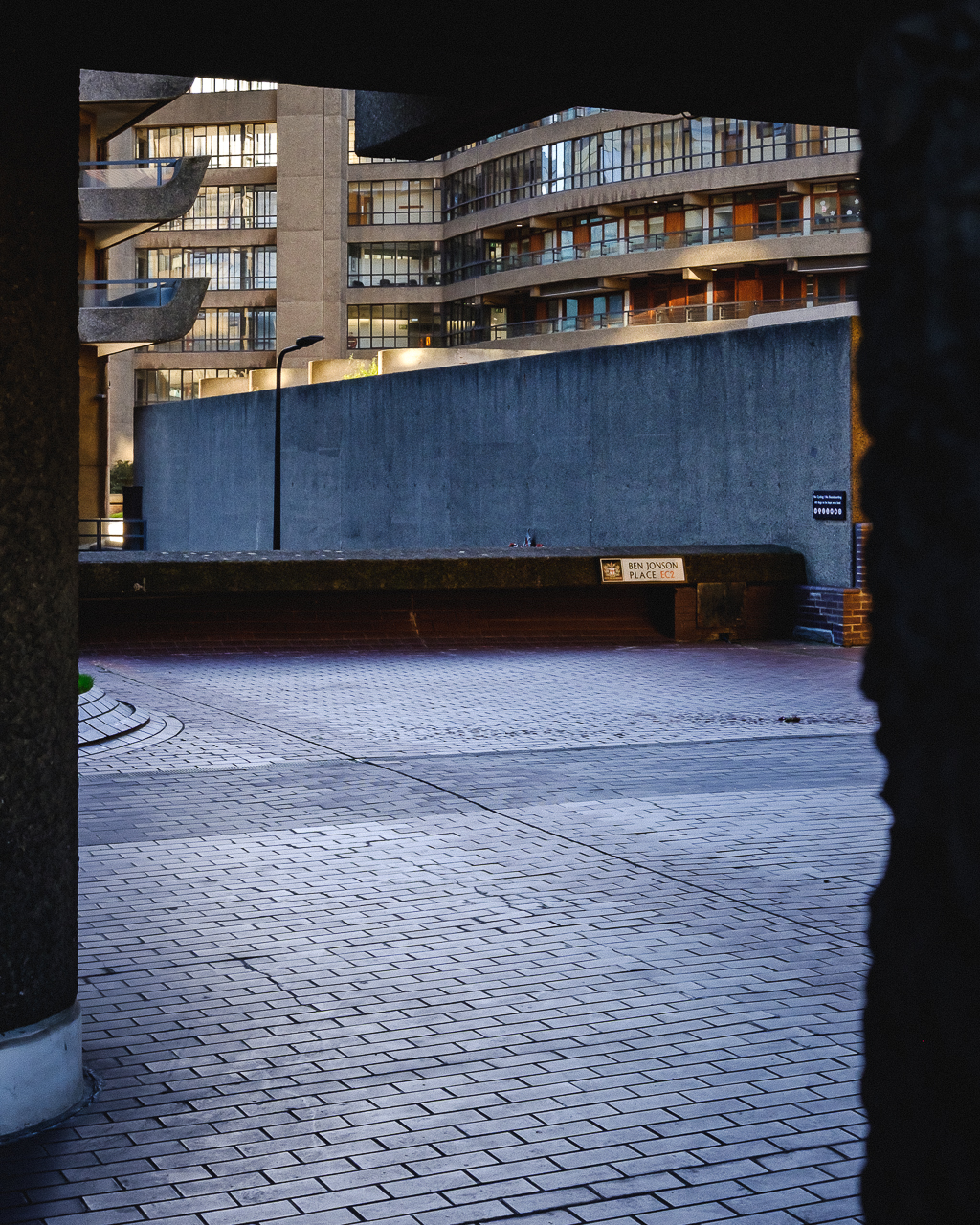
Barbican and St Barts the Great

London,
January 2026.

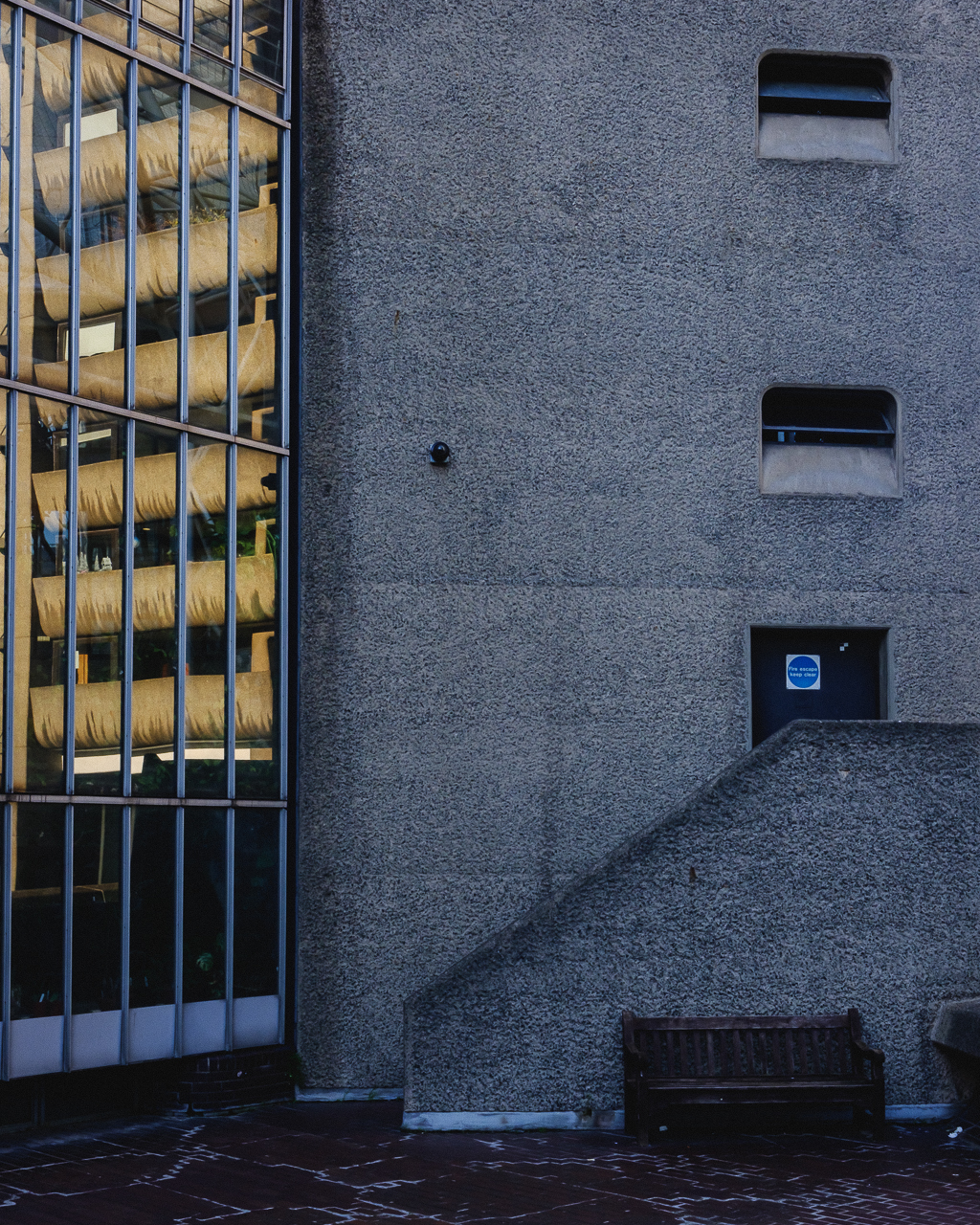
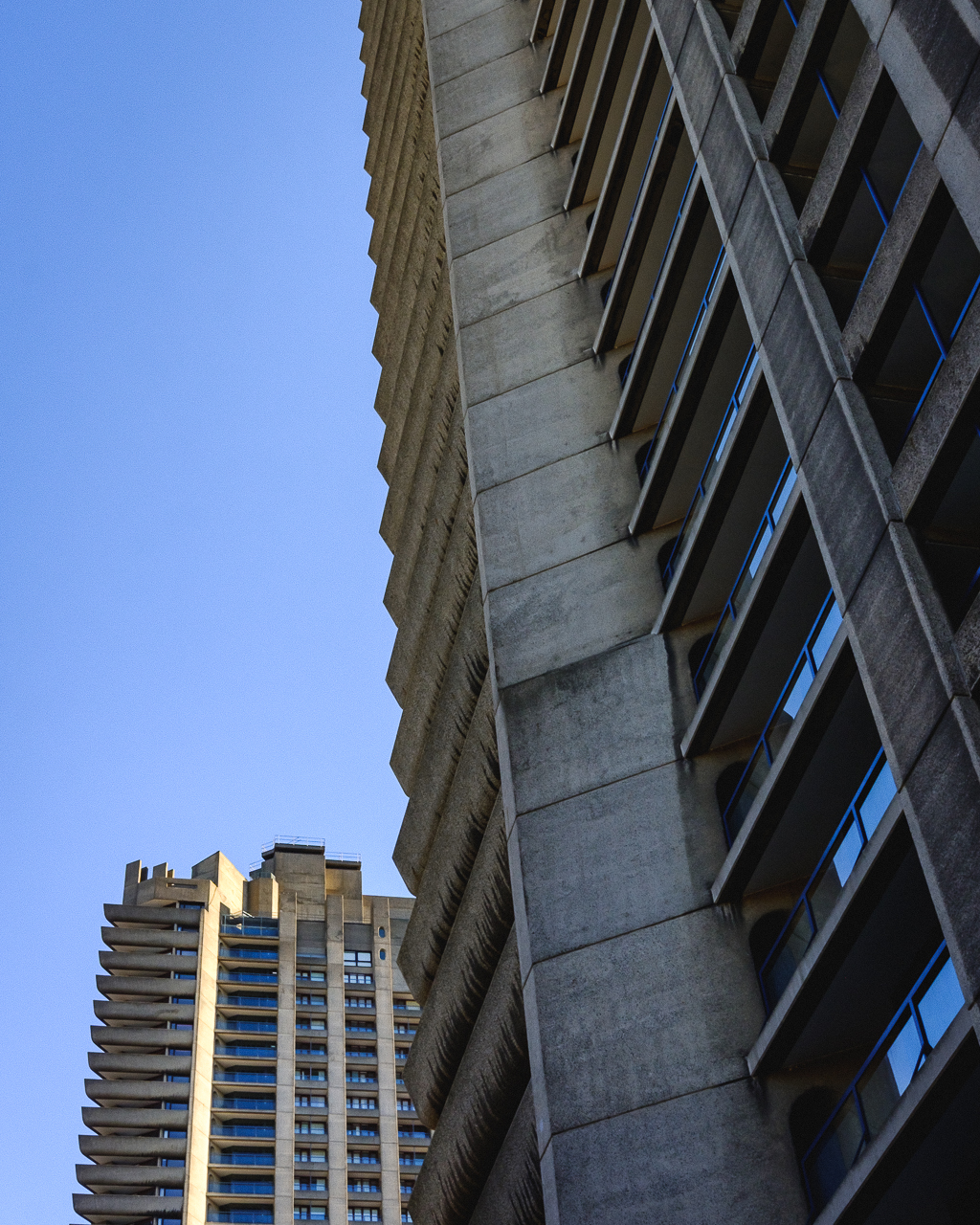
There is something about a sunny winter’s day in London. Maybe you feel the same thing in any other large European city at this time of year, who knows. The air is crisp and clear, the sky is blue, the sun is low all day and casts great deep shadows that contrast sharply with its harsh bright glow. It’s almost monochromatic, but it’s in colour.

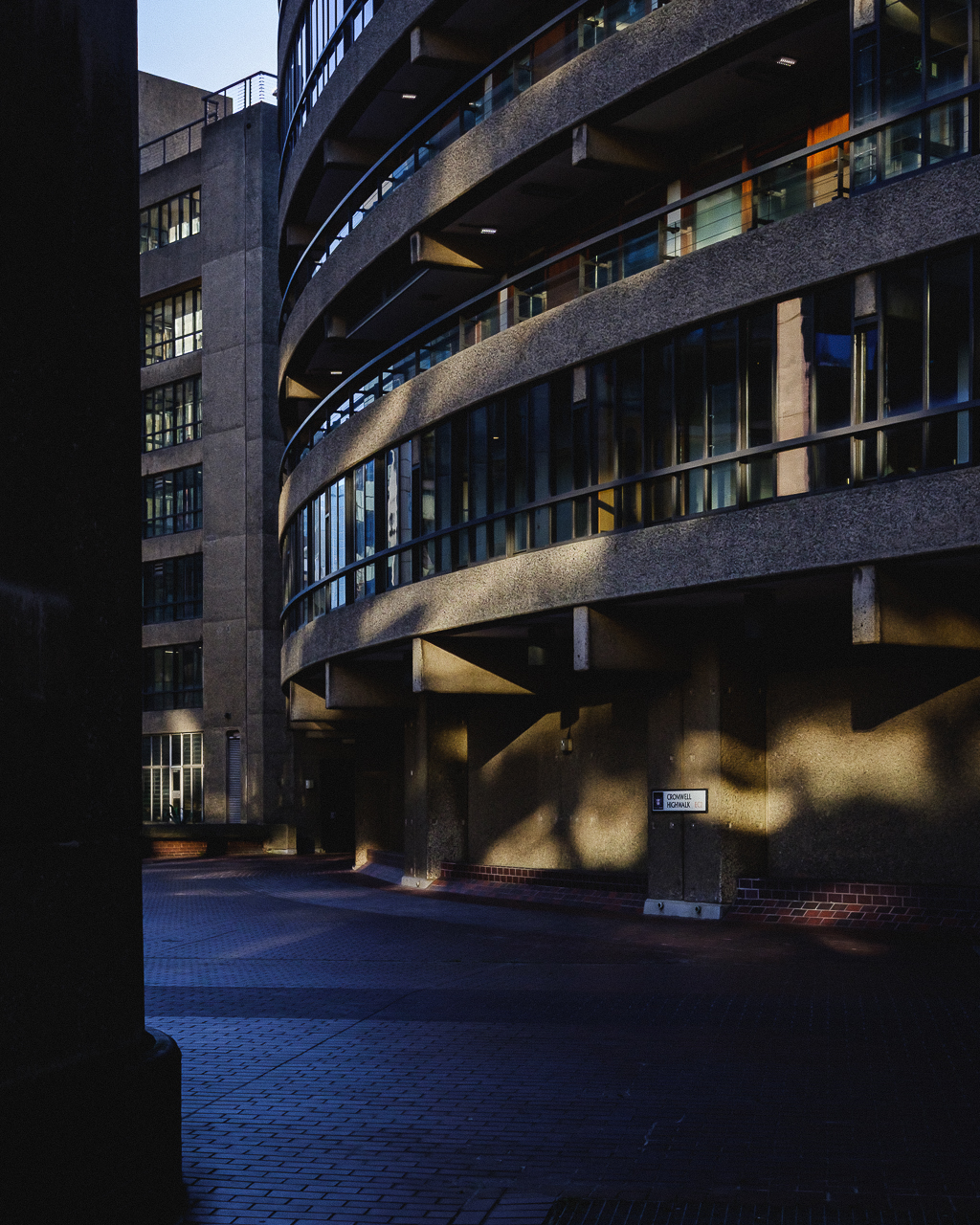
On the downside there is a sharp wind blowing and it’s cold, making my mid-morning walk around the Barbican Centre a reasonably solitary one. In the main the only other people I see are also solitary photographers. I shared a nod with some, though not all respond. Photographers can be weird, maybe it’s just me that is weird.

Even though I was wrapped up tight I didn’t stay too long.

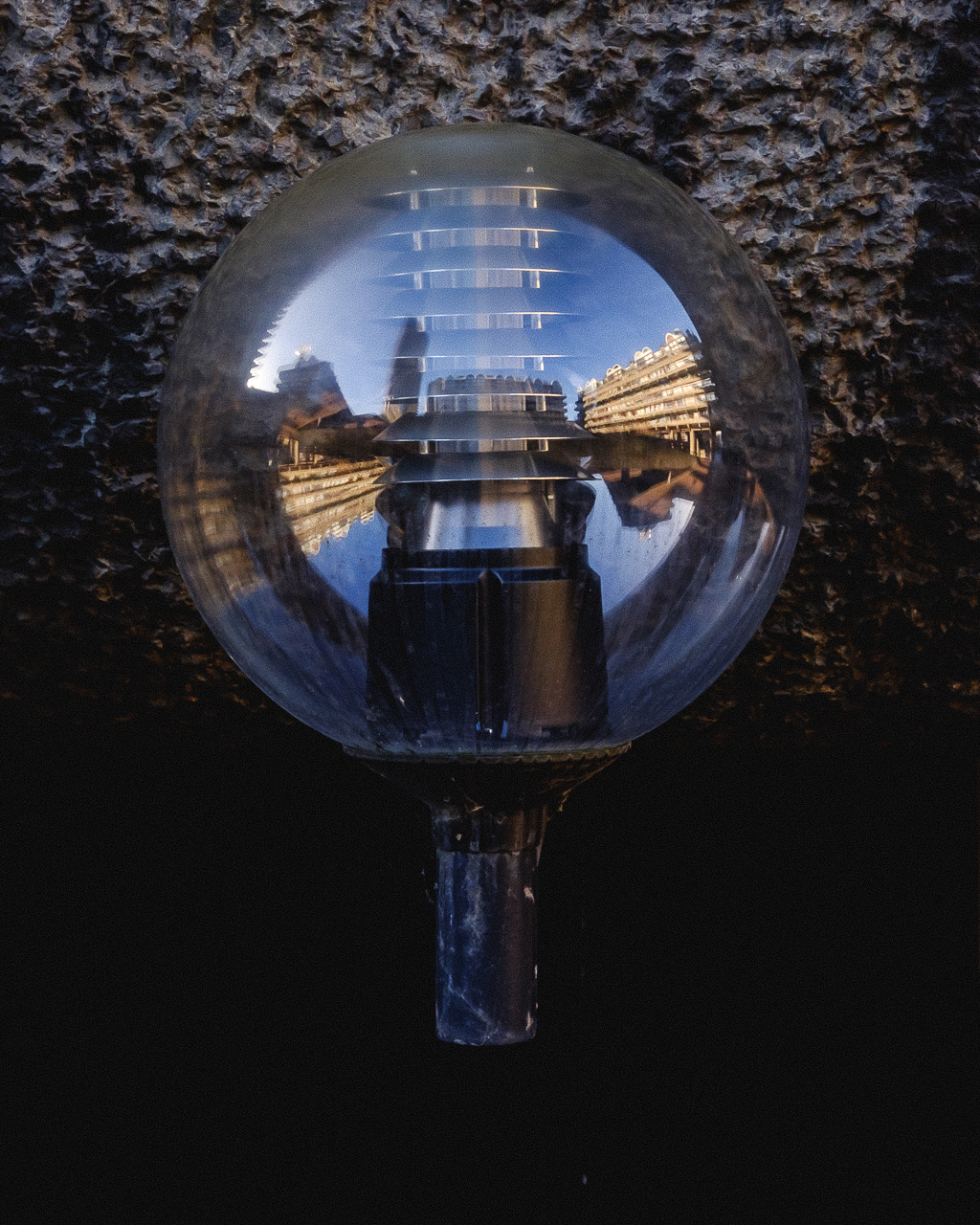
I had hoped to get a last-minute ticket to the Barbican Conservatory, a fabulous indoor garden over and around the concrete terraces that are, for me, the draw of the Barbican. It’s all very dystopian, and fabulous. Sadly, the conservatory was closed the day I visit, a not uncommon occurrence.

I was looking for a certain shot, but couldn’t find anything that worked, though overall I was happy with the images I took. I will never be disappointed by the Barbican to be fair.

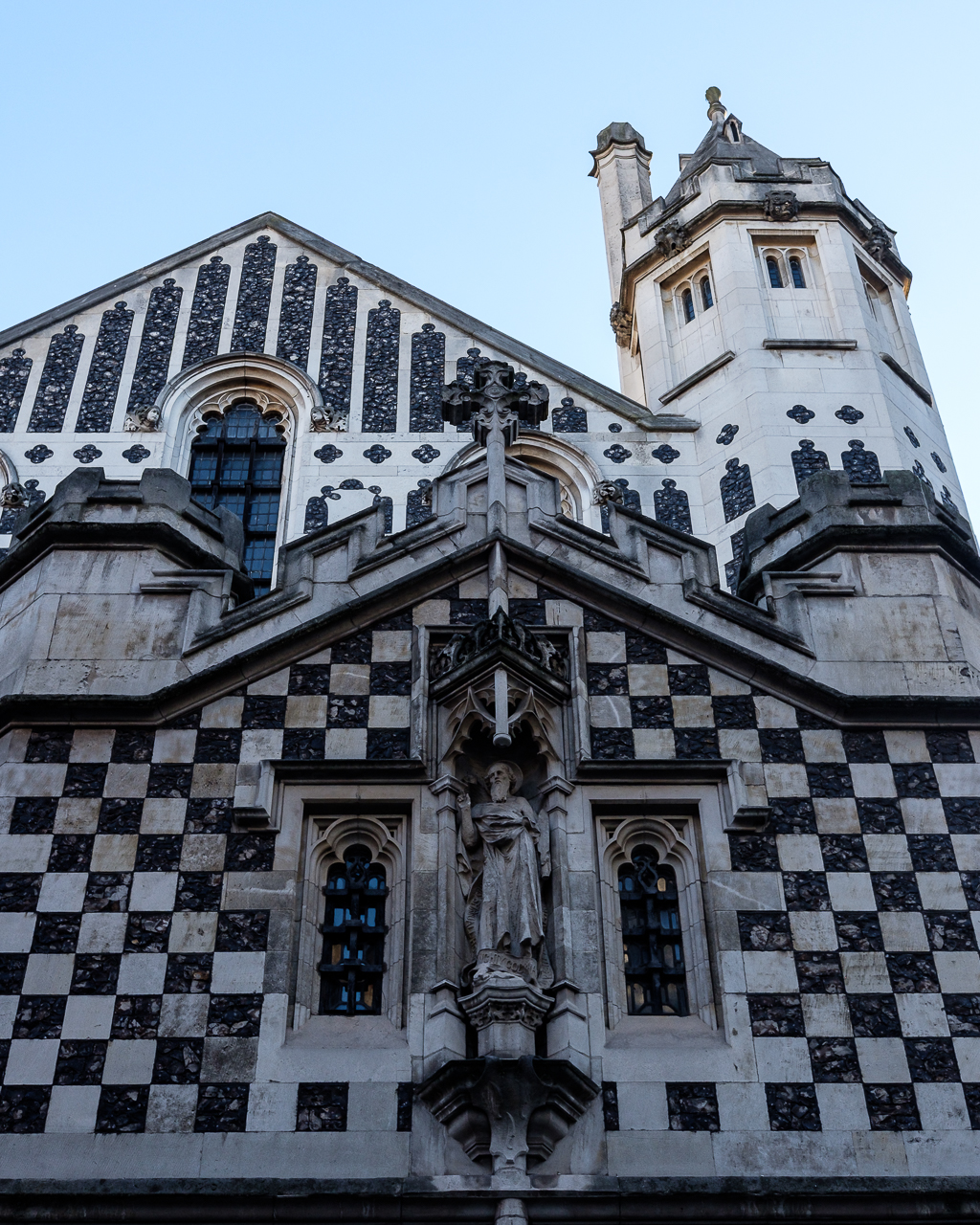
The secondary objective today was to visit the Priory Church of St Bartholomew the Great near St Bartholomew Hospital, a 20-minute walk from the Barbican and almost a polar opposite architecturally.

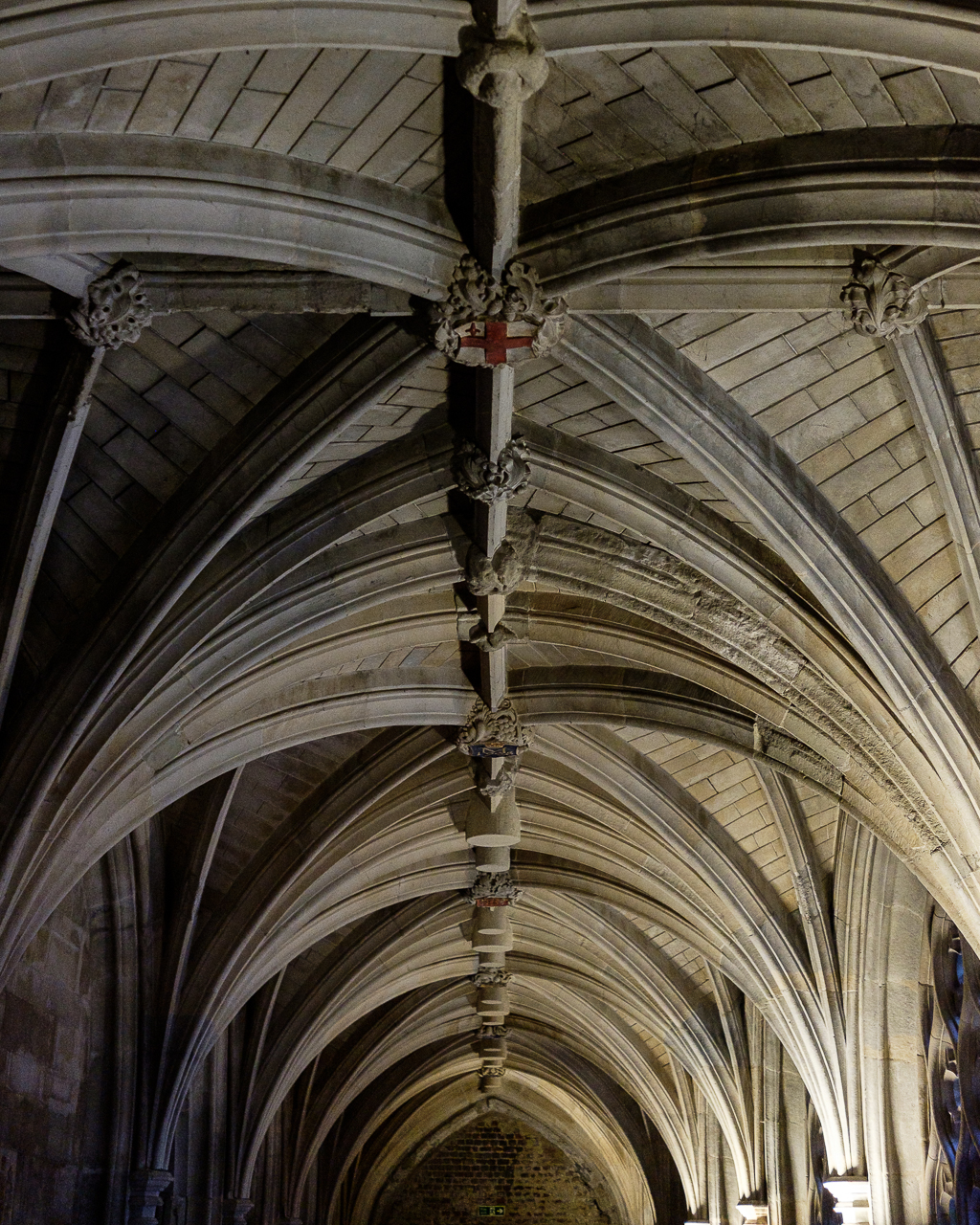
St Bartholomew the Great is one of London’s oldest churches, dating back to 1123 when it was founded by Rahere, a court follower who had a fever dream about building a priory. Part of it survived Henry VIII’s dissolution of the monasteries between 1536 and 1541, though most of the priory was demolished and what remained became a parish church.

Over the years it’s been used as a stable, a blacksmith’s forge, and even a printing works; Benjamin Franklin worked here as a printer. The building retains some remarkable Norman architecture which is quite unusual for London and it’s a fabulous off-the-tourist-trail place to visit.  There is a some great art work here.

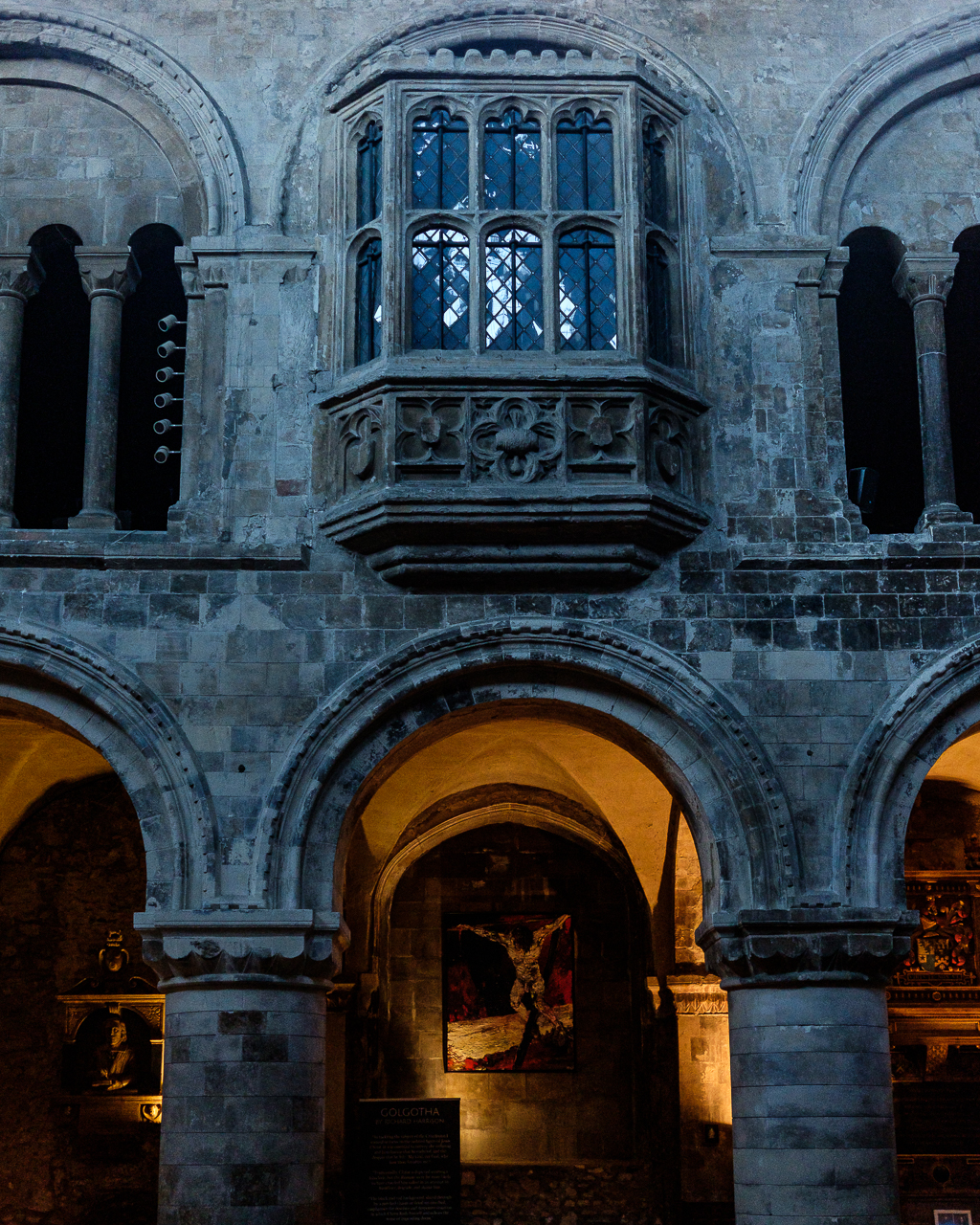
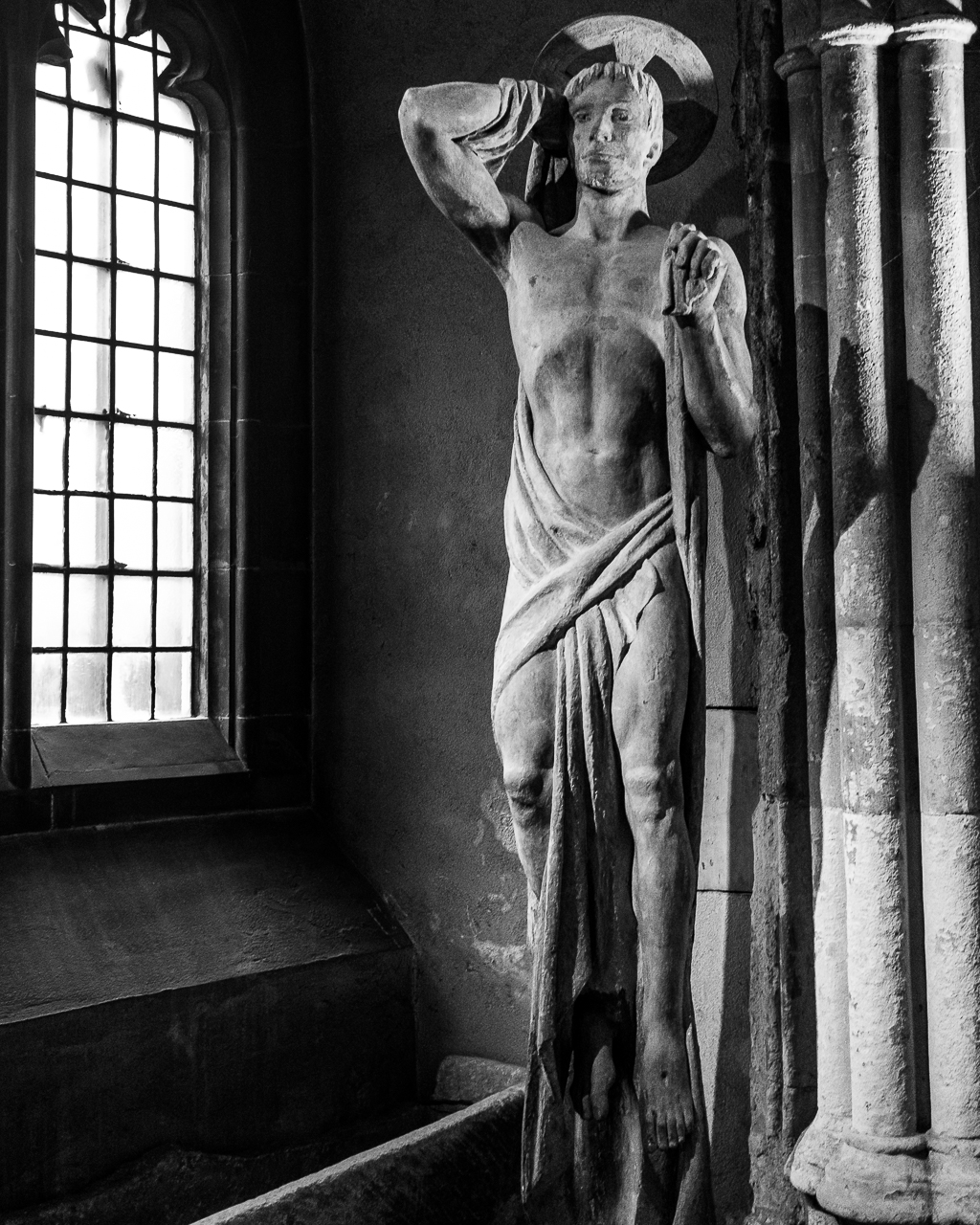
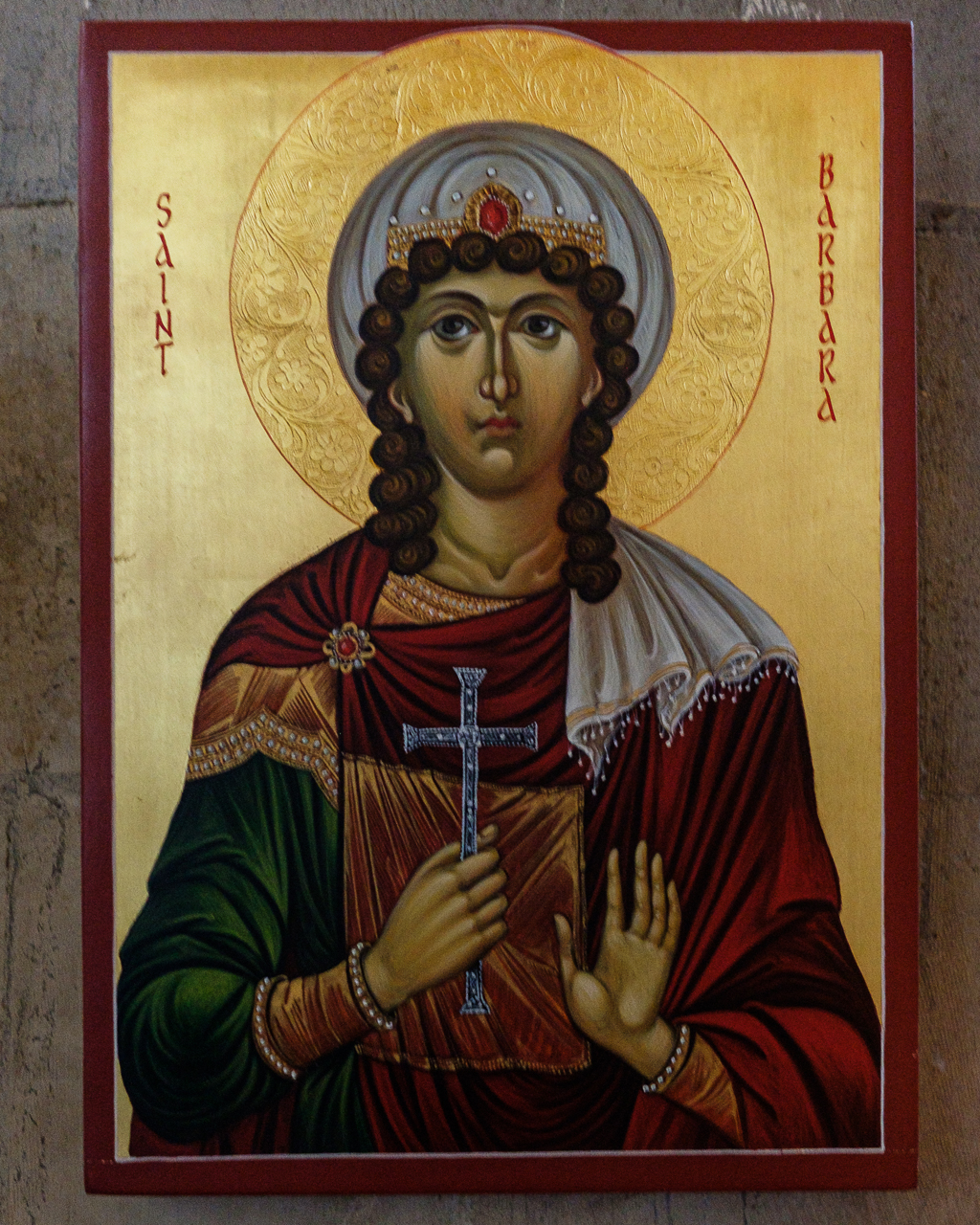
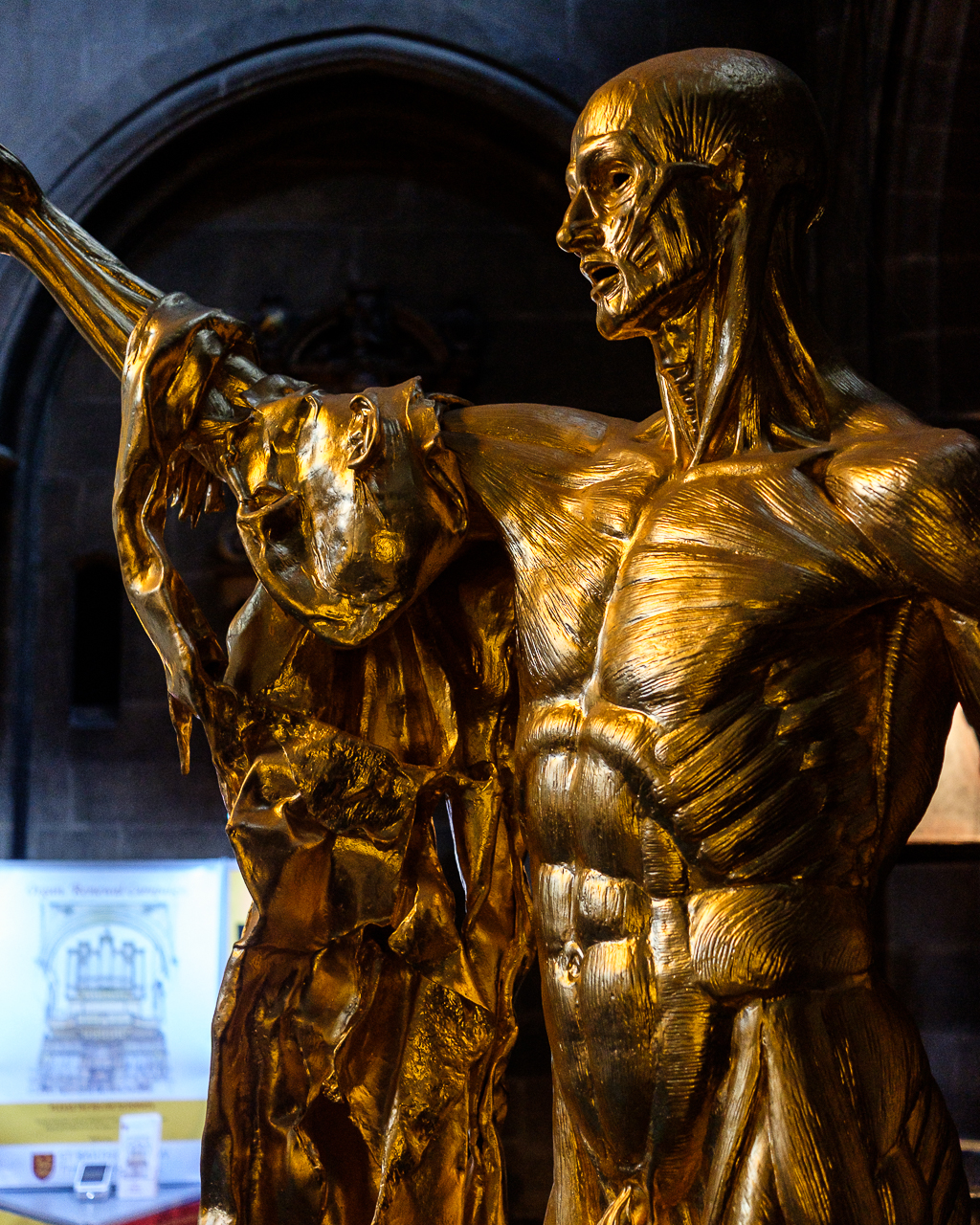
In 2006 Damien Hirst installed a life size bronze and gold leaf statue (Exquisite Pain) of St Bartholomew, a disciple of Jesus who was martyred in Armenia soon after the crucifixion. The story was Bartholomew was flayed (skinned) alive; he is the patron saint of surgeons.

Oxford Brutalism

Oxford – Saturday 15 February 2025

A couple of posts ago I noted that I’m going to ‘practise’ being on my own before I spend solo time in Delhi as we make our individual journeys home from New Zealand. Eleanor and I fly to Auckland on 5 March and spend a week there before we’re joined by a London friend, Paula. The three of us will road trip down New Zealand to Dunedin, where we then separate. I fly to Brisbane for a night to see my family before going to Delhi. Eleanor and Paula spend a few more days in New Zealand then go to Sydney and Tokyo. I have 10 days on my own; and most of that will be spent somewhere that is different to the London I call home. Very different indeed.

I’ve not done the solo travel thing in a while and know I’m going to find aspects of life in Delhi challenging. I want to avoid finding aspects of being on own challenging while I contend with the challenges of Delhi. If I can manage the things I can control then I will be better positioned to manage the things I can’t. That is the theory anyway. Understanding more of what I feel I can control has been an objective of the last few weeks.

To help this I decided to taking a night away by myself and I chose Oxford. It’s not too far from London, it’s always busy with students, their visiting families and other tourists, and it has a good mix of historic architecture with a tiny bit of mid-century concrete mixed in. Other than its cold right now in the UK and Delhi will be hot, I’m going to find the Oxford experience will be just like Delhi, right?

I travelled up on Friday and though it was quite cold the sun was shining and it was a nice day to walk around semi-aimlessly taking photos of buildings of various ages. 

Overall, it was a successful couple of days and I enjoyed myself and learned a more about how I react to being by myself and working with crowds and busy tourist venues. I will cover more of the two days in the next post, along with photos of the ‘proper’ Oxford. Today, I’m going to share photos of the limited number of 60s and 70s brutalist buildings to be found amongst the ‘old shit’.

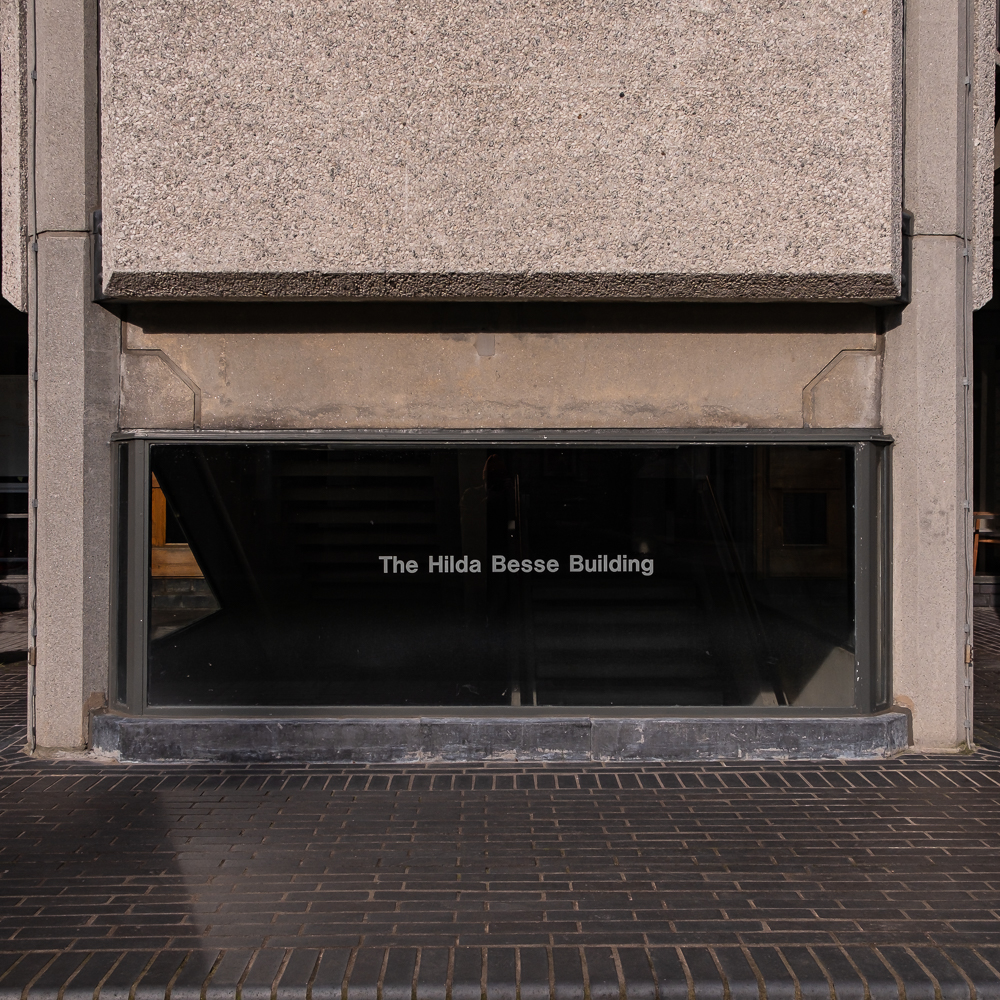
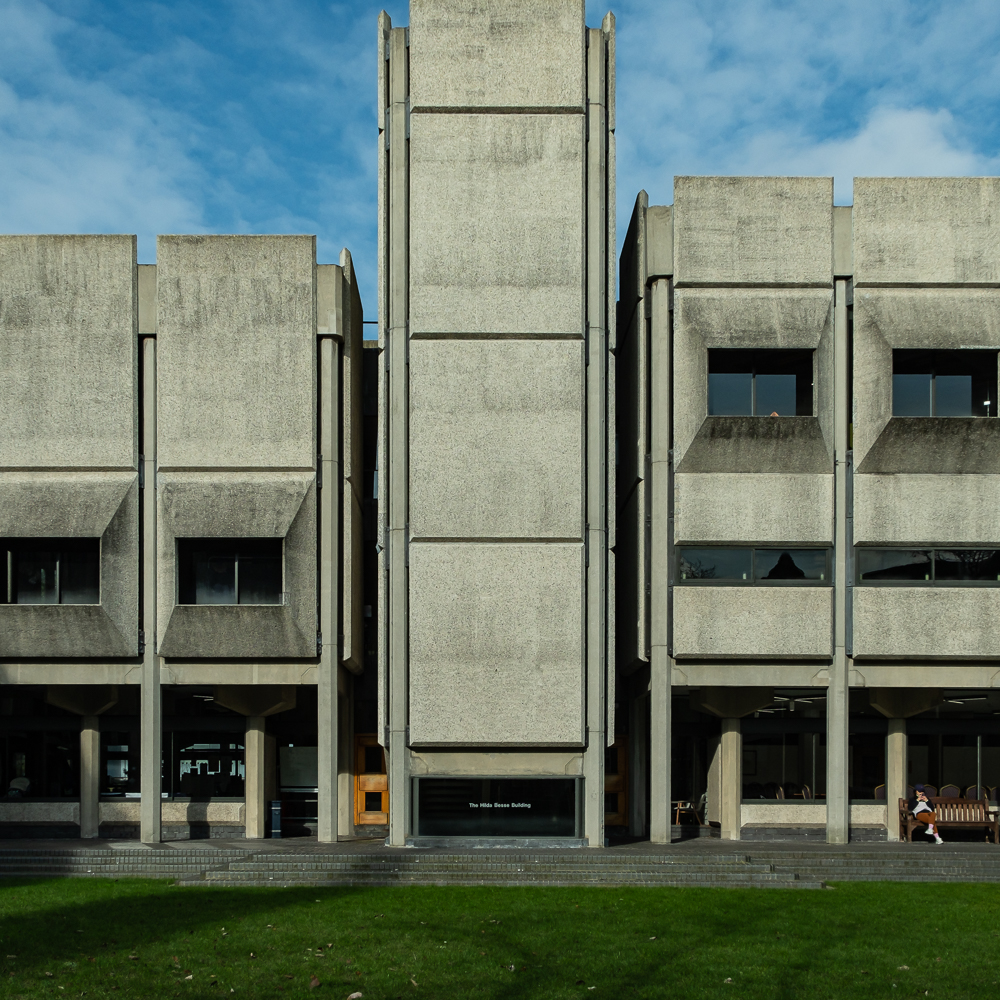
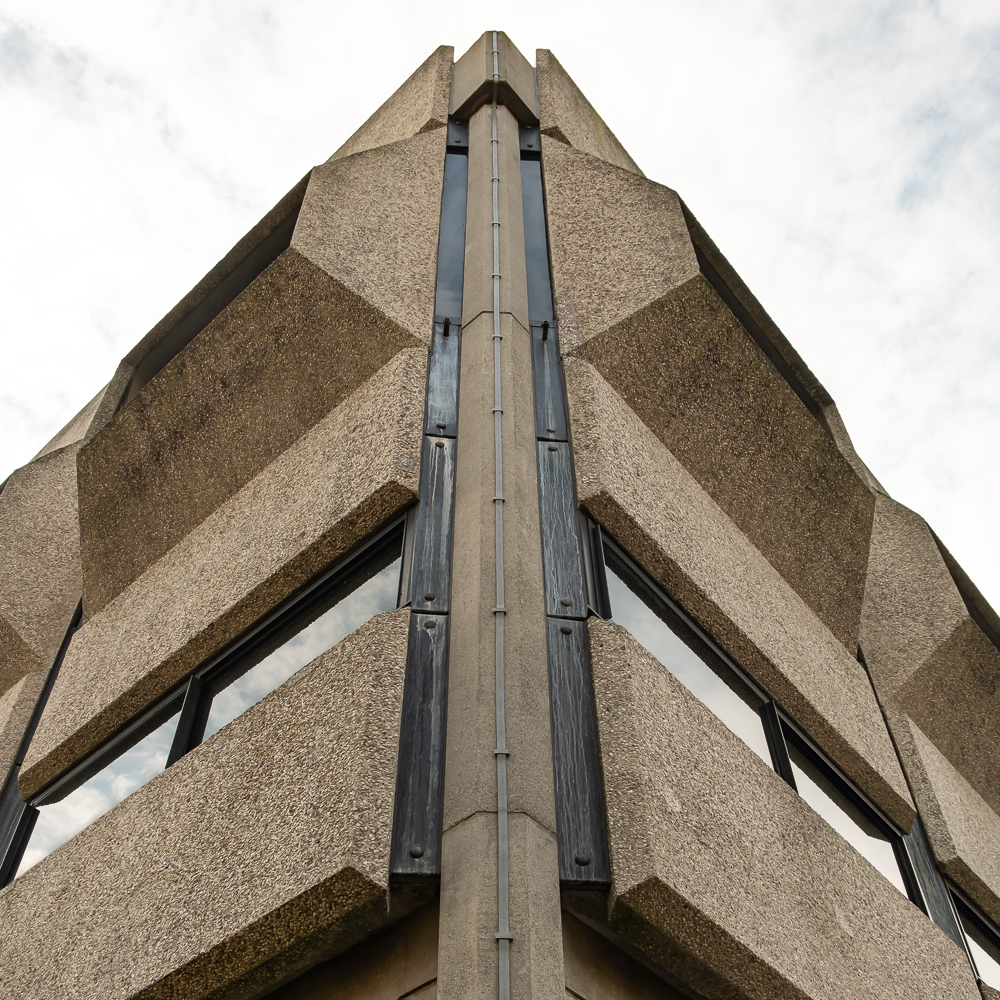
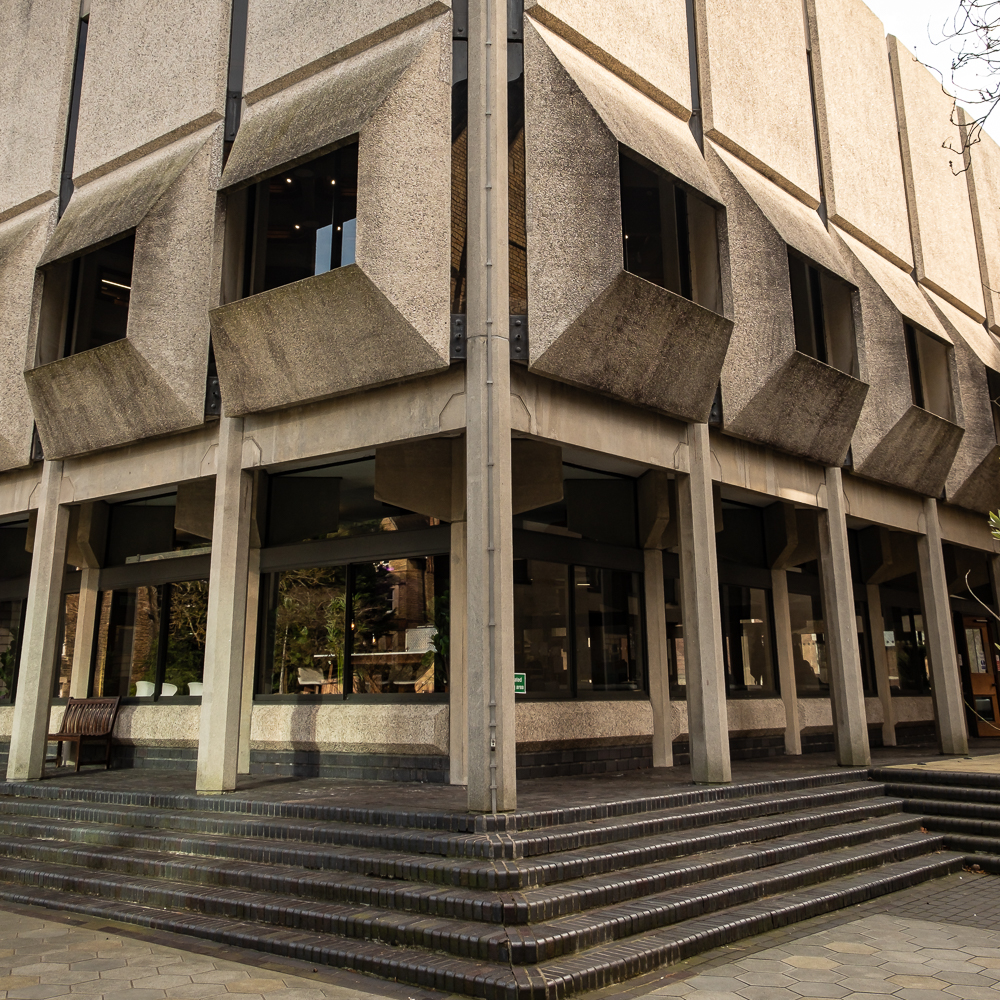
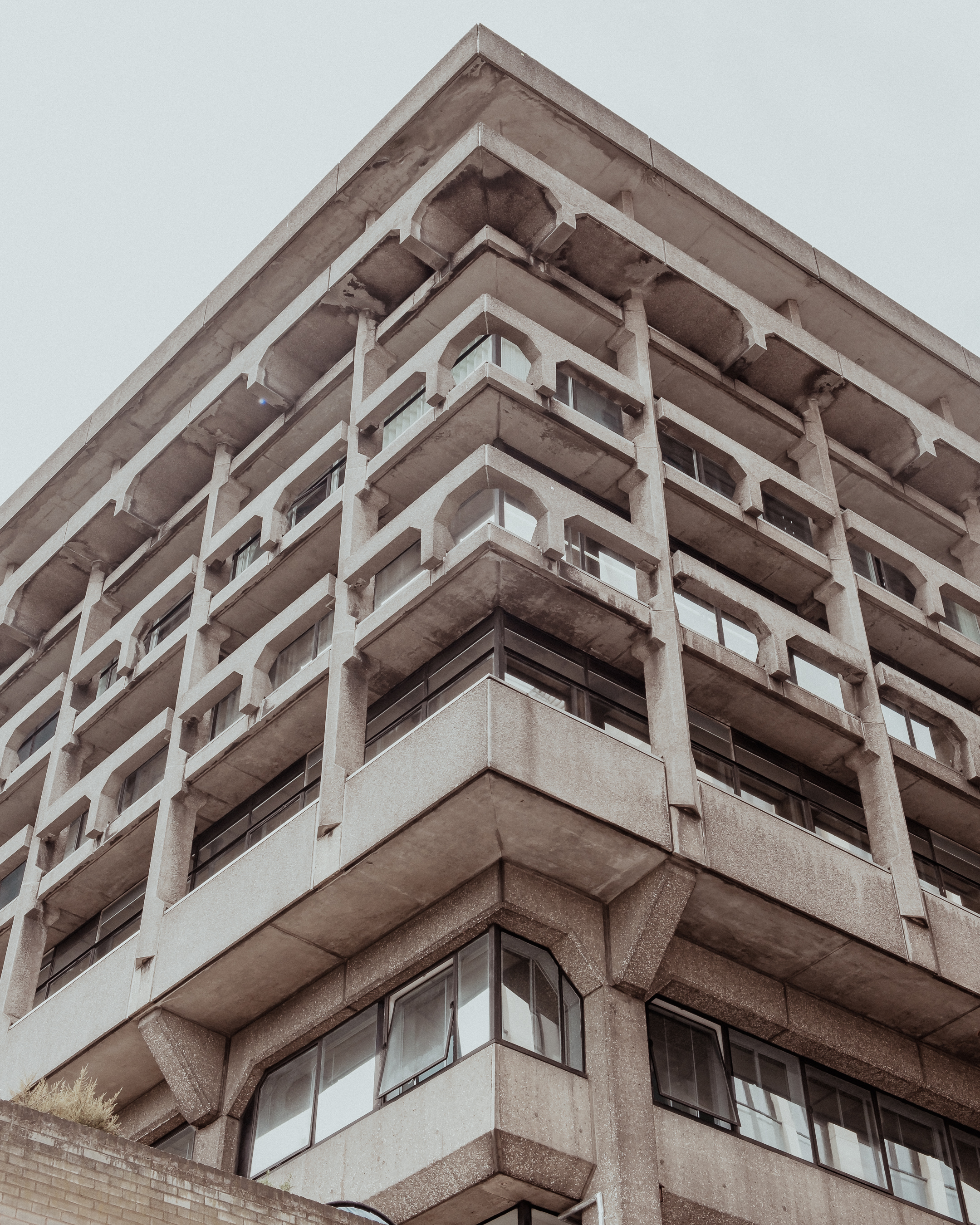
Hilda Besse Building, aka the Common Room and Dining Hall at St. Antony’s College, was the most visually interesting of the brutalist buildings I wanted to see. A number of the concrete buildings, and seemingly a third of Oxford were surrounded by scaffold. A full refurbishment of Hilda was completed in 2021, and thankfully the building has remained true to John Partridge’s original 1971 design. The interior is supposed to be lovely, but like everywhere these days you need a pass to get through the security barriers. I love the window frames and have not seen the like before. They look so much like wartime bunkers I expected to see gun barrels poking out of them.

Just around the corner is the Denys Wilkinson Building, the astrophysics department of Oxford University. Its neighbour, the Thom Building, is being renovated and there was scaffold all over the place and a number of the paths around the building were blocked which was frustrating. I’m learning to accept that not everything is going to go to plan when I travel, so this was good. I also was trying to memorise directions between places, a ‘skill’ I feel I’m losing as I’ve become reliant on my phone to always be there to give me directions. This worked well so was I pleased to find I can do it with little effort, and getting slightly misplaced is often part of the enjoyment.

The Philip Dawson design Nuclear Physics Building first opened in the late 60s and was renamed The Denys Wilkinson Building in 2001 to honour the famous physicist, (and no, I don’t know physicists, famous or otherwise; being interested in brutalist architecture teaches you many things). The fan building houses a Van de Graff Generator.

I know nothing about the Oxford Centre for Innovation building other than where it is, and that it was difficult to photograph as it’s partly wrapped around Oxford Castle Mound and the castle butts up against the back of it.

It was raining on Saturday, and windy, cold and quite unpleasant, so after photographing the innovation Centre I took myself to the Ashmolean Museum, stopping for an excellent coffee in the most unfriendly and pretentious café I’ve been to, and I’m unfriendly and pretentious so have some expertise in this field!

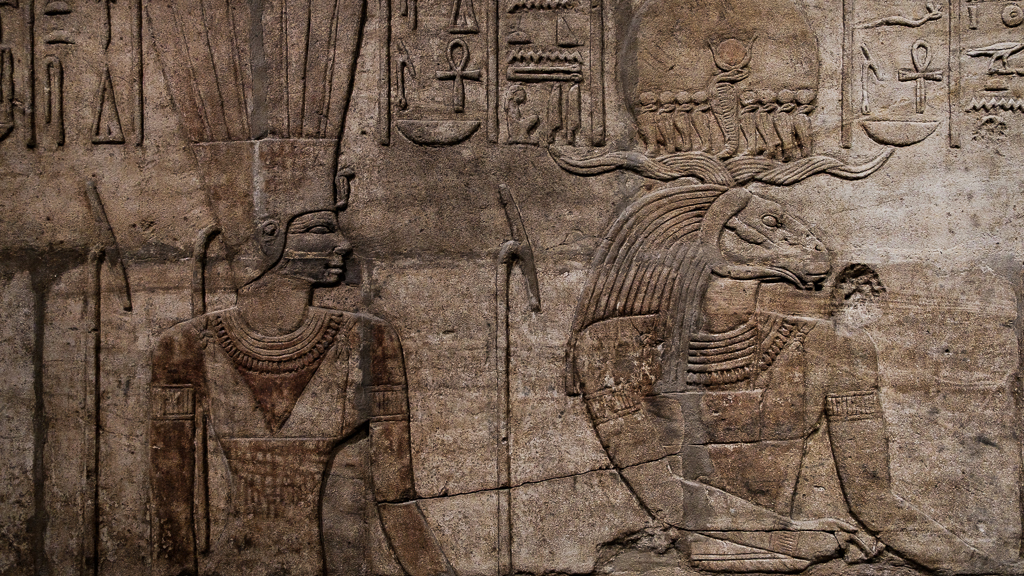
I arrived at the Ashmolean soon after it opened and it was nice and quiet. I had a look around most of the galleries; there is a lot of pottery, something I have very limited interest in. I was seeking out galleries that housed North Indian and South East Asian collections as I’m still fascinated by the complex ancient history of these places as well as the religions that were so key to the buildings and art that were created hundreds, if not thousands of years ago.  I was momentarily distracted in the Egyptian collection and this magnificent relief on the side of the tomb of Nubian King Taharqa who died in 664BC, he is believed to have been the last black pharaoh of Egypt. The detail is stunning!

The Indian and Asian galleries were interesting, with some lovely Buddhist and Hindi artefacts. I was especially interested in this beautiful 16th bronze of Saint Tirumankai Alvar which is soon to be returned to it’s home in the Tamil Nadu region of India. While it’s not know whether this statue was stolen, it also can’t be proved that it wasn’t so the museum is returning it. Much as I like to see these lovely objects in UK museums they should be returned to their traditional homes.

As the weather hadn’t improved while I was in the museum. I caught the train back home to London where Eleanor and went to a fantastic restaurant in Stoke Newington to not celebrate Valentines Day.

The next post will be all about the Hogwartsean, Disneyesque Oxford we all know and love.
Brutal day out, Southampton edition

Southampton – Saturday 16 November 2024

Another weekend and another Brutal Day Out away day; this time to see the delights of Southampton, a small port city on the coast two hours south of London.

Looking at travel options for this trip created a bit of me grumbling to Eleanor about cost and faff and that I couldn’t believe it was two hours to Southampton from Waterloo which meant leaving home at 7:30 to get there for 11am. She tolerated this for a while before coming up with the suggestion I contact her ex-husband to see if I could stay with him and his partner on the Isle of Wight on the Friday and then take a quick ferry trip across the Solent to Southampton in the morning. This seemed like a very good, if rather leftfield option and after a couple of exchanged messages it was all arranged.

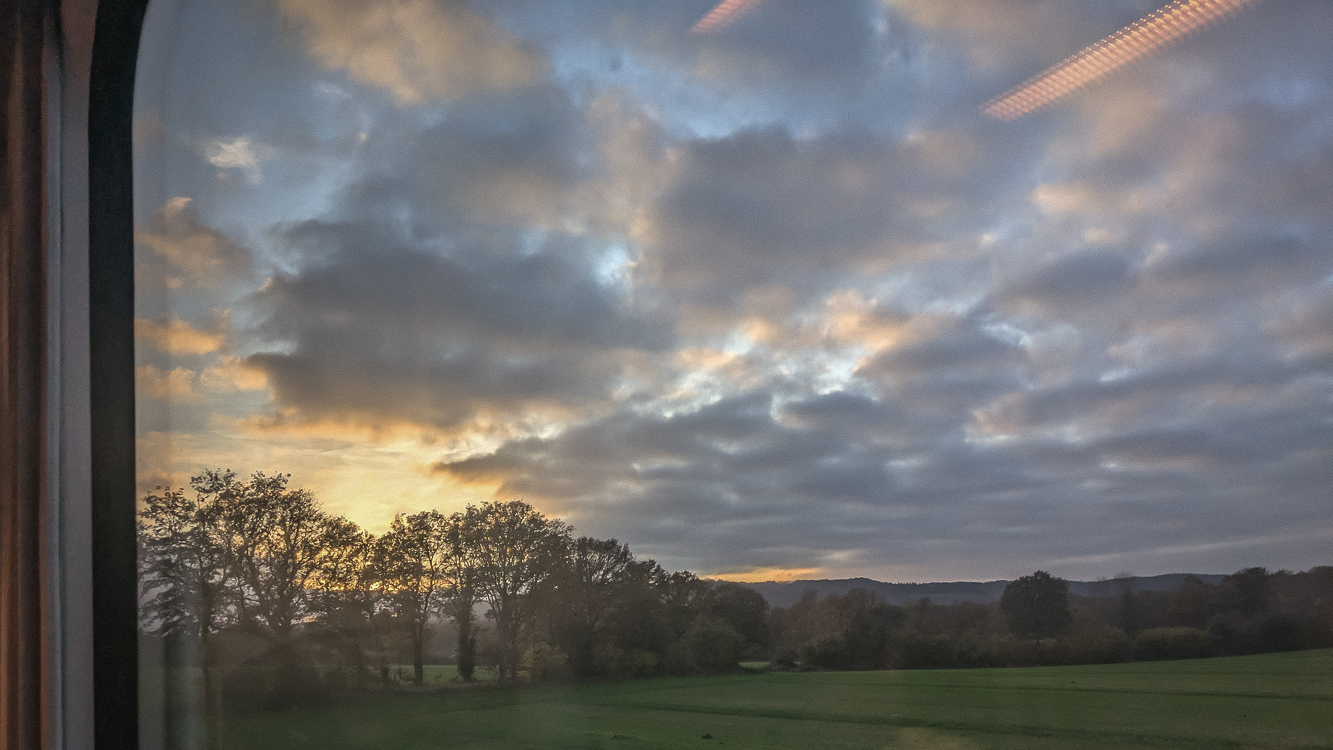
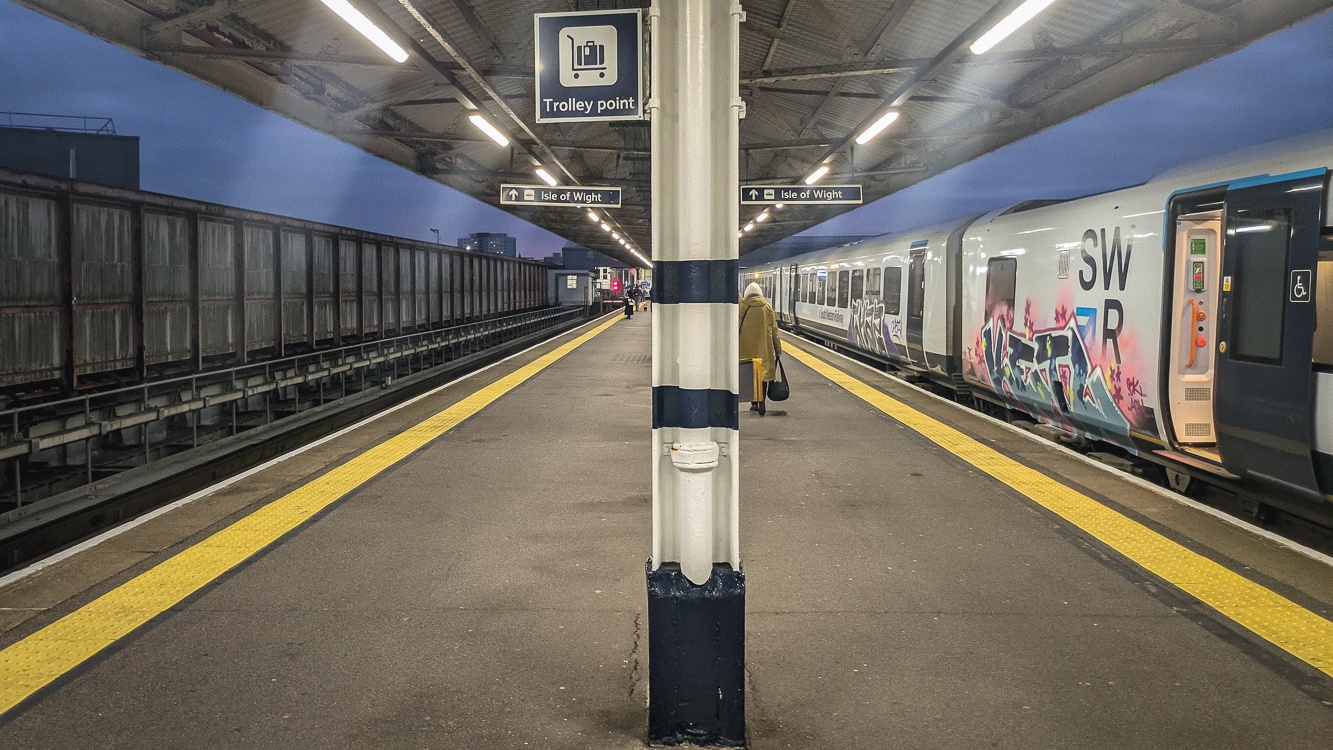
I left work a little early to avoid the worst of the Friday rush hour and was I rewarded with a nice sunset out of the train window. The train terminates at Portsmouth where I caught the ferry for the 22-minute journey to Ryde on the Isle of Wight. It was millpond calm, though even at 5:00pm it was too dark for photos. Autumn.

PXL_20241115_154923279

PXL_20241115_164000394

Andy, Eleanor’s ex, met me off the ferry with the car and took me back to the house he shares with his new partner where we had dinner before slipping out to the pub for a few pints of local ale and loads of music chat. It was a very nice evening.

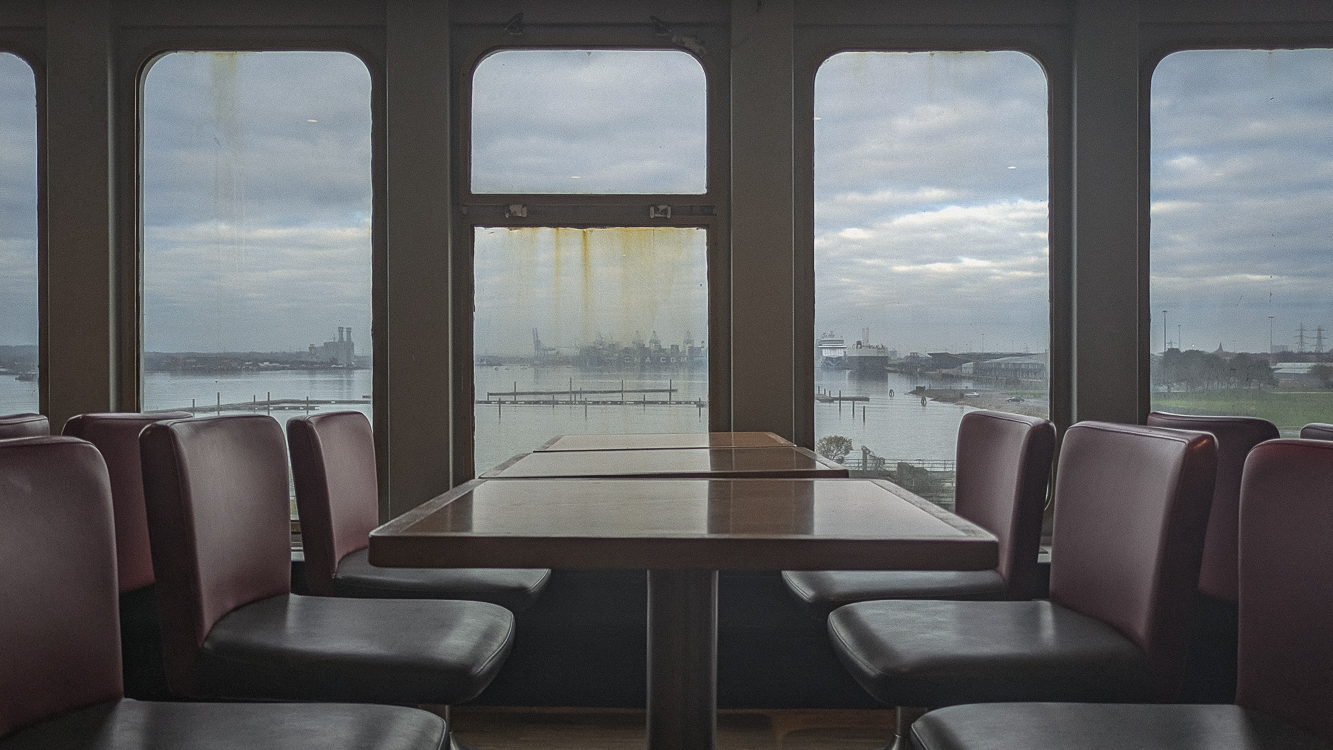
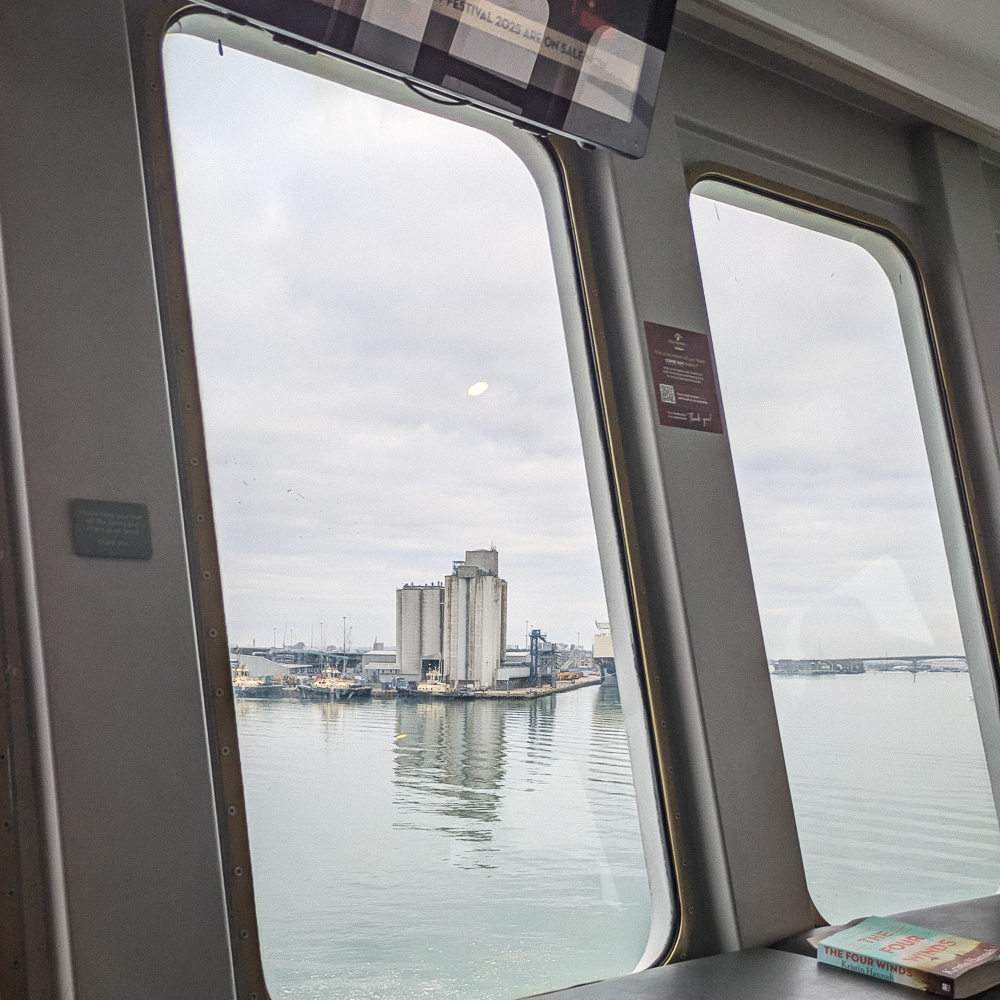
Sadly, the ferry from Cowes to Southampton doesn’t run at the same regularity as the Tube does from Leytonstone, so I ended up having to get up quite early anyway, but with a beer headache to contend with as well. After a light breakfast Andy drove me to the ferry terminal and I made another smooth journey across the Solent, this time to Southampton.

PXL_20241116_100328539

PXL_20241116_095017297

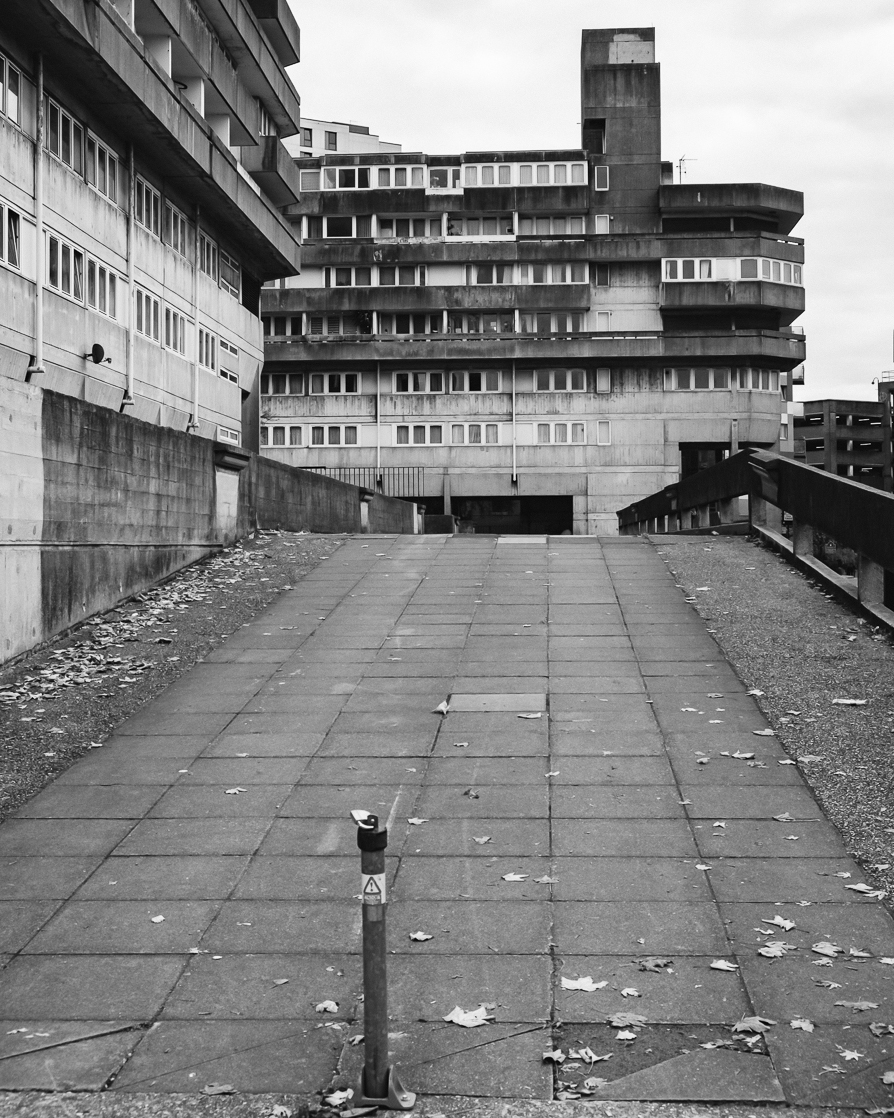
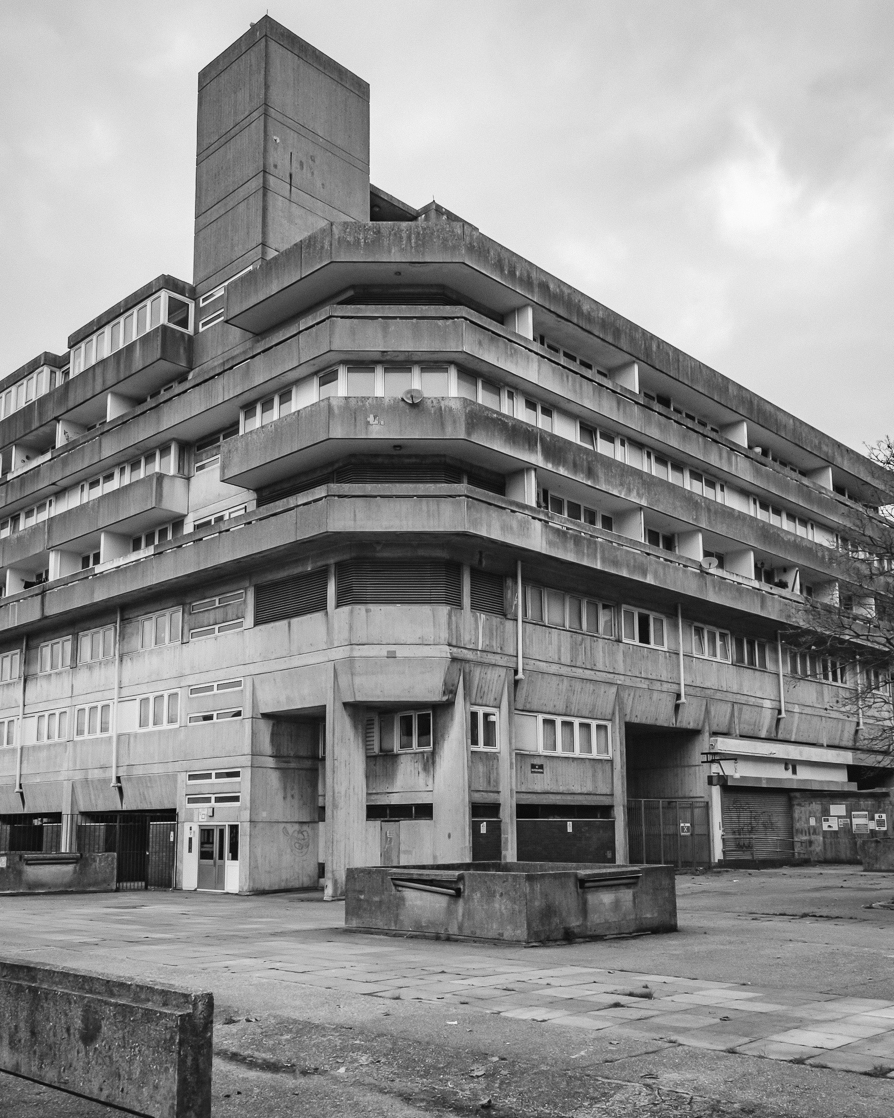
The brutal day out was OK, my least favourite so far; there were a couple of the usual gang there which was nice, but more newbies and the group dynamic was a bit off. There was one interesting building to photograph, the Wyndham Court housing estate, but I wasn’t feeling it and while I got some OK images there was nothing I was completely wowed by.

DSCF4686

DSCF4687

DSCF4689

DSCF4701

DSCF4675

DSCF4677

DSCF4678

DSCF4681

DSCF4685

DSCF4682

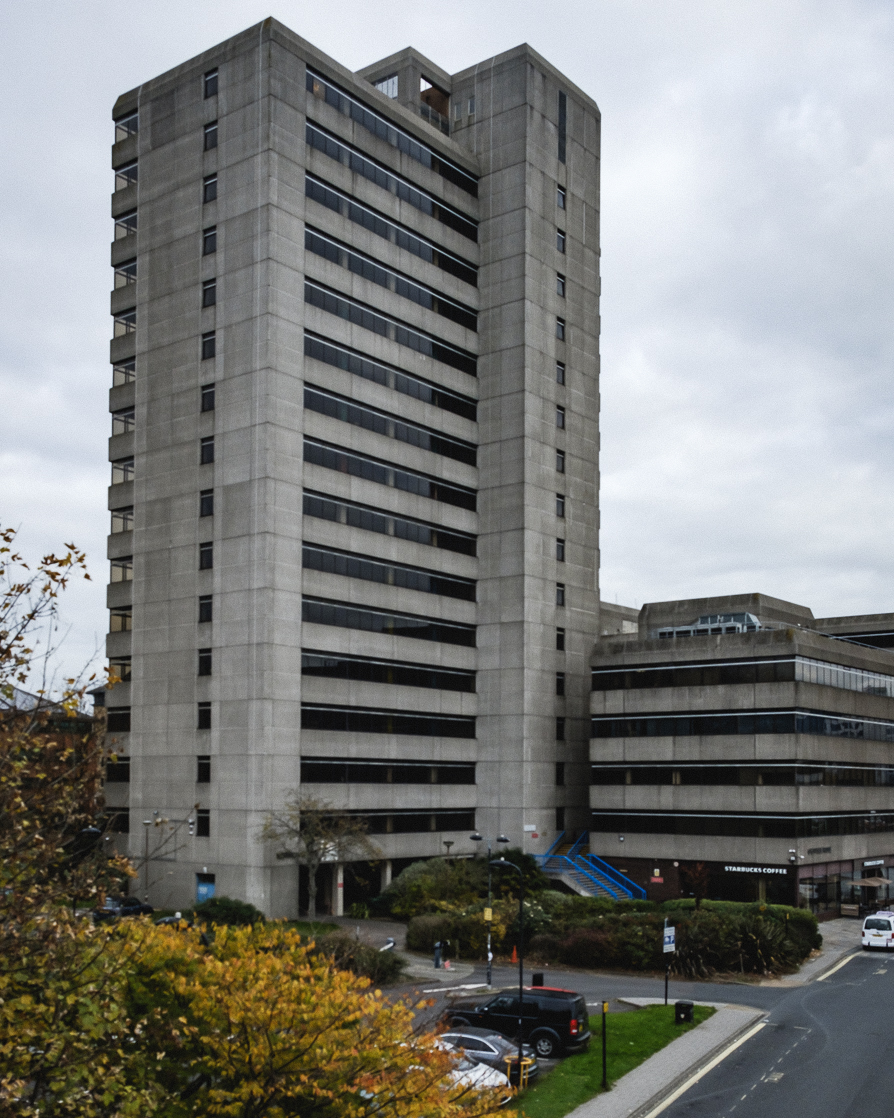
Next to Wyndham Court, and over the road from the train station are Greenville and Portcullis House, unlike the Wyndham Court these are office blocks, though mostly empty and I think they were due for demolition at some stage. Portcullis House (I think) is temporarily being used by the British Transport Police and we were told quite clearly that taking photos near their office was to be discouraged. We did as we were told.

DSCF4671

DSCF4672

DSCF4673

DSCF4674

We took a general walk around the city centre with our local guide, there were a few other buildings to look at, but none of them were particularly interesting and I got a bored, and then we went for a swift pint in a very busy Wetherspoons before I grabbed a mid-afternoon train back to London.

PXL_20241116_151712973

PXL_20241116_101107300

Hopefully next time will be back to being fun again.

A bit of Berlin concrete

Berlin 03 – 08 October 2024

As longer-term followers will have observed, in the last few years, particularly during and post-Covid, the blog took a massive swerve from photographs of landscapes and trees to photographs of cityscapes. I’m not sure if that change of focus was a reaction to the pandemic or how it affected me and my view of the world. I don’t think I’ve become more insular; and this isn’t the sort of place for any kind of diagnosis, self or otherwise. However, it’s still true; trees and nature walking have largely disappeared from my feed and architecture and urban walking has replaced it; especially the more ‘brutal’ type of modernist building that I’ve sort of fallen in love with. So, maybe after saying all that it’s possible I have become more insular and my world view has reduced at the same time as expanding. I must stop the self-diagnosis. I’m fine.

As our last visit to Berlin was with friends and it had a packed schedule there was no opportunity for me to disappear for a few hours and look at some raw concrete, or beton brut as the French would have it. When we planned this trip I factored in a visit to a classic Le Corbusier building on the way to Spandau on the Saturday, as well as a few hours of solo travel to see a couple of other ‘brutalist’ buildings. There will be more on the Spandau visit in the next post; but spoiler alert – it wasn’t worth it…

Unité d’Habitation of Berlin aka Corbusierhaus

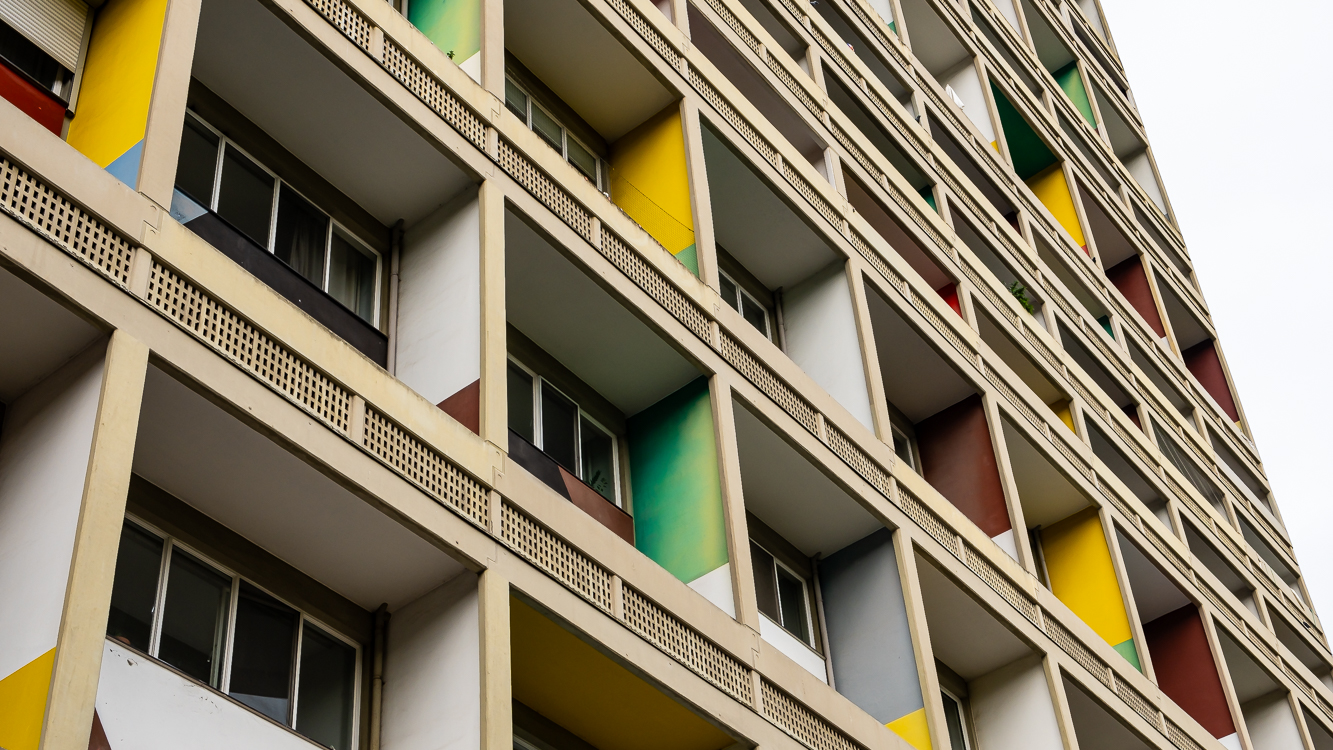
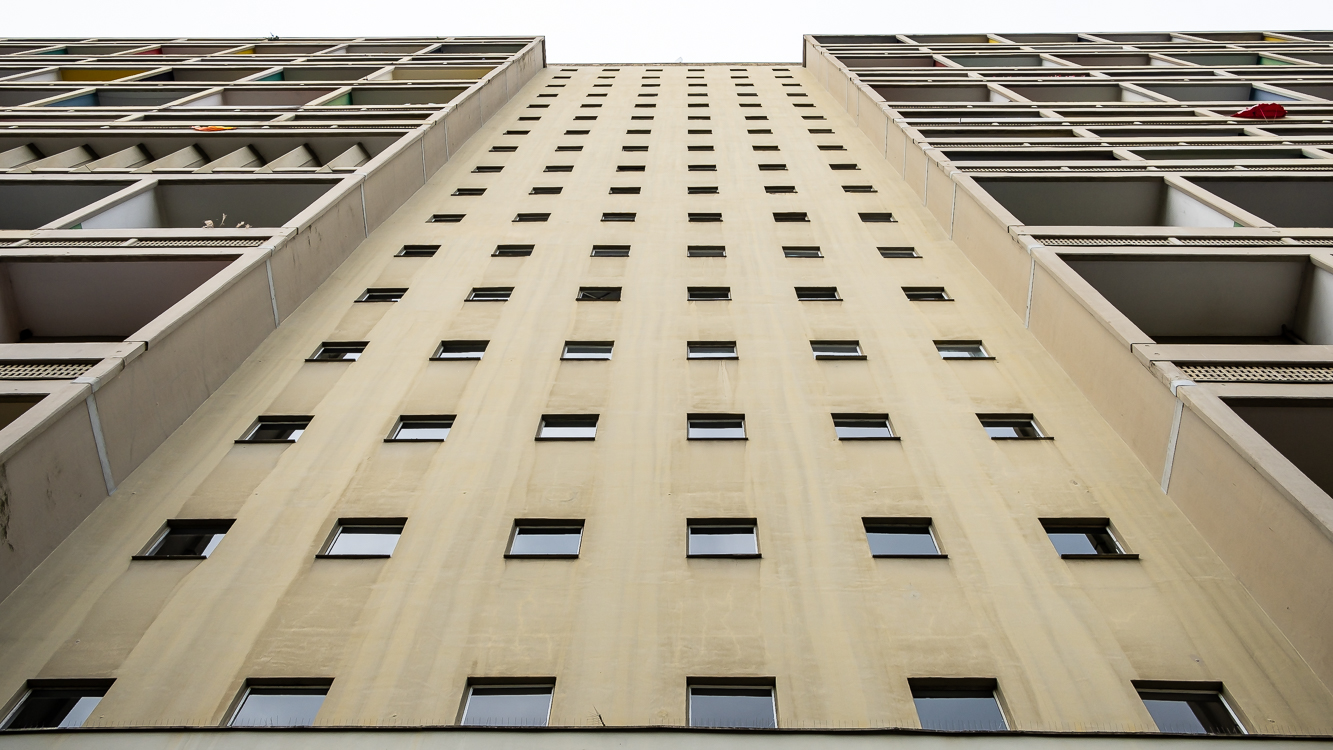
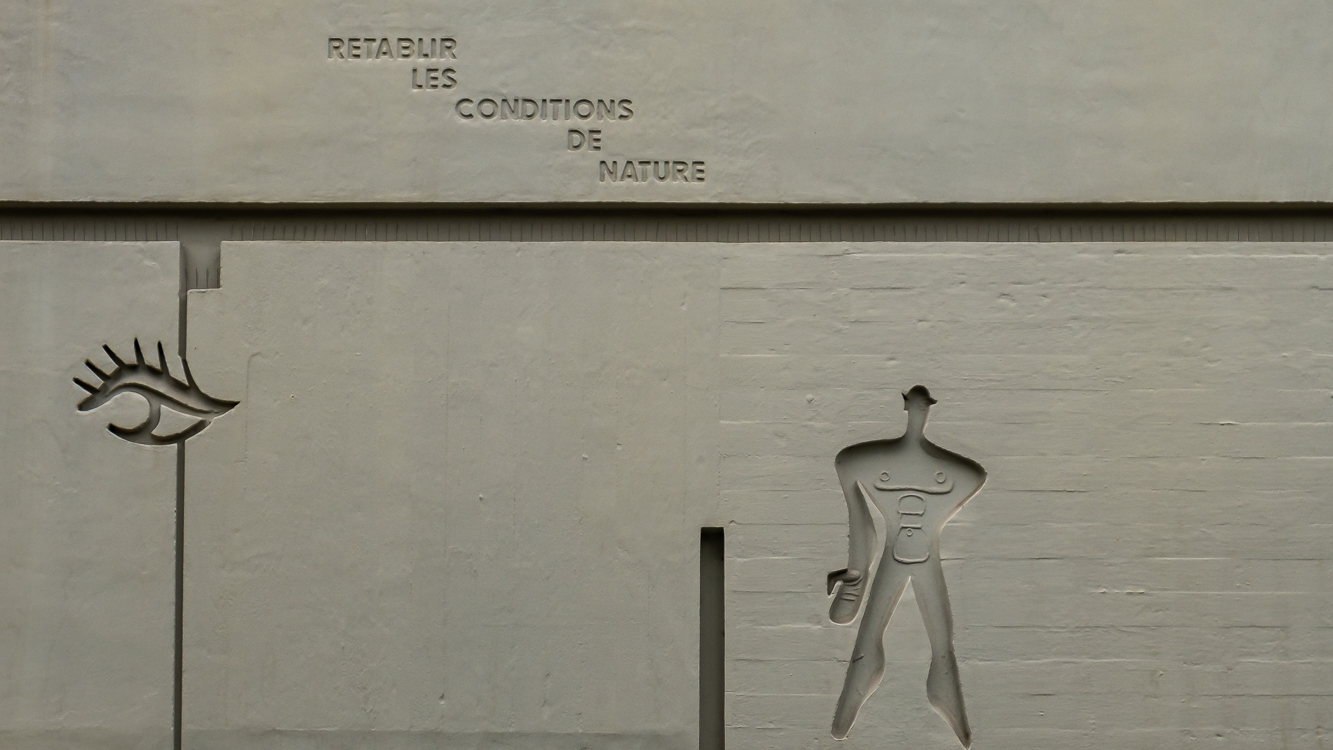
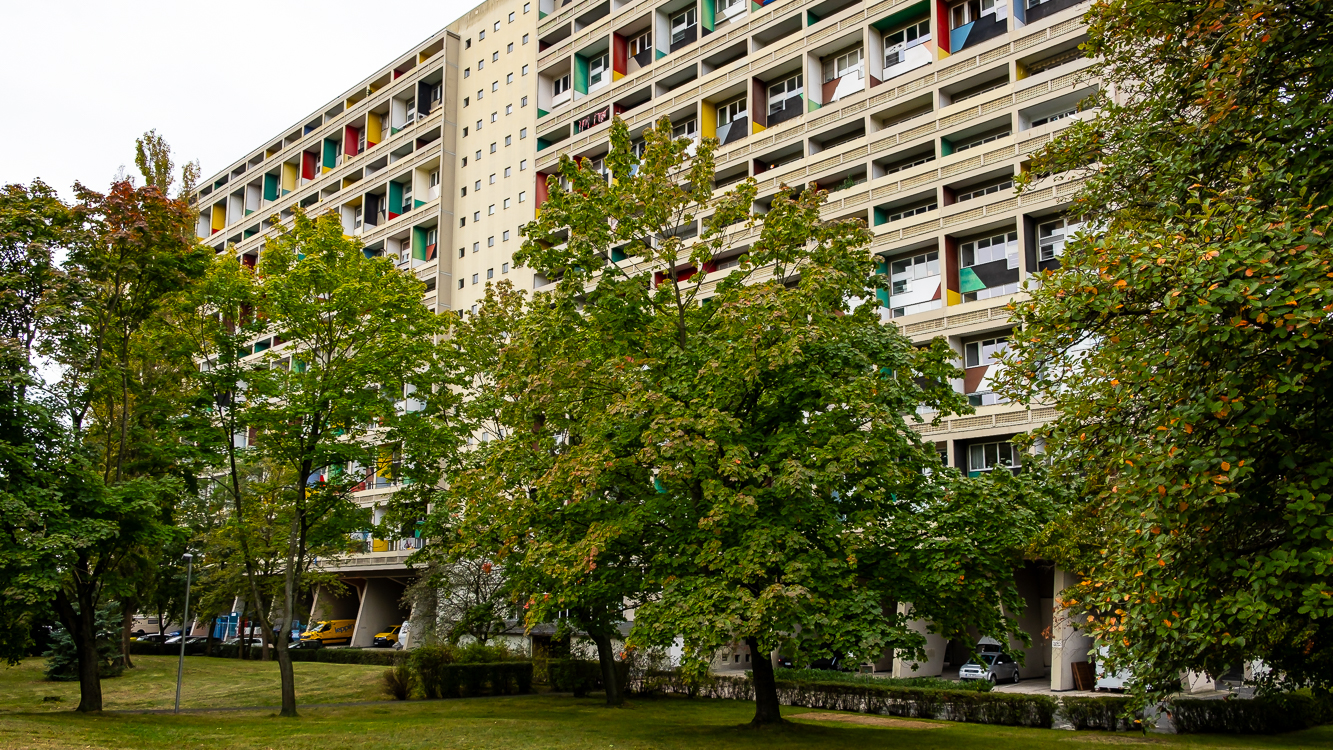
Completed in 1957 it was the third building in Le Corbusier’s Habitation ‘series’. The first and best known block is in Marseilles, France. The phrase ‘beton brut’ has been attributed to Le Corb, and it has morphed in its English translation to Brutalism. It describes buildings largely made of unfinished concrete, rather than the harsh, ‘brutal’, often militaristic design generally think of when people think of brutalism. Some buildings obviously conform to that harshness, but the Corbusierhaus does not, it is just a 50s concrete apartment block outside the city centre with some very colourful panelling. It is lovely and is a tourist attraction in its own right. The only quibble I had was half the front was covered over by scaffold and cloth; oh well. If I come back it will be mid-winter when all those interfering trees are shorn of their leaves.

DSCF4092

DSCF4091

DSCF4090

DSCF4085

Bierpinsel

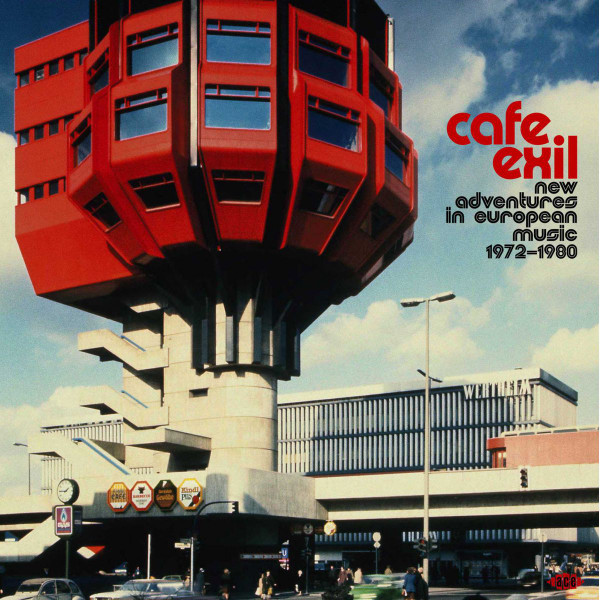
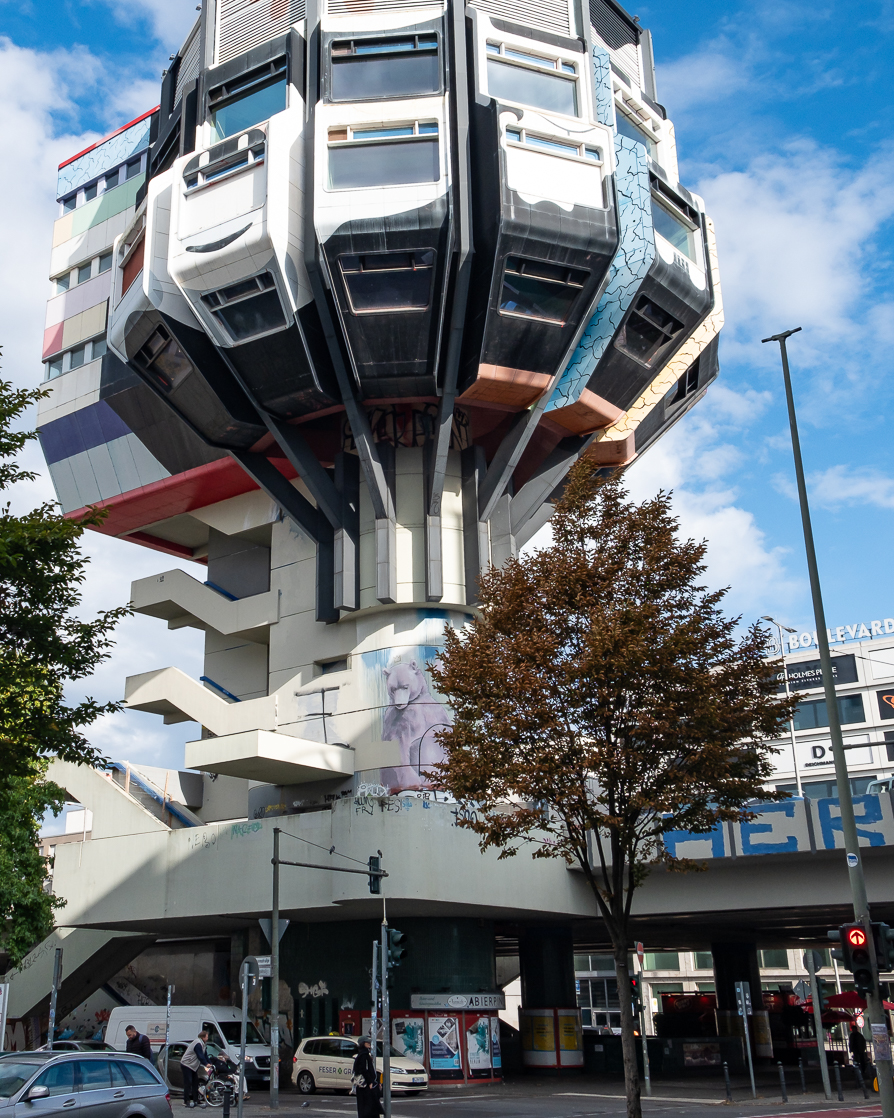
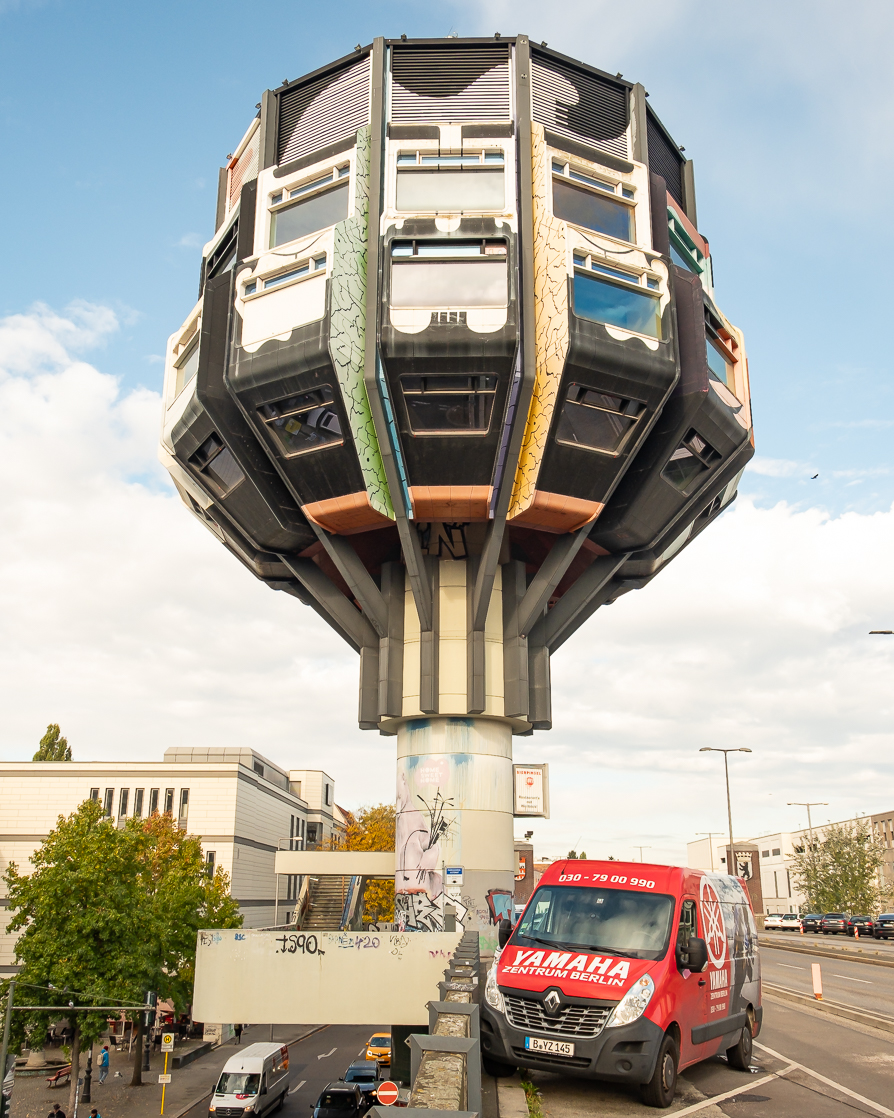
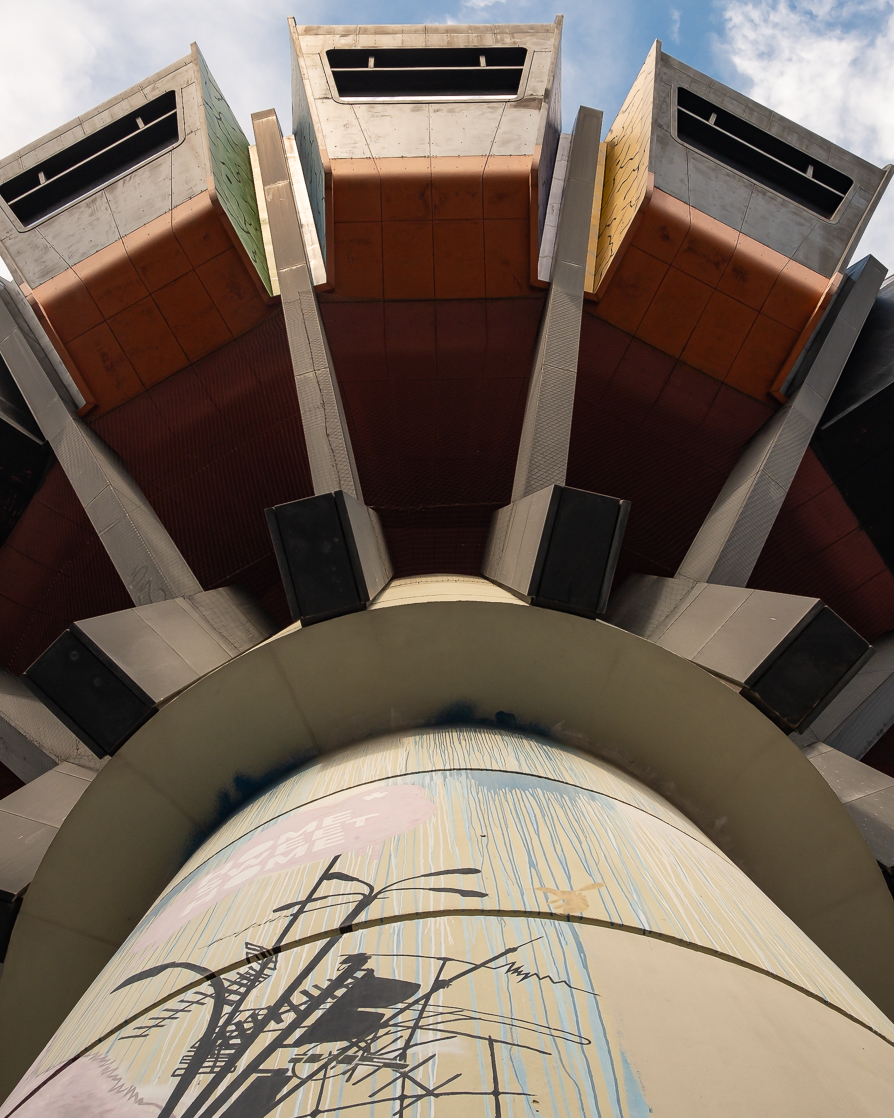
We had put Monday morning aside as ‘do our own thing’ time as I wanted to get out and look at buildings and while Eleanor tolerates this with a smile it seemed unfair to schelp about looking for buildings on holiday. Inconveniently the best ones are out of town and in no way where they close to each other. There was a small wrinkle in my original plan as one of the train lines was closed for engineering works. I made some rapid plan changes and set off to visit the ‘Café Exil’ record cover; The Steglitz Tower Restaurant, AKA the Bierpinsel (Beer Brush). And wow, what a building it is! It is as mad and as glorious as I hoped it would be. Sadly it’s been closed since 2007, but achieved listed status in 2017 and more recent owners have plans to renovate the building. I certainly hope they do. It is properly fantastic and I would love to see it back in garish Café Exil red. I had a go at emulating the record cover, with limited success. I loved it…

Cafe exil Cover

DSCF4159

DSCF4152

DSCF4151

DSCF4149

Wilhelmstrasse 150

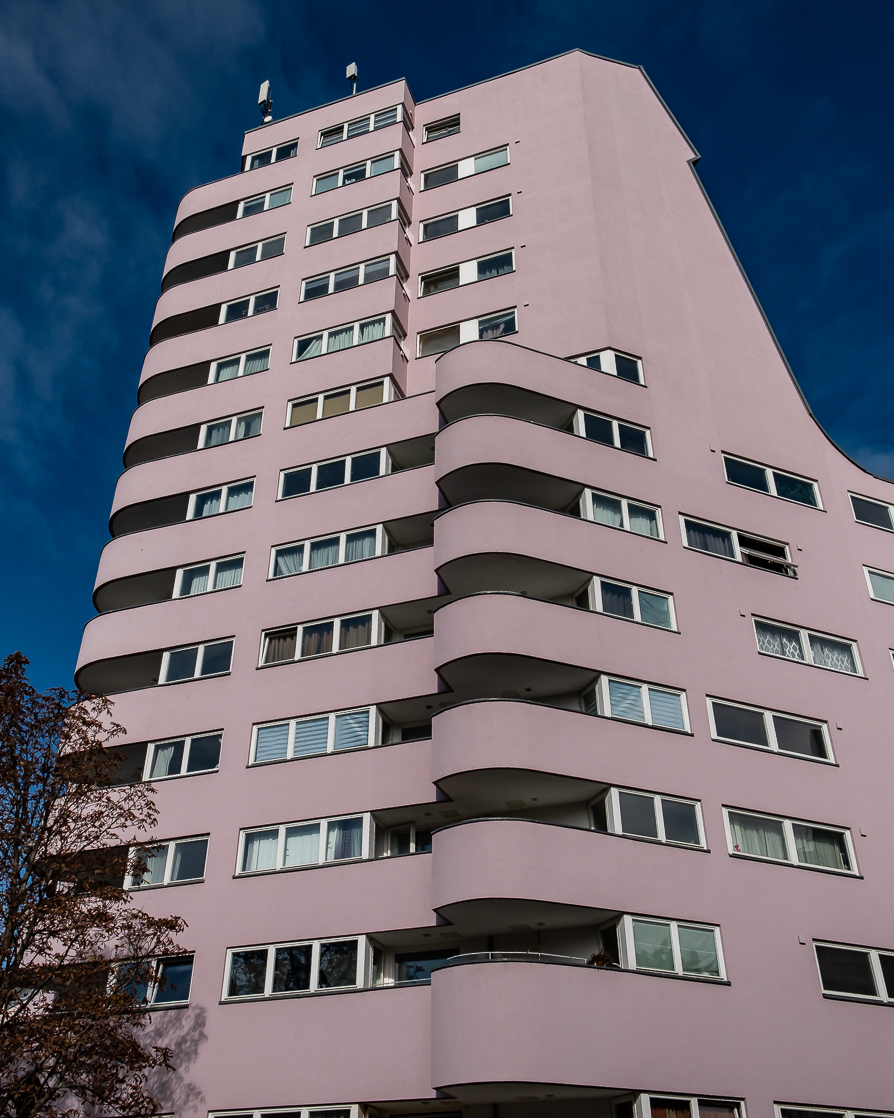
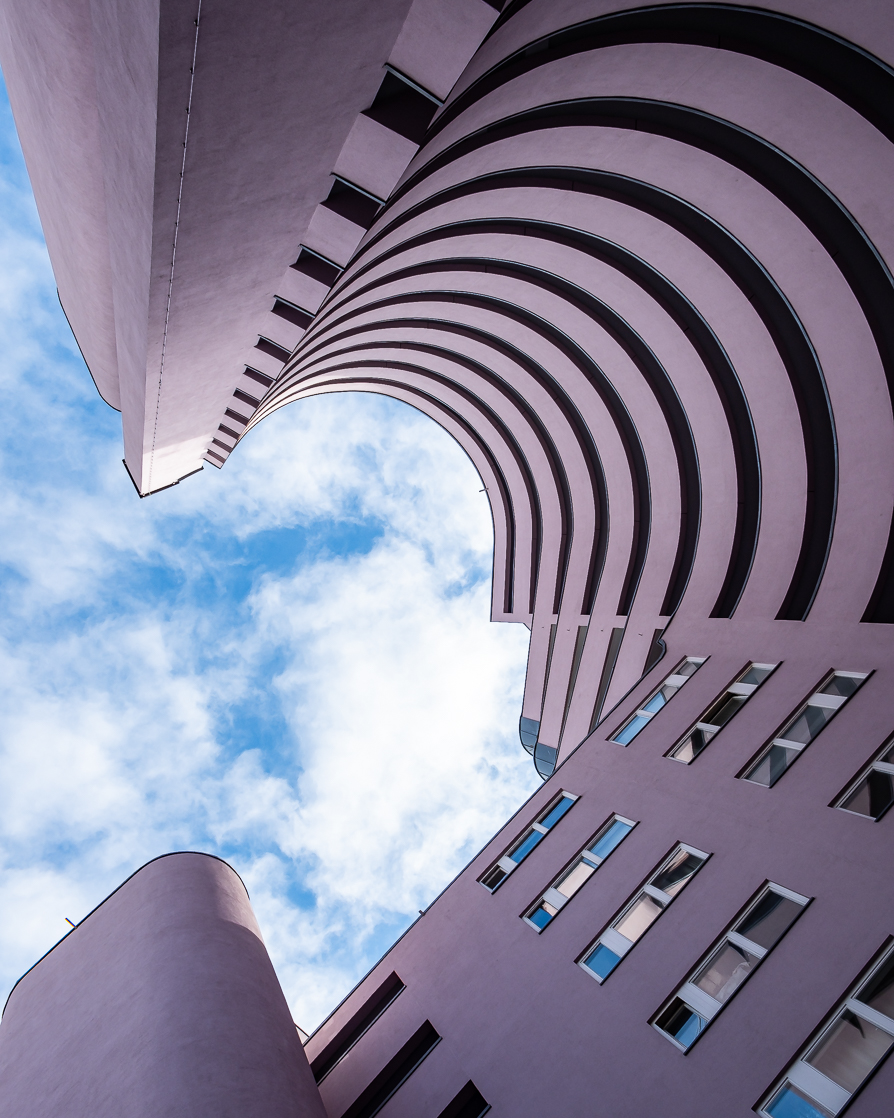
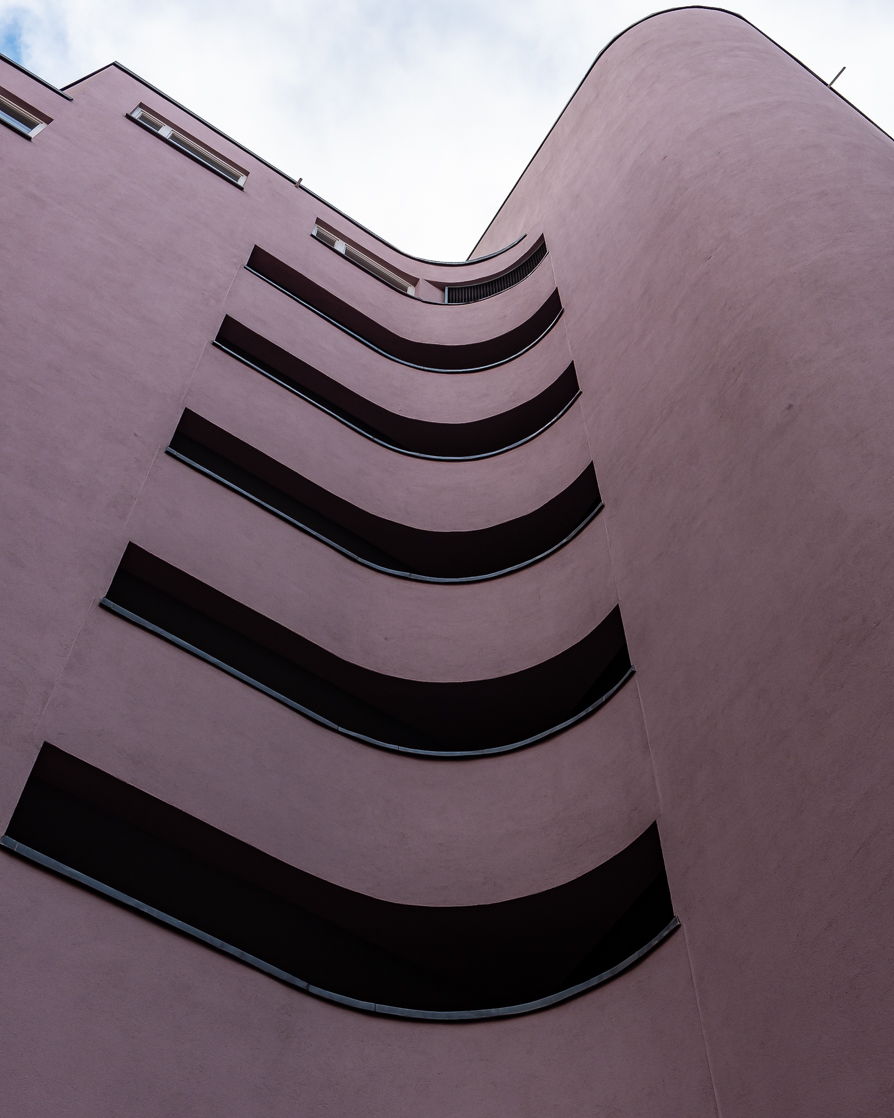
With my plans now changed, I caught another couple of trains to WilhelmStrasse 150. A nice looking apartment block with some magnificent curving concrete painted a fetching pink. This has not been on any record cover that has passed my way.

DSCF4174

DSCF4171

DSCF4168

Band of the Covenant Buildings

With less time in the day due to some poor public transport choices (read this as me missing stations as I was reading my book on the train) and then misunderstanding some messaging about closed lines on the Berlin transport network I headed back towards Alexanderplatz and our hotel to meet up with Eleanor for some afternoon roaming. We had a loose plan that involved walking to a record shop, a photography gallery and whatever else took our fancy, as long as it ended up in a cocktail bar come late afternoon. It was our last day in the city and there is still so much to see, just around the inner north east were we are staying.

When we visited Berlin in June one of the places I was keen to visit was the concrete ‘circle building’ I’d seen photos of on Instagram. I’d spotted it from the train heading west towards the fantastic Teufelsberg on the woody outskirts of the city so had a pretty good idea where it was located. It was only when we ventured into the city centre, near to the Brandenburg Gate and the Reichstag Building, that I nailed down its exact location; right behind the ‘no entry’ tape blocking off a bit of the city sacrificed to the pending European Championship football competition. Oh well, it was something to save for next time; i.e. this time.

And this time there were no restrictive lines of tape or armed coppers making sure no one crossed those lines of tape. In fact, for a series of government buildings there was very little visible security. As a New Zealander and a Brit I still find armed police unnerving, and I work in Whitehall where all the police carry guns, not seeing them here in this almost sterile, yet serene location, was verging on a relief.

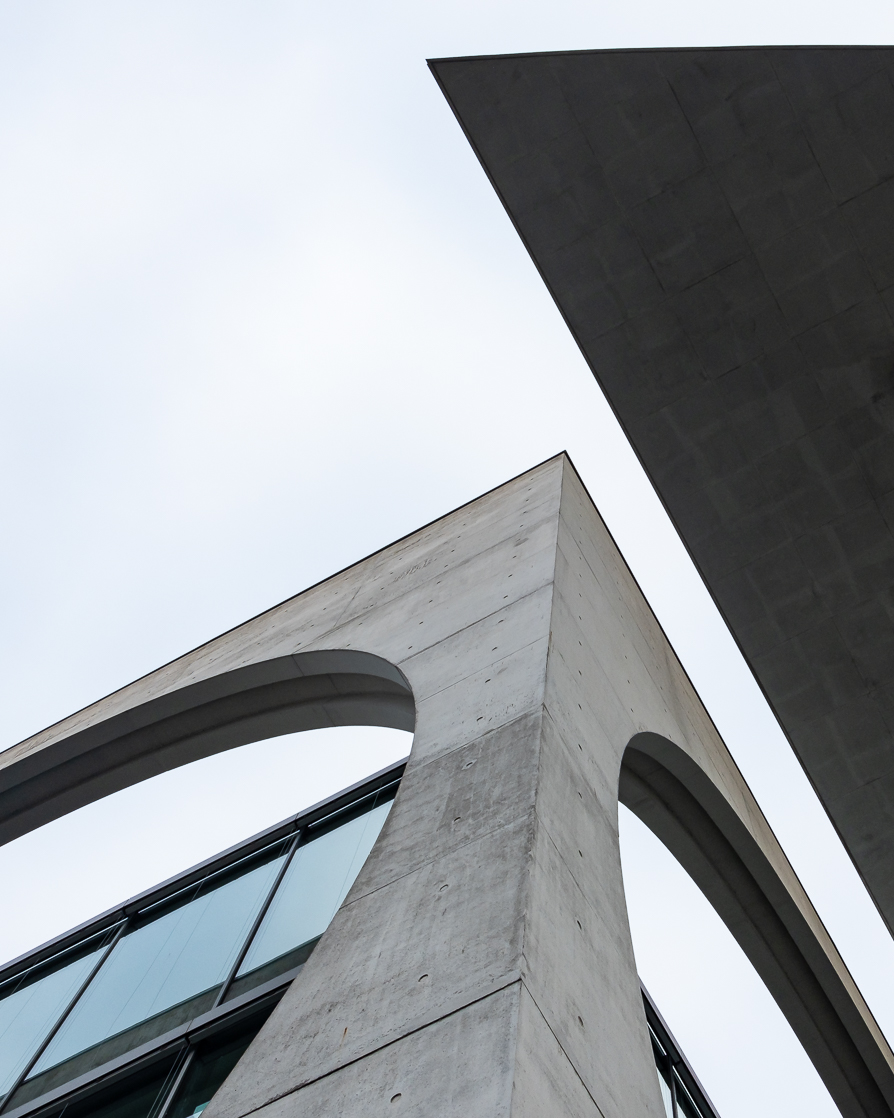
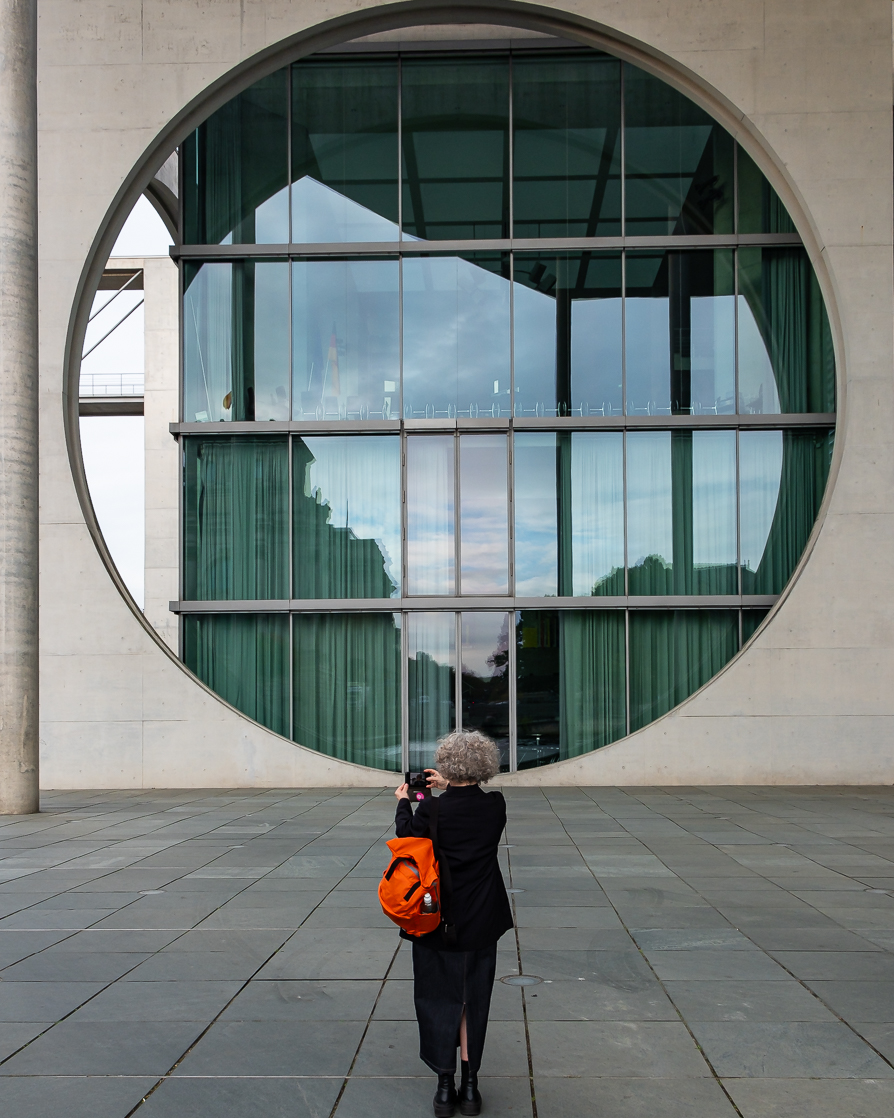
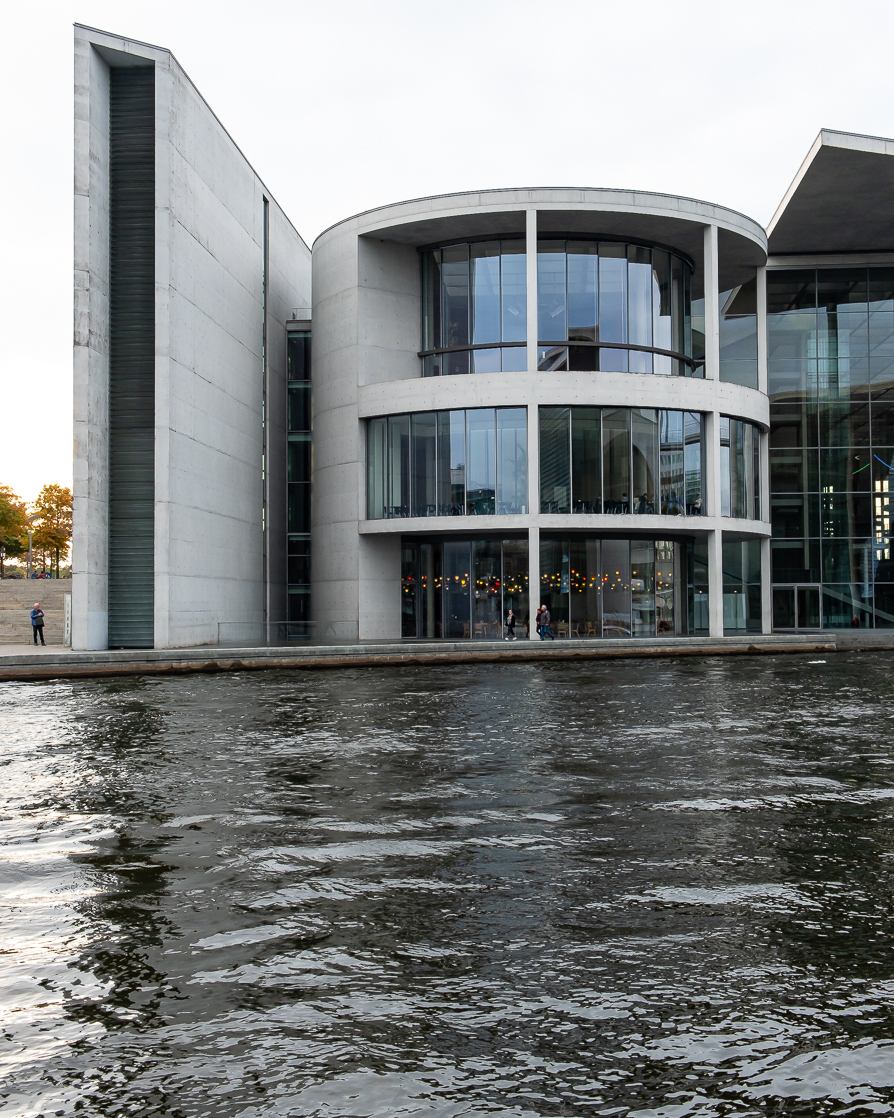
I think this small block of buildings on either side of the River Spree is utterly beautiful and not because of the concrete, the design is just so fresh and free and walking around looking at them genuinely made me happy. I think the complex is called ‘Marie-Elisabeth-Lüders-Haus’ and it is made up of an art gallery and the government library, among other probably less public parts of the German government. Construction was mostly completed in 2003 so these are not the post-war concrete rebuilds you see in other cities.

DSCF4202

DSCF4197

DSCF4193

DSCF4190

The ‘gun thing’, and yeah I will put it out there. I fucking hate guns, and everything they represent and really don’t understand this fascination so many have with them. I understand the US is just obsessed with arming everyone, seemingly to keep those who make weapons and all the bollocks that goes with that in the lifestyle they have become accustomed to, but why do the rest of us have to support that? Why do we have to see guns on our streets?

This was brought into stark relief on the opposite side of the river to the buildings above. There are four white memorial crosses wired to a low fence in remembrance of four, mostly young people, who were shot and killed by East German guards as they tried to flee to West Germany, the youngest was 18 and she was shot in 1984. Like the memorial plaques outside of the houses were Jews lived pre World War Two which I mentioned in the previous post, I didn’t take photos of these poignant reminders of humanities capability to be utterly evil.
I can’t possibly imagine what it was like for the Jewish and Roma people, the LGBTQ, disabled and other communities before and during WW2 and for those East Germans who wanted to go west to be so savagely betrayed, persecuted and murdered by their own countrymen. How fucked up was that? And the saddest thing of all is that for many around the world that hasn’t changed.

Temple(s) of Love – brutalist Leeds

Saturday 14 September 2024 – Leeds

This was my first Brutal Day Out group trip outside of London and I‘d been looking forward to it for weeks. The group has made a few visits to other cities and towns but I’ve always been busy with other things and not been able to attend. With group members from across the UK it’s important to share the cost of transport and not be so London focused, plus there’s a lot to see outside of the capital and it’s a good reason to visit places I would otherwise have no need to go to.

Also… I’ve wanted to visit Leeds and this was a very good reason to do so. It’s the spiritual home of 80s ‘goth’. The mid to late 80s saw Leeds deliver some fantastic goth bands like The Rose of Avalanche, March Violets, Red Lorry, Yellow Lorry and the kings of the genre – The Sisters of Mercy.

Heartland is an early (and favourite) song from Sisters of Mercy, the B side of the magnificent ‘Temple of Love’ 12 inch single and it popped up on my playlist as the train passed through England’s (semi) rural heartland. I gratefully accepted this as a sign that it was going to be a good day. The weather was certainly playing its part.

PXL_20240914_091708169

Ten of us met outside Leeds station, five made it up from London, returning the favour to those who frequently travel down from Yorkshire. I’d met most of the group before and it was, as always, good to catch up with this likeable bunch.
Our first stop was Bank House, this and the next building I photographed are brutalist in design, but both had been clad in something other than lovely grey concrete, textured or not, so didn’t particularly wow me. I do like things raw.

DSCF3769

DSCF3773

The Ex-Yorkshire Bank Building, vacant and soon to be demolished so more student flats can be built. It’s an Ok building, I hate the glossy cladding, but like the design and the lovely harsh angles. It’s a shame it has to be knocked down for more flats. I mean, the centre of Leeds is hardly attractive, with a weird hodge-podge of building styles from the last three of four centuries. Design planning doesn’t seem to have been a priority for the council, not that there is any unusual in that.

DSCF3774

DSCF3775

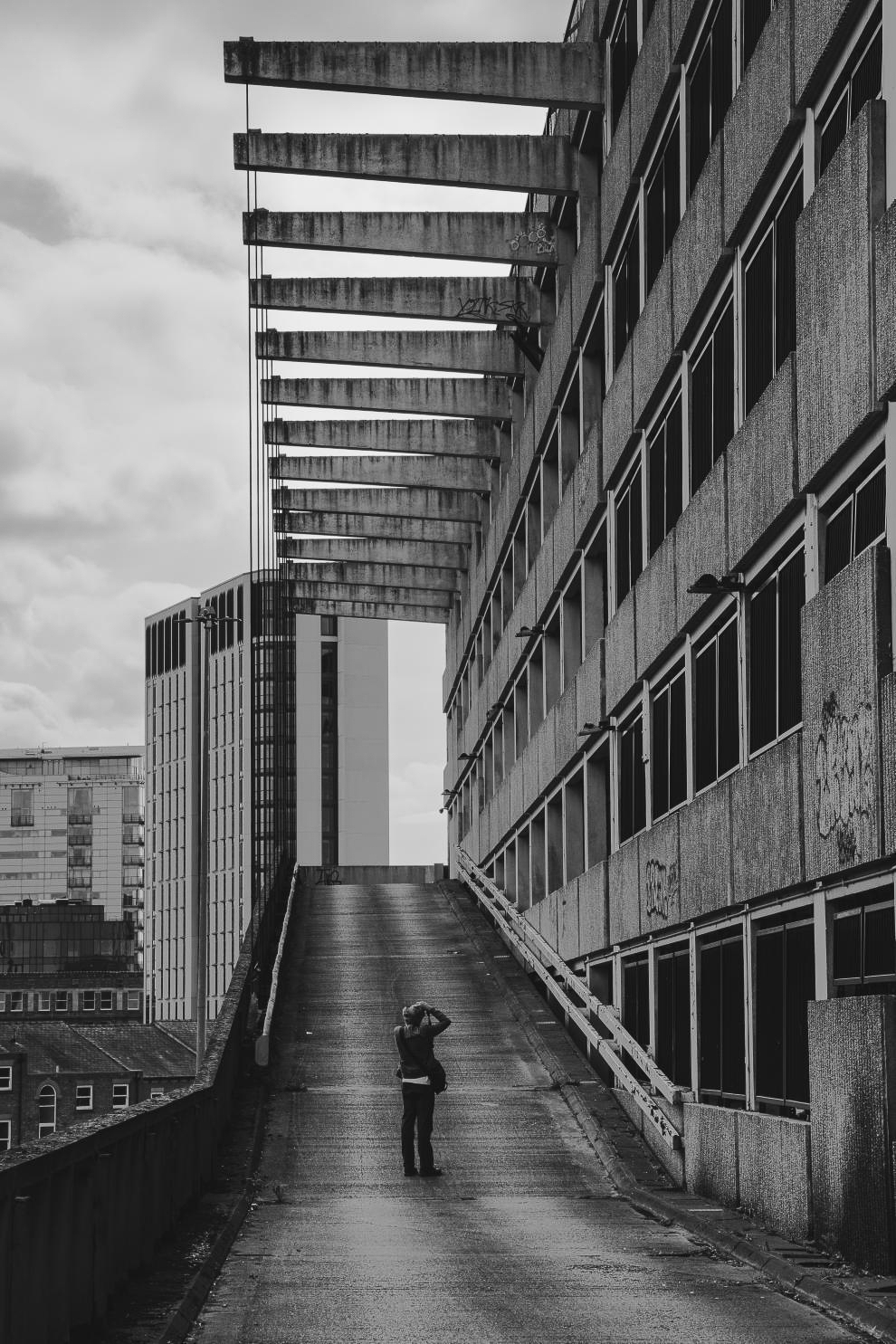
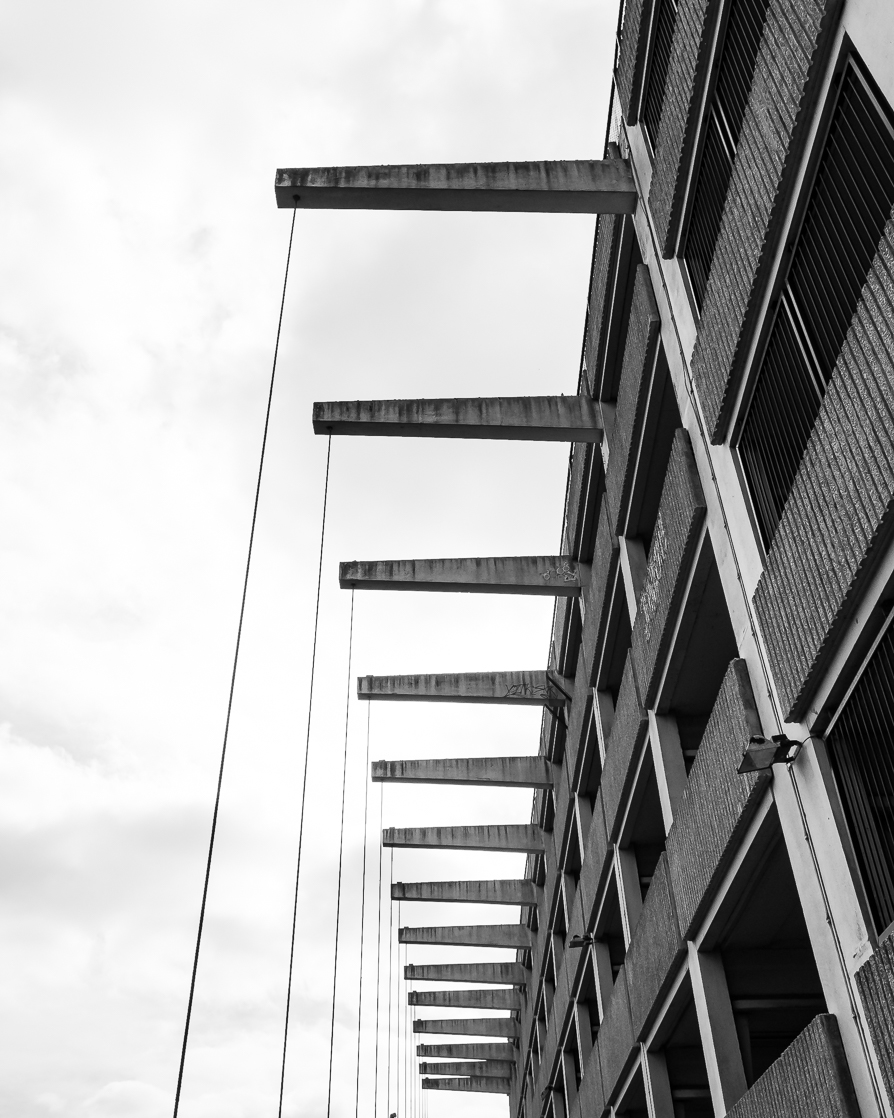
I love a good car park and Woodhouse Lane on second look is very much a good one. It was all a bit ‘meh’ from the main road, but once round the side and discovering the ramp down from the upper parking decks it was much more exciting. 

DSCF3788

DSCF3792

DSCF3797

I (we) loved the overhanging beams that appeared to have no purpose other than being in some way decorative. One of the group, Kasia, snapped a great picture of me taking the photo below. I seemed to have spent a lot of the day getting in the way of others photos. I guess it was my turn.
IMG_20240915_111641_518

DSCF3791

Kasia, has been to India and Berlin and gave me some interesting tips on brutalist and modernist buildings; she is extremely well travelled and I had a little travel envy. I also spoke to Britta about Berlin and she had some good ideas too. They both knew the LP Café Exil, which I listened to a lot leading up to and when we were in Berlin in July. The bonkers brutalist building on the sleeve still stands in Berlin and is on my list of places to visit when we return in a couple of weeks, something I’m looking forward to immensely. A second trip to India is planned for April 2025 and I’m well into thinking about that trip already, in fact it dominates the late night non-sleeping hours at the moment.

The School of Engineering building and a couple of brutalist day outers

DSCF3800

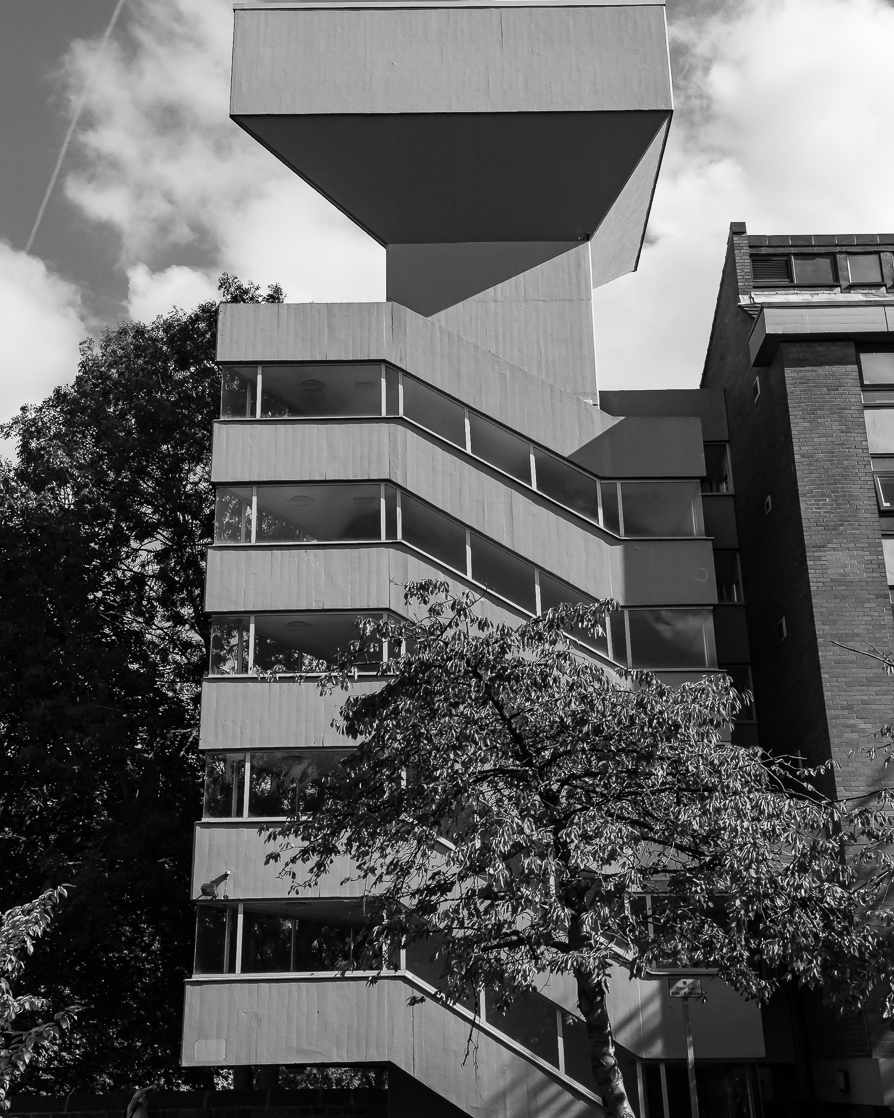
I stupidly didn’t note the name of this completely mad, but interesting stairwell to a rather bland student accommodation block. We had no idea what the top bit is for.

DSCF3805

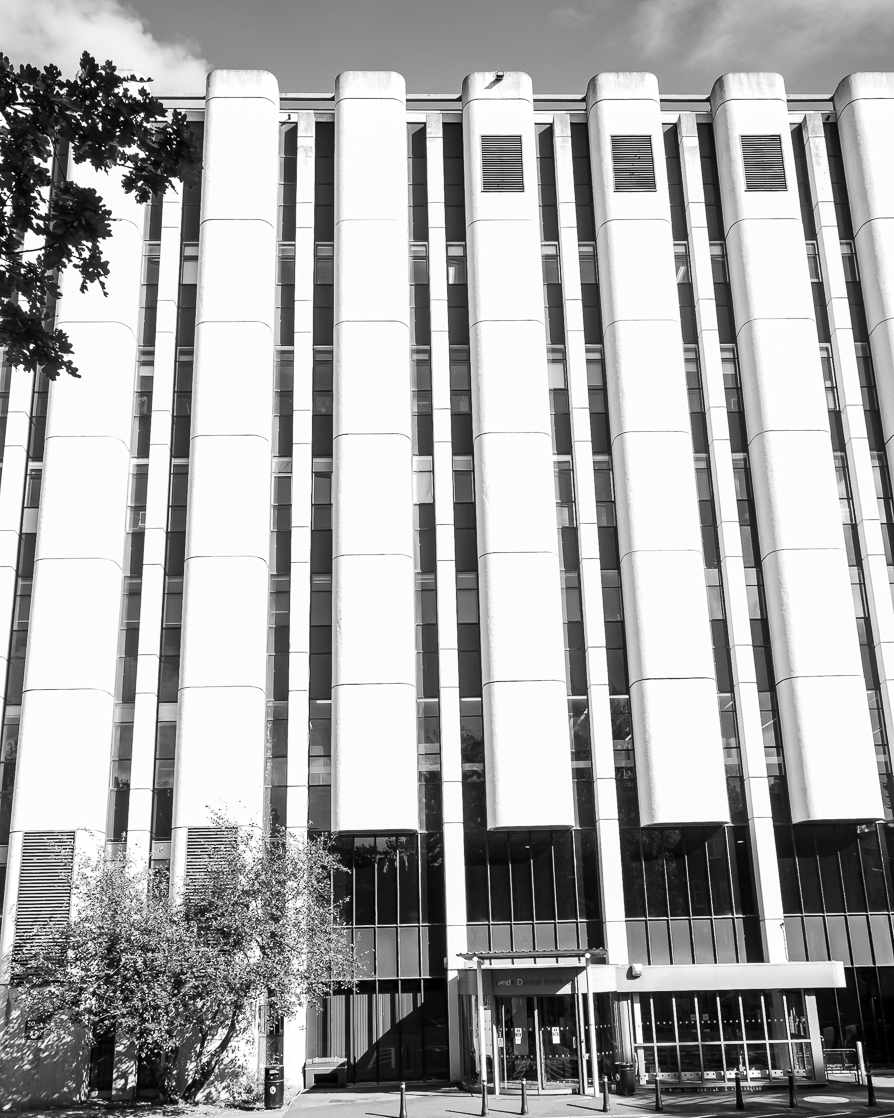
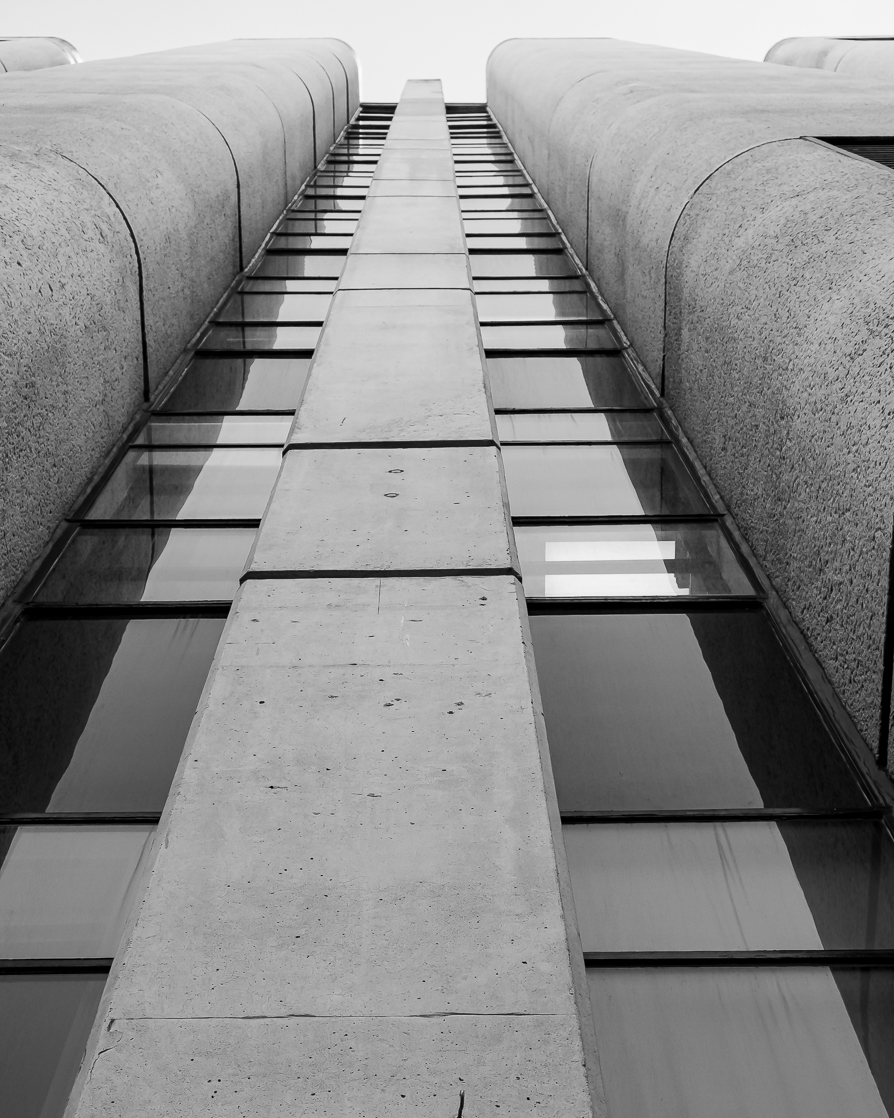
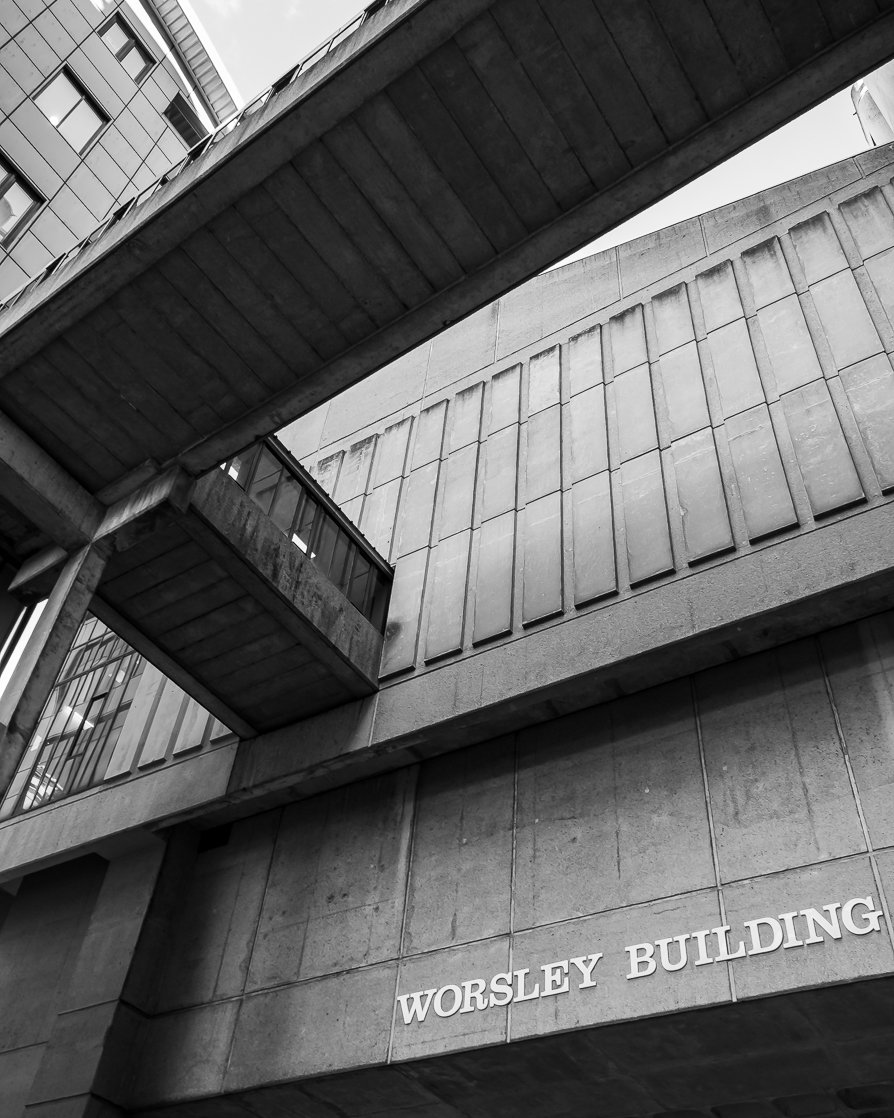
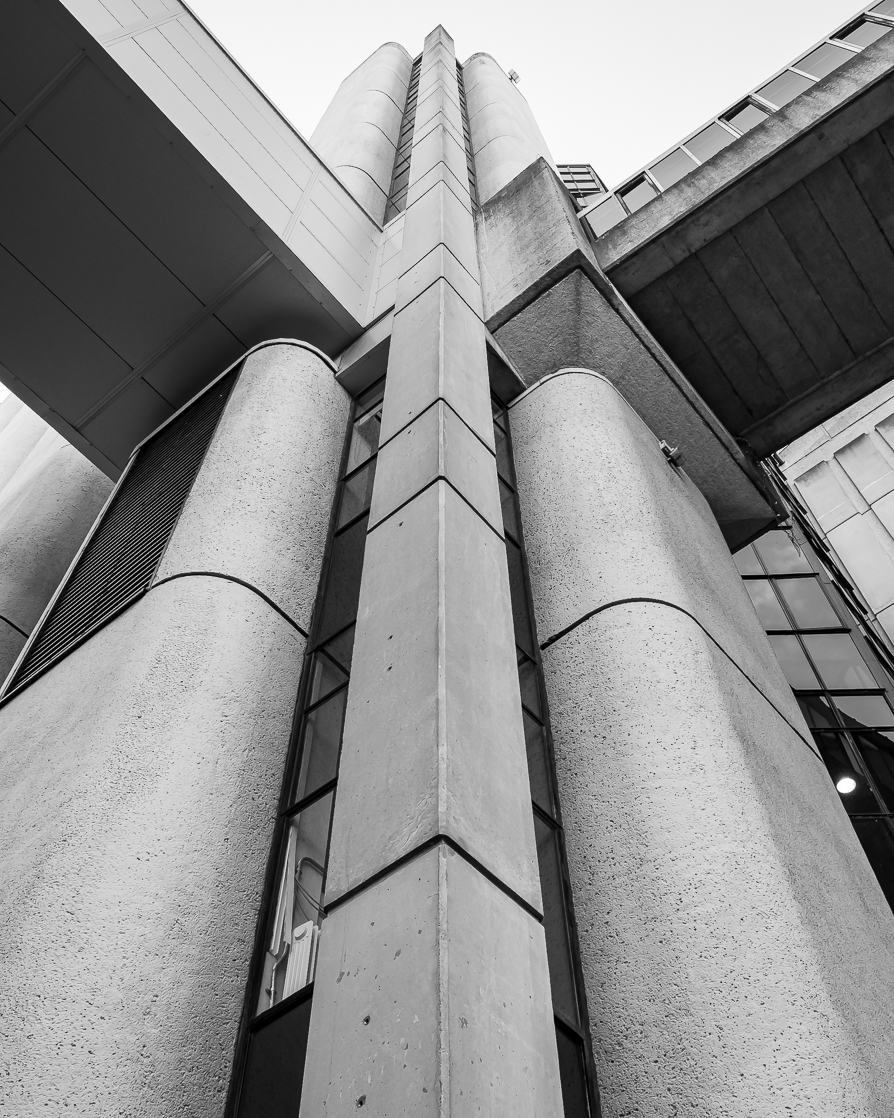
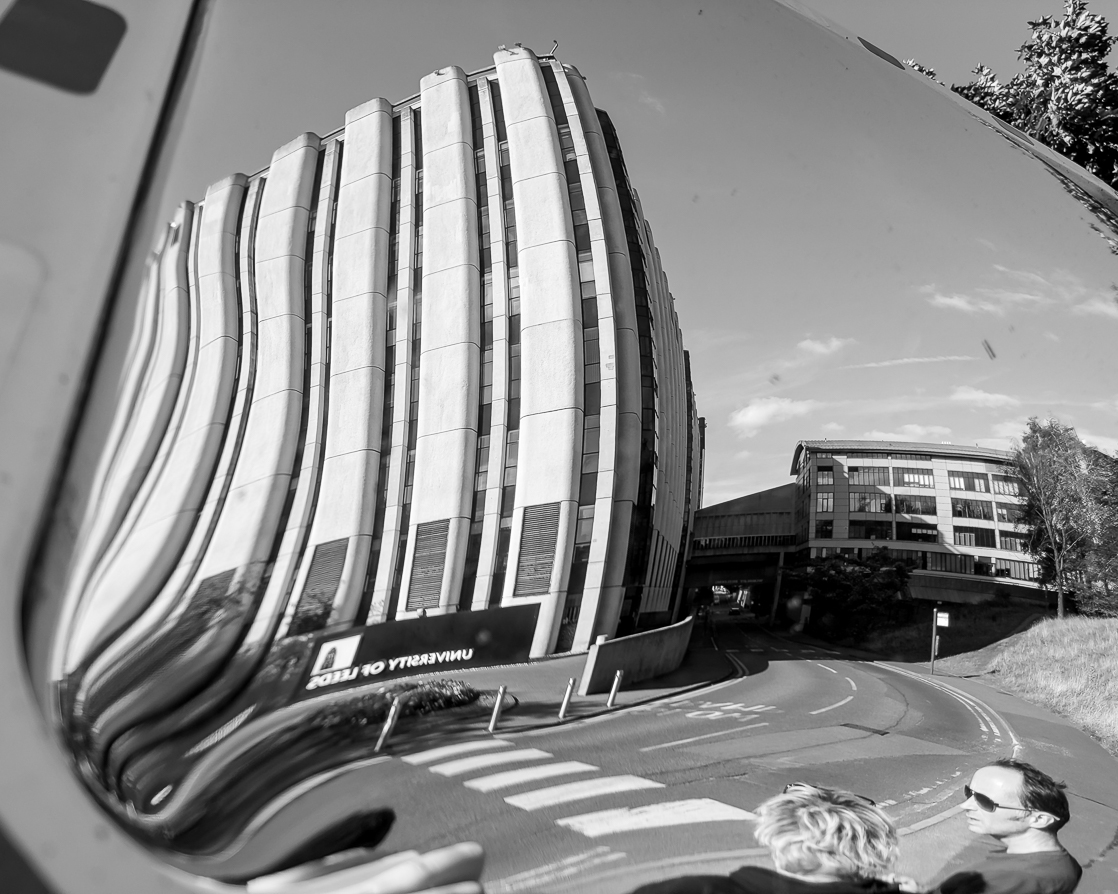
Then we were onto the main campus of the University of Leeds and a couple of very cool buildings, starting with the huge and imposing Worsley Building.

DSCF3816

DSCF3815

DSCF3819

DSCF3821

I love this reflection from the roadside turning mirror, also capturing a couple of fellow concrete geeks.

PXL_20240914_141544035

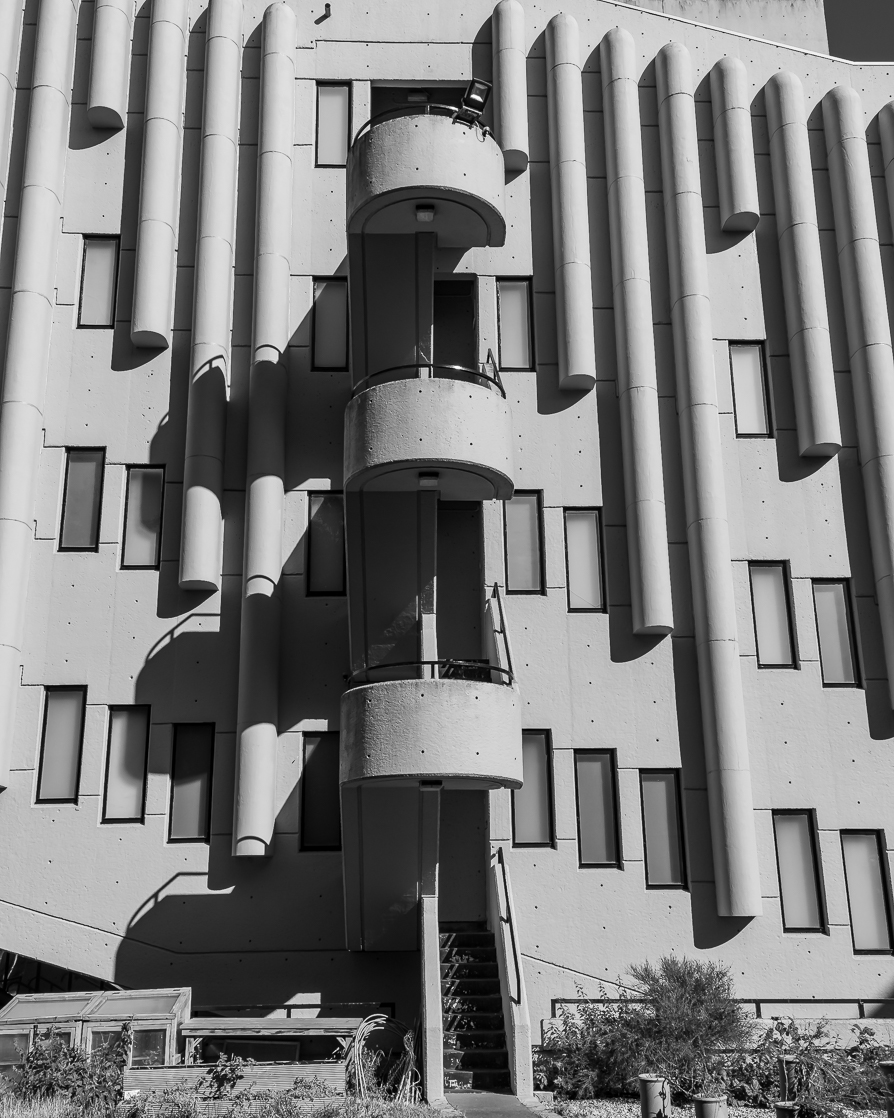
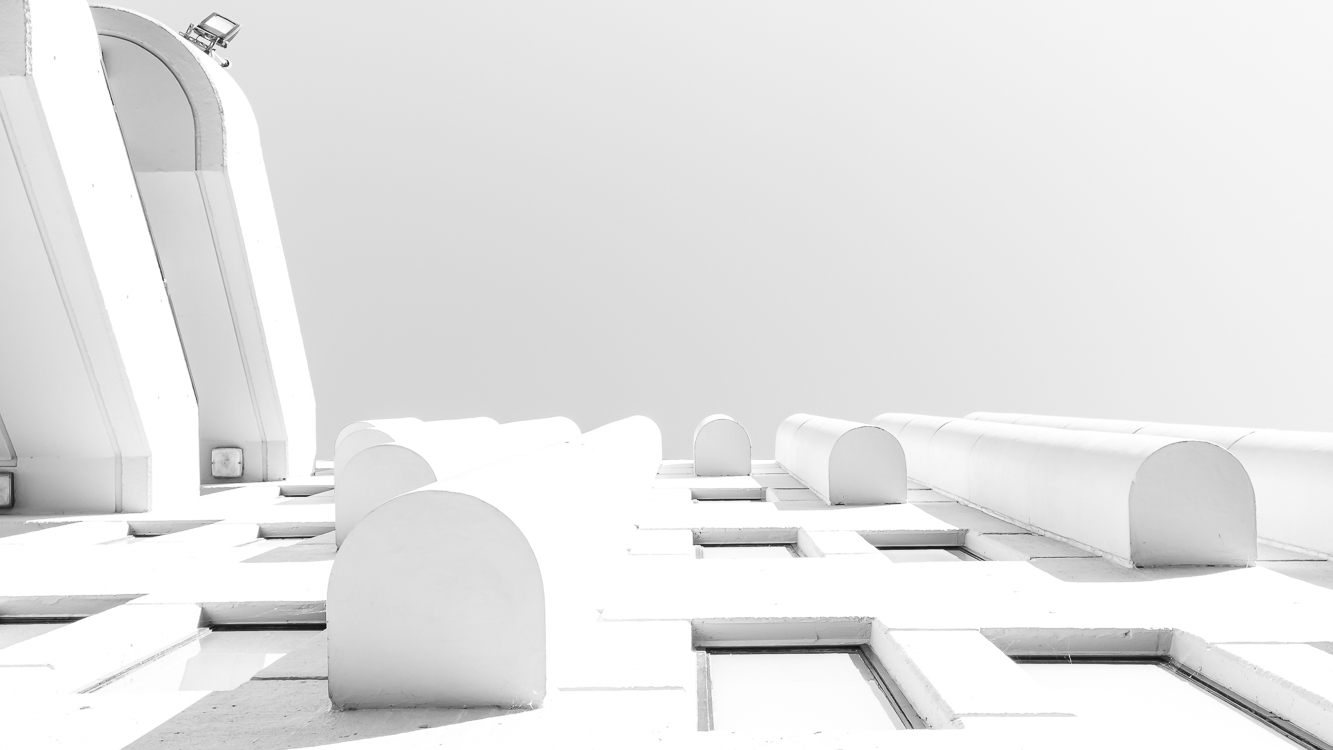
Britta, who was the main organiser and guide for this walk, had clearly saved the best to last, and man was it good. At first glance the Roger Stevens Building looks like it’s more modern than its 60s construction, maybe it’s the paint, maybe it’s the ‘piping’ up the side, either or it looks so futuristic, but under that paint it’s just lovely 60s solid concrete.
DSCF3836

DSCF3830

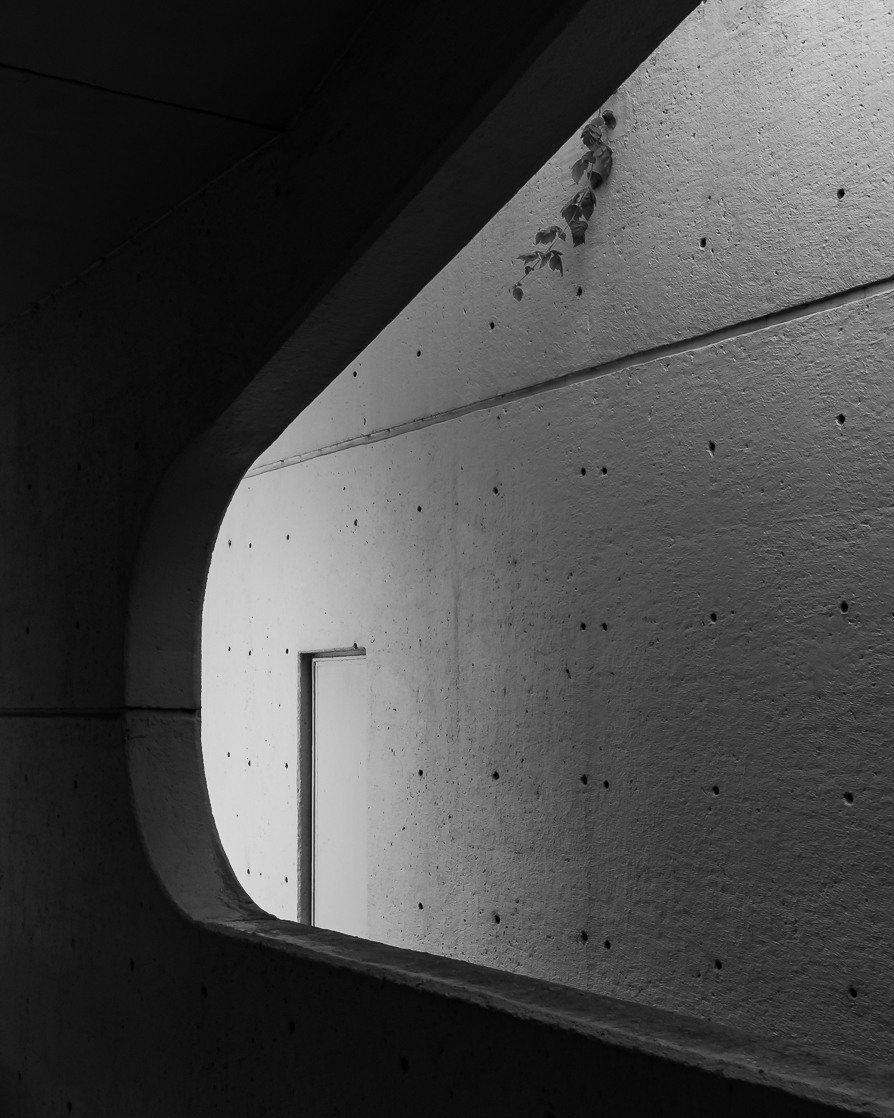
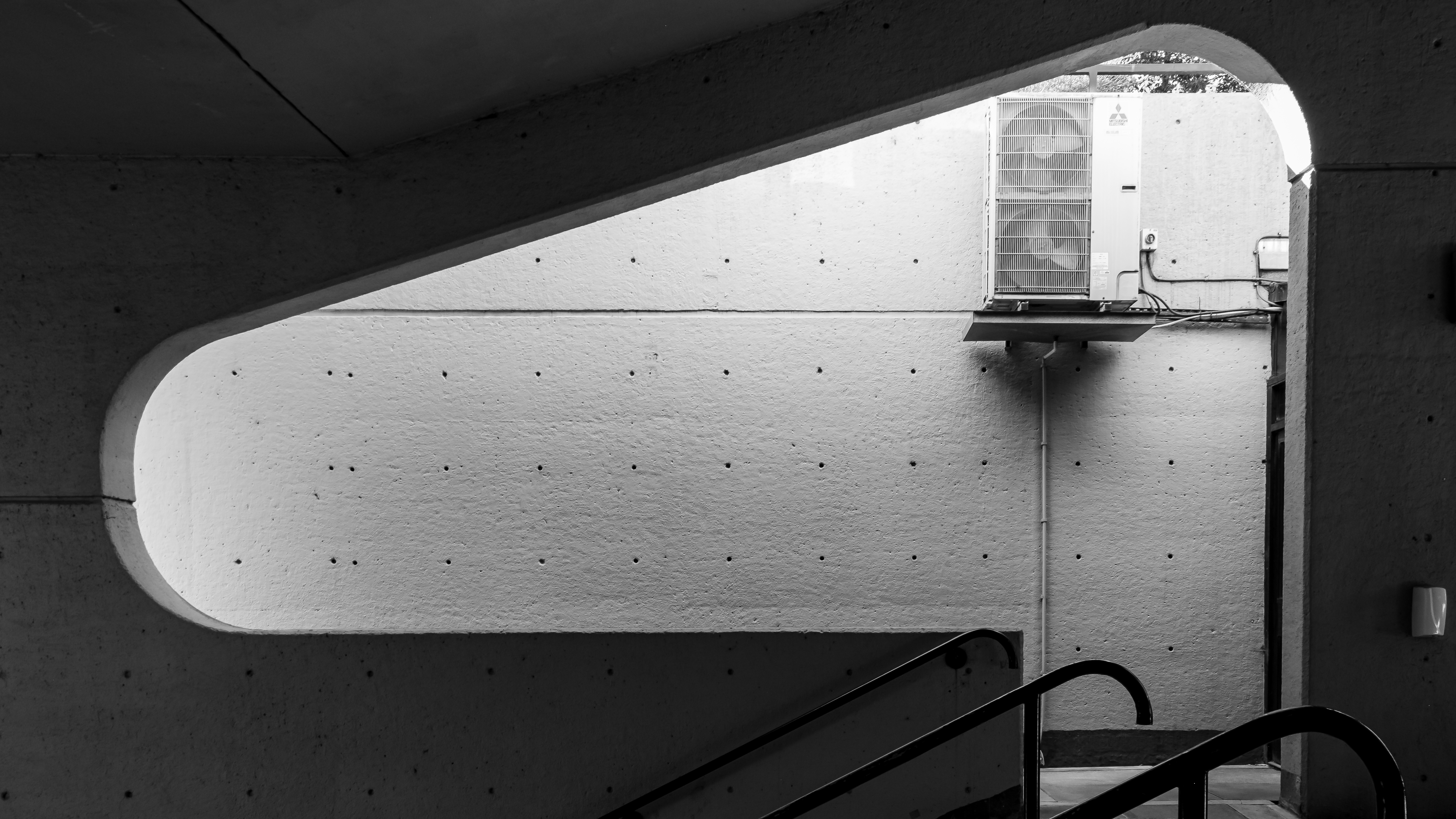
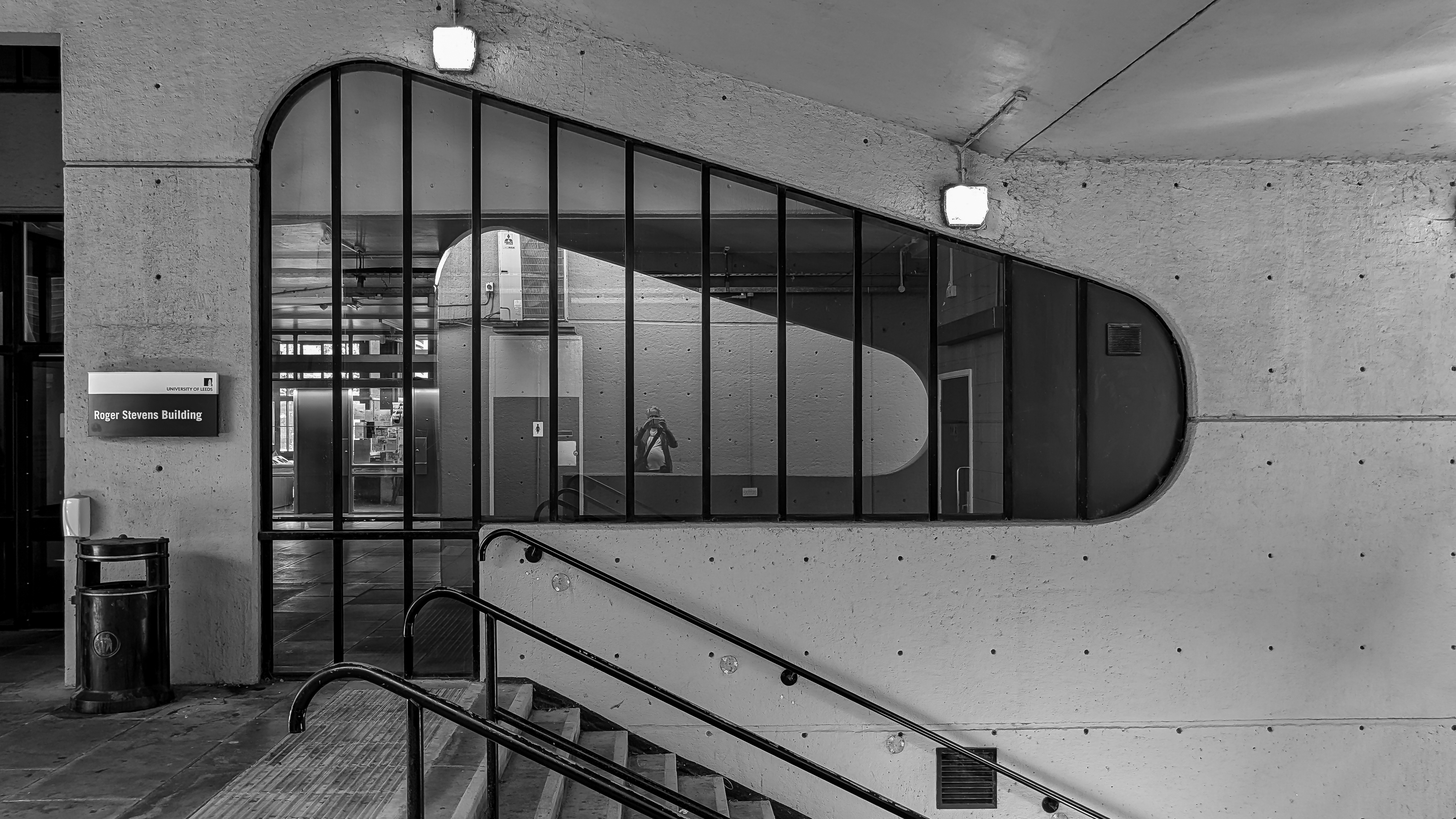
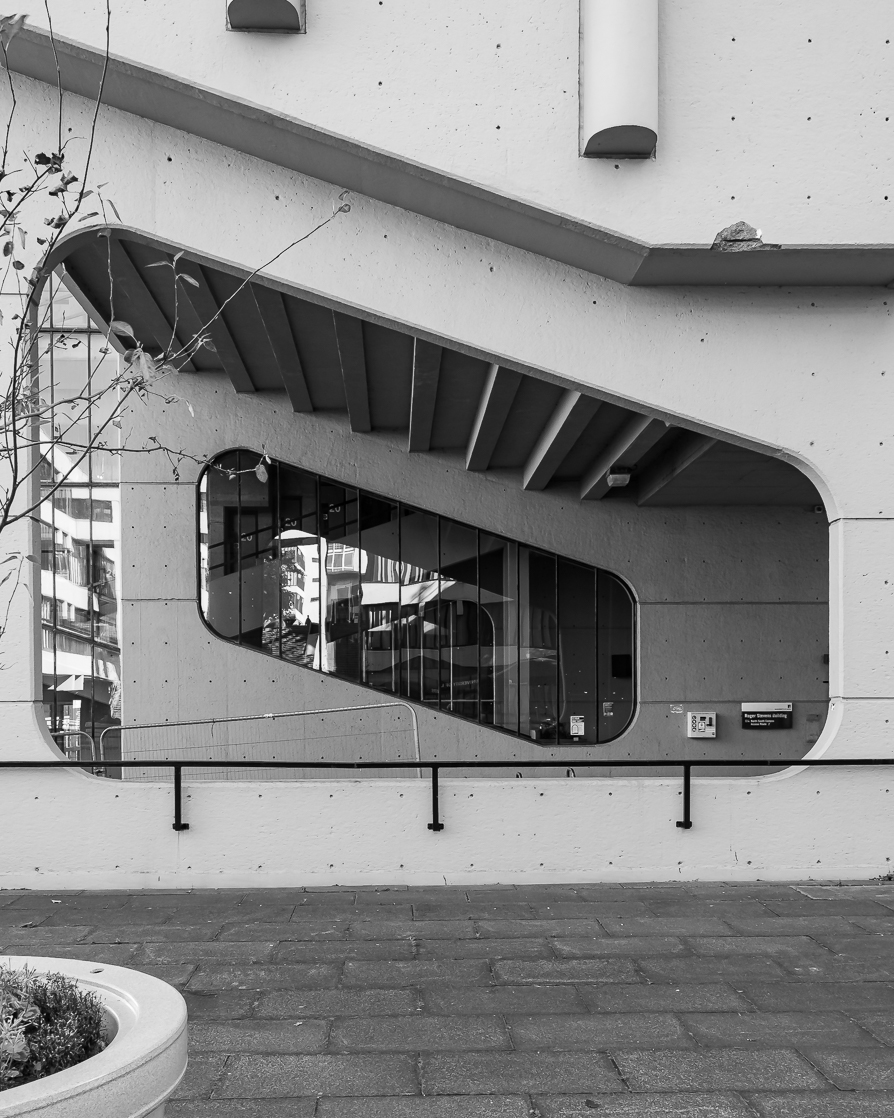
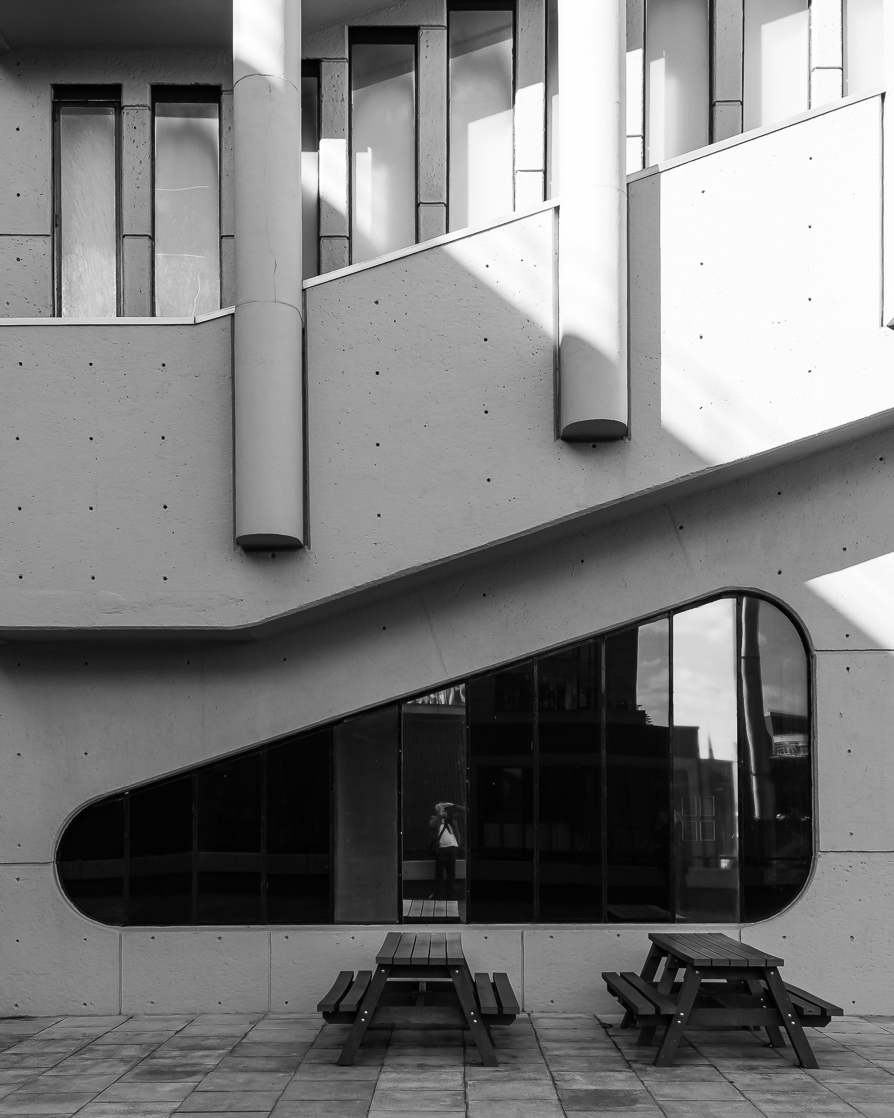
I was a little unexcited when it first came into view, and I wandered away from the group to have a look round the side and found the long and wide staircase, with these fantastic curved cut-outs, one side allowing light to pass across the stairs and through the windows on the other, I loved them. They were the architectural highlight of the day.
DSCF3829

DSCF3827

PXL_20240914_143428357

DSCF3841

DSCF3832

The rest of the building is equally interesting. I’m a huge fan of elevated walkways, and they’re one of the reasons I love London’s Barbican. Designing places specifically for humans rather than vehicles was such a key component of mid-century future design thinking in my view, countering the argument that these concrete monoliths were sterile and void of humanity. Anyway, this is a lovely building and together with Worsley make for a very interesting part of the university campus.

DSCF3837

The walk drew to a close with that most dramatic of buildings so some of us went off for a couple of pints before heading back to the station and, for me, the return to London. It was a good day.

DSCF3854

Brutalist London, part something

Saturday 29 July 2024 – London

I’m starting to lose track of how many Brutal Day Outs I’ve attended over the last couple of years; but it must be seven or eight at a guess. While some of them are semi-organised by Britta and/or Stefeno and are run as planned walks, today’s little adventure was a casual get together arranged by me via a brutalist architecture Instagram group I belong to. I wanted to take a walk around some of the brutalist or modernist buildings in central London I’ve not photographed before and it turned out seven others wanted to do so as well. Nice. I like these people and it’s always nice to hang out with people you like.

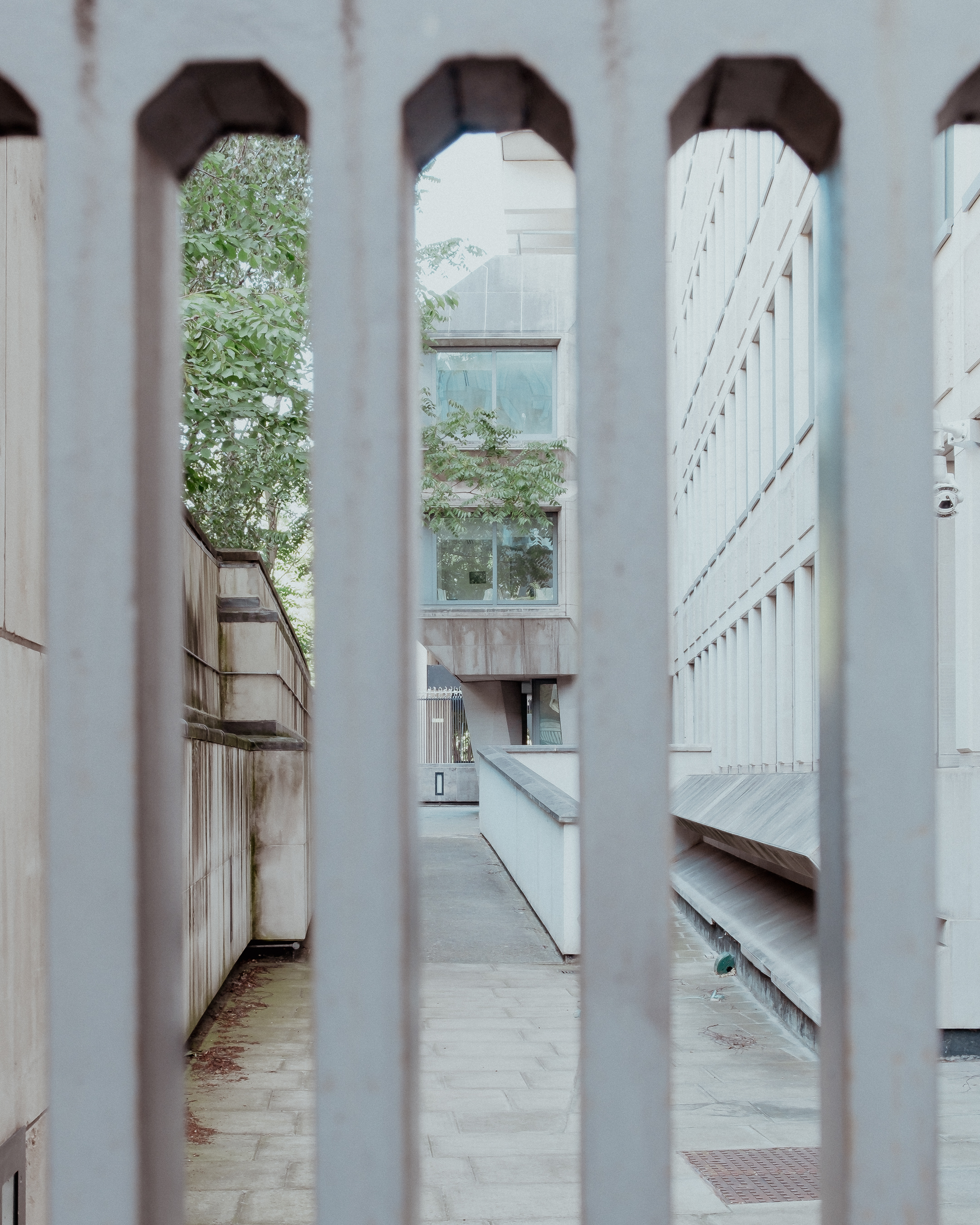
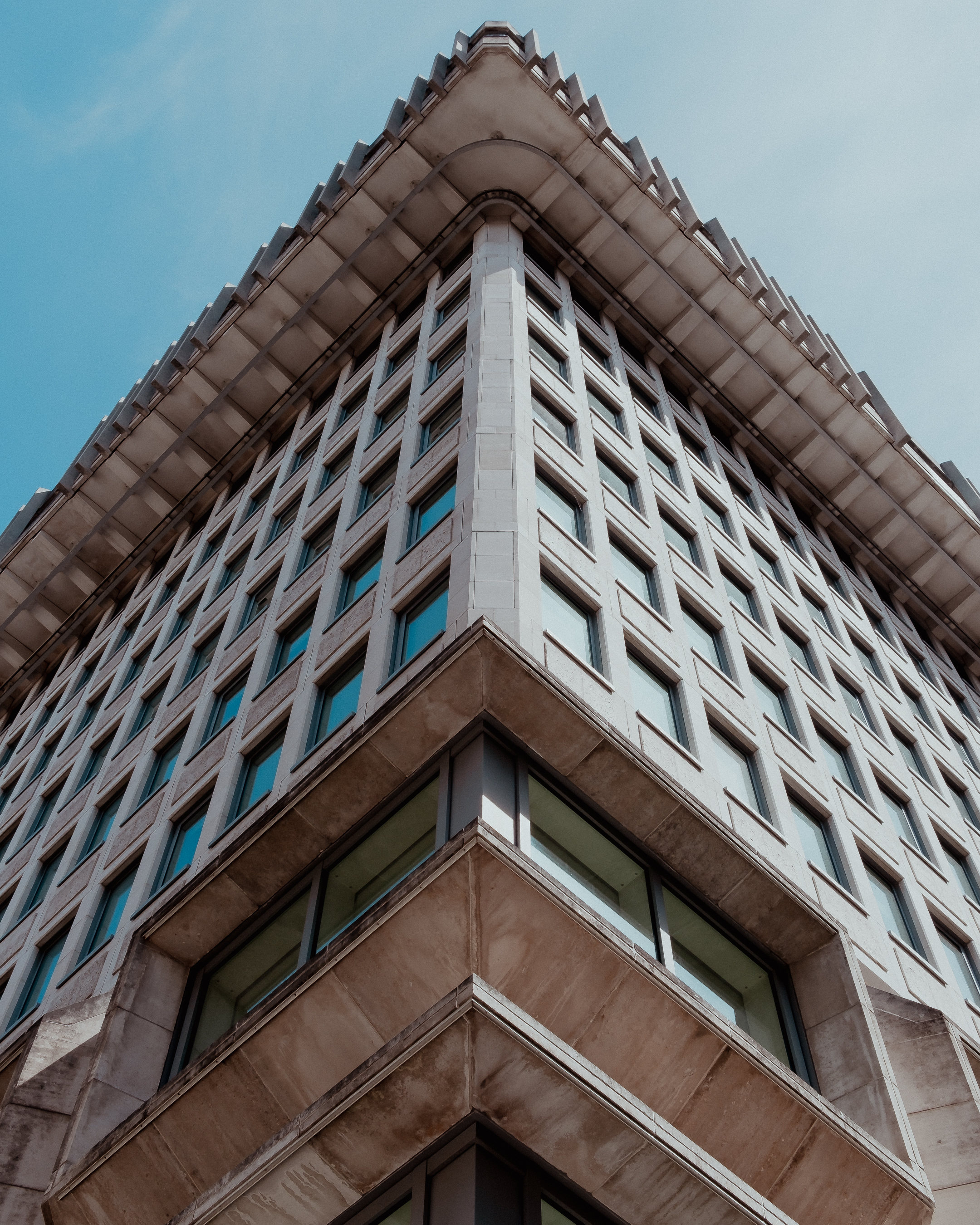
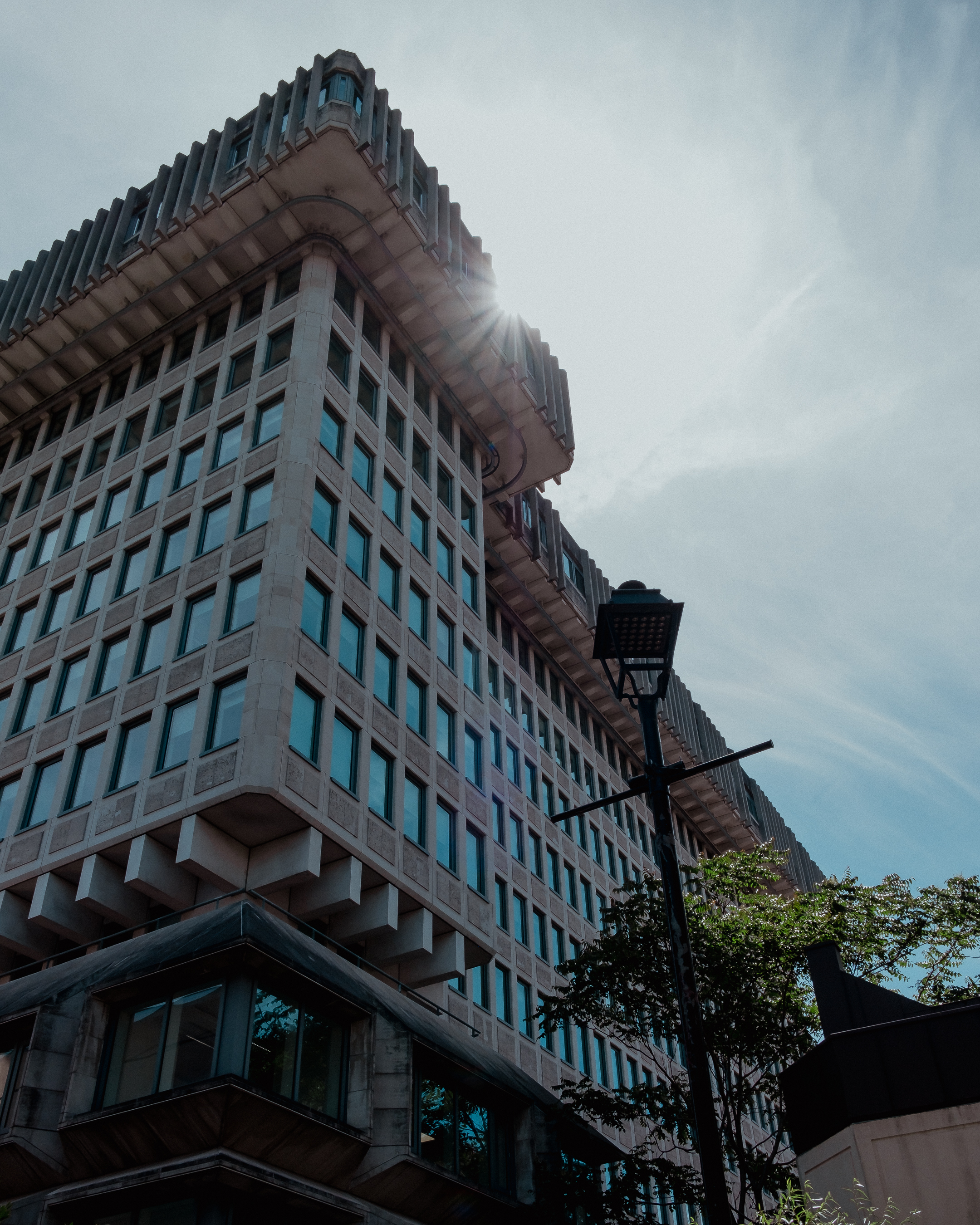
We met at St James Park Station which is conveniently and directly over the road from the Ministry of Justice building in Petty France. This building is up there as my favourite brutalist building in London. It’s a concrete monolith with some lovely, yet large scale detail and for obvious reasons it was known by some as ‘The Lubyanka’. The building  was completed in 1976 and I love it.

DSCF3139

DSCF3140

DSCF3141

DSCF3142

Obviously we can’t pop inside for a quick look around, and even if I managed to get myself invited into a meeting in one of those lovely first floor rooms, as a civil servant I know photography is not allowed on government premises. Grrr….

DSCF3146

DSCF3144

DSCF3143

DSCF3153

Some of the lesser lights didn’t make it out of the ‘reel’ of photographs I took on the day, so sorry St Vincent’s House, my photos didn’t do you justice.

It wasn’t on my original list of things to visit, but we’re democratic and one of the group works in this University of Westminster building, so we did a walk by, tempted by being advised there was a very nice coffee shop over the road. It was very nice.

DSCF3169

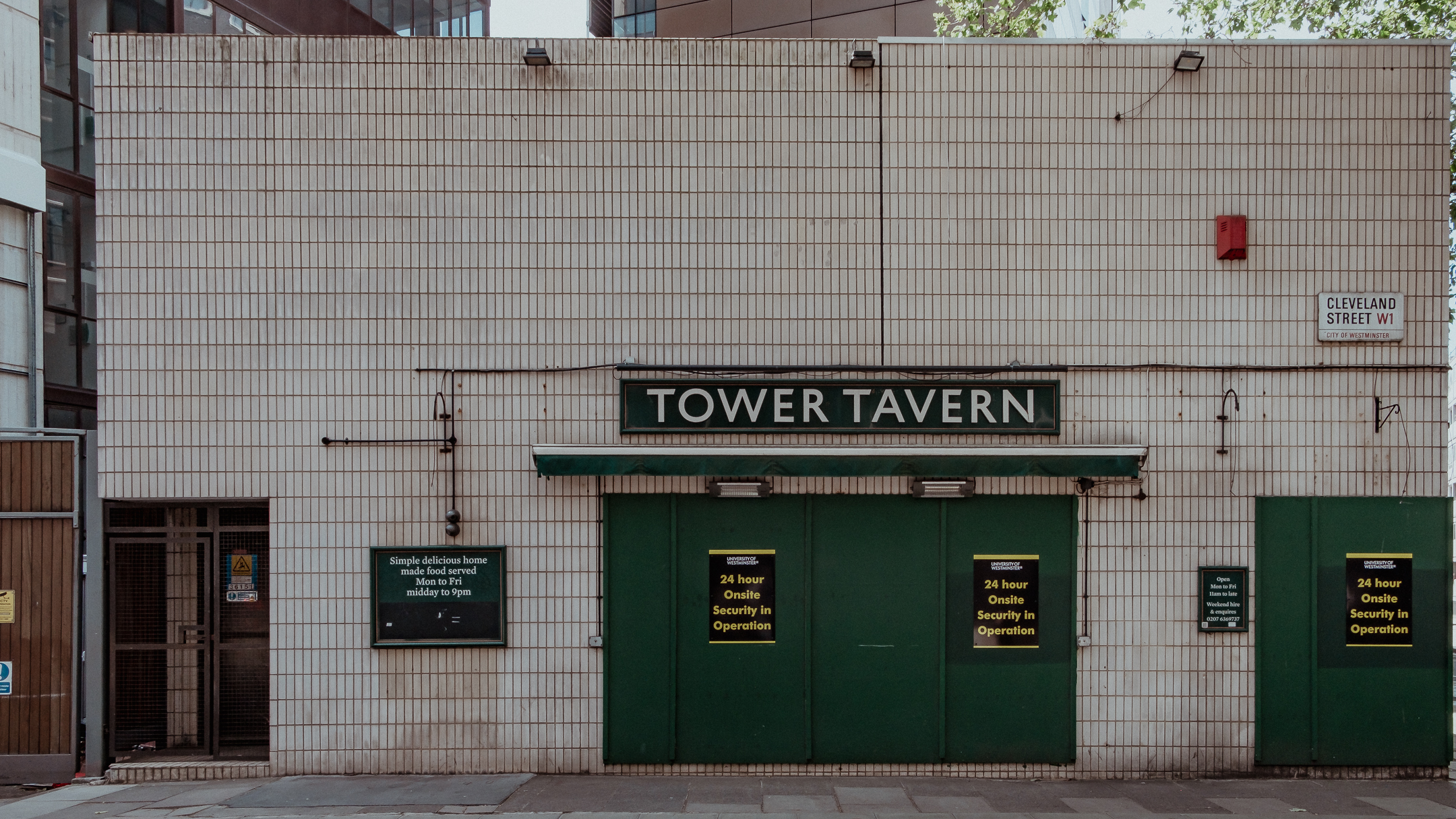
Behind the university is the, now sadly closed, Tower Tavern, which looks much better than I managed to capture in this photo. I hope it gets to re-open soon as I would like to see inside.

DSCF3170

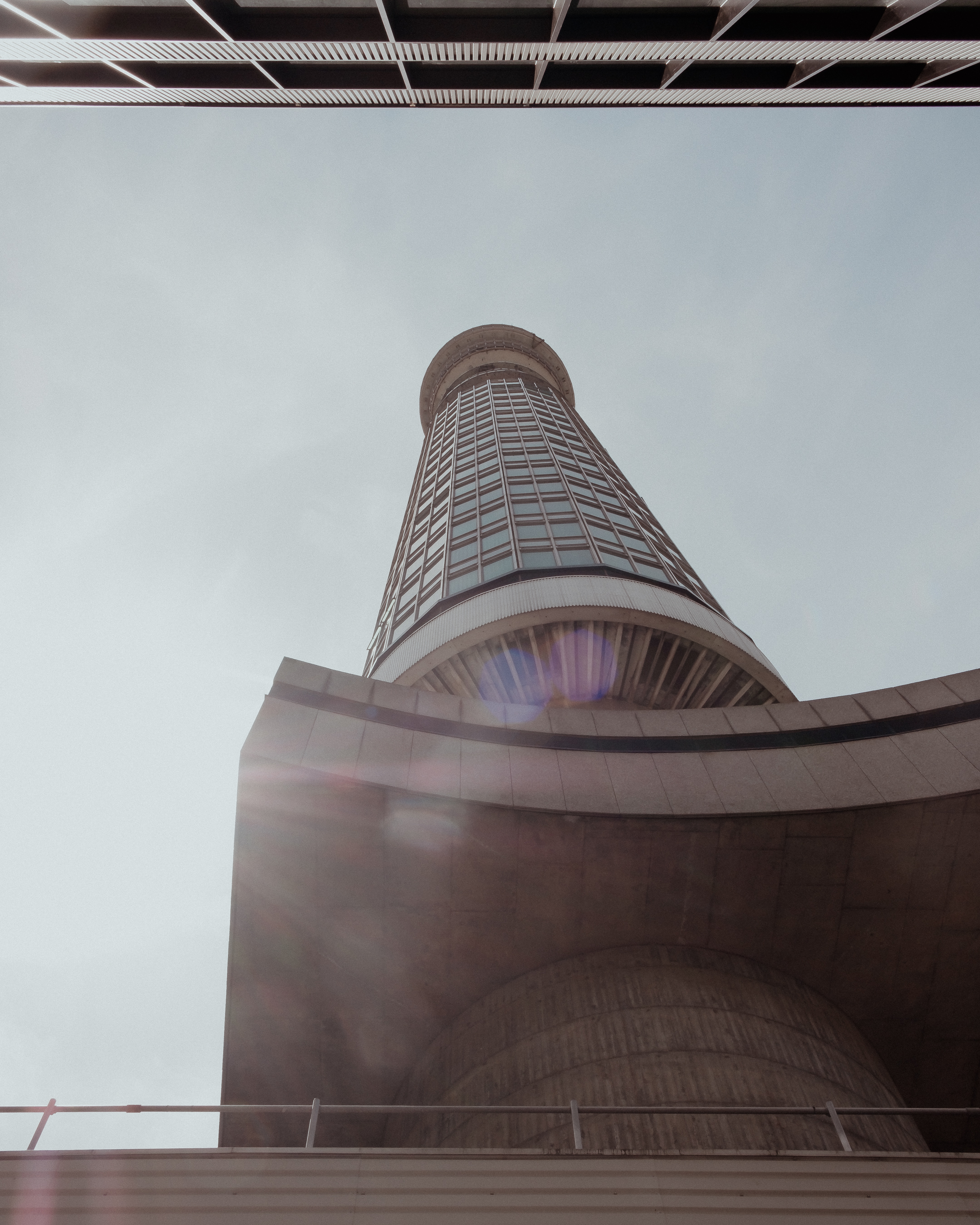
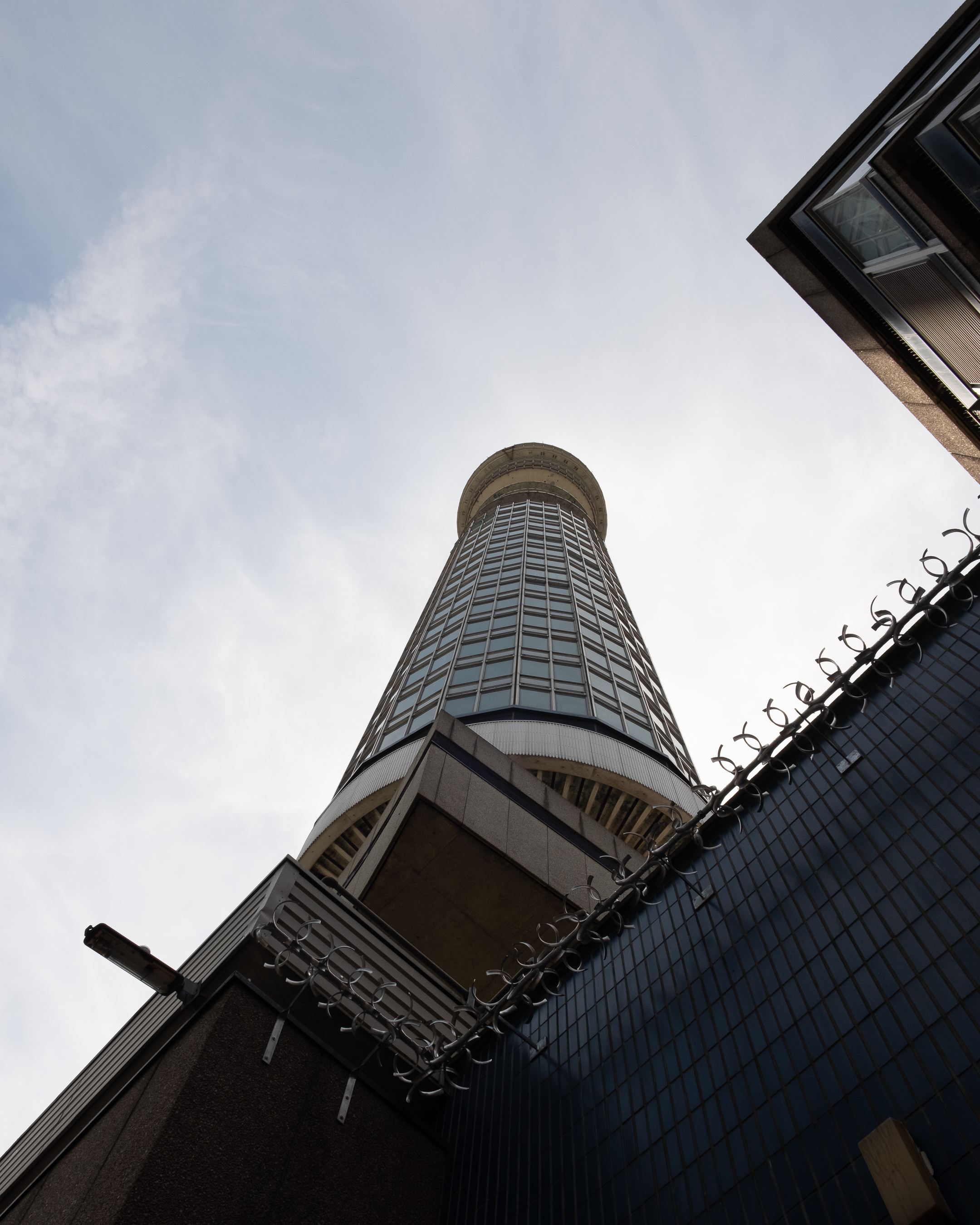
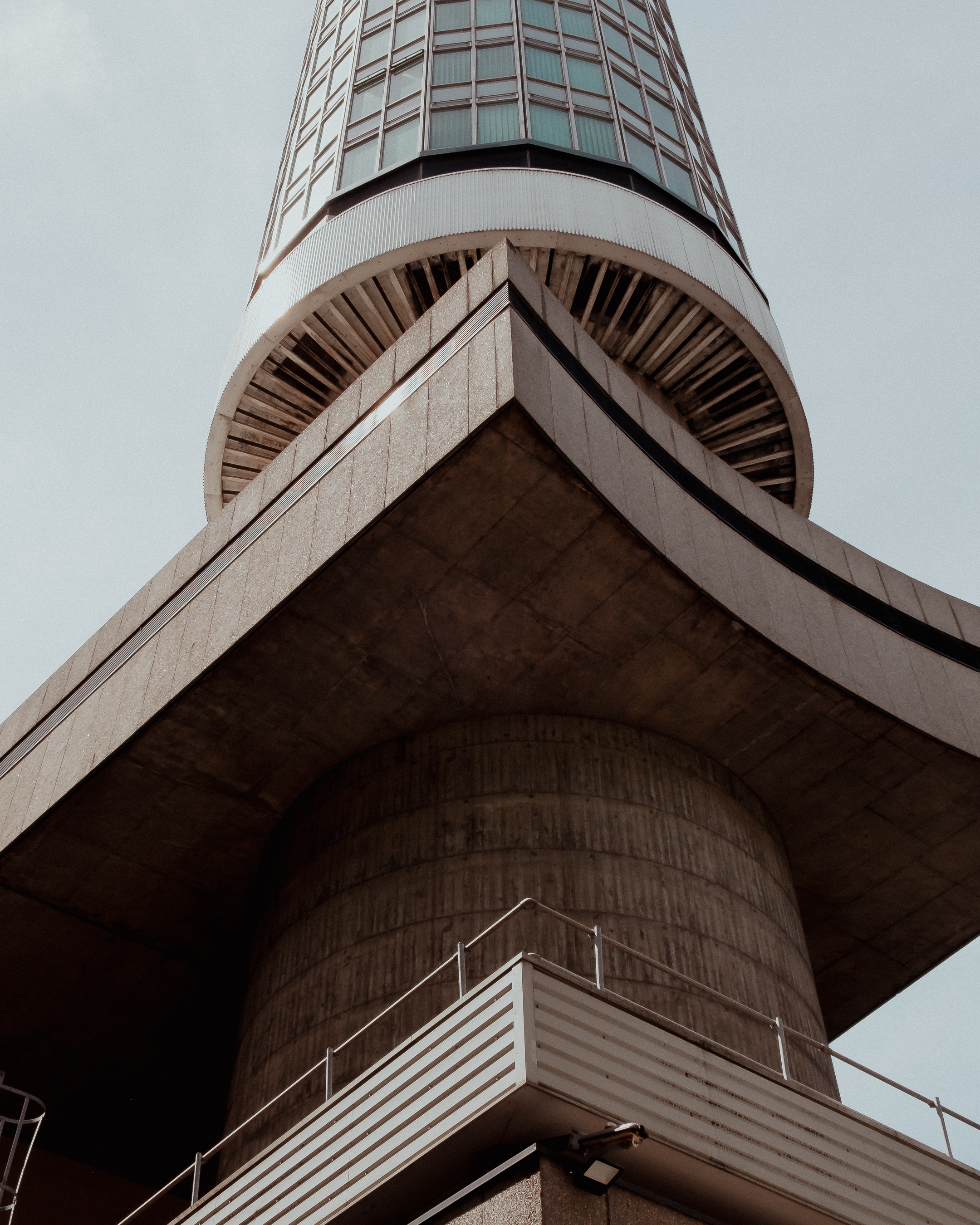
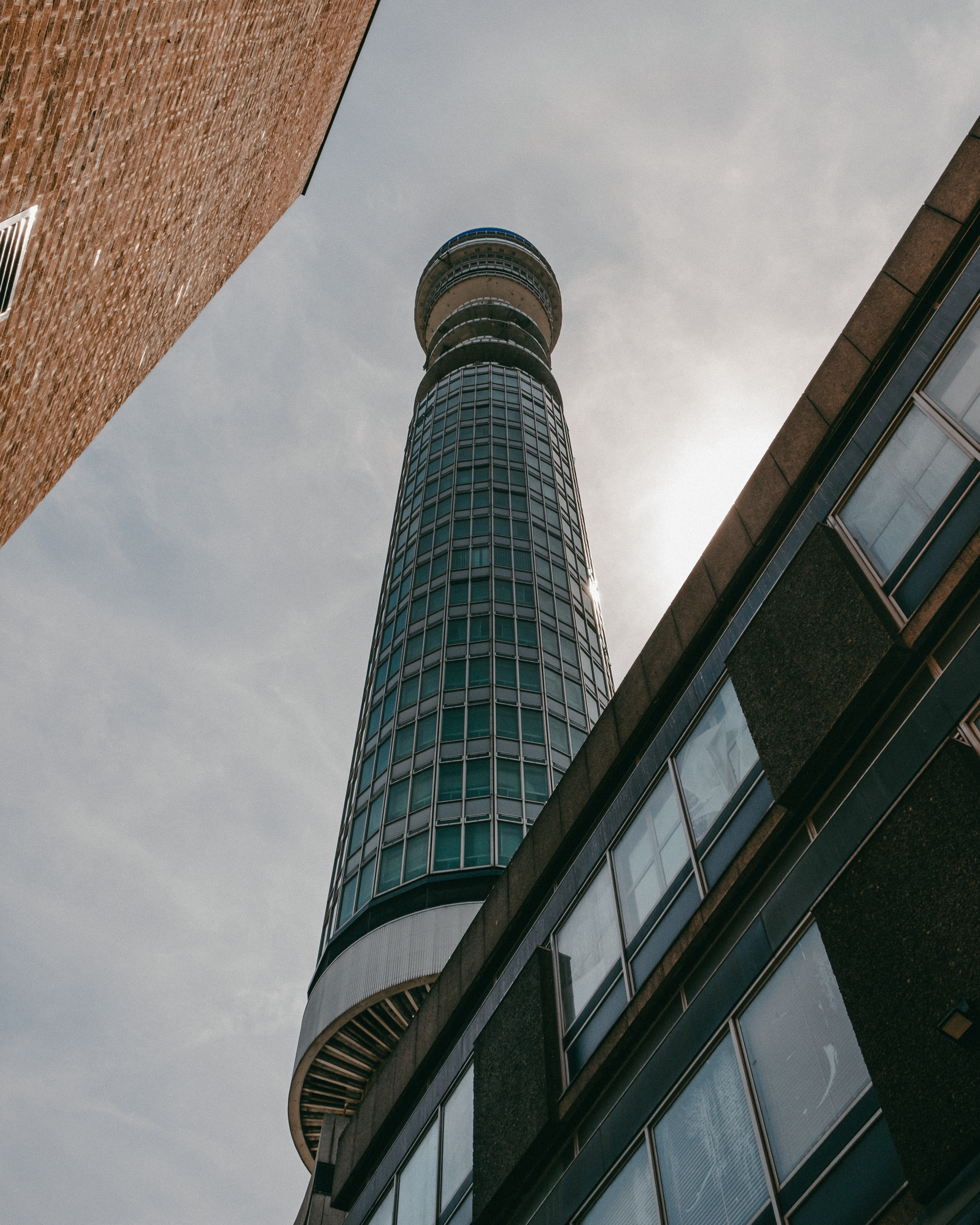
Given its prominence on the London skyline I’ve not walked to the BT/Post Office Tower before and it’s never intentionally been in a photo I’ve taken either. A situation that had to change one day, and that day was today. When it was completed in 1964 it was the tallest building in London and remained that until 1980 when the NatWest Tower surpassed it.

DSCF3179

DSCF3177

DSCF3181

In February 2024 BT sold the tower to the MCR Hotels who are going to make into some sort of luxury hotel; with hopefully a decent and public bar in the viewing platform. BT still use the tower for its communications systems so it’s still a working building.

DSCF3176

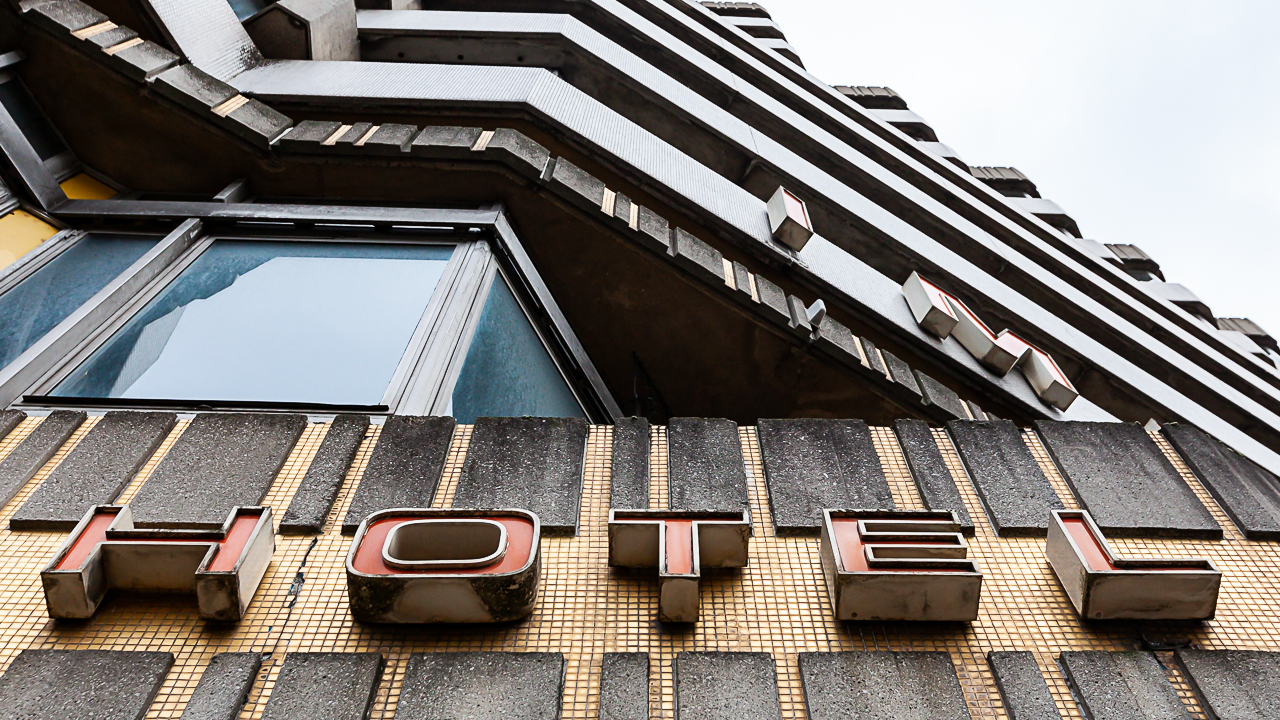
I was hungry and thirsty at this point so stopped for a quick lunch which meant I didn’t get to spend as much time as I would’ve liked at the St Giles Hotel as it’s quite a cool building. Opening in 1977 it is a proper Breton brut brute of a building and I will come back here for a better explore one day and hope there is a nice period bar inside for a swift drink. Peaking out behind it was our next stop, CentrePoint.

DSCF3188

DSCF3185

The magnificent and recently refurbished Centrepoint Tower.

DSCF3191

DSCF3192

DSCF3193

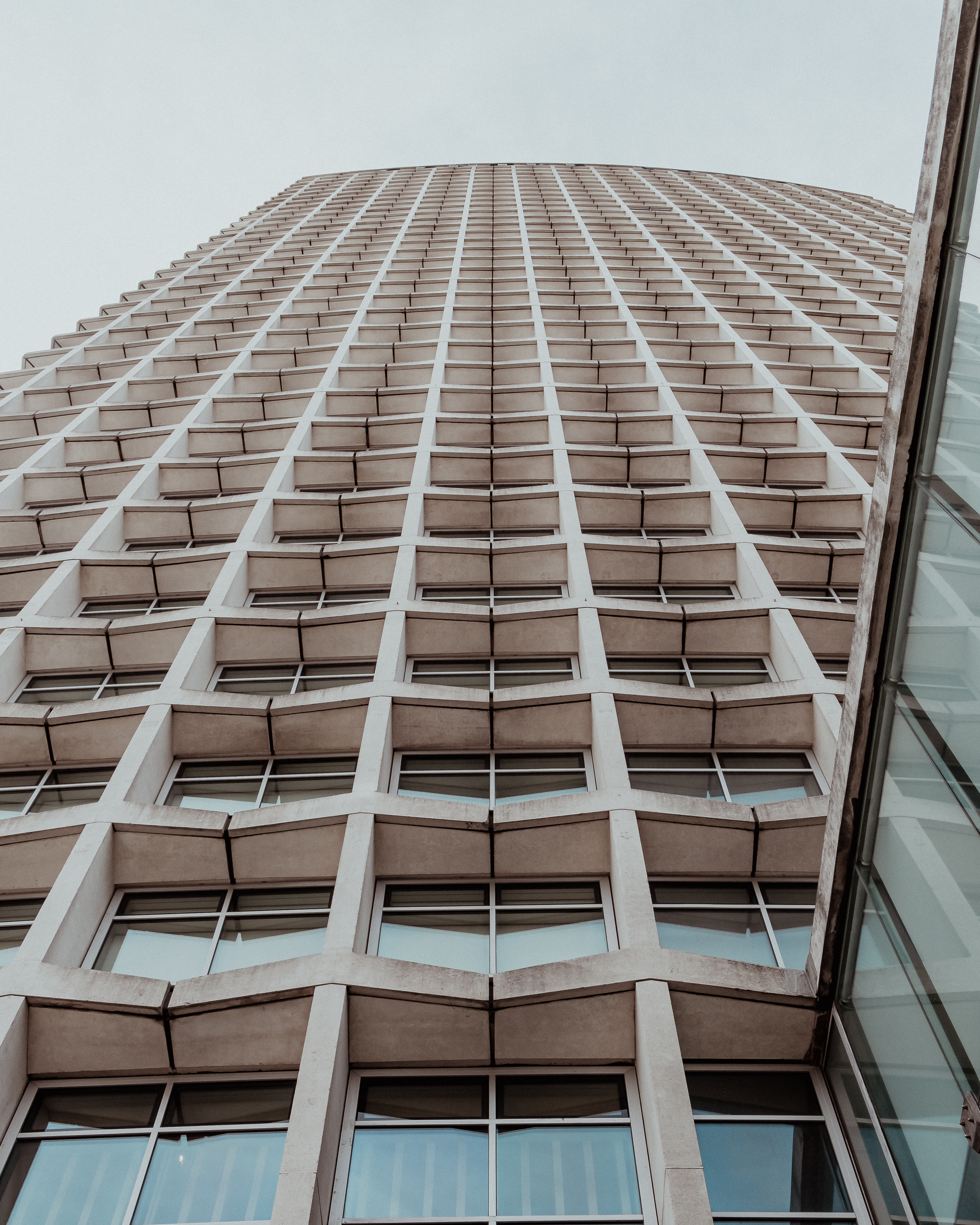
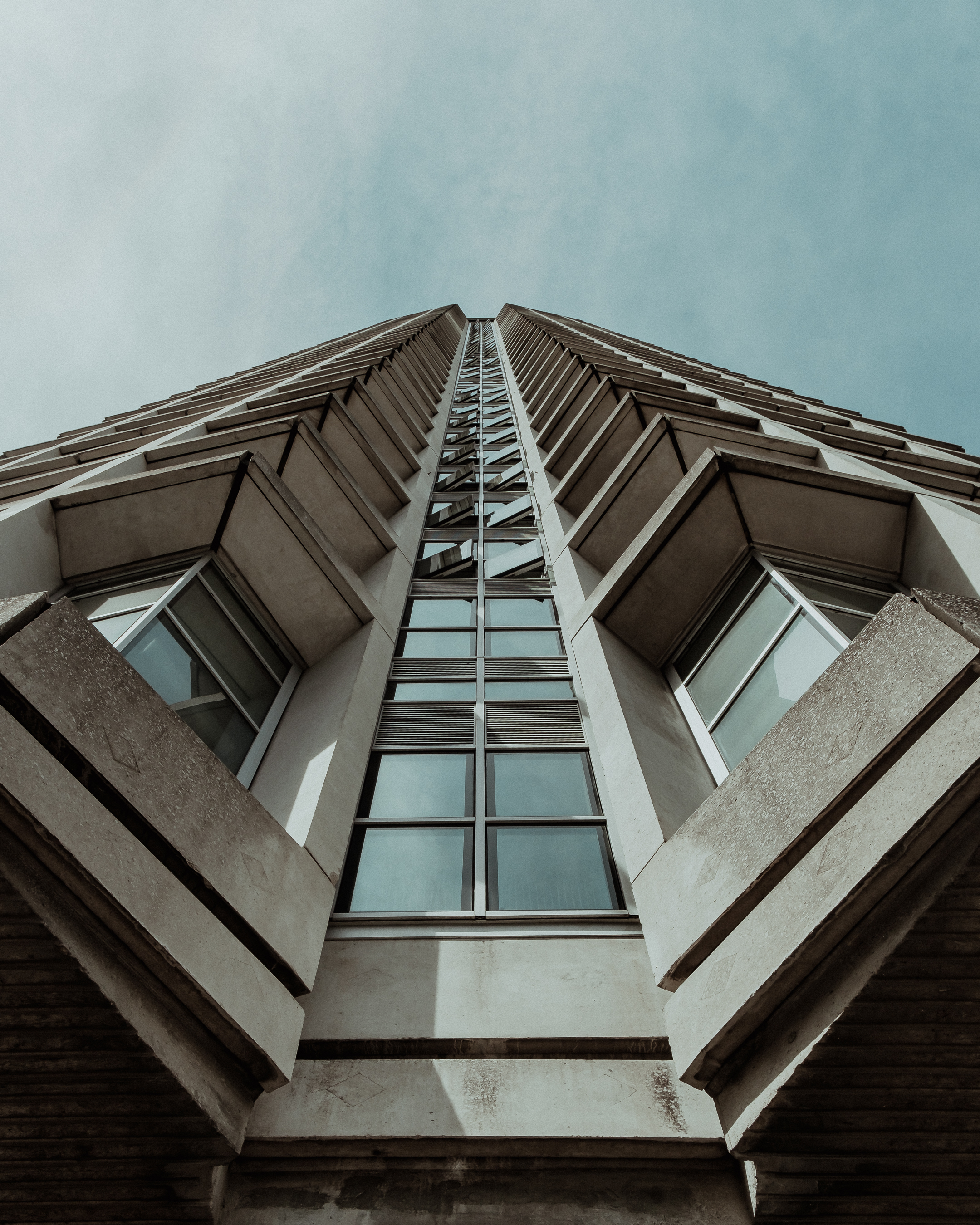
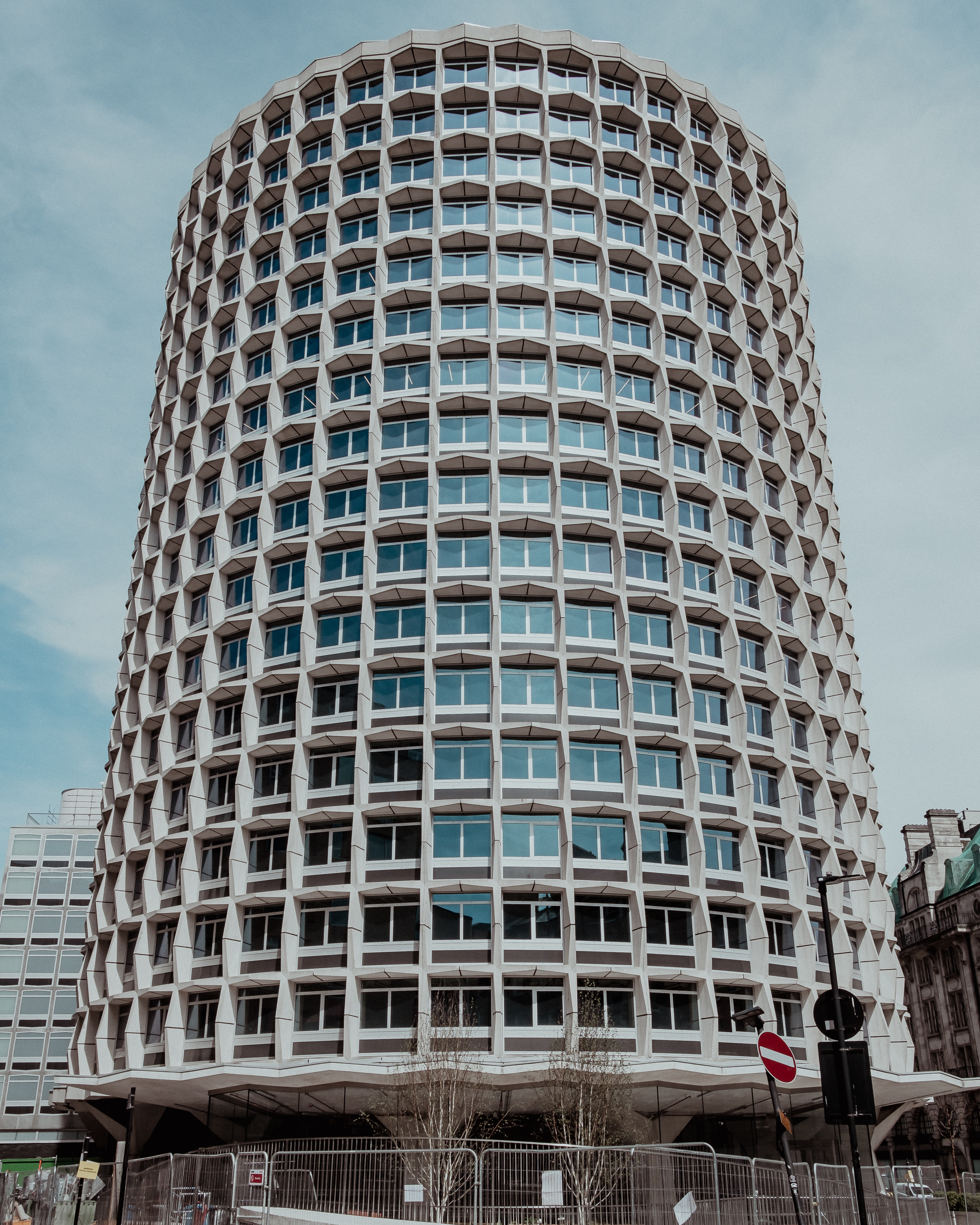
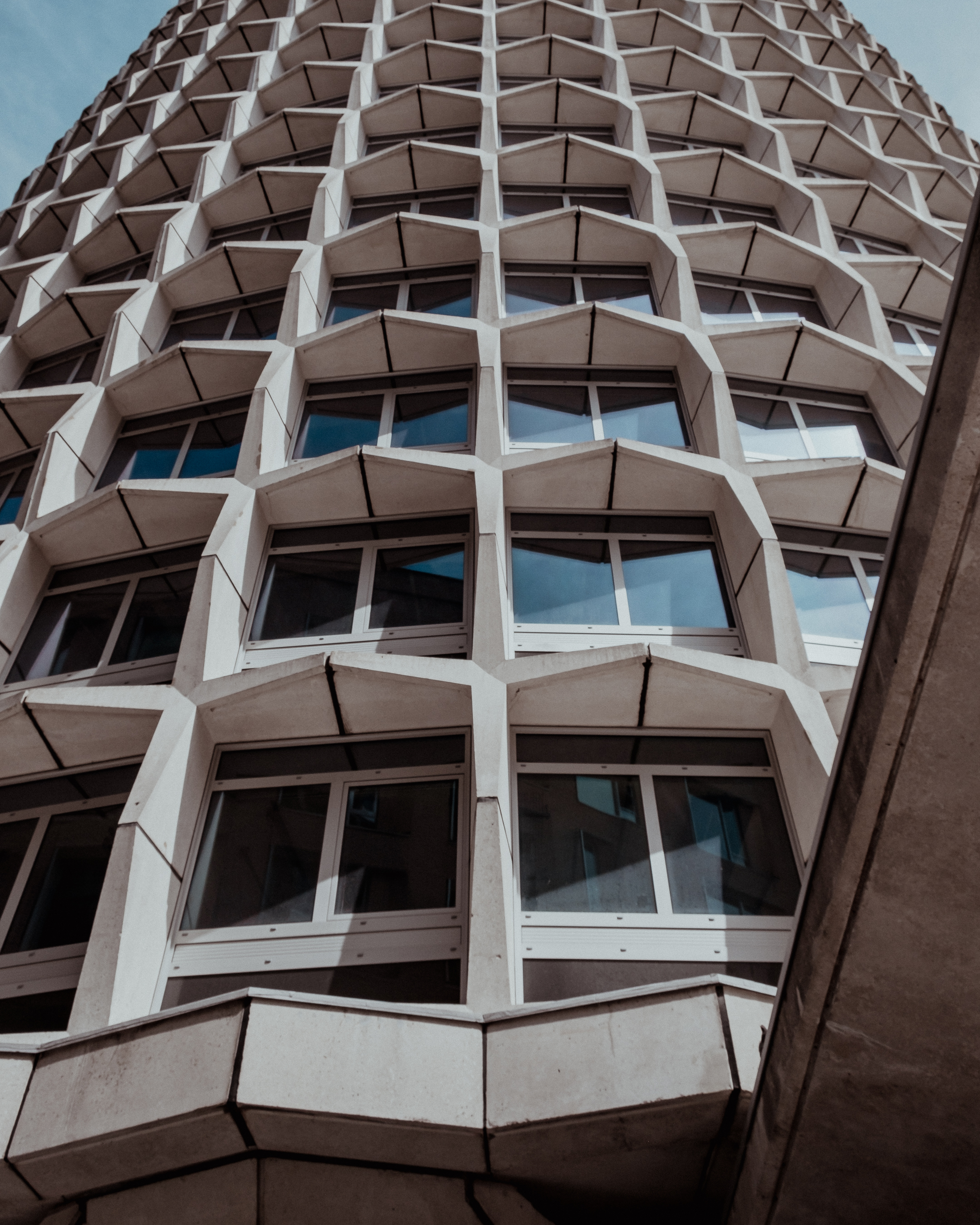
The equally magnificent Space House in Holborn. Annoyingly there is still scaffold around the base so we couldn’t get as close as I would have liked, and nor could I take a shot straight up the side of the building, which seems to have become a recent habit.

DSCF3198

DSCF3199

DSCF3200

The final stop of a fairly exhausting five hours of walking, photographing and chatting was the Macadam Building. Built on a WW2 bombsite in 1975 as part of the Kings College campus, for its relatively small size it’s quite a statement building. Squatting there all rough and raw amongst the supposedly ‘prettier’ 19th century buildings that survived the Luftwaffe bombing. I’m going to say it isn’t a handsome building, but I’m glad it is there all the same and it would be a shame if the rumours are true and it’s to be demolished for something else.

DSCF3203

There were a few buildings that we passed that were just too boring to photograph, and some of my photographs were just to boring to edit and upload, but I’m very happy with what photos I took today. I’m very much enjoying the Fujifilm XT2 camera I bought earlier in the year and one day I will be able to afford to upgrade to the XT5, but that will be a way off.

I’ve been experimenting in the editing tool I use, Lightroom, with making photos look a bit like they were shot on an old film camera. I like these images, but let me know your thoughts!

Carparks, glorious carparks

Saturday 06 April 2024 – Uxbridge, west London.

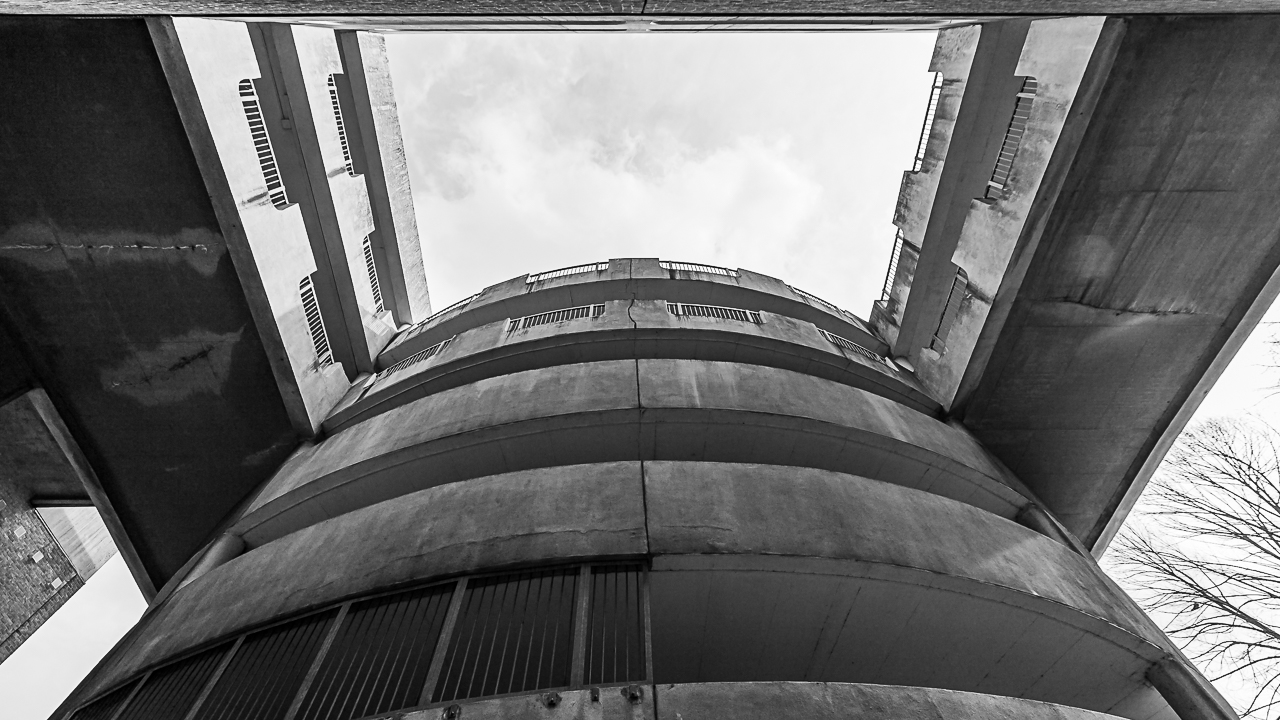
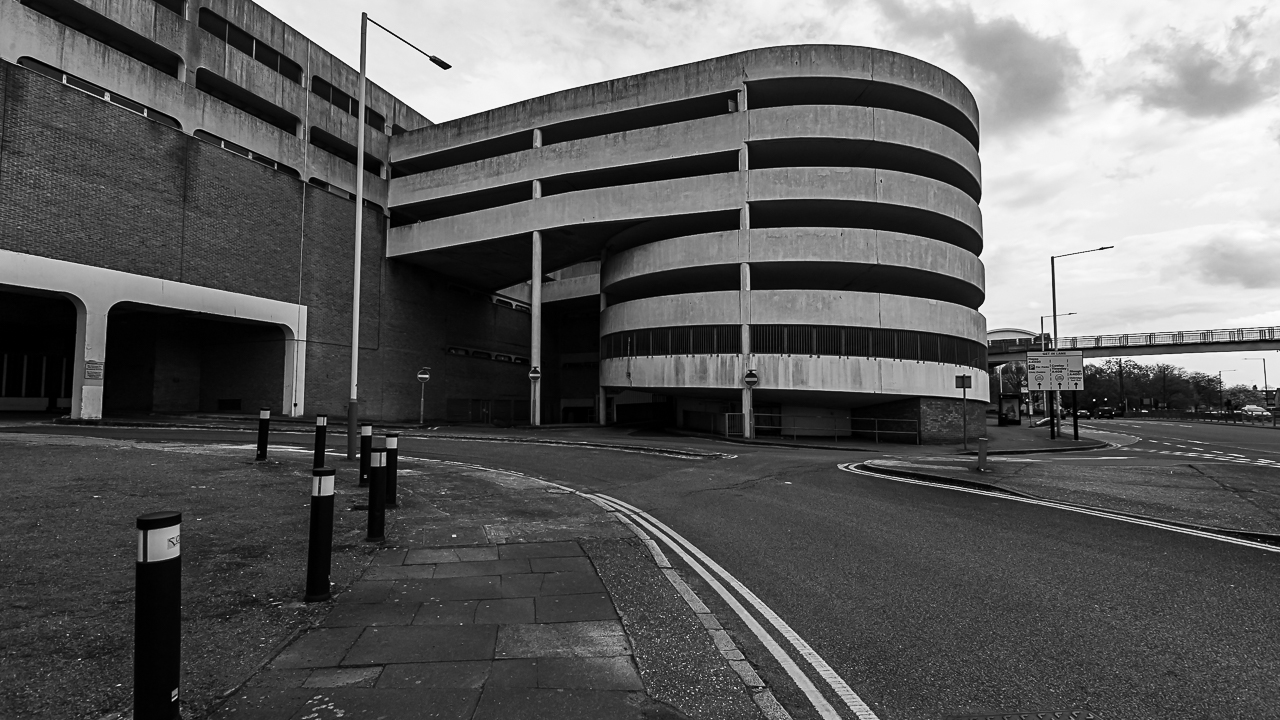
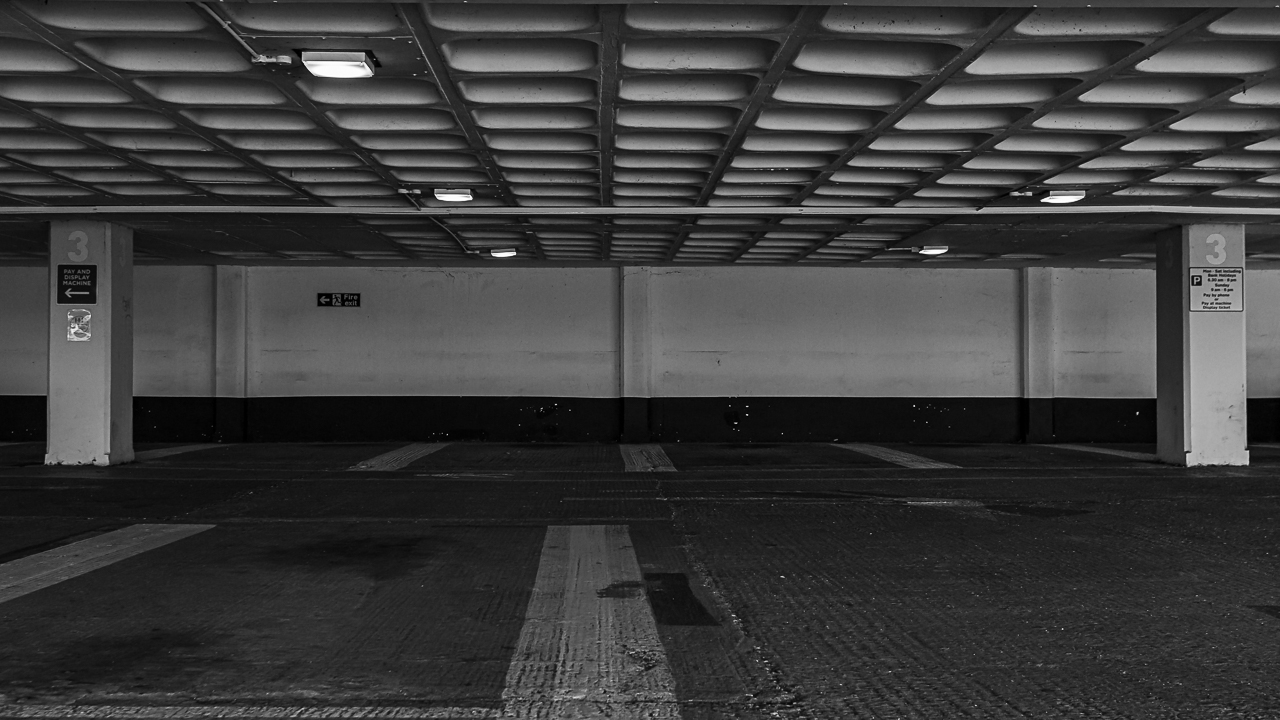
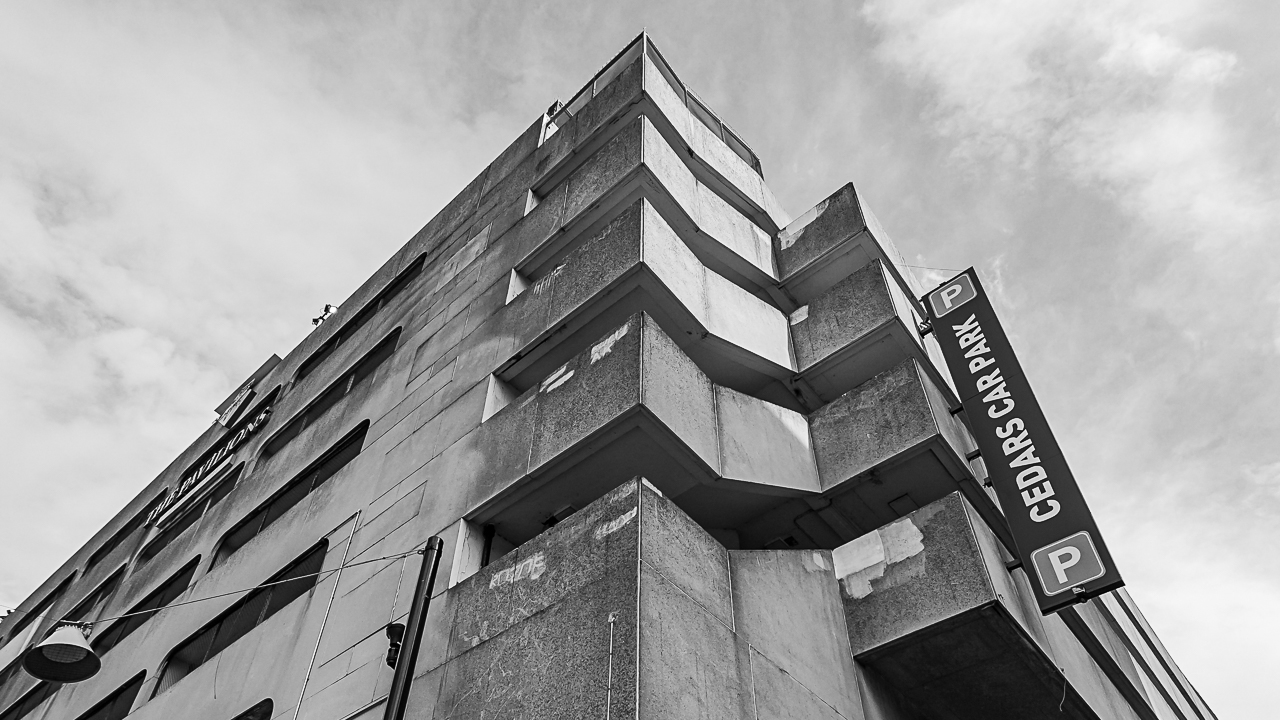
The final instalment of this ‘unofficial’ brutal day out photo walk was finding the unexpectedly wonderful Grainges and Cedars car parks; one on either side of The Pavilion shopping centre in Uxbridge.

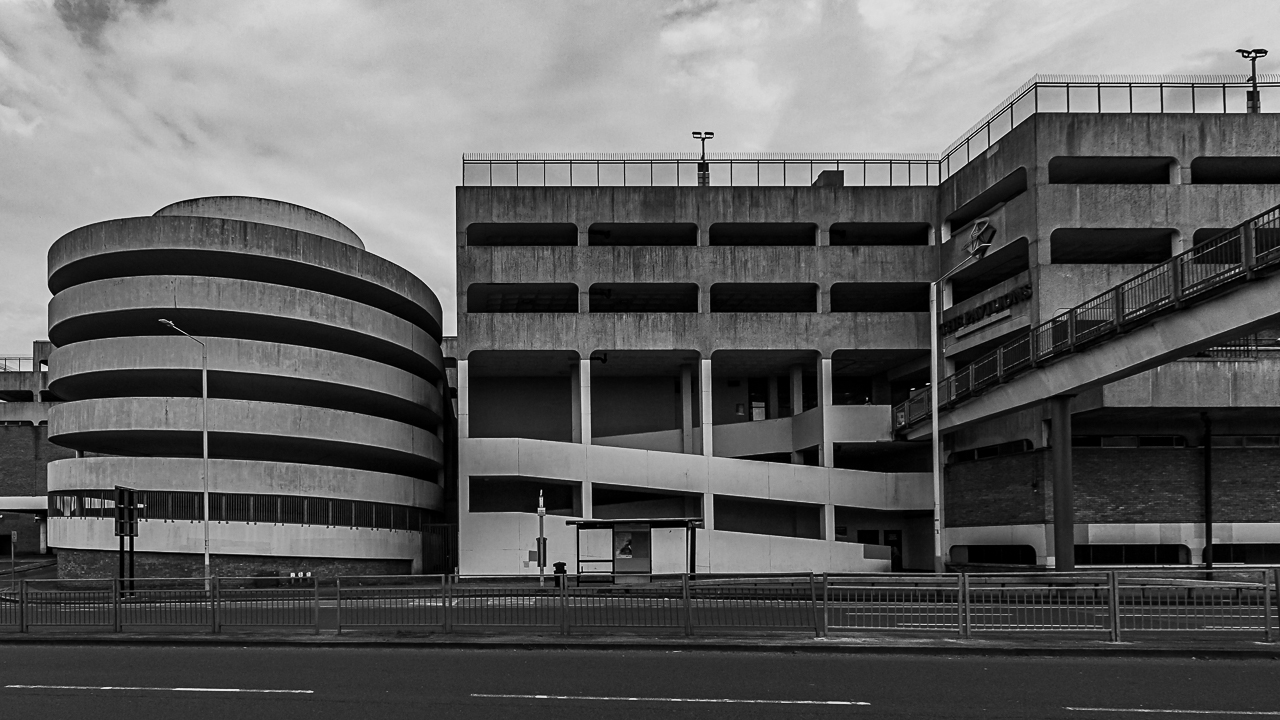
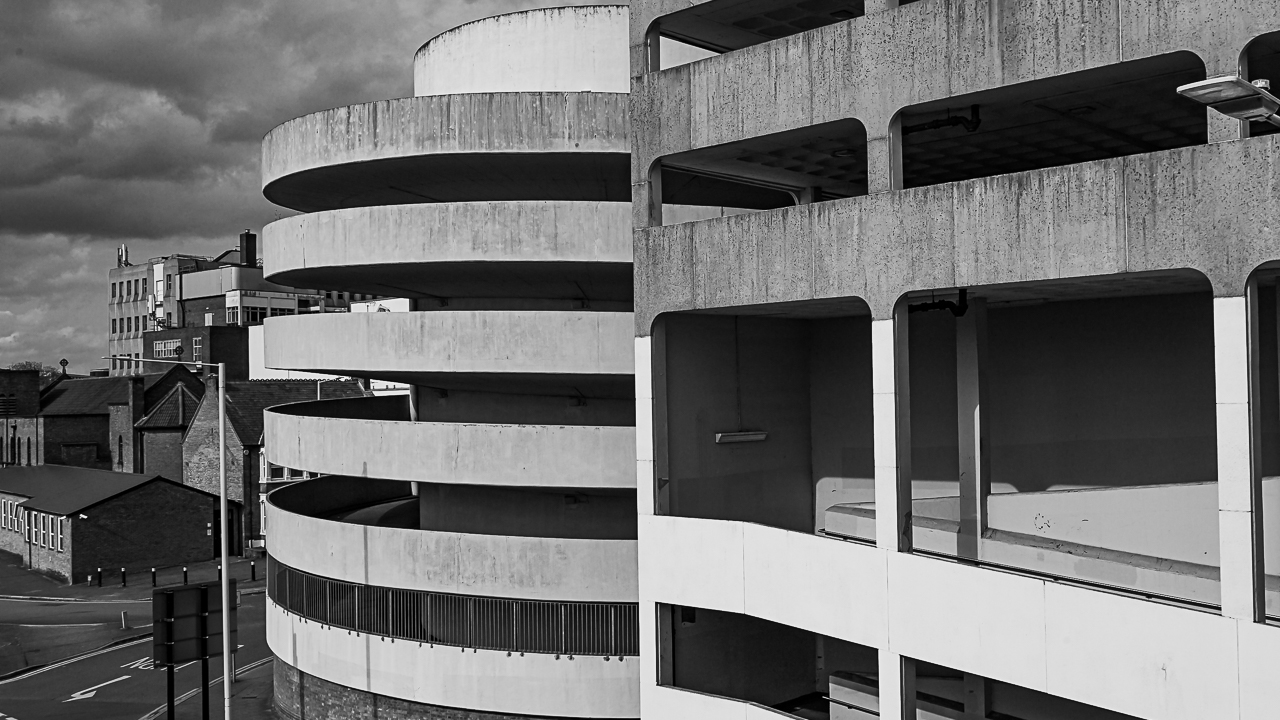
I couldn’t find anything on the internets on the history of these car parks, though the shopping centre opened in 1973 so I guess the car parks are of a similar vintage. The twin circular approaches of the Grainges are a symphony in concrete and were a bit of an expected bonus, if there is such a thing. They were much better than I/we expected and there was a fair bit of enthused cooing over them.

They are just car parks after all so I’m not going to bang on about them too much, so will let the photos do the talking.

Grainges

IMG_6867

IMG_6893

IMG_6887

IMG_6868

IMG_6896

Cedars

IMG_6875

IMG_6877

IMG_6873

As a small bonus to the bonus there was a really nice BT building in between, annoyingly the entrance was fenced off so we couldn’t get right up close. I loved the scalloped windows.

IMG_6874

It was a full on day and very enjoyable. I really enjoy hanging out with this group of concrete building photographer/enthusiasts and am looking forward to the next outing; to exciting Croydon, in a couple of weeks.

My next post will not feature concrete in any shape of form and will definitively be more colourful!

Brutalist Harrow

Saturday 06 April 2024 – Harrow, west London.

It’s been quite a while since I schlepped out to far west London, it’s definitely not been in the last five years at least and to be fair I’d no need to go there, until today. It wasn’t really a need either, I wanted to get out of the house, and visiting Uxbridge to take photographs of the John Heywood designed lecture theatre at Brunel University that features, among other Brunel buildings, in Kubrick’s dystopian masterpiece ‘A Clockwork Orange’ seemed like a good thing to do. I popped a question on the brutalist architecture Instagram group I belong to to see if anyone was interested in coming along as well and five of us took the hour long journey out west. There will be more on Brunel in the next post as I ended up taking too many photos to fit nicely into one.

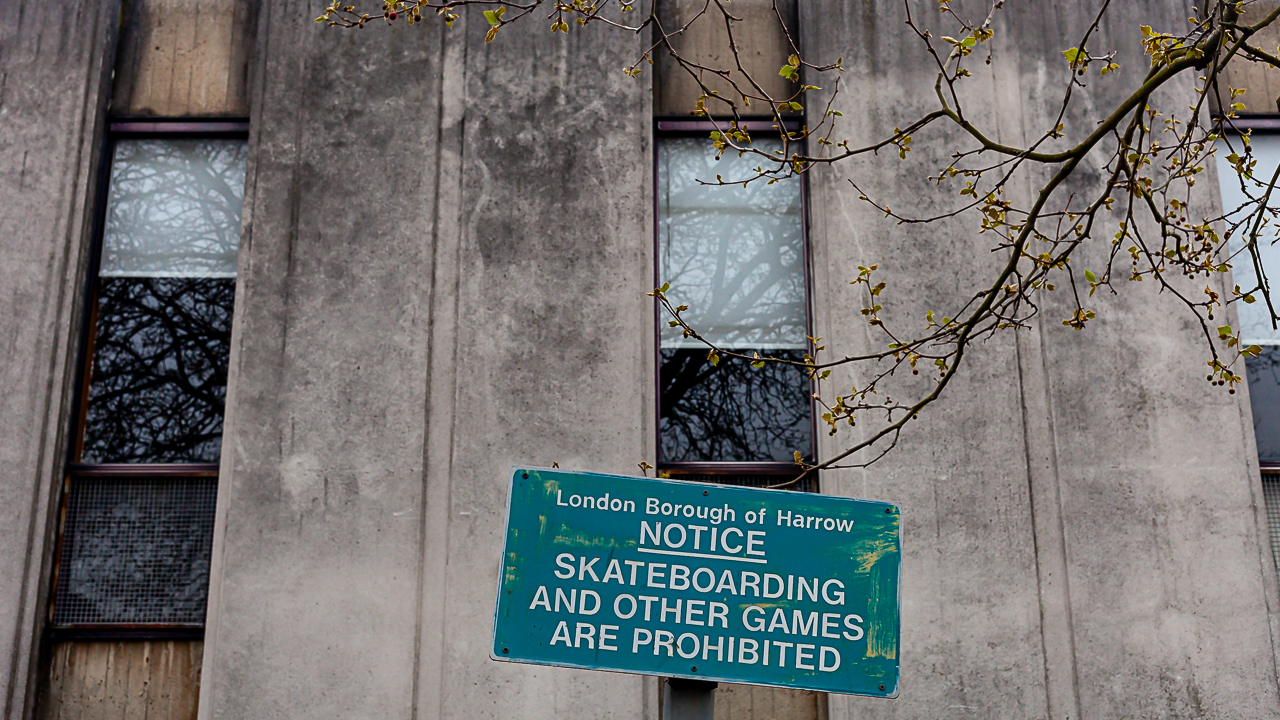
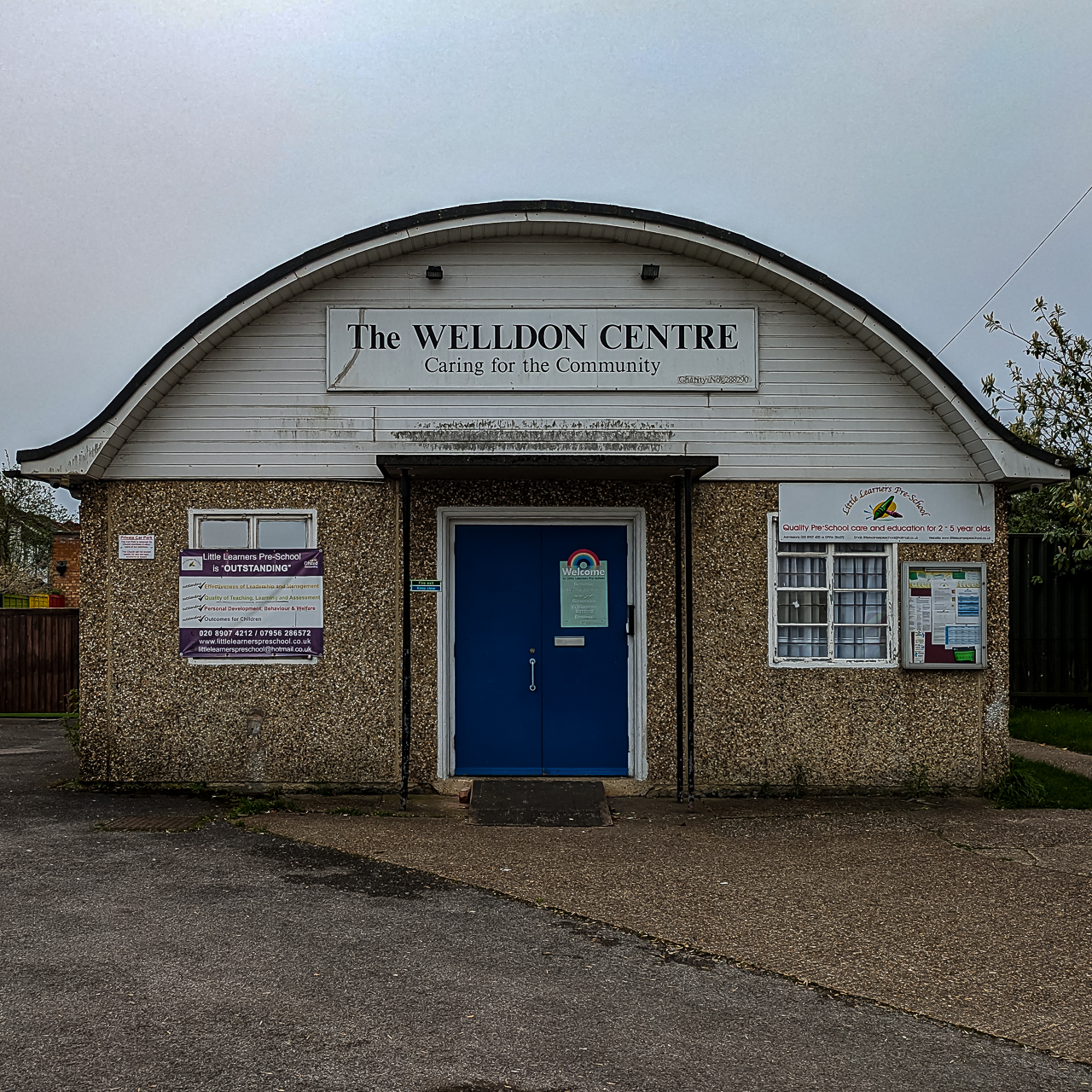
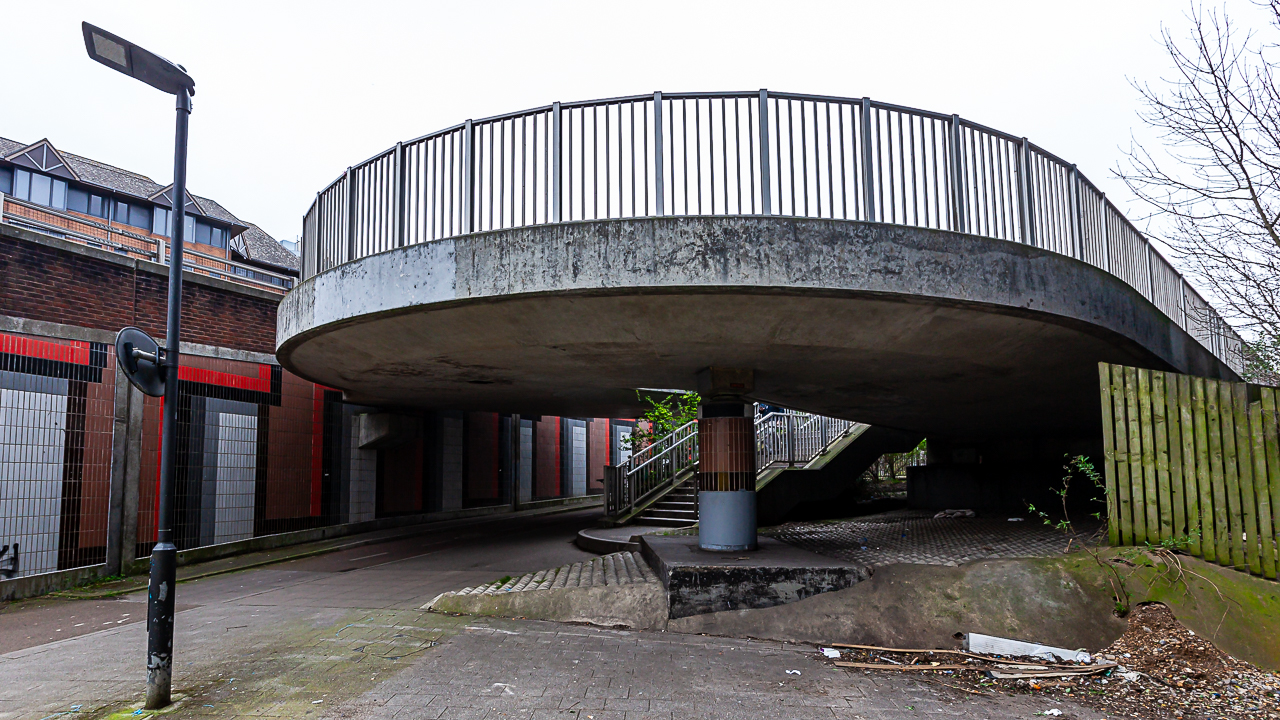
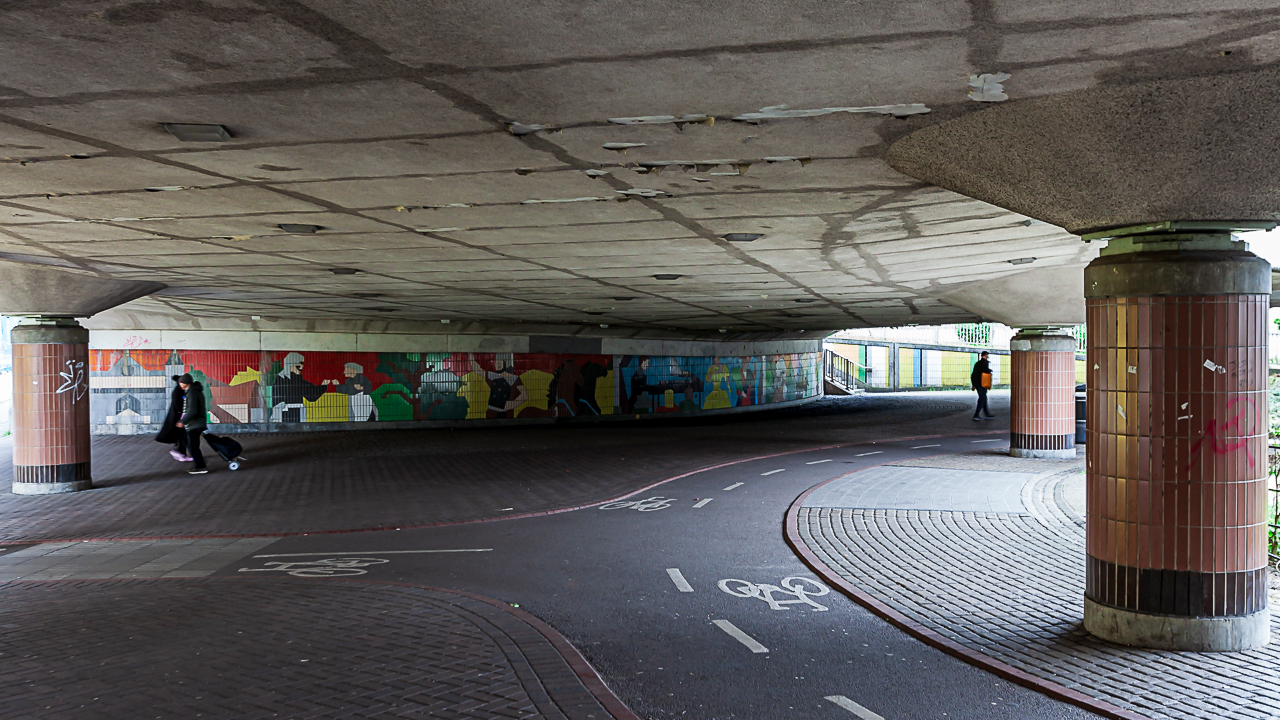
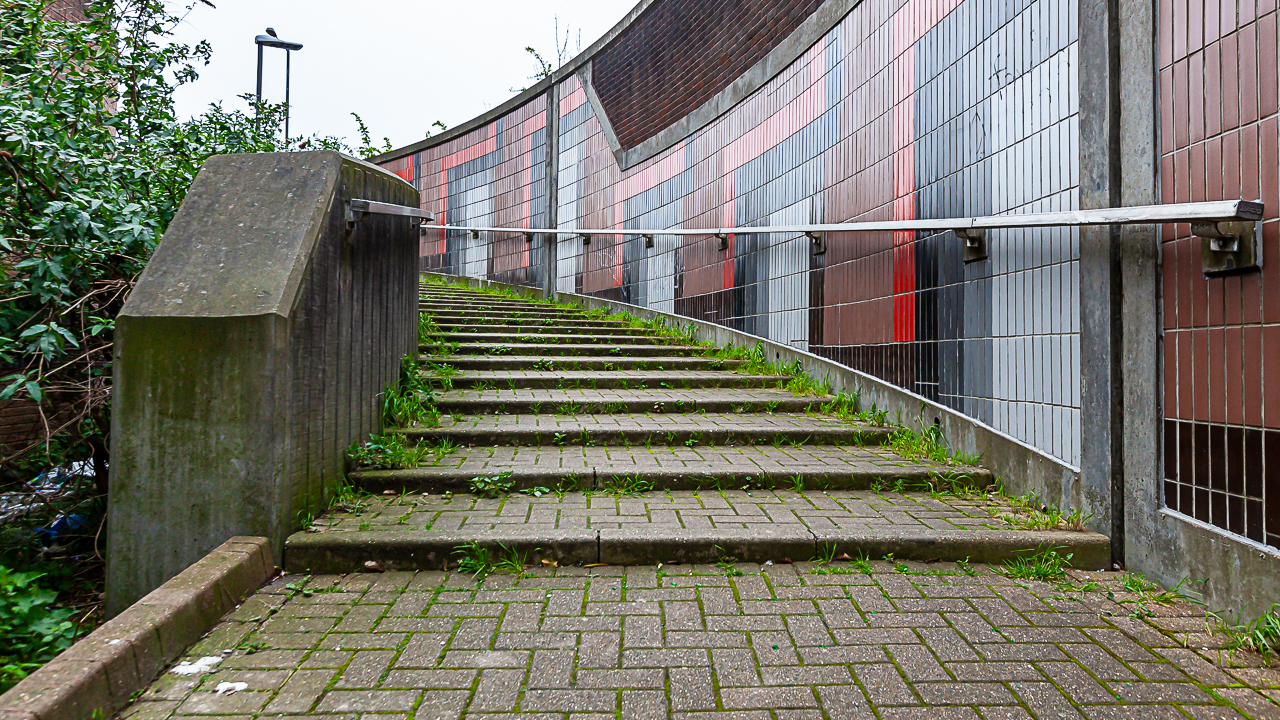
As we were travelling all that way out we decided to take in the Harrow Civic Centre and a ‘nice’ concrete underpass in Harrow-on-the-Hill, both of which make up the photos in this post.

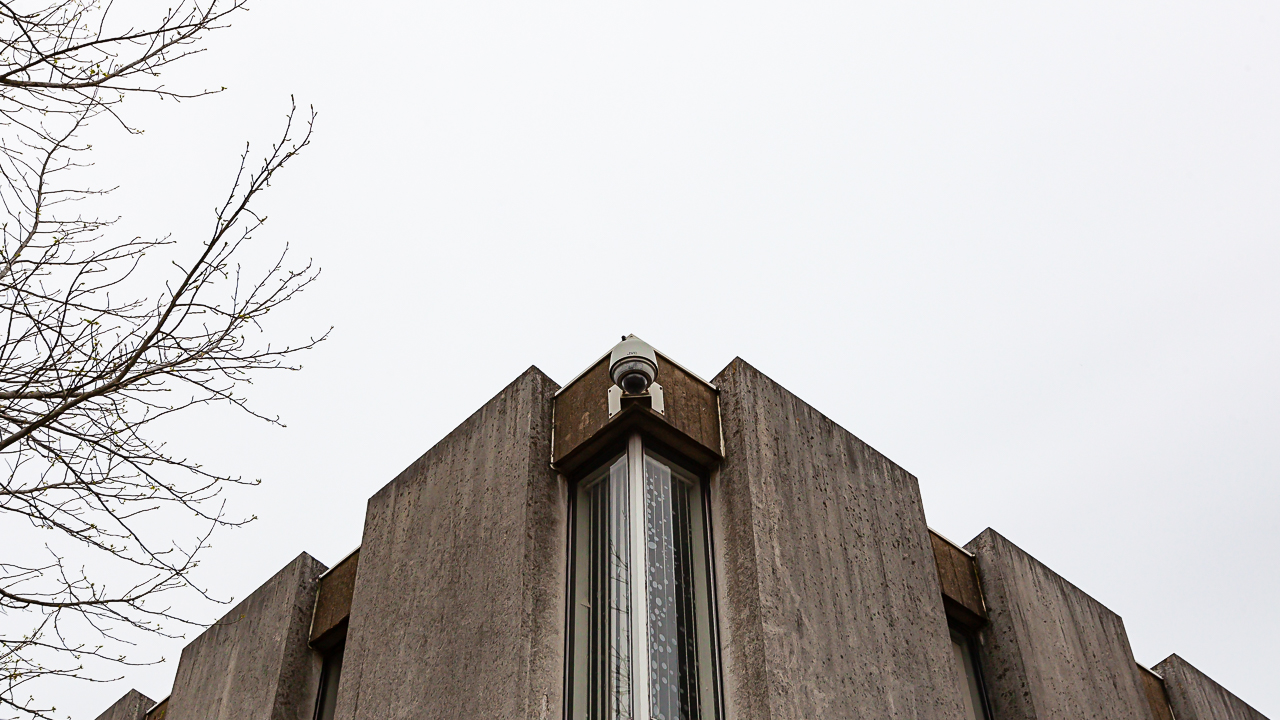
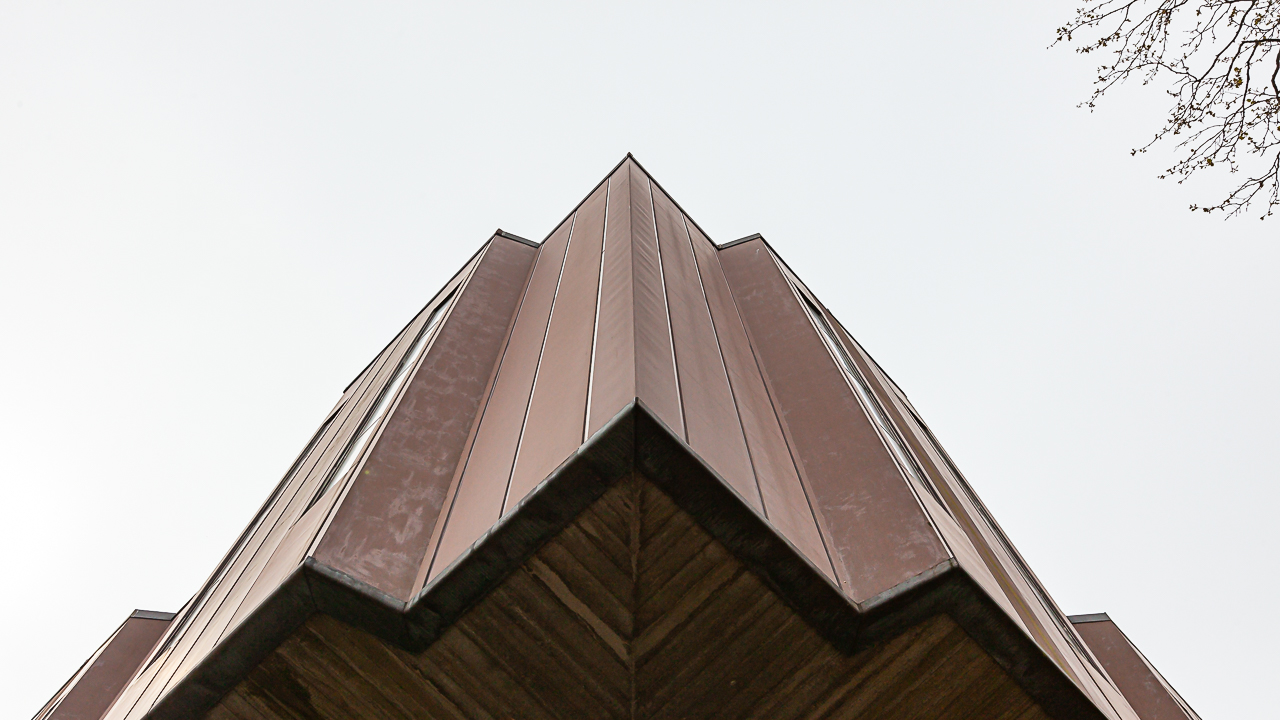
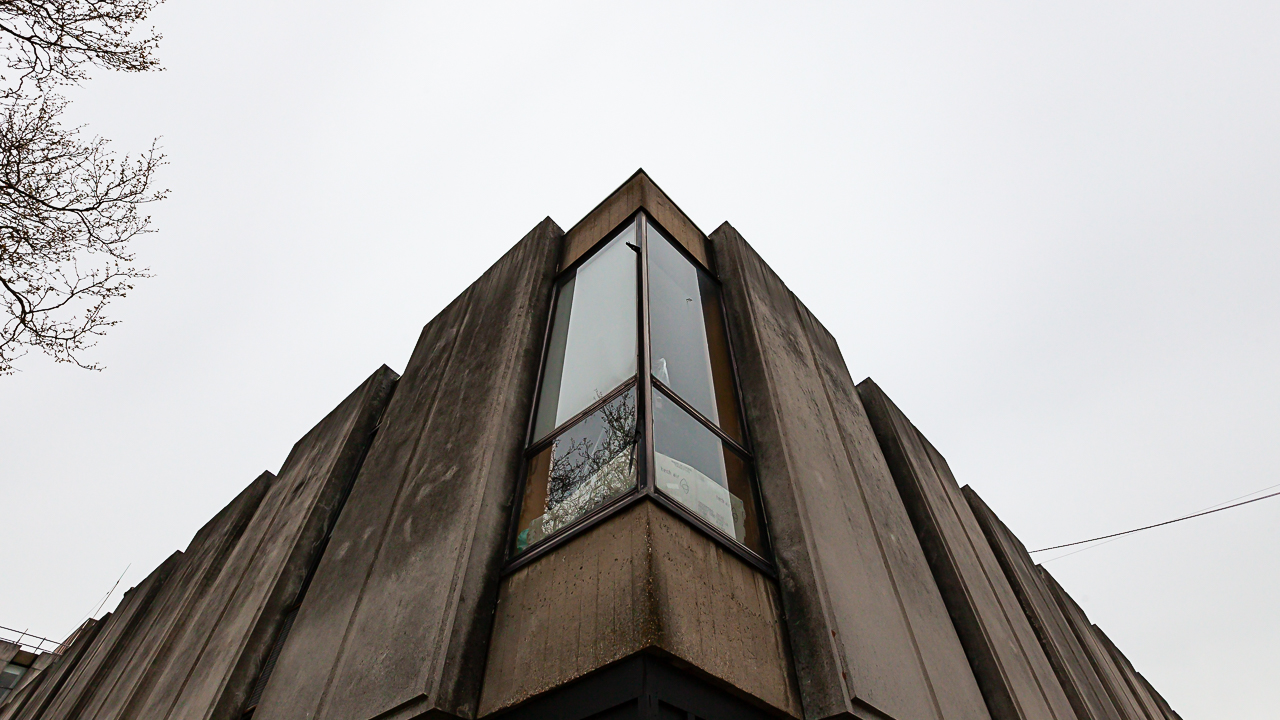
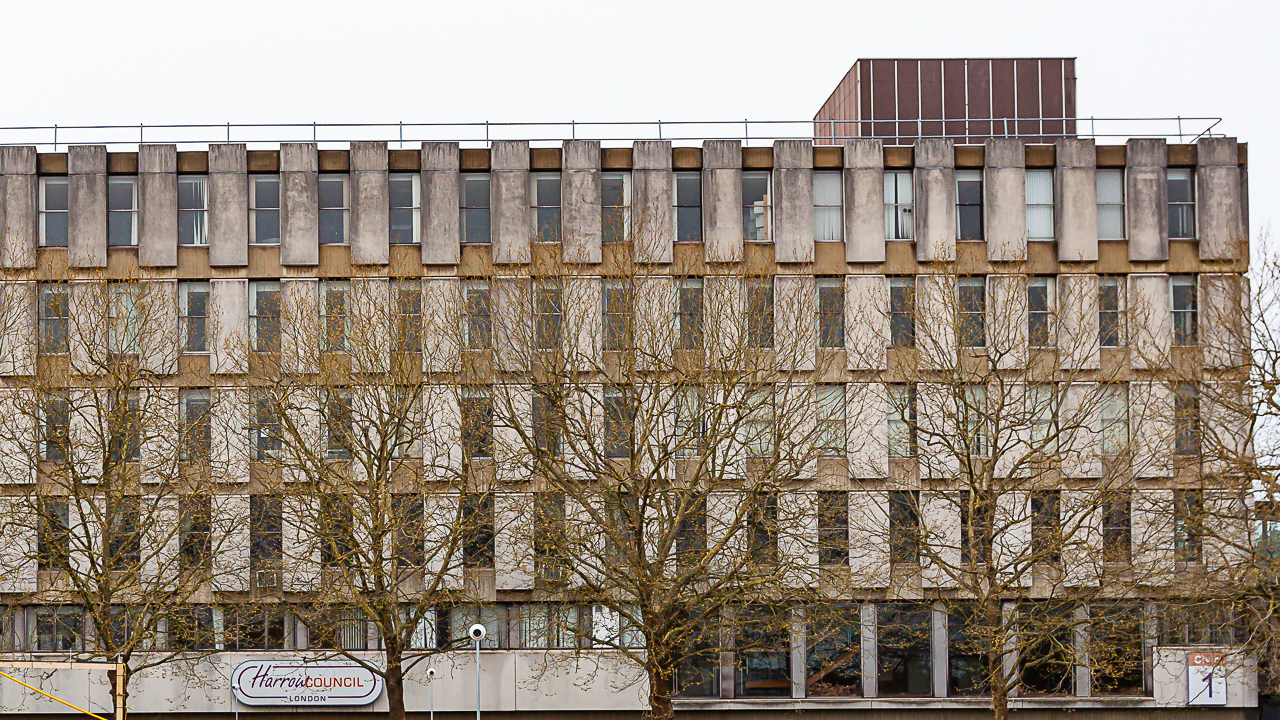
Disappointingly, and unknown to us when we left London, Harrow Civic Centre is being demolished to make way for some new developments and the downsize of the council’s office space. The entire building was surrounded by slightly too high to photograph over hoardings. Opened in 1973 the imposing concrete building apparently has a ceramic mural on the first floor comprising of 1000 photos of Harrow. I imagine it would have been really impressive and it hope it doesn’t get destroyed when the building is knocked down. 

IMG_6816

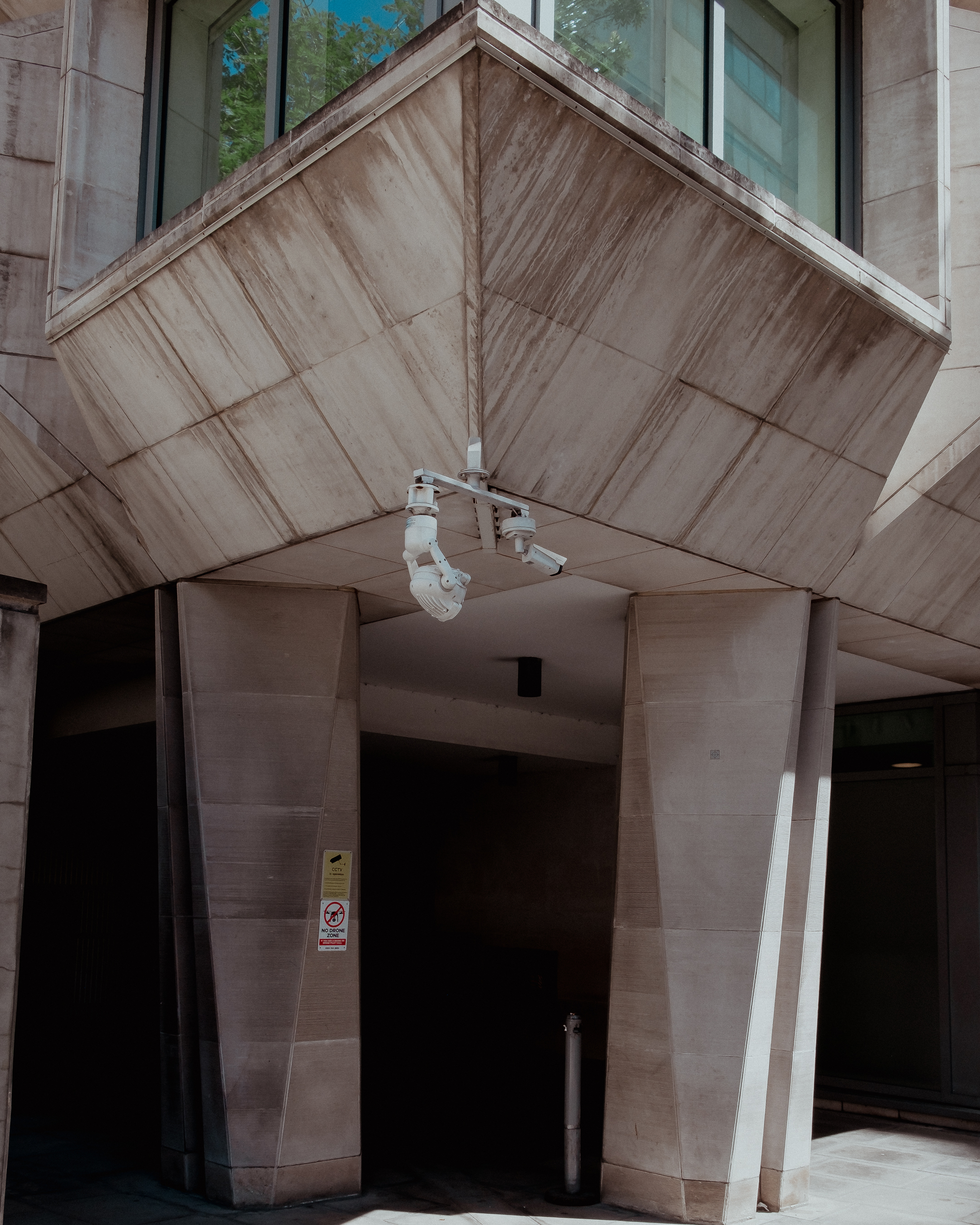
Most of the photos I took are of the top half of the building and I had a slight obsession with the security cameras.

IMG_6817

IMG_6822

IMG_6815

I understand why some of these ‘older’ buildings need to be replaced, I imagine they are costly to retrofit to modern needs, are not cheap to maintain or heat and cool, but I can bet the main reason it’s coming down is people think it’s ugly. I suspect what ever gets built to replace will be even uglier.

IMG_6819

IMG_6811

Moving on from the centre of Harrow we walked to nearby Harrow-on-the-Hill to get the train to Uxbridge; and to take a few photos of an underpass. I suspect people think we’re odd. We stopped to take some photos on the way… Architecturally this part of west London is very different to the part of east London I live in. There are similarities of course, both are quite clearly suburban England, but to the local they look and I suspect, feel, quite different.

PXL_20240406_110532852

PXL_20240406_110712915

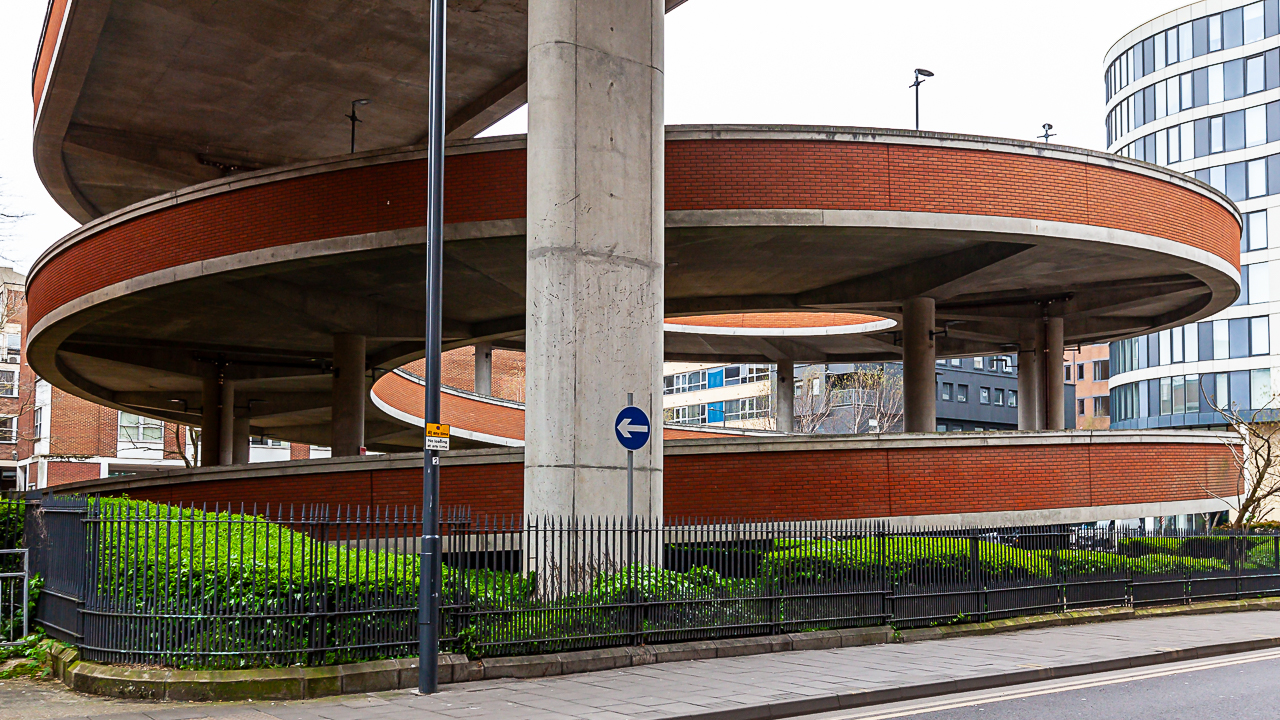
We also had the unexpected bonus of a carpark behind the shopping centre with a really fine orbital ramp, one that was very different to the carpark we visit in Uxbridge later in the day.

IMG_6823

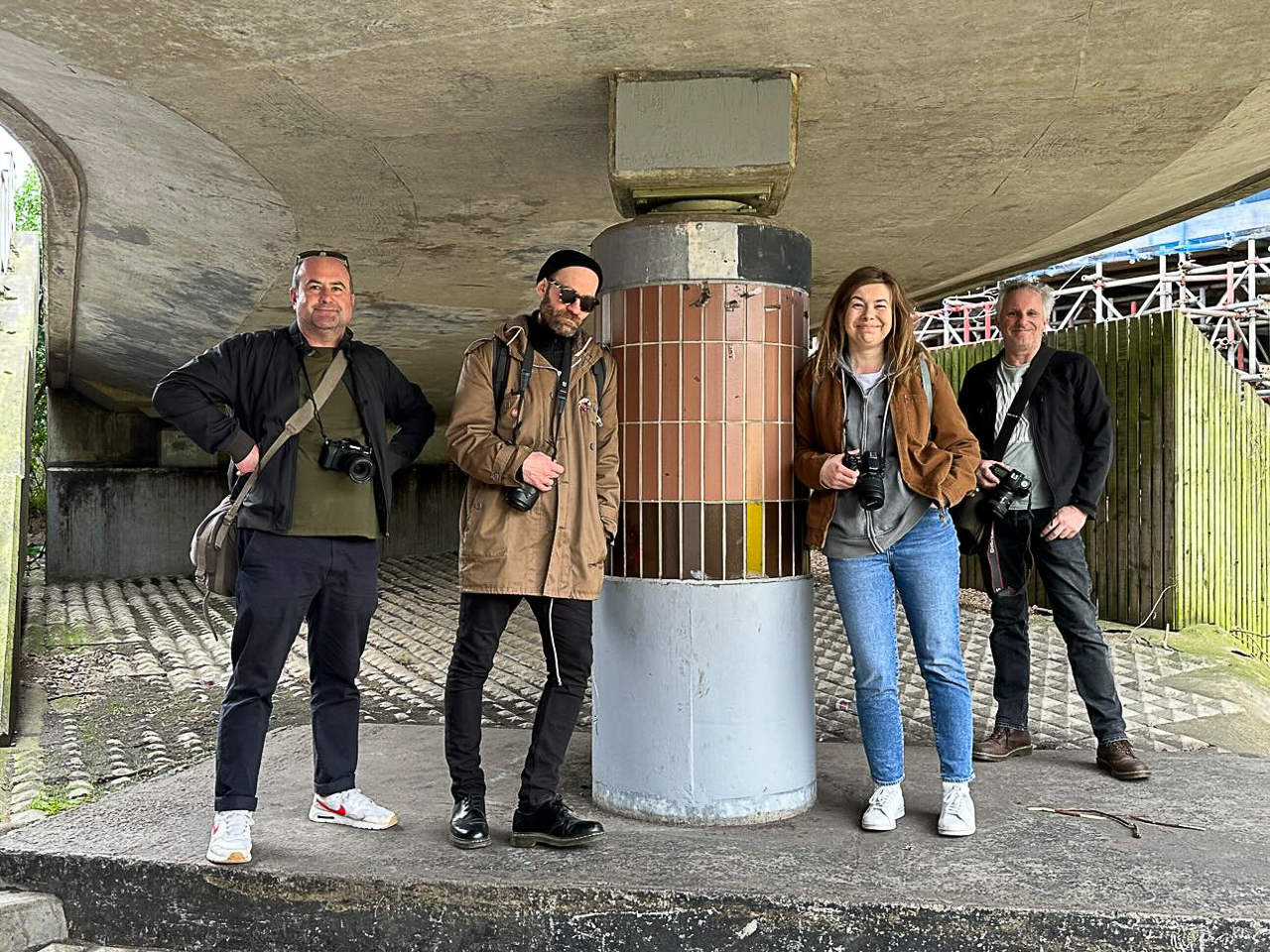
We stopped for the obligatory group photo in the underpass before walking to the station. I don’t know much about the underpass, or even what the road system is that passes overhead, but it’s quite nice is seemingly well patrolled as there was none of that commingled stench of weed and piss that you would imagine for such a place.

The band

IMG_6827

IMG_6829

IMG_6830


Brutal Day Out #7 – Bloomsbury

Sunday 14 January 2024 – Bloomsbury, London.

I’m going to claim all the credit for this most excellent Brutal Day Out photography walk. I posted on the group Instagram chat that I was going to go to Bloomsbury in central London to photograph the University College London’s two brutalist buildings; the School of Oriental and African Studies library  and the Institute of Advanced Legal Studies. I said that if people wanted to join me that would be great, the group organisers then turned into an ‘official’ walk and it was given the number 7. This is not a paid group or walk so I wasn’t put out by this at all, though they did drop the Royal College of Physicians from my list to add three other buildings that made more geographic sense. This was no bad thing as I wouldn’t have visited the Standard and it was great.

However, I chose to do a side trip to the Royal College of Physicians before we met at Kings Cross station as it was only a 20 minute walk away on the edge of Regents Park. I’m glad I did as it’s quite a cool building.

A quick note for anyone stumbling across this post looking for useful information on the buildings I photographed. There isn’t any; useful information that is, there are photos though.

Royal College of Physicians, opened in 1964, designed by Denys Lasdun.

I’ve been meaning to come here to photograph this building for a while and visited it briefly a couple of evenings ago before meeting friends for a drink nearby. I rarely come to this part of London. On that visit I was hoping for some interesting external lighting, but it was too dark and the rain was heavy and the light was poor so a daytime visit seemed like the right thing to do, so I just went to the pub.

IMG_6464

IMG_6465

IMG_6466

IMG_6468

IMG_6467

Back at Kings Cross I grabbed a coffee and met the rest of the 13 strong group, surprisingly most were on time and we didn’t have to wait long for the last straggler to turn up. Having people join from all over the shop, including two from Manchester, and with increasingly unreliable public transport, means patience is sometimes required.

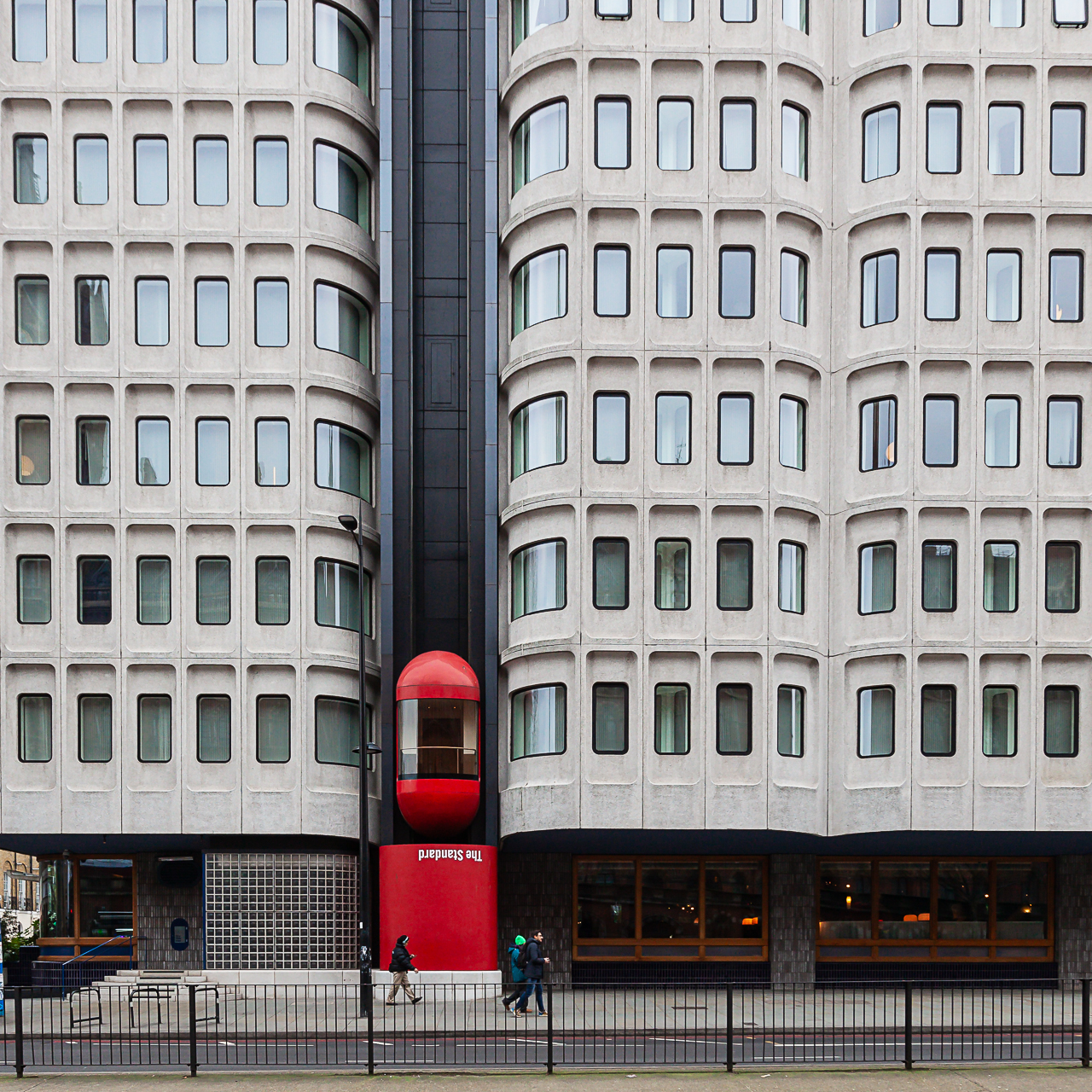
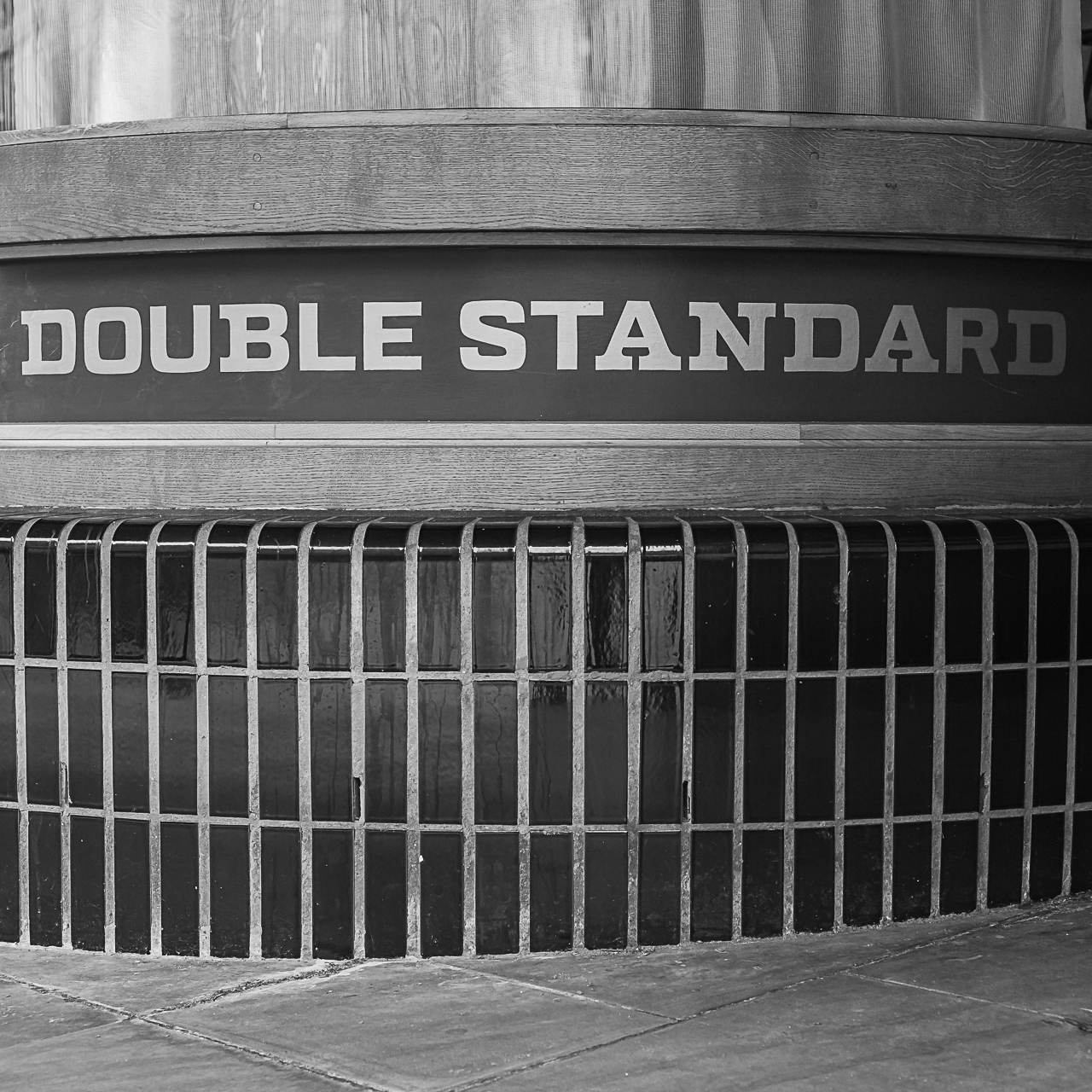
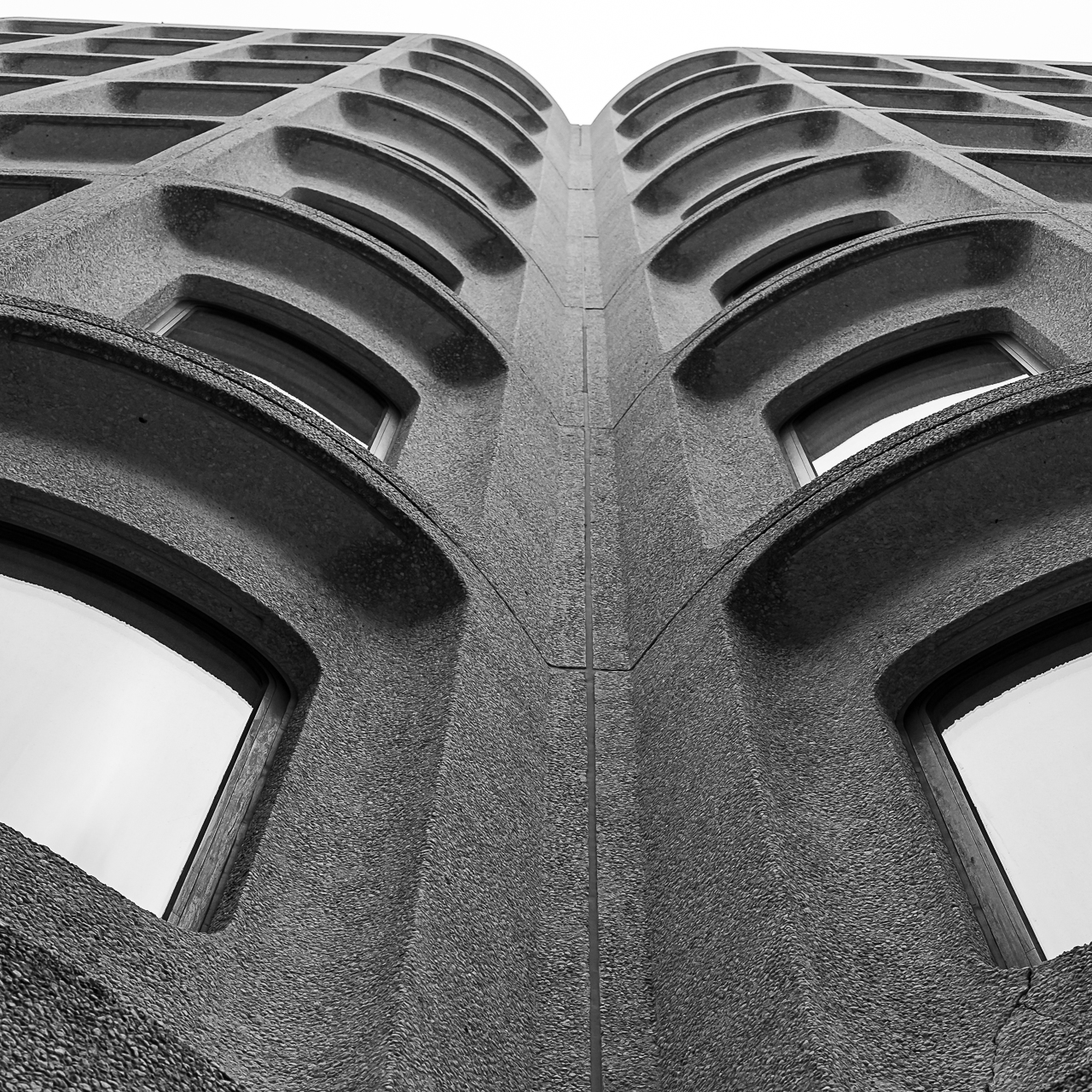
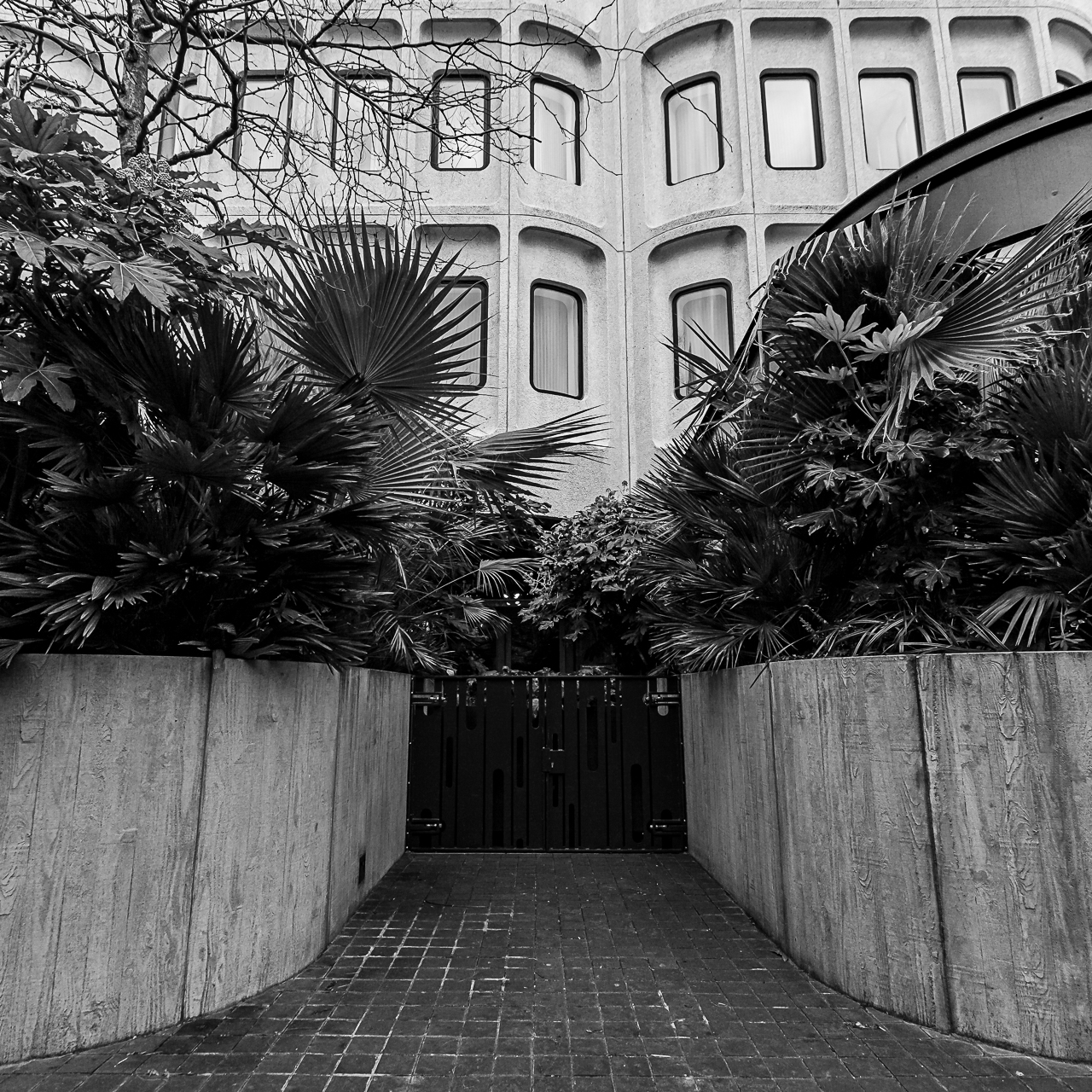
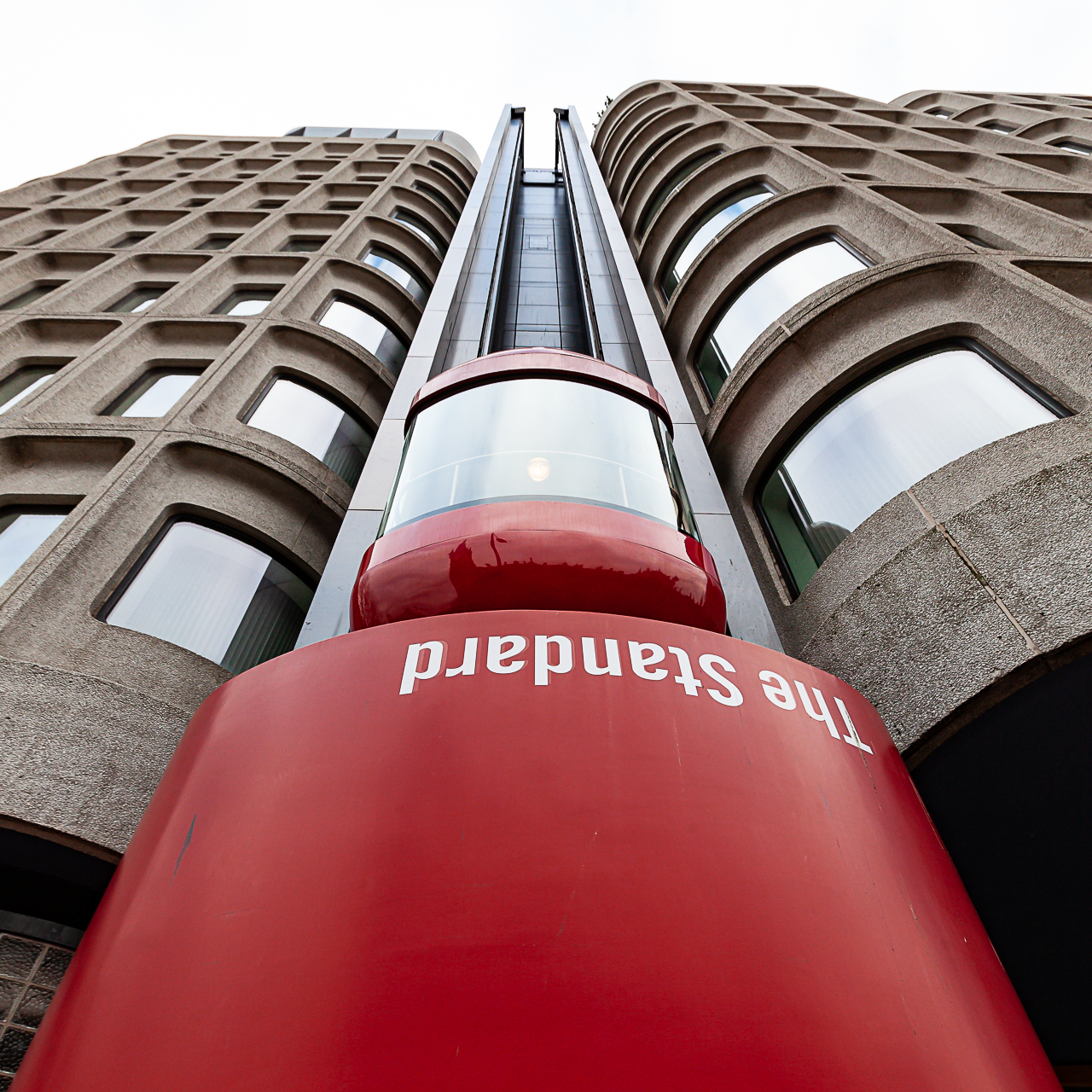
Our first building was almost directly over the road, the lovely ex-Camden Council head office building, now the Standard Hotel. I really like this building, though have to actually go inside. If I did I would want to be able to use the lift.

The Standard Hotel, originally built in 1974 for Camden Council, fully remodelled as a hotel, opening again in 2019.

IMG_6475

IMG_6479

IMG_6480

IMG_6481

IMG_6482

IMG_6484

IMG_6487

The Brunswick Centre, opened in 1972.

Mixed use residential and retail this estate was supposed to be bigger than it is but the developers couldn’t get all the land they wanted, which (familiar story) means they had to change the original plan of building a private estate and bring the council (Camden at the time) in to help out.  It was subsequently opened as part private and part council housing, and remains that way now, which I think is a good thing, though it needs a lot of money spending on it by the look of it.

IMG_6492

IMG_6489

I was very lucky to be invited into the residential block by a resident who saw me walking around with my camera and told me there was a great view of London from the top floor. There was, but I was more interested in the lovely concrete angles.

IMG_6508

IMG_6506

IMG_6505

IMG_6502

IMG_6495

Some of my walk mates got invited in to look at someone’s flat which I remain a bit jealous of, though apparently it wasn’t that interesting. I have visions of residents maintaining a flat like a museum of 1970s interiors, though of course reality isn’t like that. I’m going to back one quiet Sunday morning and take some photos of the street level window boxes outside some of the flats.

IMG_6501-2

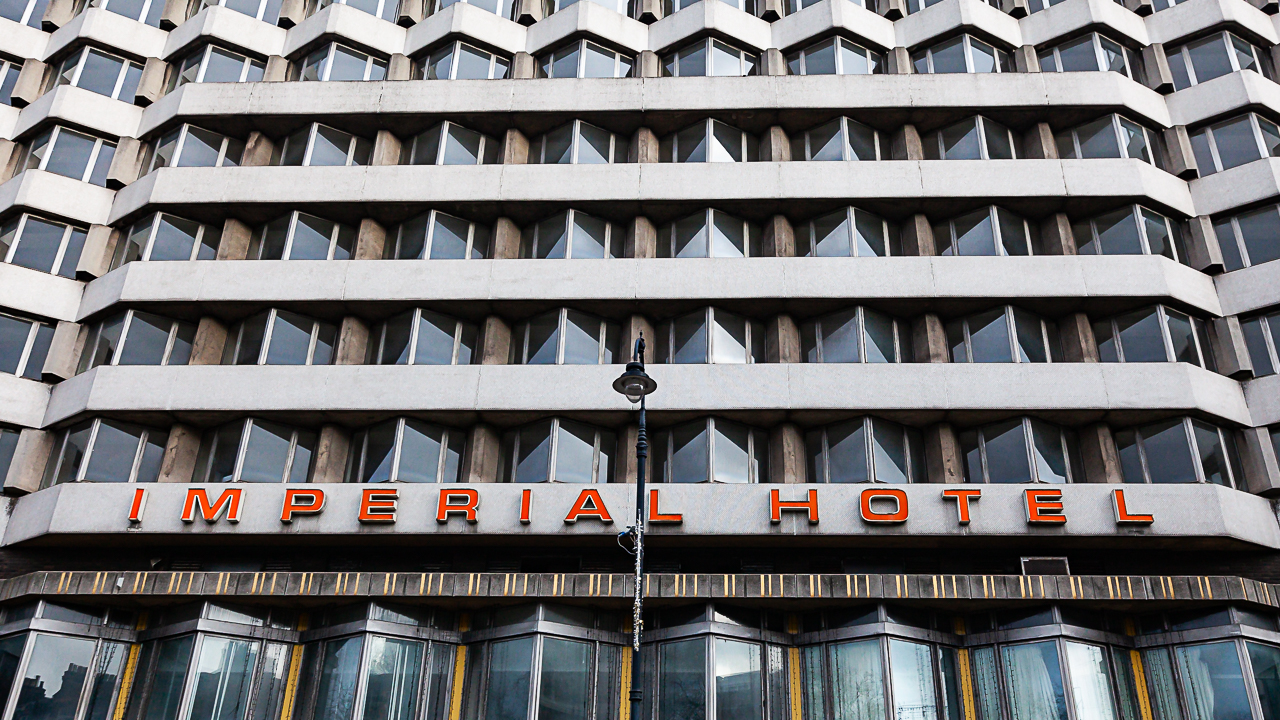
Imperial Hotel, under renovation.
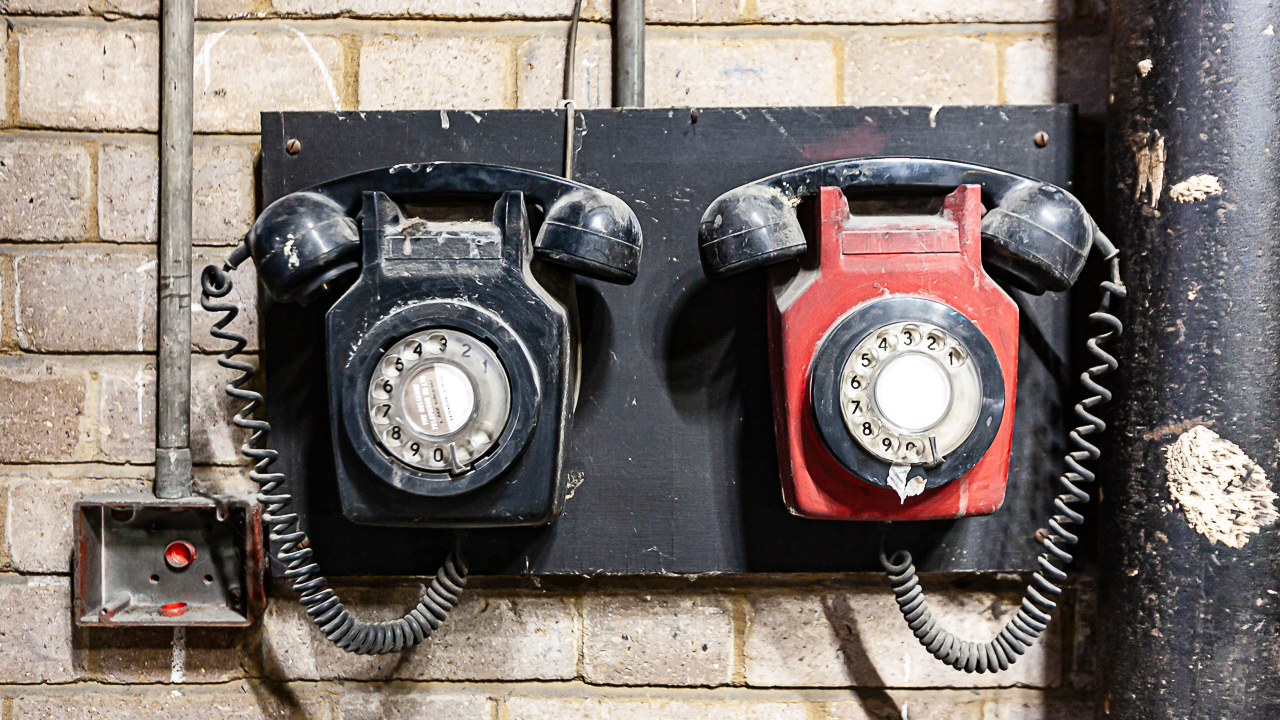
I found some fabulous old phones in the carpark. Always check the carpark is my policy.

IMG_6513

IMG_6514

IMG_6515

IMG_6522

University College London.
These buildings were quite difficult to photograph, or at least I found them to be. I took a few images but wasn’t really happy with the most of them. The buildings are big, and there isn’t a vast amount of space to get a decent angle to shoot that doesn’t end up making the building look really weird, and fixing in Lightroom wouldn’t really work either.

Charles Clore House, (Institute of Advanced Legal Studies), Denys Lasdun, 1976.

IMG_6531

IMG_6532

IMG_6533

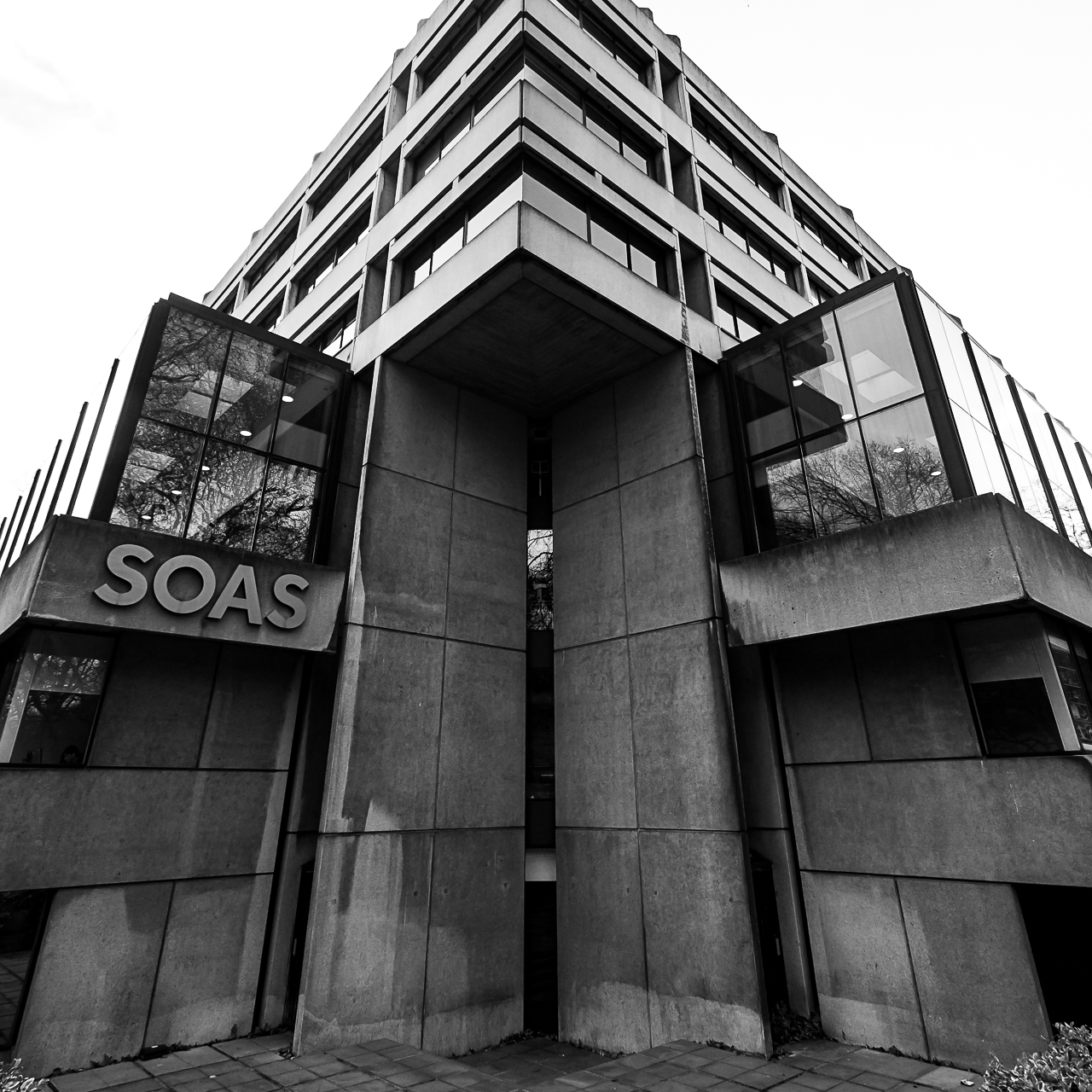
The Philips Building (SOAS Library), Denys Lasdun, 1973.

IMG_6544

IMG_6546

IMG_6549

Denys Lasdun featured a lot today, amongst other things he also designed the fabulous brutalist parts of the University of East Anglia in Norwich and the National Theatre on London’s Southbank. He is my favourite of the English based ‘brutalist’ architects.

It was starting to get a bit cold and we had been on our feet for 4 half hours so it was time to nip to the pub for a refreshing pint or two. It was another very enjoyable day out. One of the photographers who has been on all the walks had brought along a child’s camera, which uses till receipt thermal paper for instant black and white printing. I subsequently bought this one for next time and I’m really looking forward to trying it out on some lovely concrete.

Toy Camera