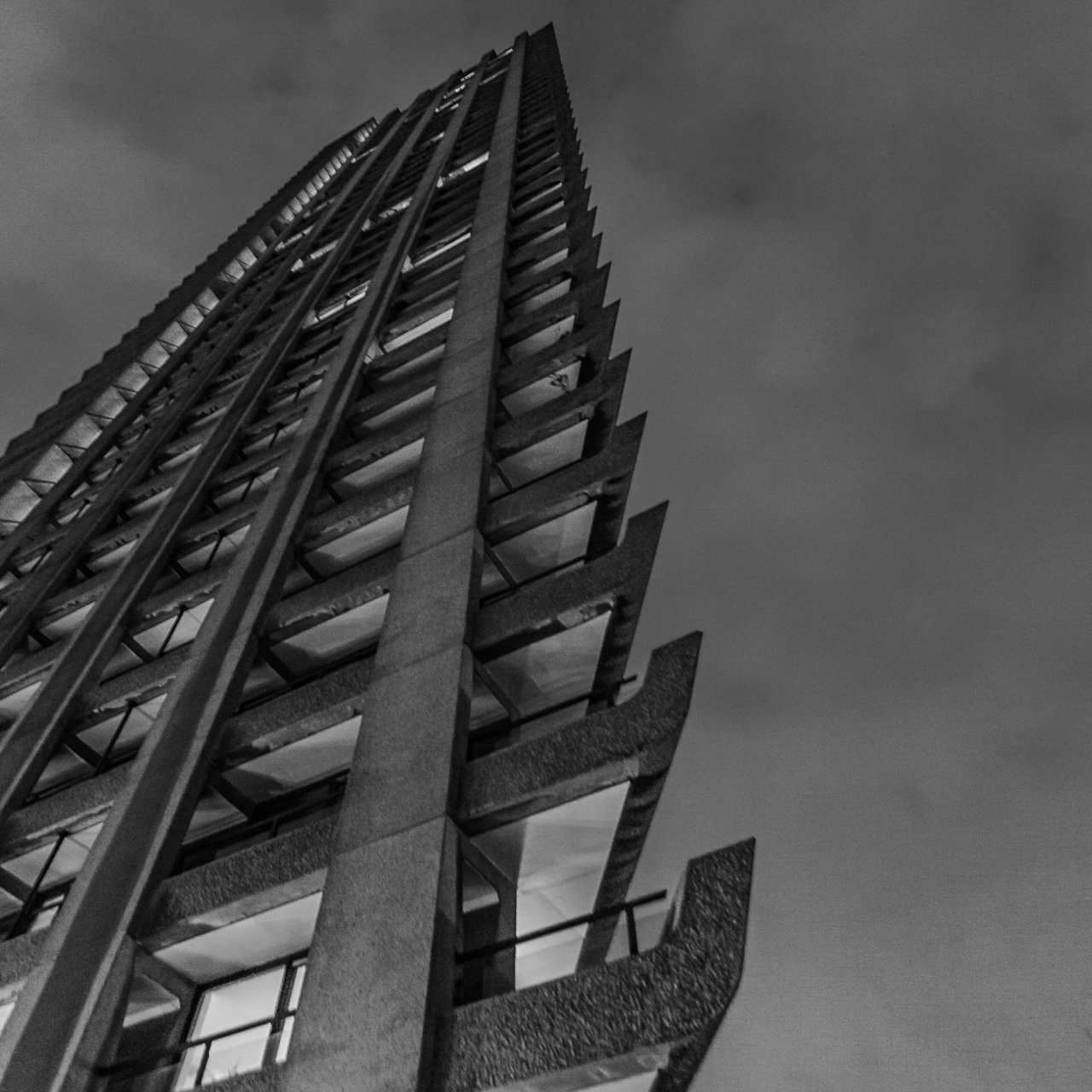
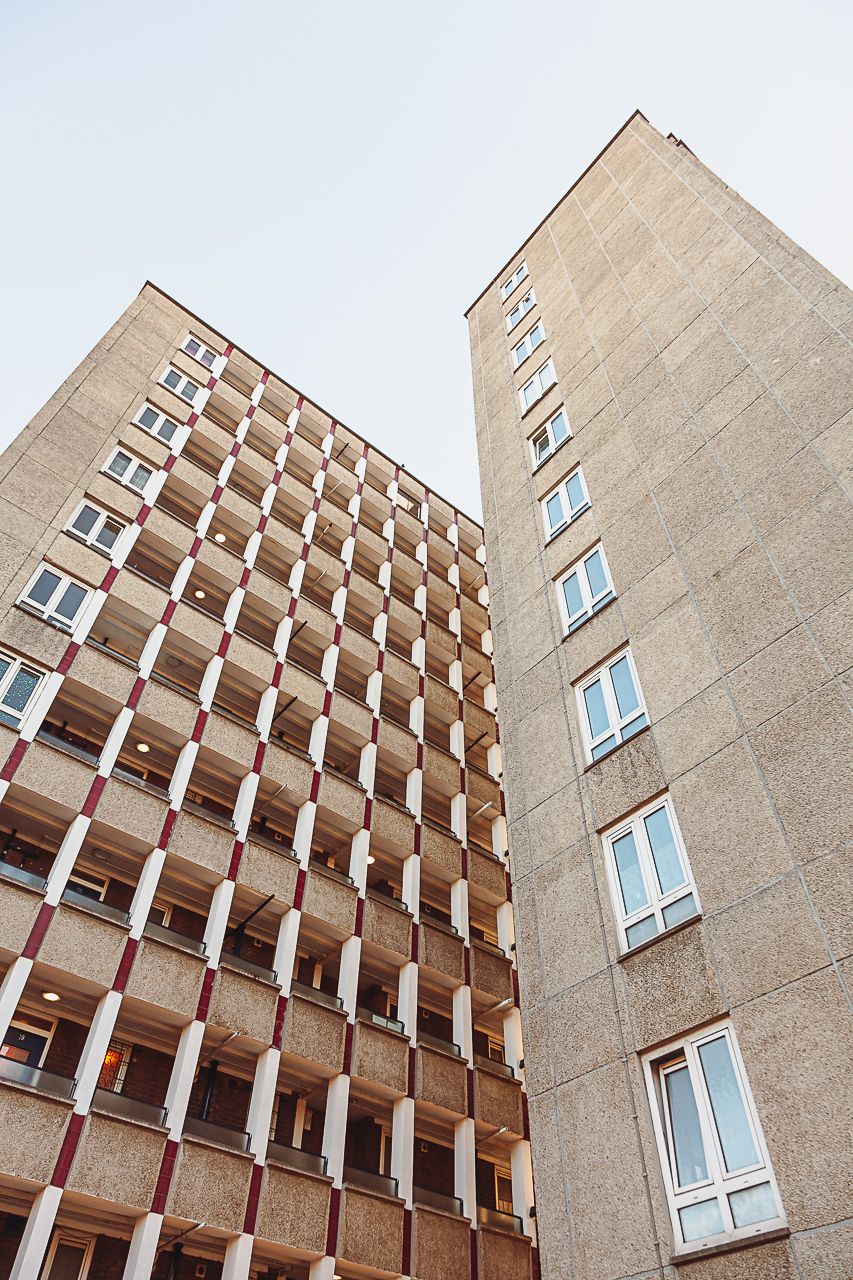
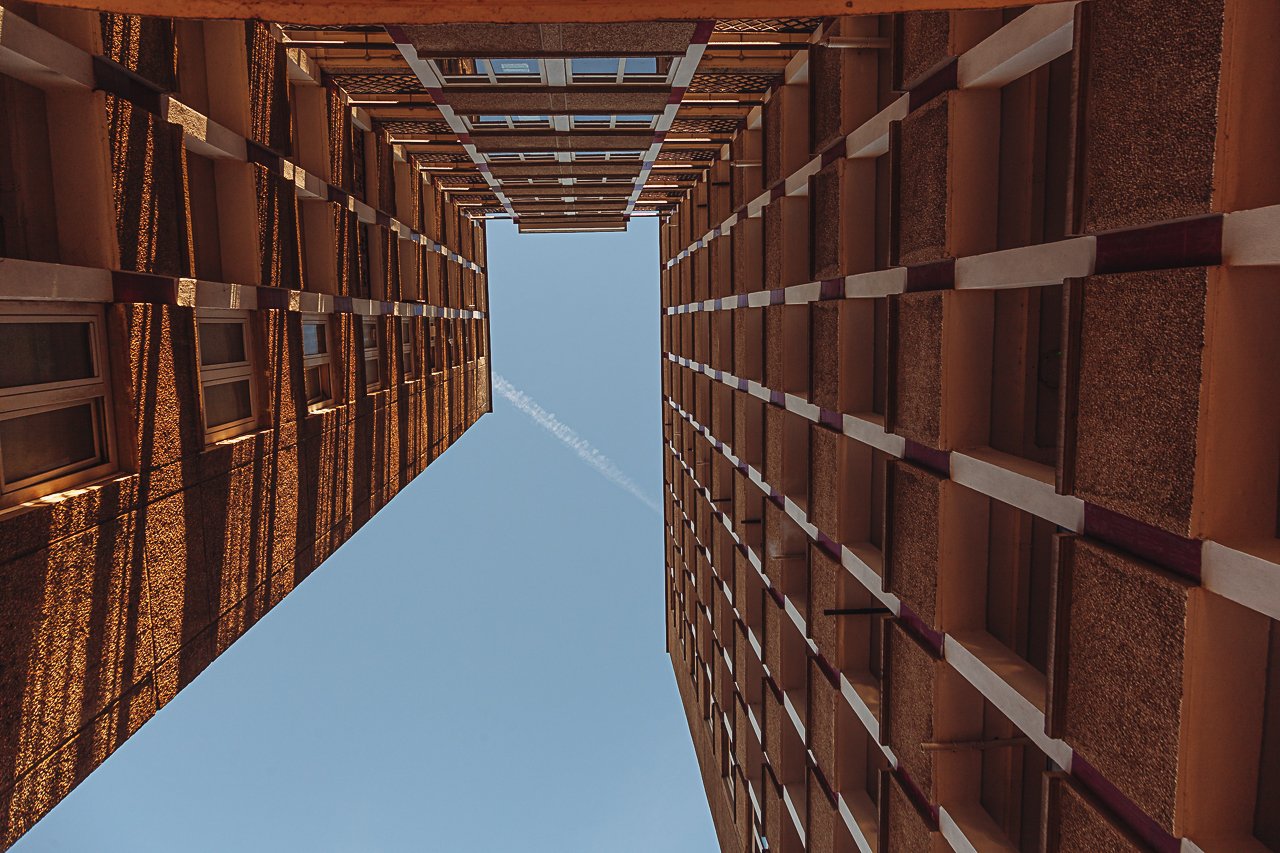
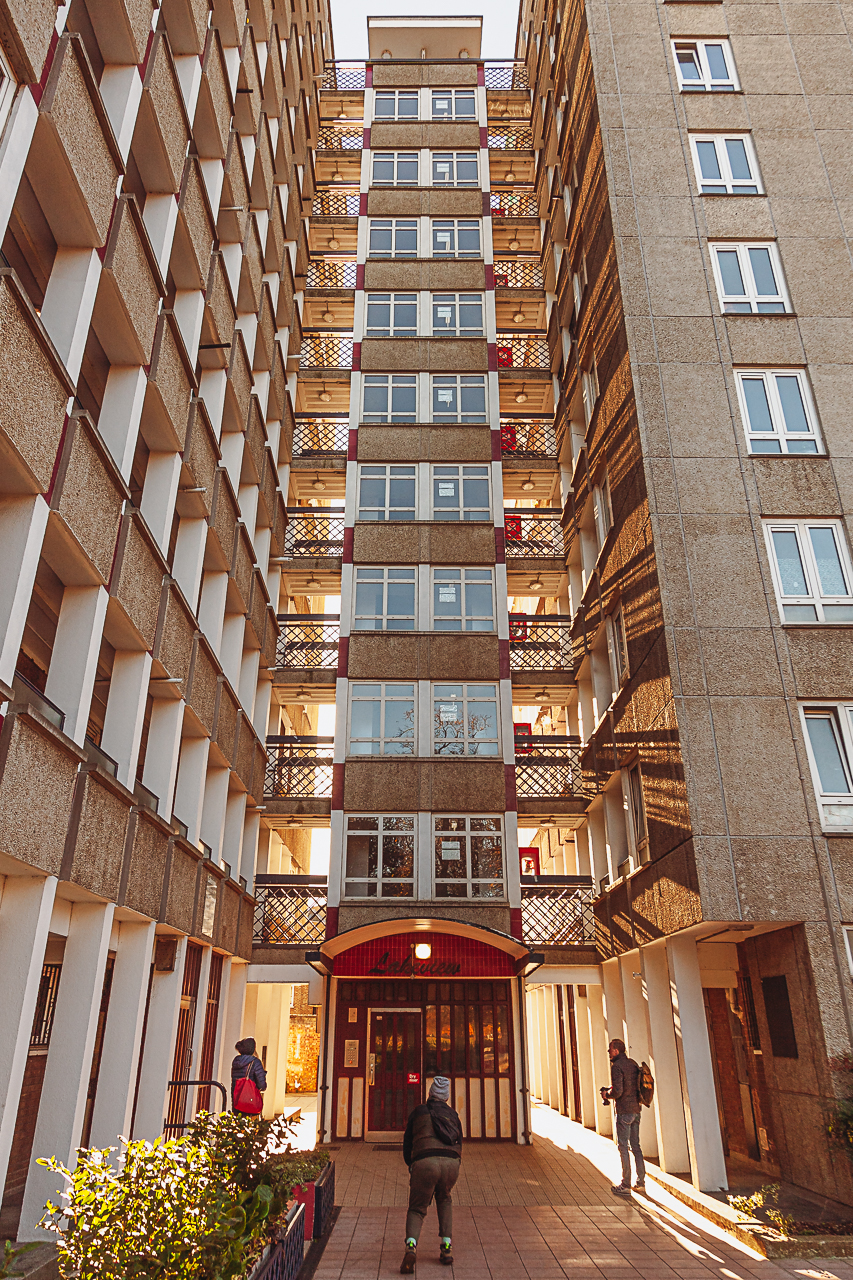
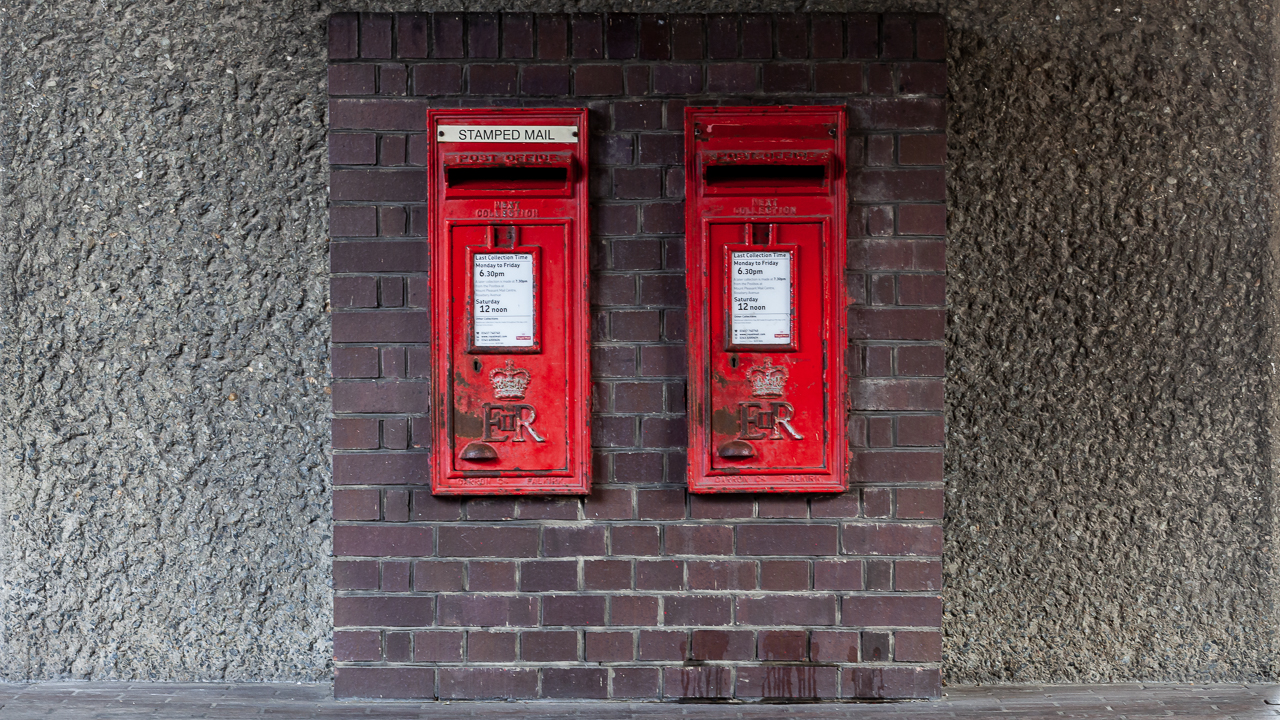
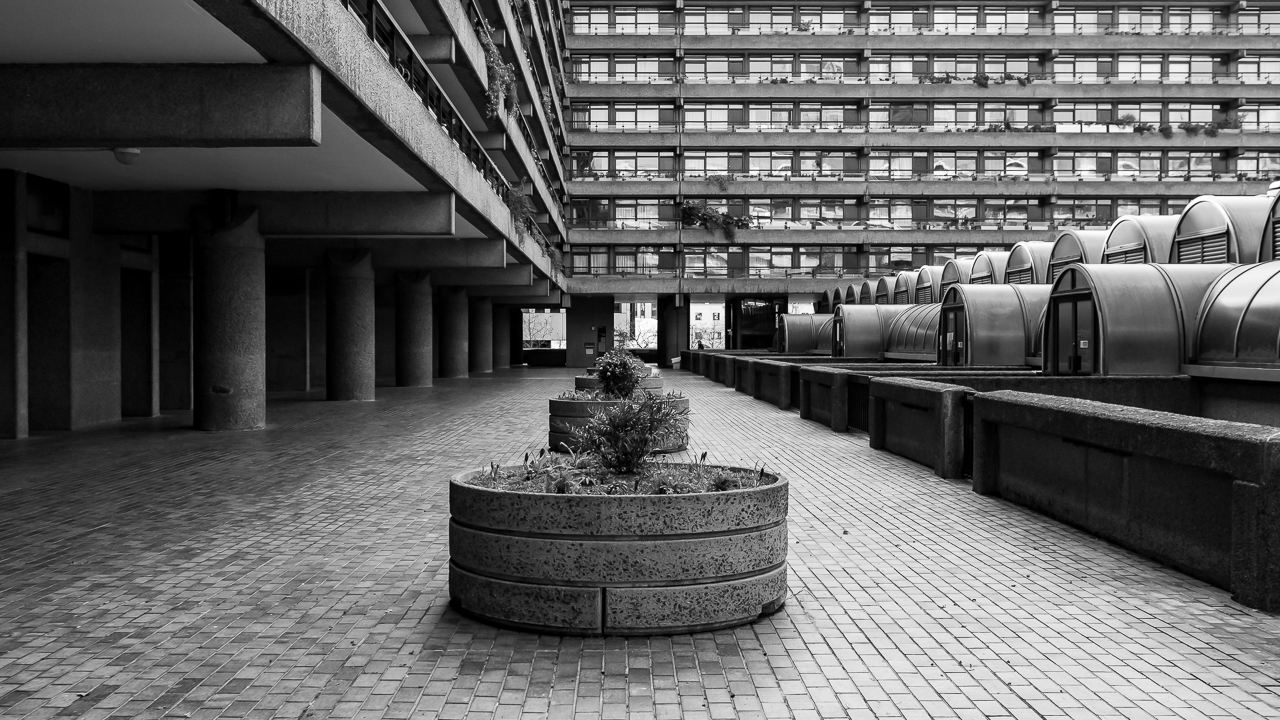
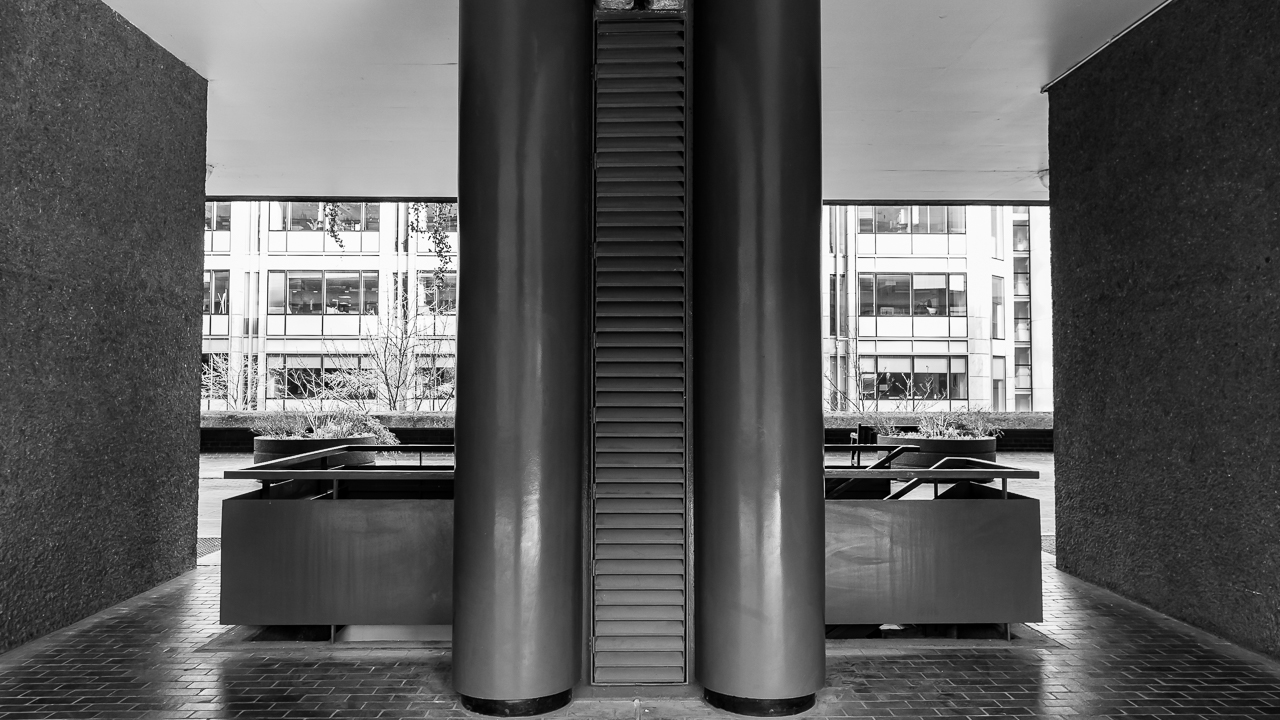
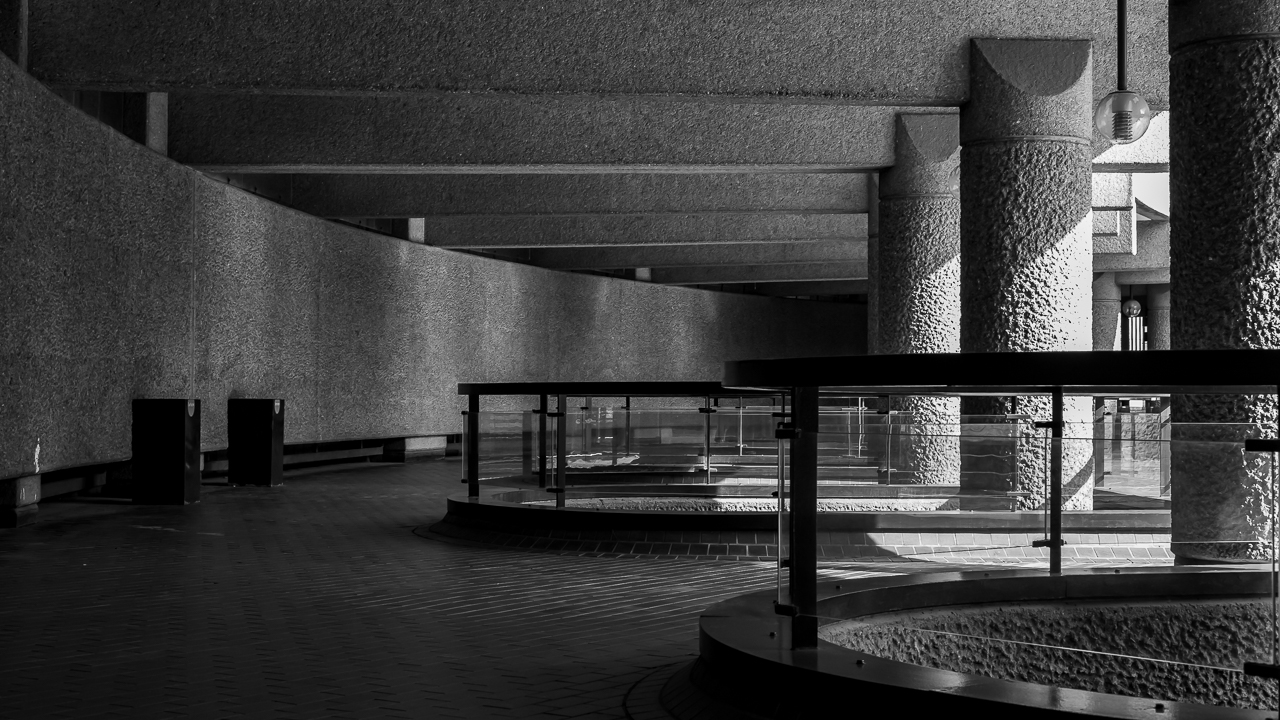
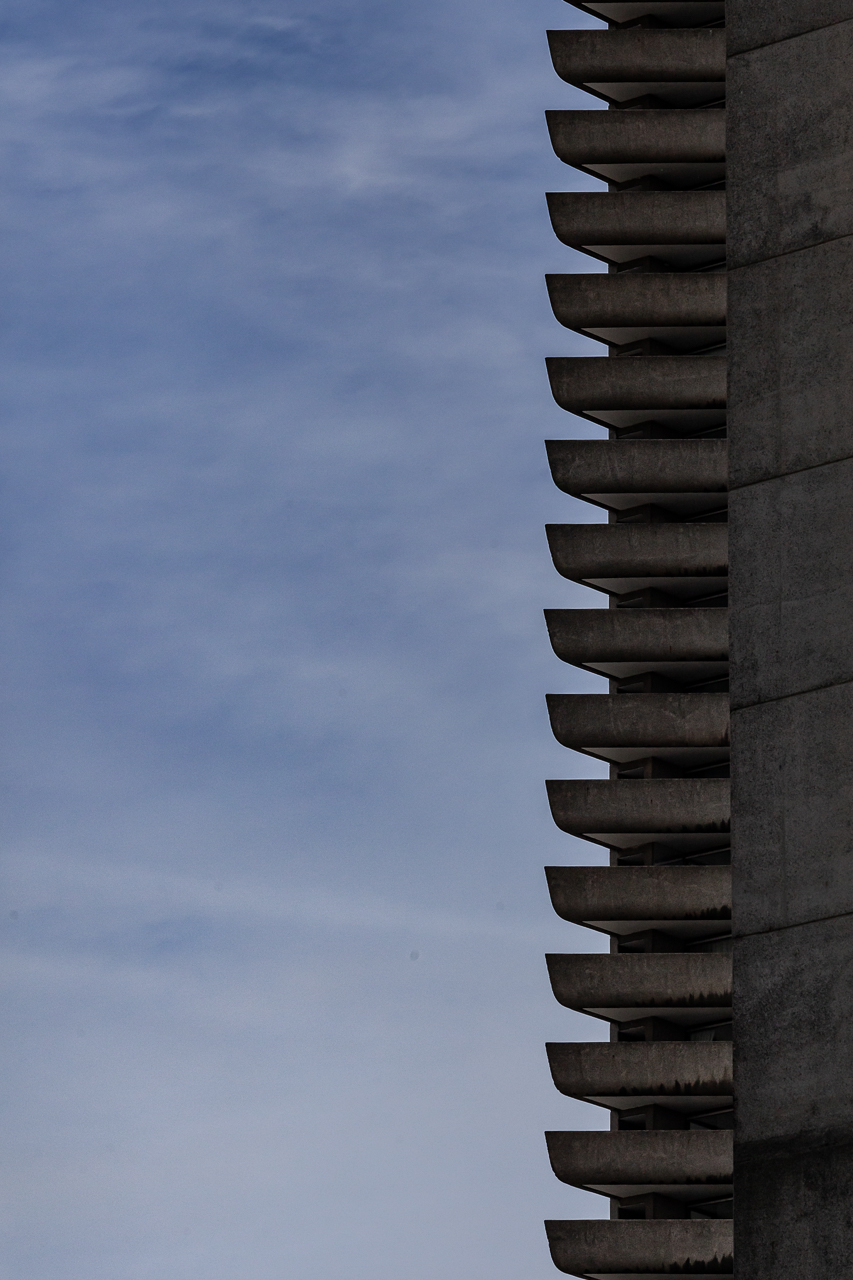
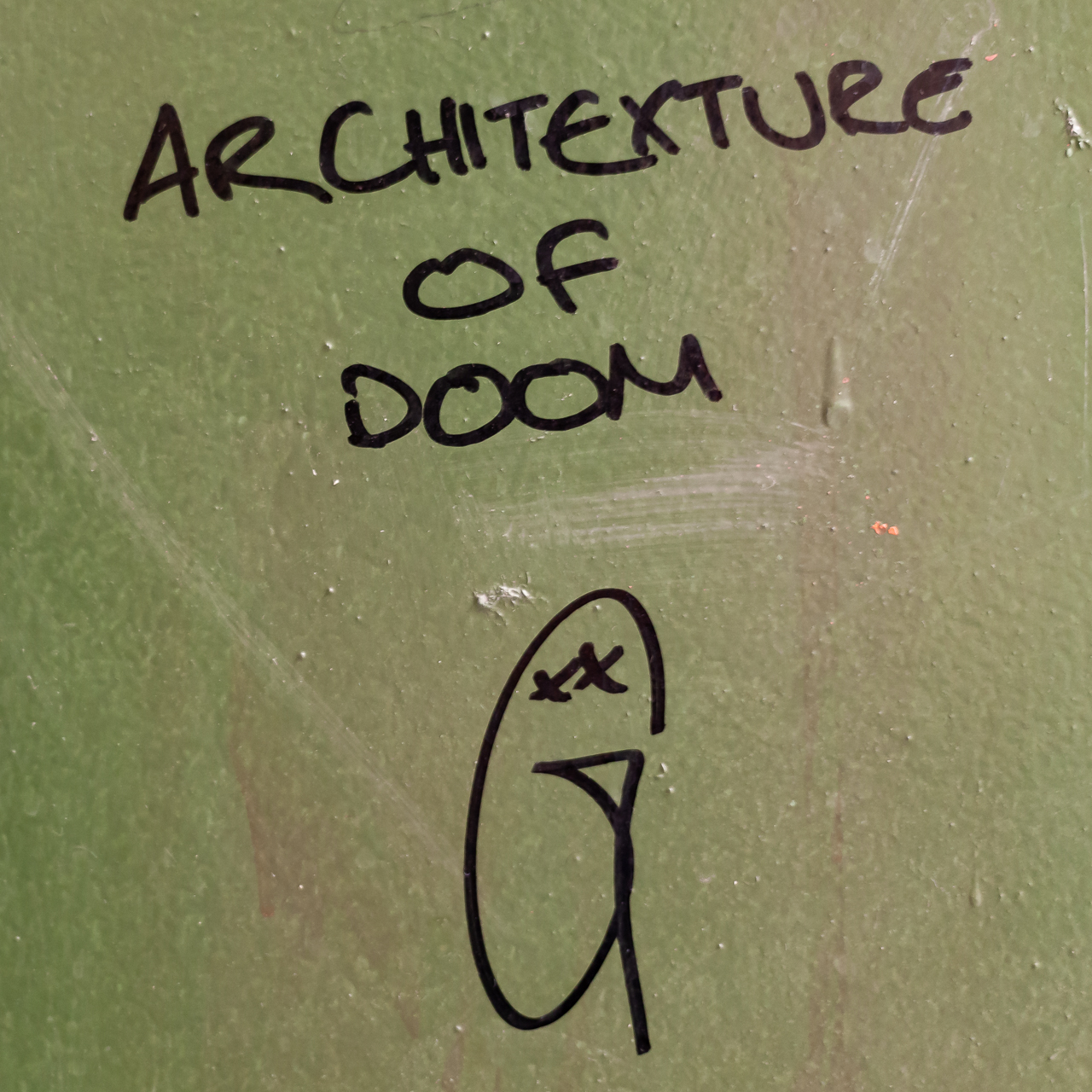
Oxford Brutalism

Oxford – Saturday 15 February 2025

A couple of posts ago I noted that I’m going to ‘practise’ being on my own before I spend solo time in Delhi as we make our individual journeys home from New Zealand. Eleanor and I fly to Auckland on 5 March and spend a week there before we’re joined by a London friend, Paula. The three of us will road trip down New Zealand to Dunedin, where we then separate. I fly to Brisbane for a night to see my family before going to Delhi. Eleanor and Paula spend a few more days in New Zealand then go to Sydney and Tokyo. I have 10 days on my own; and most of that will be spent somewhere that is different to the London I call home. Very different indeed.

I’ve not done the solo travel thing in a while and know I’m going to find aspects of life in Delhi challenging. I want to avoid finding aspects of being on own challenging while I contend with the challenges of Delhi. If I can manage the things I can control then I will be better positioned to manage the things I can’t. That is the theory anyway. Understanding more of what I feel I can control has been an objective of the last few weeks.

To help this I decided to taking a night away by myself and I chose Oxford. It’s not too far from London, it’s always busy with students, their visiting families and other tourists, and it has a good mix of historic architecture with a tiny bit of mid-century concrete mixed in. Other than its cold right now in the UK and Delhi will be hot, I’m going to find the Oxford experience will be just like Delhi, right?

I travelled up on Friday and though it was quite cold the sun was shining and it was a nice day to walk around semi-aimlessly taking photos of buildings of various ages. 

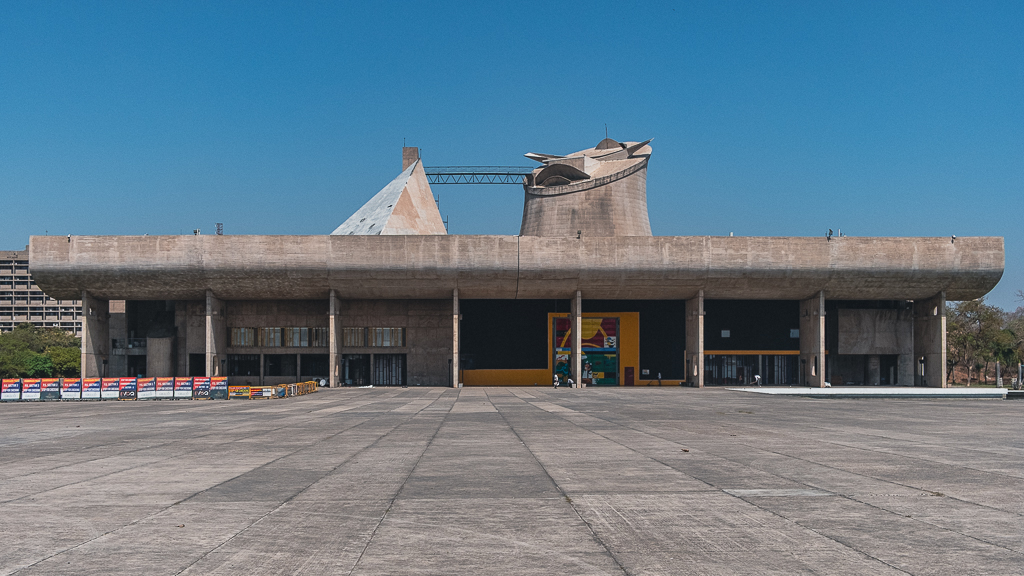
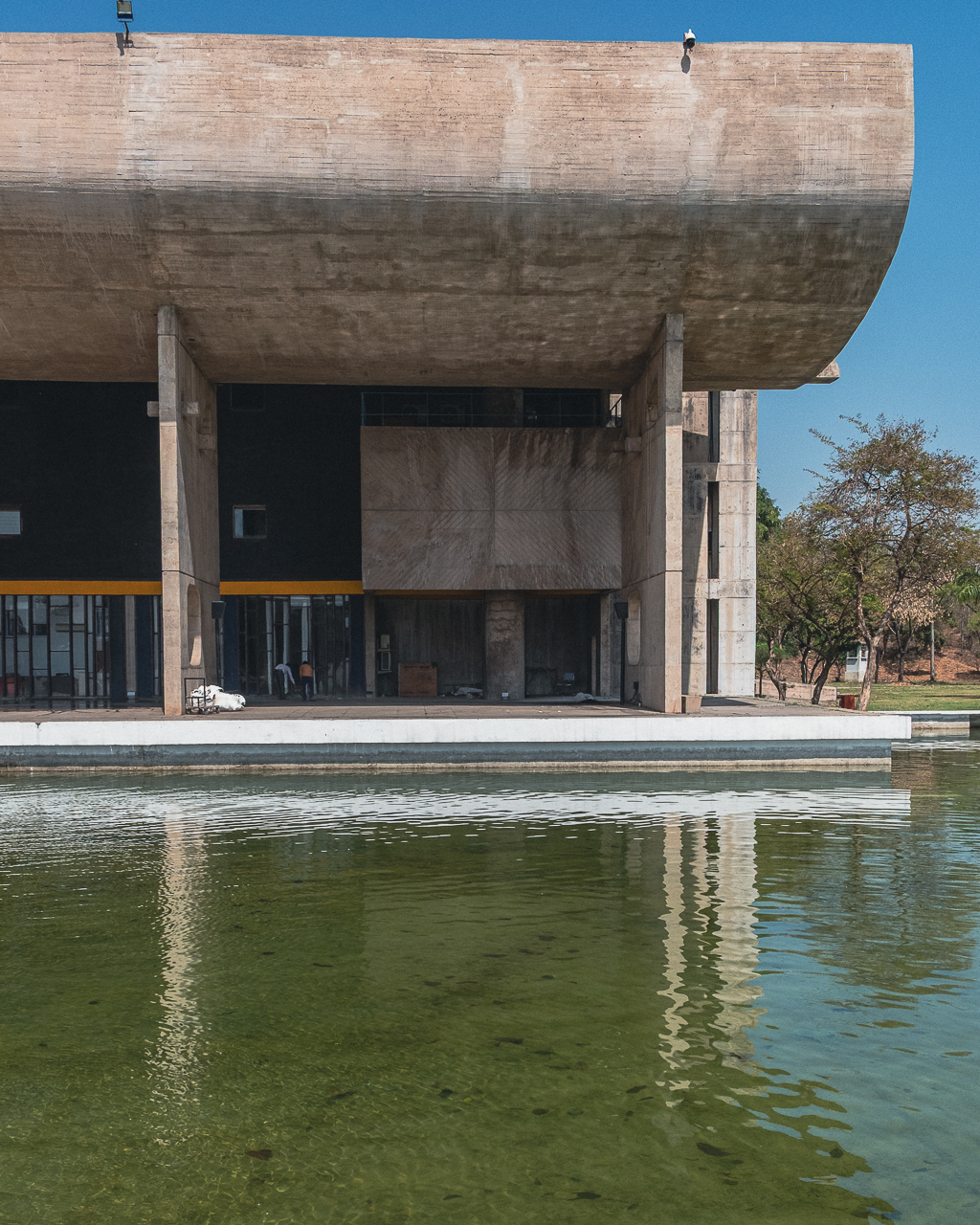
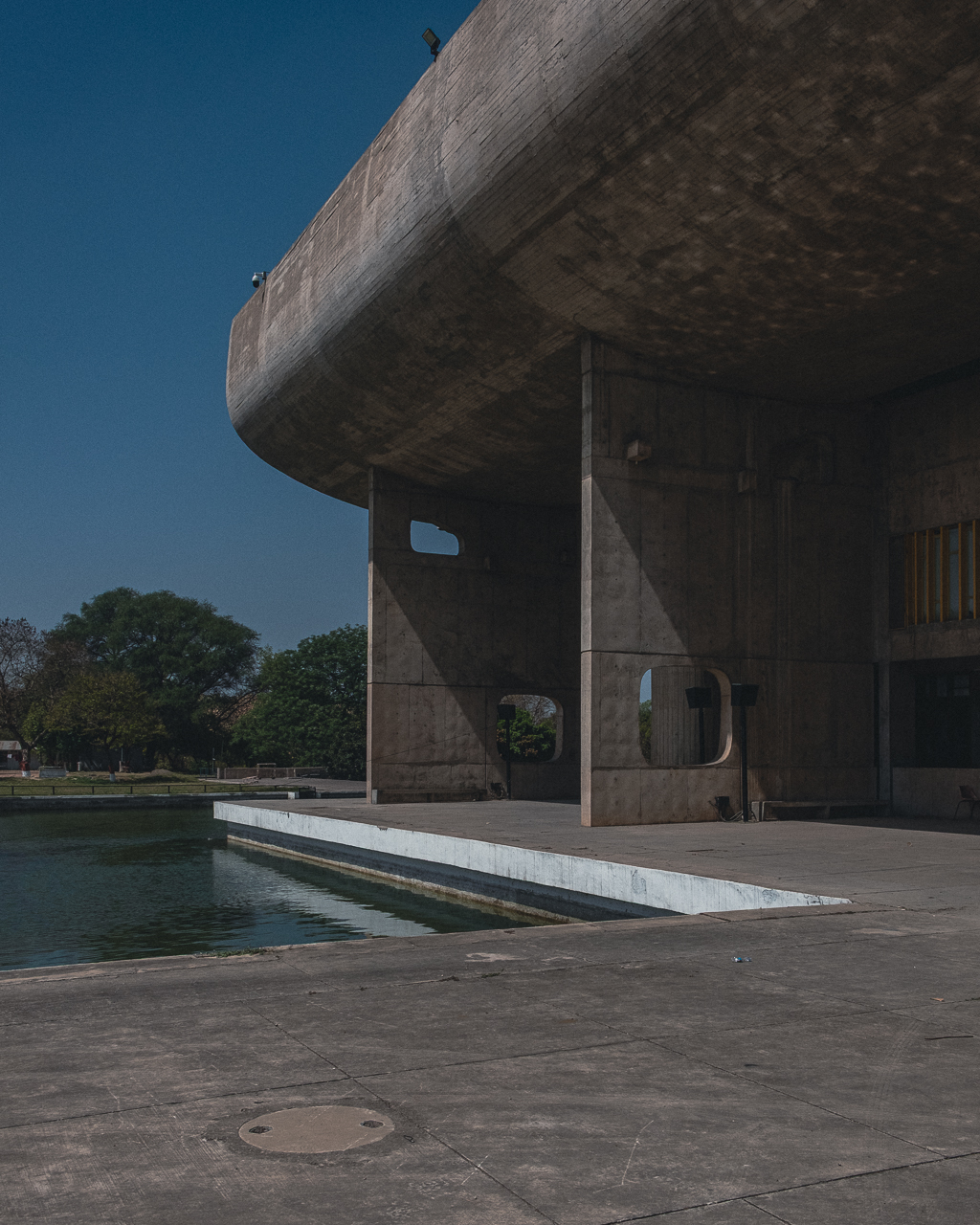
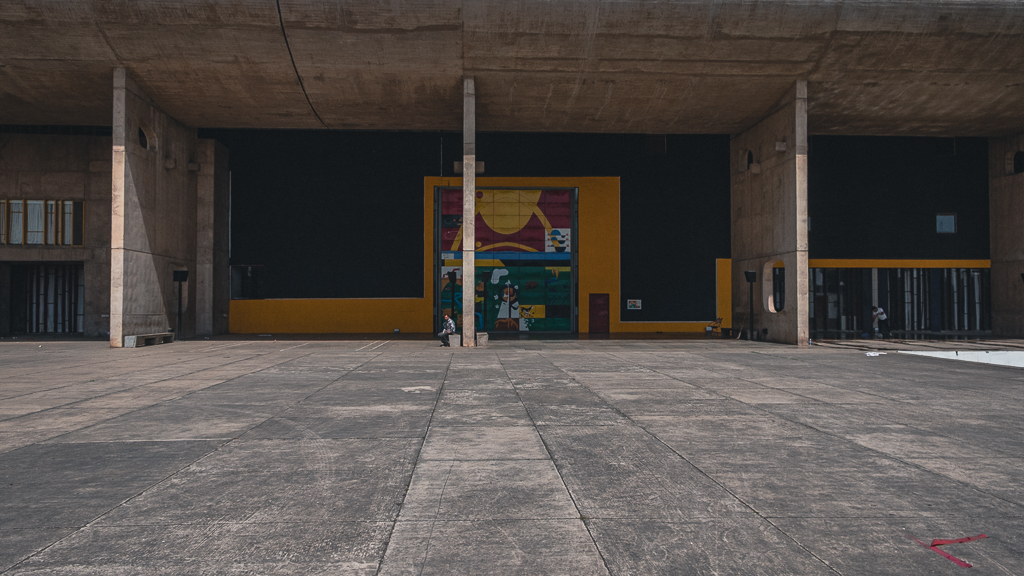
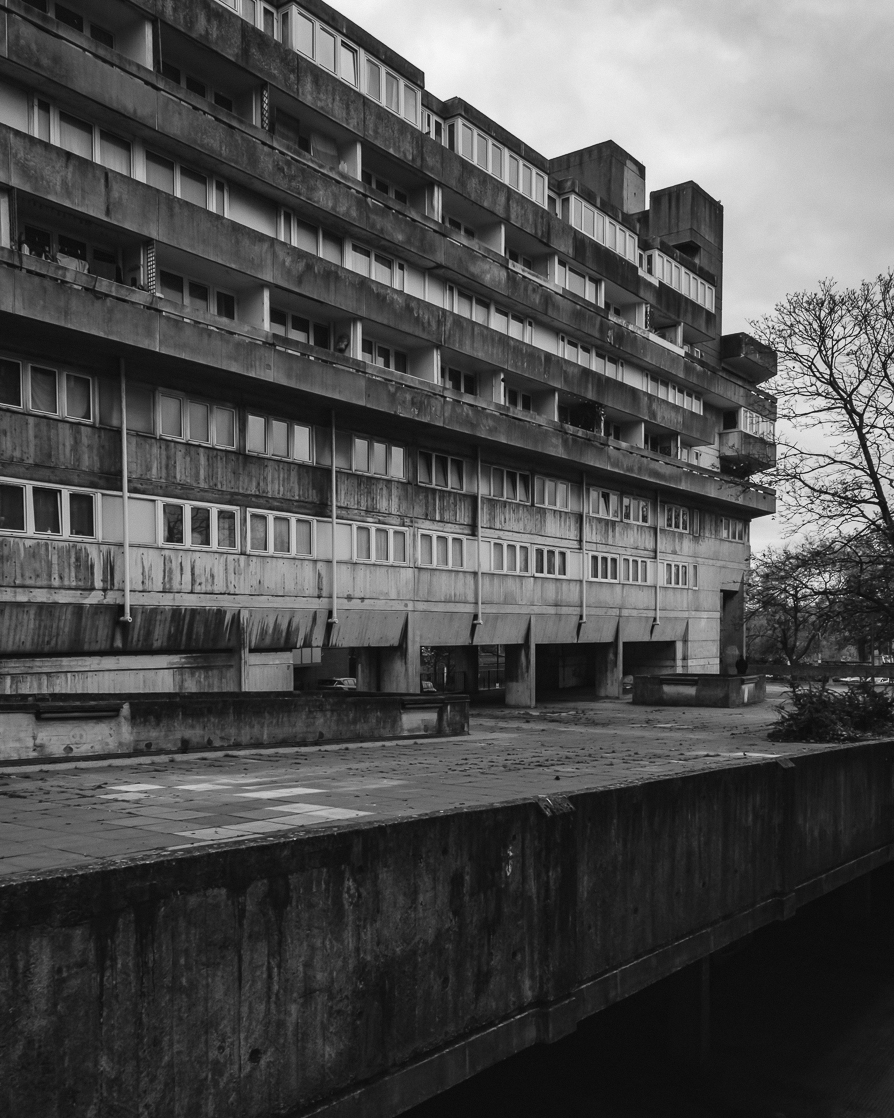
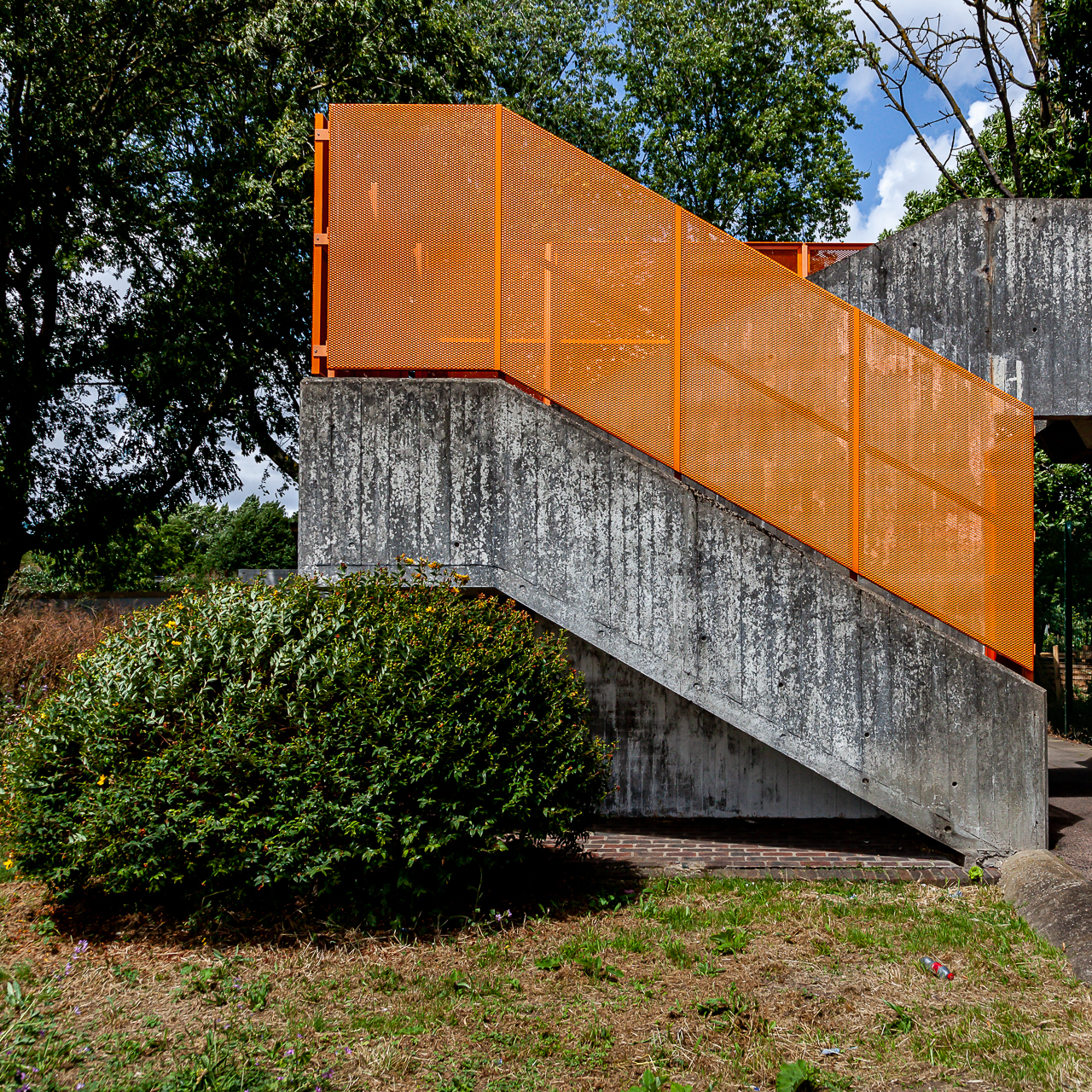
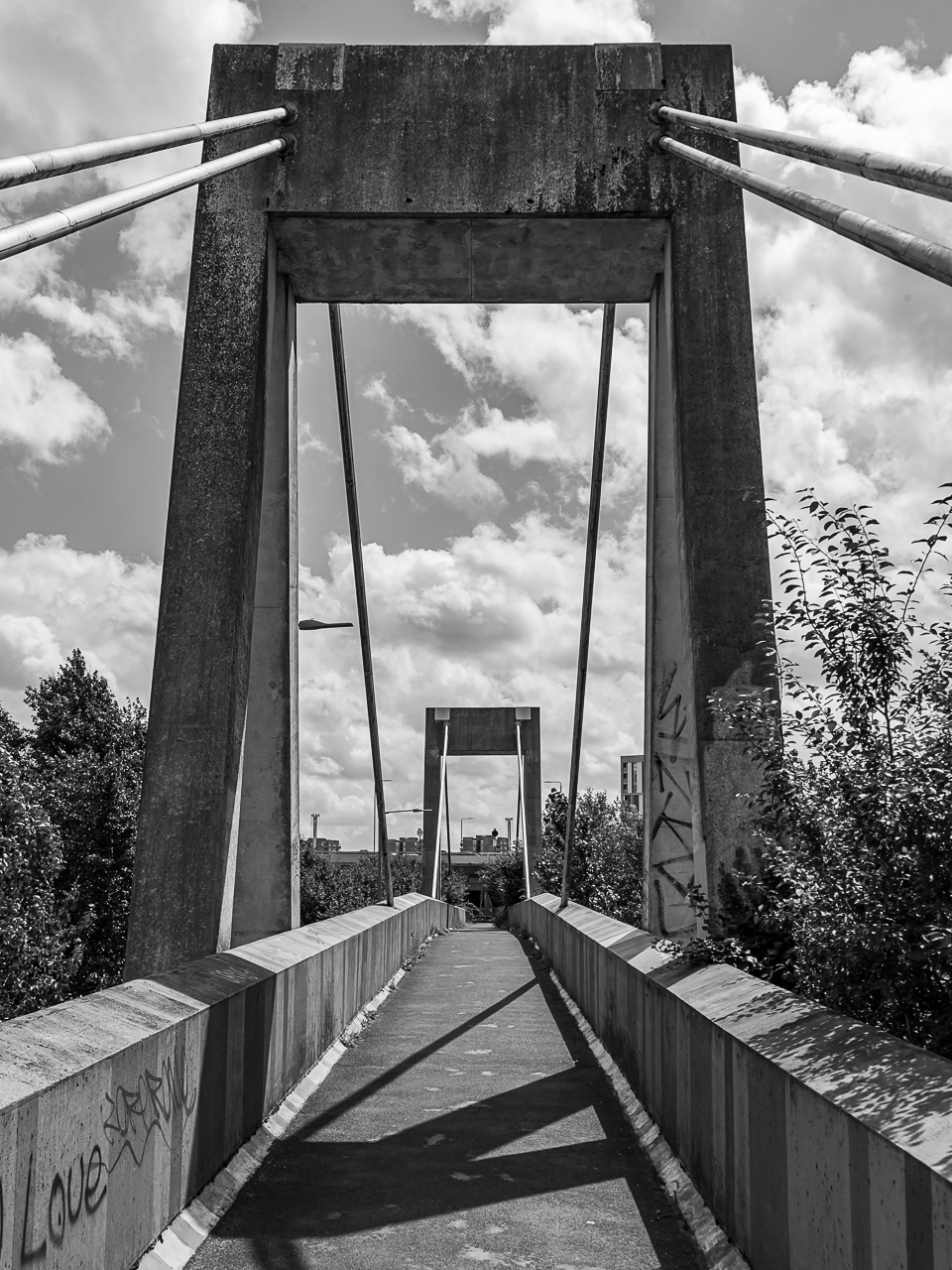
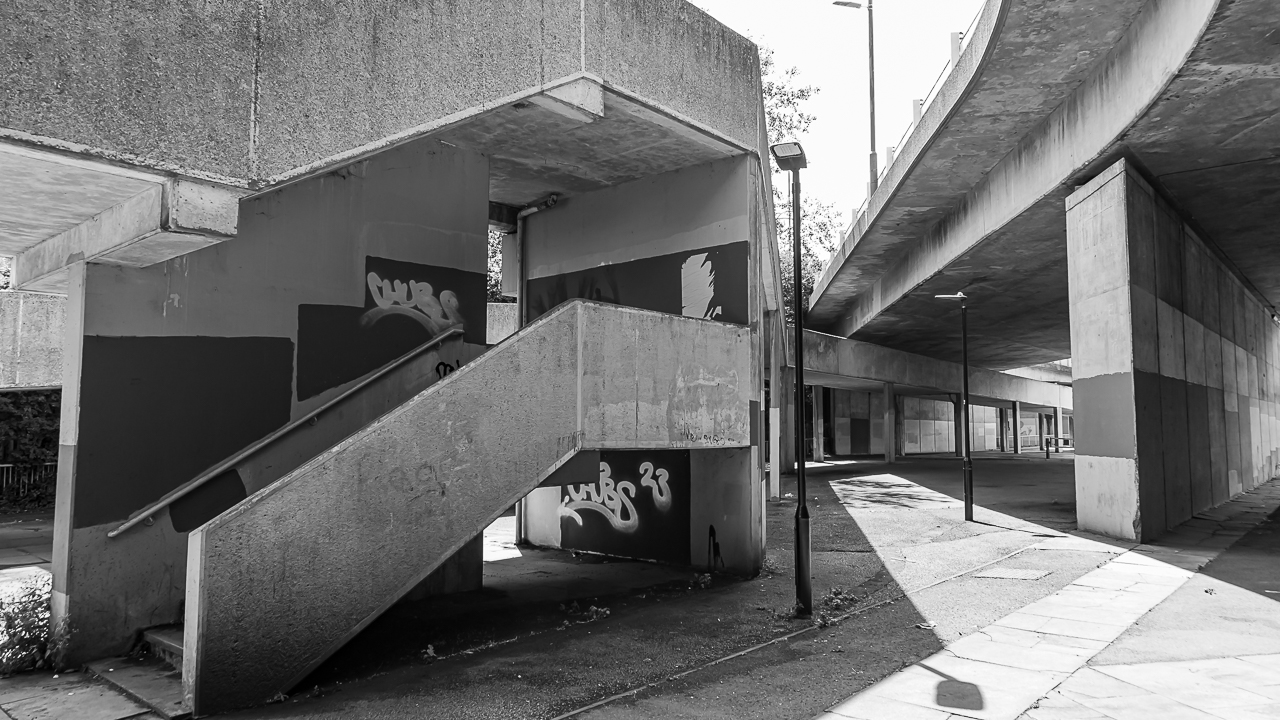
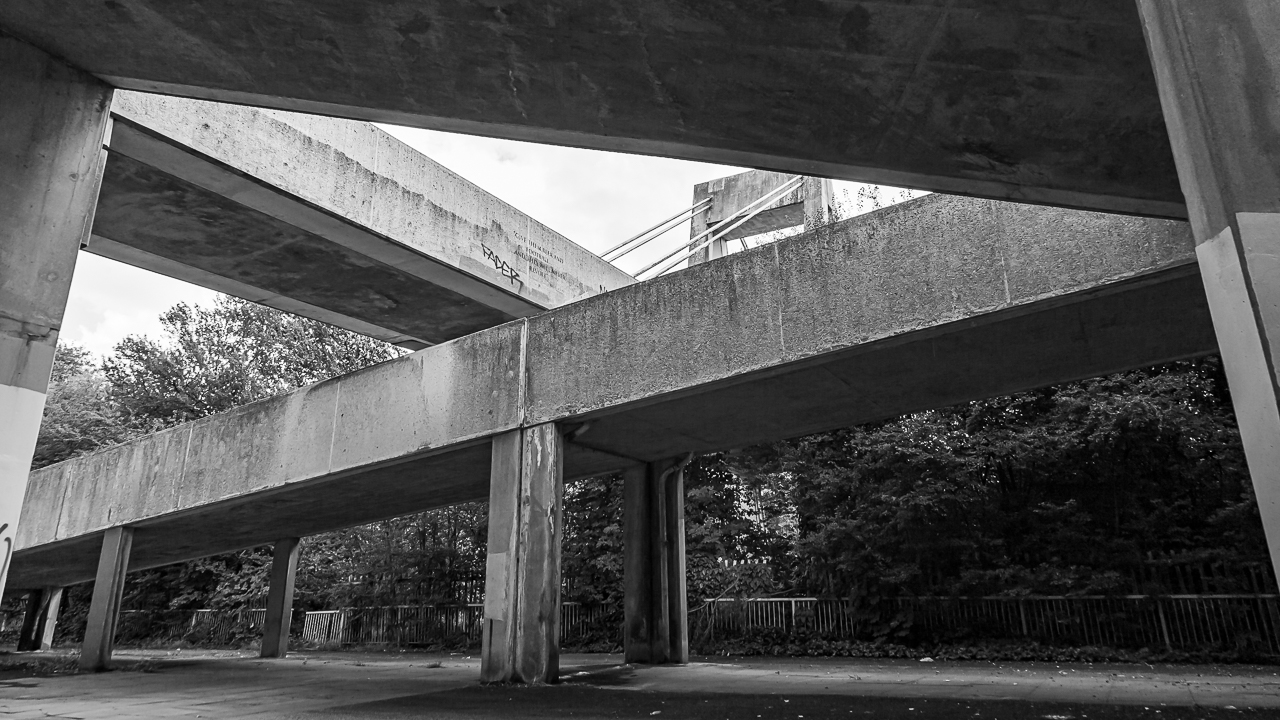
Overall, it was a successful couple of days and I enjoyed myself and learned a more about how I react to being by myself and working with crowds and busy tourist venues. I will cover more of the two days in the next post, along with photos of the ‘proper’ Oxford. Today, I’m going to share photos of the limited number of 60s and 70s brutalist buildings to be found amongst the ‘old shit’.

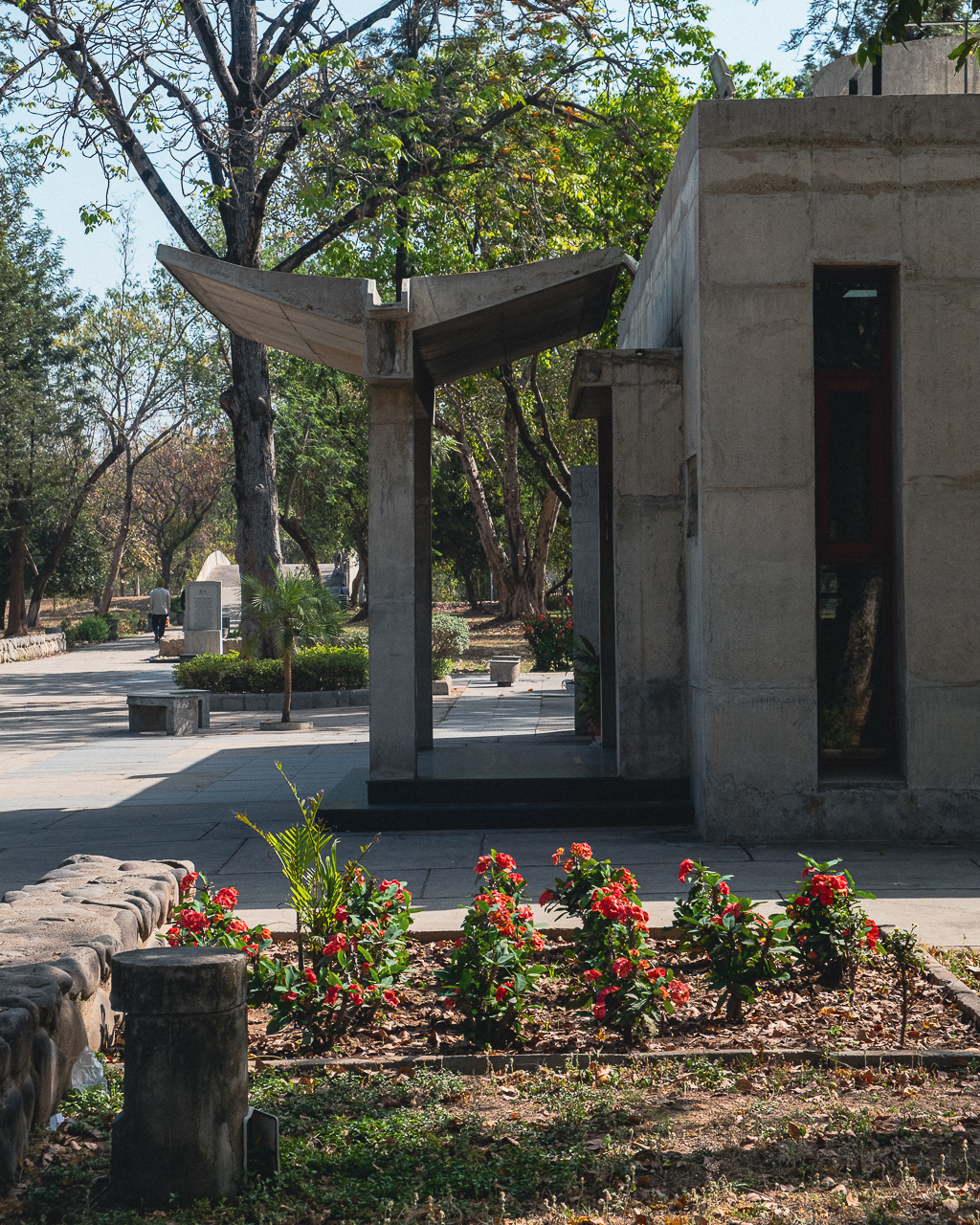
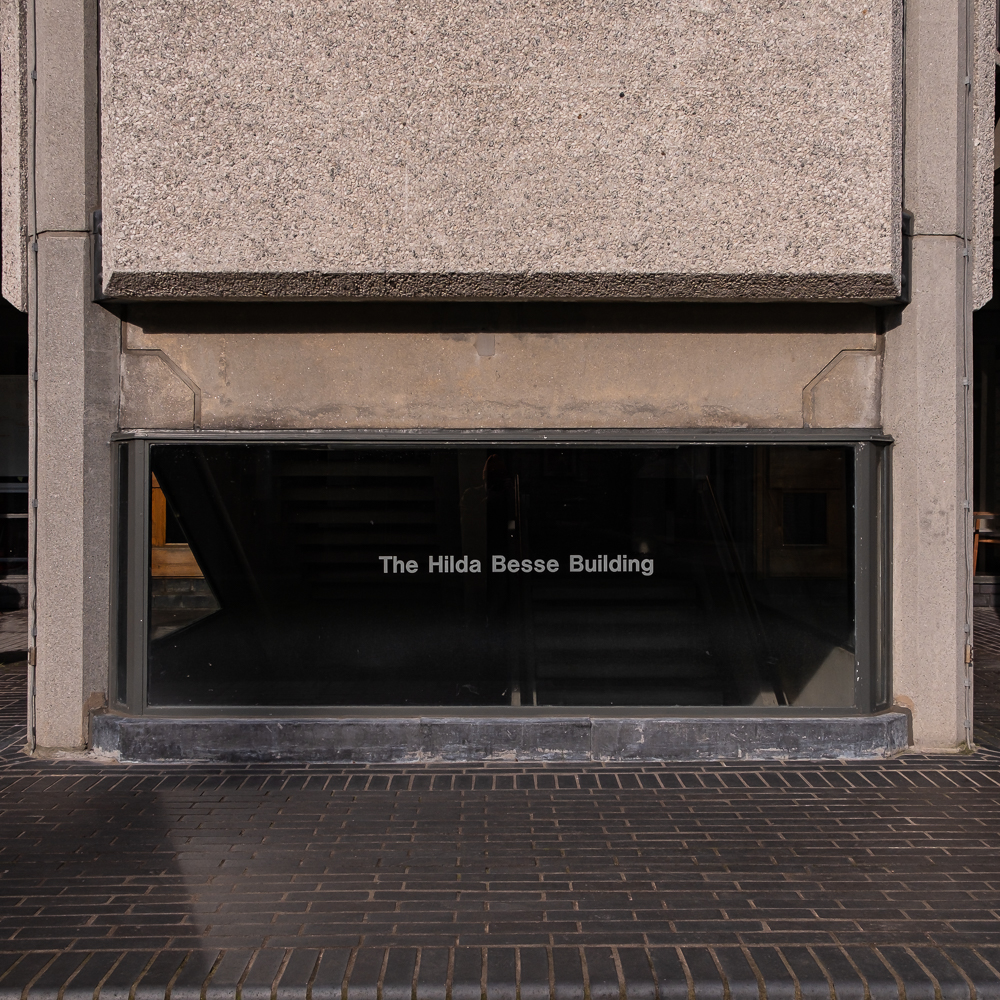
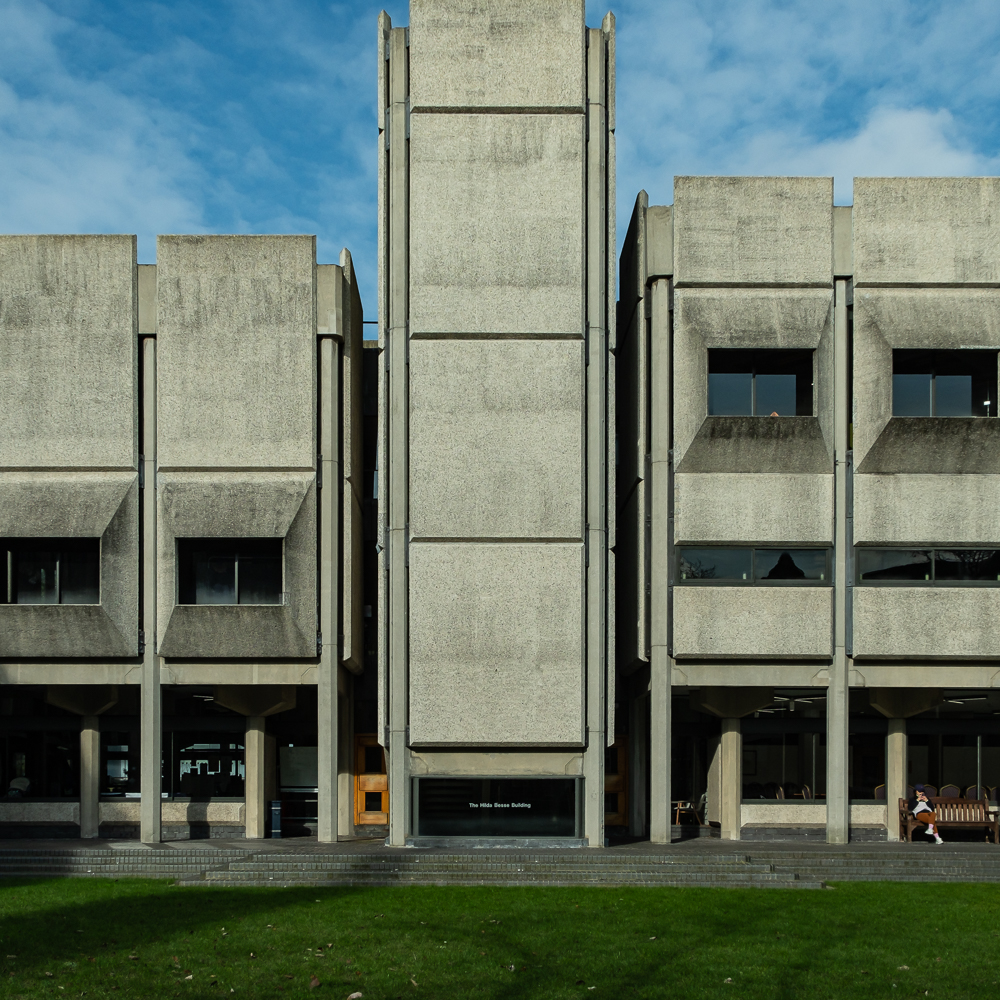
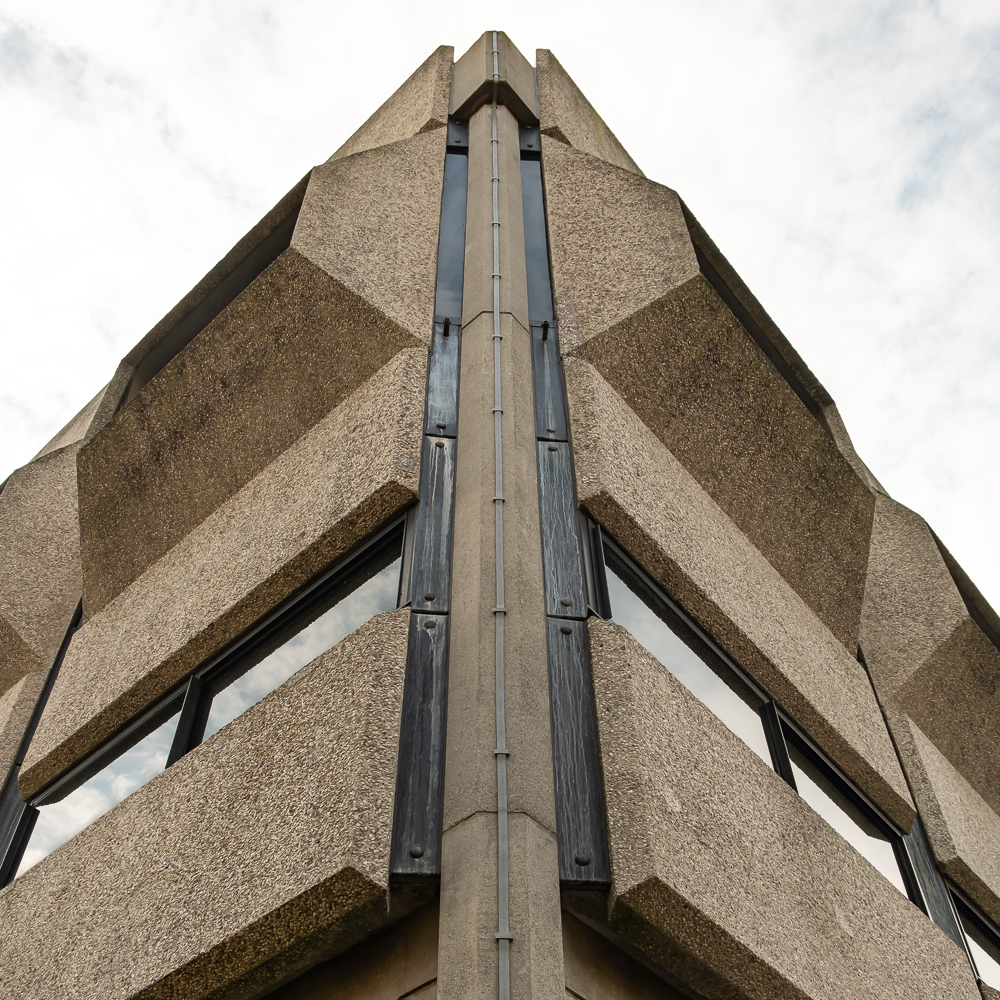
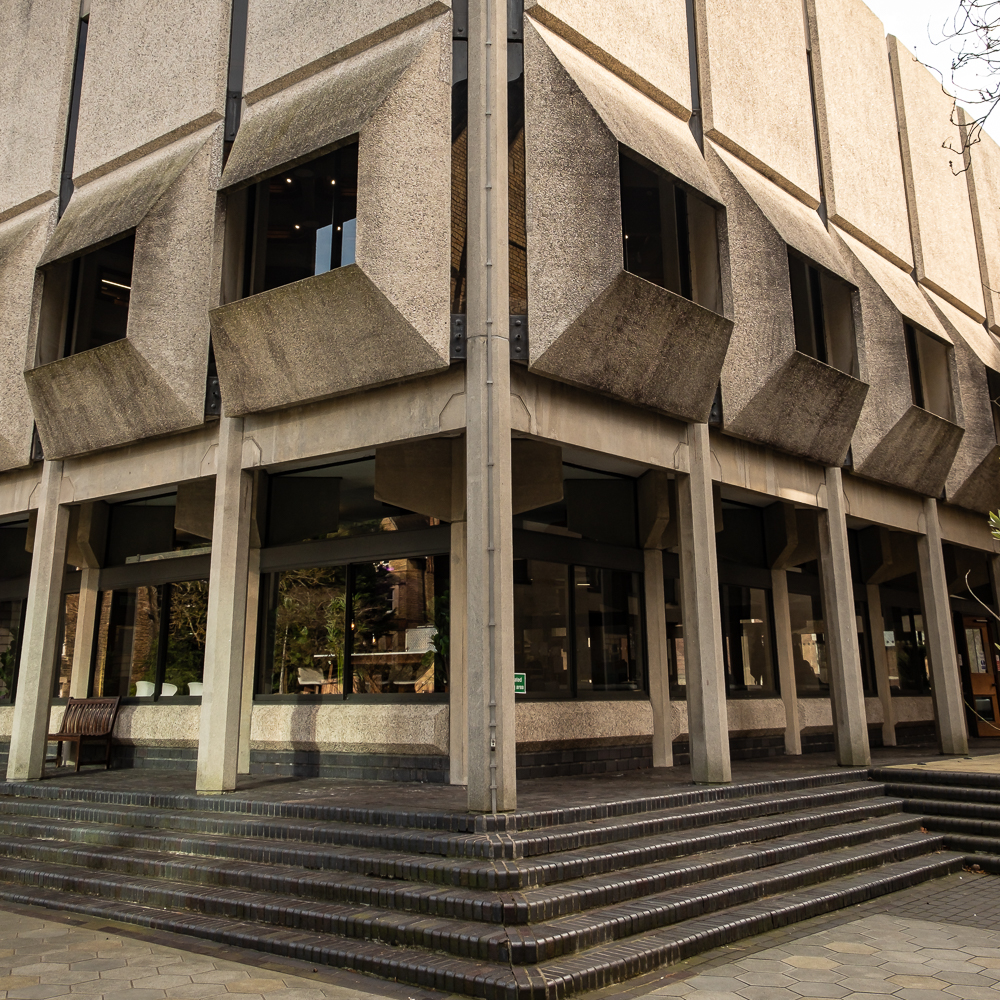
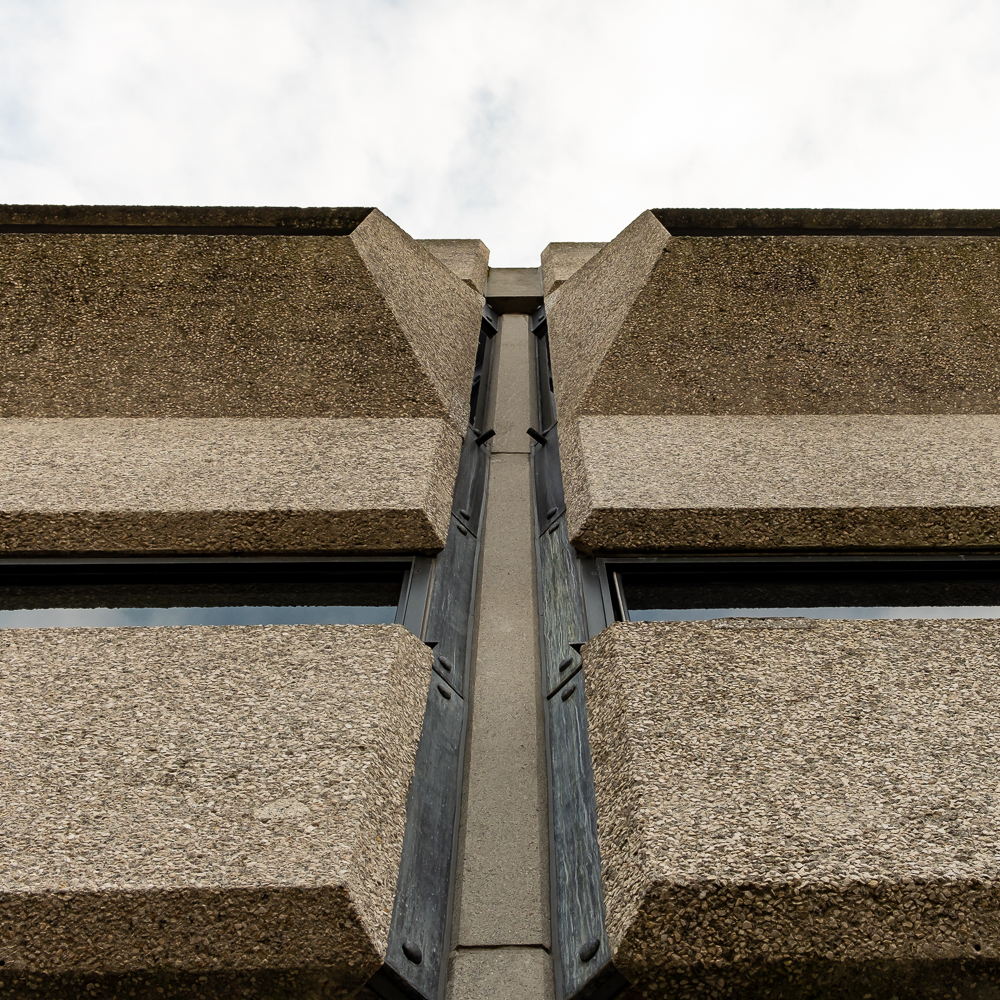
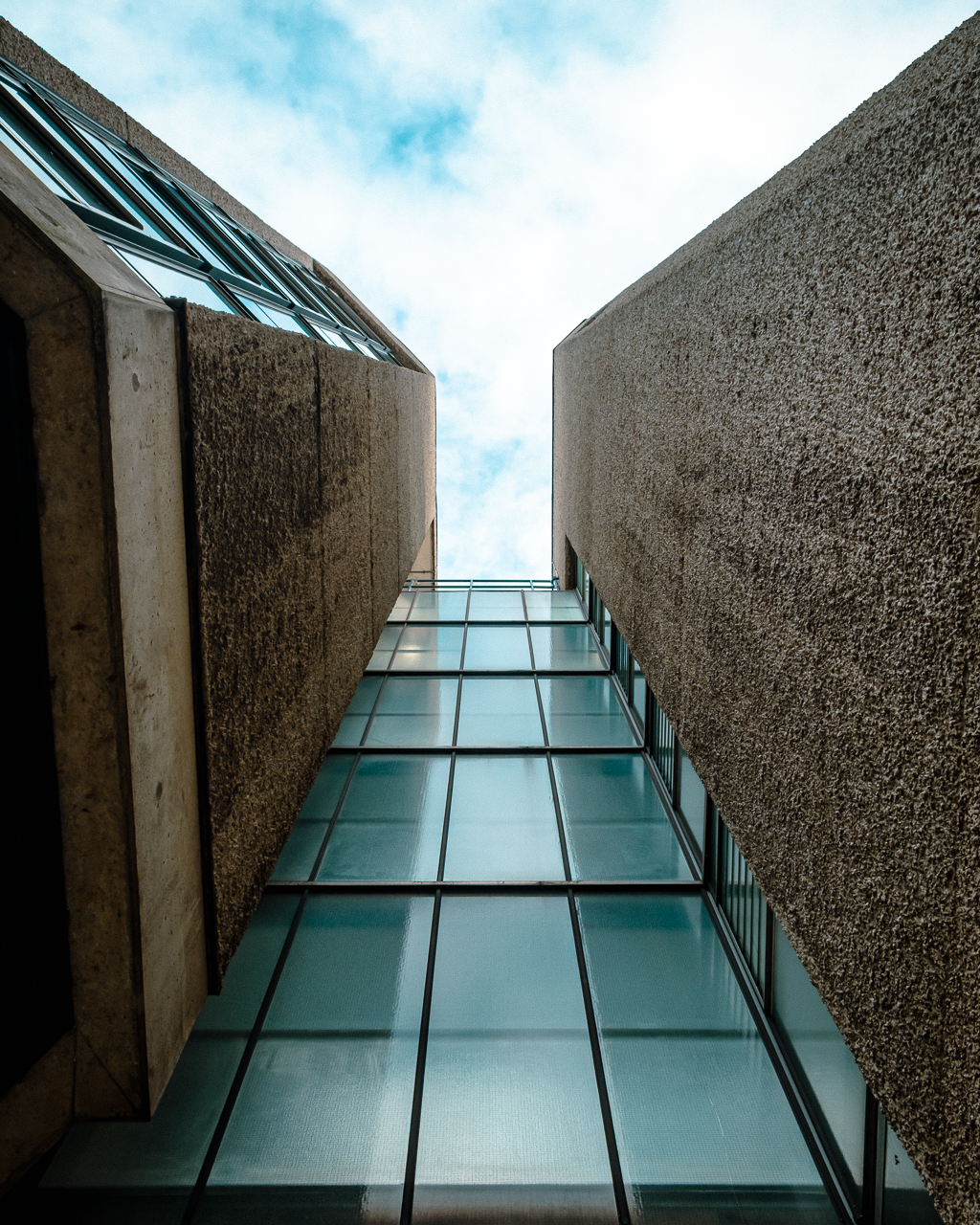
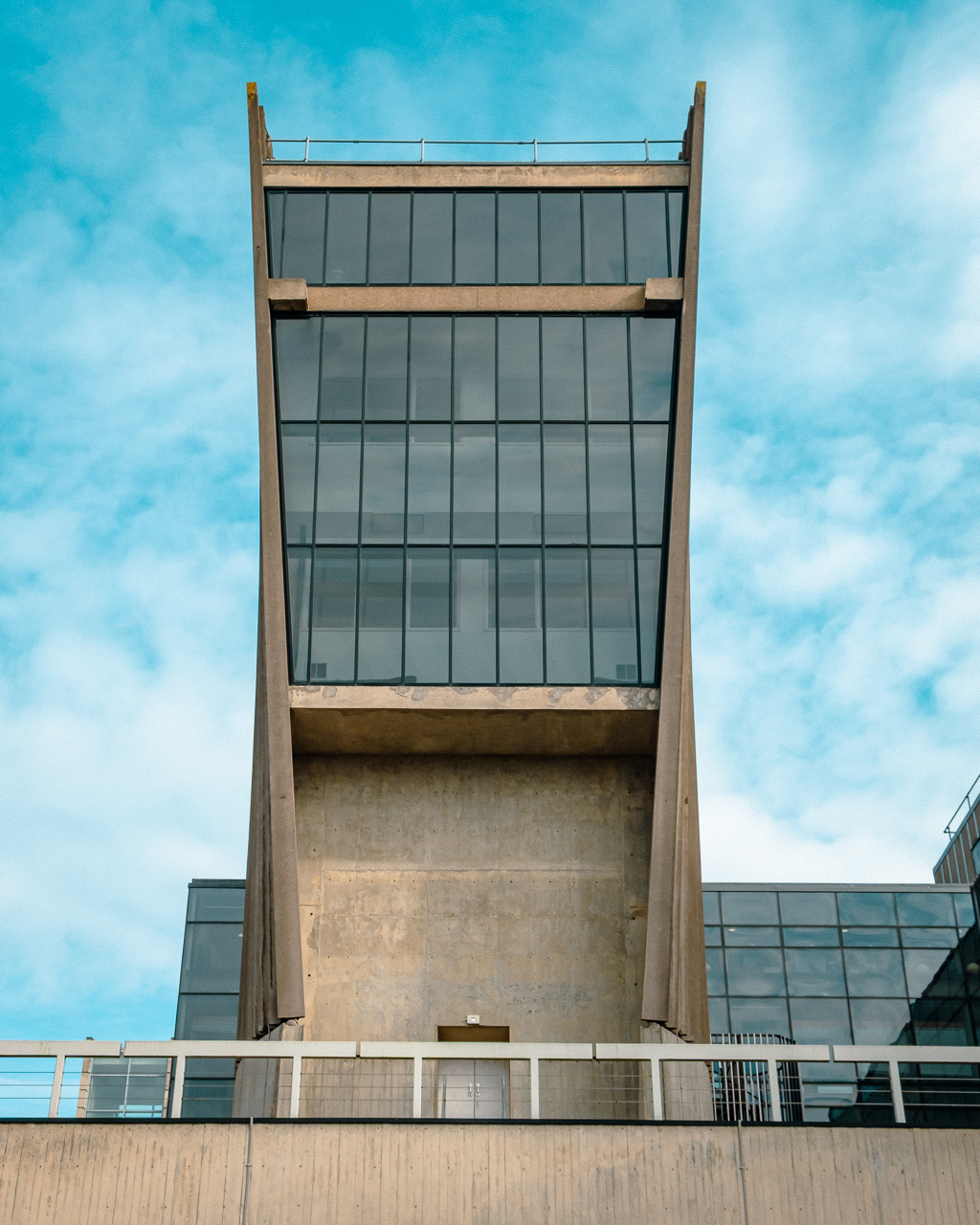
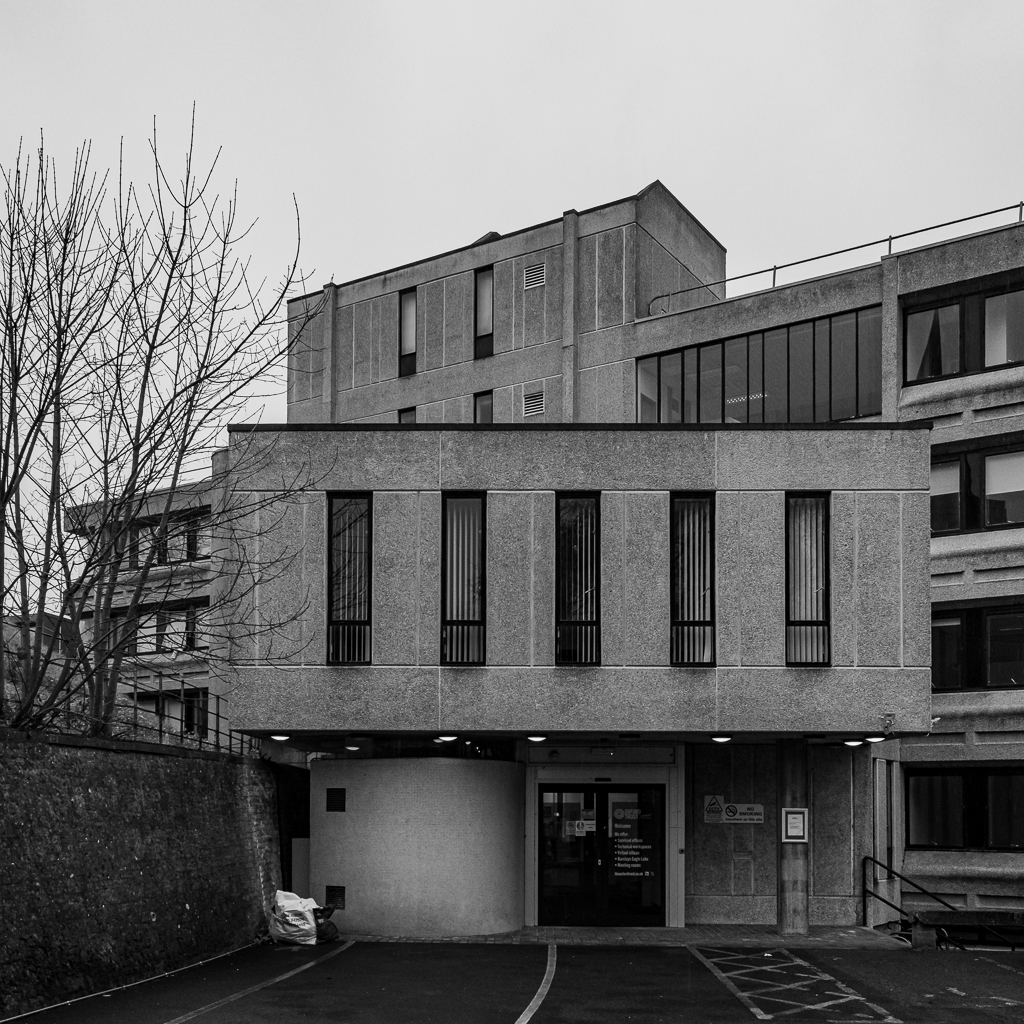
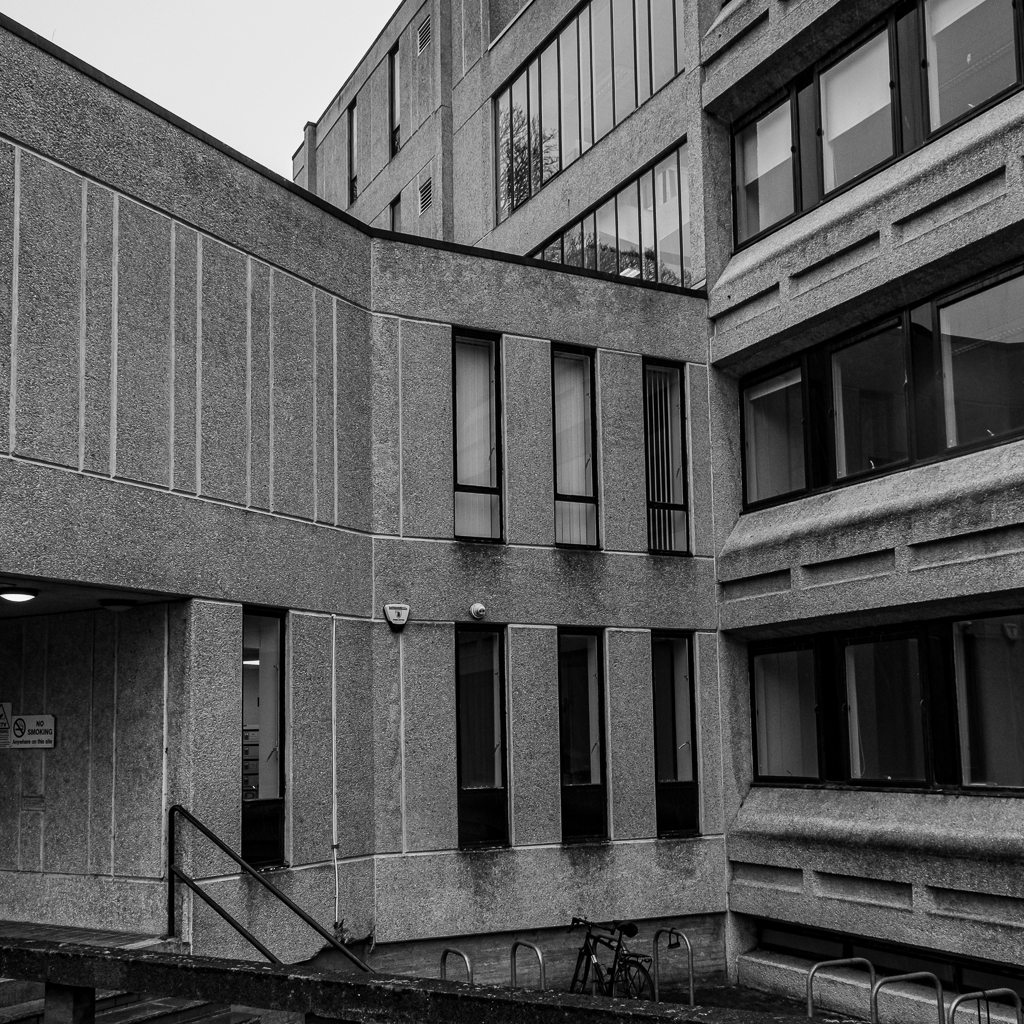
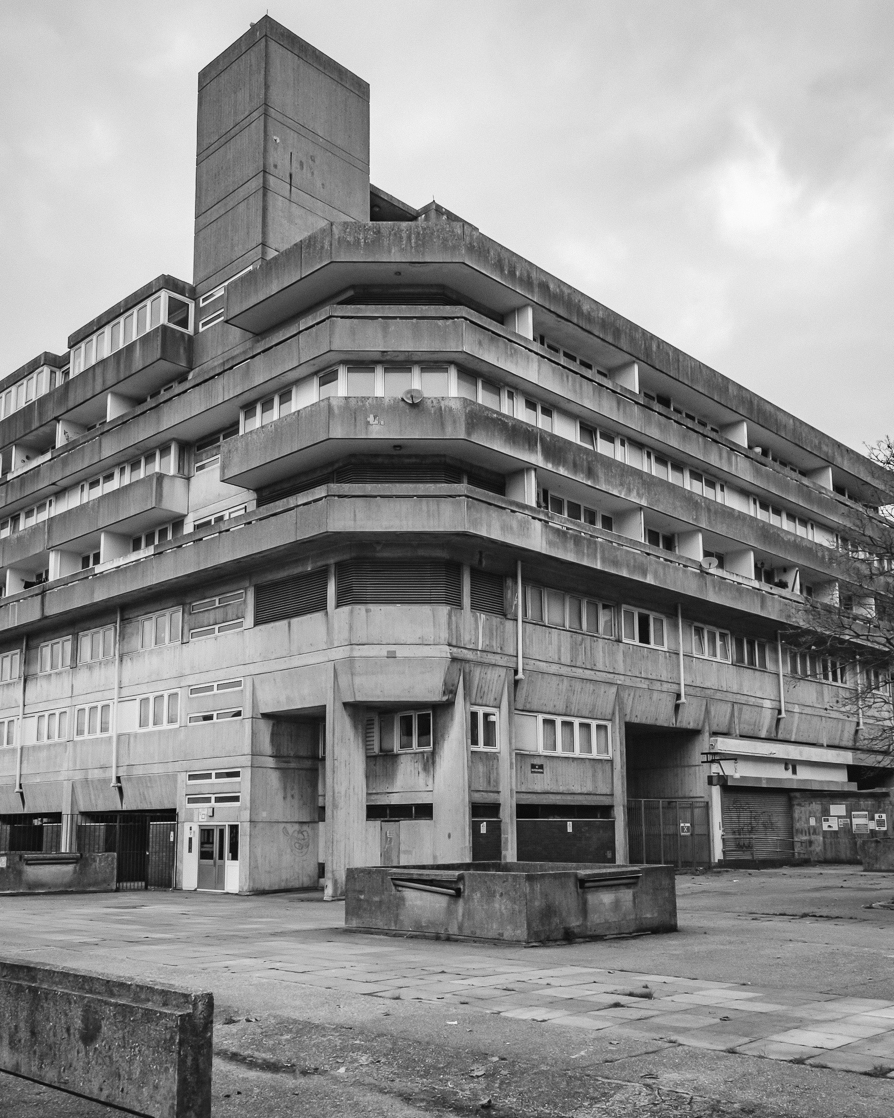
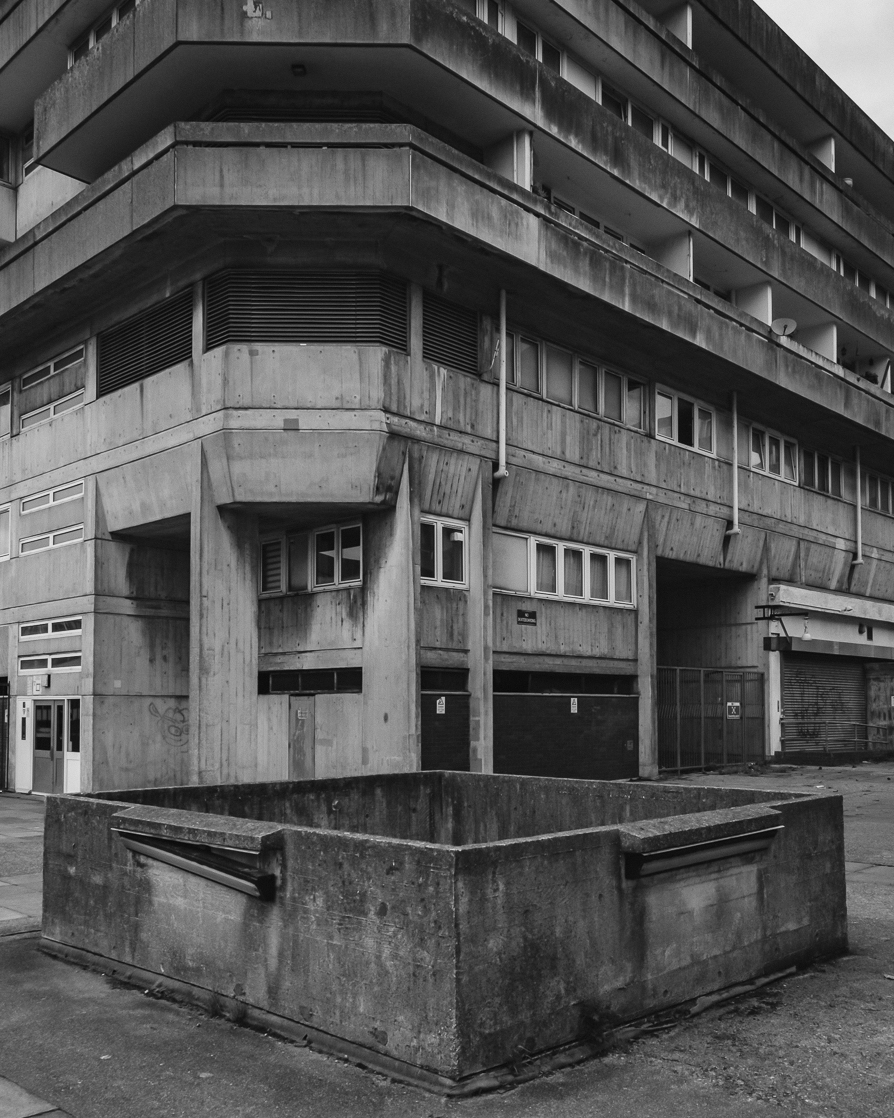
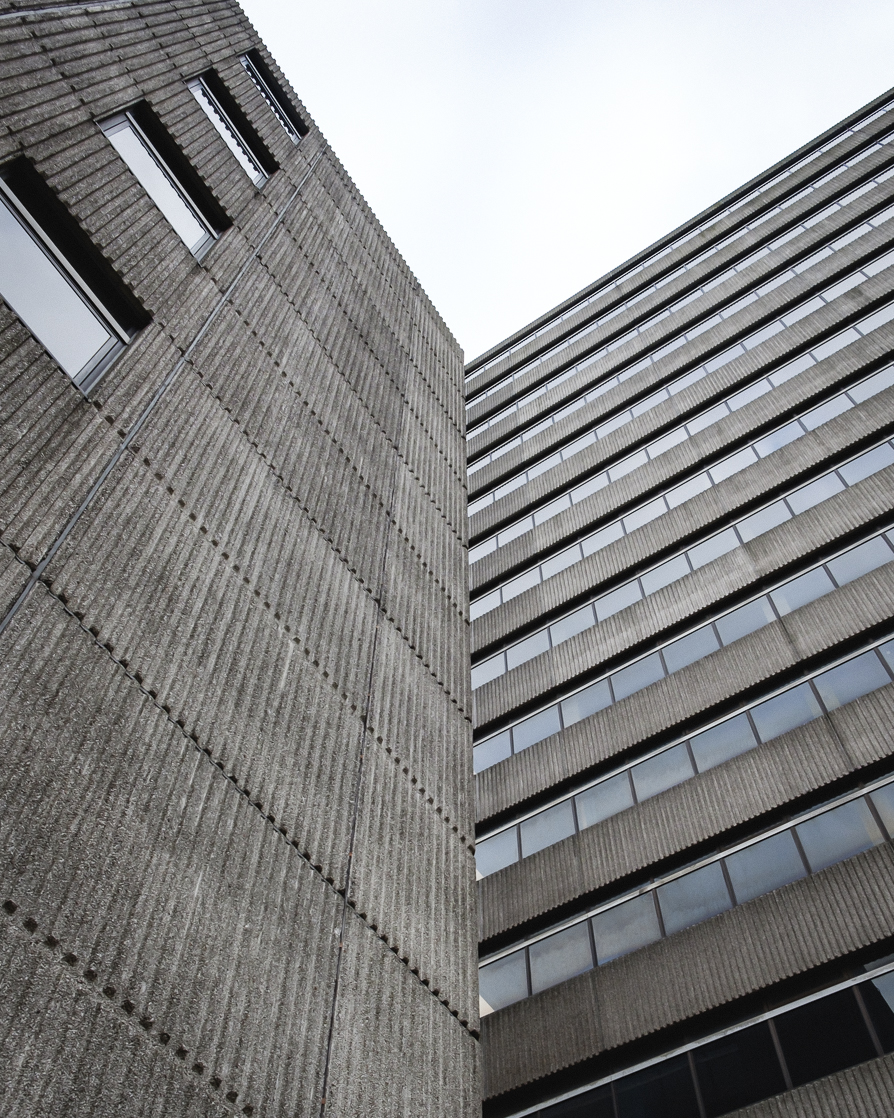
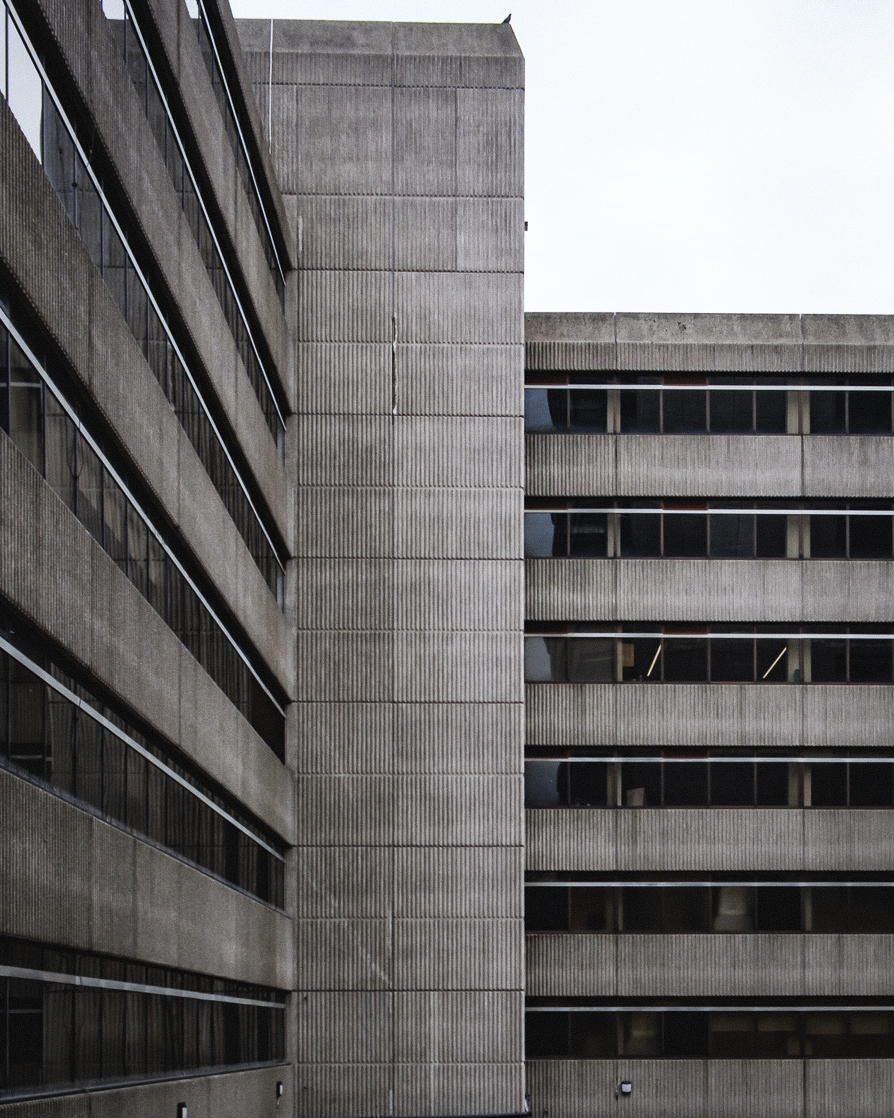
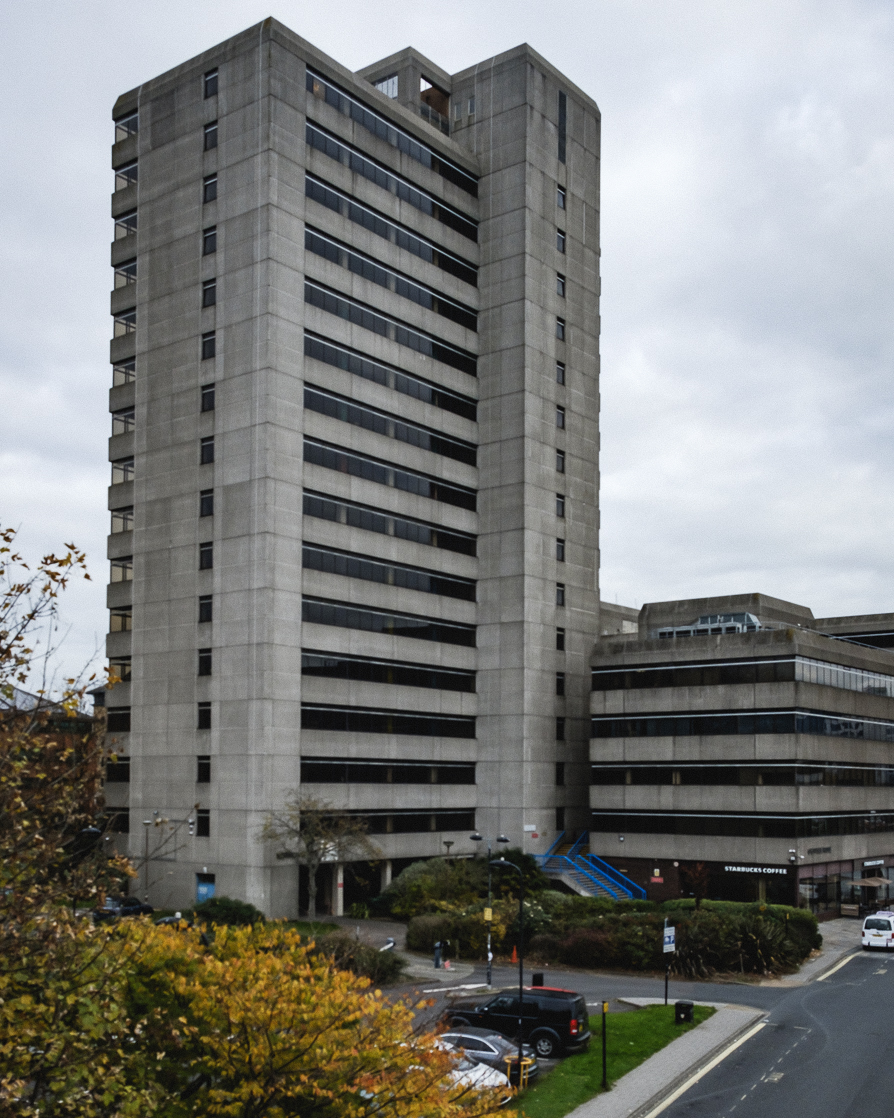
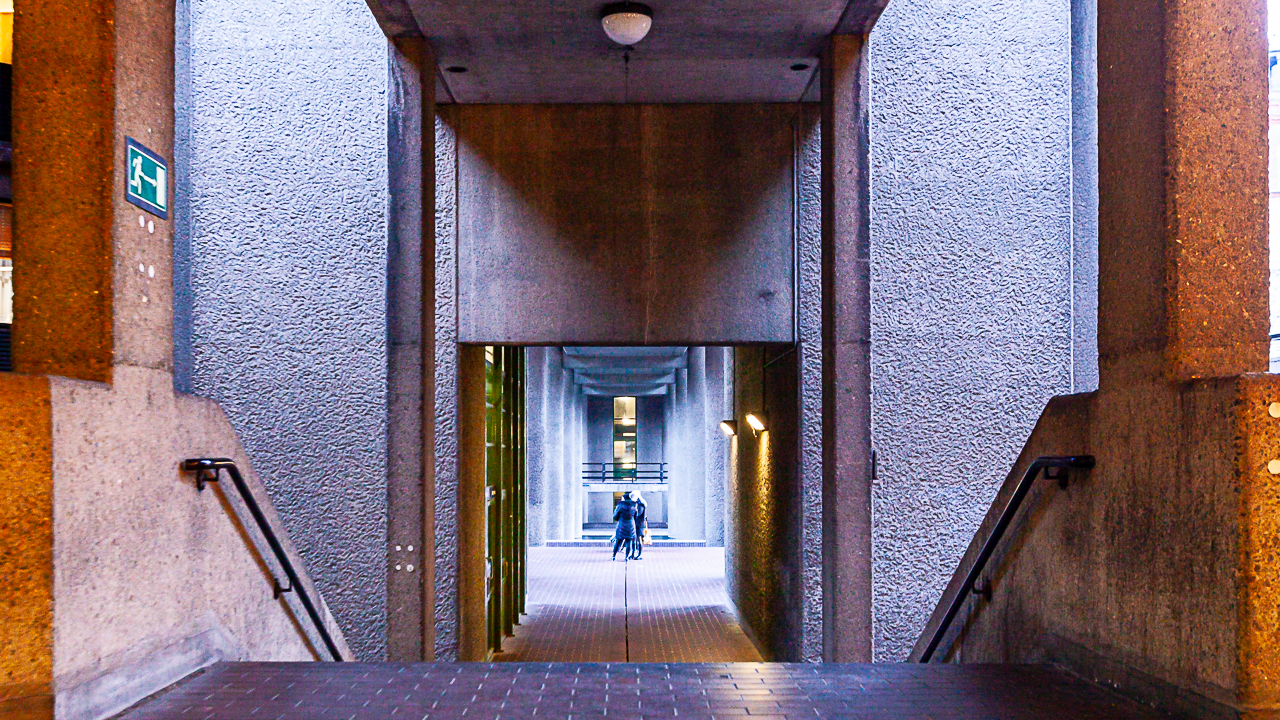
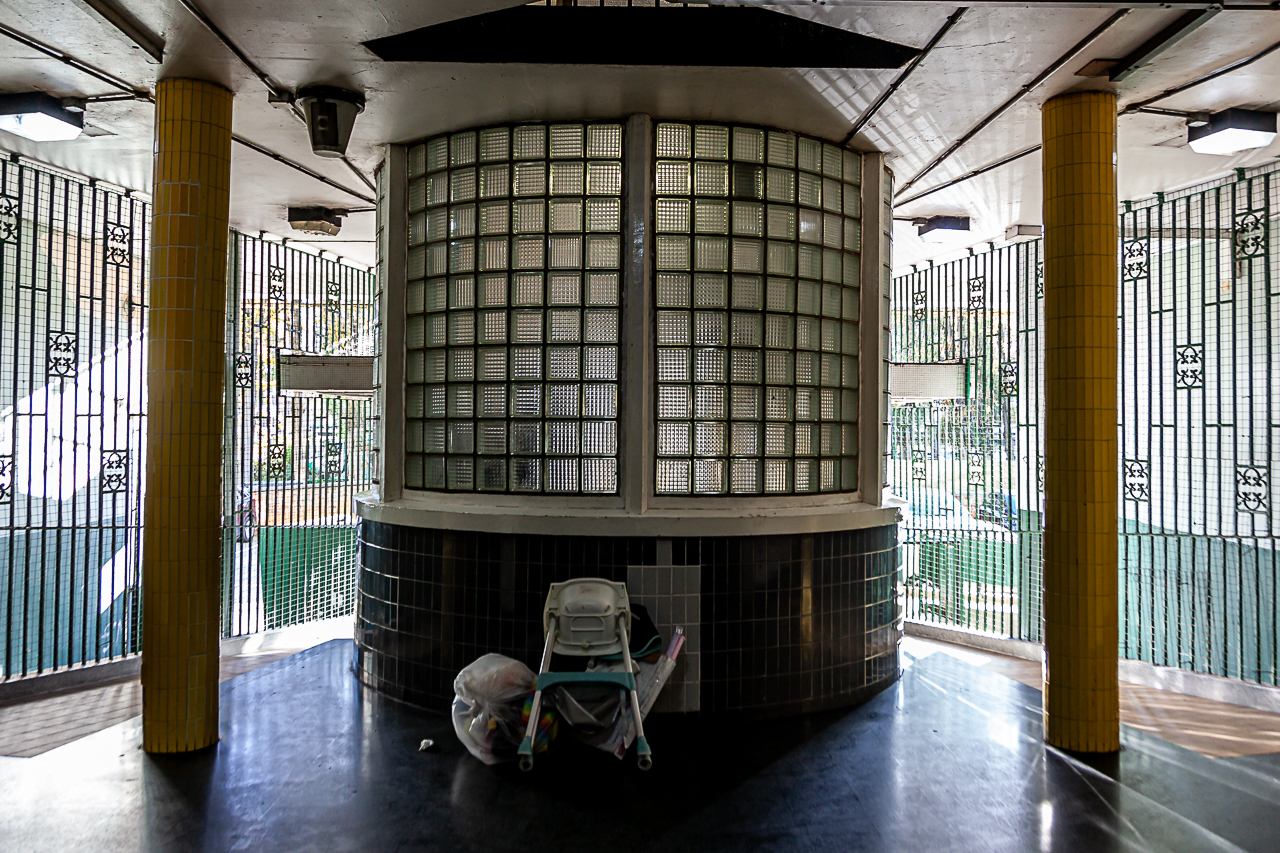
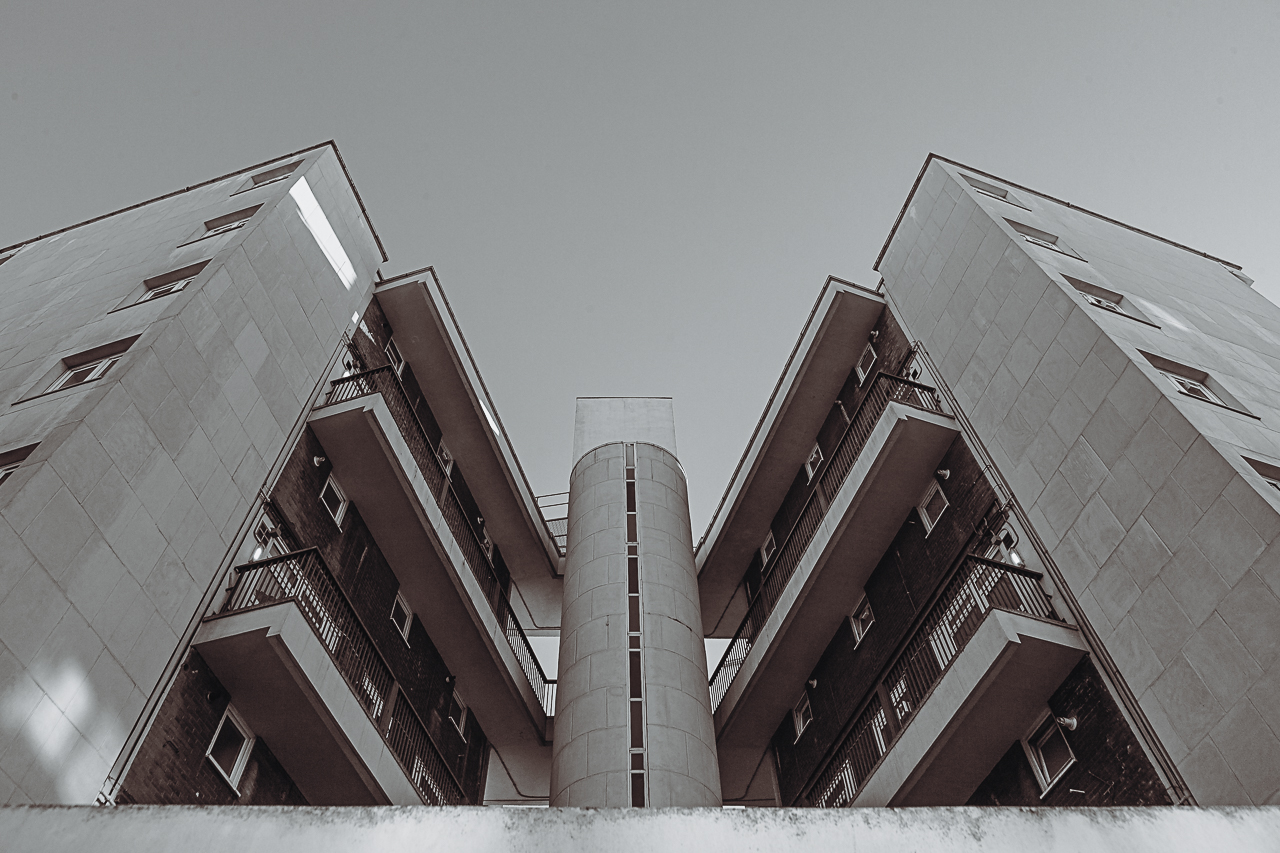
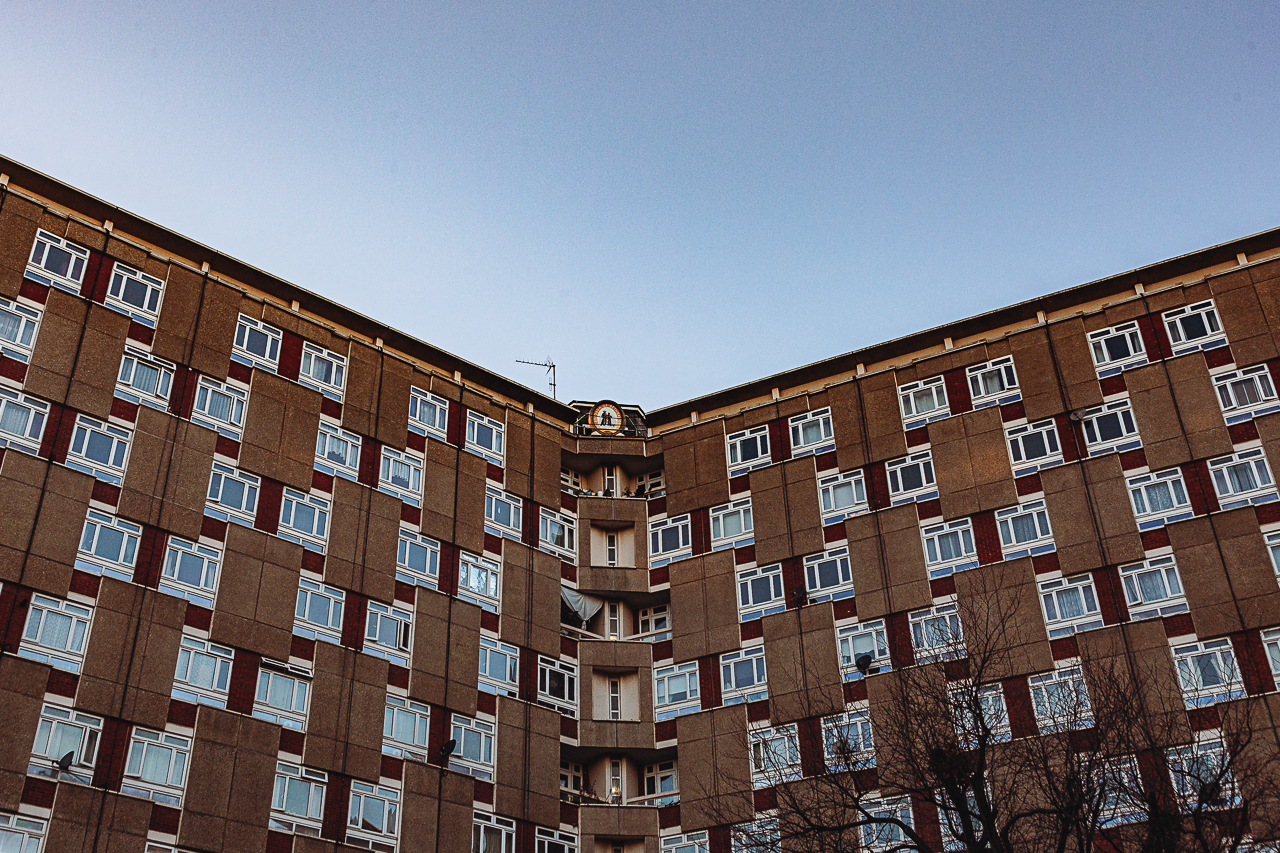
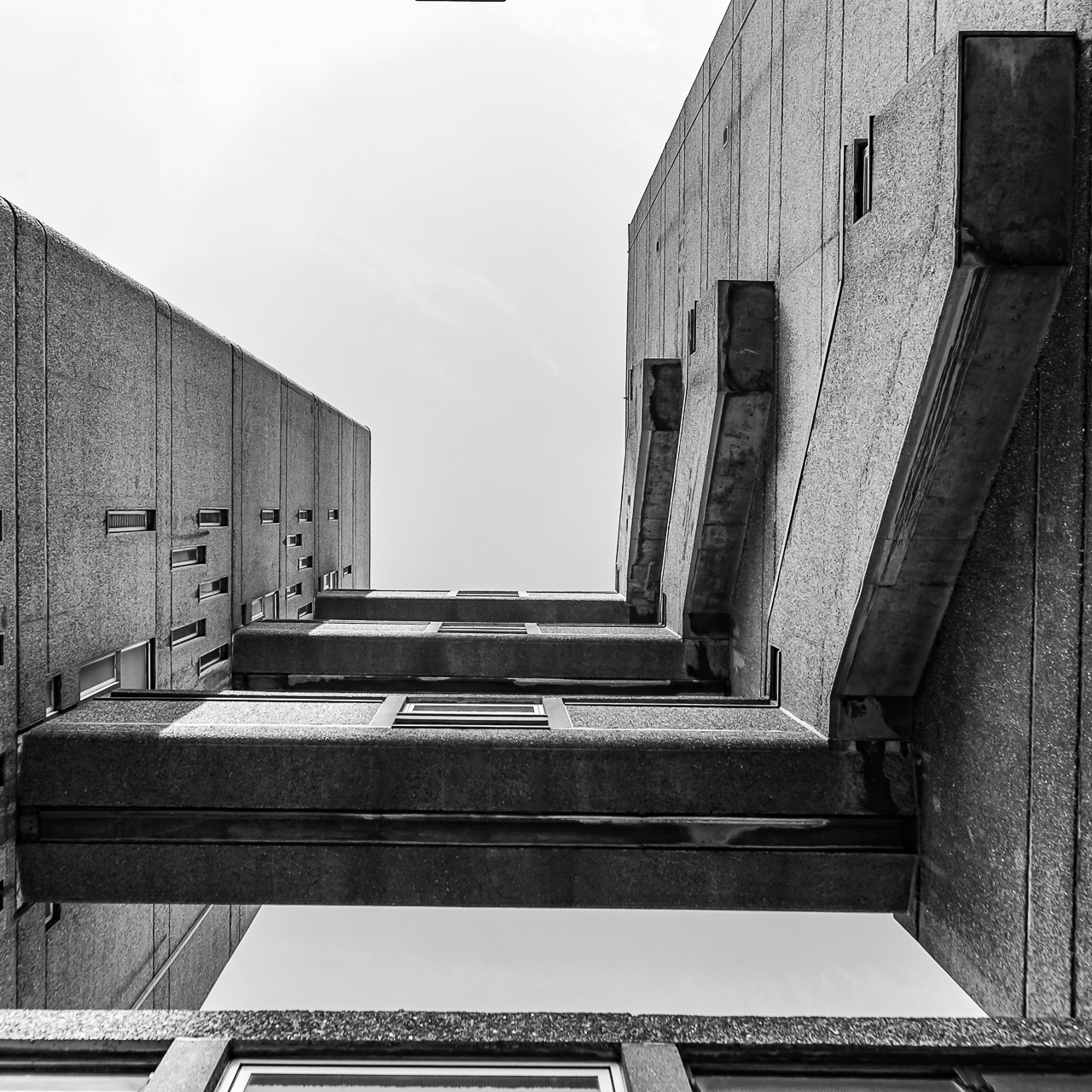
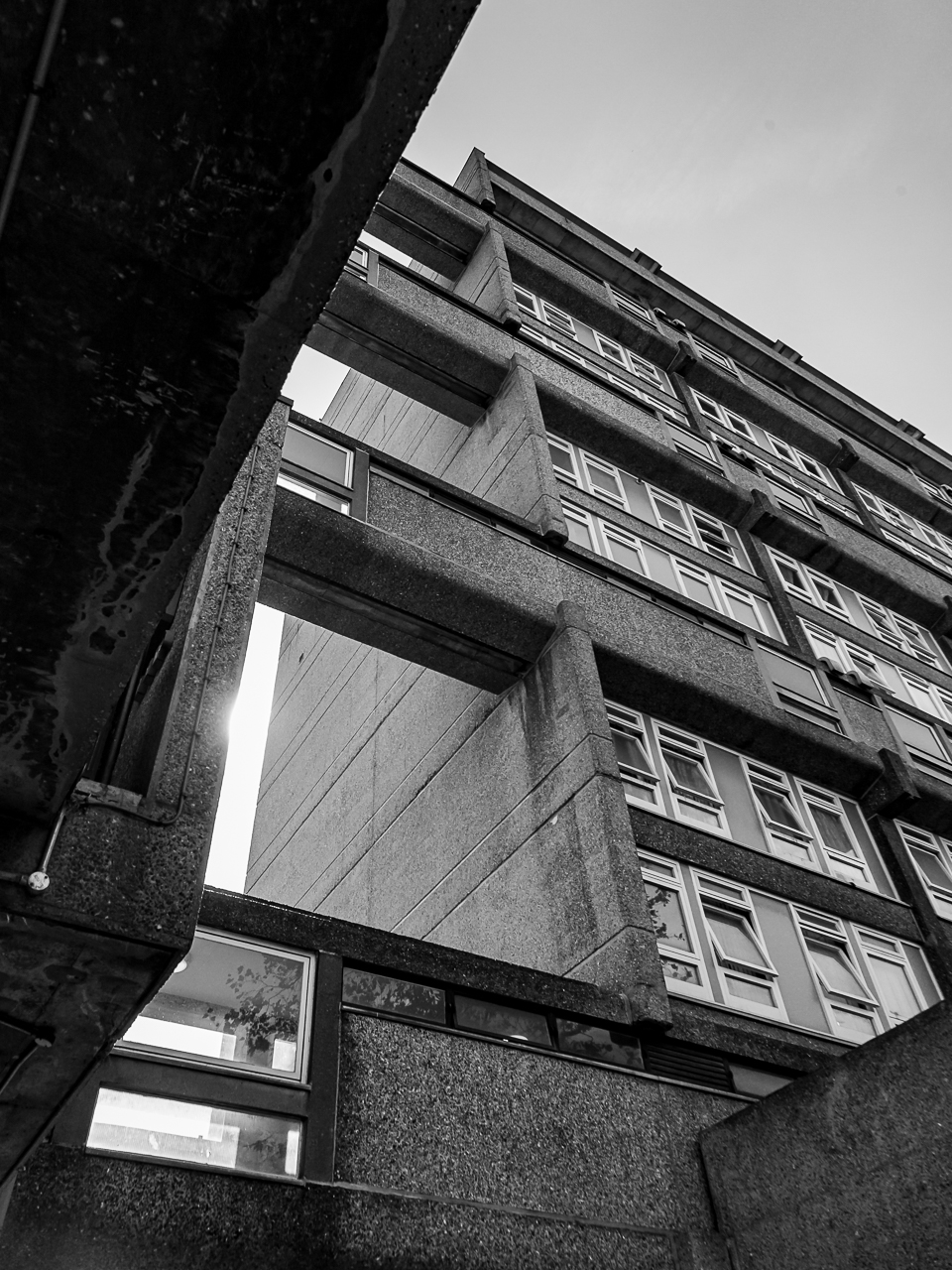
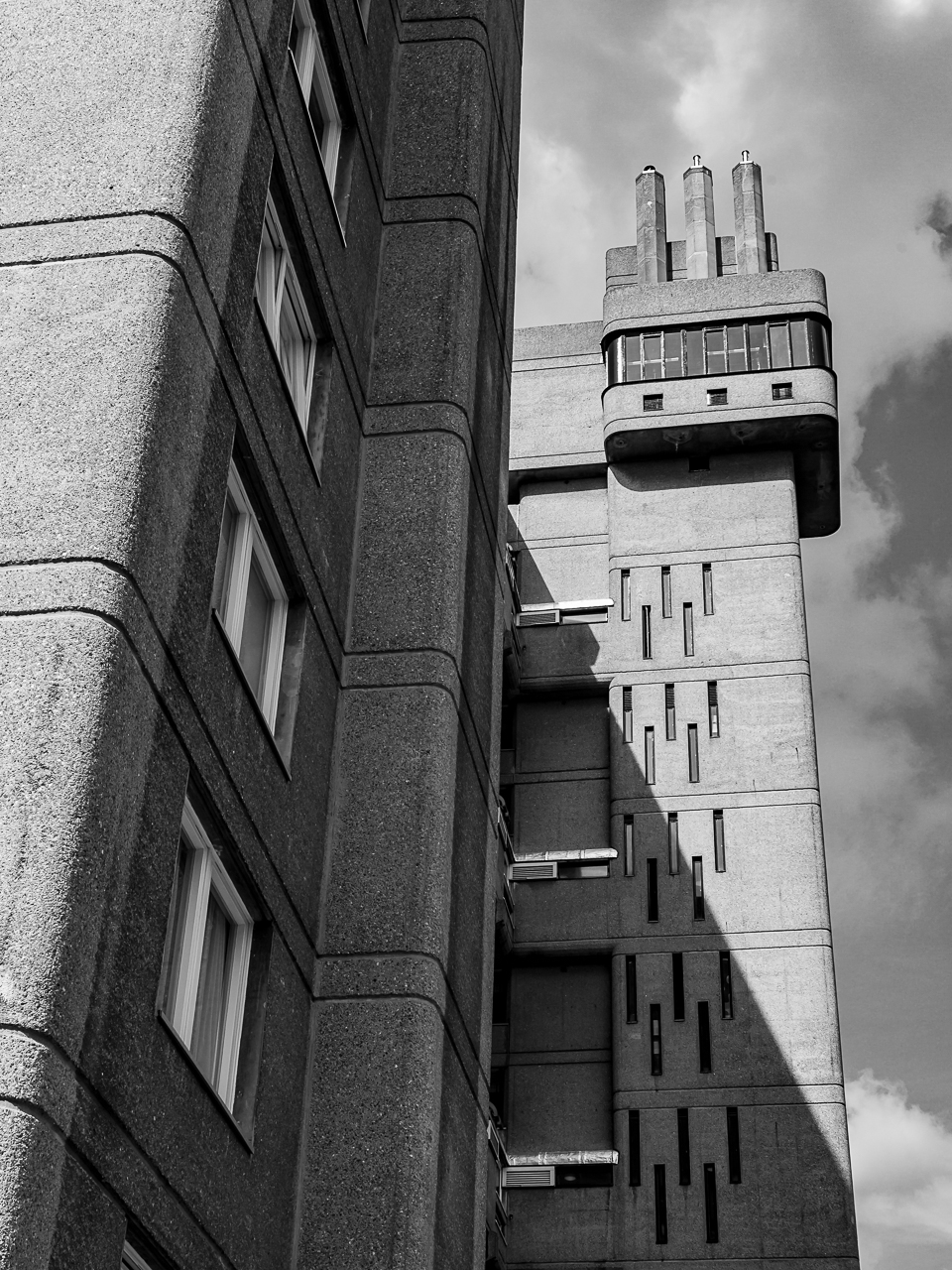
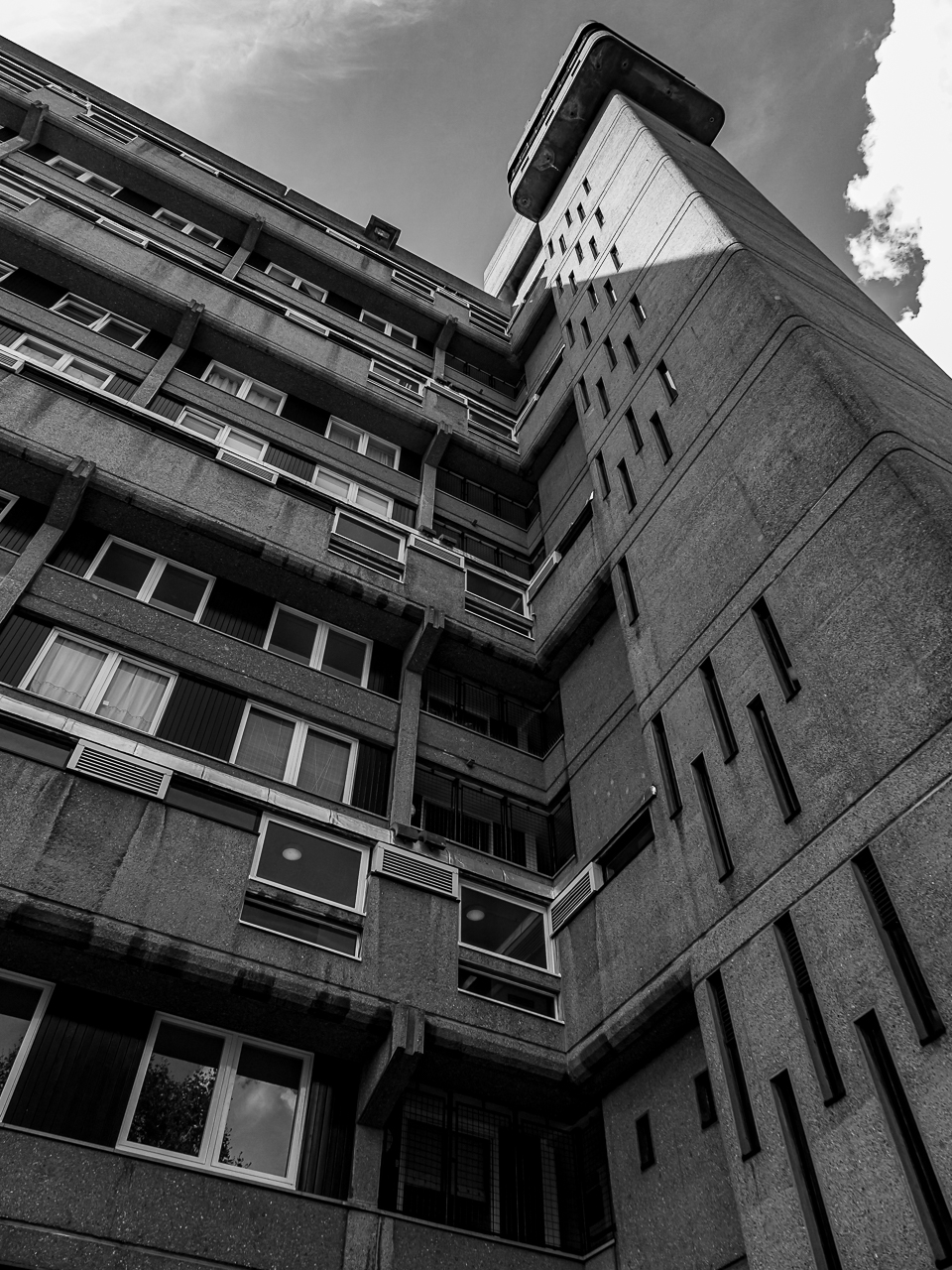
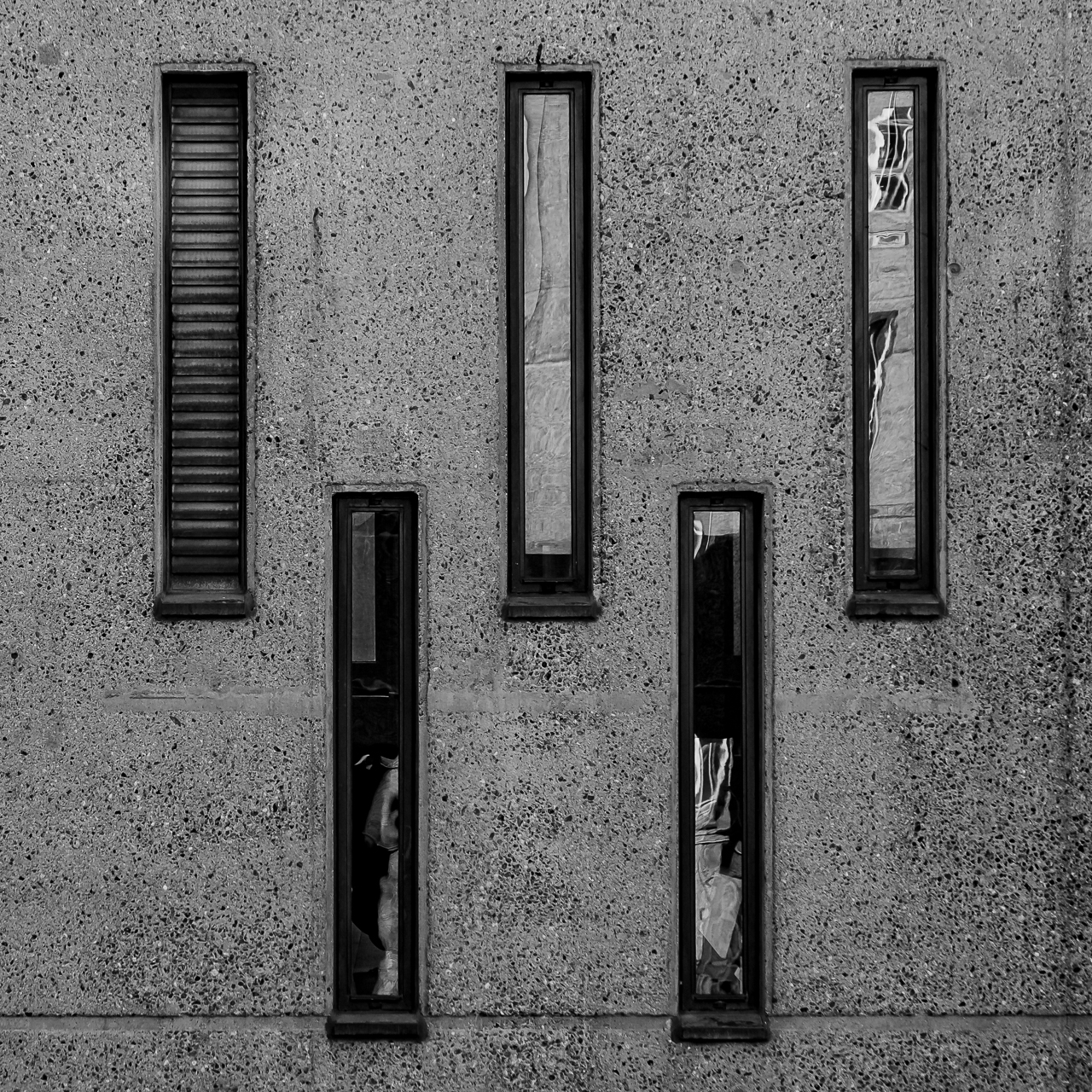
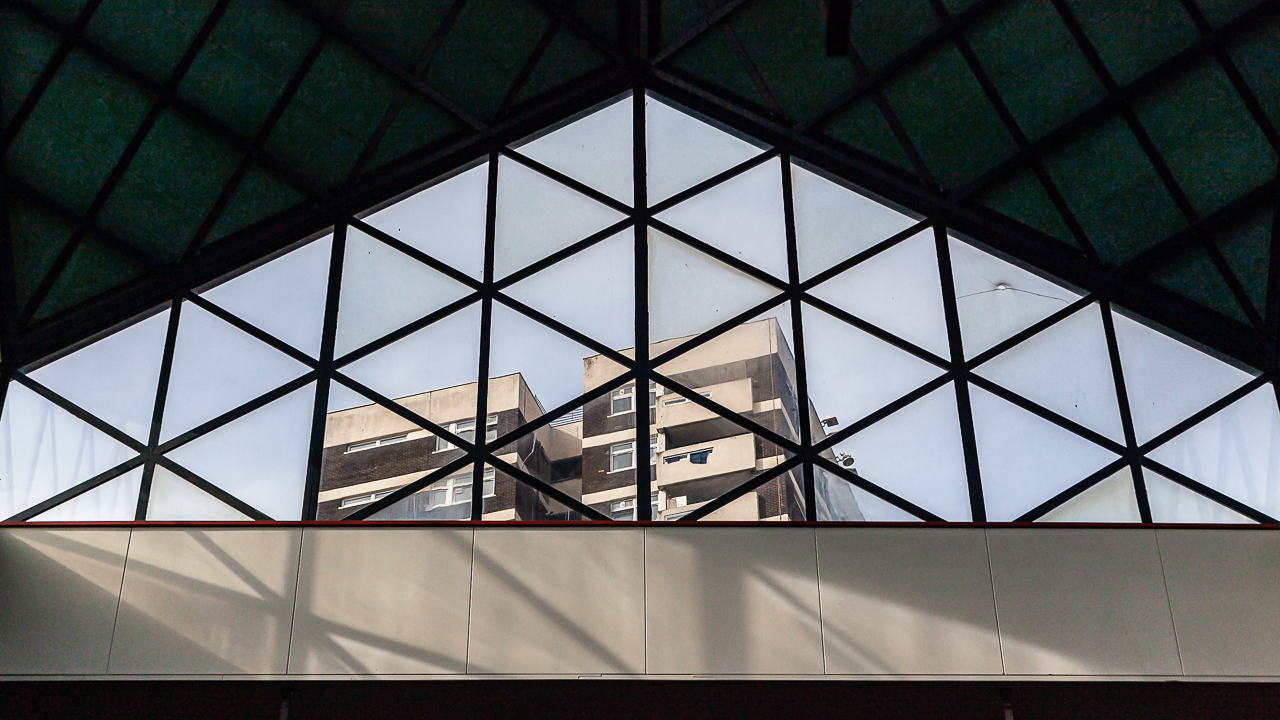
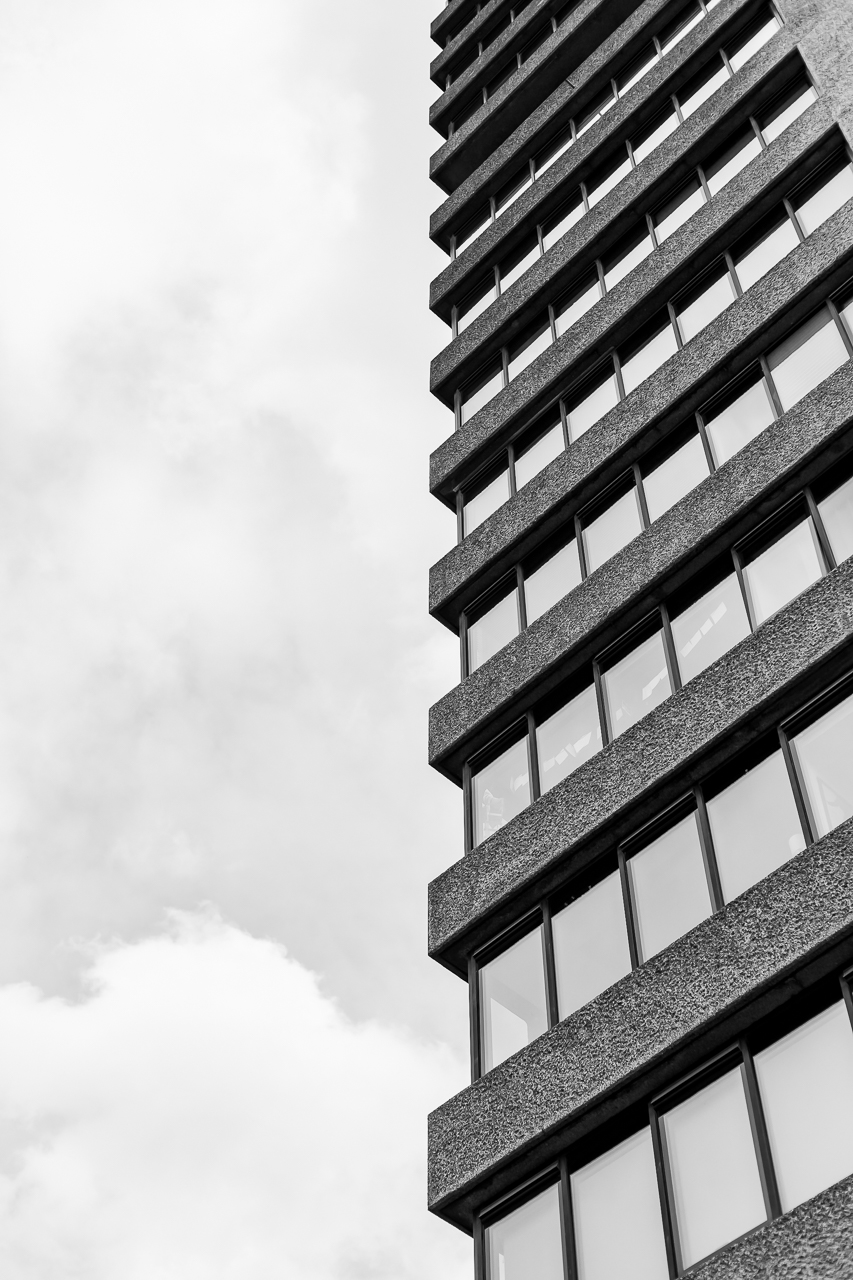
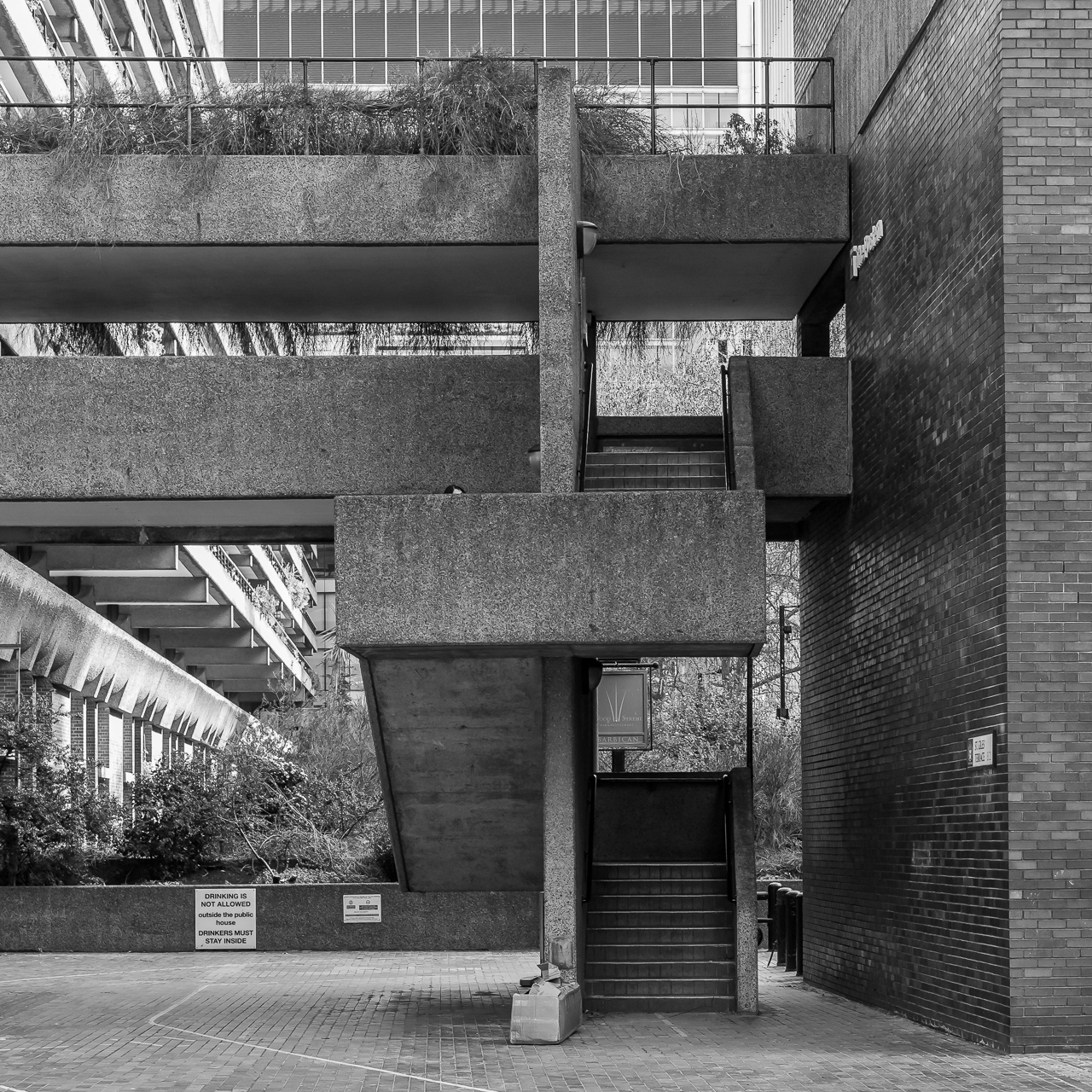
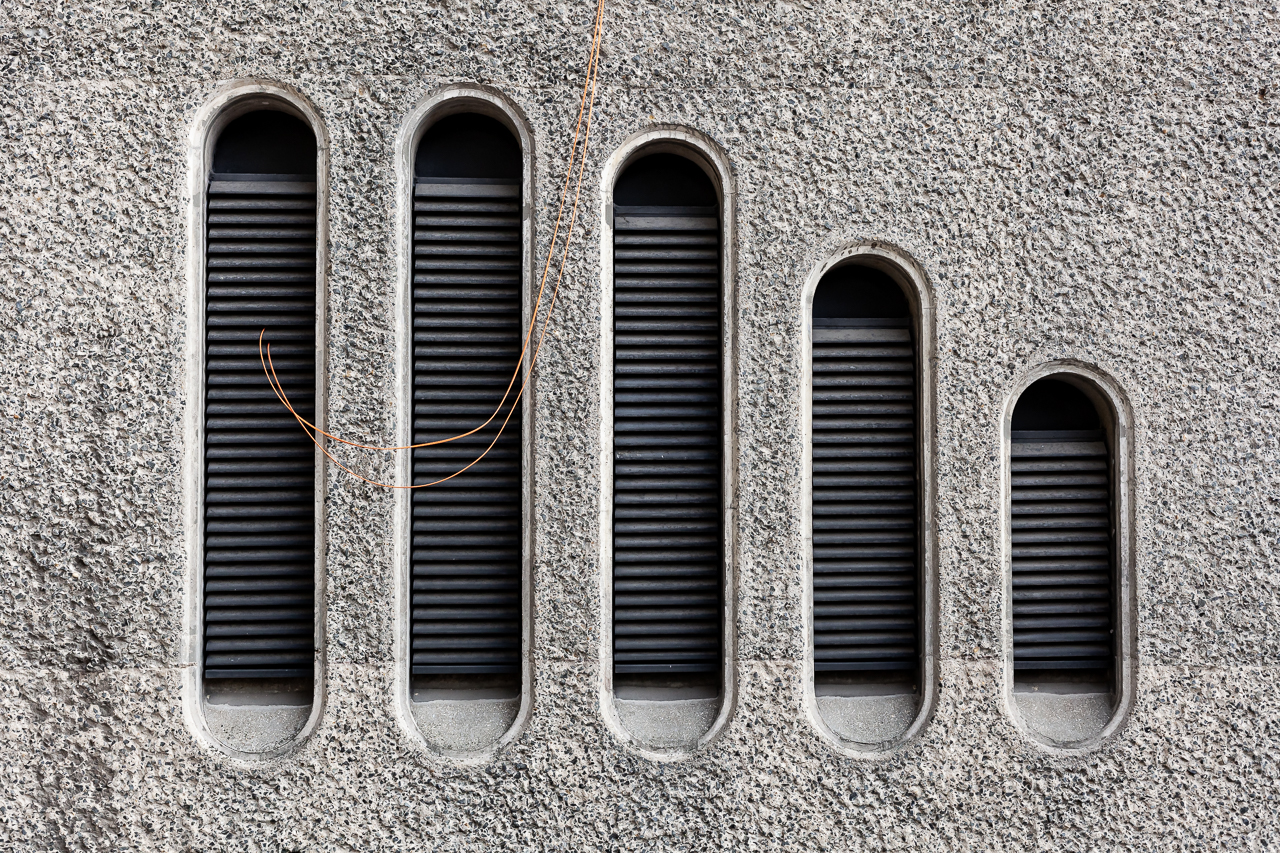
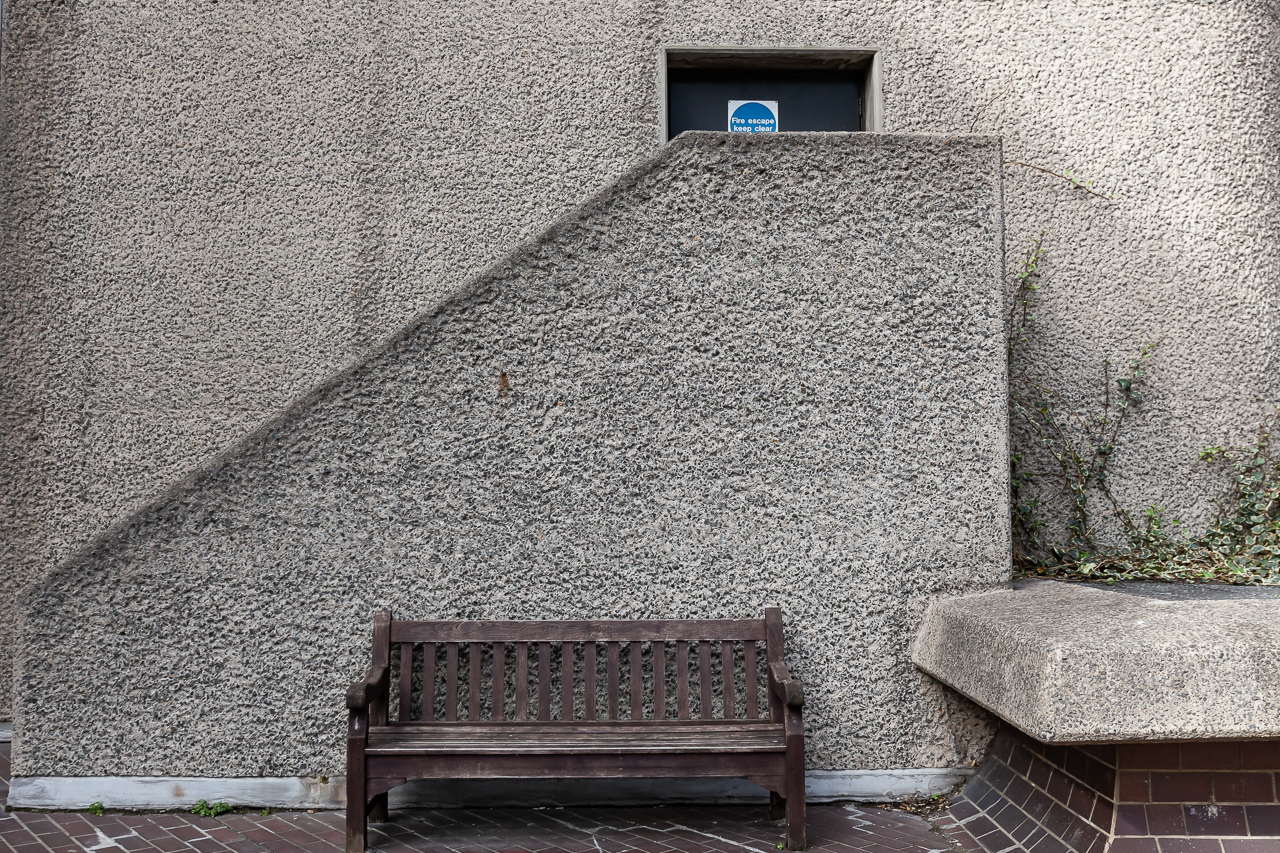
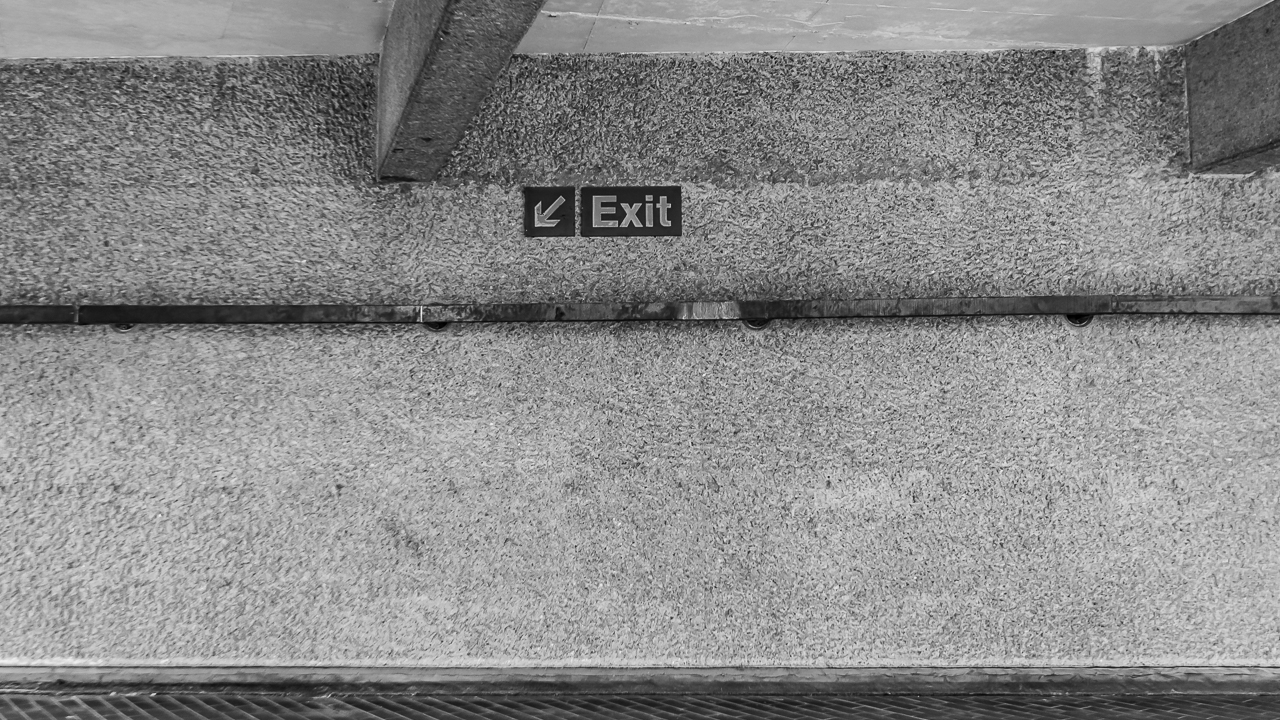
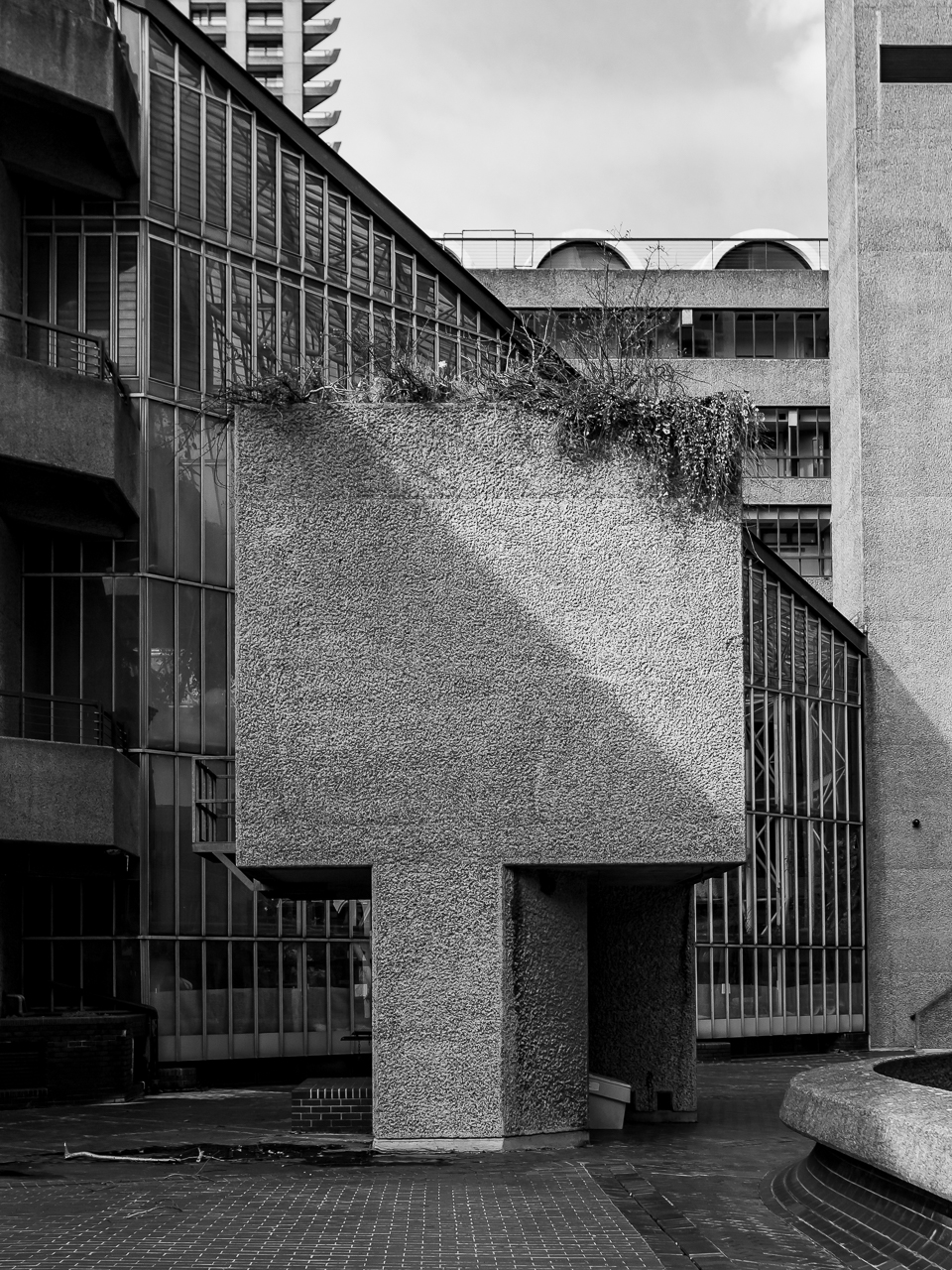
Hilda Besse Building, aka the Common Room and Dining Hall at St. Antony’s College, was the most visually interesting of the brutalist buildings I wanted to see. A number of the concrete buildings, and seemingly a third of Oxford were surrounded by scaffold. A full refurbishment of Hilda was completed in 2021, and thankfully the building has remained true to John Partridge’s original 1971 design. The interior is supposed to be lovely, but like everywhere these days you need a pass to get through the security barriers. I love the window frames and have not seen the like before. They look so much like wartime bunkers I expected to see gun barrels poking out of them.

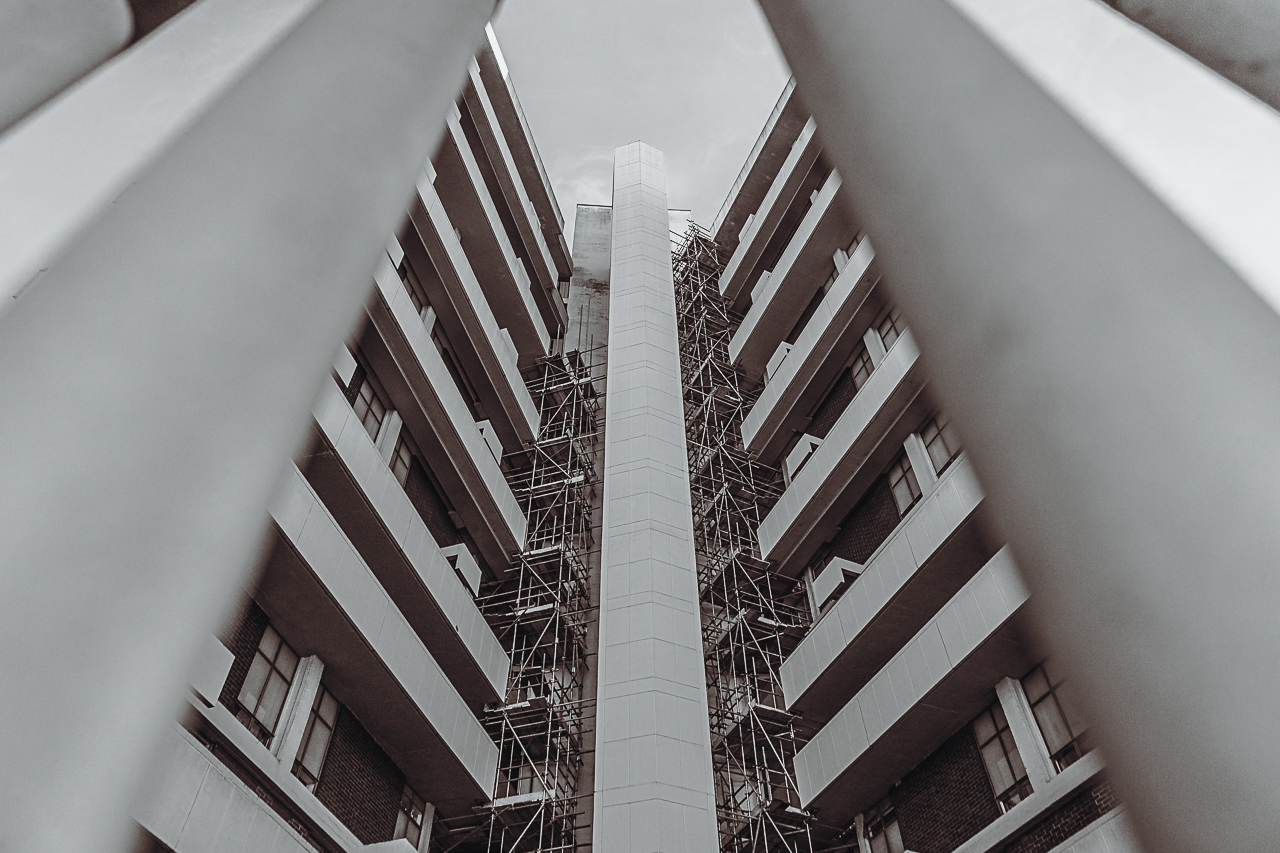
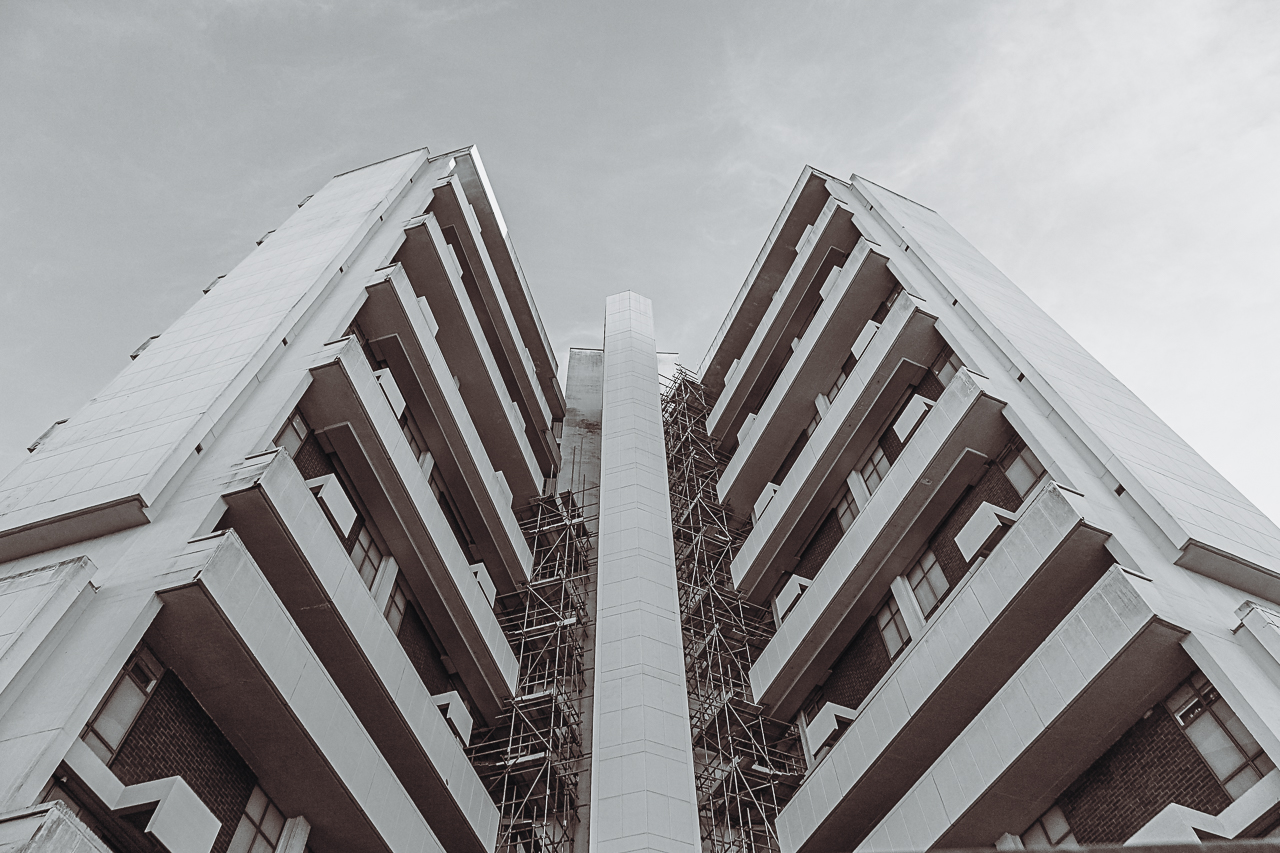
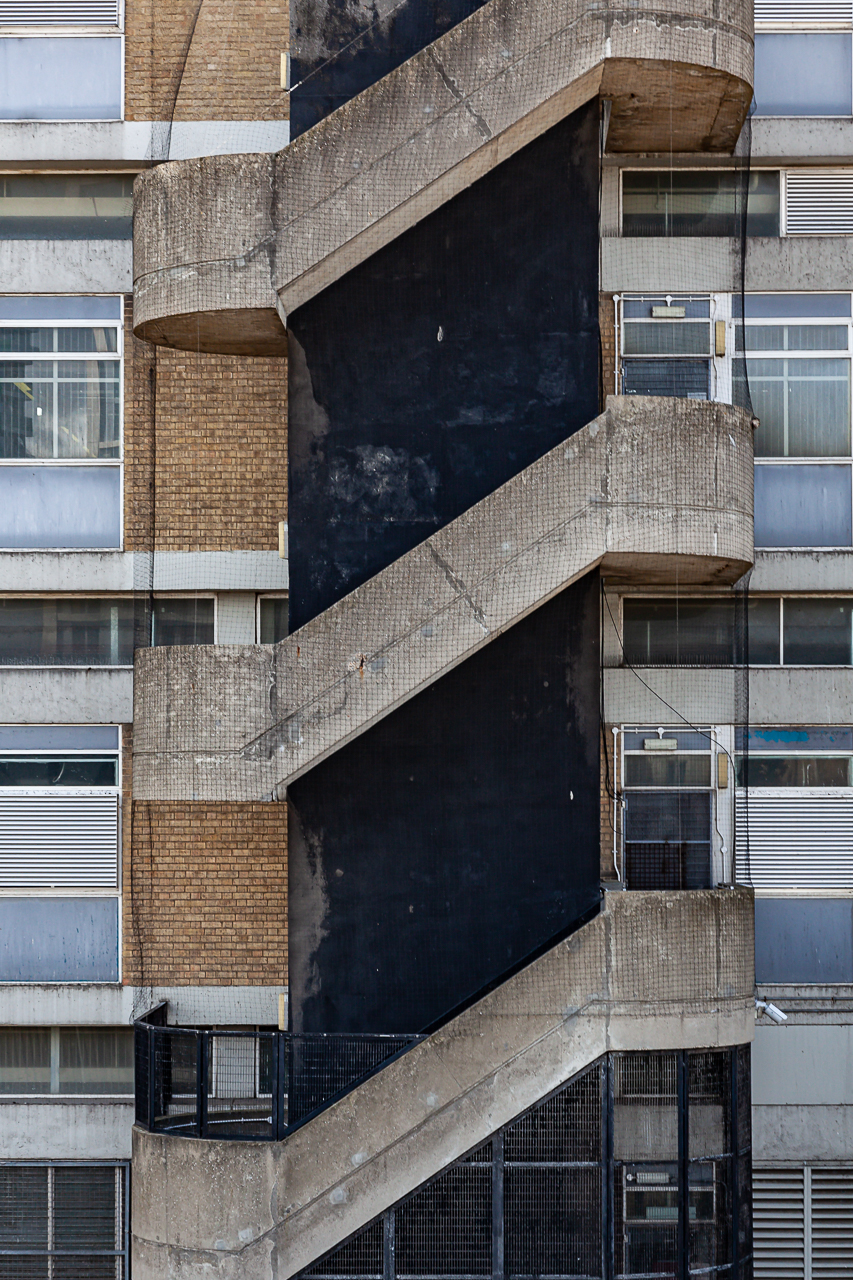
Just around the corner is the Denys Wilkinson Building, the astrophysics department of Oxford University. Its neighbour, the Thom Building, is being renovated and there was scaffold all over the place and a number of the paths around the building were blocked which was frustrating. I’m learning to accept that not everything is going to go to plan when I travel, so this was good. I also was trying to memorise directions between places, a ‘skill’ I feel I’m losing as I’ve become reliant on my phone to always be there to give me directions. This worked well so was I pleased to find I can do it with little effort, and getting slightly misplaced is often part of the enjoyment.

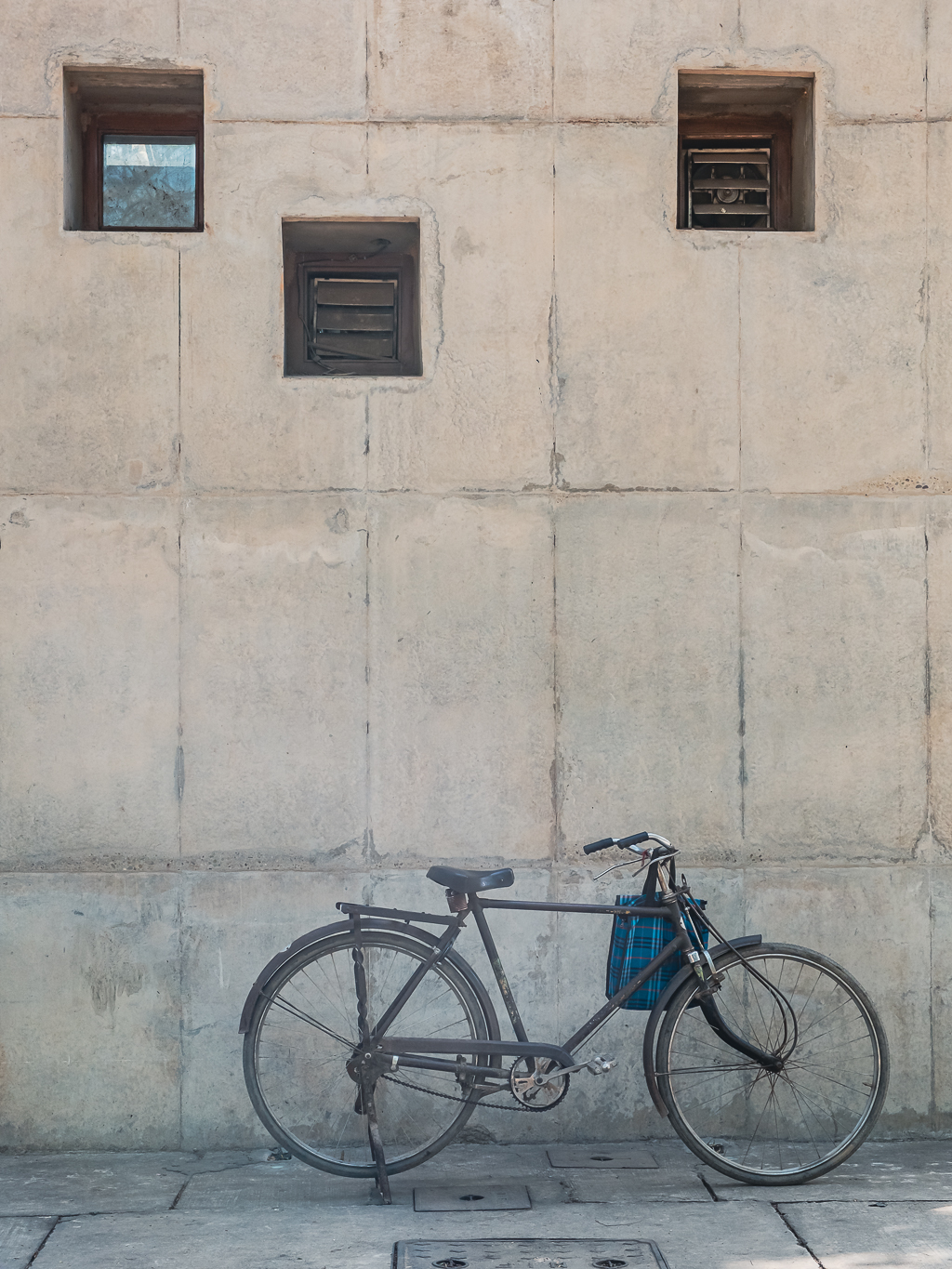
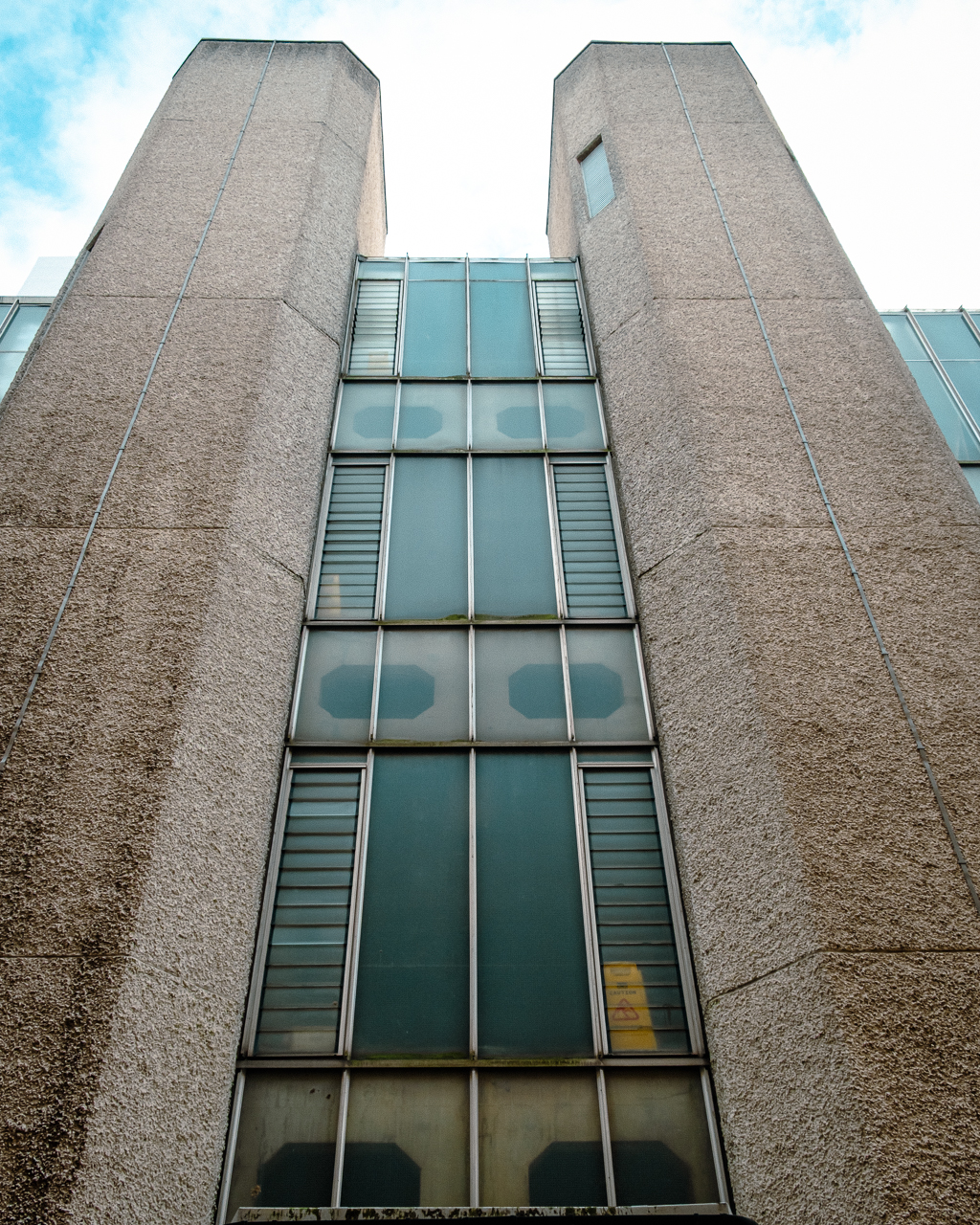
The Philip Dawson design Nuclear Physics Building first opened in the late 60s and was renamed The Denys Wilkinson Building in 2001 to honour the famous physicist, (and no, I don’t know physicists, famous or otherwise; being interested in brutalist architecture teaches you many things). The fan building houses a Van de Graff Generator.

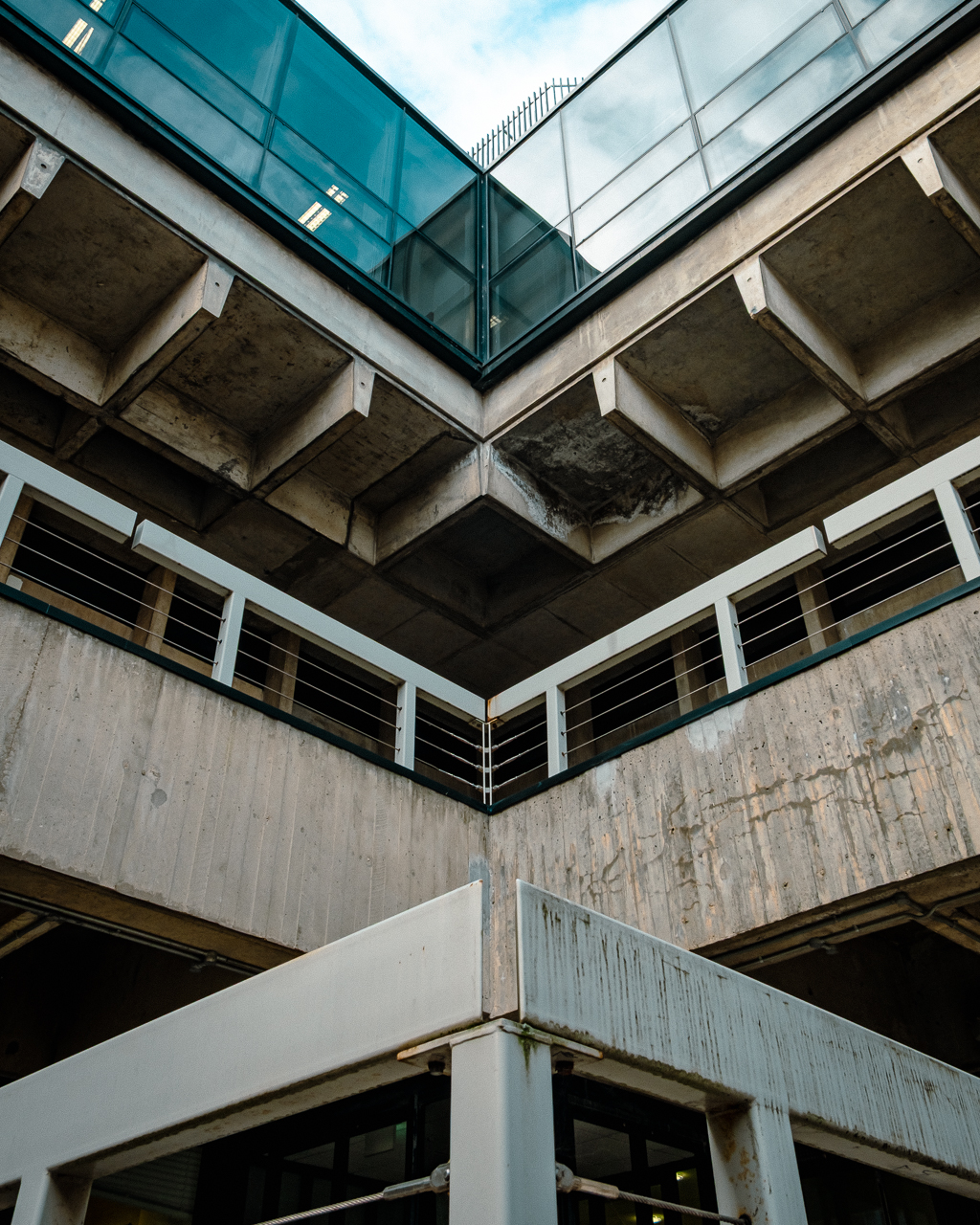
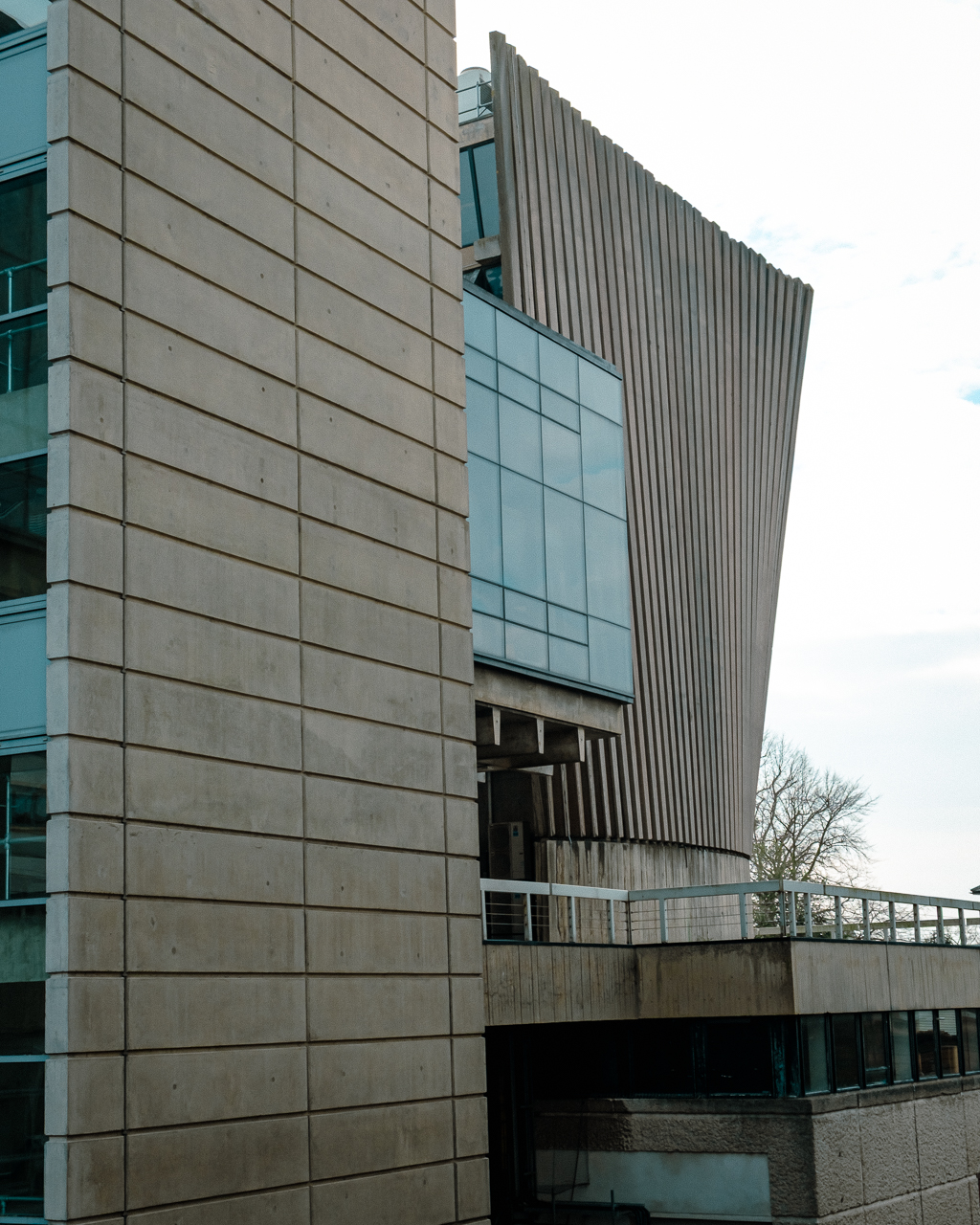
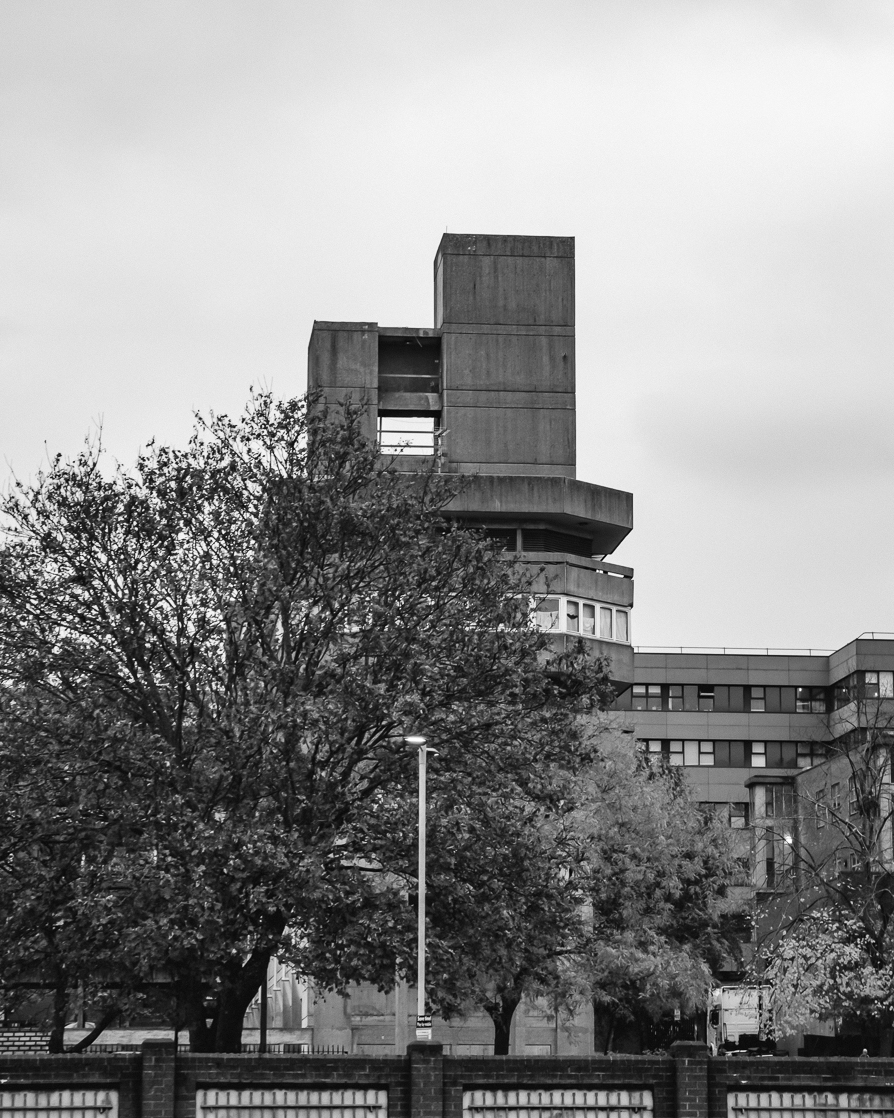
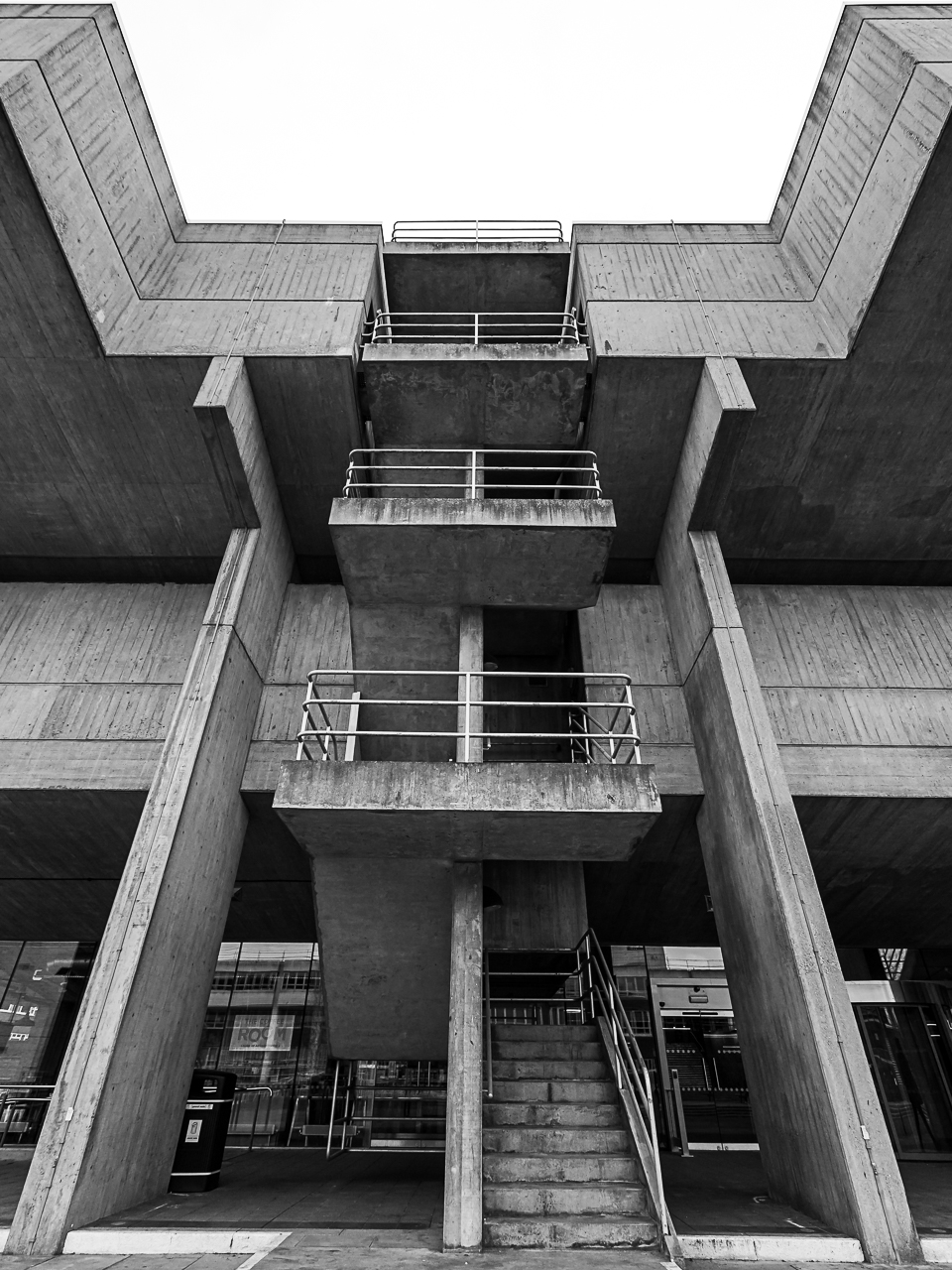
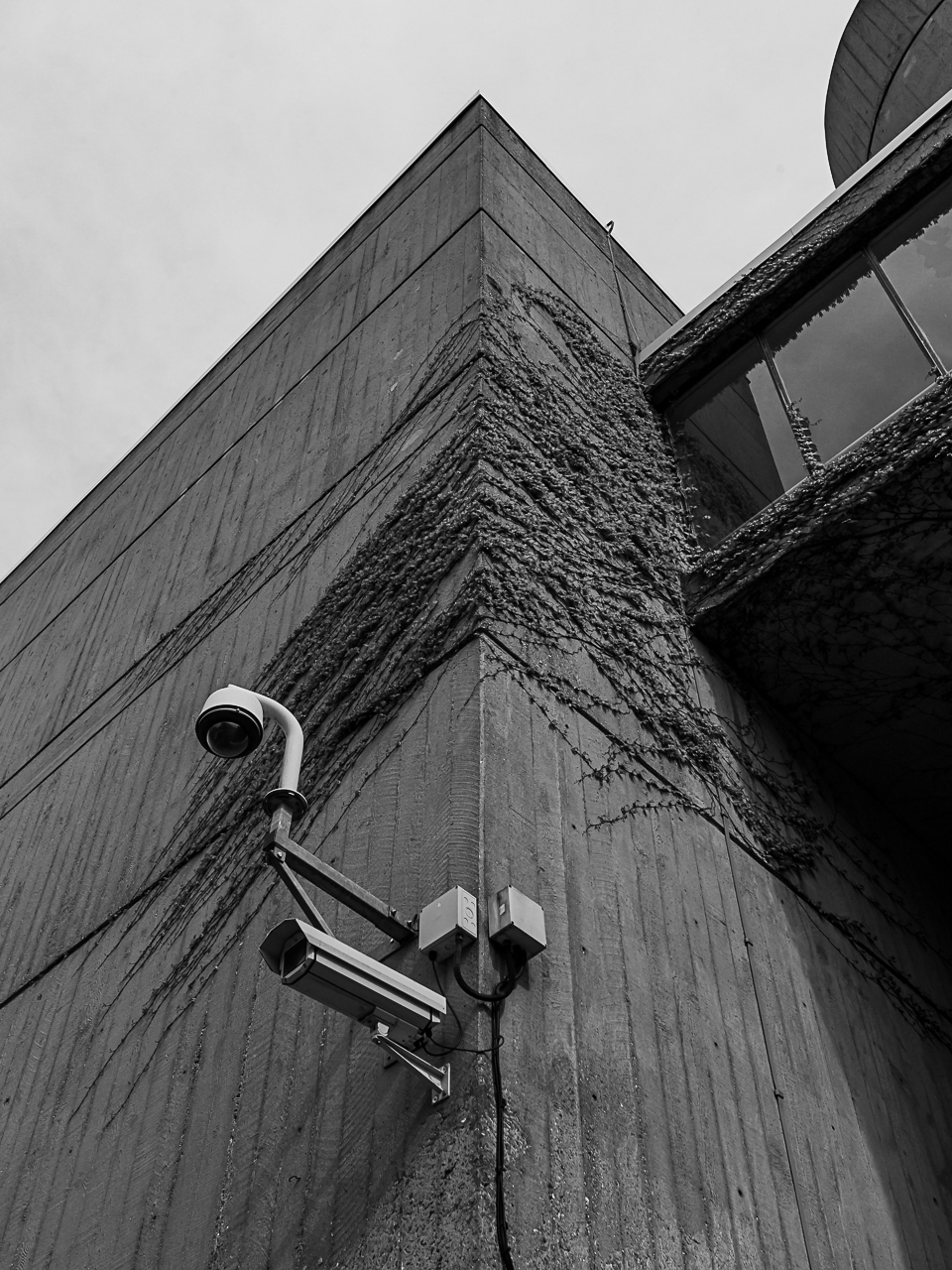
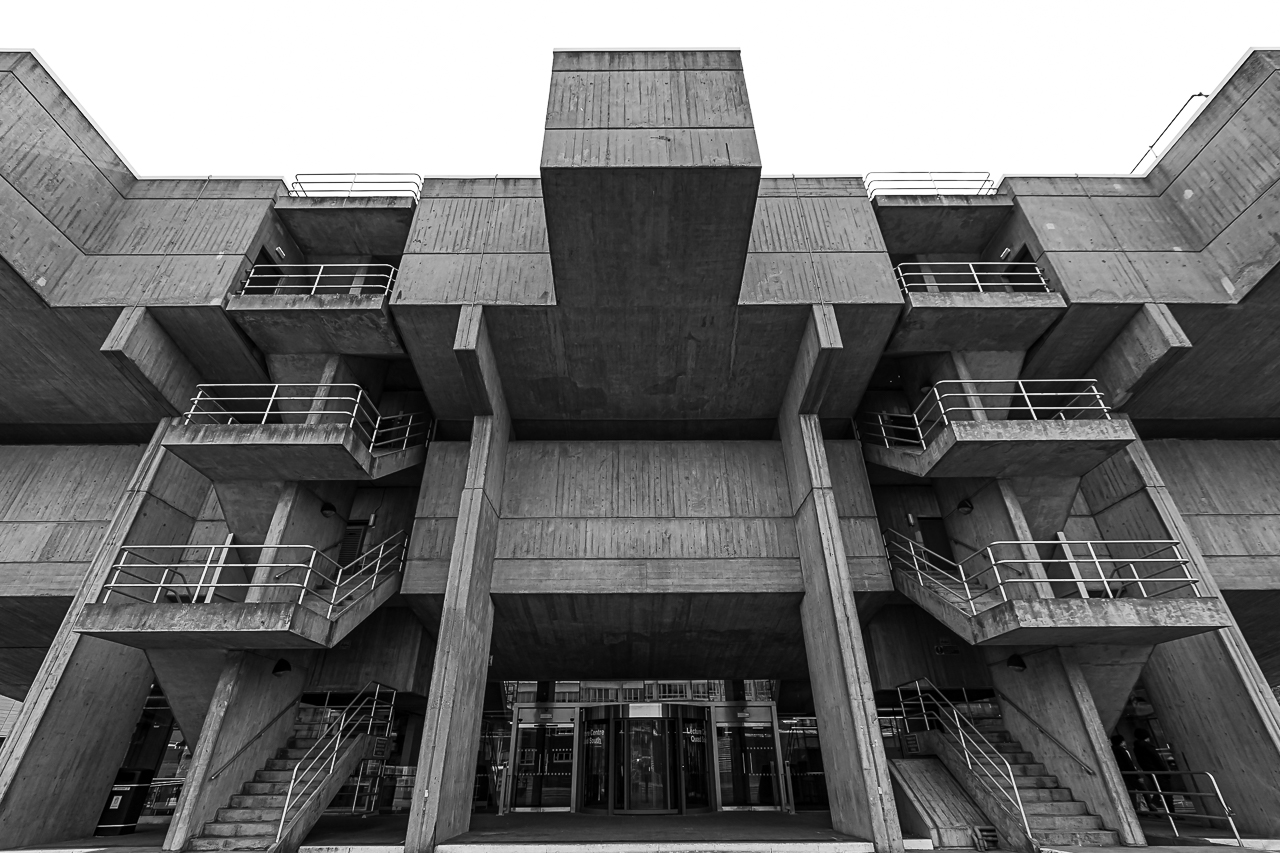
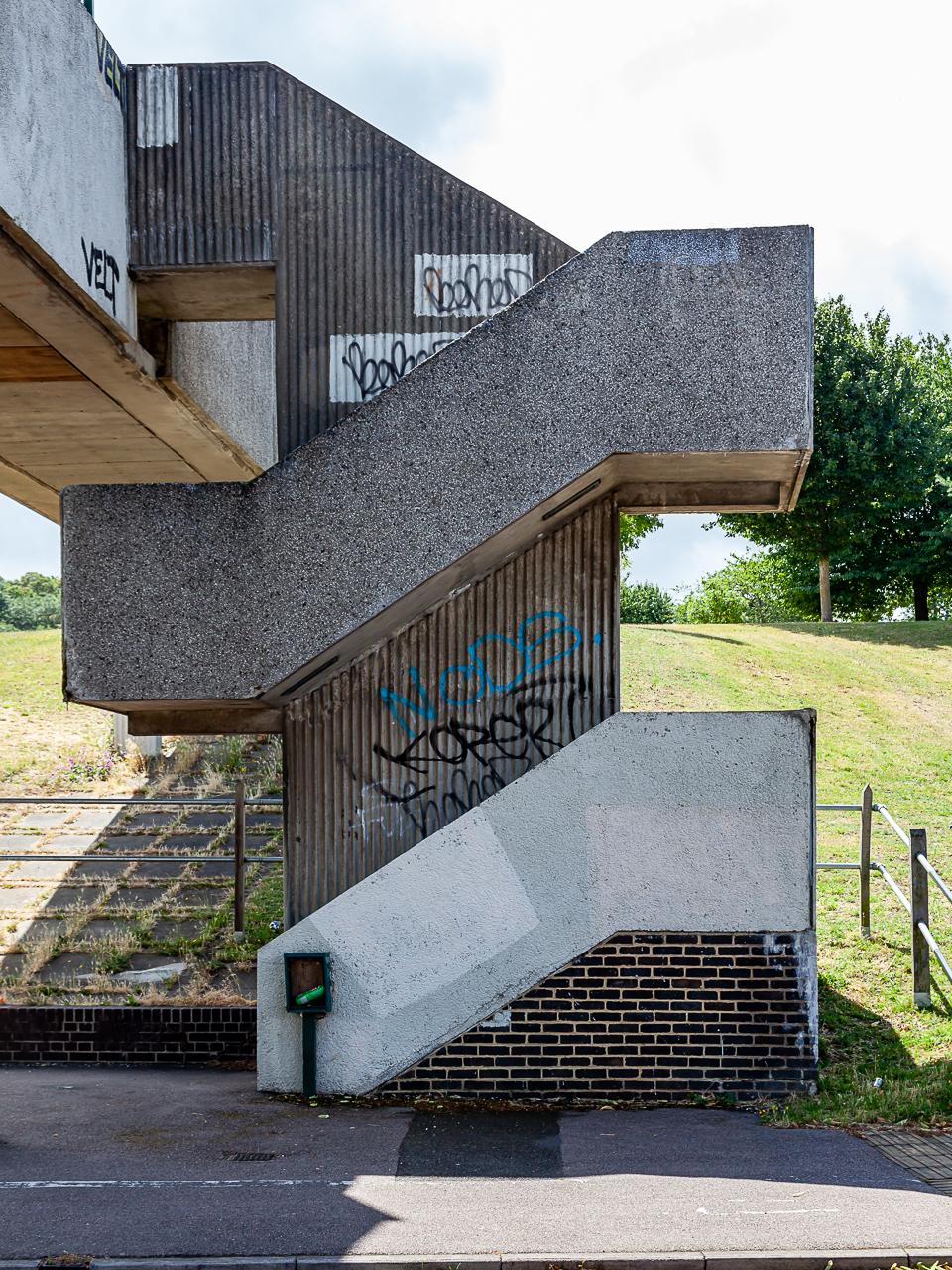
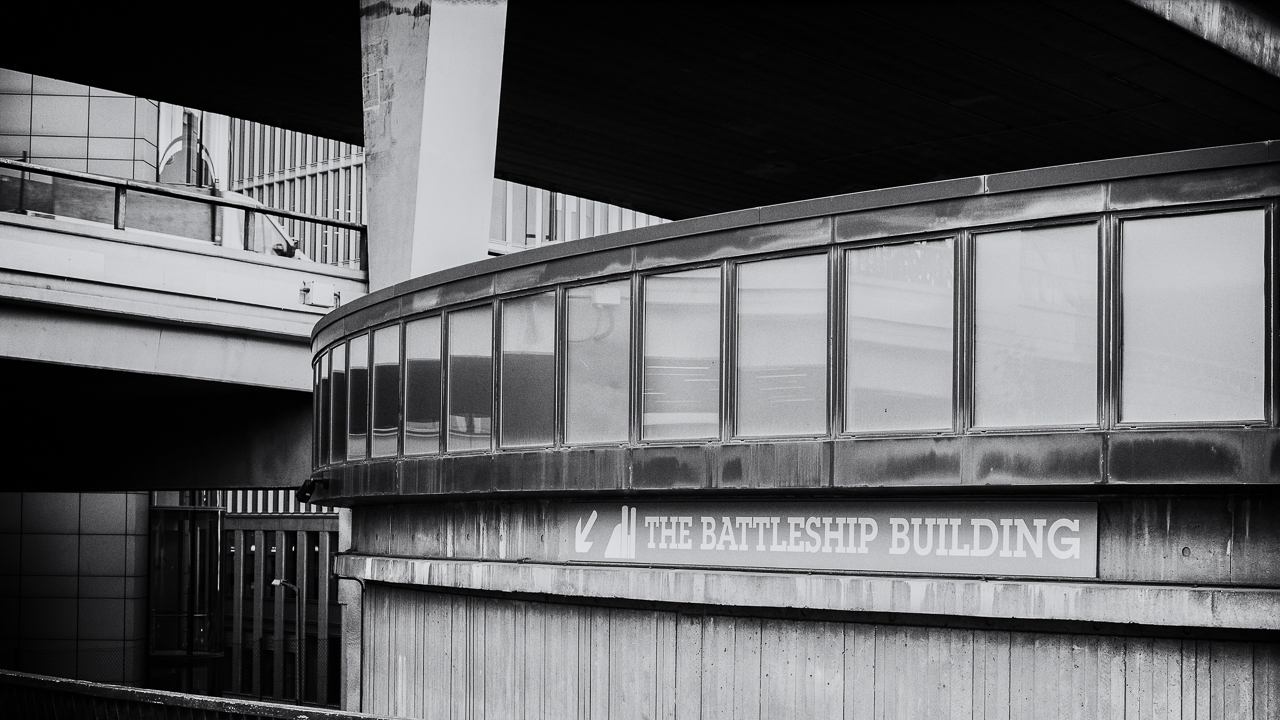
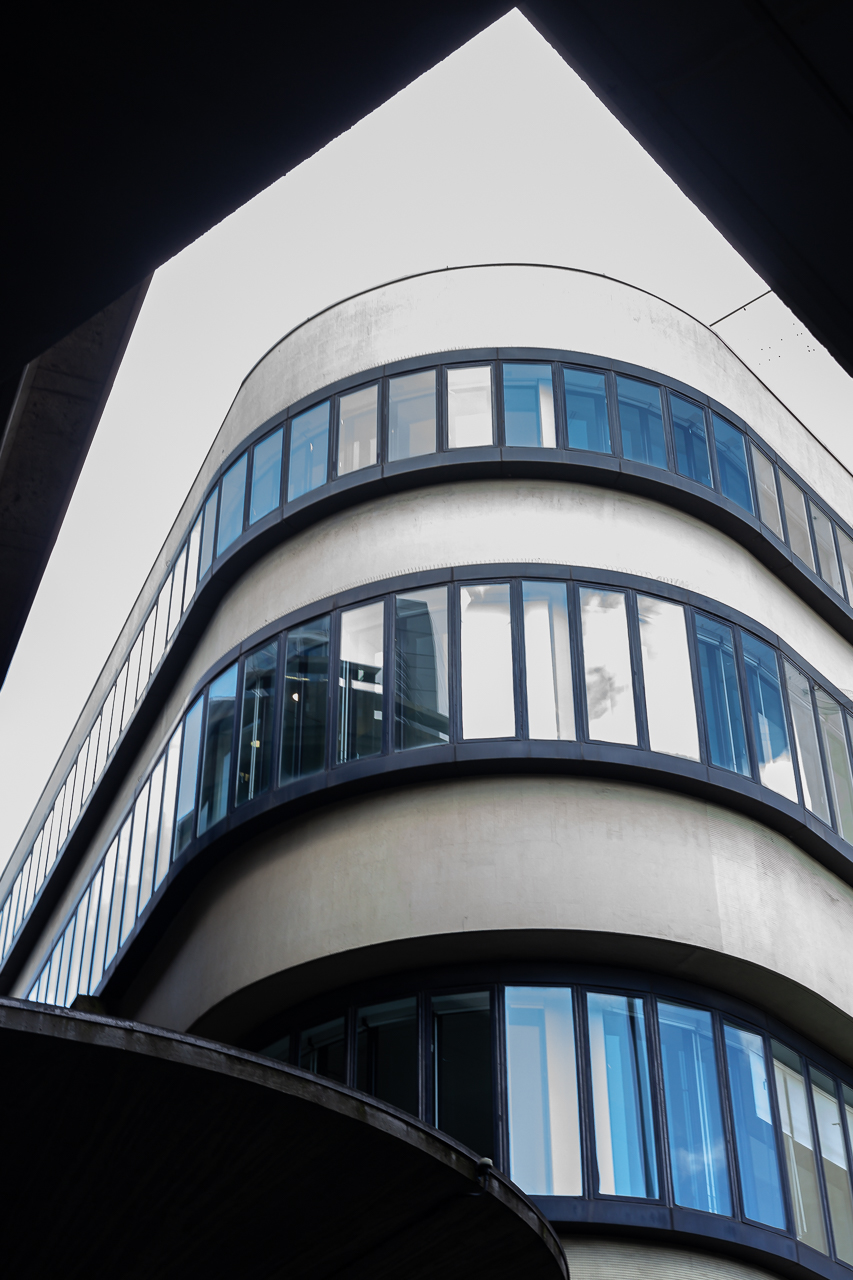
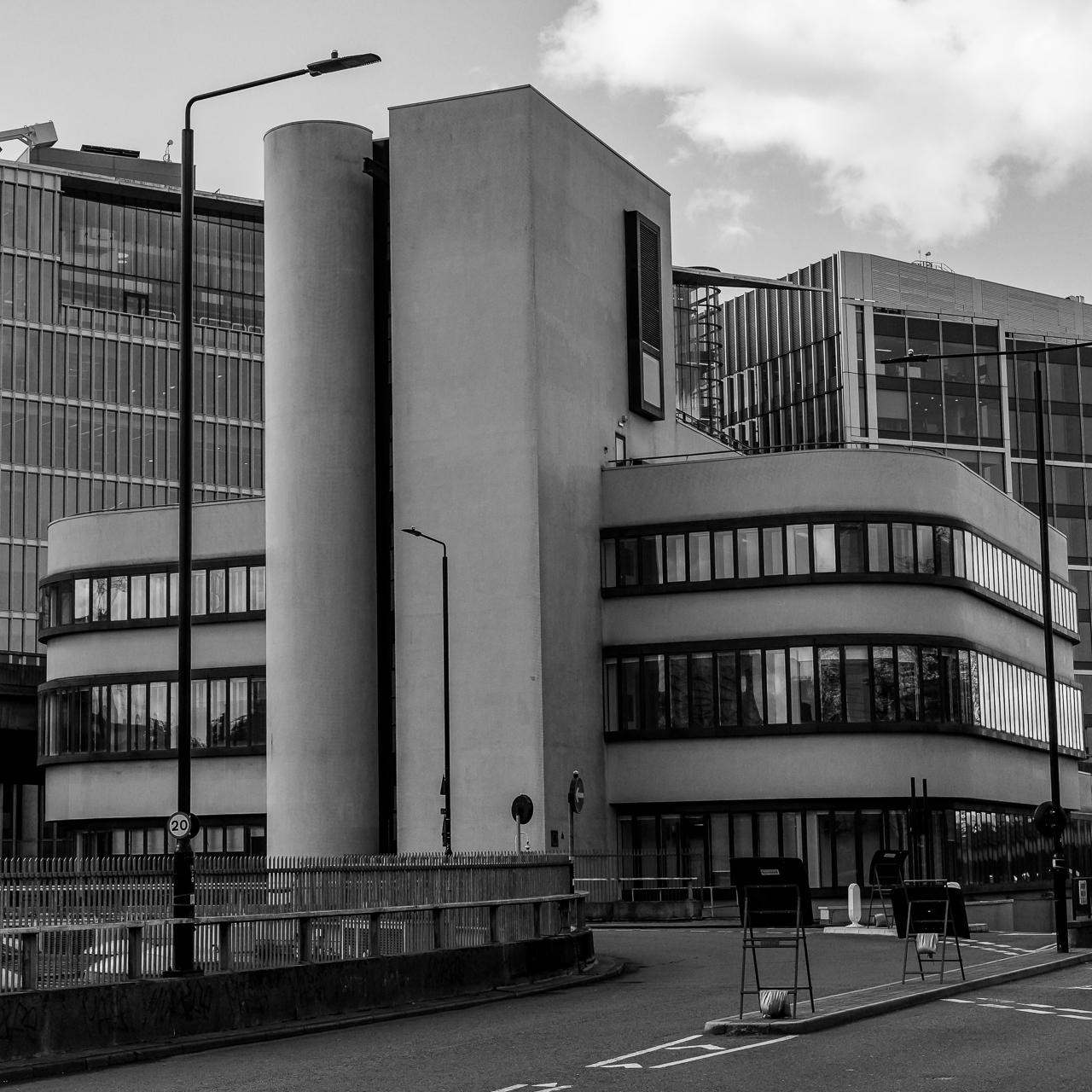
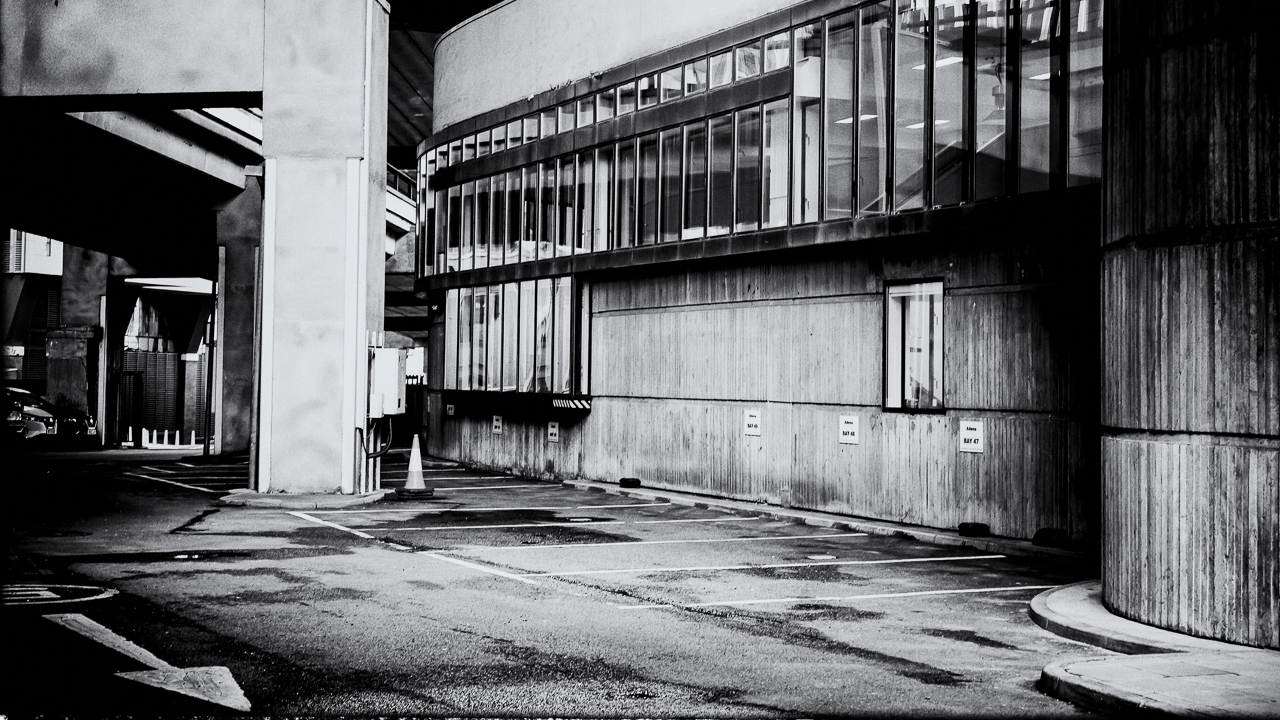
I know nothing about the Oxford Centre for Innovation building other than where it is, and that it was difficult to photograph as it’s partly wrapped around Oxford Castle Mound and the castle butts up against the back of it.

It was raining on Saturday, and windy, cold and quite unpleasant, so after photographing the innovation Centre I took myself to the Ashmolean Museum, stopping for an excellent coffee in the most unfriendly and pretentious café I’ve been to, and I’m unfriendly and pretentious so have some expertise in this field!

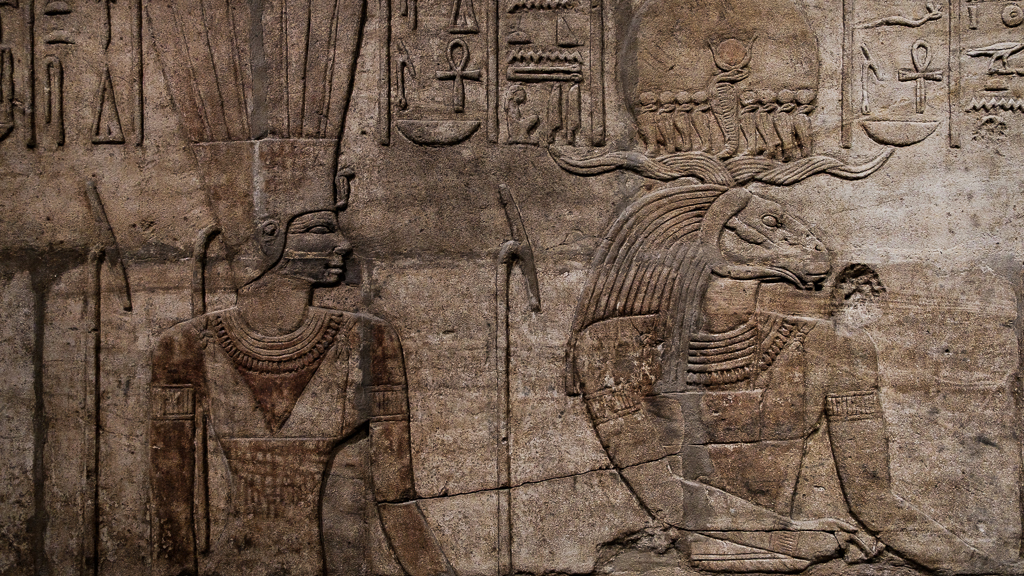
I arrived at the Ashmolean soon after it opened and it was nice and quiet. I had a look around most of the galleries; there is a lot of pottery, something I have very limited interest in. I was seeking out galleries that housed North Indian and South East Asian collections as I’m still fascinated by the complex ancient history of these places as well as the religions that were so key to the buildings and art that were created hundreds, if not thousands of years ago.  I was momentarily distracted in the Egyptian collection and this magnificent relief on the side of the tomb of Nubian King Taharqa who died in 664BC, he is believed to have been the last black pharaoh of Egypt. The detail is stunning!

The Indian and Asian galleries were interesting, with some lovely Buddhist and Hindi artefacts. I was especially interested in this beautiful 16th bronze of Saint Tirumankai Alvar which is soon to be returned to it’s home in the Tamil Nadu region of India. While it’s not know whether this statue was stolen, it also can’t be proved that it wasn’t so the museum is returning it. Much as I like to see these lovely objects in UK museums they should be returned to their traditional homes.

As the weather hadn’t improved while I was in the museum. I caught the train back home to London where Eleanor and went to a fantastic restaurant in Stoke Newington to not celebrate Valentines Day.

The next post will be all about the Hogwartsean, Disneyesque Oxford we all know and love.

Brutal day out, Southampton edition

Southampton – Saturday 16 November 2024

Another weekend and another Brutal Day Out away day; this time to see the delights of Southampton, a small port city on the coast two hours south of London.

Looking at travel options for this trip created a bit of me grumbling to Eleanor about cost and faff and that I couldn’t believe it was two hours to Southampton from Waterloo which meant leaving home at 7:30 to get there for 11am. She tolerated this for a while before coming up with the suggestion I contact her ex-husband to see if I could stay with him and his partner on the Isle of Wight on the Friday and then take a quick ferry trip across the Solent to Southampton in the morning. This seemed like a very good, if rather leftfield option and after a couple of exchanged messages it was all arranged.

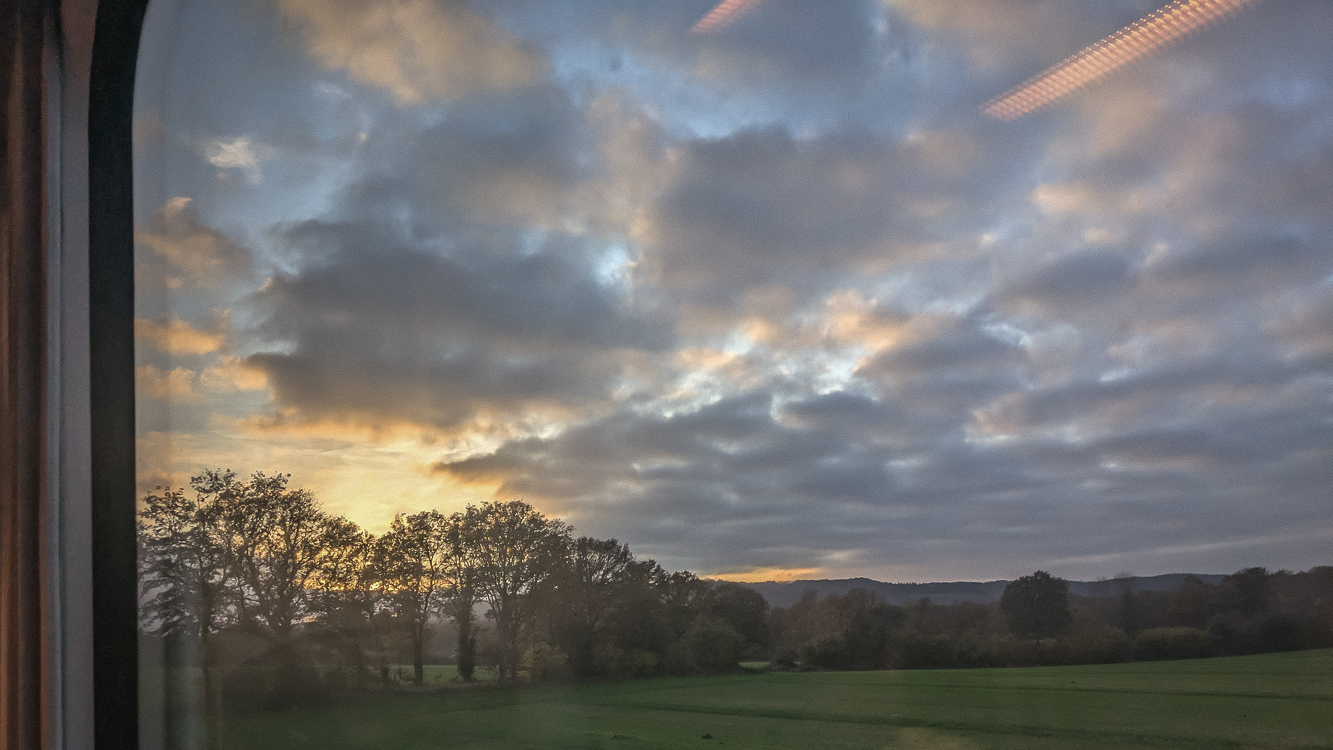
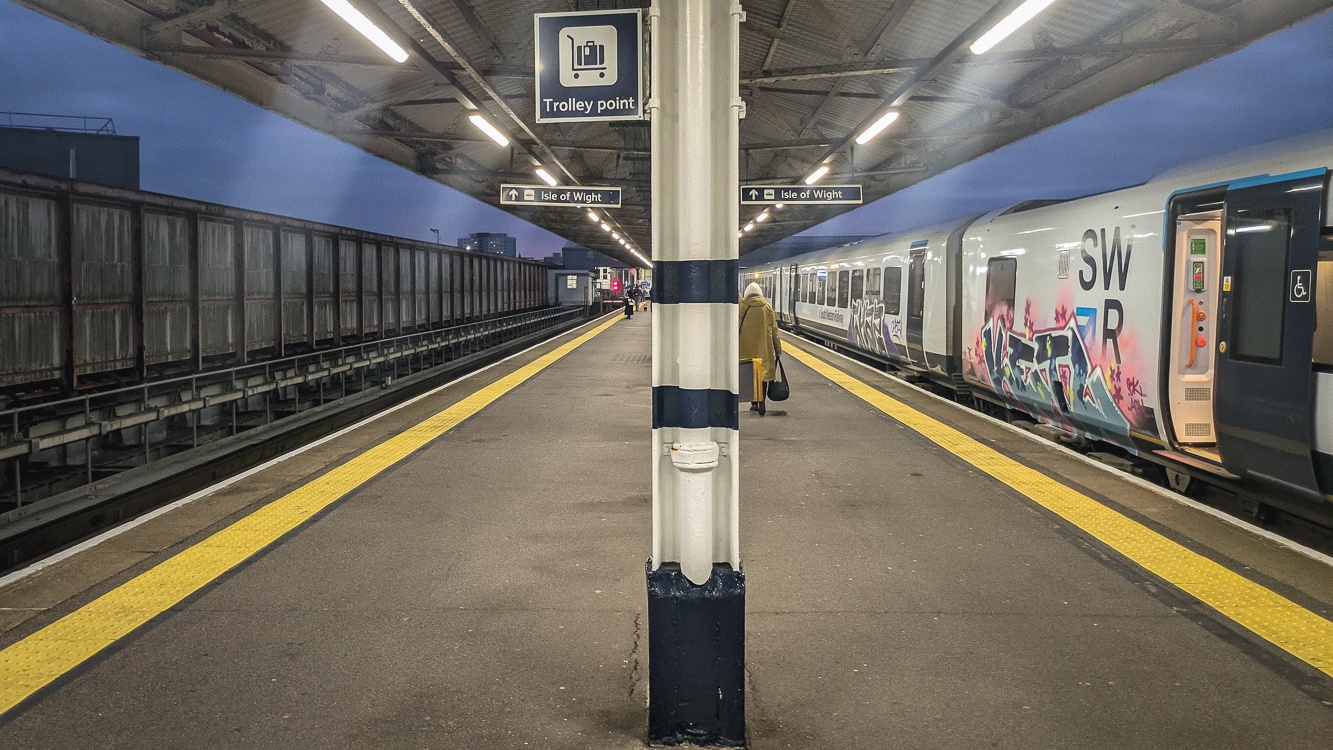
I left work a little early to avoid the worst of the Friday rush hour and was I rewarded with a nice sunset out of the train window. The train terminates at Portsmouth where I caught the ferry for the 22-minute journey to Ryde on the Isle of Wight. It was millpond calm, though even at 5:00pm it was too dark for photos. Autumn.

PXL_20241115_154923279

PXL_20241115_164000394

Andy, Eleanor’s ex, met me off the ferry with the car and took me back to the house he shares with his new partner where we had dinner before slipping out to the pub for a few pints of local ale and loads of music chat. It was a very nice evening.

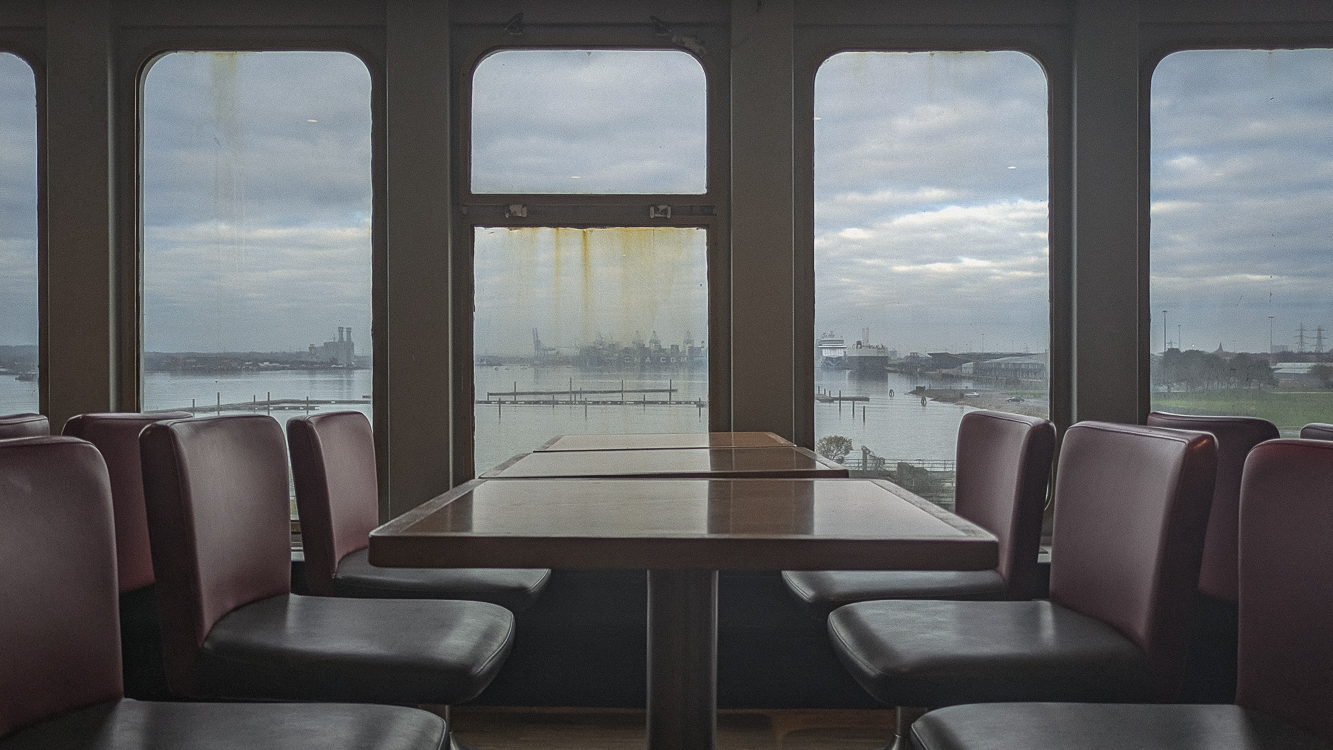
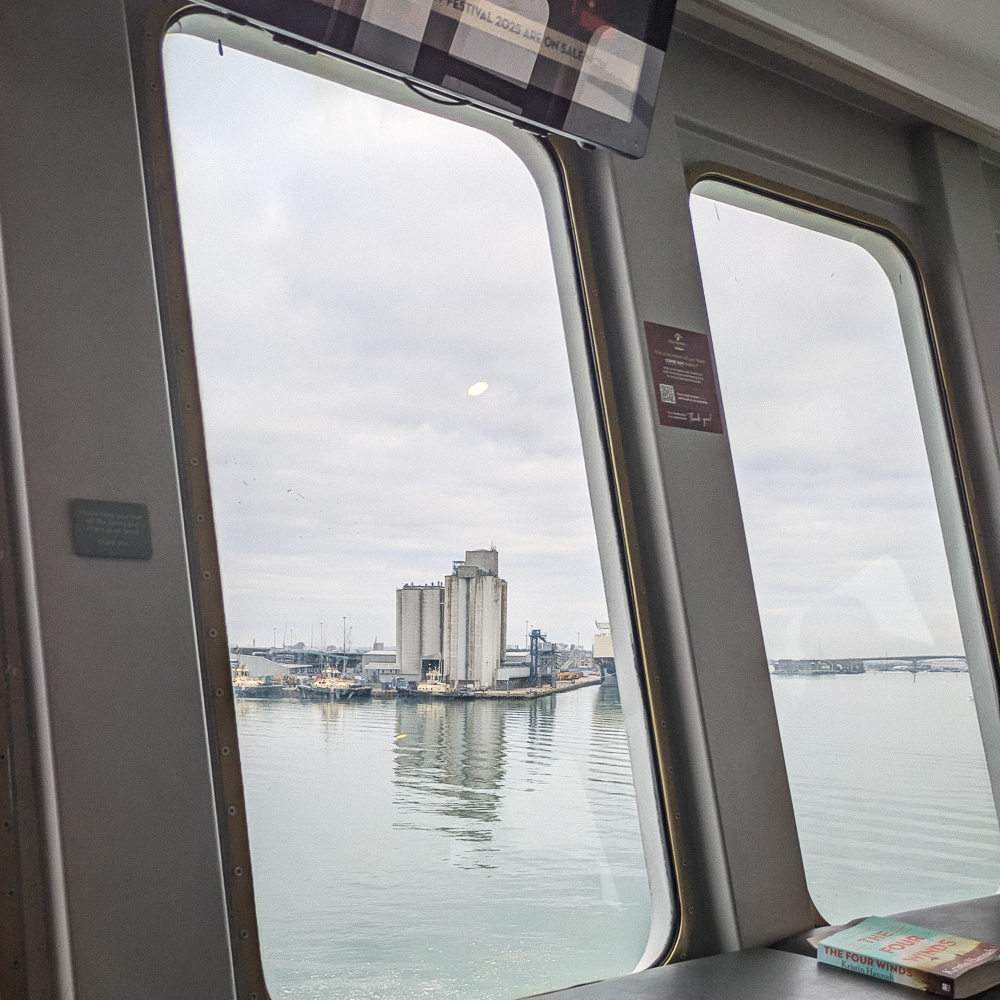
Sadly, the ferry from Cowes to Southampton doesn’t run at the same regularity as the Tube does from Leytonstone, so I ended up having to get up quite early anyway, but with a beer headache to contend with as well. After a light breakfast Andy drove me to the ferry terminal and I made another smooth journey across the Solent, this time to Southampton.

PXL_20241116_100328539

PXL_20241116_095017297

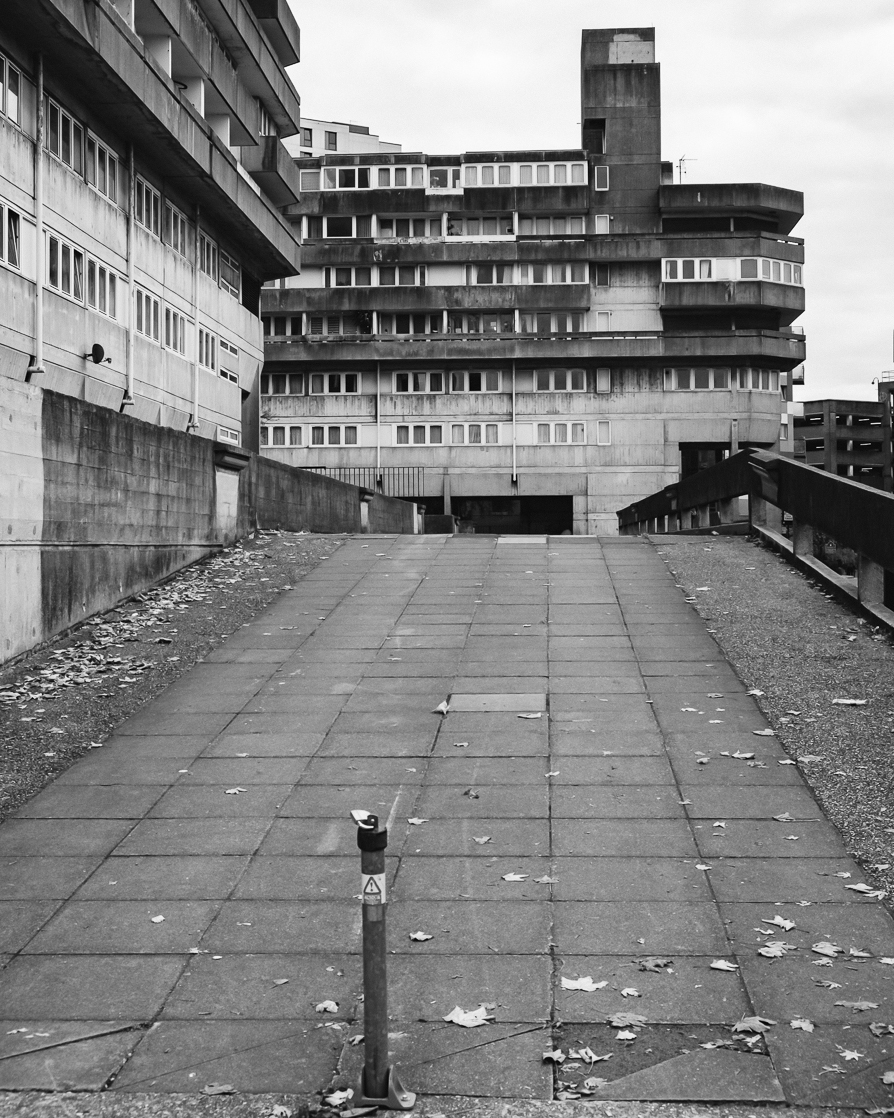
The brutal day out was OK, my least favourite so far; there were a couple of the usual gang there which was nice, but more newbies and the group dynamic was a bit off. There was one interesting building to photograph, the Wyndham Court housing estate, but I wasn’t feeling it and while I got some OK images there was nothing I was completely wowed by.

DSCF4686

DSCF4687

DSCF4689

DSCF4701

DSCF4675

DSCF4677

DSCF4678

DSCF4681

DSCF4685

DSCF4682

Next to Wyndham Court, and over the road from the train station are Greenville and Portcullis House, unlike the Wyndham Court these are office blocks, though mostly empty and I think they were due for demolition at some stage. Portcullis House (I think) is temporarily being used by the British Transport Police and we were told quite clearly that taking photos near their office was to be discouraged. We did as we were told.

DSCF4671

DSCF4672

DSCF4673

DSCF4674

We took a general walk around the city centre with our local guide, there were a few other buildings to look at, but none of them were particularly interesting and I got a bored, and then we went for a swift pint in a very busy Wetherspoons before I grabbed a mid-afternoon train back to London.

PXL_20241116_151712973

PXL_20241116_101107300

Hopefully next time will be back to being fun again.

Brutalist Brunel University

Saturday 06 April 2024 – Uxbridge, west London.

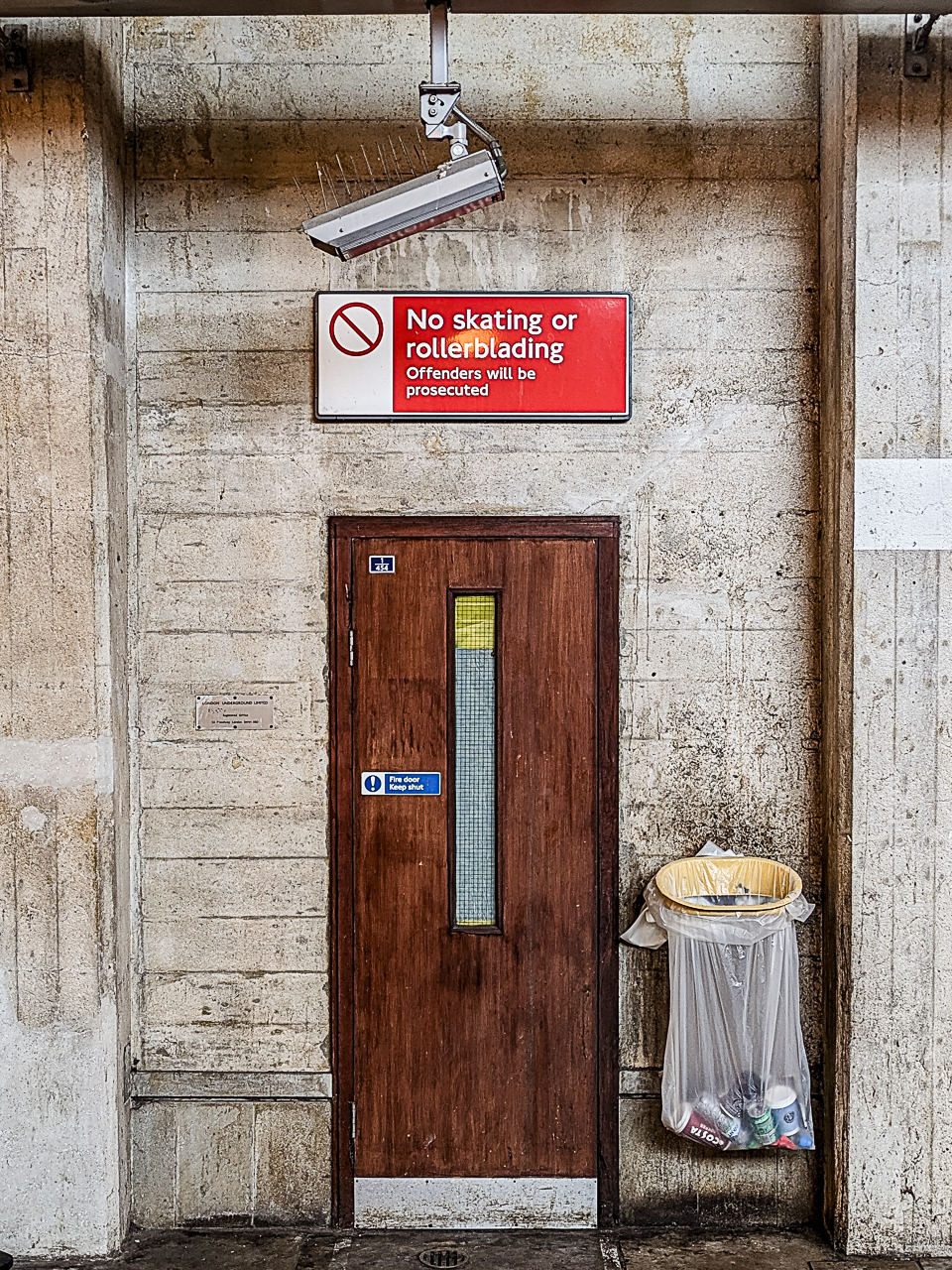
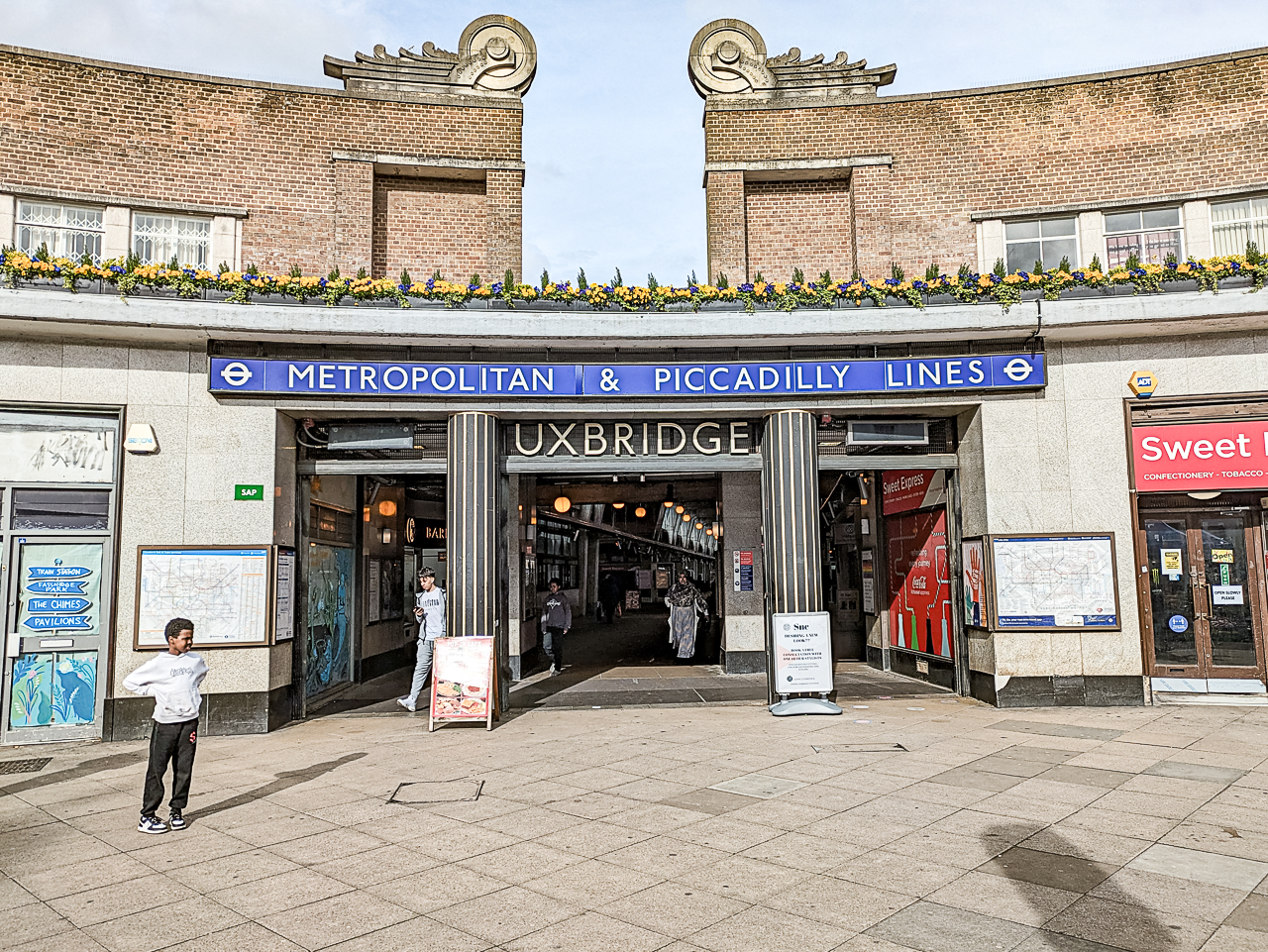
Uxbridge station was a surprise modernist bonus; and what a lovely station; so much better than the old, grimy and grim station at Leytonstone where I live. It would be fun to have 30 mins here without passengers wandering past wondering why five people were pointing cameras.
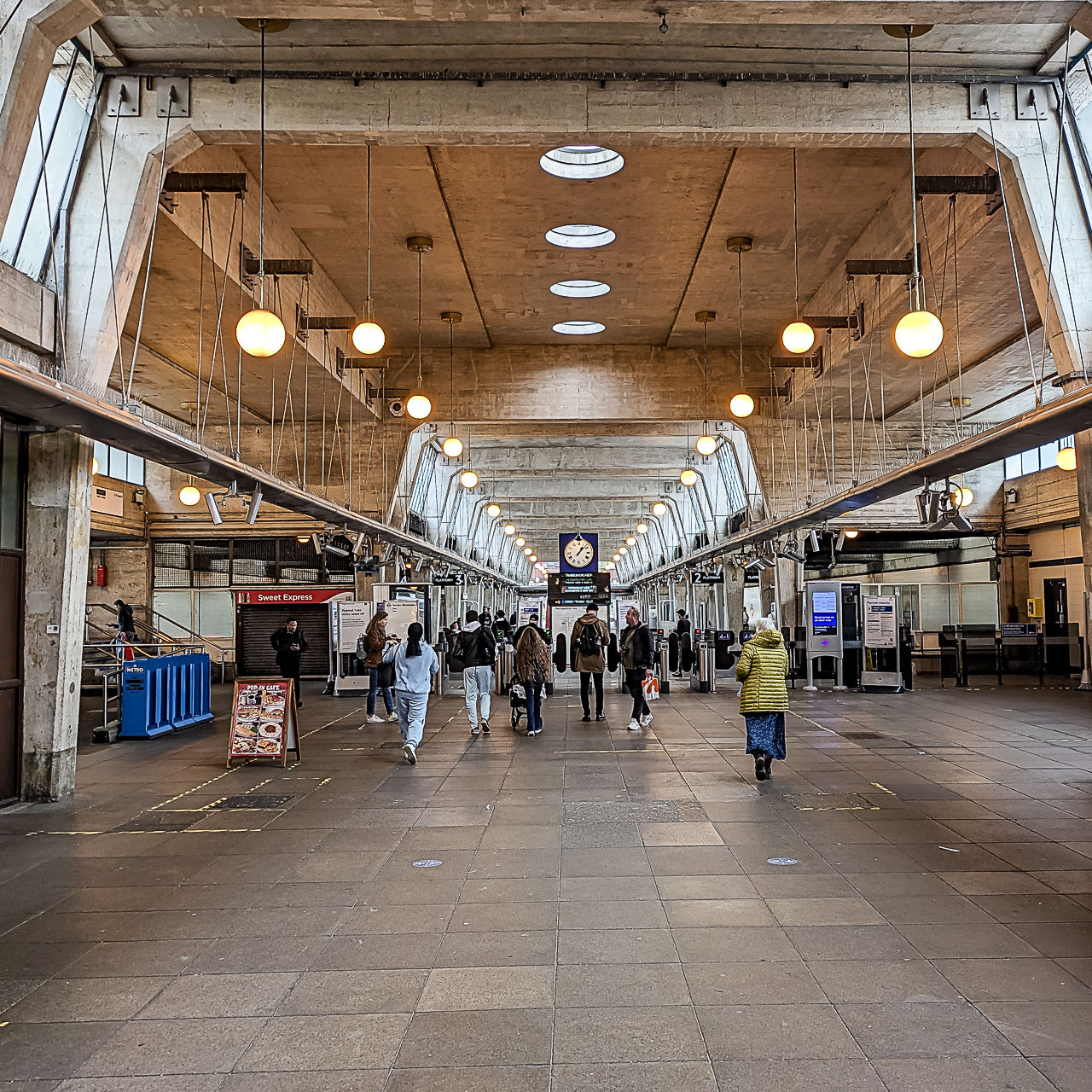
PXL_20240406_120920240

PXL_20240406_120934348

PXL_20240406_153251832

Uxbridge was really busy, lots of shops and seemingly well frequented by shoppers and pedestrians, it’s too suburban and not my sort of place, but it was good to see a busy shopping area. We popped round the corner from the station to catch a bus for the 10 minute ride out to Brunel University. There nice building over the road from the bus stop was an additional treat to be had while we waited for the bus.

PXL_20240406_121441816

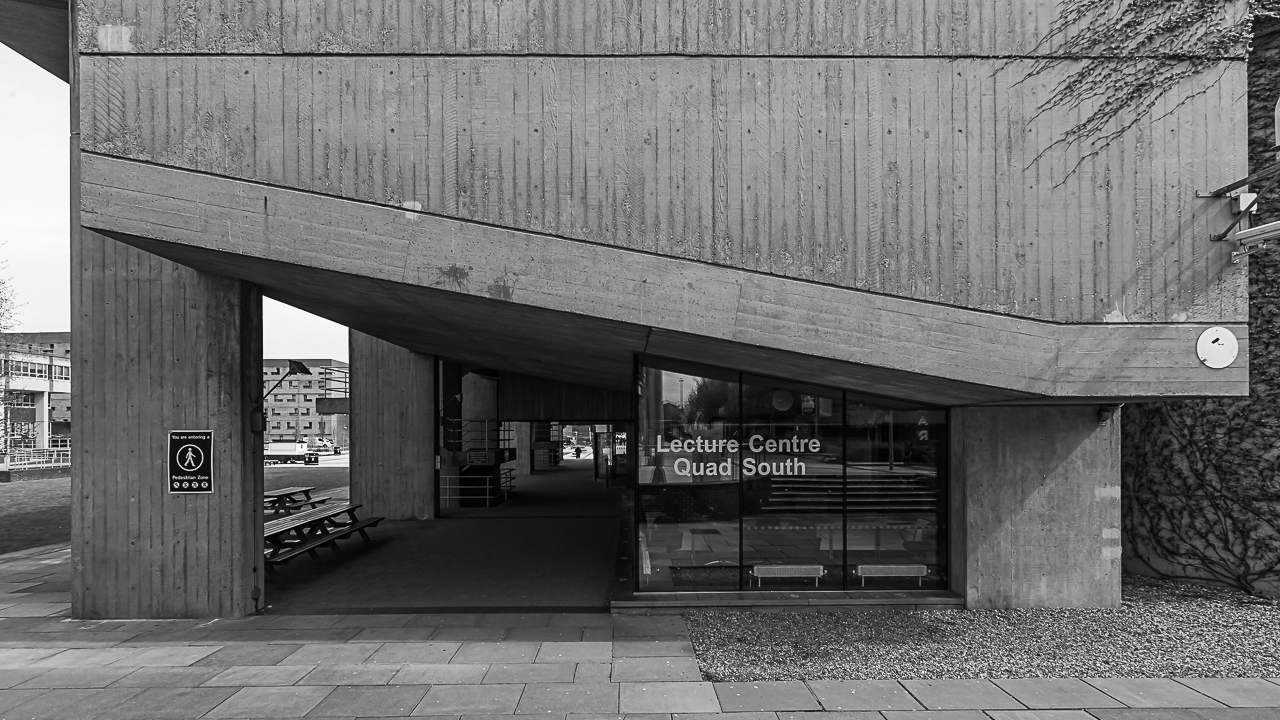
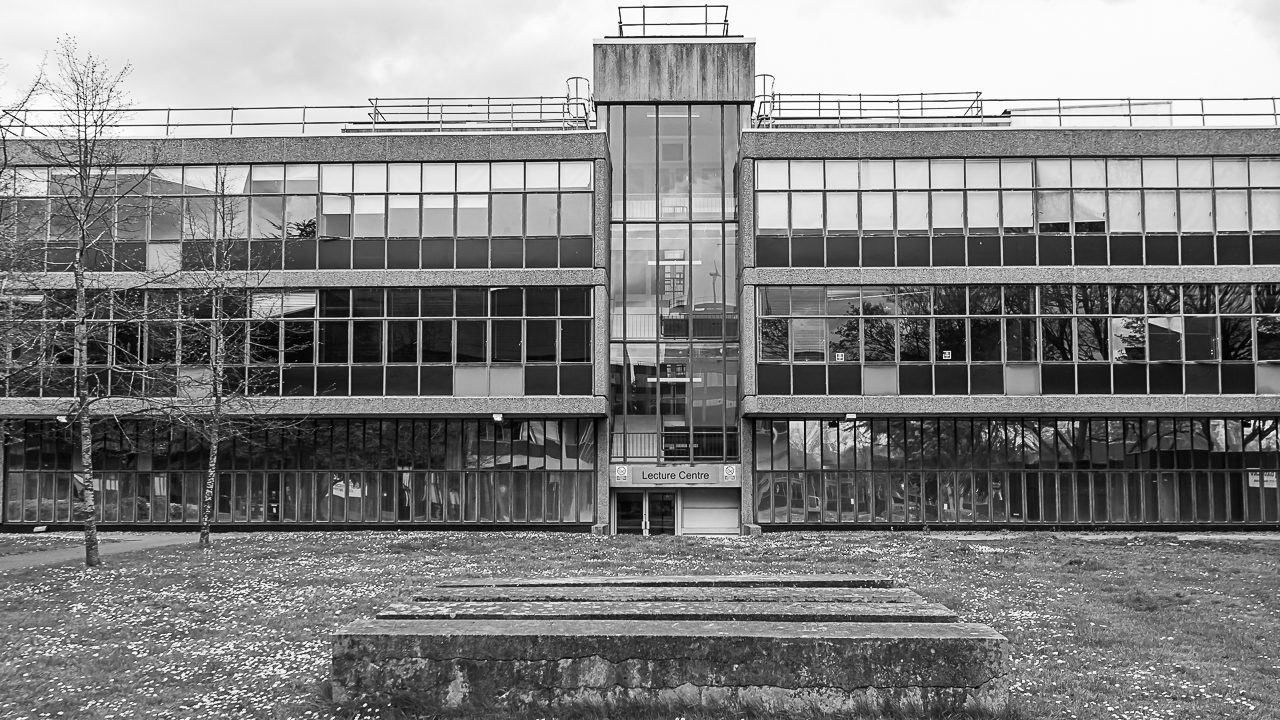
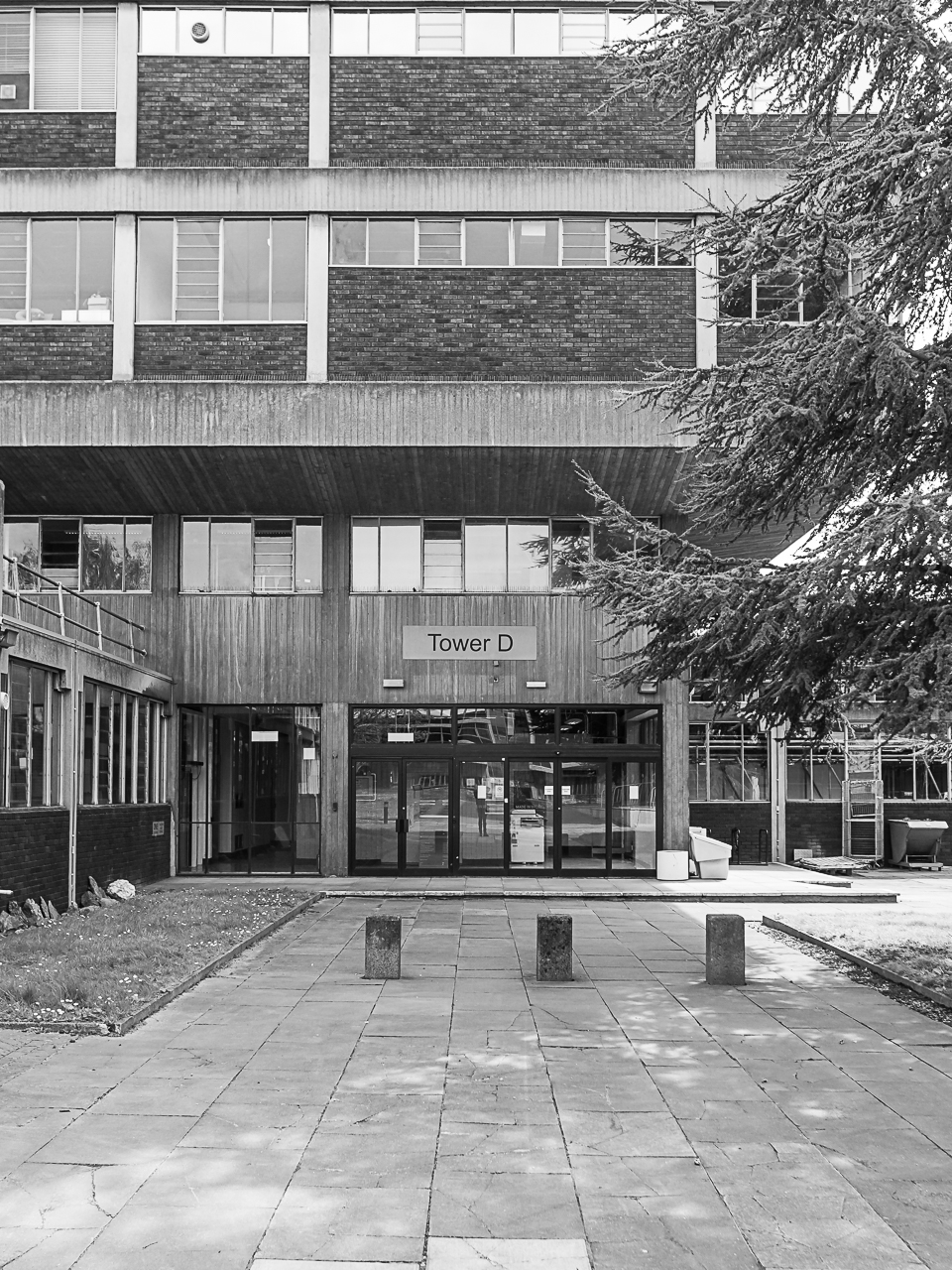
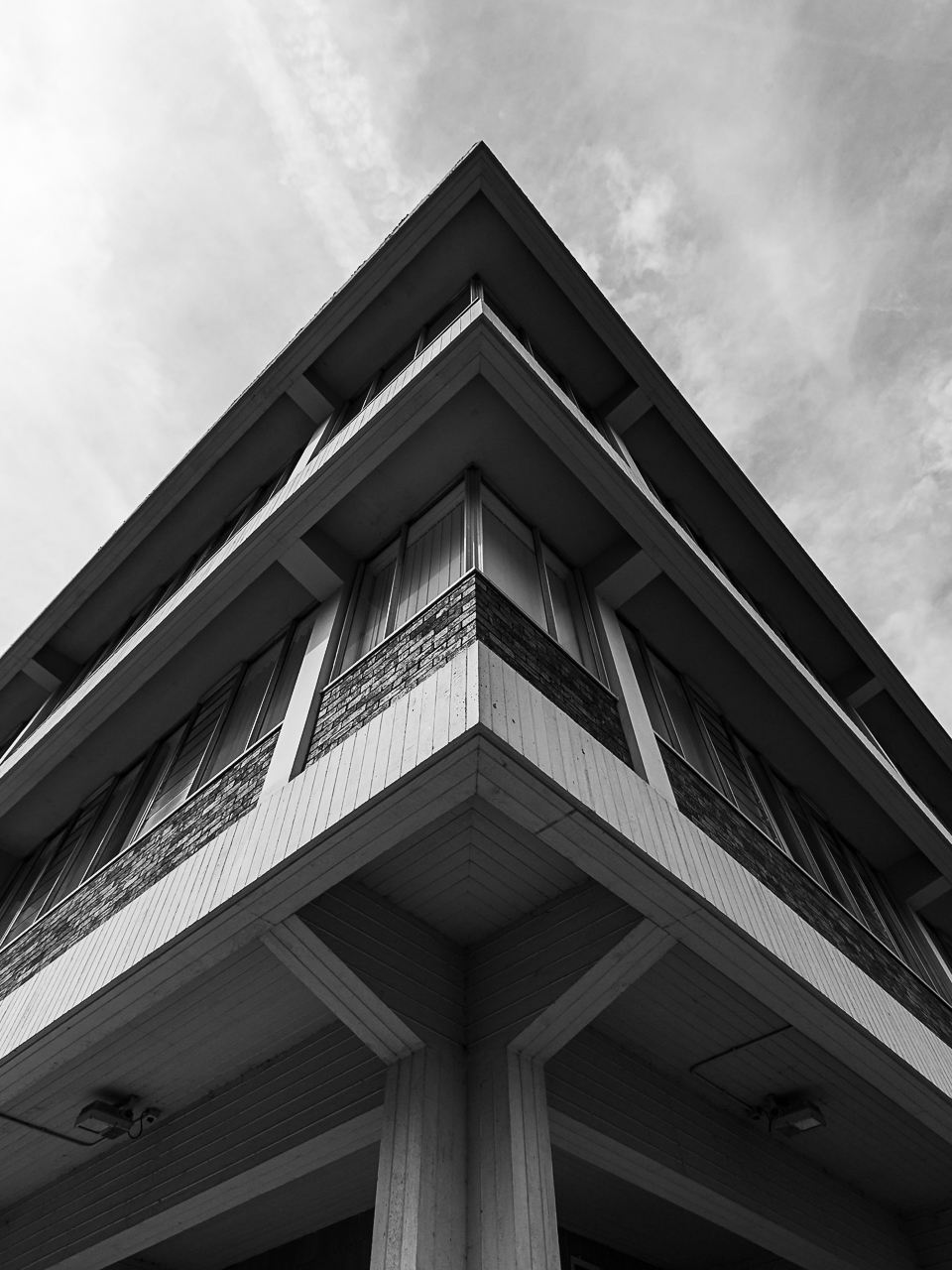
The main reason for coming all the way out west was to have a look at the university’s lecture centre which is a proper brutalist masterpiece. Designed by John Heywood, the centre opened in 1971. Apparently it has had been undergoing maintenance recently so we timed it well, avoiding any lingering scaffold or hoardings. It really is a beauty; small yet perfectly formed. It, along with a couple of other Brunel buildings, particularly Tower D, feature in Stanley Kubrick’s ultra-violent dystopian ‘A Clockwork Orange’ film.
IMG_6839

IMG_6845

IMG_6843

IMG_6844

IMG_6841

IMG_6852

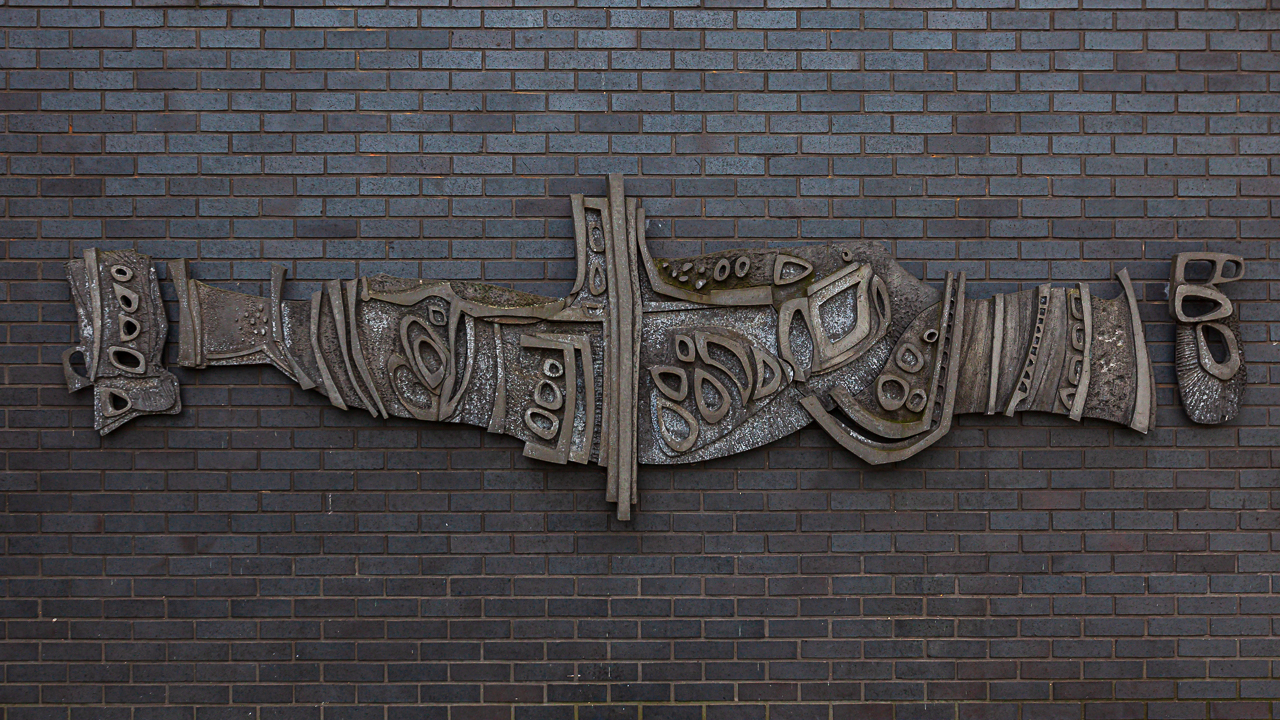
I quite liked this sculpture by Philip Whitten to celebrate the Shoreditch College’s golden jubilee in 1969.

IMG_6832

After cooing over some lovely concrete and resting with a refreshing coffee and snack from a conveniently open student café we walked around the rest of the small campus and took a few photos of some of the other 1960s constructed buildings, including Tower D. There was a lot more of interest than we expected, which made for some very happy photographers of 60s and 70s concrete. Probably worth a proper Brutal Day Out and some stage.

IMG_6862

IMG_6854

IMG_6861

IMG_6860

Next, back to Uxbridge and carparks…

Brutal Day Out – Bethnal Green

Saturday 25 November 2023 – Bethnal Green, London.

One month until Christmas, wow, where has this year gone? I’m sure I’ve said it on numerous occasions in the past but the older I get the quicker the years go by. Sadly the same can’t be said for working days and weeks, they drag interminably. It’s now Christmas Eve eve, Eleanor is at Tottenham Hotspur Stadium watching Spurs beat Everton 2-1 and I’m home in the warmth drinking a large gin and tonic, listening to The Stooges and finalising this post. A win-win for both of us.

This was the fourth Brutal Day Out walk I’ve attended and it was the biggest yet, with 13 walkers, which made the group too big. Organising photographers is like herding cats and I liked it best when there was only half a dozen of us. It’s cool that the original group still come as I like all of them (a rare thing), and there are always good folk in the extended group, but it does make it slow going.

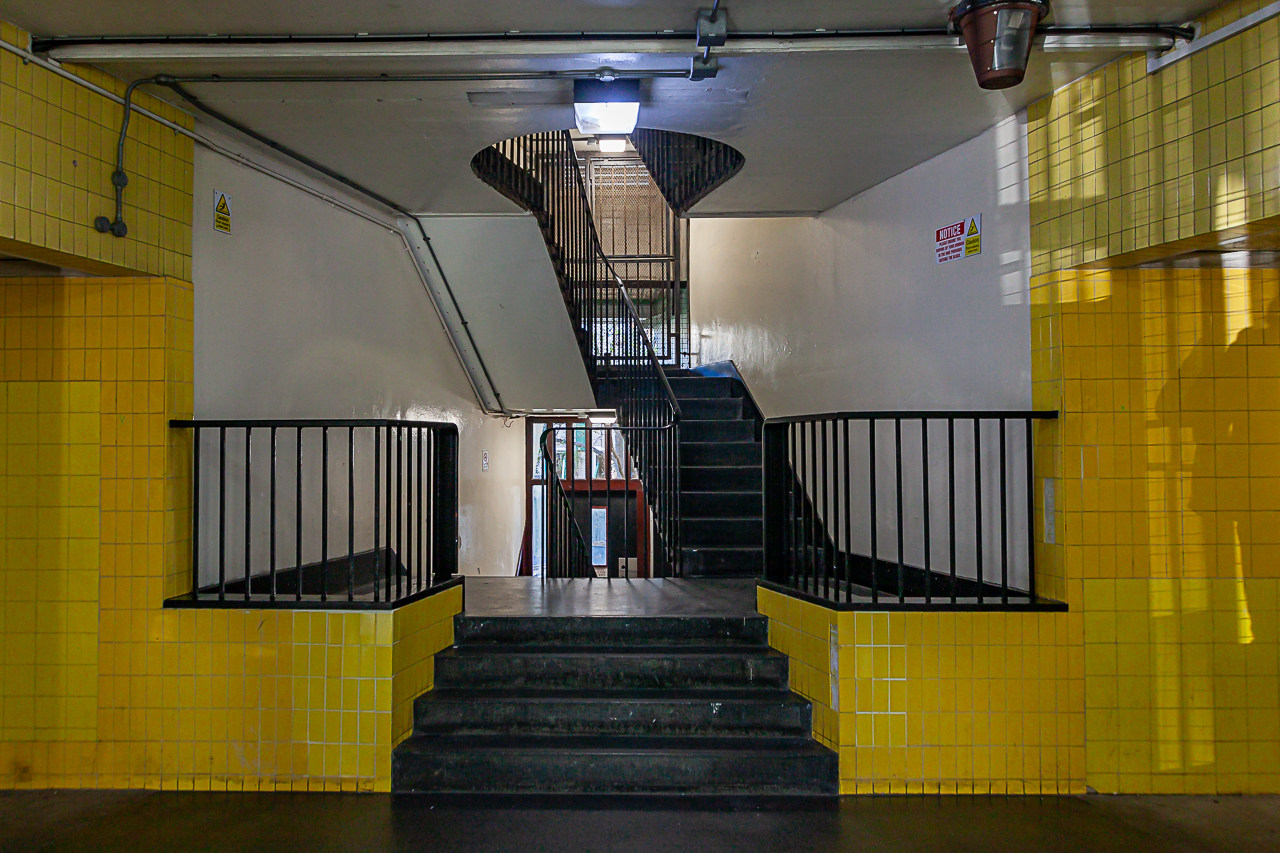
These walks are a good opportunity to see parts of London that most would not normally visit; housing estates for instance; and these were the focus of the walk today. There are a lot of 1960/70 estates in east London. We ended up being invited inside two tower blocks and made our way into a third by following someone in. All three we visited had the most incredible staircases, these buildings may look a bit drab and square and concrete on the outside, but the interiors are quite beautiful, as beautiful as concrete and basic function can get anyway. The first block we entered we were invited by an elderly resident who saw us outside with our cameras and phones and said we had to come in and look at the stairs, and they were pretty cool.

We met outside Mile End tube station, it’s a lovely clear day but very cold, and there is a biting wind, I’m glad I wrapped up warm. The light is a little harsh for architecture photography, or at least my type of architecture photography, but it’s nice to be outside under a a clear sky, it feels like it’s been a long time. Once the group had assembled we crossed the road and walked to our first destination, the Lakeview Estate, opposite Victoria Park. I was surprised to find it was so close to Mile End station; it’s good to be reminded that walking is the best way to learn how a city hangs together.

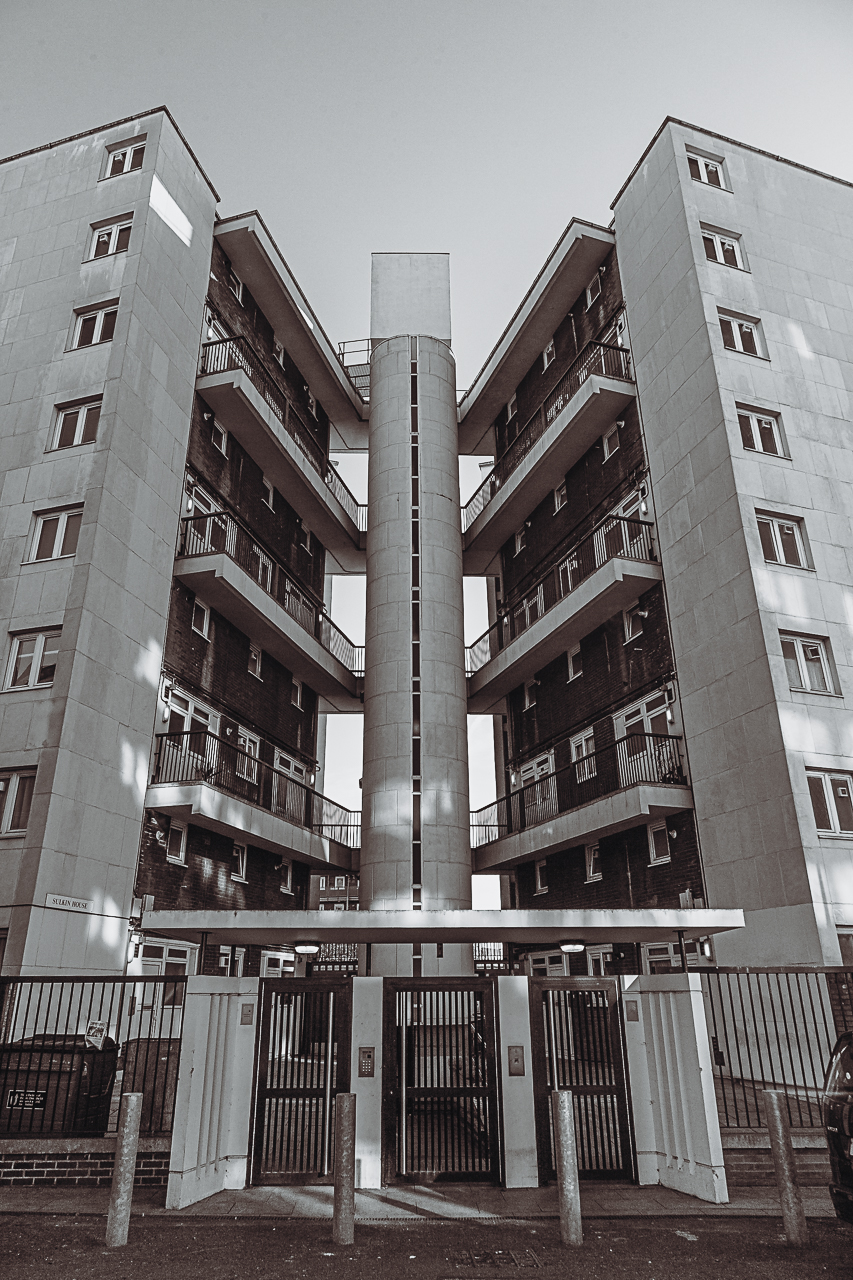
None of the buildings we visited today were brutalist masterpieces, at least that was the case from the outside and the Lakeview Building typified that. These buildings see the birth of the age of modernism in building construction. Designed in 1958 by the pioneering modernist architect, Berthold Lubetkin, for the then Bethnal Green Council it is an early example of how simple design and construction can be made into something aesthetically pleasing. Sometimes you need to look past the ‘bit ugly tower block’ and look for the details. Lubetkin’s work features a lot on this walk today.

IMG_6359

IMG_6365

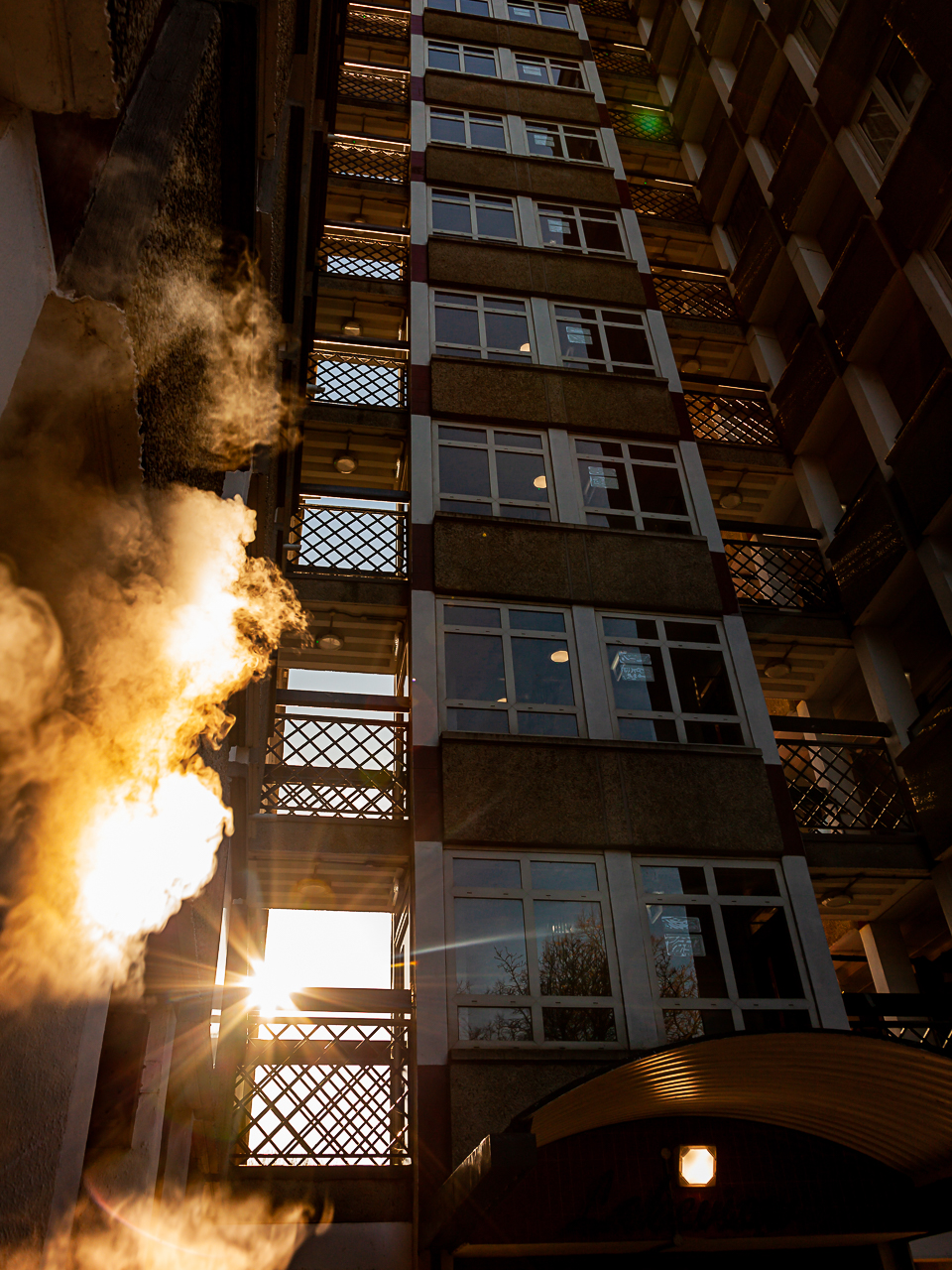
I particularly liked the way the sun came though the open passages between the stairwell and the flats; I may have been moaning about the harsh sun earlier, but the way it caught the steam rising from a gas boiler vent was a highlight for me.

IMG_6363

IMG_6370

Our next stop was the nearby Cranbrook Estate, another Lubetkin design, though this was a much large estate than Lakeview, comprising of six low rise towers and a series of small blocks making up 529 homes. It opened in 1963.

IMG_6372

IMG_6376

IMG_6379

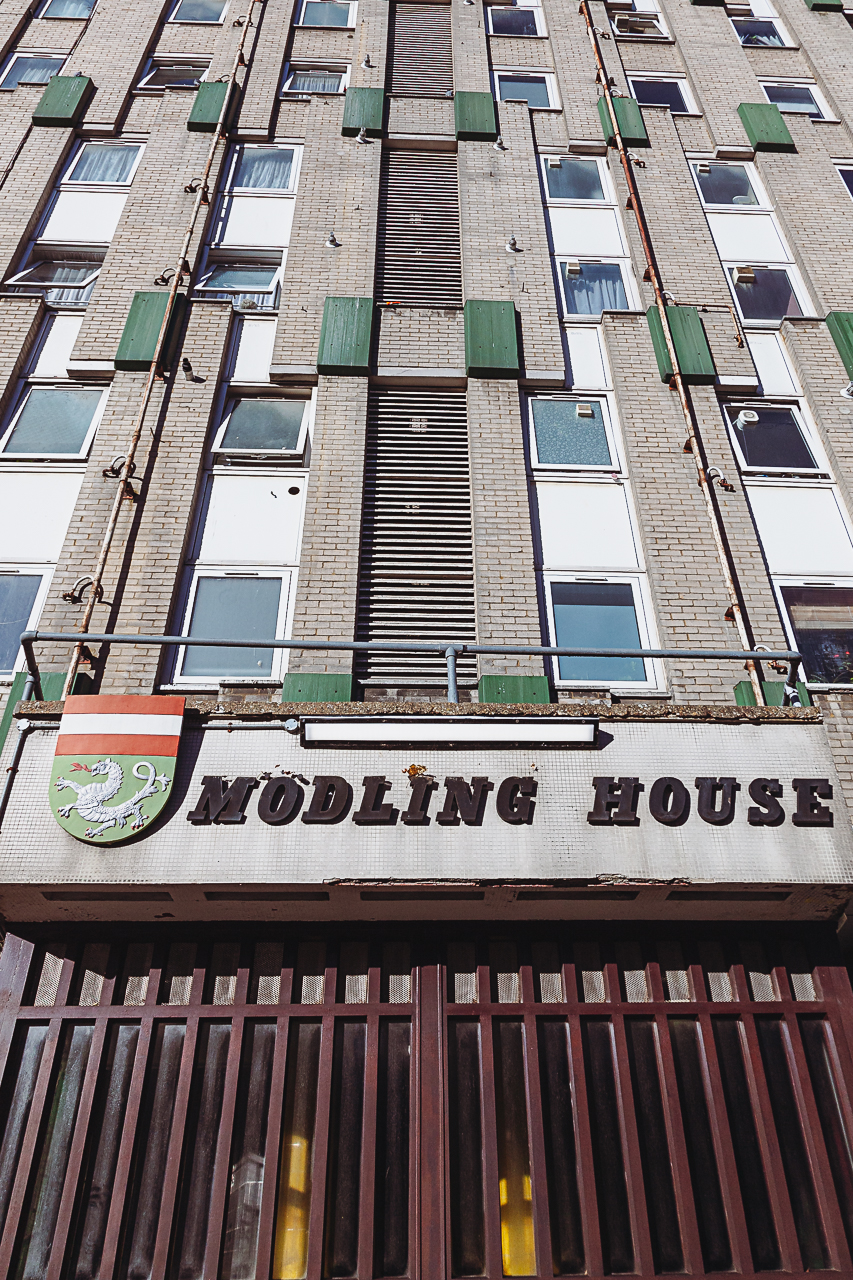
After walking around taking photos of exteriors we were regrouping outside Modling House when one of the residents arrived home.

IMG_6390

She asked what we were doing and once we told her we were interested in architecture she invited us into the building to look at the stairs, ‘because they’re lovely’. They were, though I’m not happy with the photos I managed to get of them.

IMG_6387

13 photographers milling about in a small space does make it difficult. I was also conscious that this place is home for lots of people and just because we were welcomed in by one resident didn’t make us welcome by all. We took up a lot of space in the lobby, which in itself was photo-worthy. I like the clean lines and uniformity of the lobby which are verging on ‘Wes Anderson’-ish. Lovely.

IMG_6384

IMG_6385

IMG_6382

The next two stops were quick, single towers, fenced off, similar in style and both designed by Denys Landon. The first is Trevelyan House.

IMG_6391

IMG_6392

The second is Keeling House; very similar in design to Trevelyn House, but with added scaffold.

IMG_6399

IMG_6400

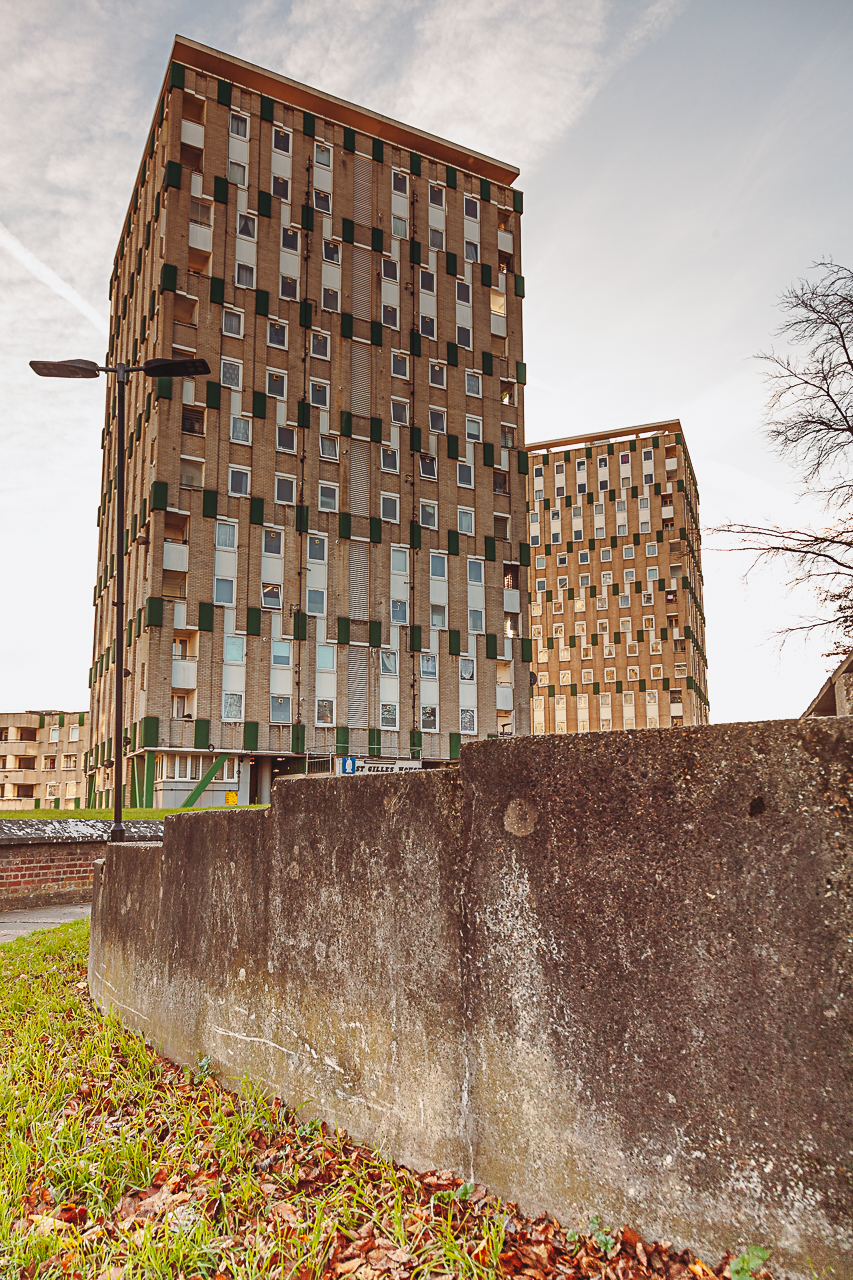
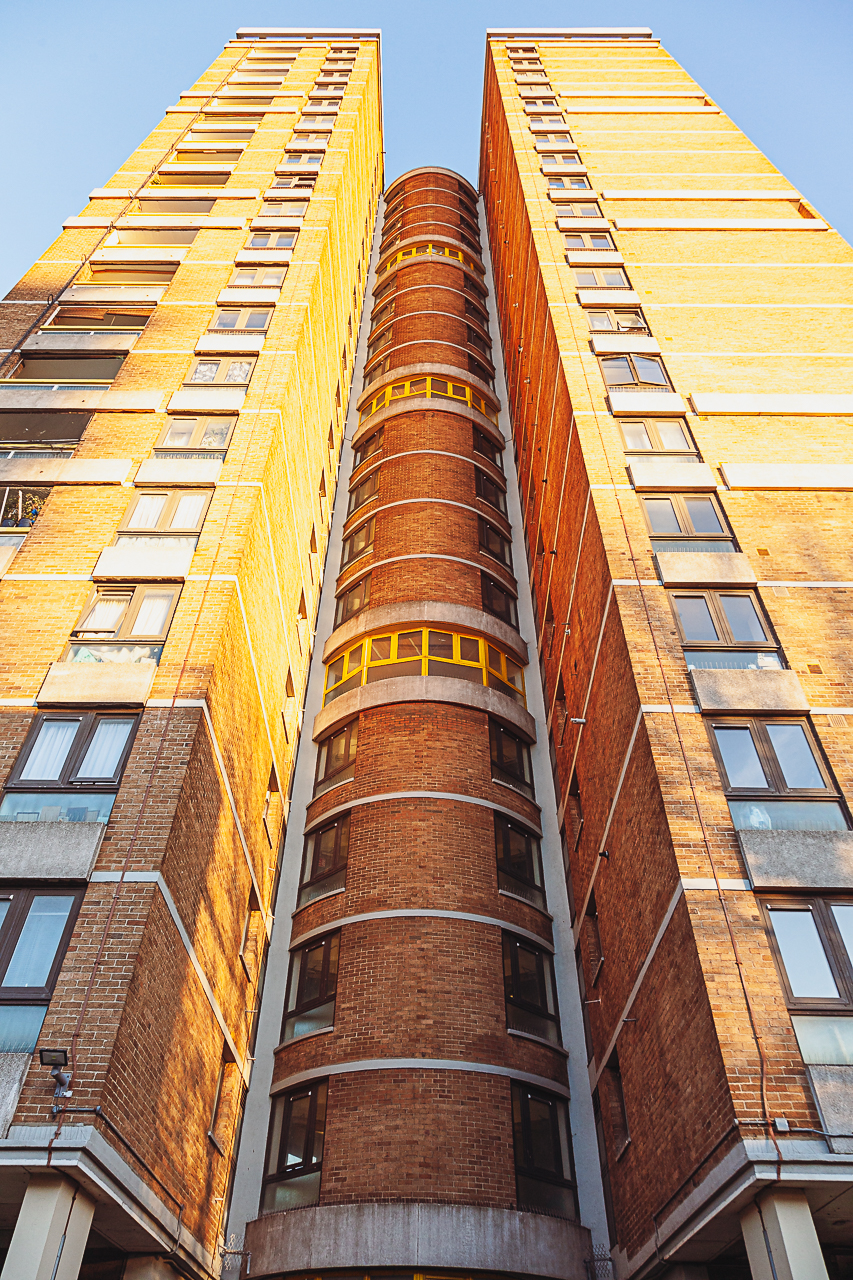
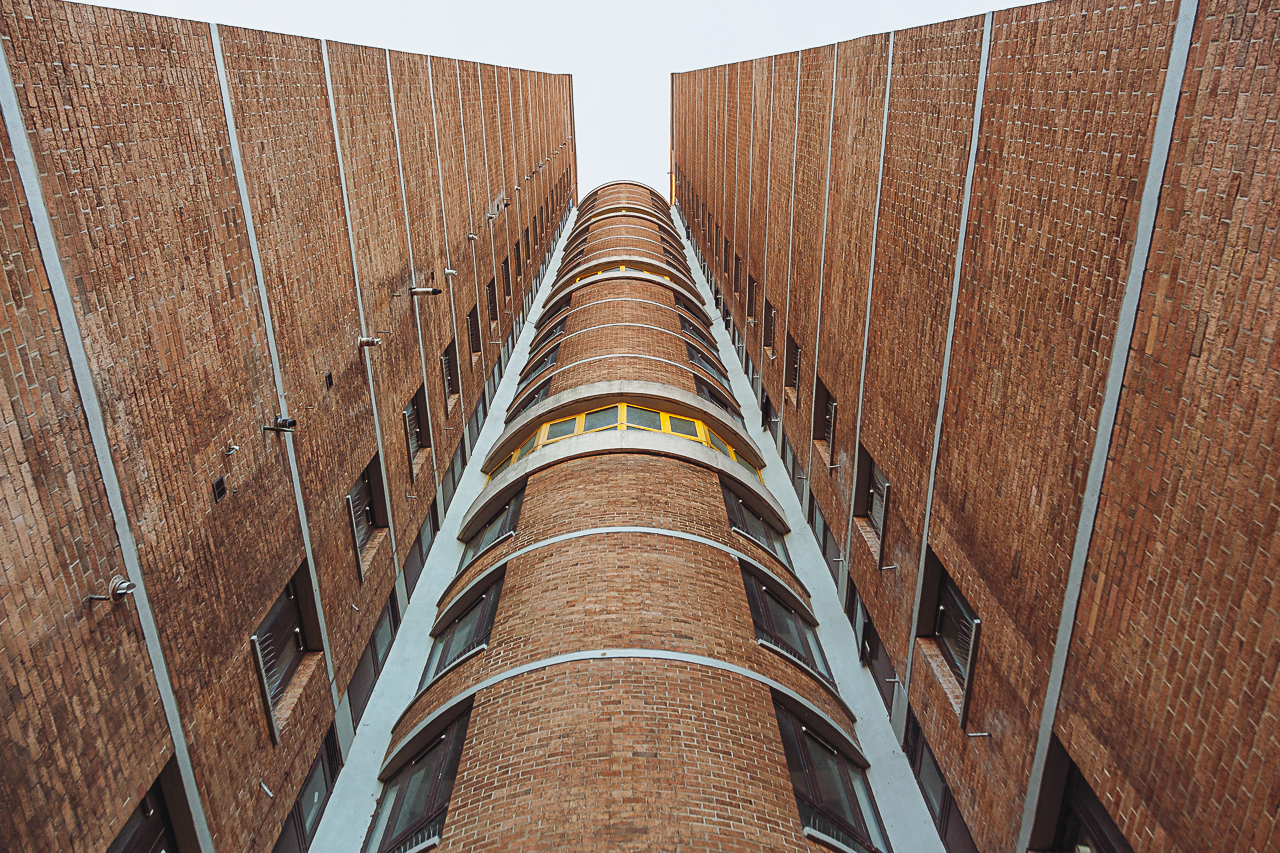
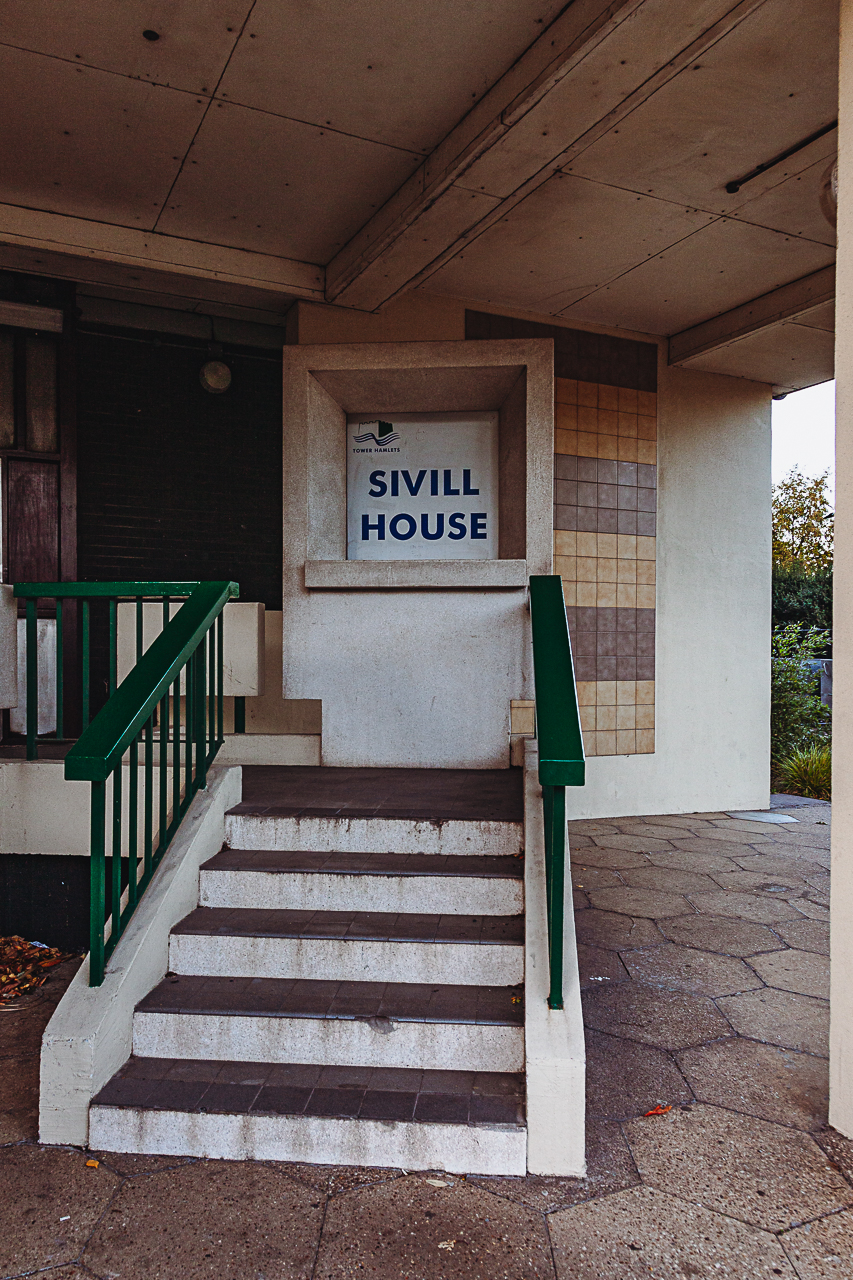
Sivill House on Columbia Rd was my favourite building of the day, it wasn’t overly interesting to look at from the side we arrived on, with just a 19 storey brick cliff face with windows, though the other side of the building with its curved stairwell exposed was much more interesting. Completed in 1962 it’s another fine Lubetkin designed construction.

IMG_6422

IMG_6413

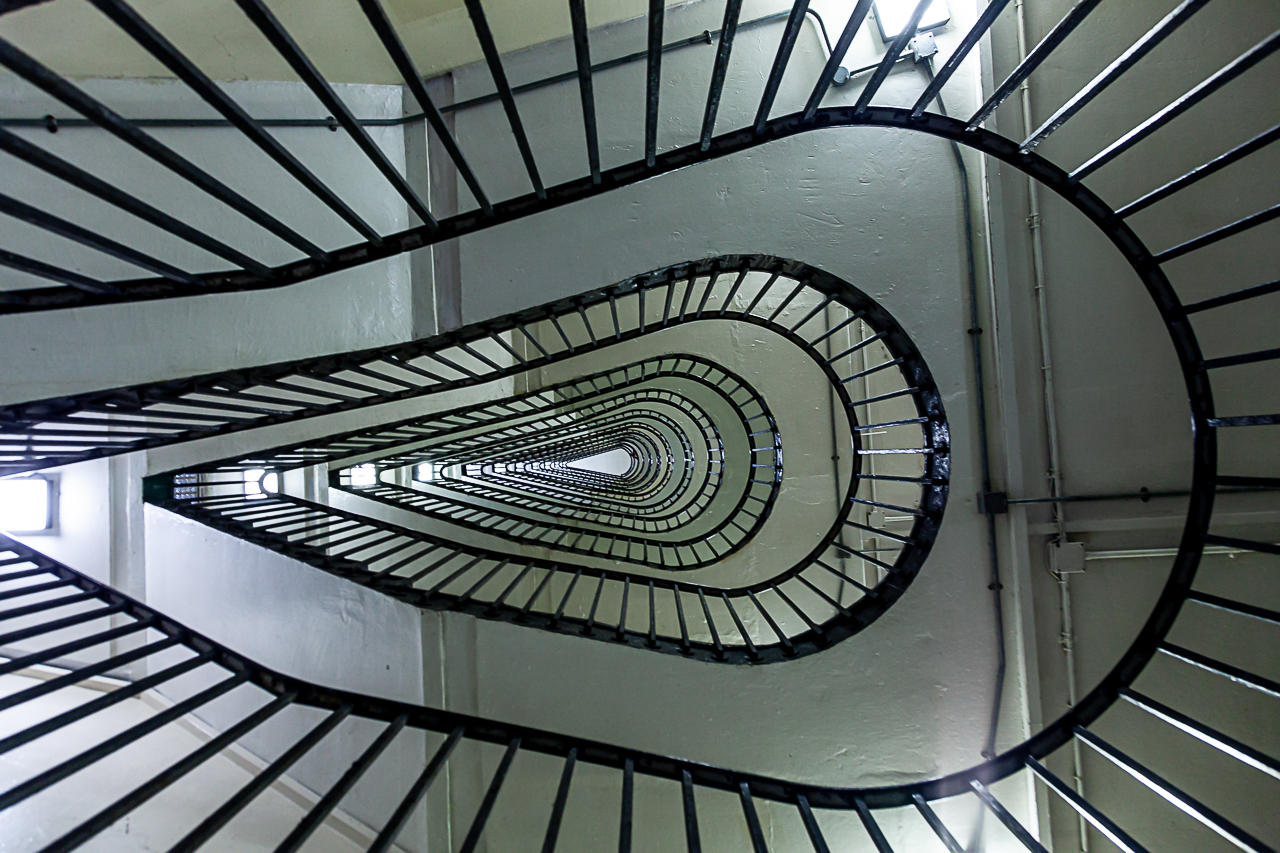
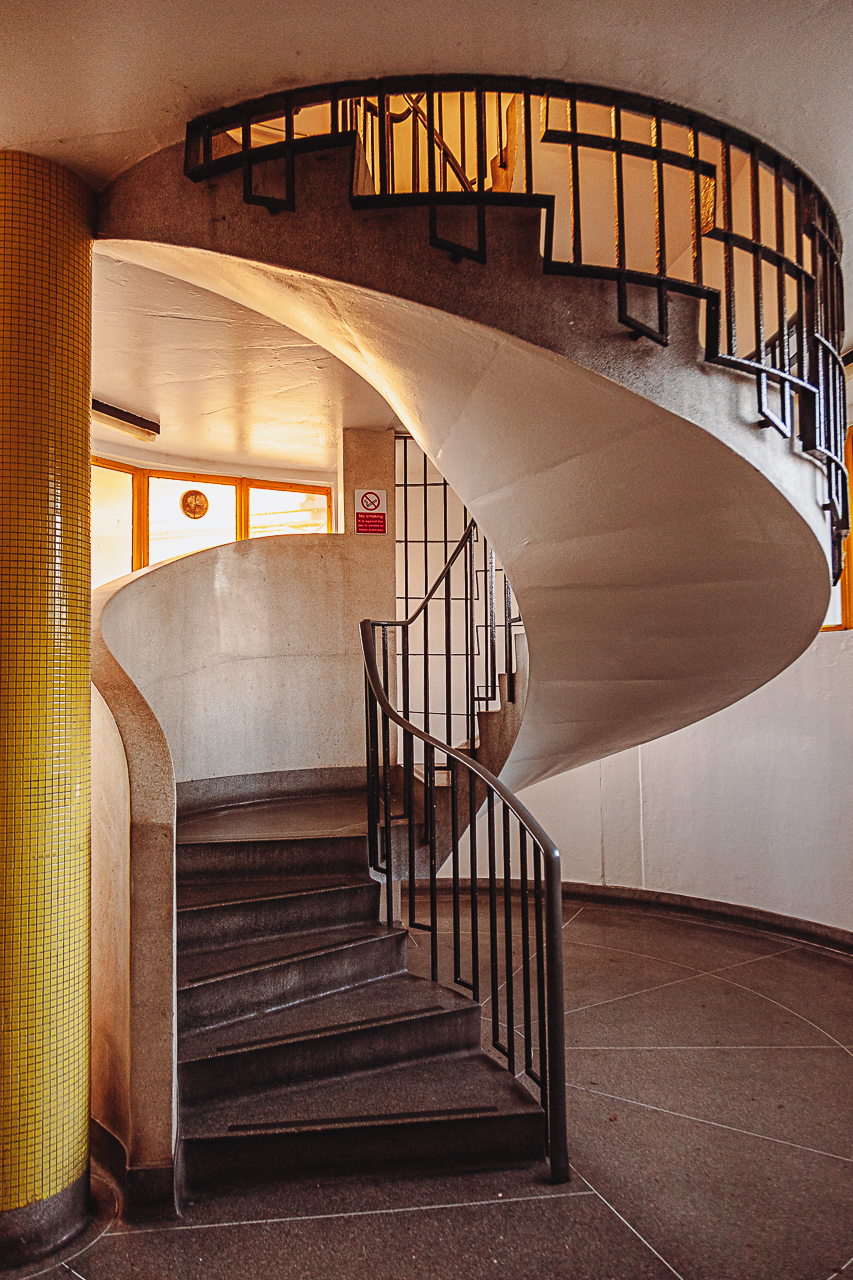
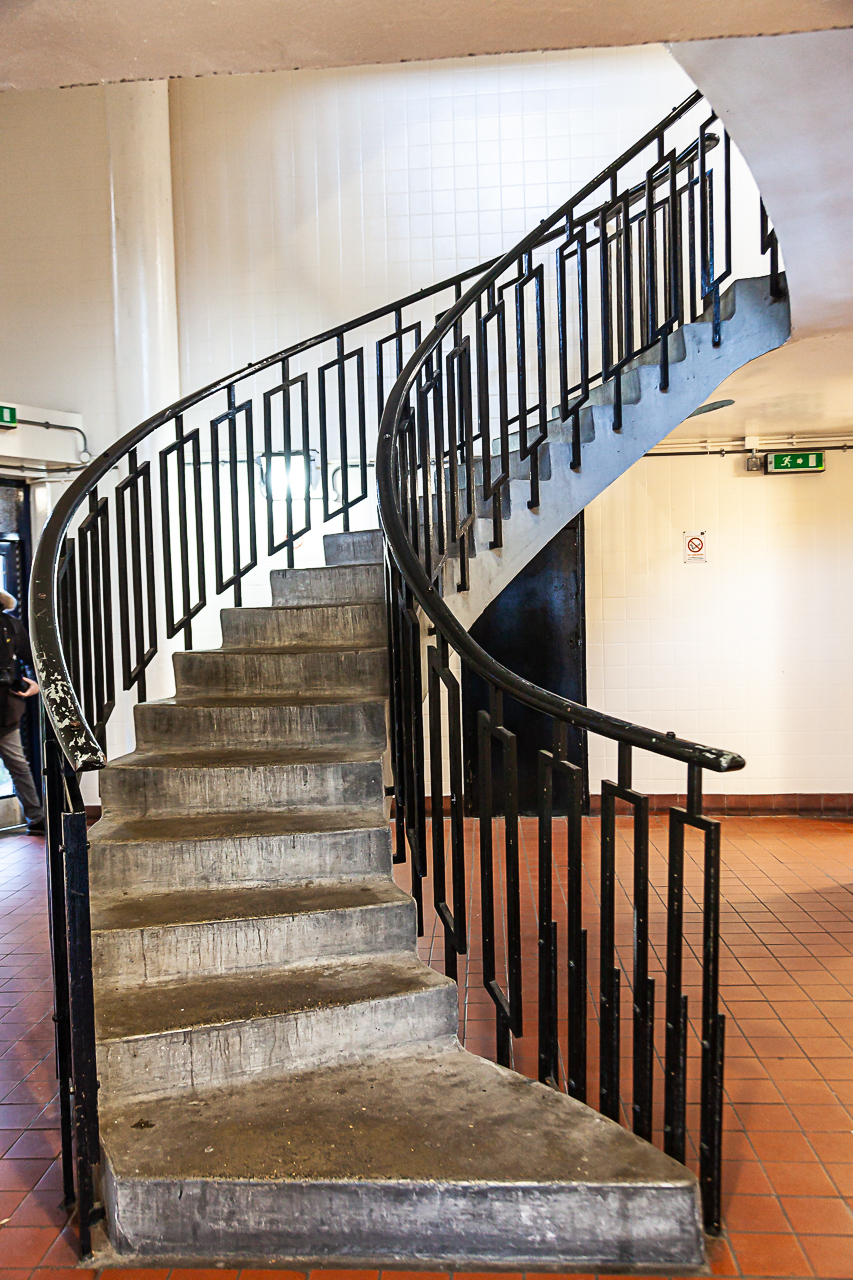
As with Modeling House earlier in the day we were invited inside to have a look at the stairs by one of the residents, though the stairwell is completely different; a 19 storey tightly wound circular staircase that would make anyone dizzy running down.

IMG_6419

IMG_6418

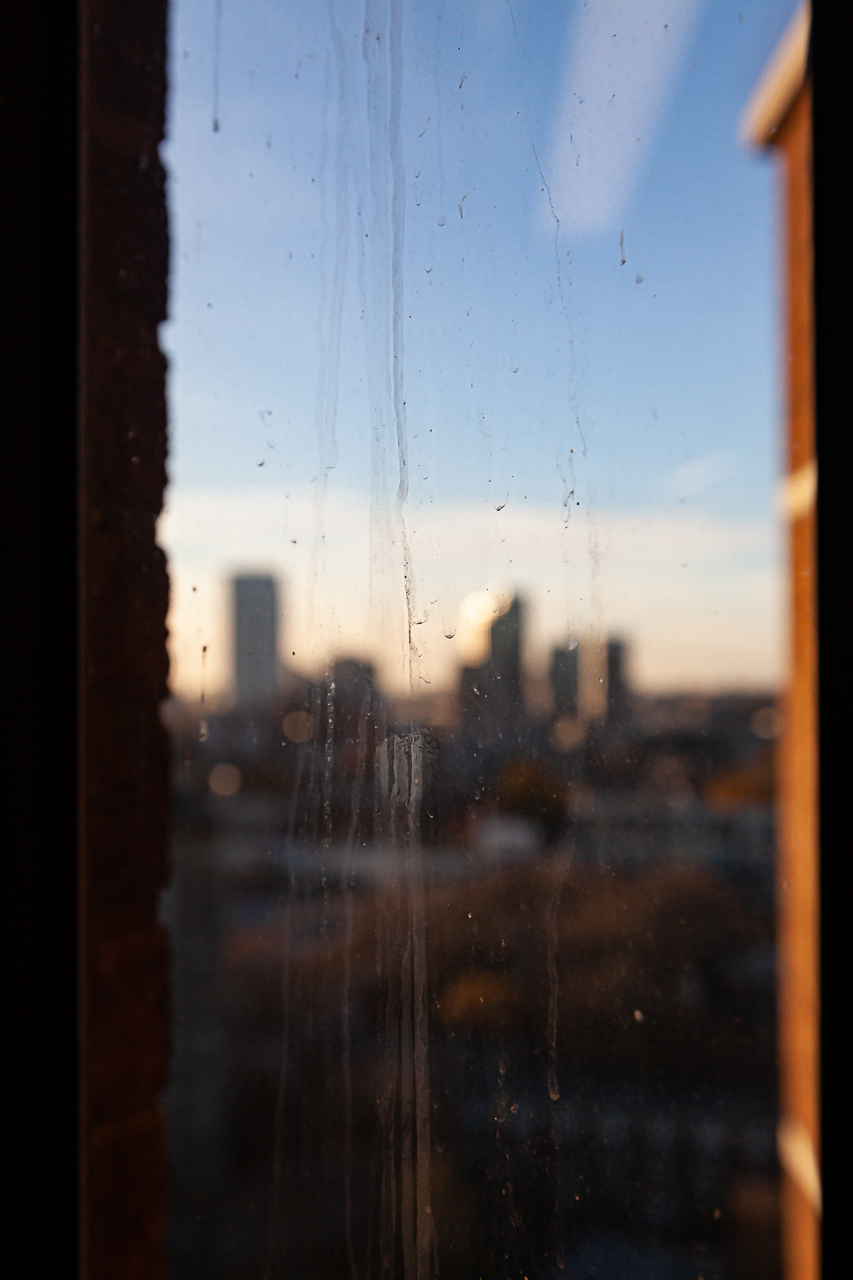
At the behest of the resident we took the lift to the 19th floor to take a look down the lift shaft and to take in the amazing view from the top. I would have liked to explore this building a bit more, it looks fun.

IMG_6415

IMG_6423

Our last stop was the least inspiring for me, or at least the exterior was. However, James Bryne had the maddest staircase I’ve ever seen. I tried to take a photo of it from below but it didn’t work very well, there seemed to be loads of interconnecting short stair cases crisscrossing all over the show. It looked very confusing from underneath. I just took a photo of the entrance instead. It was way less mind boggling. The architects really were into curvy concrete stairs in the 50 and 60s, and I like that a lot.

IMG_6424

IMG_6430

From James Byrne house most of us went to a pub near Liverpool Street Station, I had a swift pint and then caught the tube back home. It was a good day out and I took an awful lot of photos!

The brutal buildings of Poplar, East London

Saturday 16 September 2023 – Poplar, London.

I enjoyed the third #brutaldayout photo walk today. I’m familiar with the core of the group, though today twelve set out from the coffee shop outside Blackwall Tube station. There were thirteen in the group for a moment and we either lost someone before we set out or this person accidently joined in as we assembled then realised it was the wrong bunch of people. Either way, it was the largest group we’ve had on a walk.  Herding photographers is like herding cats, and we managed to lose two people over the five hours. It was a good group though and there was a lot of chat going on.

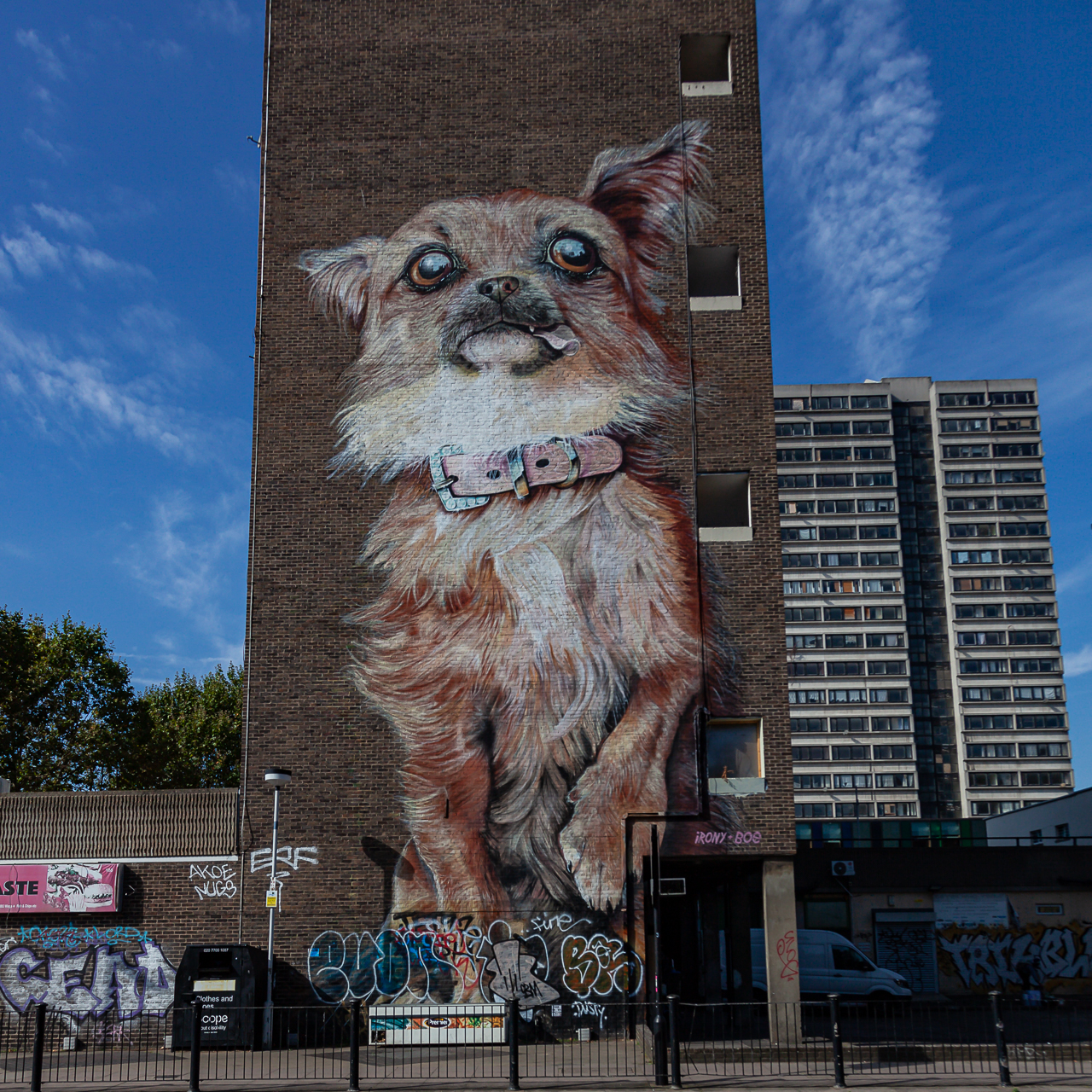
Boe and Irony mural outside All Saints DLR station.

IMG_5396

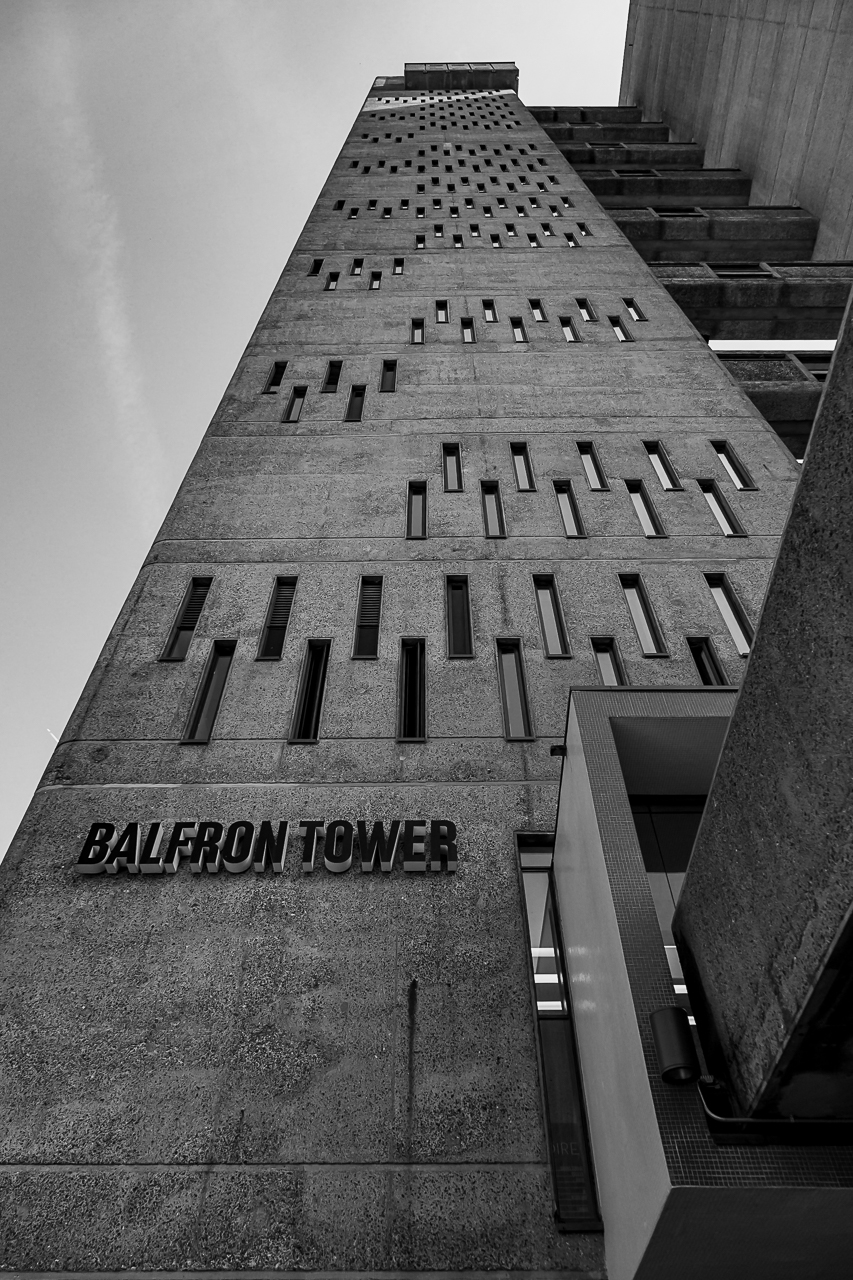
Poplar is an area of East London that I don’t know well, though it is home to the first king of brutalist housing, the Balfron Tower and there will be more on Balfron in a later post. Poplar is proper London east end, it’s a working class area with a post-war mix low and high rise estates. It’s a multi-racial suburb and has, in parts, been allowed to rot, though I’m not necessarily saying race was a factor in allowing that decay. There are too few loud voices here nor enough of those willing to risk standing up to push the case for the borough. Poplar is part of the London Borough of Tower Hamlets, and let’s just say the council is not unafraid to make decisions very unpopular with its citizens, though seemingly very popular with developers.

Poplar should be fortunate as it rubs up against the global financial centre of Canary Wharf, whose shiny glass towers stand proudly over, but maybe casting disapproving shadows over its rundown neighbour. You would hope the wealth would roll on down to its immediate neighbour, but, as always, that is not the case. Poplar is being gentrified, and not in a ‘nice’ way. Social housing residents are moved out and those who have bought their home in ex-council properties are ‘encouraged’ to sell. The estates are flattened and ugly new shiny things are built in their place; of course there is the promise that tenants can move back in, or new housing will be built for them nearby, but as we all know this rarely happens. ‘Cost over runs’ or other excuses means the developer can never quite meet their social housing commitments. Councils just roll over and let their expanding tummy get stroked and accept the heartfelt apologies from those poor developers. The worst part is a lot of those shiny new flats are left empty, unsold or with absentee owners, almost taunting those who were dispossessed. More on this with my post regarding Balfron Tower.

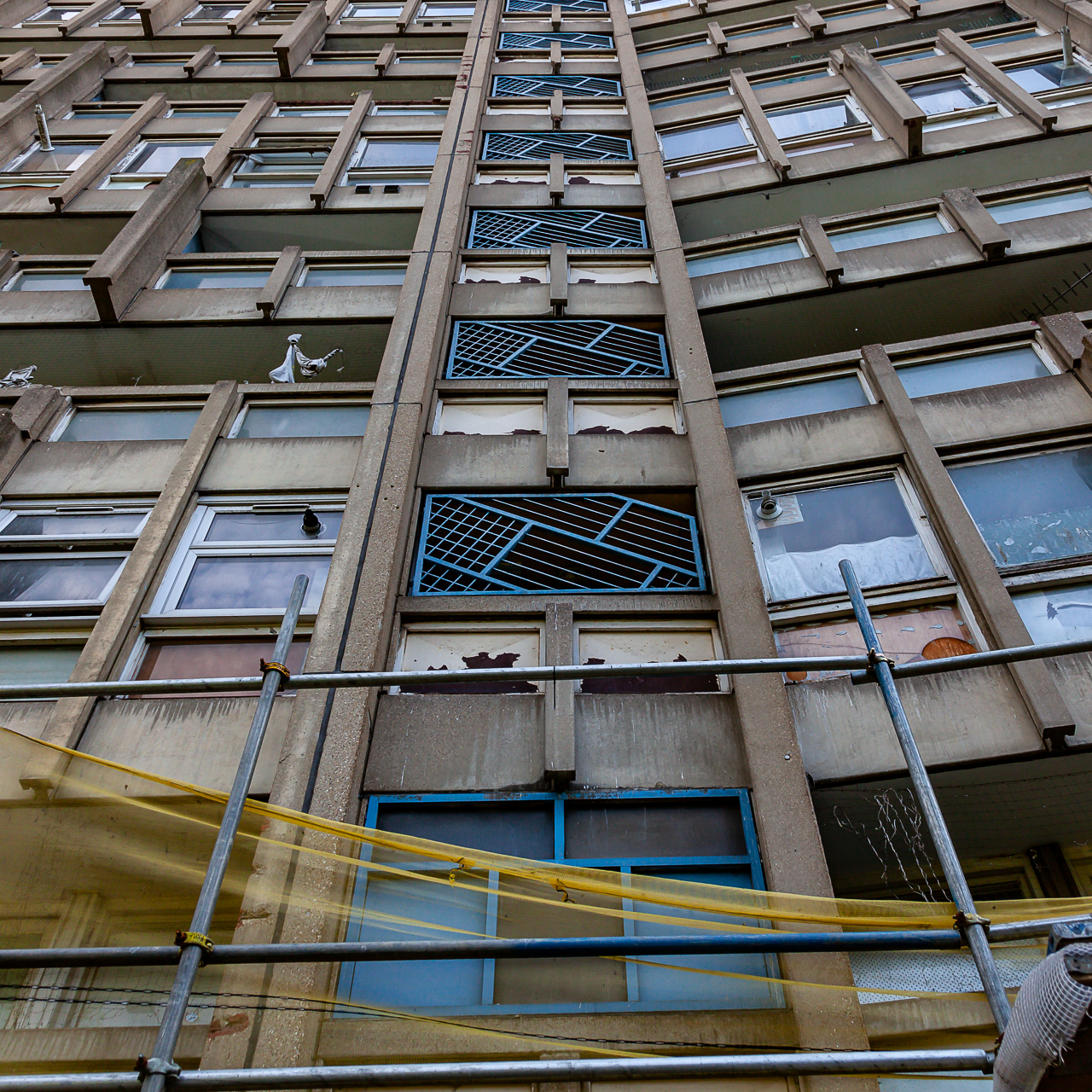
Our first visit was Robin Hood Gardens Estate, or what is left of it anyway. The estate was completed in 1972 and comprised two low rise blocks, one seven storey and the other ten, with a large green space between them. It was designed by Alison and Peter Smithson and was their only housing estate to be constructed. The London Borough of Tower Hamlets was the landlord. After a battle to get the estate listed failed developers demolished the seven storey West Block in 2017 and new flats are now under construction.

IMG_5404

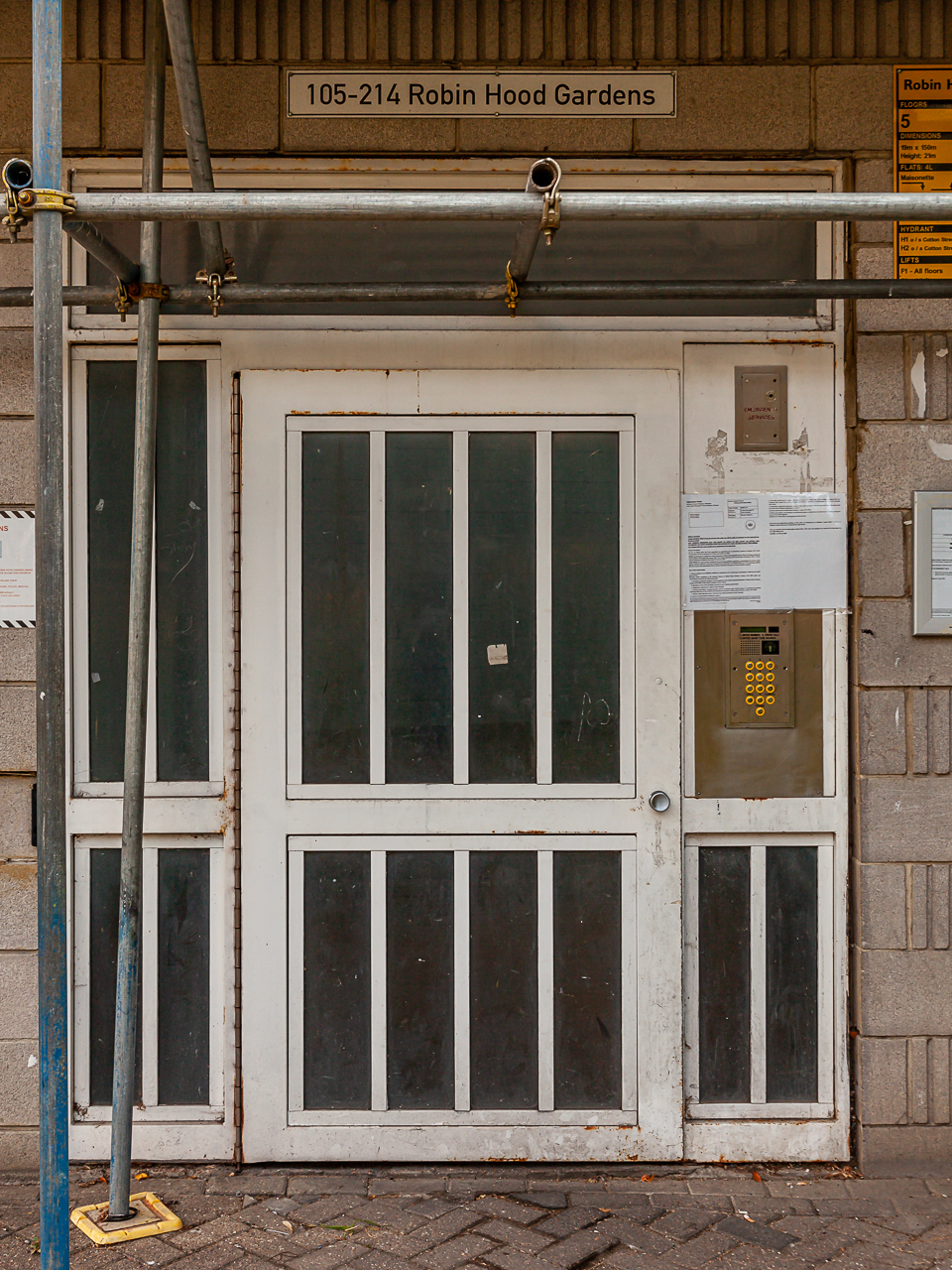
The East Block is now empty and awaiting the same fate as the West. 213 families lived here, now there are none.

IMG_5406

After taking a photo of the scaffold surrounded front door I tried the door handle and remarkably the door wasn’t locked…

IMG_5409

IMG_5407

All the doors to the ground floor flats were covered in steel, so to be able to access the stairwell was a real surprise. A surprise too much to resist for some of us, so we took a quick foray into the building. Ignoring the ‘no trespassing’ sign. Bad I know. We didn’t go far, up a flight of stairs to the first balcony. All the flats are blocked off and we didn’t do anything other than take a few photos and then exit. It was a cheap, no harm, thrill; and no security or police turned up (phew).

IMG_5411

IMG_5417

IMG_5419

IMG_5413

IMG_5414

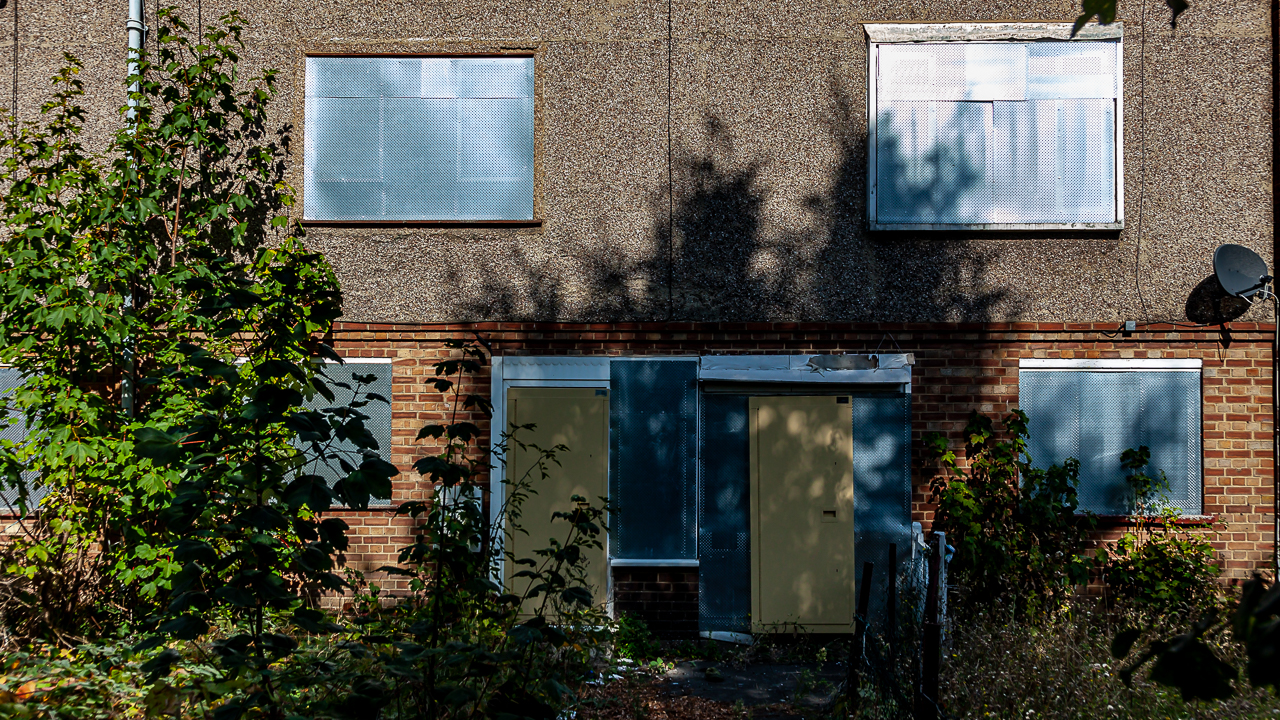
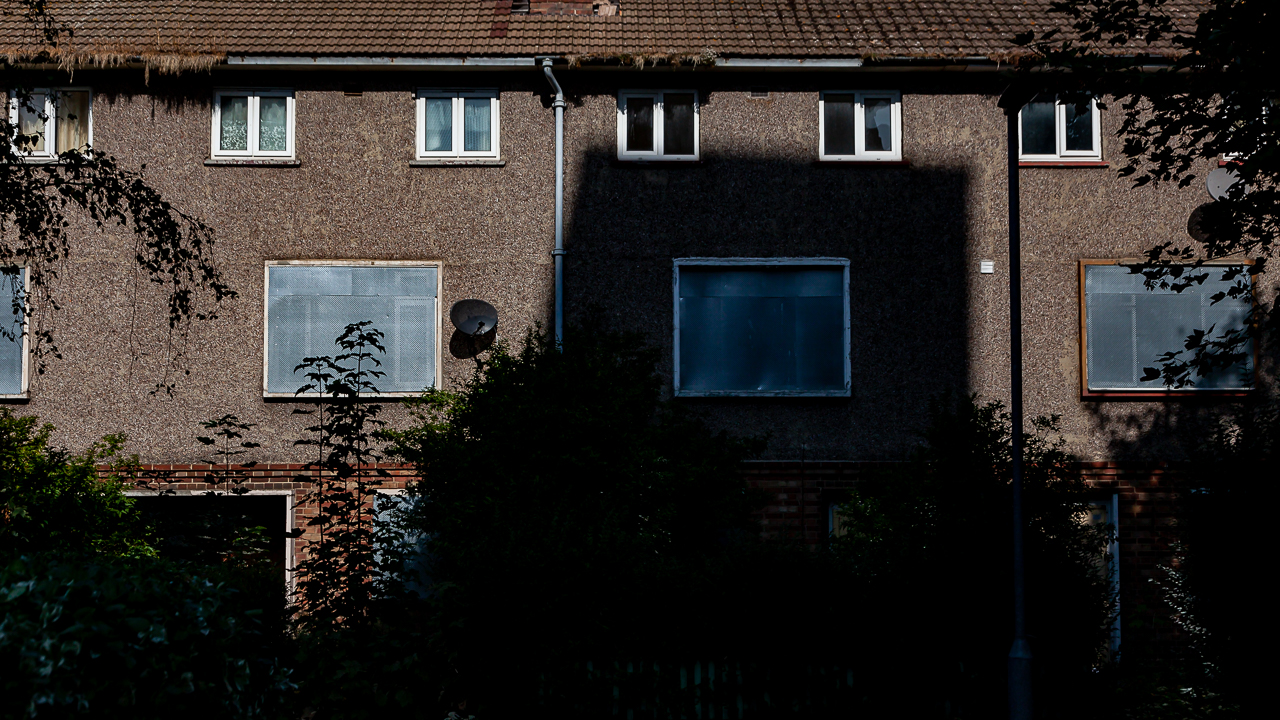
There is a short row of terraced houses at the end of the estate and those are all boarded up ready to be knocked down as well. I wonder what monstrosity will be built on this site and when? All these empty properties and we have a major housing crisis in this country. I shake my head sometimes.

IMG_5430

IMG_5433

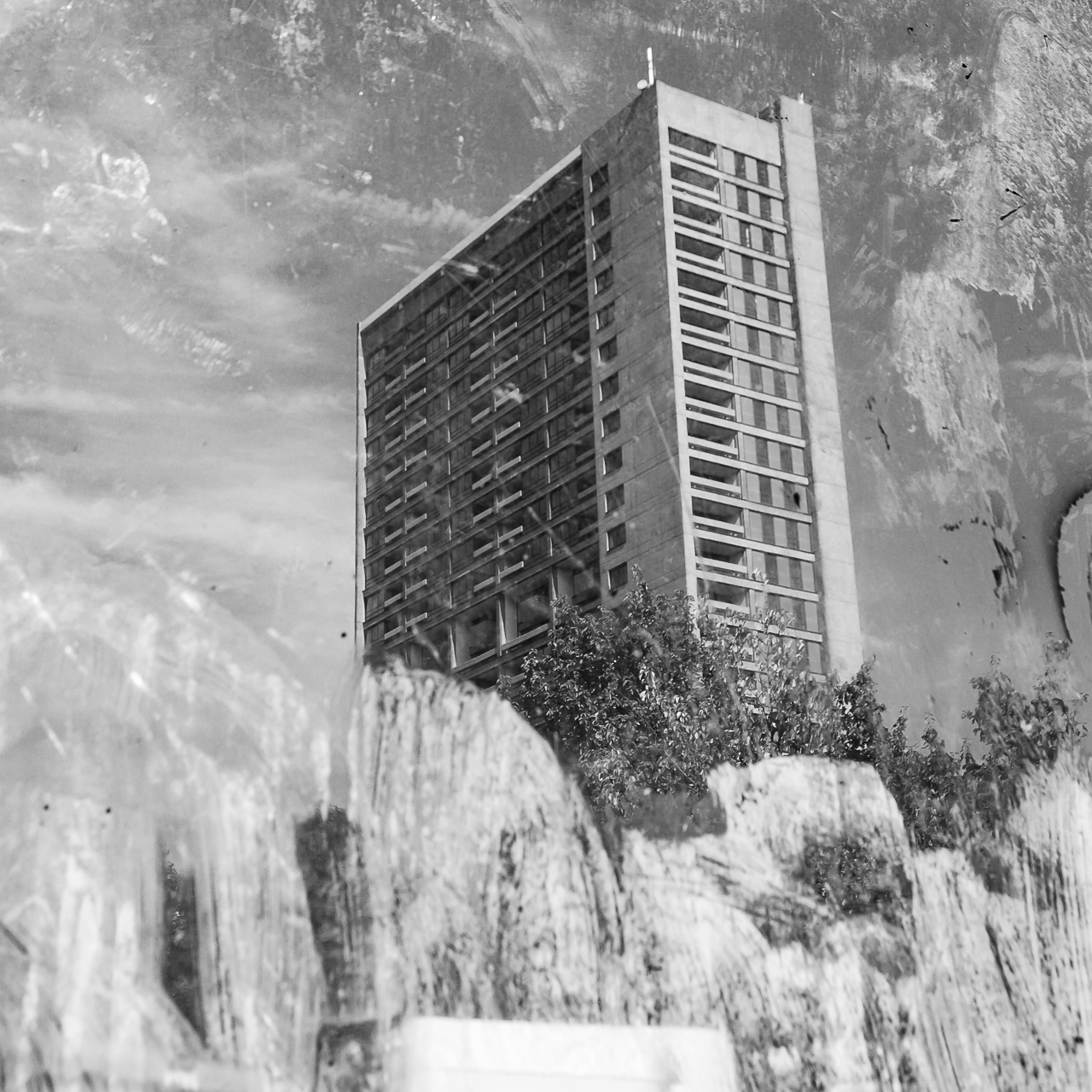
From a small, litter strewn and slowly overgrowing hillock in the gardens we could get a glimpse of our next stop; Balfron Tower in the Brownfields Estate; a 10 minute walk away. My first proper view of Balfron was through this filthy graffiti smeared window. I was quite excited; this is a major work of brutalist architecture in the UK, though maybe not from this angle.

IMG_5436

Anyway as I said above, Balfron gets its own post later. The Brownfields Estate also has the much shorter Carradale Tower situated at right angles to Balfron. Unlike Balfron, Carradale is still very much lived in. Though here is a sneak preview of why Balfron so cool.

IMG_5457

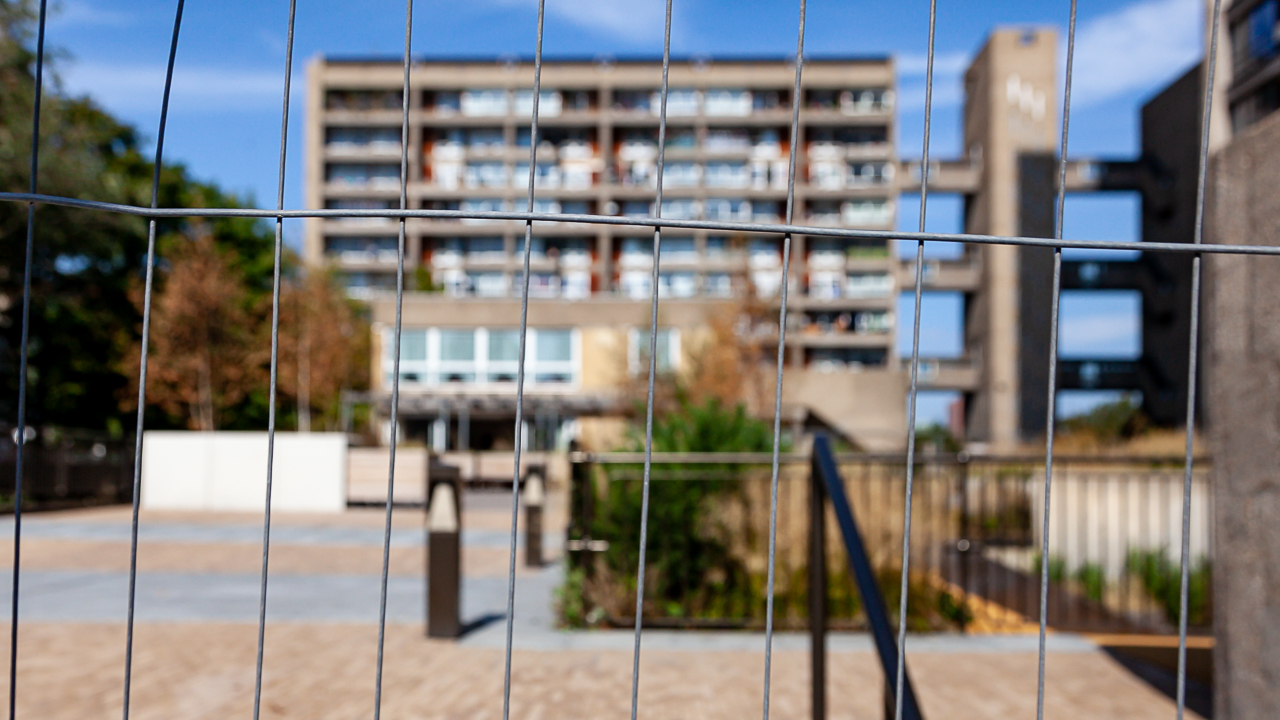
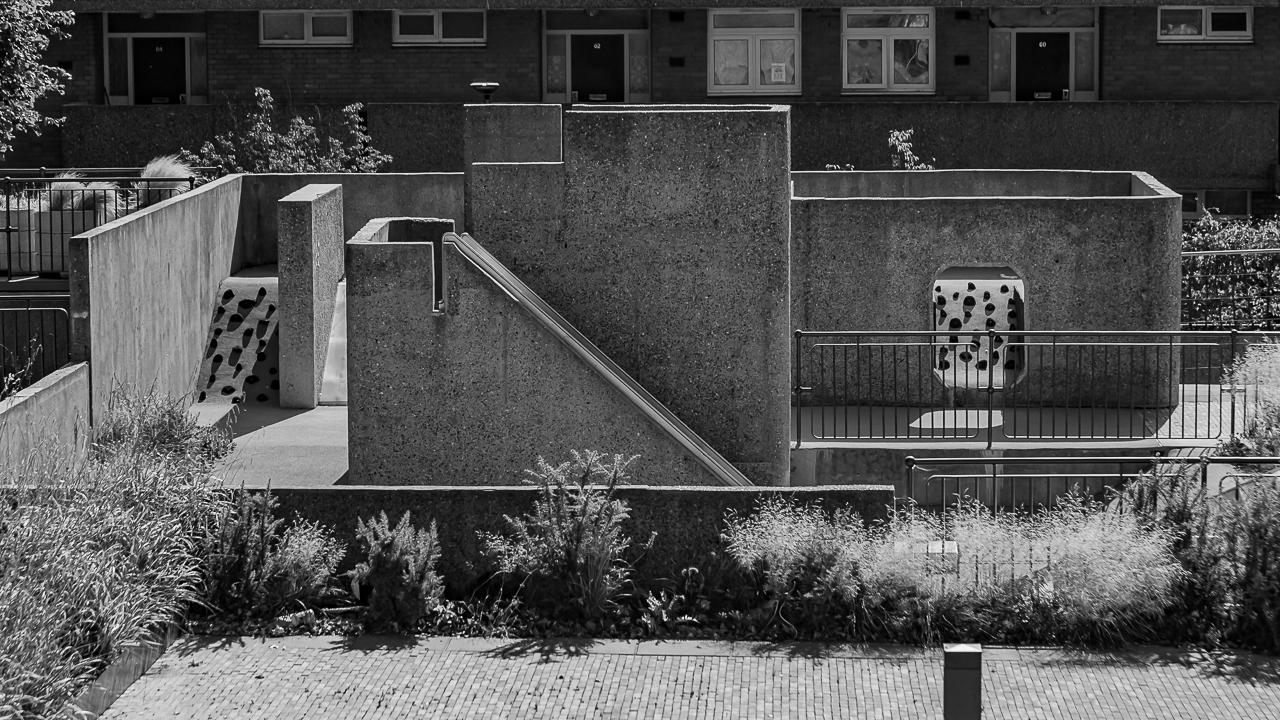
The entire area around Balfron is fenced off, including the, possibly, excellent play area. We could only see if from afar.

IMG_5452

IMG_5446

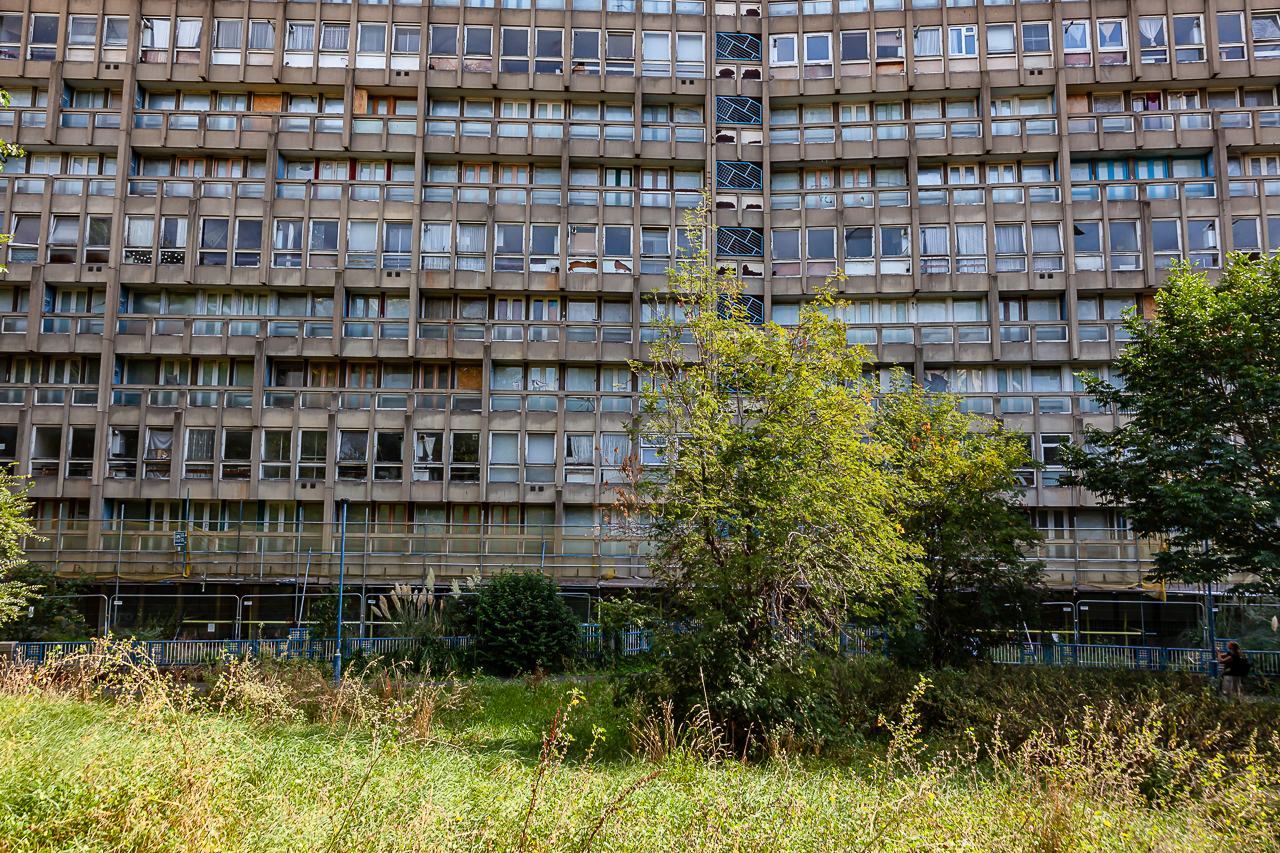
The towers were both built to complement each other and to create ‘communities in the sky’, by the Hungarian design genius (and inspiration for the name for the Bond villain) Erno Goldfinger. They were built between 1965 and 1967 and (thankfully) listed in 1996, else I’m sure someone would have tried to knock them down. Goldfinger lived onsite for a few months on completion and spoke to residents about what did and didn’t work and incorporating their ideas in his next project of similar design, the Trellick Tower, which I walked past back in August last year.

As Carradale is a lived-in block there was some space to wander around the perimeter, while I don’t support taking photos of people in or near their homes, I also think it is important to acknowledge that there are certain buildings that are important works of art and need to be preserved for what they are. One way to do that is to take and share photos.

IMG_5441

IMG_5461

IMG_5462

Glenkerry House sits over the road from Carradale and is also part of the Brownfields Estate. It was designed by the Goldfinger practice to mirror its predecessors opposite. Construction was completed in 1977. It’s supposedly the pinnacle of brutalist design and was the final brutalist tower constructed in London. The building is owned and run by those that live there.

IMG_5471

IMG_5473

IMG_5466

IMG_5474

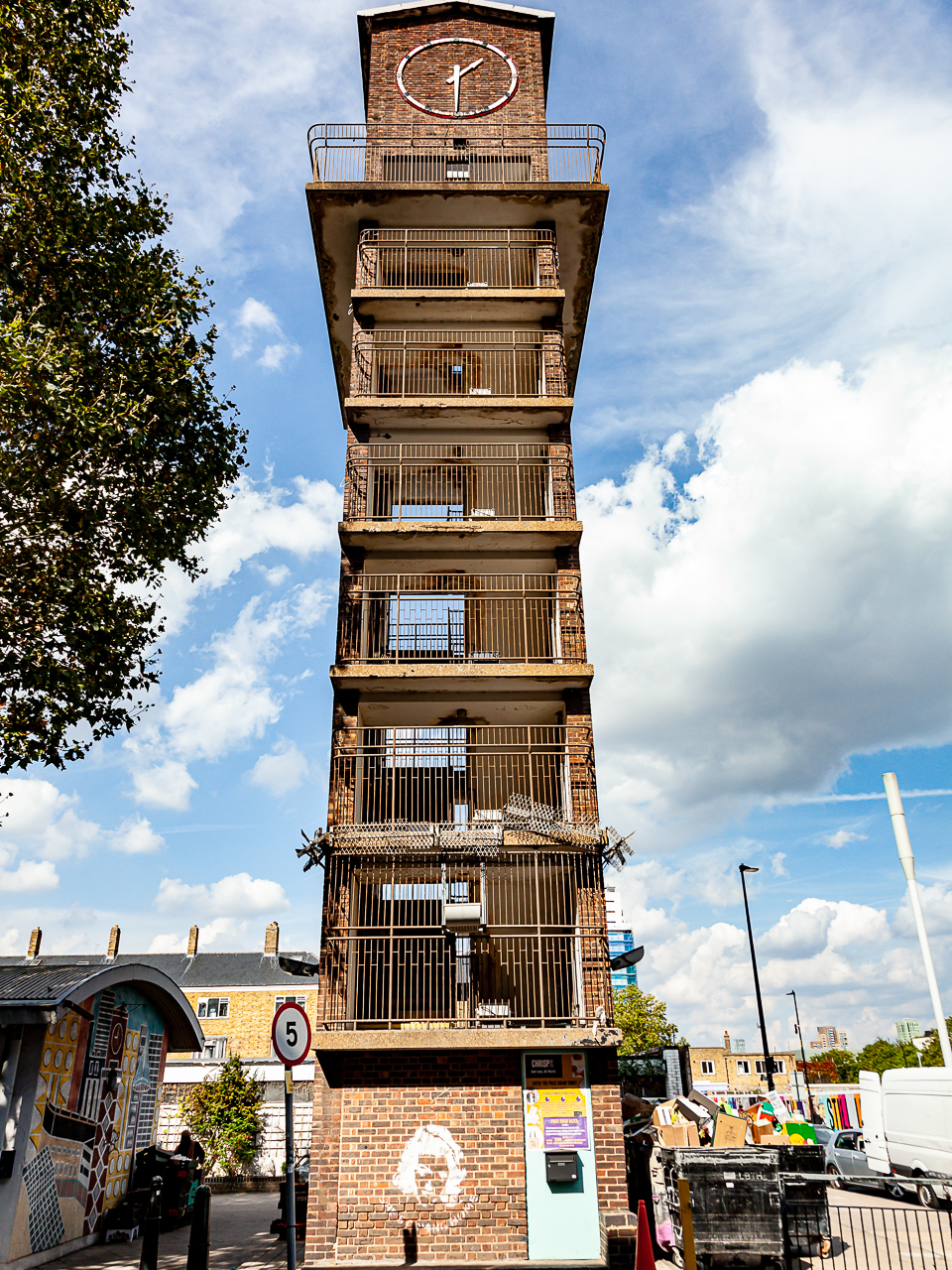
We stopped at the pie and mash shop in Chrisp Street Market for lunch and a short rest, Chrisp Street is the oldest purpose built pedestrian shopping area in the UK. It’s the heart of Poplar and thankfully is yet to be ‘regenerated’, though you can see it’s coming. It was busy. A lot of the flats around the market are empty, including a nearby tower block. The market has a marvellous clock tower, designed in 1951 for the Festival of Britain delays meant it wasn’t finished until the following year.

IMG_5478

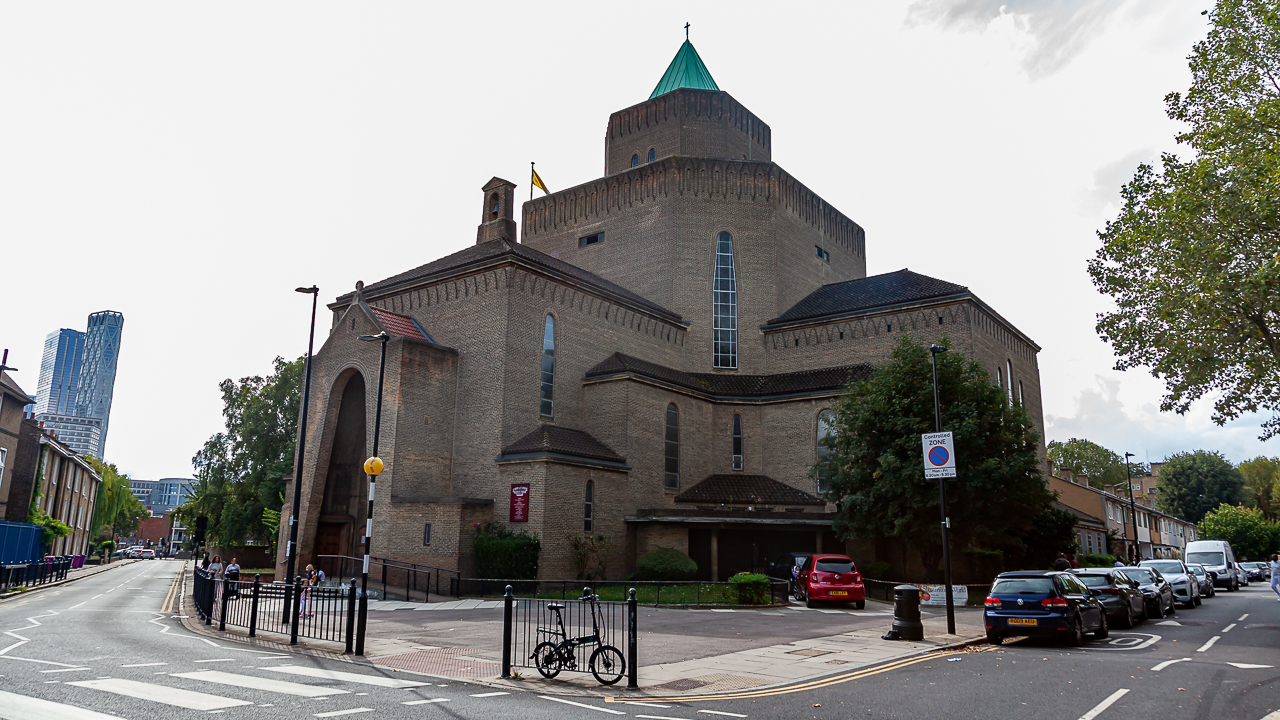
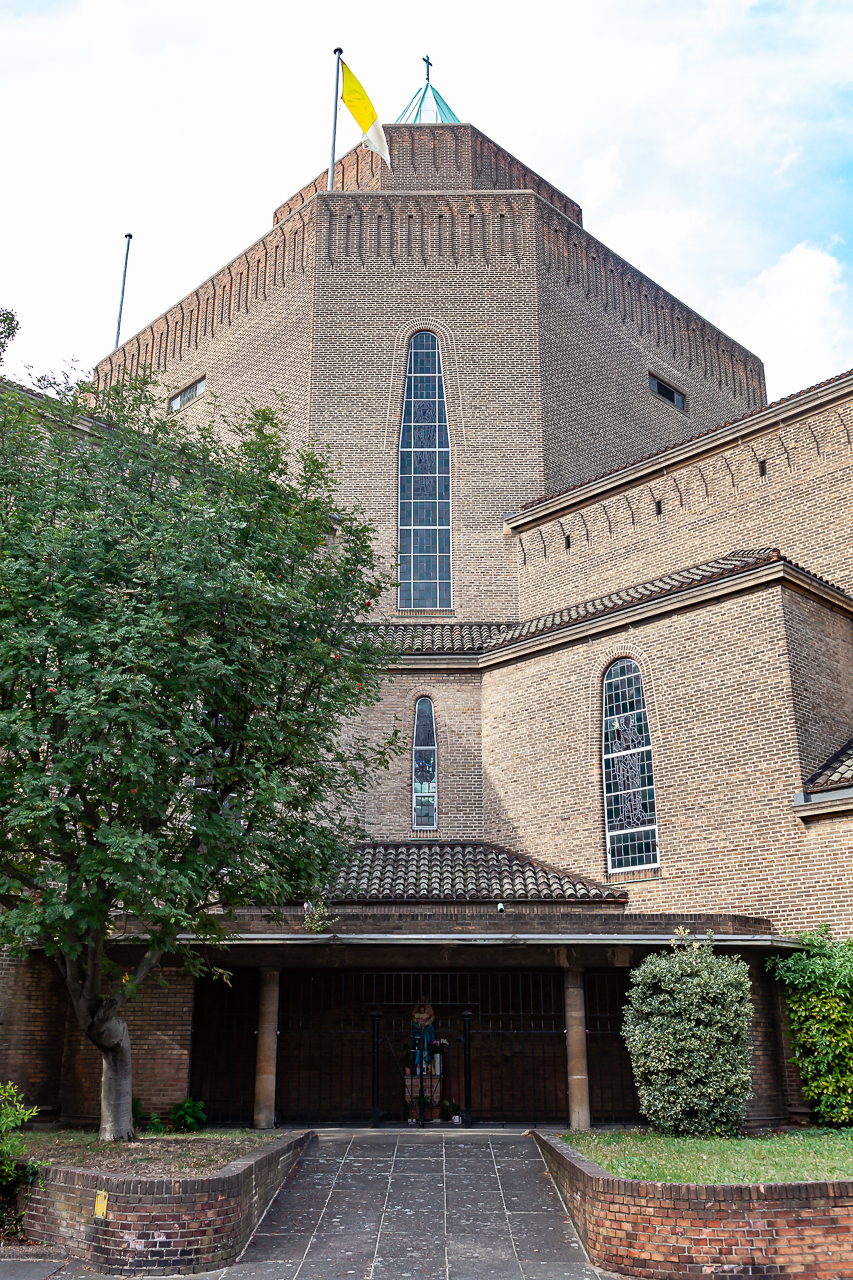
St Marys and St Josephs Catholic Church was our next stop, a magnificent building, completed in 1952 to replace the original church that was heavily damaged during the Second World War. It definitely has a mosque vibe to its construction and wouldn’t be out of place as a Christian church somewhere in Asia.

IMG_5482

IMG_5484

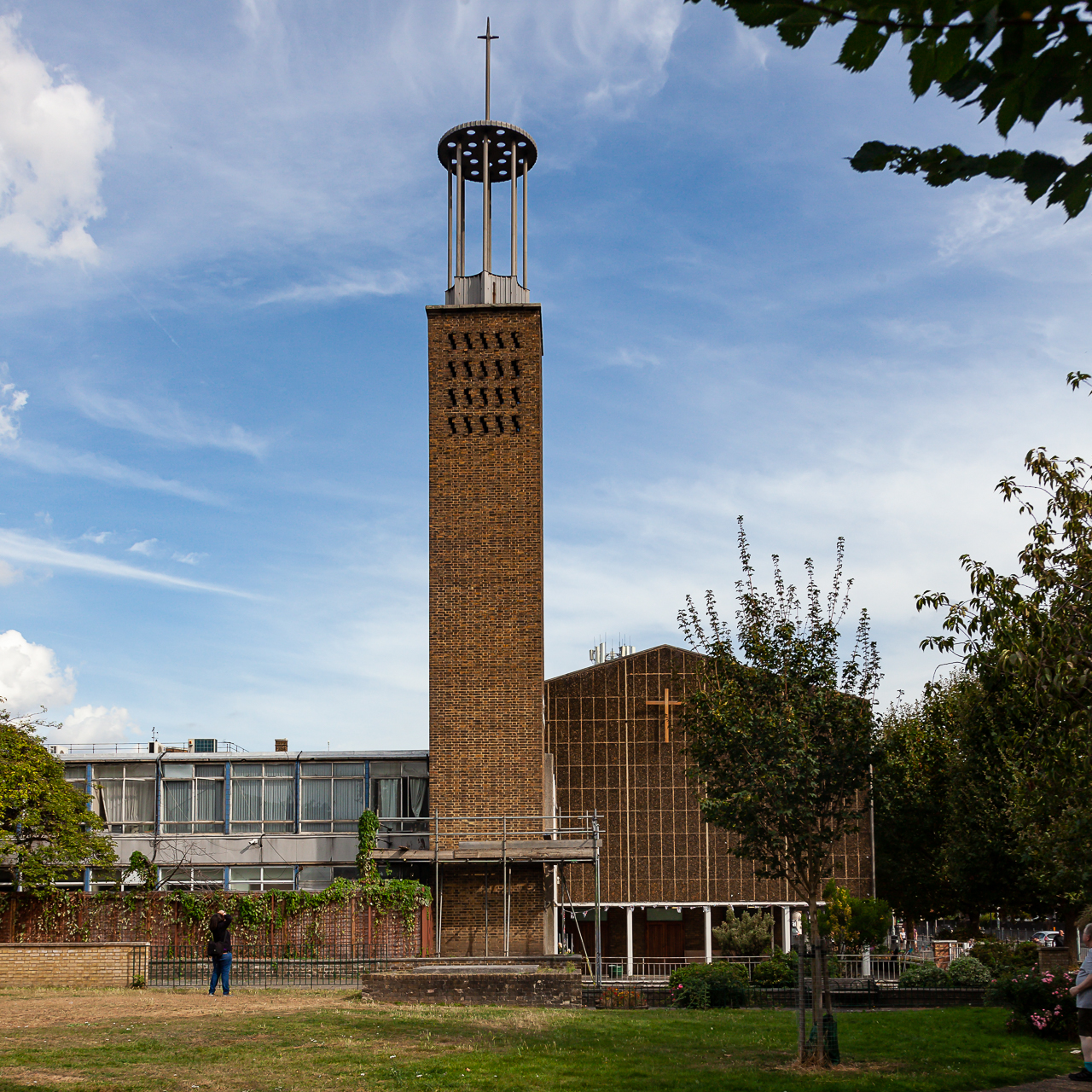
This was followed by the equally impressive, for its amazing tower, Calvary Charismatic Baptist Church.

IMG_5485

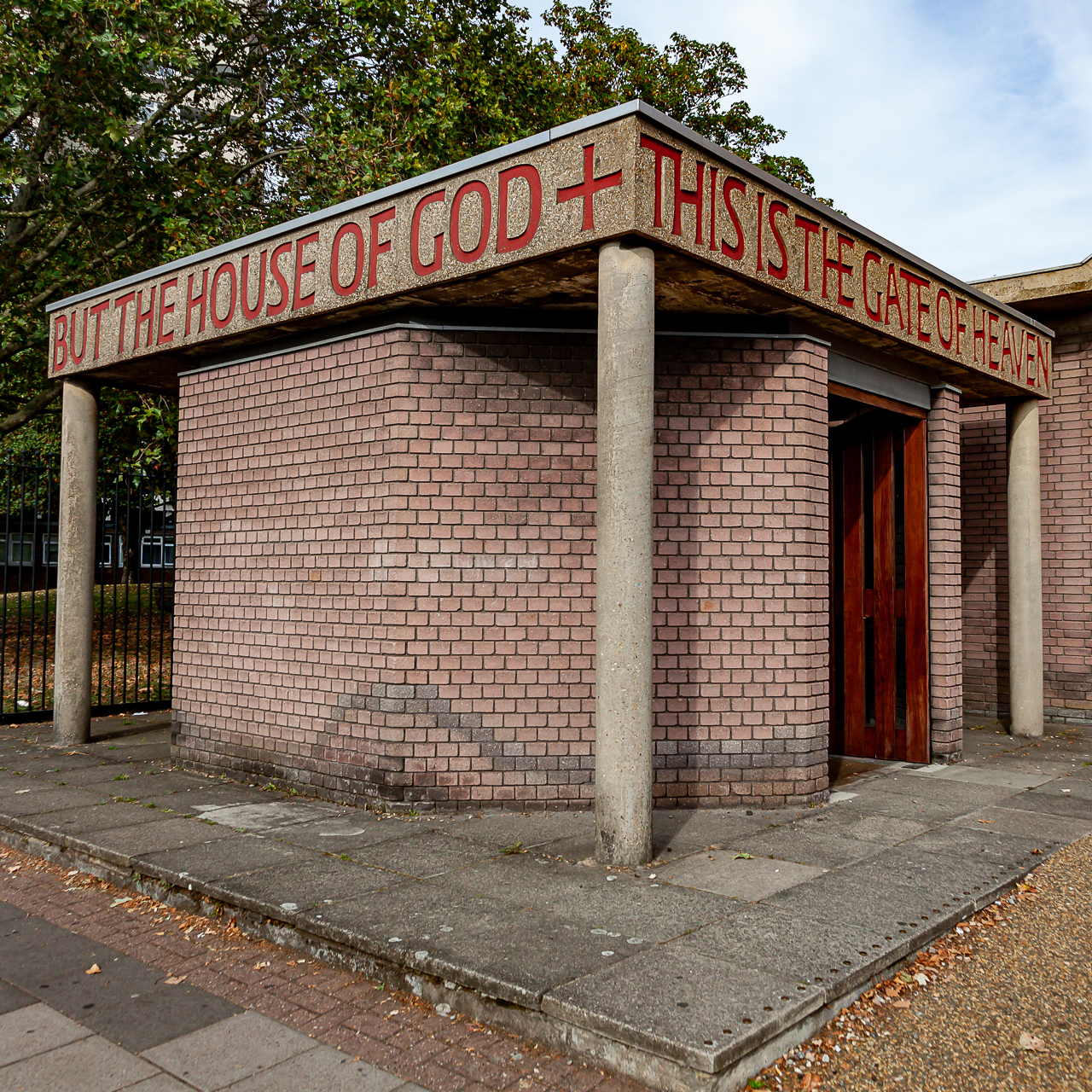
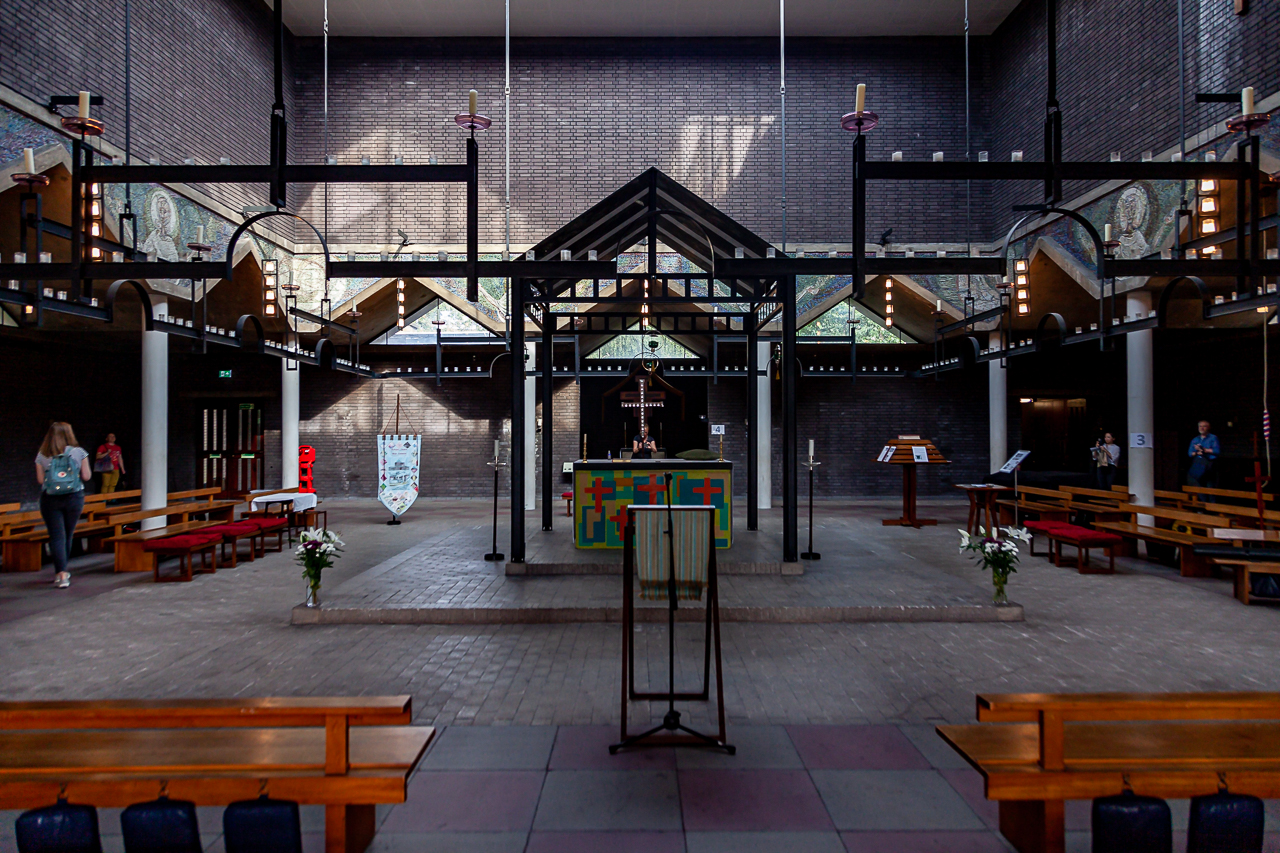
We completed the walk at another post-war church, St Pauls at Bow Common. Built in 1960 it has been voted the best post-war church in Britain. It was certainly different with its pulpit in the centre of the building and the parishioners sat around the minister. I quite like it.

IMG_5490

IMG_5491

IMG_5494

Actually we completed the walk at a pub near Mile End station where we stopped to refresh after a hot afternoon of walking, talking and photographing modernist and brutalist architecture. It was another enjoyable outing and if you’re interested in joining the next one then let me know via a comment, we don’t have a date or a location yet; though it will probably be around Kilburn.

Brutal Day Out–Thamesmead

Saturday 15 July 2023 – Thamesmead, London.

Friday 21/07, home writing.

Eleanor is at book club so I’m sat with my feet up on the coffee table supping gin and tonic, listening to records and catching up on photo editing and blog writing. After hitting publish on the Elan Valley post and typing in the date of this one I took a moment to reflect on how busy I’ve been over the last few months; it felt like there’s barely been a weekend with nothing on. After the long and seemingly quiet period of 2021 and 2022 it now seems like there is almost too much going on; we’ve gone back to the old normal. On Monday we’re off to Cornwall for three days, we have friends round for birthday drinks when we get back, the following Saturday I’m in St Leonards and the weekend after we’re going to see Eleanor’s friend in Macclesfield. There’s no letting up and I’m really happy to be active again; though flipping heck, it’s all gotten really expensive. Anyway, back to Thamesmead…
Thamesmead was (and still is) a housing estate designed and built in the 1960s on marshland on the southern bank of the River Thames. It was a new design and supposedly lessons had been learned from other housing estates built since the end of the war; with an aim to provide homes for local people rather than create an estate and move people into it. It was to be modern estate with a mix of low and high rise. Sitting here in 2023 with a brutalist architecture hat on the design looked amazing; however the promised Jubilee tube line never materialised and with the nearest shops cut off, first by a rail line and then by a busy road, it failed to be the utopia it could have been.
It was very brutalist and future looking with its clean concrete construction and hard angles and was made famous as the location for the equally brutal and dystopian film A Clockwork Orange.

I’ve been wanting to visit Thamesmead for ages, and finally got around to putting a call out for interest on the Whatsapp group that was created for a brutalist photowalk in May last year. Unsurprisingly there were other photographers who wanted to visit so we arranged to meet today. One of the crew who has visited previously agreed to be a loosely defined tour guide which was really helpful as there’s a large area to explore.

We met at Abbey Wood station, on the recently opened Elizabeth line. It was nice to be presented with a good concrete staircase  that could be seen from the station platform. A promising start.

IMG_5074

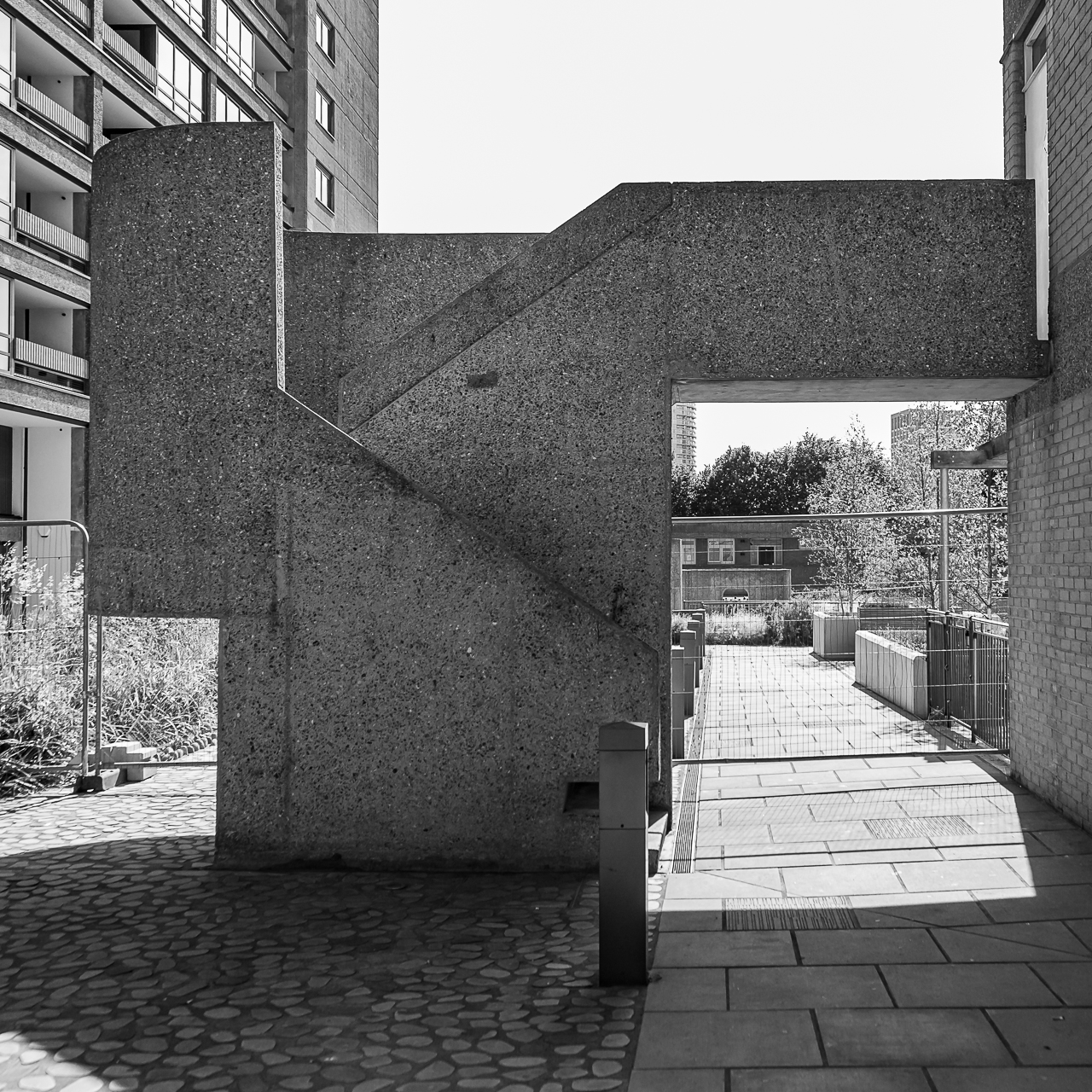
I was only expecting a couple of people to come to walk so was pleasantly surprised when 5 others turned up, including one who came all the way from Cardiff for the day, that is dedication to concrete. Our guide, Chris, started the walk by taking us in the opposite direction to Thamesmead, up towards the ruins of the Abbey on the edge of the large wood which between them gave the area its name. We didn’t visit the abbey, but stopped just short and took some photos of the stairway up to a bridge and the start of a walkway through to Thamesmead. I’m a big fan of brutalist stairs so this was a really promising start.

IMG_5075

IMG_5083

As you could imagine I took quite a few photos as we walked around for round, splitting the massive site into small zones.

IMG_5084

IMG_5088

IMG_5091

IMG_5092

IMG_5093

IMG_5094

Crossing over another lovely concrete road bridge we arrived on the eastern side of South Mere ‘lake’, the western and southern sides being a stage for some of the scenes in Clockwork Orange. Sadly a lot of that section of the estate has been knocked down and new flats and a building site have been left in its place.

IMG_5097

IMG_5102

IMG_5105

We crossed the ‘Eastern Way’ motorway via another great bridge and found a great area of interlinked concrete walkways, bridges, ramps and stairs and my favourite type of place for shooting. There were few people about and I wasn’t pointing my camera at occupied homes; something I’m uncomfortable doing, though some of the group are less shy than me. I took quite few images.

IMG_5111

IMG_5116

IMG_5118

IMG_5119

IMG_5131

IMG_5132

After passing through a low rise estate and taking a couple of images we stopped for lunch outside one of the very few shops we passed; I had a pretty bad sausage roll and a Snickers; there are no fancy sourdough bread cafes round here. We sat on the steps and watched the water rats running in and out of the nearby stream.

20230715_134742

IMG_5123

IMG_5124

We looped back along the edge of the construction site that is all that remains of the area used  in a scene for the famous scene in Clockwork orange where Alex pushes one of his fellow droogs into the lake, all that is left are the steps down to the water. The tower blocks and walkways were knocked down down 10 plus years ago.

IMG_5133

Some parts of the high rise estate remain and we walked round those as we headed back to the elevated pathway that got us here in the first place.

IMG_5134

IMG_5140

IMG_5142

IMG_5152

The clouds started to hang heavy as we walked and the rain that had been forecast and threatening all day arrived a few minutes before we got to the pub next to Abbey Wood Station; luckily we didn’t get too wet. I stopped for a pint with the crew before jumping on a train back over to the northern side of the Thames and my normal habitat.

IMG_5153

It was a cracking day out and a walk in Poplar has already been booked for mid-September. Thanks everyone for a most enjoyable afternoon.

IMG-20230715-WA0001

London Brutal Day Out

Saturday 23 April 2022 – London.

I’ve been looking forward to this ‘Brutal Day Out’ walk since it was muted a couple of weeks back. Someone I follow on Instagram was keen to organise a Southbank brutalist architecture photo walk if there was sufficient interest, which there was, from about 20 people, though only nine turned up on the day; which I guess wasn’t at all bad. It was a great group, everyone got on, there was a load of chat and quite a few photos were taken; I mean I alone took 126, which is a huge number for me. I very much enjoyed myself, and though I mostly prefer photography as a solo activity, going out with a group of like minded individuals for a change was a heck of a lot of fun.

IMG_2789

As the meet-up point was outside Blackfriars Station I caught the tube to St Paul’s and walked the few hundred yards from there, sneaking a bit of practise in on the way. This is a very cliché shot of the cathedral, but it’s also a great angle and a photo had to be taken. I guess it’s why it’s a bit of a cliché shot.

IMG_2703

I lugged the big camera bag around with me today, and used all three of the lenses I packed, but mostly I used the 50mm. I’ll travel lighter if there is another walk, which I think there will be. I will also go back to the National Theatre and take some more photos inside, and try and get there when there are less theatre audience members milling. Apparently taking photos inside can be tricky as security are known to stop people, though I was pretty lucky today it seems.

IMG_2784

The walk started at Baynard House at Blackfriars, a place I haven’t previously visited. I think it’s mostly empty now, but it used to be occupied by BT. The building was completed in 1979 and BT have occupied it ever since. It was an interesting place to walk around, and I took quite a few photos, we were here a lot longer than expected due to the group’s interest. I liked it, partly because there was no-one else about and I knew our next stop on the South Bank would be busy. Herding photographers is like herding cats and our organisers spent a bit of time trying to get us to move along. We all like to get the ‘special’ shot, preferably with no other photographer in it.

IMG_2716

IMG_2719

IMG_2721

IMG_2732

I particularly liked the steps out the front of the building.

IMG_2705

IMG_2750

IMG_2751

The ‘Seven Ages of Man’ by sculpture Richard Kindersley is a seven metre tall aluminium totem pole, and weirdly I cannot work out when it was either made or erected here. It is definitely strange, and rather creepy. I liked it a lot, though only took photos of the bottom of the seven heads and the text inscription.

IMG_2726

IMG_2745

The underpass that links the two halves of the building had a well polished metal mirror that was screaming for a photo.

IMG_2752

We crossed the Thames on Blackfriars Bridge and took a few photos around the River Court apartment building, of which I can find very little about on the internet. I know the building was here on the South Bank in 1986 as I occasionally visited it when I was a courier in this part of London. The other side of the building overlooks the Thames and the view from the flats must be spectacular.

IMG_2753

IMG_2764

IMG_2765

I have taken photos of the IBM Building, The National Theatre, The Hayward Gallery and Festival Hall quite a few times before, along with the Barbican Centre they are the most well known examples of brutalist architecture in London.

The IBM Building and its neighbour the National Theatre were both designed by the architect Denys Lasdun in the early 1980s. I love the National Theatre building, less so the IBM Building, though am warming to it; it is definitely on the uglier side of ‘brutal’ architecture. I love the stairs on the side next to the about to be/maybe/possibly not demolished ITV tower, I can’t believe I haven’t walked down this side before. They look like the prow of a giant concrete ship.

IMG_2775

IMG_2776

IMG_2779

I’ve never tried to take photos inside the National Theatre (NT) before, and was surprised I was allowed to take so many as I’ve heard tell that security clamp down on it. They did know I was there as I told them I was taking photos when they searched my bag, maybe they thought I was official? I arrived just as a show was being called so there were a lot of people milling about for a while which hindered progress. I was under a bit of time pressure to meet up with the rest of the group, so didn’t stay as long as I should’ve. I enjoyed it in there, it’s great inside; all harsh lines and clean concrete with interesting light lines. I will go back one day soon.

IMG_2784

IMG_2786

IMG_2781

IMG_2780

IMG_2807

IMG_2808

IMG_2778

IMG_2792

We stopped for a lunch break on the steps at the side of the Hayward Gallery, us and 10,000 other people it seemed. Most of whom were being fed from the food market behind Festival Hall, including me; very nice samosas.  A part of me wished I’d stayed inside the NT and taken a few more photos, but I was hungry and it was good to eat and chat. It took a couple of photos around the Gallery, though it was my least inspired location, maybe the lunch break broke the roll I thought I was on.

IMG_2796

IMG_2803

IMG_2805

After the Hayward we milled about the Festival Hall area for a bit, including a return to the roof garden for the first time in a few years. The scene of an almost fight a few years back with some very drunk poshos. We all got told to leave by security.

IMG_2810

IMG_2813

The group agreed it would be an absolute waste if we didn’t walk to Tate Modern and take photos of the magnificent curved staircase in the Blavatnik building. I have taken (everyone has taken) photos of this staircase before, but it is a modern work of art, and it’s verging on mandatory to take a photo of them if you’re in the vicinity of Tate Modern.

IMG_2823

IMG_2819

IMG_2821

IMG_2827

And that was it. A few hours out with likeminded strangers, taking photos of huge lumps of concrete was a lot of fun and I hope there is another walk soon.