Berlin 03 – 08 October 2024
As longer-term followers will have observed, in the last few years, particularly during and post-Covid, the blog took a massive swerve from photographs of landscapes and trees to photographs of cityscapes. I’m not sure if that change of focus was a reaction to the pandemic or how it affected me and my view of the world. I don’t think I’ve become more insular; and this isn’t the sort of place for any kind of diagnosis, self or otherwise. However, it’s still true; trees and nature walking have largely disappeared from my feed and architecture and urban walking has replaced it; especially the more ‘brutal’ type of modernist building that I’ve sort of fallen in love with. So, maybe after saying all that it’s possible I have become more insular and my world view has reduced at the same time as expanding. I must stop the self-diagnosis. I’m fine.
As our last visit to Berlin was with friends and it had a packed schedule there was no opportunity for me to disappear for a few hours and look at some raw concrete, or beton brut as the French would have it. When we planned this trip I factored in a visit to a classic Le Corbusier building on the way to Spandau on the Saturday, as well as a few hours of solo travel to see a couple of other ‘brutalist’ buildings. There will be more on the Spandau visit in the next post; but spoiler alert – it wasn’t worth it…
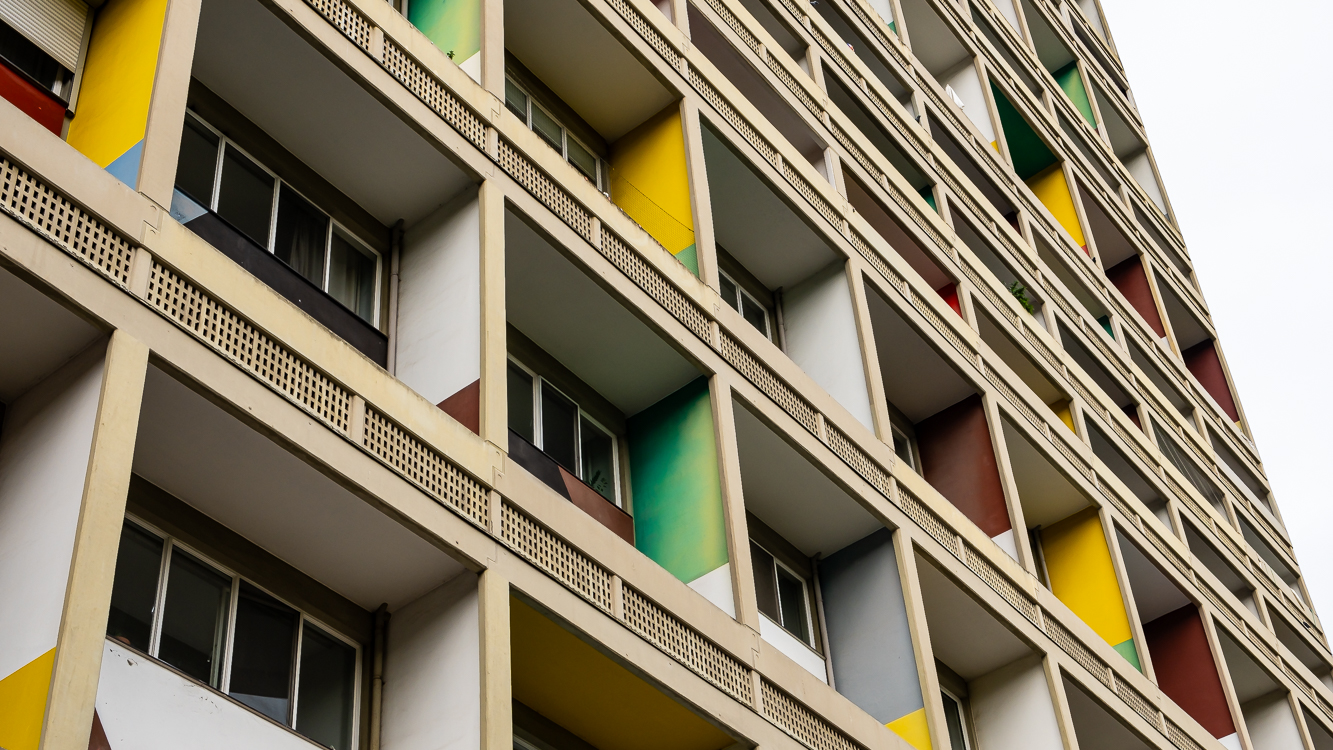
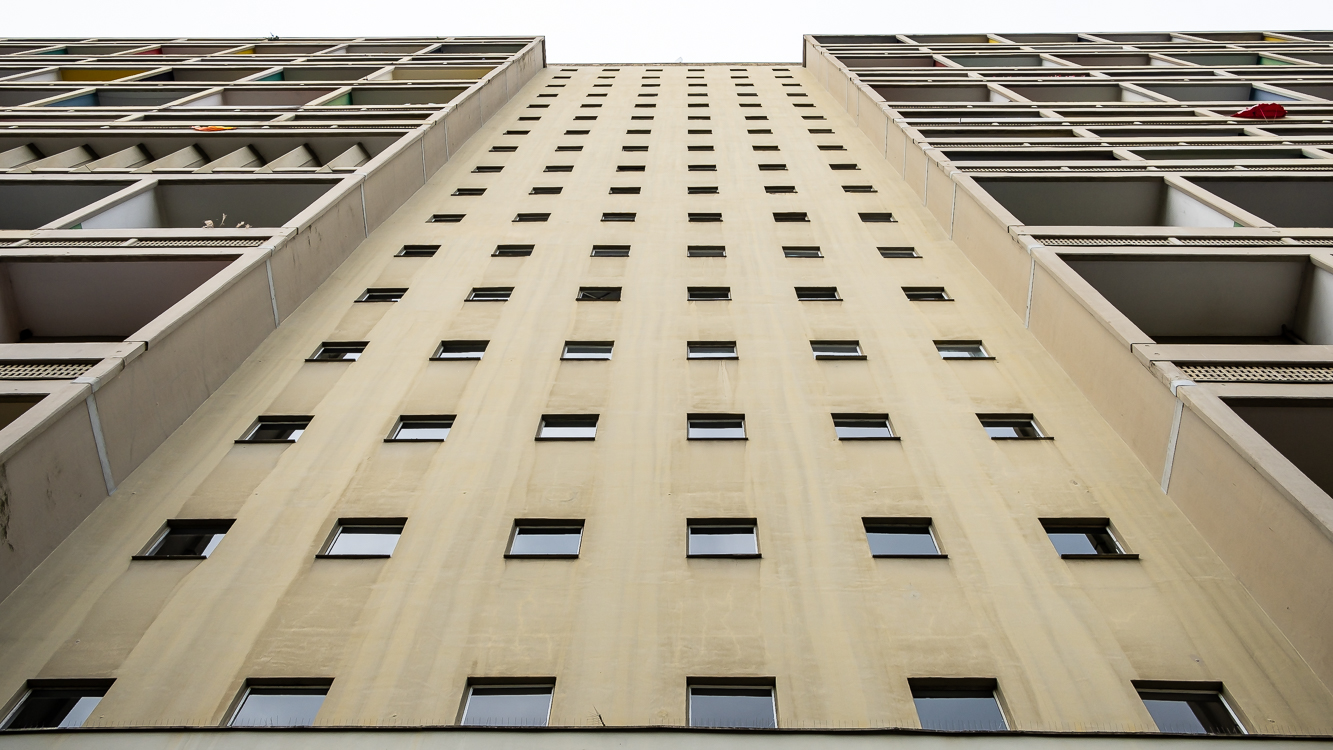
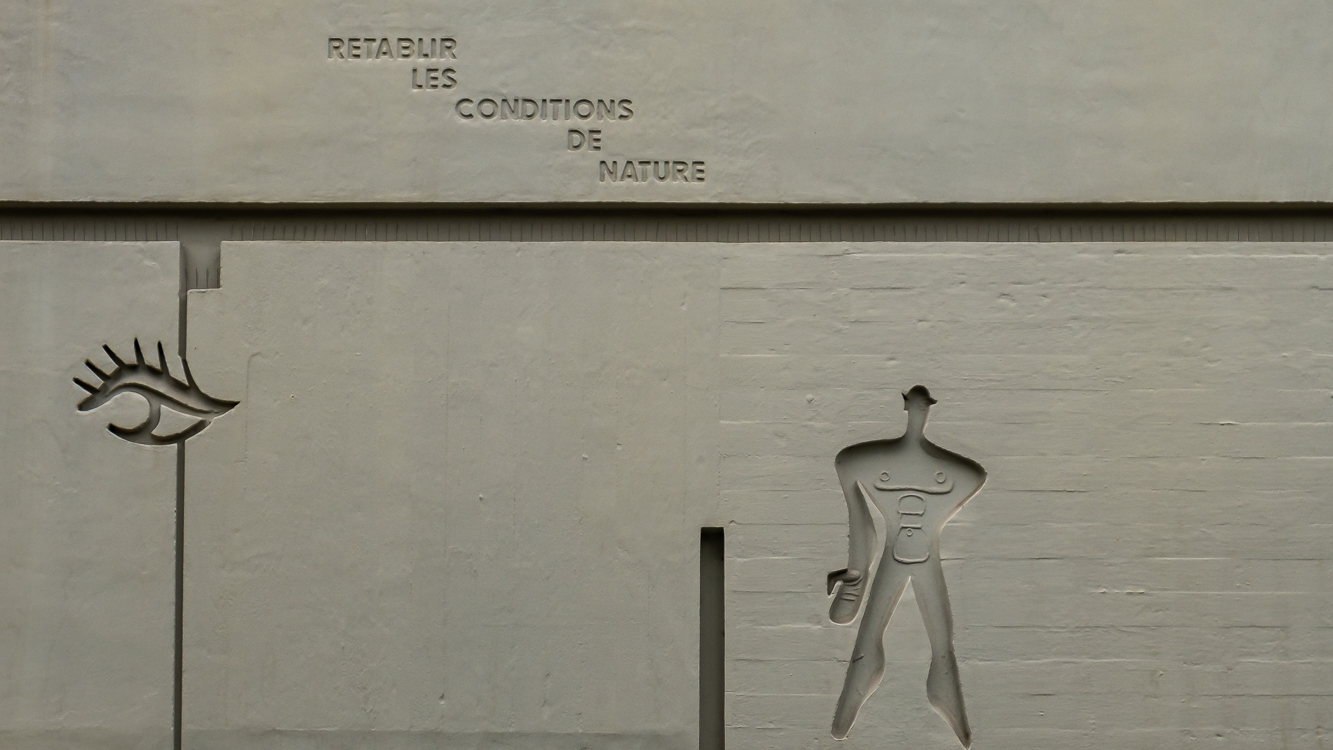
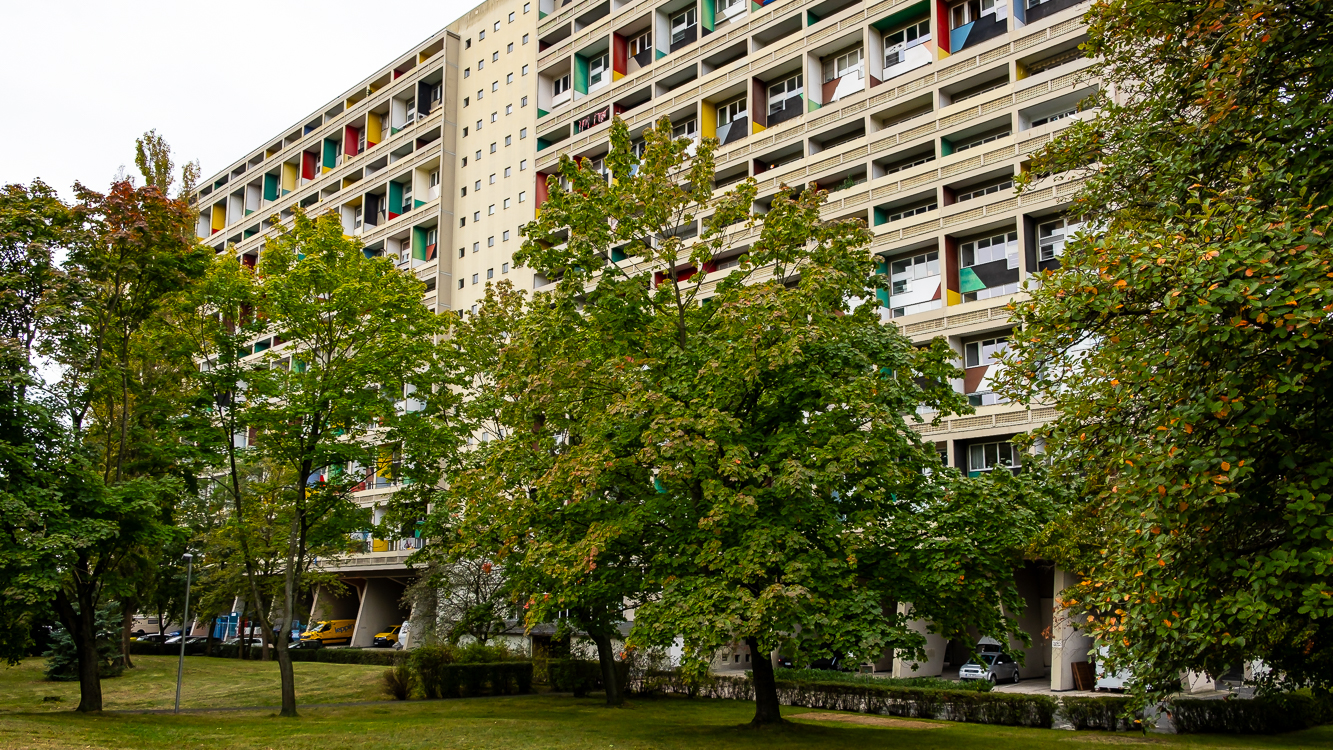
Unité d’Habitation of Berlin aka Corbusierhaus
Completed in 1957 it was the third building in Le Corbusier’s Habitation ‘series’. The first and best known block is in Marseilles, France. The phrase ‘beton brut’ has been attributed to Le Corb, and it has morphed in its English translation to Brutalism. It describes buildings largely made of unfinished concrete, rather than the harsh, ‘brutal’, often militaristic design generally think of when people think of brutalism. Some buildings obviously conform to that harshness, but the Corbusierhaus does not, it is just a 50s concrete apartment block outside the city centre with some very colourful panelling. It is lovely and is a tourist attraction in its own right. The only quibble I had was half the front was covered over by scaffold and cloth; oh well. If I come back it will be mid-winter when all those interfering trees are shorn of their leaves.
Bierpinsel
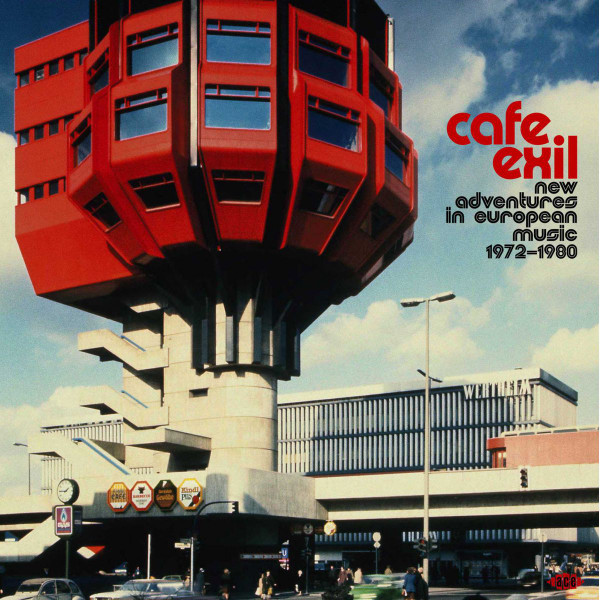
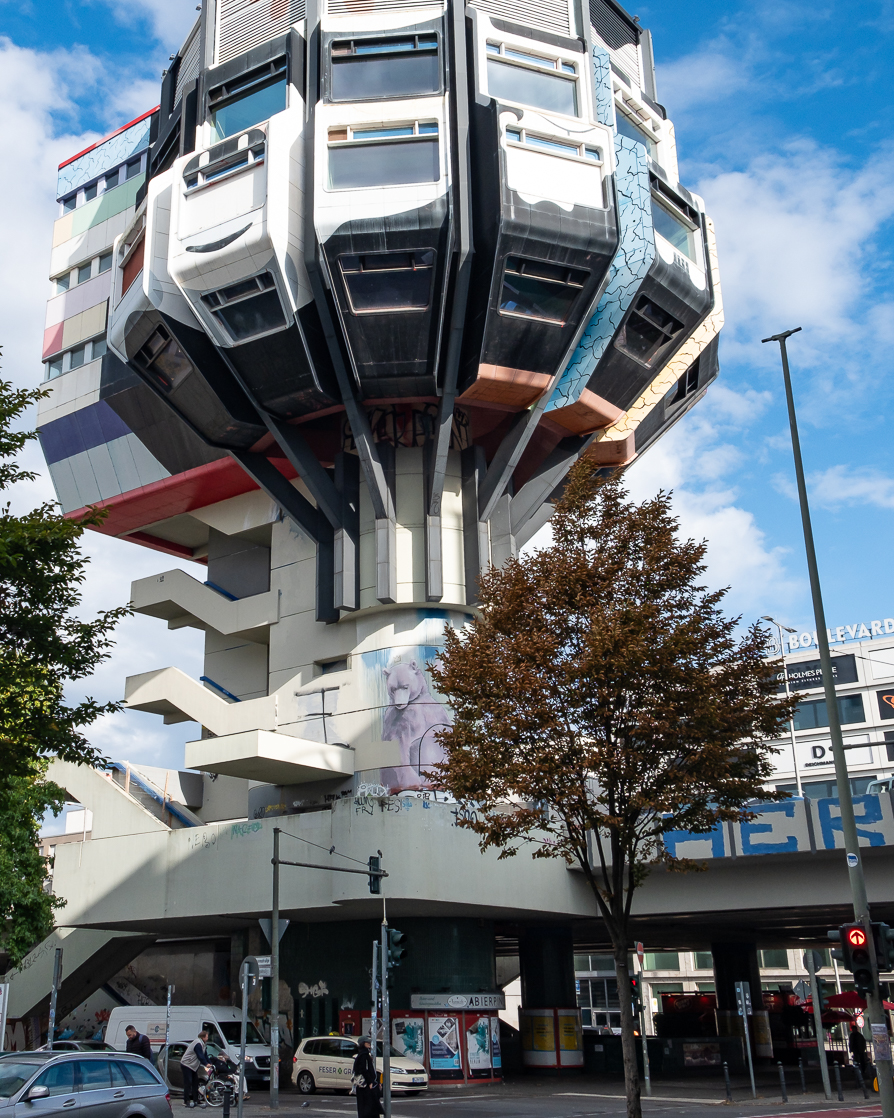
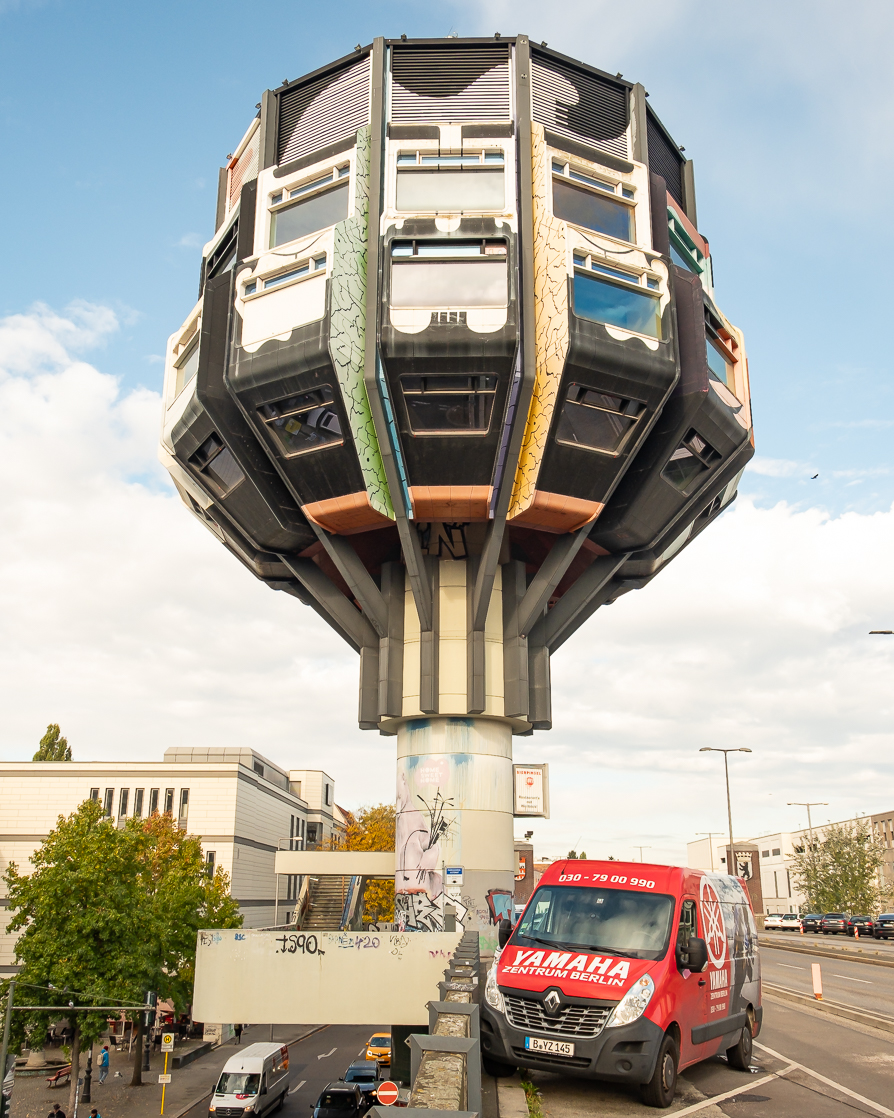
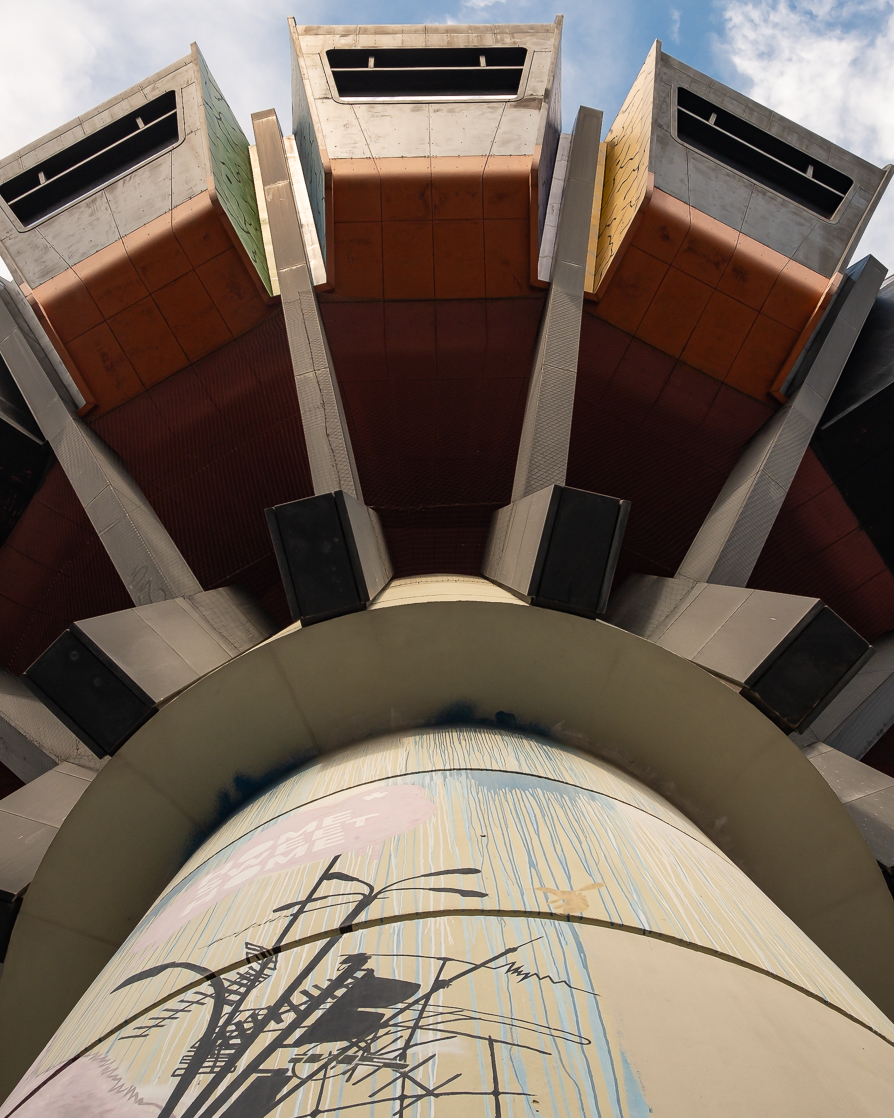
We had put Monday morning aside as ‘do our own thing’ time as I wanted to get out and look at buildings and while Eleanor tolerates this with a smile it seemed unfair to schelp about looking for buildings on holiday. Inconveniently the best ones are out of town and in no way where they close to each other. There was a small wrinkle in my original plan as one of the train lines was closed for engineering works. I made some rapid plan changes and set off to visit the ‘Café Exil’ record cover; The Steglitz Tower Restaurant, AKA the Bierpinsel (Beer Brush). And wow, what a building it is! It is as mad and as glorious as I hoped it would be. Sadly it’s been closed since 2007, but achieved listed status in 2017 and more recent owners have plans to renovate the building. I certainly hope they do. It is properly fantastic and I would love to see it back in garish Café Exil red. I had a go at emulating the record cover, with limited success. I loved it…

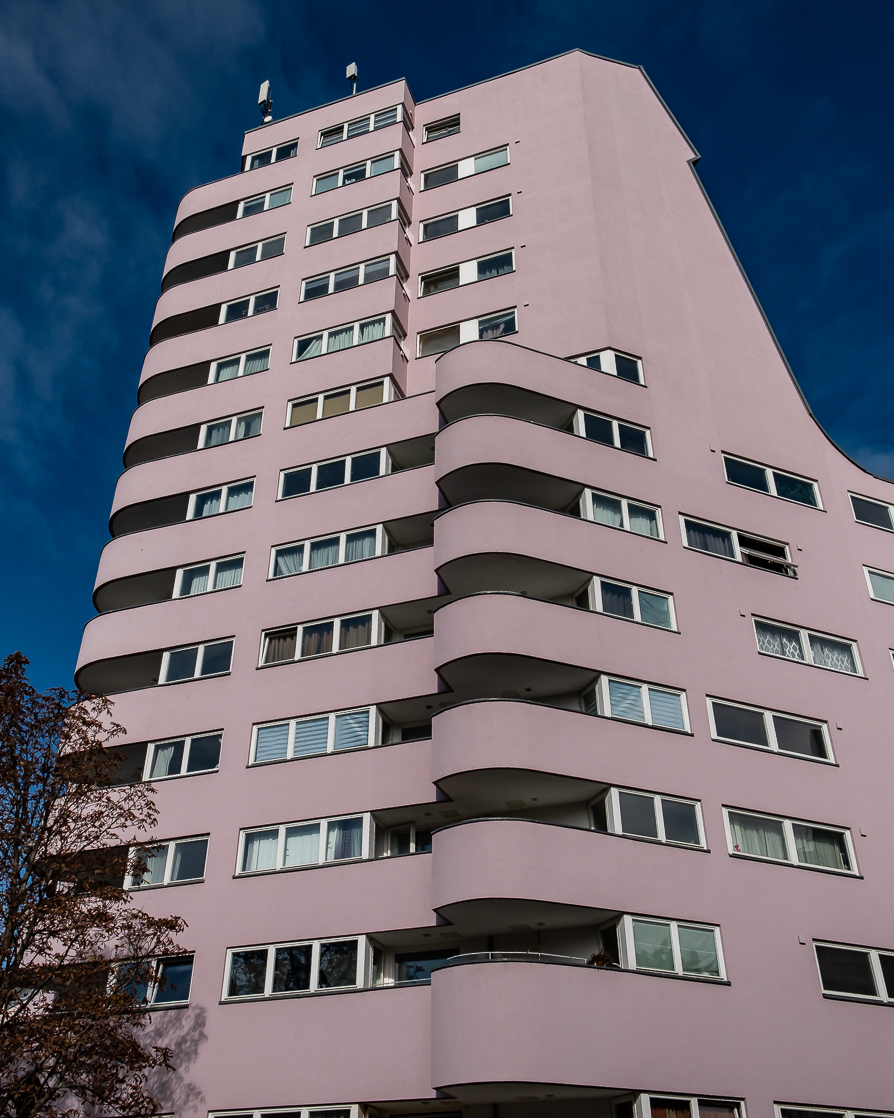
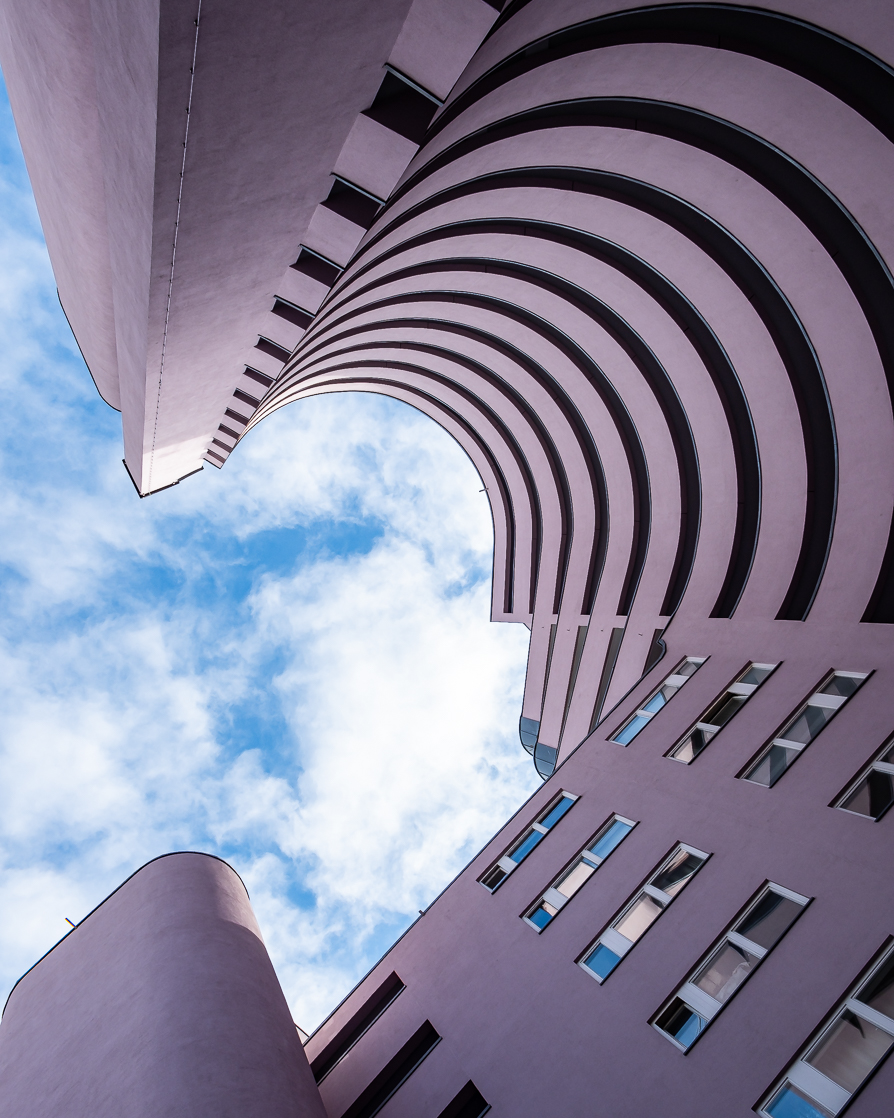
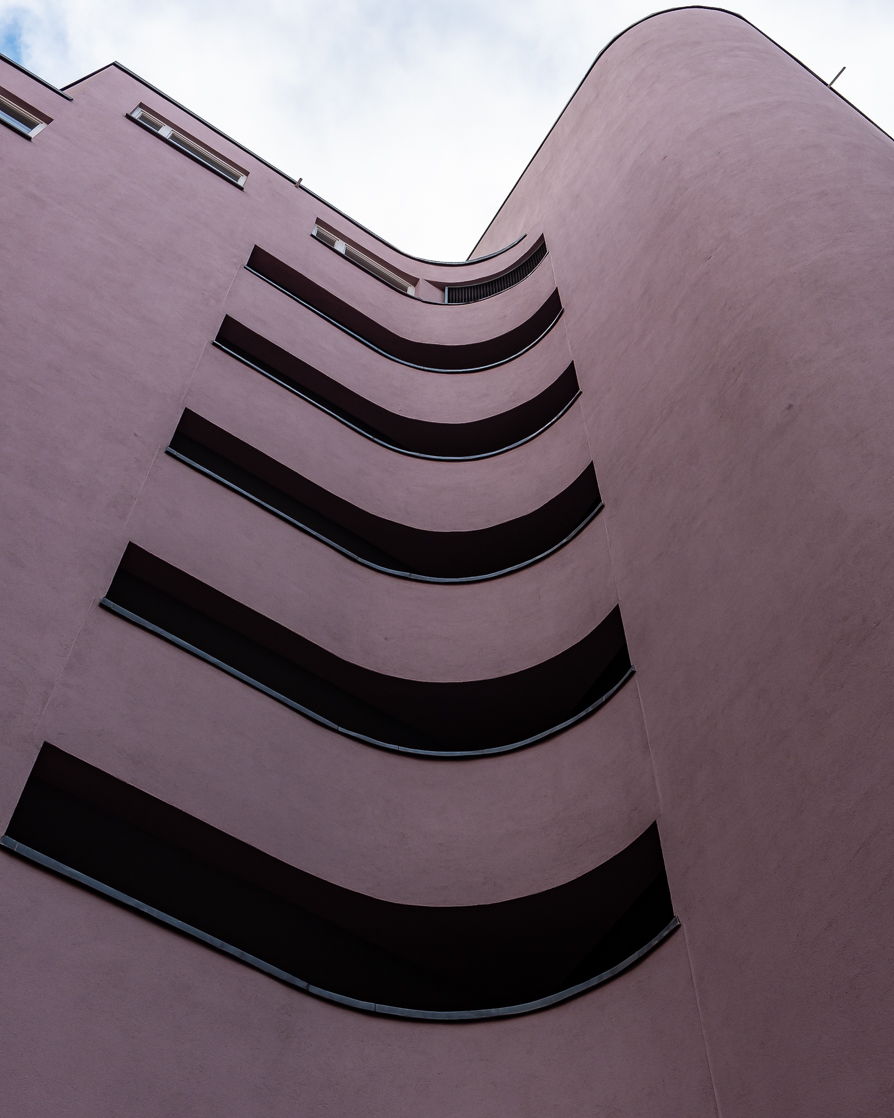
Wilhelmstrasse 150
With my plans now changed, I caught another couple of trains to WilhelmStrasse 150. A nice looking apartment block with some magnificent curving concrete painted a fetching pink. This has not been on any record cover that has passed my way.
Band of the Covenant Buildings
With less time in the day due to some poor public transport choices (read this as me missing stations as I was reading my book on the train) and then misunderstanding some messaging about closed lines on the Berlin transport network I headed back towards Alexanderplatz and our hotel to meet up with Eleanor for some afternoon roaming. We had a loose plan that involved walking to a record shop, a photography gallery and whatever else took our fancy, as long as it ended up in a cocktail bar come late afternoon. It was our last day in the city and there is still so much to see, just around the inner north east were we are staying.
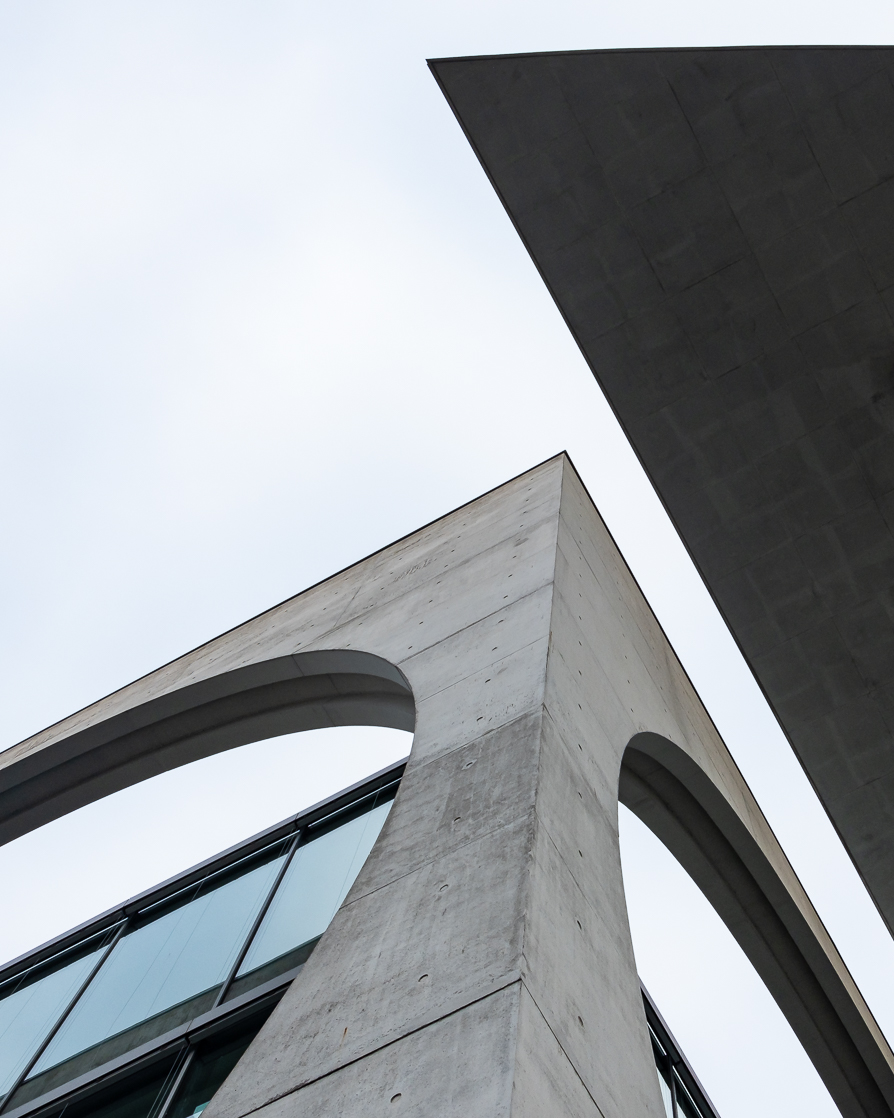
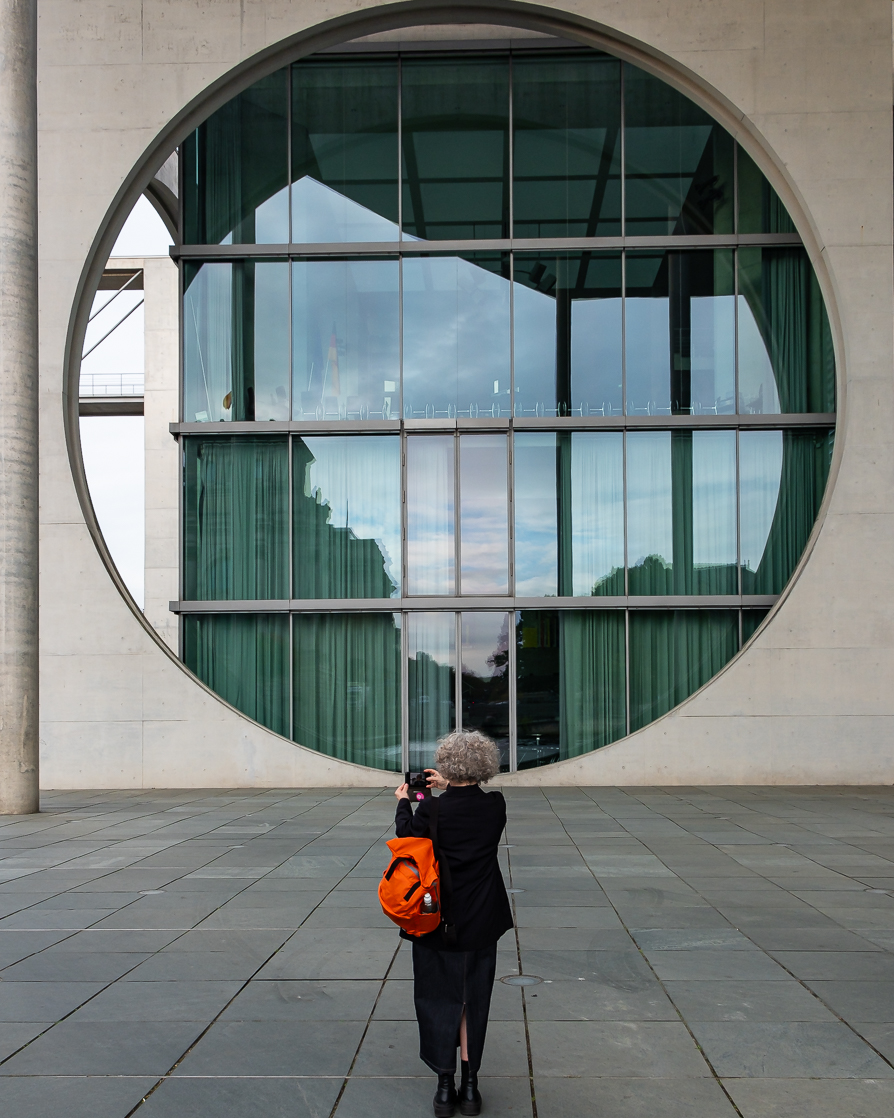
When we visited Berlin in June one of the places I was keen to visit was the concrete ‘circle building’ I’d seen photos of on Instagram. I’d spotted it from the train heading west towards the fantastic Teufelsberg on the woody outskirts of the city so had a pretty good idea where it was located. It was only when we ventured into the city centre, near to the Brandenburg Gate and the Reichstag Building, that I nailed down its exact location; right behind the ‘no entry’ tape blocking off a bit of the city sacrificed to the pending European Championship football competition. Oh well, it was something to save for next time; i.e. this time.
And this time there were no restrictive lines of tape or armed coppers making sure no one crossed those lines of tape. In fact, for a series of government buildings there was very little visible security. As a New Zealander and a Brit I still find armed police unnerving, and I work in Whitehall where all the police carry guns, not seeing them here in this almost sterile, yet serene location, was verging on a relief.
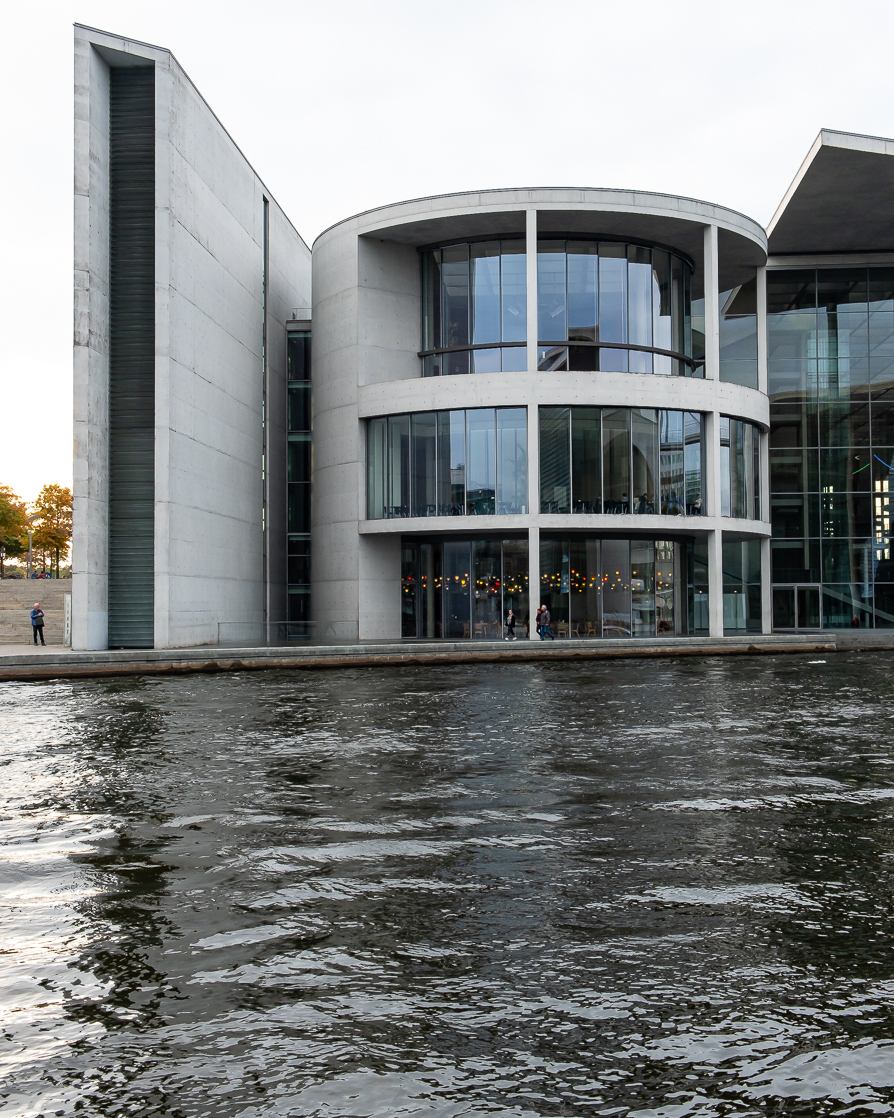
I think this small block of buildings on either side of the River Spree is utterly beautiful and not because of the concrete, the design is just so fresh and free and walking around looking at them genuinely made me happy. I think the complex is called ‘Marie-Elisabeth-Lüders-Haus’ and it is made up of an art gallery and the government library, among other probably less public parts of the German government. Construction was mostly completed in 2003 so these are not the post-war concrete rebuilds you see in other cities.

The ‘gun thing’, and yeah I will put it out there. I fucking hate guns, and everything they represent and really don’t understand this fascination so many have with them. I understand the US is just obsessed with arming everyone, seemingly to keep those who make weapons and all the bollocks that goes with that in the lifestyle they have become accustomed to, but why do the rest of us have to support that? Why do we have to see guns on our streets?
This was brought into stark relief on the opposite side of the river to the buildings above. There are four white memorial crosses wired to a low fence in remembrance of four, mostly young people, who were shot and killed by East German guards as they tried to flee to West Germany, the youngest was 18 and she was shot in 1984. Like the memorial plaques outside of the houses were Jews lived pre World War Two which I mentioned in the previous post, I didn’t take photos of these poignant reminders of humanities capability to be utterly evil.
I can’t possibly imagine what it was like for the Jewish and Roma people, the LGBTQ, disabled and other communities before and during WW2 and for those East Germans who wanted to go west to be so savagely betrayed, persecuted and murdered by their own countrymen. How fucked up was that? And the saddest thing of all is that for many around the world that hasn’t changed.
 Where is Phil now?
You must be logged in to post a comment.