Friday 25 May 2024 – Tilbury, Thurrock, Essex.
I have fairly strong feelings about this part of Essex, in fact I have the same feelings for pretty much all of Essex to be honest. They’re not positive feelings and they’re based on ‘vibes’ as the young folk say, rather than fully researched fact. Let’s just say I never thought I could live in Essex’s southern Thurrock region and after today’s walk that thought was made certain; mind you I did enjoy being out and about and it was a decent walk.
I’m trying to make proper use of my nine day fortnight so, with a seemingly rare Friday with no rain in the forecast I decided to catch the train to Tilbury Town, then walk past Tilbury Fort, along the side of the Thames Estuary to Coalhouse Fort then up to East Tilbury Station and back home. It’s not a huge walk, but I only had half a day and I felt like going somewhere different.
I arrived in Tilbury Town just before 13:00, crossing over the railway track via the over bridge with a full-on nasal assault from the rubbish dump that the road I’m going to follow for a bit runs alongside. I’d hoped to be able to pick up something to eat by the station but all the shops were closed. I only had a couple of hours of walking ahead of me and let’s face it a few hours sans food isn’t going to be a bad thing.
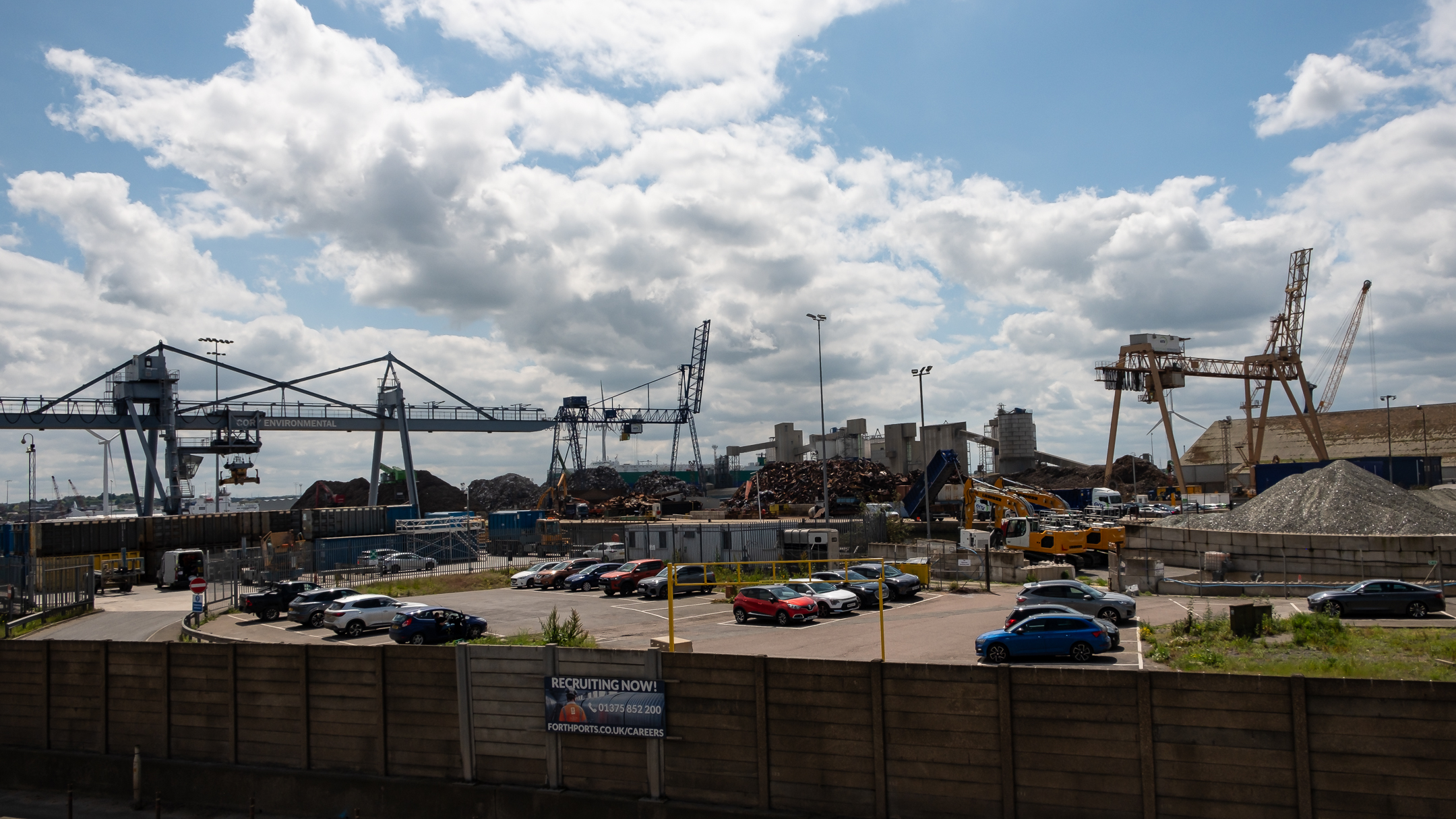
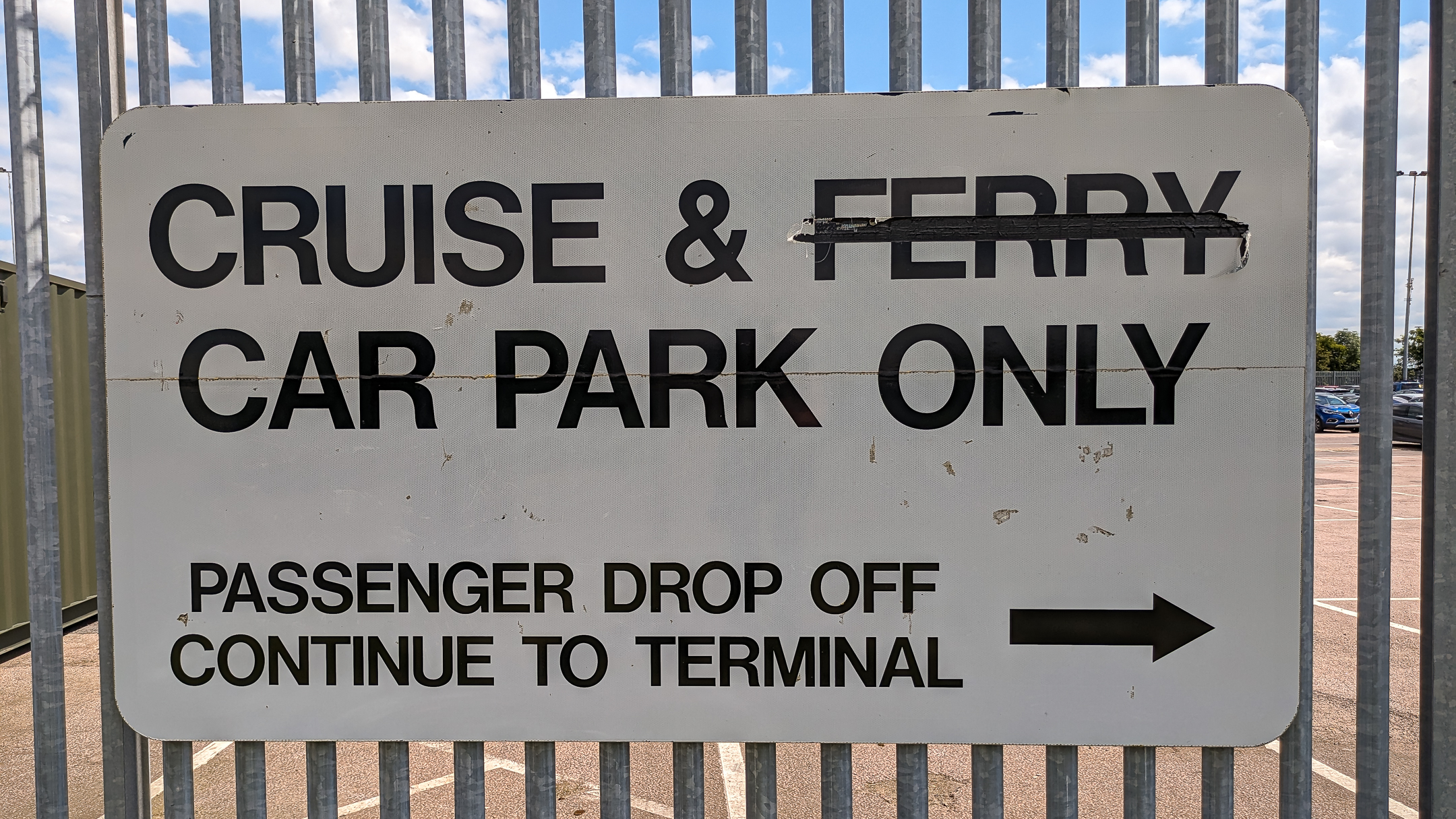
I’d originally thought about catching the ferry across the Thames from Gravesend in Kent, but disappointingly the ferry had permanently closed in April. The ferry would’ve made for a nice round trip rather than the there and back journey I did, plus it docked almost on the fort’s doorstep which meant I would’ve avoided the dump.
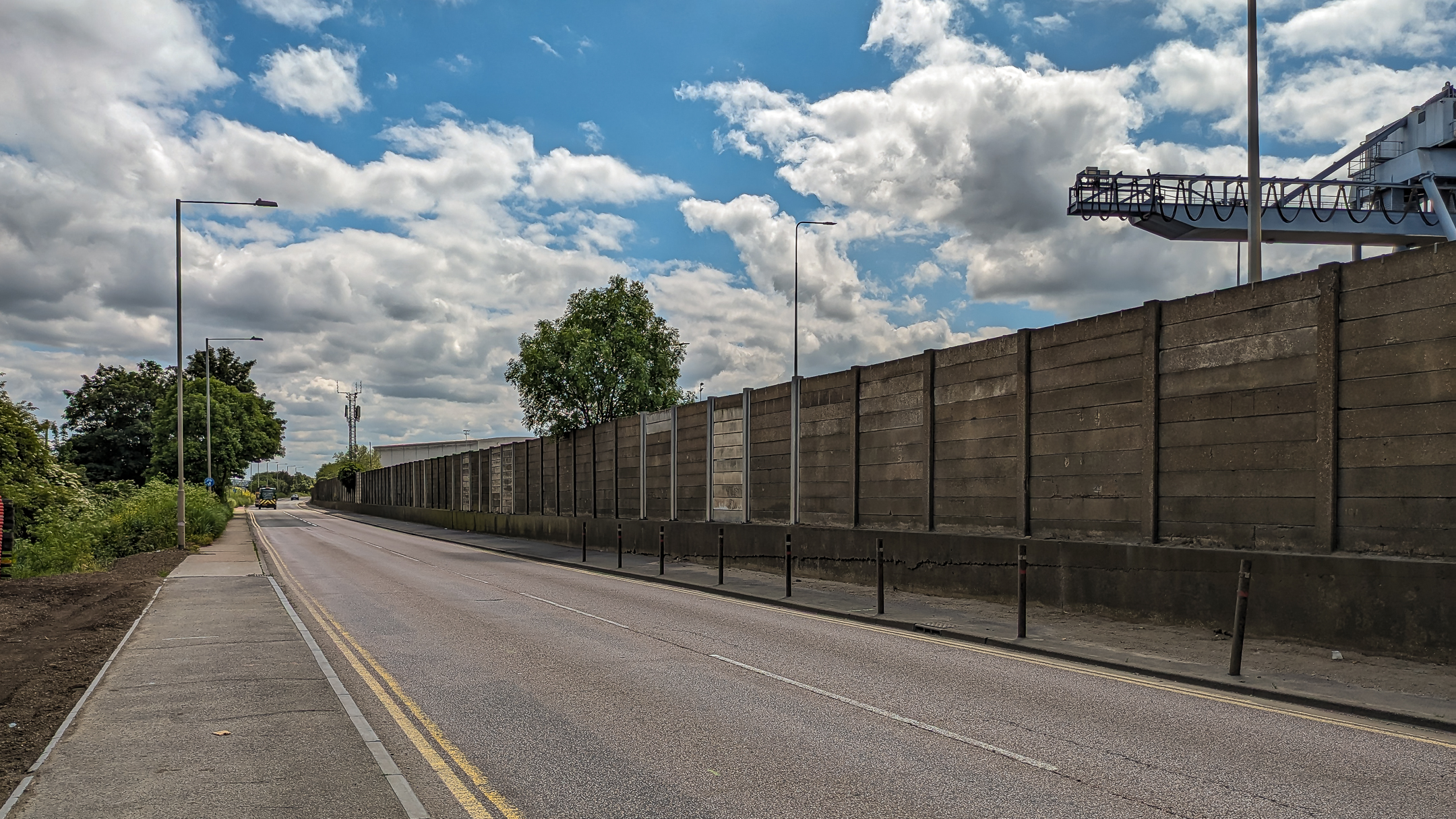
The walk to Tilbury Fort took about 30 minutes, with half of it down this hideous stretch of busy road mainly being used by large lorries scurrying to and from one of the ports. It was noisy, smelly and generally unpleasant. Welcome to Thurrock.
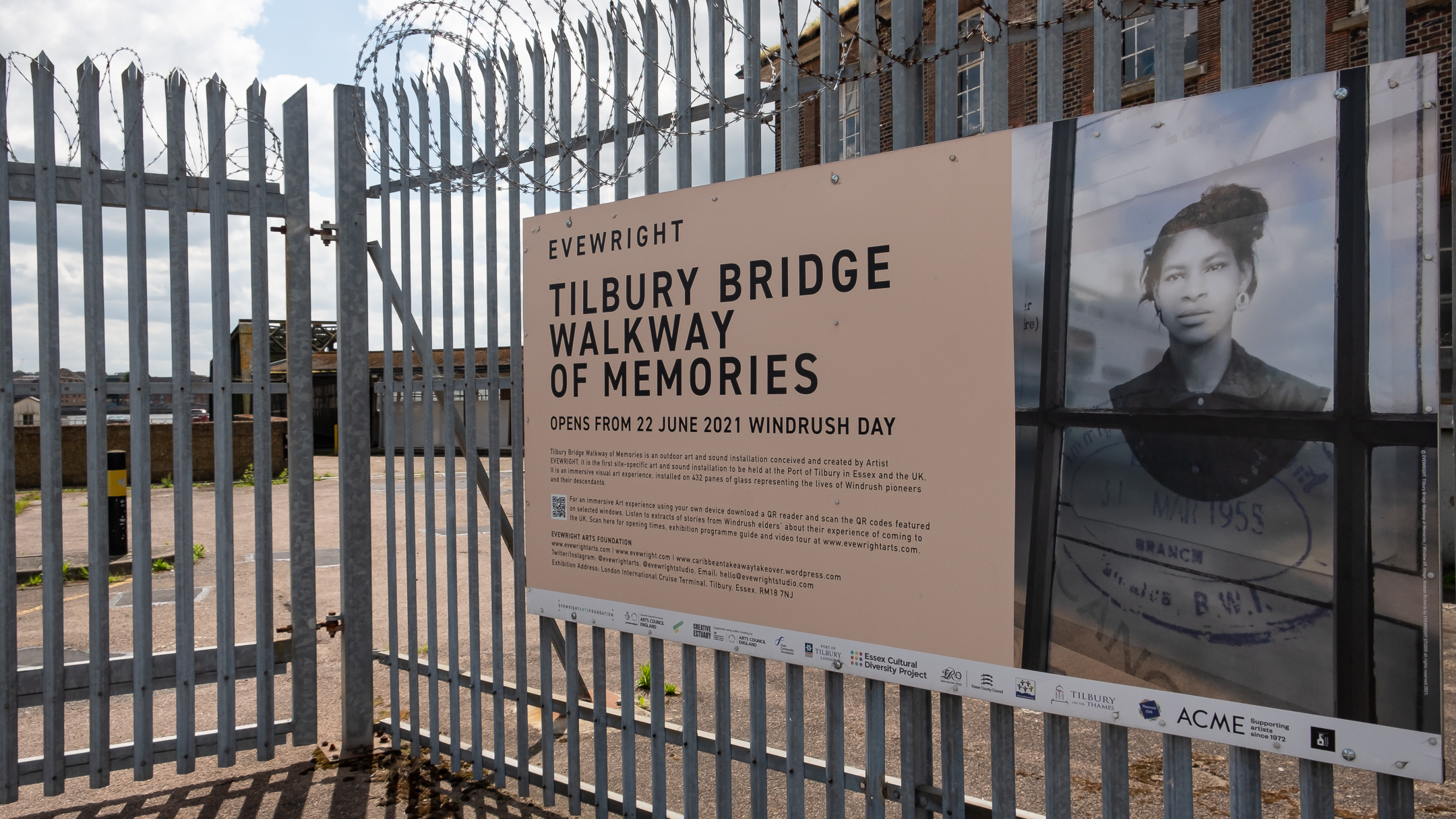
There were a few things I wanted to check out on the walk, one of which was the memorial to the Windrush generation on display at the building and wharf where the first migrants from the Caribbean arrived onto English soil in the 50s and 60s; naturally it was closed. I discovered when I got home that the memorial gallery closed at the same time as the ferry.
I chose not to go into the fort as there didn’t seem to be a lot to see inside and there was a charge to enter and I’m trying to keep my spending down (he says the day after buying a new pair of Doc Martens shoes). The English Coastal Path runs past the entrance and I was planning on following this for the four half kilometres to Coalhouse Fort, the next fort along; heading east towards the mouth of the river.
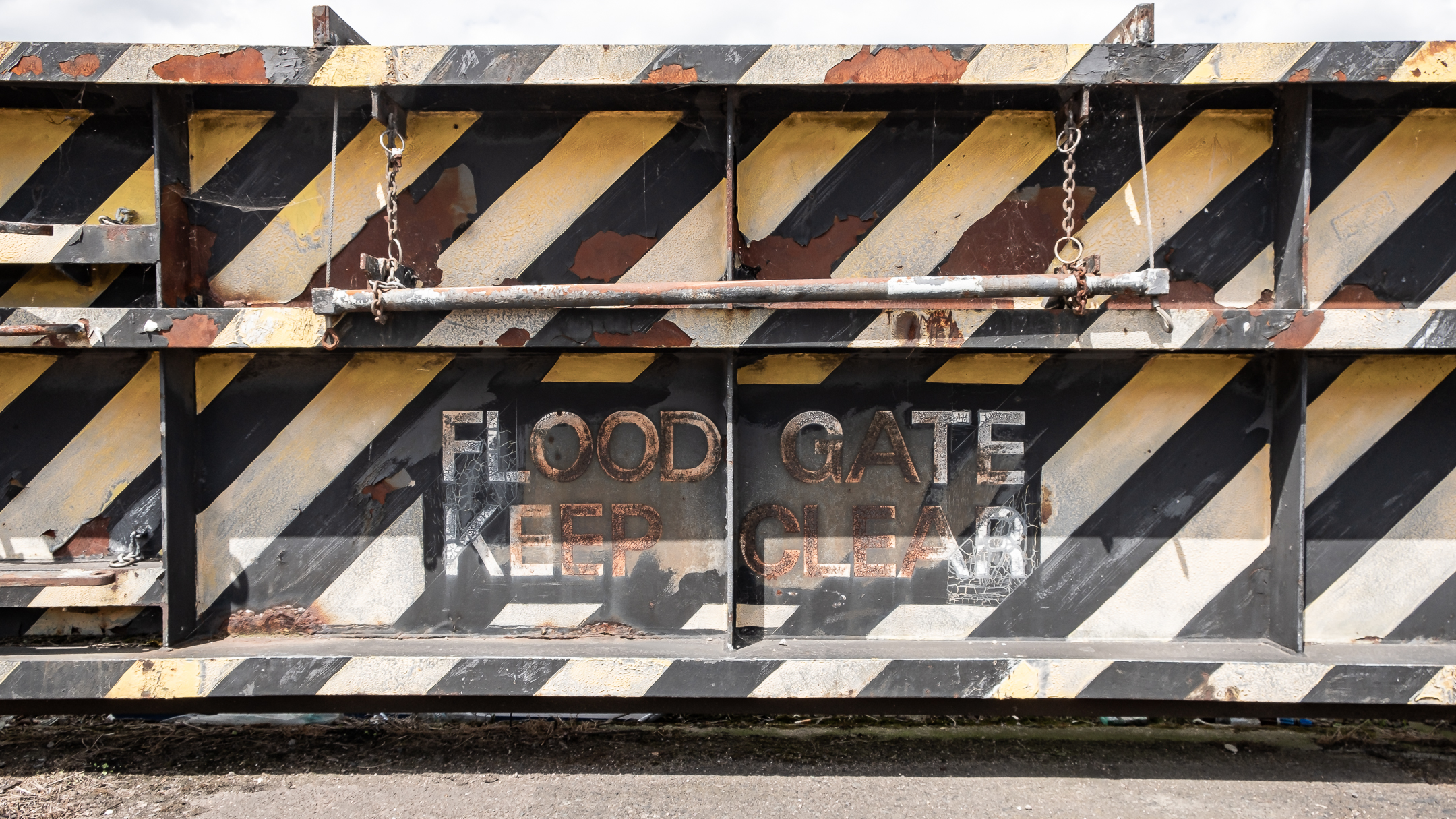
Tilbury Fort is one of the finest surviving examples of 17th-century military engineering in England. Built on the site of a smaller Tudor fort, it was designed to defend the river Thames passage to London against enemy ships, though it was never tested in battle. The fort was decommissioned at the end of the First World War.
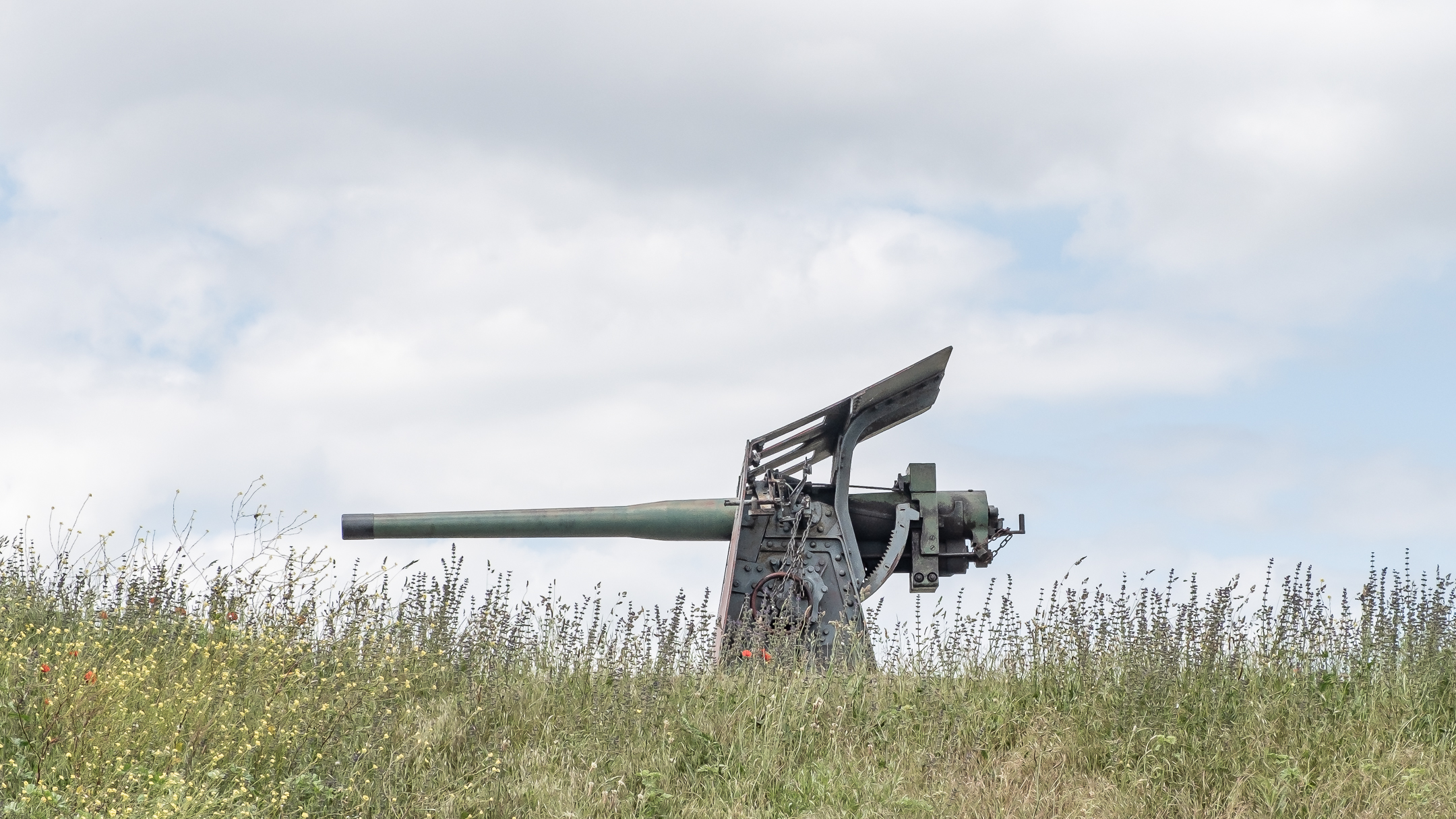

Forhe first half of the walk I was following the estuary wall, starting on the inside of the wall, then crossing over some steps to the water side a few hundred metres in.
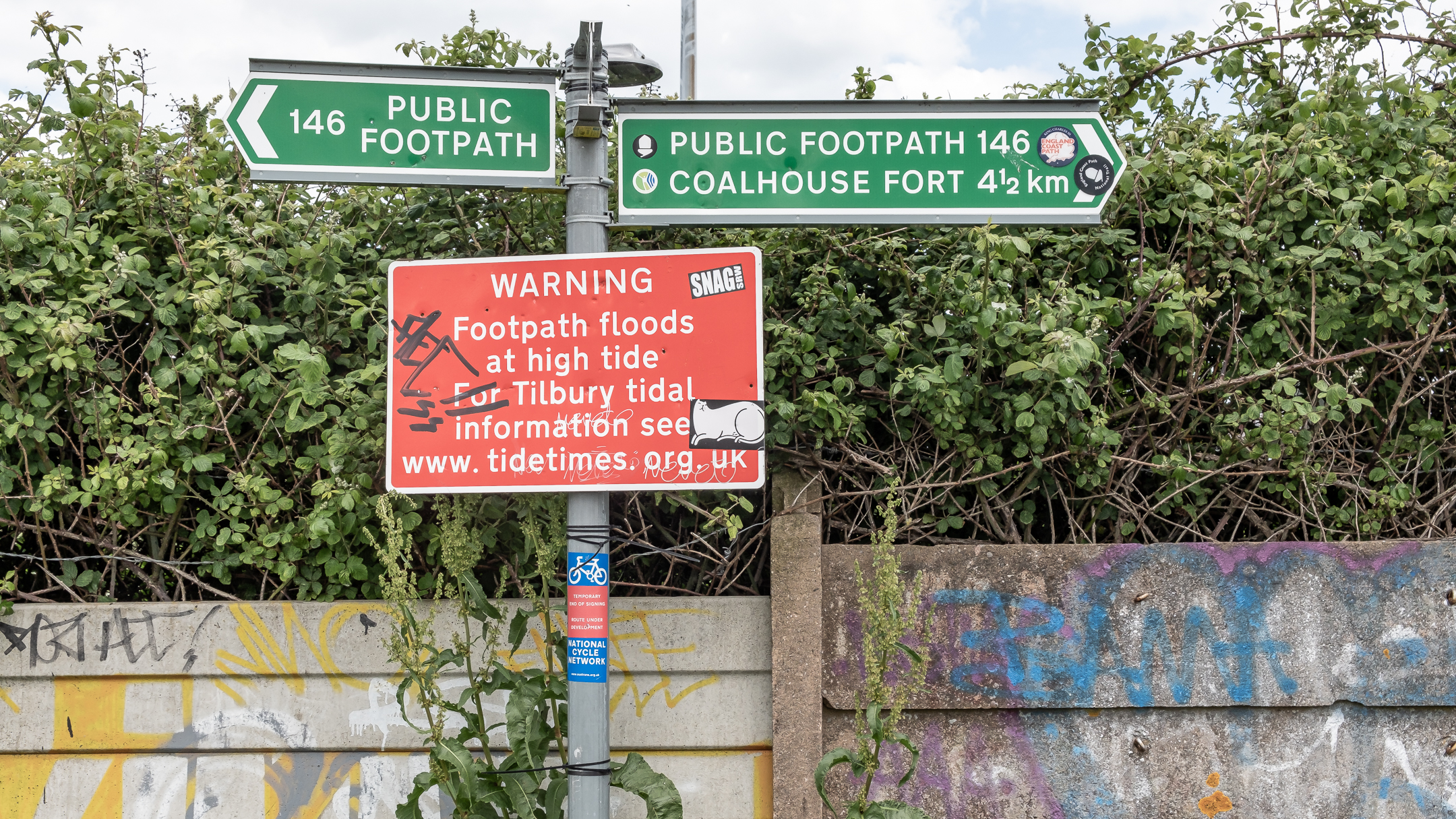
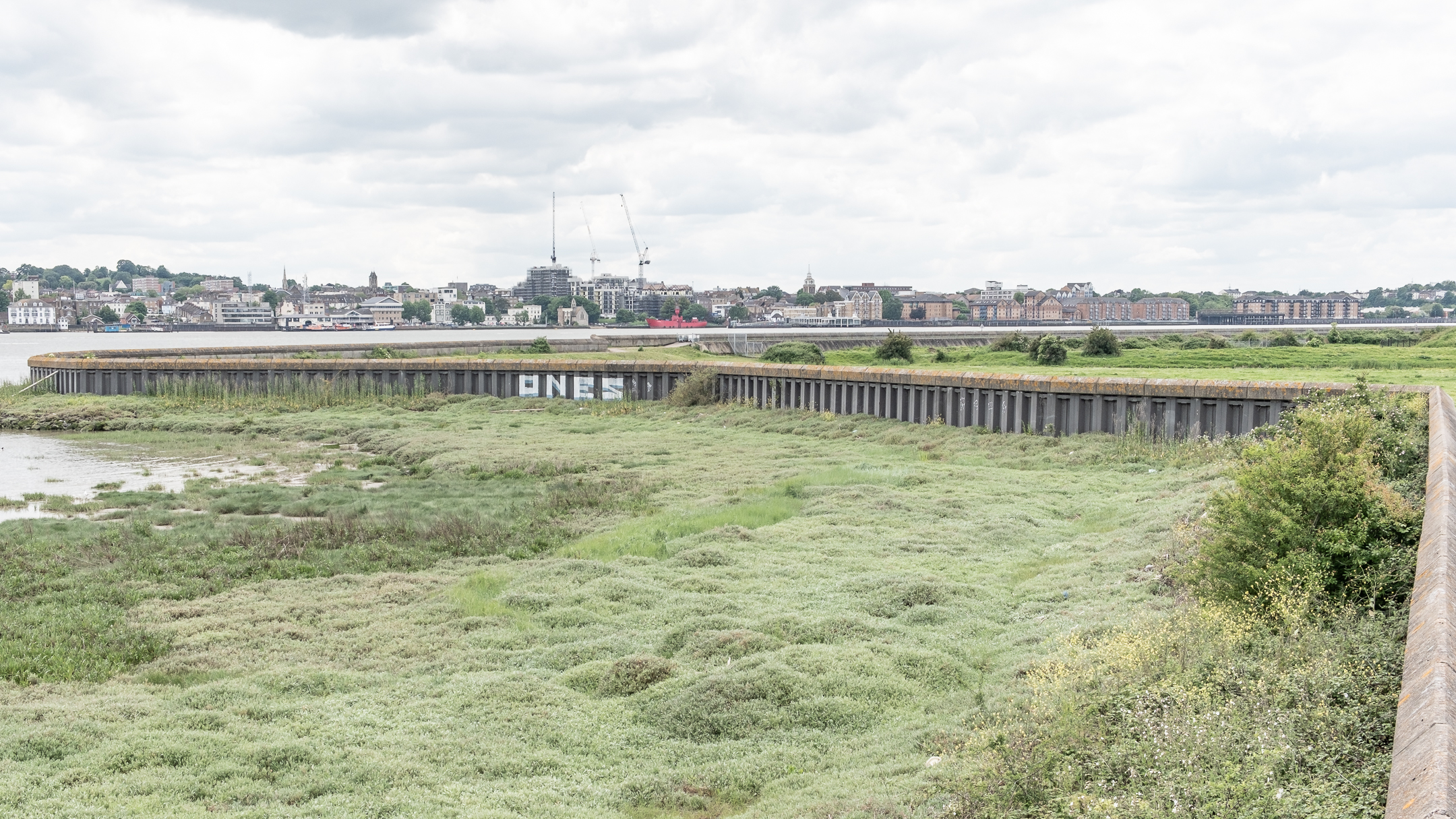
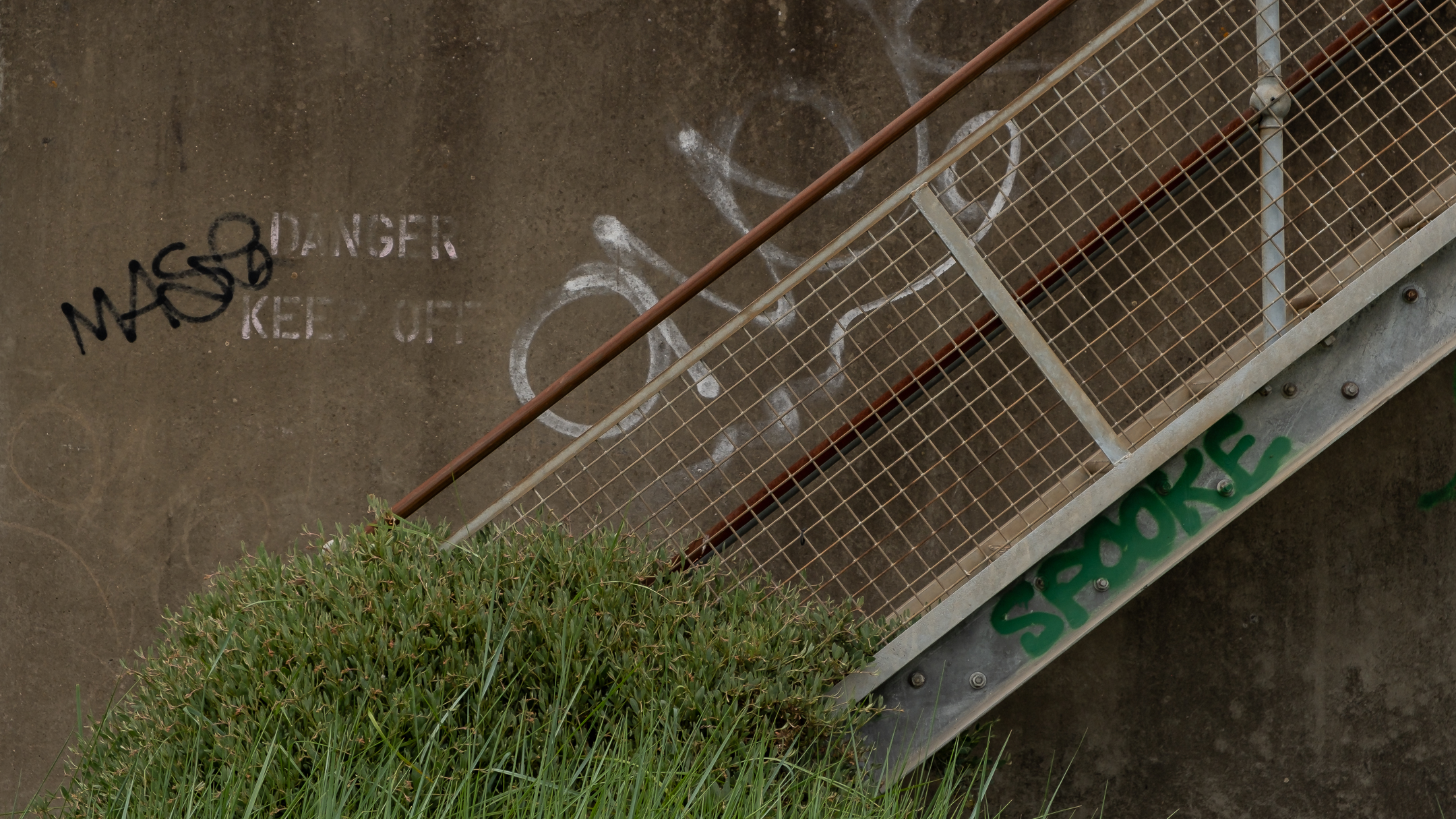
Luckily the tide was not in as there was a lot of rubbish and bits of drift wood on the wrong side of the path proving the messages at the start of the path that this area is subjected to a lot of water at high tide. I enjoyed the walk along the wall, preferring the rougher outside of the wall section with its graffiti and weeds and rubbish and feeling of isolation.

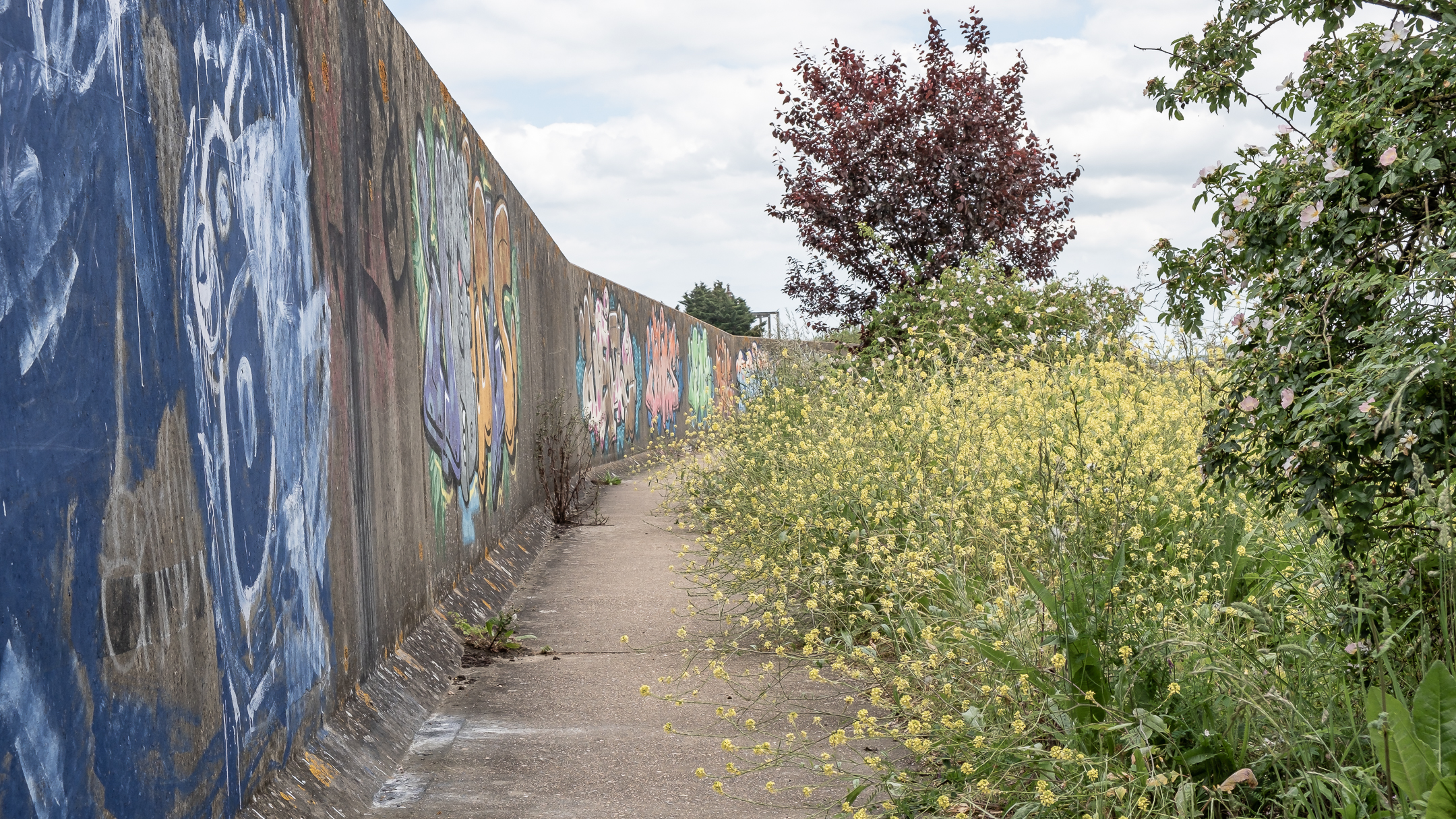
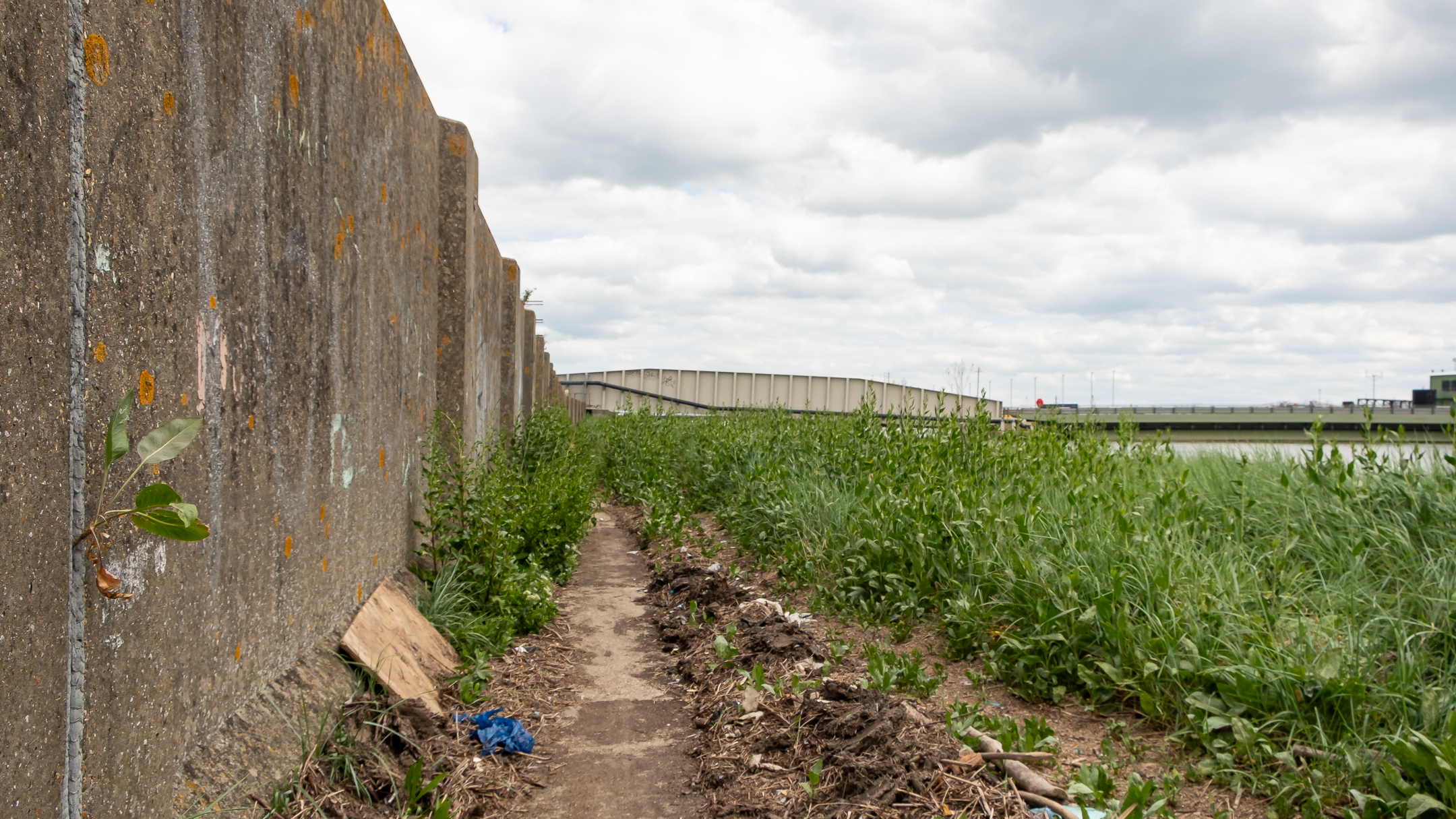
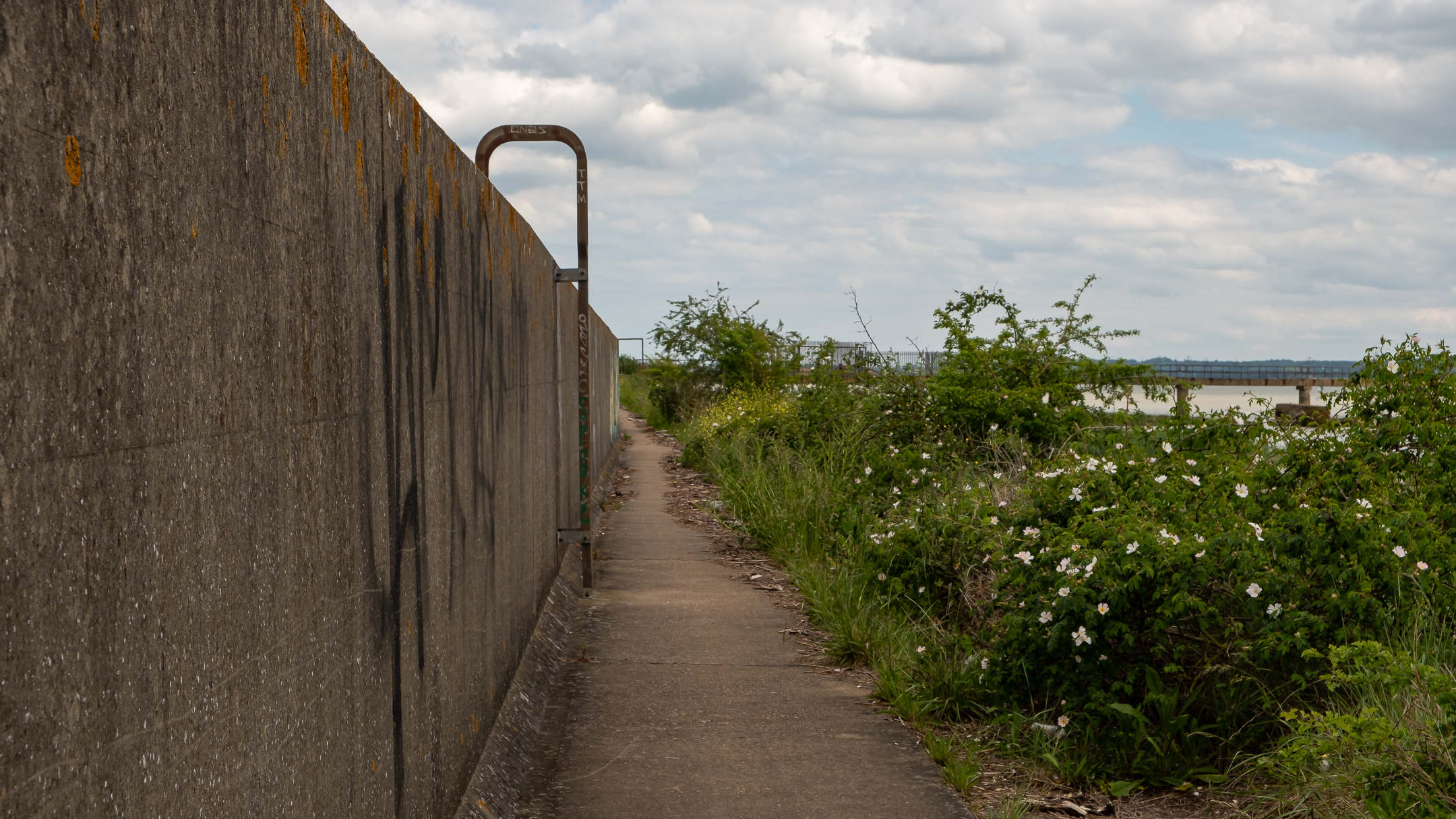
I like these unloved edgeland places between the lived and unlived environments, especially those on the fringes of a big city like London. I like that they are most likely very safe places, but there is just that small hint of danger to keep the outsider on their toes, especially walking alone and on the wet side of a two metre high concrete wall. Every couple of hundred metres there were escape steps over the wall. I climbed up this set and peered over into a wet and weedy wasteland. I think my side was nicer.

Just before the end of the wall section I came across a young woman painting years on a blacked out section of wall. There were thousands of them. 5050 to be precise. The piece is titled ‘100 years of irretrievable losses’ and commemorates the birth and death years of a tiny number of those who have died in war over the last 100 years.
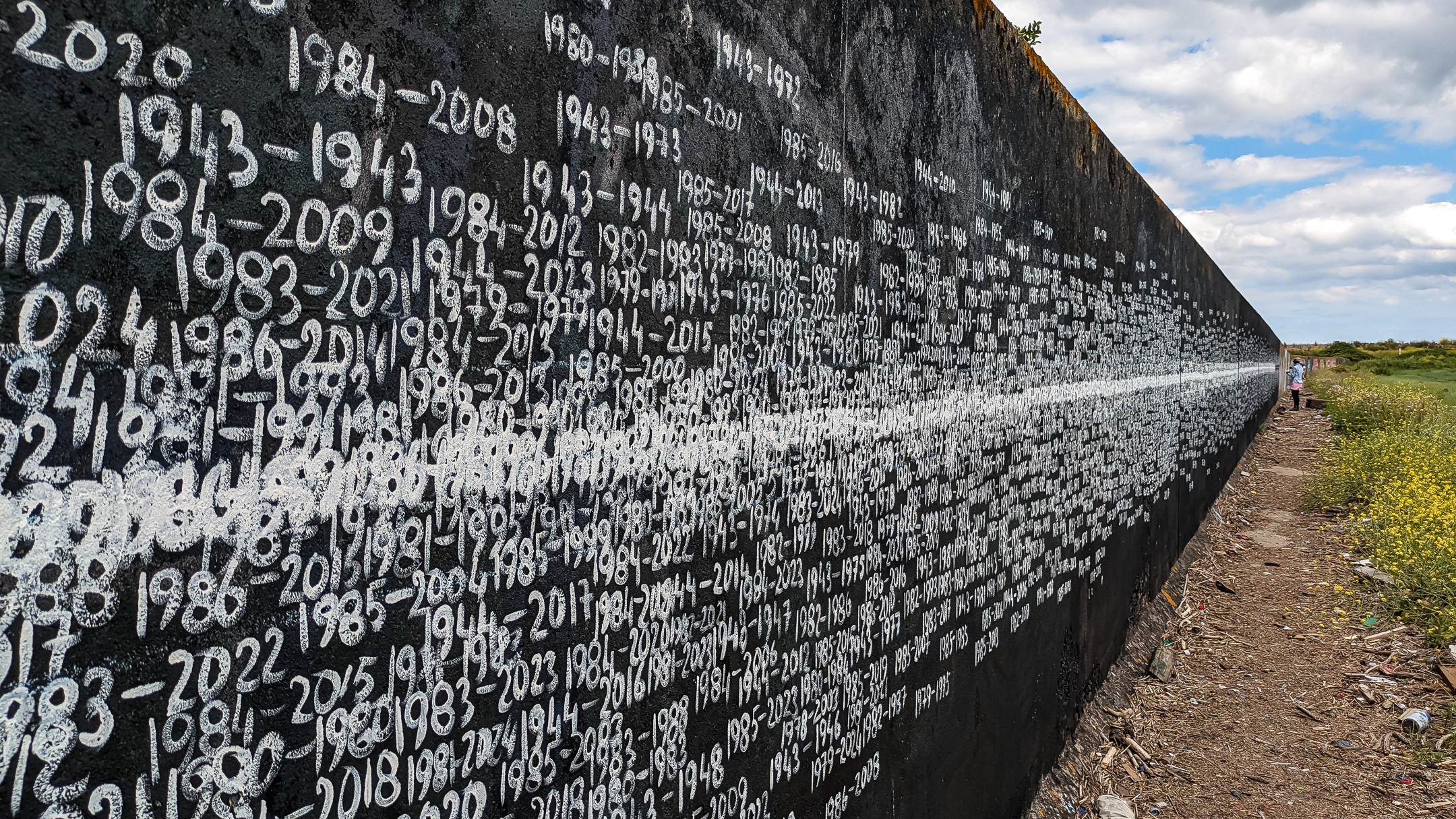
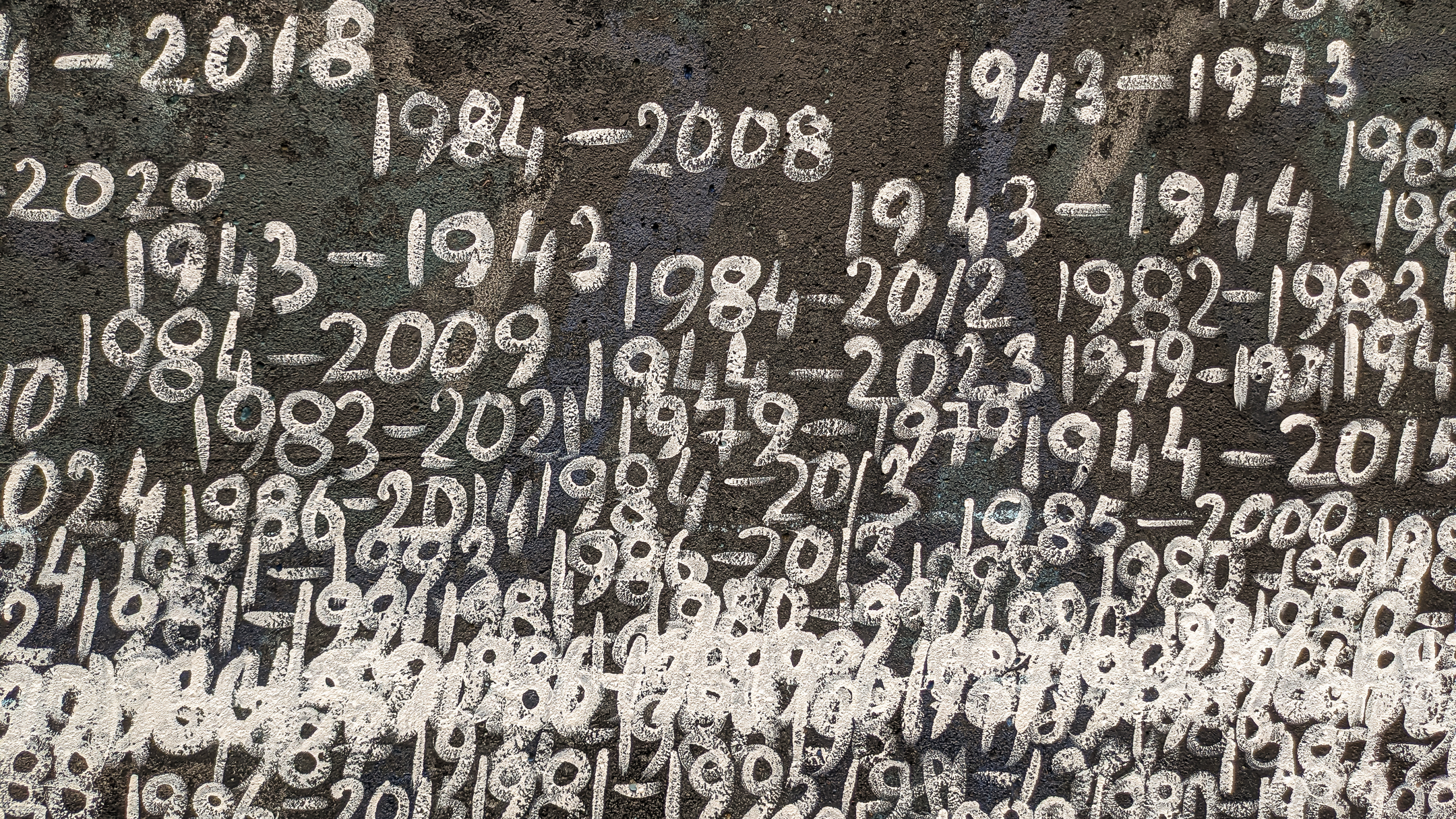
I saw three other walkers the entire time I was out, and other than the artist no other person between the forts.
For some reason the wall ended and the path made its way through an area of scrubland, I guess it had risen just enough to not be at risk of flooding, though there was nothing but weeds to flood. The path got quite narrow in some places and at times I was walking with my hands raised over my head to avoid my bare arms touching the reaching thorns and nettles. Warm as I was I was glad I was wearing long trousers.
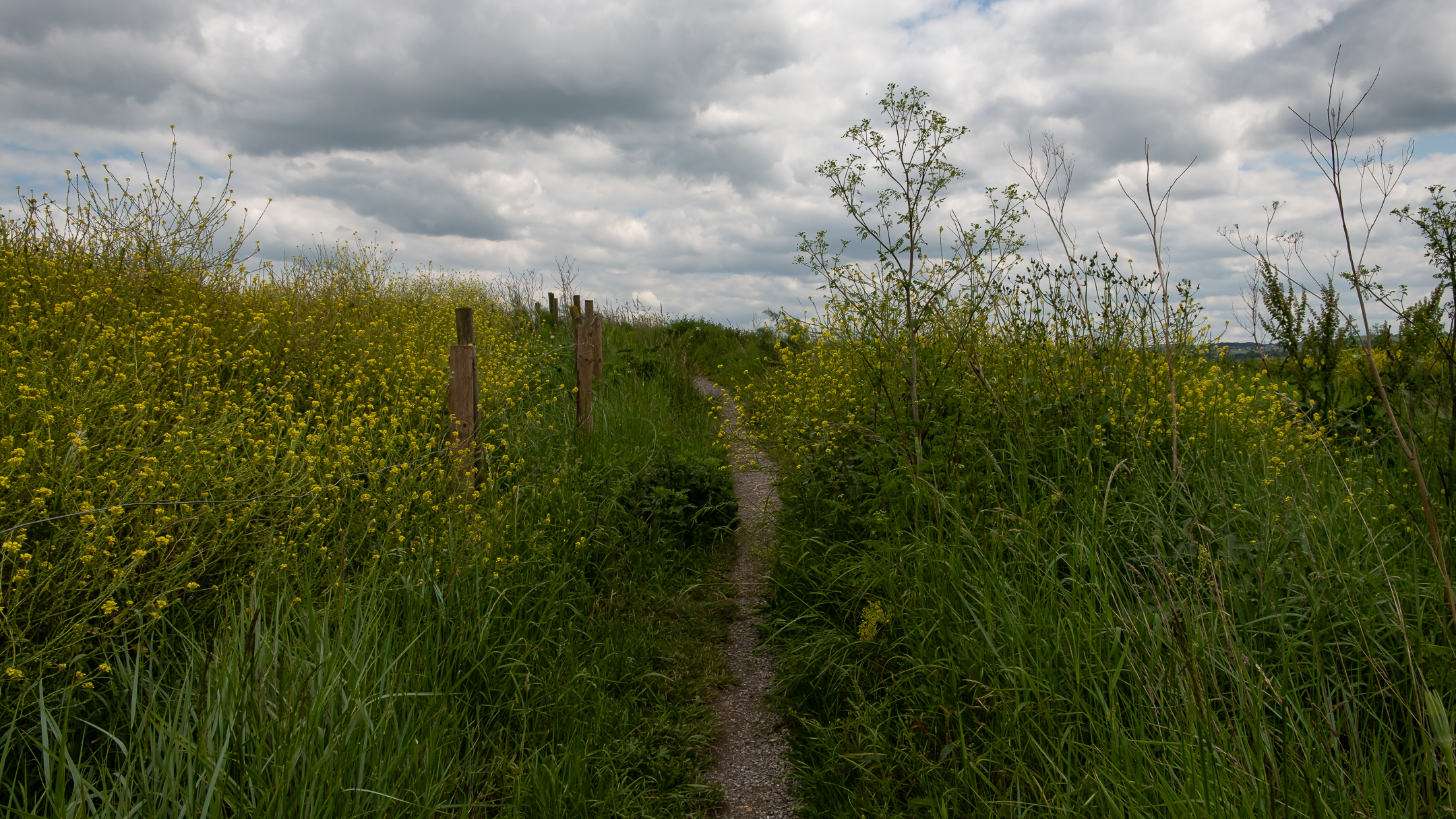
I got to thinking about the ‘rewilding movement’ and this mad view that if you let nature take over you will end up with fields of lovely wild flowers interspersed with small woods of oak, elm, beech and ghostly silver birch. That lovely postcard view of a world that only existsin the minds of fantasists. Reality shows that proper rewilded spaces are just a sea of weed and twisted ivy, bramble nettle, long grass and no chance of any tree self-seeding. Rewilded spaces are wild spaces. I’m not saying they’re not pretty in their own way, but no one is going to wildly romping through this stuff to find a site for a spring picnic or an off-piste ‘snuggle’
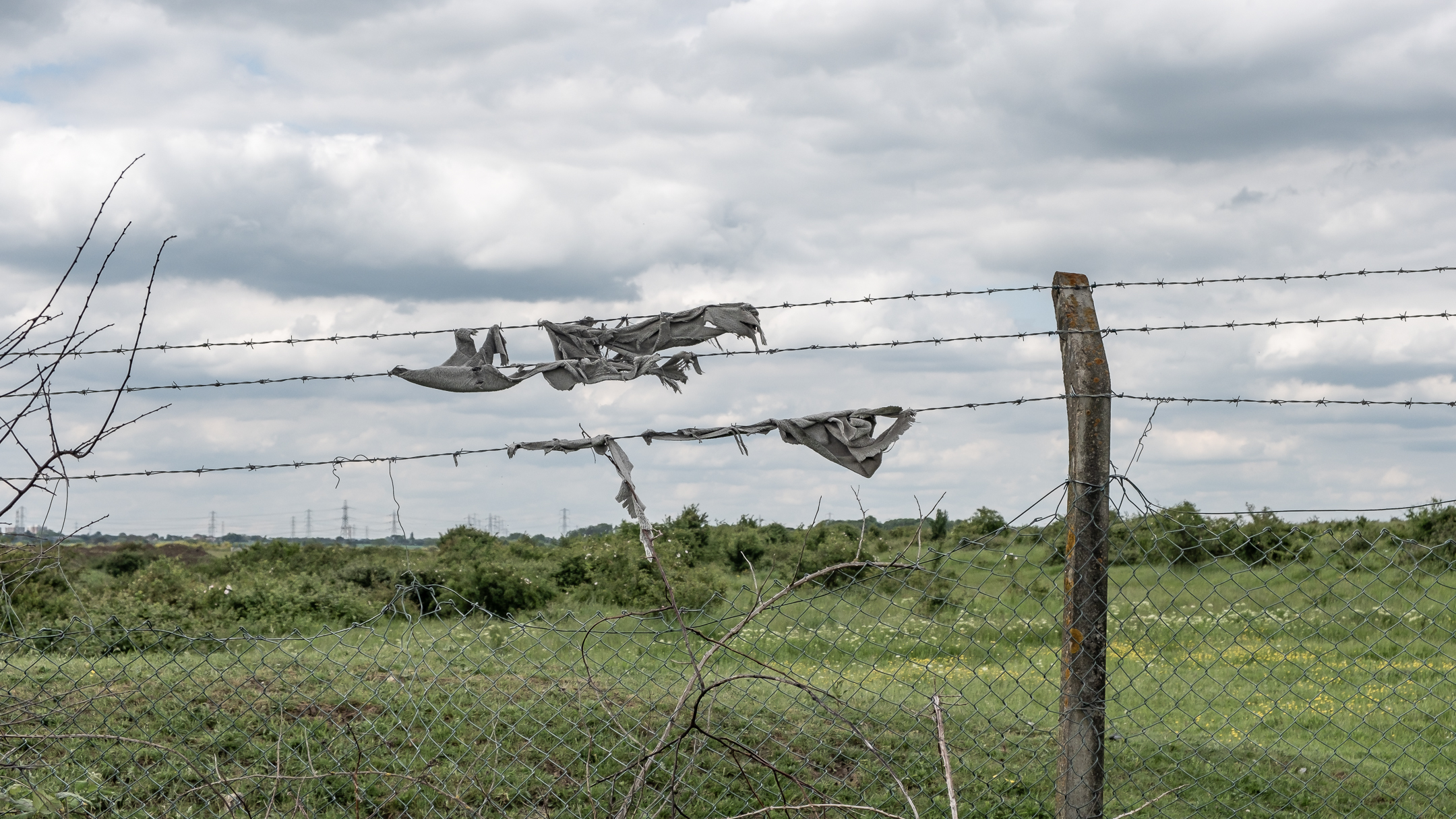
I passed a site where they were either taking dirt from the land and dropping it into the river, perhaps to improve flood protection, or were taking silt from the river and dumping it in land. Impossible to tell as there was no-one about. I guess it could have been an extension of what looked to be a buried rubbish dump; though there was no smell to give that away.
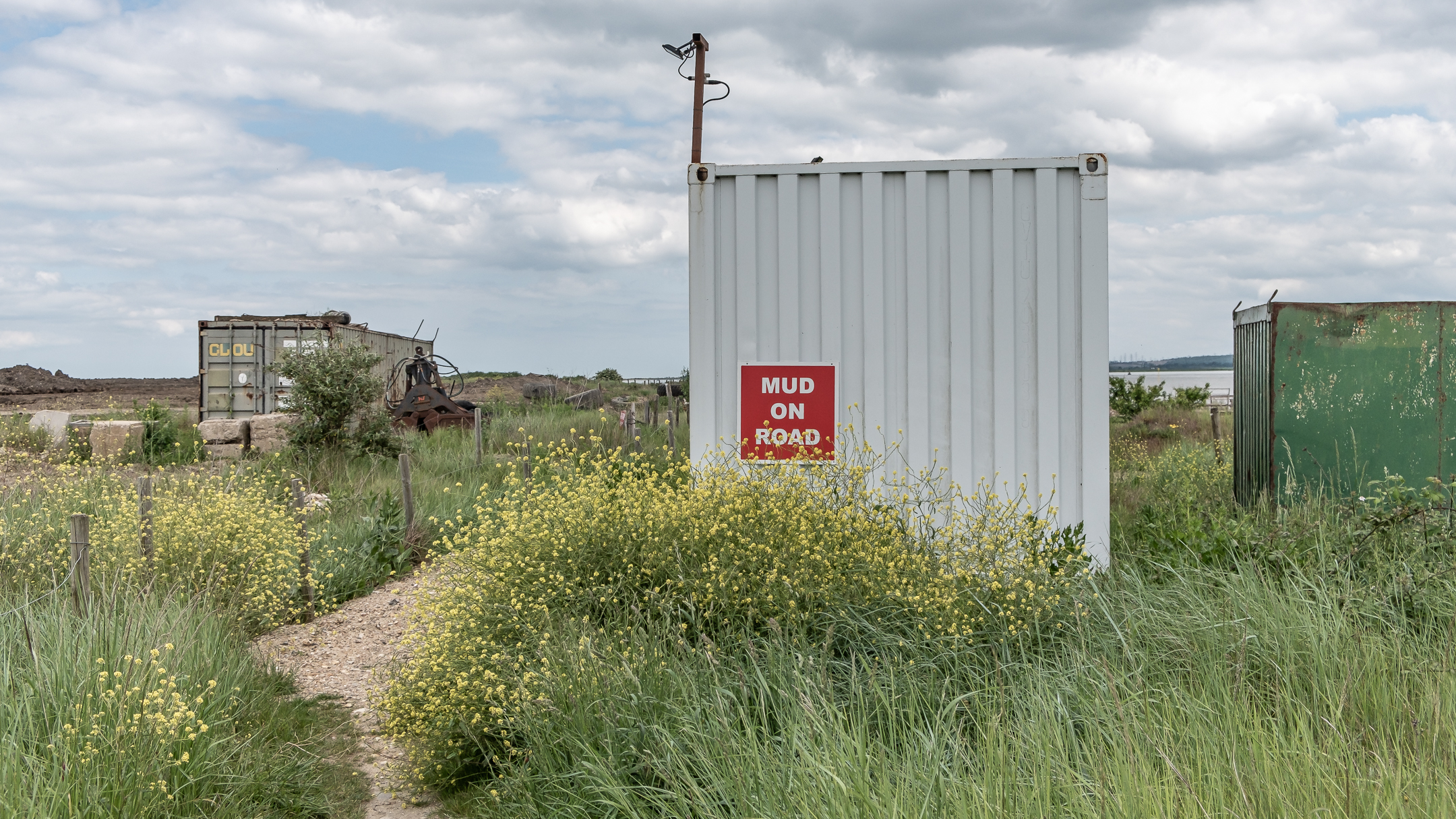
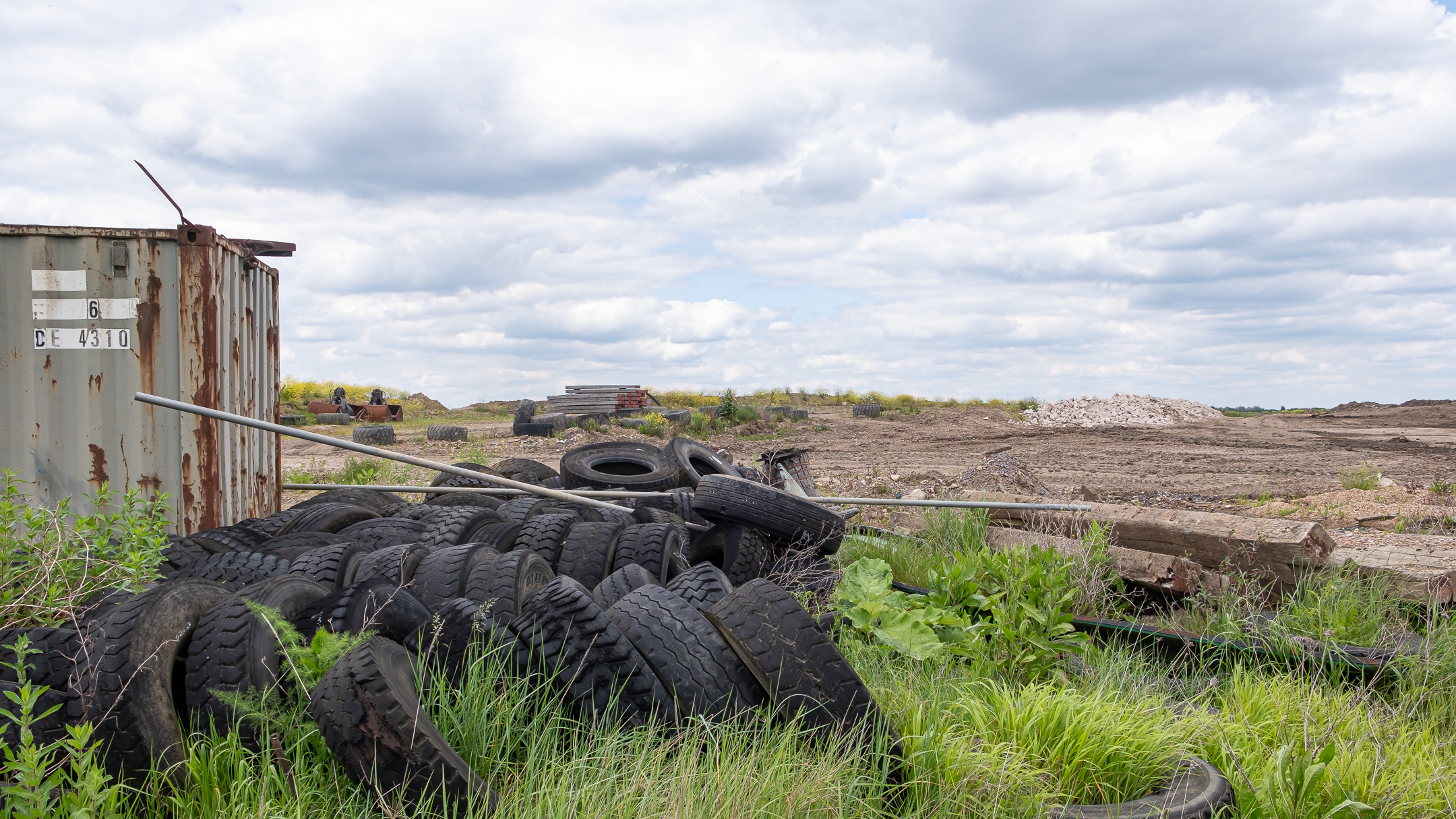
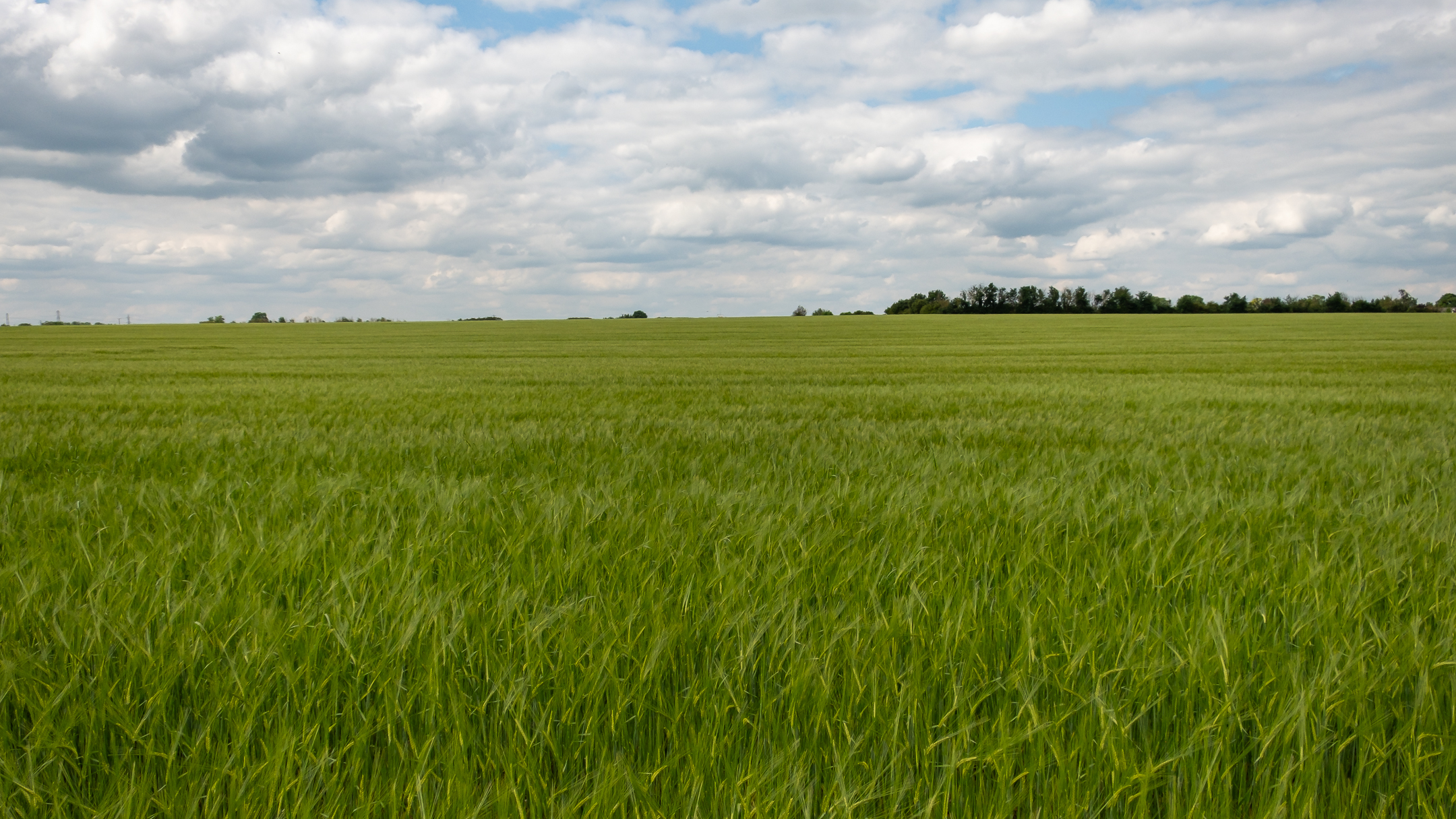
For some reason the path took a turn inland and the concrete was replaced by a mown grass strip between a wasteland and a low-lying wetland. At the end of the wetland the path looped back again towards the river, passing wheat fields, one of which had a small number of red poppies growing in it.

Soon after I arrived at Coalhouse I asked a walker I’d nodded to earlier in the day if there was a route to the fort along the estuary and he said there was, weird. The inland route I took was the signposted one. I had wondered how he had gotten there before me as last time I saw him he was going in the opposite direction.
Coalhouse Fort is sadly closed to the public, from the outside it looked a lot more interesting than Tilbury. It looked like a proper blockhouse made to withstand the heaviest barrage. Built in the 1860s as the last in a string of defensive forts protecting the Thames and London from river born attack, its construction was marred by the swampy ground it was being built on and by the time it was finished it had been made largely obsolete with the development of better artillery pieces.
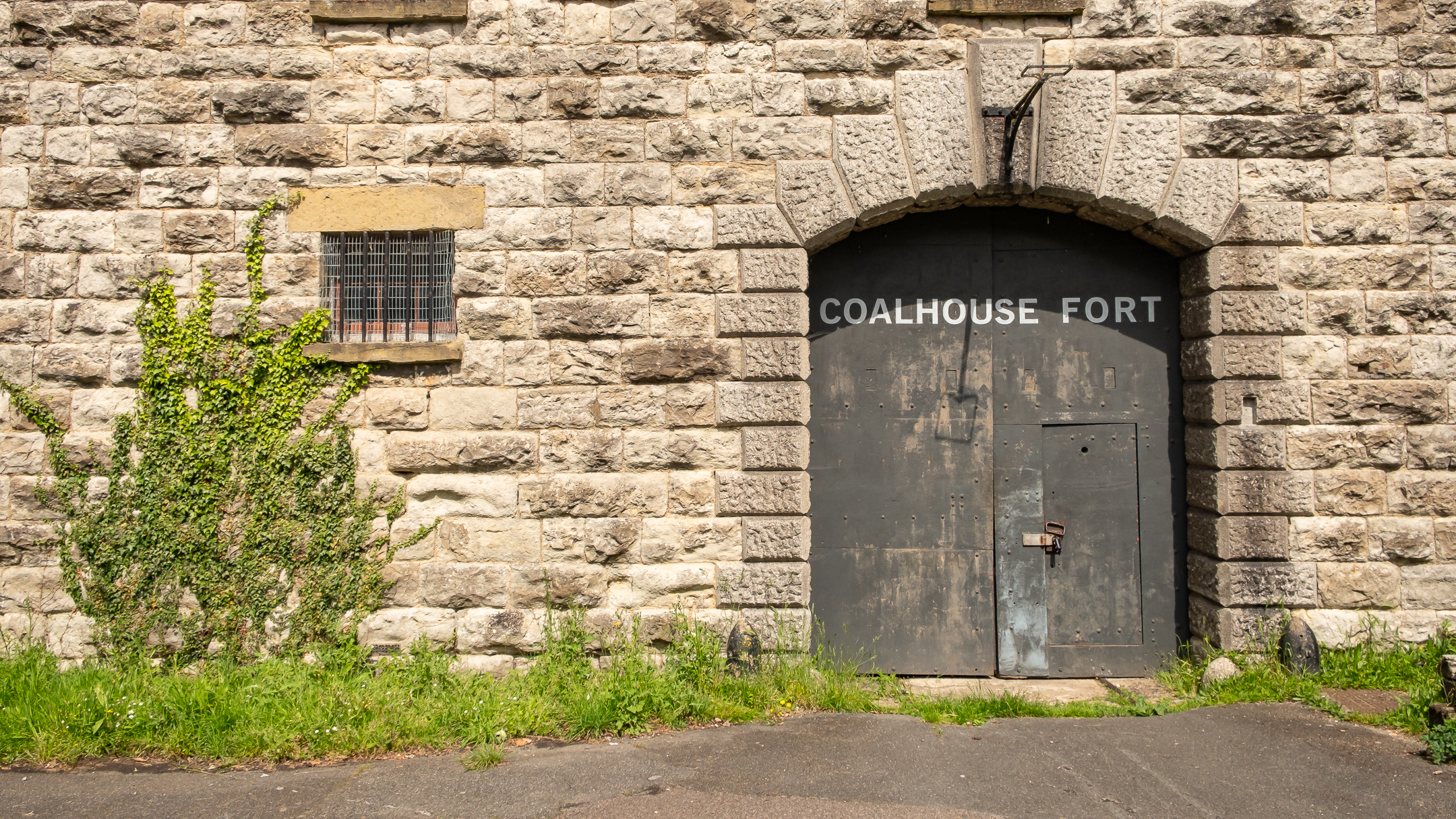
The fort was manned and used by the military until 1949 when it was decommissioned and fell into disrepair. The council bought it and in 1985 a volunteer group was formed to restore the fort, though lack of funding and interest saw the group disbanded in 2020. The grounds surrounding the fort are maintained as a park, and if the café is anything to go by it’s quite popular.
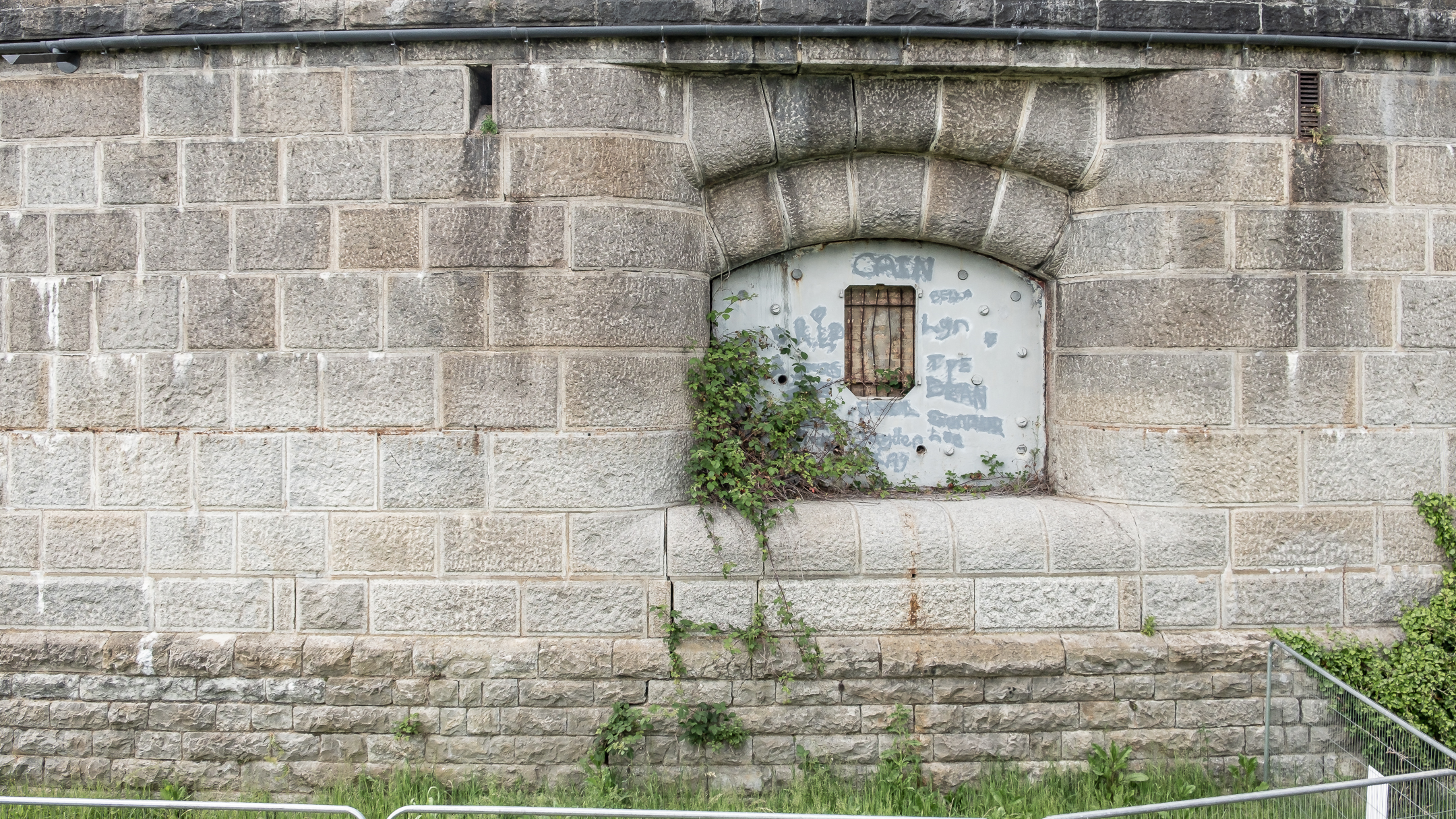
There was a café in the grounds and to my surprise it was open at 3pm on Friday and it was quite busy. I got myself some lunch and more water, it was hot out and I was getting hungry. While eating lunch I checked the times of trains back to London from East Tilbury station and discovered it was a 36 minute walk to the station, there was a train in 39 minutes and the next was over 40 minutes after. I took a power walk around the outside of the fort and then even faster one to the station, making it with three minutes to spare.
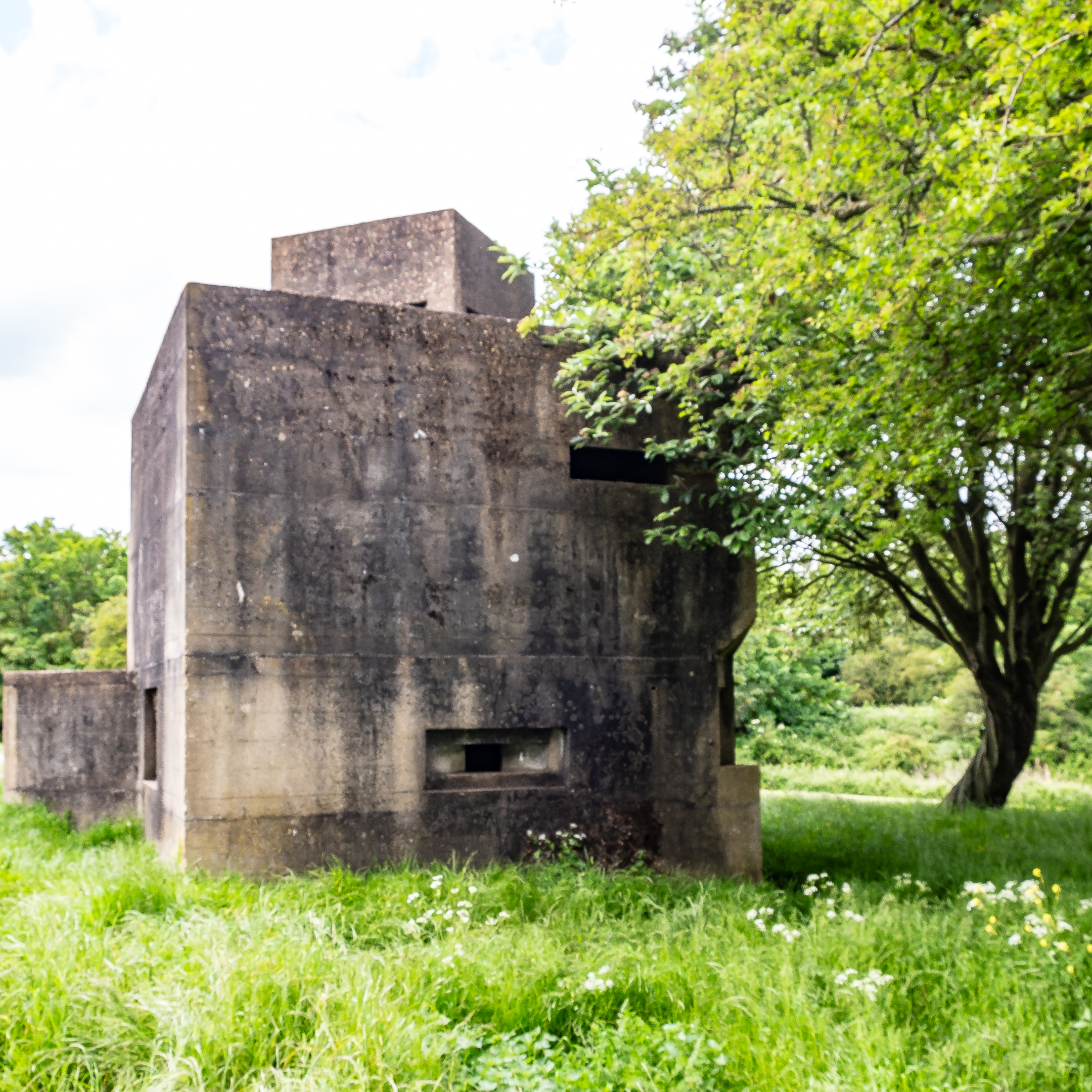
I enjoyed the walk to the fort, it had all the things I expected and the weather was really nice. The walk through East Tilbury to the station was not quite as enjoyable, it’s not a place I could live. An edgeland town; not of the city and not of the country.
I like edgeland places, but edgeland towns are not for me.

 Where is Phil now?
You must be logged in to post a comment.