Saturday 16 September 2023 – Poplar, London.
I enjoyed the third #brutaldayout photo walk today. I’m familiar with the core of the group, though today twelve set out from the coffee shop outside Blackwall Tube station. There were thirteen in the group for a moment and we either lost someone before we set out or this person accidently joined in as we assembled then realised it was the wrong bunch of people. Either way, it was the largest group we’ve had on a walk. Herding photographers is like herding cats, and we managed to lose two people over the five hours. It was a good group though and there was a lot of chat going on.
Boe and Irony mural outside All Saints DLR station.
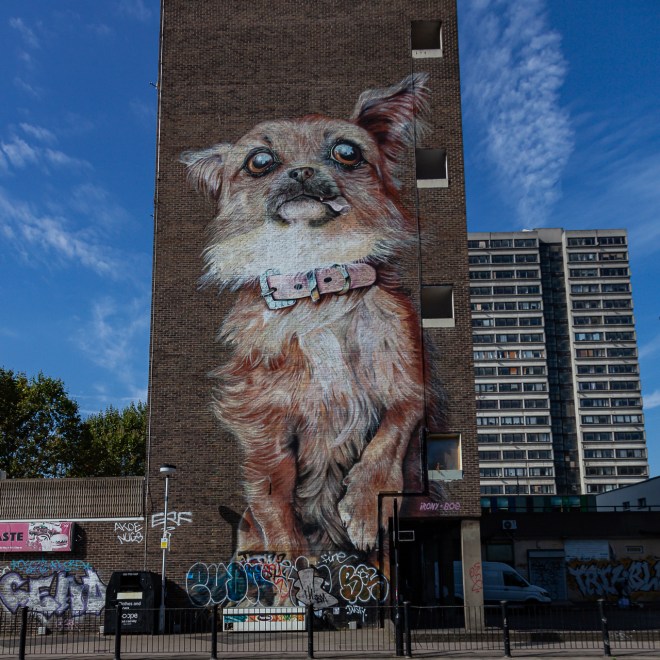
Poplar is an area of East London that I don’t know well, though it is home to the first king of brutalist housing, the Balfron Tower and there will be more on Balfron in a later post. Poplar is proper London east end, it’s a working class area with a post-war mix low and high rise estates. It’s a multi-racial suburb and has, in parts, been allowed to rot, though I’m not necessarily saying race was a factor in allowing that decay. There are too few loud voices here nor enough of those willing to risk standing up to push the case for the borough. Poplar is part of the London Borough of Tower Hamlets, and let’s just say the council is not unafraid to make decisions very unpopular with its citizens, though seemingly very popular with developers.
Poplar should be fortunate as it rubs up against the global financial centre of Canary Wharf, whose shiny glass towers stand proudly over, but maybe casting disapproving shadows over its rundown neighbour. You would hope the wealth would roll on down to its immediate neighbour, but, as always, that is not the case. Poplar is being gentrified, and not in a ‘nice’ way. Social housing residents are moved out and those who have bought their home in ex-council properties are ‘encouraged’ to sell. The estates are flattened and ugly new shiny things are built in their place; of course there is the promise that tenants can move back in, or new housing will be built for them nearby, but as we all know this rarely happens. ‘Cost over runs’ or other excuses means the developer can never quite meet their social housing commitments. Councils just roll over and let their expanding tummy get stroked and accept the heartfelt apologies from those poor developers. The worst part is a lot of those shiny new flats are left empty, unsold or with absentee owners, almost taunting those who were dispossessed. More on this with my post regarding Balfron Tower.
Our first visit was Robin Hood Gardens Estate, or what is left of it anyway. The estate was completed in 1972 and comprised two low rise blocks, one seven storey and the other ten, with a large green space between them. It was designed by Alison and Peter Smithson and was their only housing estate to be constructed. The London Borough of Tower Hamlets was the landlord. After a battle to get the estate listed failed developers demolished the seven storey West Block in 2017 and new flats are now under construction.

The East Block is now empty and awaiting the same fate as the West. 213 families lived here, now there are none.
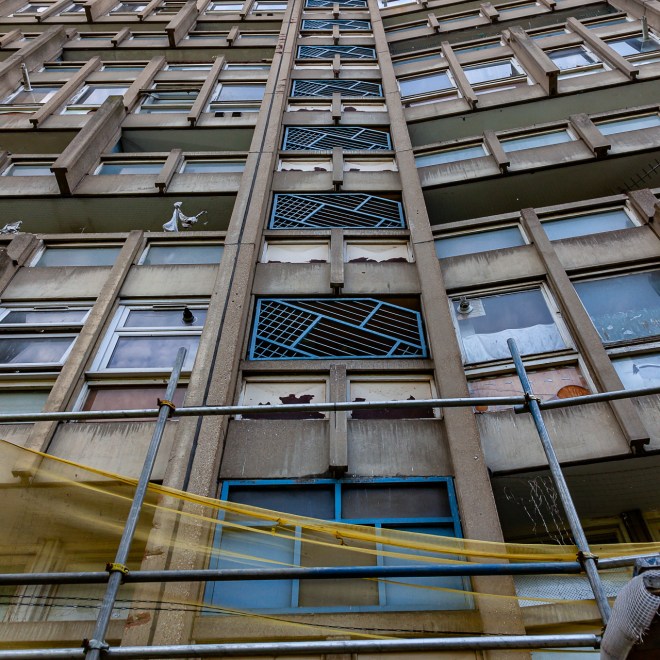
After taking a photo of the scaffold surrounded front door I tried the door handle and remarkably the door wasn’t locked…
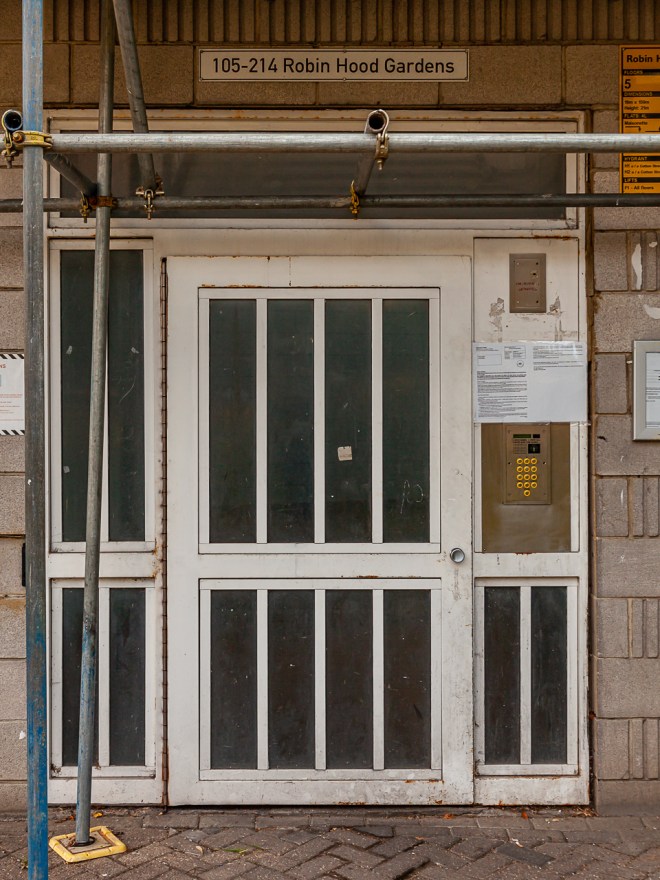
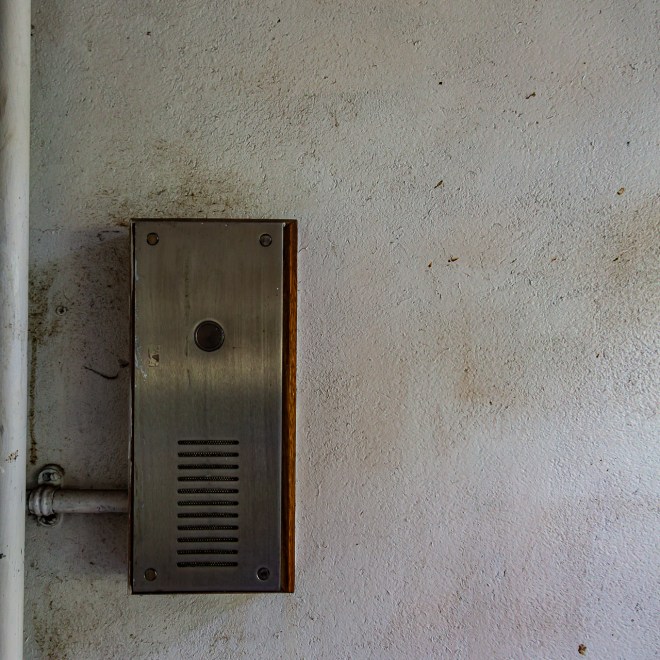
All the doors to the ground floor flats were covered in steel, so to be able to access the stairwell was a real surprise. A surprise too much to resist for some of us, so we took a quick foray into the building. Ignoring the ‘no trespassing’ sign. Bad I know. We didn’t go far, up a flight of stairs to the first balcony. All the flats are blocked off and we didn’t do anything other than take a few photos and then exit. It was a cheap, no harm, thrill; and no security or police turned up (phew).
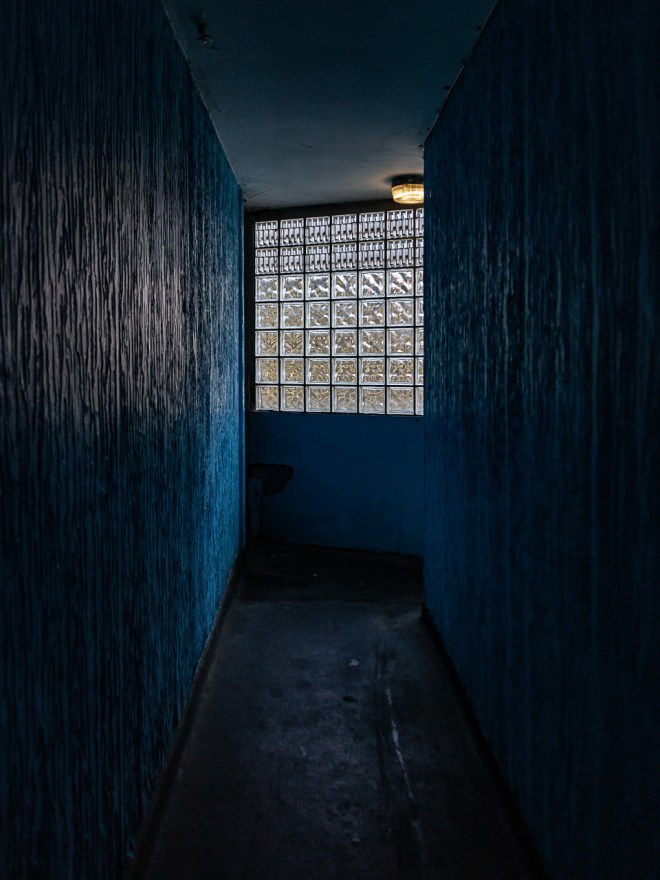

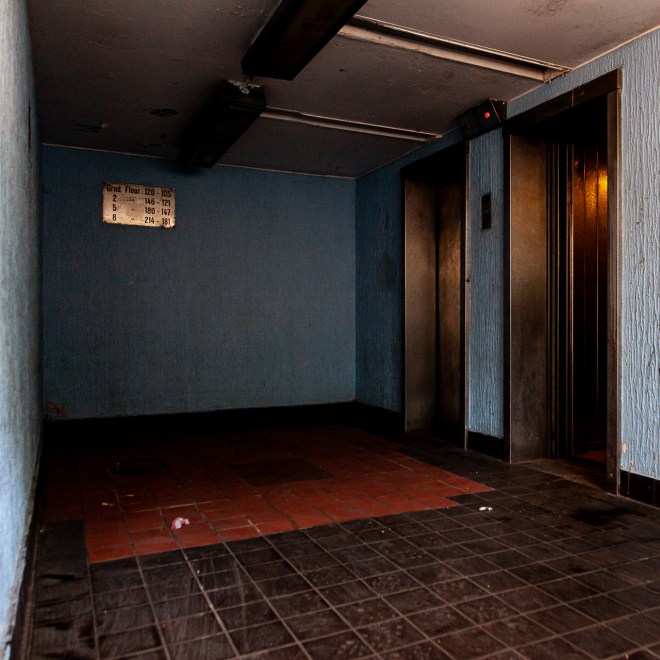
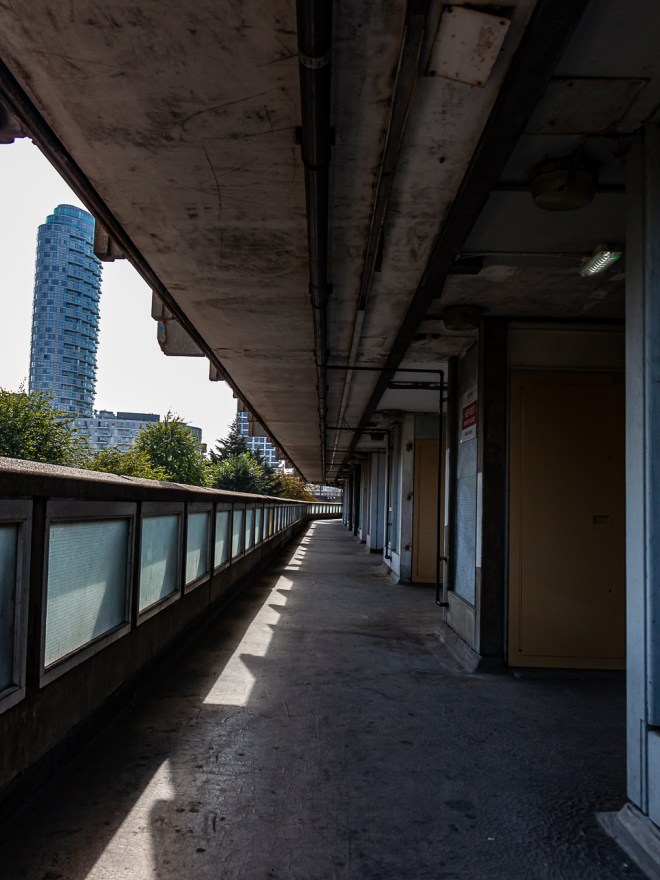

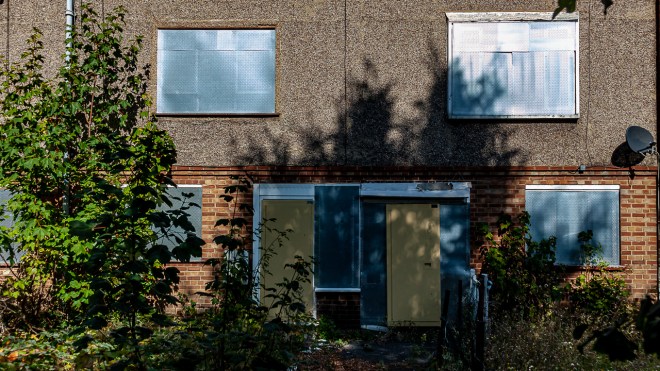
There is a short row of terraced houses at the end of the estate and those are all boarded up ready to be knocked down as well. I wonder what monstrosity will be built on this site and when? All these empty properties and we have a major housing crisis in this country. I shake my head sometimes.
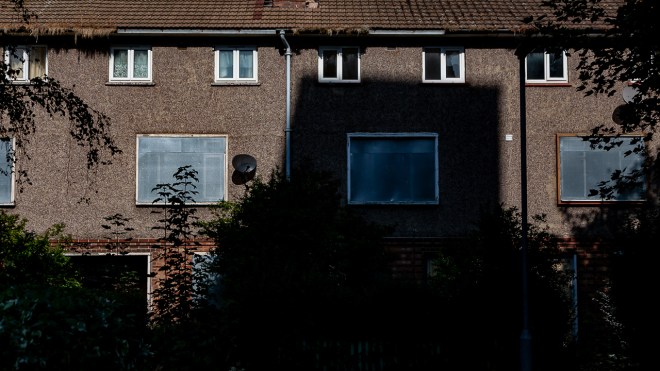
From a small, litter strewn and slowly overgrowing hillock in the gardens we could get a glimpse of our next stop; Balfron Tower in the Brownfields Estate; a 10 minute walk away. My first proper view of Balfron was through this filthy graffiti smeared window. I was quite excited; this is a major work of brutalist architecture in the UK, though maybe not from this angle.
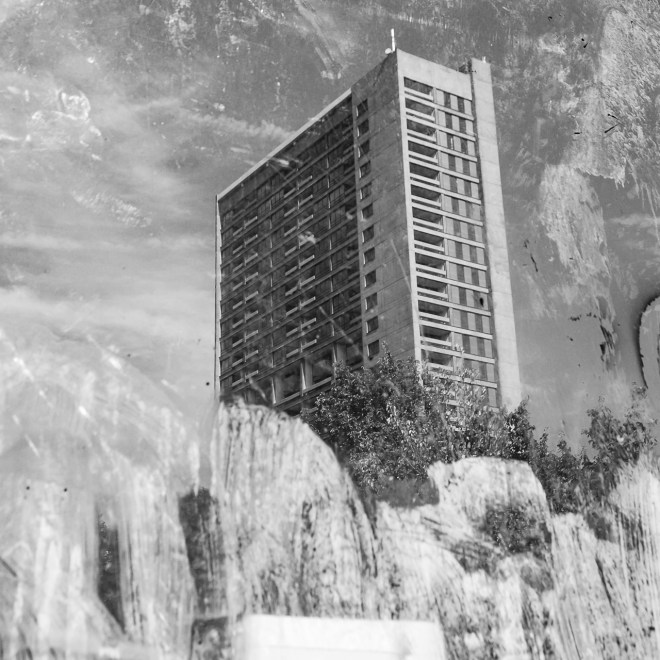
Anyway as I said above, Balfron gets its own post later. The Brownfields Estate also has the much shorter Carradale Tower situated at right angles to Balfron. Unlike Balfron, Carradale is still very much lived in. Though here is a sneak preview of why Balfron so cool.
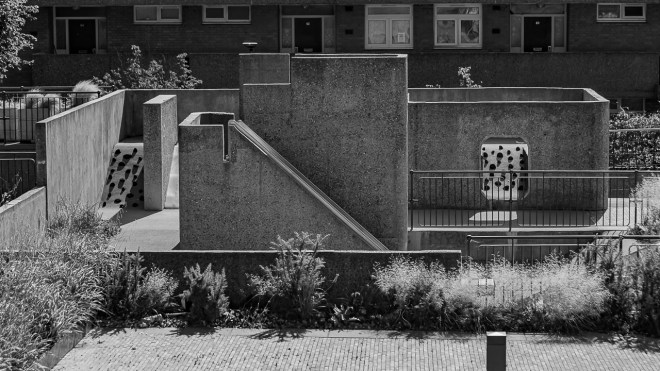
The entire area around Balfron is fenced off, including the, possibly, excellent play area. We could only see if from afar.
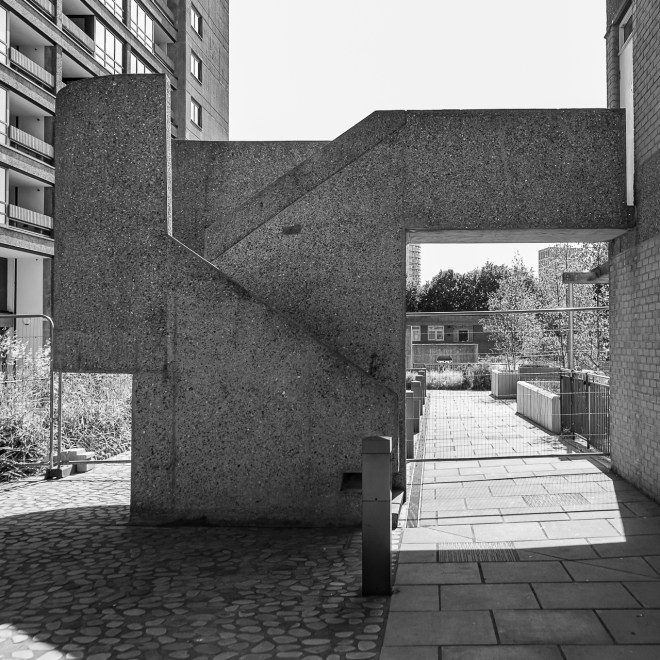
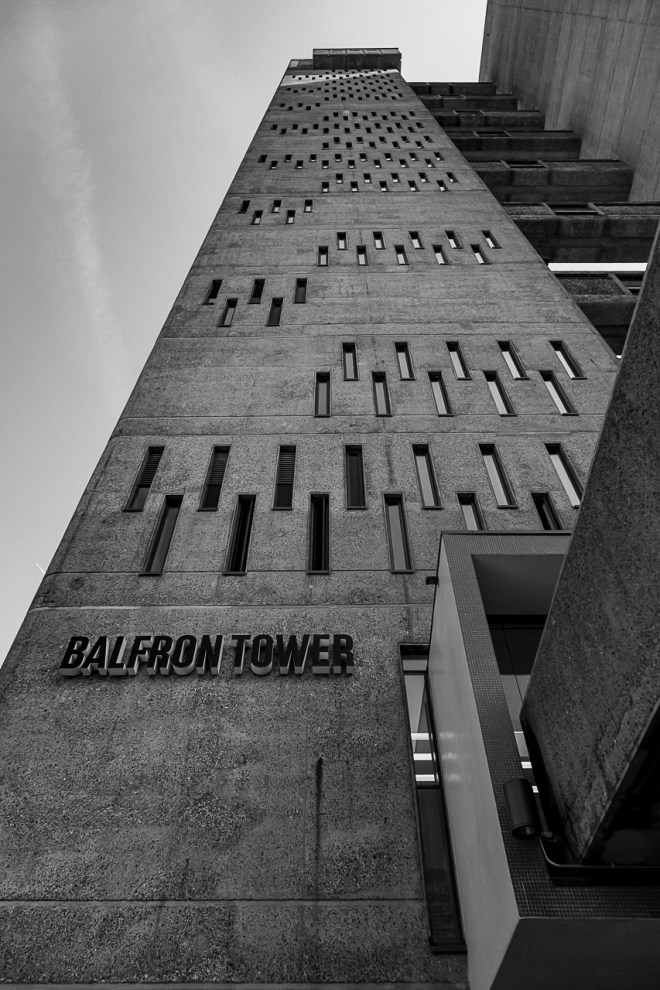
The towers were both built to complement each other and to create ‘communities in the sky’, by the Hungarian design genius (and inspiration for the name for the Bond villain) Erno Goldfinger. They were built between 1965 and 1967 and (thankfully) listed in 1996, else I’m sure someone would have tried to knock them down. Goldfinger lived onsite for a few months on completion and spoke to residents about what did and didn’t work and incorporating their ideas in his next project of similar design, the Trellick Tower, which I walked past back in August last year.
As Carradale is a lived-in block there was some space to wander around the perimeter, while I don’t support taking photos of people in or near their homes, I also think it is important to acknowledge that there are certain buildings that are important works of art and need to be preserved for what they are. One way to do that is to take and share photos.

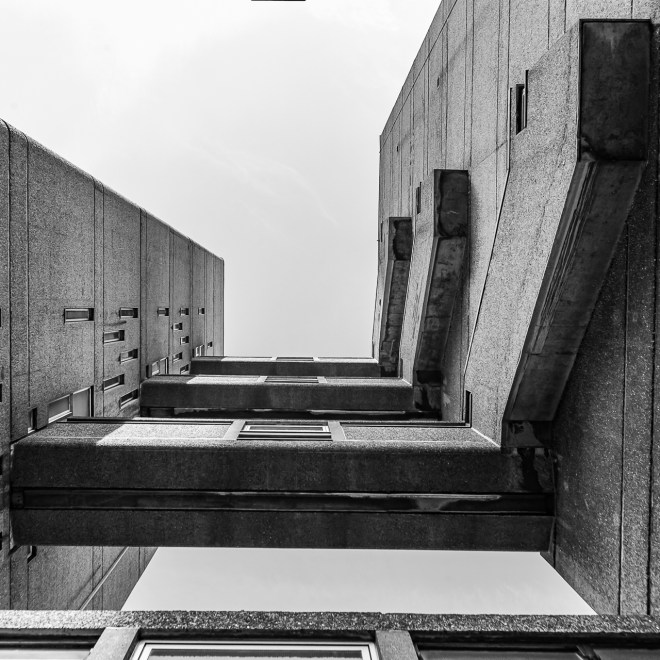
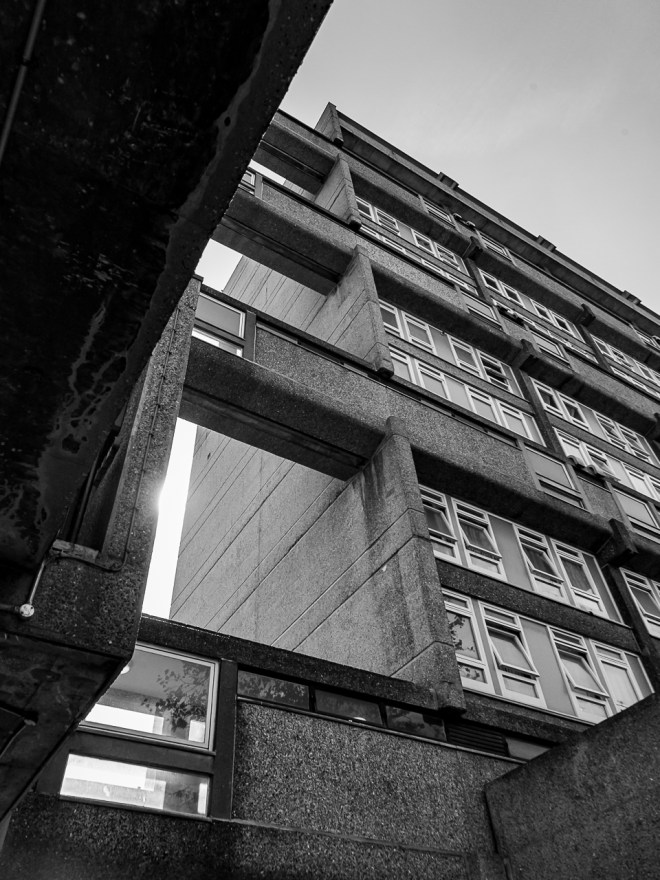
Glenkerry House sits over the road from Carradale and is also part of the Brownfields Estate. It was designed by the Goldfinger practice to mirror its predecessors opposite. Construction was completed in 1977. It’s supposedly the pinnacle of brutalist design and was the final brutalist tower constructed in London. The building is owned and run by those that live there.
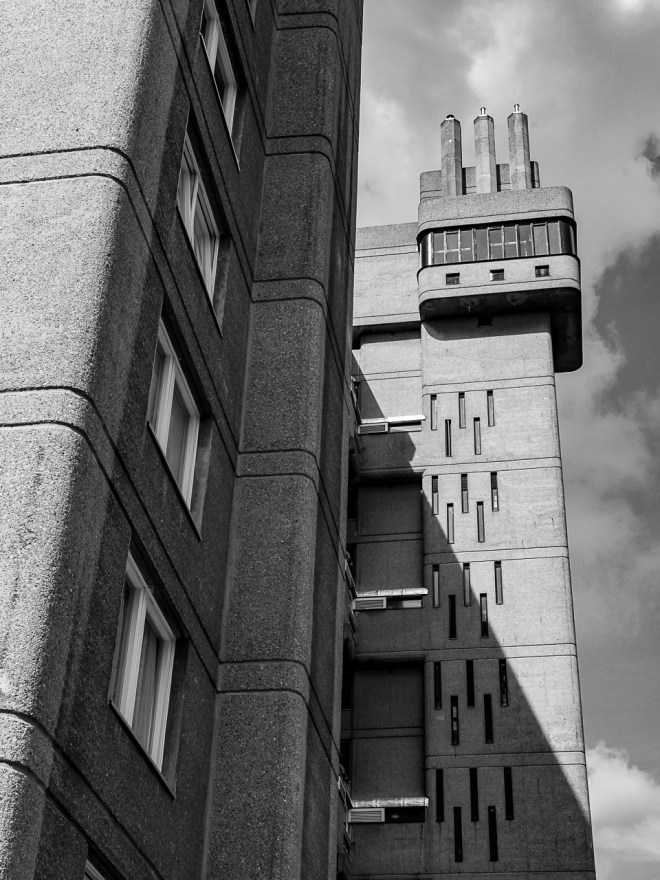
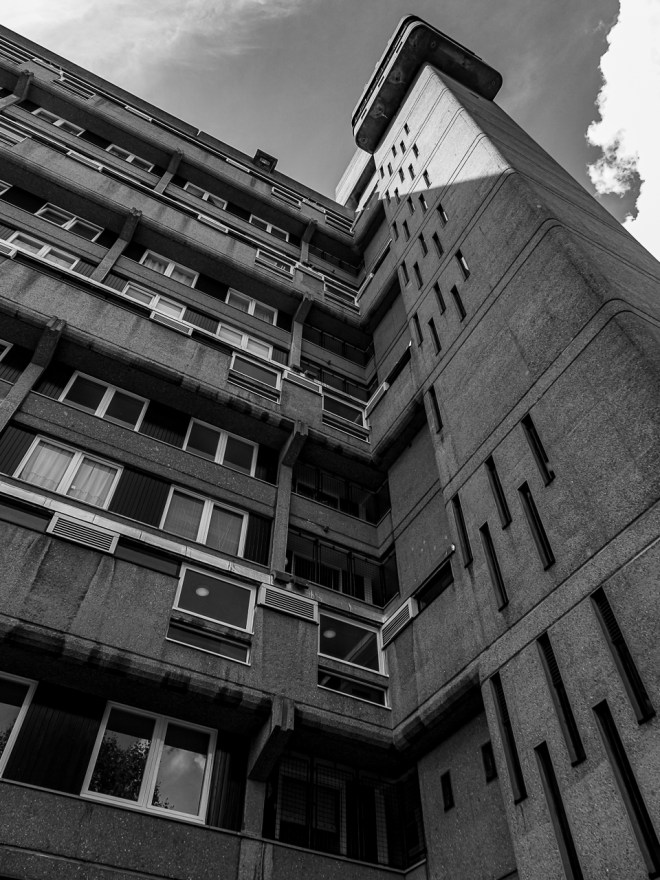
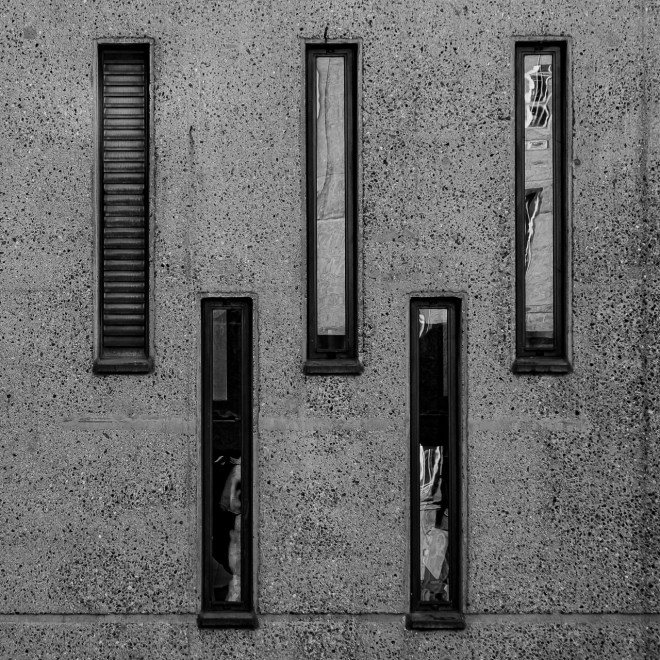
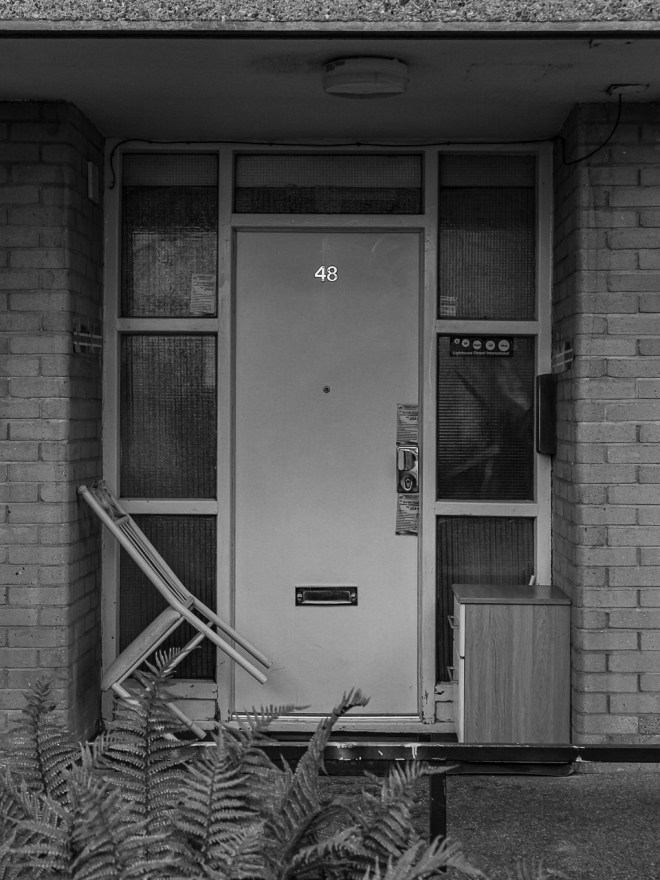
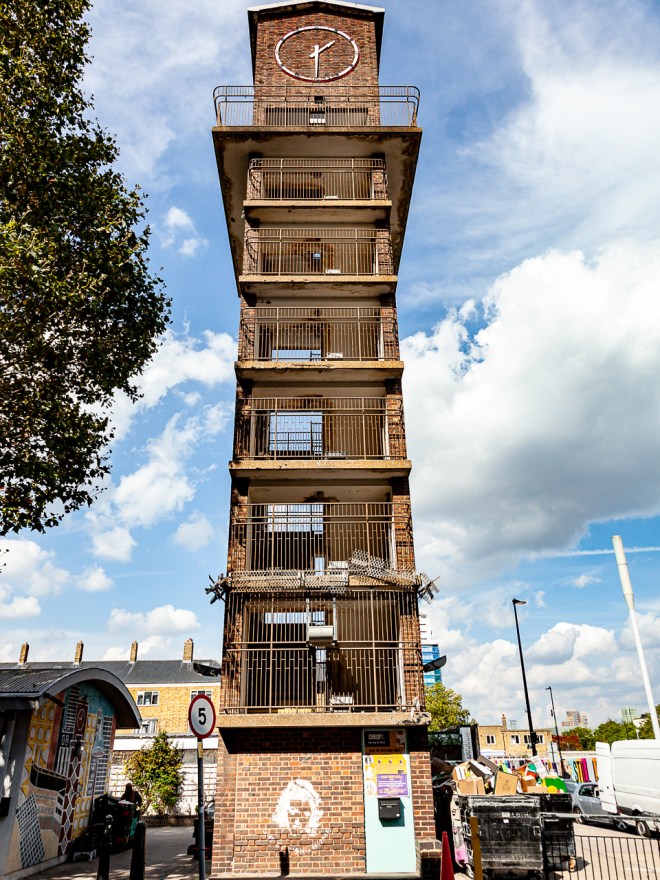
We stopped at the pie and mash shop in Chrisp Street Market for lunch and a short rest, Chrisp Street is the oldest purpose built pedestrian shopping area in the UK. It’s the heart of Poplar and thankfully is yet to be ‘regenerated’, though you can see it’s coming. It was busy. A lot of the flats around the market are empty, including a nearby tower block. The market has a marvellous clock tower, designed in 1951 for the Festival of Britain delays meant it wasn’t finished until the following year.
St Marys and St Josephs Catholic Church was our next stop, a magnificent building, completed in 1952 to replace the original church that was heavily damaged during the Second World War. It definitely has a mosque vibe to its construction and wouldn’t be out of place as a Christian church somewhere in Asia.
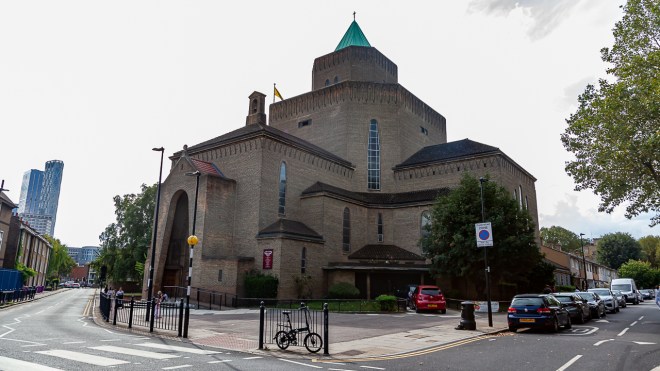

This was followed by the equally impressive, for its amazing tower, Calvary Charismatic Baptist Church.
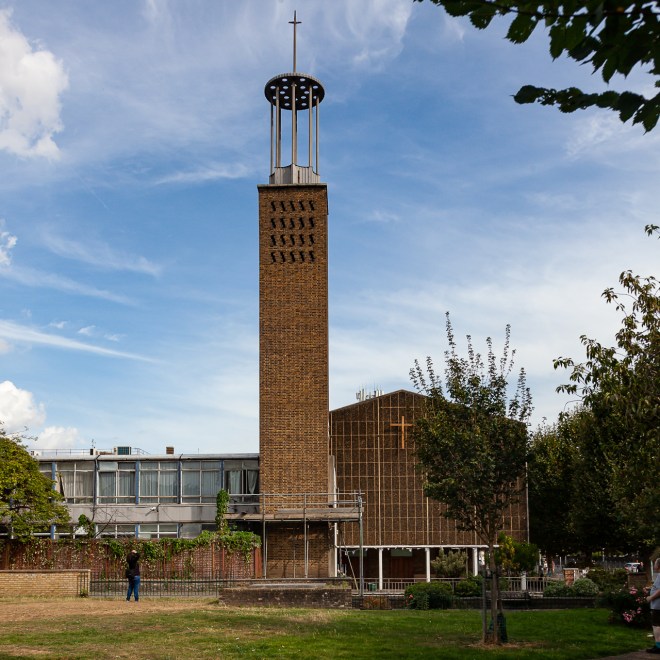
We completed the walk at another post-war church, St Pauls at Bow Common. Built in 1960 it has been voted the best post-war church in Britain. It was certainly different with its pulpit in the centre of the building and the parishioners sat around the minister. I quite like it.
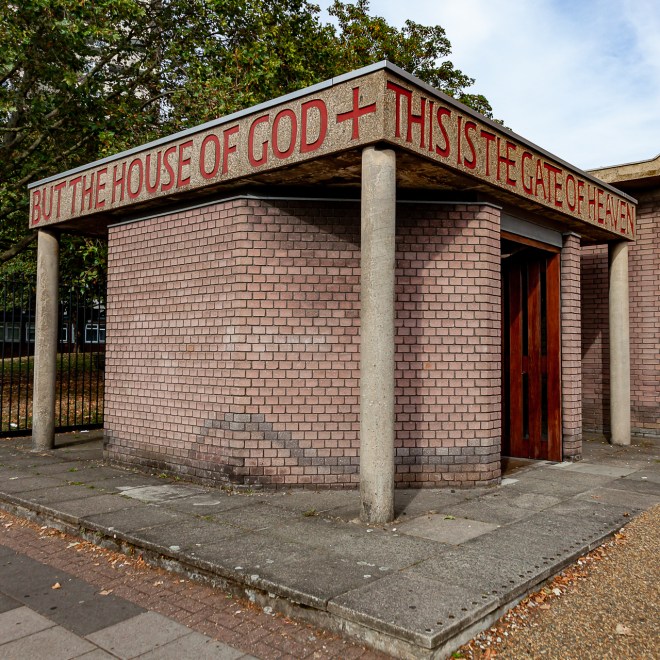
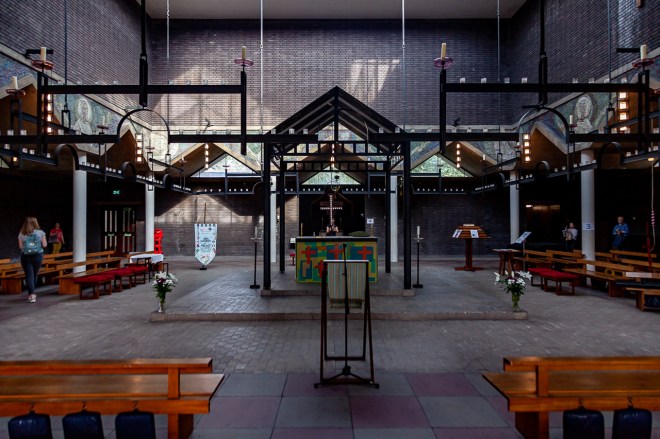
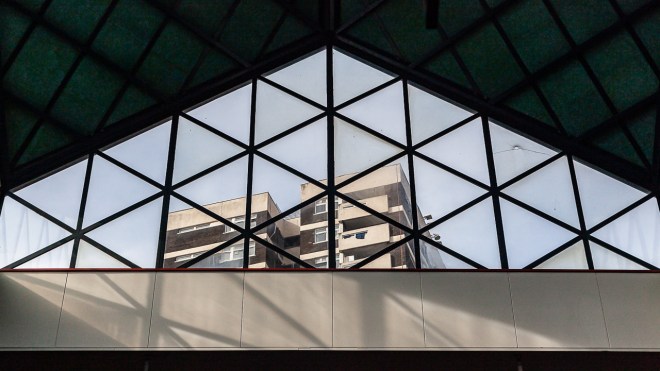
Actually we completed the walk at a pub near Mile End station where we stopped to refresh after a hot afternoon of walking, talking and photographing modernist and brutalist architecture. It was another enjoyable outing and if you’re interested in joining the next one then let me know via a comment, we don’t have a date or a location yet; though it will probably be around Kilburn.

 Where is Phil now?
You must be logged in to post a comment.